Medieval Helmets Collection

A series of historical helmets from different periods including armored and decorative styles, highlighting intricate designs and craftsmanship from the 16th century.

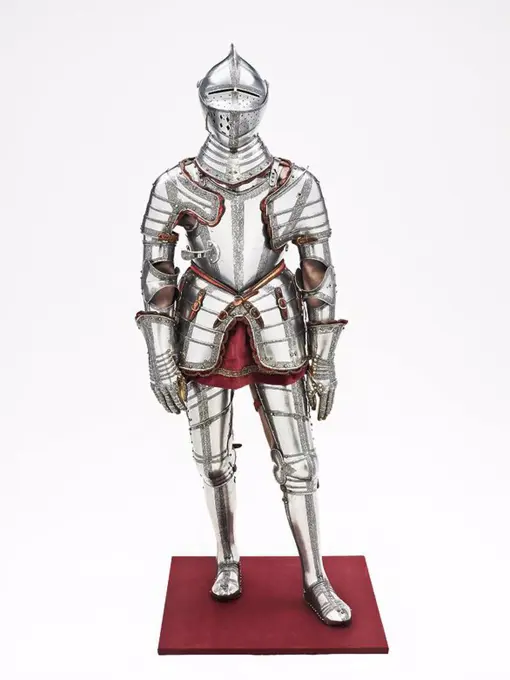
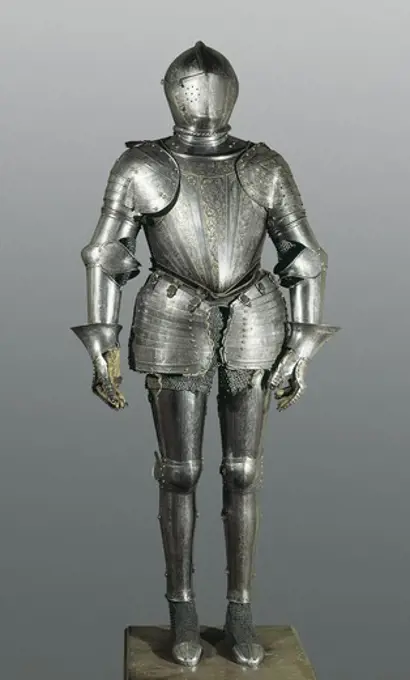
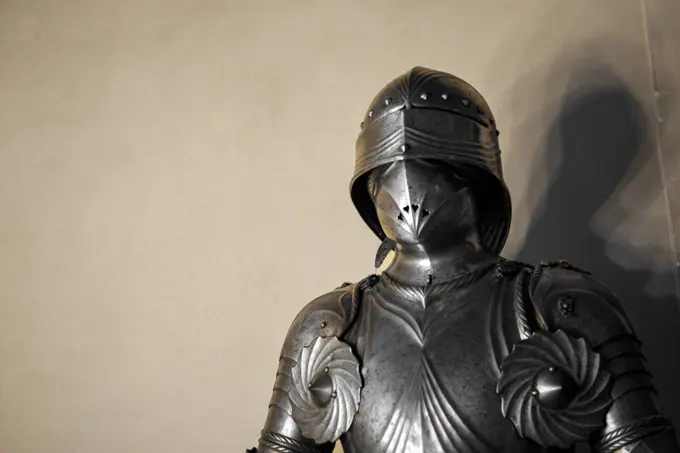
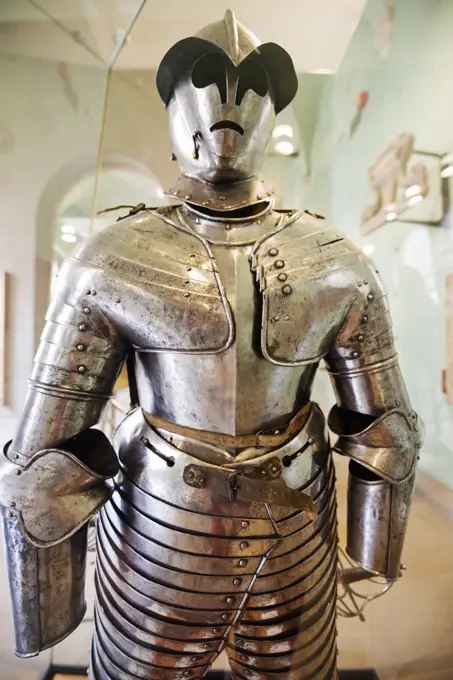
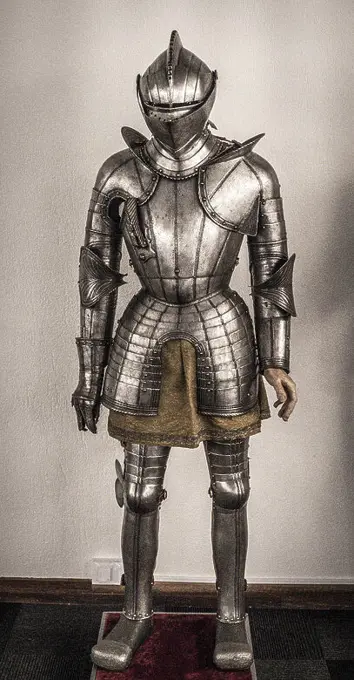
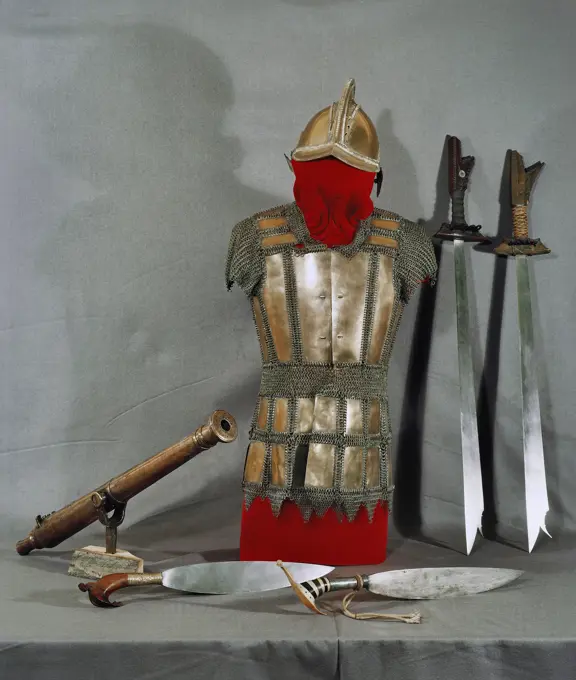
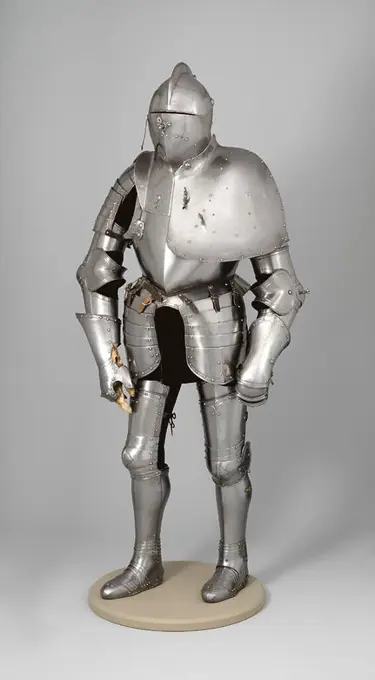
Armour Armour of the medieval knight. Metal protection of the soldier against the weapon of the opponent Copyright: xZoonar.com/ValeryxxSibrikovx 2479148
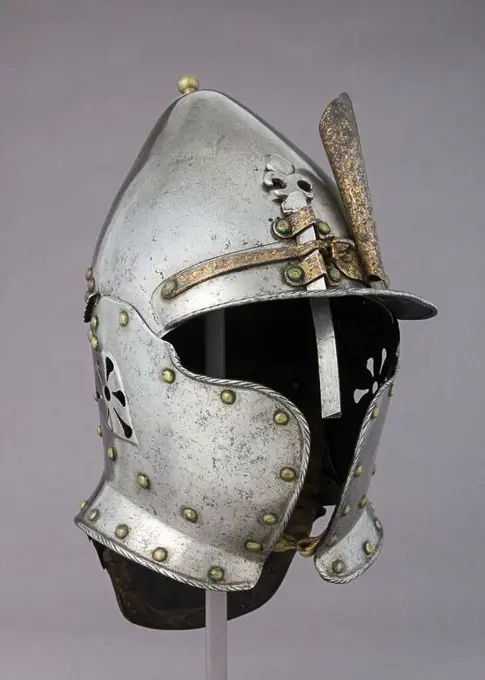
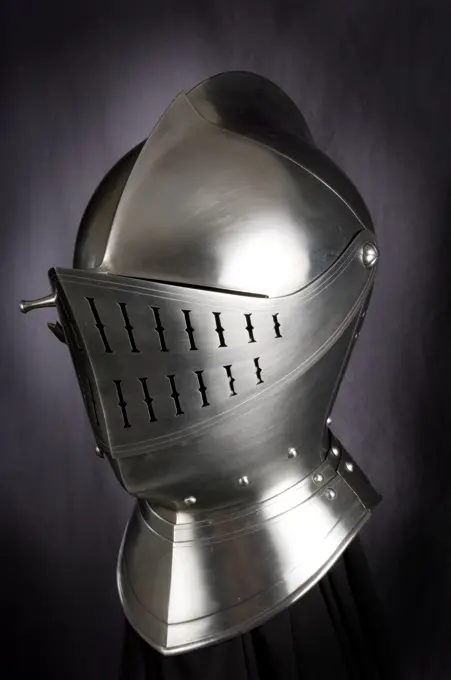
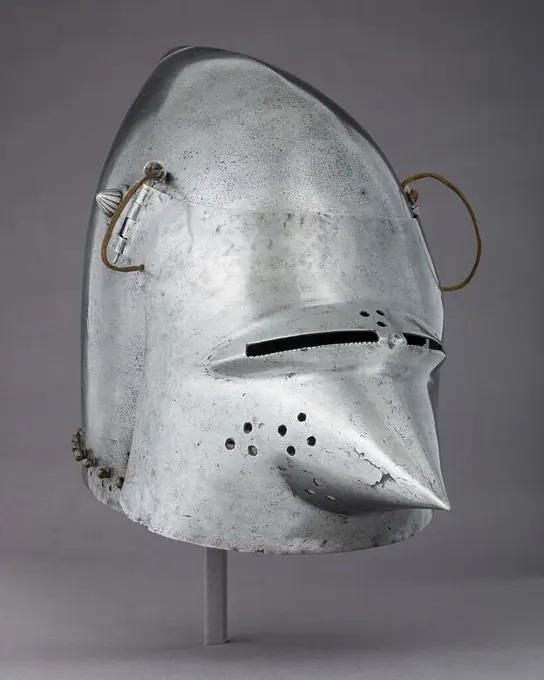
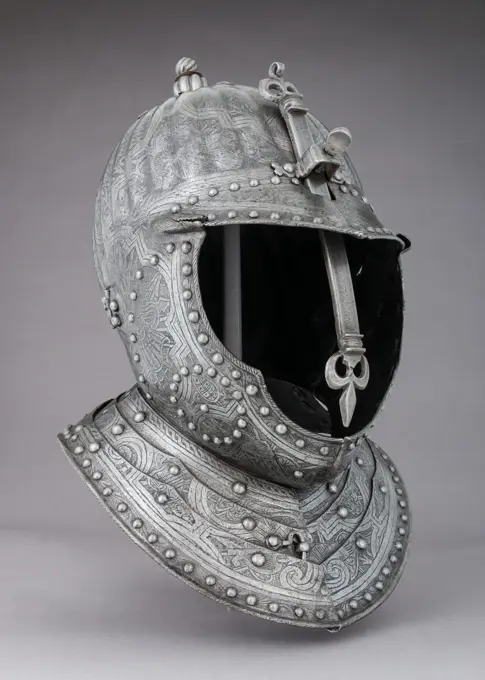
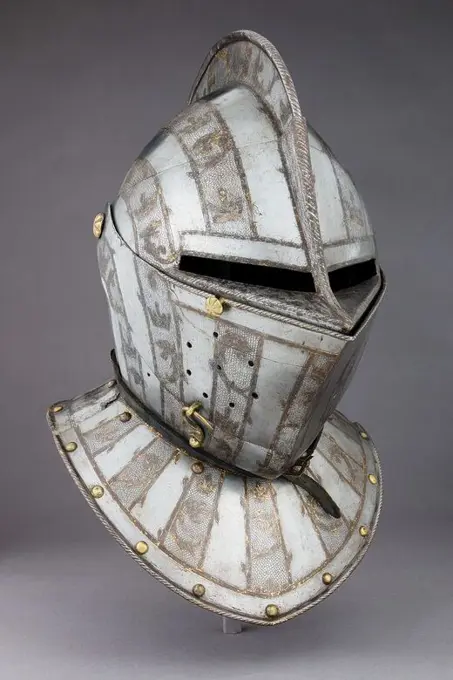
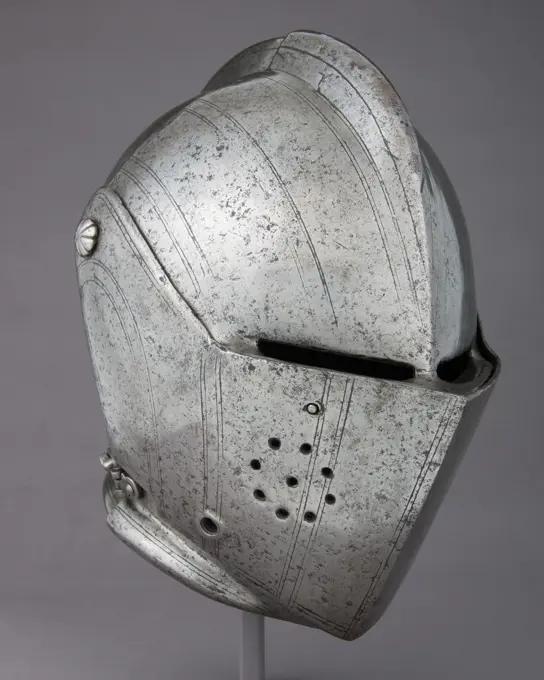
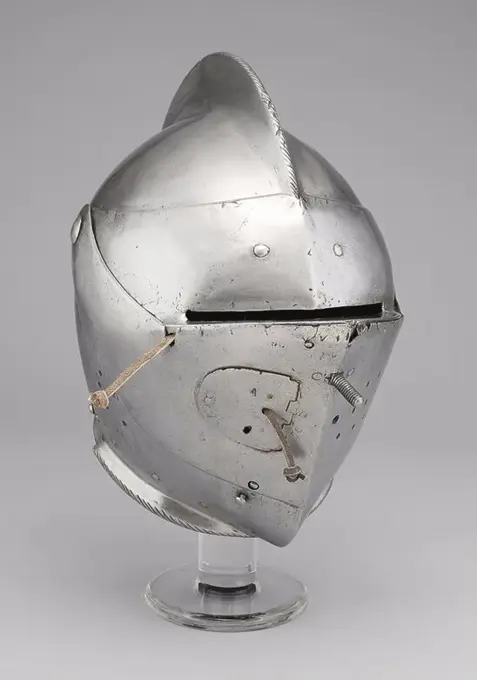
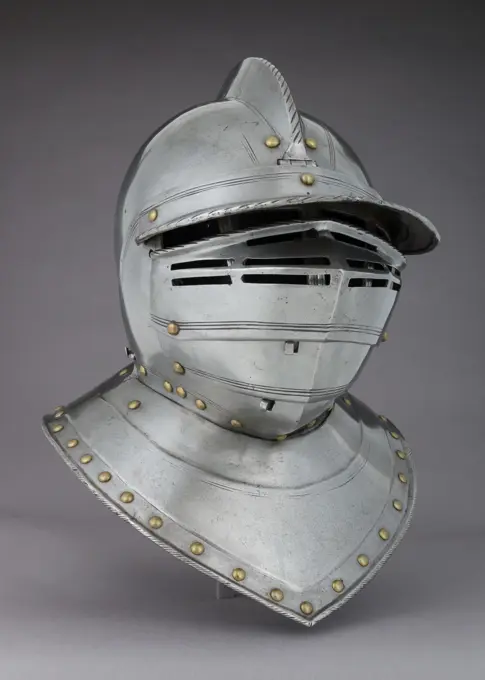
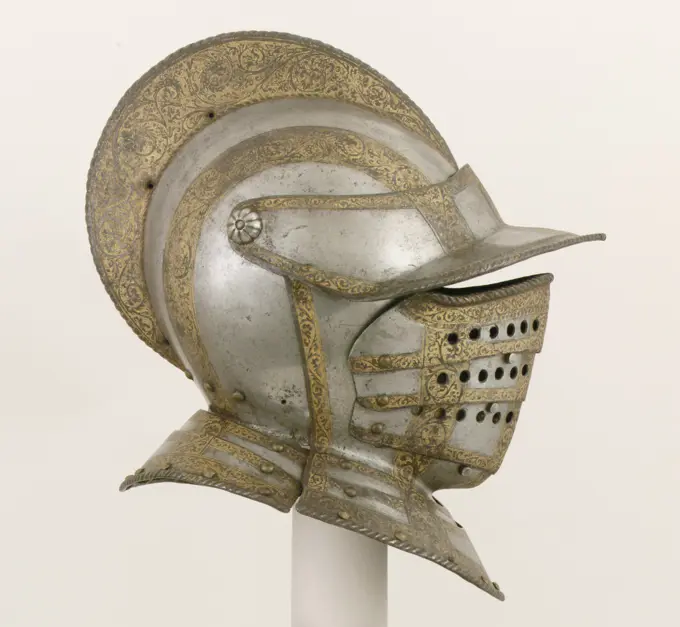
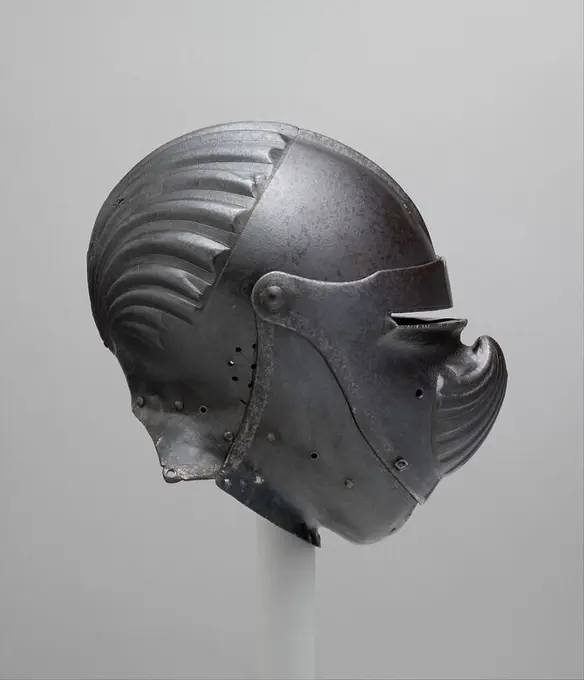
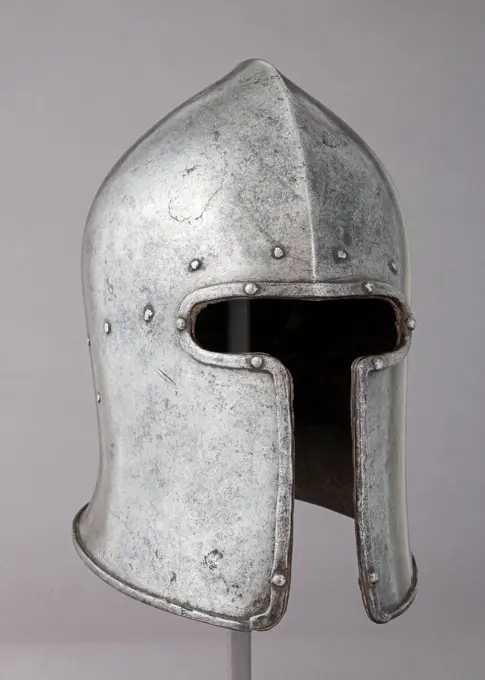
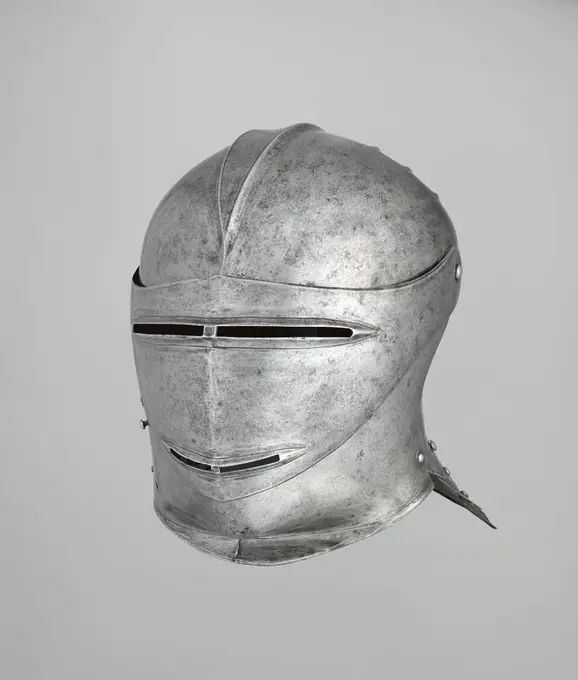
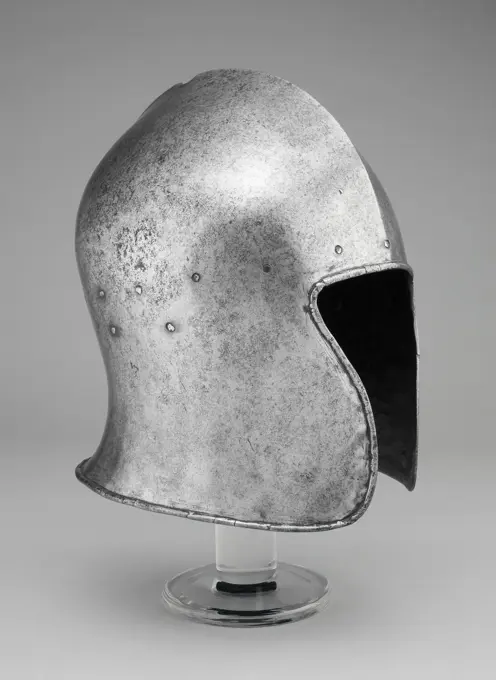
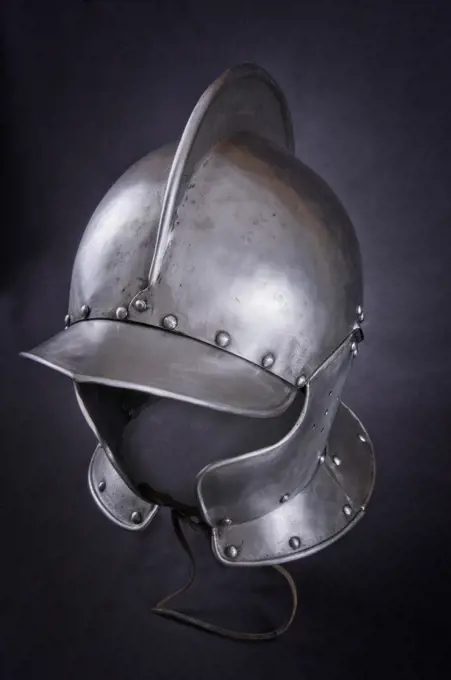
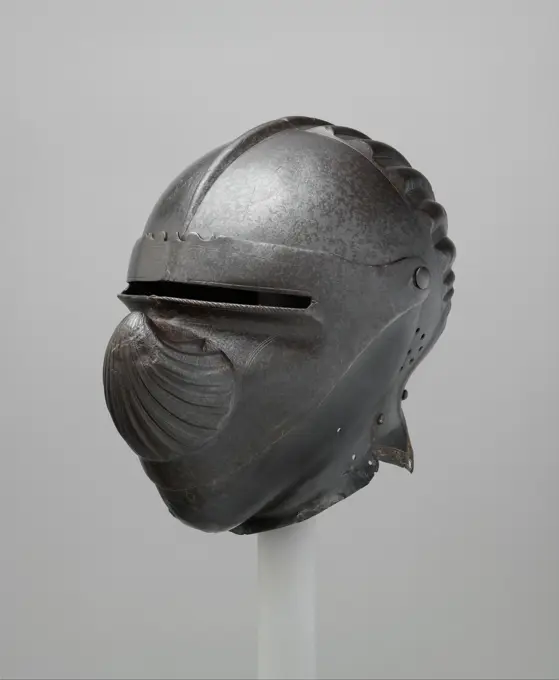
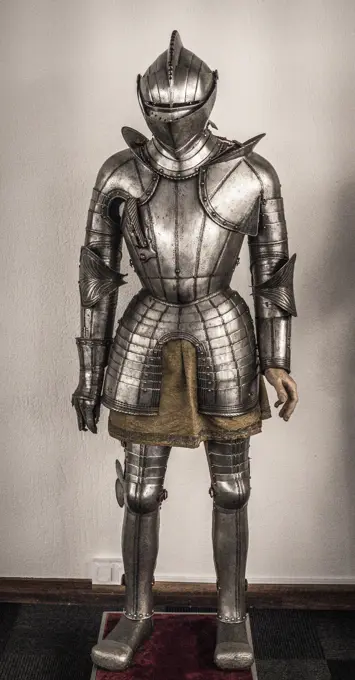
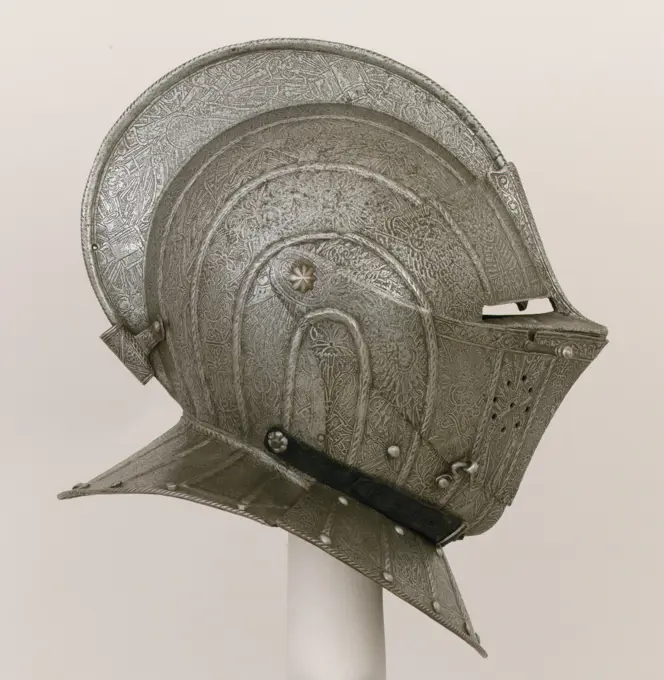
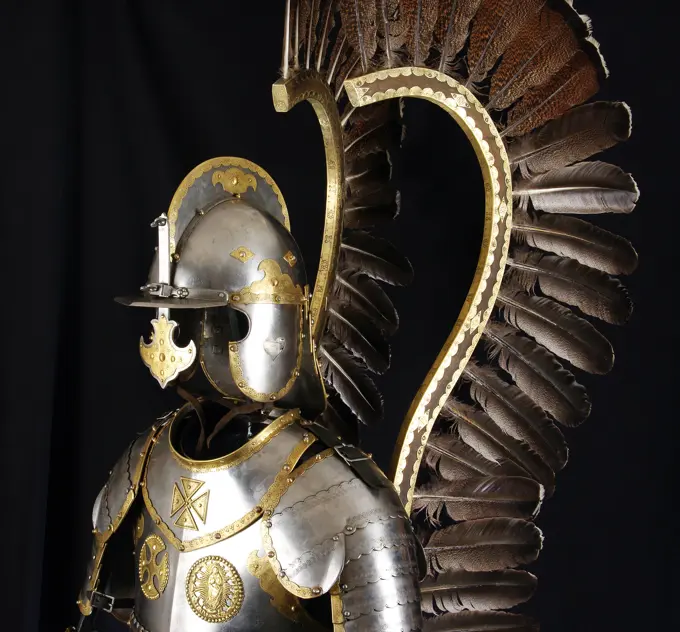
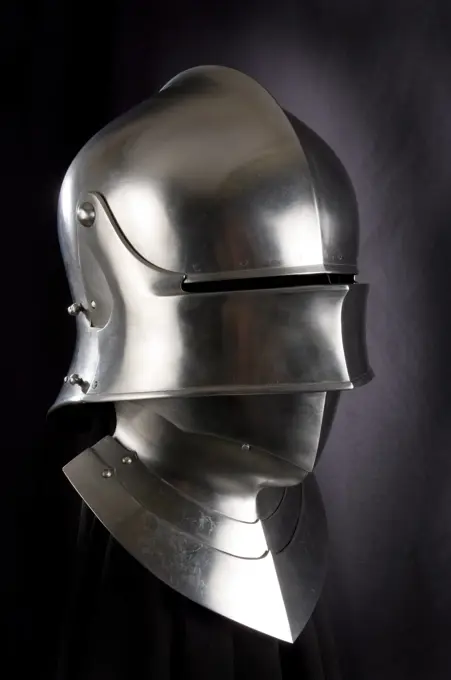
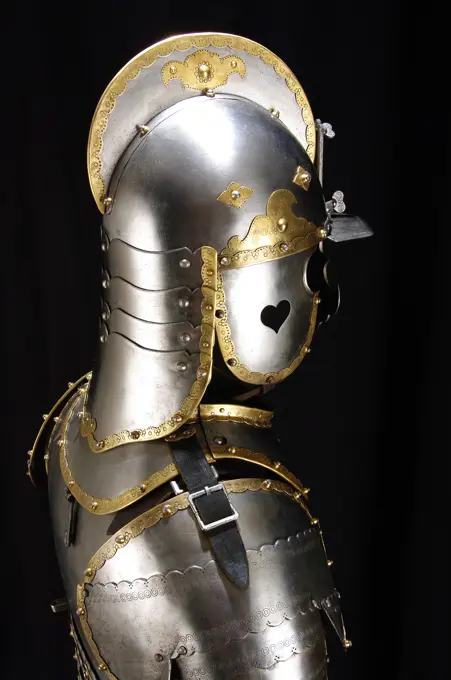
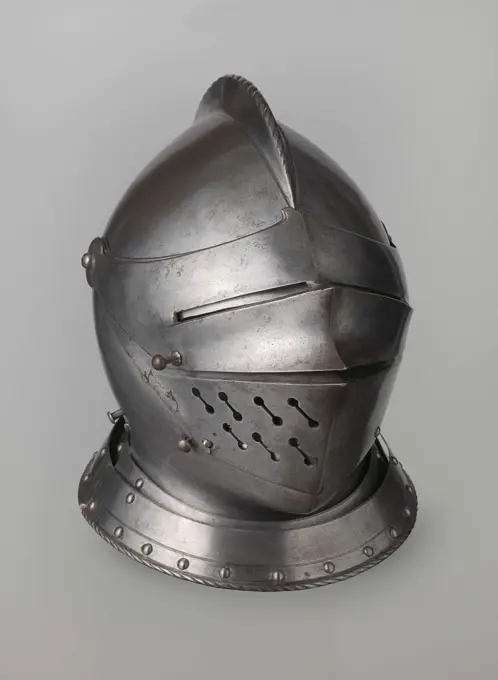
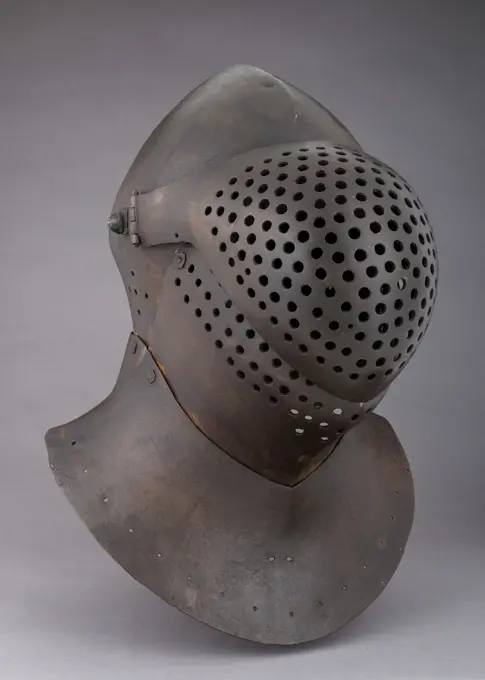
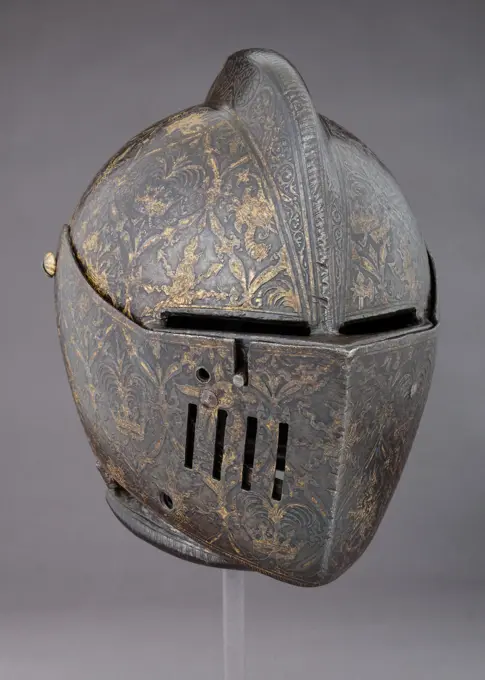
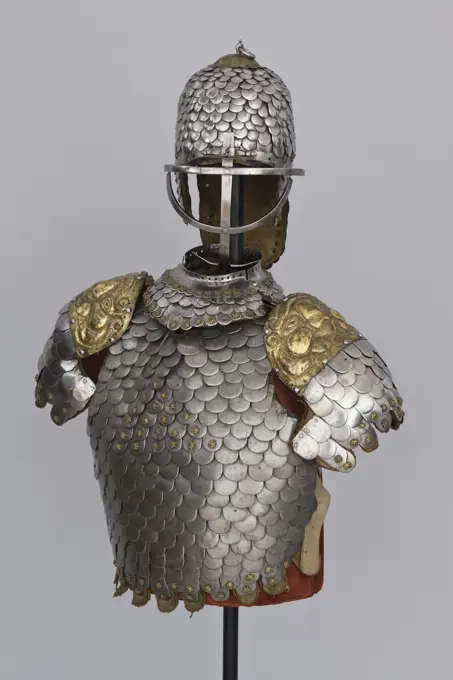
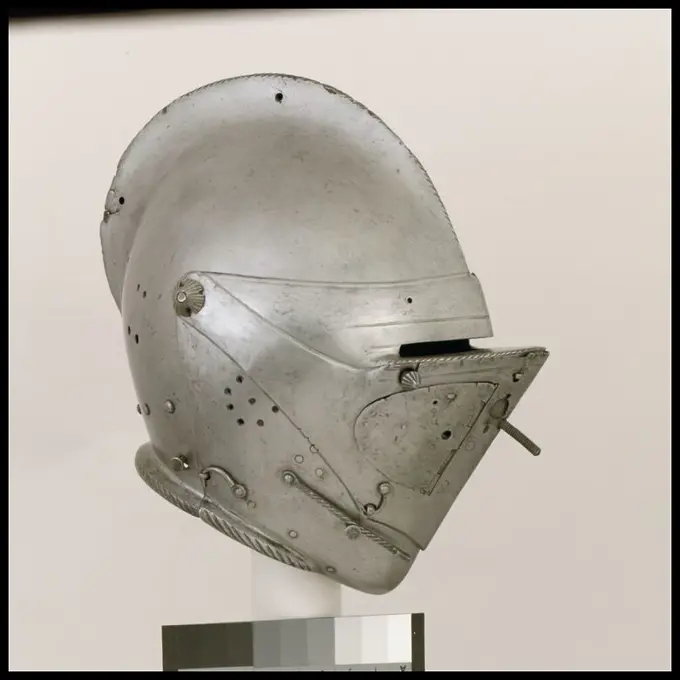
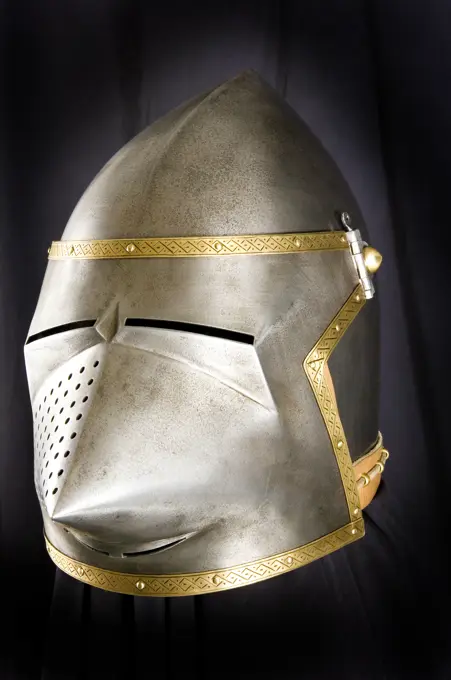
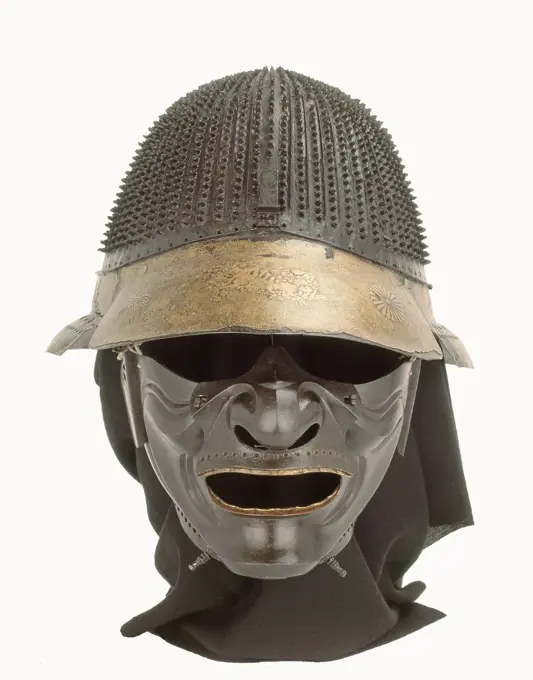
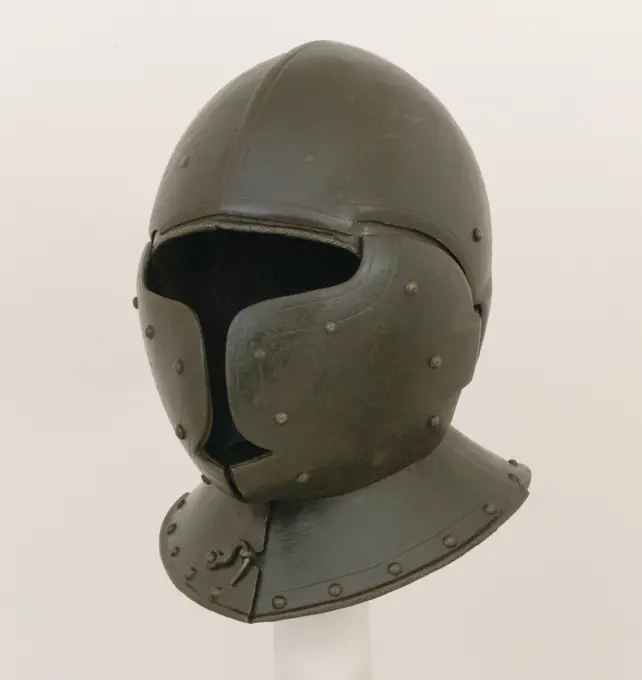
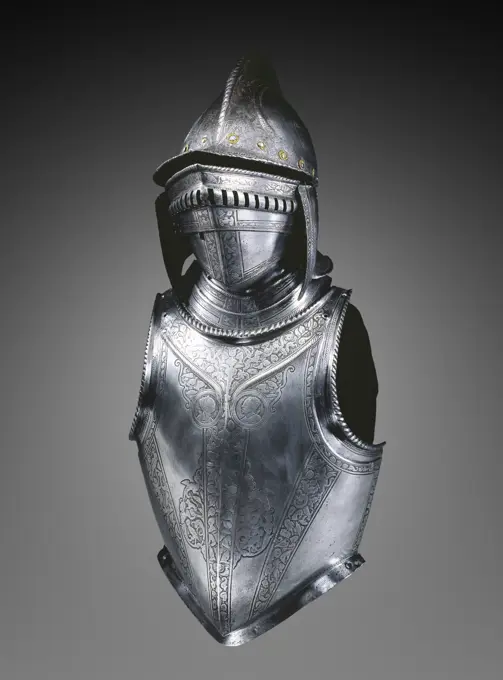
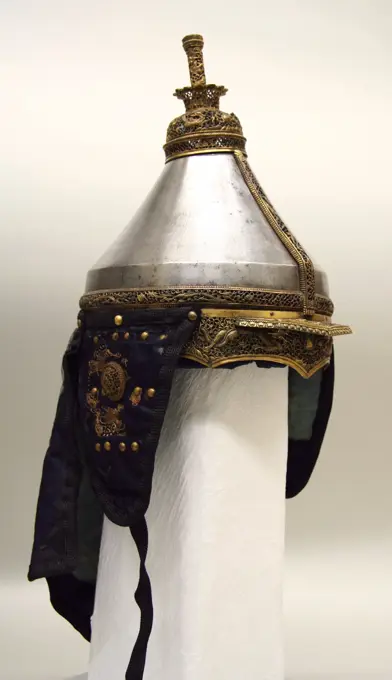
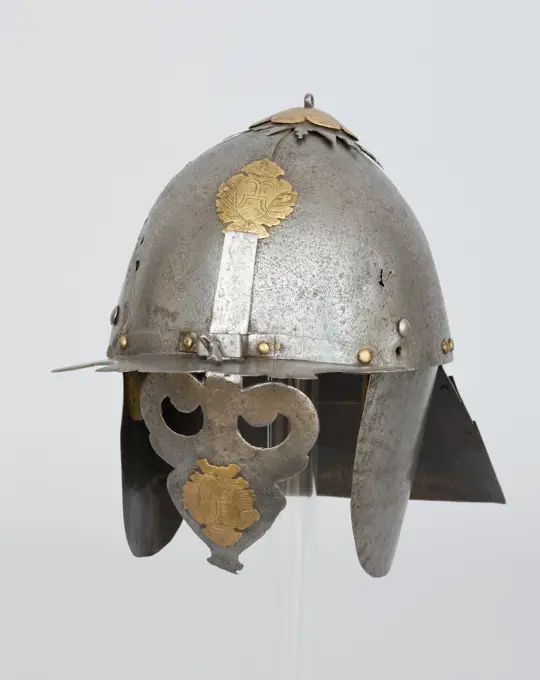
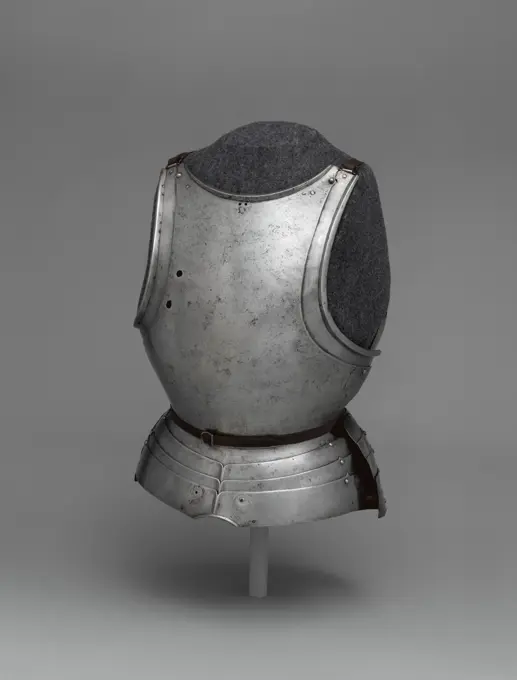
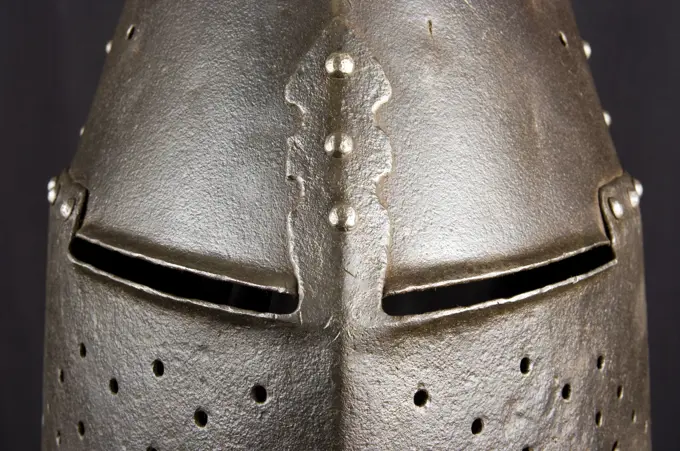
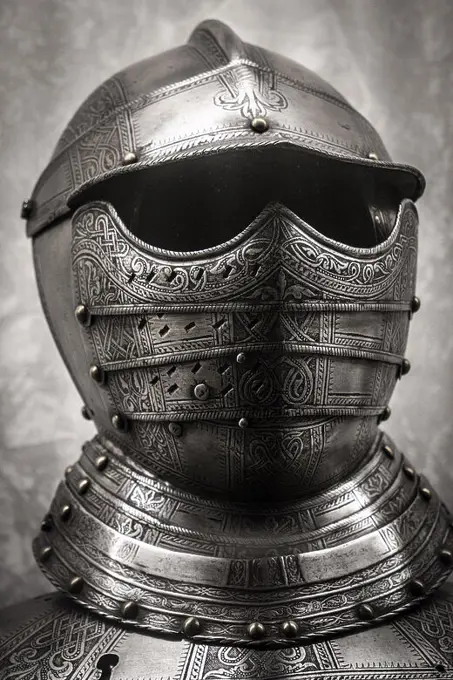
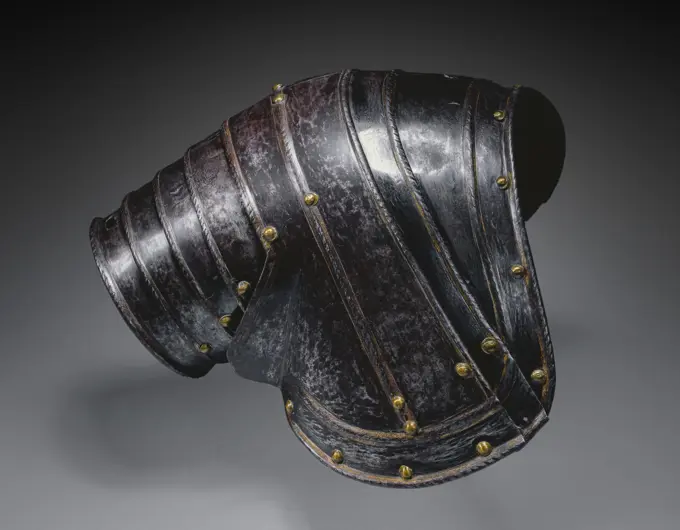
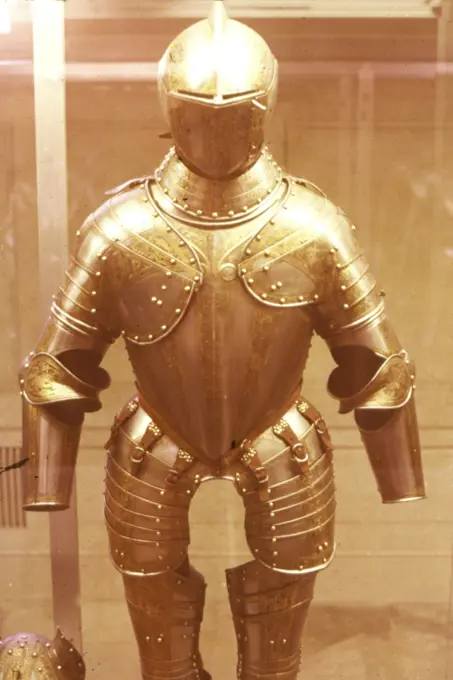
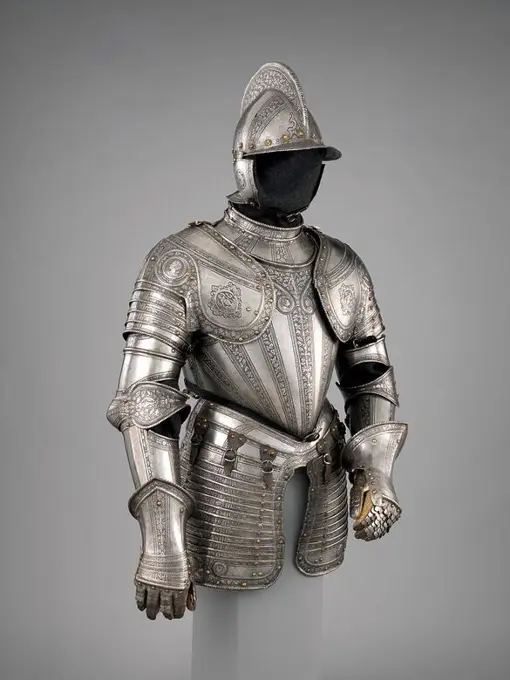
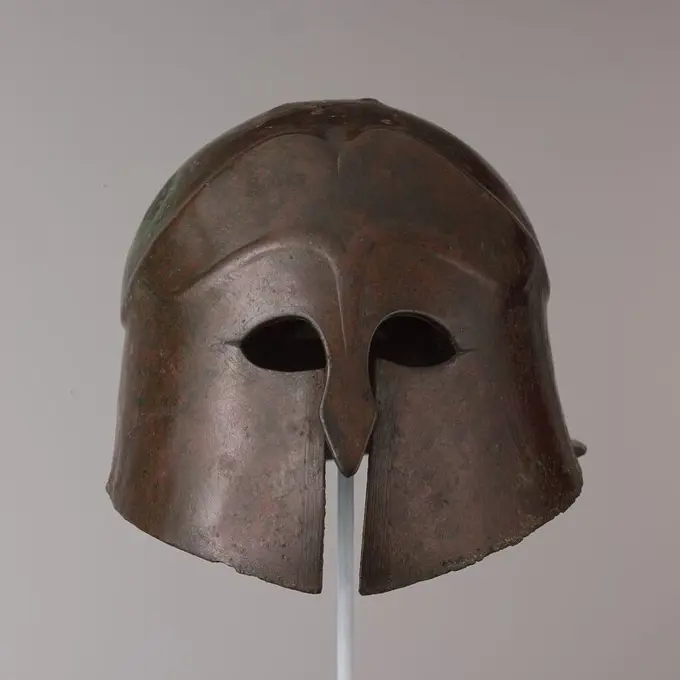
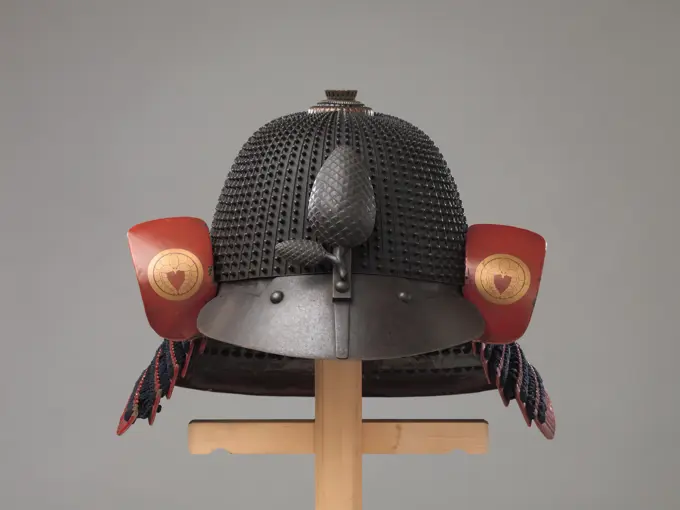
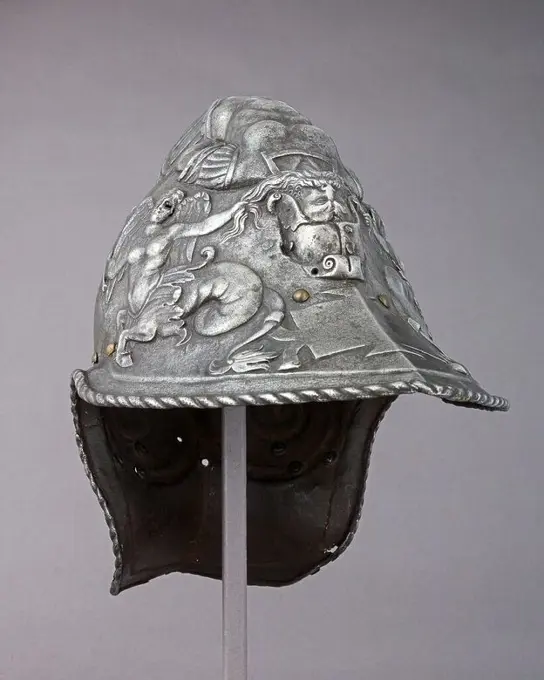
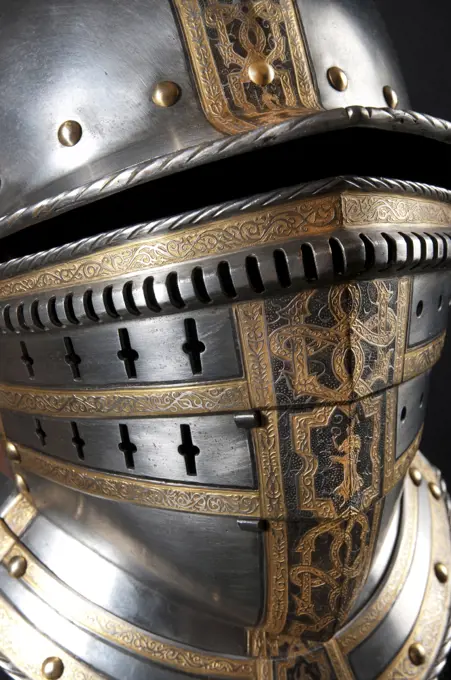
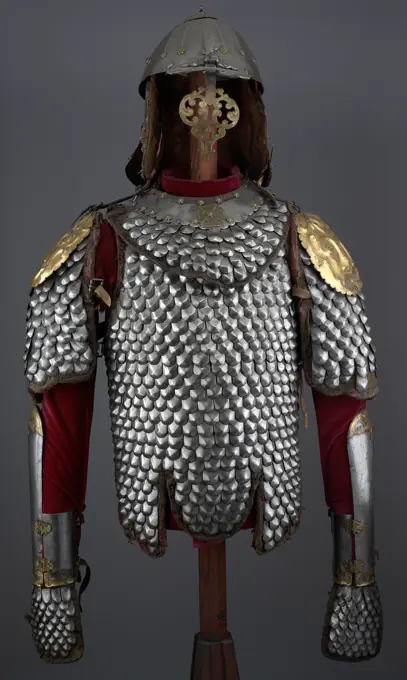
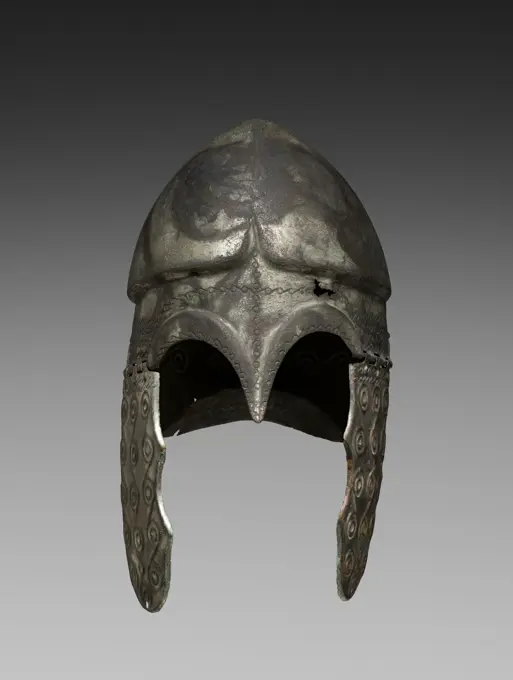
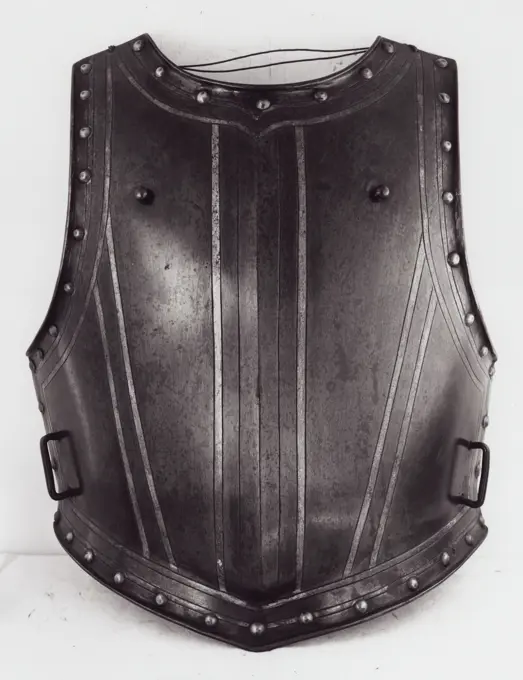
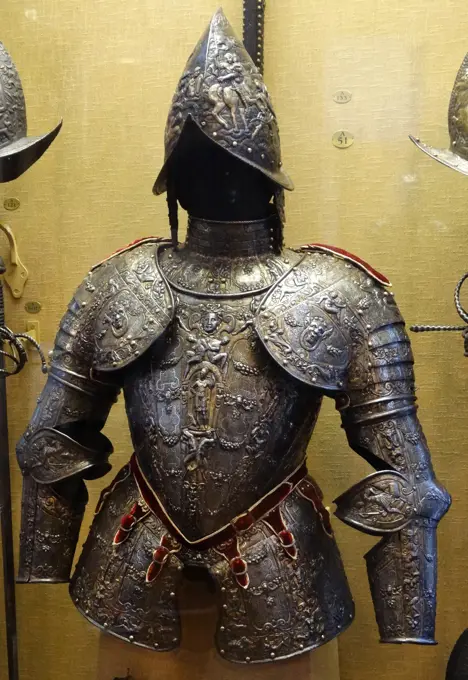
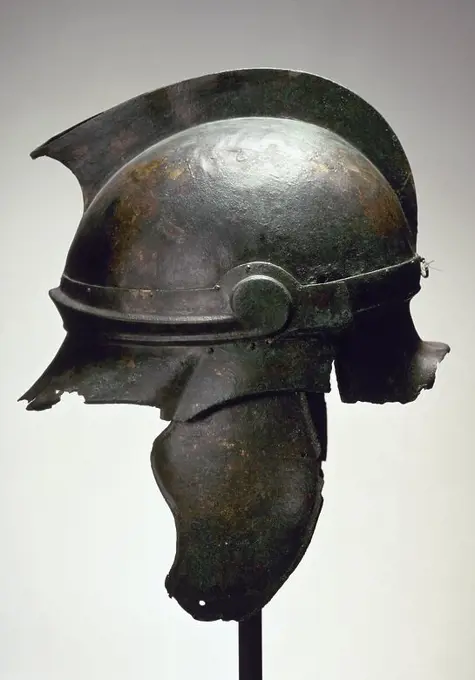
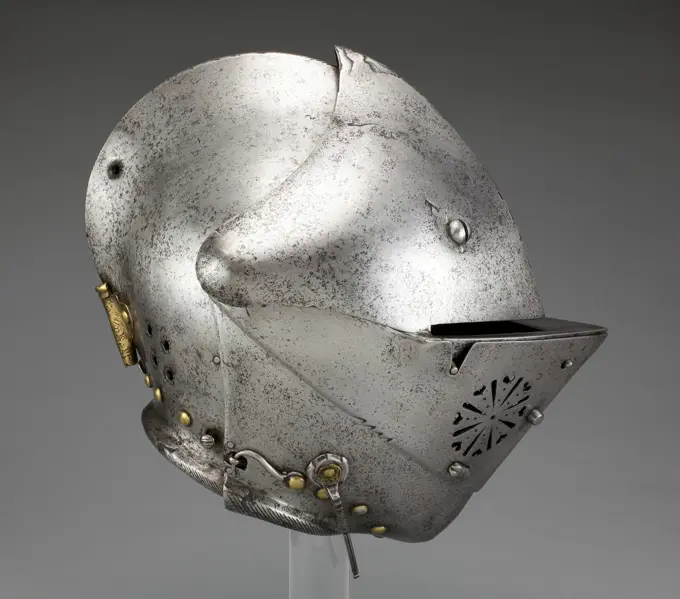
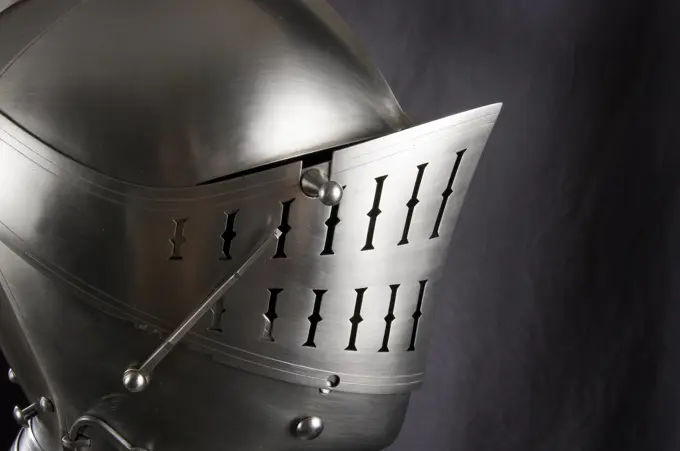
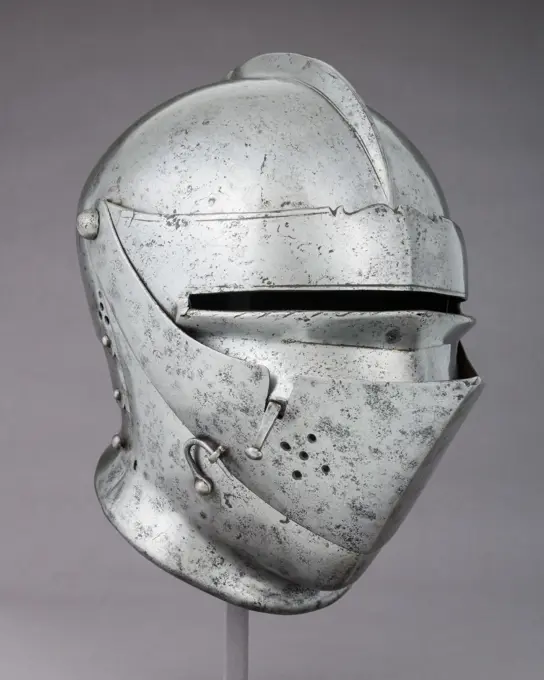
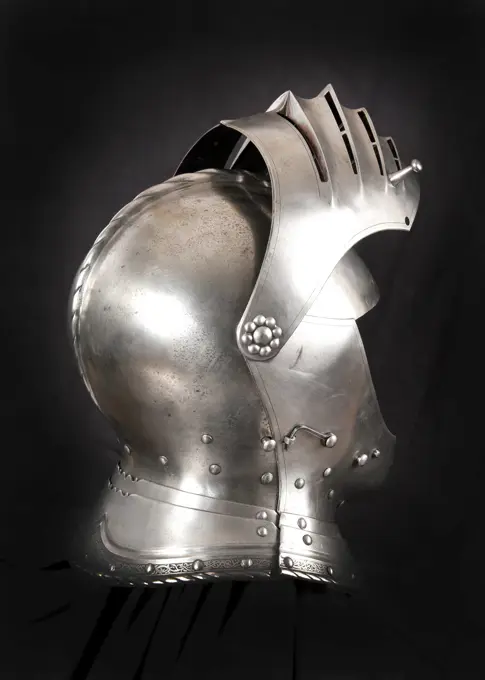
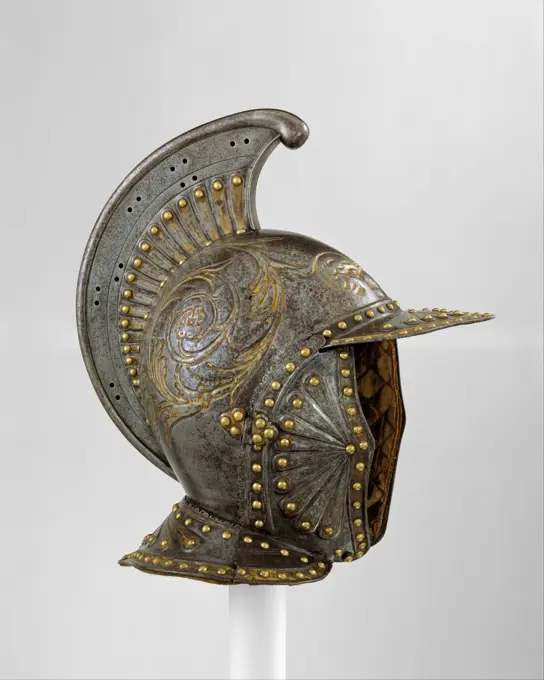
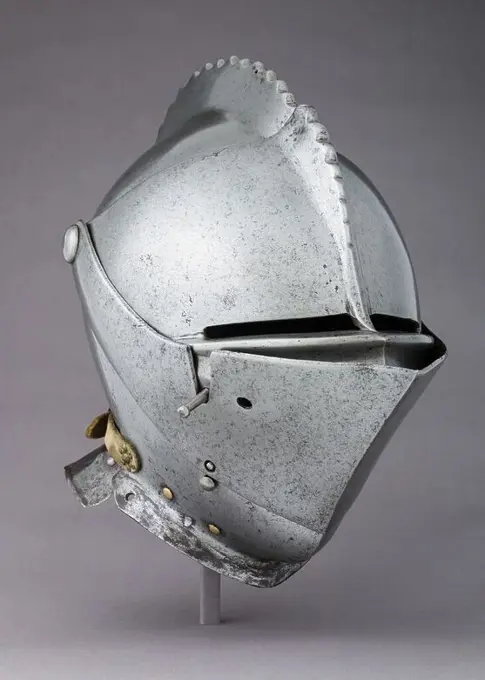
Armet. Culture: German. Dimensions: H. 12 1/8 in. (30.8 cm); W. 8 3/4 in. (22.2 cm); D. 14 13/16 in. (37.6 cm); Wt. 10 lb. 1.1 oz. (4567.1 g). Date: 16th century. Museum: Metropolitan Museum of Art, New York, USA.Medieval helmet on a black background, Muiden Castle; Muiden, NetherlandsLobster-Tail Burgonet. Culture: German. Dimensions: H. 16 1/4 in. (41.3 cm); W. 7 3/4 in. (19.7 cm); D. 11 1/2 in. (29.2 cm); Wt. 5 lb. 4 oz. (2381 g). Date: 16th century. Museum: Metropolitan Museum of Art, New York, USA.Iron helmet of the medieval knight. Very heavy headdressRüstung Armour of the medieval knight. Metal protection of the soldier against the weapon of the opponent Copyright: xZoonar.com/ValeryxxSibrikovx 2494244Iron helmet Iron helmet of the medieval knight. Very heavy headdress Copyright: xZoonar.com/ValeryxxSibrikovx 2449904Visored Bascinet. Culture: German. Dimensions: Bascinet (a); H. 10 in. (25.4 cm); W. 8 1/8 in. (20.6 cm); D. 13 1/2 in. (34.3 cm); Wt. 5 lb. 3.7 oz. (2372.9 g); aventail (b); H. 16 1/4 in. (41.3 cm); Wt. 2 lb. 14.4 oz. (1315.4 g). Date: ca. 1400. Museum: Metropolitan Museum of Art, New York, USA.Armour Armour of the medieval knight. Metal protection of the soldier against the weapon of the opponent Copyright: xZoonar.com/ValeryxxSibrikovx 2479148Burgonet for a Cuirassier ca. 1620-30 French The surfaces are somewhat crudely etched with an overall pattern of strapwork cartouches enclosing trophies, all set against a cross-hatched ground. The decoration and the distinctive profile of the helmet are typically French. The baluster-shaped finial at the apex and large rayed washer below it are features also found on contemporary Flemish helmets and appear to be a conscious revival of the applied helmet ornaments depicted in Burgundian tapestries of the late fifteenth century. This example once belonged to the celebrated English painter Sir Richard Cosway, R.A. (1740-1821), who collected arms and armor as studio props for his history paintings.. Burgonet for a Cuirassier 26443Armet. Culture: French. Dimensions: H. 13 1/2 in. (34.3 cm); H. of comb 1 1/2 in. (3.8 cm); W. 9 3/4 in. (24.8 cm); D. 13 3/4 in. (34.9 cm); Wt. 5 lb. 6 oz. (2438 g). Date: ca. 1600. Museum: Metropolitan Museum of Art, New York, USA.Armet late 16th century French. Armet 27099Close Helmet for the Joust and Tourney. South German; probably Augsburg. Date: 1580-1600. Dimensions: H. 22.2 cm (8 3/4 in.). Steel and leather. Origin: Augsburg. Museum: The Chicago Art Institute, Chicago, USA.Closed Burgonet with Falling Buffe ca. 1590 British, Greenwich. Closed Burgonet with Falling Buffe 27102Closed Burgonet ca. 1560 Italian On cavalry helmets of this type, the face defense, called a falling buffe, can be lowered in three sections for better visibility and ventilation. This example has distinctive etched and gilded decoration featuring scrolling vines ending in dragon heads and cornucopias.. Closed Burgonet. Italian. ca. 1560. Steel, gold. HelmetsClose Helmet. Armorer: Gian Giacomo Negroli (Italian, Milan 1463-1543). Culture: Italian, Milan. Dimensions: H. 13 1/8 in. (33.3 cm); W. 8 1/2 in. (21.6 cm); D. 12 in. (30.5 cm); Wt. 3 lb. 6 oz. (1530 g). Date: ca. 1510-20.As the only known work that may be ascribed with reasonable certainty to Gian Giacomo Negroli (1463-1543), this previously unrecorded helmet is a major addition to the small corpus of works marked or signed by members of the celebrated Negroli family of fifteenth- and sixteenth-century Milanese armorers--no more than twenty pieces in total--of which key examples are in the Metropolitan Museum's collection. The father of Filippo Negroli (ca. 1510-1579), one of the greatest armorers of Renaissance Europe, and of Francesco Negroli (ca. 1522-1600), a consummate damascener, Gian Giacomo was an eminent armorer in his own right. Active in Milan around the turn of the sixteenth century, he was one of the most successful members of the Negroli family, and it was in his worksBarbute ca. 1460 Jacopo da Cannobio, called Bichignola Italian, Brescia This barbute is stamped with the mark attributed to the Brescian armorer Jacopo da Cannobio, called Bichignola, and with the lion of Saint Mark, which signified ownership by the Republic of Venice.. Barbute 24849ARMADURA A49 - SIGLO XVI. Location: PALACIO REAL-REAL ARMERIA DE MADRID. MADRID. SPAIN.Close Helmet. Armorer: Hans Maystetter (Austrian, Innsbruck, documented 1508-33). Culture: Austrian, Innsbruck. Dimensions: H. 11 in. (27.9 cm); W. 9 in. (22.9 cm); D. 10 3/8 in. (26.4 cm); Wt. 5 lb. 8 oz. (2495 g). Date: ca. 1505-10.This is an early close helmet, which became the standard form of cavalry helmet throughout the sixteenth century. Characteristic are the visor and separate chin defense that pivot at the same points. Museum: Metropolitan Museum of Art, New York, USA.Sallet (Barbute) Made 1460-1480 Milan. Steel .Close Helmet for the Tilt 1573 German, Augsburg The helmet is part of a richly decorated armor made for one of the princes Radziwill of Poland for use in the field and the tournament. The Polish eagle appears in the etched ornament; the date 1573 is etched on another piece from this same armor, which is in the Art Institute of Chicago.. Close Helmet for the Tilt 23947Iron helmet of the medieval knight. Very heavy headdressSzyszak PappenheimerIron helmet of the medieval knight. Very heavy headdressClose Helmet ca. 1510-20 Gian Giacomo Negroli As the only known work that may be ascribed with reasonable certainty to Gian Giacomo Negroli (1463-1543), this previously unrecorded helmet is a major addition to the small corpus of works marked or signed by members of the celebrated Negroli family of fifteenth- and sixteenth-century Milanese armorers--no more than twenty pieces in total--of which key examples are in the Metropolitan Museums collection. The father of Filippo Negroli (ca. 1510-1579), one of the greatest armorers of Renaissance Europe, and of Francesco Negroli (ca. 1522-1600), a consummate damascener, Gian Giacomo was an eminent armorer in his own right. Active in Milan around the turn of the sixteenth century, he was one of the most successful members of the Negroli family, and it was in his workshop that Filippo and his brothers long worked and presumably acquired many of the skills that distinguish their works. Until now, none of Gian Giacomos works had been identifiedArmour Armour of the medieval knight. Metal protection of the soldier against the weapon of the opponent Copyright: xZoonar.com/ValeryxxSibrikovx 2415893Italian armor Italian armor, 16th century, Guadamur castle, Álava Armory Museum, Vitoria, Basque Country, Spain Copyright: xZoonar.com/Tolox 21366577Close Helmet for the Field ca. 1600-1610 French The decoration of this helmet, with its raised ribs outlining parallel bands etched with trophies of arms, is typically French and is found on a distinctive group of armors dating to the reign of Henry IV (1590-1610). Among the trophies on this example are cannon bearing the fleurs-de-lis of France. (The front collar lame is a modern restoration.). Close Helmet for the Field. French. ca. 1600-1610. Steel, gold, leather. HelmetsArmour of the medieval knight. Metal protection of the soldier against the weapon of the opponentIron helmet of the medieval knight. Very heavy headdressArmour Armour of the medieval knight. Metal protection of the soldier against the weapon of the opponent Copyright: xZoonar.com/ValeryxxSibrikovx 2415931Armour Armour of the medieval knight. Metal protection of the soldier against the weapon of the opponent Copyright: xZoonar.com/ValeryxxSibrikovx 2415937Armour Armour of the medieval knight. Metal protection of the soldier against the weapon of the opponent Copyright: xZoonar.com/ValeryxxSibrikovx 2415916Armour Armour of the medieval knight. Metal protection of the soldier against the weapon of the opponent Copyright: xZoonar.com/ValeryxxSibrikovx 2494269Ruiter helmet associated with the armor, presumably worn by Den Ridder Pankraz von Freyberg. Ruiter helmet or jacket helmet with a double visor. The right side of the lower viewplate has air holes that consist of a rectangle that is awarded on both side with a circle. In total there are 7 of such decorations. With push buttons, both visors can be kept up. The helmet has a comb. The lining is largely present and probably nineteenth century. The arcated necklag cover consists of two parts, the lower is deposited with a cable decoration.Visored Bascinet ca. 1450 German. Visored Bascinet 25395Close-Helmet for the Tournament on Foot ca. 1600-1610 the Master of the Castle Mark Italian This helmet comes from a garniture made by the Maestro dal Castello (Master of the Castle), so named for the castle mark found at the top of the breastplate on this and other examples of his work. He was probably a follower of the great Milanese armorer Pompeo della Cesa (recorded 1572-1593). Among the patrons of the Maestro dal Castello were the dukes of Savoy and King Philip III of Spain. The helmet for the tournament is from an unidentified garniture.. Close-Helmet for the Tournament on Foot 22227Caracentine armor consisting of a szyszak, breastplate, collarbone and a pair of shoulder padsHelmet. Culture: Turkish. Dimensions: H. including nasal 14 in. (35.6 cm); H. excluding nasal 13 3/4 in. (34.9 cm); W. 8 1/2 in. (21.6 cm); D. 10 1/4 in. (26 cm); Wt. 3 lb. 2.3 oz. (1426 g). Date: 16th-17th century. Museum: Metropolitan Museum of Art, New York, USA.Close-Helmet for the Tilt. Culture: Austrian, Innsbruck. Dimensions: H. 13 in. (33 cm); W. 9 3/8 in. (23.8 cm); D. 13 1/8 in. (33.3 cm); Wt. 7 lb. 5 oz. (3321 g). Date: ca. 1580-90. Museum: Metropolitan Museum of Art, New York, USA.Iron helmet Iron helmet of the medieval knight. Very heavy headdress Copyright: xZoonar.com/ValeryxxSibrikovx 2460683Armour Armour of the medieval knight. Metal protection of the soldier against the weapon of the opponent Copyright: xZoonar.com/ValeryxxSibrikovx 2415899CASCO CON MASCARA (KABUTO)-JAPON 1573/84-ACERO,LACA,LATON. Location: PALACIO REAL-REAL ARMERIA DE MADRID. MADRID. SPAIN.Armour Armour of the medieval knight. Metal protection of the soldier against the weapon of the opponent Copyright: xZoonar.com/ValeryxxSibrikovx 5585088Siege Helmet ca. 1600-1650 French Siege engineers, sappers, and bombardiers regularly came under fire at close range and thus were equipped with extraordinarily heavy shot-proof armor. The bowl and cheeks of this example are protected by a double thickness of plates. The right side of the bowl has a proofmark--the dent caused by a bullet fired at a prescribed distance as proof of the armor plate's strength--but the shot did not penetrate the sturdy reinforce to the bowl below.. Siege Helmet. French. ca. 1600-1650. Steel. HelmetsIron helmet Iron helmet of the medieval knight. Very heavy headdress Copyright: xZoonar.com/ValeryxxSibrikovx 5718634Old armor with metal sword isolated on white backgroundIron helmet of the medieval knight. Very heavy headdressSzyszak husarskiWaistcoat cuirass, ca.1580. North Italian. Armoury. Grandmaster Palace. Valletta. Malta.Armor for the Field and Tourney. South German or Austrian (Probably Innsbruck). Date: 1560-1570. Dimensions: H. 188 cm (74 in.). Steel, brass, traces of gilding, leather, and velvet textile. Origin: Innsbruck. Museum: The Chicago Art Institute, Chicago, USA.Full armour. Made in Milan between 1570-1580. Metals.Breastplate with Etched Bands of Trophies and Medallions, c. 1550-1600. North Italy, 16th century. Etched steel; overall: 46 x 34.7 x 15.9 cm (18 1/8 x 13 11/16 x 6 1/4 in.). Shown here together is a burgonet, buffe, and breastplate all decorated with a technique known as etching. A burgonet is a light open helmet characterized by a peak, a fall over the eyes, and hinged earpieces. The face is protected by the addition of a buffe, a sperate detachable element worn with the open helmet that extends to the throat. It connects to the breastplate which protects the abdomen and is worn with a backplate.Tuscany, Italy. Detail of an original Medieval armourArmour of the medieval knight Armour of the medieval knight. Metal protection of the soldier against the weapon of the opponent Copyright: xZoonar.com/ValeryxxSibrikovx 9023857ritter,ritterrüstung,miniatur,ritterrüstungen,rüstung,rüstungen,mini,miniaturen ** knight,suit of armor,miniature,knights,suit of armors,miniatures 3ro-inxArmor 18th century Chinese. Armor 32076Close Helmet in Maximilian Style, c. 1510-30. Germany, Nuremberg(), 16th century. Steel, brass rivets; overall: 29.2 x 34.9 x 23.5 cm (11 1/2 x 13 3/4 x 9 1/4 in.). Distinguished by its regularly fluted surfaces, armor in this style was popularized in South Germany during the early 1500s. The style is usually called "Maximilian," as it was introduced during the reign of Emperor Maximilian I (1493-1519). The style reflects male costume of the period and the shift to the new rounded forms of the Renaissance. Other examples of this armor style may be seen nearby.Close Helmet for the Tourney. South German; Augsburg. Date: 1570-1590. Dimensions: H. 30.5 cm (12 in.). Steel, brass, and leather. Origin: Augsburg. Museum: The Chicago Art Institute, Chicago, USA.Szyszak husarskiArmour Armour of the medieval knight. Metal protection of the soldier against the weapon of the opponent Copyright: xZoonar.com/ValeryxxSibrikovx 2494275late 16th century Genoese armourIron helmet of the medieval knight. Very heavy headdressBreastplate ca. 1485-95 Hans Prunner Austrian This breastplate is by Hans Prunner (recorded 1482-99). The armorers of Innsbruck, capital of the Austrian Tirol, thrived under the patronage of the Habsburg court and produced armor that was internationally renowned for the strength of its steel and the beauty of its form. Located near the border between Austria and Italy, this center produced armor that reflected the influence of north and south, combining the elongated and spiky German Gothic style with that of the rounded and more robust forms preferred in Renaissance Italy.. Breastplate. Austrian, Innsbruck. ca. 1485-95. Steel, leather. Innsbruck. Armor Parts-BreastplatesArmour Armour of the medieval knight. Metal protection of the soldier against the weapon of the opponent Copyright: xZoonar.com/ValeryxxSibrikovx 2425283Iron helmet Iron helmet of the medieval knight. Very heavy headdress Copyright: xZoonar.com/ValeryxxSibrikovx 2460646The front view of a medieval glossy armor with details and white wall in the background. The front view of a medieval glossy armor with details and white wall in the background.Armour Armour of the medieval knight. Metal protection of the soldier against the weapon of the opponent Copyright: xZoonar.com/ValeryxxSibrikovx 2415891German armor with engraving of Santiago, 17th century, Álava Armory Museum, Vitoria, Basque Country, Spain.Breastplate 1570-1590 Italy. Steel .Pauldron for Right shoulder, c. 1560-70. Italy, 16th century. Steel, blued and gilded; overall: 26.4 x 28 cm (10 3/8 x 11 in.). This element for the shoulder once belonged to a suit decorated by the bluing technique, a process of superheating armor plates to achieve a deep blue color. Bluing required heating to at least 590 degrees Fahrenheit, the temperature at which oxidation occurs. Although the original color is now darkened it would have originally been a deep shade of blue. It was further enhanced with gilding to create additional contrast for a refined appearance.Suit of Armour. 16th cent. Italian.Infantry Armor. Armorer: Upper plate of the gorget, skirt lames, and cheek pieces made by Daniel Tachaux (French, 1857-1928, active in France and America) in the Metropolitan Museum of Art, Armor Workshop. Culture: Italian. Dimensions: Wt. 33 lb. 11 oz. (15.28 kg). Date: dated 1571; upper plate of the gorget, skirt lames, and cheek pieces, 1917.The open-faced burgonet and the absence of a lance rest identify this as an armor for infantry or light cavalry use. The quality of its construction and decoration indicates that it was probably intended for an officer. Infantry armed with swords, pikes, or handguns played an increasingly important role in military tactics throughout the sixteenth century.The decoration of this armor typifies that used most frequently in Italy from about 1550 to about 1590. The bands of ornament are filled with classically inspired trophies of armor, musical instruments, and masks. By the 1570s, however, the individual designs had become so stylized that they Bronze helmet of South Italian-Corinthian type. Culture: Greek. Dimensions: H. 7 3/4 in. (19.7 cm)width 7 7/8 in. (20 cm)depth 10 1/2 in. (26.7 cm). Date: mid-4th-mid-3rd century B.C..These helmets represent South Italian adaptations of the Greek type known as Corinthian. The general shape is more open at the bottom, and the articulation of the face includes marked ridges above the eyes and at the "hairline." The example with the plume holder (2003.407.4) also has lightly traced ornament and the figure of a horse. Museum: Metropolitan Museum of Art, New York, USA.Closed Burgonet Made 1590-1620 Milan. steel, gold, silver, and brass .Helmet ca. 1500-1525 possibly Turkish, Istanbul, in the style of Turkman armor This is one of the few conical helmets of the period to retain its original brim, nasal, cheeks, and nape defense. The brass trim, engraved with a zigzag motif, is typical of Mamluk and Ottoman helmets about 1500. Helmet. possibly Turkish, Istanbul, in the style of Turkman armor. ca. 1500-1525. Steel, iron, gold, copper alloy. HelmetsArmour worn at the funeral of Michiel de Ruyter . Chest and back piece. Greenwich, c. 1560. Other parts: Greenwich, c. 1600-1625. Iron, leather. Rijksmuseum. Amsterdam. Netherlands.Helmet (Hoshi- Kabuto) in the 16th-Century Style probably late 17th-early 18th century Inscribed by Saotome Ienari Japanese The overlapping edges of the iron plates form ridges (suji). Sixty-two of the paltes have star shaped rivets known as hoshi, giving the name of the helmet-bowl type (hoshi-bachi).. Helmet (Hoshi- Kabuto) in the 16th-Century Style. Japanese. probably late 17th-early 18th century. Iron, lacquer, silk. HelmetsThree-Quarter Armor ca. 1645 Italian, Brescia. Three-Quarter Armor 22259Iron helmet Iron helmet of the medieval knight. Very heavy headdress Copyright: xZoonar.com/ValeryxxSibrikovx 2449949Barbute ca. 1470 Italian. Barbute. Italian. ca. 1470. Steel, leather. HelmetsBurgonet after Filippo Negroli. Culture: Italian, Milan. Dimensions: H. 10 9/16 in. (26.8 cm); W. 9 in. (22.9 cm); D. 14 in. (35.6 cm); Wt. 3 lb. 10 oz. (1651 g). Date: 1869.This closely resembles two helmets by Filippo and Francesco Negroli in Madrid and Paris. Later over-cleaning removed the original dark surface and damascened decoration of our burgonet. Museum: Metropolitan Museum of Art, New York, USA.Europe, Italy, Lombardy, Milan, museum at Castle Sforzesco, suit of armorIron helmet of the medieval knight. Very heavy headdress.Scale Armor After Hetman Mikołaj Hieronim Sieniawski unknownAmong ancient helmets, the Chalcidian type is varied, widespread, and comparatively unrestrictive, with relatively wide openings for the eyes and ears. This example, probably made in the Black Sea region or even further east, features a pointed noseguard, high carinated crown, molded brow ridge, and everted rear flange, plus large separately made hinged cheekpieces. The tinned bronze surface is almost silver in color, with extensive decoration including small incised linked scrolls and much larger embossed linked scrolls. Chalcidian Helmet, c. 350-200 BCE. Greek (perhaps Black Sea area). Tinned bronze; height: 31.8 cm (12 1/2 in.).Cuirass Made 1700-1750 France. At over 33 pounds, this shot-proof breastplate was nearly too heavy to wear. Surprisingly, this is about the same weight as the outer tactical vests (OTVs) used by the modern military.This well-preserved cuirass was likely produced for the elite cavalry regiment known as the Kingís Cuirassiers. The original blue surface contrasted against engraved and gilt bands to reference the French royal colors.. Steel, brass, silver-gilt bradding, silk textile, and leather .Half suit of armour from a group of parade armours. The surface of this armour is richly embossed with mythological figures including Mars, Hercules and the Nemean Lion. From Milan, made from iron, gold, silver and brass.Armour of the medieval knight. Metal protection of the soldier against the weapon of the opponentRoman bronze helmet. National Archaeological Museum. Madrid. Spain.Arm harness for left arm, c. 1525 - c. 1575  Arm cover, arm harness for left arm, iron, white, consists of an upper arm pipe, an elbow pipe and a forear pipe. The edges are surrounded. On the upper arm pipe a pointed pin and a leather belt. There are decorations around the upper arm pipe in a wide strip that runs down. The elbow pipe is decorated and riveted rivets on the upper arm pipe and the forear pipe. Two hinges have been applied to the forearm pipe so that the lower part can be removed. From the elbow pipe a wide strip with decorations to the forearm pipe. Inside is painted black. Europe Metal. Belt: Leather. Klinknagels: Copper (Metal) etchingClose Helmet for the Tourney Made 1570-1590 Augsburg. This helmet was used in the sport of the tourney, a mock battle on horseback or on foot. To protect against dangerous trusts entering under the helmetís neck plates, the helmetís collar is designed to rotate on a rim that closes over the separate gorget or neck defense. Though this allowed for some lateral head movement, it was a more restrictive alternative to the overlapping plates on close helmets for the field of battle.The upper visor is reinforced with an additional plate to deflect strikes from a lance or sword. This reinforce was repaired with a riveted and braised patch covering the left visor pivot; together, with sword cuts over the comb or center ridge of the helmet, this repair suggests this piece received some heavy use.. Steel, brass, and leather .Armour Armour of the medieval knight. Metal protection of the soldier against the weapon of the opponent Copyright: xZoonar.com/ValeryxxSibrikovx 2425269Armour Armour of the medieval knight. Metal protection of the soldier against the weapon of the opponent Copyright: xZoonar.com/ValeryxxSibrikovx 2425273Armet ca. 1500 German. Armet 25633Italian armor, 16th century, Guadamur castle, Álava Armory Museum, Vitoria, Basque Country, Spain.Armor Antiques-Misc Jousting Armor (Rennzeug) and Matching Half-Shaffron. Culture: German, probably Dresden or Annaberg. Dimensions: Wt. 91 lb. 6 oz. (41.45 kg). Date: ca. 1580-90.This armor was intended for use in the Scharfrennen, a joust fought in an open field by two contestants mounted on horses and armed with relatively sharp lances. The sport remained popular at the court of the prince-electors of Saxony long after it had gone out of fashion elsewhere in Europe.This is one of more than thirty almost identical armors--some brightly polished and others painted black--formerly kept in the ducal armory in Dresden for use in court tournaments. It is thought that they were made locally by Saxon armorers in Dresden and Annaberg.Painted inside the backplate is the name Herr von Breitenbach. This refers to Karl Christian von Breitenbach, an officer in the Saxon court from 1694 to 1726, who presumably wore the armor at a wedding tournament held in Dresden on September 12, 1719. This series of armoIron helmet Iron helmet of the medieval knight. Very heavy headdress Copyright: xZoonar.com/ValeryxxSibrikovx 5718637Ruiter helmet from iron. Ruiter helmet, iron, blank, the helmet bulb composed of two halves. Long low comb with a barged edge ending under the iron plum sleeve. The articulated neck plate is indicated on the helmet bulb and has a barbed flange edge. From the front ended with three plates, foldable at a common point. The chin plate is riveted to the articulated neck plate and the helmet globe and has a rubbed edge. On the left side of the chin plate a hook that can be fixed to the lower visor. Parallel walking to the edge decoration objection with rivets flattened below. The face plate has three vertical bars that each has a bulging in the middle. All around decoration lines. On the helmet there is a double visor whose lower visor has an eye on the left to which the hook of the chin plate can be attached and has a sloping centerbone, the edge of the visor is taabbed and has under the edge decoration lines. On both sides of the vizier round air holes. The upper visor has two horizontal sParade Helmet à l'Antique ca. 1630 French, probably Paris A reflection of the classical tradition in early Baroque France, this parade helmet was designed in imitation of ancient Roman examples. The tall arched comb was originally fitted with an elaborate feathered plume, and the colorful effect was heightened by the use of gold paint and gilt rivet heads. The padded lining, still intact, was once covered with pink silk. Undoubtedly created for a member of the court of Louis XIII (r. 1610-43), this wonderfully preserved helmet was probably intended for use in a mock joust or carousel.. Parade Helmet à l'Antique. French, probably Paris. ca. 1630. Steel, copper alloy, paint, textile. probably Paris. Helmets