Medieval Helmets Collection

A series of historical helmets from different periods including armored and decorative styles, highlighting intricate designs and craftsmanship from the 16th century.

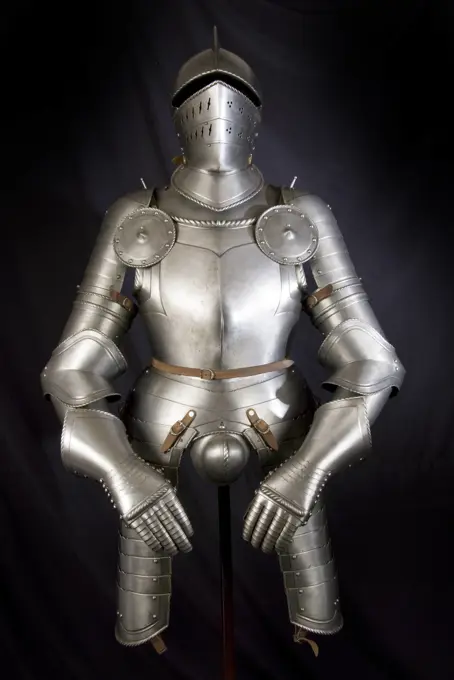
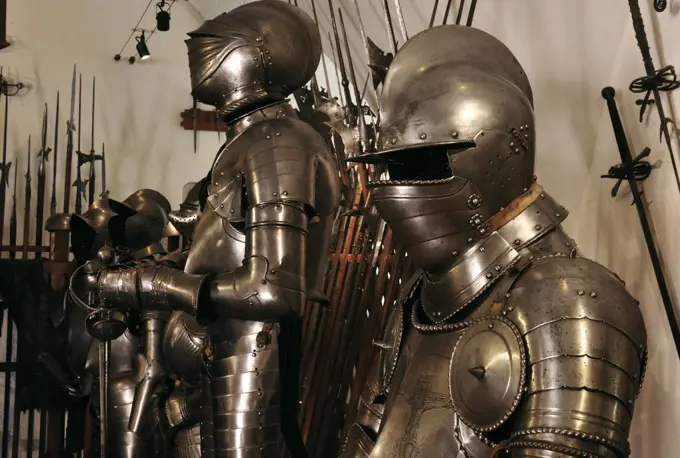
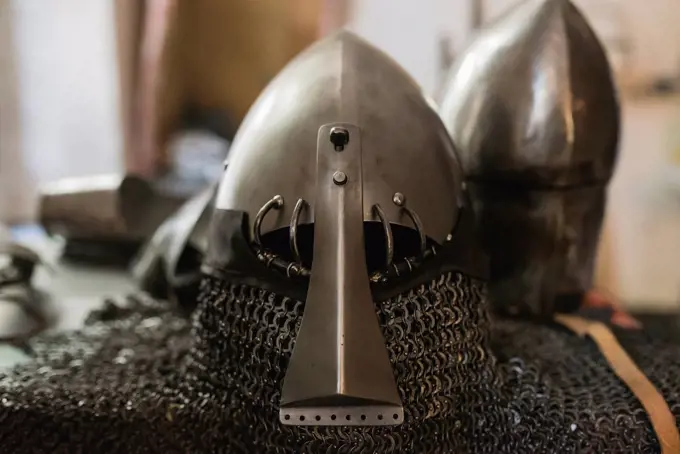
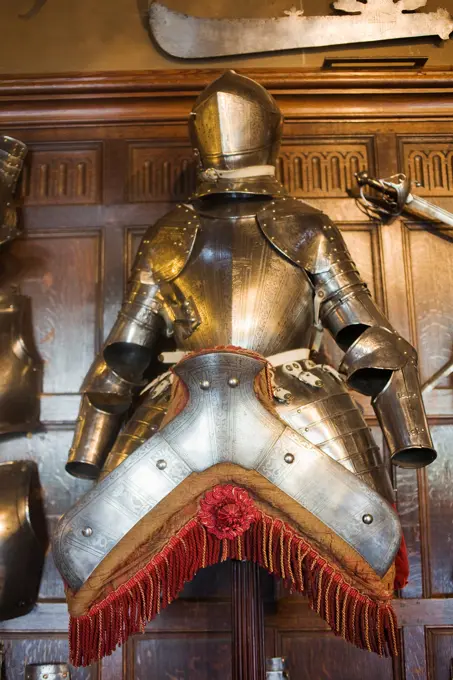
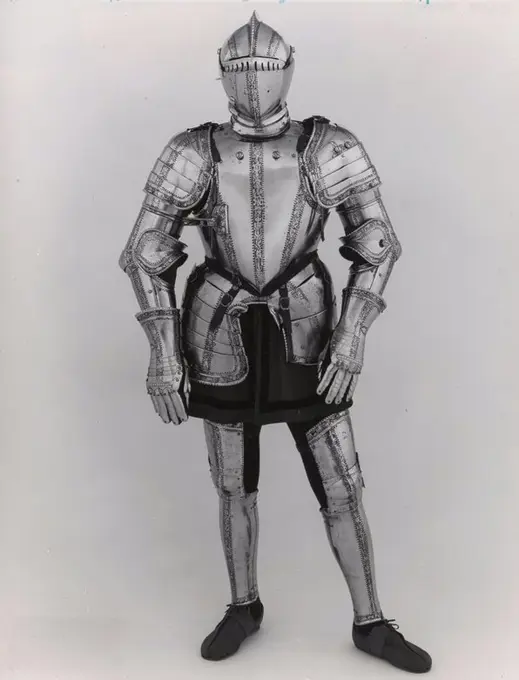
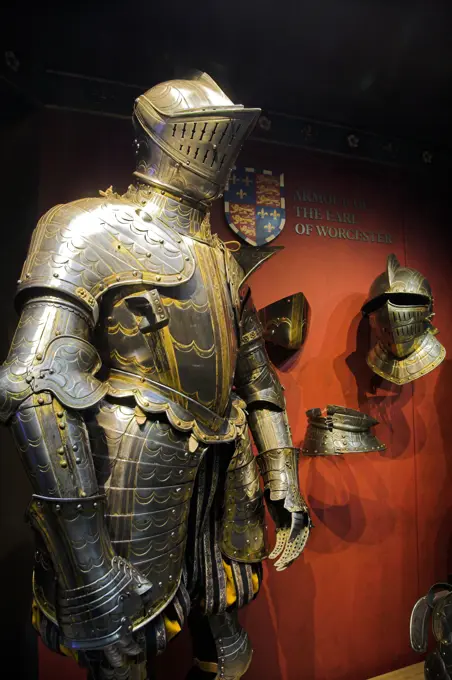
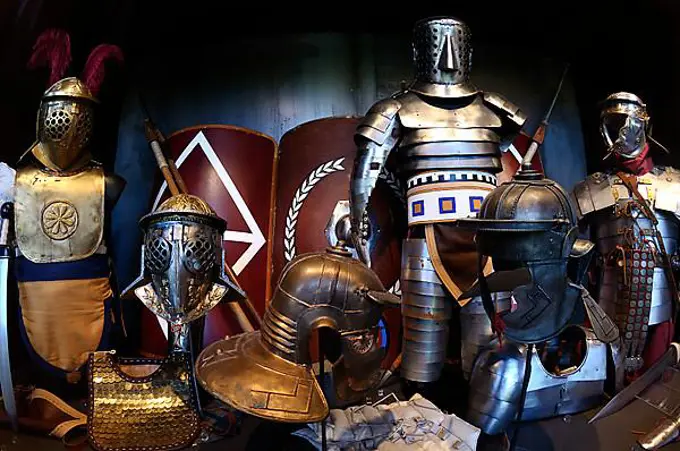
Armour Armour of the medieval knight. Metal protection of the soldier against the weapon of the opponent Copyright: xZoonar.com/ValeryxxSibrikovx 2479148
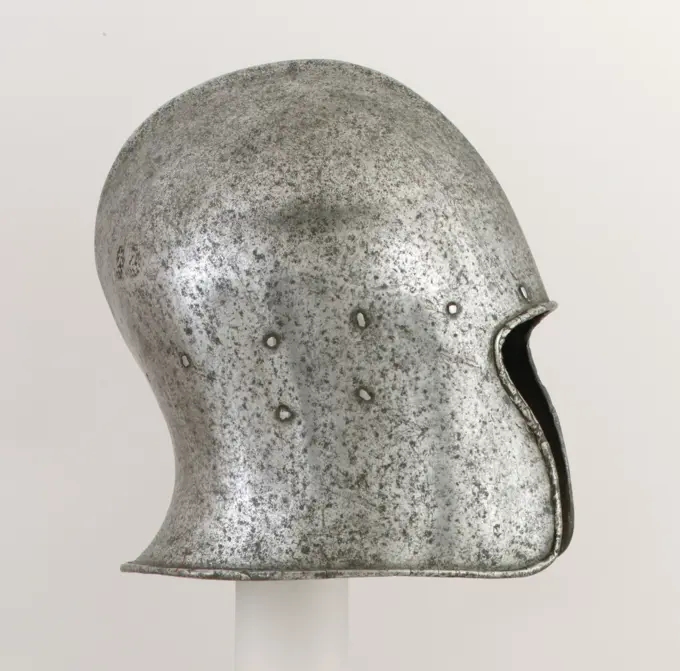
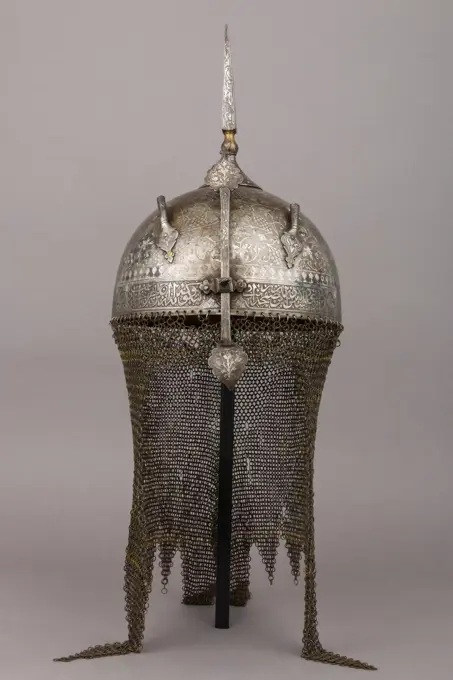
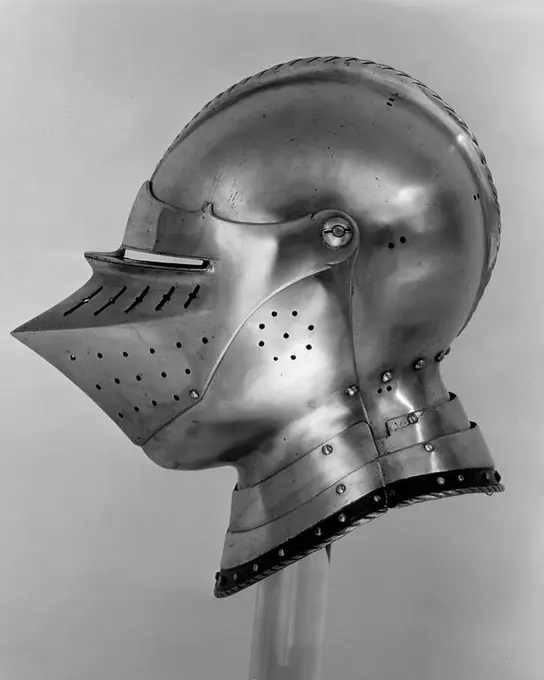
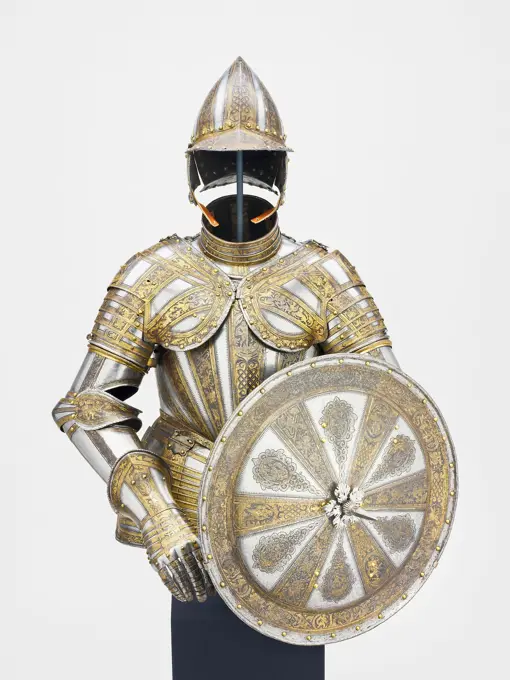
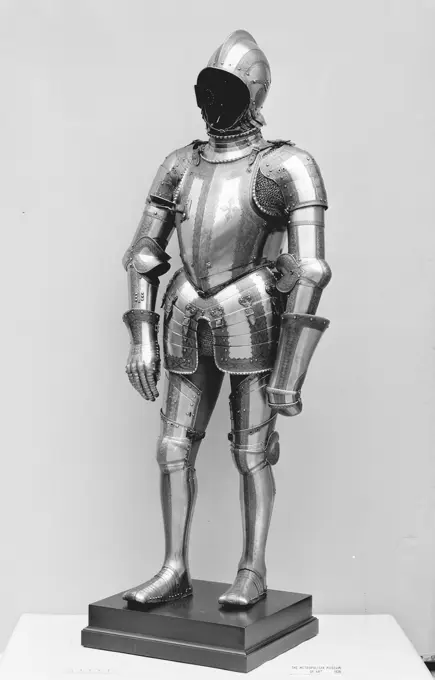
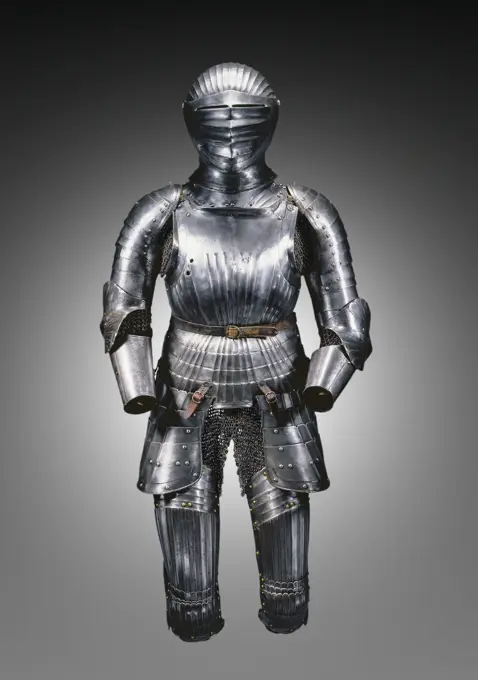
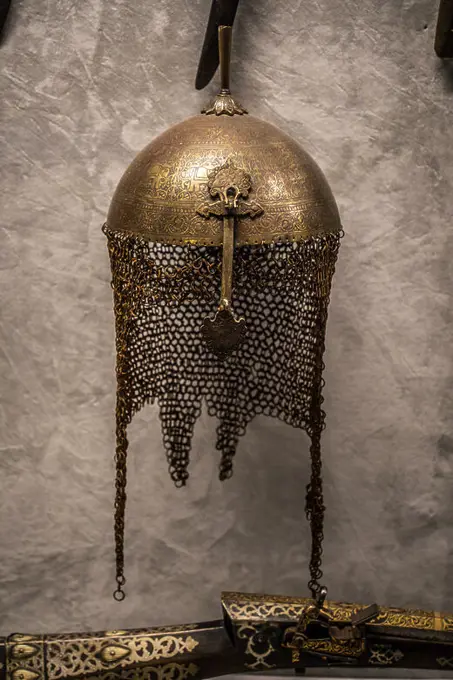
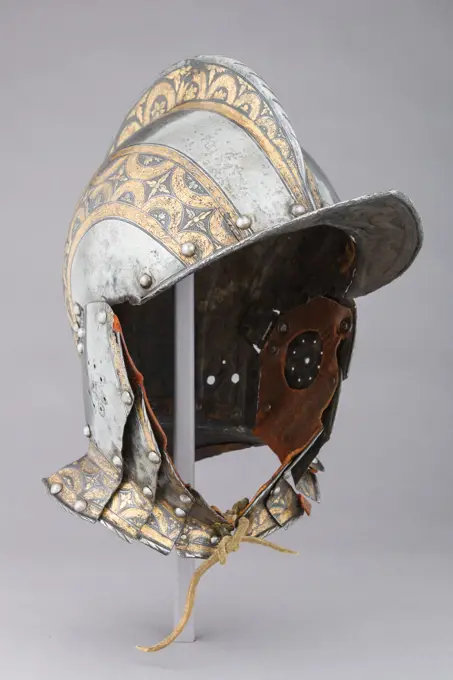
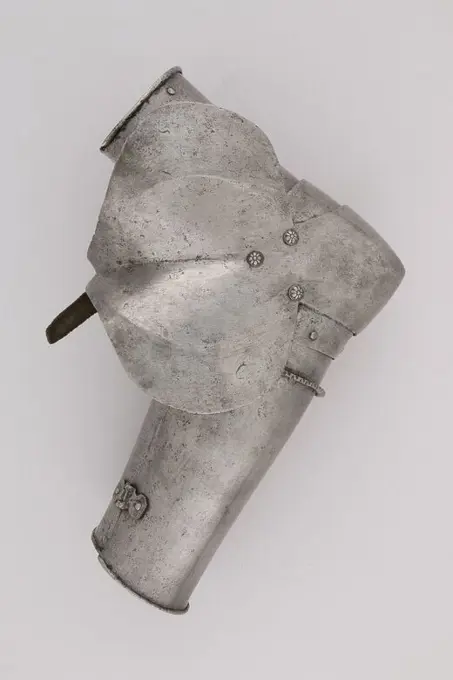
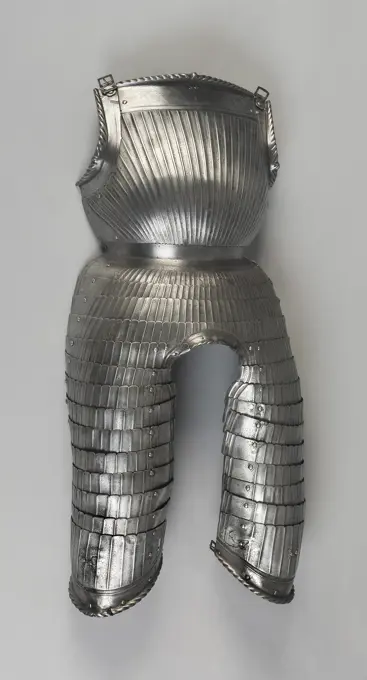
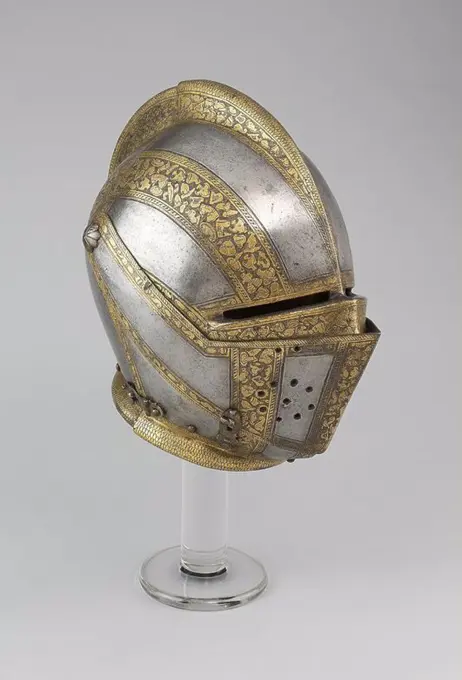
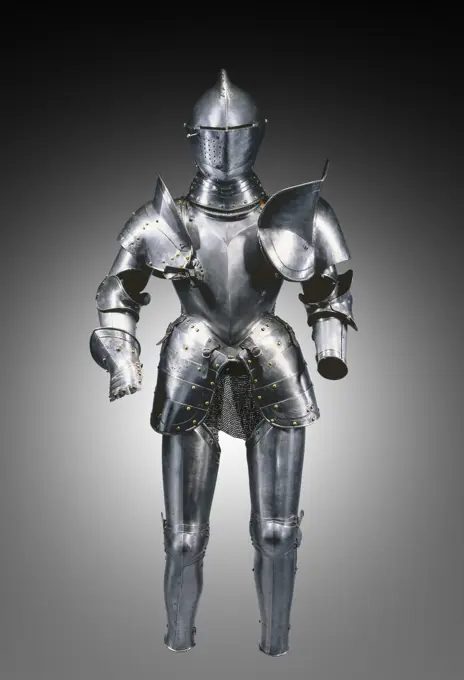
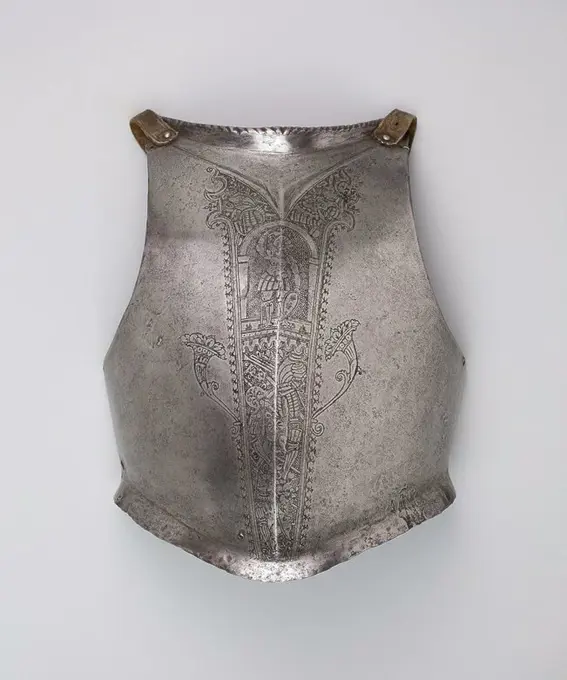
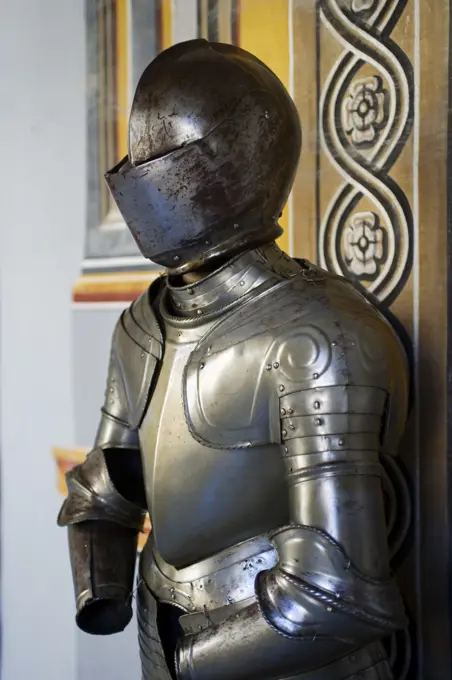
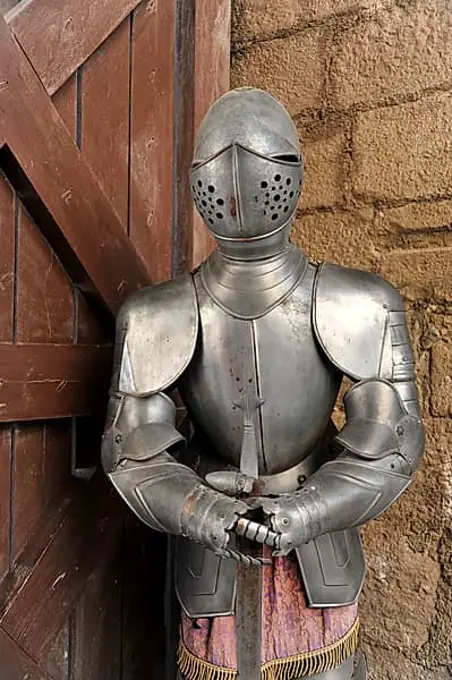
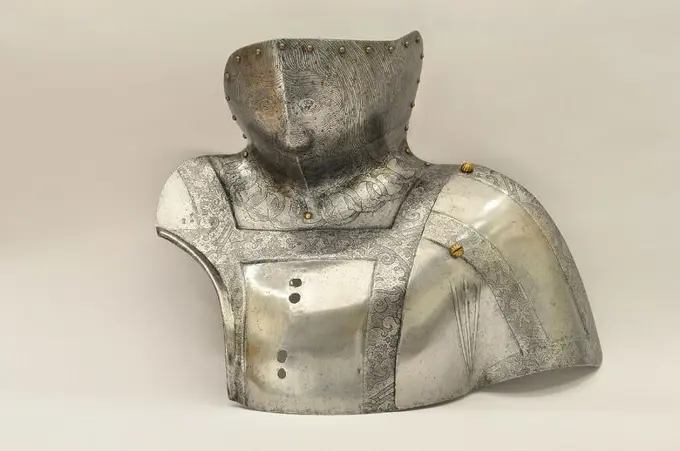
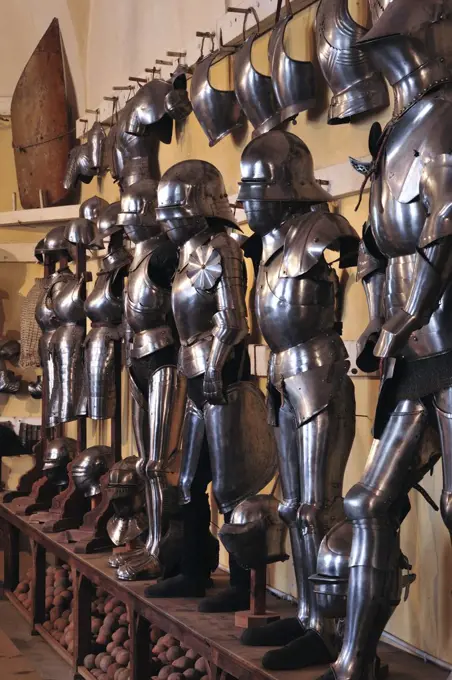
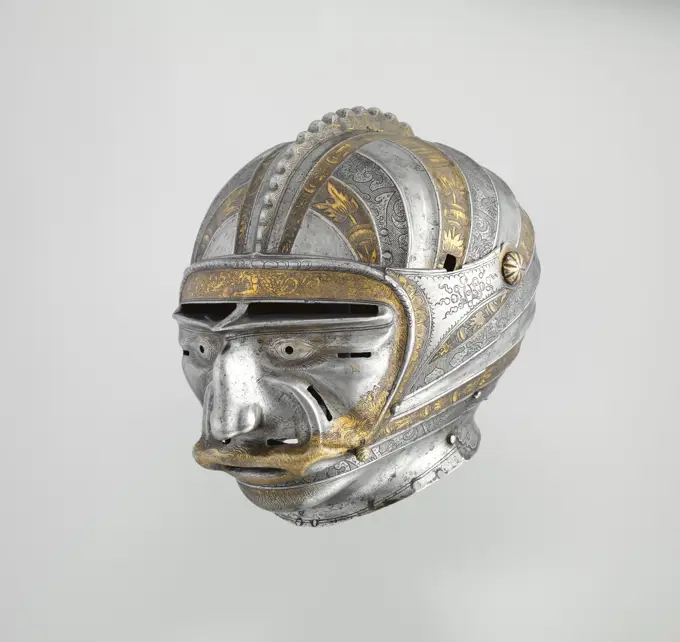
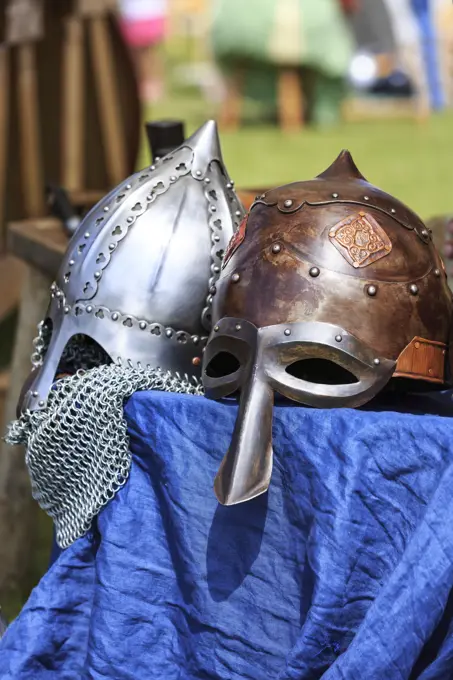
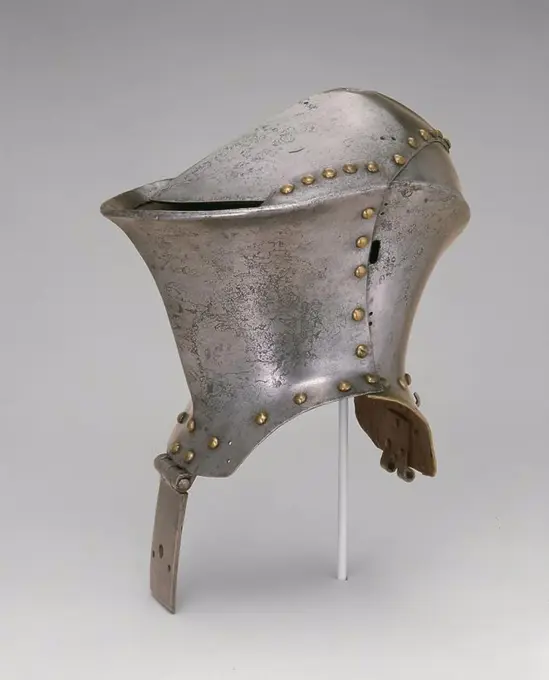
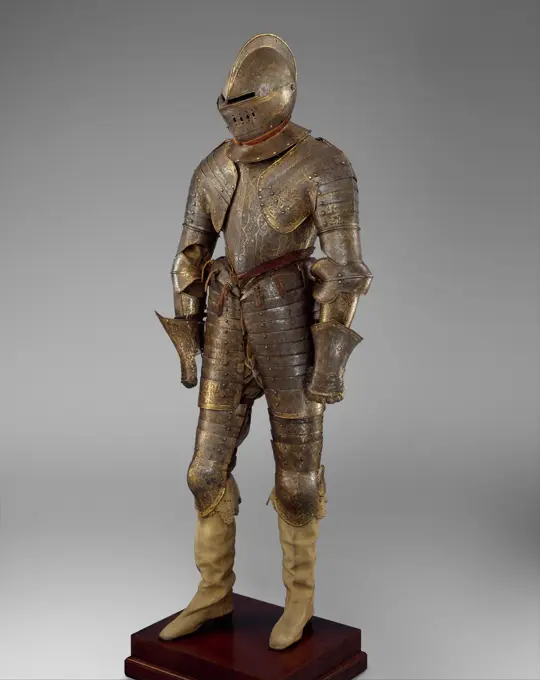
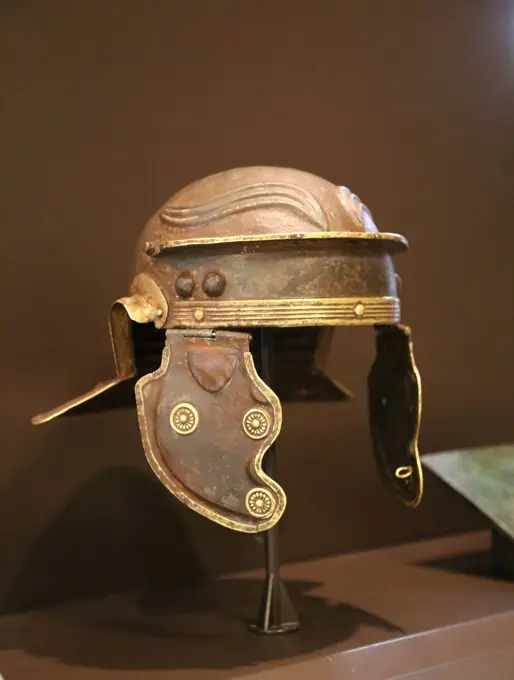
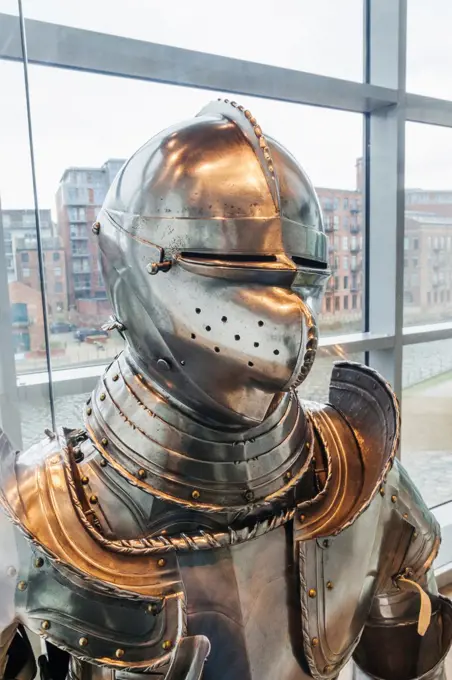
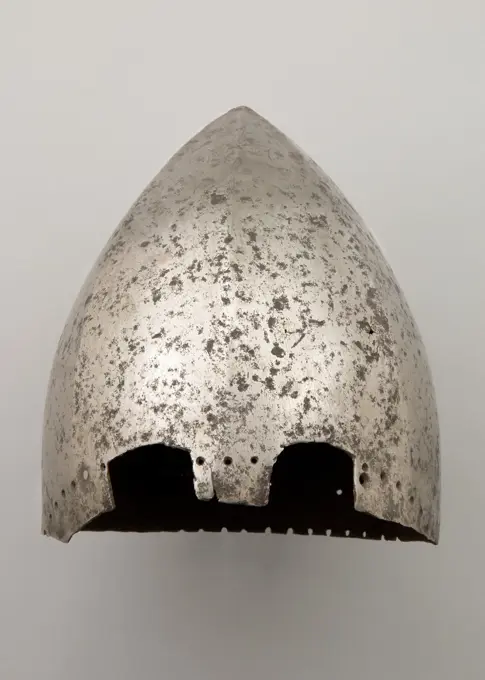
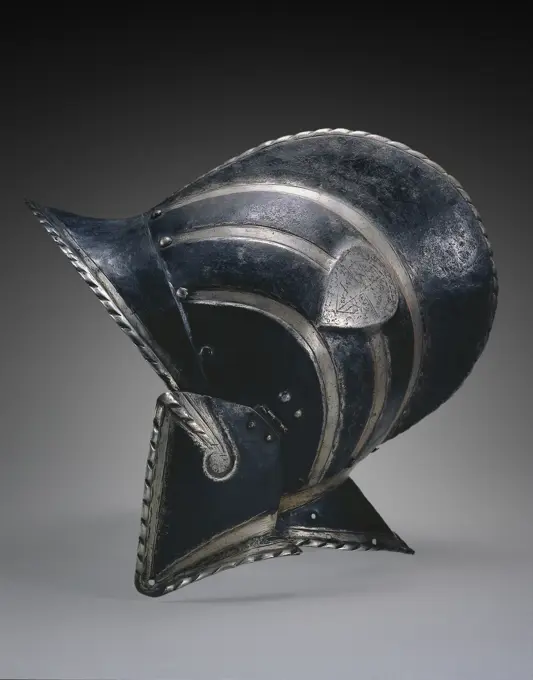
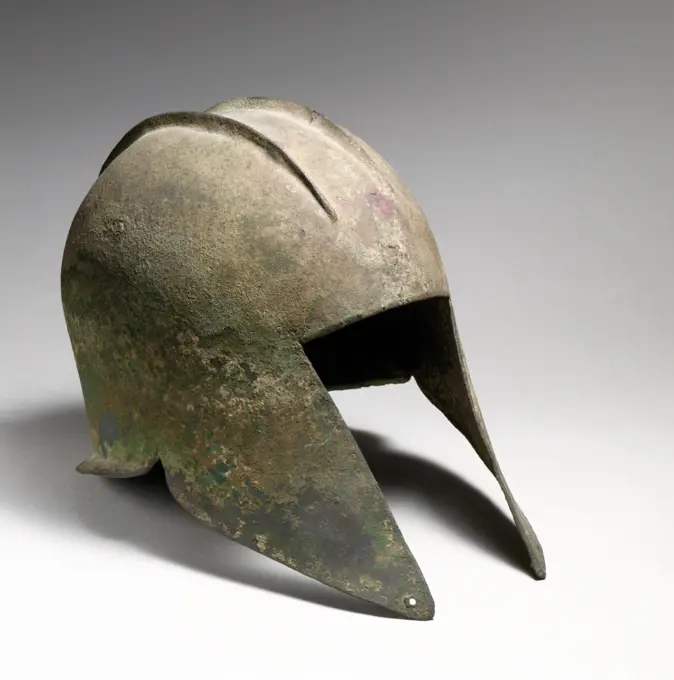
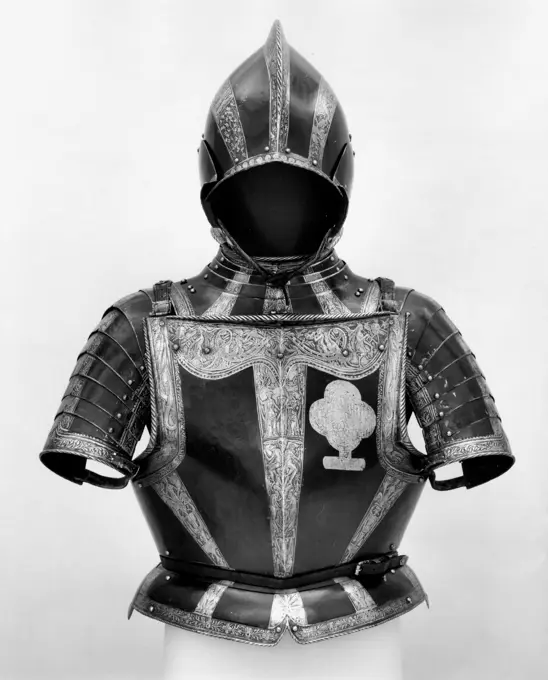
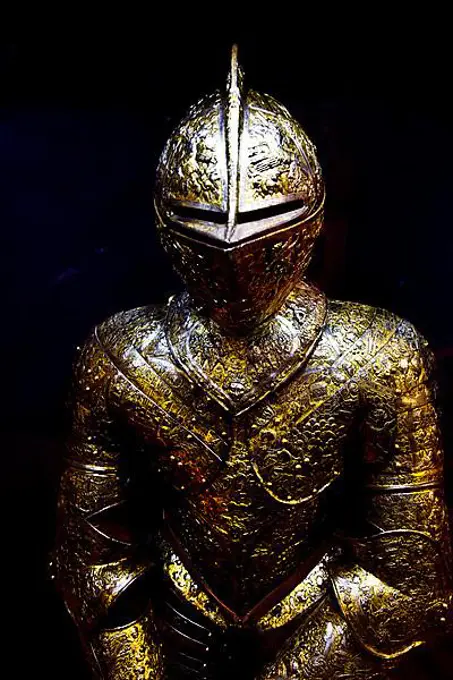
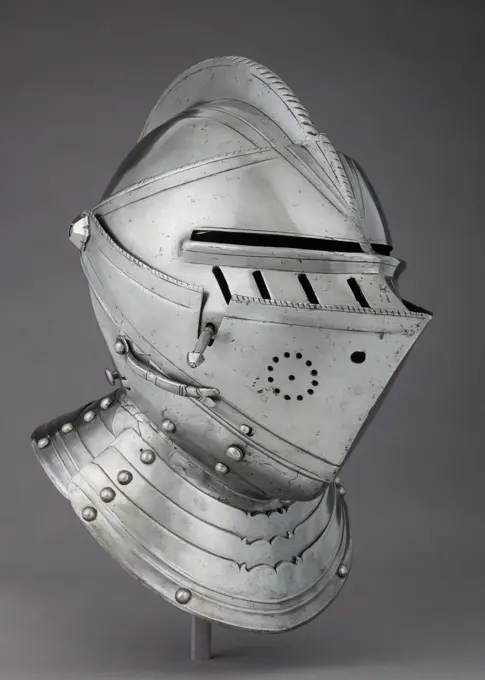
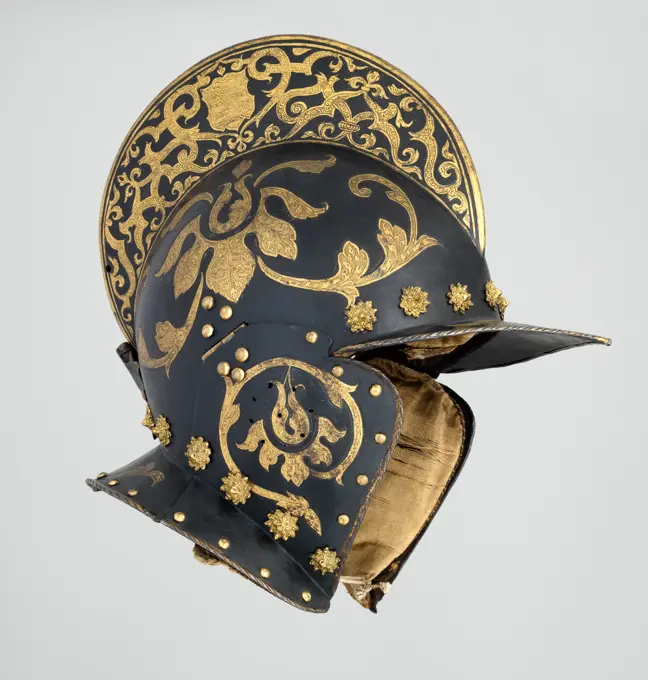
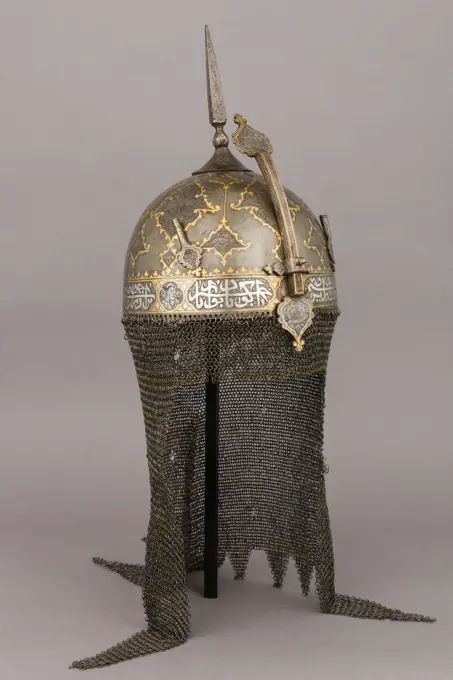
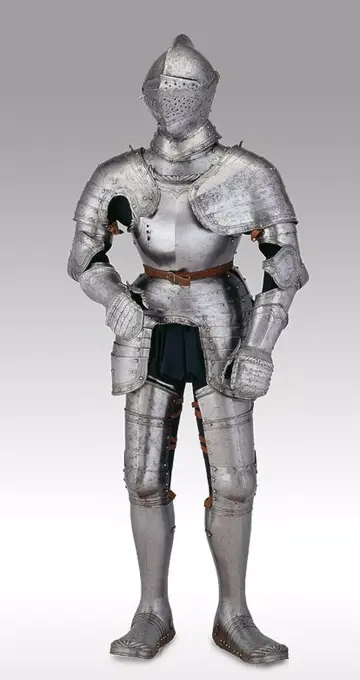
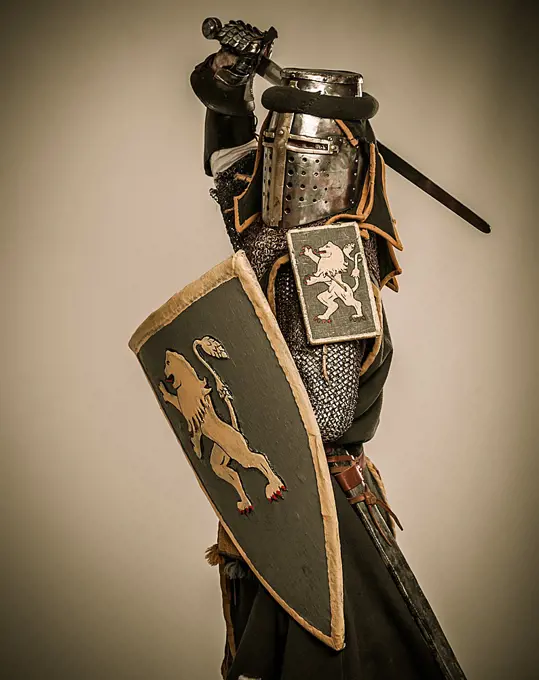
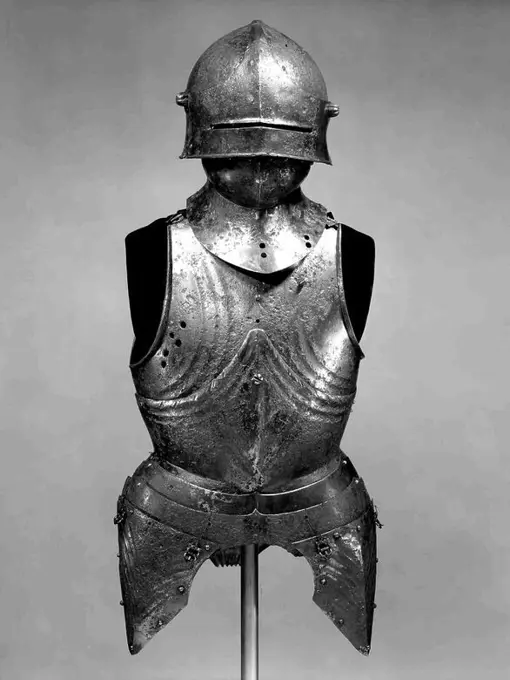
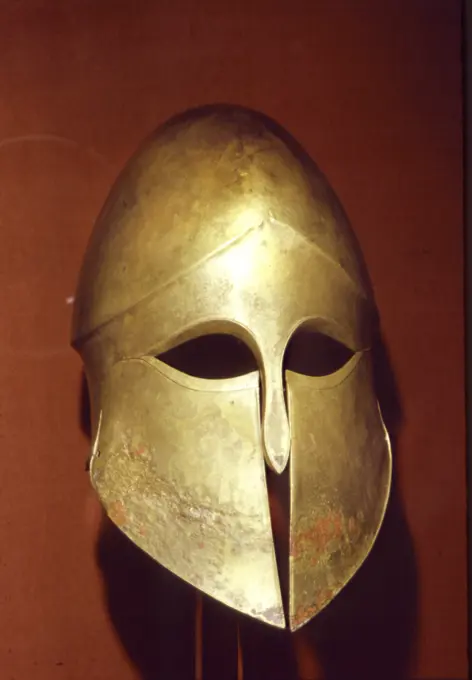
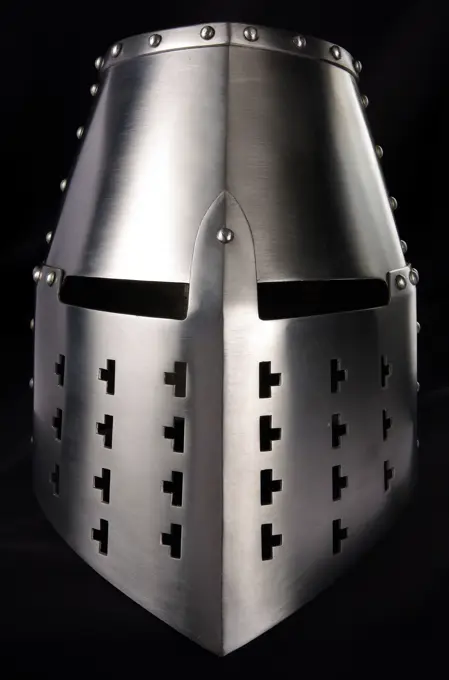
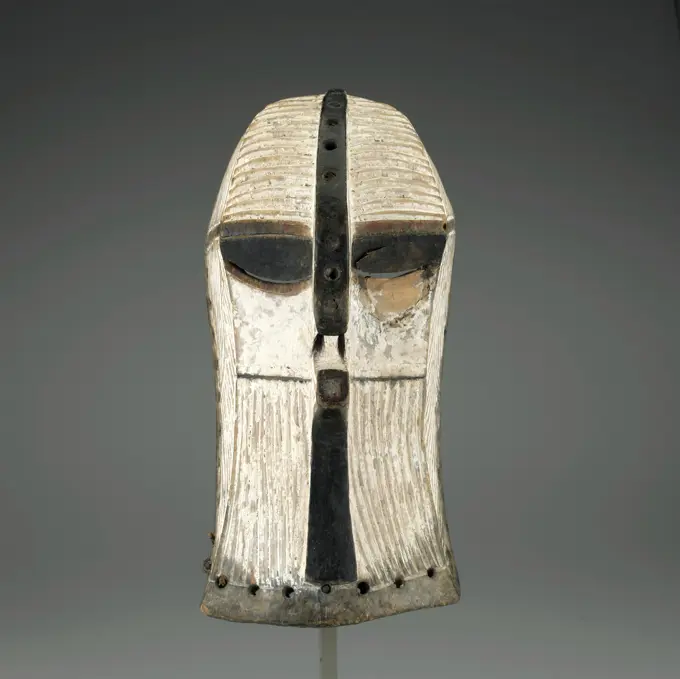
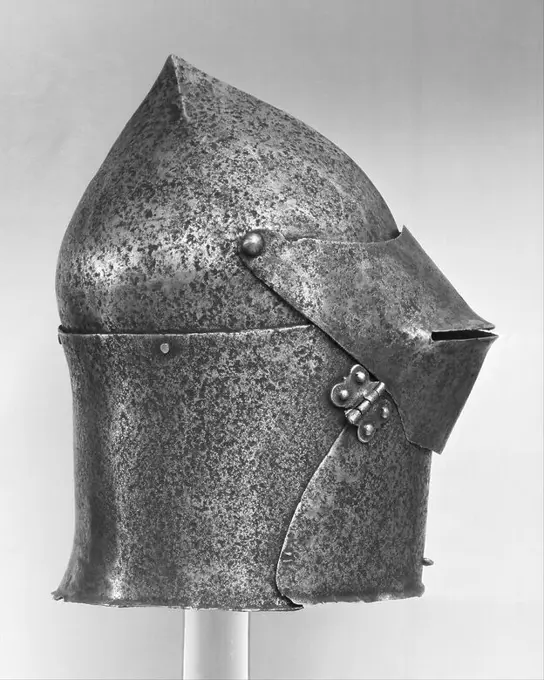
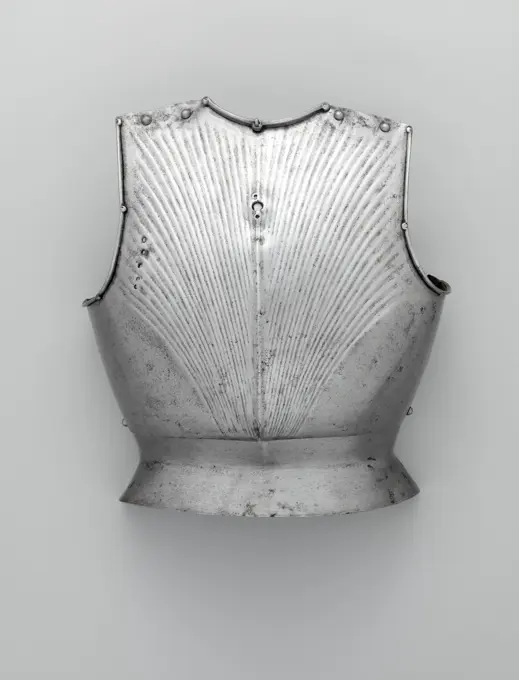
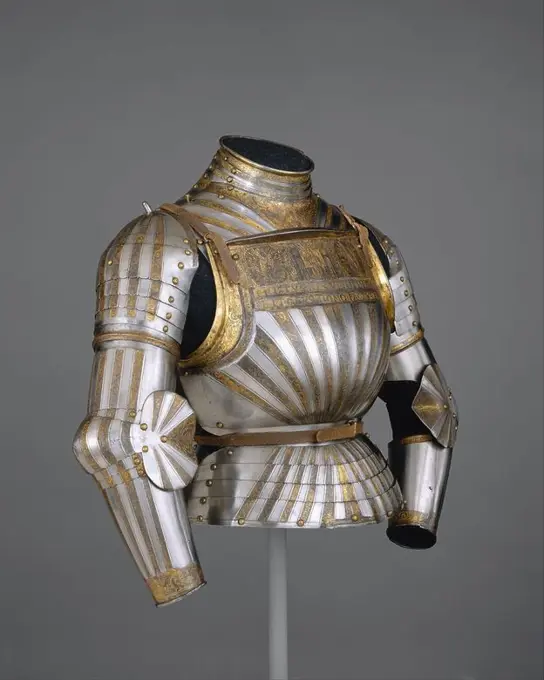
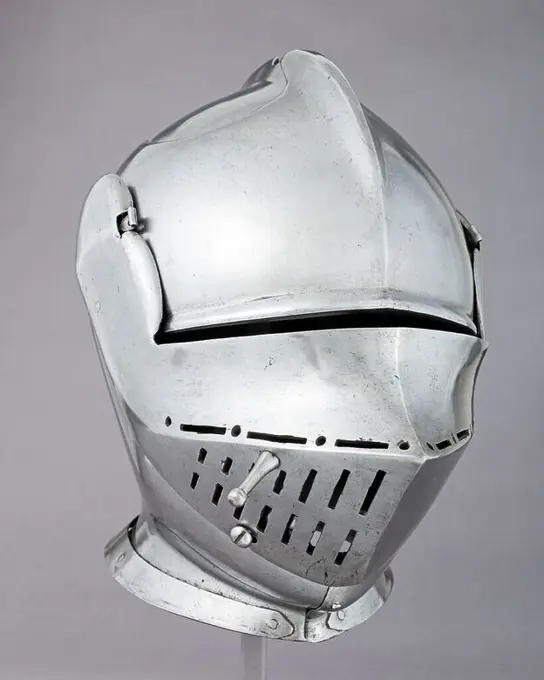
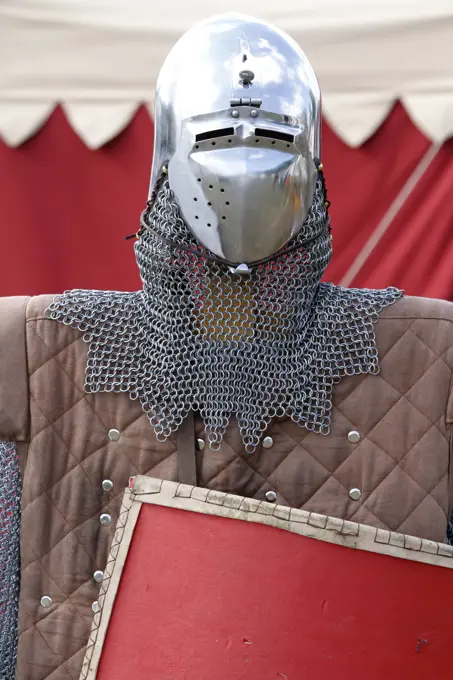
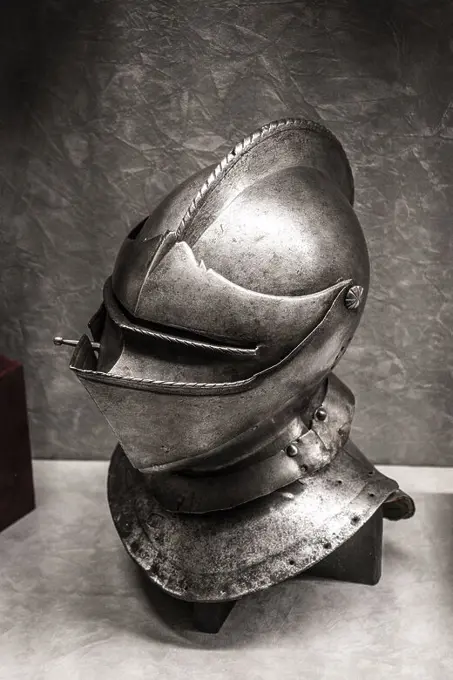
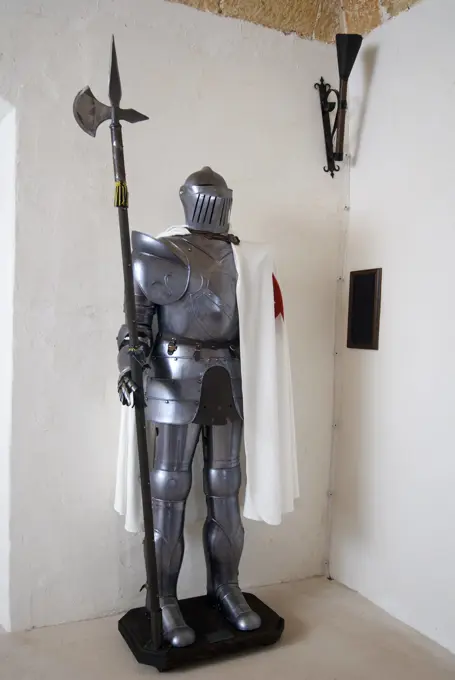
Gorget and Close Helmet for Foot Tourney at the Barriers 1575-1580 Milan. Steel with gilding, brass .Rüstung Armour of the medieval knight. Metal protection of the soldier against the weapon of the opponent Copyright: xZoonar.com/ValeryxxSibrikovx 2628257Helmet (Kabuto) 19th century Japanese. Helmet (Kabuto). Japanese. 19th century. Iron, textile, lacquer, gilt bronze. HelmetsArmour Armour of the medieval knight. Metal protection of the soldier against the weapon of the opponent Copyright: xZoonar.com/ValeryxxSibrikovx 2415900Sallet ca. 1470-80 Italian, Milan The term sallet (from the Italian celata) is applied to a wide variety of fifteenth-century helmets that have open faces or, if visored, leave the lower face and neck exposed. This tall form of sallet is typically Italian and is sometimes referred to as a barbute. It is struck twice on the right side at the back with the same armorer's mark: two Gothic letters ("SS" or "SZ") beneath a split-legged cross. Struck on the right cheek is the lion of Saint Mark, a control mark that perhaps denotes the helmet's former presence in the Venice arsenal.. Sallet 25391Helmet (Khula Khud) 19th century Persian, Qajar. Helmet (Khula Khud) 25043Iron helmet Iron helmet of the medieval knight. Very heavy headdress Copyright: xZoonar.com/ValeryxxSibrikovx 2476892Sallet ca. 1490 Matthes Deutsch German The unusually heavy weight of this sallet suggests that it may have been intended for use in tournaments rather than in battle.. Sallet 35903Armor. Culture: German, Landshut; greaves and sabatons, German, Augsburg (). Dimensions: Wt. 47 lb. 15 oz. (21.74 g); Wt. of helmet 6 lb. 4 oz. (2835 g). Date: ca. 1560 and later; greaves and sabatons, ca. 1570-80. Museum: Metropolitan Museum of Art, New York, USA.Armour Armour of the medieval knight. Metal protection of the soldier against the weapon of the opponent Copyright: xZoonar.com/ValeryxxSibrikovx 5587263Half Armor and Targe for Service on Foot 1585-1605 Milan. This is an unusually fine armor with matching targe (shield) for an infantry officer. On the breastplate and pauldrons of this ceremonial parade armor, the etched bands are embellished with interlace, trophies, fabulous beasts, and etched medallions that enclose classical figures reminiscent of Roman heroes. The etched radiating bands retain their original gilded surface, which contrasts effectively with adjacent areas left blackened in the forging process. Armor could be worn with costume accessories to provide a look of great ostentation, which was of paramount importance for public spectacles such as tournaments or parades. Indeed, much of armorís design and decoration was directly influenced by civilian costume. The breastplate and tassets (steel plates attached to the breastplate) of this half armor, for example, follow the lines of the garments over which they would have been worn. This elegant armor also features an open-Close Helmet for the Tourney Made 1540-1570 Nuremberg. Steel .Ritter Armour of the medieval knight. Metal protection of the soldier against the weapon of the opponent Copyright: xZoonar.com/ValeryxxSibrikovx 3116080Morion. Type of helmet, 16th century. Armoury. Grandmaster Palace. Valletta, Malta.Composed Armor ca. 1550-80 Helmet, arm defenses, gauntlets and leg defenses by Wolfgang Grosschedel German This armor is composed of elements from three different armors, all made in southern Germany for Spanish patrons. The helmet, arm defenses, gauntlets, and leg defenses belong to a large garniture made in 1554 for the future Philip II of Spain (reigned 1556-98) by the leading armorers of Landshut, Wolfgang Grosschedel (recorded 1517-1562) and his son Franz (recorded 1555-1579). The elements of Philip's armor are distinguished by their decoration of stylized cloud bands. The associated breastplate, probably made in Augsburg about 1550, is decorated with the cross used by the Spanish knightly orders of Alcantara and Calatrava. The backplate, also made in Augsburg about 1550, appears to be part of an armor for Fernando Alvarez de Toledo (1508-1583), third duke of Alba. The gorget (collar) is Italian, made about 1580.. Composed Armor. German, Landshut and Augsburg; gorget, Italian. ca.Low-medium carbon steel, copper alloy and leather armour attributed to Ulrich Rämbs of Landshut, GermanyArmour Armour of the medieval knight. Metal protection of the soldier against the weapon of the opponent Copyright: xZoonar.com/ValeryxxSibrikovx 5693783Tuscany, Italy. Detail of an original Medieval armourPartial Suit of Armor in Maximilian Style, c. 1525. Germany, Nuremberg, 16th century. Steel; overall: 28.7 x 30.4 x 21.7 cm (11 5/16 x 11 15/16 x 8 9/16 in.). This fluted armor was visually striking in natural sunlight, which created a dazzling effect as it reflected off the polished, rippling steel. The flutings may have originated as a means of imitating the pleatings of male costume of the day. It became apparent, however, that the flutings were also a strengthening device, similar to corrugated metal. This enabled the armorer to use plates of thinnerand therefore lightersteel. Such suits of armor demanded time-consuming and highly precise work from the armorer, which in turn quickly drove the production costs high enough that the fashion disappeared by 1540.Persian helmet with engraved elephant scene, 16th century, Álava Armory Museum, Vitoria, Basque Country, Spain.Sallet. Spanish. Date: 1480-1520. Dimensions: H. 20.3 cm (8 in.). Steel. Origin: Spain. Museum: The Chicago Art Institute, Chicago, USA.Shaffron 1500-1600 Turkey. Steel and iron wire .Burgonet ca. 1550 German. Burgonet 25416Outer Plate of a Forearm Defense (Vambrace). Culture: Italian. Dimensions: H. 7 3/4 in. (19.7 cm); W. 3 1/2 in. (8.9 cm); D. 3 3/4 in. (9.5 cm). Date: possibly ca. 1400. Museum: Metropolitan Museum of Art, New York, USA.Breastplate with Tassets (Thigh Defenses) Made 1520-1530 Germany. Steel and leather .Armour of the medieval knight. Metal protection of the soldier against the weapon of the opponentArmour Armour of the medieval knight. Metal protection of the soldier against the weapon of the opponent Copyright: xZoonar.com/ValeryxxSibrikovx 5722324AUSTRIA, STYRIA (Stiermark), GRAZ: Landeszeughaus Museum / Provincial Armory (b.1642)17th Century ArmorTournament armour for horse and knight. 16th century. Brescian manufacturing. Royal Armory. National Museum of Capodimonte. Naples. Italy.Knight in shiny metal armor on white background. Knight in shiny metal armor on white background. Copyright: xZoonar.com/AlexeyxPopovx 18223861ritter,ritterrüstung,ritterrüstungen,rüstung,rüstungen ** knight,suit of armor,knights,suit of armors 3ro-ifgClose Helmet for Foot Tourney at the Barriers. Italian, Milan. Date: 1550-1600. Dimensions: Wt. 9 lb. 10 oz. Steel with gilding, iron, brass, leather, and velvet weave. Origin: Milan. Museum: The Chicago Art Institute, Chicago, USA.Backplate. Italian. Date: 1500-1600. Dimensions: . Steel. Origin: Italy. Museum: The Chicago Art Institute, Chicago, USA.Tilting Suit (composed), c. 1560-80. South Germany, 16th century. Steel, leather straps, brass rivets; This armor was developed for the joust-a sporting combat between two mounted contestants. Although all of the elements of this armor date from the same period, they are not all from the same suit. This armor is thus called "composed." It also shows the asymmetry of jousting armor. The participants rode along a wall-like barrier known as a "tilt" with their left sides facing one another. Consequently, armor on that side of the body had to be thicker. Note the large plate (grandguard) over the left shoulder for extra protection. Also, the breathing holes in the helmet were placed on the right side (farthest from an opponent's lance) to avoid injuries from splinters. The bracket attached to the right breastplate is called the lance-rest, a shock-absorbing support designed to accommodate the lance when "couched" under the right armpit.Breastplate. Northern Italian. Date: 1550-1580. Dimensions: Wt. 5 lb. 9 oz. Steel, etched. Origin: Italy, northern. Museum: The Chicago Art Institute, Chicago, USA.Elements of Composite Armor. German or Austrian. Date: 1500-1530. Dimensions: H. 96.5 cm (38 in.). Steel. Origin: Austria. Museum: The Chicago Art Institute, Chicago, USA.Breastplate Made 1570-1590 Milan. Steel, brass, and leather .Malta, Valletta. Suits of armour of the Maltese Knights of St John in the Grand Master's Palace in the centre of the old walled city of Valletta.Knight's armour, modern talking doorman, Castillo de Santa Catalina, gothic castle in Jaen, medieval knight's armour completely presented on a stand, Granada, Andalusia, Spain, EuropeHalf Armor. Armorer: Helmet and reinforcing pieces attributed to Kolman Helmschmid (German, Augsburg 1471-1532). Culture: German, Augsburg. Dimensions: as mounted, H. 37 in. (94 cm). Date: ca. 1510-20 and later. Museum: Metropolitan Museum of Art, New York, USA.Armors in the Armory of Churburg Castle, the largest private armory in the world, 1260, Schluderns, Bolzano, Trentino-Alto Adige, Italy.Close Helmet with Mask Visor in Form of a Human Face ca. 1515 Attributed to Kolman Helmschmid German Helmets fitted with masklike visors were a popular German and Austrian fashion about 1510 to 1540. With their visors forged and embossed as humorous or grotesque human masks, such helmets were often worn in tournaments held during the exuberant pre-Lenten (Shrovetide) festivals, celebrations somewhat akin to the modern Mardi Gras. Substitute visors of more conventional type were often provided for everyday use.. Close Helmet with Mask Visor in Form of a Human Face. German, Augsburg. ca. 1515. Steel, gold. Augsburg. HelmetsViking helmets, Icelandic Festival of Manitoba, Gimli, Manitoba, CanadaTournament Helm (Stechhelm). Austrian, Innsbruck. Date: 1480-1500. Dimensions: H. 44.6 cm (17 1/2 in.) Wt. 22 lb. 2 oz. Steel, brass, and iron. Origin: Innsbruck. Museum: The Chicago Art Institute, Chicago, USA.Armor for Heavy Cavalry with Matching Shaffron (Horse's Head Defense) ca. 1600 French One of the best-preserved French armors dating from the reign of Henry IV (1589-1610), this example demonstrates the French preference for completely gilt armors. It retains its original yellow silk helmet lining and red leather straps sewn with metallic thread. Matching this armor are a shaffron (defense for the horse's head), also in the Metropolitan Museum's collection (acc. no. 27.177.2), and a saddle, now in the Musée de l'Armée, Paris.In spite of its rich decoration, this armor was intended for use in battle. It was made at a time when the lance had been abandoned by the heavily armored cavalry in favor of a pair of pistols kept in holsters at the front of the saddle. The presence of hand firearms on the battlefield led to the increasing weight of armors such as this and the gradual discarding of elements like the defenses for the lower legs.. Armor for Heavy Cavalry with Matching Shaffron (HorsGalea. The roman soldier's helmet. Centurion. Roman Hispania. Replica. National Archaeological Museum, Madrid. Spain.Corinthian helmet around 500 B.C.E., Antique collection, Koenigsplatz, Munich, Bavaria, Germany, EuropeBreastplate with Tassets (thigh defenses). South German, possibly Nuremberg. Date: 1500-1540. Dimensions: . Steel and leather. Origin: Germany. Museum: The Chicago Art Institute, Chicago, USA.Armour of the medieval knight. Metal protection of the soldier against the weapon of the opponentBreastplate with Associated Fauld 1520-1540 Italy. Steel .Close-up of a medieval helmet in a museum, Royal Armouries Museum, Leeds, West Yorkshire, EnglandEngland, London, Tower of London, The White Tower, Display of the Armour of Henry, Prince of Wales dated about 1607Armors displayed inside Tratzberg Castle, Jenbach, Tyrol, Austria.Close-up of a detail of the magnificent, lavishly decorated armour (back-plate, brassards and helmet) of Philip II, first King of Spain from 1556 to 1598. Madrid (Spain), 1966.Bascinet ca. 1325-50 possibly Italian A bascinet with a faceted bowl is rare. The helmet was originally longer, but the lower edges have been trimmed and cutouts made over the eyes, modifications probably done for a later owner.. Bascinet 23239Armour and sword of medieval warrior Armour and sword of medieval warrior Copyright: xZoonar.com/ALEXxTIHONOVxAlexanderxTihonovx 3096065Black and White Burgonet (of the Civic Guard of Bologna), c. 1580-1600. Italy, late 16th Century. Steel with black paint; overall: 31.8 x 35.6 x 19 cm (12 1/2 x 14 x 7 1/2 in.).Demi Shaffron of an Infantry Garniture Made 1560-1590 . Steel, gilding, and brass .Helmets of a knight's armorEngland,Warwickshire,Warwick,Warwick Castle,Suit of Armour DisplayField Armor. Southern German. Date: 1560-1580. Dimensions: H. 185.4 cm (73 in.). Steel with gilding, brass and leather. Origin: Southern Germany. Museum: The Chicago Art Institute, Chicago, USA.Medieval knighthood with a helmet and sign medieval knighthood with helmet and sign copyright: xzoonar.com/jlandshoeftx 11943148Morion ca. 1570 Italian. Morion 25383Romania, Prahova, Poiana, Gilded silver helmet from the Peretu treasuremedieval helmet medieval helmet copyright: xzoonar.com/antjexlinder- rottkeex 3598753Helmet with visor and aventailEurope, England, A suit of medieval armour on display inside the Tower of London.Mask, 20th century, 10 5/8 x 6 11/16 x 6 3/16 in. (27 x 17 x 15.7 cm), Wood, tacks, Liberia, 20th centuryBronze helmet of Illyrian type early 5th century B.C. Greek In the Illyrian helmet, the opening for the face is rectilinear, with a horizontal line at the forehead and two verticals at the inner edges of the cheekpieces. Two parallel ridges on the crown frame the crest.. Bronze helmet of Illyrian type. Greek. early 5th century B.C.. Bronze. Classical. BronzesArmor ca. 1560-65 Northern German, possibly Brunswick-Wolfenbüttel This is one of a group of finely etched armors made for the court of Duke Julius of Brunswick-Wölfenbüttel (1528-1589). The armors are decorated similarly with satyrs, allegorical figures, and grotesques, many of which are derived from prints by Cornelis Bos and Virgil Solis. The group is distinguished further, as is the armor displayed here, by the device on the breast: a quatrefoil above a crowned heart, which is flanked by two pairs of clasped hands and the initials HI (Herzog Iulius, meaning Duke Julius” or Heinrich Julius”). The scene depicted in the quatrefoil is the Old Testament story of Daniel in the lions’ den. Around the border runs an inscription that reads in translation, Oh God, protect no more than my life, soul, property, and honor.” It is thought that this group of armors was commissioned about 1563, to commemorate the reconciliation of Julius and his father, Duke Heinrich (died 1568), and the reinstKnight's armour, Wartburg, Eisenach, Thuringia, Germany, EuropeArmet 17th century French. Armet 27098Burgonet 1575-1600 German, Augsburg Helmets of this type probably were worn by the mounted troops of the bodyguards of the prince-electors of Saxony. This helmet retains its original padded lining covered with yellow silk.. Burgonet. German, Augsburg. 1575-1600. Steel, gold, pigment, brass, textile. Augsburg. HelmetsHelmet (Khula Khud) 19th century Persian, Qajar. Helmet (Khula Khud) 25045Armour of Henry Frederick, Prince of Wales (1594-1612) the elder son of King James I & VI and Anne of Denmark. Dated 17th CenturyPortions of a Field Armor. Austrian, Innsbruck. Date: 1530-1555. Dimensions: H. 191.8 cm (75 1/2 in.)Wt. 32 lb. Steel and leather. Origin: Innsbruck. Museum: The Chicago Art Institute, Chicago, USA. Author: the Younger Workshop of Michel Witz.Medieval knight with sword and shieldPortions of a Jousting Armor Made 1550-1570 Italy. Steel, leather, and paint .Elements of an Armor. Culture: German or Austrian. Dimensions: H. as mounted 35 in. (88.9 cm); Wt. 23 lb. 3 oz. (10.55 kg). Date: ca. 1480-90.Few complete armors have survived from the fifteenth century, making this one important despite its fragmentary condition. It was reportedly found in an Austrian church. The pieces were probably assembled in the late fifteenth or early sixteenth century as a pious gift to be hung over the tomb of a knight. All the elements are characteristic of armor worn in central Europe and parts of western Europe in the late Gothic period. These include the separate head and neck defenses consisting of sallet and bevor, breastplate and backplate of overlapping sections, and cusped and channeled surfaces. The backplate is notable for its elegant silhouette and its fluting that imitates gathered folds of fabric. Museum: Metropolitan Museum of Art, New York, USA.Corinthian helmet, Dendas inscribed on it. 500-490 BC. GREECE.Iron helmet Iron helmet of the medieval knight. Very heavy headdress Copyright: xZoonar.com/ValeryxxSibrikovx 2454246Knight helmet sketch hand drawn in engraving style. Vector illustration desing.Kifwebe Mask, Second quarter of the 20th century, 15 3/16 x 7 1/4 x 6 3/4 in. (38.58 x 18.42 x 17.15 cm), Wood, pigment, hair, plant fibers, other materials, Democratic Republic of the Congo, 20th centuryBronze helmet from TodiArmours and arms of Roman gladiators, warriors and slaves, special exhibition at the Colosseum, Rome, Latium region, Italy, EuropePortions of a Field Armor Made 1530-1550 Innsbruck. Steel and leather .Burgonet for the Guard of the Counts Khevenhüller zu Aichelberg ca. 1580 German The acorn and oak leaves embossed on the sides of the bowl are emblems of the noble Austrian family Khevenhüller zu Aichelberg (Aichel is German for "acorn"). A series of "black-and-white" armors mounted with similarly decorated burgonets or morions is preserved in the family's castle of Hochosterwitz, near Klagenfürt, in the Austrian state of Carinthia.Large numbers of standardized armors decorated with raised and brightly polished bands set off by the black-painted recessed surfaces were made for the German infantry (Landesknechte) in the second half of the sixteenth century. The majority were fabricated in Nuremberg, though similar harnesses were also made in the north (in the region of Brunswick) and even in Innsbruck. This example is unusal, in that its decoration is specific to its owner.. Burgonet for the Guard of the Counts Khevenhüller zu Aichelberg. German. ca. 1580. Steel, lead, paint, leather. HVisored Bascinet. Culture: Italian. Dimensions: H. 13 3/8 in. (34 cm); W. 8 1/2 in. (21.6 cm); D. 9 1/4 in. (23.5 cm); Wt. 8 lb. 10 oz. (3912 g). Date: ca. 1425-50.This particular form of helmet, with its two-piece construction, distinctive visor, and hinger flap on one side, is only found among the Chalcis group. Museum: Metropolitan Museum of Art, New York, USA.Breastplate (Kastenbrust) ca. 1450 German Although it was in wide use across Europe by the early fifteenth century, very little plate armor survives from that period. This breastplate is one of the earliest German examples in existence. It is almost identical to the breastplate on a statue of Emperor Friedrich III (1415-1493), dated 1453, and represents the latest innovation in German armor design and technology of the time. Unfortunately, it is not known where Dean acquired this piece.. Breastplate (Kastenbrust). German. ca. 1450. Steel. Armor Parts-BreastplatesElements of a Light-Cavalry Armor. Culture: Italian, Milan. Dimensions: Wt. 19 lb. 13 oz. (8987 g). Date: ca. 1510.This is a rare example of Italian armor decorated with fluted surfaces in the German fashion. Its etched and richly gilt decoration is derived from Christian symbolism and the Bible. The band across the top of the breastplate depicts the Virgin and Child in the center, Saint Paul on the right, and Saint George on the left. A Latin inscription below reads, CHRISTVS RES VENIT IN PACE ET DEVS HOMO FACTVS ES (Christ the King came in peace and God was made man). Another inscription, across the top of the backplate, reads, IESVS AVTEM TRANSIENS PERMEDIVM ILORVM IBAT. (But Jesus passing through their midst went his way Luke 4:30). The Trinity--Father, Son, and Holy Spirit--is depicted on the front of the gorget (collar). Museum: Metropolitan Museum of Art, New York, USA.Historia. Siglo XIII. Yelmo con corona, elemento de la armadura que protege la cabeza y el rostro del guerrero.Firefighting helmet unknown labelRingkraag, in or after c. 1599 - in or before c. 1799  Iron ring collar, white, made of four parts. The front is round -shaped but runs wide to the sides, a double row of white rivets with a roasted edge are located over the entire width of the VO0rkant, the bottom edge is tilted. The rear is more rectangular but walks around to the sides, the bottom is flanging. The main opening is round with a cabled rim. The inside is painted black. Europe whole: Iron (metal) forging / striking (metalworking)Armet. Culture: possibly British or Flemish. Dimensions: H. 11 3/4 in. (29.8 cm); W. 8 1/4 in. (21 cm); D. 12 7/8 in. (32.7 cm); Wt. 9 lb. 9 oz. (4350 g). Date: ca. 1510-15.Developed in Italy as a close fitting and highly protective cavalry helmet, armets were also made in England and Flanders following Italian models. Museum: Metropolitan Museum of Art, New York, USA.Medieval equipment medieval equipmentengole helmet, 16th century, Álava Armory Museum, Vitoria, Basque Country, Spain.Medieval armour Medieval armour Copyright: xZoonar.com/Photox xFlavioxMassarix 1905353Armour Armour of the medieval knight. Metal protection of the soldier against the weapon of the opponent Copyright: xZoonar.com/ValeryxxSibrikovx 5625081A replica of the Sutton Hoo helmet Anglo-Saxon, early 7th century AD. Only four complete helmets are known from Anglo-Saxon England: at Sutton Hoo, Benty Grange, Wollaston and York.Ring collar. Ring collar, iron, blank, made from four parts that are riveted to each other on both sides of the opening with round opening in the middle. The edges are shed up and are taabeld. At the front a slightly pounded border with glacial rivets in between. Opening to the head has a folded-flien edge that is charged consists of two parts that are riveted to each other on side. The inside is painted black.