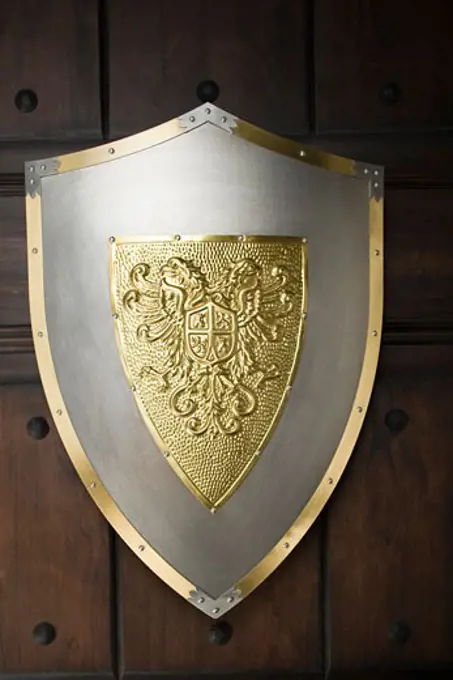
Medieval Helmets Collection

A series of historical helmets from different periods including armored and decorative styles, highlighting intricate designs and craftsmanship from the 16th century.

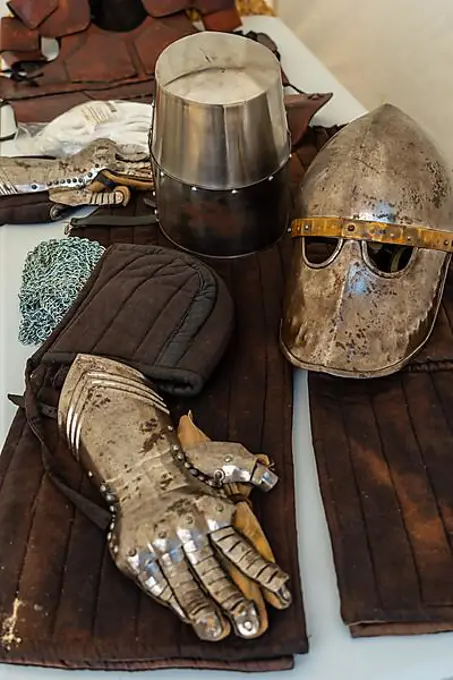
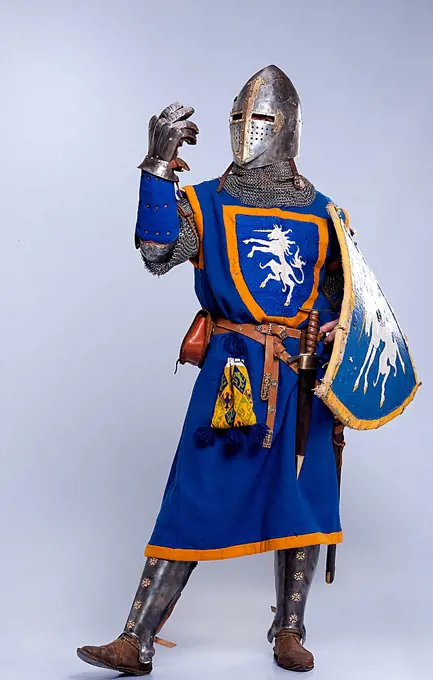
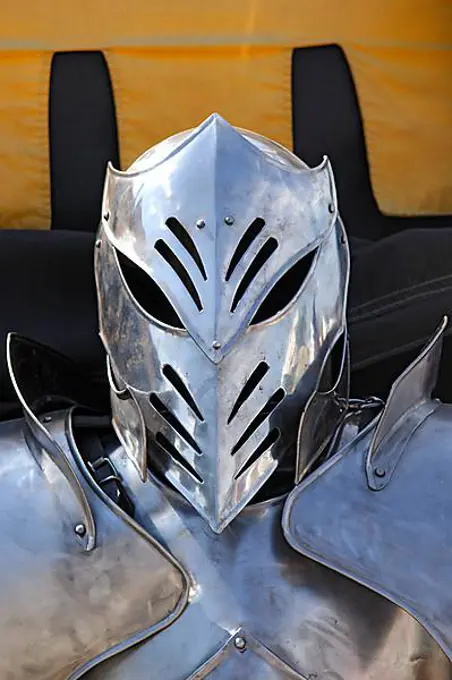
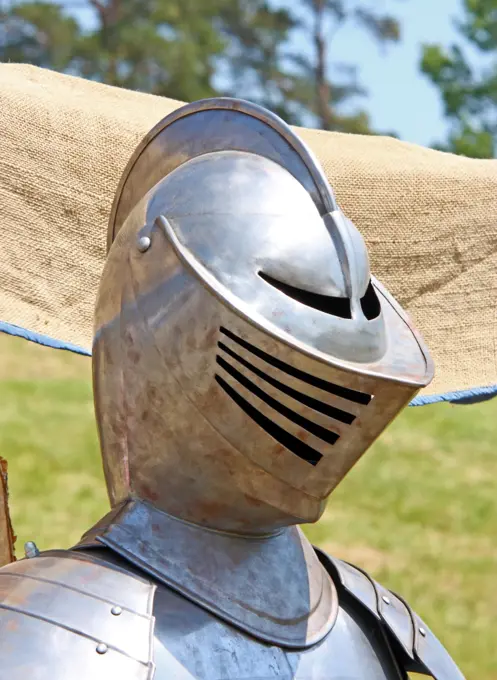
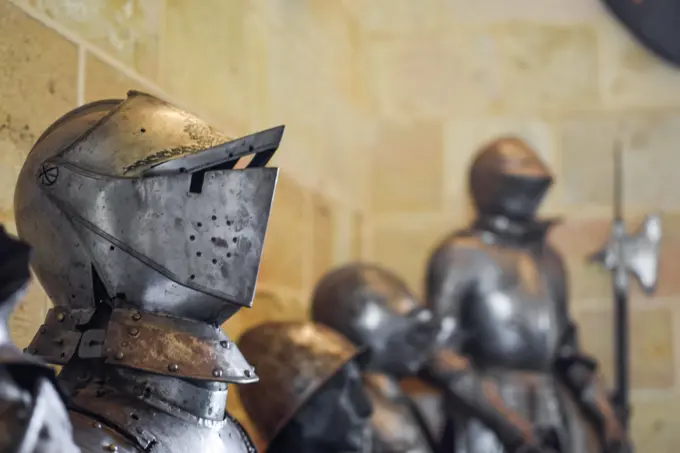
Armour Armour of the medieval knight. Metal protection of the soldier against the weapon of the opponent Copyright: xZoonar.com/ValeryxxSibrikovx 2479148
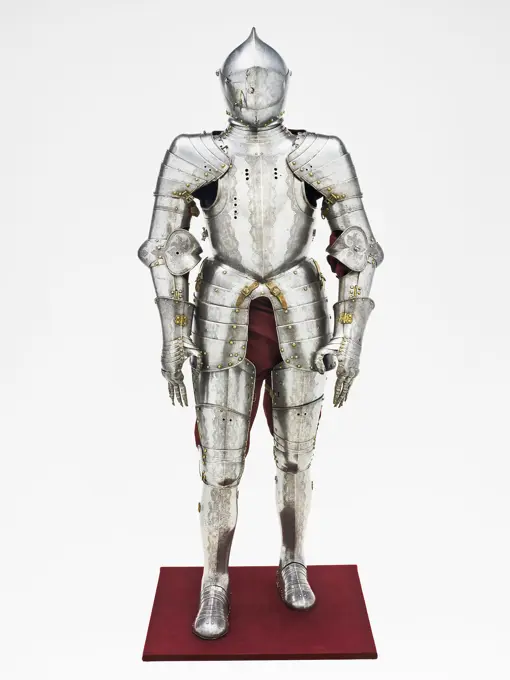
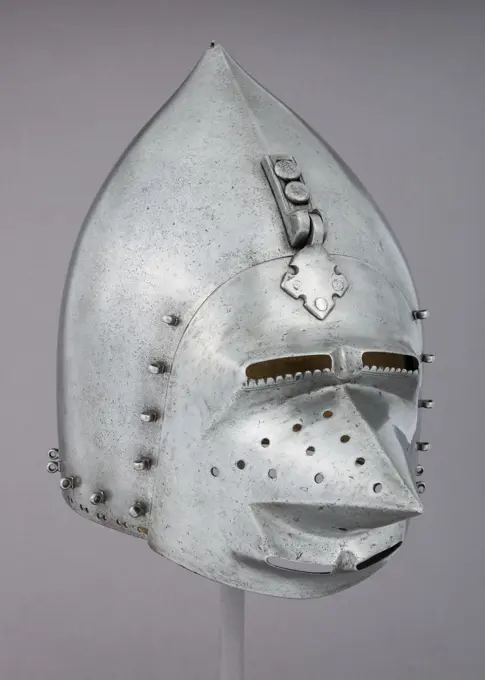
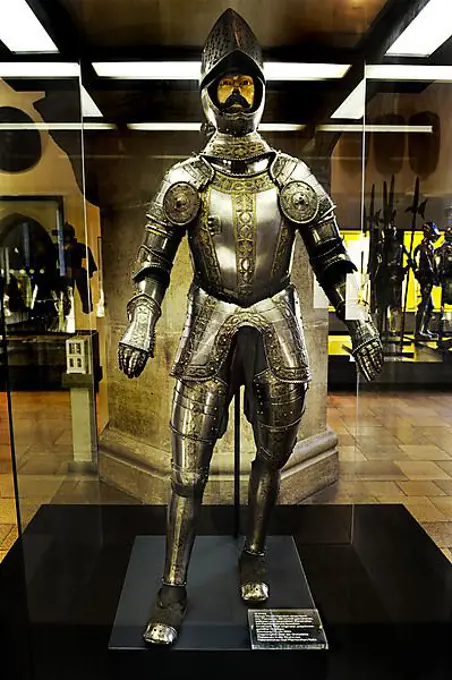
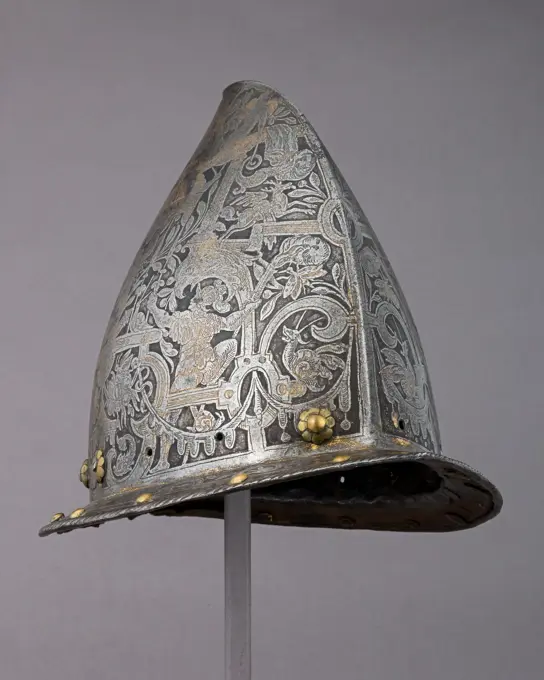
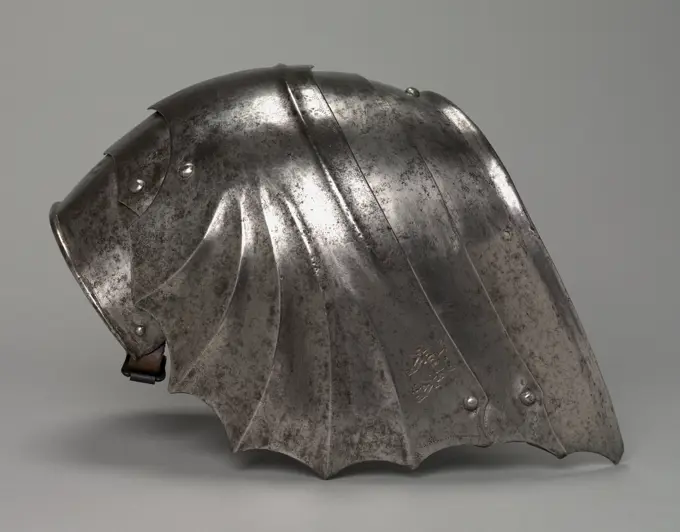
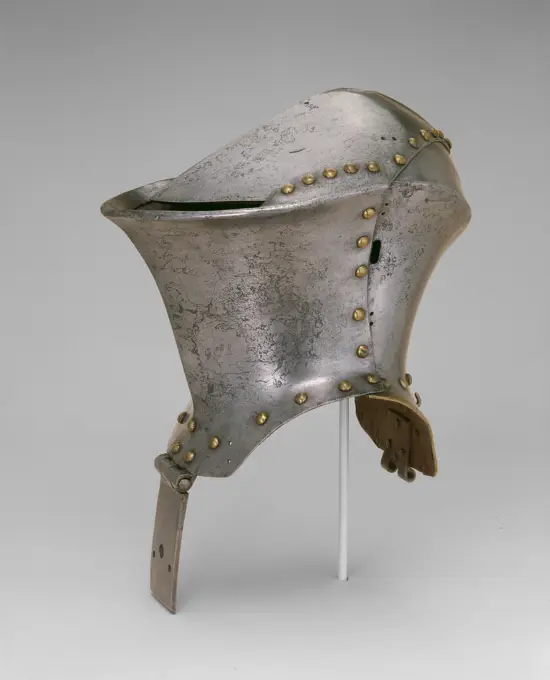
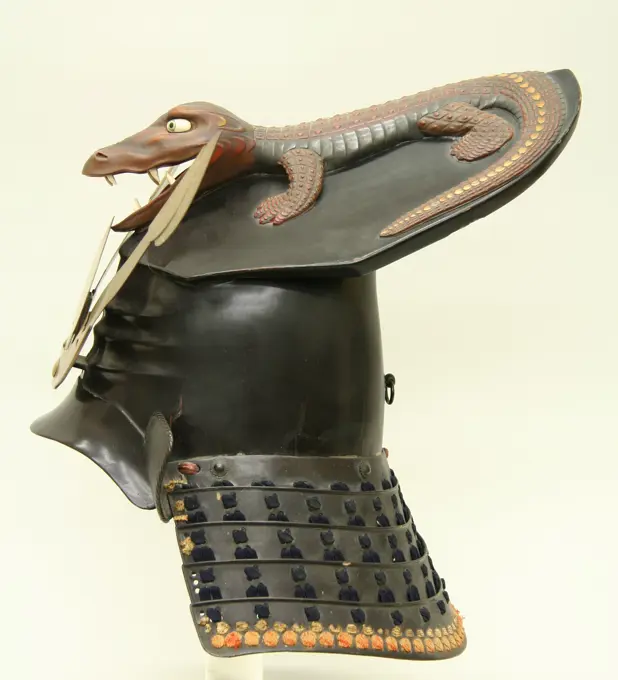
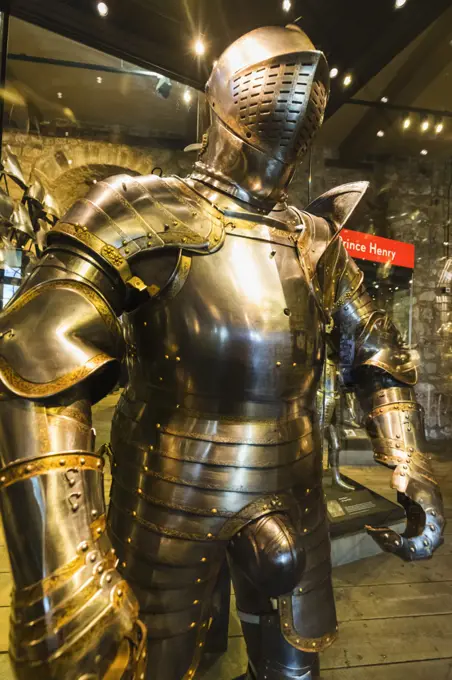
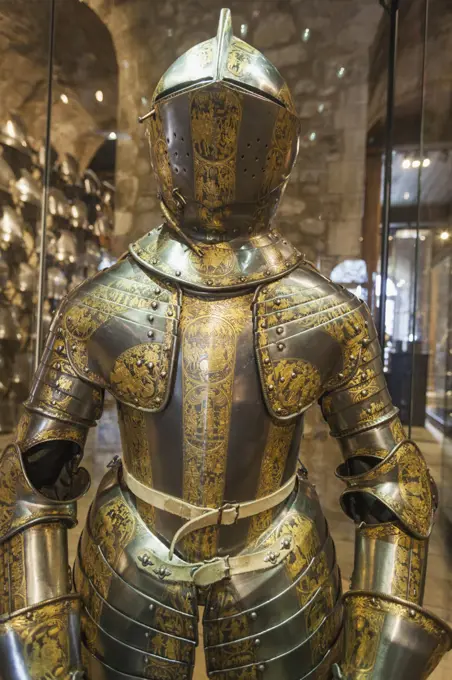
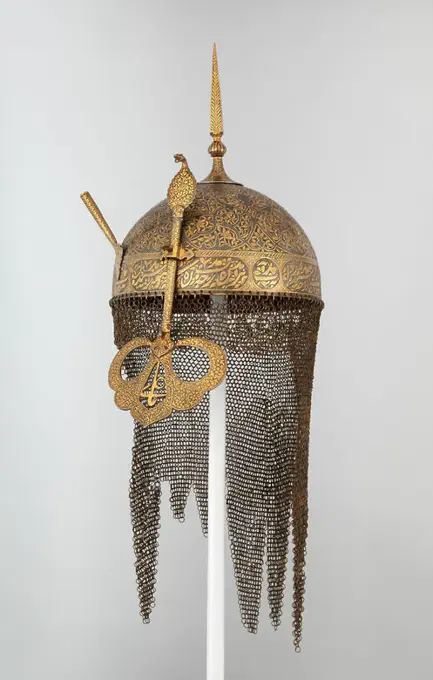
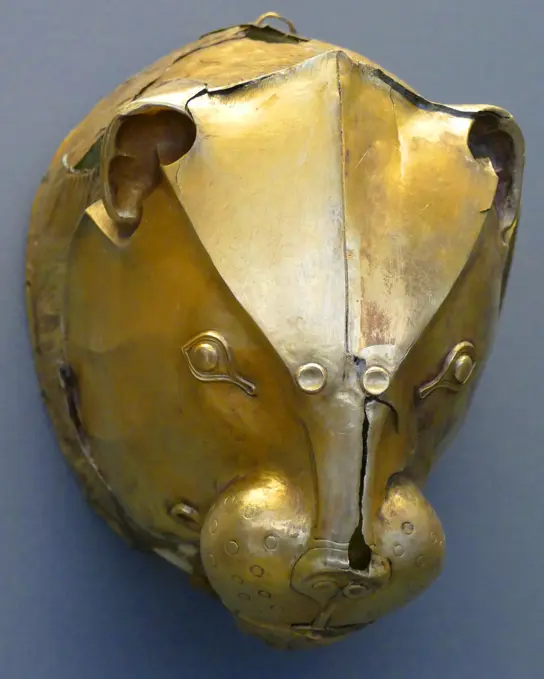
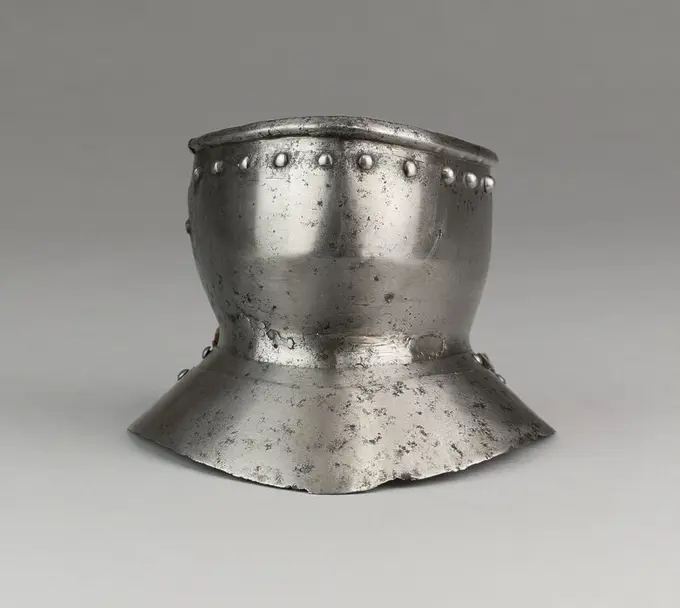
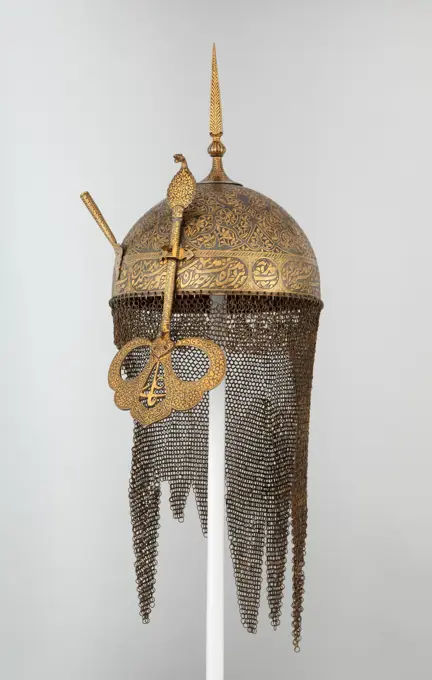
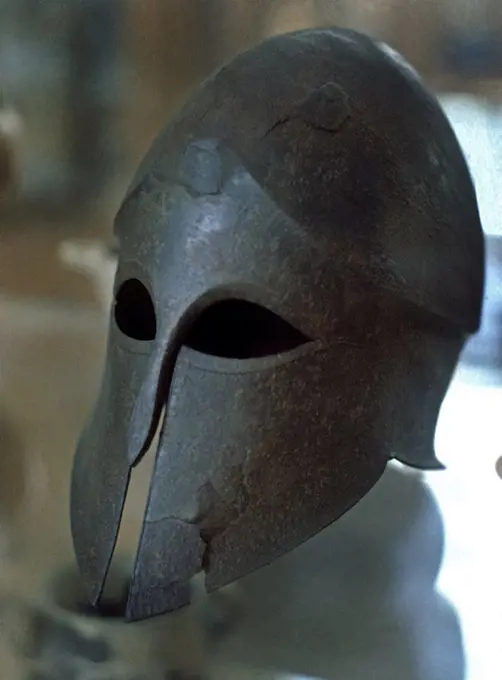
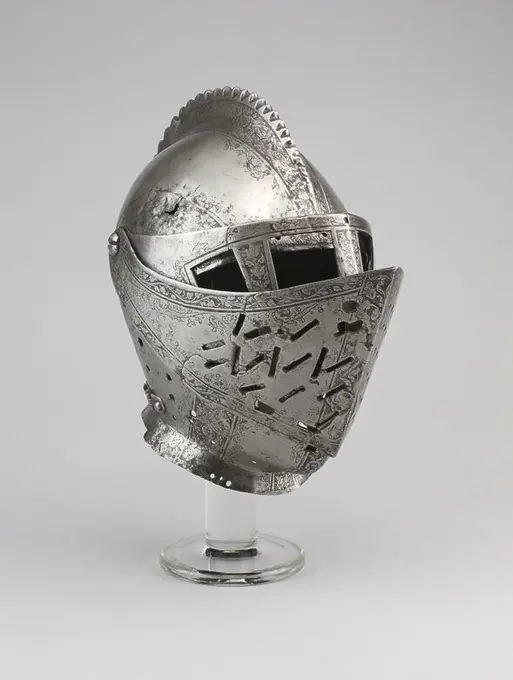
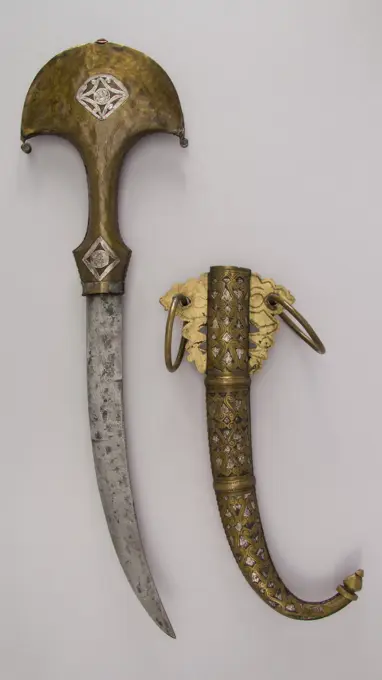
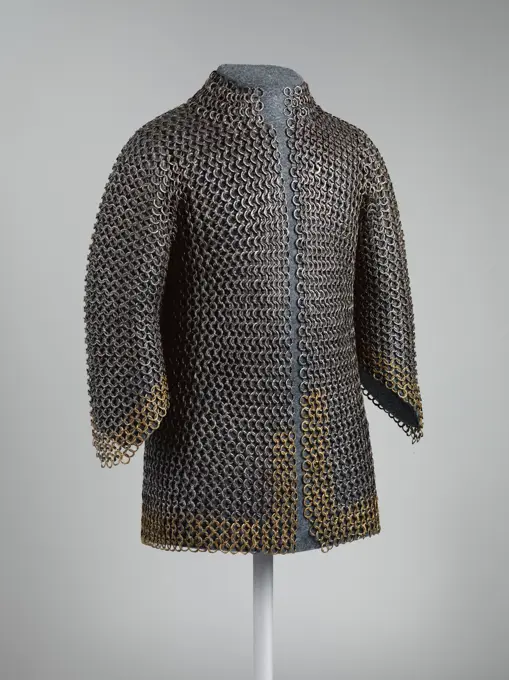
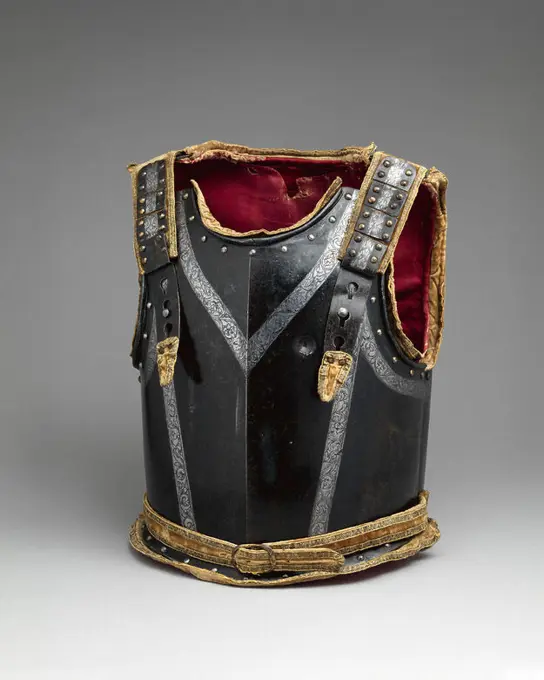
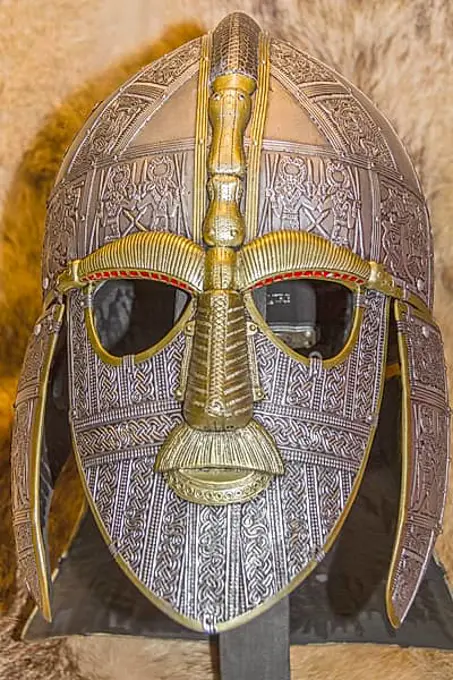
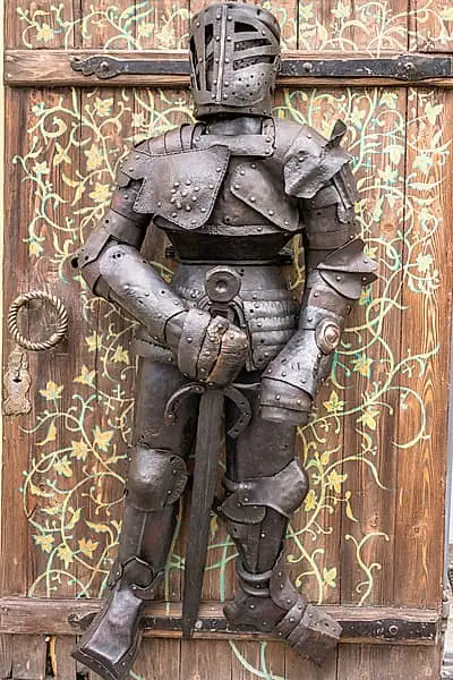
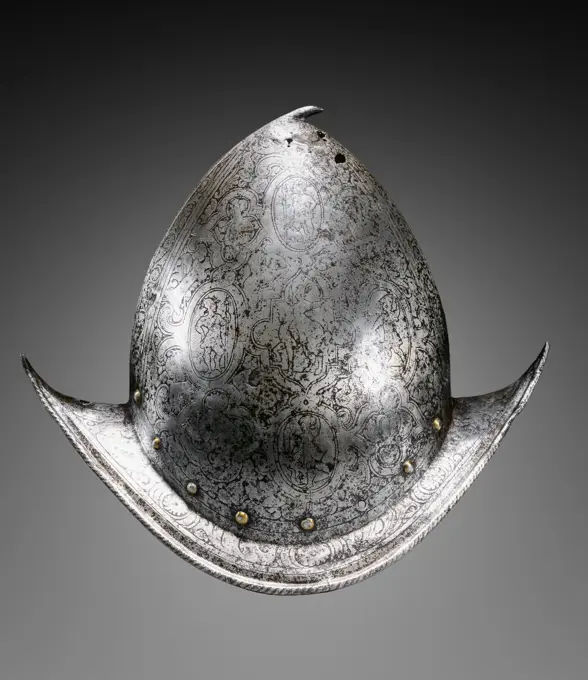
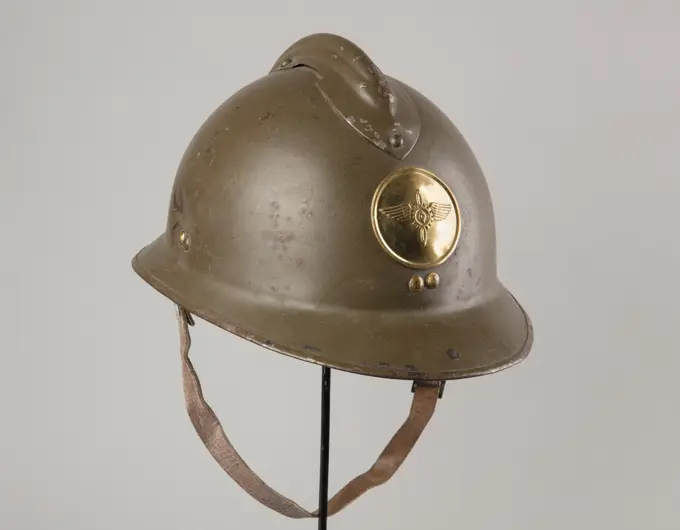
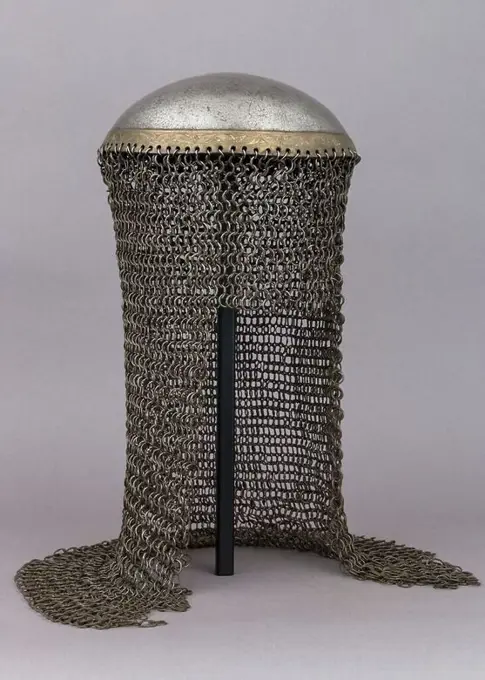
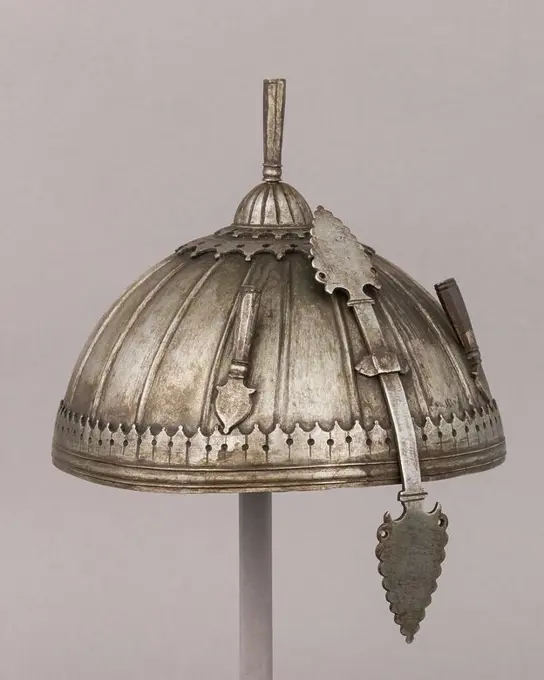
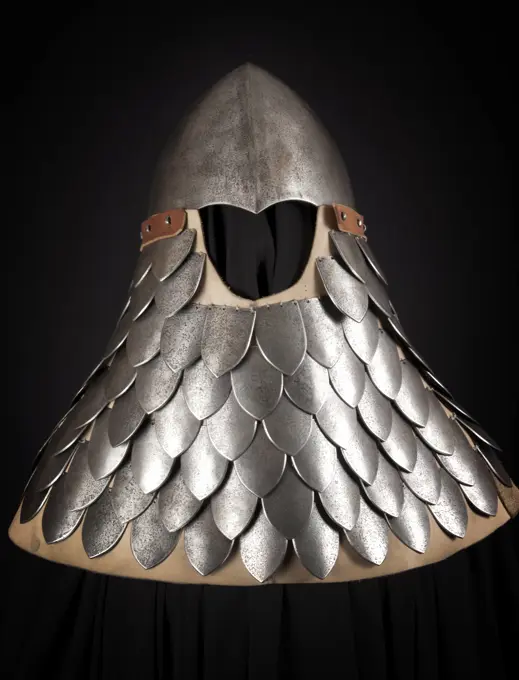
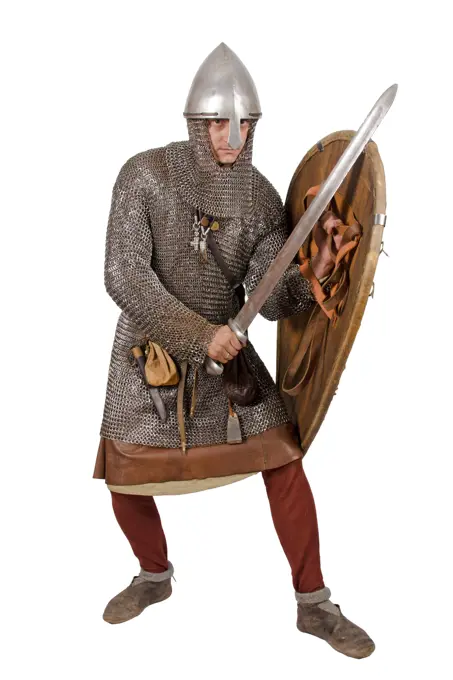
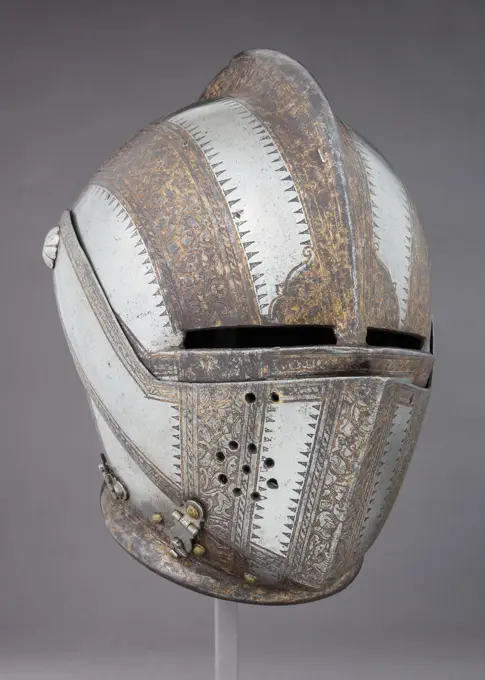
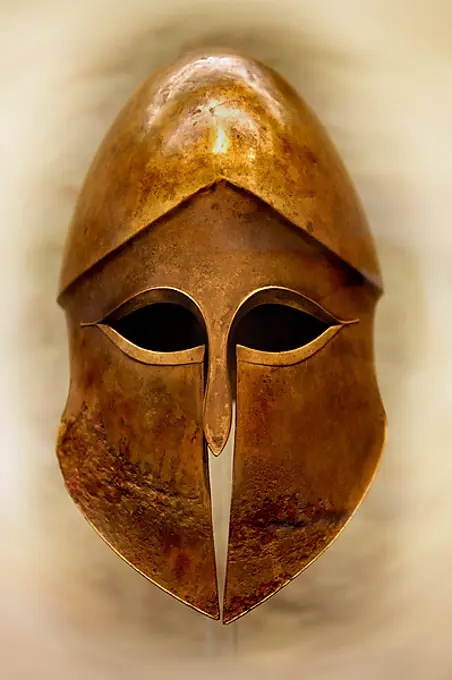
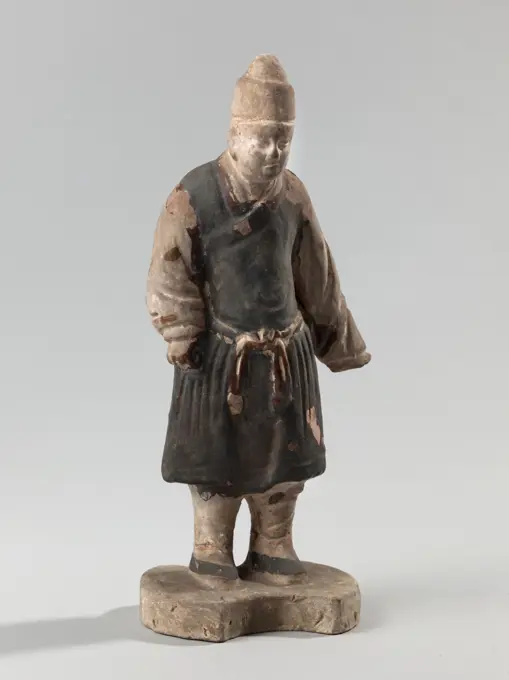
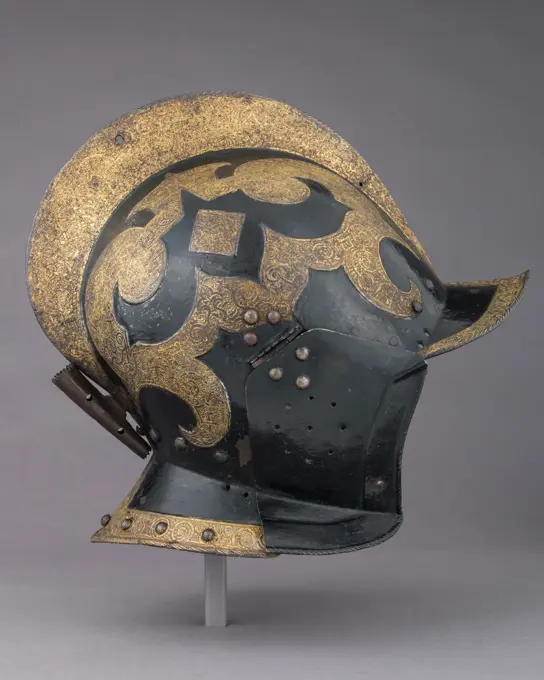
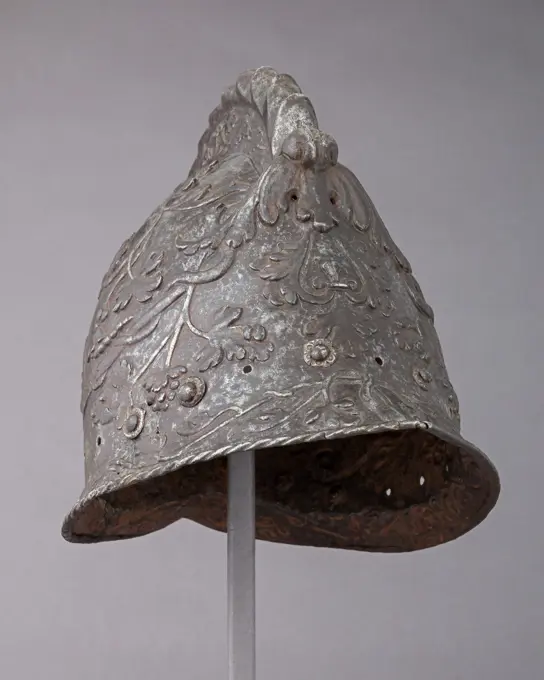
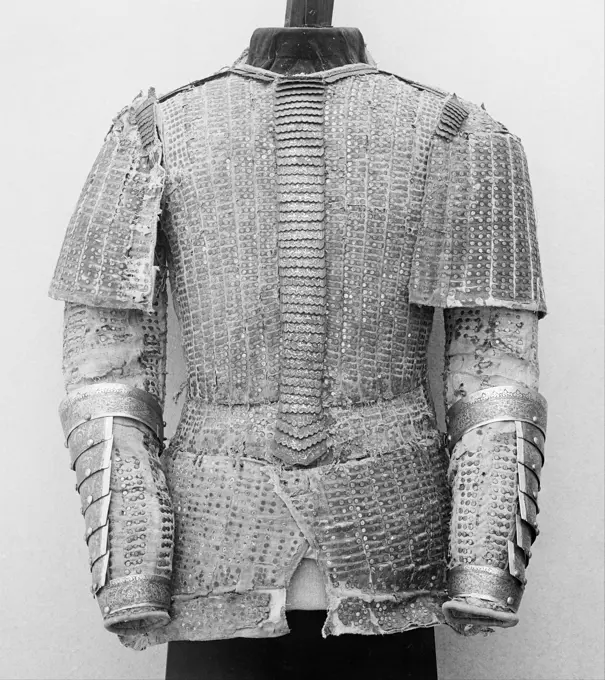
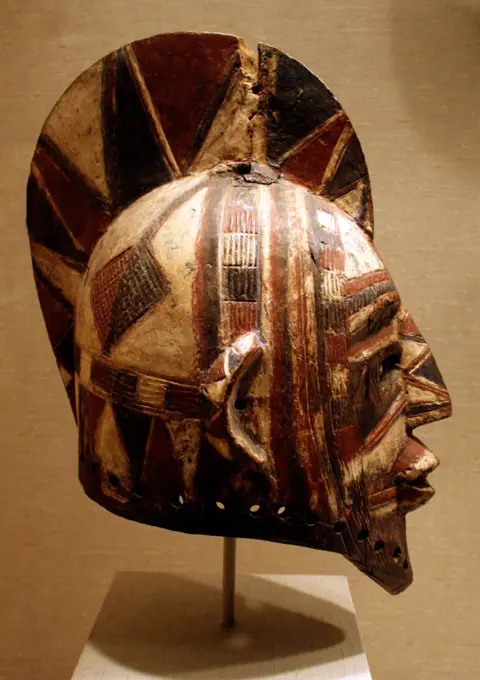
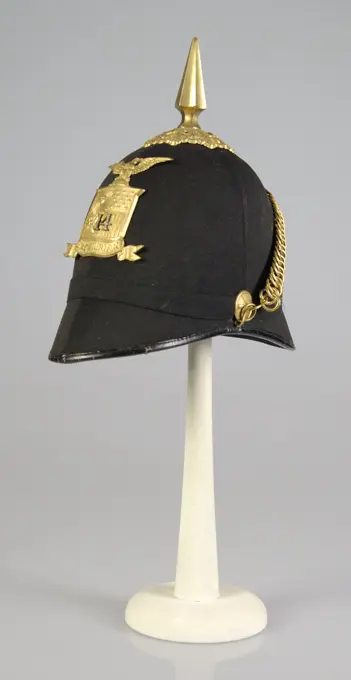
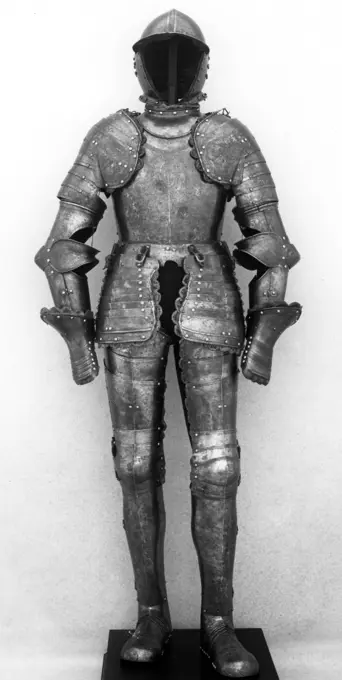
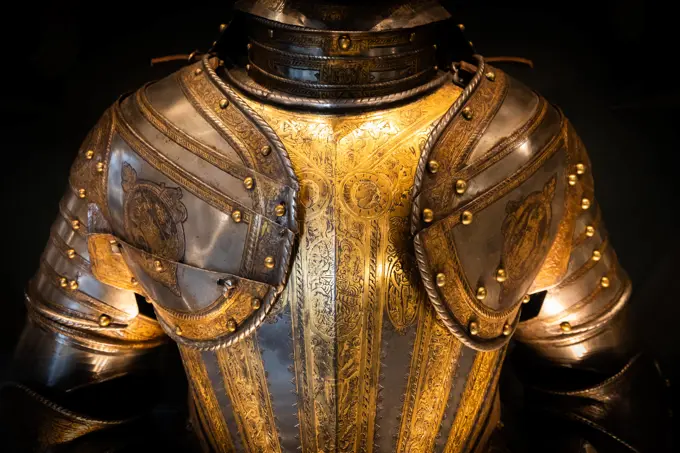
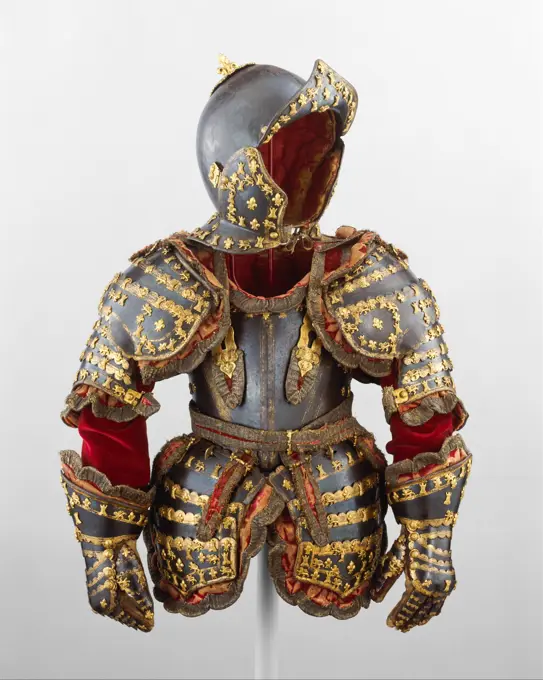
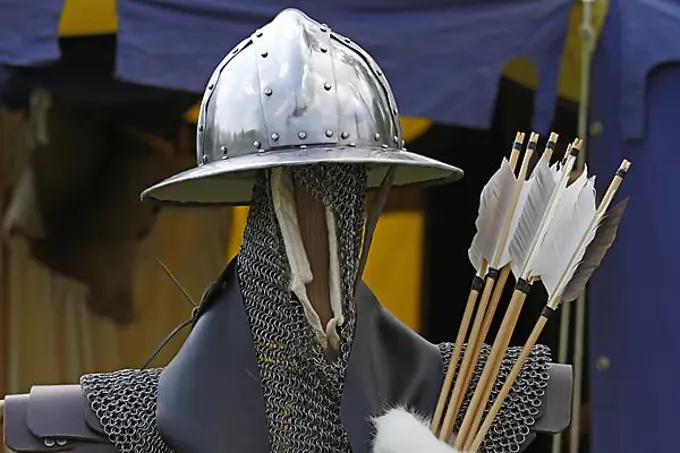
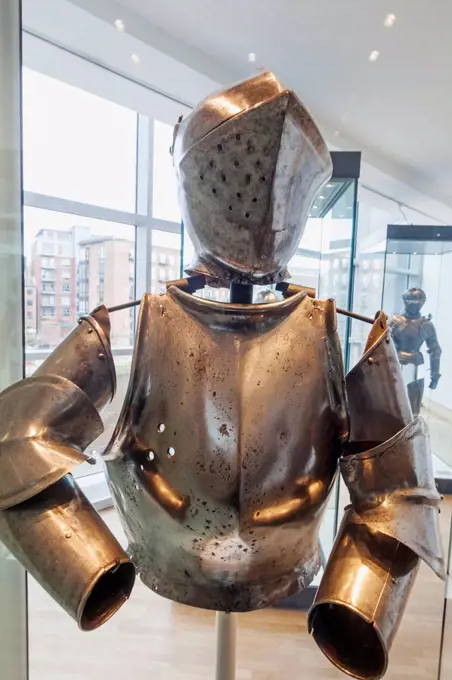
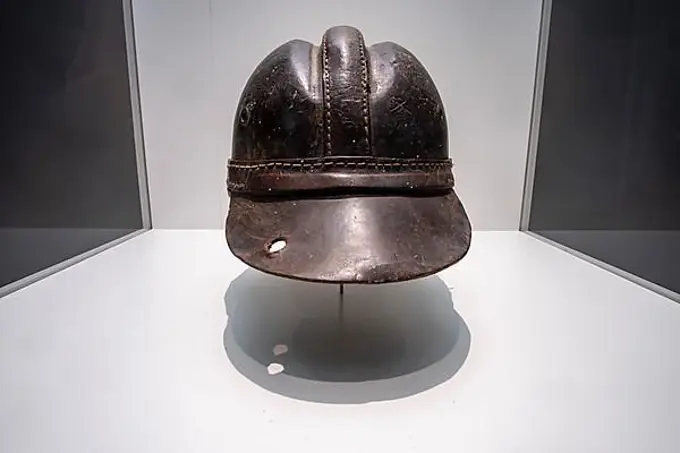
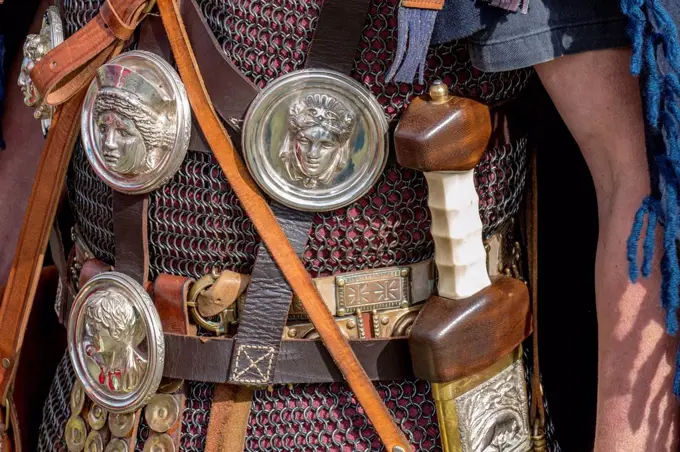
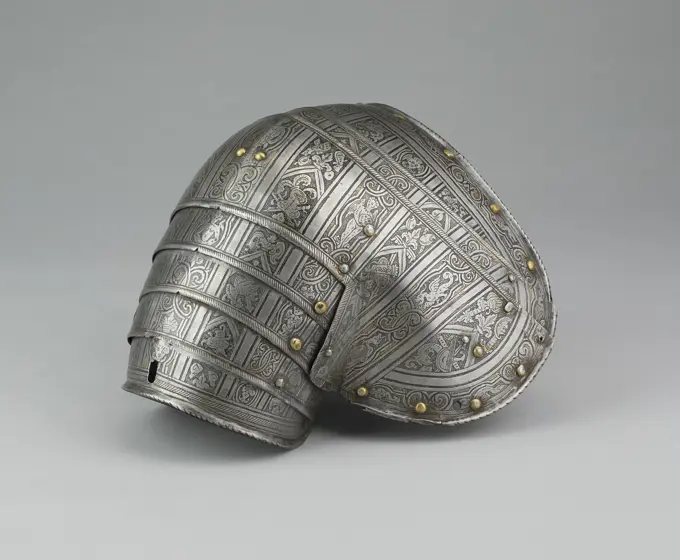
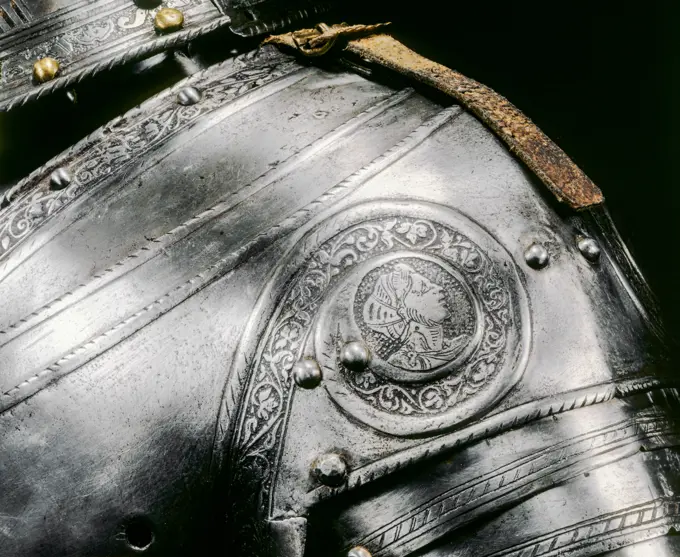
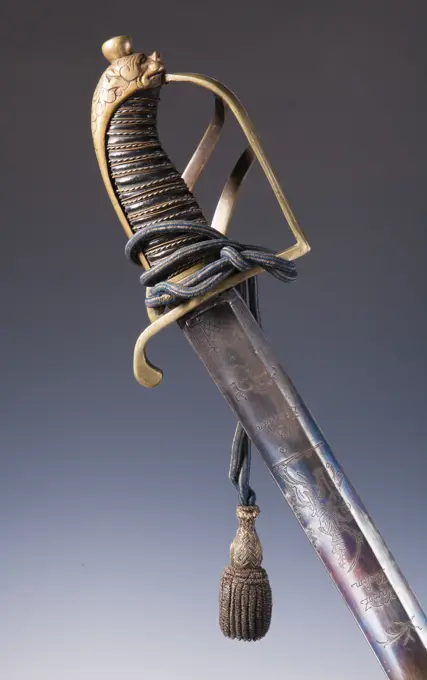
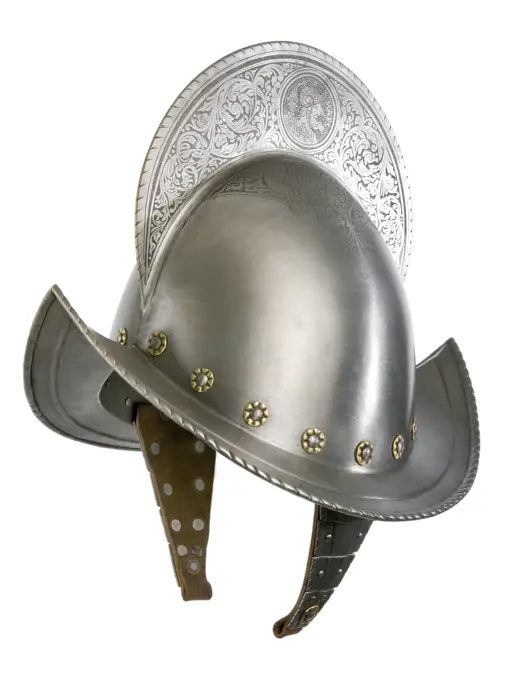
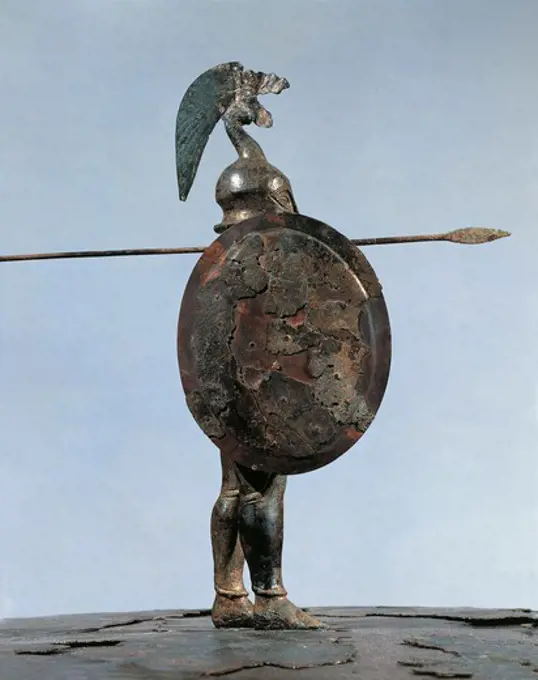
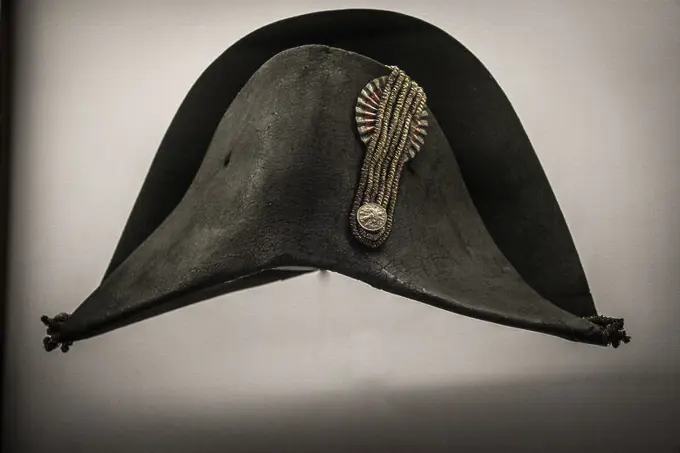
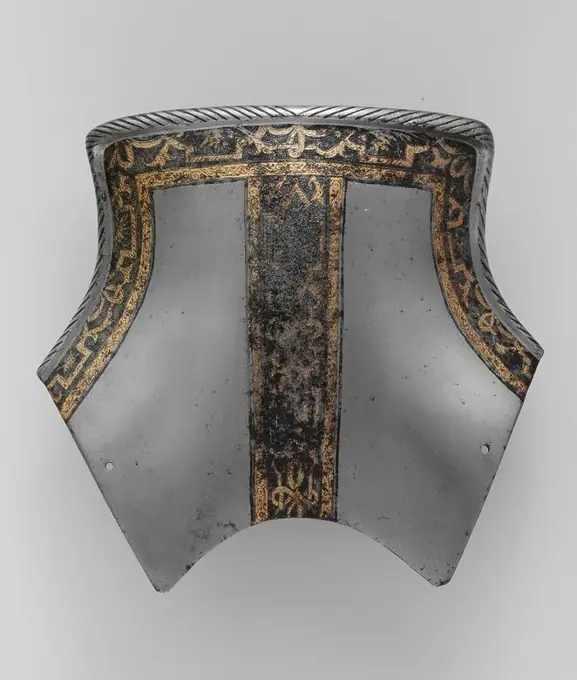
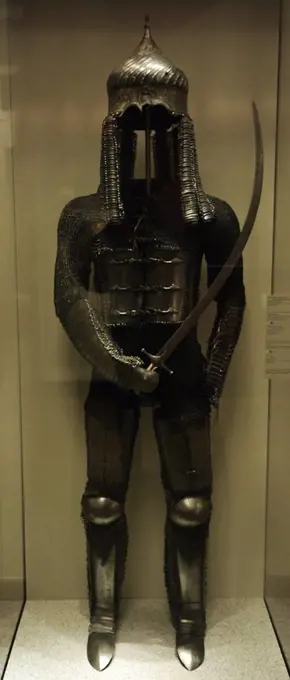
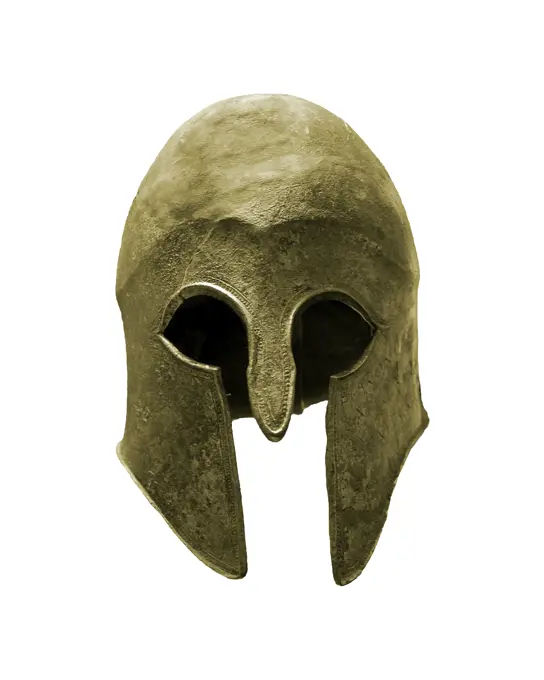
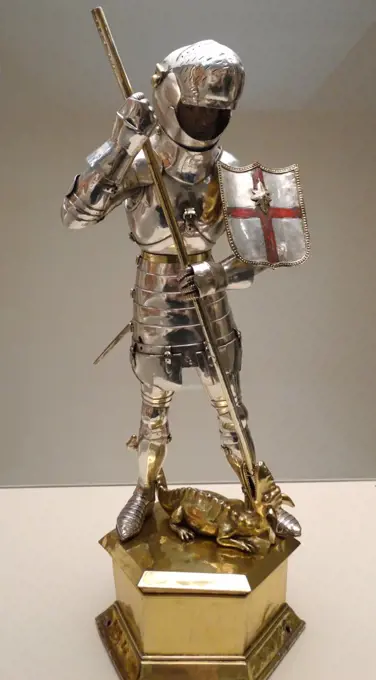
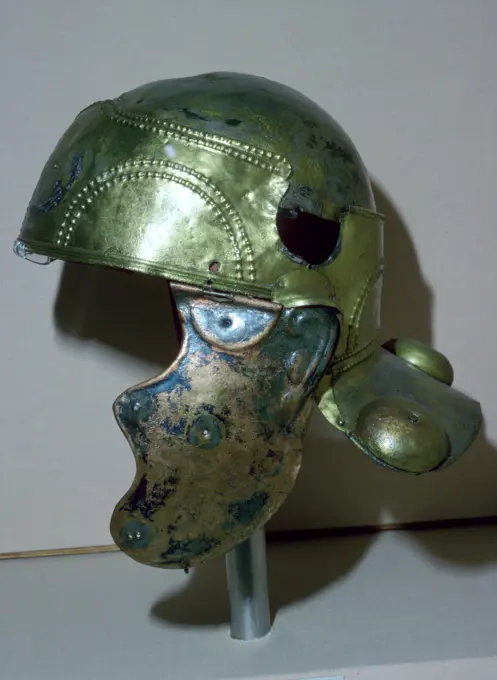
Cavalry combat helmet, Roman Britain, from Witcham Gravel, Ely, Cambridgeshire, 1st century AD. Artist: UnknownArmor for Field and Tournament Made 1530-1570 Augsburg. The growing relationship between armor and costume in the 16th century is indicated in the delicately incised and etched center band with scalloped edge on this armor, which mimics the embroidered front closing of a contemporary male doublet (a close-fitted bodice). The particularly fine decoration of etched floral arabesques suggests the workmanship of the Augsburg armory, perhaps of Jˆrg T. Sorg. The elements of this armor are from the same garnitureómultiple matching pieces of armor that could convert a basic suit into various field or sporting armors. Perforations on the breastplate are for bolting a shock-absorbing lance rest in place and reinforcing plate armor for sporting events. When approaching an opponent, the latch door on the helmet would be closed for protection, whereas in more casual times, the door would be opened for air circulation.. Steel with gilding, iron, brass, leather, and cord . Jörg T. Sorg, the YoungerBascinet probably 19th century German. Bascinet 27119Breastplate with Associated Fauld. Northern German. Date: 1550-1590. Dimensions: Breastplate Wt. 6 lb. 10 oz.Tasset Wt. (each) 1 lb. 4 oz. Steel and leather. Origin: Germany, northern. Museum: The Chicago Art Institute, Chicago, USA.Hall with medieval armour, full ceremonial plate armour of a gentleman from Pienzenau, round 1550, Bavarian National Museum, Prinzregentenstrasse 3, Munich, Bavaria, Germany, EuropeHead of a Queen Mother 16th Century. Cast Brass from Benin.Knight helmet sketch hand drawn in engraving style. Vector illustration desing.Cabasset ca. 1580-90 Flemish, possibly Antwerp The etching is based on prints by Etienne Delaune (1518 or 1519-1582) of Paris and Marcus Gheeraerts the Elder (1525-1604) of Antwerp. The inscription on the helmet, COLLERT 1585, indicates that its decoration was done by a member of that distinguished Antwerp family of engravers and printmakers.. Cabasset 21972Gothic Fan-Shaped Pauldron (left), c.1485-1500. Antonio Missaglia (Italian, 1416/17-1495/96). Steel; overall: 21.5 x 25.2 x 14.8 cm (8 7/16 x 9 15/16 x 5 13/16 in.).Pointed Morion ca. 1590 Italian, Brescia Although worn with age, this elaborately etched morion is particularly interesting for the mark struck at the front of its brim--the Lion of Saint Mark, the Venetian control stamp. Venice had subjugated the armor-manufacturing city of Brescia in the fifteenth century, and, as a result, Brescia became the main supplier of armor used in Venetian service. Similarly marked morions are preserved in the former arsenal of the Serenissima in the Palazzo Ducale, Venice. The ornament, consisting of allover strapwork interlace enclosing trophies of arms, is in the French taste.. Pointed Morion. Italian, Brescia. ca. 1590. Steel, brass. Brescia. HelmetsTournament Helm (Stechhelm) Made 1480-1500 Innsbruck. Steel, brass, and iron .closed helmet, XVI, castle of Foix, 10th century, Foix, department of Ariège, Occitanie, Pyrenean mountain range, France.Helmet (Kawari Kabuto) helmet 17th-19th century, crest 19th century Japanese. Helmet (Kawari Kabuto) 27847England, London, Tower of London, The White Tower, Display of Medieval Body Armour of Henry VIII dated 1540England,London,Tower of London,The White Tower,Suit of Armour made for Henry Prince of Wales dated 1607Helmet, Shield, and Arm Guard. Culture: Deccan, Indian. Dimensions: Helmet (a); H. including mail 24 in. (61 cm); H. including nasal 17 in. (43.2 cm); H. excluding mail and nasal 10 in. (25.4 cm); W. 9 1/4 in. (23.5 cm); D. 10 5/8 in. (27 cm); Wt. 3 lb. 1.2 oz. (1394.8 g). Date: 17th-19th century.The pierced faceguard, topped with the popular Indian motif of the cobra, offered protection without impairing the wearer's vision. The phrase "O 'Ali" in the center is bordered by the following inscription: "There is no hero or man like 'Ali; there is no sword like Dhu'l Fiqar. Help from Allah and a speedy victory." Islamic arms and armor commonly feature pious inscriptions in strategic places to protect vulnerable parts of the body such as the face and vital organs. Museum: Metropolitan Museum of Art, New York, USA.Chain shirt chain shirtfigurine a medieval knight isolated on white backgroundReinforcing Bevor and Grandguard for the Joust Made 1545-1575 Augsburg. By the sixteenth century, armorers devised this steel reinforcement as replacement for wooden shields or targes used in the joust. The lower section, known as a grandguard, was bolted down firmly over the left side of the breastplate. These served as targets and were often fitted with a trellis pattern to grapple the lance head after impact. The helmet was bolted to the upper section (bevor) for added thickness and protection, replacing the heavy jousting helm of the past.. Steel .Ritualistic object from Mycenae gravesBevor ("Falling Buff") with Two Gorget Pieces. European, possibly Spanish. Date: 1490-1510. Dimensions: . Steel. Origin: Europe. Museum: The Chicago Art Institute, Chicago, USA.Close Helmet probably early 19th century in the 16th century style German. Close Helmet 27116Helmet, Shield, and Arm Guard 17th-19th century Deccan, Indian The pierced faceguard, topped with the popular Indian motif of the cobra, offered protection without impairing the wearers vision. The phrase "O ‘Ali" in the center is bordered by the following inscription: "There is no hero or man like ‘Ali; there is no sword like Dhul Fiqar. Help from Allah and a speedy victory." Islamic arms and armor commonly feature pious inscriptions in strategic places to protect vulnerable parts of the body such as the face and vital organs.. Helmet, Shield, and Arm Guard. Deccan, Indian. 17th-19th century. Steel, gold, copper alloy. Armor PartsAnglo-Saxon helmet part of the Sutton Hoo treasure excavated near Woodbridge, Suffolk, England, 1939. British MuseumCASCO. Location: MUSEO ARQUEOLOGICO-ARMA. ATHENS. GREECE.Helmet and Arm Guard 19th century Persian. Helmet and Arm Guard 32073Salzburg, Austria. Antique armor with ornate detailsClose Helmet. Possibly by the workshop of Wolfgang Grosschede; Southern German, Landshut, active 1551-1562. Date: 1551-1557. Dimensions: H. 21 cm (8 1/4 in.). Steel with gilding. Origin: Landshut. Museum: The Chicago Art Institute, Chicago, USA.Dagger (Jambiya) with Sheath 18th-19th century South Moroccan. Dagger (Jambiya) with Sheath. South Moroccan. 18th-19th century. Steel, wood, silver, brass. DaggersMail Shirt with Inscribed Rings 15th-16th century possibly Iranian Constructed entirely of interlocking riveted links of flattened iron except along the sleeves, hem, and front and rear slits, where the links are made of flattened copper alloy, this shirt opens down the front and extends downward over the hips. The majority of the links are each stamped on the obverse with the names of Allah and the five leading imams of the Shia (i.e. Muhammad, 'Ali, Fatima, Hasan, and Husayn), who are also collectively known as The Five (Panj tan) or the People of the Cloak (Ahl al-Kisa). These links are occasionally interspersed with links stamped with the talismanic invocation (translated): "There is no hero like 'Ali and no sword like Dhu'l faqar." These holy inscriptions ensured that the shirt provided the wearer with talismanic protection against peril. This is one of very few Islamic inscribed mail shirts with decorative copper-alloy borders that are known to survive. A related example is alsoCuirass. Culture: German. Dimensions: H. 16 1/4 in. (41.3 cm); Wt. of backplate 14 lb 8 oz. (6577 g); Wt. of breastplate 14 lb. (6350 g). Date: late 17th century. Museum: Metropolitan Museum of Art, New York, USA.Copy Of Anglo Saxon Helmet Suffolk UKRomania, Prahova, Poiana, Repousse gold and silver helmetSuit Of Armour On Door tallinn EstoniaPear Stalk Cabasset, 1580-1600. North Italy, Brescia(), late 16th Century. Steel, etched, roped edge and brass rivets; overall: 30.5 x 36.8 x 18.4 cm (12 x 14 1/2 x 7 1/4 in.).Helmet 17th-18th century Turkish. Helmet 32058Aviation Mexican helmet based on the French pattern 1926 unknown labelHelmet. Culture: Turkish. Dimensions: H. including mail 19 in. (48.3 cm); H. excluding mail 2 5/8 in. (6.7 cm); Diam. 7 1/2 in. (19.1 cm); Wt. 3 lb. 6 oz. (1530.9 g). Date: 17th-18th century. Museum: Metropolitan Museum of Art, New York, USA.Europa, Italy, Tuscany, Castiglion della Pescaia, Vetulonia, Museo Civico Archeologico Isidoro Falchi""Head protectionMedieval armor of an original knight in the castle of Fougeres. Brittany region, Ille et Vilaine department, France, EuropeHelmet. Culture: Indian. Dimensions: H. including nasal 7 1/2 in. (19.1 cm); H. excluding nasal 5 in. (12.7 cm); W. 7 3/8 in. (18.7 cm); D. 8 in. (20.3 cm); Wt. 2 lb. 2.9 oz. (989.4 g). Date: 18th century. Museum: Metropolitan Museum of Art, New York, USA.War Hat probably 19th century, in the 15th century style French. War Hat 27123Iron helmet Iron helmet of the medieval knight. Very heavy headdress. Copyright: xZoonar.com/ValeryxxSibrikovx 6496842Norman knight dressed warrior 2nd half of the 11th century. Isolated on white Norman knight dressed warrior 2nd half of the 11th century. Isolated on white ,model released, Symbolfoto Copyright: xZoonar.com/PavelxSytilinxxxxxVolgograd,xRussia.x 22031150 ,model released, Symbolfoto ,property releasedArmet ca. 1585 Italian. Armet 27137Helmet from the tomb of Dendas, Glyptothek, Munich, Bavaria, Germany, EuropeMedieval knight on grey background.Morion helmet with driven out lily, anonymous, 1550 - 1600 moron Morion helmet, iron, gushed with white driven lily, made from two halves. High helmet with a high comb whose edge is cacked. Around the base of the helmet, rosettes. The valve has high rising points at the front and back. The edge of the valve has flared. On the left and right-hand side on the helmet copper-colored rivets with which the kinriem is attached to the inside. The leather kinriem consists of two leather tires whose ends are attached to each other. Each band has five metal plates to which two rivets are attached to. Germany helm: iron (metal). klinknagels: copper (metal). kinriem: leatherMale character mingqi. Terracotta, brown glaze, traces of polychromy. Paris, Cernuschi museum. 78843-19 Beyond, belief, figurine, mingqi, funeral object, male character, model character, funeral rite, statuetteQatar, Doha, Museum of Islamic Art, war mask, 15th century,Burgonet 16th century German, Saxon. Burgonet 34800Tobacco Indian pipe. Pipe of tobacco indian. Advertising agent for the tobacco trade or sale.Burgonet ca. 1550 Italian, Milan The revival of interest in the Classical world during the Renaissance had a profound effect on the appearance of armor. Inspired by Roman examples, armor allantica (in the antique style) was worn by Italian princes and condottieri (professional soldiers) as an evocation of ancient heroes and of a glorious military heritage. Although armor in Classical fashion was known in the fifteenth century, it was not until about 1530 that armorers began to make it in embossed steel. In raising the decoration to high relief, the steel plates were worked too thin to be of protective value. As a result, embossed armor served a purely ceremonial role, leaving the armorer free to fashion it into fantastic, often whimsical forms. Filippo Negroli of Milan (about 1510-1579) seems to have been the principal innovator of this style, and contemporaries judged his works to be masterpieces of sculpture. The Negroli workshop included Filippos brother Francesco, a specialist inKnight. The whole whole poured, on the back flat knight's figure carries a harness. He keeps his right arm up to hold a lance with both hands. This is missing. The function of the object is unknown.Brigandine ca. 1550 Italian. Brigandine. Italian. ca. 1550. Etched steel with silver and gold, linen.. BrigandinesOne dagger and two axes isolated on whiteHelmet Mask (Bolo) Burkina Faso, Bobo peoples 19th-20th century. Wood, animal hair, resin, pigment.Knight's armourMilitary helmet 1881-82 J.H. McKenney & Company. Military helmet 175617Portions of an Armor Garniture ca. 1620-30 Italian, Brescia. Portions of an Armor Garniture 22256Pair of Tassets for Light Field Use 1550-1600 Northern Germany. Steel .Scandinavia. Viking Age. helmet from chieftain's grave. Iron. Gjermundbu in Ringerike, Eastern Norway. 10th century. Historical Musesum. Oslo. Norway.St George and the dragon, in Silver. Spanish 1420-1450 ADsmart dagger smart dagger of the medieval soldier. It was used for hunting Copyright: xZoonar.com/ValeryxxSibrikovx 6664339Antique armour on black background. Concept for security, safety and fantasy. Antique armour on black background. Concept for security, safety and fantasy Copyright: xZoonar.com/PaoloxGallox 21208261Medieval armor, Hochosterwitz Castle, CarinthiaArmour of the medieval knight. Metal protection of the soldier against the weapon of the opponentHelmet of a medieval knightSet of figurine a medieval knightes isolated on white backgroundEngland, Yorkshire, Leeds, The Royal Armouries Museum, Display of Medieval ArmourNahaufnahme eines mittelalterlichen Helms mit Details und anderen Rüstungen im Hintergrund Close up side view of medieval shiny helmet with details and other armors in limestone wall background. Segovia, Spain. Copyright: xZoonar.com/CarlosxAndresxMartinezxSubiratsx 23156439Armor of Infante Luis, Prince of Asturias (1707-1724) dated 1712 Signature probably refers to Jean Drouart French Possibly the last royal armor made in Europe, this is believed to have been presented to the five-year-old Infante Luis (1707-1724), prince of Asturias, by his great-grandfather Louis XIV of France (1638-1715, reigned from 1643). Luis was the first Spanish-born Bourbon heir to the throne of Spain and ruled briefly as Luis I in 1724. The armor is signed and dated on the backplate Drouar Ordinaire du Roi aux Heaume à Paris 1712 (Drouar, armorer-in-ordinary to the king, at the sign of the helm, in Paris, 1712). The signature probably refers to Jean Drouart (died before October 1715), a royal armorer. Drouart was one of the last practicing armorers active in France by 1712. Remarkable for the state of its preservation, the armor retains its lustrous blue and gold surfaces and nearly all the original red silk lining. The gilt rivet heads are of heraldic designthe lion of León, late 16th century Genoese armourDetail of a knight's armourEngland, Yorkshire, Leeds, The Royal Armouries Museum, Display of Medieval ArmourMiners' helmet made of leather, ca. 1950, Zollverein Colliery, Essen, North Rhine-Westphalia, Germany, EuropeRoman Festival, Biriciana, fort area, Weissenburg, GermanyRight Pauldron 1580 Italy. Steel .Vector illustration chain mail and send with mosque of the medieval warrior. Panoply of the medieval warrior on white background is insulatedBronze Corinthian helmet, from the Peloponnesus, GreeceArmor for the Tilt. Culture: Italian. Date: ca. 1585. Museum: Metropolitan Museum of Art, New York, USA.knight. knight wearing armor isolated on white.Madrid, 07/16/2024. Report from the Royal Collections museum. Royal armory of the Royal Palace. Photo: Ernesto Agudo. Archdc.2005.4366.1 thru .10. Japanese Suit of Armour. Made in Japan, maker unknownBreastplate, c. 1575. North Italy, Brescia (), 16th century. Steel with etched decorative bands and roundels; overall: 46 x 36 x 15.3 cm (18 1/8 x 14 3/16 x 6 in.). Decoration was critical to fine armor, and etching was the most commonly used technique. Here, the bands along the borders are etched. On the breastplate, pauldrons (shoulder guards), and tassets (hip and upper leg guards), etched medallions enclose profile busts reminiscent of ancient Roman portraits. The lance rest on the breastplate indicates that this half-suit was once part of a complete field armor for man and horse. The etching technique used for armor was developed in the late 1400s. The metal surface was first coated with an acid-resistant substance, such as wax or varnish. An etching needle was then used to scratch a design into the surface. The exposed areas were then treated with an acid that would "bite" or etch the lines into the metal. When the coating was removed, the etched design was blackened for contraOfficer's saber from the time of the Constitution of May 3 with the vagina and the TardlakIron helmet Iron helmet of the medieval knight. Very heavy headdress Copyright: xZoonar.com/ValeryxxSibrikovx 2476897Etruscan bronze figure of warrior, 7th Century B.C.Marshal Jourdan's bicorne, Álava Armory Museum, Vitoria, Basque Country, Spain.Right Pauldron with Guard Brace, 1801-1900. Germany, 19th century. Steel with black paint; overall: 27.3 x 33 cm (10 3/4 x 13 in.).Pommel Plate. Culture: German, Augsburg. Dimensions: 8 1/2 x 9 3/8 in. (21.7 x 23.7 cm), Wt. 11 oz. (326 g). Date: ca. 1560-70.The etched decoration of this pommel plate, consisting of interlaced strapwork enclosing heraldically displayed eagles, is very similar to that on an armor in the Hofjagd- und Rüstkammer, Vienna, which was made in Augsburg in 1563 for Archduke Karl of Styria (1540-1590), the youngest son of Emperor Ferdinand I. Although the Museum's plate differs from the Vienna armor in small but significant details, it seems likely that it, too, was an imperial commission and was etched in the same Augsburg workshop. Museum: Metropolitan Museum of Art, New York, USA.Cube-shaped display in room 102 with weapons and harnesses (weapon cube); Setup of Dutch history department. .Turkish cavalry armour. 1550. Iron and leather. Turban helmet neck protector (iron, gold, silver and damascene). 1450-1475. From Iran. Saber from Persia, 1600. German Historical Museum. Berlin. Germany.Parade helmet from Holland, Roman civilizationHoplite Helmet Isolated Photo Hoplite warrior helmet photo isolated on white background Copyright: xZoonar.com/DanielxFerreira-LeitesxCiccarinox 17815376Protective medieval headwear with stripes for fixation, isolated helmet made of metal. Soldiers or knight antique armour. Historical exponent in museum exhibition. Vector in flat style illustration. Helmet of soldier, protective medieval headwearSt George and the dragon, in Silver. Spanish 1420-1450 ADBreastplate. South German, Augsburg. Date: 1570-1590. Dimensions: H. 198 cm (78 in.). Steel, brass, and leather. Origin: Augsburg. Museum: The Chicago Art Institute, Chicago, USA.medieval shield