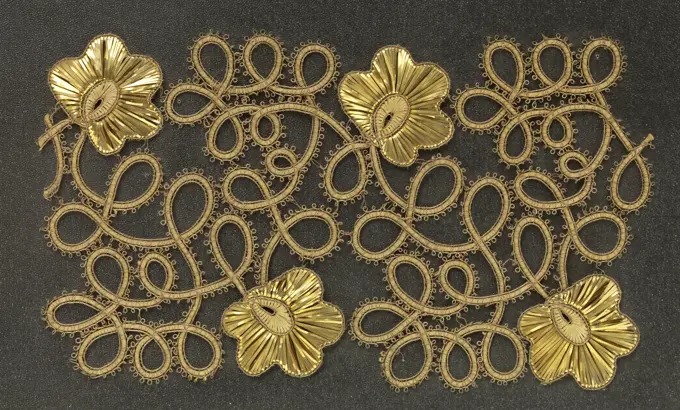
Medieval Islamic Jewelry Pieces

Intricate jewelry elements from the late 14th to 16th century, featuring elaborate designs and gemstones, showing influences from medieval Islamic artistic traditions.
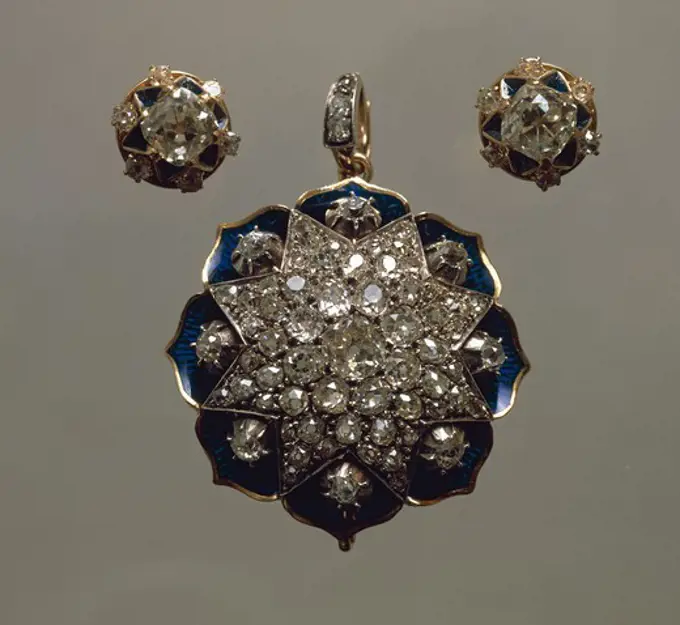
Goldsmith's art, England, late 18th century.  Blue enamel, diamonds and gold pendant and earrings.
Goldsmith's art, England, late 18th century. Blue enamel, diamonds and gold pendant and earrings.
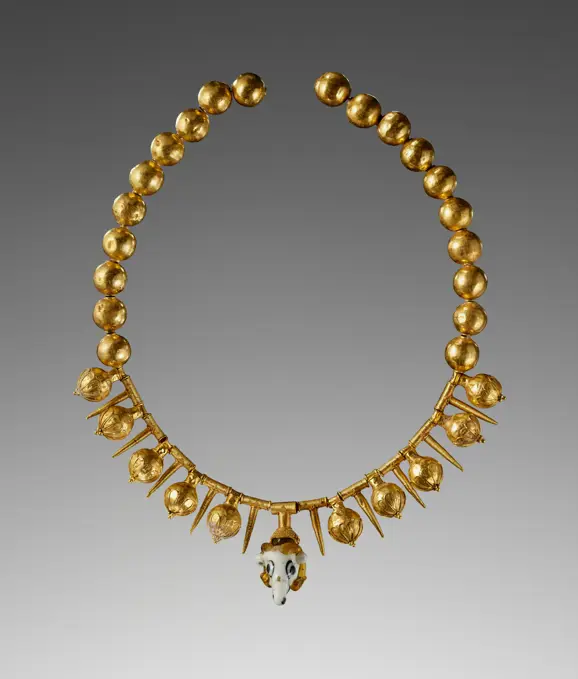
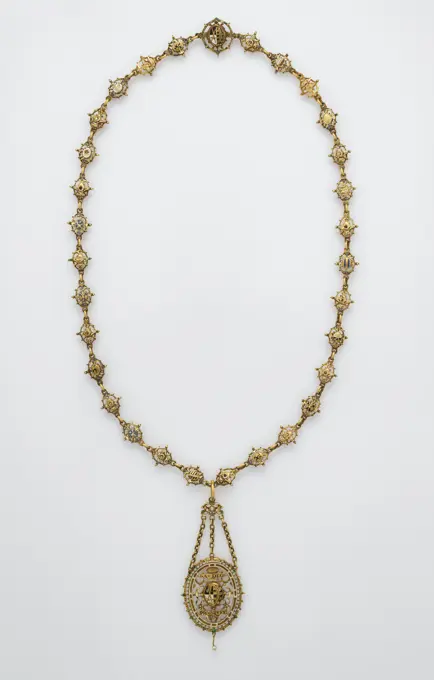
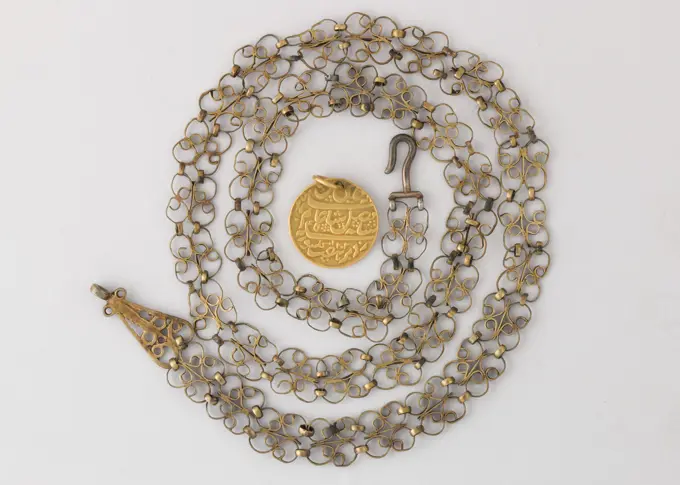
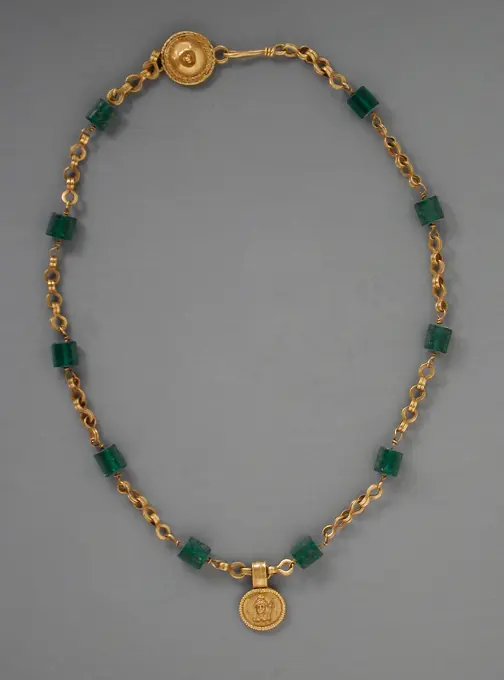
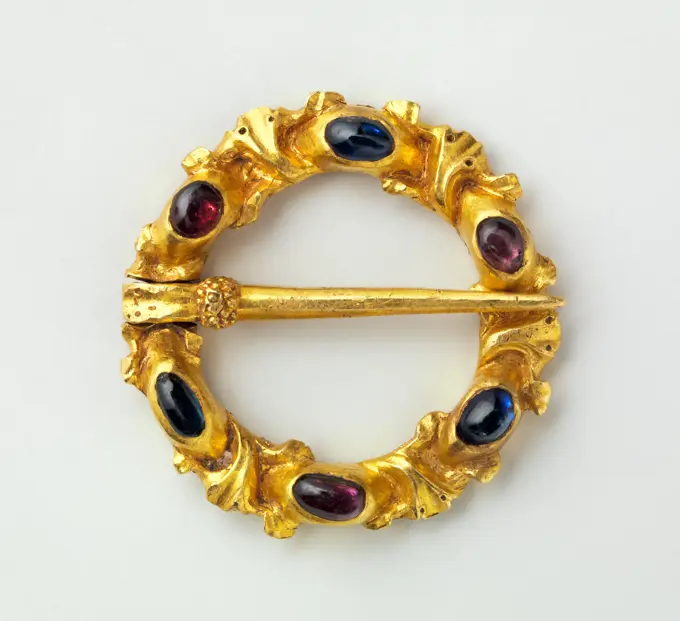
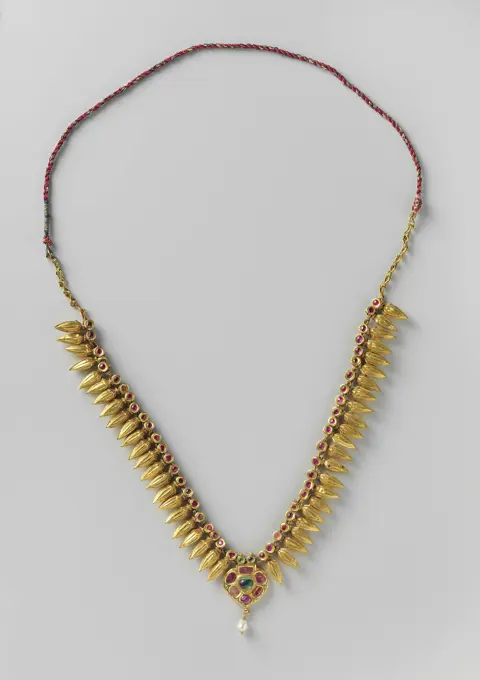
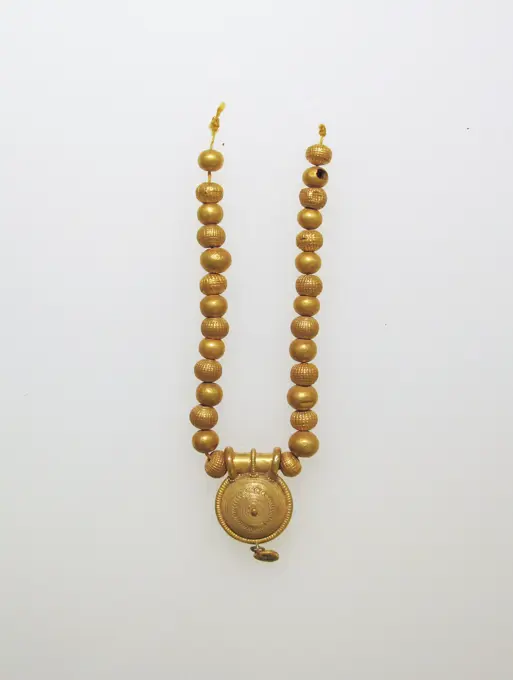
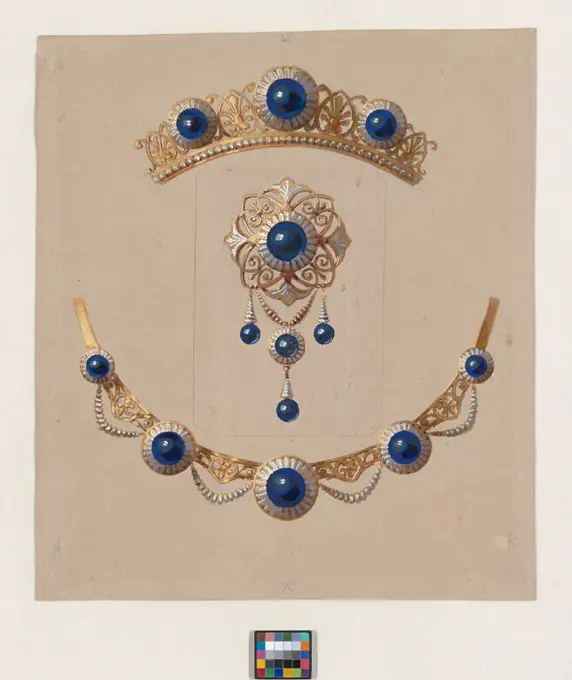
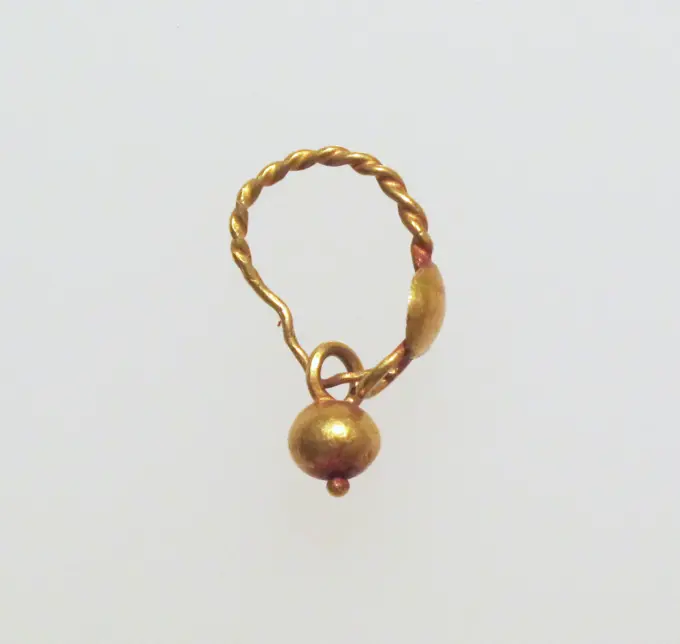
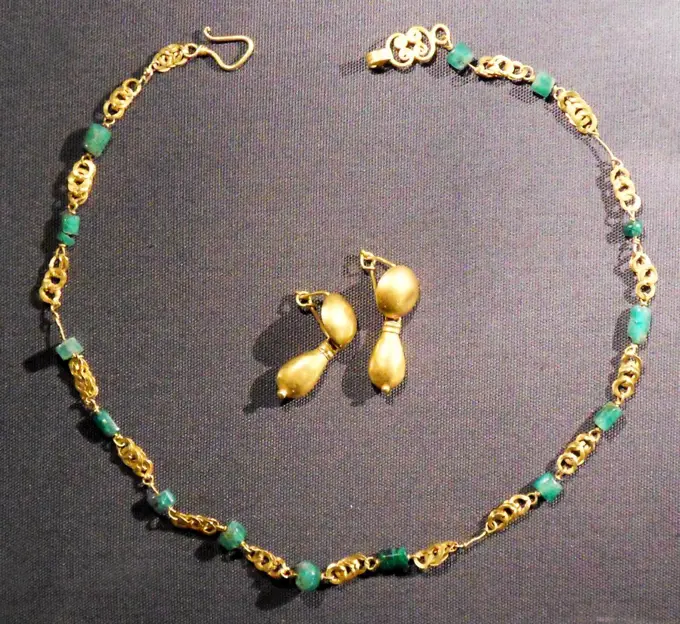
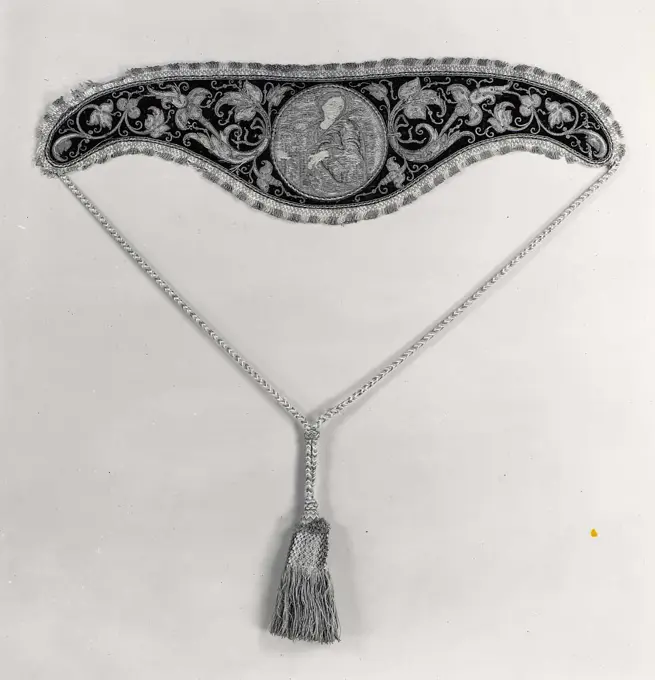
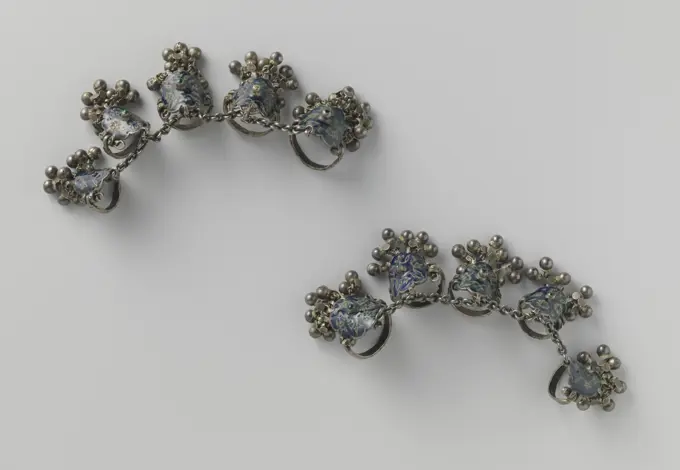
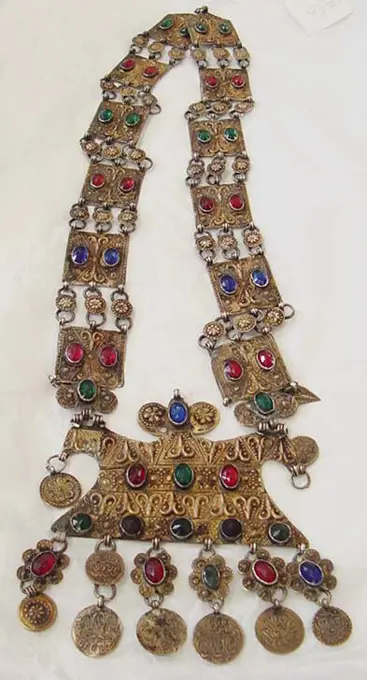
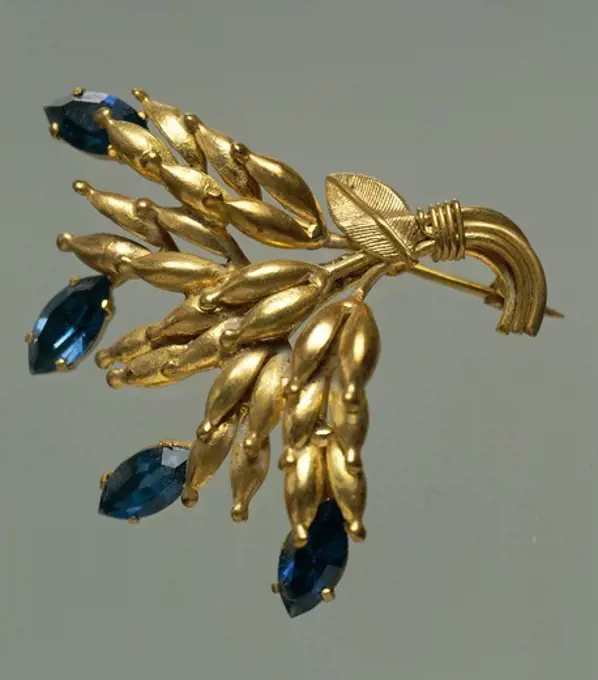
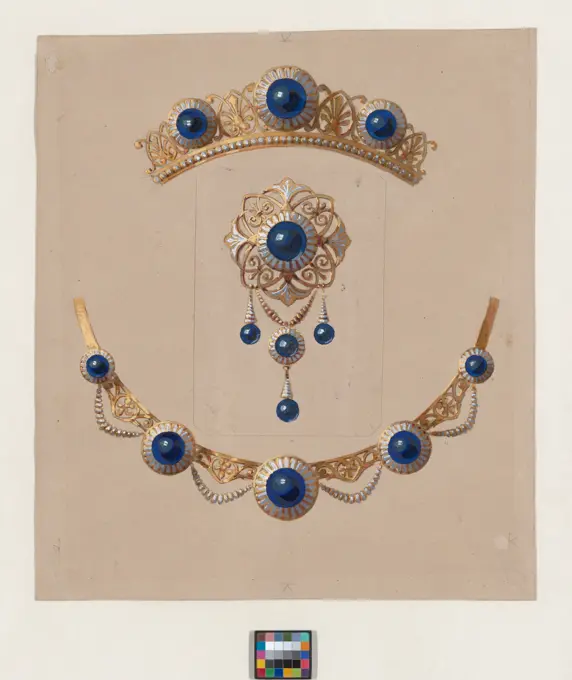
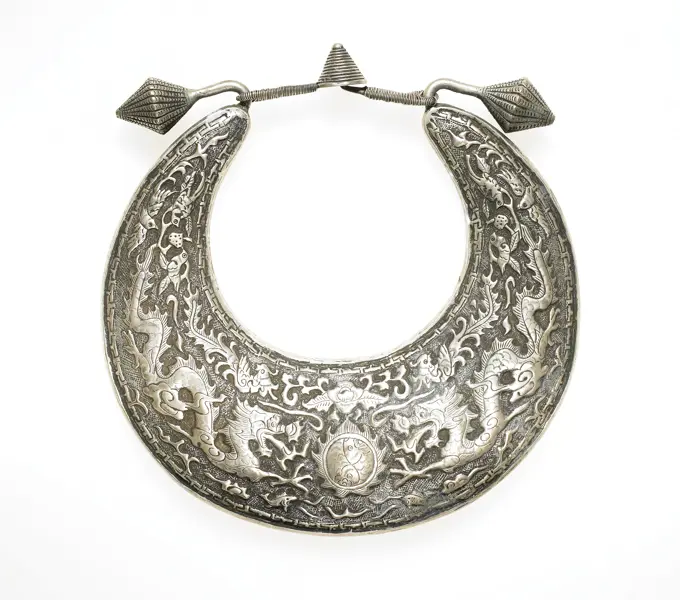
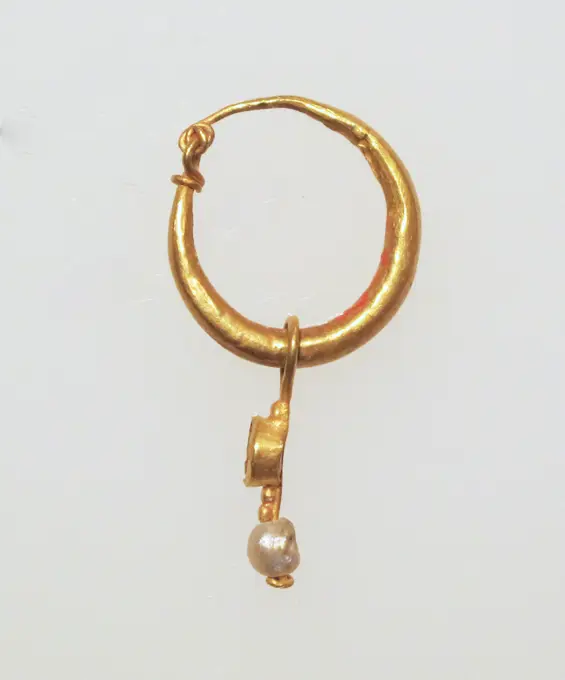
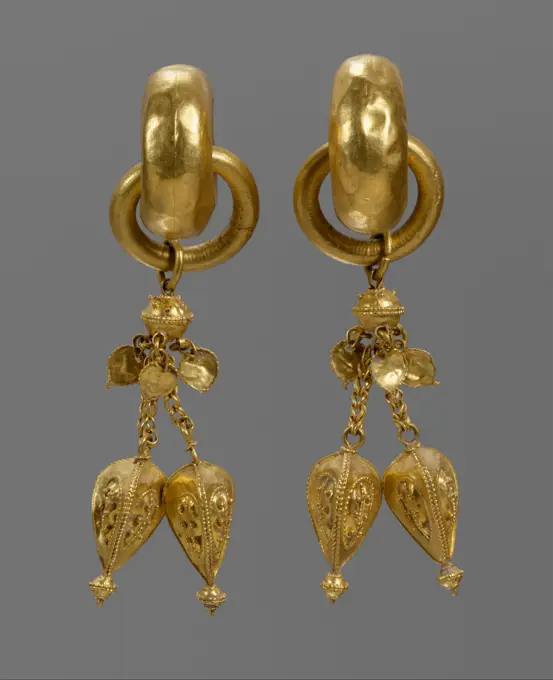
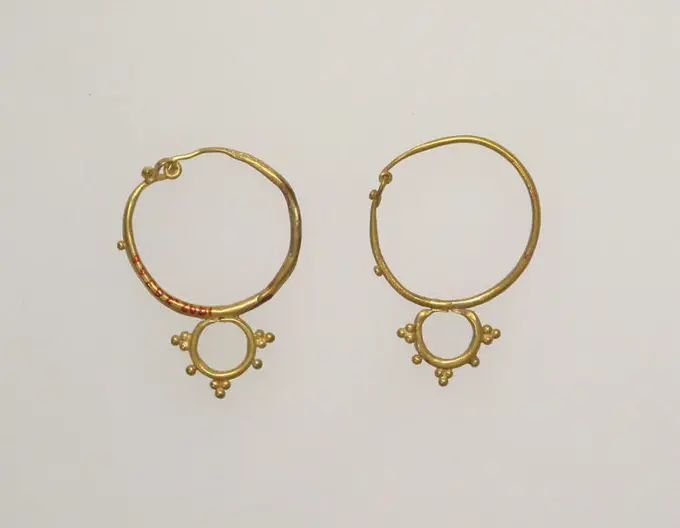
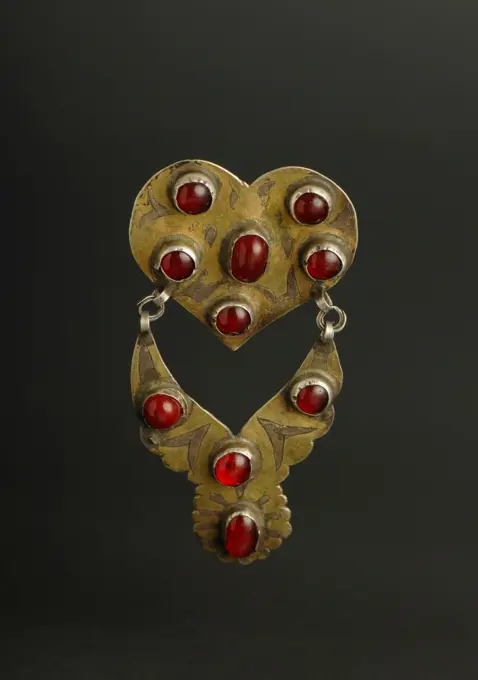
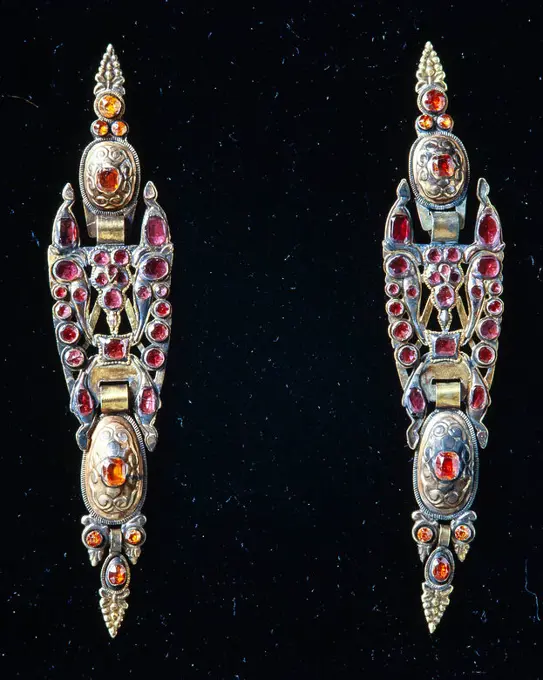
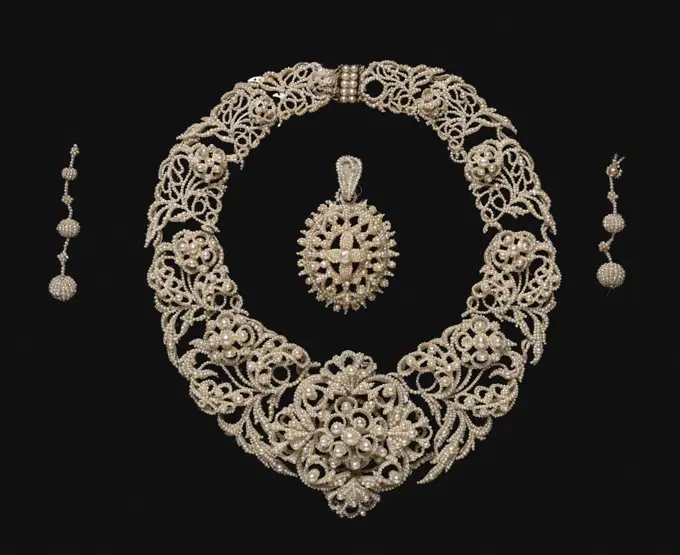
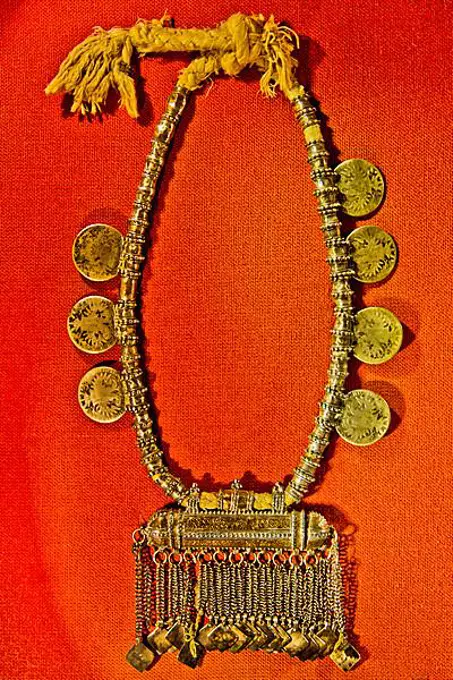
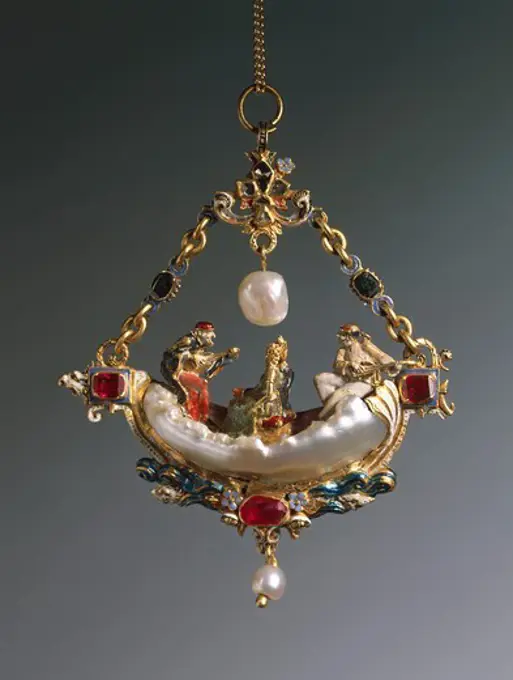
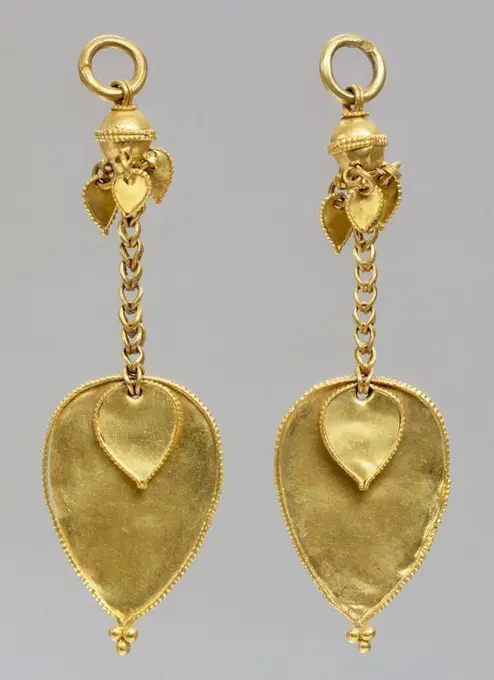
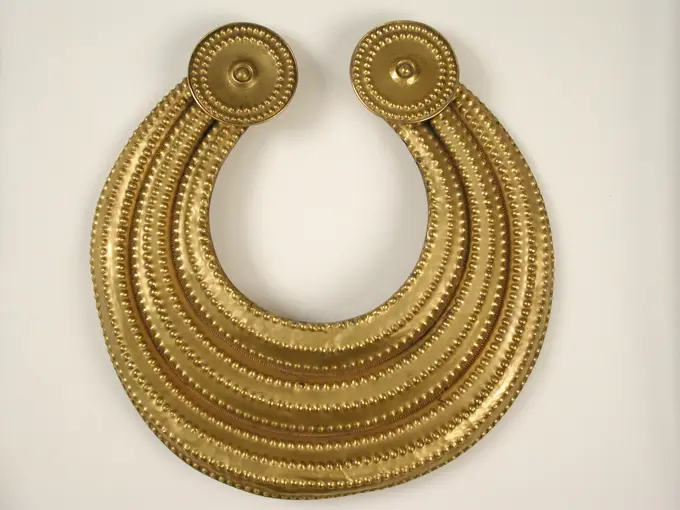
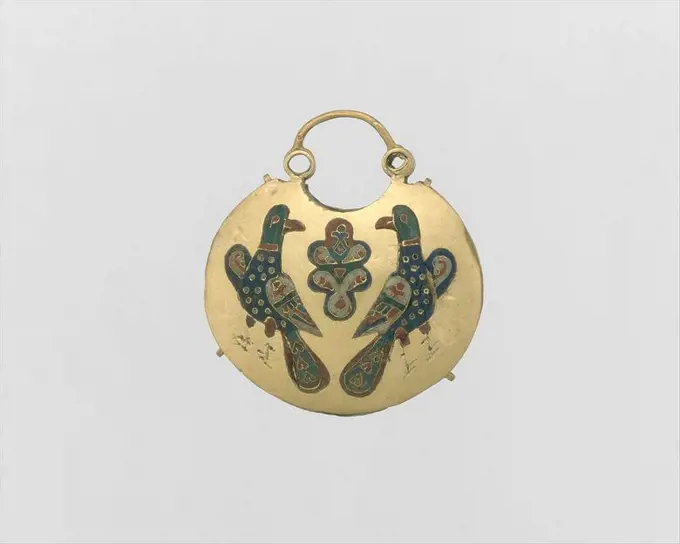
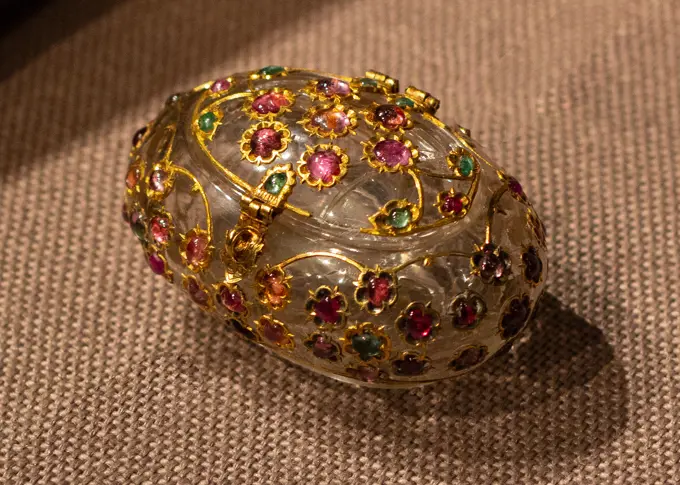
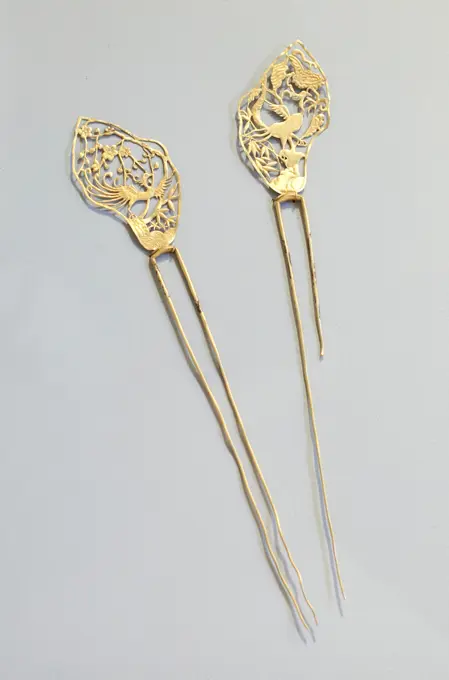
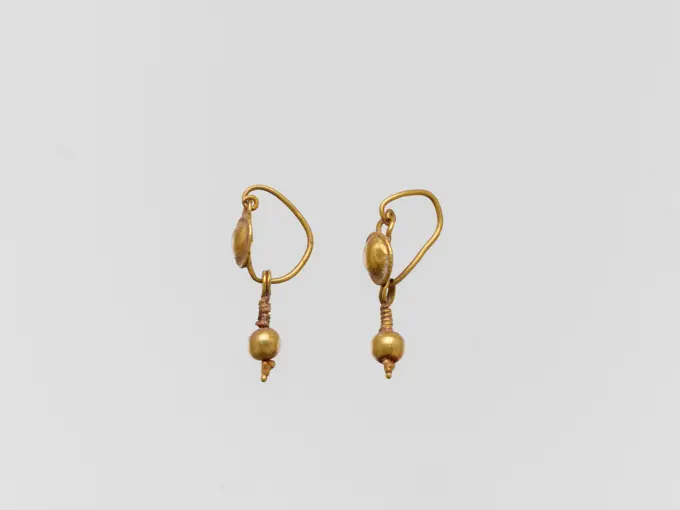
Jewelry Elements. Dimensions: Large medallion: H. 2 7/8 in. (7.3 cm) W. 2 3/4 in. (7 cm)Half medallion: H. 1 3/4 in. (4.4 cm)W. 2 3/4 in. (7 cm)Cartouches: H. 3/4 in. (1.9 cm)W. 1/2 in. (1.3 cm). Date: late 14th-16th century.Few examples of medieval Islamic jewelry survive, leaving scholars to rely on depictions of jewelry in manuscript paintings of the period for evidence of their appearance. Imagery from Ilkhanid and later period painting reveals that necklaces sharing some details with the jewelry elements shown here were worn by women in the fourteenth to sixteenth century in Iran and Central Asia. Museum: Metropolitan Museum of Art, New York, USA.Chain of the Guild of Saint Hubert. Between the links of this chain, one sees the letters S and H with an antler and a double cross. With the pendant at the bottom, these refer to Saint Hubert, patron saint of militia companies. The links with arms are those of the governors of the Guild of Saint Hubert, established in The Hague in 1542; these were added later.Two Necklaces. UnknownNecklace with a Rams Head Pendant. UnknownHeraldic chain with pendant badge early 17th century Michael Botza The arms are those of Elector Christian II (r. 1583-1611). The badge with the motto reads: A DEO PRO IMPERIO ("from God for the defense of the empire"). The chain and badge, of which several versions are preserved, were made for a member of the "Society of Christian.". Heraldic chain with pendant badge. German, Dresden. early 17th century. Partly enameled gold, pearlNeck Chain with Badge 1787-88 Turkish. Neck Chain with Badge 31959Goldsmith's art, England, late 18th century.  Blue enamel, diamonds and gold pendant and earrings.. Every part of the chain has a tiger claw shape.Tunisia, Carthage, Gold necklace with pendants of various shapes, found in Carthage (Tunisia)Gold necklace with pendants. Culture: Greek. Dimensions: Other (135 elements): 22 1/4 in. (56.5 cm)Diameter (Pendany): 7/16 × 1 1/16 in. (1.2 × 2.7 cm)Diameter (pomagranates): 5/16 × 9/16 in. (0.8 × 1.4 cm)Diameter (largest beads): 1/4 in. (0.6 cm)Diameter (smallest beads): 3/16 in. (0.5 cm). Date: 5th century B.C.. Museum: Metropolitan Museum of Art, New York, USA.. Hanger of gold. Leading Mary with child and two angels in an oval. It is fully enamelled.Gold Necklace with Medallion Depicting a Goddess. Egypt, Roman Period (30 BCE - 300 CE). Jewelry and Adornments. Gold, green glassRing Brooch 1250-1300 British or French Brooches such as this were among the objects most frequently produced by goldsmiths. Simple and repetitive in design, the quality of these forms of adornment could vary widely. This is an example of a more finely wrought gold brooch. In addition to its comparatively lively, vegetal design, it is also embellished with semiprecious stones rather than glass paste.. Ring Brooch. British or French. 1250-1300. Gold, sapphire, garnet. Metalwork-GoldEarring end of 6th century-middle of 7th century Langobardic. Earring 465394 Langobardic, Earring, end of 6th century-middle of 7th century, Gold, Overall: 1 15/16 x 1 3/4 x 9/16 in., 0.3oz. (4.9 x 4.5 x 1.5 cm, 8g). The Metropolitan Museum of Art, New York. Gift of J. Pierpont Morgan, 1917 (17.192.90)Cuff buttons, Gold, sapphires, diamonds, Pair of carbochon saphire, diamond and gold cuff buttons., France, late 19th century, costume & accessories, Decorative Arts, Cuff buttonsSuspensionOpal And Enamel Complex Necklace, James Cromar Watt (Aberdeen, Scotland, 1862 - 1940) c. 1909Necklace, c. 500-200 BC. Peru, North Highlands, Chavín de Huantar(), Chavín style (1000-200 BC). Hammered and cut gold; overall: 45.8 cm (18 1/16 in.).. .Gold and carnelian boat-shaped earring 5th-4th century B.C. Greek Boat-shaped earring with carnelian setting.. Gold and carnelian boat-shaped earring 242678Golden Mangalsutra jewellery, worn by Indian ladies to signify married life, India Copyright: xSanghamitra/DinodiaxPhotoxDecorated Fitting. Culture: China (Xinjiang Autonomous Region, Central Asia). Dimensions: W. 13/16 in. (2.1 cm); L. 1 3/8 in. (3.5 cm). Date: 7th-9th century.The nomadic communities of Central Asia used such plaques to embellish clothing and horse trappings. As these nomadic cultures herded animals and were constantly moving, their artistic production was expressed in portable objects that marked the wearer's status and wealth. The outstanding preservation of these fragile ornaments suggests they were used in conjunction with burials, where the body was aggrandized with valuable textiles and augmented with gold. Although it is difficult to date and place these objects geographically, their presence in Central Asia and has a long, established history. Museum: Metropolitan Museum of Art, New York, USA.Dagger (Katar). Culture: North Indian. Dimensions: L. 11 11/16 in. (29.7 cm); W. 3 3/16 in. (8.1 cm); Wt. 13.8 oz. (391.2 g). Date: 18th century. Museum: Metropolitan Museum of Art, New York, USA.Necklace with bulla and gold beads 7th-5th Century B.C. Etruscan. Necklace with bulla and gold beads 246005Parure of diadem, brooch and necklace with lapis lazuli and enamel. Artist: Alexis Falize (French, 1811-98). Dimensions: Sheet: 8 1/16 × 7 1/16 in. (20.5 × 17.9 cm)Album: 14 3/16 in. × 11 in. × 9/16 in. (36 × 28 × 1.5 cm). Date: ca. 1830-70.Drawing with designs for a parure of diadem, brooch, and necklace with lapis lazuli and enamel, created by French jeweler Alexis Falize in the Second Empire. All three designs feature roundels made up of a central, round, dark blue lapislazuli stone, framed by a golden roundel with rectangles of white enamel, possibly made to simulate baguette-cut diamonds or brilliants. The diadem consists of three of these roundels, separated by heart motifs made up of gold scrolling motifs, over a strip of round brilliants or diamonds framed by two strips of gold. The design for the brooch consists of one of this roundel, framed inside interlacing scrolling motifs made of gold and semi-abstract fleur-de-lis motifs, also made of gold, and decorated with white enNine scarabs set in modern bracelet. ca. 1550-1350 B.C. New Kingdom, early. Nine scarabs set in modern bracelet.. ca. 1550-1350 B.C.. Glazed steatite, gold. New Kingdom, early. From Egypt. Dynasty 12-18Necklace made of agate stones from different periods. unknown, authorGold earring with disc and pendant 2nd century A.D. Roman. Gold earring with disc and pendant 243162Pair of Earrings, 1800s. Russia, 19th century. Silver gilt; overall: 2.9 cm (1 1/8 in.).Pair Of Pendant Fruit Mounts (France); gilt bronzeEar Ornament with Granulate Design Second half of the 8th-second half of the 10th century Indonesia (Java). Ear Ornament with Granulate Design. Indonesia (Java). Second half of the 8th-second half of the 10th century. Gold. Central Javanese period. JewelryGoldsmith's art, 19th century. Diamonds and pearls brooch, around 1890.Childs Gold Necklace set with Lapis Lazuli and Gold Earrings 100 B.C.Earring, crescent-shaped. Earring, crescent-shaped 259209Amice 16th or 17th century Spanish. Amice 461403Toe jewellery, anonymous, c. 1750 A few tens jewelry of silver. Consisting of small silver rings with hinge closure and with a curved silver shield, decorated with blue and green enamel. The shields are interconnected with small silver switch boilers. Surat silver (metal). A few tens jewelry of silver. Consisting of small silver rings with hinge closure and with a curved silver shield, decorated with blue and green enamel. The shields are interconnected with small silver switch boilers. Surat silver (metal).Keyhole Escutcheon (France); gilt bronzeNecklace late 19th century Turkmen This collection of largely ethnographic jewelry includes examples from cultures in South America, North America, Europe, Asia, and Africa and dates from the Pre-Columbian period to the twentieth century. Owned by renowned art collector and fashion enthusiast Muriel Kallis Newman, the collection represents her knowledge and appreciation of a wide range of jewelry design and making traditions. Numerous items in her collection are composite artifacts made from various cultures and time periods reappropriated as modern jewelry creations by or for Muriel. It is important to note that Newman wore many of the pieces in the collection, interpreting them to suit and express her own singular, often avant-garde style.. Necklace 141594Goldsmith's art, Italy, 20th century. Wheat ear shaped brooch with gemstones, 1940s.Keyhole escutcheon, Gilt bronze, Rococo scroll, France, ca. 1740, metalwork, Decorative Arts, Keyhole escutcheonSabot; bronze (gilt)Watch, Chain, And Key (USA); gold, steelPair of Sword-Grip Ornaments (Menuki). Culture: Japanese. Dimensions: L. of each 1 1/4 in. (3.2 cm); Wt. of each 0.3 oz. (8.5 g). Date: 18th century. Museum: Metropolitan Museum of Art, New York, USA.Parure of diadem, brooch and necklace with lapis lazuli and enamel ca. 1830-70 Alexis Falize Drawing with designs for a parure of diadem, brooch, and necklace with lapis lazuli and enamel, created by French jeweler Alexis Falize in the Second Empire. All three designs feature roundels made up of a central, round, dark blue lapislazuli stone, framed by a golden roundel with rectangles of white enamel, possibly made to simulate baguette-cut diamonds or brilliants. The diadem consists of three of these roundels, separated by heart motifs made up of gold scrolling motifs, over a strip of round brilliants or diamonds framed by two strips of gold. The design for the brooch consists of one of this roundel, framed inside interlacing scrolling motifs made of gold and semi-abstract fleur-de-lis motifs, also made of gold, and decorated with white enamel. From this central frame hang two gold pyramids with horizontal stripes of white enamel and a round lapislazuli stone at the bottom, and a strip Earring (One of a Pair) 6th century Korea. Earring (One of a Pair) 53016Forehead jewel (damini)..Torque, 10 x 10 7/8 x 1 1/2 in. (25.4 x 27.62 x 3.81 cm), Silver, ChinaBrooch, Pink, blue and clear diamonds, silver, gold, probably England or France, ca. 1810, jewelry, Decorative Arts, BroochChain with six coins in box ,, 1800 - 1825 Necklace of silver with six-adhering 18th century silver coins: three from Holland (two-duke pieces) and three from Zeeland (Scheepjeschellings). The chain has a chapter stick as a lock. The oval males are two in two malies sounded, but each time staggered. Of the Dutch coins, there is 1 of 1749 and two of 1759. Of the Zeeland coins (Middelburg) there is 1 of 1790 and two of 1780. Netherlands silver (metal) Necklace of silver with six-adhering 18th century silver coins: three from Holland (two-duke pieces) and three from Zeeland (Scheepjeschellings). The chain has a chapter stick as a lock. The oval males are two in two malies sounded, but each time staggered. Of the Dutch coins, there is 1 of 1749 and two of 1759. Of the Zeeland coins (Middelburg) there is 1 of 1790 and two of 1780. Netherlands silver (metal)Jewelry set 1860s probably European. Jewelry set. probably European. 1860s. silver, pearlWallet. XIXth. GAL1958.68.15Flower, black, with metal heart and two hanging eyes, J. Stork Flower, black, with metal heart and two suspension eyes.  metal Flower, black, with metal heart and two suspension eyes.  metalRestos de collar o gargantilla, formado por seis piezas oblongas de filigrana en oro, con un esmaalte en su parte central representando pequeñas cruces. Siglo XV. Reino Nazarí de Granada. Museum: Museo Arqueológico Nacional, Madrid.Gold earring with pearl pendant 1st2nd century A.D. Roman. Gold earring with pearl pendant 243199Round collar with many flowers, anonymous, c. 1670 - c. 1680 Collar of natural -colored needle side: flat Venetian side. There are coarse tendrils and flowers on an open bar of land. Arching edge of equal triangles. Cut and driven into a round shape. Venice linen (material) flat Venetian (needle point) Collar of natural -colored needle side: flat Venetian side. There are coarse tendrils and flowers on an open bar of land. Arching edge of equal triangles. Cut and driven into a round shape. Venice linen (material) flat Venetian (needle point)Earring (One of a Pair) end of the 5th century Korea Gold earrings were worn by both men and women of the Silla and Gaya elite and are the most prevalent type of jewelry found in tombs. Goldsmith techniques on display here range from simple hammering to the more complex method of granulation, in which tiny gold beads were adhered to the surface to create intricate designs.. Earring (One of a Pair) 44768Earrings. Culture: Roman. Dimensions: Other (.a): 1 × 1/8 × 1 3/8 in. (2.5 × 0.3 × 3.4 cm)Other (.b): 15/16 × 1/8 × 1 3/8 in. (2.4 × 0.3 × 3.4 cm). Date: 6th century A.D.. Museum: Metropolitan Museum of Art, New York, USA.Lace application for a dress;  around 1920 (1915-00-00-1925-00-00);Magdalena, Witwińska, Dar (provenance)ancient antique brooch with stones on black background. Middle-Asian vintage jewelry. old Oriental ornamentsDiadem, 11th-14thcentury, Gold, 2.6 × 34.2 cm, 17.778 g (1 × 13 7/16 in., 17.778g), Made in Java, Indonesia, Java, Late Classic Period(1000-1400), JewelryPendientes, siglo XIX. Museu del Disseny de Barcelona.Parure: Necklace, Pendant, Earrings , c. 1850. England, 19th century. Seed pearl on mother-of-pearl;Feline-Headed Girdle, Anklets, and Bracelets of Princess Sithathoryunet Middle Kingdom ca. 1887-1813 B.C. These five pieces made from gold and amethyst create a set with powerful magical properties. All of the elements focus on feline imagery, which can be related to protection and guardianship. The princess likely wore them during a religious ritual or state ceremony. The feline heads on the girdle contain small pellets that would have made a gentle tinkling sound when the princess walked or danced. One head forms a cleverly constructed clasp.Jewellery, Bait Al Zubair Museum, Muscat, Oman, AsiaWoman necklace isolated on the white backgroundBuckle, Steel, brass, citrines, Rectangular buckle with rounded corners; design of a double row of citrines held together in four places by bow knots; prongs and fastener made of brass., France, 19th century, jewelry, Decorative Arts, BuckleGoldsmith's art, Italy, 16th century. Enamelled gold pendant representing a gondola with masked lovers aboard with pearls, diamonds, emeralds and rubies, 1568, mm. 65x52. Attributed to Giovanni Battista Scolari (active 1567-1583).Brooch. A brooch in the shape of a branch with flower of imitation diamonds in a gold-plated silver setting. In the middle, a rosette in which a brilliant cut stone.Necklace of assorted gold and carnelian beads, with gold terminals and carnelian pendant 5th-4th century B.C. Cypriot. Necklace of assorted gold and carnelian beads, with gold terminals and carnelian pendant 242822pendant closeup with big gem at black backgroundEarring (One of a Pair). Culture: Korea. Dimensions: L. 3 3/4 in. (9.5 cm); W. 1 1/8 in. (2.9 cm). Date: Silla Kingdom, early 6th century.The beauty and sophisticated craftsmanship of these gold earrings--and of the personal adornments found in the tombs of the Silla and Gaya elite generally--attest to the esteem conferred upon them by both patron and artisan. Museum: Metropolitan Museum of Art, New York, USA.Gold trumpet-shaped earrings 4th-3rd century B.C. Etruscan Hollow gold with a minimal use of filigree to decorate the flaring knobs.. Gold trumpet-shaped earrings 245873Nose Ring, 20th Century. India. Silver; overall: 6.4 cm (2 1/2 in.).Bead pendant, with lotus flowers Cypriot. Bead pendant, with lotus flowers 242735Crescent or Gorget early 20th century (8th-11th century) Irish. Crescent or Gorget 463151Hoop Earring with Ibex Head Finial. UnknownCollar of application side with hanging flowers with oval heart, anonymous, c. 1860 - c. 1869 Collar of natural -colored Brussels Application side: Kloskant Applicated on Machine Tulle. Model: up to a semicircle formed strip. The pattern consists of flower stalks rays, with an elongated flower with an oval flower heart at the bottom. The scrap edge is formed by these flowers and the stemless rosette flowers placed in between. In the field above the rosette flowers, between a few mushes, are symmetrically placed C-Volutjes, a branch with three berries and above it a rosette flower with four petals. The motifs have been hit in linen battle and equipped with shiny contour threads. In the flower hearts of the flowers that form the scrap edge, a few decorative stitches from the needle side are used. Brussels linen (material). Brussels Applied Collar of natural -colored Brussels Application side: Kloskant Applicated on Machine Tulle. Model: up to a semicircle formed strip. The pattern consisDark green silk velvet bag with golden glass bead embroidery, clasp with miniature, about 1850, fashion accessories, Italy, 19th century.Collar of needle side with concentric circles to dot poet. Triangular piece of natural needle side: Reticella. The piece, possibly intended as collar, has a square in the center that is made up of four small squares. There are two different concentric circles in the large square to a poetic dot. The scented inner circle is busy with picots. Along the outer circle are eight triangles that together form four diamonds. The motif with the closed dot is repeated in the three points of the triangle in various ways. The edges of the triangle are finished with picots with scented arcs, among other things.Treasure of Guarrazar. Visigoth votive crown. Gold and precious stones. 7th century. Guadamur, Toledo, Spain. National Archaeological Museum, Madrid. Spain.Temple Pendant with Two Birds Flanking a Tree of Life (front) and Geometric and Vegetal Motifs (back). Culture: Kievan Rus'. Dimensions: Overall: 2 1/8 x 1 7/8 x 9/16 in. (5.4 x 4.8 x 1.5 cm). Date: 11th-12th century.When Kievan Rus, a powerful new state to the north of the Byzantine Empire, accepted Christianity as its official religion in 988, the aristocracy also adopted the manners and dress of the Byzantine court. Local artists soon produced their own versions of Constatinopolitan fashions. This temple pendant of precious metals worked in cloisonné enamel or niello are local variants of the more intricately detailed works made for the Byzantine court.As in Byzantium, temple pendants may have been worn next to the face by both the men and the women of Rus. The works shown here were perhaps buried by their owners when the Mongol armies under Batu Khan sacked Kiev in 1240. Museum: Metropolitan Museum of Art, New York, USA.Flower Brooche, c. 1945 - c. 1953 Red gold brooch with three flowers of blue chalcedone. The upper flower has a round -free ruby as a heart, the flowers below each have one pearl. At the bottom end of the stems there are diamonds directly above each other. The brooch is equipped with a cannon closure. The Hague gold (metal). ruby (mineral). chalcedony. diamond (mineral) grinding / faceting Red gold brooch with three flowers of blue chalcedone. The upper flower has a round -free ruby as a heart, the flowers below each have one pearl. At the bottom end of the stems there are diamonds directly above each other. The brooch is equipped with a cannon closure. The Hague gold (metal). ruby (mineral). chalcedony. diamond (mineral) grinding / facetingComb or diadem, anonymous, c. 1820 - c. 1830 Hair comb made of turtle with a frame of gilded copper in which violet -colored, faceted grenades. Model: comb with 24 teeth, on which the frame is mounted with bulb pens. Decoration: The frame is equipped with a narrow border palmets, above which a narrow ribbed edge on which 17 balls that serve as a support for the open leaf motif in which the sharpened grenades are attached. There are three grenades in every open 'leaf'; A larger one in the middle and two smaller ones on both sides. Netherlands comb:. frame: copper (metal). Decoration: Garnet (Mineral). Gold Leaf sawing / gilding / filing / polishing Hair comb made of turtle with a frame of gilded copper in which violet -colored, faceted grenades. Model: comb with 24 teeth, on which the frame is mounted with bulb pens. Decoration: The frame is equipped with a narrow border palmets, above which a narrow ribbed edge on which 17 balls that serve as a support for the open leaf motif in which Earring, baule type. Culture: Etruscan. Dimensions: Other (.230): 15/16 × 1 1/8 × 15/16 in. (2.4 × 2.8 × 2.3 cm)Other (.231): 1 1/16 × 1 1/8 × 15/16 in. (2.7 × 2.8 × 2.3 cm). Date: 4th century B.C.. Museum: Metropolitan Museum of Art, New York, USA.Beauty fashion concept with earringsCap 1890s-1900s Félix French. Cap 105403Hair accessory. Culture: French. Date: ca. 1830. Museum: Metropolitan Museum of Art, New York, USA.Earring-hook type with pendant and disc. Earring-hook type with pendant and disc. Gold. Gold and SilverRock Crystal Box 18th century This intimately-sized container, carved from rock crystal, has gold inlay and is inset with rubies. While the original use of this object remains unknown, a similar piece in the collection, made in the same technique but without the hinge, was likely used as a perfume or lime container. Small precious objects were highly valued in Mughal court culture, as they were exchanged as gifts between nobles.. Rock Crystal Box. 18th century. Rock crystal; inlaid with gold, inset with rubies. Attributed to India. StoneBracelet, 1800s. India. Silver; diameter: 4.8 cm (1 7/8 in.).ANILLO - OBJETO DE ALTA BISUTERIA - JOYERIA DE IMITACION - AÑOS 80.Hairpin or ornament, one of a pair, 14th-17th century, 9 7/8 in. (25.08 cm), Gold, China, 14th-17th centuryRing with snake's head terminals. Dimensions: Diam: 13/16 in. (2.1 cm). Date: A.D. 1st century. Museum: Metropolitan Museum of Art, New York, USA.Ring with sard in box setting, figure. Ring with sard in box setting, figure. Gold, sard. Gold and SilverGold Necklace with Cross 6th century Byzantine This elegantly worked necklace was made by piercing the design into sheets of gold, a popular Byzantine technique called opus interrasile.. Gold Necklace with Cross 464033Earrings (India); gilt and filigreed metal, glass pearls and beadsCollar with Medallions, 225 AD, Metropolitan Museum of Art, Manhattan, New York City, USA, North AmericaGold earring with disc and pendant 2nd century A.D. Roman Loop earring of an unsymmetrical type consisting of a plain wire loop with a concave disc and a ball pendant.. Gold earring with disc and pendant. Roman. 2nd century A.D.. Gold. Mid Imperial. Gold and SilverFragment goudgalon, 1800 - 1900 Fragment golden galon, decorated with garlands with flowers and a branch with leaves and flowers.  . Fragment golden galon, decorated with garlands with flowers and a branch with leaves and flowers.  .Lluís Masriera / Colgante con imagen de mujer bailando, platino, oro, esmalte, diamantes, 1910. Colección privada. Author: LLUÍS MASRIERA I ROSÉS.