Oriental Carpets and Textiles

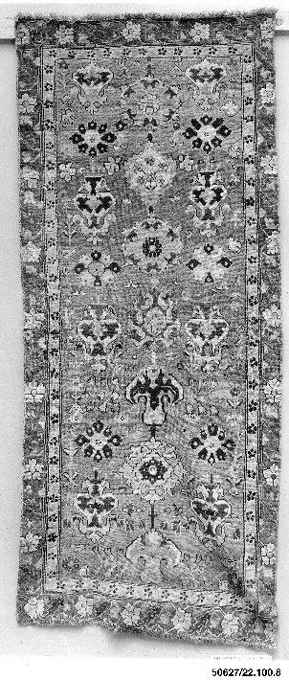
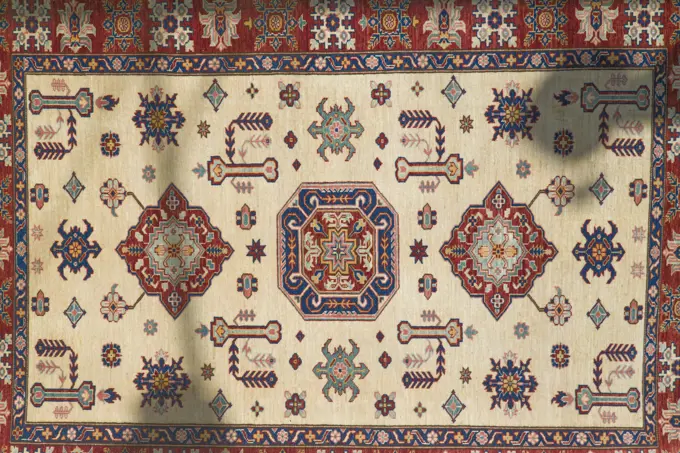
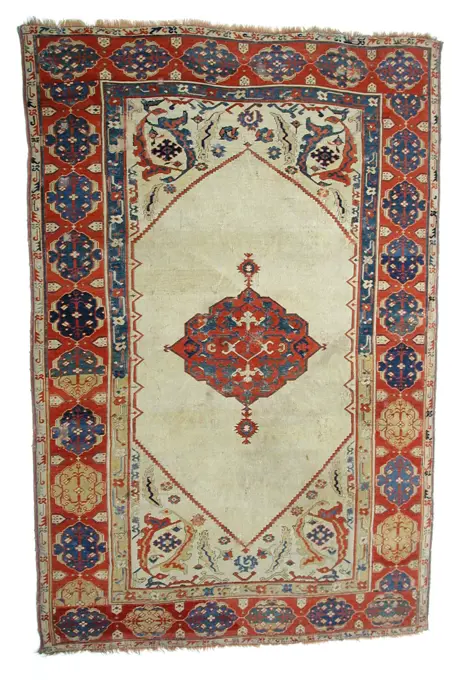
A collection of intricate oriental carpets featuring rich colors and geometric patterns, highlighting traditional weaving techniques from Central Asia and Turkey.

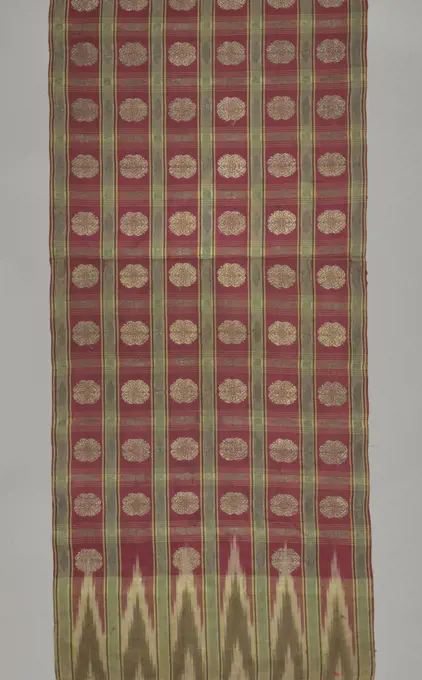
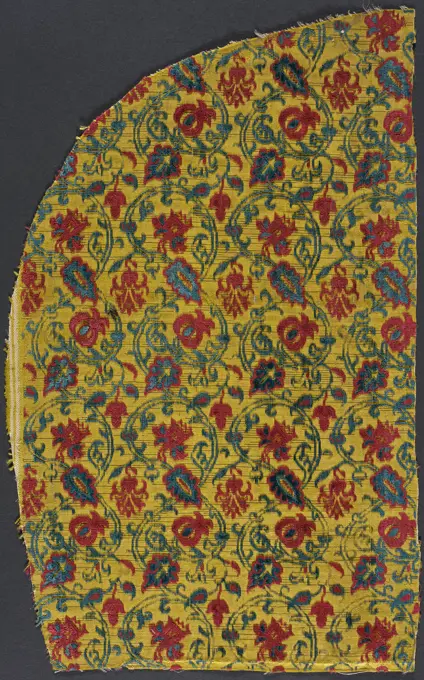
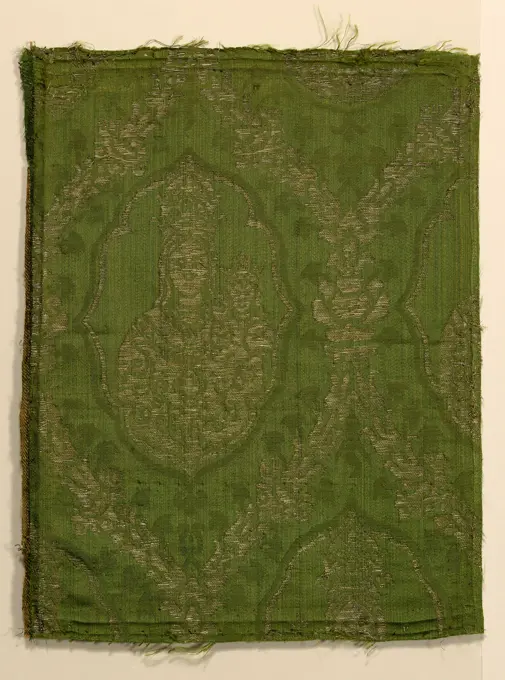
Textile, Medium: silk, metallic yarns Technique: two integrated structures: 5/1 satin patterned by 3/1 twill, Woven textile with overall large-scale ogival medallions on a red ground. Each ogee containing a symmetrical arrangement of tulips and carnations in red, yellow, and light blue on a silver ground, surrounded by a floral vine border., Turkey, 16th-17th century, woven textiles, Textile
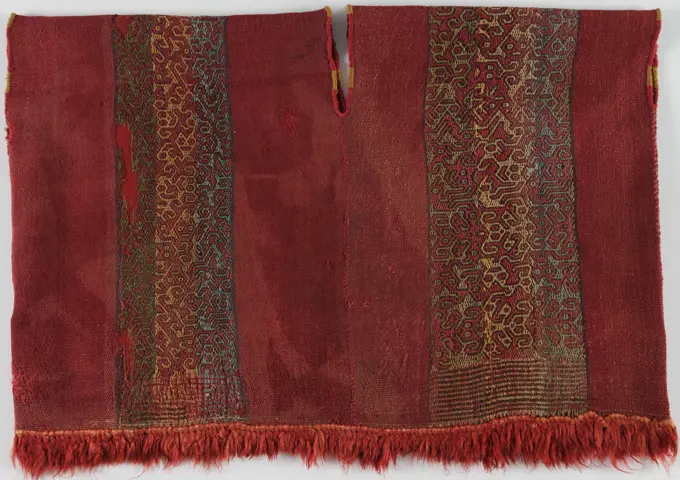
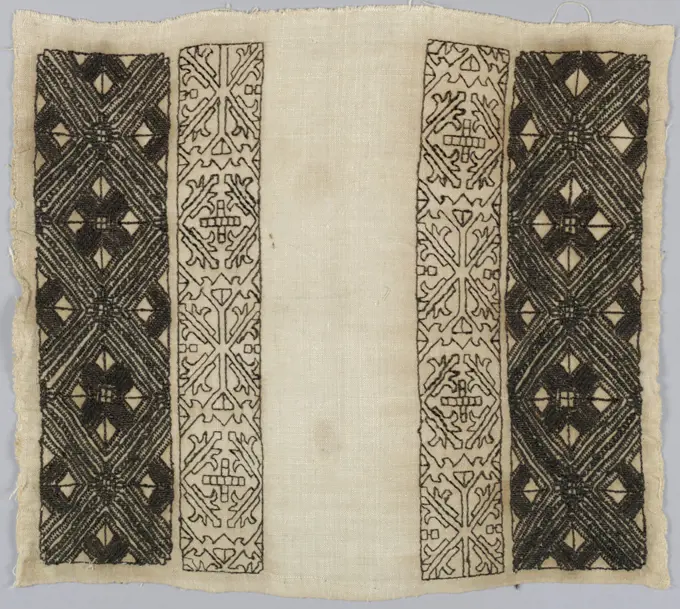
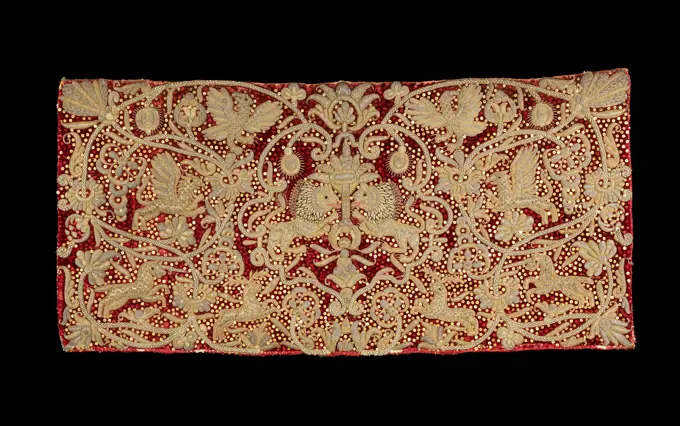
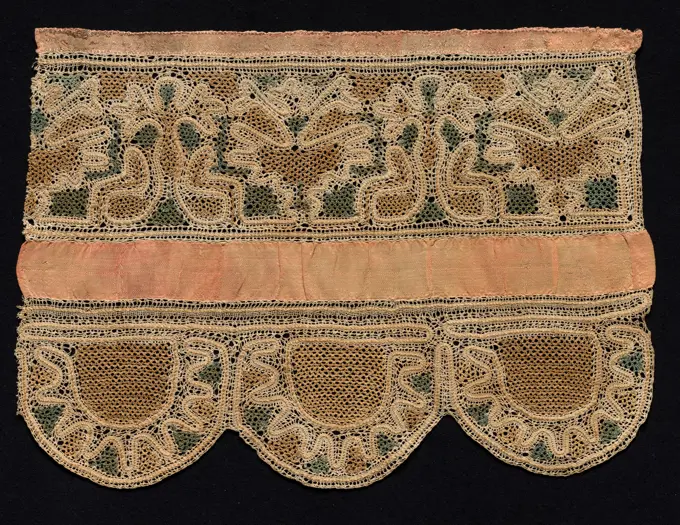
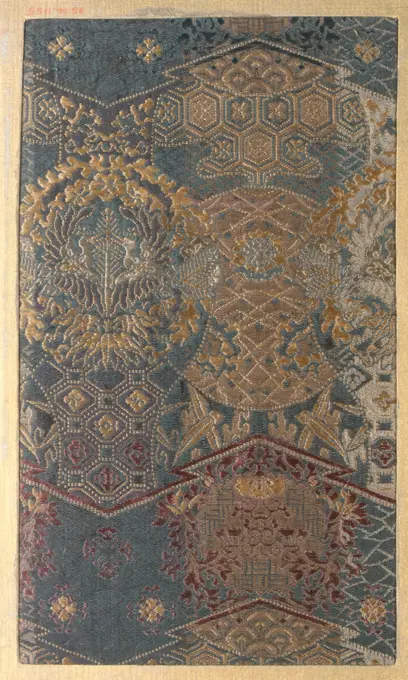
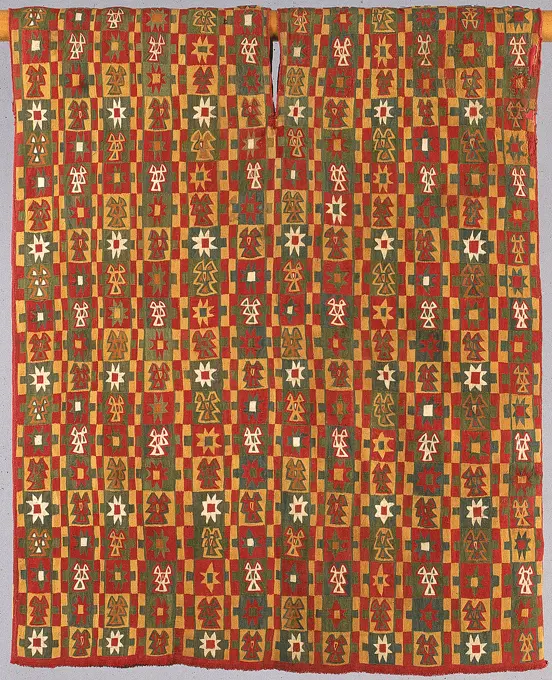
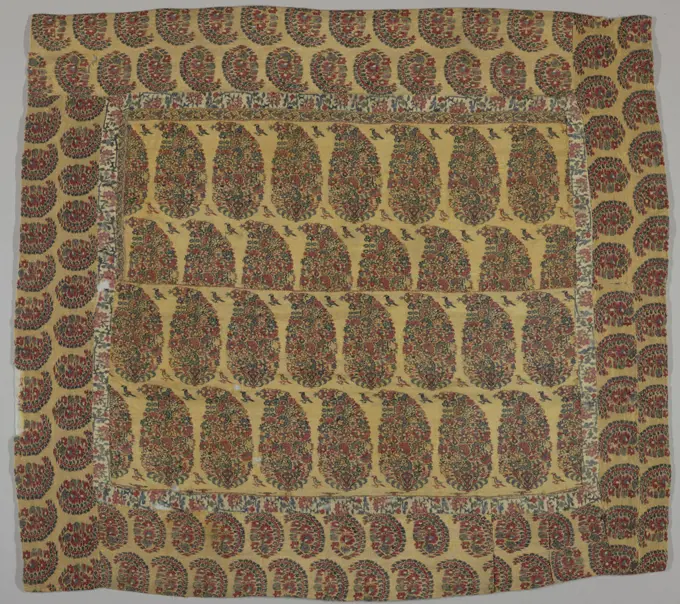
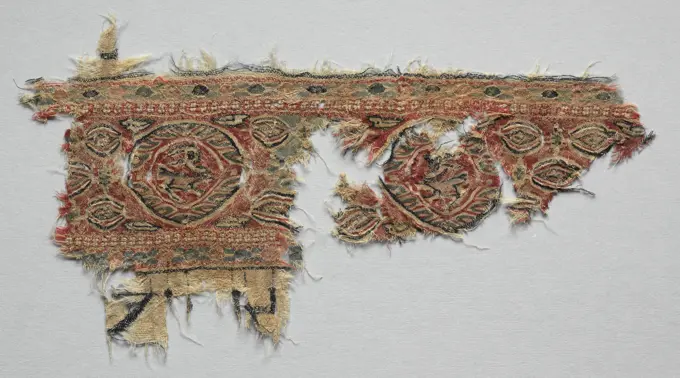
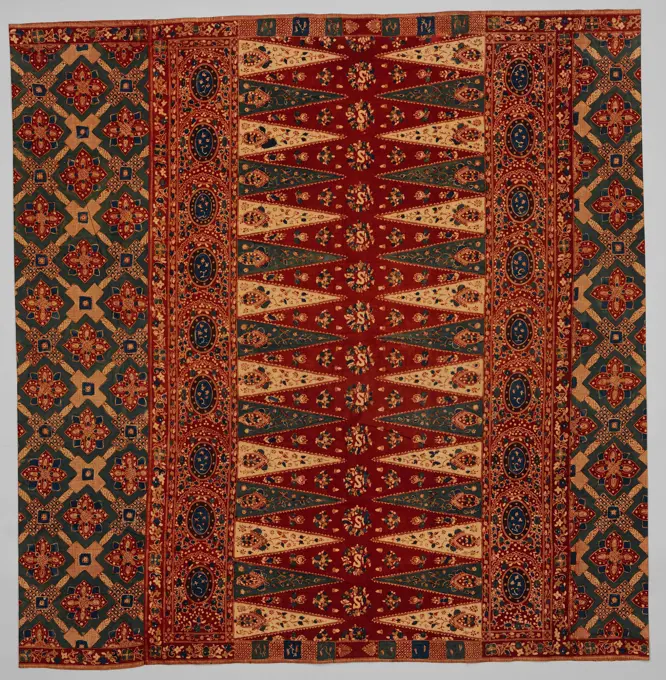
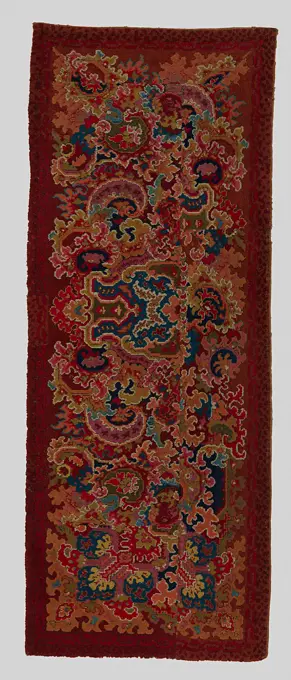
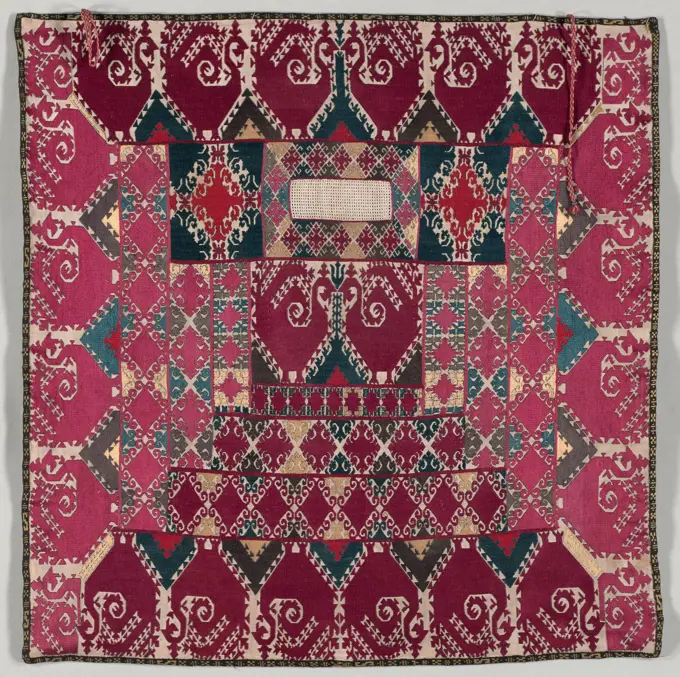
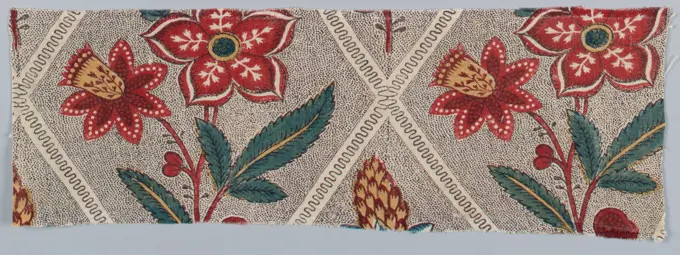
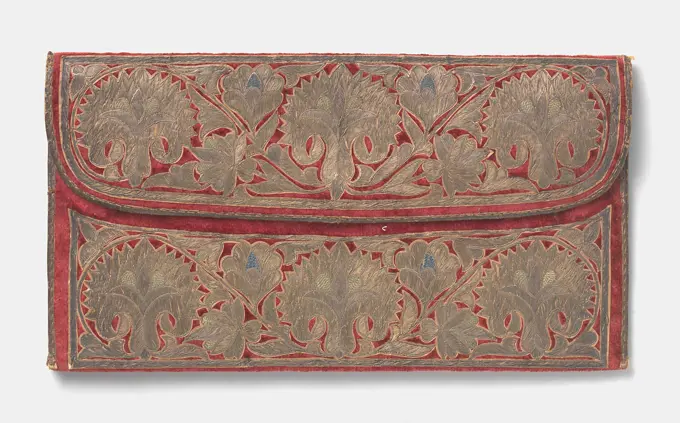
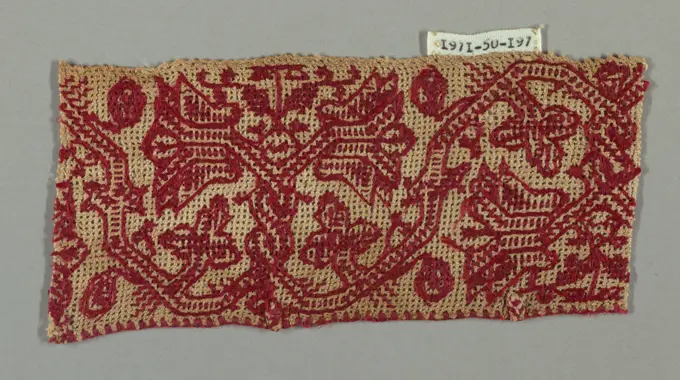
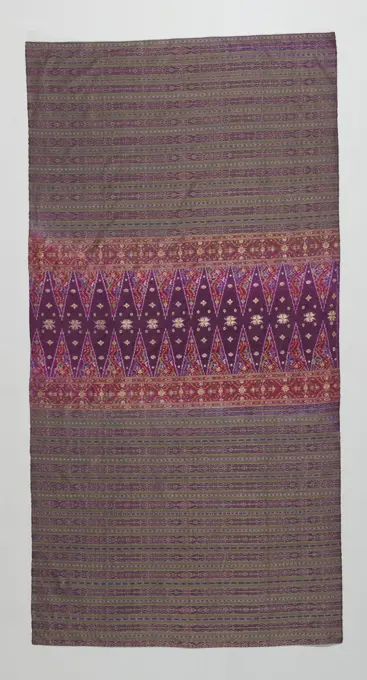
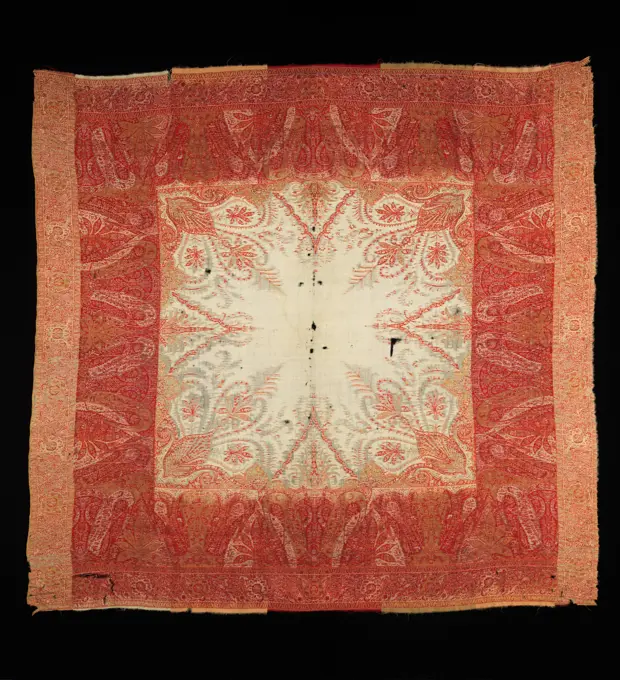
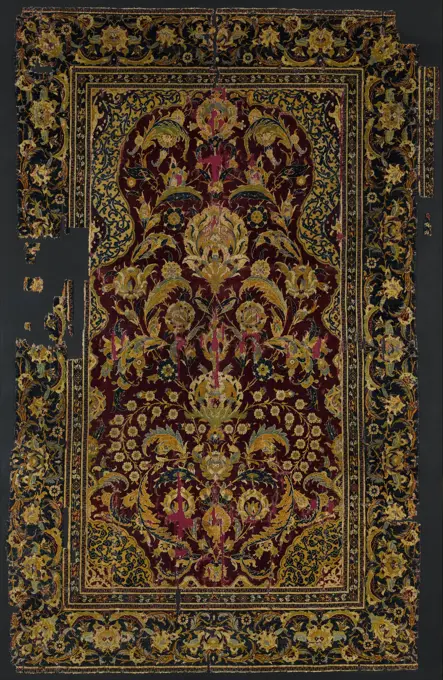
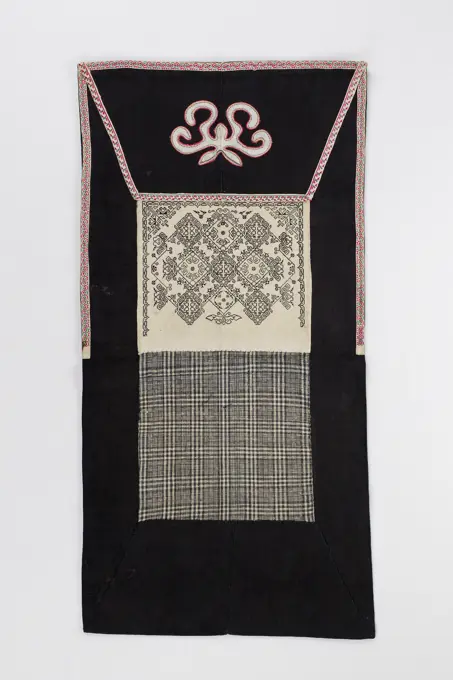
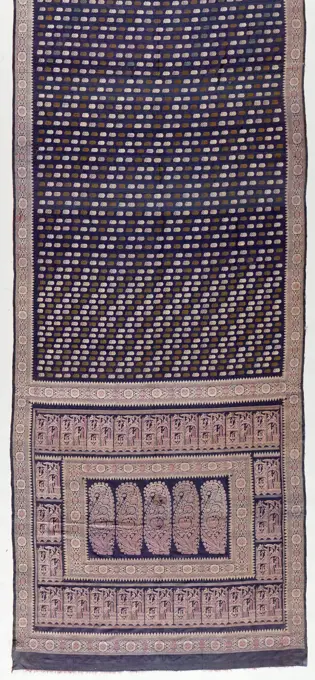
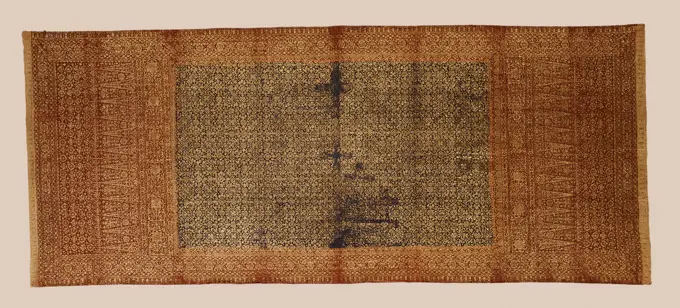
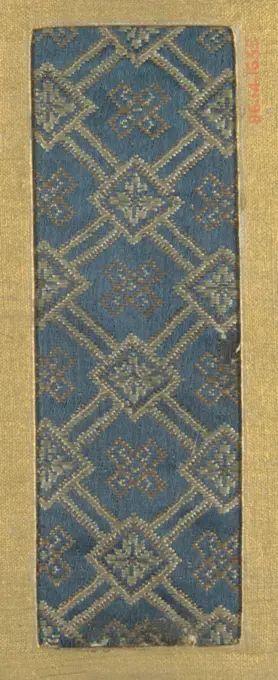
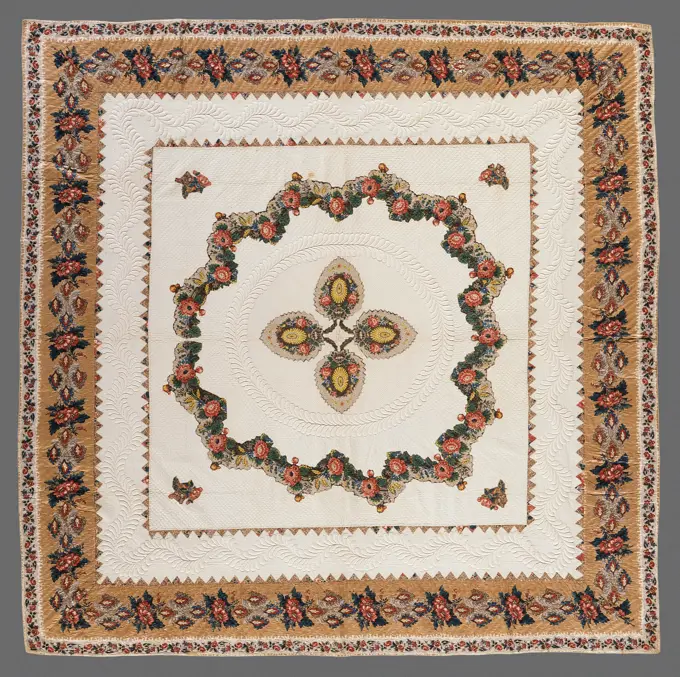
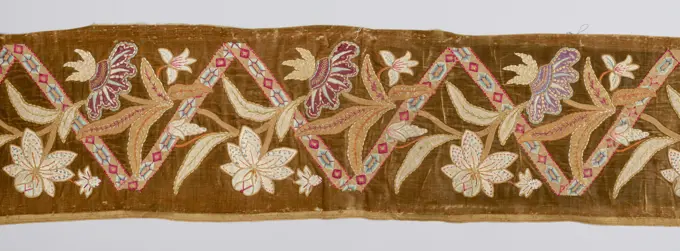
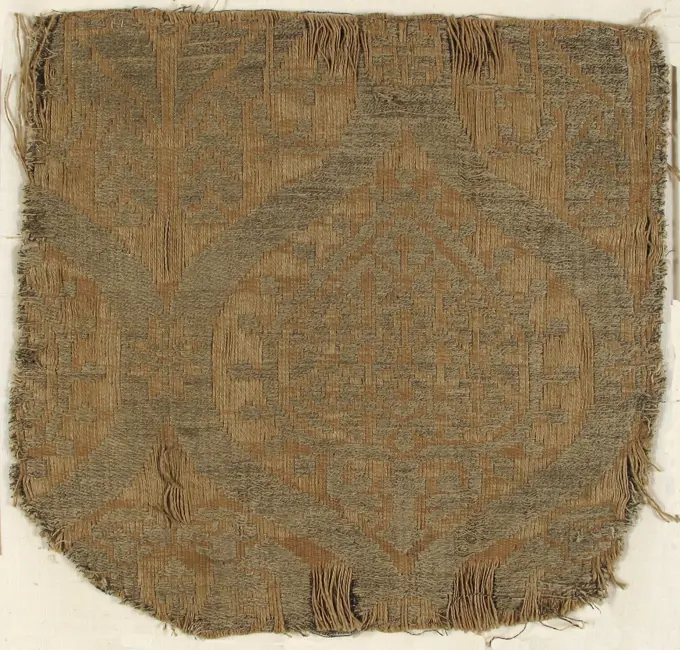
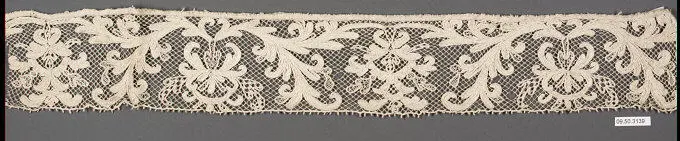
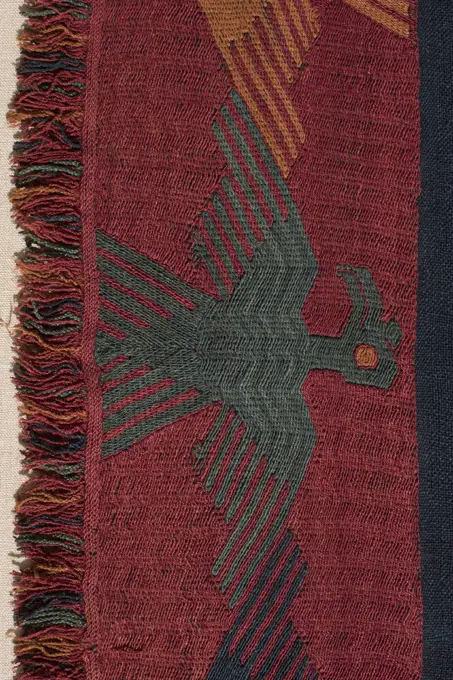
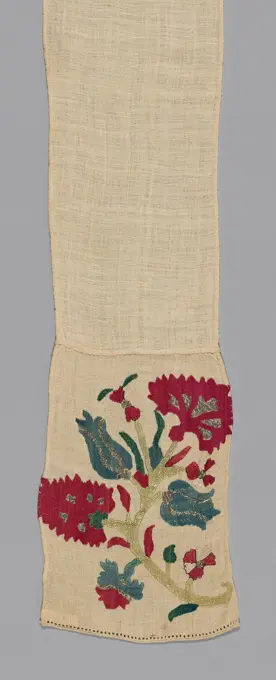
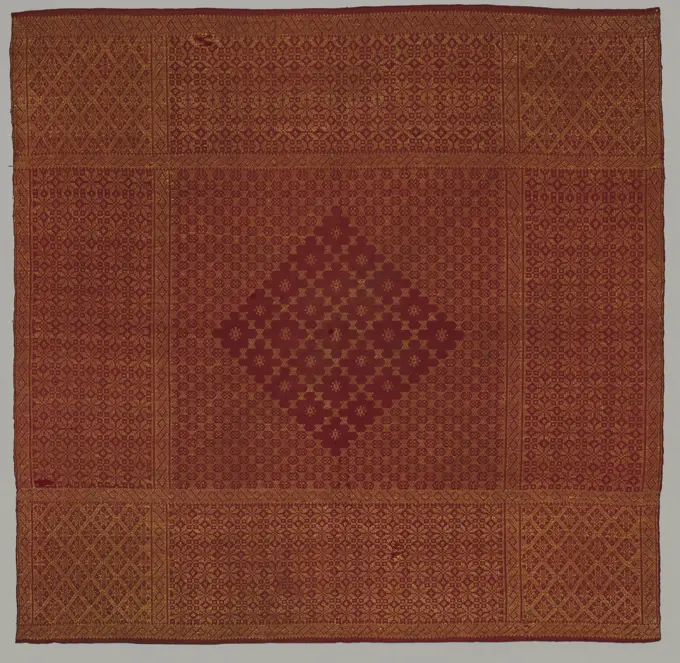
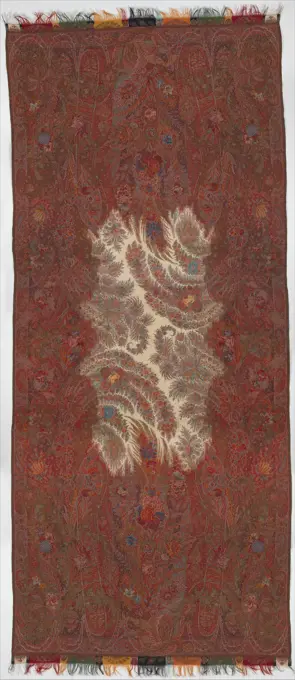
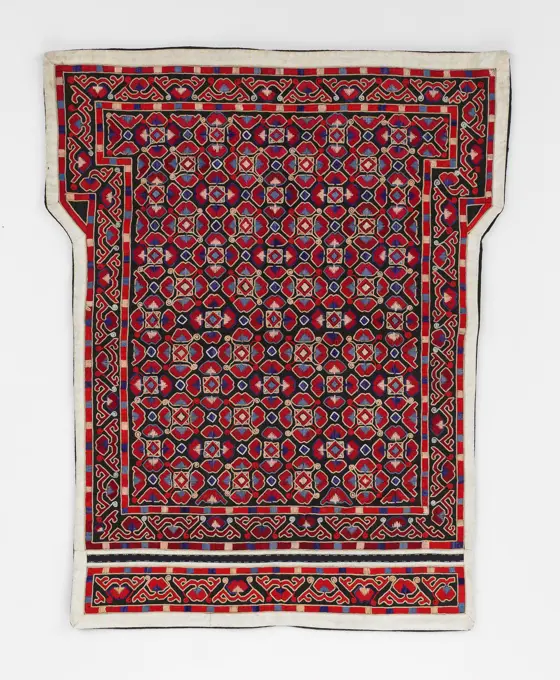
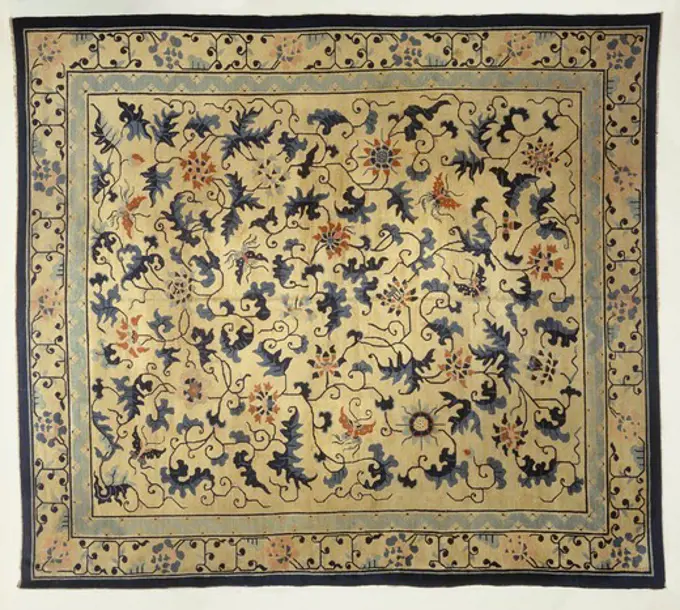
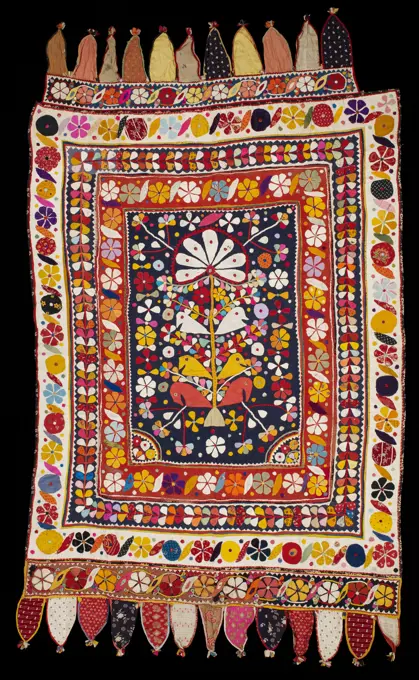
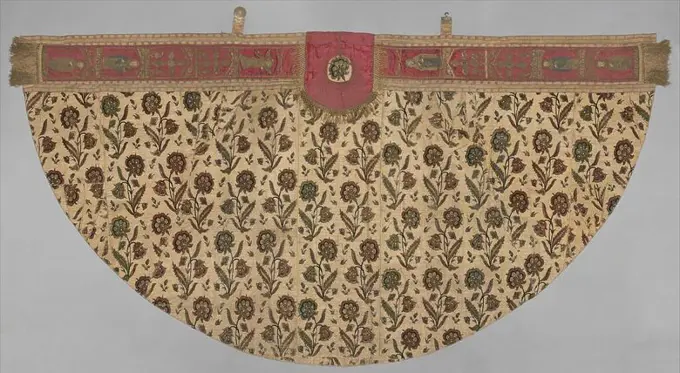
Fragment red lampas with in blue, white, yellow and gold a pattern of geometric braid. Fragment Red Side Lamps with in Blue, White, Yellow and Gold. A Pattern of Geometric Braid.Carpet probably 18th century. Carpet. probably 18th century. Wool (warp, weft and pile). Attributed to Turkey. Textiles-RugsCostume mat. Date/Period: 1800s. Skirts. Pandanus and other plant fibres. Height: 900 mm (35.43 in); Width: 890 mm (35.03 in). Author: UNKNOWN., Turkey, market, urgup, Cappadocia, travel, Asia, carpetSkirt, 20th century, 24 1/4 x 48 in. (61.6 x 121.92 cm), Cotton, silk; needlework, Vietnam, 20th centuryChild's TunicBedcover (Sunburst Quilt). United States, Kentucky. Date: 1810-1830. Dimensions: 220.8 x 169.3 cm (83 3/4 x 66 5/8 in.). Cotton, plain weaves; printed; pieced; backed with cotton, plain weave; cotton batting; quilted with cotton thread. Origin: Kentucky. Museum: The Chicago Art Institute, Chicago, USA.Sampler (Mexico); Made by Francisca Herrera Piebla; cotton embroidery on cotton foundationWearing Cloth (Kain Pajang), 1900-1955. Indonesia, Central Java, 20th century. Resist printed cotton; overall: 254 x 104.1 cm (100 x 41 in.).Embroidery, Medium: linen and silks Technique: embroidery, Small panel of cream white linen embroidered in cross borders, horizontal in black silks. Highly stylized geometric and foliage forms with counted running stitch and surface stitch. One selvage present., Dalmatia, 17th-18th century, embroidery & stitching, EmbroideryVestment 1675-1725 Russian This object is from the collection of Natalia de Shabelsky (1841-1905), a Russian noblewoman compelled to preserve what she perceived as the vanishing folk art traditions of her native country. Traveling extensively throughout Great Russia, she collected many fine examples of textile art of the wealthy peasant class. From the 1870s until moving to France in 1902, Shabelsky amassed a large collection of intricately embroidered hand-woven household textiles and opulent festival garments with rich decoration and elaborate motifs. The Brooklyn Museum holdings include many fine examples including the majority of the garments. Portions of Shabelsky's collection are also housed at the Museum of Fine Arts, Boston, the Cleveland Art Museum, and the Russian Museum of Ethnography in St. Petersburg.This panel incorporates the whimsy of mythical animals depicted in opulent materials. The confronting lions are particularly charming with their curling tongues and beaded eyeSkoutari carpet unknownTowel End, c. 1700s-1800s. Russia, Nizhny-Novgorod province, 18th-19th century. Cotton or linen (est.); straight (continuous) bobbin lace (Vologda tape lace). The tape forms figural or plant motifs outlined with gimp (heavy cord) with a polychrome plaited ground linking the tape; applied silk (est.) ribbon; overall: 26 x 37 cm (10 1/4 x 14 9/16 in.). This lace was used to embellish a towel end. Textiles of this type are valuable for their lace work depicting ancient folk motifs, ritual significance, exemplification of the role of textiles in Russian society, and connection to a prominent woman collector, Natalia de Shabelsky, without whom this textile and others like it might have been lost.Fragment 16th century Italian, Florence. Fragment 230097Piece 18th-19th century Japan. Piece 66874Eight-Pointed Star Tunic 1460-1540 Inca Inca tunics, called unku in the Quechua language of the Andes, are usually longer than they are wide. They were made from a single piece of cloth, the loom length being the width of the shirt--that is, they were woven sideways, with the warp in the short direction, and then folded over. The sides were sewn together, leaving holes for the arms at the top. The slot for the neck was woven with discontinuous warps. Fine tapestry tunics like the present example were items of great prestige and value during Inca times. Their ownership and use were strictly controlled by the state. They were commonly bestowed as royal gifts by the emperor to reward military achievements or political service or to create bonds of loyalty. Inca tunics convey a strong sense of order and rigid organization in the layout of the designs and standardization in the choice of motifs. The grid arrangement on this example is very common, with squares containing eight-pointed starsBaby Carrier, 21 1/4 x 57 in. (53.98 x 144.78 cm), Cotton, silk; needlework, ChinaMedaillonkleed, type USHAK, anonymous, c. 1900 Medaillon suffering, type USHAK. Midfield: Four large half hexagonal medallions are close to each other in ultramarine blue with pale -yellow contours on a bright red stock. The side medallions are filled with a light blue window and salmon -colored palmets in the tops. The lower and upper medallions are halved windows in red with sloping lines and stems. Palmet and rosette flowers in red, white and black are on the stock. Rand: multiple. The middle of blue with quarter roses in red, white, light blue, salmon color and yellow. Inner zoom in blue and outdoor zoom in red, with equal S-s-sen in reported colors. Note: Probably England, Axminster or Wilton Or Asia Minor, Ushak. Axminster (possibly) wool Medaillon suffering, type USHAK. Midfield: Four large half hexagonal medallions are close to each other in ultramarine blue with pale -yellow contours on a bright red stock. The side medallions are filled with a light blue window and salmon -colHandmade traditonal rugs in close-upBaby Carrier, 27 x 25 in. (68.58 x 63.5 cm), Cotton; needlework, ChinaFragment, Medium: silk, linen Technique: woven, Hexagonal field with central palmettes and arabesques. Primarily in red. Worn., 17th century, woven textiles, FragmentEmbroidered Sleeves, 18th-19th century. Yugoslavia, Kosovo, 18th-19th century. Embroidery: wool, silver thread and sequins on plain weave linen; average: 47.7 x 50.9 cm (18 3/4 x 20 1/16 in.).Shawl, Medium: wool Technique: tapestry weave, Square shawl made from shawl fragments and pieces. Central square is made of two border fragments, each with two rows of floral cones and small birds in profile on a light yellow ochre ground. Surrounding central square is a narrow border made from fragments with red and yellow flowers and blue and green leaves and stems on a white ground. Outer border is comprised of two rows smaller floral cones on a light yellow ochre ground. Shawl is made up of many fragments, especially the outer border., India, 1790-1825, woven textiles, ShawlIspahan Rug from the 16th centuryTextile, 1800s. India or Iran (Persia), 19th century. Plain weave cotton, printed and painted; overall: 112.4 x 114.9 cm (44 1/4 x 45 1/4 in.).Felt Mat, 20th century, 130 x 48 1/2 in. (330.2 x 123.2 cm), Wool, cotton; embroidery, appliqué, Afghanistan, 20th centuryFragment of a Band, 600s - 800s. Egypt, Umayyad period (661-750) or Abbasid period (750-1258). Tabby ground, inwoven tapestry ornament; wool; overall: 20 x 35.5 cm (7 7/8 x 14 in.).Kashan. Date/Period: 1550 - 1599. Wool, metal thread (pile), silk. Height: 227 mm (8.93 in); Width: 507 mm (19.96 in). Author: UNKNOWN.Eye-Dazzler Weaving Made 1880-1900 New Mexico. Navajo weavers, most of whom were women, developed a new, more colorful and complex style of weaving in the late 19th century they began incorporating wool yarns that had been dyed with vibrant commercial dyes, made available through expanded railroads. They often rendered the junctures between colors as serrated, zigzag lines, creating dynamic patterns that visually vibrate. For this reason, these textiles have come to be called ìeye dazzlers.î. Cotton and wool, single interlocking tapestry weave; twined selvages and heading, overcast finish terminating in tassels . Navajo (Diné)Hip cloth; Sarung. Hip cloth with geometric and floral motifs.Panel, 20th century, 29 3/8 x 13 1/4 in. (74.61 x 33.66 cm), Cotton; woven fabric, Myanmar (Burma), 20th centuryPanel Made 1701-1750 Italy. Silk, warp-float faced 3 1 broken warp chevron twill weave with gilt-metal-strip supplementary facing wefts and supplementary pile warps forming cut and uncut, voided velvet; edged with silk, oblique interlaced ball fringe .Karpet versierd met palmetten en schulpen.Carpet. On the dark red fond is placed in the middle, across, an omega-shaped palm with blue and green, with broken c-volutes being checked and flanked by whimsical serrated bell peppers in dark blue, rose, orange, mustard yellow, red and violet; All shelters are made up of concentric forms in different nuances, and surrounded by black or white line. In two corners a tilted red palmet, from which a branch springs with three blue palmets. Of these, the contours are also multi-colored and surrounded with whimsically broadcasting. The edge shows leopard spots in various nuances dark red and an indoor zoom as a angular shift circuit in brick red. Composed of fragments of a much larger carpet. Such that no pure pattern is formed.Sampler worked in cross stitch in colored silk on unbleached loosely woven linen, marked FSM 1805, sampler embroidery needlework images linen silk, textile embroidery cross stitch Mark of loosely woven linen with 11 threads on 1 cm. The cloth has selvedge on the left and 0.5 cm hem edge along the other sides. The piece is embroided in cross stitch with silk in the colors carmine olive green mid blue dark gray blue pink beige light pink and black. The piece is embroided symmetrically and the motifs on the left are embroided with the motifs to the right of the vertical axis: FSM 1805 handicrafts bible religion spy CanaanRugs and Carpets: Russia - Dagestan - 19th century. Woollen Kilim carpet with cruciform motifs, belonging to Caucasian AvarsTextile Fragment early 17th century. Textile Fragment. early 17th century. Silk. Made in Turkey. TextilesTextile, Medium: silk, metallic thread Technique: ikat, Ribbed silk woven in wide red stripes alternating with narrower green stripes. A detached rosette is brocaded in gold in the red stripes. Smaller gold rosettes and stylized ornaments are in the green stripes. Ikat patterning in white and brown at either end., Near East, late 18th-early 19th century, printed, dyed & painted textiles, TextileShawl. Shawl with human-like figures.Wedding Veil, 1800s. Tajikistan, Tajik tribe, 19th century. Silk, cotton, embroidery; average: 76.2 x 75.6 cm (30 x 29 3/4 in.).Coca bag, Medium: wool Technique: plain woven with complimentary warp patterning, Warp stripes in red, purple, black and yellow are punctuated with three bands of warp patterning in white. Narrow side bands have a repeating diamond wave pattern. Central wide band has a complex geometric pattern with S shapes within diamonds. Bottom and top edges are finished in a narrow twined band., Peru, 18th century, woven textiles, Coca bagShawl Fragment (India); wool; Warp x Weft: 60 x 21 cm (23 5/8 x 8 1/4 in.)Therkel Anderson, Coverlet, c 1938 CoverletFragment (France); Company: Oberkampf & Cie. (France); cotton; Warp x Weft: 11.5 x 33.5 cm (4 1/2 x 13 3/16 in.)Fragment Oriental textile. A fragment of cashmere, with gold threaded, red striped, with purple flowers. Note: Self side; 6 mm, plain bond.Carpet. Dimensions: Textile: L. 122 in. (309.9 cm)W. 61 1/2 in. (156.2 cm). Date: second half 17th century. Museum: Metropolitan Museum of Art, New York, USA.Carpet 18th century. Carpet 452569Band (Italy); linen, silk; Bequest of Marian Hague; 1971-50-193Tas in een plat, rechthoekigmodel, van rood fluweel waarop borduursel in goud- en zilverdraad het opschrift 'Francois Louis Vander Wiellen' en 'Constantinopoli 1696'.Letter bag in a flat, rectangular model of red velvet. Front and back are almost fully decorated with embroidery in gold and silver thread with small details in blue silk. Under the front valve the inscription 'Francois Louis Vander Wielen' is embroidered. On the back is in curled letters 'Constantinopoli 1696'. The lining of the bag is made of linen.Africa, Tanzania, Zanzibar, Stone Town. Close-up of hand-made carpet.Fragment (Italy); linen, silk; Bequest of Marian Hague; 1971-50-197Piece 18th-19th century Japan. Piece 67006Heupdoek, anonymous, before 1900 Hip cloth with floral motifs and tumpals. Malaysia silk. Hip cloth with floral motifs and tumpals. Malaysia silk.Barred, Z.G. Kumurcu-Kula, D.I. Steenkolenkula / Former also 'Zevenburger'. Barred, Z.G. Kumurcu-Kula, D.I. Steenkolenkula / Former also 'Zevenburger'. Midfield: Double Mihrab in terracotta with various steps of steps and zigzag lines on the sides. In every top is a green vase, between which blue and yellow palmet and rosette flowers are branched. Blue swing, each with a white rosette and red and yellow lancet leaves. Edges: Triple. The widest is golden with zigzagrank in terra with turns a triple carnation in red and three bunch flowers in blue, each accompanied by a pointed tulip. The indoor zoom is blue, the out-of-life dark brown with equal voluntaries, Z.G. Kommarank.Shawl 1830-50 probably Scottish This is a particularly intricate pattern woven in one of the European shawl manufacturing centers, probably Paisley, Scotland. The palmette border pattern seems to relate to 16th-century textile vocabulary while the boteh is adapted from the Indian and Persian form. It is unusual to have an outer border in two colorways which gives the appearance of being applied but in fact it is all woven of one piece.The shawl held a place as a high fashion accessory for a relatively large period between the end of the 18th century to the 1870s. These accessories were originally adopted by men with exposure to India and Persia through the Trading Companies. The changing fashions near the end of the 18th century brought a renewed interest in Indian and Persian shawls as a form of warmth over the thin muslins of fashionable Empire silhouette dresses. The shawls came in many designs which generally incorporated the boteh form. This form, which is mostly known as the paisFragment, 1800s. China, 19th century. Silk; overall: 71.1 x 19.1 cm (28 x 7 1/2 in.).Decorated fabric. Date/Period: Nineteenth Century. Painted plain cotton fabric. Height: 1,500 mm (59.05 in); Width: 1,700 mm (66.92 in). Author: Anonymous Chachapoyas.Rug Made 1875-1900 Turkey. Tapestry-woven kilims .Dodendoek, anonymous, 1900 - 1949 Cloth with geometric motifs. Acquit cotton (textile) Cloth with geometric motifs. Acquit cotton (textile)Prayer Rug late 16th century The Ottoman workshops produced a great variety of carpet designs that usually employed a group of familiar elements, consisting of naturalistic flowers, lotuses, and palmettes, often combined with feathery lanceolate leaves, medallions, arabesques, and cloud bandsall of which are seen here. This rug is attributed to the court manufactory in Istanbul because of the distinct, well-drawn patterns in the field and the border, as well as the all-silk foundation. The small size and overall design of an arch shape in the central field suggest that this carpet was used as a prayer rug.. Prayer Rug 452553Baby Carrier, 20th century, 38 3/4 x 19 3/4 in. (98.4 x 50.2 cm), Cotton, China, 20th centuryPillow Cover (USA); Made by Sybil Carter Indian Mission and Lace Industry Association (United States); linenBag 18th century. Bag. 18th century. Linen, silk, and metal thread. Attributed to Iran. TextilesBalucar Buttidar Sari. India, West Bengal, Murshidabad, second half of 19th century. Costumes; principal attire (entire body). Silk brocadeCeremonial Shoulder Cloth (kain telepole; kain prada). Indonesia, south Sumatra, Palembang, Malay people, 19th century. Costumes. Silk; gold leaf gluework, stitch-resist (tie-dyeing)Piece 18th-19th century Japan. Piece. Japan. 18th-19th century. Silk. Textiles-WovenCeremonial Weaving(Osap)Textile Fragment from a Chasuble. Italy, mid-16th century. Textiles; fragments. Silk cut, uncut, and voided velvet (ciselé) with metallic strip supplementary weft patterningCurtain fabric with ornamented longitudinal stripes, W.G.J. Ramaer & Co., 1900 - 1925 Curtain fabric with ornamented length stripes. Lower edge with Inwing Ramaer. Yellow impact on black chain. At the top right a part of 17 x 17 cm. cut out. Netherlands cotton (textile) Curtain fabric with ornamented length stripes. Lower edge with Inwing Ramaer. Yellow impact on black chain. At the top right a part of 17 x 17 cm. cut out. Netherlands cotton (textile)Fragment Made 1501-1600 Italy. Silk and gilt-metal-strip wrapped silk; 4 1 satin damask weave, supplementary brocading wefts .Quilt. United States, 1846. Textiles; quilts. Cotton and glazed chintz, pieced, quilted, stuffed and appliquéd in 'broderie perse' techniqueKain Panjang (long Sarong) (Indonesia); cottonBarry Manufaktura Potocki, TulczynSampler, Maria Anselma, Medium: cotton embroidery on cotton foundation Technique: embroidered with withdrawn element work on plain weave foundation, Bands of pattern in blue and white. Needle lace at bottom edge., Mexico, 19th century, embroidery & stitching, SamplerBand 17th century Italian or Greek. Band 213092Case 18th century American or European. Case. American or European. 18th century. leatherStrap with appIIqué unknownCoverlet Fragment (USA); wool, cottonStatus Cloth (Democratic Republic of the Congo); raffiaStatus cloth, Medium: raffia Technique: embroidered in cut pile and stem stitches on plain weave foundation Label: woven raffia, embroidered in cut pile and stem stitches, A rectangular panel formed of three narrow pieces stitched together on the long sides with buttonhole stitch. Each piece is patterned with different diamond and zigzag patterns with irregular fillings in cream and dark brown raffia pile with reddish-brown outlining stitch., Kasai, Democratic Republic of the Congo, late 19th century, embroidery & stitching, Status clothBrocatelle Textile 12th-13th century German. Brocatelle Textile 463285Silk Fragment, 13th century. Spain, Islamic period or Mudejar, 13th century. Lampas weave, brocaded; silk and gold thread; overall: 68.6 x 64.4 cm (27 x 25 3/8 in.).Fragment possibly Spanish 18th centuryLes Losange (Lozenges), Jean-Baptiste Huët, (French, 1745-1811), Medium: cotton Technique: printed by engraved plate on plain weave foundation, Medallions and cartouches, containing various mythological figures on a diamond grid of lozenges. In brown on white., Jouy, France, ca. 1800, printed, dyed & painted textiles, Fragment, FragmentHanging. unknown, manufactureScarf Made 1700-1900 Mytilene. Linen, plain weave; pulled thread word embroidered with silk in darning and hem stitches; embroidered in double running ans whipped stem stitches; plied warp fringe with linen knotted tassels .Mantle Nasca. Mantle, 0-100 C.E. Camelid fiber, 108 11/16 x 50 13/16 in. (276.1 x 129.1 cm).   Arts of the Americas 0-100 C.E.Piece mid-19th century British. Piece 227438Fragment. France. Date: 1601-1700. Dimensions: 38 × 68.5 cm (15 × 27 in.). Front and back of silk, plain weave; stitched and embroidered together with silk floss and gold gilt strip wound silk core in long and short, running, satin and stem stitches (reversible). Origin: France. Museum: The Chicago Art Institute, Chicago, USA.Woman's Ceremonial Skirt (Tapis) Indonesia. Cotton, gold-leaf-over-lacquered-paper strip wrapped cotton, and silver-on-adhesive-coated-paper-strip wrapped cotton, warp-faced, weft ribbed plain weave with supplementary brocading wefts; appliquÈd with cotton, plain weave with supplementary pile wefts; fulled and ( ) felt; embellished with gilt-metal coils on cotton and gilt-metal spangles .Sash or Scarf Fragment ( ) Made 1601-1700 Turkey. Embroidered. .Square, Probably Head Wrapper, late 1800s. Indonesia, Sumatra, Palembang, late 19th century. Brocade, silk; overall: 76.2 x 78.8 cm (30 x 31 in.).Suzani, late 19th century, 85 1/2 x 73 in. (217.17 x 185.42 cm), Silk, cotton; chain stitch, checkered chain stitch, Uzbekistan, 19th centurySash or Scarf Fragment (). Turkey. Date: 1601-1700. Dimensions: 167.2 x 14.3 cm (65 3/4 x 5 5/8 in.). Embroidered. Origin: Turkey. Museum: The Chicago Art Institute, Chicago, USA.Headcloth (Iket Kepala) Made 1875-1900 Java. The headcloth, worn only by men, is usually square and sometimes has an undecorated area in the center surrounded by evenly distributed pattern. The cloth is tied to form a turban. The principal design element is the royal symbol, the Garuda wing, arranged radially in pairs around the voided central diamond. It would have been worn with a long cloth bearing the same pattern.. Cotton, plain weave; hand-drawn wax resist dyed (batik tulis) .Sleeve and shoulder draft. Sleeve and shoulder shell with horse motifs.Shawl ca. 1849 probably Deneirouse and Boisglavy The 1849 jury reports for an innovative gold-medal-winning shawl, which virtually describe this textile, suggest that it was woven specially for the Paris Exposition of Agriculture and Industrial Products of that year by the firm of Deneirouse and Boisglavy. Mid-nineteenth-century shawls were mechanically made in Europe but still produced by hand in India. This particular manufacturer had developed the technology to weave in the Indian way on a mechanized loom. The firm exhibited a very similar design in London at the 1851 Great Exhibition.. Shawl 229119Baby Carrier, 27 x 22 in. (68.58 x 55.88 cm), Cotton; needlework, ChinaRugs and Carpets: China - 19th century - Ningsia carpetWall hanging, early 20th century, 78 1/2 x 47 3/4 in. (199.39 x 121.29 cm) (including lappet bands), Cotton, silk; needlework, India, 20th centuryCope. Dimensions: Textile: L. 44 1/2 in. (113 cm)W. 103 in. (261.6 cm) D. 1/4 in. (0.6 cm). Date: first half 17th century (velvet). Museum: Metropolitan Museum of Art, New York, USA.