Oriental Carpets and Textiles

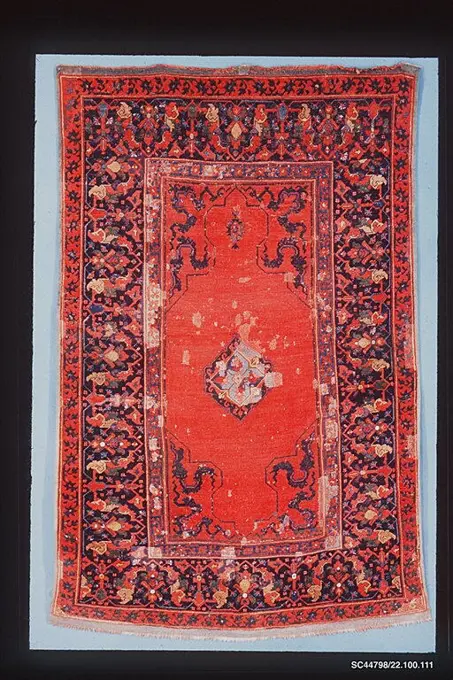
A collection of intricate oriental carpets featuring rich colors and geometric patterns, highlighting traditional weaving techniques from Central Asia and Turkey.

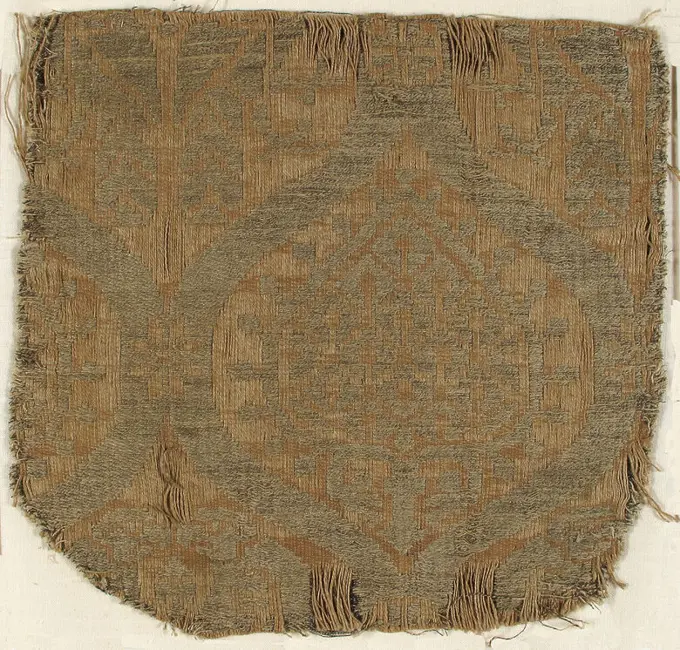
Textile, Medium: silk, metallic yarns Technique: two integrated structures: 5/1 satin patterned by 3/1 twill, Woven textile with overall large-scale ogival medallions on a red ground. Each ogee containing a symmetrical arrangement of tulips and carnations in red, yellow, and light blue on a silver ground, surrounded by a floral vine border., Turkey, 16th-17th century, woven textiles, Textile
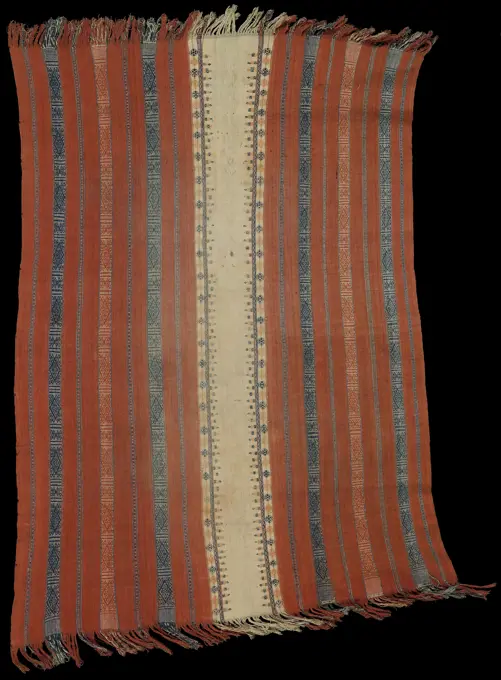
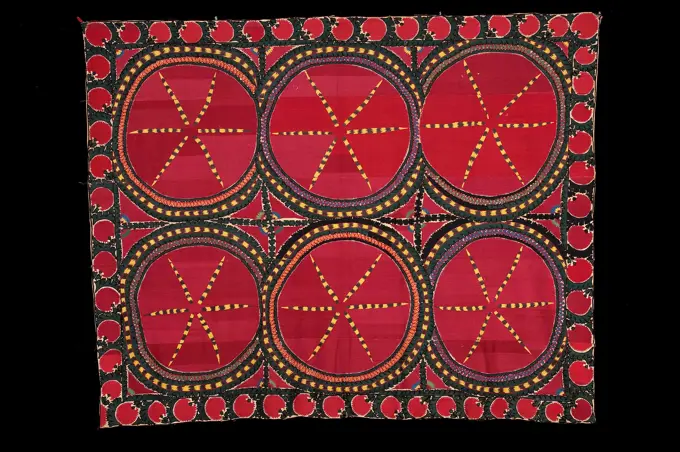
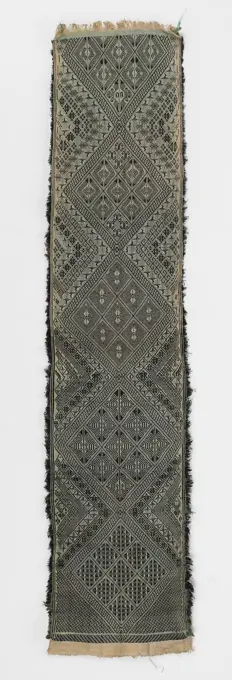
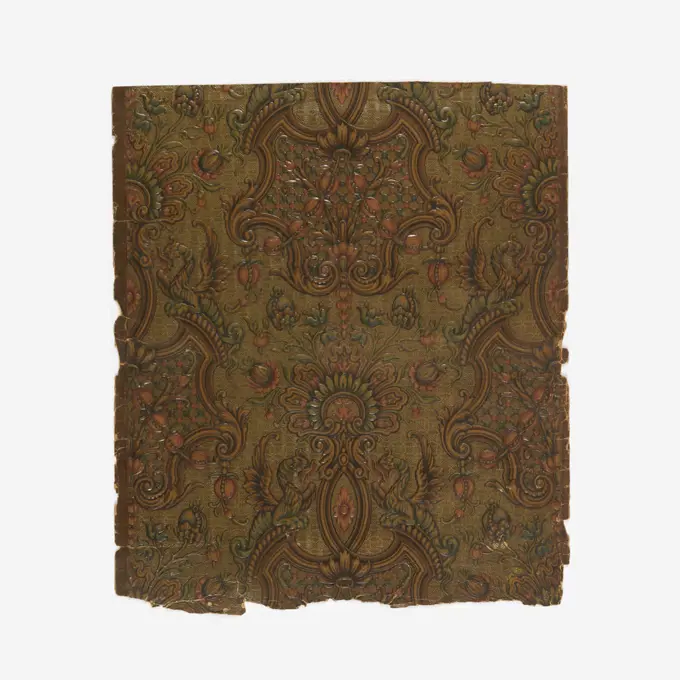
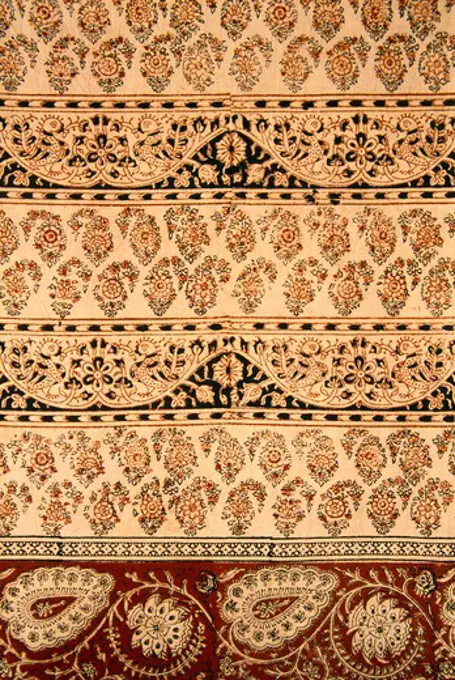
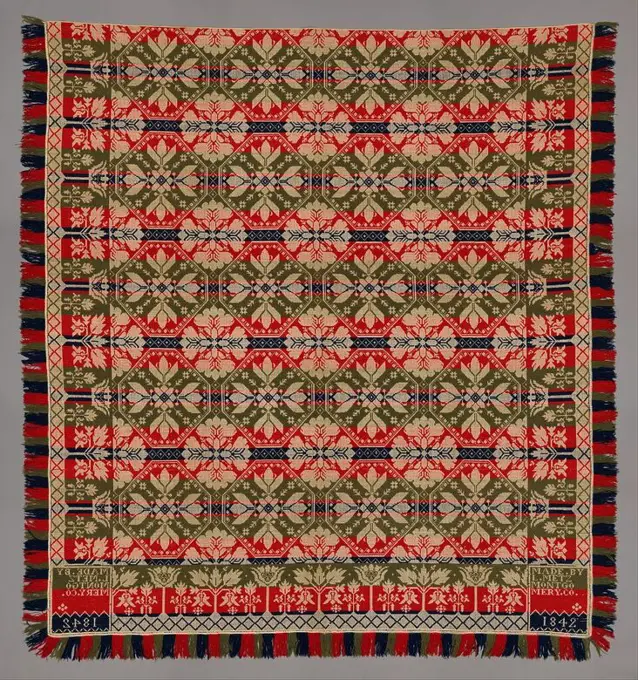
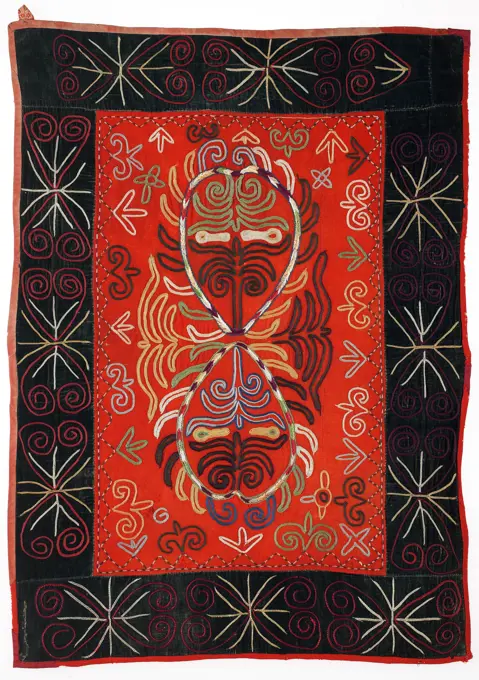
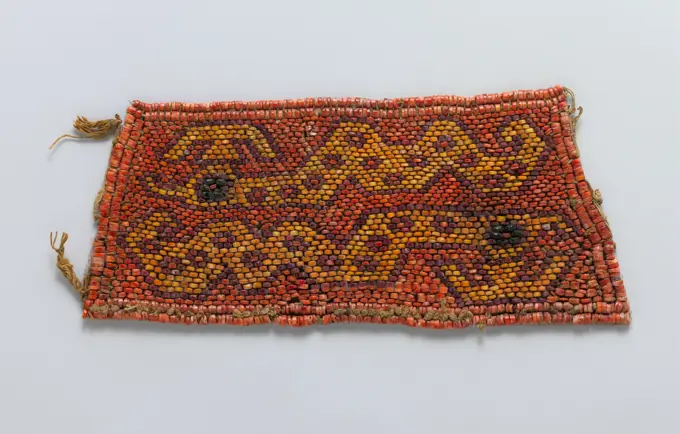
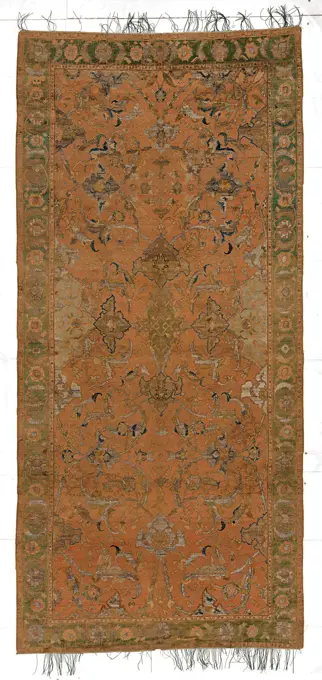
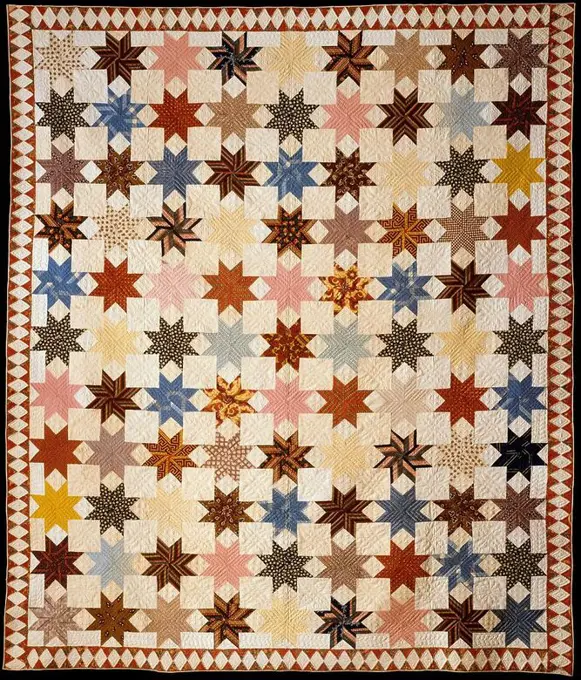
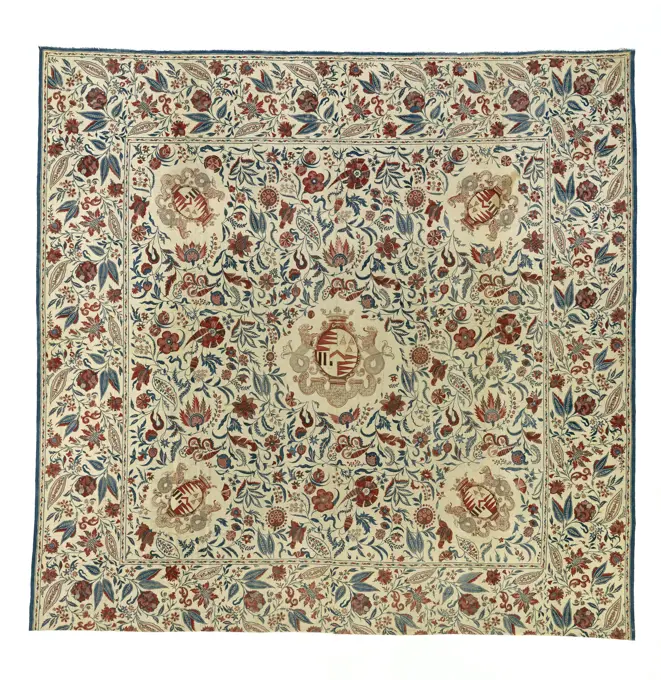
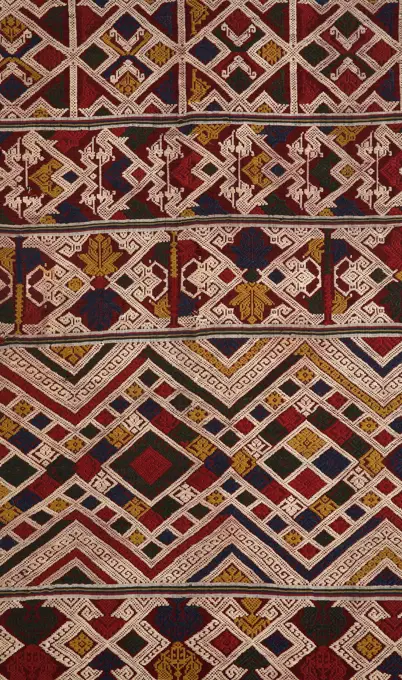
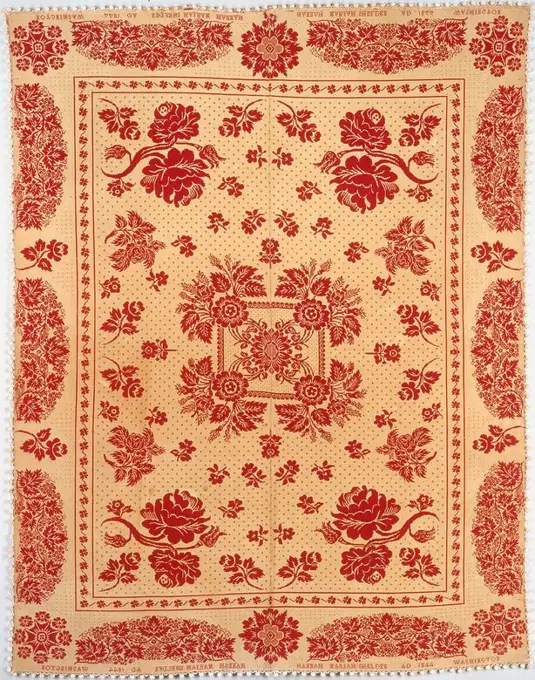
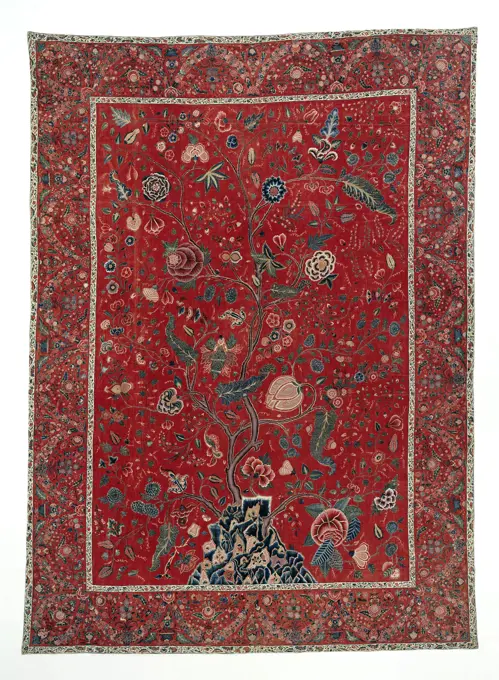
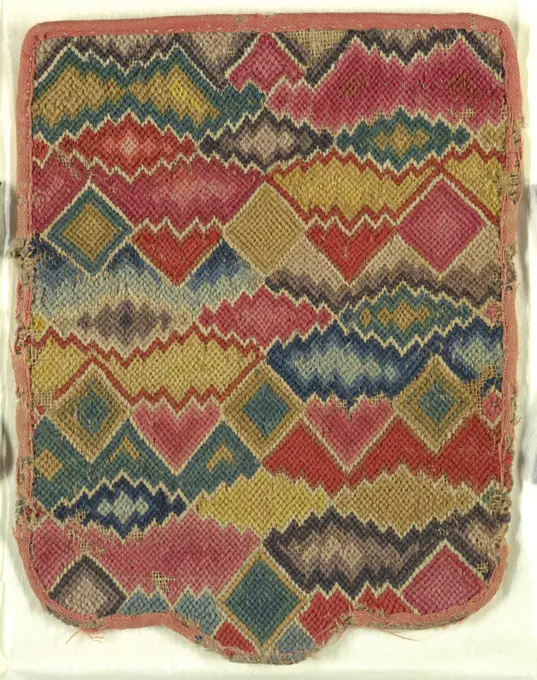
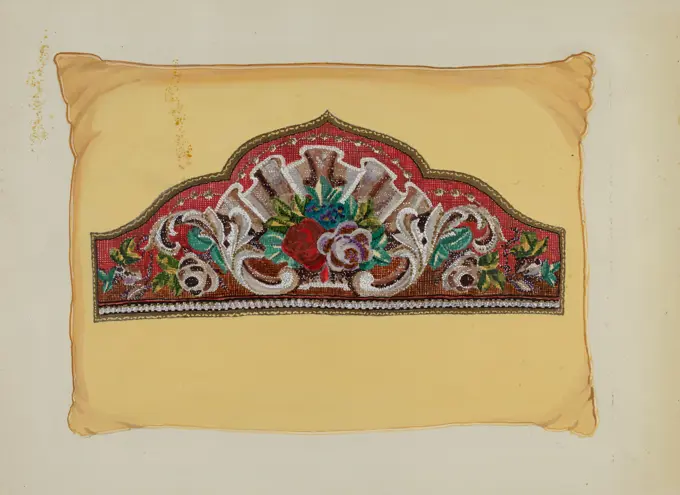
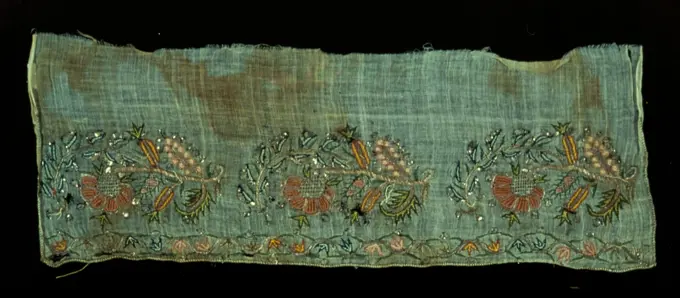
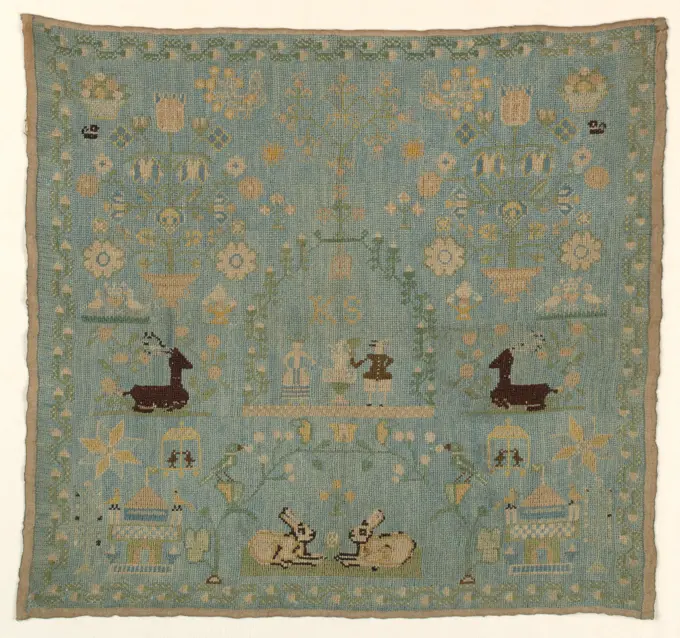
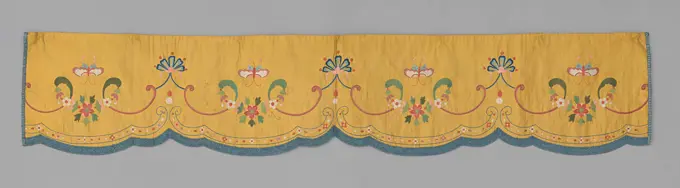
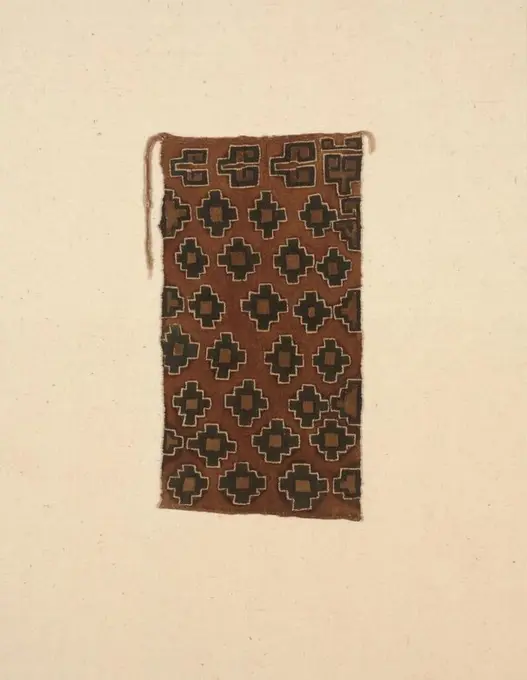
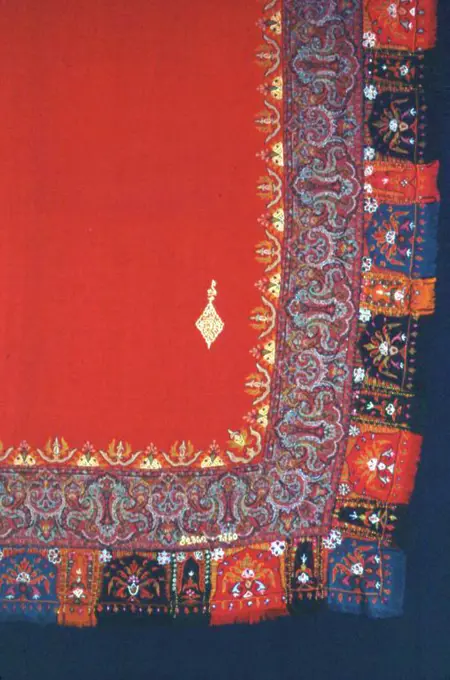
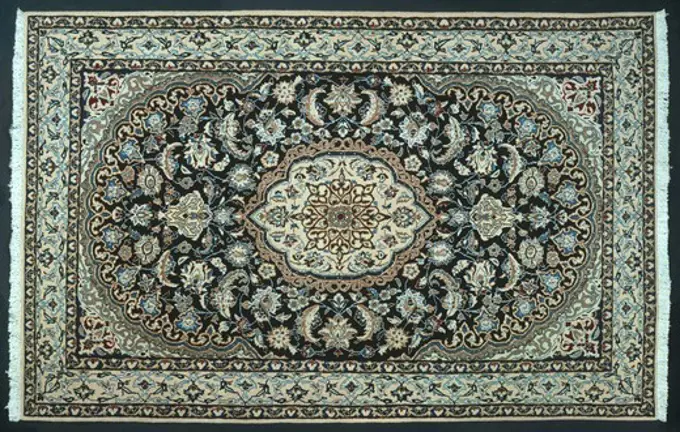
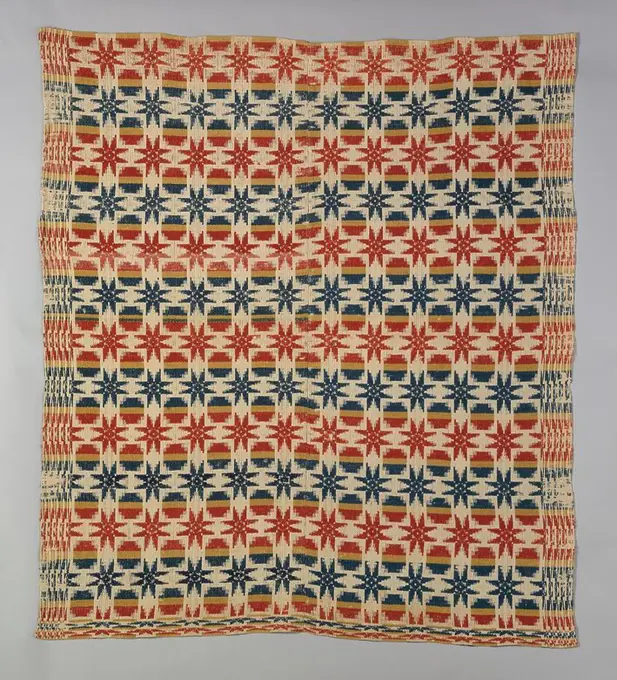
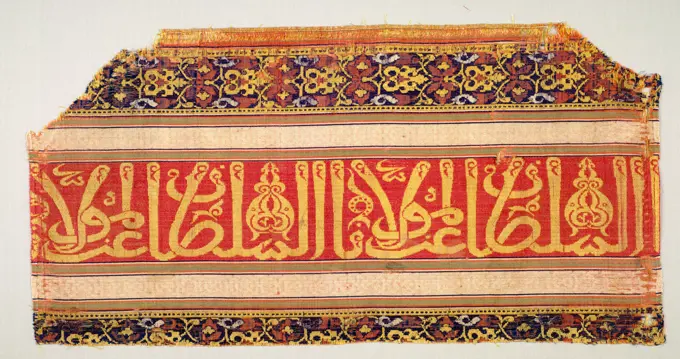
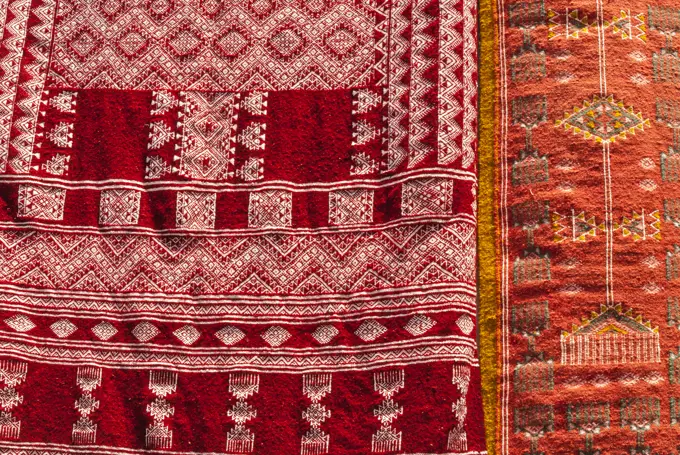
Cope Hood; silkFez, early 1900s. Algeria, early 20th century. Embroidery, silk and metallic threads, on silk tabby ground; overall: 78.7 x 38.1 cm (31 x 15 in.).Band (from Woman's Trousers or Robe) Made 1875-1900 China. .Towel Made 1701-1800 Mytilene. Linen and silk, plain weave self patterned by ground weft floats; embroidered with silk and gilt-metal-strip-wrapped silk in Bosnian, flat, double running, running (pattern darning) twined double running, and satin stitches; edged with plied warp fringe with silk and gilt-metal-strip-wrapped silk tassels .Rug, 19th century, 75 x 53 in. (190.5 x 134.6 cm), Iran, 19th centuryMollo, 64 1/2 x 48 11/16 in. (163.83 x 123.67 cm) (irregular, without fringe), Cotton, IndonesiaSuzani, late 19th century, H.76-1/2 x W.93-1/2 in., Uzbekistan, 19th centuryMary Berner, Patchwork and Applique Quilt, c 1936 Patchwork and Applique QuiltScarf, 37 x 8 1/2 in. (93.98 x 21.59 cm), Cotton, ChinaBand, Medium: cotton Technique: two complementary integrated structures, plain weave plus plain weave, Red and white narrow woven band in a stylized design with confronted lions at a fountain and a castle., Italy or Spain, 17th century, woven textiles, BandNeedlepoint (Drawnwork) and Bobbin Lace Pillow Case, 17th century. Italy, Genoa, 17th century. Lace, drawnwork and bobbin: linen; overall: 2.5 x 45.7 x 35.6 cm (1 x 18 x 14 in.).Sampler (Denmark); cotton, linen, silk; Warp x Weft: 55 x 42 cm (21 5/8 x 16 9/16 in.); Bequest of Mrs. Henry E. Coe; 1941-69-116Sarong, early 1900s, before 1923. Indonesia, Java, early 20th century. Plain weave cotton; resist dyed; overall: 107 x 196.2 cm (42 1/8 x 77 1/4 in.).Oriental carpet. Oriental carpet of knotted wool with herati pattern and seven edges, the middle the widest, is decorated with lilys and rosettes to tendrils.Sidewall, Block-printed paper, embossed, Imitation leather. On background of narrow and wide ribbon-like vertical stripes, bouquets and sprays of flowers emerging from acanthus-leaf center motif., Rixheim, Alsace, France, 1875-1900, Wallcoverings, SidewallCornelius Christoffels, Coverlet, 1935 1942 CoverletIndia, Crafts, Rajasthani Block PrintBanded Rug, c. 1890-1900. America, Native North American, Southwest, Navajo, Post-Contact, Transitional Period. Tapestry weave: cotton and wool: (handspun and Germantown); overall: 159 x 119 cm (62 5/8 x 46 7/8 in.).Towel End early 19th centuryCoverlet. Artist: Leonard Metz (1810-ca. 1885). Culture: American. Dimensions: 8 ft. 5 in. × 94 in. (256.5 × 238.8 cm). Date: 1842. Museum: Metropolitan Museum of Art, New York, USA.Trimming Fragment; silkTent hanging, 19th-20th century, 35 x 25 1/2 in. (88.9 x 64.77 cm), Silk, wool, cotton; chain stitch, fishbone stitch, checkered chain stitch, Kyrgyzstan or Kazakhstan, 19th-20th centurySaddle bag, double, decorated with gridwork in which swastikas, Jaffi Volk, c. 1800 - c. 1975 Double saddle bag of knotted wool, Jaffi Kurdistan, formerly Mosul. The fronts are divided into large windows by a grid, on which a crucifix with hooks is always standing. Edges with a blockbar saw line. Embroidered and shared beards in flat tissue, intended as a closure with the long loops of braided goat hair. Back of flat tissue with wide stripes. Kurdistan Necklace and impact: Wool Double saddle bag of knotted wool, Jaffi Kurdistan, formerly Mosul. The fronts are divided into large windows by a grid, on which a crucifix with hooks is always standing. Edges with a blockbar saw line. Embroidered and shared beards in flat tissue, intended as a closure with the long loops of braided goat hair. Back of flat tissue with wide stripes. Kurdistan Necklace and impact: WoolFragment; silk, metallic yarnsWrist Ornament 11th-15th century Chimú. Wrist Ornament 313141Brocatelle Textile. Culture: German. Dimensions: Overall: 7 × 7 1/4 in. (17.8 × 18.4 cm)Storage (Mat): 13 × 17 in. (33 × 43.2 cm). Date: 12th-13th century. Museum: Metropolitan Museum of Art, New York, USA.Ornamental Tab. Peru, Possibly central coast. Date: 1000-1476. Dimensions: 3.8 x 3.8 cm (1 1/2 x 1 1/2 in.). Origin: Peru. Museum: The Chicago Art Institute, Chicago, USA.Sampler, Rafayla Flores, Medium: silk on linen Technique: plain weave foundation with cross, back, knot, double running, satin stitches, and withdrawn element work, Bands of pattern in solid embroidery and in withdrawn element work, with spot motifs, in many colors on a white ground., Mexico, early 19th century, embroidery & stitching, SamplerFragment (Touser Bands) Made 1875-1900 China. Design of figures riding cranes, embroidered on gauze. . Han-ChineseEthel Dougan, Saddle Blanket, c 1930 Saddle BlanketApron, ChinaCarpet Made 1601-1625 Turkey. Wool warp and pile, symmetrical knots . IslamicApron 19th century Romanian. Apron 102377Conciliate belt;  18th century (1701-00-00-1800-00-00);Carpet 16th-17th century. Carpet 447569"Senneh" Prayer Rug. Dimensions: Rug: L. 64 1/2 in. (163.8 cm) W. 48 1/4 in. (122.5 cm). Date: late 18th-early 19th century.This tapestry-woven prayer rug is an example of the fine production of Sanandaj, a center in the province of Kurdistan in northwestern Iran. The tapestry technique (kilim) makes it lighter and more fragile than a knotted pile rug, and such objects were often used as decorative wall hangings. The change of colors in the densely patterned rows of flowers enlivens the otherwise simple composition of an arched mihrab, or prayer niche, filled with flowers within and outside the niche. Museum: Metropolitan Museum of Art, New York, USA.red carpet with geometric ornament on whiteSquare 18th century Greek Islands, Cyclades, Naxos. Square 221728Belt of Badaoshao, 20th century, 40 3/4 x 22 in. (103.5 x 55.9 cm), Cotton, China, 20th centuryZijden tapijt.Carpet, a so-called polent carpet, knotted silk and beamed with gold and silver thread. In the midfield a tendrilment pattern with lotuses transformed into cartouche-like palmets and various small ornaments. Background has a discontinuous field color, mostly red, partly green and white. The middle edge is decorated with a pattern of lotuses caught in sickle-shaped leaves on a running rank.Three Fragments from a Border, before 1968. Egypt. Tapestry weave; wool and linen; overall: 18.5 x 4.1 cm (7 5/16 x 1 5/8 in.).Cushion front, 17th century, 26 3/4 x 26 3/4 in. (67.95 x 67.95 cm), Wool, linen; tapestry weave, 17th centuryStar of Lemoyne Quilt. Culture: American. Dimensions: 80 x 94 in. (203.2 x 238.8 cm). Maker: Rebecca Davis. Date: ca. 1846.The eight-pointed stars that decorate this quilt's top are pieced of multicolored and patterned fabrics typical of the 18405, including some rainbow prints. In the pieced blocks, the quilting stitches follow the star shapes with parallel lines. In the plain white blocks, the quilting pattern alternates between four tulips and four leaves. The quilt has a cotton-batting filling, and the back is of plain white woven cotton. There are partial English design registration marks on some pieces of fabric. Museum: Metropolitan Museum of Art, New York, USA.Kontusz sash/belt. unknown, authorFragment of the fabric;  XVII/18th century (1690-00-00-1710-00-00);Subise-Bisier, Gustaw Wilhelm (1849-1937)-collection, gift (provenance), fabricsWeefselfragment met orbiculus, anonymous, c. 400 - c. 799 Natural linen tissue fragment with sewn orbiculus. Central to a red surface a figure, with around it, on a dark green soil, four -looking lions in yellow and red with difficult to describe motifs with semi -circles and toothed edge in light green, yellow, natural color and red. The whole surrounded by a circle in red and a border with natural -colored soil with a succession of motifs in red, yellow, green and dark blue and around it a diced edge in the same colors on a dark blue soil. Egypt Ketting an element: Linen (material). Entry: Wool tapestry Natural linen tissue fragment with sewn orbiculus. Central to a red surface a figure, with around it, on a dark green soil, four -looking lions in yellow and red with difficult to describe motifs with semi -circles and toothed edge in light green, yellow, natural color and red. The whole surrounded by a circle in red and a border with natural -colored soil with a succession of motifs Palempore with weapon Sweers, Anonymous, c. 1700 - c. 1725 Palempore or canvas of Sits with the weapons of the Sweers and the Landas in the middle and in the four corners. The cloth is completely decorated with flower vines in mainly blue and red. Eastern textile. Coromandelkust cotton (textile) printing / chintz Palempore or canvas of Sits with the weapons of the Sweers and the Landas in the middle and in the four corners. The cloth is completely decorated with flower vines in mainly blue and red. Eastern textile. Coromandelkust cotton (textile) printing / chintzDetail of over_the_shoulder sash by Tai Nuea or Tai Daeng weavers from Hua Phan, Laos, Indochina, Southeast Asia, AsiaPiece 18th-19th century Japan. Piece 66122Skirt (KainKebat)Sampler 19th century German. Sampler 228614Streamers 19th century China. Streamers 70459Kiowa beaded purse decorated with intricate designs and dyed porcupine quill work on fringeCoverlet. Culture: American. Dimensions: Excluding fringe: 80 1/4 x 103 in. (203.8 x 261.6 cm). Date: 1844.This red wool and undyed cotton double cloth coverlet is woven in two panels and seamed at the center. It has a central floral medallion and four large roses in the field. The border has clusters of grapes and leaves, which alternate with single-stemmed roses on the left and right sides and with three snowflake motifs within the top and bottom borders. Museum: Metropolitan Museum of Art, New York, USA.Russian sash Unknown, Manufaktura: KarpowBedcover Made 1855 México. Wool, plain weave; embroidered with wool in cross, running, double running, and stem stitches; three panels joined; two selvages present .Textile, BurmaConciliate belt;  End of the 18th century (1791-00-00-1800-00-00);Palampore, Anonymous, c. 1725 - c. 1750 Palempore of sits with pattern of a tree on a red stock. India cotton (textile). linen (material) chintz Palempore of sits with pattern of a tree on a red stock. India cotton (textile). linen (material) chintzTextile Fragment, 19th century. Morocco, 19th century. Plain compound cloth; silk; average: 23 x 6.5 cm (9 1/16 x 2 9/16 in.).Shawl withBlossomsMantle Nasca. Mantle, 0-100 C.E. Camelid fiber, 108 11/16 x 50 13/16 in. (276.1 x 129.1 cm).   Arts of the Americas 0-100 C.E.Africa, Tanzania, Zanzibar, Stone Town. Close-up of hand-made carpet.Purse, Medium: wool embroidery on linen foundation Technique: embroidered in brick stitch on plain weave foundation, Envelope-style purse embroidered solidly in brilliantly colored wools in bargello or flame stitch. Reds, pinks and yellows predominate, with shades of blue, green and brown. Bound in light red tape., USA, late 18th century, costume & accessories, PurseArabesques from a set of three or more pieces. Culture: British, London. Designer: Possibly designed by Andien de Clermont (French, active 1717-83). Dimensions: Overall (confirmed): H. 107 x W. 114 in. (271.8 x 289.6 cm)Overall: H. 106 x W. 115 in. (269.2 x 292.1 cm). Maker: Probably woven by Joshua Morris (active 1700-1728). Date: 1720-30. Museum: Metropolitan Museum of Art, New York, USA.Florence Huston, Embroidery on Pillow, c 1936 Embroidery on PillowCoca bag, Medium: wool Technique: warp-faced plain weave patterned by warp floats and stripes, Small flat bag woven in stripes of red, brown and decorated with narrow cream-white and green stripes. Hand sewn with sides stitched together to form bag. warp selvage for bag opening, Peru, possibly 1200-1500, woven textiles, Coca bagSampler (Italy); Embroidered by Rosalie le Marchand (Italian); silk embroidery on linen foundationTowel end, 19th century, 20 1/4 x 7 in. (51.44 x 17.8 cm), Cotton, silk; needlework, Turkey, 19th centuryAltar Cloth Made 1601-1700 Italy. Linen, plain weave; appliquÈd vertical strips of plain weave; embroidered with silk floss in long-armed cross and back stitches and appliquÈd lower border of plain weave; embellished with pulled thread work (with silk floss) in two-sided Italian cross stitch and embroidered in back stitch; edged with silk, warp-faced plain weave with ground weft cut fringe .Sampler, Mary Finkel, English. n.d., Medium: silk and linen embroidery on linen foundation Technique: embroidered in counted satin and double running stitches, needle lace fillings in cutwork areas, on plain weave foundation Label: Silk and linen embroidery with needle-lace fillings on linen, Small square sampler with bands of circles and squares filled with needle lace in a variety of patterns including hearts, crowns, flowers, and geometric motifs. One hollie point square has three crowns, WA, Mary Finkel 1730, and AC beneath the crowns. Border of acorns and plants., England, 1730, embroidery & stitching, SamplerSleeve Bands from a Tunic, 600s-700s. Egypt, Umayyad period (661-750). Wool and linen: tabby weave, inwoven tapestry ornament; overall: 10.2 x 21.2 cm (4 x 8 3/8 in.).Carpet early 16th century. Carpet. early 16th century. Wool (warp, weft and pile); symmetrically knotted pile. Attributed to Turkey. Textiles-RugsTunic Fragment 7th-9th century Wari. Tunic Fragment 307988Textile (India); silk, cotton, gold tinsel on silk coreSampler (Netherlands); silk embroidery on linen foundationChasuble with an embroidered excuse unknownLambrekijn.Yellow silk light frames of a bed garnish embroidered with flowers and butterflies in multicolored silk, ommer and decorated with blue passing, lined with coarse linen and yellow silk. Intended for the front of the bed, inside.Curtains (India); cotton, linenFragment. Chancay; Central coast, Peru. Date: 1000-1476. Dimensions: 25.4 x 13.3 cm (10 x 5 1/4 in.). Cotton, plain weave; painted. Origin: Peru. Museum: The Chicago Art Institute, Chicago, USA.Sleeve Fragment with a Band Decorated with an Animal 9th-10th century This simple band of linear design, part of a tunic sleeve, recalls the monochrome purple Late Antique style that was so popular in interlace designs.. Sleeve Fragment with a Band Decorated with an Animal 444308Sampler (Mexico); cotton, glass beadsSampler, Medium: silk embroidery on linen foundation Technique: embroidered in cross, long-armed cross, and four-sided stitches with withdrawn element work on plain weave foundation, Green and brown bands of pattern., North Holland, Netherlands, early 18th century, embroidery & stitching, SamplerTextile, Medium: cotton, wool Technique: slit tapestry; nonhorizontal wefts; note: loomed width 36.5cm, All-over pattern of diagonal bands patterned by interlocked birds in red, yellow and black. The Predominate color of each stripe alternates between red and yellow., Chancay, Peru, 1200-1500, woven textiles, TextileSquare Shawl (Turnover) Made 1801-1850 Paisley. Wool, center of 2 2 'Z' twill weave; embroidered with wool and silk in fly, satin, and stem stitches; attached border of wool and cotton, two layers of complementary warp and five-color complementary weft twill weaves self-patterned by main warp floats; woven on loom with Jacquard attachment; Harlequin tabs of wool, pieced 2 2 'Z' twill weaves; embroidered with wool and silk in back, satin, and stem stitches; couching; main warp fringe .Textile.   Maker: UnknownTextile Fragment 5th-6th century. Textile Fragment 444133Kontusz sash/belt. unknown, authorEastern silk sash unknownRugs and Carpets: Iran - Nain carpetPanel (For Sleeve Bands) Made 1875-1900 China. Forty-four pairs and eight odd pieces of embroidered sleeve, ankle bands, etc. on gauze. . Han-ChineseGamesboard. Turkey, circa 1530-1550. Wood. Wood inlaid with ebony, ivory, micromosaic and silverCoverlet. United States, Probably Pennsylvania. Date: 1820-1840. Dimensions: 198.1 x 177.5 cm (78 x 69 7/8 in.). Cotton and wool, plain weave with plain interlacings of secondary binding warps and patterning wefts (star work, tied Beiderwand); two loom widths joined. Origin: Pennsylvania. Museum: The Chicago Art Institute, Chicago, USA.Striped Silk from a Garment, 1400s. Spain, Granada, Nasrid period. Silk; lampas weave; overall: 54.2 x 27.6 cm (21 5/16 x 10 7/8 in.); mounted: 61.6 x 27.6 cm (24 1/4 x 10 7/8 in.).Rugs and Carpets: Iran - Nain Tabas carpetCarpet for sale, Sidi Bou said, Tunisia, North AfricaKościelna Kapa;  XVI/XVII century (1590-00-00-1810-00-00);Sleeve Made 1801-1900 Czech Republic. Linen, plain weave; embroidered with wool .Beadwork (for Hanging over Doorways), 1800s or early 1900s. India, 19th or early 20th century. Beads; overall: 17.2 x 55.9 cm (6 3/4 x 22 in.).Pouch 1820-40 American This particularly complex design was, according to the donor, created by a family of beadworkers in Philadelphia. The details include five varieties of flowers, with four different shades used to create the rose and small forget-me-nots at top and bottom, which required frequent changes of color. The range in bead sizes and the faceted treatments add surface interest, texture, and depth to the overall design.Margaret S. Bedell (1861-1932) donated, by gift or bequest, over 500 objects to the Brooklyn Museum, including furniture, quilts, samplers, costume and Native American beadwork. Her collection of American and European beaded bags includes examples from Philadelphia and the Catskill Mountain region of New York State, as well as Italy, Austria, Germany, and Holland.. Pouch 156442