Ornamental and Decorative Prints

Decorative engravings featuring intricate designs, motifs, and ornamental elements often used in book illustrations and architecture.
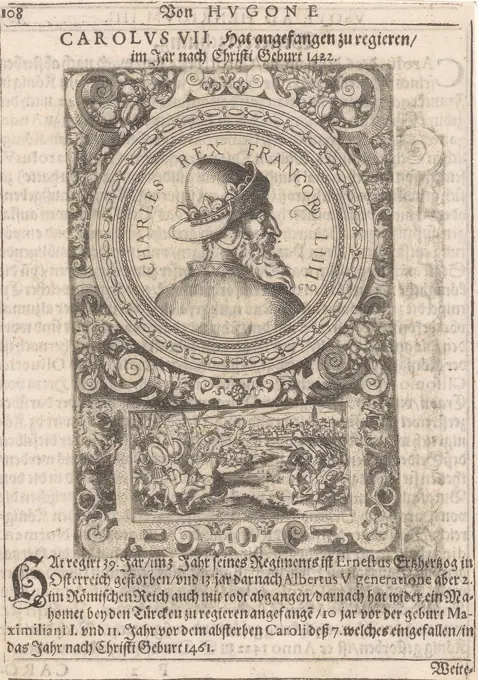
Nuremberg, Bussemacher, Johann, Amman, Jost, Portrait of Charles VII, King of France, verso - handwritten in brown ink, print, book illustration, prints, verso - stamped, 157, height 118 mm, width 78 mm, Swiss, 1539 - 1591-03-15, print maker, printmaker, 1598 - 1598, paper, papier, etching, etchings, plate tone, Publication (Event), Publication, German - 1627, publisher
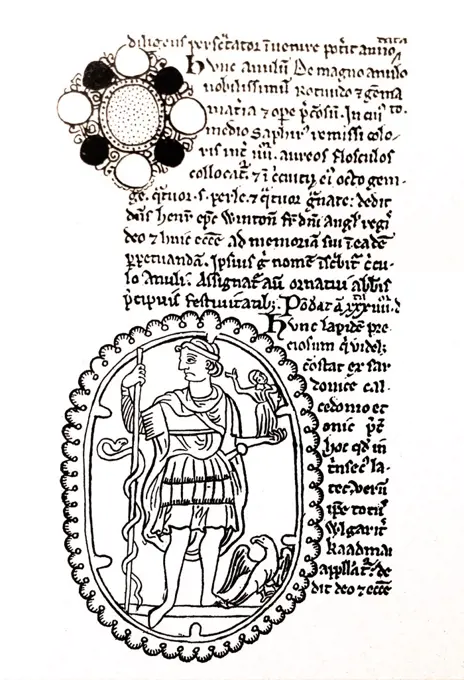
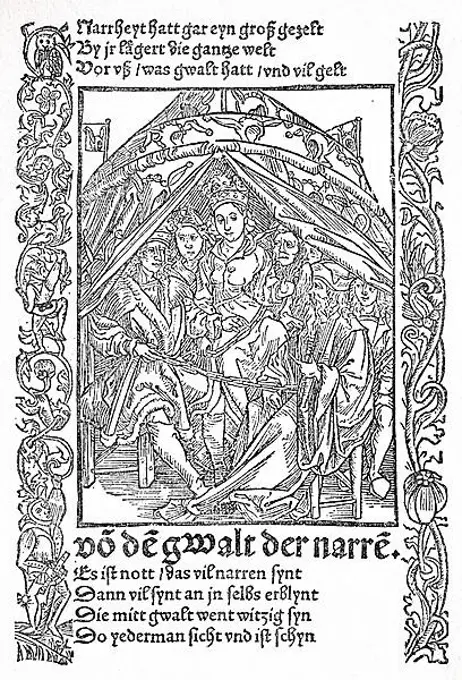
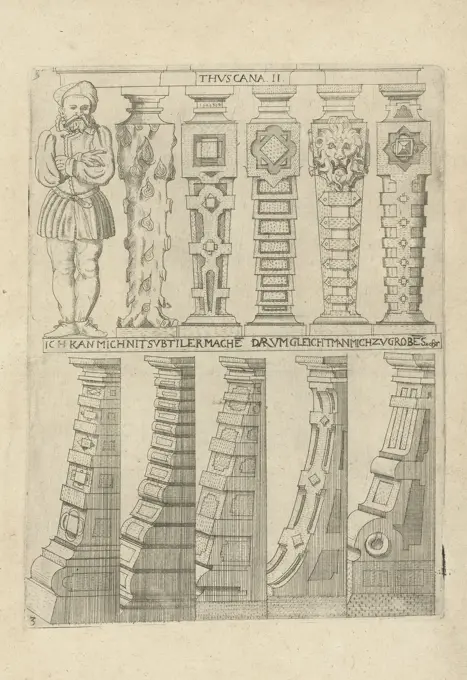
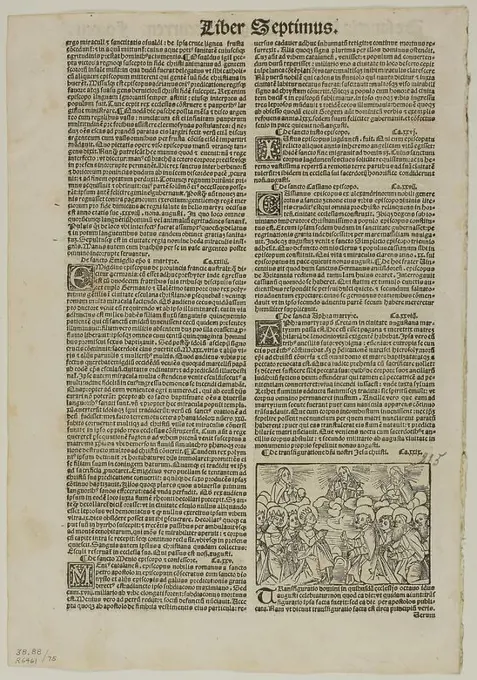
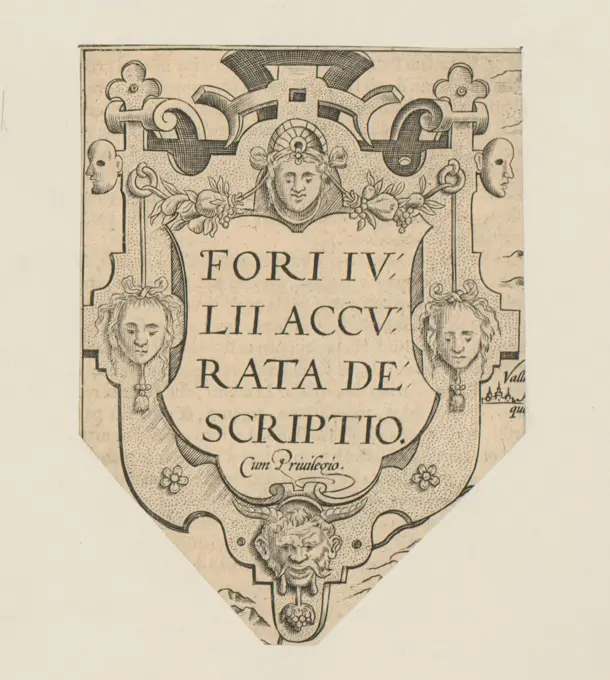
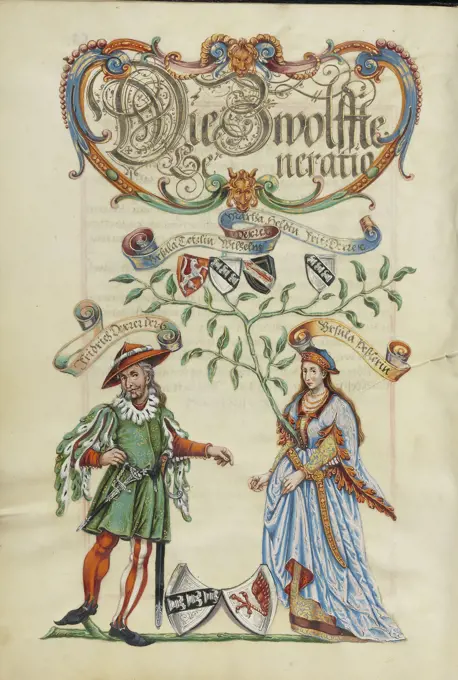
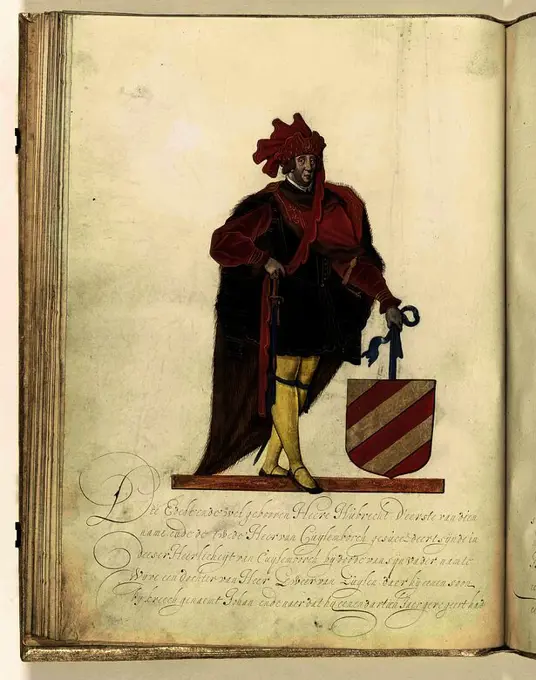
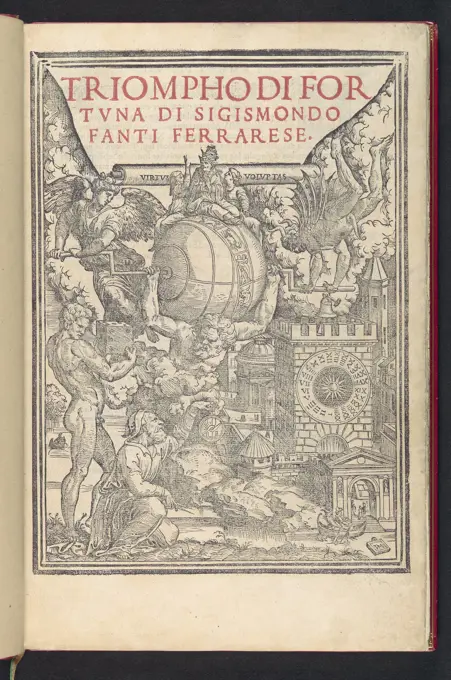
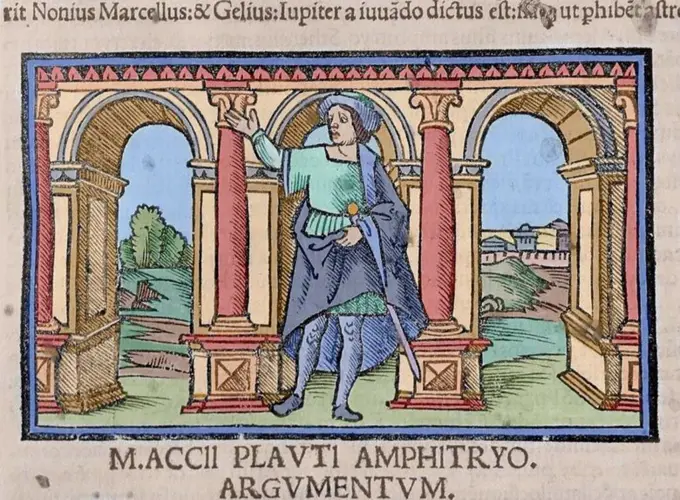
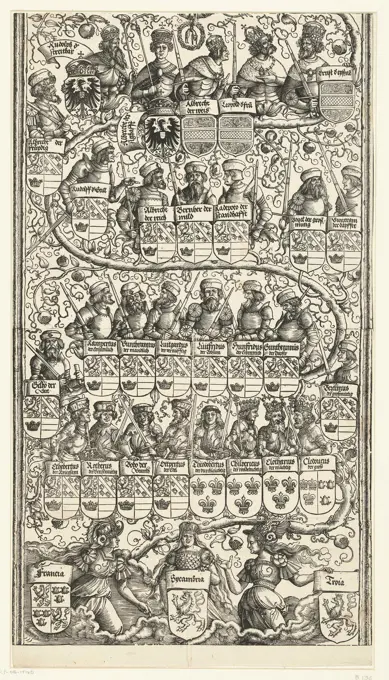
Family tree of Maximilian (lower part); Triumphal arch of Emperor Maximiliaan I. The ancestors of Emperor Maximilian with their coats of arms, placed along a swinging branch. Lower part of the central representation on the triumphal arch of Emperor Maximiliaan I.Juno in Hades from P. Ouidij Nasonis poete ingeniosissimi Metamorphoseos Libri, plate 87 from Woodcuts from Books of the XVI Century. Unknown Artist (Italian, 16th century); assembled by Max Geisberg (Swiss, 1875-1943). Date: 1527-1528. Dimensions: 61 x 87 mm (image); 243 x 182 mm (image/text); 284 x 202 mm (sheet). Woodcut on paper. Origin: Italy. Museum: The Chicago Art Institute, Chicago, USA.Bliżej Kultury unknownWoodcut and type print by a follower of Albrecht Dürer, 1517, showing the baptism of Christ with decorative title border, part of a Nuremberg print series.A colored woodcut by Thomas Ochsenbrunner from 1494 depicting Julius Caesar, the Roman military general and statesman, in historical attire.Illustration of a jewels from the treasury of St Albans Abbey and annotation. The ring at the top has a sapphire in the centre, surrounded by four pearls and four garnets. Below is a Roman cameo given to the abbey by King Ethelred. Dated 13th CenturyDel Marino English, Christoph Krieger, after Cesare Vecellio, 1598   paper   paperVeturia, Michel Wolgemut (workshop of), 1493 print A flower chalice with a woman, turned to the right. The text identifies her as Veturia, the mother of the Roman General Coriolanus. The print is part of an album.  paper letterpress printing female persons from classical historyVolume II of Natural Historia de las Indias (1526); by Gonzalo Fern·ndez de Oviedo (August 1478 ñ 1557). Spanish historian and writer. He is commonly known as 'Oviedo' even though his family name is Fern·ndez. He participated in the Spanish colonization of the Caribbean; and wrote a long chronicle of this project which is one of the few primary sources about it.Pope Innocentius VII; Innocentius Septymus; Liber chronicarum. A flower celk with a pope. He wears a tiara and has a beaten book and a double cross staff in his hands. The show is part of the sequence pops in the Liber Chronicarum. The text identifies the man as Innocenti VII. The print is part of an album.Magni Aurelii Cassiodori, 1533. Biblioteca de l'Il·lustre Col·legi de l'Advocacia de Barcelona.Koning Berengarius I van Friuli, Michel Wolgemut (workshop of), 1493 print A flower challenge with a king, turned to the right. The man has a government apple and a scepter in his hands. The performance is part of the succession of Italian kings in the Liber Chronicarum. The man identifies the man as Berengarius I of Friuli. The print is part of an album.  paper letterpress printing kingWoman of Romagna, Christoph Krieger, After Cesare Vecellio, 1598 Mirror image and other rug; attitude  paper Mirror image and other rug; attitude  paperThe Ship of Fools by Sebastian Brant, 1494, late medieval moral satire. Of the Reign of Foolishness, Frau Narrheit enthroned as an army commander in a tent, Historical, digitally restored reproduction from a 19th century originalDe Allesweter, Giuseppe Maria Mitelli, 1675 print A scientist who knows everything (Dottore Versato). Man sitting in a study surrounded by bookcases with books. With two four -line verses in Italian. Numbered at the top right: 22. Part of the series 'The twenty -four hours of human happiness'.  paper etching / engraving personifications ~ the life of man. the 24 hours of day and night. scenes symbolizing 'Vanitas'. scholar in his study. bookAntipater and his wife; Antipater c on Iuges Crispis; Liber chronicarum. A flower celk with a king and queen. They have a crown on their heads and a scepter in their hands. The show is part of a family tree in the Liber Chronicarum. The text identifies the man and woman as an antipater and Cypros. The print is part of an album.Netherlands, Weissenbruch, Isaac, Vignette with two coats of arms with a crown, a lion and a deer, print, prent, prints, prenten, height 39 mm, width 53 mm, 1826-08-27 - 1912-11-13, print maker, printmaker, 1836 - 1912, paper, papier, houtgravureAncient brides, Christoph Krieger, after Cesare Vecellio, 1598   paper   paperJanius, Michel Wolgemut (Workshop of), 1493 print Two flower skins with two men. They point to each other. The text identifies them as Gemicius (Genucius) And Sempronius. The performance is a fragment of the succession of Roman consuls in the Liber Chronicarum. The print is part of an album.  paper letterpress printing male persons from classical historyCologne, Bussemacher, Johann, Germany, Kramer, Gabriel, Architectura von den funf Seuvlen, Thvscana.II, Ich kan mich nit svbtiler mach, Five terms or balusters and five stone tendrils, At the top left a man stands with his arms crossed. Page 3 from a series of title page and 28 leaves., print, ornamental print, prints, ornamental prints, height 287 mm, width 215 mm, - 1611, print maker, printmaker, 1610 - 1610, first quarter 17th century, paper, etching, etchings, Work conception, after a design by, Publication (Event), Publication, German - 1627, publisherWoodcut by an anonymous artist titled 'Saint Ivo,' created around 1495 with red ink, depicting Saint Ivo in religious context.Aesopus, Michel Wolgemut (workshop of), 1493 print A flower challenge with a reading man, turned to the right. The text identifies it as Aesopus, the Greek poet of Fables. The print is part of an album.  paper letterpress printing male persons from classical history. readingNoble ambassador, Christoph Krieger, after Cesare Vecellio, 1598   paper   paperStones, Andreas.Judith with the Head of Holofernes Israhel van Meckenem German. Judith with the Head of Holofernes 399620Is the hand of Enape and Zo i·t, Christ Pint or Sinkin Sintin 1612 1612 print   paper engraving / etching court jester, court fool. insects: flyPrint, Figural letter, Capital N; Print Maker: Juan Dolívar (Spanish, active in France, 1641-1692); etching and engraving on paper; 3.9 × 4.1 cm (1 9/16 × 1 5/8 in.); 1907-7-36Leaf from Catalogus Sanctorum by Petrus Natalibus, plate 75 from Woodcuts from Books of the XVI Century. Unknown Artist (French, 16th century); assembled by Max Geisberg (Swiss, 1875-1943). Date: 1542. Dimensions: 54 × 77 mm (image); 265 × 164 mm (image/te×t); 295 × 205 mm (sheet). Woodcut on paper. Origin: France. Museum: The Chicago Art Institute, Chicago, USA.Cartouche with three women's masks and a saterskop, 1572 - 1575 Cartouche in the form of a shield, originally part of a map of the Italian region of Friuli. With three women's masks and a saters's head. The print is part of an album. Antwerp paper engraving Cartouche in the form of a shield, originally part of a map of the Italian region of Friuli. With three women's masks and a saters's head. The print is part of an album. Antwerp paper engravingThe Twelfth Generation, Friedrich Derrer; Nuremberg, Germany; about 1626 - 1711; Tempera colors with gold and silver highlights on parchment; Leaf: 37.6 x 26 cm (14 13,16 x 10 1,4 in.)Hubrecht, lord of Culemborg. Artist: anonymous. Draughtsman: Nicolaes de Kemp (attributed to). Dating: c. 1590 - c. 1593 and/or c. 1600 - c. 1625. Place: Northern Netherlands. Measurements: h 398 mm × w 292 mm. Museum: Rijksmuseum, Amsterdam.Tuscany Siena Montalcino Museo Civico57. Hutzel, Max 1960-1990 Medieval: Entire manuscript. Manuscripts. Post-medieval: Sculpture and ceramics from local workshops (2nd half 12th century; Sienese maiolica; 14th century weapons German-born photographer and scholar Max Hutzel (1911-1988) photographed in Italy from the early 1960s until his death. The result of this project, referred to by Hutzel as Foto Arte Minore, is thorough documentation of art historical development in Italy up to the 18th century, including objects of the Etruscans and the Romans, as well as early Medieval, Romanesque, Gothic, Renaissance and Baroque monuments. Images are organized by geographic region in Italy, then by province, city, site complex and monument.The Tenth Generation, Georg Derrer; Nuremberg, Germany; about 1626 - 1711; Tempera colors with gold and silver highlights on parchment; Leaf: 37.6 x 26 cm (14 13,16 x 10 1,4 in.)Bildnis give Gregory StricenitiusRoman bronze statues, decorative arts, and arms and armor. Knight, Charles, 1791-1873. Prints, Illustrations. 1858. Science, Industry and Business Library: General Collection. Art, Industrial arts, Bronzes, RomanKing Bergarius II; Berengarius Lecudus; Liber chronicarum. A flower celk with a king, turned to the left. He has a richestraat and a scepter in his hands. The show is part of the sequence of Italian kings in the Liber Chronicarum. The text identifies the man as Berengarius II. The print is part of an album.Emperor, Christoph Krieger, After Cesare Vecellio, 1598   paper   paperThe chronicle of the bishops pad VerdensiTitle print with an allegorical border frame and a calligraphed title. To the left of the title is Mecurius. To the right, the goddess of writing holding a quill pen and a roll of paper. At the top center a circular shield with the motto: Vive la Plume as the edge shield. Within it a crown with two crossed quills. Beside this shield two writing elderly bearded men: on the left Pisistratus, king of Athens, and on the right the Greek philosopher Anaxagorus. Next to them, two putti reach out to offer writing attributes and a lamp. In the shield center bottom an oak wreath and a pen above a hand pointing to an ear. To the left, two putti pull pens from the wing of a goose. On the right, a putto with ruler, compass and triangle. The right side and bottom of the print are damaged. As a result, the image of a putto on a stone block with a pen knife cutting a goose feather into a pen, and the signatures of the printmaker and inventor are missing at the bottom right. The print is part of an albRoman King Albrecht II by Habsburg; Wilhelmus; Liber chronicarum. A flower celk with a king, turned to the left. In his hands he has a migration and a scepter. The show is part of the sequence emperors in the Liber Chronicarum. The text identifies the man as Roman Koning Albrecht II. The print is part of an album.The Sudarium. Artist Unknown; Bavarian, 15th century. Date: 1460-1465. Dimensions: 100 × 75 mm (plate); 105 × 80 mm (sheet). Metalcut in black hand colored with brush and watercolor in yellow, red-brown lake, and green, on ivory laid paper, with manuscript text in pen and brown ink on verso. Origin: Germany. Museum: The Chicago Art Institute, Chicago, USA.Diploma for loyal service at oil factories Calvé Delft, Richard Nicolaüs Roland Holst, 1924 print. certificate Hermes, recognizable by his winged sandals and petasus (hat), which holds a flower wreath. To the whole a frame with a so -called Caduceus on the left and right, a two -hoses, and the city weapons of Delft and Bordeaux. At the top of the text 'The management of the Dutch public limited company Fransch-Hollandsche Oil factories Calvé-Delft has awarded the honor for ... Birthday Getting married Service to ...'.  paper  (story of) Mercury (Hermes). garland, wreathMermaid and mermaid, anonymous, 1486 - 1493 print A man and a woman to their waist in the water. Under the print four cut out rules of text in German. Germany paper  merman. merman - AA - mermaid, sirenThe 1502 woodcut title page by Meister der Celtis-Illustrationen for Conrad Celtis's 'Four Books of Love' depicts ornamental and figure elements, emphasizing composition.Abruzzo L'Aquila Celano Museum75. Hutzel, Max 1960-1990 Medieval: Manuscripts: Miniature nella Marsica; Trasacco - Antifonario; Tagliacozzo - Messale; Avezzano - L'Ecultet Metalwork--processional crosses Post-medieval: Vestments, metalwork, painting, frescoes, sculpture German-born photographer and scholar Max Hutzel (1911-1988) photographed in Italy from the early 1960s until his death. The result of this project, referred to by Hutzel as Foto Arte Minore, is thorough documentation of art historical development in Italy up to the 18th century, including objects of the Etruscans and the Romans, as well as early Medieval, Romanesque, Gothic, Renaissance and Baroque monuments. Images are organized by geographic region in Italy, then by province, city, site complex and monument.Songs of Innocence and of Experience: Cradle Song (second plate): Wept for me for thee for all ca. 1825 William Blake British. Songs of Innocence and of Experience: Cradle Song (second plate): Wept for me for thee for all. William Blake (British, London 1757-1827 London). ca. 1825. Relief etching printed in orange-brown ink and hand-colored with watercolor and gold. PrintsAlanus van Lille, Michel Wolgemut (workshop of), 1493 print A flower chalice with a man. He has a top hat on his head. The text identifies the man as Alanus van Lille, a theologian, poet and monk. The print is part of an album.  paper letterpress printing monk(s), friar(s). saintsKing Ancus Martius; Anch ius Marci US; Liber chronicarum. A flower celk with a king, directed to the left. He has a scepter and rich cone in his hands. The show is part of the sequence Roman kings in the Liber Chronicarum. The text identifies the man as ancus martius. The print is part of an album.Tuscany Siena Montalcino Museo Civico63. Hutzel, Max 1960-1990 Medieval: Entire manuscript. Manuscripts. Post-medieval: Sculpture and ceramics from local workshops (2nd half 12th century; Sienese maiolica; 14th century weapons German-born photographer and scholar Max Hutzel (1911-1988) photographed in Italy from the early 1960s until his death. The result of this project, referred to by Hutzel as Foto Arte Minore, is thorough documentation of art historical development in Italy up to the 18th century, including objects of the Etruscans and the Romans, as well as early Medieval, Romanesque, Gothic, Renaissance and Baroque monuments. Images are organized by geographic region in Italy, then by province, city, site complex and monument.Rechab; Liber chronicarum. A flower celk with a man, turned to the right. The text identifies him as a Rechab, the father of Jonadab. The print is part of an album.Portrait of Willem III, Prince of Orange, Anonymous, After Anthonie Heeres SIVERDTSMA, 1652 - 1676 print Portrait of William III playing as a child with a dog and standing at a table on which a crown lies. On the right in a window a pot with the Oranjeboom on which the divine light shines. A three -faced Dutch caption in the margin. Around the print a poem by I. Burghoorn. print maker: Low Countriespublisher: The Hague paper engraving / letterpress printingThe Thirteenth Generation, Friedrich Derrer VII; Nuremberg, Germany; about 1626 - 1711; Tempera colors with gold and silver highlights on parchment; Leaf: 37.6 x 26 cm (14 13,16 x 10 1,4 in.)Möller, Arnold.Ontwerp van een schrijfvoorbeeld: Alle goede gifte (...). Spieghel der schrijfkonste (series title). Dating: 1605. Place: Rotterdam. Measurements: h 196 mm × w 316 mm. Museum: Rijksmuseum, Amsterdam. Author: Jan van de Velde (I) (mentioned on object).Expulsion from paradise; The little passion; Stupid passion. Adam and Eve are driven out of paradise by an angel with a flaming sword. Print is part of a book.Stephan III., papa .Saint Catherine of Alexandria. Dated: 1475/1485. Medium: woodcut, hand-colored in red, green, and yellow. Museum: National Gallery of Art, Washington DC. Author: German 15th Century.Aptheros, Erictonius en Phoenix, Michel Wolgemut (workshop of), 1493 print Three kings in a flower challenge. The middle one has a wagon wheel in his hands. The text identifies the men as Aptheros, Erictonius and Phoenix. The print is part of an album.  paper letterpress printing kingColored woodcut by Thomas Ochsenbrunner depicting Metellus, created in 1494.Paris, Breton, Richard, Desprez, François, Recueil de la diversité des habits, Series of various costumes, Le singe debout, Human ape, verso - stamped, print, prints, height 146 mm, width 86 mm, French, print maker, printmaker, 1562 - 1562, paper, papier, woodcut, Publication (Event), Publication, 1524 - 1571, publisherPhotography of the manuscript card: Władysław Warneńczyk with royal insignia and the Polish emblem in miniature from the manuscript located in the library in Oxford;  around 1880 (1896-00-00-1921-00-00);Wood photography: portrait of Stefan Batory, Figure from the collections of the Czartoryski Museum in Krakow;  before 08.1934 (1909-00-00-1934-00-00);Convivio delle Belle Donne, title page (recto) August 1532 Nicolò Zoppino Italian Published by Nicolo Zoppino, Italian, active 16th century, Venice, designed by Matteo da Treviso, Italian, active 16th century.From top to bottom, and left to right:Illustrated title page with title in center printed in red (1st and 3rd-10th lines) and black (2nd line). Title framed by illustrated border divided into separate sections: 3 at top, 1 on left and right, and 1 on bottom. Top border is comprised of a central oval illustrated with a landscape, flanked on either side by an illustration of a woman. Left and right borders depict women resembling statues inside classical niches. Bottom border is of a scene depicting various women with children and an angel at the top right corner; at the very bottom of the scene is Matteo da Treviso's (designer of title page) signature.. Convivio delle Belle Donne, title page (recto) 659746The Ship of Fools by Sebastian Brant, 1494, late medieval moral satire. To be able to keep nothing to oneself, to put all one's intentions and plans on display, is like the fowler who stretches his net conspicuously and catches nothing, Historical, digitally restored reproduction from a 19th century originalThe Well at the World's End. Artist: Sir Edward Burne-Jones (British, Birmingham 1833-1898 Fulham). Author: William Morris (British, Walthamstow, London 1834-1896 Hammersmith, London). Dimensions: 11 3/8 x 8 1/4 x 2 in. (28.9 x 21 x 5.1 cm). Publisher: Kelmscott Press (Hammersmith, London). Date: 1896.Determined to reform the artistry of book making, William Morris established Kelmscott Press in 1891. One of its finest productions was this medieval romance written by the founder in the archaic style of Thomas Malory and beautifully illustrated by Edward Burne-Jones. In the full-page illustration, Friends in Need Meet in the Wild Wood, the young knight Ralph meets a maiden disguised in armor. Morris designed the elaborate ornamental border of grapevines, the embellished capital letter, and the typeface. Both imagery and text influenced writers J. R. R. Tolkien and C. S. Lewis. Museum: Metropolitan Museum of Art, New York, USA.Emilia-Romagna Ravenna Bagnacavallo Museo Civico7. Hutzel, Max 1960-1990 Post-medieval: Paintings on canvas; manuscripts Antiquities: cippi (Gracchi), cippi fragments, bipedal bricks, terracotta amphorae German-born photographer and scholar Max Hutzel (1911-1988) photographed in Italy from the early 1960s until his death. The result of this project, referred to by Hutzel as Foto Arte Minore, is thorough documentation of art historical development in Italy up to the 18th century, including objects of the Etruscans and the Romans, as well as early Medieval, Romanesque, Gothic, Renaissance and Baroque monuments. Images are organized by geographic region in Italy, then by province, city, site complex and monument.ROSEMBACH/JOSEP COMALADA/ ESPILL DE LA VIDA RELIGIOSA, 1515. BIBLIOTECA DE CATALUÑA. Museum: BIBLIOTECA DE CATALUNYA.Niello by Johannes Stainer depicting the pain man between Maria and Johannes, created in 1504, showing figures, gestures, and composition.Brass Plate for John Heygge, from Hayes Church, Daniel Lysons, 1762-1834, British, between 1796 and 1811, Pen and black ink and watercolor over graphite on medium, sligthly textured, cream wove paper, Sheet: 14 1/8 × 10 3/4 inches (35.9 × 27.3 cm), architectural subject, brass, church, memorial, plate, England, Greater London, London, United KingdomTriompho di Fortuna January 1526 Sigismundo Fanti Italian After the popular Libro della ventura of Lorenzo Spirito, first published in 1482 that had gone through several editions, the Triompho di Fortuna was the second illustrated fortune-telling book to appear. Fanti's book functions as a game in which the seeker follows cues that lead from figures of Fortune to houses and then to wheels, spheres, and astrologers, the path determined by either a throw of the dice or the time of day at which the book is consulted.This elaborate frontispiece is based on a drawing preserved in Christ Church, Oxford, that scholars agree in attributing to the Sienese painter and architect Baldassare Peruzzi (1481-1536), best known for designing the Villa Farnesina in Rome and for decorating many of its rooms with frescoesincluding one that represents the horoscope of the villa's patron, Agostino Chigi. The frontispiece suggests that the fortune-telling method contained within the book has its basis in astWhite water lily, Nymphaea alba, and yellow water lily, Nuphar lutea. Handcoloured woodblock engraving of a botanical illustration from Adam Lonicer's Krauterbuch, or Herbal, Frankfurt, 1557. This from a 17th century pirate edition or atlas of illustrations only, with captions in Latin, Greek, French, Italian, German, and in English manuscript.Tuscany Siena Montalcino Museo Civico48. Hutzel, Max 1960-1990 Medieval: Entire manuscript. Manuscripts. Post-medieval: Sculpture and ceramics from local workshops (2nd half 12th century; Sienese maiolica; 14th century weapons German-born photographer and scholar Max Hutzel (1911-1988) photographed in Italy from the early 1960s until his death. The result of this project, referred to by Hutzel as Foto Arte Minore, is thorough documentation of art historical development in Italy up to the 18th century, including objects of the Etruscans and the Romans, as well as early Medieval, Romanesque, Gothic, Renaissance and Baroque monuments. Images are organized by geographic region in Italy, then by province, city, site complex and monument.Titus Maccius Plautus (250-184). Latin playwright. The Host (Amphitryo). Engraving. Act I. Edition of 1518. Colored.cover photoDe Vlugt Naer Egypt, 1800 - 1833 print The flight to Egypt. Around text in book print in Dutch. Completely surrounded by a decorative edge. Numbered below: no. 31. Turnwood paper letterpress printing the flight into Egypt: Mary, Joseph, the child (and sometimes others) on their way; Mary usually riding on an assEutychus - a cubicularius (bed-chamber attendant), made this for his brother Aphrodisius - a velarius (maker/repairer of awnings, sails). National Roman Museum. Rome. Italy.Sir David Young Cameron, 1865-1945, British, Title Page North Italian Set, 1895. Etching."Libro de antigüedades" o memorial histórico y documental sobre la fundación y la construcción de la Casa de Convalecencia, 1674. Arxiu de l'Hospital de la Santa Creu i Sant Pau.