Ornamental Lace Strips

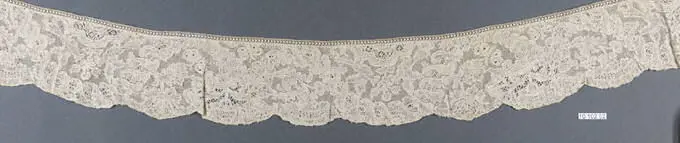
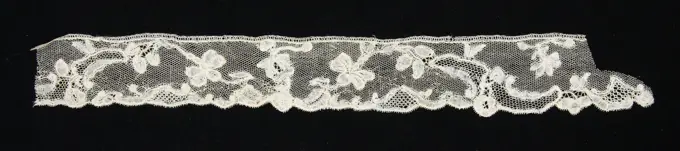
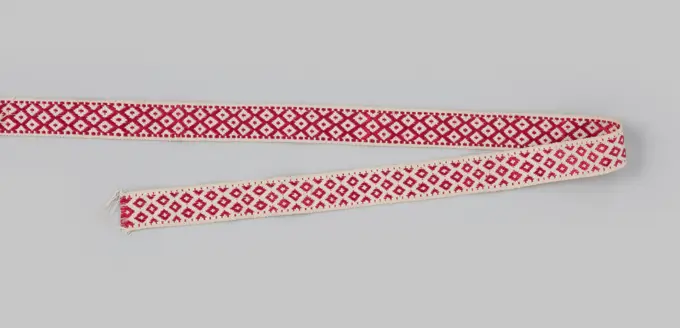
A collection of intricate lace strips featuring floral patterns and natural motifs, showcasing delicate craftsmanship in various materials.

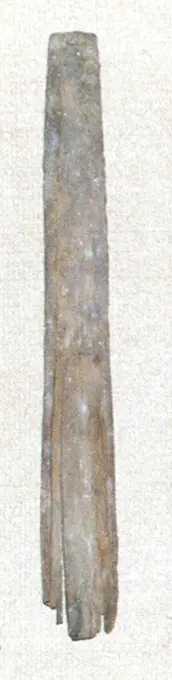
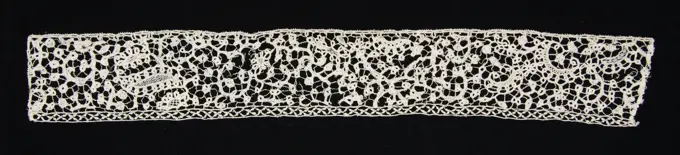
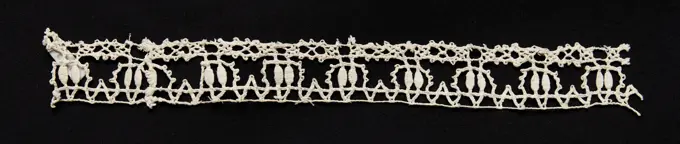
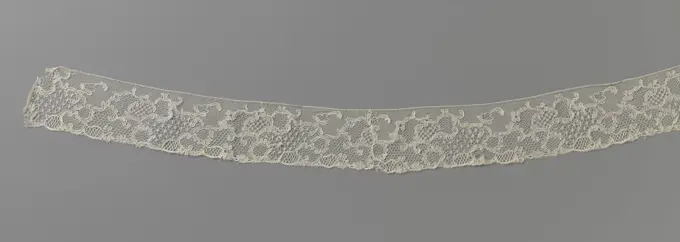
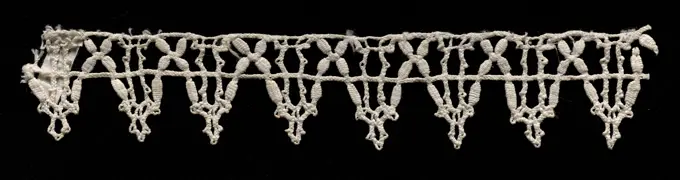
Strip bobbin with V-shapes made of narrow decorative straps with rectangular shape strokes, anonymous, c. 1700  Strip of natural-colored bobbin, binche side. The repeating pattern consists of Wirwar made of small motifs made with different decorative grounds. The outlets of this are partially emphasized with narrow decorative straps with rectangles, made in shape. On the center line, the decorative straps make a V-shape at a regular distance from each other, which is cut over by two hooking C-shapes. The motifs are connected by an irregular decorative land, a snowflake land. The top and bottom of the strip are straight finished, with the bottom with picots. The short sides are finished with a zoompje. Southern Netherlands linen (material) Bobbi Lace / Binche Lace
Strip bobbin with V-shapes made of narrow decorative straps with rectangular shape strokes, anonymous, c. 1700 Strip of natural-colored bobbin, binche side. The repeating pattern consists of Wirwar made of small motifs made with different decorative grounds. The outlets of this are partially emphasized with narrow decorative straps with rectangles, made in shape. On the center line, the decorative straps make a V-shape at a regular distance from each other, which is cut over by two hooking C-shapes. The motifs are connected by an irregular decorative land, a snowflake land. The top and bottom of the strip are straight finished, with the bottom with picots. The short sides are finished with a zoompje. Southern Netherlands linen (material) Bobbi Lace / Binche Lace
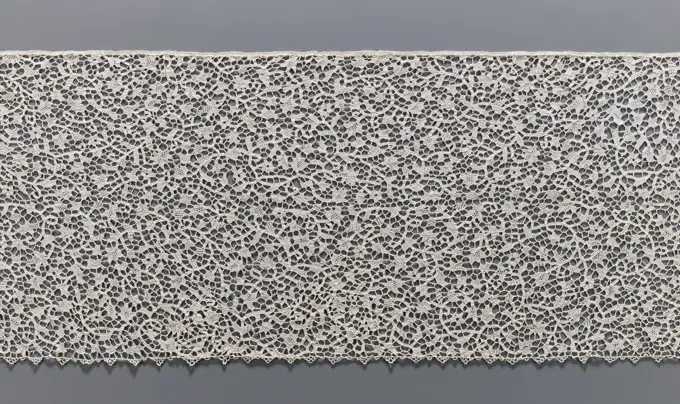
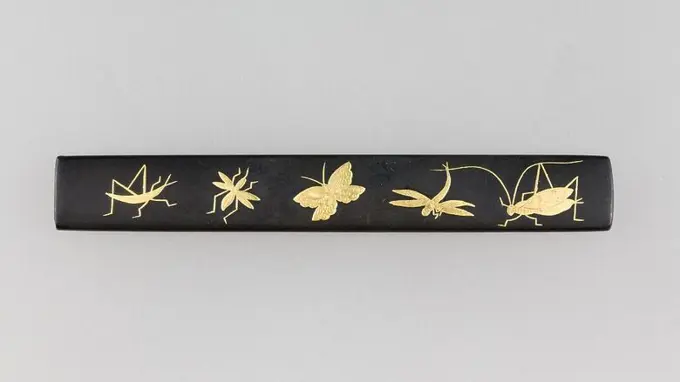
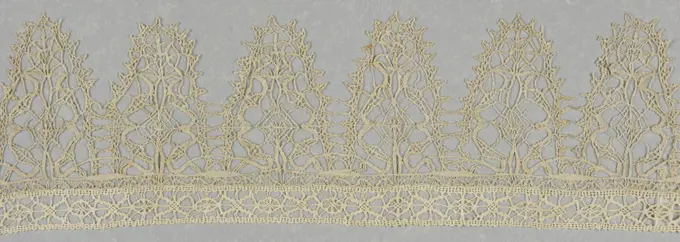
Strip bobbin with a Margriet flanked by tulips, anonymous, c. 1600 - c. 1699 Strip of natural -colored bobbin, Old Flemish side. The pattern consists of a repeating symmetrical composition of a Margriet on a straight stem, which is flanked on either side by a tulip on a slightly wavy stem with elongated volute leaves. The flowers hang down from the upper edge and always fill one semicircular shallow shell. A sparingly used irregular mesh soil connects the motifs. The motifs are made in linen battle with openwork edges. The scoops are picoted. The top is finished with a straight edge. Flanders linen (material) bobbin lace / old Flemish lace Strip of natural -colored bobbin, Old Flemish side. The pattern consists of a repeating symmetrical composition of a Margriet on a straight stem, which is flanked on either side by a tulip on a slightly wavy stem with elongated volute leaves. The flowers hang down from the upper edge and always fill one semicircular shallow shell. A sparingly used irBorder, Medium: linen Technique: bobbin lace, Binche style with Binche ground, Binche-style border showing floral sprays and ribbons in a serpentine pattern., Belgium, mid-18th century, lace, BorderBorder, Medium: Technique: needle lace, Needle lace edge, floral pattern; late 18th century Alencon, late 18th century, lace, BorderBody of a wooden knife sheath ca. 7th-9th century A.D. Alanic. Body of a wooden knife sheath 327564Needle. UnknownFrontlet of gold leaf 4th century B.C. Cypriot. Frontlet of gold leaf. Cypriot. 4th century B.C.. Gold. Classical. Gold and SilverTextile (France); silk, metallic thread; Anonymous bequest in memory of Albert and Rebecca Elsberg; 1938-82-42-dFragment (India); cottonKohl Stick ca. 1550-1458 B.C. New Kingdom. Kohl Stick. ca. 1550-1458 B.C.. Wood. New Kingdom. From Egypt, Upper Egypt, Thebes, Asasif, Courtyard CC 41, Pit 3, Burial D 1, In dish 16.10.438, MMA excavations, 1915-16. Dynasty 18, earlyTrimming, Medium: silk Technique: macrame, France, 1750-99, woven textiles, TrimmingLace, 17th century, maker unknown. Gift of Mrs G. Acland Allen, 1955.Border, Medium: Technique: bobbin lace (Valenciennes ground and Mechlin outline cord), Slightly scalloped border of Mechlin lace with the round ground of Valenciennes lace. Design of detached scrolls with flowers and leaves, and a border formed by flowers., Belgium, 18th century, lace, BorderFragment; metallic, silk; Bequest of Richard Cranch Greenleaf in memory of his mother, Adeline Emma Greenleaf; 1962-52-18-dHat -slip (barbe) from Mechelse side, c. 1775 - c. 1800 Barbe of Mechelse side with a spray pattern of three different flowers. The edges are trimmed with picots. Belgium . Mechlin (lace) Barbe of Mechelse side with a spray pattern of three different flowers. The edges are trimmed with picots. Belgium . Mechlin (lace)Velvet ribbon, sewn into two loops, light blue, c. 1900 - c. 1950 Velvet ribbon, sewn into three loops, light blue. Nijmegenfrance velvet (fabric weave) Velvet ribbon, sewn into three loops, light blue. Nijmegenfrance velvet (fabric weave)Plain Weave Fragment, Basket Weave Fragment Coptic. Plain Weave Fragment, Basket Weave Fragment, 5th-7th century C.E. Linen, 64.114.241a: 3 1/4 × 4 1/4 in. (8.3 × 10.8 cm).   Egyptian, Classical, Ancient Near Eastern Art 5th-7th century C.E.Piece 18th century possibly French. Piece 223949Engraved representation of Daruma; Signed joi.Lace;  XVII/18th century (1650-00-00-1710-00-00);Rectangular cashmere scarf, with unadorned red middle part, around which a border of loose, half volutes with flowers and against the ends two large patterns, anonymous, c. 1850 - c. 1875 Rectangular cashmere scarf, with unadorned red middle part, around which a border of loose, half volutes with flowers and two large patterns of four against the ends. Against the edge a narrow band with red flowers and green leaves against a white background. Short red frills on the two ends.  whole: Wool embroidering / twill Rectangular cashmere scarf, with unadorned red middle part, around which a border of loose, half volutes with flowers and two large patterns of four against the ends. Against the edge a narrow band with red flowers and green leaves against a white background. Short red frills on the two ends.  whole: Wool embroidering / twillPair of Lappets (Joined) Made 1875-1900 France. Linen, needle lace of a type known as Point d'Argentan with a whipped mesh ground .Strip with corner 16th century Italian. Strip with corner 212300Trimming (France); 1909-2-186Cuff of linen with open worked crown with irregularly serrated edge and trimmed with scalloped bobbin, anonymous, c. 1910 - c. 1920 Cuff of linen with openwork crown with irregularly serrated edge and trimmed with scalloped strip of bobbin. Equipped with button closure with three buttons, one of which is missing and fested buttonholes. The judge.  linen (material) embroidering / bobbin lace Cuff of linen with openwork crown with irregularly serrated edge and trimmed with scalloped strip of bobbin. Equipped with button closure with three buttons, one of which is missing and fested buttonholes. The judge.  linen (material) embroidering / bobbin laceValances (China); tempera on pineapple fiber, silk fringeDesign for a Presentation Sword ca. 1860-80 possibly French. Design for a Presentation Sword. possibly French. ca. 1860-80. Ink, watercolor, paper. Works on Paper-DrawingsTrimming (Italy); silkMedical Instrument with Paddle Finial. UnknownSub -sleek of mechanical tulle decorated with tracing in the form of four -leaf flowers, anonymous, c. 1800 - c. 1900 Sub -sleek of mechanical tulle decorated with thumping in the form of four -leaf flowers. West-Europa whole: Sub -sleek of mechanical tulle decorated with thumping in the form of four -leaf flowers. West-Europa whole:Band (France); linen; Repeat: 2 and 3/4 inches; Bequest of Richard Cranch Greenleaf in memory of his mother, Adeline Emma Greenleaf; 1962-50-39Trimming, Medium: silk Technique: woven, Trimming woven in a yellow checkerboard design., Italy, 18th century, trimmings, TrimmingStrip -Border 18th century Flemish, Mechlin. Border 218801Galloon 17th-18th century probably European. Galloon 213876Medieval ornamentBobbin Lace (Needlepoint Design) Insertion, second half of 16th century. Italy, Genoa, second half of 16th century. Lace, bobbin; average: 2.6 x 25.4 cm (1 x 10 in.).Textile (France); Company: Oberkampf & Cie. (France); Warp x Weft (a): 80 × 86 cm (31 1/2 × 33 7/8 in.) Warp x Weft (b): 11 × 78 cm (4 5/16 × 30 11/16 in.); Purchase, Au Panier Fleuri Fund; 1986-84-3-a,bFringe 18th century probably European. Fringe 213654Lace, 1725-1750, maker unknown. Gift of Mrs G. Acland Allen, 1955.Textile, Medium: silk Technique: chenille embroidery on satin weave, Design of alternating pink flower and green leaf worked in chenille on a yellow ground., France, late 18th century, embroidery & stitching, TextileFolding fan and case, Painted paper leaf with applied sequins, carved and pierced bone sticks, Folding fan with carved and pierced bone sticks. Paper leaf is painted in gouache on the obverse with swags in blue, green and pink with gilt and sequins. The reverse is painted with small sprays of flowers., France, 1790-1800, costume & accessories, Folding fan and caseSilk ribbon with white stock on which wine red windows, anonymous, c. 1700 - c. 1800 Silk ribbon with white stock on which wine red windows. According to earlier description, possibly a long -edge or longcro, used as the Omboard of the Hindeloper Wentke. Netherlands (possibly) whole: Silk Silk ribbon with white stock on which wine red windows. According to earlier description, possibly a long -edge or longcro, used as the Omboard of the Hindeloper Wentke. Netherlands (possibly) whole: SilkGalloon ca. 1580 Italian. Galloon. Italian. ca. 1580. Metal thread. Textiles-TrimmingsPiece 18th-19th century Japan. Piece 66824Realistic gold glitter paint brush.Funerary Diadem; Italy; 4th century B.C; Gilt silver, bronze; 24.6 cm (9 11,16 in.)Trimming (France); silkBarbe (one of three pieces) 18th century French. Barbe (one of three pieces) 218800Runner, composed of three excerpts with different designs ,, 1600 - 1620 Loper, made from three sewn together and silver threaded intermediate sinks and edges from countless fragments composite velor ciselé with two different designs. Design midfield: flower branches placed in rows, flanked by slightly different flower branches, above which similarly somewhat different flower branches; Between the rows down tends in riding placed alternately alternately flower branches in brown/purple on golden yellow stock. Dessin side pieces similar but slightly larger. Lining of pink linen. Running lining written: A1-3/6 550,- and 47579b. Painted paper on which the letters ab. State: Midfield reasonable; Side pieces bad. France silk Loper, made from three sewn together and silver threaded intermediate sinks and edges from countless fragments composite velor ciselé with two different designs. Design midfield: flower branches placed in rows, flanked by slightly different flower branches, above which sBorder, Technique: bobbin lace, Bobbin lace border, blossom repeat; early 19th century Maline, early 19th century, lace, BorderFan case, Medium: silk, metallic yarns Technique: embroidered in satin and stem stitches on satin weave, Fan case. Silk embroidery with silk and metallic threads in design of flowers, deer and birds. The other side, flowers and birds. Edges bound with blue and white braid. Yellow silk cord with knots at top., China, 19th century, costume & accessories, Fan caseStrip bobbin with rocailles, anonymous, c. 1900 - c. 1949 Strip of natural -colored bobbin: Lille side. Neo-Rokoko pattern of rocailles or cartouches formed by whimsical feathered leaves and some flowers. The rocailles and cartouches are against each other and fill most of the strip, they are filled with different decorative lands, including rose grounds and coarser grid fillings, including a grid works decorated with form strokes. The stacked motifs are connected to each other on the top of the strip by a tuler land. The top of the strip is straight finished. The silly scrap edge along the bottom is finished with picots. Tondon linen (material) bobbin lace / Lille lace Strip of natural -colored bobbin: Lille side. Neo-Rokoko pattern of rocailles or cartouches formed by whimsical feathered leaves and some flowers. The rocailles and cartouches are against each other and fill most of the strip, they are filled with different decorative lands, including rose grounds and coarser grid filliGold diadem. Culture: Cypriot. Dimensions: Other: 6 3/4 in. (17.1 cm). Date: 4th century B.C..The gold foil of which the diadem is made indicates that its use was exclusively funerary. The repoussé decoration was evidently applied to a larger sheet of foil from which the diadem was cut. Museum: Metropolitan Museum of Art, New York, USA.Strip 16th century Italian. Strip 212284Knife Handle (Kozuka) 1809 Japanese A kozuka is a handle of a by-knife that is part of a sword mounting. It is kept in a slot on the reverse of a katana scabbard, often with a matching kgai (hairdressing tool).. Knife Handle (Kozuka). Japanese. 1809. Copper-silver alloy (shibuichi), copper-gold alloy (shakud), gold, silver. Sword Furniture-KozukaLength of Textile, 1723-1774. France, 18th century, Period of Louis XV (1723-1774). Brocade, silk; overall: 6.4 x 53 cm (2 1/2 x 20 7/8 in.).Fragment; linenShoulder Cloth(Limar)Rand decoration with pattern of braided ornaments, Reinier Willem Petrus de Vries (1874-1953), 1884 - 1952 print   paper  interlace ~ ornamentPiece 17th century Japan. Piece 71124Horse bit cheekpiece in form of a snake's head ca. 7th century B.C. Scythian. Horse bit cheekpiece in form of a snake's head 324820Orphrey Band (Germany); silk, linen, metallicRibbon (USA); silk, cottonVector word Thailand. Hand-painted art design. Illustration for t -shirt design, for coloring, tattoo and other decorationsBorder, Block-printed on handmade paper, This piece is most likely one band of a border design probably originally printed in five repeat bands for the width of the wallcovering. Each band consists of three strips of varied patterns: a continuous chevron band above the wider center band containing stylized palmettes, triangles, and narrow vertical stripes, edged at the bottom by a wave-and-dart pattern; printed in yellow, orange and white on black., H# 610, France, 1800-1820, Wallcoverings, BorderVeld van zeven tegels.Field of 7 tiles (1 x 7) each with a figure or animal painted in blue and purple.Textile Swatches Onondaga Silk Company, Inc. (1925-1981). Textile Swatches, 1948-1959. 72 silk; 28 metal, a-h: 11 x 3 1/2 in. (27.9 x 8.9 cm).    1948-1959Textile (France); silkTrimming Made 1850-1900 China. White gauze, embroidered strips . Han-ChineseTrimming (France); silkValance ca. 1670-1700 British. Valance. British. ca. 1670-1700. Cotton and linen twill embroidered with crewel wool. Made in EnglandBorder Fragment Made 1775-1825 France. Silk, satin weave; embroidered .Border Made 1675-1700 Venice. Linen, raised needle lace .Border, Medium: linen Technique: needle lace, Small-scale design of short curving branches with flowers and sprigs. Pattern has varying degrees of raised work with some areas showing graduated padding covered with buttonhole stitches. Crescent shapes in the design are heavily decorated with picot frills. Tiny padded and picoted rings are sprinkled throughout the design. Commonly referred to as Rose Point., Italy, 17th-18th century, lace, BorderBorder (England); block-printed; 84 x 10 cm (33 1/16 x 3 15/16 in.)Trimming, Medium: silk Technique: woven, Trimming fragment in a design of chevrons in shades of red alternating with chevrons in yellow and white., France, 19th century, trimmings, TrimmingFragment of an aurifries, with embroidery of silk and gold board.. fragment of an aurifries, with embroidery. The pattern has a vaulted ground of gold thread on which angels with shields, on which a thorn crown, spood, a chalice with host, a trumpet, a bucket, a short sword, a cross, a bishop's mushroom and a hat. Two fragments with Invnr belong to the fragment. BK-NM-4165-D-2 and BK-NM-4165-D-3.Bands, Material: cotton, wool Technique: tapestry weave, slit and single interlock, A) Narrow band patterned by birds and bird heads in yellow, ivory and blue. Outlined in black on a red background. B) Narrow band patterned by foxes, a bird and geometric shapes in yellow, ivory and blue, outlined in black on a red background., Peru, 800-1000, woven textiles, Band, BandRealistic gold glitter paint brush.Trimming (Italy); silkBand, Medium: linen Technique: bobbin lace, Brussels style, Pattern of floral garlands., Belgium, mid-18th century, lace, BandStag and Flower Pattern Frame (side frame section). Theodore Roussel; French, worked in England, 1847-1926. Date: 1897-1899. Dimensions: 108 × 503 mm (image/plate, trimmed within plate mark); 121 × 503 (sheet, with signature tab). Etching and soft ground in yellow-brown metallic and black on ivory laid paper. Origin: England. Museum: The Chicago Art Institute, Chicago, USA.Fringe early 19th century French. Fringe 225129Collar 1700-1941 American. Collar. American. 1700-1941. cottonKnife Handle (Kozuka). Culture: Japanese. Dimensions: L. 3 13/16 in. (9.7 cm); W. 9/16 in. (1.4 cm); thickness 3/16 in. (0.5 cm); Wt. 1 oz. (28.3 g). Date: mid-17th century. Museum: Metropolitan Museum of Art, New York, USA.Border, Medium: linen Technique: bobbin lace, continuous braid-like, Border of six triangular pendants filled by an abstract pattern., Belgium, early 17th century, lace, BorderStrip of black machine side with a underside of J-shaped feathered leaves with flour, anonymous, c. 1885 - c. 1895 Strip of black machine side: Machinal Chantilly side. The repeating pattern consists of eighteen rows of the branches and a row of hanging feathered leaves with one flower along the bottom edge. The feathered leaves hang down like a J, the flower is located halfway through the stick of the J and cuts the leaves. The bends of the J-shaped leaves form the scrap edge along the underside of the strip, which is finished with picots. The top of the strip is straight finished. The short sides are more or less sloped. Calais cotton (textile) Strip of black machine side: Machinal Chantilly side. The repeating pattern consists of eighteen rows of the branches and a row of hanging feathered leaves with one flower along the bottom edge. The feathered leaves hang down like a J, the flower is located halfway through the stick of the J and cuts the leaves. The bends of the J-shaped leaveBobbin Lace (Needlepoint Design) Insertion, 17th century. Italy, Genoa, 17th century. Lace, bobbin; average: 6.1 x 12.8 cm (2 3/8 x 5 1/16 in.).Fragment of the index belt; Manufaktura Aleksander Unruga (Kobyłka; Pasów Factory; 1781-1787); 1781-1784 (1781-00-00-1784-00-00);Schelkoord with wool embroidery ,, c. 1850 - c. 1875 Schelkoord with woolen embroidery. On a white woolen canvas there is a rising branch with flowers in nuanced purple, rose, red and blue and leaves in nuanced moss green and gray -green. The lining is made of green ponge side. The cord has a handle of punched dark patinated copper, with two horns of abundance, from which a grape vock comes out. The actual handle is missing. Netherlands velvet (fabric weave). silk. copper (metal) embroidering Schelkoord with woolen embroidery. On a white woolen canvas there is a rising branch with flowers in nuanced purple, rose, red and blue and leaves in nuanced moss green and gray -green. The lining is made of green ponge side. The cord has a handle of punched dark patinated copper, with two horns of abundance, from which a grape vock comes out. The actual handle is missing. Netherlands velvet (fabric weave). silk. copper (metal) embroideringSchelkoord met wollen borduursel.Chalkboard with woolen embroidery. On a yellowed grid, one has replaced candelabre motif. The cord is lined with a fletsrode taft side and is finished with a rose of rose and white taf. The grip consists of a dark patinated, partly gold-plated bronze half-arch of two acanthus drinks, which spring from the neck of a lion head and closed by a gold-plated rosette.Border, Block-printed, flocked, gilt, Red flock pattern with shaded highlights imitating tufting, with gilt and yellow buttons. Gilt, yellow and brown lines form both borders., France, 1800-1850, Wallcoverings, BorderBrocaded Silk Ribbon, 1800s. France, 19th century. Brocade, silk; overall: 217.7 x 18.1 cm (85 11/16 x 7 1/8 in.).Fragment of a KohltubeBorder (England); machine-printed paper; 95 x 12 cm (37 3/8 x 4 3/4 in.)Molding; wood, carved; 1917-12-19Galloon 18th century French. Galloon 214012Oranjelint ,, 1750 - 1775 ribbon (material) Ribbon with the word Allianz five times. The words separated from each other by ornaments in which Orange apples are incorporated (including a seven arrows consisting of 'sun'). Netherlands silk printingGalloon 18th century French. Galloon 225024Fragment; silk