Ornamental Lace Strips

A collection of intricate lace strips featuring floral patterns and natural motifs, showcasing delicate craftsmanship in various materials.

Strip bobbin with V-shapes made of narrow decorative straps with rectangular shape strokes, anonymous, c. 1700  Strip of natural-colored bobbin, binche side. The repeating pattern consists of Wirwar made of small motifs made with different decorative grounds. The outlets of this are partially emphasized with narrow decorative straps with rectangles, made in shape. On the center line, the decorative straps make a V-shape at a regular distance from each other, which is cut over by two hooking C-shapes. The motifs are connected by an irregular decorative land, a snowflake land. The top and bottom of the strip are straight finished, with the bottom with picots. The short sides are finished with a zoompje. Southern Netherlands linen (material) Bobbi Lace / Binche Lace
Strip bobbin with V-shapes made of narrow decorative straps with rectangular shape strokes, anonymous, c. 1700 Strip of natural-colored bobbin, binche side. The repeating pattern consists of Wirwar made of small motifs made with different decorative grounds. The outlets of this are partially emphasized with narrow decorative straps with rectangles, made in shape. On the center line, the decorative straps make a V-shape at a regular distance from each other, which is cut over by two hooking C-shapes. The motifs are connected by an irregular decorative land, a snowflake land. The top and bottom of the strip are straight finished, with the bottom with picots. The short sides are finished with a zoompje. Southern Netherlands linen (material) Bobbi Lace / Binche Lace
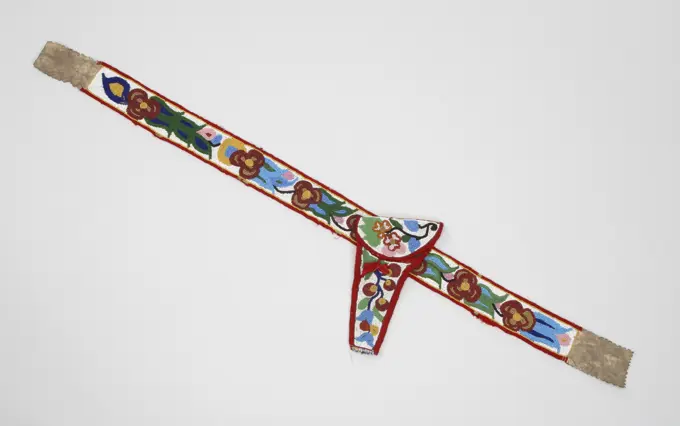
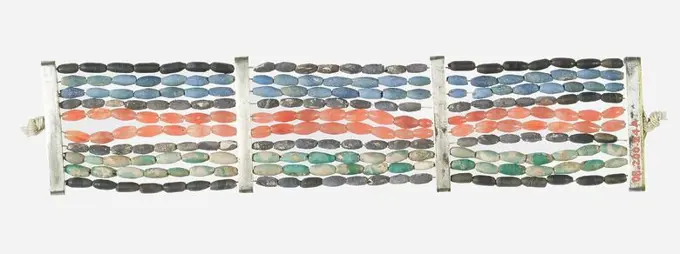
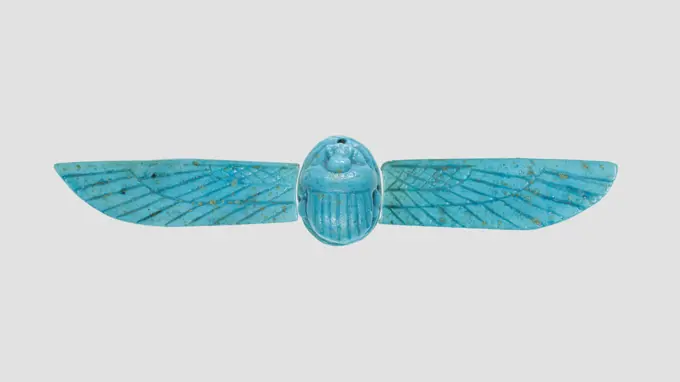
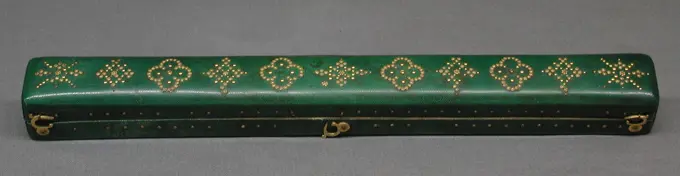
Piece 17th century Japan. Piece 71763Barbed Point 3rd century B.C.-A.D. 2nd century Vicús. Barbed Point. Vicús. 3rd century B.C.-A.D. 2nd century. Copper. Peru. Metal-ImplementsBelt and holster -Trimming (France); silkHarpoon 1500-500 B.C. India. Harpoon. India. 1500-500 B.C.. Copper. MetalworkPiece 15th century Japan. Piece 71037Chef De Piece (France); Company: Gorgerat Frères et Cie.; cotton; Warp: 14.5 cm (5 1/4 in.). Weft: 90.5 cm (35 1/2 in.). Right selvedge present. Pattern: Width of full repeat (two pattern units): 47 cm (18 1/2 in.)Textile Fragment 5th century. Textile Fragment 443594Pendant roller with bamboo and orchids on a rock. In wooden box.Glass mosaic inlay. Culture: Egyptian, Roman. Dimensions: Other: 2 1/8 in. (5.4 cm). Date: late 1st century B.C.-early 1st century A.D..Translucent light blue and opaque white.Thin narrow strip.Continuous guilloche or wave pattern.Broken and repaired; upper side ground and polished; pitted surface bubbles, dulling and faint weathering on edges and backThe inlay is made from two sections cut from the same cane of mosaic glass, with decoration appearing in mirror image.Bluish backed on colorless, maeander pattern in white. Museum: Metropolitan Museum of Art, New York, USA.Border (France); block-printed on machine-made paper; a) Overall: 48 x 7 cm (18 7/8 x 2 3/4 in.) b) Overall: 19 x 7 cm (7 1/2 x 2 3/4 in.) c) Overall: 38.8 x 7 cm (15 1/4 x 2 3/4 in.)Fringe (Greece); silkTrimming (France); silkA sash from the funeral of Adam Mickiewicz in Krakow on July 4, 1890Pair of bracelets. Dimensions: l. 13.5 cm (5 5/16 in). Dynasty: Dynasty 12, late-early 13. Date: ca. 1850-1640 B.C.. Museum: Metropolitan Museum of Art, New York, USA.Sotck exchange. Mid -19th. GAL1960.64.20Pen and Ink Box (lid), 1800s. Iran, Qajar period (1779-1925). Lacquer over papier maché; overall: 3.9 x 22.3 x 2.7 cm (1 9/16 x 8 3/4 x 1 1/16 in.).Winged Scarab Amulet 664-332 B.C. Late Period This winged scarab consists of three pieces: an actual scarab beetle and two separately made wings. The wings are not those of a beetle, but those of a bird, as is apparent by their shape and the indication of individual feathers. Each piece features several small holes that were used to fasten the winged scarab to the wrappings of a mummy. Winged scarabs, meant to guarantee the rebirth of the deceased, were very popular funerary amulets.. Winged Scarab Amulet. 664-332 B.C.. Faience. Late Period. From EgyptStrip of an antispendium, with embroidery, c. 1500 - c. 1600 Strip of a red velvet antpendium, with majuskels, around which a richly embroidered edge of gold and silver thread, silk and pearls with the text: Jubilate deo Omnis Terra. The strip is sewn into a long strip with BK-NM-8707 and BK-NM-8709.  velvet (fabric weave). silk. silver thread. pearl embroidering Strip of a red velvet antpendium, with majuskels, around which a richly embroidered edge of gold and silver thread, silk and pearls with the text: Jubilate deo Omnis Terra. The strip is sewn into a long strip with BK-NM-8707 and BK-NM-8709.  velvet (fabric weave). silk. silver thread. pearl embroideringFan case French mid-18th century This precious fan and its protective case may have been a gift to King Ferdinand VI of Spain (1713-1759) and his wife, Maria Magdalena Barbara, Infanta of Portugal (1711-1758), whose conjoined coat of arms is worked into the lace and its mount.Piece 18th century China. Piece 71543A sash from the funeral of Adam Mickiewicz in Krakow on July 4, 1890A sash from the funeral of Adam Mickiewicz in Krakow on July 4, 1890