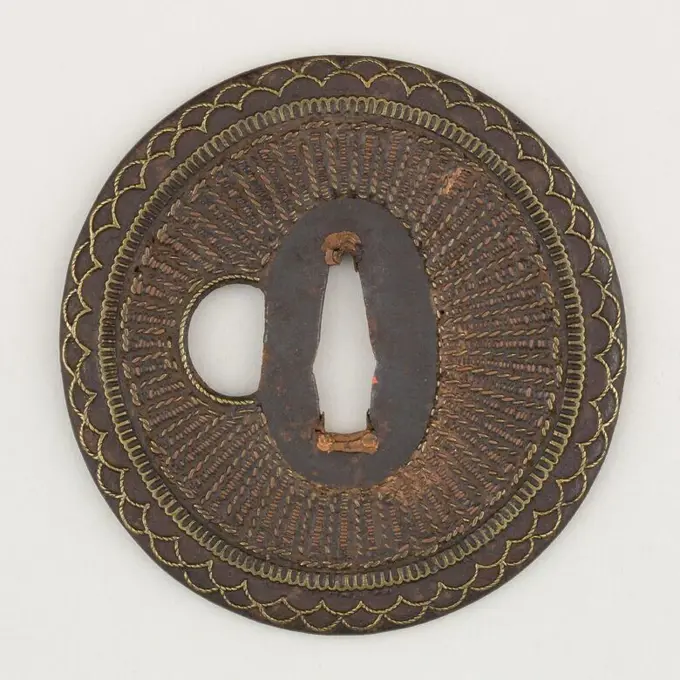
Ornamental Metalwork

A collection of decorative metal objects including bit bosses, mirrors, and decorative plates. Each piece showcases intricate patterns and cultural motifs, highlighting craftsmanship.
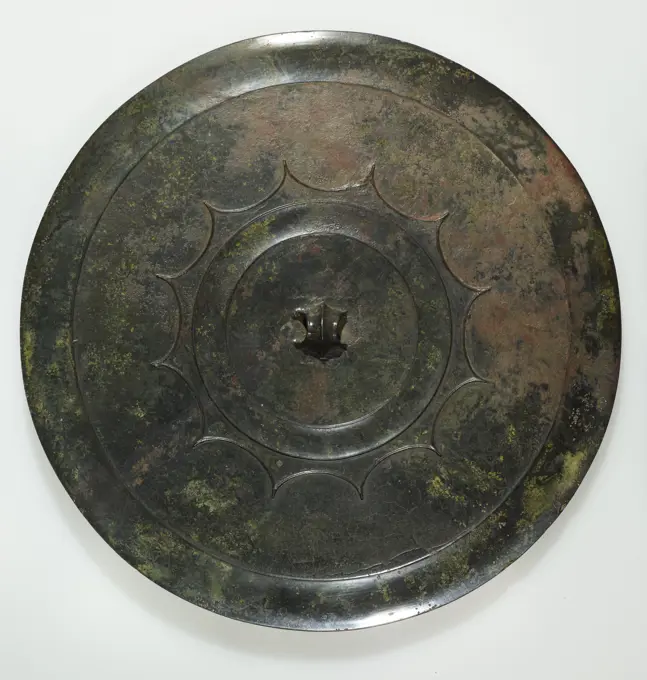
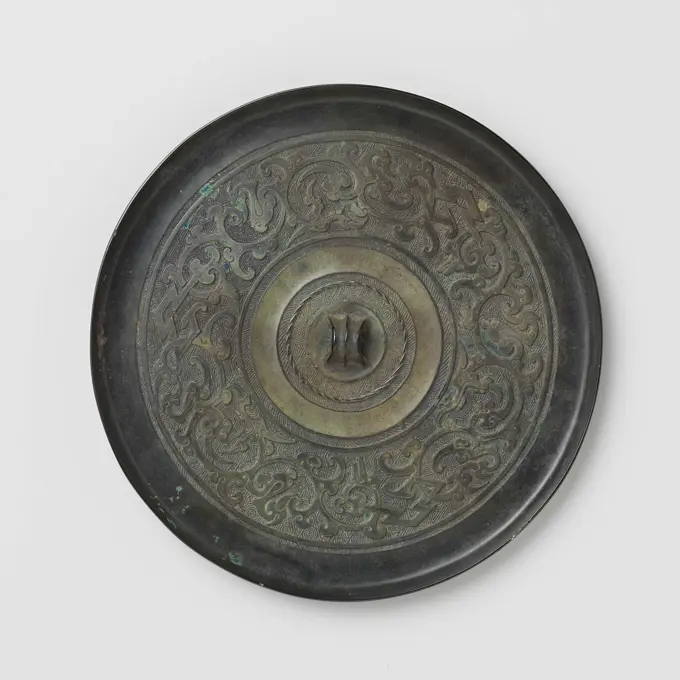
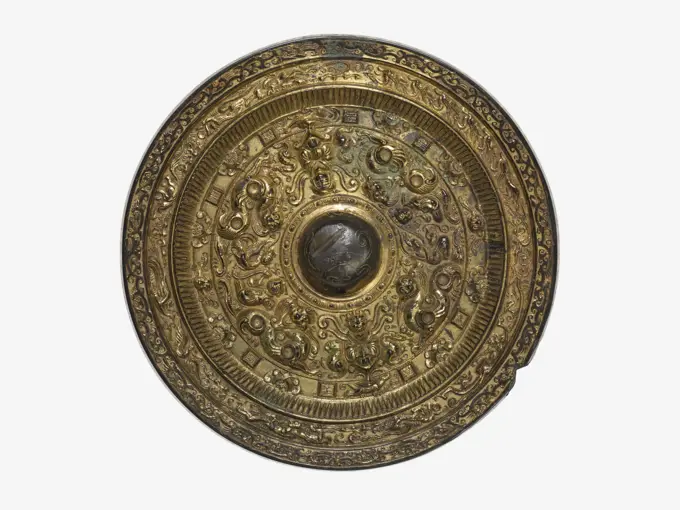
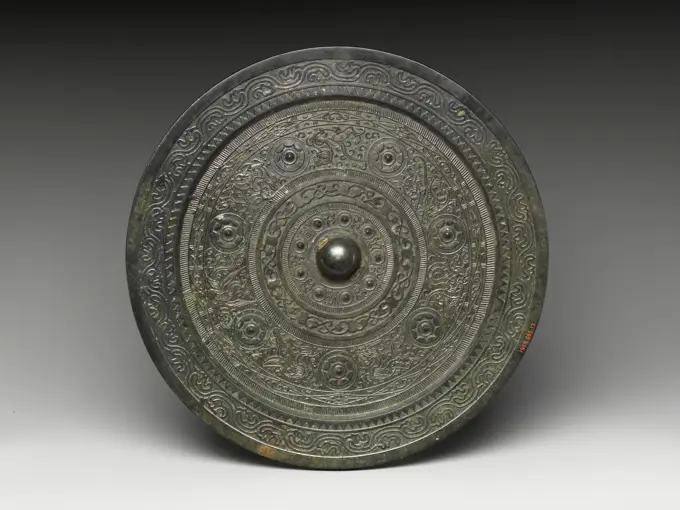
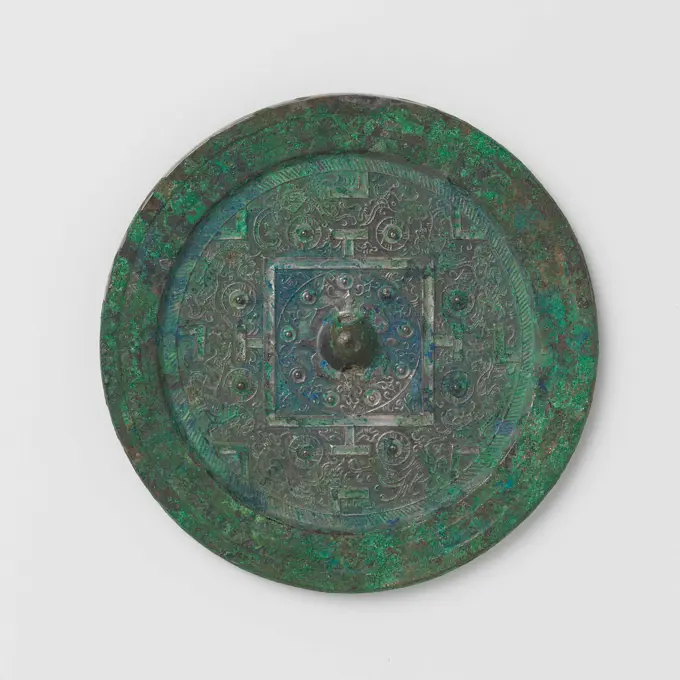
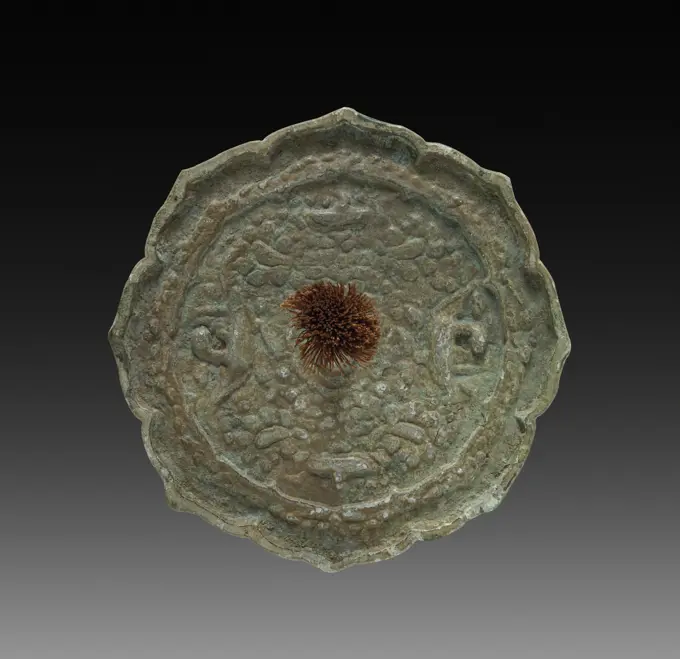
Mirror with abstract decor, 4th century BCE, 8 3/4 in. (22.23 cm) (diameter), Bronze, China, 4th century BCE
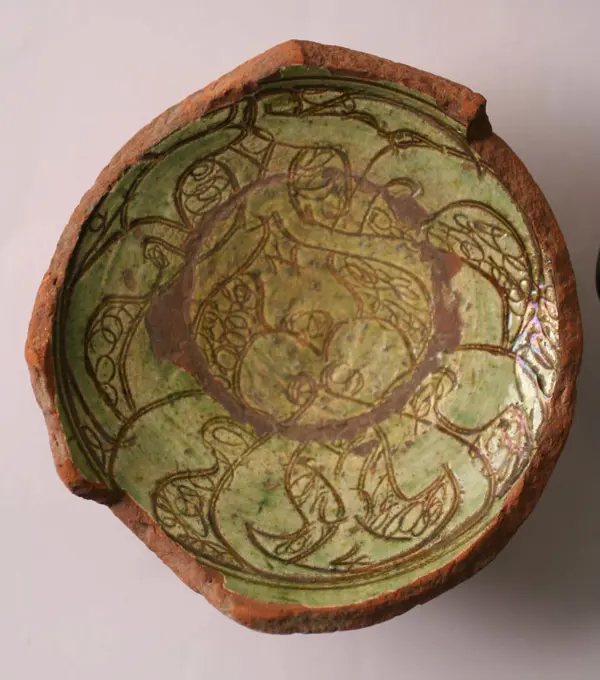
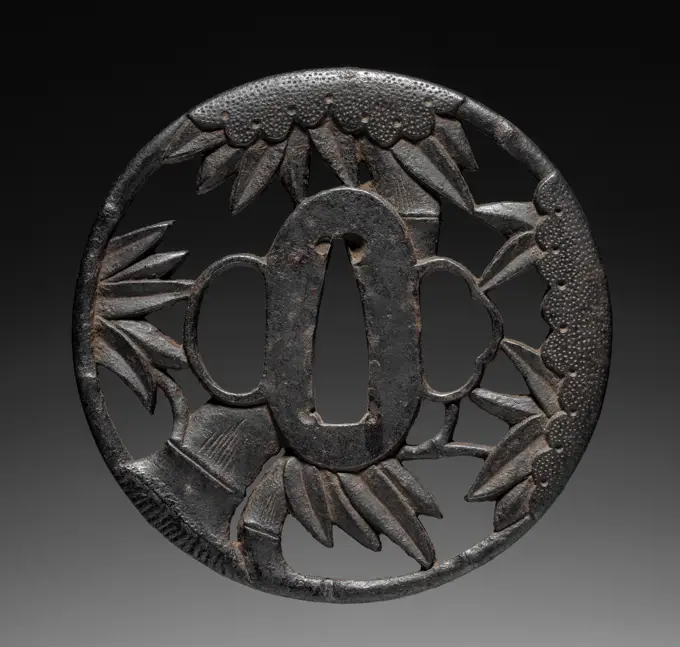
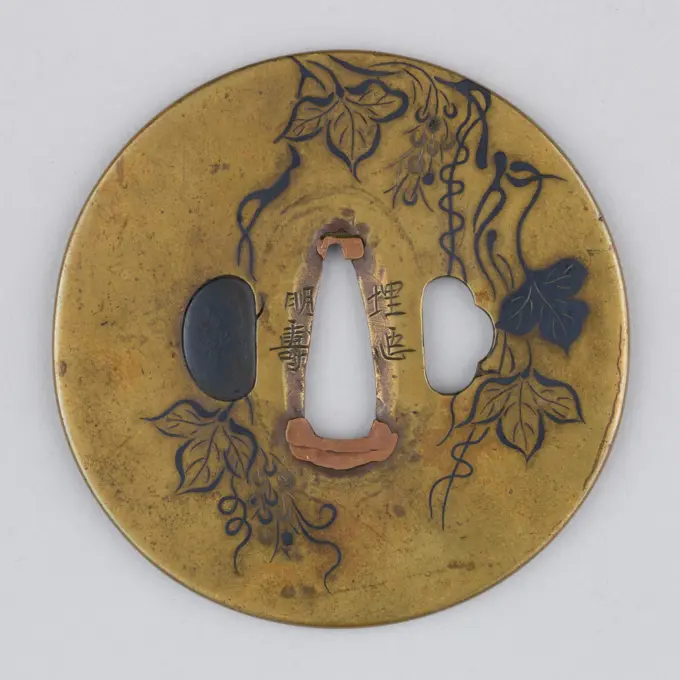
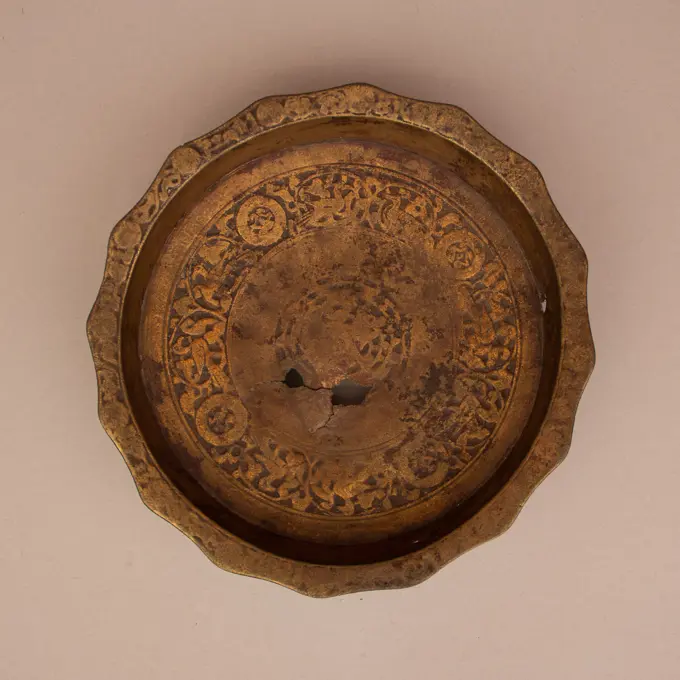
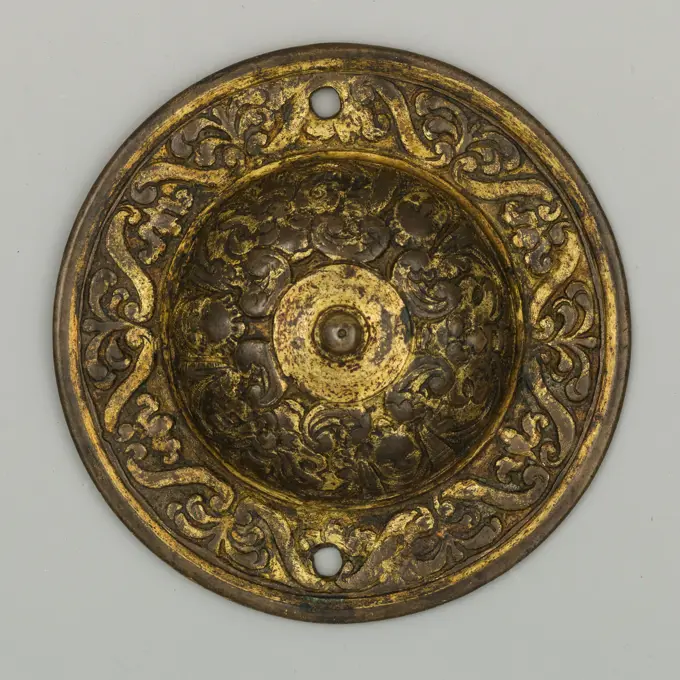
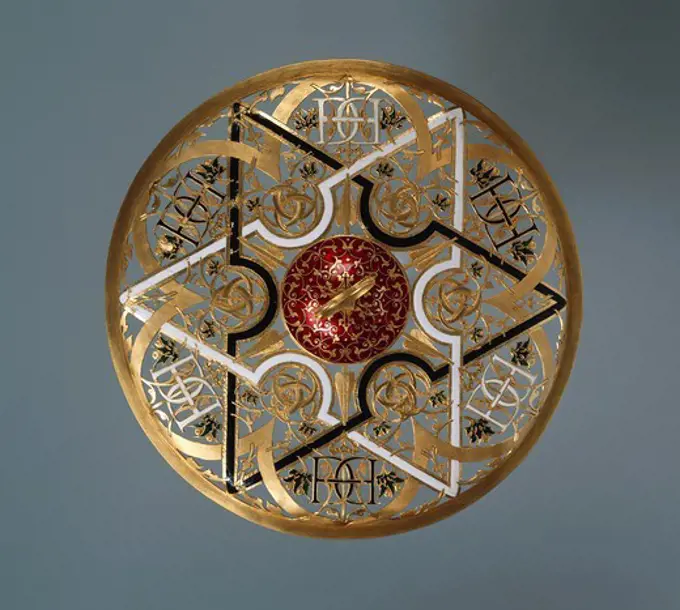
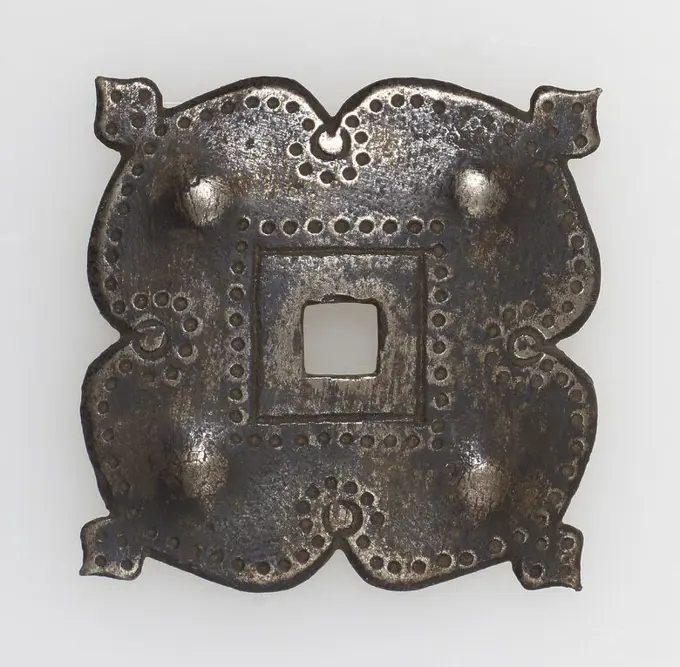
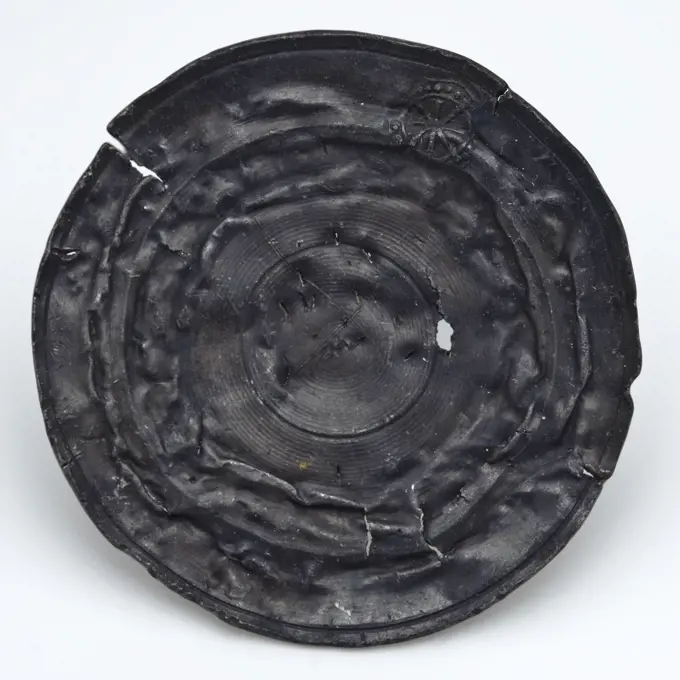
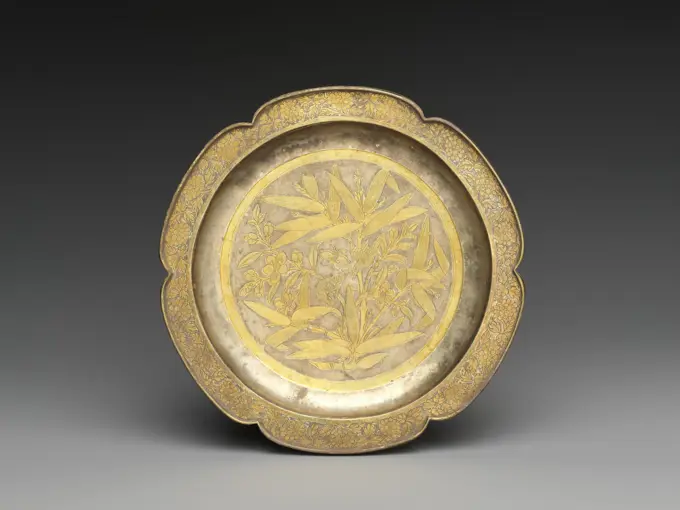
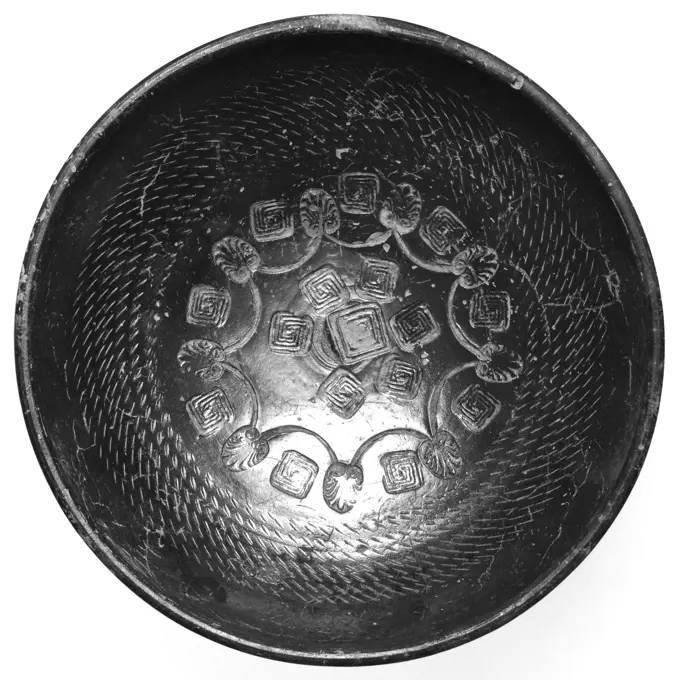
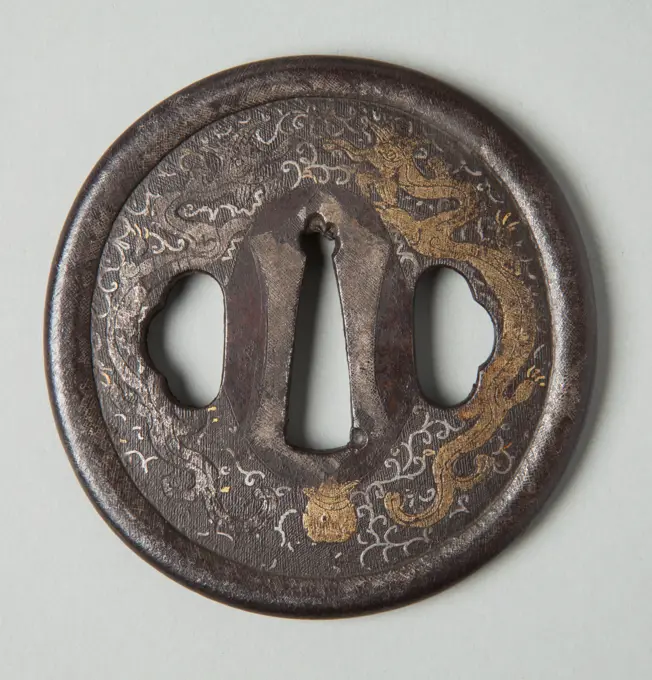
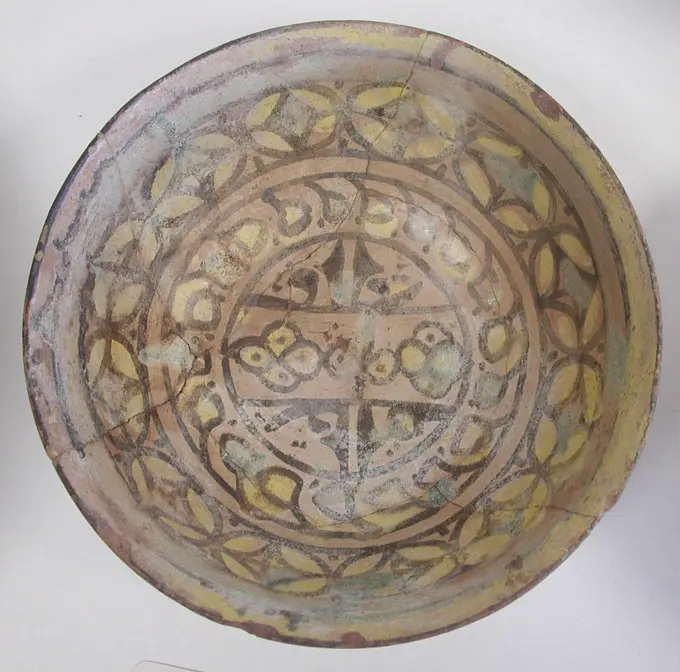
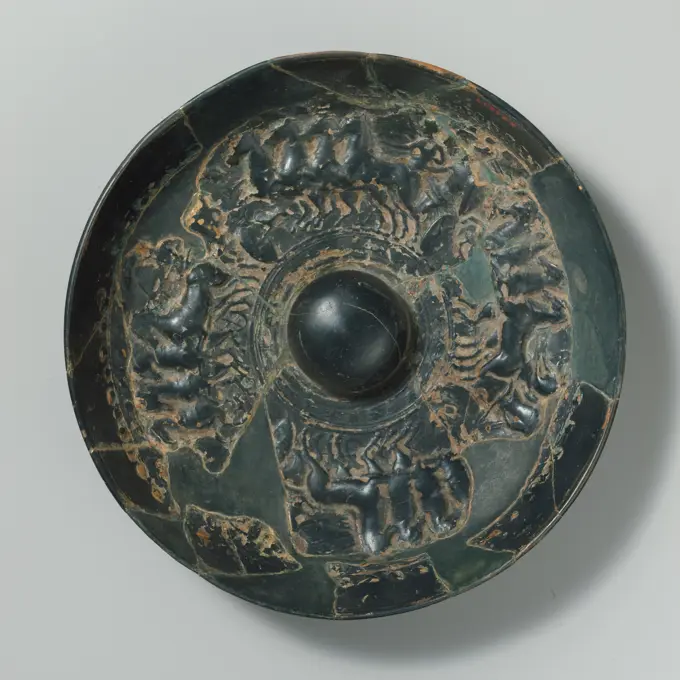
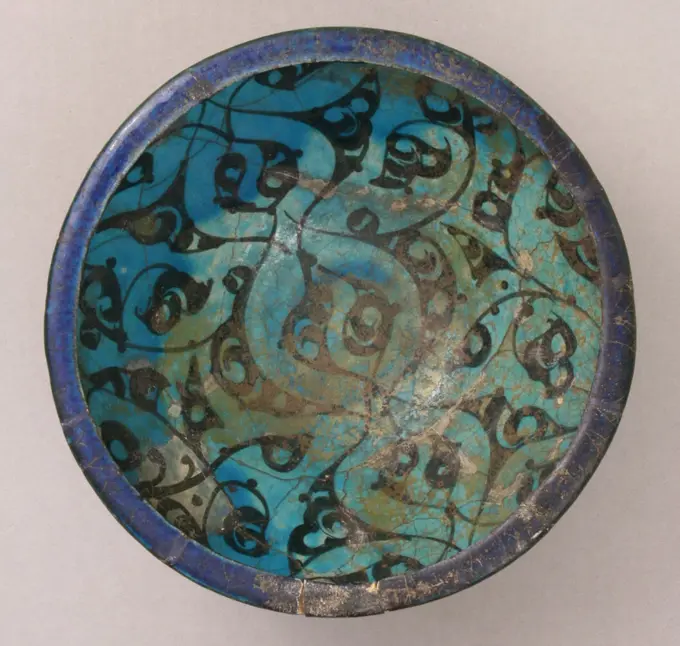
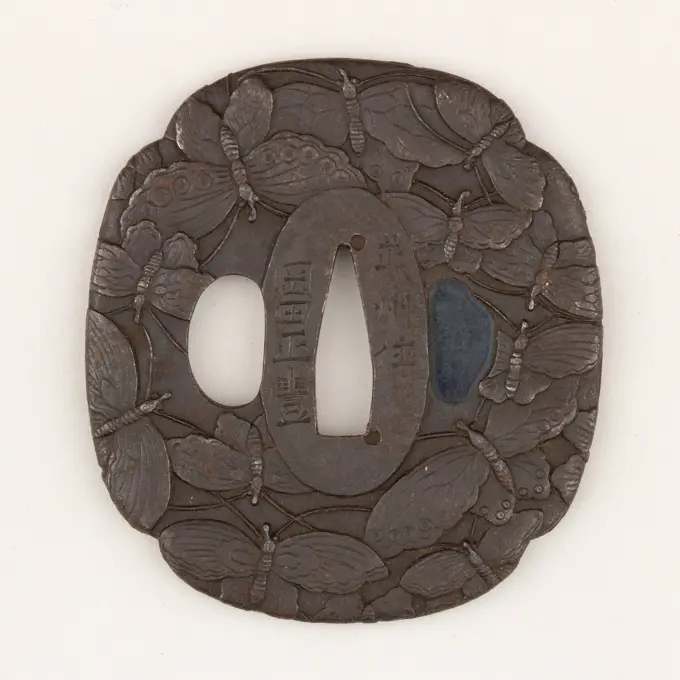
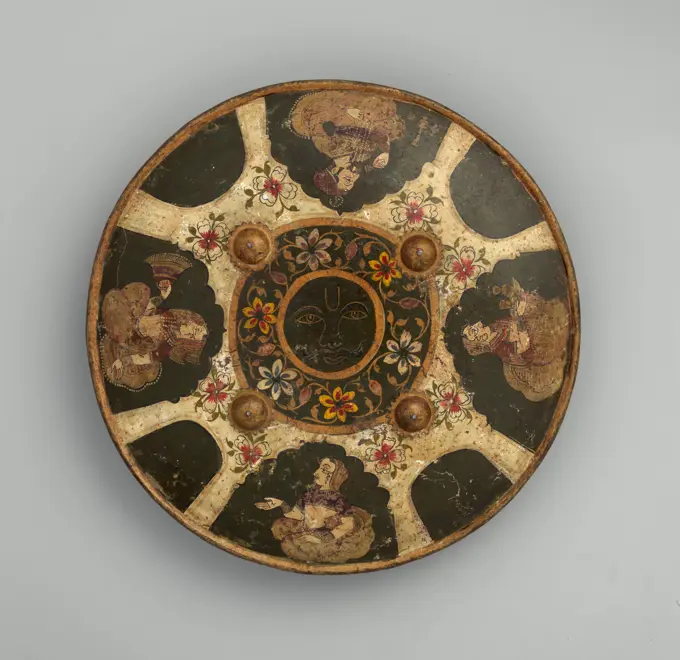
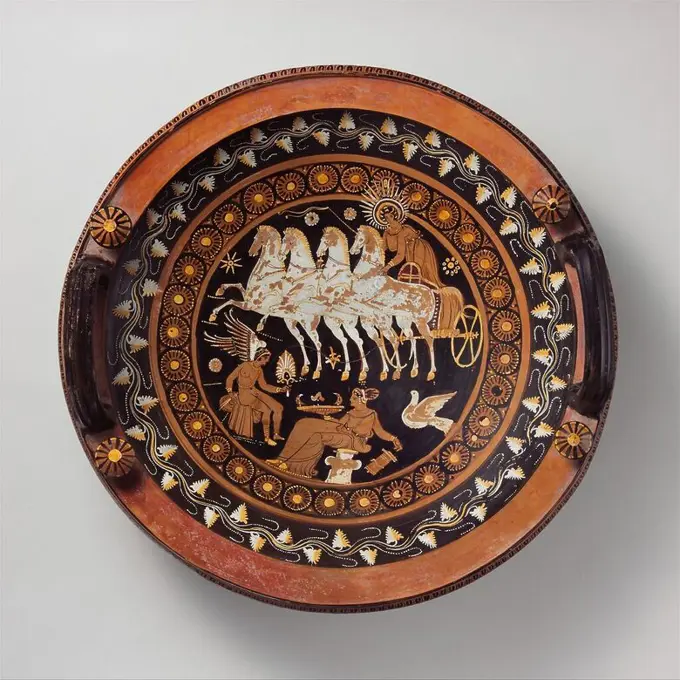
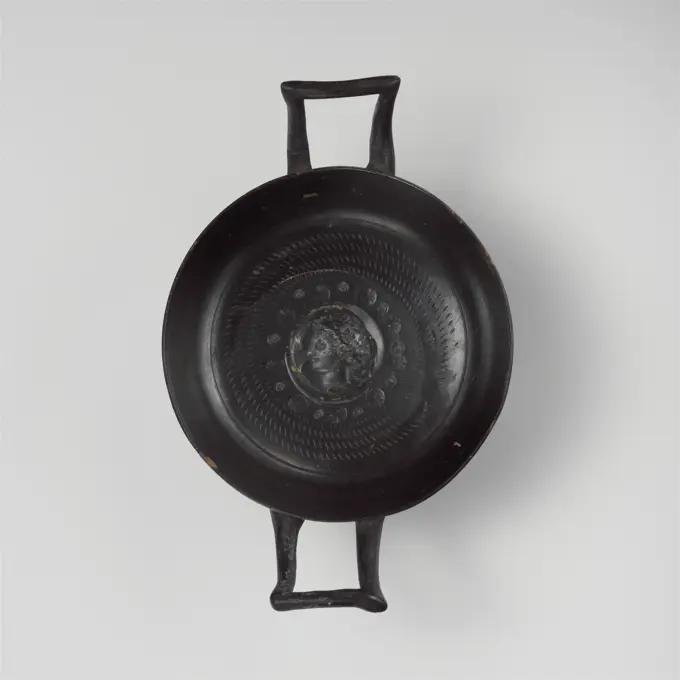
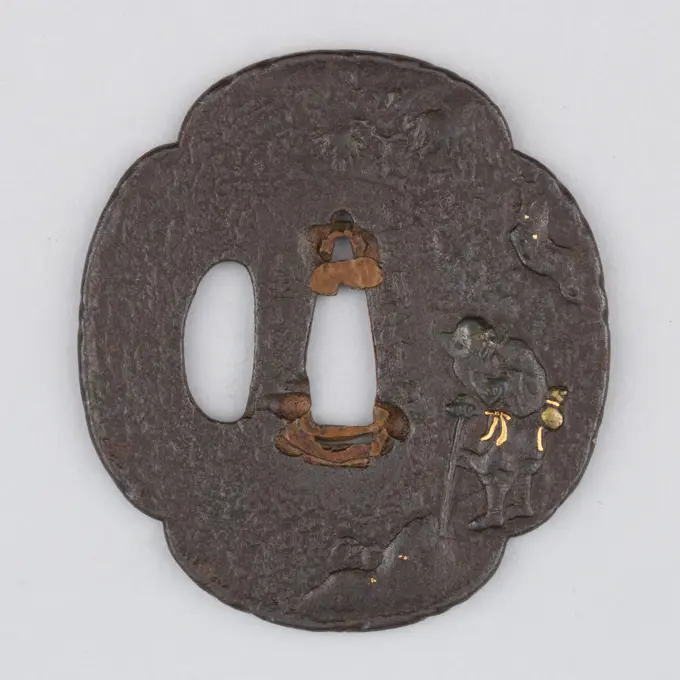
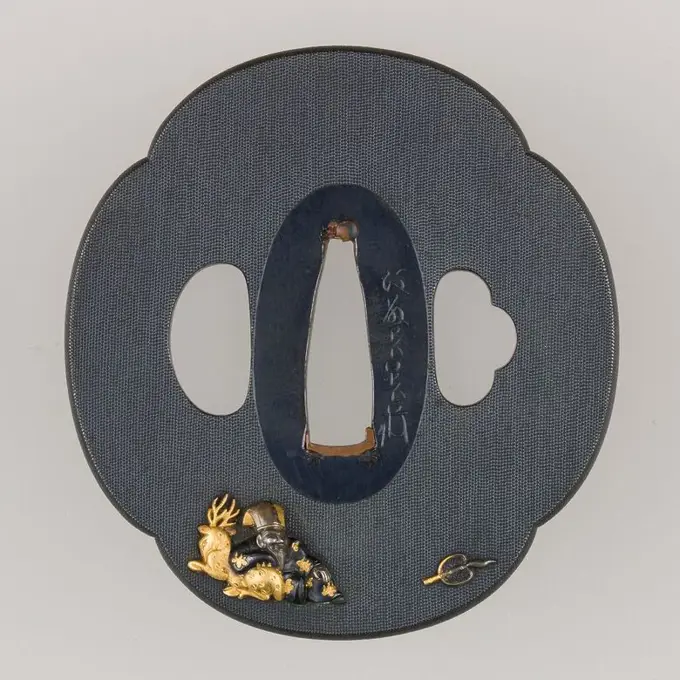
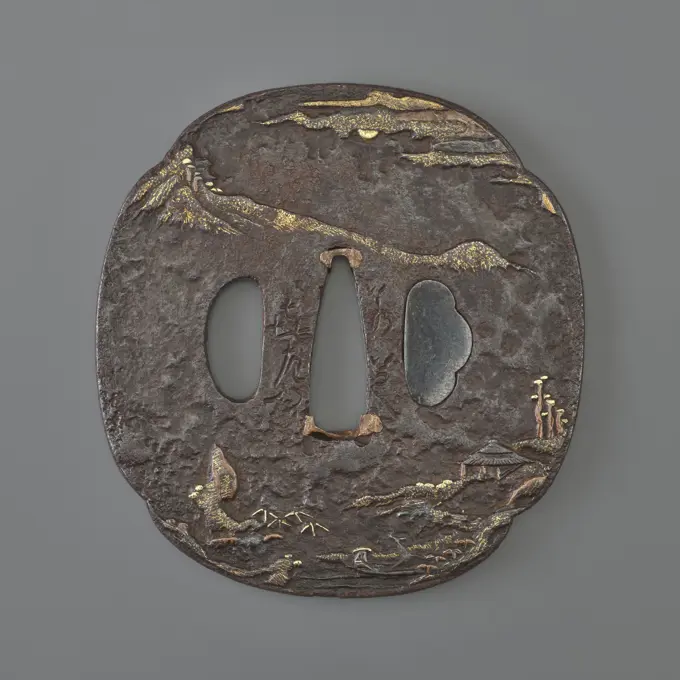
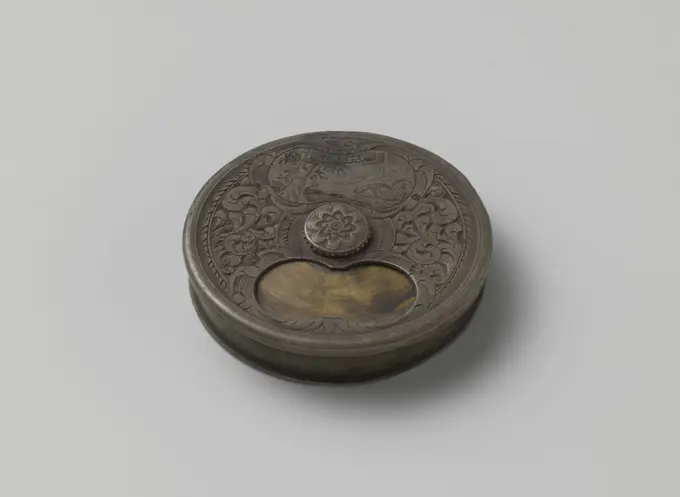
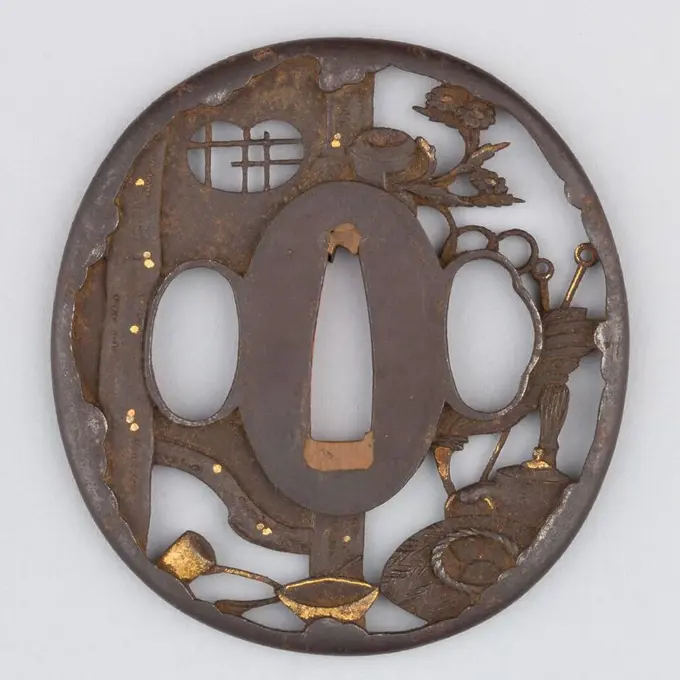
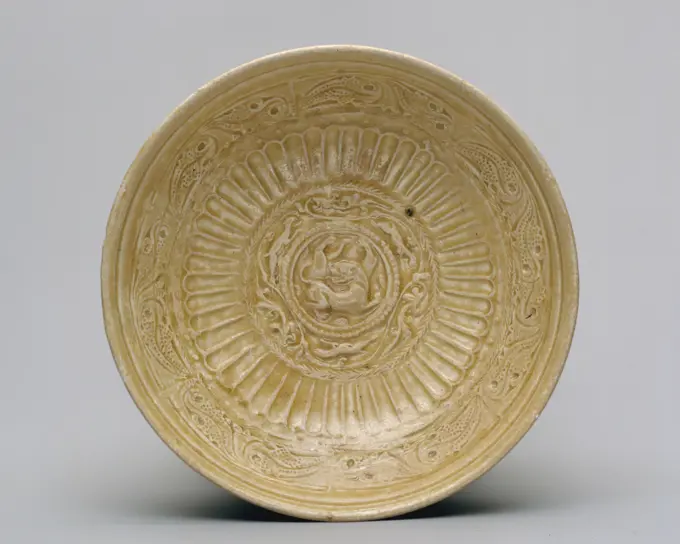
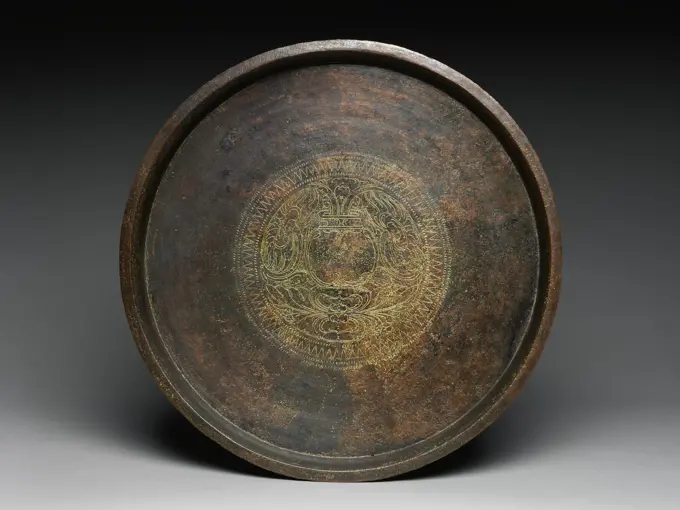
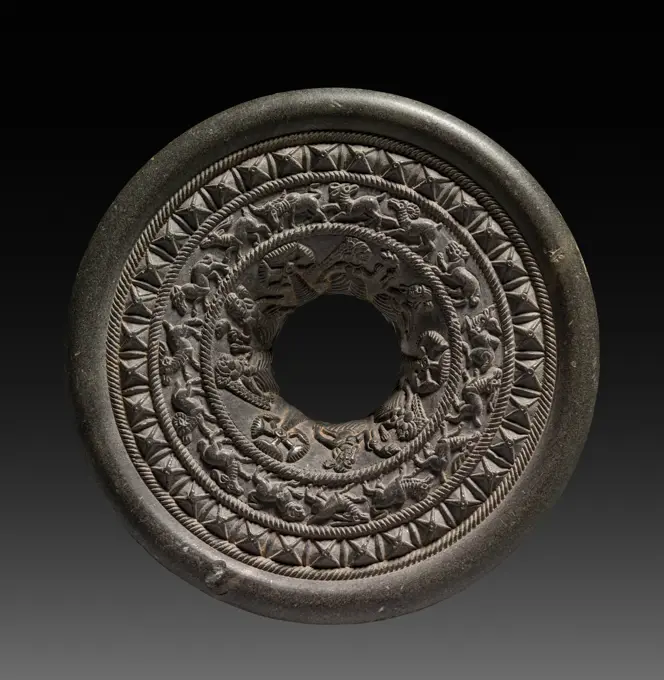
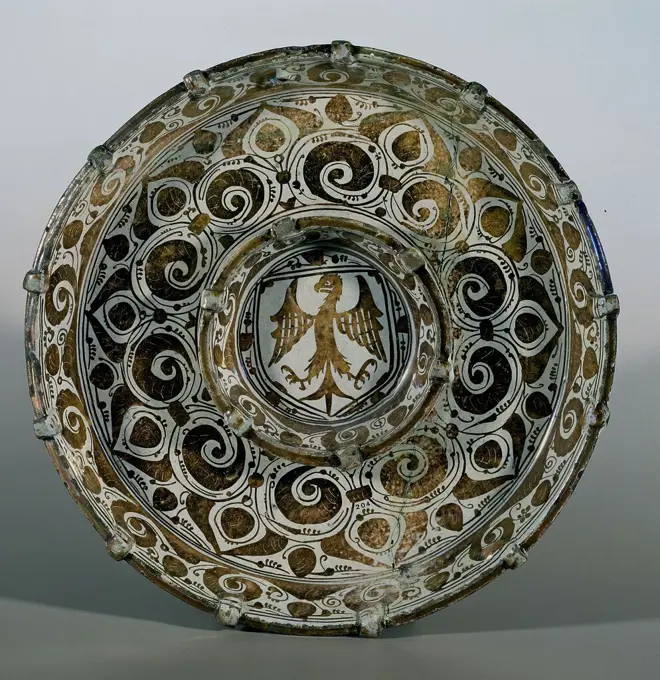
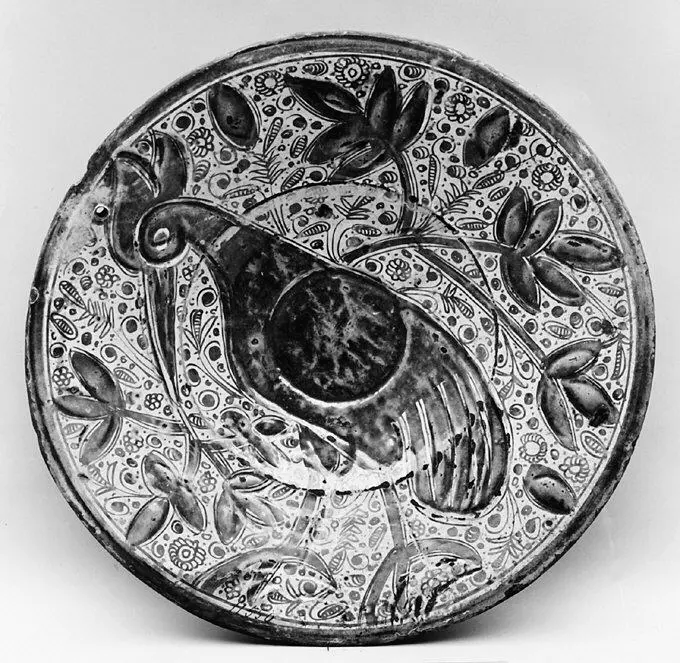
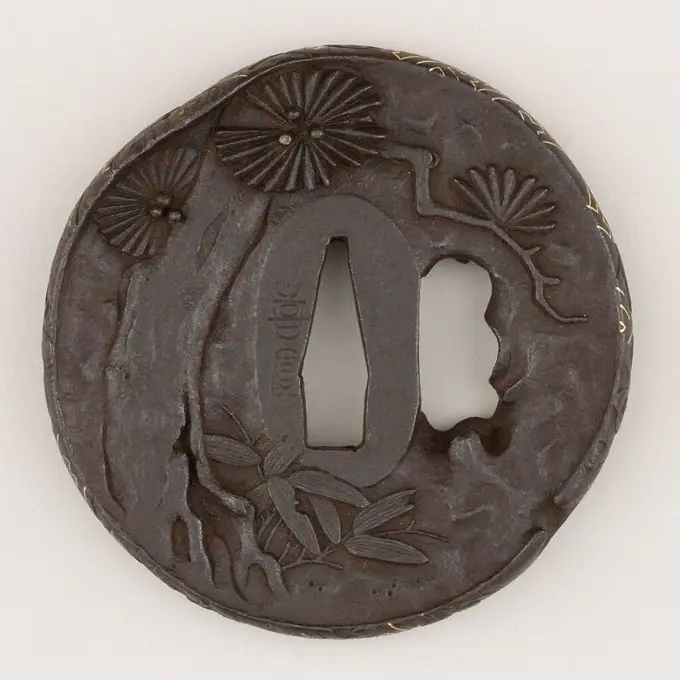
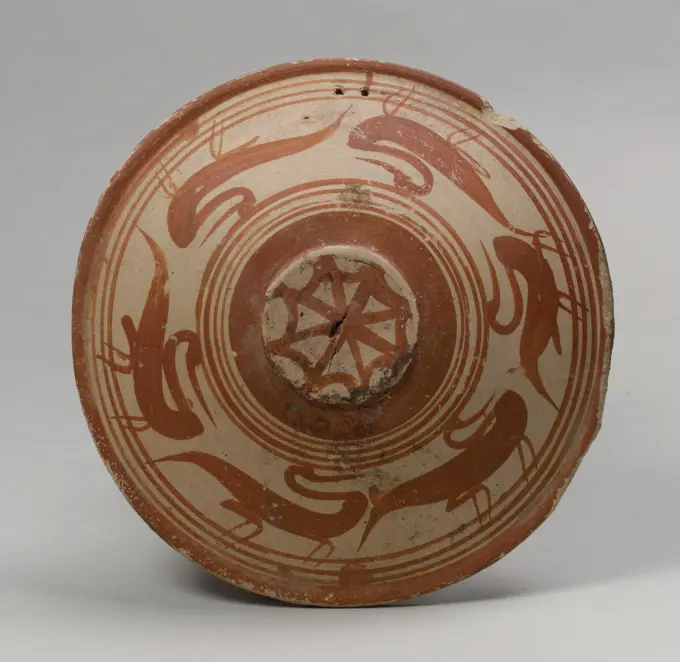
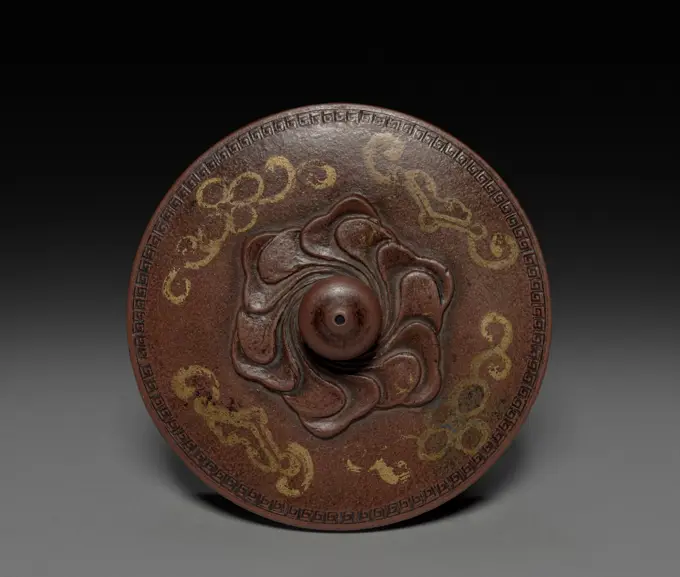
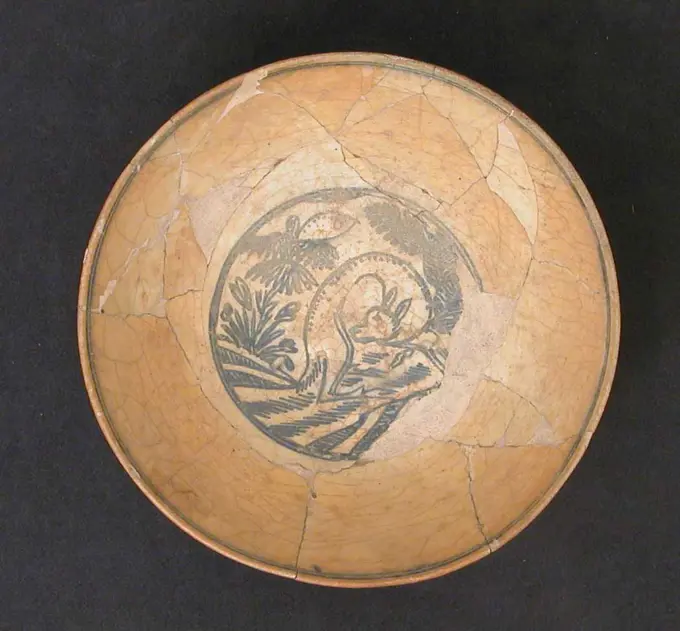
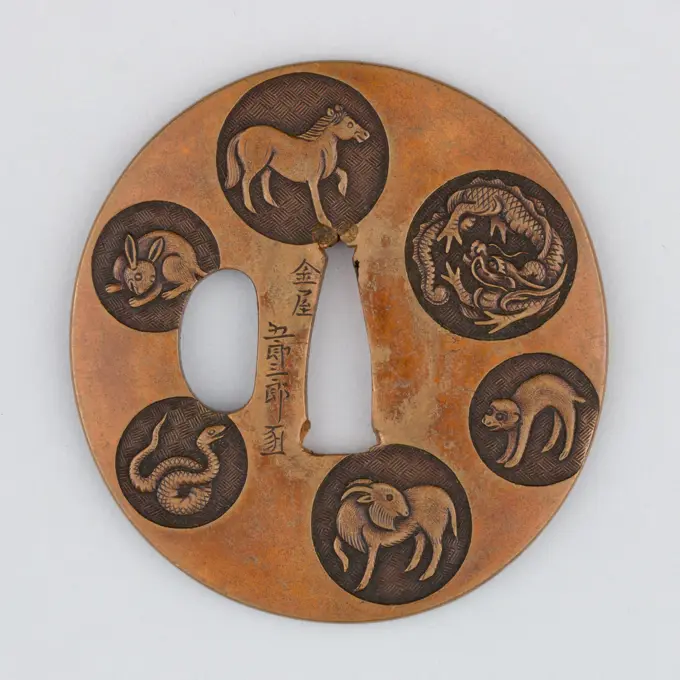
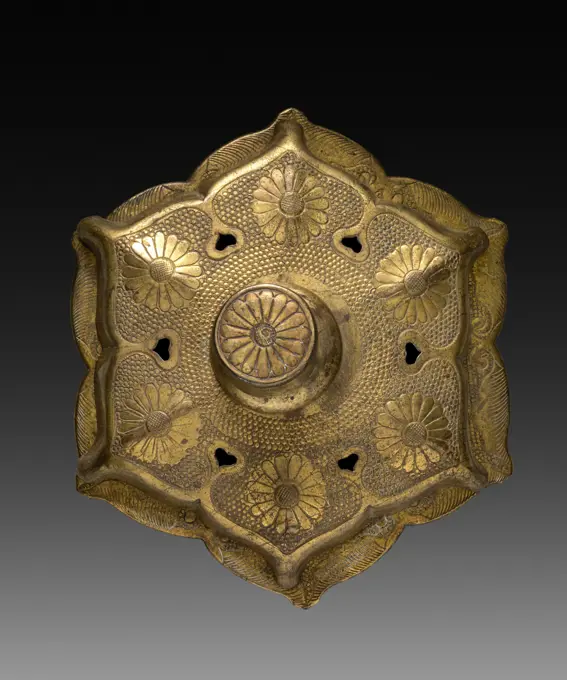
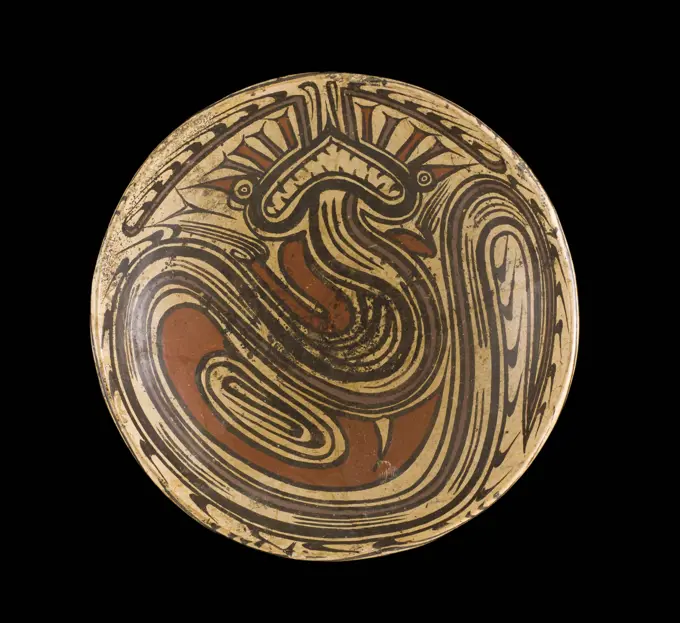
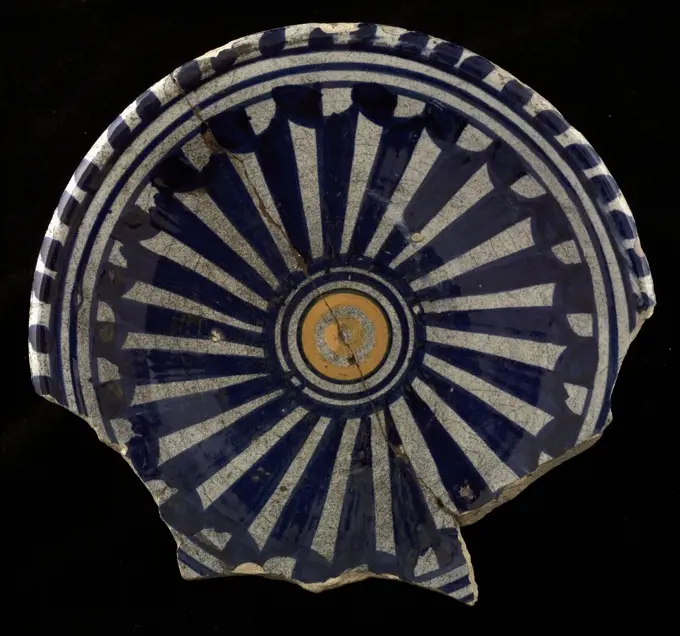
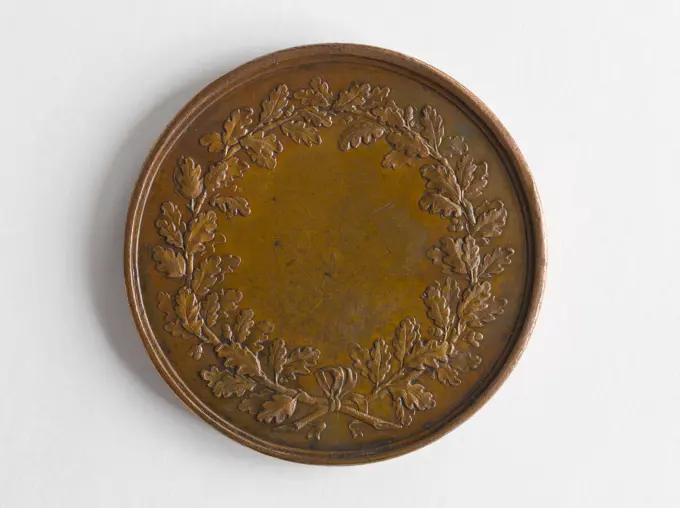
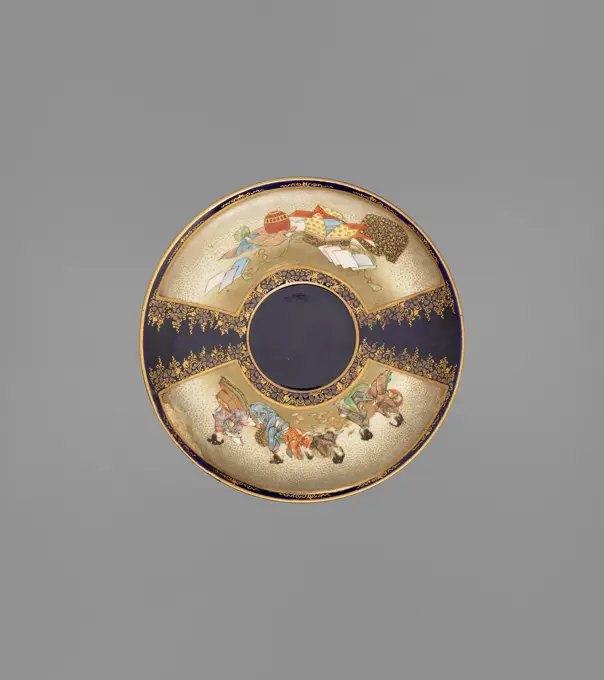
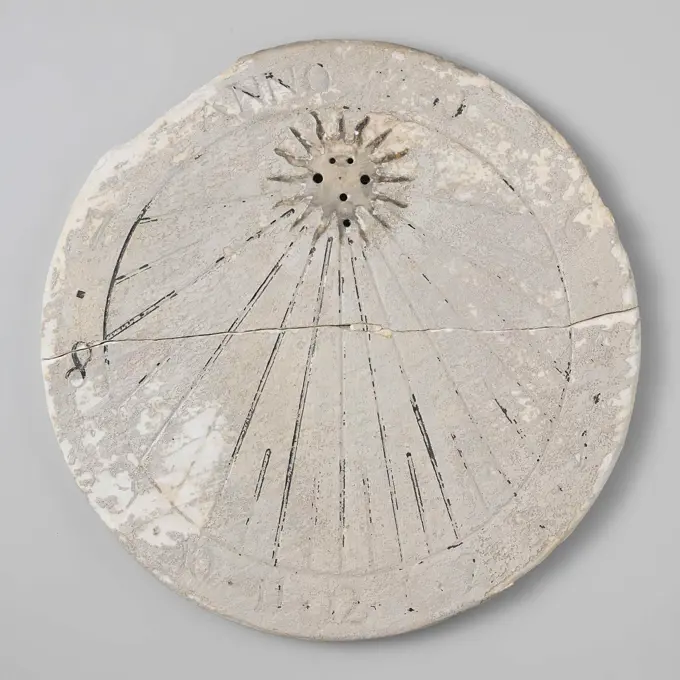
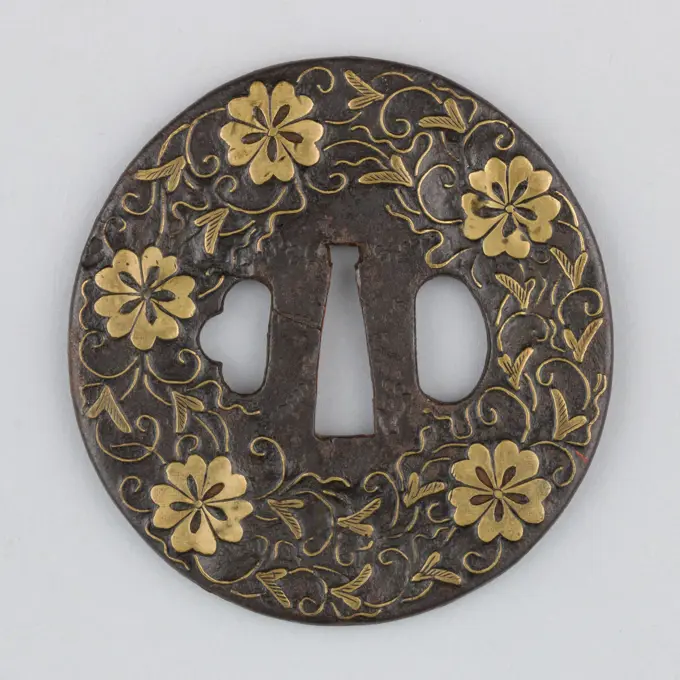
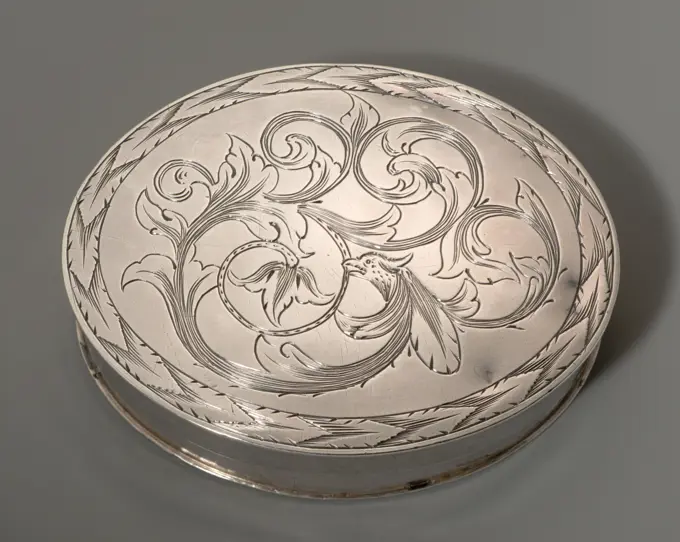
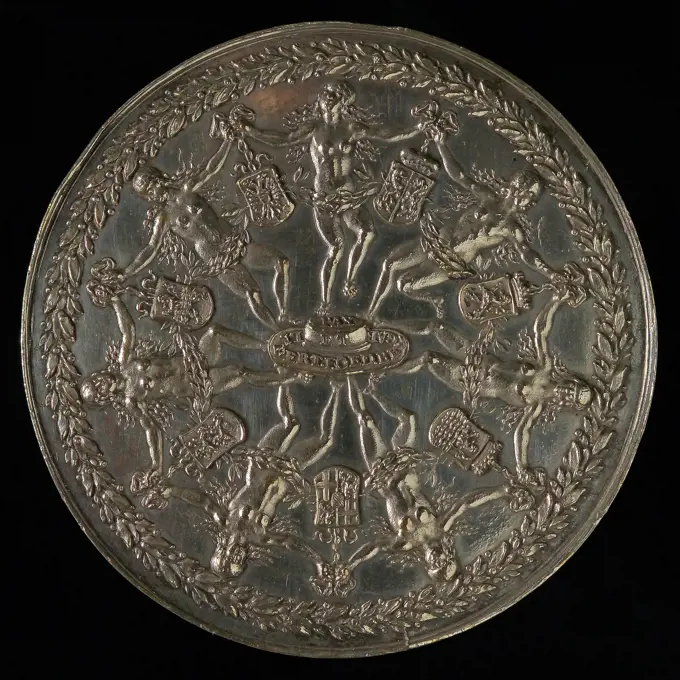
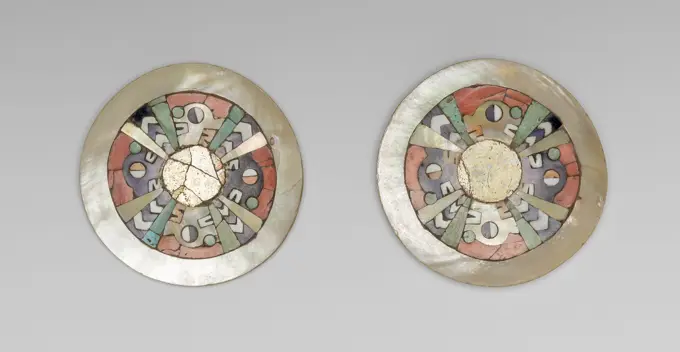
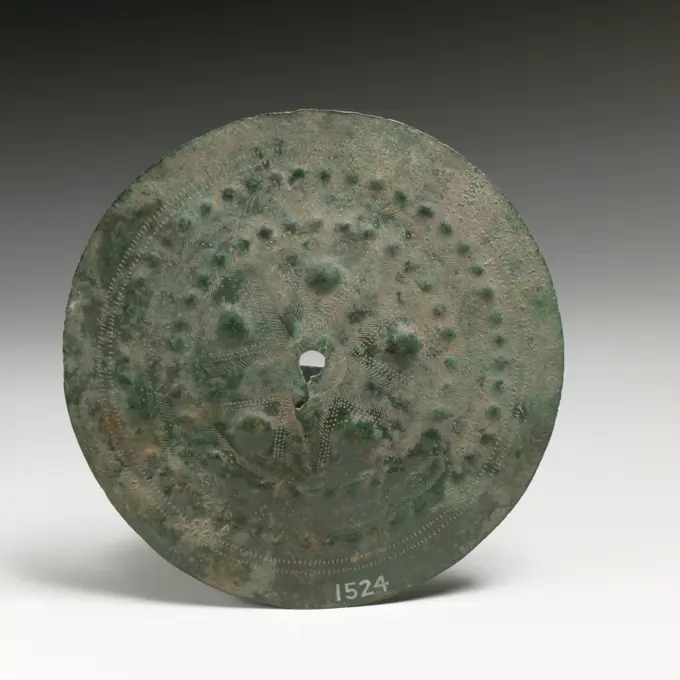
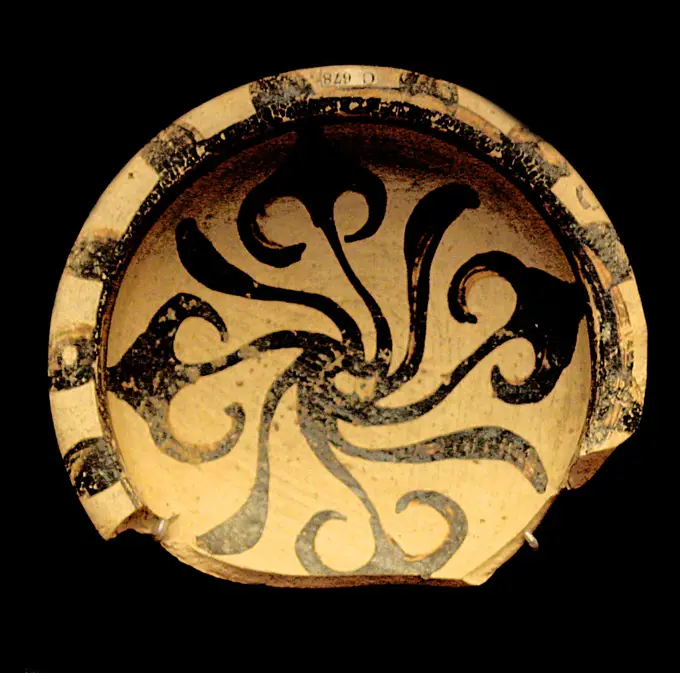
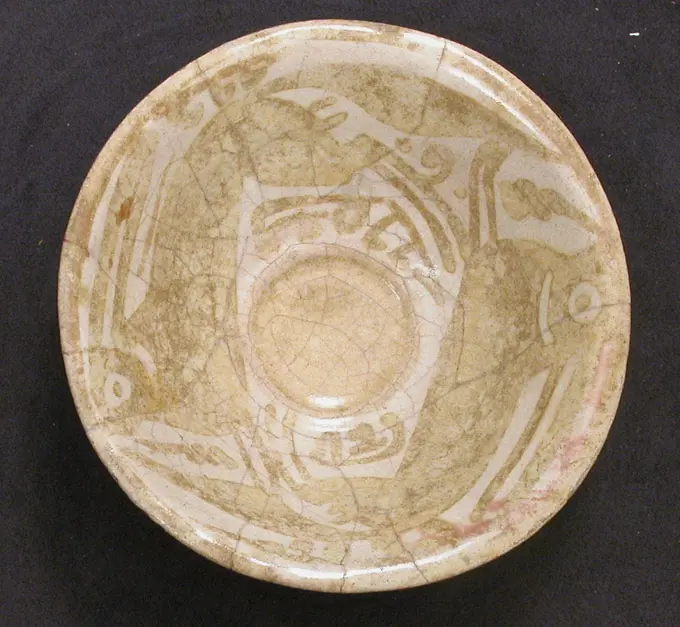
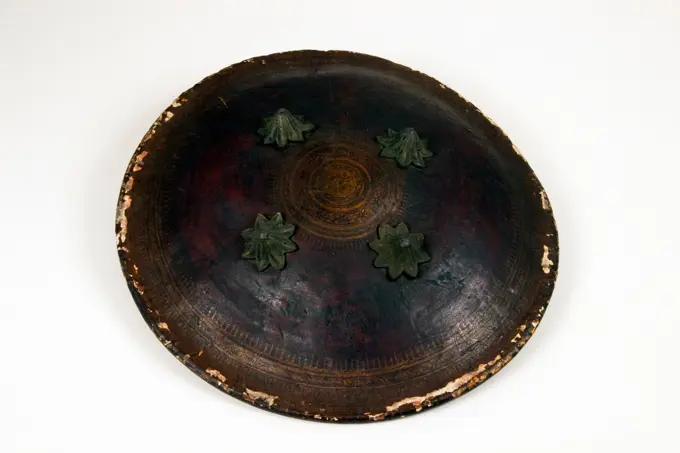
Pair of Bit Bosses. Culture: Italian. Dimensions: 42.50.189; Diam. 3 3/16 in. (8.1 cm): Wt. 3.2 oz. (91 g); 42.50.190; Diam. 3 3/16 in. (8.1 cm); Wt. 3.1 oz. (88 g). Date: late 16th - first half 17th century.Bit bosses were ornamental elements decorating both sides of a horse bit. The decoration of this Italian bit boss imitates traditional Venetian filigree, with a human face in the center. Museum: Metropolitan Museum of Art, New York, USA.Mirror with stylized bird-dragon motifs.Breast plate adornment, 6 1/8 x 7 x 1 1/2 in. (15.56 x 17.78 x 3.81 cm), Silver, ChinaBowlMirror with abstract decor, 4th century BCE, 8 3/4 in. (22.23 cm) (diameter), Bronze, China, 4th century BCEFragment of a Bowl 14th-15th century. Fragment of a Bowl 445436Sword Guard (Tsuba) dated 1736 Japanese A tsuba is a sword guard and part of a sword mounting. It is mounted between the swords blade and grip to protect the users hands.. Sword Guard (Tsuba) 29523Sword Guard Tsuba) with Bamboo and Cloud, c. 1615-1868. Japan, possibly Edo period (1615-1868). Iron; diameter: 8.4 cm (3 5/16 in.).Sword Guard (Tsuba) 17th century Japanese A tsuba is a sword guard and part of a sword mounting. It is mounted between the swords blade and grip to protect the users hands.. Sword Guard (Tsuba) 30082Incense Burner 12th century. Incense Burner. 12th century. Bronze; cast. From Iran, Nishapur. MetalBit Boss second half 16th - early 17th century Italian The domed center of this boss is decorated with a frieze of alternating cherubs heads and grotesque masks, circled by volutes and palmettes on the rim. Bit bosses were ornamental elements decorating both sides of a horse bit. The hat-shape design, probably inspired by ancient shield bosses excavated at the time, was very popular in Italy and France in the 16th and early 17th century. Bit Boss. Italian. second half 16th - early 17th century. Copper alloy, gold. Equestrian Equipment-BitsRoundel (Switzerland); wood, carved and paintedBowl. unknown, craftsmanGoldsmith's art, Italy, 16th century. Gasparo Miseroni (active around 1550-1575), Cup in rock crystal and enamelled gold. Height 22.5 cm. Detail of the openwork gold lid.The Lahore Shield, 1830. Blued steel, ovelaid with gold.. Maker Unknown. Made in Lahore, Punjab, Pakistan.. Pattern on the shield border represents constellations of real and zodiacal animals. In the centre the four mounted figures represent Maharaja Ranjit Singh with his one of his sons, Sher Singh, and two generals.Dish with LotusDecorationCDK TomohisaPlate. Culture: European. Dimensions: Overall: 3 1/4 x 3 1/4 in. (8.3 x 8.3 cm). Date: 15th-16th century. Museum: Metropolitan Museum of Art, New York, USA.Tin toy plate with tin mark on the rim, plate crockery holder toy relaxant miniature soil find tin metal, cast tin plate. Toys Small stand with very shallow stand ring. Originally upright curved side wall and slightly slanted flag. Tin mark on the flag Darts of the casting mold. It has been played with this board; cut and stitch damage in the mirror Tin mark: circle with double cross in beaded edge archeology Rotterdam rail tunnel indigenous tin play child's child's play Soil discovery: railway tunnel Rotterdam.One from a Set of Dishes with Bamboo, Plum Blossoms, Butterflies, and Birds late 13th-14th century China Vessels such as these were used mainly for formal entertaining. It was likely to have been made in one of the cities along the lower reaches of the Yangzi River. The vessel has the same shape as contemporaneous works in porcelain and lacquer.. One from a Set of Dishes with Bamboo, Plum Blossoms, Butterflies, and Birds. China. late 13th-14th century. Silver with chased and punched decoration and gilding. Southern Song (1127-1279)-Yuan (1271-1368) dynasty. MetalworkCampanian Black Bowl; Campania, South Italy, Europe; 323 - 31 B.C; Terracotta; 6.5 x 17.9 cm (2 9,16 x 7 1,16 in.)Namban Kinko type tsuba  two stylized dragons and precious items unknownBowl late 8th-first half 9th century. Bowl 449504Salver 19th century, after 16th century original British, after Italian original This electrotype is after a sixteenth-century original in the Victoria and Albert Museum, London, at the time of reproduction.. Salver 185873Terracotta phiale (libation bowl) 3rd-2nd century B.C. Greek, South Italian, Campanian, Calenian Four quadrigae (four-horse chariots)Such Calenian phialai have counterparts in metal. Two examples are exhibited in Gallery J5 on the main floor.. Terracotta phiale (libation bowl) 256781Rondache (Round Shield), c. 1570. Italy, Milan, 16th century. Etched and gilded steel with brass rivets; diameter: 57.8 cm (22 3/4 in.). Highly decorated circular shields like this one were a specialty of the city of Milan. This shield would have originally belonged to an armor that would have been decorated to match - with radiating etched bands of classical warriors and trophies.Dish with fish blowing, leaf drinks and cross flowers. In the flat of the dish, which has the center point in the middle, are punched with the help of stamp form: a UMBO, surrounded by a fish-blown edge and a branch injured leaf drink on shaded background (repeated four times). A punched ornament of cross flowers is placed along the edge. The edge is worthy of iron wire. The hanging ring on the back and the hole in the edge are arranged later. The center point has become a small opening.Bowl 12th-13th centuryDeep Dish ca. 1430 Spanish. Deep Dish 471782Sword Guard (Tsuba) ca. 1830-1860 Japanese This iron tsuba shows on both sides an arrangement of butterflies which occupies entire plate. The artist Masatoyo (豊), real name Okada Toyosaburō (岡田豊三郎), was originally from Nagato province (present-day Yamaguchi Prefeture) but later moved to Edo where he studied with the Itō (伊藤) School master Masatsune (常). There exists a dated work from Tenpō eleven (天保, 1840) which roughly informs us about his active period. Masatoyo’s workshop was located in the Negishi (根岸) neighborhood of Edo’s Shitaya (下谷) district.. Sword Guard (Tsuba) 25723Shield (Dhál) 18th-early 19th century Indian, Rajasthan, Bundi In form and materials, this is a common type of Indian shield, of which there are several examples in the Department of Arms and Armor in the Metropolitan Museum of Art. However, in size, and, most importantly, in decoration, this object is both distinct and very rare. Indian shields are typically adorned with floral and/or geometric patterns, as well as animal and hunting scenes. The unusual design on this work reflects scenes of Rajasthani court culture, which are found in miniature and mural painting. Later, this design could be found on Rajasthani and Gujarati textiles. It demonstrates how the artist was inspired by these works and carried these motifs to an unconventional type of object. Based on the subject matter of the decoration, as well as its small size, it is highly likely that this shield was carried in royal processions or used for ceremonial purposes. The style of the decoration, particularly the figures, proFish Plate. Greek; Canosa, Apulia, Italy; Attributed to the Hippocamp Group. Date: 350 BC-325 BC. Dimensions: 5 × 21.5 × 21.5 cm (2 × 8 1/2 × 8 1/2 in.). Terra-cotta, decorated in the red-figure technique. Origin: Canosa di Puglia. Museum: The Chicago Art Institute, Chicago, USA. Author: ANCIENT GREEK.Terracotta lekanis (dish). Culture: Greek, South Italian, Apulian. Dimensions: H. 6 1/2 in. (16.5 cm); diameter 22 13/16 in. (58 cm). Date: late 4th century B.C..Interior, Eos in her chariot; below, Eros, a woman and swan. Museum: Metropolitan Museum of Art, New York, USA.Terracotta stemless kylix (drinking cup) late 4th-3rd century B.C. Greek, South Italian, Campanian, Calenian In relief, head of ArethusaSilver cups with medallions in low relief on the interior were favored luxury items in antiquity. Although few examples survive, terracotta versions suggest their appearance. This piece belongs to an important group featuring the head of Arethusa, taken from the reverse of a celebrated coin of Syracuse in Sicily. These "Arethusa cups" were made and found principally in Campania.. Terracotta stemless kylix (drinking cup) 254277 Greek, South Italian, Campanian, Calenian, Terracotta stemless kylix (drinking cup), late 4th3rd century B.C., Terracotta, H. 1 15/16 in. (5 cm); diameter 4 7/16 in. (11.3 cm); width with handles 6 11/16 in. (17 cm). The Metropolitan Museum of Art, New York. Rogers Fund, 1941 (41.162.105)Bowl 10th century. Bowl 451785Sword Guard (Tsuba) 18th century Japanese A tsuba is a sword guard and part of a sword mounting. It is mounted between the swords blade and grip to protect the users hands.. Sword Guard (Tsuba) 26242Bowl. unknown, craftsmanDish. Culture: German. Dimensions: Overall: 15 1/2 x 1 7/8 in. (39.4 x 4.8 cm). Date: early 16th century. Museum: Metropolitan Museum of Art, New York, USA.Mirror with dragons and knob and swirl design 1st century B.C. China. Mirror with dragons and knob and swirl design 74428Lid for a Jar ca. 1850-1700 B.C. Middle Kingdom. Lid for a Jar. ca. 1850-1700 B.C.. Faience, paint. Middle Kingdom. From Egypt, Memphite Region, Lisht North, south of Tomb of Nakht (493), south cemetery, Pit 453, MMA excavations, 1913-14. Dynasty 12, late-13 to 1700 B.C.Black-Glaze Stemless Kylix. UnknownSword Guard (Tsuba). Culture: Japanese. Dimensions: H. 2 3/4 in. (7 cm); W. 2 9/16 in. (6.5 cm); thickness 5/16 in. (0.8 cm); Wt. 4.4 oz. (124.7 g). Fittings maker: Inscribed by Goto Mitsuakira (Japanese, 1816-1856). Date: 19th century.Goto Mitsuakira (1816-1856) was the sixteenth generation master of the main line of the renowned Goto School of sword fitting makers. The decoration of this tsuba features Fukurokuju, the Shinto god of happiness, wealth, and longevity, with a stag. The fineness of the engraving distinguishes it as one of Mitsuakira's masterpieces. Museum: Metropolitan Museum of Art, New York, USA.Bowl 14th century. Bowl 447296Sword Guard (Tsuba) ca. 1600 Japanese A tsuba is a sword guard and part of a sword mounting. It is mounted between the swords blade and grip to protect the users hands.. Sword Guard (Tsuba) 30000Sword Guard (Tsuba) 18th century Japanese A tsuba is a sword guard and part of a sword mounting. It is mounted between the swords blade and grip to protect the users hands.. Sword Guard (Tsuba) 641484Jelec (Tsuba); Jakushi, Kizemon, Jakushi; 18th century (1701-00-00-1800-00-00);Mirror, 2nd century, 6 × 6 × 1/4 in. (15.24 × 15.24 × 0.64 cm), Bronze, China, 2nd century, Numerous depictions of the Xi Wangmu, or Queen Mother of the West, and her consort, King Father of the East, survive in the form of mirror decoration. On this mirror, the divine couple are accompanied by four fantastic beasts. Each sits on a throne carried on the back of a beast. The composition of the two divinities on opposite sides of the mirror, their most common arrangement, symbolizes the ancient Chinese philosophical concept of yin and yang (opposing, contrary forces in the world are actually interdependent and inseparable) that flourished at that time, as well as their residence in the West and East respectively. Mirrors decorated with divine images and celestial talismans had symbolic value for the Han dynasty followers of Daoism. A practitioner who possessed the mirror could hope for eternal life or protection from evil.Snuff box from Tin decorated with a landscape in cartouche, anonymous, c. 1600 - c. 1699 Circular snuff box from Tin. The top is decorated with tendrils and a cartouche in which a landscape is displayed with a tree, a rooster and a chicken. There is also an opening in the top, under which a brass disk is visible. This disc can rotate using the button on top and contains two circular openings for the finger and thumb. Low Countries tin (metal). copper (metal) casting / engraving Circular snuff box from Tin. The top is decorated with tendrils and a cartouche in which a landscape is displayed with a tree, a rooster and a chicken. There is also an opening in the top, under which a brass disk is visible. This disc can rotate using the button on top and contains two circular openings for the finger and thumb. Low Countries tin (metal). copper (metal) casting / engravingSword Guard (Tsuba). Culture: Japanese. Dimensions: H. 2 3/4 in. (7 cm); W. 2 5/8 in. (6.7 cm); thickness 3/16 in. (0.5 cm); Wt. 2.1 oz. (59.5 g). Date: ca. 1615-1868. Museum: Metropolitan Museum of Art, New York, USA.Dish China The crisply rendered feline sprawled in spread-eagle position with head regardant, the ring of pearl beading, the design of scrolling leaves alternating with outstretched animals, the wreathlike motif, and the band of concave radiating lotus petals on this celadon dish all demonstrate the very strong influence of Western metalwork on Chinese ceramics in the sixth century.. Dish. China. Stoneware with relief and impressed decoration under celadon glaze (Northern ware). Six Dynasties, late Northern Dynasties (557-581). CeramicsOffering tray (talam) 12th-14th century Indonesia In medieval Javanese Hindu ritual, large metal offering trays were regularly employed for the preparation of ritual utensils and paraphernalia. The term used in Old Javanese is tahas, and they are referred to in modern Javanese and Indonesian as talam. Both variant terms can be sourced to the Tamil word for the same utensil, tattam. Fragmentary bronze trays of this type, together with other metal temple utensils, have been excavated from a mid-10th century shipwreck in the Java Sea in the past decade, affirming their antiquity. The traditions and ritual practices of Central Java (8th to 10th century) were largely preserved in the following centuries in the Hindu-Buddhist centres of East Java, up to the coming of Islam in the 15th century. This offering tray has an upturned and beveled rim and in the centerfield, an engraved design of a flowering vase of plenty (purnaghata). The swelling body of the vase evokes fecundity, and lush lotus Ringstone, 200s BC. India, Maurya period. Steatite; diameter: 10.2 cm (4 in.). Ringstones are among the earliest works of art to be created in stone during India's historical period. This example is finely carved with detailed images of affectionate couples and palm trees, running animals, and geometric motifs in concentric circles. The function of ringstones remains uncertain, since none of the surviving examples is inscribed or explained in a text.Dish 1660-85 British. Dish. British. 1660-85. Pewter. Metalwork-PewterSword Guard (Tsuba) 18th century Japanese A tsuba is a sword guard and part of a sword mounting. It is mounted between the swords blade and grip to protect the users hands.. Sword Guard (Tsuba) 26421PLATO DE LA "GARLANDA" CON ATAURIQUES - MANISES - SIGLO XV. Location: INSTITUTO VALENCIA DE DON JUAN-COLECCION. MADRID. SPAIN.Bowl with abstract design, 15th century or 20th century, Unknown Korean, 2 7/8 × 7 1/2 × 7 3/8 in. (7.3 × 19.05 × 18.73 cm), Stoneware with white slip and sgraffito decoration of peony leaves under buncheong glaze, Korea, 15th century or 20th centuryRug with geometric figures. European carpet with geometric figures, designed by c.A. Lion Cahcet for the S.S. Johan de Witt from the me. The Netherlands.Oval leaf, c. 1780 - c. 1820 Oval leaf with a raised edge, possibly a tray. Lacquer, decorated with a border of flower and leaf work around a square cartouche with a cityscape. Japan gilding (material). lacquer (coating) gilding Oval leaf with a raised edge, possibly a tray. Lacquer, decorated with a border of flower and leaf work around a square cartouche with a cityscape. Japan gilding (material). lacquer (coating) gildingCommemorative tin scorer pateraIanvarivs (January) Plate; Designed by Martial Courteys; France; grisaille enamel, flesh tones, touches of color, and gold on molded copperDish 16th-17th century Spanish, Valencia Tin-glazed earthenware, of which lusterware is one type, was developed in the Middle East in the ninth and tenth centuries to imitate the porcelains produced in China. The opaque white glaze concealed the clay body, which could range from pale buff to brick red, allowing for brilliant effects created by painting the white surface with metal oxides that fired to a range of colors. This technique, as well as the use of metallic lusteran iridescent, coppery painted glazespread throughout the Muslim world, arriving among the potters of Valencia in the thirteenth century. The so-called Hispano-Moresque lusterware, with its fusion of Islamic and Gothic styles and motifs, often in shaped imitating those of metal vessels, was treasured by the elite in Spain during the fifteenth century and exported to the courts of Europe. The Valencian industry declined in the late sixteenth century, as colorful Italian Renaissance maiolica gained in popularity amongSword Guard (Tsuba). Culture: Japanese. Dimensions: D. 3 1/4 in. (8.3 cm); thickness 9/16 in. (1.4 cm); Wt. 8.9 oz. (252.3 g). Date: 18th century. Museum: Metropolitan Museum of Art, New York, USA.Terracotta plate ca.680-670 B.C. Etruscan, Subgeometric, probably Caeretan Exterior: six heronsInterior: wide concentric circlesThis plate belongs to a large group called the Heron Class because of its most common subject. The precise function of these plates is unknown, but they appear frequently in tombs at Cerveteri (ancient Caere) and ultimately may derive, in both shape and decoration, from eighth century B.C. Phoenician prototypes.. Terracotta plate 257530Eastern spurTeapot with Gold Leaf Landscape and Imperial Poem (lid), 1762-95. China, Qing Dynasty (1644-1911), Qianlong reign (1736-95). Stoneware with gold leaf decoration, Yixing ware;Carnavalet museum, tokens collectionBowl late 17th-early 18th century. Bowl 453204Sword Guard (Tsuba) 19th century Japanese A tsuba is a sword guard and part of a sword mounting. It is mounted between the swords blade and grip to protect the users hands.. Sword Guard (Tsuba) 643302Mirror with animals of the four directions and other mythical creatures China 1st-2nd century View more. Mirror with animals of the four directions and other mythical creatures. China. 1st-2nd century. Bronze. Eastern Han dynasty (25-220). MirrorsSpindle Whorl, 700s - 900s. Iran, early Islamic period, 8th - 10th century. Bone, incised; overall: 0.8 x 1.6 x 1.6 cm (5/16 x 5/8 x 5/8 in.).Gilt Nail Head, early to mid-1800s. Japan, Edo period (1615-1868). Gilt bronze; overall: 12.3 cm (4 13/16 in.).Genucilia Plate. Attributed to the Caeretan Branch of the Genucilia Group (Etruscan, active 325 - 300 B.C.)Pedestal Bowl with Sea Monster Design. Panama, Southern Azuero,Joaquin style, Panama, Joaquin, 650-1200 CE. Ceramics. Slip-painted ceramicBox, 20th Century. Java. Glass; overall: 3 x 4.6 cm (1 3/16 x 1 13/16 in.).Floor tile with rosette, anonymous, c. 1545 - c. 1570 Square floor tile with a multicolored (blue, green, yellow and orange) rosette within two cutting windows. In the corners, a lily. Antwerp earthenware. tin glaze majolica Square floor tile with a multicolored (blue, green, yellow and orange) rosette within two cutting windows. In the corners, a lily. Antwerp earthenware. tin glaze majolicaCarnavalet museum, tokens collectionSword Guard (tsuba). Umetada, school, Minamoto, Ichiô, metalwork artistMajolica dish, blue on white, alternate blue and white fan motif around the heart, cable border, dish crockery holder soil find ceramic earthenware enamel, majolica baked underside covered with clear lead glaze. Polychrome. Italian decor fan motif or lamella motif archeology food decorate serving ItalyMedia Médaille Reiti de Francesco Sciences and Sebastian Insabert and Des Arts in Jesius Bitius, 1796 Rambert dumarest (1750-1806). "Your French meter in ation of National des Sciences and Des Arts by Grutu Consems, 1796". Bronze. 1796. Paris, Musée Carnavalet.Footed Platter with Design of Mythical Beasts amid Grapevines, 700s. China, Tang dynasty (618-907). Silver with gilt, incised, and chased decoration; diameter: 30.5 cm (12 in.).Saucer; Kinkôzan, Sôbei VII (1867-1927); 19th/20th century (1891-00-00-1910-00-00);Sandstone sundial. Sundial, originally processed in a facade of a Louis XIV garden house (BK-Bfr-403). In 2 parts.Octafoil Mirror with Paired Phoenixes and Animals, late 600s-early 700s. China, Tang dynasty (618-907). Bronze; diameter: 12.3 cm (4 13/16 in.); overall: 1 cm (3/8 in.); rim: 0.8 cm (5/16 in.).Mirror with Images of Daoist Deities. China; probably from Zhejiang province. Date: 100 AD-299 AD. Dimensions: Diam: 20.6 × diam. 0.6 cm (8 1/8 × 1/4 in.). Bronze. Origin: China. Museum: The Chicago Art Institute, Chicago, USA.Sword guard (Tsuba) With Cherry Blossom Motif (図与四郎象嵌鐔) 17th century Japanese This Yoshirō style iron tsuba shows on both sides a brass inlay (shinchū-zōgan) of cherry blossoms embedded into arabesques. The arrangement of the design suggests that the two openings for scabbard accessories (hitsu-ana) are orignal and were not added later as it is so often the case. In addition, there is almost no loss of inlay and so this tsuba is in excellent condition.. Sword guard (Tsuba) With Cherry Blossom Motif (図与四郎象嵌鐔) 29979Tray 12th century. Tray 451162Zachariah Brigden, Snuffbox, c. 1760-80, silver.Sebastiaan Dadler, Medal on the Peace of Munster, penny footage silver, seven virgins (seven Dutch provinces) in between which coats of arms placed in circle with the freedom hat in the center, PAX ET LIBERT. FEOD. BELGAR (the peace and freedom of the United Netherlands) war Eighty-year war Spain Westphalia Münster peacePlate of multi -colored hard baked pottery; Staffordshire, Anonymous, c. 1750 - c. 1780 Plate of multicolored hard baked pottery, with a scalloped edge. The edge is decorated in relief with six fields of Gololfd Spaliewerk. The board is covered with blue -gray lead glaze with stains in green, yellow and manganese. The back is dotted in manganese. The board includes four plates (BK-1987-41-A to BK-1987-41-E). England earthenware. lead glaze Plate of multicolored hard baked pottery, with a scalloped edge. The edge is decorated in relief with six fields of Gololfd Spaliewerk. The board is covered with blue -gray lead glaze with stains in green, yellow and manganese. The back is dotted in manganese. The board includes four plates (BK-1987-41-A to BK-1987-41-E). England earthenware. lead glazeSword Guard (Tsuba) Flowers by Fence, late 1700s. Japan, Edo period (1615-1868). Iron with brass inlay; average: 5.8 x 7 cm (2 5/16 x 2 3/4 in.).Copper scale decorated with fish, Homme de Vries, c. 1900 - c. 1925 The driven scale has a deep mirror with a wide edge around it, on which a driven decoration is applied in relief, consisting of a fish head surrounded by two fish surrounded by two fish heads. This motif has been repeated three times. The surface of this decoration is nuanced with different punch stamps, the details such as the scales are engraved. At the back is an eye with screws applied to attach to the wall. The screws are visible at the front. Netherlands copper (metal) engraving The driven scale has a deep mirror with a wide edge around it, on which a driven decoration is applied in relief, consisting of a fish head surrounded by two fish surrounded by two fish heads. This motif has been repeated three times. The surface of this decoration is nuanced with different punch stamps, the details such as the scales are engraved. At the back is an eye with screws applied to attach to the wall. The screws are visible at Mirror with geometric patterns and stylized animals.Ear Ornaments 400 CE-800 CE Peru. Shell, stone, silver, and copper . TiwanakuBronze shield boss 7th century B.C. Etruscan These small discs, meticulously decorated with incised herringbone patterns and punched notches or raised dots, were originally attached to larger shields.. Bronze shield boss 248656Mirror, 794-1185. Japan, Heian period (794-1185). Bronze; diameter: 11.4 cm (4 1/2 in.).Shallow pottery cup decorated with Ivy leaves.Mycenaran 1500-2450 BC. Found in Tomb 40, Enkomi, CyprusBowl with running hares 9th century. Bowl with running hares 447363Shield (Dhàl) 18th-19th century Indian. Shield (Dhàl) 31792Sword Guard (Tsuba). Culture: Japanese. Dimensions: H. 3 1/8 in. (7.9 cm); W. 3 in. (7.6 cm); thickness 3/16 in. (0.5 cm); Wt. 3.5 oz. (99.2 g). Date: ca. 1700. Museum: Metropolitan Museum of Art, New York, USA.Hexagonal dish. Culture: Hungarian, Transylvania. Dimensions: Diameter: 9 9/16 in. (24.3 cm). Date: 1696.The center of each dish in this set (acc. nos. 2010.110.42-49) bears an engraved laurel wreath encircling a coat of arms. Small differences in these arms could be the result of different masters working quickly to complete what was probably a much larger set for a wedding that was fast approaching. The bold blossoms in the six corners symbolize both the wish for abundance throughout marriage and the transitory glories of earthly existence. Salgo acquired two of these dishes at a later date from the others, but all eight pieces belonged to the same set of fourteen dishes that were once part of the Andrssy treasury.LiteratureEuropean Silver. Sale cat., Sotheby's, Geneva, November 15, 1983, p. 19, no. 53.European Silver. Sale cat., Sotheby's, Geneva, November 14, 1984, n.p., no. 34.Judit H. Kolba. Hungarian Silver: The Nicolas M. Salgo Collection. London, 199