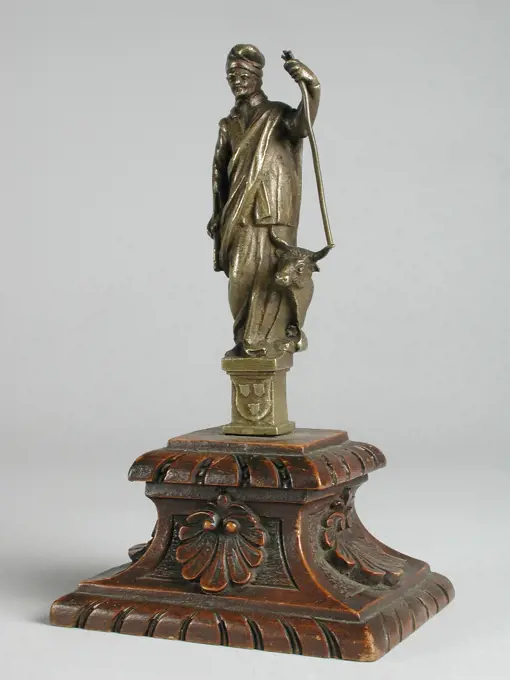
Ornate Candle Holders

A collection of intricate candle holders and decorative vessels, showcasing various styles including brass designs and crystal embellishments.
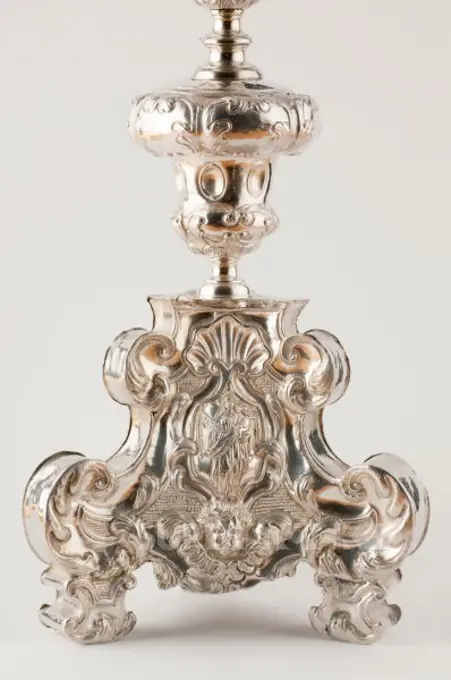
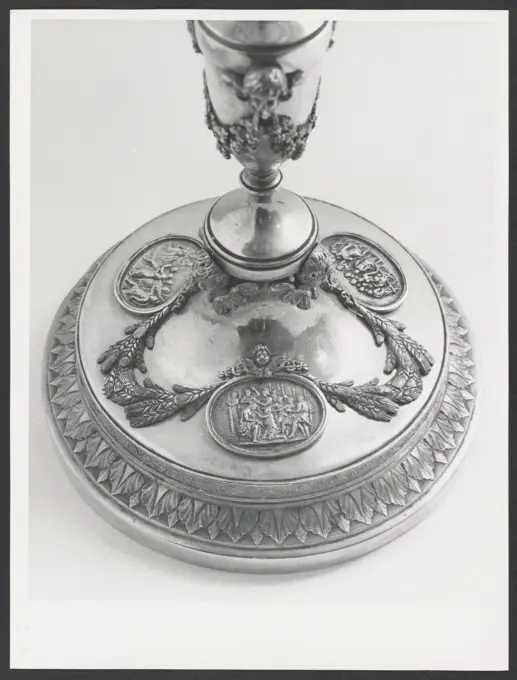
Silver chiselded liturgical object, detail from the base depicting the Virgin and Child, Lombardy, Italy.
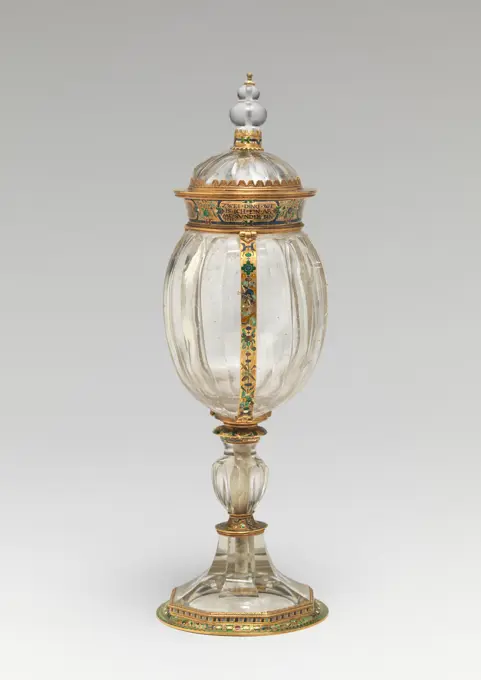
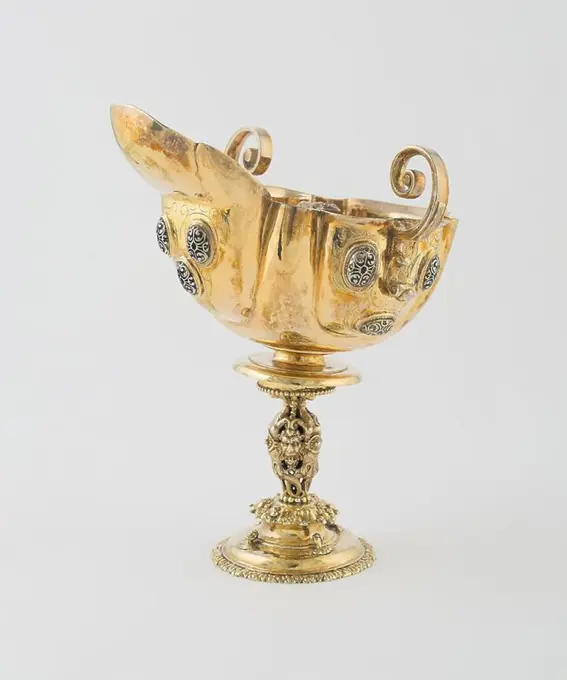
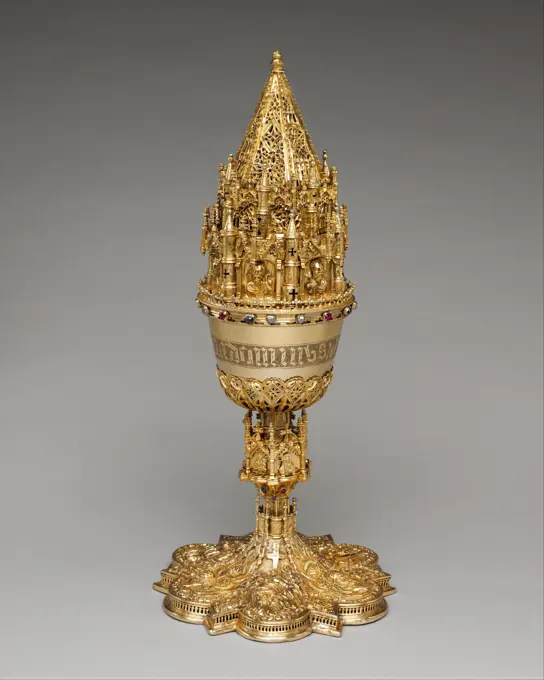
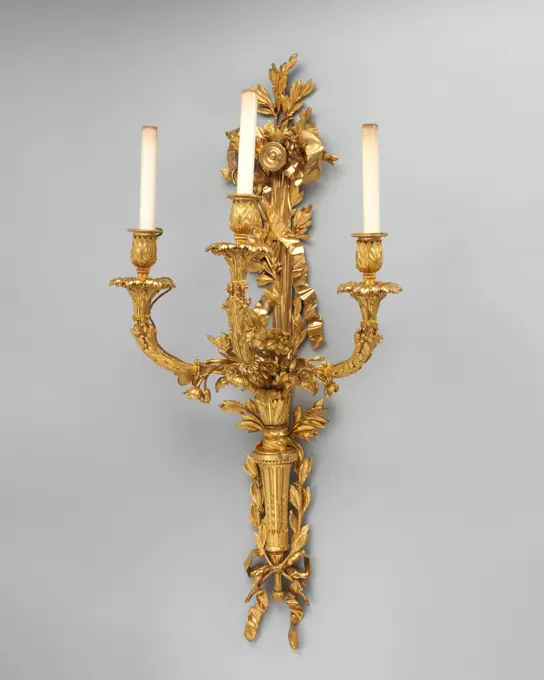
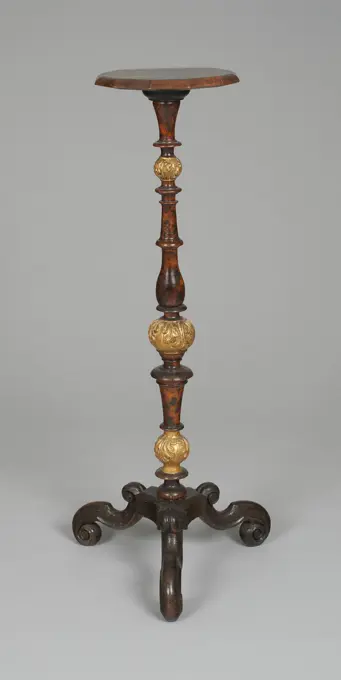
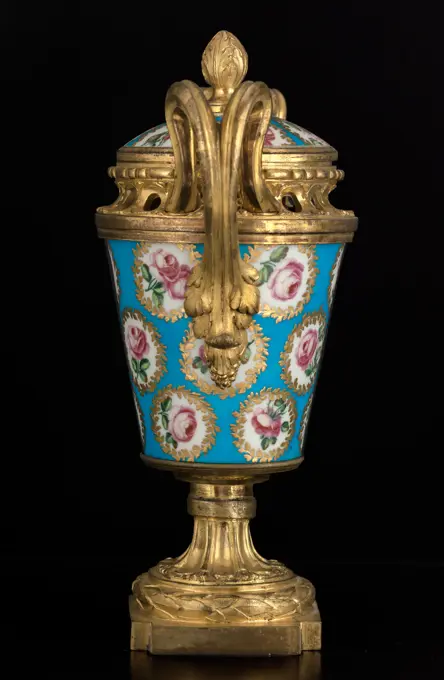
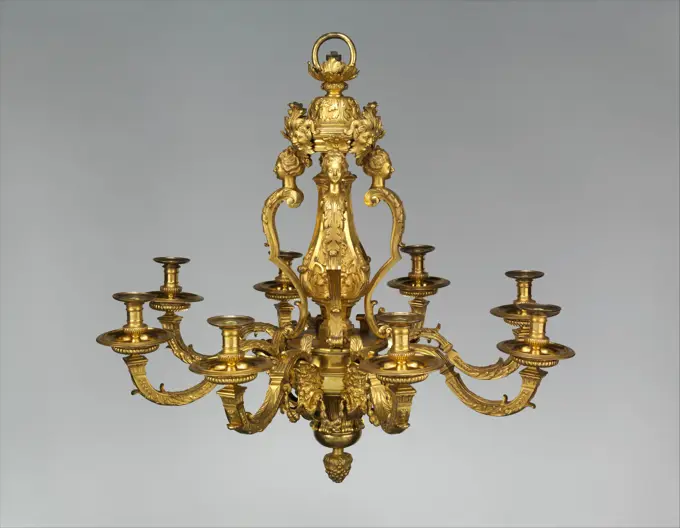
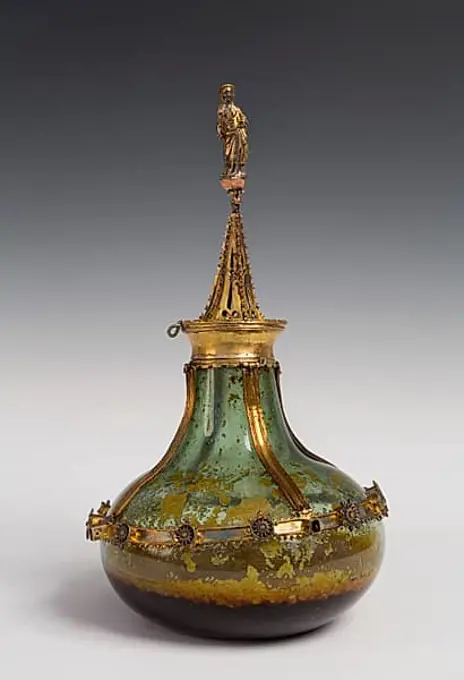
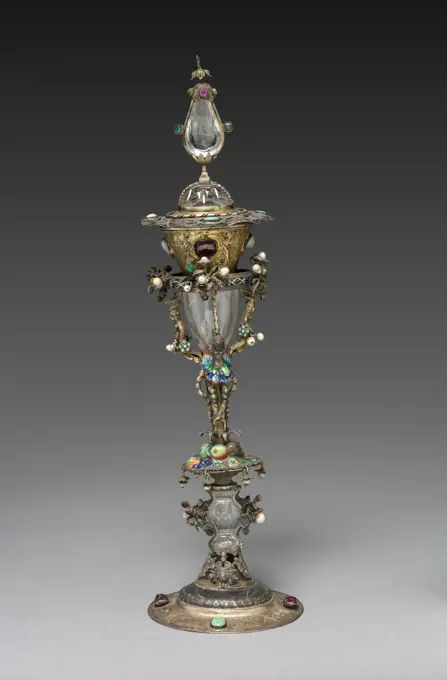
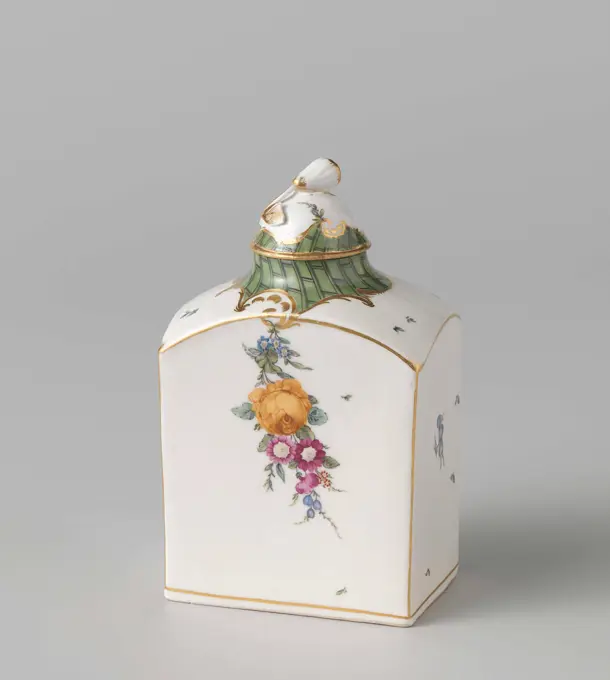
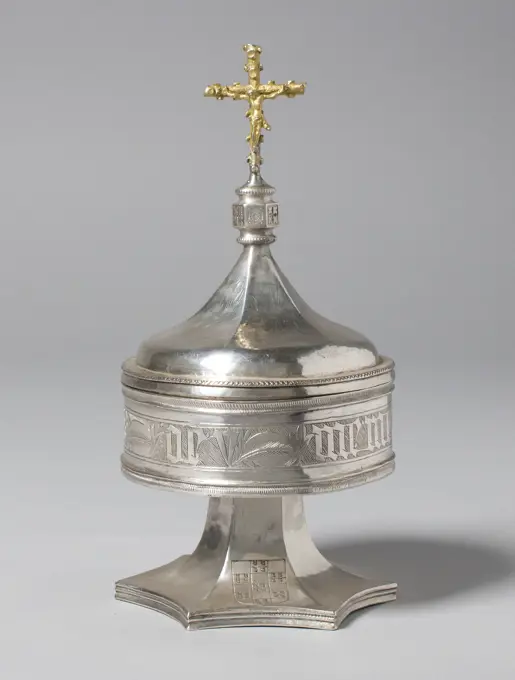
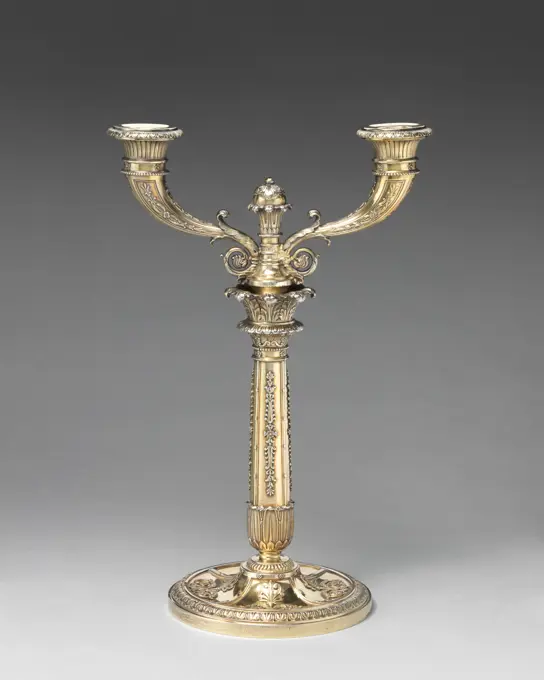
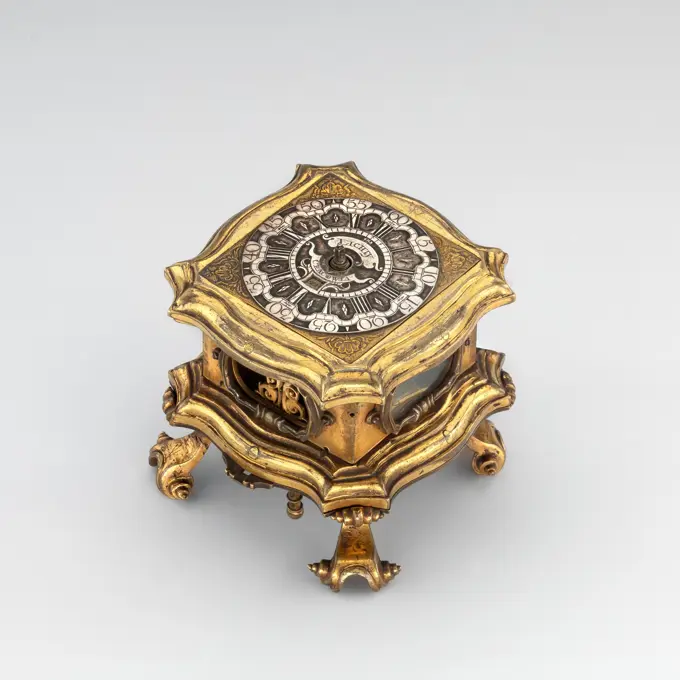
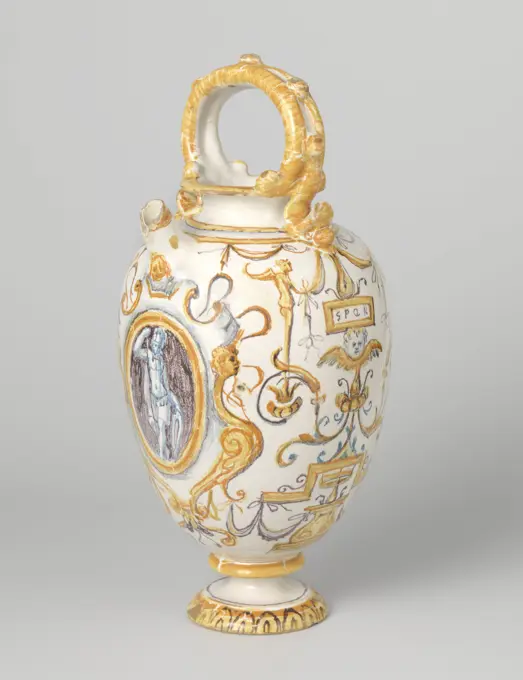
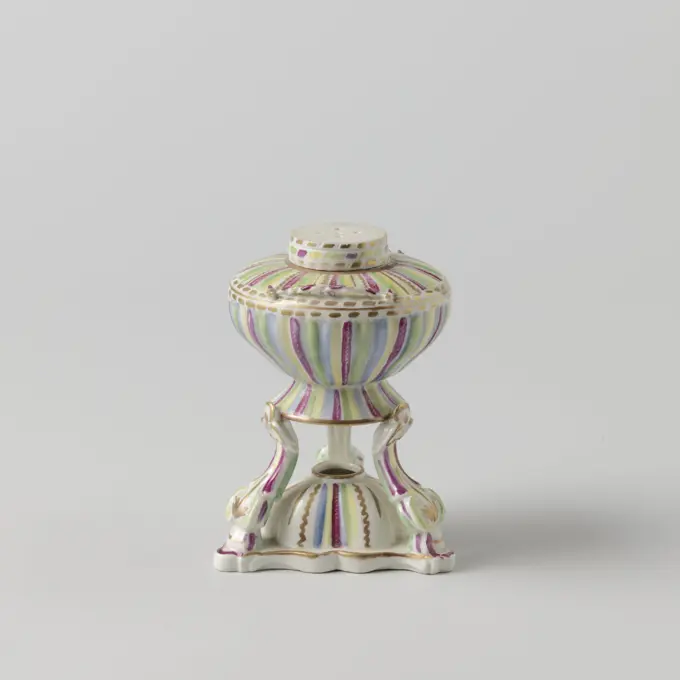
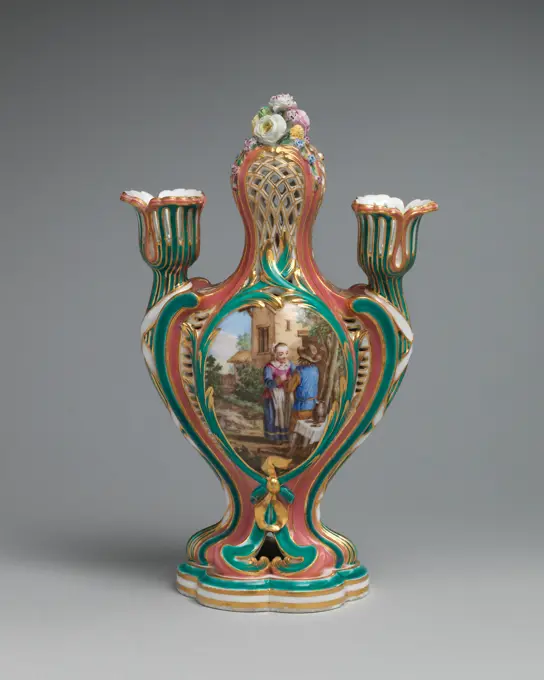
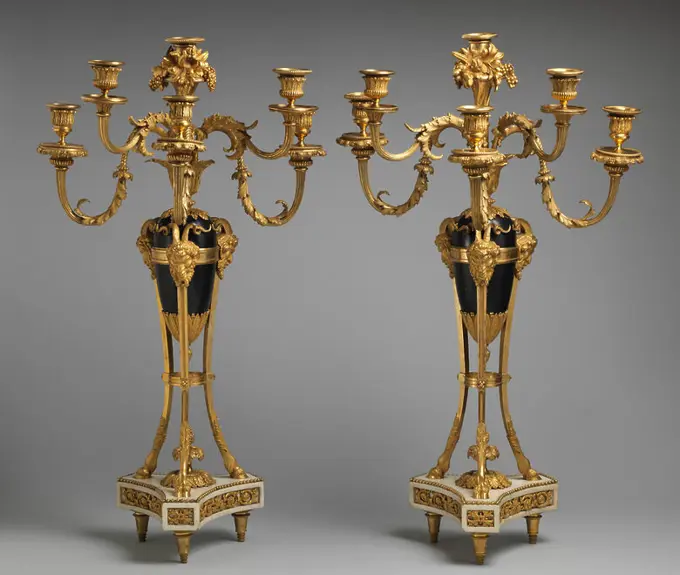
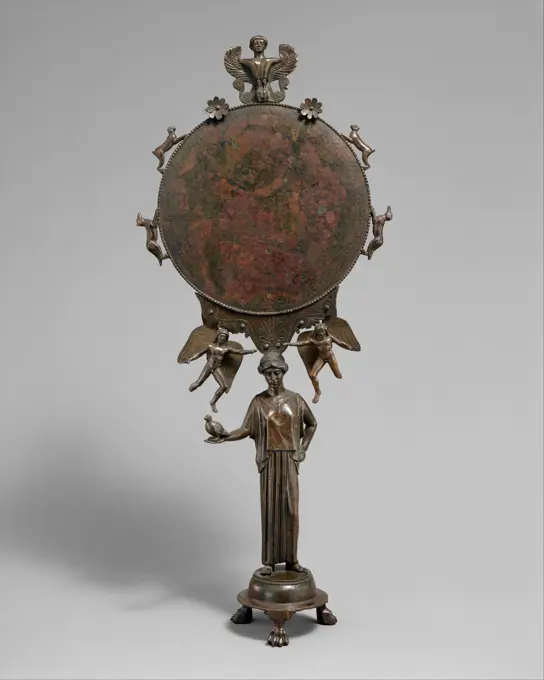
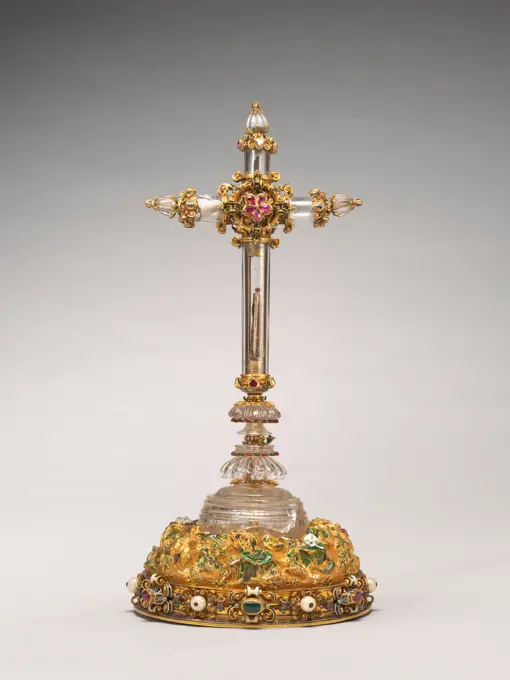
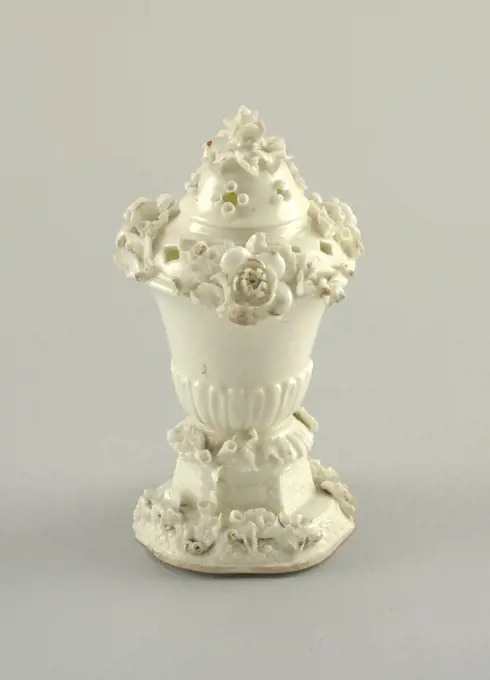
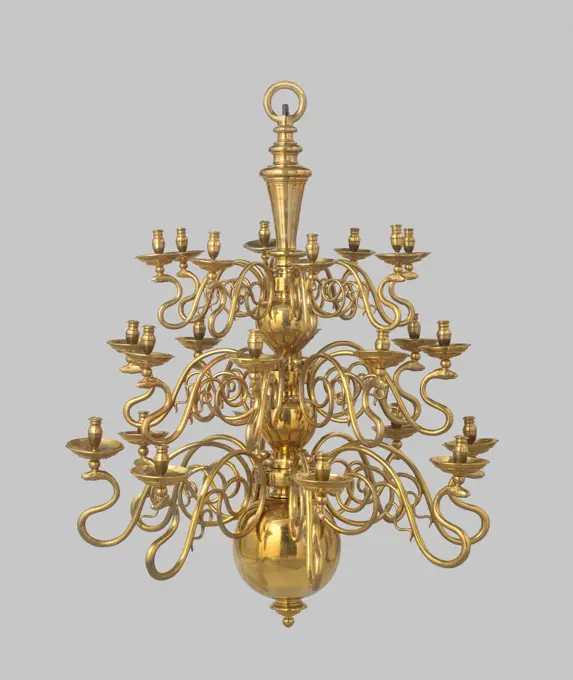
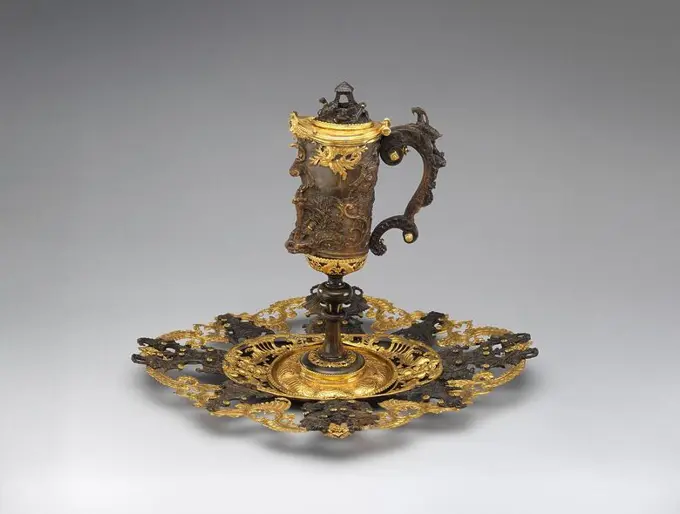
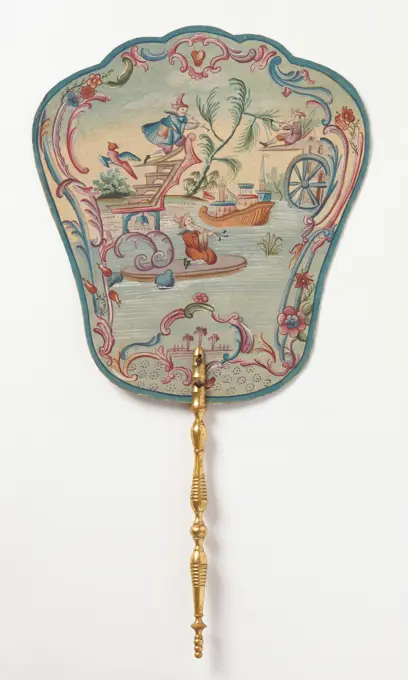
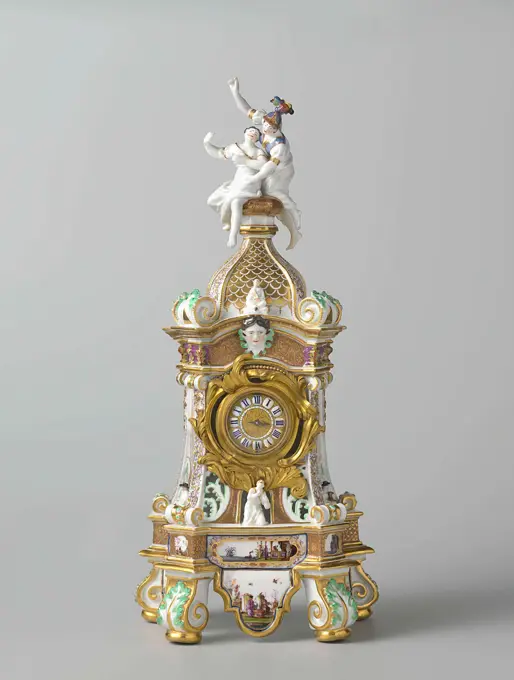
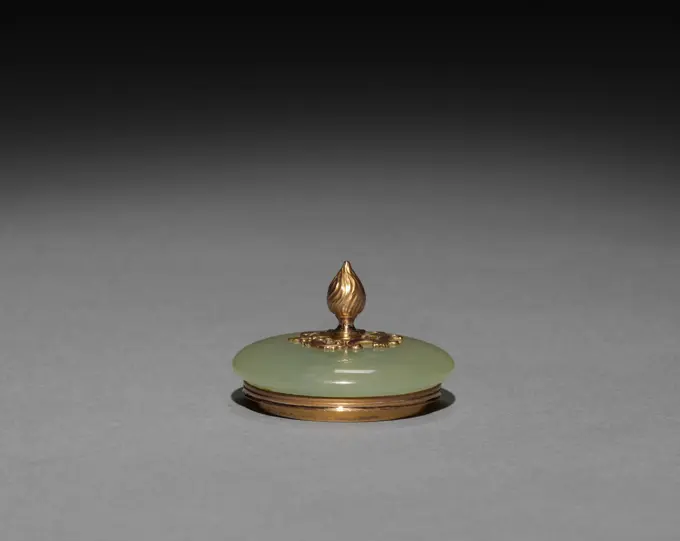
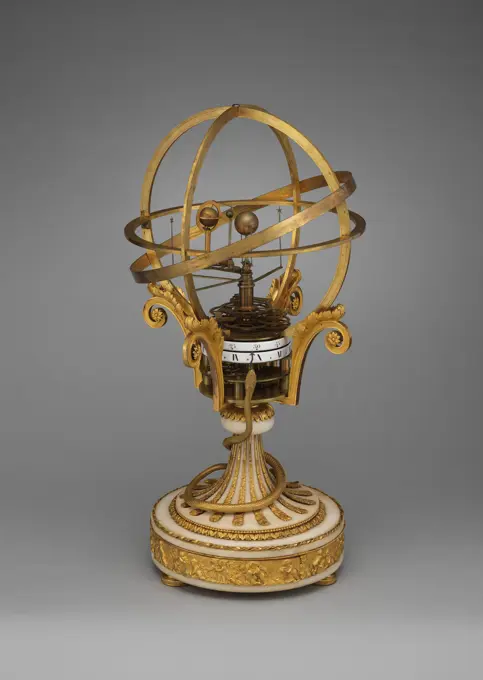
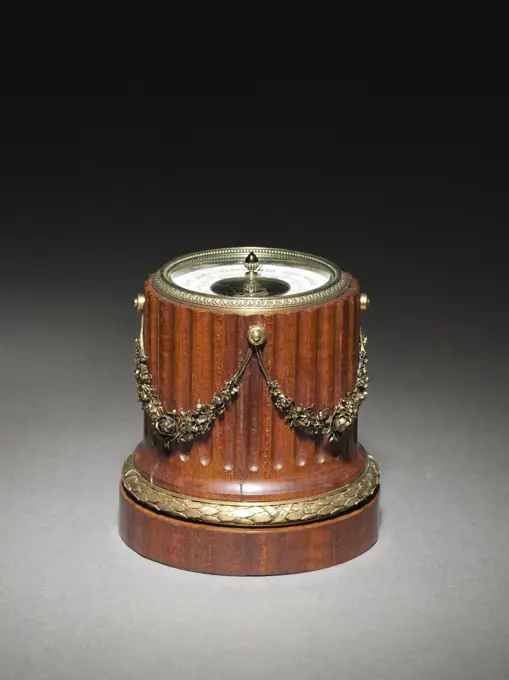
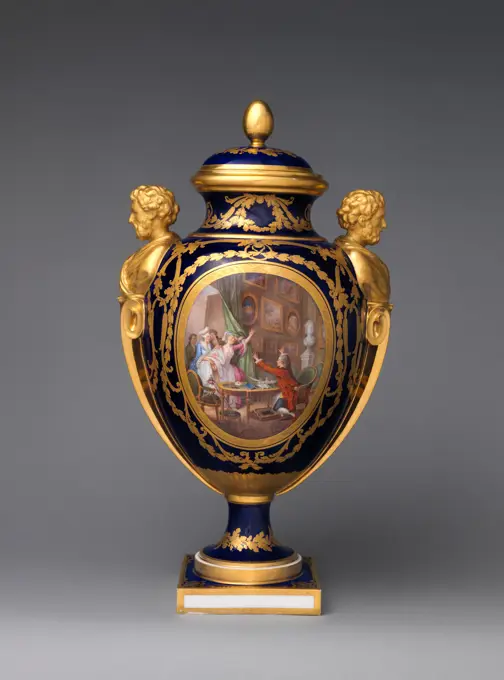
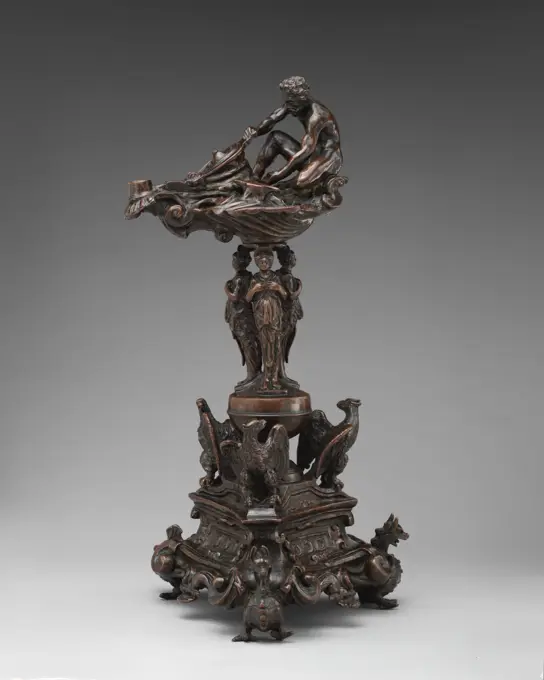
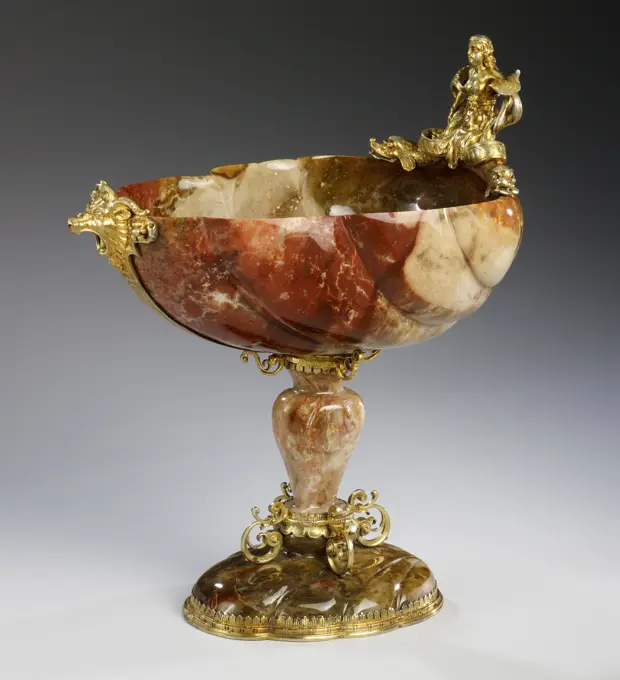
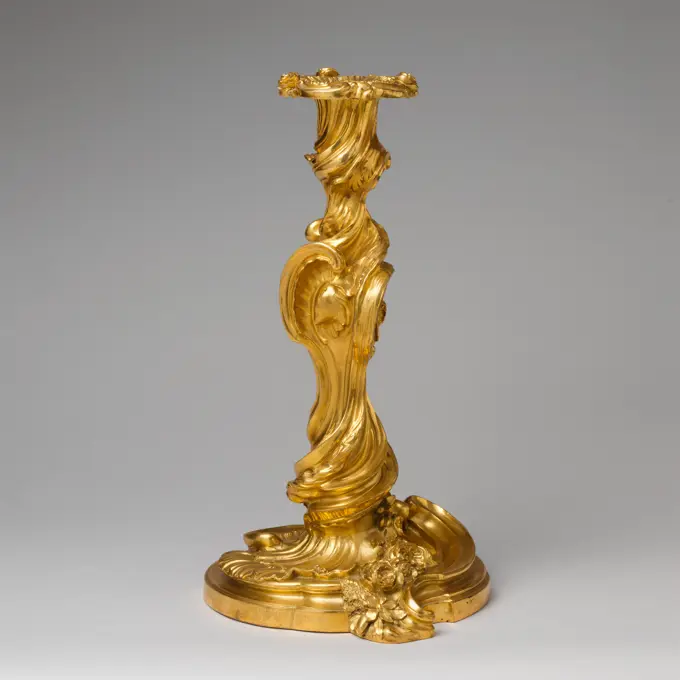
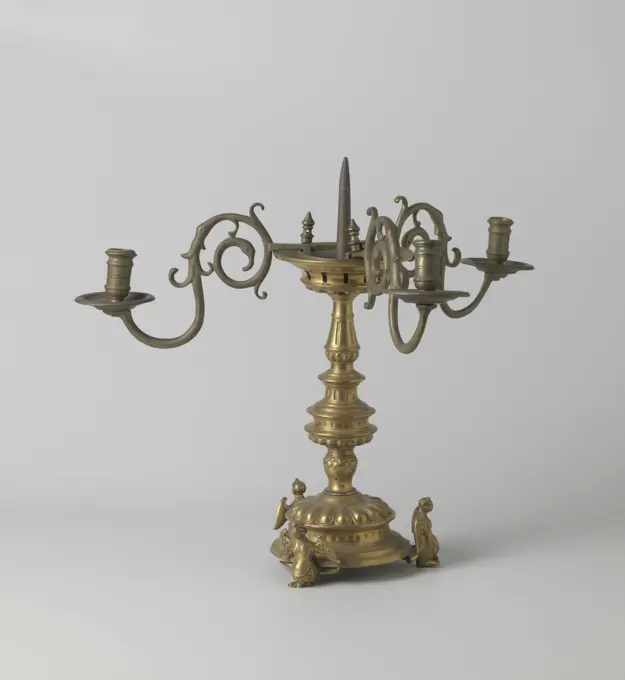
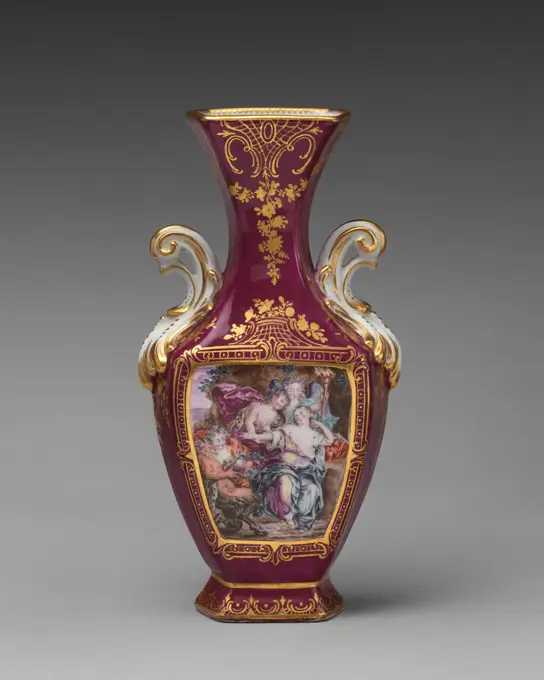
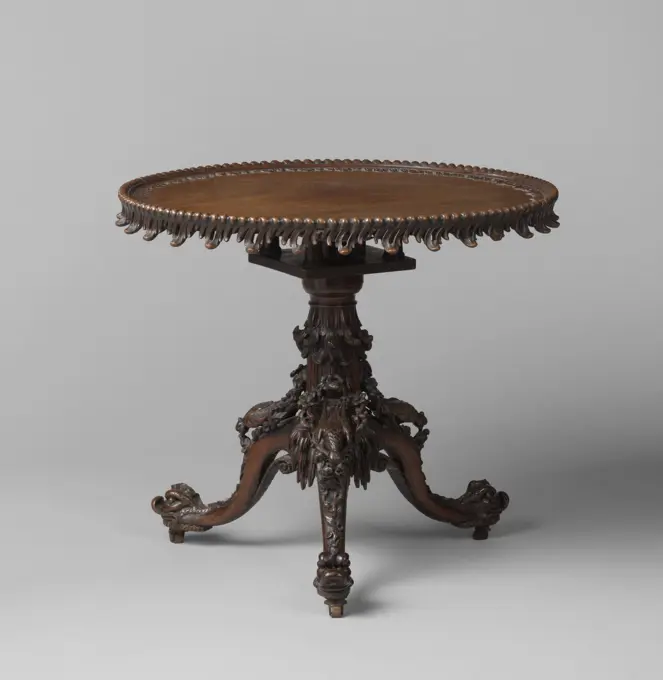
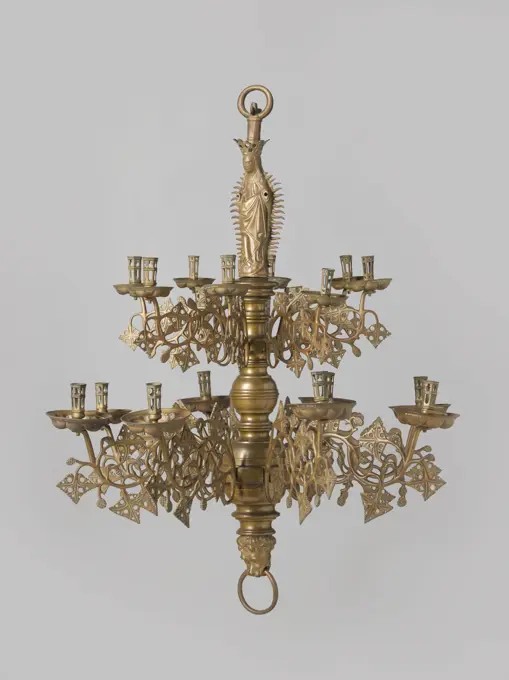
Arm with candle holder of candle crown of two heights, each with eight arms, 1525 - 1550 Candle arm belonging to a candle crown of two heights with maria figure at the top. The arm is bent twice and is decorated with nine grape bunches and five vine leaves. The round fat catcher is decorated at the bottom with six round lobes. The candle holder is six -flared, opened, placed on a double hollow -round -profiled pedestal, transferring to a protruding with thread. This is the fourth arm of the bottom ring, numbered with 4 round points. The candle holder is unnumbered. Southern Netherlands brass (alloy) casting Candle arm belonging to a candle crown of two heights with maria figure at the top. The arm is bent twice and is decorated with nine grape bunches and five vine leaves. The round fat catcher is decorated at the bottom with six round lobes. The candle holder is six -flared, opened, placed on a double hollow -round -profiled pedestal, transferring to a protruding with thread. This is Land;  beginning of the 19th century (1800-00-00-1810-00-00);Freiburg im Breisgau 16th Century (crystal); Augsburg 16th Century (mounts), Covered Cup with Shield of Arms of the Countess of Gleichen, c 1566 (crystal); 1566 (mounts) Freiburg-im-Breisgau 16th Century (crystal); Augsburg 16th Century (mounts), Covered Cup with Shield of Arms of the Countess of Gleichen, c. 1566 (crystal); 1566 (mounts), rock crystal and enameled gold, Widener Collection 1942.9.296Poison Cup. M. Urbiola; Spanish, 17th century; Spain. Date: 1605-1615. Dimensions: 20.3 x 19.4 cm (8 x 7 5/8 in.). Silver gilt. Origin: Spain. Museum: The Chicago Art Institute, Chicago, USA.Silver chiselded liturgical object, detail from the base depicting the Virgin and Child, Lombardy, Italy.Galvanoplastic reproduction of a komfoor. Galvanoplastic reproduction of a komfoor. Gold plated.Covered Beaker. Artist: Attributed to the Workshop of Sebastian Lindenast the Elder (German, Nuremberg 1460-1526 Nuremberg). Culture: German. Dimensions: Overall: 9 1/16 x 3 3/4 in. (23 x 9.5 cm). Date: ca. 1490-1500.During the Middle Ages, silversmiths in Nuremberg and other cities were generally prohibited from working in copper gilt in order to protect the lucrative market for precious wares. By imperial privilege, however, the Lindenast family was permitted to use copper, and this finely made vessel is probably from the workshop of Sebastian Lindenast the Elder. It is not marked, as it likely would be if it had been made in silver, but it is stylistically consistent with the work of Nuremberg silversmiths. In addition to its attractive profile and crisply engraved, lively design, the beaker is notable for its well-preserved gilded surface. Museum: Metropolitan Museum of Art, New York, USA.Lidded Vase, factory Leperre-Durot, c. 1785 Porcelain lid vase on a high, speeching base, ending in a square pedestal. The abdomen is cylindrical, where the upper part plays slightly and has two dolphin -shaped ears. The belly walks around to the foot and is decorated with modeled leaf vines in Canelures. Painted on the glaze in blue, red, pink, green, yellow, purple, black and gold. On the wide cylinder of the abdomen in Grisaille on one side a performance with a building bearing the weapon of the Dauphin and the inscription 'Spes et Amor'. On the right of this a putto with Minevra and a second putto, which drags the shield of Minerva away with a flower drink towards a vase on a pedestal. The other representation with putti that scoops coal into a (porcelain) Oven and a putto that models a female image. The narrow part of the abdomen with the weapon of the Dauphin or a crowned double L in a medallion surrounded by leaf vines between which chinoiseries, English and objects. The neck wiCovered Chalice late 15th century Spanish The rare openwork cover on this Spanish chalice, with its elaborate ornament drawn from late Gothic architecture, nearly overwhelms the form of the vessel itself. The exterior of the bowl is engraved in Gothic letters with the Latin text of the Hail Mary AVE MARIA GRACIA PLENA DOMINUS [TECUMthe greeting of the Archangel Gabriel to the Virgin Mary when he announced the forthcoming birth of Jesus. The six facets of the knop and the cover are embellished with pointed arches beneath which appear busts of Christ, the Virgin and Child, and saints. On the lobes of the foot are representations of the Crucifixion, the Instruments of the Passion, the Virgin and Child, and the Lamentation. Both the base and the cover bear the mark used by goldsmiths in Toledo during the fifteenth century.. Covered Chalice 471839Gold-plated silver jar with lid, decorated with the weapon Delft and the weapon of Gerard van Loon. A gold-plated silver cup. The foot, the trunk and the bottom of the chalice are decorated with shells, leaves E.D. in the style of Marot. The coat of arms of Delft is applied to the chalice on one side, the weapon of Gerard van Loon on the other side. On the lid, O.A. A woman's portrait occurs in a medallion. Brands: Delft; Boom = Memorial Sign of Cornelis van Dijk; S = 1723; lion.Arm of a candle crown in two heights, Anonymous, 1890 - 1910 The arm has an S-shape, ending out in a snake head and on the other end in bird heads. The arm is decorated with curls there. Screws have been applied in the protrusion on the candle holder, the arm or at the end of the connecting rod. In the middle the arm also has a stylized animal head. This is the sixth arm of the lower position ring, numbered with the number 6. Netherlands brass (alloy) casting The arm has an S-shape, ending out in a snake head and on the other end in bird heads. The arm is decorated with curls there. Screws have been applied in the protrusion on the candle holder, the arm or at the end of the connecting rod. In the middle the arm also has a stylized animal head. This is the sixth arm of the lower position ring, numbered with the number 6. Netherlands brass (alloy) castingThree-branch wall light (one of a pair) (bras de lumière) ca. 1785 French, Paris In eighteenth-century France, gilt bronze was extensively used for different types of lighting, ranging from freestanding candlesticks and candelabra to chandeliers and lanterns. Sconces or wall lights were usually placed on either side of a mirror so that the flames of their candles were reflected and multiplied in the glass. The torch, bow ribbon, and laurel leaf motifs are typical of the Neoclassical period.. Three-branch wall light (one of a pair) (bras de lumière). French, Paris. ca. 1785. Gilt bronze. Metalwork-Gilt BronzeCandlestand 1680-1690 London. Lacquered and gilded wood .Manufacture of Sèvres. Vase mounted. Porcelain, gilded bronze, 1770-1780. Paris, Cognacq-Jay museum. 79737-19 Anse, decorative art, bronze gilded, lid, gilding, manufacture of sevres, flower motif, porcelain, vase monte, 18th 18th 18th 18th 18th 18th 18 centuryEight-light chandelier ca. 1710 Possibly by André Charles Boulle French Richly ornamented with satyr masks and female busts, this type of early eighteenth-century chandelier has often been associated with the work of André-Charles Boulle. Granted the title of cabinetmaker and sculptor to Louis XIV in 1672, Boulle not only produced case furniture decorated with tortoiseshell and brass, examples of which are shown in this gallery, but also worked in gilt bronze. Several designs for chandeliers by Boulle are known but none corresponds exactly to this model.. Eight-light chandelier 239533Candlestick with three nodi, decorated with email, anonymous, c. 1175 - c. 1225 Gilded copper candlestick, decorated with email champlevé. The triangular base rests on three legs. The surfaces of the base are decorated with three circles in which a performance against a blue background can be seen, a man fighting respectively with a lion (Samson), A noble woman on horseback and a love couple. On the base is the trunk, which is decorated halfway with three nodes, the lower of which is decorated with birds, the top two with leaf vines. At the top is a fairly flat fat catcher with a pointed point to attach the candle. Limoges copper (metal). gilding Gilded copper candlestick, decorated with email champlevé. The triangular base rests on three legs. The surfaces of the base are decorated with three circles in which a performance against a blue background can be seen, a man fighting respectively with a lion (Samson), A noble woman on horseback and a love couple. On the base is the trunk, whiWall Light. Unknown maker, FrenchSalt. Netherlands, Amsterdam, circa 1620-1625. Furnishings; Serviceware. Silver gilt, carved rock crystalMonstrans van verguld koper.Monstrans of gold-plated copper. The hexagonal foot is engraved. With a luna within the cylindrical glass. On the spherical cover a dome with cross. A cross on either side of the dome.Ampoule with relic liquid in the German Blade MuseumBlood Reliquary, 1500s. Italy (), 16th century. Gilt silver; overall: 35.6 cm (14 in.); diameter of base: 10 cm (3 15/16 in.); average: 4.7 x 6 cm (1 7/8 x 2 3/8 in.).Candlestick;  19th century (1801-00-00-1900-00-00);Tea bus, painted with flowers and ladder motif. Porcelain tea bus. Painted with flowers and a ladder motif in bright colors.Candlestick, one of a pair, 20th century, 18 x 6 x 6 in. (45.72 x 15.24 x 15.24 cm), Gilt copper, Mexico, 20th centuryCovered Sugar Bowl c 1765-1775 Wilmington. Wealthy colonists ordered silver sugar dishes and cream pots to complement their English ceramic or Chinese export porcelain tea or coffeepots. Complete matching tea sets were not common until the late 18th century. The double-bellied form of these objects was popular throughout the colonies during the Rococo period. The decoration, called chasing, was achieved by working the surface with a small hammer and chisels.. Silver . Bancroft WoodcockPyx late 15th century Spanish. Pyx. Spanish. late 15th century. Silver, partly gilt. Metalwork-SilverTwo-branch candelabra 1887-1911 André Aucoc. Two-branch candelabra. French, Paris. 1887-1911. Silver gilt, mother-of-pearl. Metalwork-SilverTazza with polychrome painting. Tazza with trumpet-shaped base with beaten edge. The massive, cylindrical strain, which is separated from the chalice and the strain, has a ribbed nodus between two discs in the middle. Scaled chalice, optically blown with nozzles placed ribs and a wide, flat edge. The foot decorated with leaf refrices, the trunk with white rings, the edge of the chalice with a gilt scaffolding, enlivened with dots. On the nodus remains of gilding.Vase decorated with flowers and pigeons. Porcelain vase consisting of a four-side barrel that rests on four claw legs on a four-sided basement. The loose lid has a hole in the middle around which five smaller ones. The dominating colors are blue, gold and salmon. The blue colored barrel has a medallion with three flowers on two sides, the two other sides are decorated with a pigeon over a garland suspended from two heads. Golden tendrils and edges make the further decoration. The blue legs are completely plated. The pedestal has a "Jeu de Fond" on each side ornament in gold on salmon-colored ground; A corresponding decoration occurs four times on the edge of the barrel in gold on white fond and five times on the lid in gold against a blue ground. Note: gilt here and worn out here; Shard out of inner edge.. Hanging ring, the figure of a naked woman with spear and vaantje, two iron rods, two copper skewers. The round hanging ring leaves at the bottom in a severe tube piece. The standing naked women's figure (Venus) is on a ground with a hole in the middle (to be able to attach a key in the iron rod) and a notch on the edge. She holds a rocket with a vaantje. To her neck she wears a chain (). The hair is draped around her head. On the head a short iron rod has been applied to the hanging ring. The strain is profiled by bulb and hollow, at the top of a stand ring with notches for the three ornaments, then a stand ring with notches for the three upper arms, then a stand ring with notches for the lower six arms and with six holes locating the on one Bulb seated bazuinengels. All notches and holes are marked with one, two or more points. In the lower distressing end of the trunk, three holes were drilled and an iron ring is riveted with the help of two cams. With this, the trunk rests on theArm of a candle crown, anonymous, 1700 - 1800 The S-shaped arm runs towards the trunk in a stylized dolphin head and outside in a thickening, in which the screw hole is applied. The round -profiled and grooved -rings -decorated candle holder was screwed with the fat -lined fat catcher with grooved rings. The arm, the fat catcher and the candle holder are cast using the same models as the other arms, fat catchers and candle holders. This is the sixth arm of the middle stand ring, not marked. Northern Netherlands brass (alloy) casting The S-shaped arm runs towards the trunk in a stylized dolphin head and outside in a thickening, in which the screw hole is applied. The round -profiled and grooved -rings -decorated candle holder was screwed with the fat -lined fat catcher with grooved rings. The arm, the fat catcher and the candle holder are cast using the same models as the other arms, fat catchers and candle holders. This is the sixth arm of the middle stand ring, not marked. Northern NeReliquary Monstrance with Relics of Saints Anianus and Lawrence. German, probably Brunswick (Braunschweig). Date: 1375-1400. Dimensions: 19.1 × 6.4 cm (7 1/2 × 2 1/2 in.). Silver and rock crystal. Origin: Brunswick. Museum: The Chicago Art Institute, Chicago, USA.Sugar spreader, painted with flowers, anonymous, c. 1760 - c. 1780 Sugar spreader Purple painted with flowers. Marked a 2. Germany (possibly) . Sugar spreader Purple painted with flowers. Marked a 2. Germany (possibly) .Tiled clock; Lichty, Jan Jakub (Fl. 1738-1758); The forties of the 18th century (1740-00-00-00-1749-00-00);Nepros, Edward (1870-1928) - collection, Palmeta (ornament), plant (ornament), volutes, purchase (provenance), clocksVase, decorated with warnmen in cartouche and inscription SPQR, Anonymous, c. 1580 - c. 1640 Vase of multicolored painted majolica. The inverted egg -shaped vase is on a profiled foot. A standing ear is attached to the short neck. Under the spout a cartouche is painted within which a warrior with shield and spear. On the other hand, a cartouche has been painted within which a warrior with a sword and lifted right arm. The SPQR letters are painted within two cartouches. Urbino earthenware. tin glaze. lead glaze majolica Vase of multicolored painted majolica. The inverted egg -shaped vase is on a profiled foot. A standing ear is attached to the short neck. Under the spout a cartouche is painted within which a warrior with shield and spear. On the other hand, a cartouche has been painted within which a warrior with a sword and lifted right arm. The SPQR letters are painted within two cartouches. Urbino earthenware. tin glaze. lead glaze majolicaMonstrans of the Maagdenhuis, Thomas Bogaert (attributed to), 1642 Cylinder monstrans of gilded silver, on a hedged foot. On top of a globe with cross. Amsterdam silver (metal). glass. diamond (mineral) gilding Cylinder monstrans of gilded silver, on a hedged foot. On top of a globe with cross. Amsterdam silver (metal). glass. diamond (mineral) gildingIncense burner, porcelain factory The Hague, 1777 - 1790 Incense burner with lid, consisting of a ribbed jar on three legs decorated with rocaille volutes and leaves in relief. The jar is decorated with multicolored stripes. Not marked. The Hague porcelain Incense burner with lid, consisting of a ribbed jar on three legs decorated with rocaille volutes and leaves in relief. The jar is decorated with multicolored stripes. Not marked. The Hague porcelainPotpourri vase with candleholders (pot-pourri à bobêche) (one of a pair) ca. 1759-60 Sèvres Manufactory French These potpourri vases with candleholders reflect the quest for innovation that characterizes so much of the Sèvres factorys production of the 1760s. The vases could have been used as potpourris (the scent of petals inside could waft through the panels of pierced trelliswork at the top), and the two flanking candle sockets allowed them also to serve as candelabra, yet it seems probable that they were primarily intended for decoration. Both the unusual and complex form and the dual ground colors of pink and green made them completely unlike anything being produced elsewhere on the Continent or in Britain at this time.As mentioned earlier, the English businessman Thomas Bentley disliked some of the models he saw at the Sèvres factory when he visited there in 1776, and he enlarged on the topic in his journal: “They have an immense number of ornamental vases, highly enriched with Pair of candelabra. Culture: French. Dimensions: Overall (each): 29 1/2 × 17 1/2 × 11 1/2 in. (74.9 × 44.5 × 29.2 cm). Date: ca. 1775. Museum: Metropolitan Museum of Art, New York, USA.Candlestick with challenge trunk and eight-pubic foot. The candlestick is composed of the following parts of plate driven: the foot, the nod, the strain, the fat catcher and the candle pin. Two profiled rings are located over and bottom of the trunk. The free flat nodus is placed on the wide, vaulted, with eight lobes, the fairly flat nodes, the decoration of which matches that of the foot. The trunk has been taught. The fat catcher has the shape of an eight-leaved rosette. The candlestick has a hole on the edge of the foot and above an opening in the nodus. Stem and fat catcher are soldered.Bronze mirror with a support in the form of a draped woman mid-5th century B.C. Greek, Argive The integration of three-dimensional figures into the design of a functional object is a hallmark of Greek art. A variety of elements-human, animal, and mythological-animate this mirror disk. A statuette of a woman standing on a base supports the mirror. Her simple woolen peplos falls in columnar folds. Her serious expression and quiet stance are typical of the restrained early Classical statues that were created from about 480 to 450 B.C. Two winged Erotes hover about her head. A hound chases a hare up either side of the disk; a siren, part bird and part woman, perches on the top. Listen to experts illuminate this artwork's story Listen Play or pause #1043. Bronze mirror with a support in the form of a draped woman Supported by Bloomberg Philanthropies We're sorry, the transcript for this audio track is not available at this time. We are working to make it available as soon as possible.. BronSpanish 16th Century Reliquary Cross, 1550 1575 Spanish 16th Century, Reliquary Cross, 1550/1575, with late 19th century alterations, enameled gold, rock crystal, diamonds, emerald, rubies, glass pearls, Widener Collection 1942.9.295Pendant scent bottle ca. 1870-90 Reinhold Vasters German. Pendant scent bottle 460807Cassolette (Perfume Burner), Mennecy Porcelain Manufactory, French, active 1735 - 1773, soft paste porcelain, In the form of a vase with vertical gadrooning. Modelled flowers on the pierced dome lid and octagonal base. Unpainted blanc de chine” surface. Ceramic body without glaze visible at base., France, 1750-1765, ceramics, Decorative Arts, cassolette, cassoletteCandlestick, multicolored painted with a kakiemon decor, meissener porzellan manufaktur, c. 1730 - c. 1735 Octagonal candlestick of painted porcelain. The candlestick has a vaulted foot and a profiled, baluster -shaped tribe. The painting consists of sprinkling flowers and twice the tiger for bamboo motif and twice a crane. The candlestick is marked. Float porcelain Octagonal candlestick of painted porcelain. The candlestick has a vaulted foot and a profiled, baluster -shaped tribe. The painting consists of sprinkling flowers and twice the tiger for bamboo motif and twice a crane. The candlestick is marked. Float porcelainArm of a candle crown in three heights, Anonymous, 1717 chandelier The S-shaped arm is equipped with a ridge on the tribe side to secure it with a pin in the stand ring. At the trunk, the arm is decorated at the end and to the center with two stylized dolphin heads and with curls, the shape of which is derived from the lobe ornament. To the outside, the arm ends in a thickening, in which a hole provided with a thread is applied to attach the candle holder to the fat catcher. The arm is cast using the same model as the other arms of the wreath. The candle holder is cylinder -shaped with profiled excellent edge and with a baluster foot, which turns into a threaded end, in which the center hole at the bottom. The fat catcher is deepened once at the top to the middle. At the bottom it is profiled around the hole in the somewhat spherical center and the edge is ribbed. The fat catcher has been cast using the same model as the other fat catchers of this wreath. The pin is equipped with a vasArm of a candle crown in three heights, Anonymous, 1625 - 1650 The arm is provided with a ridge on the tribe side, in which a hole is applied to secure them with a pin in the stand rings. The S-shaped arm has the shape of a hose with a tail-wrinkled tail and outside a lifted head with a round button on it, in which the hole provided with a thread is applied to confirm the candle holders with the fat catchers. The arm is cast using the same model as the other arms of the wreath. The round candle holder is vase -shaped with a profiled rib. At the top she has two holid profile, and a protruding edge and at the bottom of a foot consisting of two holy -round profiles. The foot runs out in a rejuvenating screw end with a center hole. The convex fat catcher is smooth at the top and has fish bladder -like godrons and a rib at the bottom. The fat catcher is cast using the same model as the other fat catchers of the wreath. The pins are decorated with convex buttons. This is the seventh arm of tRinceaux surrounding lion with scepter ca. 1730 Bohemian. Rinceaux surrounding lion with scepter 195958Urn, Amethyst spar, gilt bronze, Amphora-shaped body of solid spar supported on fluted pedestal on square base. Pedestal, top and mountings of gilt gold bronze. Top is an artichoke rising from a circular cluster of leaves. Two rams heads at shoulder, on either side., Derbyshire, England, ca. 1815, metalwork, Decorative Arts, UrnCoupe. The simple shape of this coupe emphasizes the natural colouration of the agate. A jeweller turned the cup into a work of art. He added a rock-crystal lid and foot, and crafted the gold soldier carrying the entire object on his shoulders.. Cup of painted porcelain. The cup is painted on both sides in gold with a chinoiserie on a console. The cup has not been marked.Candlestick with spring mechanism, anonymous, 1500 - 1700 Forging iron candlestick on three flat legs, which curls in the bottom. Above it a leaf -shaped flat plate with a raised edge sounded, which serves as a fat catcher. In addition to the point of the leaf shape, the trunk is riveted, which is the bottom and top plate, and in between in the middle with a flat, serrated disc between two scanned spherical shapes. At the top of the trunk curls slightly, creating a small handle. The candle holder with a crown -like ornament is on the trunk. At the bottom of the trunk the spring is sounding, ending in the candle holder and decorated with some worked curls and other ornaments between the spring and the trunk. D.m.v. The spring is adjustable the height of candle. West-Europa iron (metal) forging Forging iron candlestick on three flat legs, which curls in the bottom. Above it a leaf -shaped flat plate with a raised edge sounded, which serves as a fat catcher. In addition to the point of thEwer and stand (présentoir). Culture: Austrian, Salzburg. Dimensions: Overall (Ewer): 12 13/16 in. (32.5 cm); Overall (Basin): 17 5/16 × 14 15/16 in. (44 × 38 cm). Maker: Martin Gizl (Austrian, 1707-1786). Date: 1758.Worth its weight in gold, Alpine Ibex horn was prized for its purported ability to prevent poisoning as well as its aphrodisiac properties. The hunting of the Alpine Ibex, an endangered wild goat species, was restricted to the prince-archbishops of Salzburg; artworks made of Alpine Ibex horn were sent to foreign courts as diplomatic gifts. The manipulation of this delicate material represents man's conquest over nature and depictions of the hunt as a courtly pastime dominate the decoration. The patron of the set, Count Philipp Carl von Seinsheim, was a nephew of four bishops of the Schönborn dynasty, the main art patrons of Franconia and the Rhineland in the 18th century. Museum: Metropolitan Museum of Art, New York, USA.Handscreen (France); painted paper leaf, turned and gilded wood handleMantel clock (pendule) with Arachne and Athena. Various examples of this clock are known. Princess Maria Josepha gave one to her father, Elector Augustus II ofSaxony, in 1721. The very three-dimensional figure group surmounting it was one of Johann Gottlieb Kirchners earliest works for Meissen. The group was also used on the goblet on view next to the clock.Galvanoplastic reproduction of the scale with Andreas and Hieronymus from the Lüneburger Ratssilber, Fa. Vollgold & Sohn, c. 1875 - c. 1880 Galvanoplastic reproduction of a bowl on foot. In the middle of the scale representations in Andreas's relief and Hieronymus on a green enameled hill. Partially gilded. Berlin copper (metal). silver (metal) gilding Galvanoplastic reproduction of a bowl on foot. In the middle of the scale representations in Andreas's relief and Hieronymus on a green enameled hill. Partially gilded. Berlin copper (metal). silver (metal) gildingMaría Luna Chalice with enamel and shield, 14th century. Museum: MUSEU NACIONAL D'ART DE CATALUNYA. Author: BERNAT DARIES.Cover for a Miniature Teapot, 1886-96. Mikhail Evlampievich Perkhin (Russian, 1860-1903), House of Fabergé (Russian, 1842-1918). Gold, bowenite; The House of Fabergé specialized in the creation of little treasures intended as opulent personal gifts. In creating luxurious accessories for a desk or tabletop, Fabergé often used native hardstones such as multicolored agate and quartz, green nephrite, pink rhodonite, rock crystal, and pale green bowenite found in the Ural Mountains of western Russia. Fabergé's designers often paired hardstones with gold mounts, particularly in the St. Petersburg workshop where the goldsmiths were concentrated.Pedestal Dish, 1800s. After Saint-Porchaire (French). White earthenware with inlaid decoration; diameter: 14.4 x 19.4 cm (5 11/16 x 7 5/8 in.).Cloches (dish covers), coolers, soup tureens, sauceboats, salt cellars, pepper and mustard pots, 1819  Paris silver (metal). gilding (material)  Paris silver (metal). gilding (material)Masked Figure Pendant. Culture: Tairona. Dimensions: H. 5 1/4 x W. 5 3/4 in. (13.3 x 16.6 cm). Date: 10th-16th century.The Tairona people of the Sierra Nevada de Santa Marta in northern Colombia produced some of the grandest and most complex gold objects ever made in the Americas. This pendant is an excellent example of the skill and virtuosity possessed by Tairona goldworkers. Of considerable volume, it depicts a broad-shouldered male figure standing in a confrontational hands-on-hips stance. His head is that of a crocodilian or bat. He is wearing an animal mask with a square toothy snout and diamond-shaped nose leaf. Covering the head is an enormous headdress that is as tall as the figure itself. It has two big-beaked birds on the front of its cap and elaborate sidepieces with detailed spiral and braided elements. The figure may portray a ruler, a supernatural ancestor, or a shaman in the state of symbolic and spiritual transformation, in which its features assume those of a helpingOrrery clock 1790 Louis Thouverez Made by gifted Parisian clockmaker Louis Thouverez, this mechanical model of the solar system, widely known as orreries,” was likely made for an aristocrat. Orreries were much admired because, as three-dimensional models, they made possible the observation of the universe without the use of special lenses and independent of variable weather conditions. Thouverez was clockmaker to the duke of Orleans, who despite voting for the execution of his cousin King Louis XVI, subsequently followed him to the guillotine in 1793.. Orrery clock. French. 1790. Cast and gilded bronze, Carrara marble, copper, brass, steel, enamel. HorologyImperial Barometer, 1900-1901. Johan Viktor Aarne (Finnish, 1863-1934), House of Fabergé (Russian, 1842-1918). Palisander, silver gilt, ruby; overall: 14 x 12.5 cm (5 1/2 x 4 15/16 in.).Vase with cover (vase des ges) (one of a pair) 1788 Sèvres Manufactory French Two vases des ges in the Museum's collection are among the most significant pieces of Sèvres porcelain in a large and distinguished collection. Both vases represent the first or largest size of the vase des ges, measuring 19-1/2 inches high. This model was produced in three sizes, and the type of busts that serve as decorative handles varied according to size, with busts of bearded men found on examples of the first size. Both of the Museum's vases are decorated with a dark blue (beau bleu) ground, an elaborate figural scene (mignature) on the front reserve, and a back reserve depicting a large floral arrangement in a vase on a marble top. The two vases are decorated with identical patterns of gilding, composed predominantly of garlands of laurel leaves and elongated scrolls that encircle the neck and frame the oval reserves. Each vase bears the painter's mark of Charles-Nicolas Dodin (active at Sèvres 175Vase with four carte-de-visite portraits. .Pendant in the form of Cupid in a niche. Efforts to reproduce a design quickly and simply were made as early as the Renaissance. Looking closely at this pendant, one can see that it is assembled of various parts: the niche, the little figure and the settings of the precious stones are joined together with screws.Table Clock. Georg Metzner (Germany, Silesia, Neusalz, active 17th century). Germany, circa 1650. Furnishings; Accessories. Silver, gilt bronzePair of Bulb Vases 1889 Minton(s) This pair of vases by Mintons are based on a model developed at Sèvres in the eighteenth century. Their manufacture just before the turn of the twentieth century points to Victorian Englands fascination with the revival of historical styles such as the French Rococo, a topic studied by the early feminist author Emilia Dilke.. Pair of Bulb Vases. British, Stoke-on-Trent, Staffordshire. 1889. Pte-sur-pte on bone china with gilding. Ceramics-PotterySpice box 1602/3 W. R., London The intricate ornament on this scallop-shaped box reflects the late Elizabethan taste for Antwerp Mannerism; indeed, many specialized workers active in Londons goldsmiths trade came from the Spanish Netherlands. Although shell-shaped boxes such as this one are sometimes referred to as spice boxes, according to early seventeenth-century inventories, they were used for serving sugar, an expensive delicacy. The English often sweetened their wine with sugar or honey, a habit that persisted through the seventeenth century.. Spice box. British, London. 1602/3. Silver. Metalwork-SilverMiniature plate warmer ca. 1720-30 David Clayton British. Miniature plate warmer. British, London. ca. 1720-30. Silver. Metalwork-Silver-MiniatureSixteenth-century-style oil lamp in a stand 19th-20th century After an original by Leone Leoni Italian. Sixteenth-century-style oil lamp in a stand. After an original by Leone Leoni (Italian, Menaggio ca. 1509-1590 Milan). Italian, Rome. 19th-20th century. Bronze. Sculpture-BronzeContinental footed porcelain cup, Virginia 1878-89 Joseph S. Potter. Continental footed porcelain cup, Virginia 21470. Marble table bath from the table of painted walnut on four overhoeks placed S-shaped legs, decorated with acanthus leaf and lobe ornament and connected by rules.Drinking cup, c. 1600, Joerg Ruel, German, (Nuremberg), active about 1598, died 1625, 8 1/2 in. (21.59 cm) (H.), Agate, silver, gilt, Germany, 16th-17th centuryPair of Wall Lights.Anonymous. Fire. Chiseled and gilded bronze. 1750. Paris, Carnavalet museum. Furniture, furniturePair of candlesticks (flambeaux or chandeliers) 1735-50 After designs by Juste Aurèle Meissonnier French In the era before gas lighting and electricity, candles played a principal role in illuminating the interior of a house. The number of candles lit was an indication of the status of the owner; beeswax candles, preferred over tallow because they burned cleaner and had a more pleasant smell, were enormously expensive. No wonder, then, that visitors commented on the quantity of light at certain eventsas Philip Thicknesse did in his Useful Hints to Those Who Make the Tour of France (1768). The table at a dinner he attended in 1767 "was illuminated with upwards of sixty wax lights."[1The exuberantly asymmetrical model for this candlestick was the work of Juste-Aurèle Meissonnier, one of the leading Rococo designers. Active also as architect, painter, and silversmith to Louis XV, Meissonnier rendered three drawings in order to show from all sides this candlestick with its loosely spiralJUE vase (common name). Céladon. Cernuschi Museum, Asia Museum of Asia in the city of Paris.Homemade dot in a leather case; Klimaszewski, Kazimierz (Ca 1803-1853); around 1840 (1835-00-00-1845-00-00);. Hexagonal vase or pulp of stoneware. With a multicolored decoration in email. It is proposed, among other things: Venus, Mercury, Saturn, Jupiter, Mars and Soll and the Year 1689.Candlestick on three legs in the form of sirenen, anonymous, anonymous (rejected attribution), c. 1500 - c. 1600 The three legs, the foot, the trunk, the fat catcher and the candle pin are cast separately. The legs have the shape of sirens. The profiled foot is decorated with grunts on top. The trunk consists of an inverted baluster decorated with leaf motifs, a middle part that is decorated with grunts and cannelures and has three sections, and a baluster, which is also partially decorated with grunts at the bottom and has cannelures above it. The fat catcher is also fitted with grunts on the bottom, has twelve openings in the wall in the form of standing rectangles and a profiled rim. The grooves of the lathe can be seen at the bottom of the candlestick. The color of foot and trunk deviates slightly. The cavity in the trunk is closed with tin closed and the legs are re -attached. The candlestick has attachments with a pin and a fat catcher in the middle and three arms with candle holMiniaturowa oinochoe. unknown, authorTINTERO. Location: PRIVATE COLLECTION. MADRID. SPAIN.Lazio Roma Velletri Museo Capitolare7. Hutzel, Max 1960-1990 Medieval: Breviaries (two, 14-15th century); "The Passion" on vellum (French school, late 13th century); reliquaries. Post-medieval: Paintings, frescoes, vestments, sculpture, metalwork, panel painting Object Notes: Bibliographic material housed in Center library. Hutzel photo campaign dates: one undated, another November 9, 1985. It is likely that notes for the Pinacoteca Cattedrale (no separate Hutzel entry) describe items under this heading. TCI seems to indicate that the Museo Capitolare is adjacent to the cathedral. As well, some prints are missing; the initial Hutzel entry indicates that there are 422 prints. At this count, I can find 142. German-born photographer and scholar Max Hutzel (1911-1988) photographed in Italy from the early 1960s until his death. The result of this project, referred to by Hutzel as Foto Arte Minore, is thorough documentation of art historical development in Italy up to the 18th century, incluSilversmith's art, England, 18th century. P. Peaston, round gilded silver cruet-stand. London, 1769.Console table made of gold-plated linden wood. Mount of console table made of gold-plated linden wood. The scalloped, profiled marble cover plate is worn by two degrees cut C-Volutes, which flank a crested shell; Two more c-volutes on the left and right. The whole rests on a bottom that consists of a large acanthus leaf, above which a caterpillar motif. See also: BK-16855-A.Snuff Box (Tabatière) with Portrait of Marie Antoinette, 1768. Manufactured by Pierre-François-Mathis de Beaulieu (French), miniatures by François Dumont (French, 1751-1831). Watercolor on ivory in a gold and enamel box; image: 3.4 x 2.9 cm (1 5/16 x 1 1/8 in.); overall: 3.9 x 6 cm (1 9/16 x 2 3/8 in.).Watch. Culture: Swiss, Geneva. Dimensions: Diameter: 1 13/16 in. (4.6 cm). Maker: Watchmaker: Pierre Morel (recorded ca. 1780-ca. 1835). Date: ca. 1820-35. Museum: Metropolitan Museum of Art, New York, USA.Cover for a Vase, 1749. Meissen Porcelain Factory (German). Porcelain mounted in gilt bronze; overall: 37.4 x 32.7 x 21 cm (14 3/4 x 12 7/8 x 8 1/4 in.).Pendant in the shape of a sample. Hanger representing a monster hiding. The body is composed of opals. The monster is sitting on an oval pedestal that hangs on four chains.Anonymous / 'Heliotrope nef'. 1600 - 1625. Enamel, Bloodstone, Gold. Museum: Museo del Prado, Madrid, España.Salt Cellar (France); tin-glazed earthenwareBeaker (one of a pair) 1730-40 Workshop of Charles Fromery Geman. Beaker (one of a pair). German, probably Berlin. 1730-40. Painted enamel on copper, partly gilt; silver gilt. Enamels-PaintedPedestal, porcelain, vitreous enamel, gold, Baluster form on octagonal base. Exterior of top and bottom decorated with gilt bands and friezes. Main body panelled by gilt vertical and horizontal bands and friezes. Main body panelled by gilt vertical and horizontal bands into four parts containing painted and gilt arabesques, swags, trophies, and, into two gilt-boredered reserves: girl holding cat, and boy with spade., France, late 18th century, ceramics, Decorative Arts, pedestal, pedestalPilgrim Vase. Culture: American. Dimensions: 9 x 8 1/4 in. (22.9 x 21 cm). Maker: Chesapeake Pottery (Baltimore, Maryland, 1882-1914). Date: 1880-85. Museum: Metropolitan Museum of Art, New York, USA.Vase (one of a pair) ca. 1761 Chelsea Porcelain Manufactory The deep crimson ground of this vase and its mate (64.101.505a, b) was a technical triumph of the Chelsea factory. It came to be called claret, after a description of such vases in Horace Walpole's 1774 catalogue of his collection at Strawberry Hill.. Vase (one of a pair). British, Chelsea. ca. 1761. Soft-paste porcelain. Chelsea Porcelain Manufactory (British, 1744-1784). Ceramics-PorcelainBat-Nosed Figure Pendant 13th-16th century Diquís Among the many Precolumbian gold pendants from the Isthmian region depicting a wide range of animals and composite beings are those that feature bat imagery. They form a sizable group and usually have human bodies with faces that have an upswept, leaflike nose. The nose leaf, here shown as a stylized, projecting loop, is part of the sensing apparatus of leaf-nosed bats which locate their food primarily by sound reflected off their prey, often as small as insects. In addition to the nose leaf, the most characteristic feature on human-bat figures, strongly protruding eyes depicted on stalks, is also associated with bat imagery.On this rare, carefully cast pendant, the bat-headed figure is adorned with ornamental leg bands, a necklace, and a crown of feathers, and is shown sitting with raised hands above what resembles an entrance to an architectural structure, as if guarding it. Four toothy crocodile heads in profile, with curled snouts, Chandelier 1845 Attributed to Archer and Warner American. Chandelier 1969Table with folding leaf. Birds and dragon heads picked in three -split legs., Anonymous, 1700 - 1800 Round mahogany table, resting on a shaft that splits into three legs, ending in sculpted dragon heads. Breeded birds have been applied to these legs, which cocks on hanging garlands. The edge of the folding leaf is decorated with a hanging leaf motif. Great Britain wood (plant material). mahogany (wood) Round mahogany table, resting on a shaft that splits into three legs, ending in sculpted dragon heads. Breeded birds have been applied to these legs, which cocks on hanging garlands. The edge of the folding leaf is decorated with a hanging leaf motif. Great Britain wood (plant material). mahogany (wood)Copper statue of St. Lucas with beef, on wooden stand, wood carving sculpture sculpture wood copper, pedestal) Two identical copper statues of St. Lucas with cow on wooden stand with carved ornaments On the pedestal 1674 114 Rotterdam heraldry weapon guild St. Lucasgilde Originating St. Lucasgilde Rotterdam.