Ornate Chalices and Cups

An assortment of antique chalices and decorative cup designs featuring intricate details and historical significance.
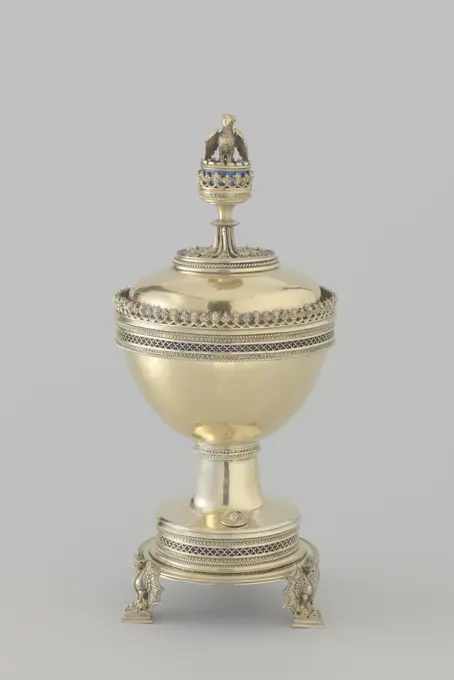
Chalice, anonymous, c. 1330 - c. 1350 Ciborium, gilded, unadorned chalice. This is semi-shaped and has a lid that is crowned by an eagle, seated on a platform with tilting. The edge of the lid has tracing work on a ground of blue translucent email and is deposited by a board of lion masks, interspersed by gothic leaf shapes. The short, cylindrical tribe gradually flows into the round foot, which is surrounded in the same way as the lid with tracing work and rests on three dragons with spread wings. At the bottom of the tribe a raised medallion with the bust of Christ. In the lid a closing plate for the button attachment is installed, on which, in transparent email, a Salvator Mundi in green and purple rug on blue ground. Under the foot The inscription :: + iohes: Uten: Leen: SCI: Salva: Me: Dedit :: Ano: DNI: M CCC LXXVI :. Utrecht (possibly) silver (metal) casting / gilding  Sint-Salvatorkerk Ciborium, gilded, unadorned chalice. This is semi-shaped and has a lid that is crowned by an
Chalice, anonymous, c. 1330 - c. 1350 Ciborium, gilded, unadorned chalice. This is semi-shaped and has a lid that is crowned by an eagle, seated on a platform with tilting. The edge of the lid has tracing work on a ground of blue translucent email and is deposited by a board of lion masks, interspersed by gothic leaf shapes. The short, cylindrical tribe gradually flows into the round foot, which is surrounded in the same way as the lid with tracing work and rests on three dragons with spread wings. At the bottom of the tribe a raised medallion with the bust of Christ. In the lid a closing plate for the button attachment is installed, on which, in transparent email, a Salvator Mundi in green and purple rug on blue ground. Under the foot The inscription :: + iohes: Uten: Leen: SCI: Salva: Me: Dedit :: Ano: DNI: M CCC LXXVI :. Utrecht (possibly) silver (metal) casting / gilding Sint-Salvatorkerk Ciborium, gilded, unadorned chalice. This is semi-shaped and has a lid that is crowned by an
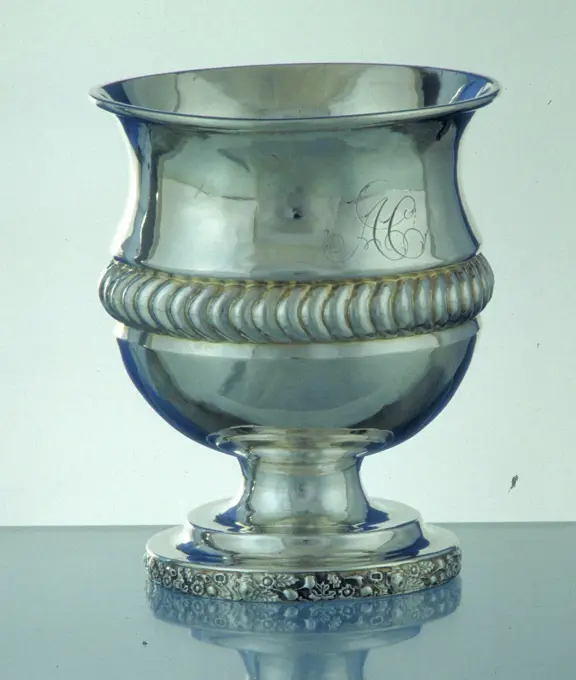
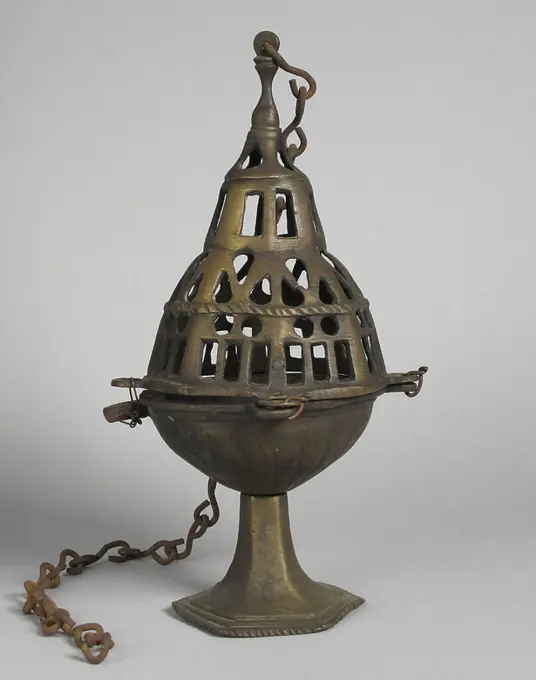
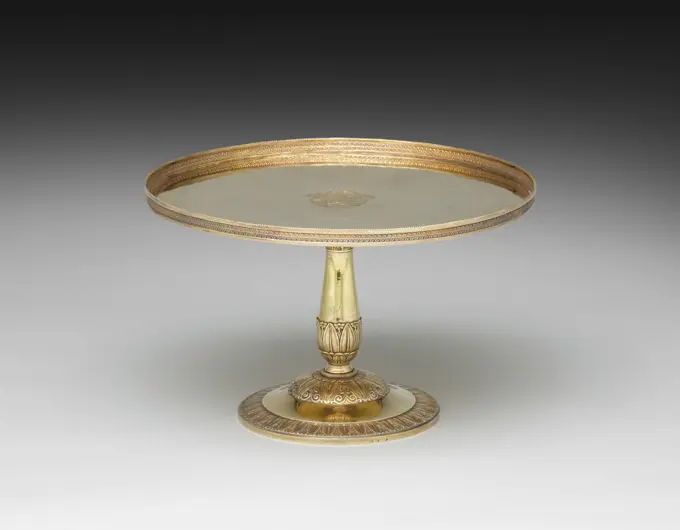
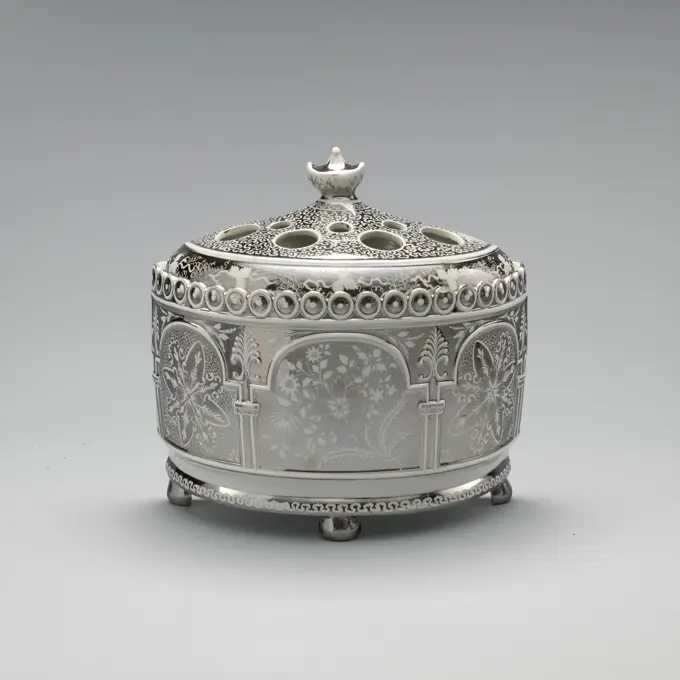
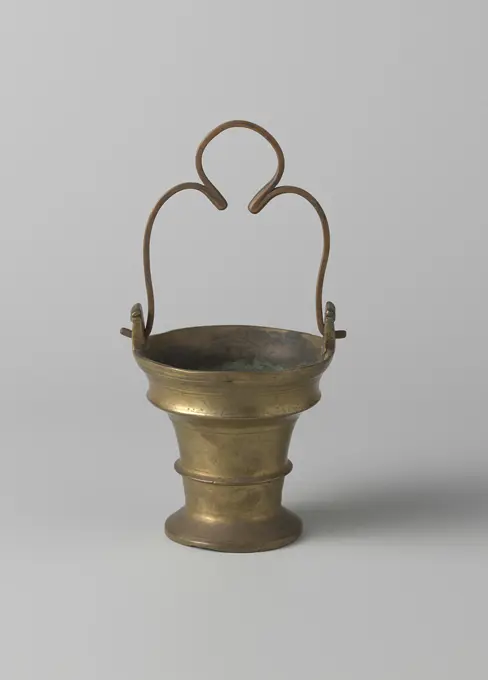
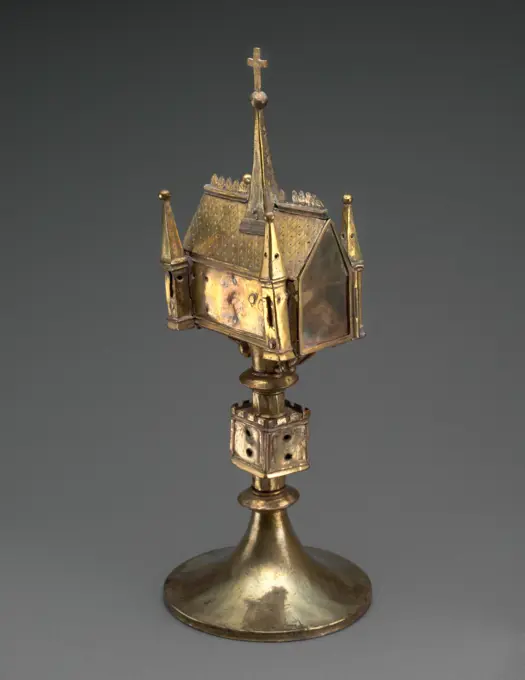
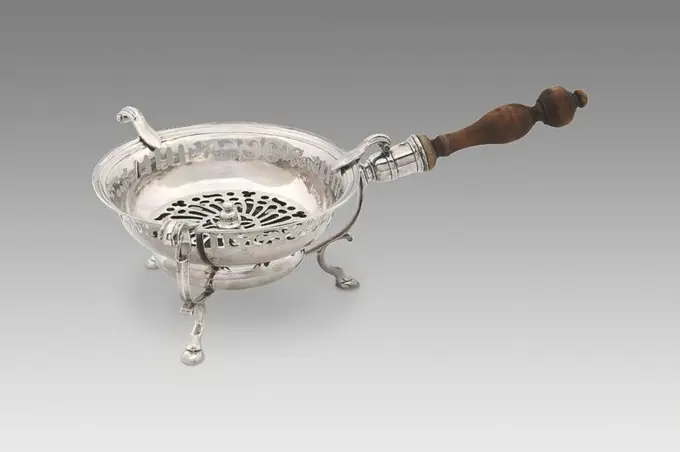
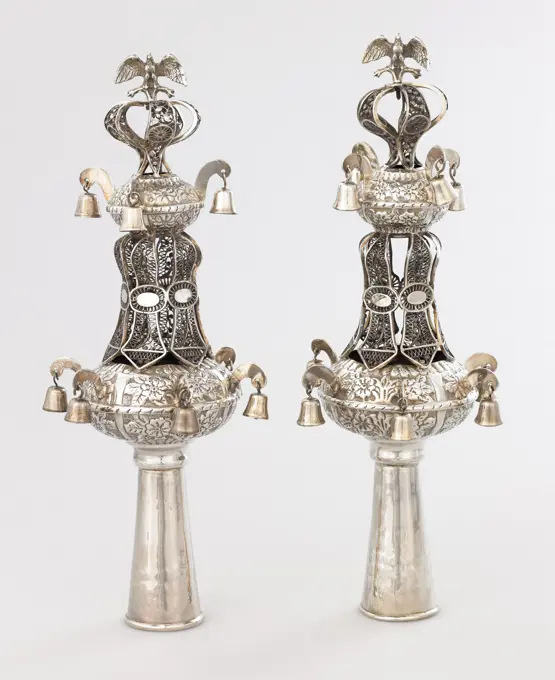
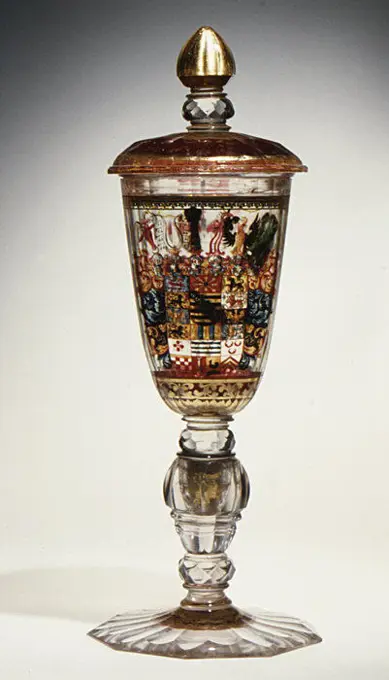
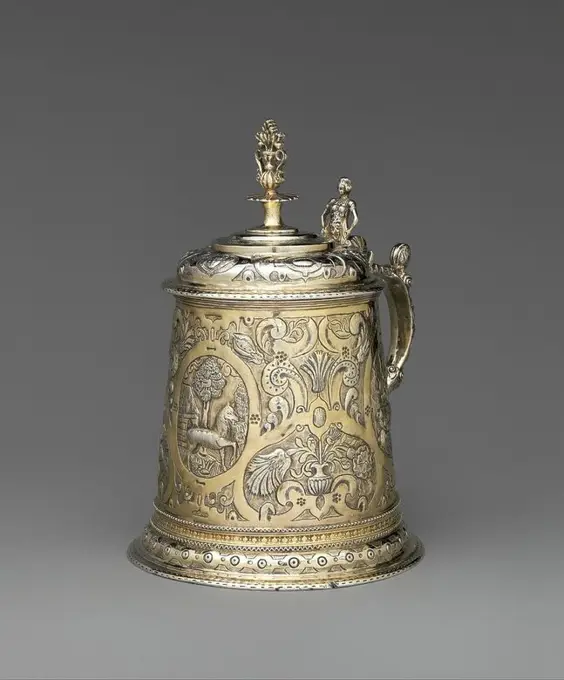
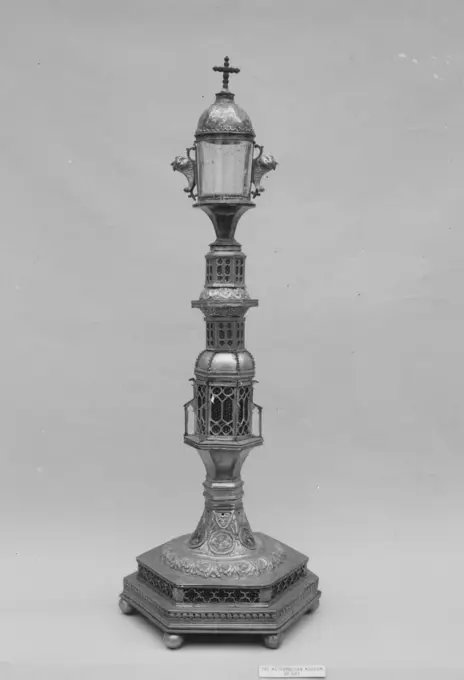
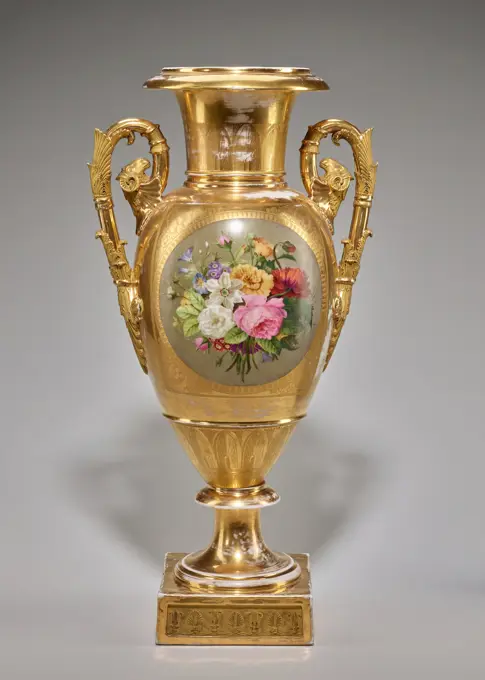
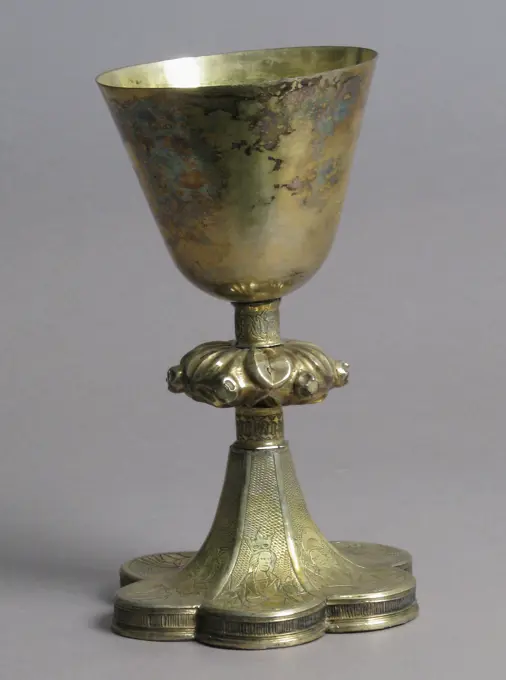
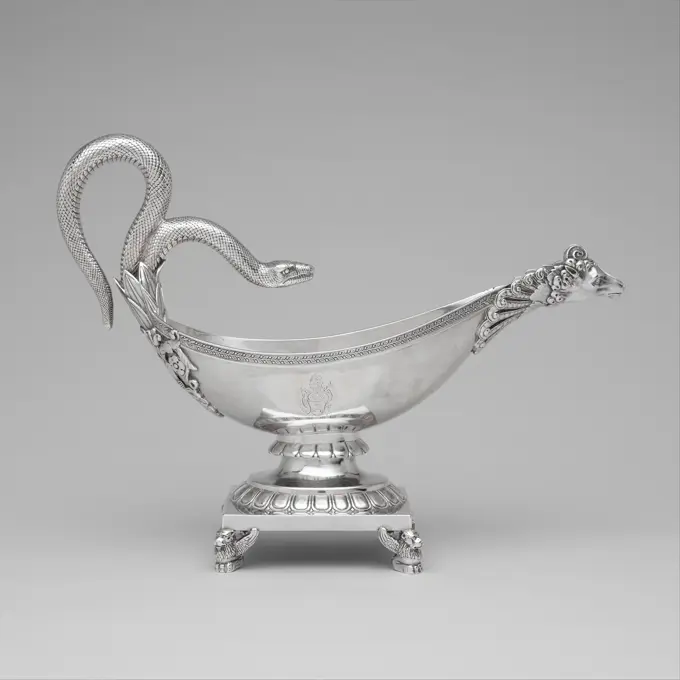
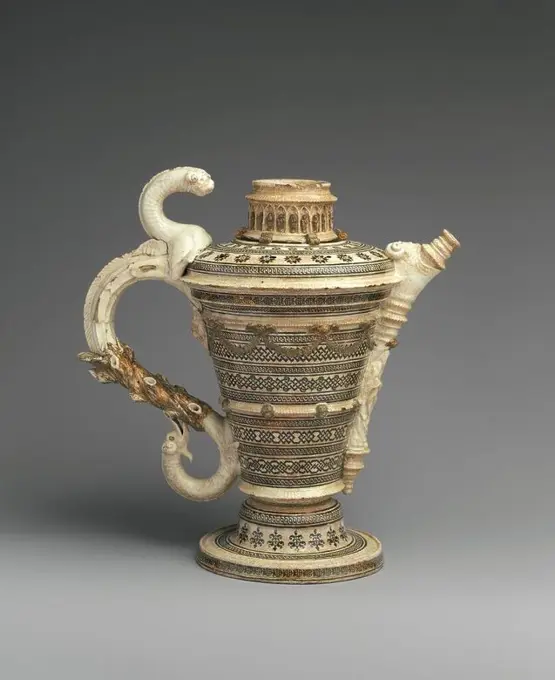
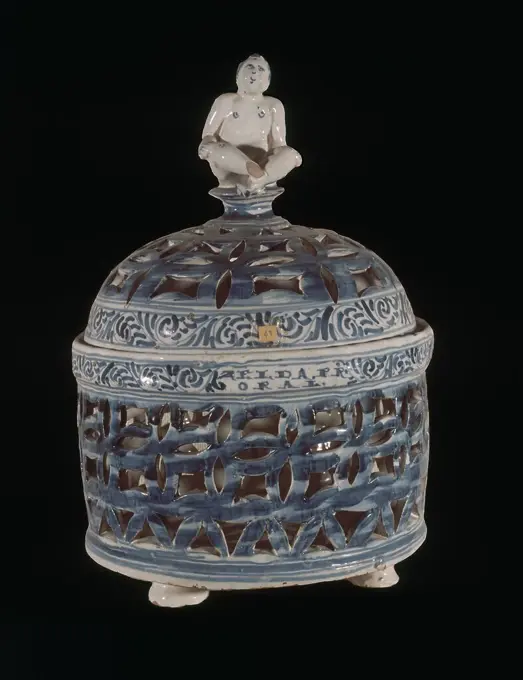
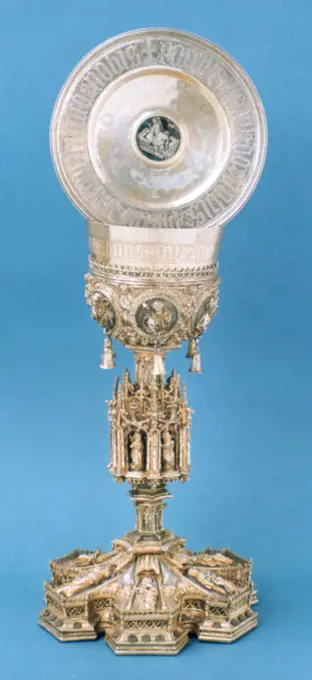
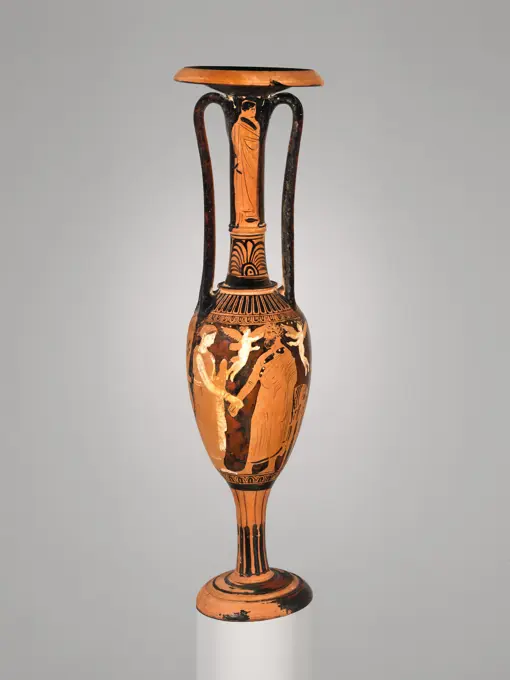
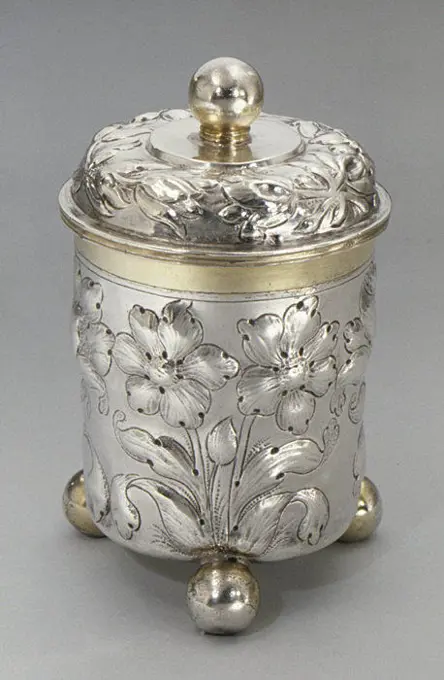
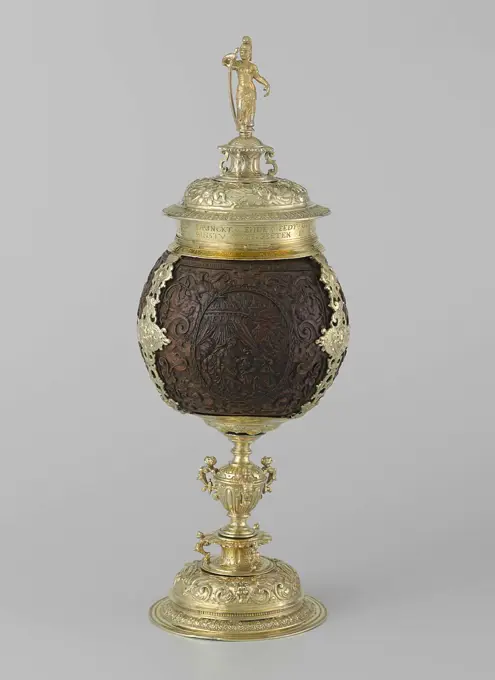
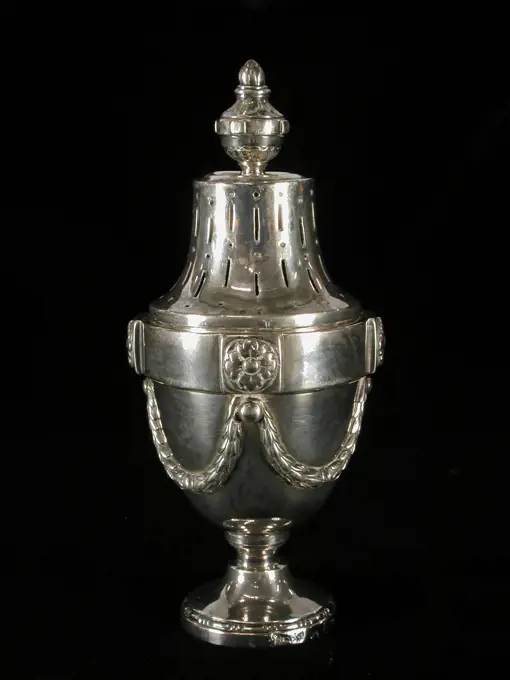
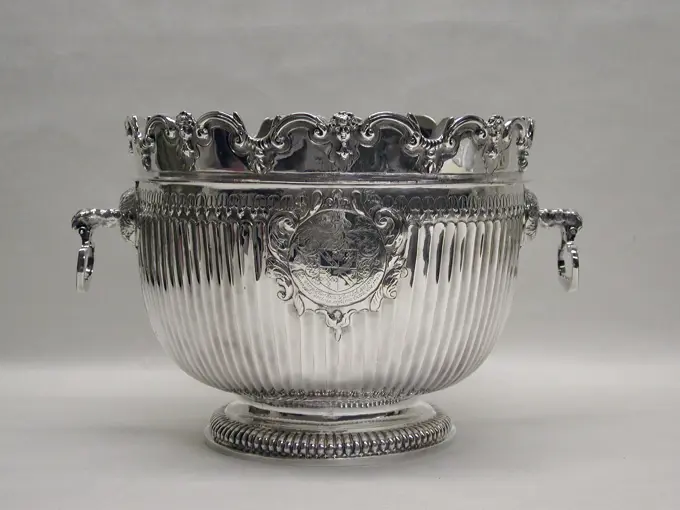
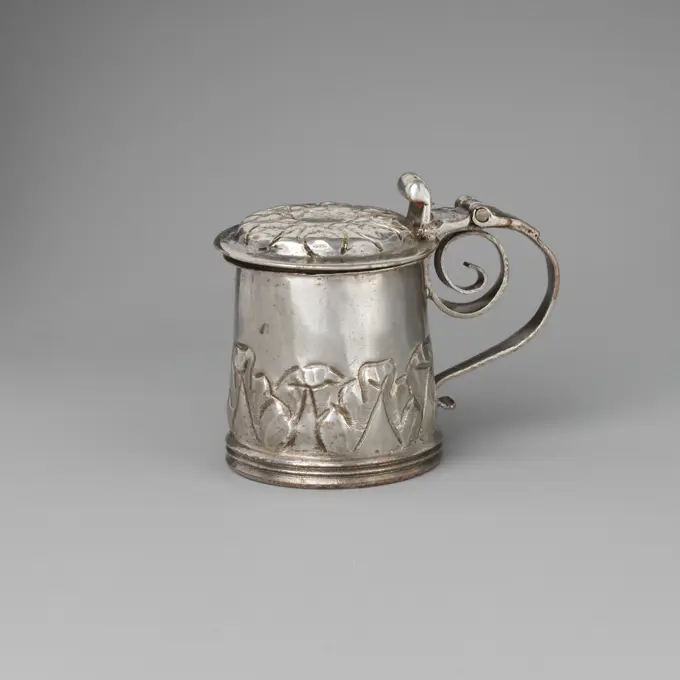
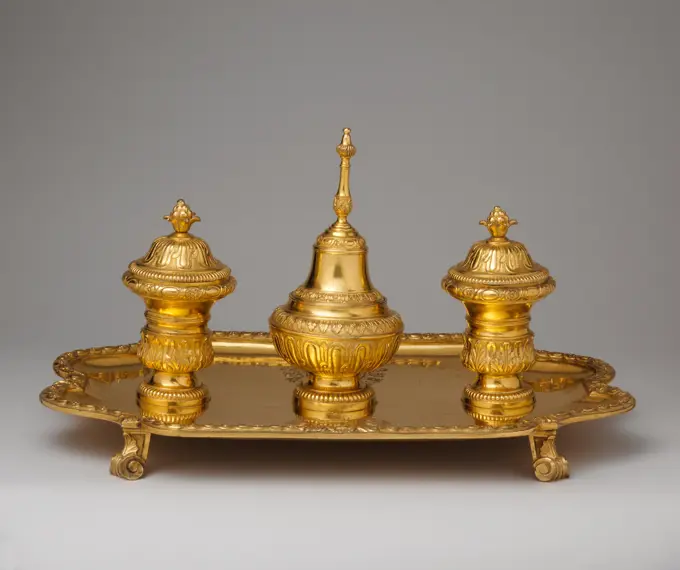
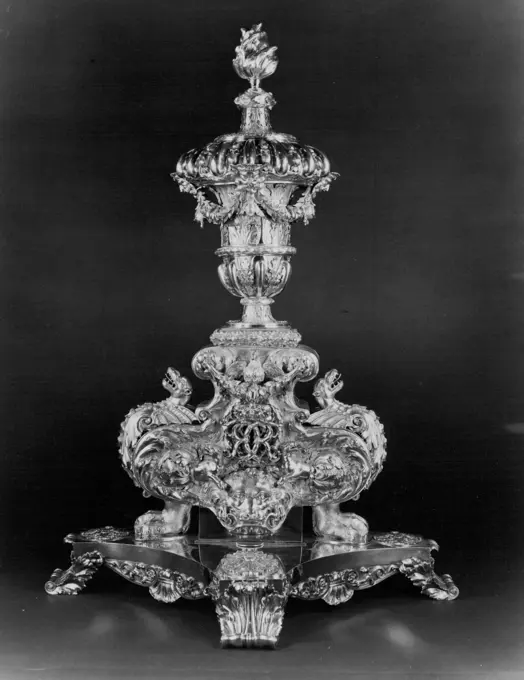
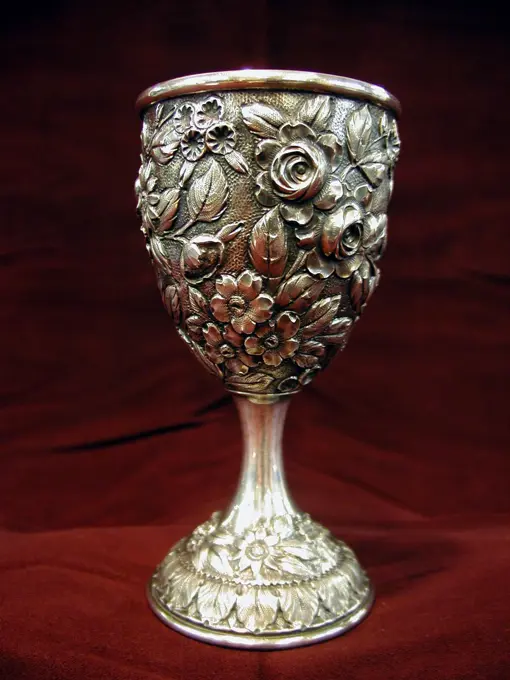
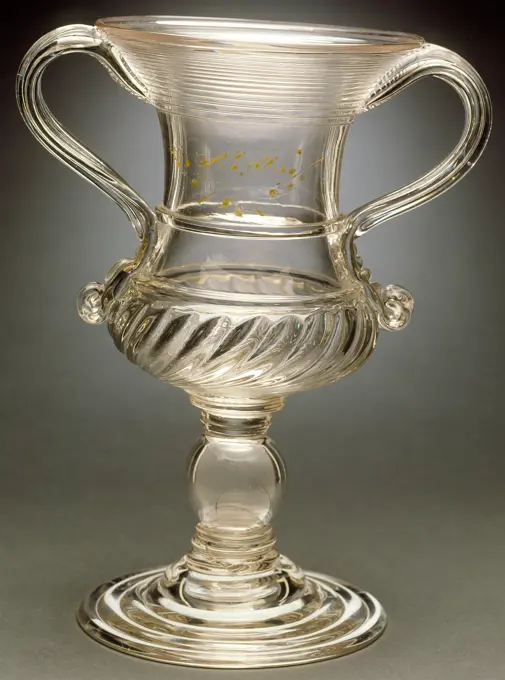
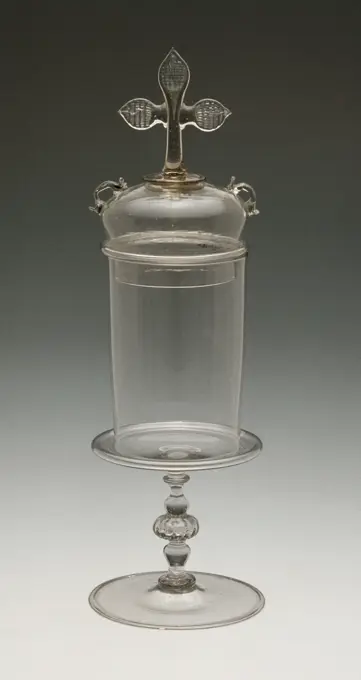
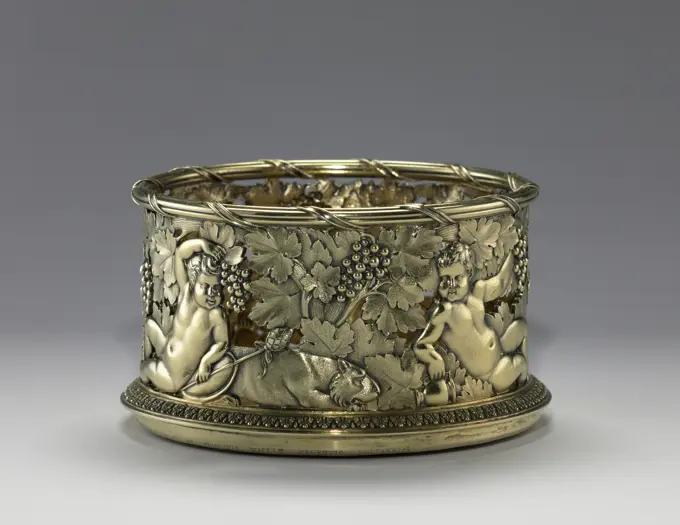
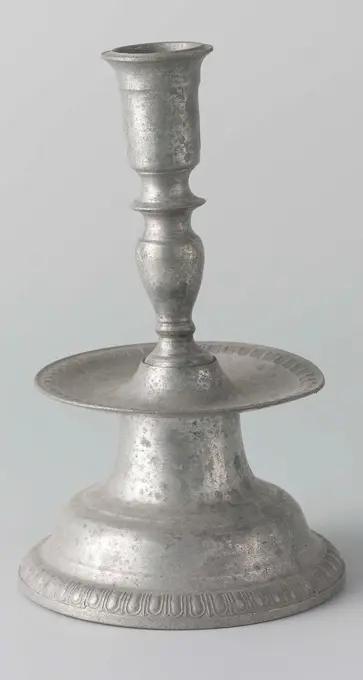
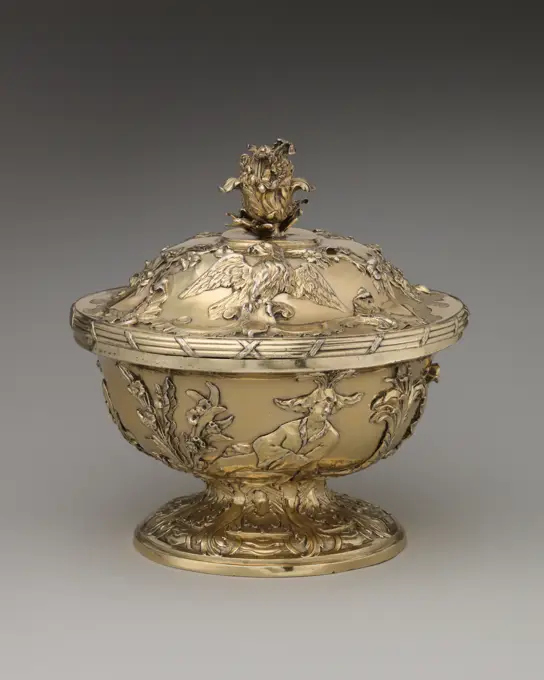
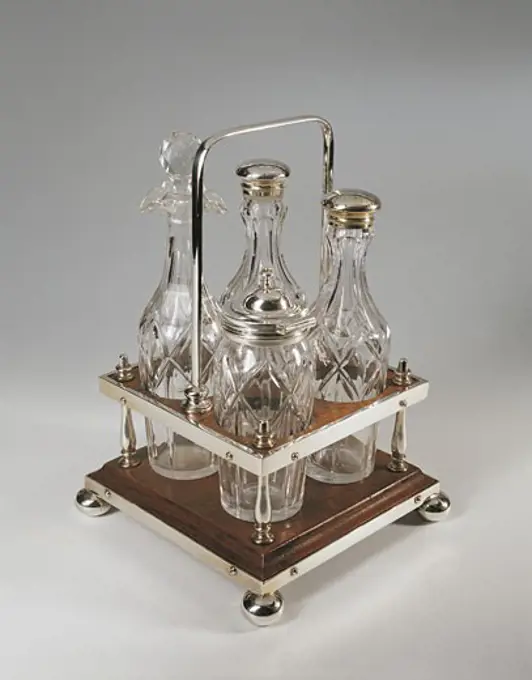
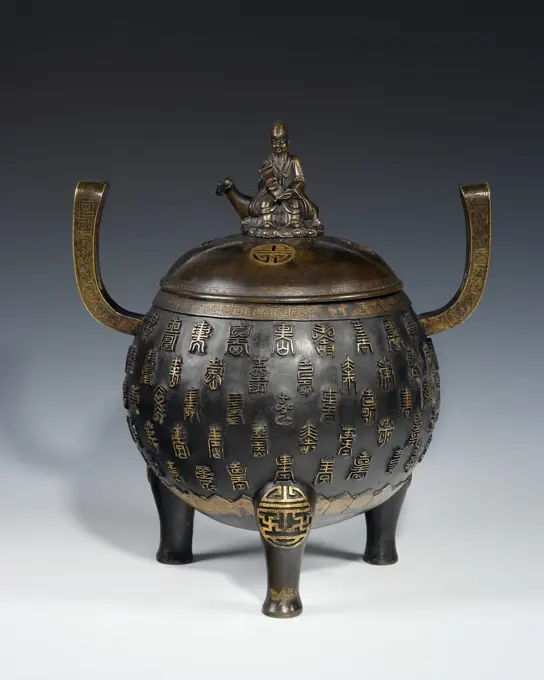
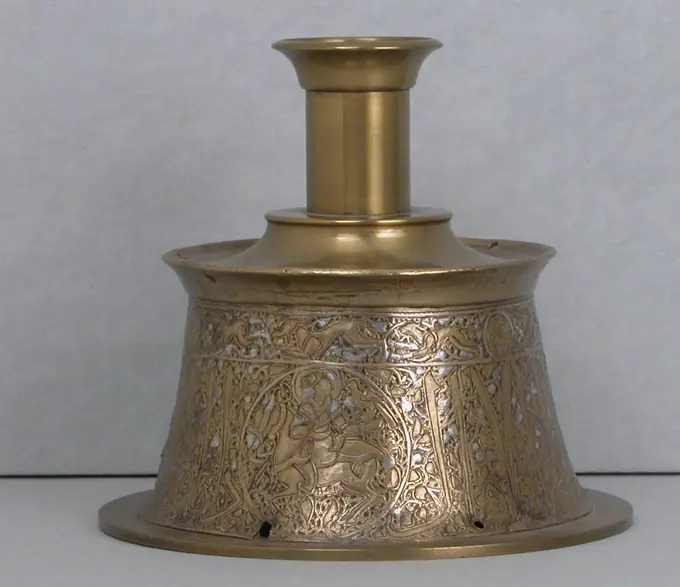
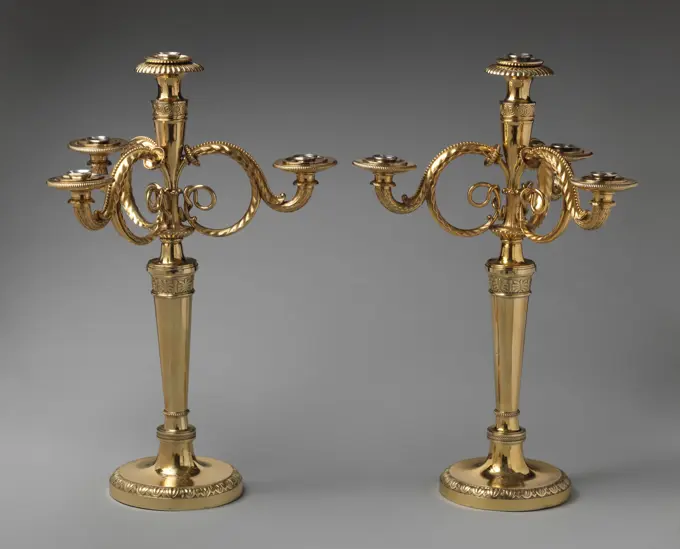
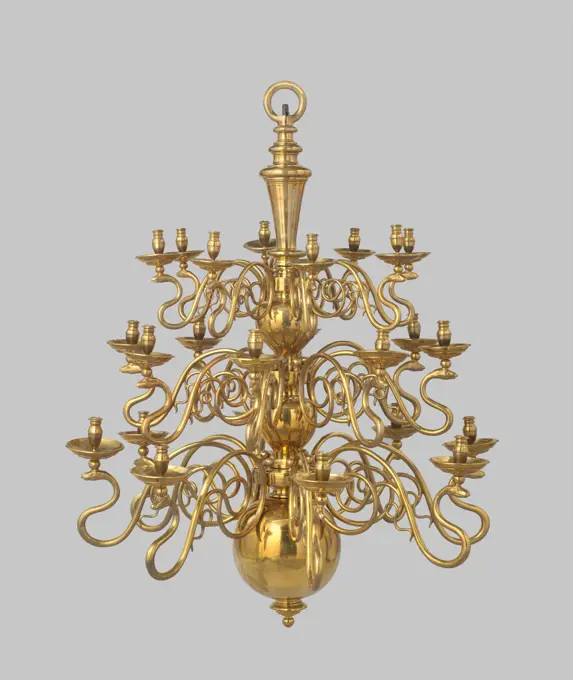
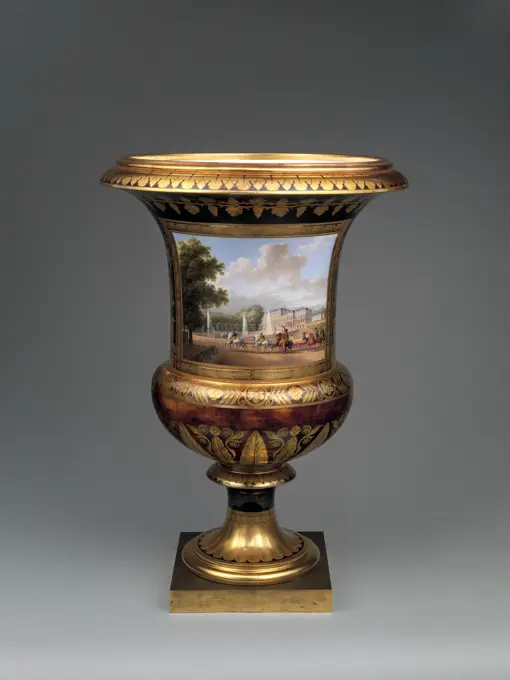
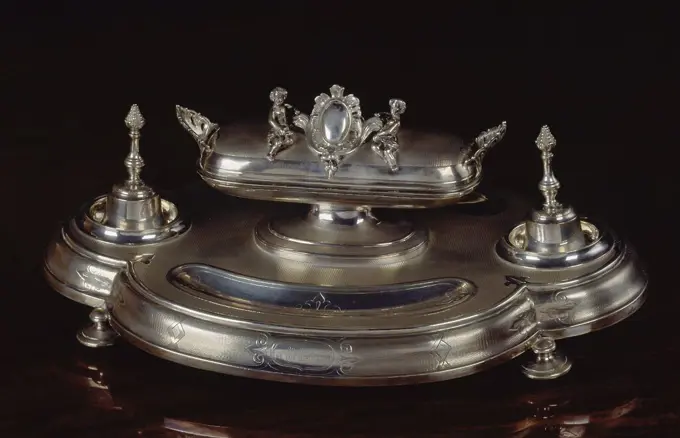
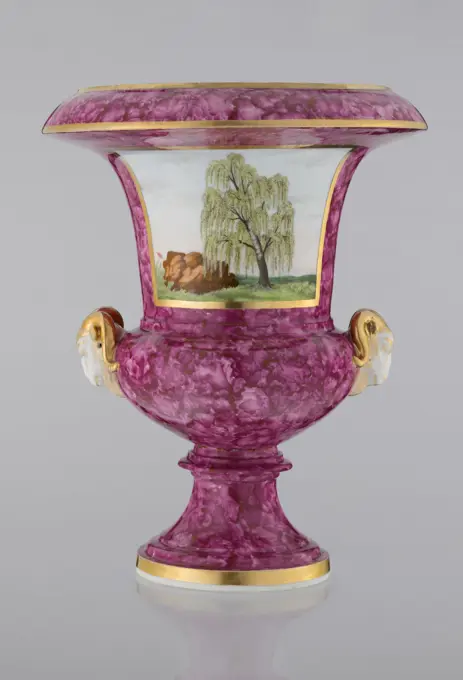
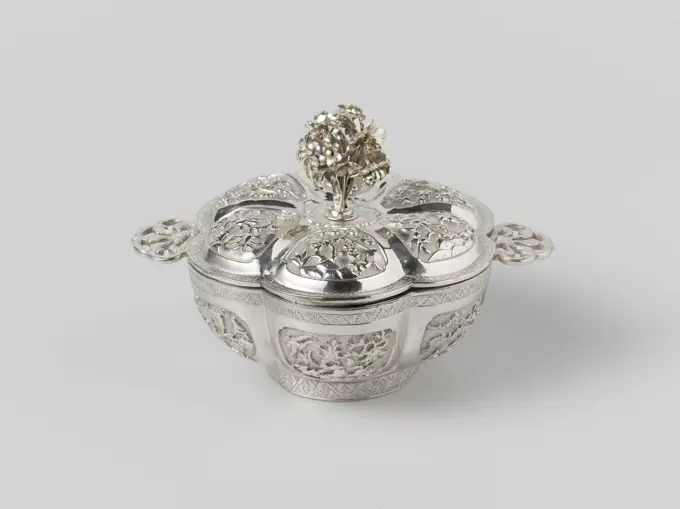
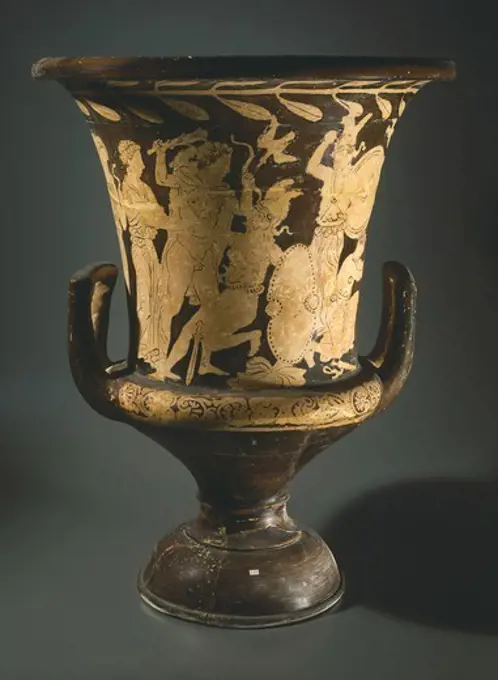
Cup with cover. Culture: British, London, after British, London original. Dimensions: Height: 7 1/2 in. (19.1 cm). Manufacturer: Franchi and Son. Date: 19th century.This electrotype is after a seventeenth-century original (1676), at time of reproduction in the Victoria and Albert Museum, London. Museum: Metropolitan Museum of Art, New York, USA.Candelabrum French 19th centuryCOPA DE CRISTAL VENECIANO. Location: PRIVATE COLLECTION. MADRID. SPAIN.Censer. Culture: South Netherlandish (). Dimensions: Overall (with chain): 27 in. (68.6 cm)Overall: 9 3/8 x 4 7/8 in. (23.8 x 12.4 cm). Date: 16th century. Museum: Metropolitan Museum of Art, New York, USA.Ciborie with Maltese Cross, Anonymous, c. 1600 - c. 1699 The object is composed of the following parts: the cast and consented base, which is sounded in the cast, prisoned and turned bottom of the box; the hinge and the closure that are sounded in the wall of the box; The lid and the button. The foot has a hexagonal nodus and runs out of a side lobby. A weapon is engraved on one lob (1 anchor, 2 cross). The round box and the round tissue lid are decorated with rings. The hinge and the pen closure are decorated with dragon. The button has a Maltese cross. Like the weapon, this is applied closely in the second half of the seventeenth century. Rijnstreek (Possible) brass (alloy) casting / engraving The object is composed of the following parts: the cast and consented base, which is sounded in the cast, prisoned and turned bottom of the box; the hinge and the closure that are sounded in the wall of the box; The lid and the button. The foot has a hexagonal nodus and runs out of a side lobbySalt cellar with Aesop Fables, Pierre Raymond (after), c. 1560 Copper salt barrel, decorated with a performance in email and gilt decorations. Above the slightly narrowing base is a slimmer body that is divided in two by a wide, round band. Under this band, a few fables of Aesopus are depicted in Grisaille, including the fable over the wolf and the heron and the fable in which a lion goes hunting for a deer together with a sheep, a cow and a goat. The top edge is decorated with rolling and fruits in grisaille. The bowl where the salt itself was stored is decorated with a representation of a peacock in grisaille. Limoges copper (metal). gilding Copper salt barrel, decorated with a performance in email and gilt decorations. Above the slightly narrowing base is a slimmer body that is divided in two by a wide, round band. Under this band, a few fables of Aesopus are depicted in Grisaille, including the fable over the wolf and the heron and the fable in which a lion goes hunting for a deer Hand Seal, c. 1839. Russia, St. Petersburg, 19th century. Gold with transparent enamels; overall: 7.4 cm (2 15/16 in.).Kandelaar, Ebenezer Coker, 1769 Silver candlestick, with square base and baluster -shaped trunk. The candle holder has two ribbed edges and a loose fat catcher. London silver (metal) Silver candlestick, with square base and baluster -shaped trunk. The candle holder has two ribbed edges and a loose fat catcher. London silver (metal)Tazza, c. 1815. Pietro Paolo Spagna (Italian, 1793-1861). Silver-gilt; diameter: 32.3 cm (12 11/16 in.); overall: 20.2 cm (7 15/16 in.).Jardinière with cover early 19th century British. Jardinière with cover. British. early 19th century. Glazed earthenware. Ceramics-PotteryOctagonal pyx, Norman jewellery, 13th century, Monreale cathedral, Monreale, Sicily, Italy.Bell. unknown, craftsmanPricket Candlestick, early 1500s. South Netherlands, Valley of the Meuse, 16th century. Brass (hollow cast in three parts) and iron; overall: 45.5 x 19.6 cm (17 15/16 x 7 11/16 in.).Urn Made 1805-1810 Staffordshire. Lead-glazed earthenware with lustre decoration .Taperstick (one of a pair) 1760-65 British, South Staffordshire. Taperstick (one of a pair). British, South Staffordshire. 1760-65. Enamel on copper. Enamels-PaintedWood water lining around. The bucket is probably poured and turned with the handle sets as a whole. The latter have been criminated. In the bottom it can be seen at the bottom. The bucket, which widens upwards, stands on a sloping hollow base. The wall is decorated with a pointed rib in the middle and one on the swinging upper, and furthermore with grooved rings at the edge. The handle tips are square with a profiled and surby top. The handle in the form of a three pass is a replacement from later time.Salt Dish, early 1600s. Jean Limousin (French, 1528-c. 1610). Painted enamel on copper; overall: 8.6 x 14.2 x 14.2 cm (3 3/8 x 5 9/16 x 5 9/16 in.).Candelabrum (France); Produced by Alphonse Giroux & Cie; gilt bronze; 42.5 x 26 x 25.5 cm (16 3/4 x 10 1/4 x 10 1/16 in.). Large arm with the accompanying fat catcher and holder. The labeled arm has a bol and hollow-profiled nodus in the middle and thickened a little on either side. At the trunk she walks out in spiral curls. It goes outwards in the screw ends of iron, on which the candle holder can be attached. The round fat catcher has lowered edges. The round in each other's extended openwork holders have holronde feet, which are screwed on the arms.. Small arm of candles wreath.Reliquary Monstrance in the form of a Church 1401-1500 Brunswick. Gilt copper and horn .Chafing Dish. John Burt; American, 1692/93-1745/46; Boston, Massachusetts. Date: 1725-1735. Dimensions: 10.2 × 15.2 × 30.5 cm (4 3/8 × 6 7/8 × 12 1/8 in.); 528.4 grams. Silver and wood. Origin: Boston. Museum: The Chicago Art Institute, Chicago, USA.Kettle. Manufacturer: Tiffany and Company, American, founded 1837Scent Bottle, mid-1800s. Continental, mid-19th century. Ivory with gold and silver mounts set with jewels; overall: 7.7 x 2.6 cm (3 1/16 x 1 in.).Rimmonim (Torah finials) (one of a pair), early 20th century, 15-1/2 x 5 x 6-3/4 in. (39.4 x 12.7 x 17.1 cm), Silver, Russia (probably), 20th centuryBakunda Ritual Vessel Nepal, Bhaktapur Dated equivalent to 1719 This ritual vessel contained oil used to mark a mandala on the floor to evoke the goddess Arya Tara/Lakshmi during the Tihar festival of lights. This family ritual was done to bring prosperity to a child. A Bakunda set of vessels would have included a second container for cooked rice. According to modern practice, family members will give new clothing, and after the mother has conducted this ritual, the father will give the child money. The handles are decorated with floral patterns, and around the foot is an inscription that provides the date of this initiation ritual. View more. Bakunda Ritual Vessel. Nepal, Bhaktapur. Dated equivalent to 1719. Copper alloy. MetalworkArmorials and monogram of the Duke of Saxe-Meiningen ca. 1725 Bohemian. Armorials and monogram of the Duke of Saxe-Meiningen 195910Tankard. Culture: Hungarian, Debrecen. Dimensions: Overall: 7 1/16 x 4 7/8 in. (18 x 12.4 cm). Maker: Michael Beri (active ca. 1627). Date: ca. 1627.Prints were a key source for Beri in fashioning this tankard. Its form was made popular through the printed designs of Bernhard Zan. Scrollwork cartouches frame three oval reliefs filled with animals: a unicorn before an urban structure, a grazing horse in a landscape, and a recumbent lioness or panther near a well and tower. These animal scenes follow prints from a Thierbuch (or book of animals), published by Jost Amman and Hans Bocksberger in Frankfurt in 1579, that was an especially common source for metal-workers.LiteratureJudit H. Kolba. Hungarian Silver: The Nicolas M. Salgo Collection. London, 1996, p. 46, no. 24.ReferencesA tankard with a similar handle was sold by Dr. Fischer Kunstauktionen in Heilbronn, sale no. 181, no. 4.Another tankard, decorated similarly with animals within oval reliefs, was sold by the same houReliquary 15th century, with later additions Italian. Reliquary. Italian. 15th century, with later additions. Copper gilt, basse taille enamel on silver. Metalwork-Silver In CombinationPORCELANA DE MANISES. Location: MUSEO ARQUEOLOGICO NACIONAL-COLECCION. MADRID. SPAIN.Pitcher.  Maker: Antoine Oneille, American, born Canada, 1764-1820Vase, early 19th century, 21 x 10 1/2 x 7 in. (53.34 x 26.67 x 17.78 cm), Porcelain, France, 19th centuryChalice 15th century German. Chalice. German. 15th century. Silver gilt. Metalwork-SilverSauceboat ca. 1815 Anthony Rasch These commanding sauceboats, fashioned in the French Empire taste, are marked by Rasch, a Bavarian-born Philadelphia silversmith. They are among the most sophisticated silver vessels produced in the United States in the early nineteenth century and are distinguished by their bold ornamental scheme, which includes magnificent cast serpent handles and rams-head spouts. The engraved armorials are those of the Milligan family of Maryland.. Sauceboat 7213Ewer. Culture: French, Saint-Porchaire or Paris. Dimensions: Height: 10 5/16 in. (26.2 cm). Date: ca. 1550.This ewer is one of the largest and most impressive examples of a low-fire white pottery made in France in the middle years of the sixteenth century. Known as Saint-Porchaire ware, this group of elaborate and often architectural pieces is distinguished by the complex interlace designs of colored clays inlaid into the cream-colored earthenware body. These wares were believed to have been produced in the town of Saint-Porchaire in western France, but a Paris origin has also been suggested due to their technical sophistication and the ambition of their designs.Jeffrey H. Munger, 2011. Museum: Metropolitan Museum of Art, New York, USA.Watch Watchmaker: Edward East British ca. 1640-50 View more. Watch. British, London. ca. 1640-50. Silver gilt. HorologyCalyx-krater (large vase). Red-figure pottery from Perugia (Umbria). Etruscan Civilisation, 4th Century BC.Cream pitcher, Raised and stamped gilt silver, carved wood (handle), Footed gilt silver cream pitcher with wide and open spout. Below rim, bordered granulation. At neck, decorative band of leaf motif and granules. Foot with same band. Looped wood handle, upper end decorated with open gilt flower., Paris, France, 1819-38, metalwork, Decorative Arts, Cream pitcherWilliam Simpkins, Teapot, c. 1755, silver and wood.Can with spout in the shape of a dragon head with neck. The can be composed of the following parts: the hull with the foot (poured and tightened), the spout (molded and recovered), the handle, the thumb trust and the lid button (cast). The round trunk has a high round foot, which widens itself down to a flat stand ring. It has a flat broad belly and a high conical spread neck. The lid is bol-flat, increases in the middle and has a bird as a button. The edge of the neck and lid are sloped inwards. The spout, which is attached to the neck of the hull with a rod, has the shape of a neck head with neck, in which a bearded men's head is scanned at the start. The round downwards bending handle has a one-case hinge, in which the thumb trust is attached to the lid. Foot, hull and lid are decorated with clearly profiled ribs and shivering.CERAMICA DE TALAVERA DE LA REINA. Location: MUSEE D'ARTS DECORATIFS. MADRID. SPAIN.Chalice and Monstrance, vessels for containing the wine and bread of the Mass. Portugal, 16th century sacred vessels. Church plate.Candlestick of silver with square base and round trunk, candle holder and loose fat catcher., Johannes Henricus Pluygers, 1783 Candlestick consisting of a square base and a round trunk, candle holder and loose fat catcher. The Hague silver (metal) casting Candlestick consisting of a square base and a round trunk, candle holder and loose fat catcher. The Hague silver (metal) castingTerracotta loutrophoros (ceremonial vase for water) ca. 400 B.C. Greek, Attic Bride and groomWhile the wedding scene is traditional, the shape has undergone considerable change from earlier examples, particularly in the proportions. The pronounced elongation renders the loutrophoros unwieldy and also reduces the amount of water that it could contain. This example and others like it were probably more symbolic than functional.. Terracotta loutrophoros (ceremonial vase for water). Greek, Attic. ca. 400 B.C.. Terracotta; red-figure. Classical. VasesBeaker with cover second half 17th century probably Swedish, Kalmar. Beaker with cover 187177Coconut cup.Silversmith: Rudolph Sondag, Silver sprinkler, spreader vane holder silver, cast sawn hammered Spreader vane with ovoid body with protruding band along the top edge on round base outside edge foot (smashed) sprinkle servingPottery Lamp, 1st century, 33 3/16 x 13 15/16 x 14 3/4 in. (84.3 x 35.4 x 37.47 cm), Earthenware with green glaze, China, 1st century, This grand, three-tiered pottery lamp was originally placed in an Eastern Han dynasty tomb where it was deemed necessary for the soul's safe journey into the next life. The complex structure probably replicates even more elaborate bronze lamps used by Han dynasty aristocrats in their homes and palaces. By this time, the Chinese had already developed a taste for decorative lanterns and special lighting effects. Most lamps of this period used floating wicks fueled by vegetable oil or paraffin.Monteith ca. 1870-80, after early 18th century original Elkington & Co. British The original monteith was made in Ireland in the early eighteenth century and engraved with the arms of Trinity College, Dublin.. Monteith 190768. Round chestnut vase with loose lid. In the interior of the vase there is a gold-plated silver inner wall, which is visible by the opened parts. Signature and dated.DramCup.  Maker: Robert Sanderson, American, born England, 1608-1693 Maker: John Hull, American, born England, 1624-1683Sugar bowl with cover and tray ca. 1760 Joseph-Virgile Vilhet. Sugar bowl with cover and tray 200105Spice container, c. 1900, 10-9/16 x 2-7/16 x 2-1/4 in. (26.8 x 6.2 x 5.7 cm), Silver, gold, Poland, 19th-20th centuryTwo wall lights. These wall lights are early examples of Neoclassicism in its purest form. The model is emphatically antique’, and every part is decorated with motifs derived from Classical architecture.Umbria Terni Otricoli S. Maria8. Hutzel, Max 1960-1990 German-born photographer and scholar Max Hutzel (1911-1988) photographed in Italy from the early 1960s until his death. The result of this project, referred to by Hutzel as Foto Arte Minore, is thorough documentation of art historical development in Italy up to the 18th century, including objects of the Etruscans and the Romans, as well as early Medieval, Romanesque, Gothic, Renaissance and Baroque monuments. Images are organized by geographic region in Italy, then by province, city, site complex and monument.CreamPot.   Maker: Khecheong, Chinese, active ca. 1840-70Tankard Fleischmann, Siegmund HeinrichMiniature tankard 1685-86 Probably by George Manjoy British. Miniature tankard. British, London. 1685-86. Silver. Metalwork-Silver-Miniature. The cover of this cup can also be used to drink from  hence the ring at the top, which functions as the foot (base) of the second cup when inverted.Inkstand ca. 1730 French The inkstand was an indispensable object for the letter writer and could be made of many materials. Those of gilt bronze would complement beautifully the mounts of the writing table it was placed on. It contained an inkpot and a container with a perforated lid for fine sand or pounce, used for blotting the excess ink, on a tray that would also hold the quills, a knife and the sealing wax. A bell to notify the servant that a letter was ready for delivery is found in the middle.. Inkstand 202576Royal Plate on show in London:Historic Exhibits From Buckingham Palace and Windsor Castle.A pair of fire-dogs like this one represent the Carolean reign at the Exhibition of Royal Plate in London. Except for the plate in the royal chapels, little of this period survived Charles 11 in the centre were resorted and had some detail added by Paul Storr in 1814, and are referred in the William IV Inventory as "Two richly chased ornaments". July 28, 1954.Wall lamp from lamps kerosene;  XIXW. (1801-00-00-1900-00-00);Ewer, Sèvres Porcelain Manufactory, French, established 1756 to the present, hard paste porcelain, vitreous enamel, gold, France, ca. 1800, ceramics, Decorative Arts, ewer, ewerGoblet, Baltimore Rose” pattern.  Manufacturer: Baltimore Silversmiths Manufacturing Company, American, 1903-1905Two-Handled Vase. The Phoenix Glassworks (attributed to) (United States, Massachusetts, South Boston circa 1820-1870)New England Glass Company (attributed to) (United States, Massachusetts, East Cambridge, circa 1818-1880). United States, Massacusetts, Cambridge, circa 1834-1840. Furnishings; Accessories. Blown glass with a silver coin from 1834 enclosed in the top of the stemStanding cup. Culture: German, Nuremberg. Dimensions: Overall: 14 × 5 × 4 1/4 in. (35.6 × 12.7 × 10.8 cm). Maker: Possibly by workshop of Lorenz Zick (1594-1666); Possibly by workshop of Stephen Zick (died 1715). Date: 17th century.The technique of forming objects on a lathe, or turning, reached a high degree of complexity in the Renaissance and Baroque eras, when French, Italian, and Central European workshops produced paper-thin hollowed-out shapes from single blocks of ivory. Clerics and noblemen embraced turning as a hobby. Among the rulers who collected masterpieces of turning for their Kunstkammern and practiced the art themselves were the Holy Roman Emperors Maximilian II (r. 1564-76), Rudolf II (r. 1576-1612), and Ferdinand III (r. 1619-37). The eccentric form of this cup exemplifies Mannerist taste in Central Europe, though the most challenging aspect of its creation was concocting the lacy hollows that form the stem and spire. Museum: Metropolitan Museum of Art, New York, USPepper Box ca. 1755 William Breed. Pepper Box. American. ca. 1755. Silver. Made in Boston, Massachusetts, United StatesVase, Enameled tôle, gilt bronze, Square in plan, with flaring tops and rolled edges. Supported by four winged paws of gilt bronze, on square pedestal. Painted in colours, with classical landscapes and figures in costume of classical antiquity., USA, ca. 1820, metalwork, Decorative Arts, VaseStanding cup. Culture: Italian, Venice (Murano). Dimensions: Height: 11 5/8 in. (29.5 cm). Date: ca. 1530.The body of blown glass was manipulated to an ogee profile with a separately blown pedestal, everted at the foot with the edge turned up and over. The vertical ribs on the bowl and pedestal were formed of tailed-on spines, which, upon reheating, fused and subsided, merging with the level of the supporting glass. Here in the very form of the object we see the combination of a late Gothic shape with vertical gadroons that evoke a common feature of glass bowls of the Roman era. In the decoration, too, there is a mixing of classical and contemporary motifs. The bands of gold leaf around the lip and at the top of the pedestal bear a scratched scale pattern, with a dentil band added at the lower edge of the gilding around the lip. These, and the enameled round and oval rings threated alternately on a string that encircles the foot, are classical elements, while the beaded dots of enamelOld golden candlestick isolated on white background with Clipping PathVase, probably 17th century, H.11-5/8 x W.5-5/8 x D.4 in., Glass, Italy, 17th centuryCandlestick (common name). Cernuschi Museum, Asia Museum of Asia in the city of Paris.Covered Goblet. Italy, Venice or The Netherlands, 18th century. Furnishings; Serviceware. GlassBasin, anonymous, c. 1500 - c. 1530 Lavabo in the form of a bowl with a small spout and a handle held by two mascarons, which has a faceted button in the middle with a ring on which it can be hung. The cockpit is punched in diamond and shows a gilt, smooth band with the Maximilian van Buren weapon in gold and enamel, and the engraved inscription: "This * clay pellet * is * by * Maximiliaen * ionckgreef * to * Bueren * from * der * unbeliever * in * aphrica * widen * and * on * 28 * Desemb. * A * 1536 * der * stat * graef * tired. " At the bottom of the boiler a geometric decoration of points with facets. Naples silver (metal). engraving / gilding  Tunis. Grave Lavabo in the form of a bowl with a small spout and a handle held by two mascarons, which has a faceted button in the middle with a ring on which it can be hung. The cockpit is punched in diamond and shows a gilt, smooth band with the Maximilian van Buren weapon in gold and enamel, and the engraved inscription: "This * clay pelleCandlestick with Two Branches ca. 1745-60 or 19th century French, Paris. Candlestick with Two Branches 461110Kwispedoor, Johannes van Somerwil (I), 1760 Wagging with a wide flat edge and standing on a foot. The ear is volute -shaped. The kwispedoor is marked with a tree (foot 443). Amsterdam silver (metal) Wagging with a wide flat edge and standing on a foot. The ear is volute -shaped. The kwispedoor is marked with a tree (foot 443). Amsterdam silver (metal)Decanter Stand, 1814. Paul Storr (British, 1771-1844), Rundell, Bridge and Rundell (British, 1797-1834). Silver gilt; diameter: 8.3 x 13.7 cm (3 1/4 x 5 3/8 in.).Merchandise.Barentsz and his crew were en route to China, and therefore brought along goods they could use to conduct trade there. They obviously expected these pewter candlesticks to be in demand in Asia.Candlestick BrothersCover for a Standing Cup, 1593. London, England, late 16th century. Silver, partially gilt; overall: 19.3 x 7.4 cm (7 5/8 x 2 15/16 in.). Produced during the last years of the Tudor dynasty (1485-1603), this lid and the accompanying vessel exemplify the symmetrical patterns, horizontal designs, and clear division of space typical of English silverwork at the time. The functional shape and ornamental designs characteristic of standing cups made them ideal for ceremonial occasions.Bowl with cover 1737/38 James Shruder Listen to experts illuminate this artwork's story Listen Play or pause #407. Teapots Supported by Bloomberg Philanthropies We're sorry, the transcript for this audio track is not available at this time. We are working to make it available as soon as possible.. Bowl with cover. British, London. 1737/38. Silver gilt. Metalwork-SilverClose-up of a four cruet in a stand, EnglandDing ceiling from the cover visible Imaging Shouxing;  18th century (1701-00-00-1800-00-00);Paderewski, Ignacy Jan (1860-1941), Paderewski, Ignacy Jan (1860-1941)-collection, shouxing (iconogr.), Chinese (culture), gift (provenance), Shou longevity (iconogr.), Chinese artChrismatorium, Michiel Esselbeek, c. 1650 The cylindrical box rests on three bol legs (one of which has been partially replaced) and has a loose, lightly roared lid with a round button. The body of the box is composed of two parts, the upper of which closes on the lower. On the two parts and on the lid, a circular representation is driven in low relief. The lower part shows the Ark of Noah: the Ark floats in an infinite sea from which mountain tops and rocks are stuck and in which different, branches or tree trunks are herself and a swimming deer. Furthermore, a pigeon is depicted three times: flying, picking in a rock and rising with a branch in the mouth. Above all this is a cloud sky, which includes rain indicated by fine engraving work. The upper part shows the collection of the Manna. Against a background of tents and houses, many figures with baskets gather the manna. In the foreground, next to a tent and in the midst of a group of praying and to heaven, Moses are located with a Soup tureen, 1753-1754, William Cripps, British, (London, England), died 1767, 30 x 43 in. (76.2 x 109.22 cm), Silver, England, George IICandlestick early 14th century. Candlestick 444526Cake Basket, 1753. Samuel Herbert and Company. Silver; 26.4 x 30.1 cm (10 3/8 x 11 7/8 in.). Drinking tea at the end of the day, accompanied by sweet cakes and savory delights, became an established ritual in Britain at all levels of society during the 1700s. In grand houses, silver teapots, caddies, and cake baskets elevated this afternoon refreshment to a formal gathering.Pair of candelabra bearing the arms of the Duke of York (1763-1827) 1788/89 Henri Auguste This pair of neo-classical candelabra is based on designs by the French sculptor Jean-Guillaume Moitte. The bases are engraved with the arms of Frederick Augustus, duke of York, second and favorite son of George III. The duke was a renowned bon vivant and an advanced patron of the arts. In addition to his purchases of contemporary French silver he was one of the pioneers in the appreciation of antique silver, and commissioned highly original historicizing table wares.. Pair of candelabra bearing the arms of the Duke of York (1763-1827). French, Paris. 1788/89. Silver. Metalwork-SilverArm of a candle crown in three heights, Anonymous, 1625 - 1650 The arm is provided with a ridge on the tribe side, in which a hole is applied to secure them with a pin in the stand rings. The S-shaped arm has the shape of a hose with a tail-wrinkled tail and outside a lifted head with a round button on it, in which the hole provided for a thread is applied to confirm the candle holders with the fat catchers. The arm is cast using the same model as the other arms of the wreath. The round candle holder is vase -shaped with a profiled rib. At the top she has two holid profile, and a protruding edge and at the bottom of a foot consisting of two holy -round profiles. The foot runs out in a rejuvenating screw end with a center hole. The convex fat catcher is smooth at the top and has fish bladder -like godrons and a rib at the bottom. The fat catcher is cast using the same model as the other fat catchers of the wreath. The pins are decorated with convex buttons. This is the fifth arm of the Arm of a candle crown in three heights, Anonymous, 1625 - 1650 The arm is provided with a ridge on the tribe side, in which a hole is applied to secure them with a pin in the stand rings. The S-shaped arm has the shape of a hose with a tail-wrinkled tail and outside a lifted head with a round button on it, in which the hole provided for a thread is applied to confirm the candle holders with the fat catchers. The arm is cast using the same model as the other arms of the wreath. The round candle holder is vase -shaped with a profiled rib. At the top she has two holid profile, and a protruding edge and at the bottom of a foot consisting of two holy -round profiles. The foot runs out in a rejuvenating screw end with a center hole. The convex fat catcher is smooth at the top and has fish bladder -like godrons and a rib at the bottom. The fat catcher is cast using the same model as the other fat catchers of the wreath. The pins are decorated with convex buttons. This is the eighth arm of theTribe of a candle crown in three heights, Anonymous, 1717 chandelier The object consists of a round wrought iron rod, an iron and screw -attached iron pin and the next and then cast on the lathe, the hanging ring, the three tribal parts with each one standing ring for the upper, middle and bottom wreath respectively respectively Eight arms, the sphere and the button. The round hanging ring turns at the bottom into a profiled hollow cylinder. The upper trunk part is profiled under the stand ring and has a mushroom shape above the stand ring, the hood of which is decorated with grooved rings and in which three more or less square or more or less square or with one and two notches are applied, for the placement of shields. The stand ring decorated with grooved rings is marked at the opening I to VIII. The middle tribe has above the stand ring the appearance of a rib decorated with a heavy rib -shaped vase and under the position ring of a squabbling baluster. The stand ring decorated with Medici vase with a scene of the chteau at Saint-Cloud (one of a pair) 1811 Sèvres Manufactory French Napoléon Is (1769-1821) patronage of the arts in France in the early nineteenth century did much to revive the various industries that had suffered during the turmoil of the French Revolution (1789-99), and the Sèvres factory was a major beneficiary of Napoléons expenditures on his own behalf and for works of art to be given as diplomatic gifts.[1 The first fifteen years of the nineteenth century saw the development of a new style at Sèvres that reflected the evolving grandeur of Napoléons reign as emperor of France, and the richness of the decorative schemes and the scale of many objects distinguish the porcelain of this period from those works produced at the factory during the closing decades of the eighteenth century. In addition, the artistic creativity and technical refinement of Empire- period Sèvres reestablished the factory as one of the most prominent in Europe.All of theESCRIBANIA DE PLATA. Location: CONGRESO DE LOS DIPUTADOS-OBJETOS. MADRID. SPAIN.Anonymous / 'Case for vessel in the form of a jar with a honeycomb pattern.'. 1680 - 1711. Wood, Metal, Velvet. Museum: Museo del Prado, Madrid, España.Vase. Korzec (manufaktura porcelany ; 1790-1832)Vase orCup.   Maker: John B. Jones, American, 1782-1854Coffeepot - Meriden Britannia Company (founded 1852) Meriden Britannia Company (founded 1852)Tea tray, cake stands, jam dish, sugar bowls, coffee pot and milk jug, Martin Guillaume Biennais, c. 1817 Dice scale with lid of gilded silver, on an oval base, standing on an eight -sided base. Ears on both ends, which are held by winged female semi -figures. With crowned imperial monogram. Paris silver (metal). gilding (material). ebony (wood) gilding Dice scale with lid of gilded silver, on an oval base, standing on an eight -sided base. Ears on both ends, which are held by winged female semi -figures. With crowned imperial monogram. Paris silver (metal). gilding (material). ebony (wood) gildingLidded bowl, anonymous, c. 1700 - c. 1725 Brandewijnskom, Zeslobbig, with lid. The bowl is decorated with Chinese motifs in the lines of cut paintwork. Edges and cut handles are engraved. A flower bud on the lid. First half of the 18th century, Indonesia. Batavia silver (metal) Brandewijnskom, Zeslobbig, with lid. The bowl is decorated with Chinese motifs in the lines of cut paintwork. Edges and cut handles are engraved. A flower bud on the lid. First half of the 18th century, Indonesia. Batavia silver (metal)Vase; Korzec (Porcelain and faience manufacture; 1790-1832); around 1830 (1830-00-00-1840-00-00);