Ornate Chalices and Cups

An assortment of antique chalices and decorative cup designs featuring intricate details and historical significance.
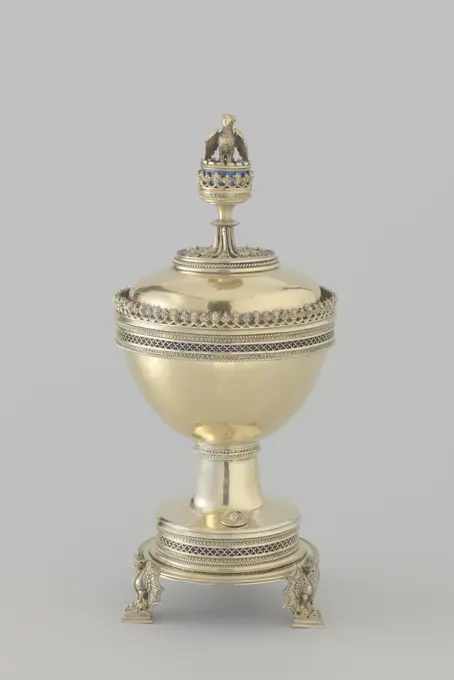
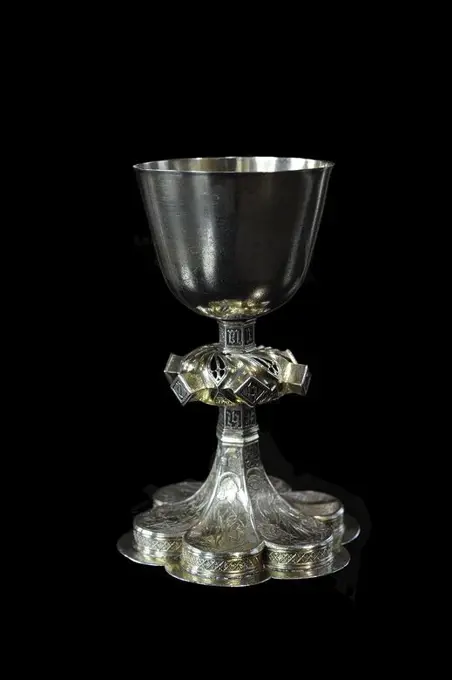
Chalice, anonymous, c. 1330 - c. 1350 Ciborium, gilded, unadorned chalice. This is semi-shaped and has a lid that is crowned by an eagle, seated on a platform with tilting. The edge of the lid has tracing work on a ground of blue translucent email and is deposited by a board of lion masks, interspersed by gothic leaf shapes. The short, cylindrical tribe gradually flows into the round foot, which is surrounded in the same way as the lid with tracing work and rests on three dragons with spread wings. At the bottom of the tribe a raised medallion with the bust of Christ. In the lid a closing plate for the button attachment is installed, on which, in transparent email, a Salvator Mundi in green and purple rug on blue ground. Under the foot The inscription :: + iohes: Uten: Leen: SCI: Salva: Me: Dedit :: Ano: DNI: M CCC LXXVI :. Utrecht (possibly) silver (metal) casting / gilding  Sint-Salvatorkerk Ciborium, gilded, unadorned chalice. This is semi-shaped and has a lid that is crowned by an
Chalice, anonymous, c. 1330 - c. 1350 Ciborium, gilded, unadorned chalice. This is semi-shaped and has a lid that is crowned by an eagle, seated on a platform with tilting. The edge of the lid has tracing work on a ground of blue translucent email and is deposited by a board of lion masks, interspersed by gothic leaf shapes. The short, cylindrical tribe gradually flows into the round foot, which is surrounded in the same way as the lid with tracing work and rests on three dragons with spread wings. At the bottom of the tribe a raised medallion with the bust of Christ. In the lid a closing plate for the button attachment is installed, on which, in transparent email, a Salvator Mundi in green and purple rug on blue ground. Under the foot The inscription :: + iohes: Uten: Leen: SCI: Salva: Me: Dedit :: Ano: DNI: M CCC LXXVI :. Utrecht (possibly) silver (metal) casting / gilding Sint-Salvatorkerk Ciborium, gilded, unadorned chalice. This is semi-shaped and has a lid that is crowned by an
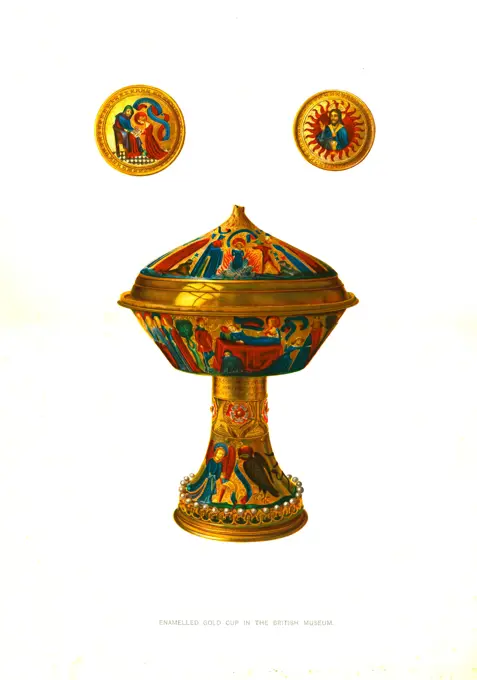
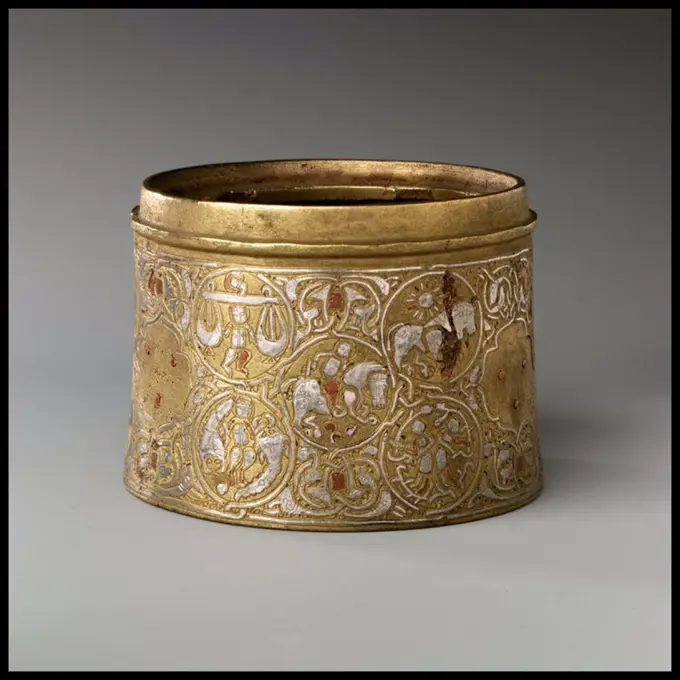
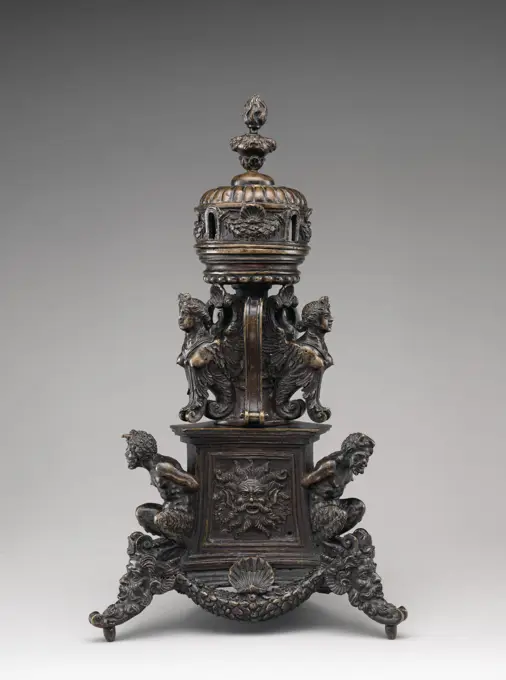
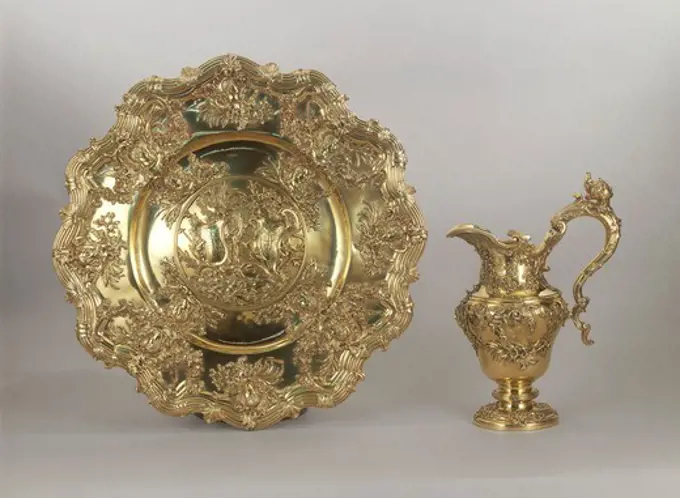
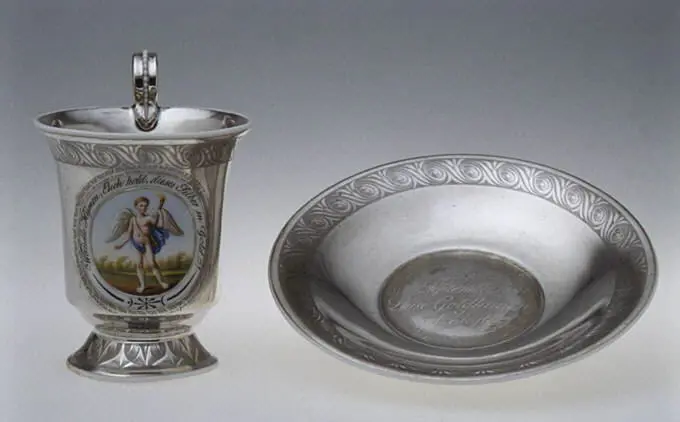
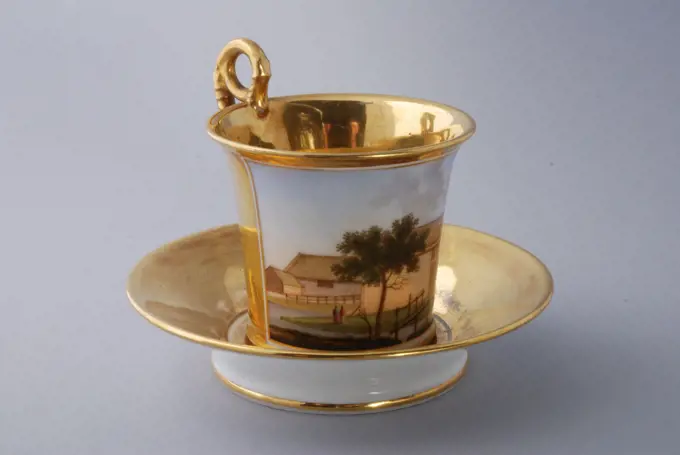
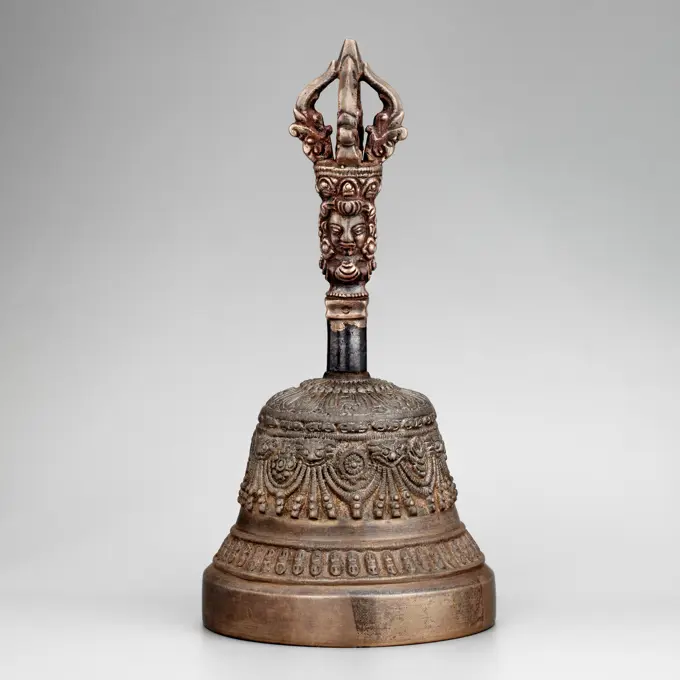
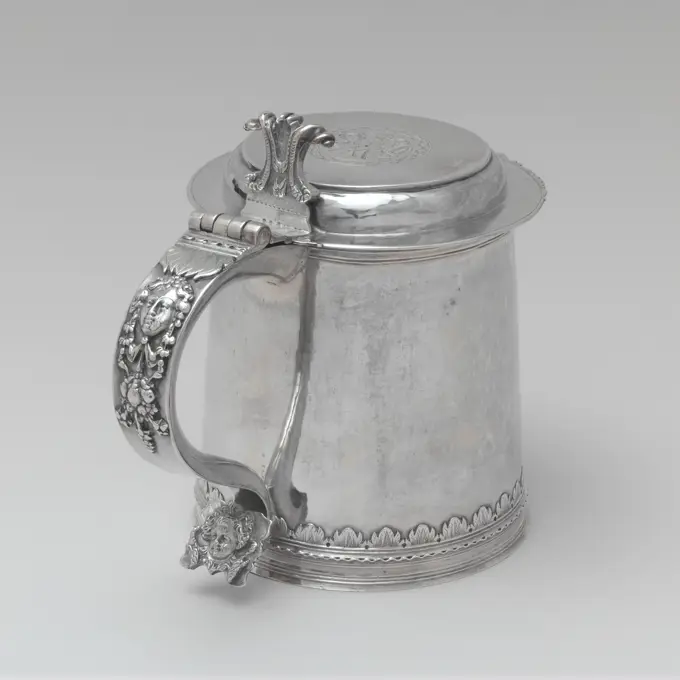
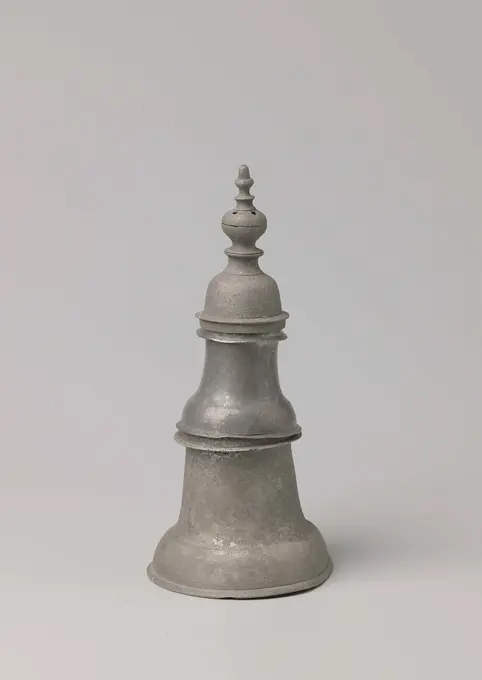
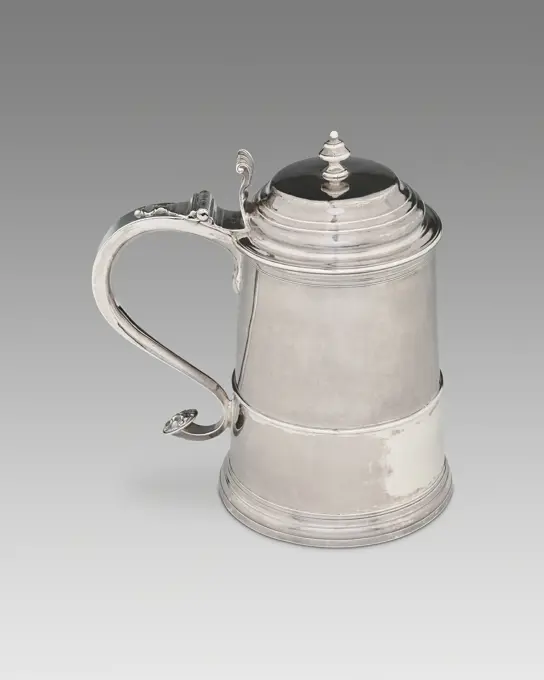
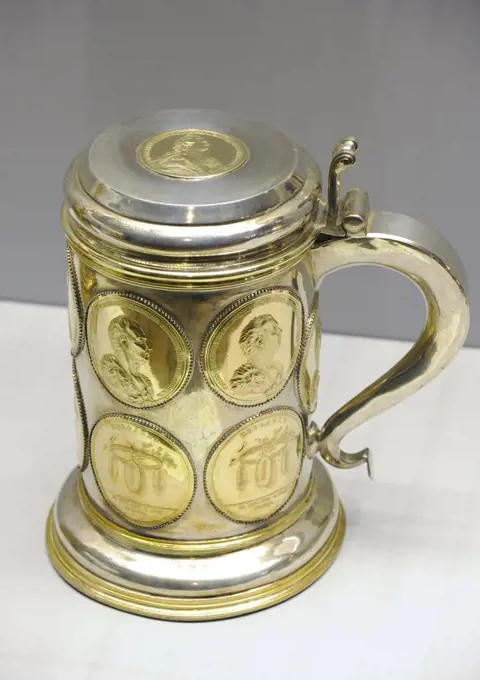
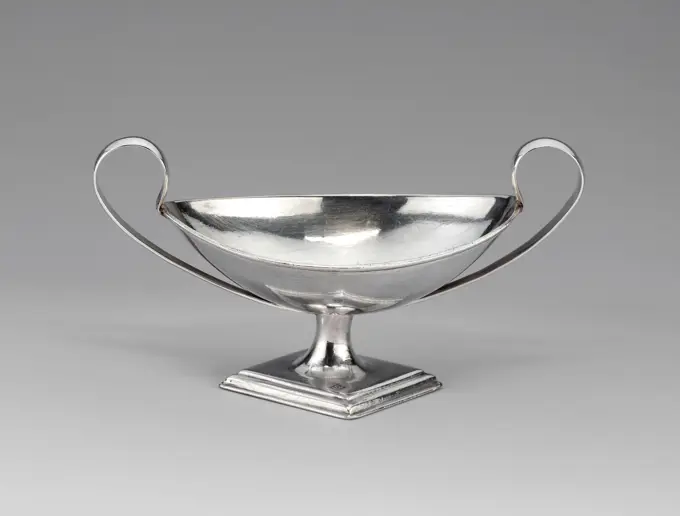
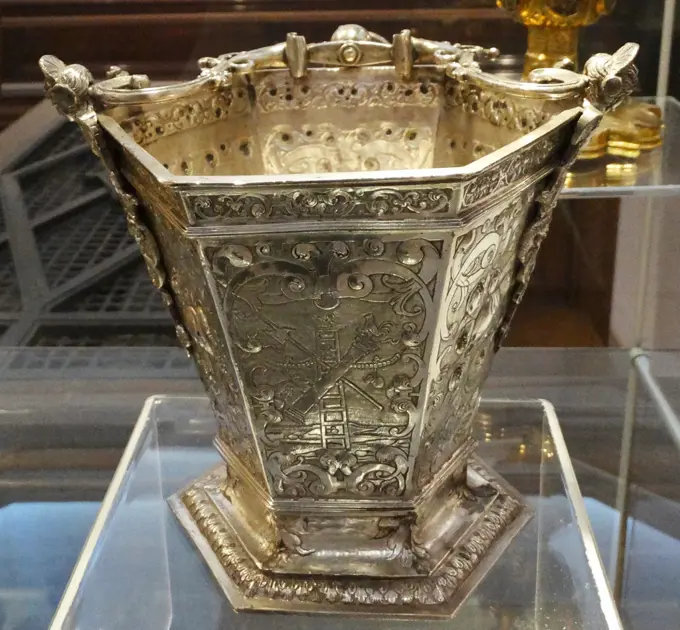
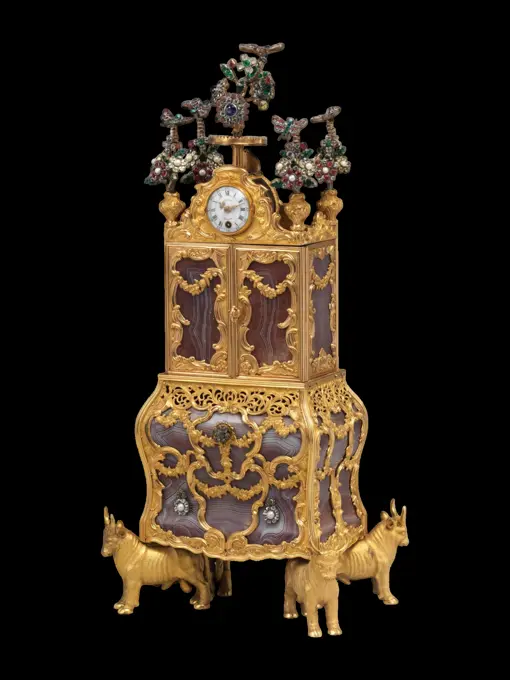
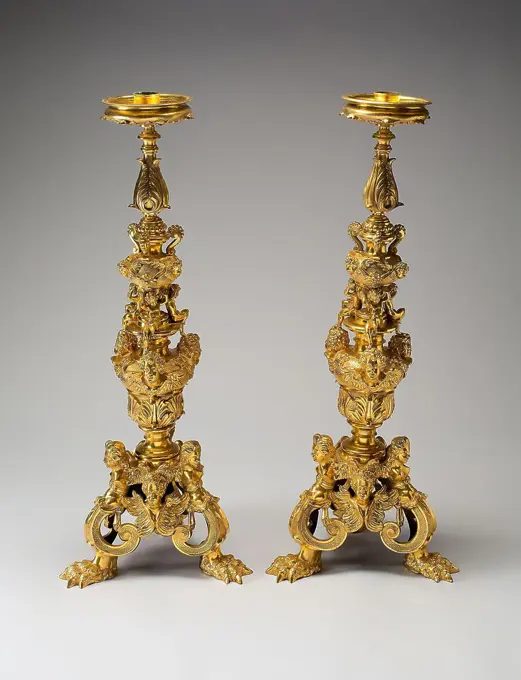
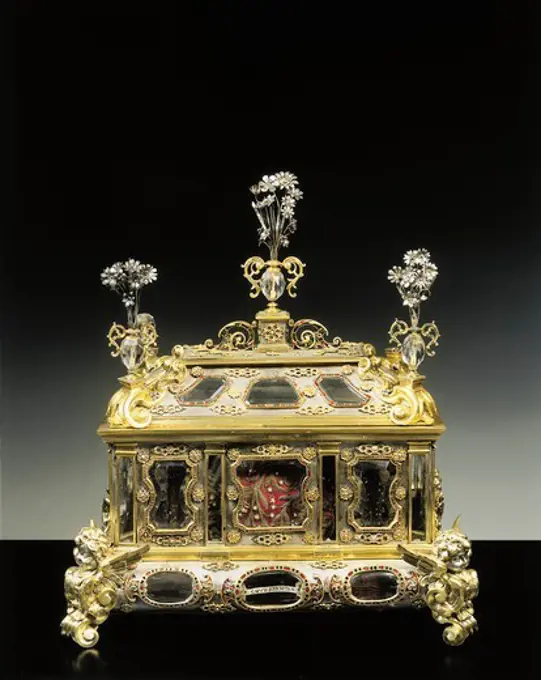
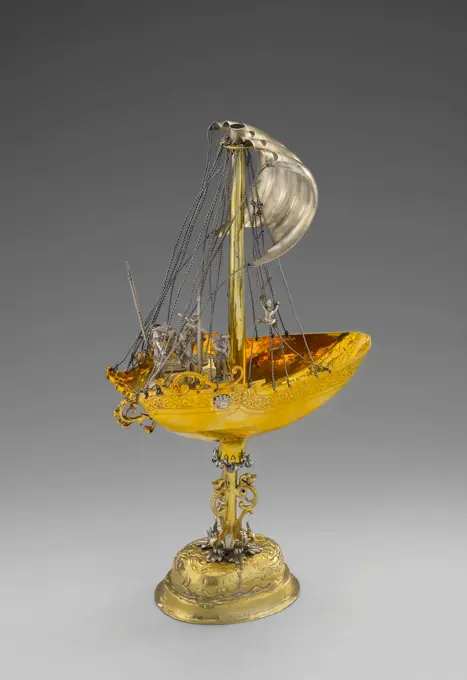
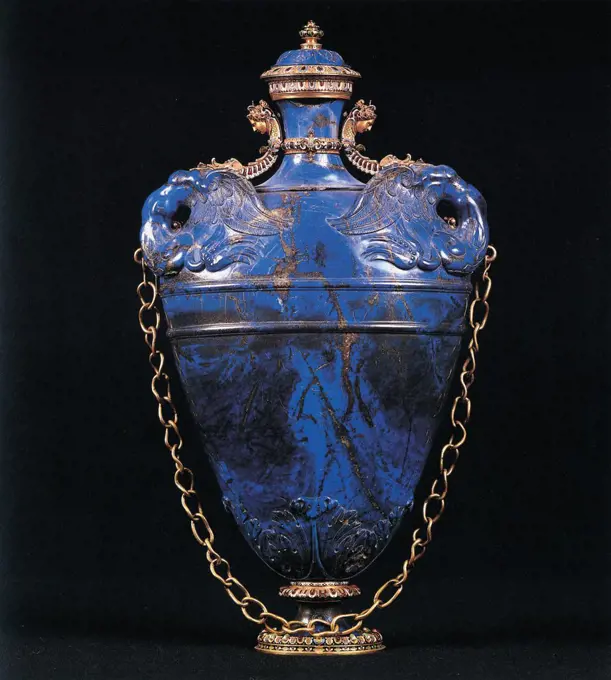
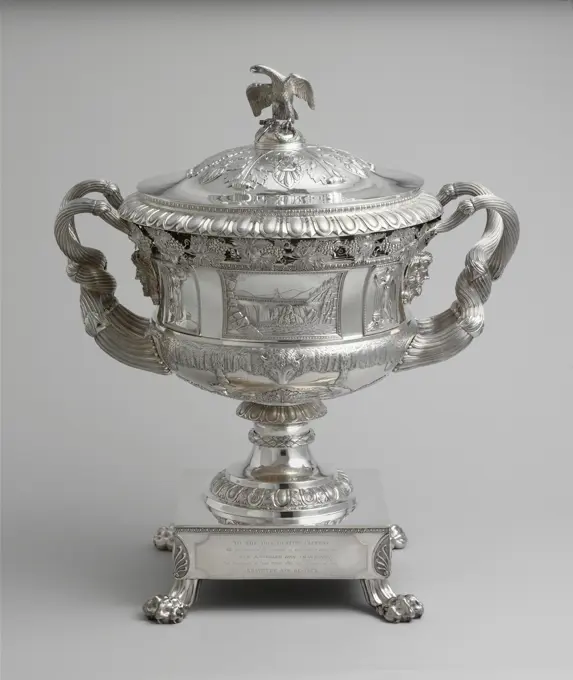
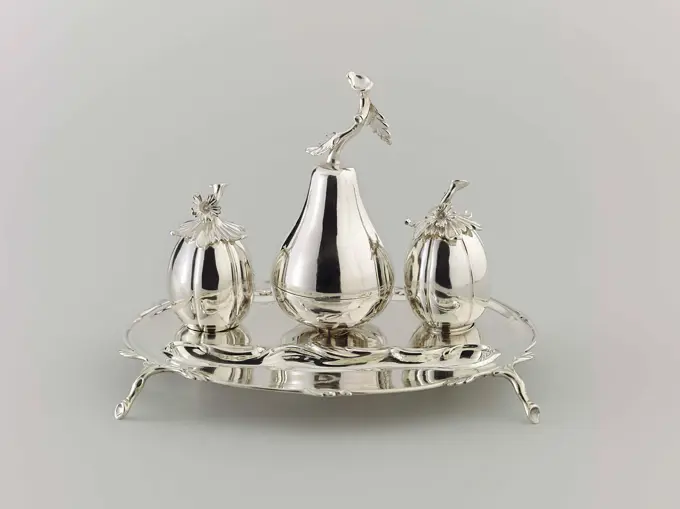
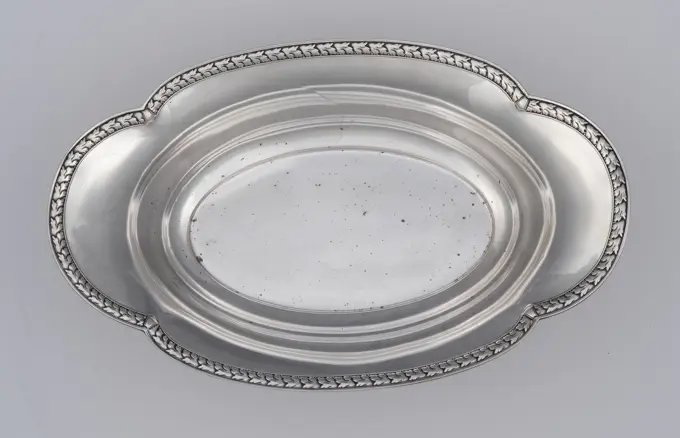
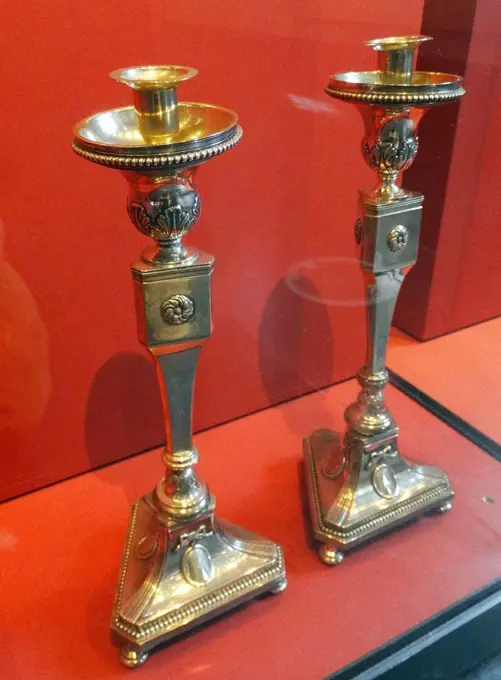
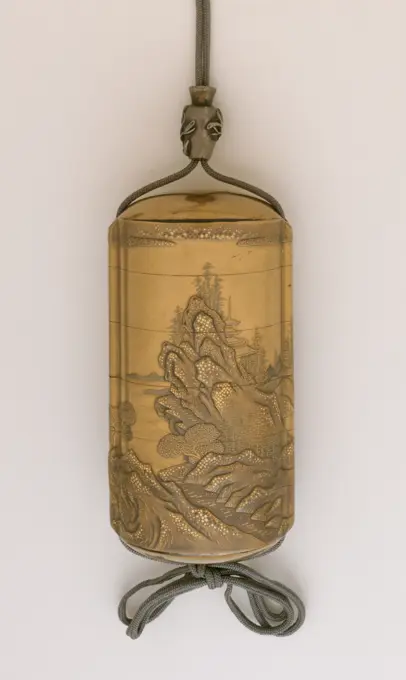
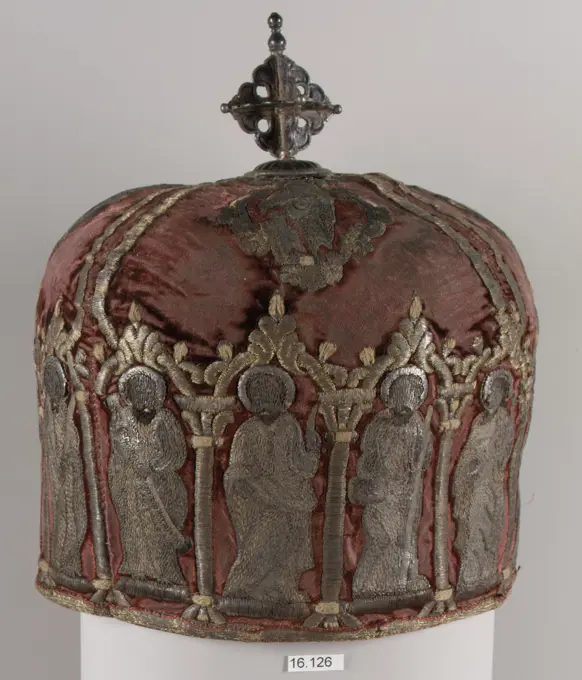
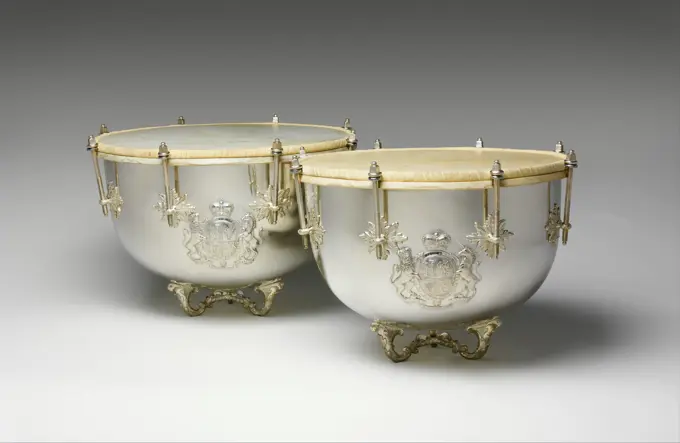
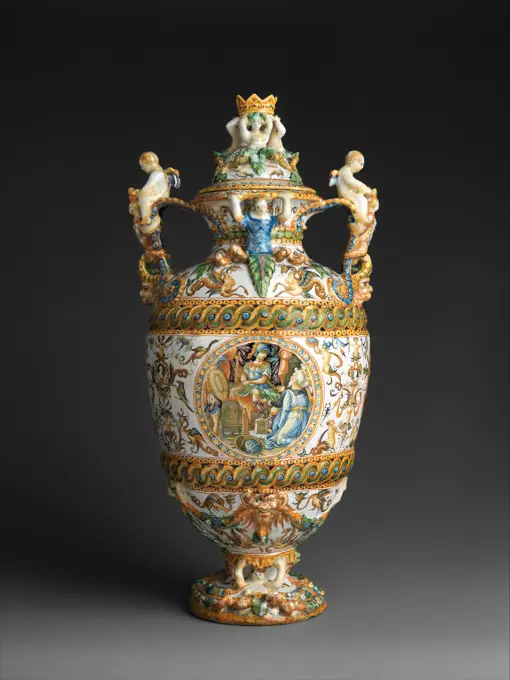
Pharmacy jar with subjects from The Campaigns of Julius Caesar 1580-81 Workshop of the Patanazzi Family With both painted and sculpted ornament, this monumental vessel blurs the line between decorative and functional. Vignettes from the life of Julius Caesar appear within two central roundels surrounded by coats of arms and grotesque designs created in imitation of ancient Roman art. This vessel comes from the most elaborate and extensive set of Renaissance pharmacy jars to survive, most of which remain in situ in Roccavaldina, Sicily.. Pharmacy jar with subjects from The Campaigns of Julius Caesar 197225The Royal Gold Cup, (late 19th century). Creator: Unknown.Anonymous / 'Case for cup with a lid supported by a female figure'. XVII century. Leather, Wood, Silk. Museum: Museo del Prado, Madrid, España.Altar Cross. Spain, 1575-1600. Sculpture. Silver gilt, rock crystalGhanta, anonymous, 900 - 1600 Bronze sculpture of a bell with articulated handle and the top formed by Lotus cushion on which a five -pointed Wajra. East Java bronze (metal) Bronze sculpture of a bell with articulated handle and the top formed by Lotus cushion on which a five -pointed Wajra. East Java bronze (metal)TeaService.   Maker: John Bridge, BritishSilversmith's art, 16th century. Silver crucifix set with precious stones, circa 1530. From Rhodes.Arte Edad Antigua. Tesoro de Guarrazar. Corona de Recesvinto. Dos anchas piezas semicirculares que se articulan con charnelas y pasadores formando un arco. Museum: MUSEO ARQUEOLOGICO, MADRID, SPAIN.Vase (part of a Garniture of 5 Vases) 1815-1825 Leeds. Earthenware with silver lustre decoration, monochrome brown, and yellow ground . Adam Buck (Decorator)Inkwell with Twelve Zodiac Medallions. Dimensions: H. 2 3/8 in. (6 cm)Diam. 3 1/4 in. (8.3 cm). Date: late 12th-early 13th century.The twelve signs of the zodiac are arranged around the surface of the vessel in groups of four, each surrounding a central medallion with a horsemen or a falconer.Virgo (al-sunbula, "ear of corn") is the only sign of the Zodiac whose iconography is very different from that of Western cycles. For some reason, while the name of the constellation is al-cadhra ("the virgin") and it is depicted in astronomical treatises as a female figure, the name of the corresponding sign of the Zodiac was sunbula, after the brightest star of the constellation. Therefore, in representations on objects, the image of the female virgin was replaced by a male figure, evidently Gemini's Planetary Lord Mercury, who was shown as a farmer slashing ears of corn with a crescent-shaped scythe. Museum: Metropolitan Museum of Art, New York, USA.Tin candlestick in the form of a Greek column, Carel Lodewijk Schurffius (attributed to), c. 1772 - c. 1812 Tin candlestick in the form of a Greek column. The square base is provided with an egg list on the edge. Above that is a canaly trunk with the candle holder in the form of a Corinthian capital. Amsterdam tin (metal) casting Tin candlestick in the form of a Greek column. The square base is provided with an egg list on the edge. Above that is a canaly trunk with the candle holder in the form of a Corinthian capital. Amsterdam tin (metal) castingFooted Bowl with Papal Arms (Coppa). UnknownSalt Cellar, c. 1770. John Andrew (American, 1747-1791). Silver; overall: 3.5 x 6.7 cm (1 3/8 x 2 5/8 in.).Candlestick. Dimensions: H. 11 1/2 in. (29.2 cm). Date: ca. 1790. Museum: Metropolitan Museum of Art, New York, USA.Bowl.   Maker: Myer Myers, American, 1723-1795Tureen with cover 1771-72 Joseph-Pierre-Jacques Duguay. Tureen with cover. French, Paris. 1771-72. Silver. Metalwork-SilverIncense burner ca. 1530-40 Northern Italian, probably Padua Ancient authors mentioned the sanitary benefits of fumigation and the widespread ceremonial use of incense in the rites of various religions in many parts of the then-known world. The form of this incense burner seems to have been inspired by classical Roman funerary monuments or altars. Its sculptural body supports a container with arched openings for the release of fragrant smoke, crowned by a flamelike finial representing eternal fire. As sensuous appreciation for pleasant perfumes grew, their often-exotic origins sparked the curiosity of Europeans. Incense might have improved the intellectually stimulating ambience of a Kunstkammer, thus enhancing the visual appreciation of the variety of objects displayed therein.The incense burner is decorated with images of satyrs and sphinxes. Satyrs symbolized the mythological world of lust. They were lazy, lecherous, and misspent their time drinking and chasing nymphs, whereas sphinxCORONA DE RECESVINTO PROCEDENTE DEL TESORO DE GUARRAZAR. VISIGODO JOYERIA. (DEPOSITO: MUSEO ARQUEOLOGICO NACIONAL).Vajra Bell (Ghanta). Central Tibet, circa 18th century. Tools and Equipment; musical instruments. Gilt copper alloy and bell metalSilversmith's Art, Great Britain 18th century. Gilded silver jug and basin, Rococo' style.Close-up of a cup on a saucer, Paris, FranceMonstrance, 1854-1874. Designer: John Francis Bentley. Manufacturer: Hart & SonIce Cream Cooler. Vienna State Porcelain Manufactory; Austrian, 1744-1864. Date: 1804. Dimensions: H. 15 11/16 in. (39.8 cm). Hard-paste porcelain and enamel decoration. Origin: Vienna. Museum: The Chicago Art Institute, Chicago, USA. Author: Du Paquier Porcelain Manufactory.Lamp 1850-67 Boston & Sandwich Glass Company. Lamp. American. 1850-67. Blown and cut glass. Made in Sandwich, Massachusetts, United StatesAlmaraja, multi-spouted glass container, blown and molded glass, 18th century, anonymous author, Museum of Baroque of Catalonia, Manresa, Spain.Qatar, Doha, Museum of Islamic Art, mosque lamp, 14th century,Chalice. Early 15th century (bowl: 16th century). Gilded silver. From Wroclaw (Breslau). National Museum. Warsaw. Poland.A carved table made by Debar masters, eighteenth century, Rila Monastery, founded in the 10th century, Rilski River valley, Republic of Bulgaria, Europe.Crucible (kanaka);  19th century (1801-00-00-1900-00-00);Cup and saucer ca. 1828 Royal Porcelain Manufactory, Berlin The silvered decoration alludes to a twenty-fifth wedding anniversary that is commemorated in an inscription on the saucer.. Cup and saucer. German, Berlin. ca. 1828. Hard-paste porcelain. Ceramics-PorcelainPunch bowl, c. 1900, Württembergische Metallwaren Fabrik (a.k.a. WMF), Geislingen, Germany, est. 1853, 19 1/4 x 16 1/2 x 11 1/2 in. (48.9 x 41.91 x 29.21 cm), Silverplate, glass, Germany, Art Nouveau, As with Liberty & Co. of London, WMF engaged an impressive list of designers, but chose not to identify them, promoting the company name instead. This punch bowl is among the most flamboyant works appearing in the company's line, likely produced as a showpiece or for a special commission. The vessel is surrounded by intertwining tendrils, but its Germanic accents, the angular handles, the green faceted glass and its assertive presence distinguish it from the softer embellishments familiar to French Art Nouveau.Gas Lamp ca. 1855. Gas Lamp 3880Przeszo Przyszoci unknownUnknown, Pair of Andirons: Recumbent Lions, brass.Monstrance probably 16th century Italian. Monstrance 194453Ewer. Possibly Egypt, 8th-9th century. Metal. BronzeVase (vaso) ca. 1520-30 Italian, Deruta. Vase (vaso). Italian, Deruta. ca. 1520-30. Maiolica (tin-glazed earthenware). Ceramics-PotteryCachet with corkscrew and pipeswroeter, Hendrik Jansz Smook (attributed to), 1757 Corkscrew in a silver cachet. The handle of the corkscrew is crowned by a horse. The cachet is engraved with a monogram. Amsterdam silver (metal). iron (metal) Corkscrew in a silver cachet. The handle of the corkscrew is crowned by a horse. The cachet is engraved with a monogram. Amsterdam silver (metal). iron (metal)Cup and saucer, part of coffee and tea service with cityscapes, cup and saucer coffee service tea set tableware ceramics porcelain glaze, baked glazed painted stove enamelled Cup and saucer Free deep dish on wide stand ring. Gilded at the top except the middle. Auger shaped head with protruding upper edge. Curled ear with loop resting on the edge of the head. At the front with window in which cityscape is the corresponding caption is located at the bottom of the head La cabane du Czar topography coffee coffee drinking tea drinking tea serving Zaandam Tsar Peter the GreatTea and coffeeset.  Manufacturer: Chicago Silver Company, American, 1923-1945Retailer: Lewy Brothers Company, American, active ca. 1900-1925Bell;  18th century () (1701-00-00-1800-00-00);Pudłowski, Andrzej - collection, Buddhist and Hindu art, art of Tibetan Buddhism, purchase (provenance)Celestial globe with clockwork. Culture: Austrian, Vienna. Dimensions: Overall: 10 3/4 × 8 × 7 1/2 in. (27.3 × 20.3 × 19.1 cm); Diameter of globe: 5 1/2 in. (14 cm). Maker: Gerhard Emmoser (German, active 1556-84). Date: 1579.This globe once rotated, charting the constellations. A unique object uniting extraordinarily complex mechanical technology with great aesthetic beauty, it belonged to the Holy Roman Emperor Rudolf II, who displayed it in his curiosity cabinet. It was valued both for its function as a scientific apparatus and for its rich, elegant casework. Pegasus bears the seemingly weightless globe on his outstretched wings. Astronomy was enabled by knowledge of arithmetic and geometry, then considered "the wings of the human mind."Elizabeth Cleland, 2017. Museum: Metropolitan Museum of Art, New York, USA.Cartridge Box. German, Saxony. Date: 1570-1600. Dimensions: H. 13.5 cm (5 5/16 in.). Wood, ebony, bone, and iron. Origin: Saxony. Museum: The Chicago Art Institute, Chicago, USA.Arm with candle holder of candle crown of two heights, c. 1800 - c. 1875 Candle belonging to a brass candle crown of two heights. The S-shaped arm has a curl at the start, halfway through a dolphin head and turns outside into the flat thickening with a screw hole. The candle holder is secured with the fat catcher. The fat catcher is ribbed at the bottom of the opening and has a slightly excellent edge and is decorated with grooved hefty rings. The Cylindrian candle holder has a profiled and a little excellent edge, two grooved rings, a rib and a profiled hollow bottom, which turns into a protrusion with a thread with a center hole. This is the sixth arm of the lower position ring, unnumbered. Netherlands brass (alloy) casting Candle belonging to a brass candle crown of two heights. The S-shaped arm has a curl at the start, halfway through a dolphin head and turns outside into the flat thickening with a screw hole. The candle holder is secured with the fat catcher. The fat catcher is riLid of the baptismal font (detail) in Altenberg Cathedral (also Bergischer Dom), former monastery church of Altenberg Abbey, built by the Cistercians since 1133, since 1857 simultaneous church for the Protestant and Catholic churches, Odenthal, North Rhine-Westphalia, Germany, Europesilver gilt Russian drinking tankard from Moscow 1898. The vessel is decorated with cloisonné and enamel and made by Pavel OvhinnikovDesklamp. Designer Louis Comfort Tiffany, American, 1848-1933 Manufacturer: Tiffany Studios, American, 1890-1932Cloisonne Altar Garniture Chinese ArtGolden bowl belonging to Tsar Alexis. Alexei Mikhailovich Romanov (1629-1676) Tsar of Russia 1645-1676.Tankard 1700-1720 Cornelius Kierstede American This classic New York tankard is one of several that survive marked by the outstanding colonial silversmith Cornelius Kierstede. Of particular interest is the cast element soldered to the handle, which represents a female mask with pendant fruit. This motif appears on tankards marked by a variety of silversmiths, for instance Simeon Soumaine, whose tankard (27.85.1) descended in the same family as did this one.. Tankard 8206Tankard. Culture: British, London. Dimensions: Height: 7 1/8 in. (18.1 cm). Maker: Richard Gurney (entered 1727 (partner with Thomas Cooke II)-1773) (ent. 1734); Thomas Cooke II (entered 1727 (partner with Richard Gurney)-1773) (ent. 1734). Date: 1733-34. Museum: Metropolitan Museum of Art, New York, USA.. The object consists of an iron rod and an iron split pen and the next cast parts of yellow copper: the hanging ring, the maria figure with the crown and her riveted on her head with the Christ child, the trunk, at the top to cover a bolron round plate Is roasted, and at the bottom of an iron eye with two cams is riveted (which means that the rod should be inserted), the lion's head with the drawing ring, the collar. The more or less octistic round hanging ring leaves at the bottom in a severe hollow pipe. The maria figure placed on the crescent is surrounded by a beams. Her dress and cloak are decorated with punched stars. The hair reaches on the back to the agent. The crown is composed of five fleurons. The hollow and bol rounded stem has between the two stand rings a bantled shape decorated with a rib. The two standings have eight notches each time, which are unnoticed, or noticed at the top with one to seven points. Above the lower stand ring there is one of the three protrusions Candlestick with vase -shaped trunk, anonymous, c. 1800 - c. 1900 The candlestick is composed of four parts: foot, trunk, fat catcher and candle pin. The foot is roughly profiled. The trunk is vase at the bottom. The trunk is sounding in the foot. Netherlands brass (alloy) casting The candlestick is composed of four parts: foot, trunk, fat catcher and candle pin. The foot is roughly profiled. The trunk is vase at the bottom. The trunk is sounding in the foot. Netherlands brass (alloy) castingtriple candlesholder with one candle isolated triple candlesholder with one candle isolated on white background Copyright: xZoonar.com/ValeryxVoennyyx 6184152Top of a tin salt barrel. Top of a tin salt barrel. Ugg-shaped lid with a round ball on it that ends in a peak and in which four holes are. This part was originally unlikeed. The bottom of this consists of a tin plate. There are traces of silver suspension visible. Together with a middle and bottom, forms a salvation.View 1 of 2. Chalice, 1854-55. Silver gilt. Manufacturer: John Hardman & CoTankard c 1729 Boston. Silver . John Burt18th century art. Russia. Snuff-Box with a medal in honour of the Peace with Turkey of 1774 an portrait of Catherine II. Silver: stamping, carving. Russia, 1774. Medallist Timofei Ivanov. The State Hermitage Museum. Saint Petersburg. Russia.Salt Michaelis, Johann C. (Fl. Ca 1800-Ca 1830); 1920s (1820-00-00-00-1829-00-00);Banking Foundation Leopolda Kroneneberg (Warsaw - 1996-) - collection, spices, spices (vessel), salt (vessel), purchase (provenance)Fruit basket; Meach, Richard (FL.1765-1793); 1771/72 (1771-00-00-1772-00-00);Situla or Holy Water bucket made with silver. Augsburg (Germany) 1580-1600). The bucket was made to contain Holy Water for use during baptisms and other church services. It is decorated with garlands of flowers and fruit and emblems of the crucifixion of Christ.Candelabrum 1810-20. Candelabrum 1137. Vaulted oval terrine, decorated with leaf branches and resting on four legs, also in the form of leaf branches. The ears are made up of branches. The lid is crowned by a handle in the shape of a leaf branch.Table clock next to its leather case with the arms of Gaston of Orleans, France, XVIIth century. Museum of Fine Arts of the City of Paris, Petit Palais. 26359-10 Weapon, stutch leather, table clock, watchmaking, french princeCovered Cream Bowl. Worcester Porcelain Factory (Flight, Barr & Barr Period); English, founded 1751; Retailed by Mortlock China Co.; English, 1746-1896. Date: 1815-1825. Dimensions: 22.9 x 20.3 cm (9 x 8 in.). Soft-paste porcelain, polychrome enamels and gilding. Origin: London. Museum: The Chicago Art Institute, Chicago, USA. Author: H. & R. Daniel (Firm).Candlestick (one of a pair). Culture: Italian. Dimensions: Overall (confirmed): 26 1/2 × 7 1/2 × 8 in. (67.3 × 19.1 × 20.3 cm). Date: early 18th century.One of a pair with 17.190.832. Museum: Metropolitan Museum of Art, New York, USA.Robberry of Hoorn mounted in gold, anonymous, 1685 - 1715 Smell bottle of Hoorn (Elandshoef) mounted in gold. Closed by a stop attached to a chain. Louis XIV ornament on a granulated soil.  gold (metal). horn (animal material) Smell bottle of Hoorn (Elandshoef) mounted in gold. Closed by a stop attached to a chain. Louis XIV ornament on a granulated soil.  gold (metal). horn (animal material)Ornate ancient miniature secretary with clock by James Cox ornate Ancient Miniature Secretary with clock by James CoxPair of Candlesticks. Attributed to Francesco Bertos; Italian, active 1693-1710. Date: 1675-1685. Dimensions: H. 63.2 cm (24 7/8 in.). Gilt bronze. Origin: Italy. Museum: The Chicago Art Institute, USA.Silversmith's art, Italy, 17th century. Silver gilt, rock crystal, ebony and enamel reliquary of Saint Brigida of Sweden (1302-1373). Grand-ducal workshops, 1600-1650, 30x35x20 cm.Chandelier. UnknownVotive crown of Suintila, Visigoth goldsmith work of the 7th century, Royal Arms of Madrid. The Arts of the Middle Ages and at the Period of the Renaissance by Paul Lacroix, 1874Ship-shaped cup (nef). Linden, Esaias zur (fl. 1609-1632), goldsmithTankard, c. 1750-1770. Samuel Casey (American, 1724-1780), Thomas Arnold (American, 1734-1828). Silver; overall: 21.9 cm (8 5/8 in.); with handle: 19.4 cm (7 5/8 in.); without handle: 13.7 cm (5 3/8 in.).Candlestick Mi Nia (Meissen). .Vase, by Bilivert Giovanni, drawing Buontalenti Bernardo, 1583, 16th Century, lapis lazuli. Italy: Tuscany: Florence: Palazzo Pitti. Whole artwork. Vase handles chain lapis lazuli cobalt blue goldRoberval balance, isolated on a white backgroundTorch to the Chinese, Louis XV period (seen from the front) ". Paris, Carnavalet museum. To the Chinese, candlestick, Chinese, Decoration, Louis XV time, torch, flower, faceFive-light candelabrum 1736 Meissen Manufactory German. Five-light candelabrum. German, Meissen. 1736. Hard-paste porcelain. Ceramics-PorcelainLeaf belonging to Inktstel, Laurens Potmans, c. 1773 - c. 1782 Silver ink set. The leaf is bent straight and at the front at the front. The ink jar and sand spreader are melon -shaped. The pear -shaped table bell is applied between the two melons. Middelburg silver (metal) Silver ink set. The leaf is bent straight and at the front at the front. The ink jar and sand spreader are melon -shaped. The pear -shaped table bell is applied between the two melons. Middelburg silver (metal)Presentation Vase 1825 Thomas Fletcher American In New York City, the most significant event of the early nineteenth century was the creation of the Erie Canal. Upon its completion, New York gained easy access to the country's interior, and its commercial hegemony was secured. A group of New York merchants commissioned a pair of monumental vases to be presented in 1825 to New York's governor DeWitt Clinton (1769-1828), in gratitude for his promotion of the canal's construction. The bodies and handles are modeled on the famous Roman urn known as the Warwick Vase, which was excavated in 1770 near Hadrian's villa at Tivoli. Thomas Fletcher's competition-winning design for these vases features a scheme of allegorical figures and American vistas along the route of the canal. On the front of this vase, for instance, figures representing Fame and History flank a view of the Mohawk River's Cohoes Falls; on the back, a female figure (plenty) and a Native American are depicted with the Little FaInkwell associated with ink set. Silver ink set. The leaf is straight on the back and at the front. The inkwell and sand spreader are melon. The pear-shaped table bubble is applied between the two melons.Footedbowl.   Maker: Herbert A. Taylor, American, 1892-1942Maker, workshop of: Arthur J. Stone, American, born England, 1847-1938Chandelier with tabernacle (Kapellenkrone). Artist: German, cast in F. Ring Foundry , Munich. Culture: German, Munich. Dimensions: H. 106 cm, L. of long branches 41 cm, L. of short branches 19 cm. Date: ca. 1875 after a dinanderie model from the Southern Netherlands, ca. 1450. Museum: Metropolitan Museum of Art, New York, USA.Censer 19th century, after 1616 original British, after Russian original This electrotype is after a seventeenth-century original (1616) in a monastery, Troisata, at the time of reproduction.. Censer. British, after Russian original. 19th century, after 1616 original. Gold. Metalwork-ElectrotypeOld Mortar and Pestle Isolated with Clipping PathCreampitcher. Maker, attributed to: John Armstrong, American, active 1810-1813Maker, attributed to Or: Allen Armstrong, American, active 1806-17Diesinker: Moritz Furst, Hungarian, 1782-1840. .Bowl; Binder, Wilhelm (Schwäbisch Gmünd; Wytwórnia Z Otnicz; 1869-1940); 19th century (1870-00-00-1930-00-00);Shabbat candlesticks. When Shabbat begins, on Friday evening at sundown, candles are lit in the home.Mountain Landscape (Inrō/Ojime/Netsuke Ensemble). Japan, 18th century. Costumes; Accessories. inrō gold takamakie, kirigane, and e-nashiji lacquer on gold fundame ground; ojime metal; netsuke ivoryThis is a vintage candlestick. And this object used. On the white backgroundMiter for a Priest 17th century. Miter for a Priest 446862Thomas Pitts I, Centerpiece with glass liner, 1779/80, silver.Fire buck of gold-plated bronze with rectangular base dog cups, rosettes, grape vines and hunting part; A boar and shot wild with a hunting horn .. golden bronze firebok. The rectangular basement shows angular robberies with dog cups, rosettes, grape vines and a representation of a hunting scene in relief. On top, a boar is placed on a kind of elevated landscape. A descending connector with grape vines and rosettes leads to a channeled pedestal with garlands, decorated with grape vines. On top of this pedestal shot wild with a hunting horn.Breakfast dish with warming stand, 1809, Paul Storr (dish and cover); Manufacturer: Rundell, Bridge & Rundell, English (London), English, 1771-1844, 10 1/2 x 16 1/2 x 9 in. (26.67 x 41.91 x 22.86 cm), Silver, Sheffield plate (warming stand), England, 19th centuryKettle Drums 1779 Franz Peter Bundsen Hanoverian (German) This magnificent pair of royal kettle drums was made for the Hanoverian Life Guards of George III (1738-1820), King of Great Britain and Ireland and Elector of Hanover, whose royal coat-of-arms they bear. These ceremonial instruments would have been played on horseback accompanied by similarly mounted trumpeters leading the royal procession for state events. Sets of silver kettle drums were items made for royals in the seventeenth through nineteenth century as symbols splendor and wealth, but only a handful of sets survive today, as many were melted down for the immense amount of precious material they contained. This is the oldest of several pairs built for English monarchs of the House of Hanover, three later pairs remain in use in London, and a set commissioned by William IV for the Hanoverian Court in the 1830s is at the Museum of Fine Arts, Boston. The original crimson banners that would have been draped around the lower poTeaService.   Maker: Dickson White and Company, AmericanVase with a Clock, Royal Porcelain Factory Dommer & Co., c. 1809 - c. 1814 Vase with timepiece in mirror image. The vase is on a square pedestal and is painted with a trophy of musical instruments. On the neck and foot vineyards and grape bunches. There are winged griffins on the ears of the vase. Marked: Amstel in gold. Nieuwer-Amstel porcelain Vase with timepiece in mirror image. The vase is on a square pedestal and is painted with a trophy of musical instruments. On the neck and foot vineyards and grape bunches. There are winged griffins on the ears of the vase. Marked: Amstel in gold. Nieuwer-Amstel porcelain