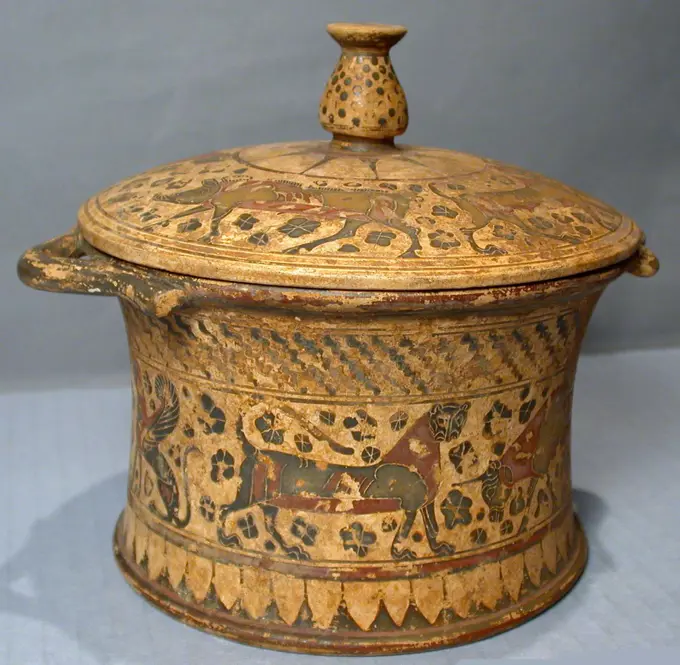
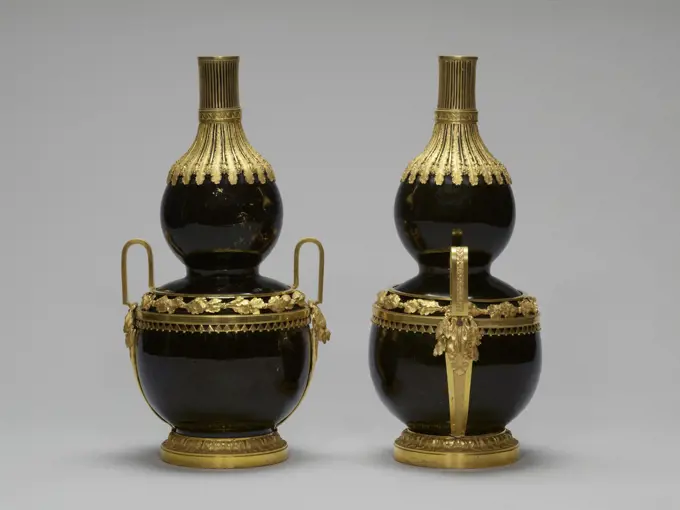
Ornate Decorative Cups

An assortment of decorative cups and ciboria from various cultures and periods, featuring detailed craftsmanship and ornate designs.
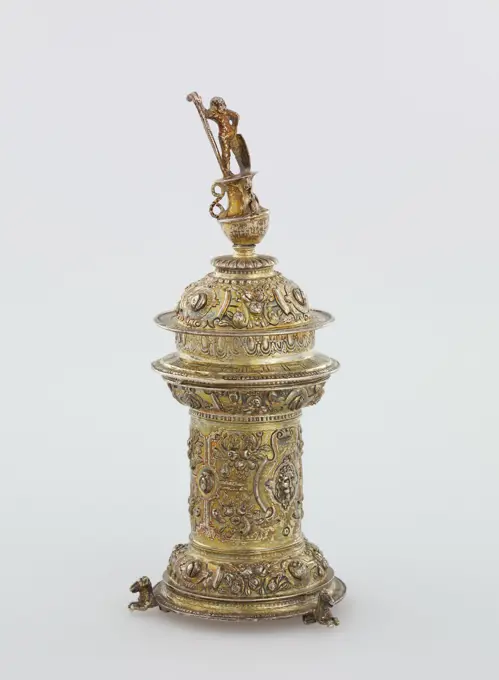
Standing salt, c. 1582, Christopher Eston, English, (Exeter), active about 1576-1592, 8 5/8 x 3 1/2 x 3 1/2 in. (21.91 x 8.89 x 8.89 cm), Silver, gilt silver, England, 16th century
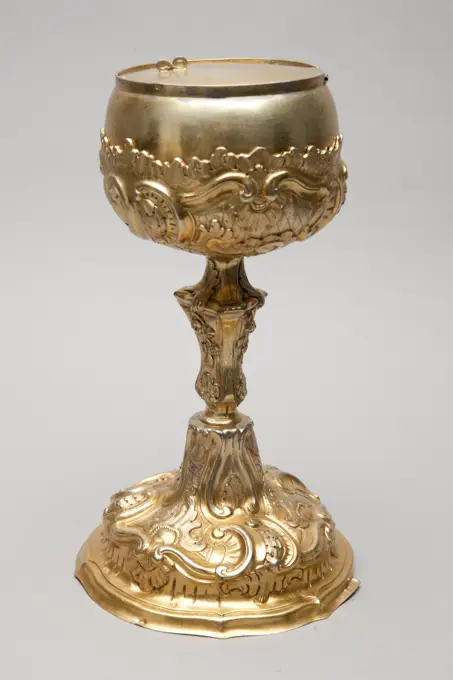
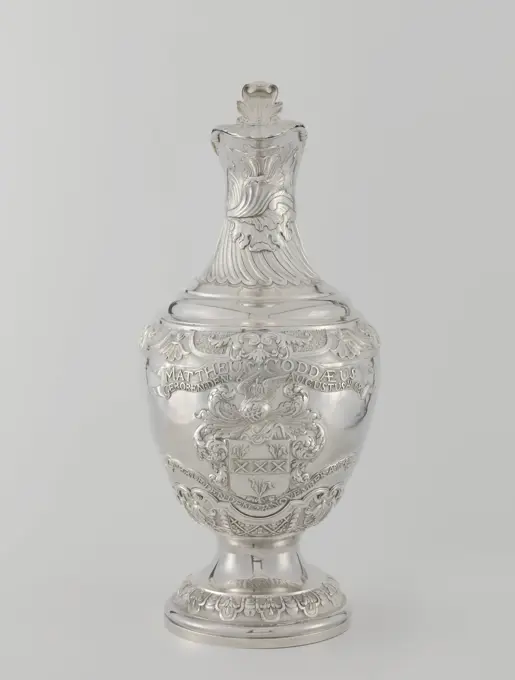
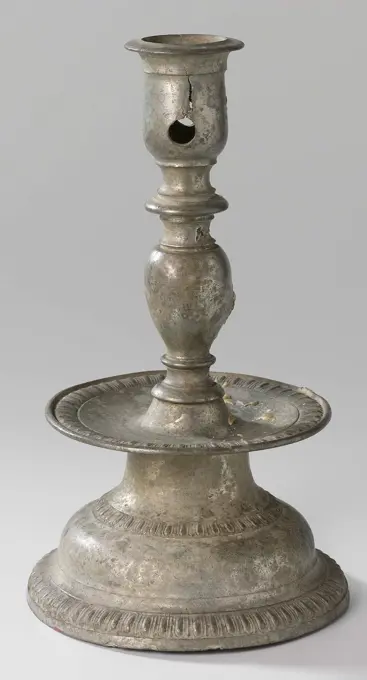
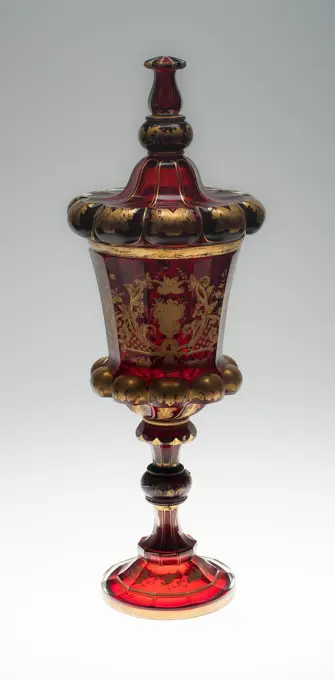
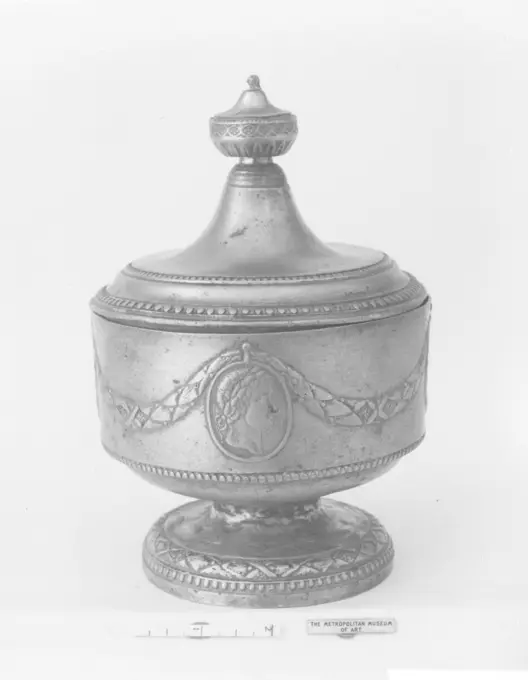
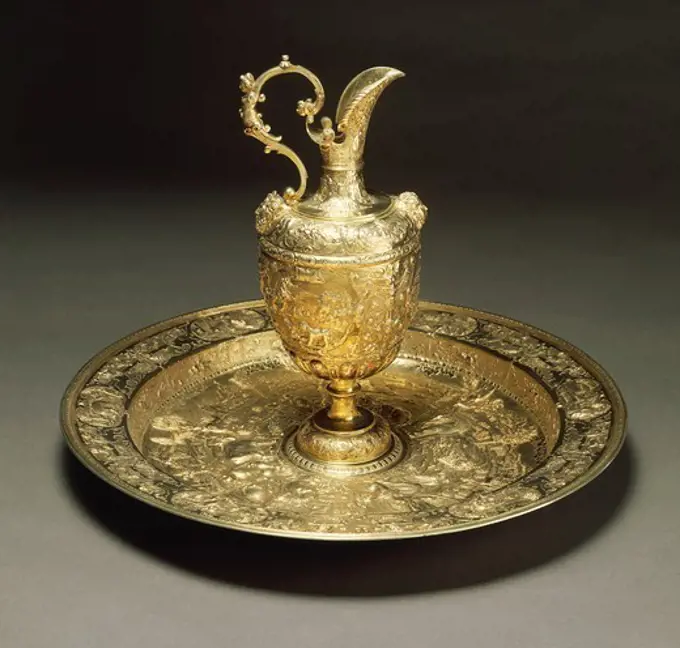
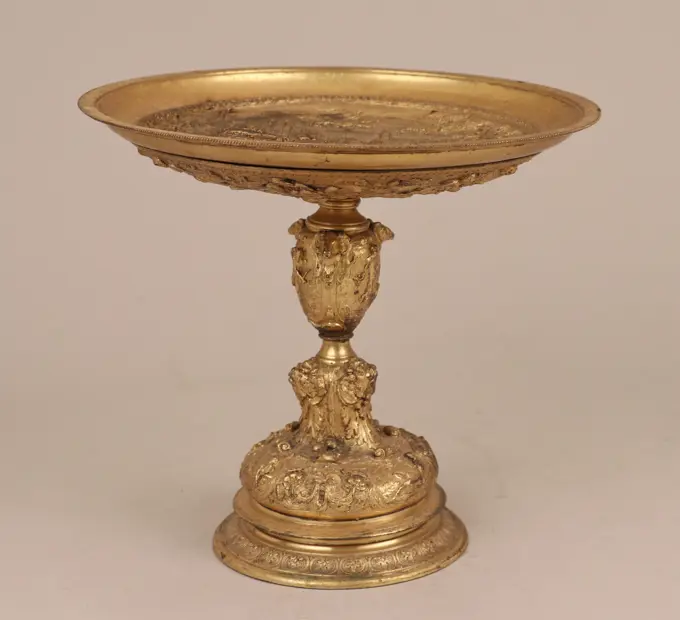
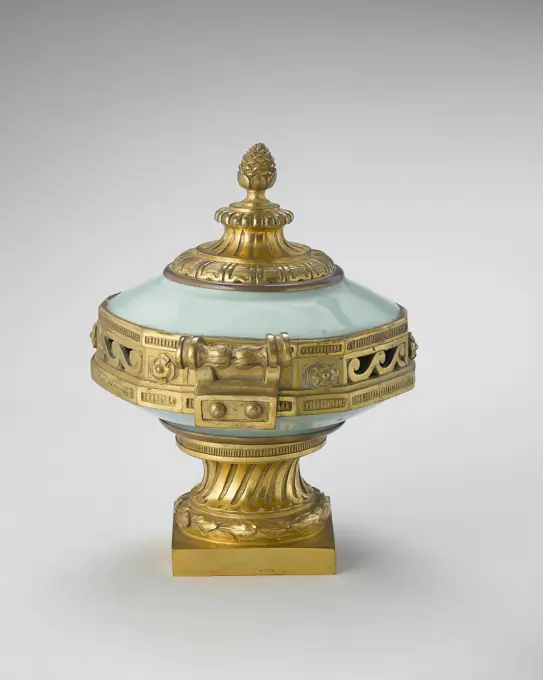
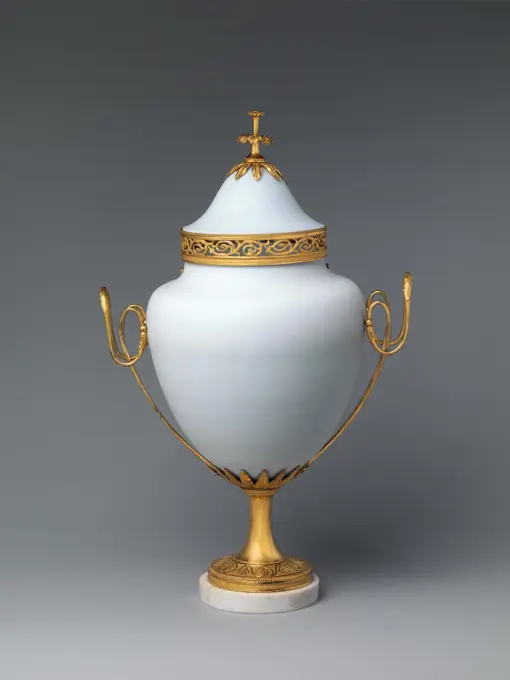
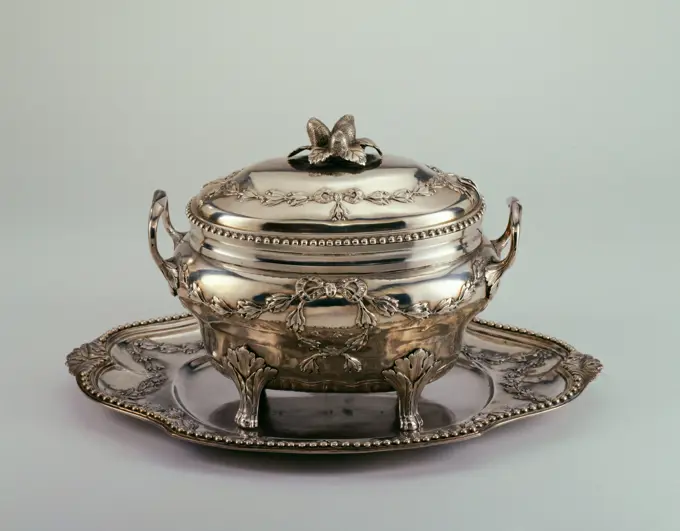
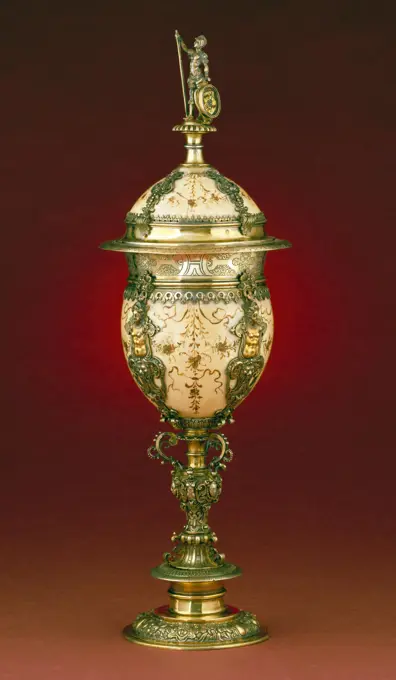
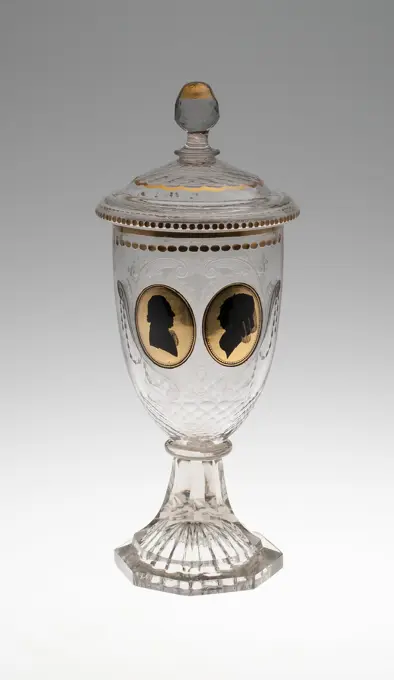
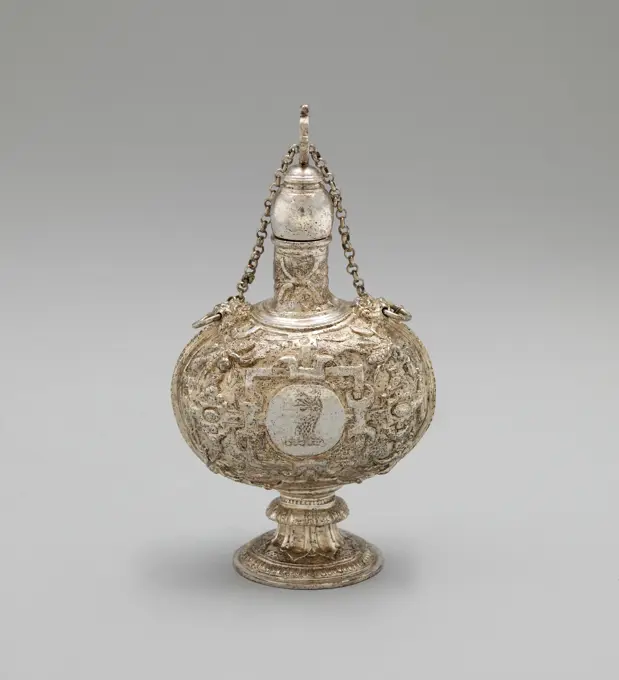
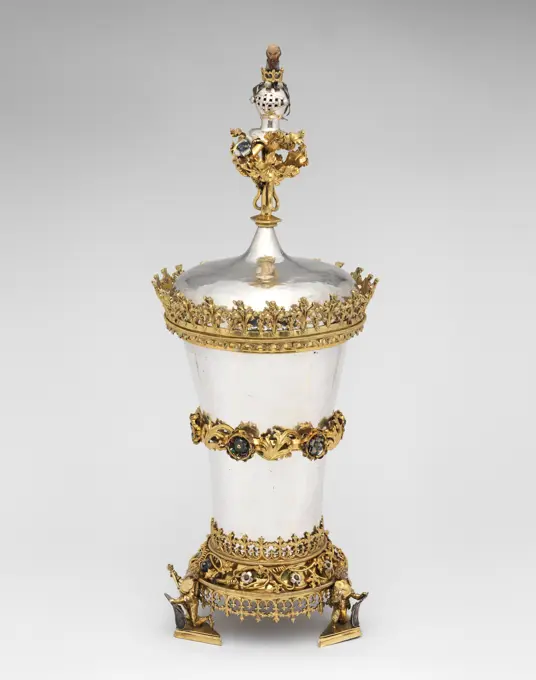
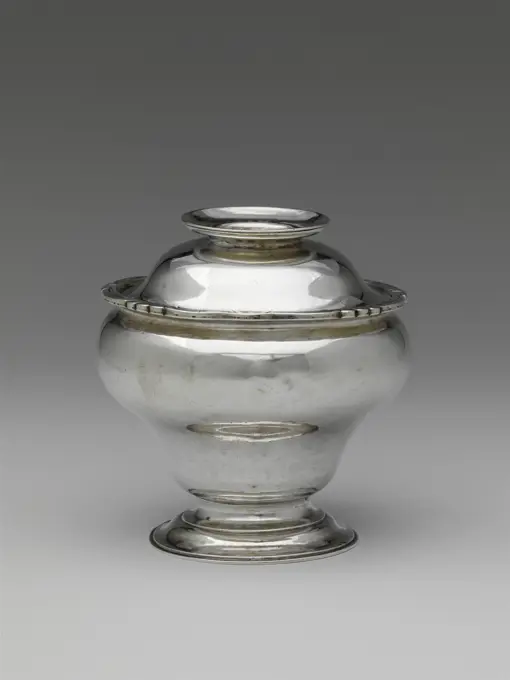
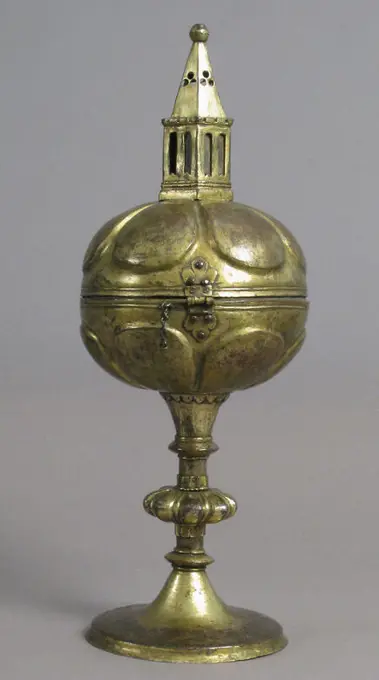
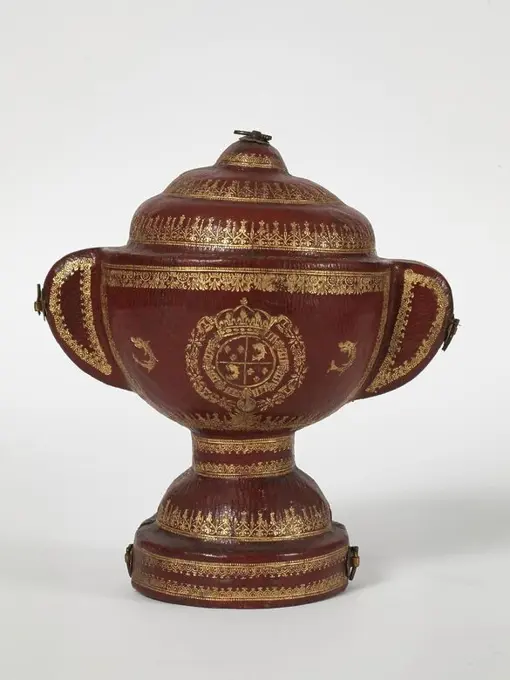
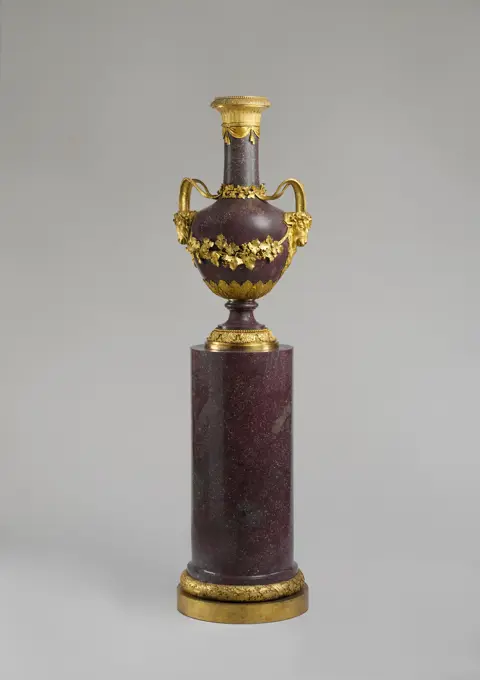
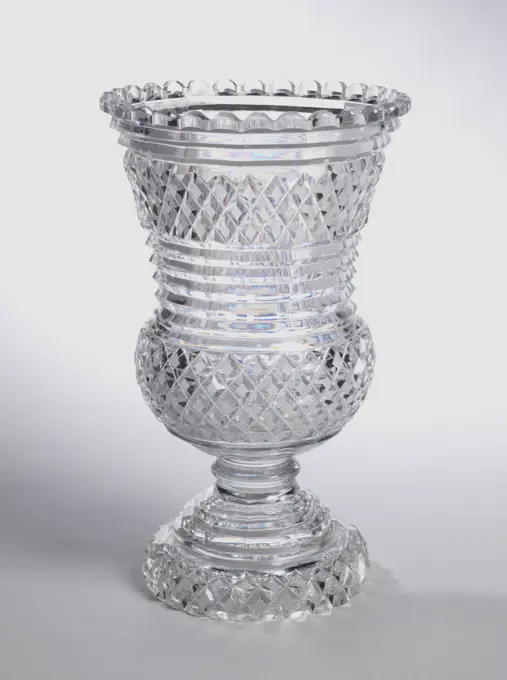
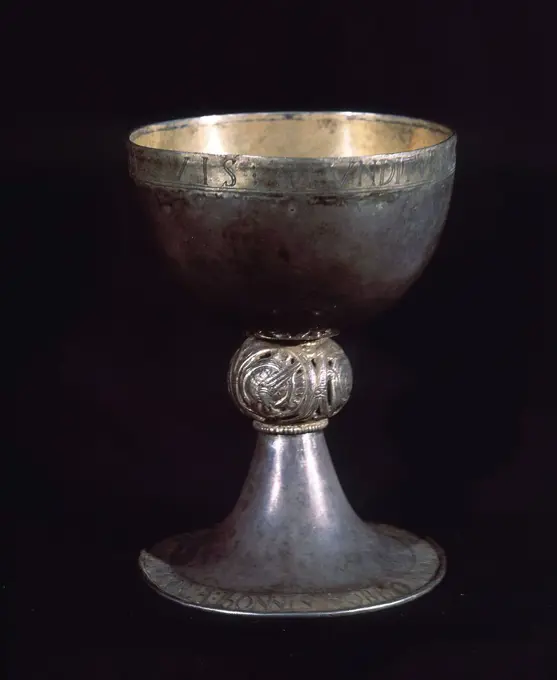
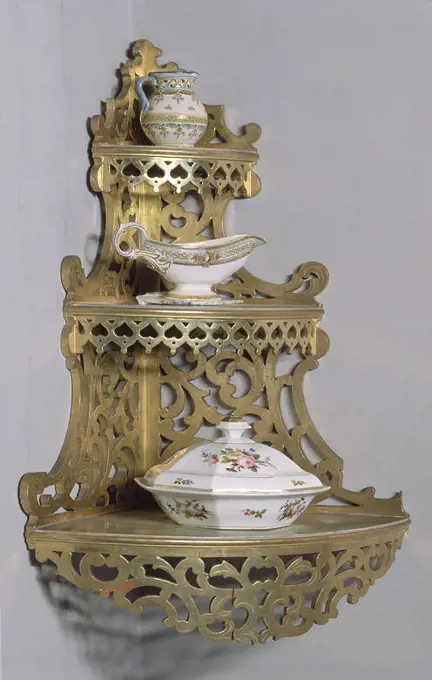
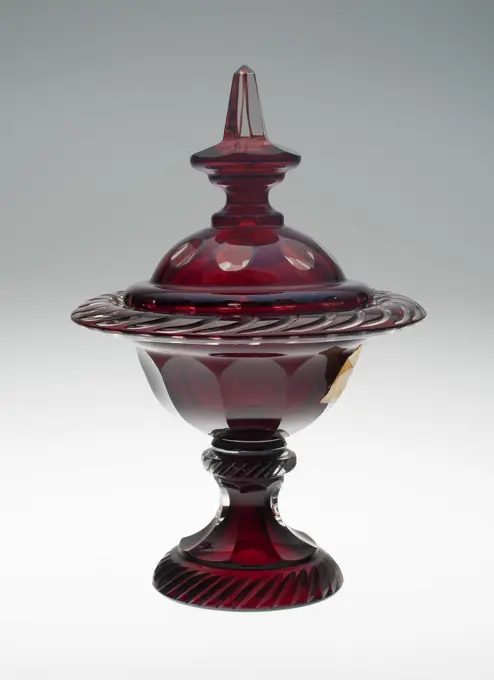
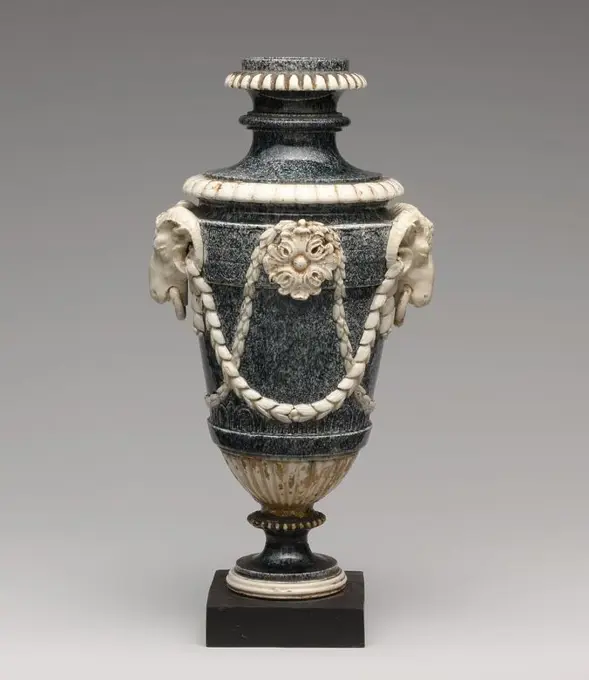
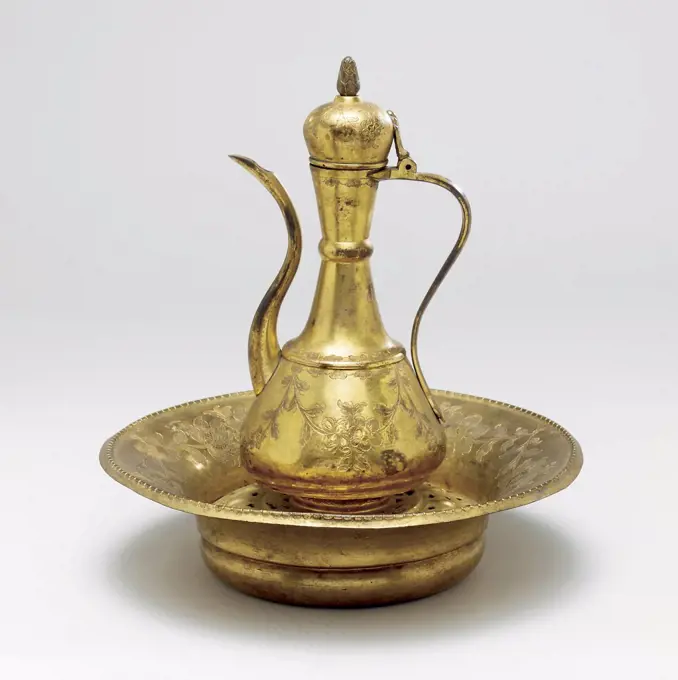
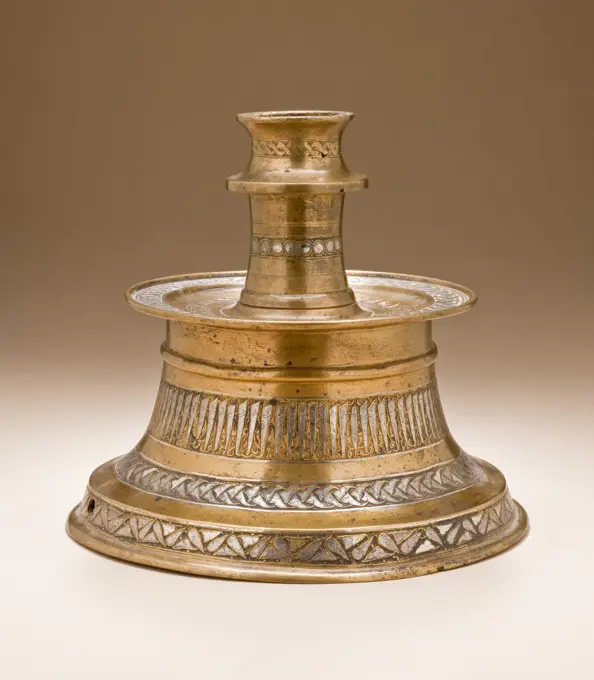
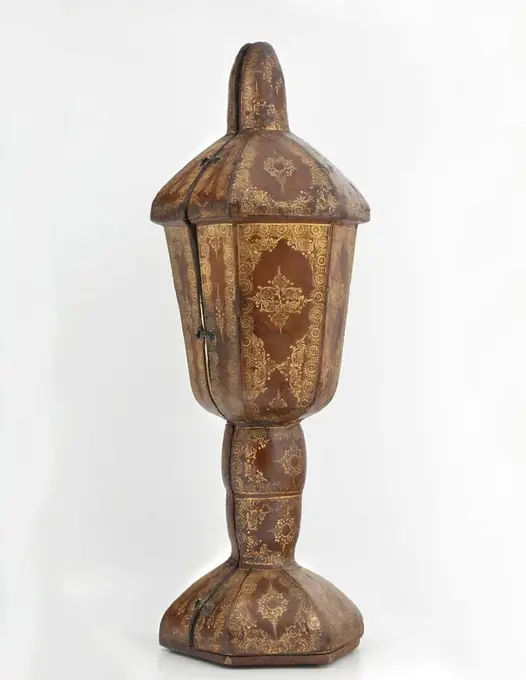
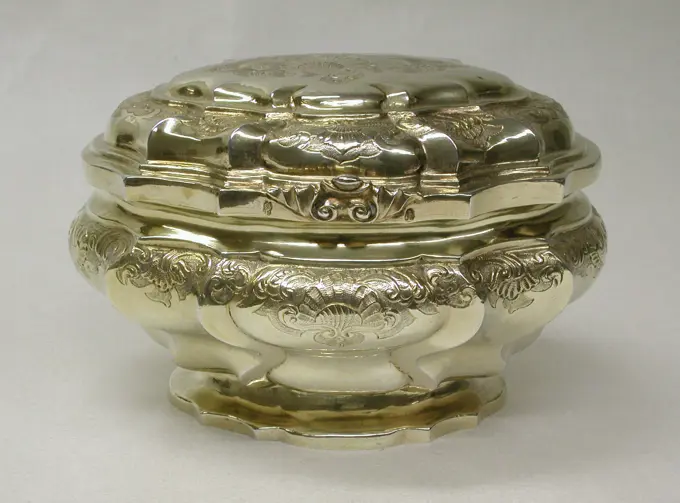
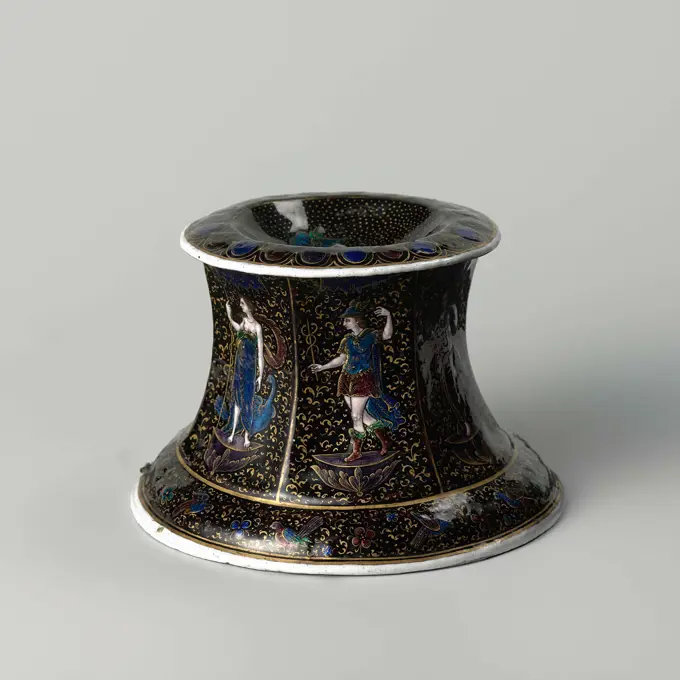
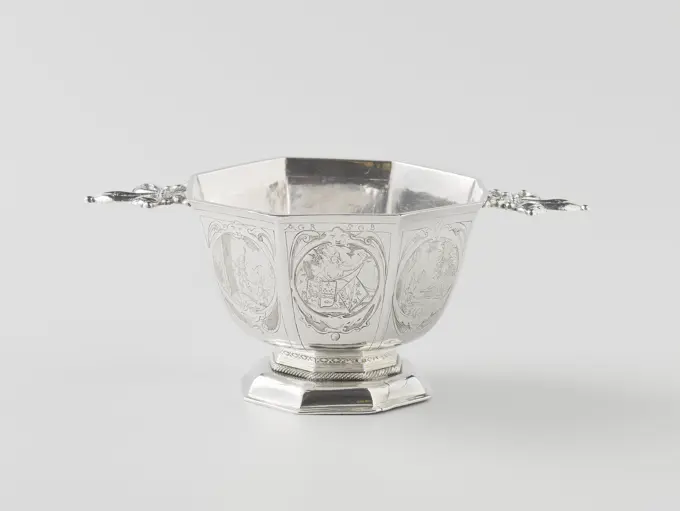
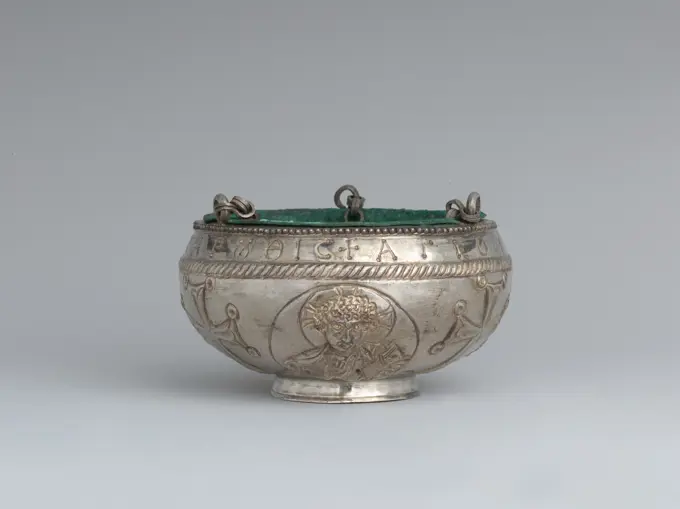
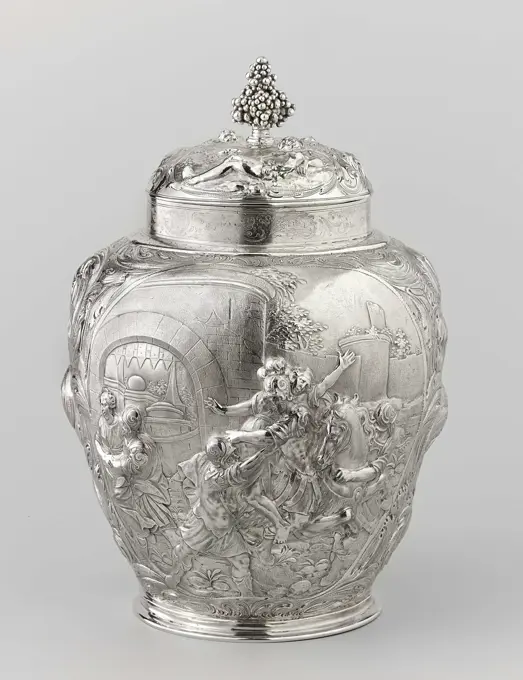
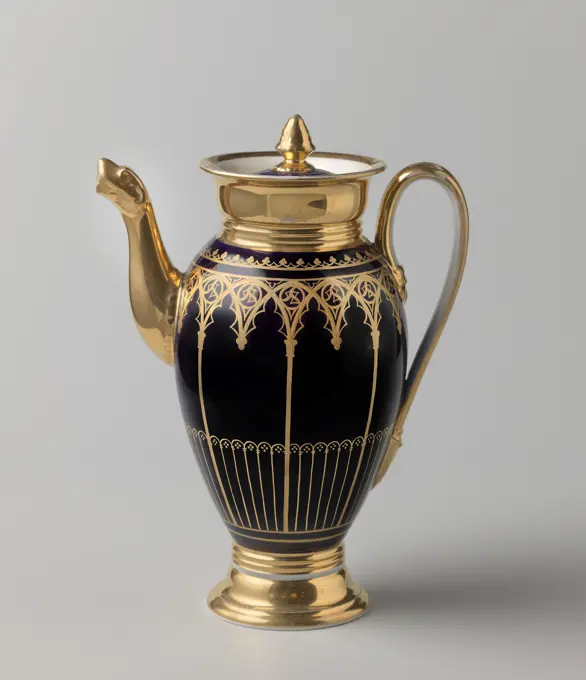
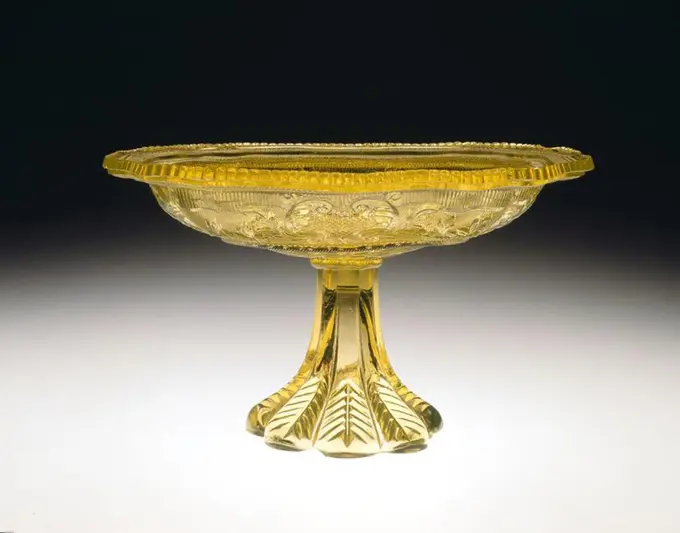
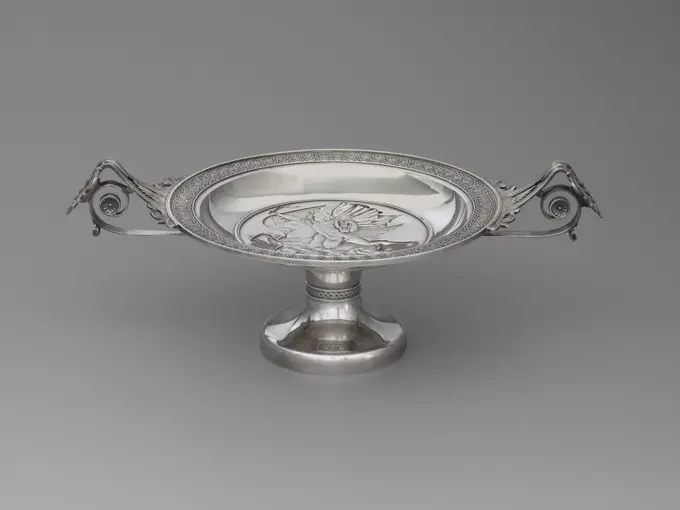
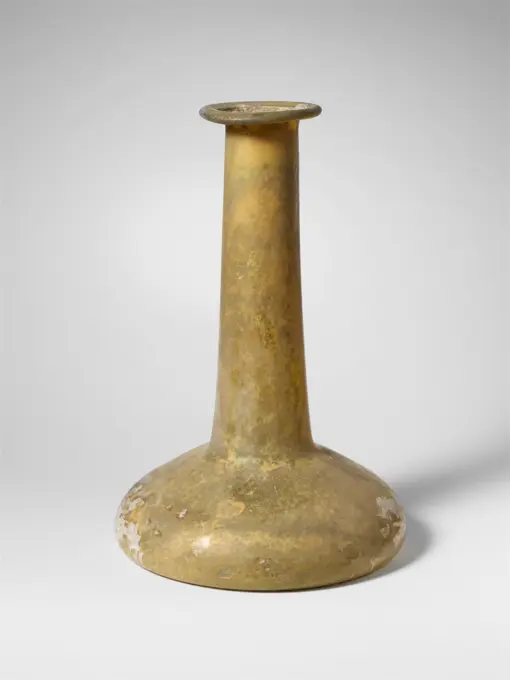
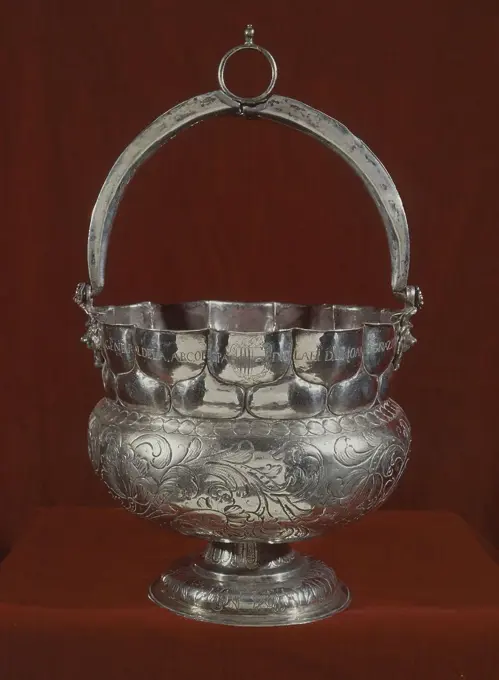
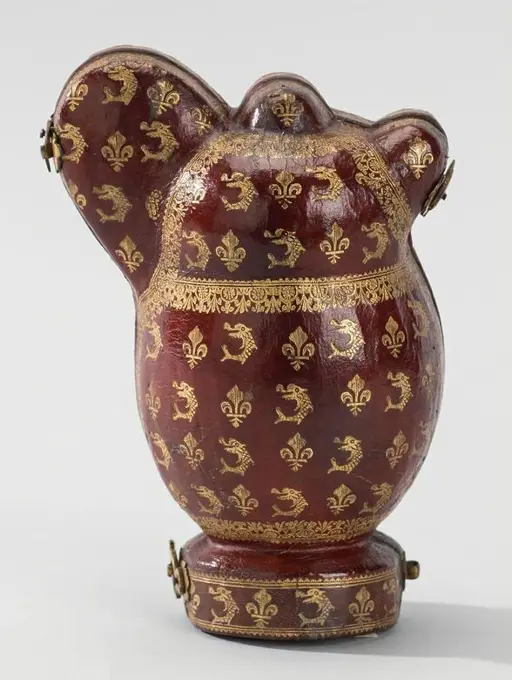
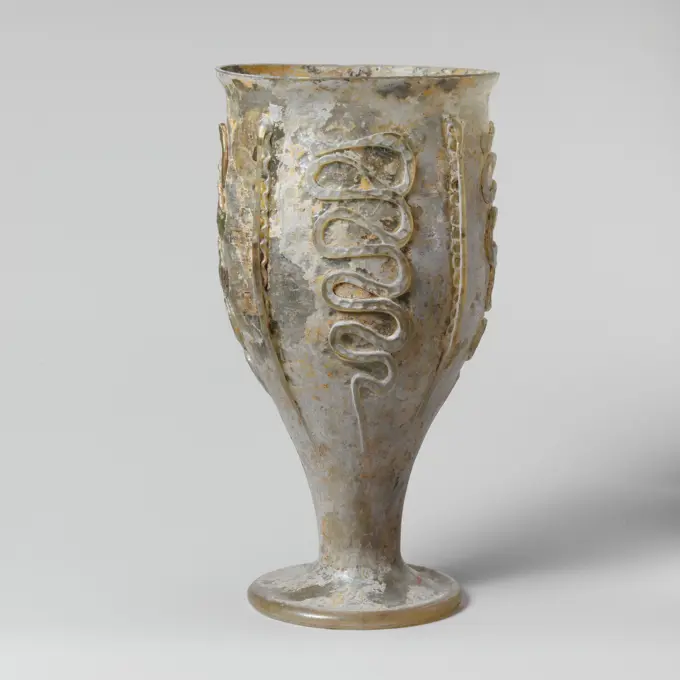
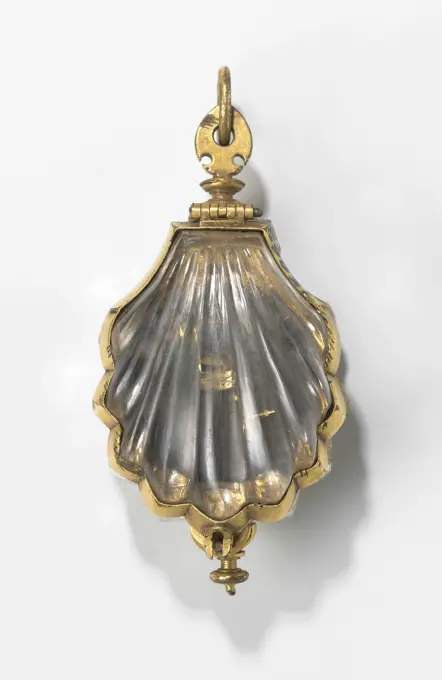
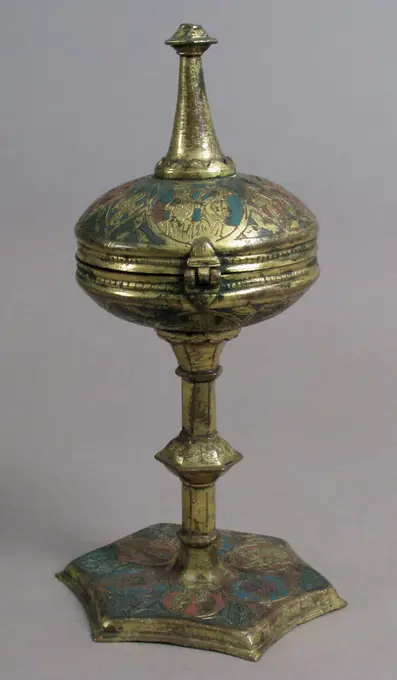
Ciborium. Culture: Spanish. Dimensions: Overall: 10 1/4 x 5 9/16 in. (26.1 x 14.2 cm). Date: 14th century. Museum: Metropolitan Museum of Art, New York, USA.Message Lekszycki, Marcin (Fl. 1763 1798)Cup with lid, from rock crystal with frame of gold-plated silver. On dome-shaped foot a naked little boy holding with one hand holding the frame of the barrel .. small jar with lid of rock crystal, with gold-plated silver frame. On the dome-shaped foot is a naked young man holding the frame of the barrel with a hand.Galvanoplastic reproduction of the Cup of St. Jorisgilde of Middelburg. Galvanoplastic reproduction of the Cup of St. Jorisgilde of Middelburg. The cuppa, on a baluster-shaped strain, with three coats of arms and lion heads; On the lid four medallions with fruit and flower ornaments and a figure of St. Joris.Standing salt, c. 1582, Christopher Eston, English, (Exeter), active about 1576-1592, 8 5/8 x 3 1/2 x 3 1/2 in. (21.91 x 8.89 x 8.89 cm), Silver, gilt silver, England, 16th centurySchenkkan van A baptism, Dirk Wor (attributed to), 1746 Schenkan of a baptism of silver. Decorated with Louis XIV ornamented edges with palmets, chalices, leaf, grid and band work. With asymmetrical Lodewijk XV influences, and the applivled weapon of Mattheus Coddaeus. Dordrecht silver (metal) Schenkan of a baptism of silver. Decorated with Louis XIV ornamented edges with palmets, chalices, leaf, grid and band work. With asymmetrical Lodewijk XV influences, and the applivled weapon of Mattheus Coddaeus. Dordrecht silver (metal)Group of vases. Two of the vases in this group bear the mark of the Porceleinfabriek aan den Amstel, the successor of the Loosdrecht porcelain factory. Just as the factory at Loosdrecht had earlier bought up the stock and moulds of its predecessor in Weesp, so did the factory in Ouderkerk aan de Amstel take over the inventory of Loosdrecht.Galvanoplastic reproduction of the lid of the cup of the St. Jorisgilde van Middelburg, fa. Elkington & Co., 1881 Galvanoplastic reproduction of the lid of the cup of the St. Joris guild of Middelburg. The cuppa, on a baluster -shaped tribe, with three coats of arms and lion heads; On the lid four medallions with fruit and flower ornaments and a figure of St. Joris. London copper (metal). silver (metal)   Middelburg Galvanoplastic reproduction of the lid of the cup of the St. Joris guild of Middelburg. The cuppa, on a baluster -shaped tribe, with three coats of arms and lion heads; On the lid four medallions with fruit and flower ornaments and a figure of St. Joris. London copper (metal). silver (metal)   MiddelburgMerchandise.Barentsz and his crew were en route to China, and therefore brought along goods they could use to conduct trade there. They obviously expected these pewter candlesticks to be in demand in Asia.Covered Vase 1825-1875 Bohemia. Glass; decorated with ruby flashing and painted gold scroll work .Tobacco box 18th century Dutch. Tobacco box. Dutch. 18th century. Pewter. Metalwork-PewterBokaal, Anonymous, c. 1600 - c. 1625 Cup or Silver Silver, on Balus -shaped trunk with lid. The egg -shaped cuppa is engraved with cartouches in which Spes, Fides and Charitas (faith, hope and love). Cleves silver (metal) engraving Cup or Silver Silver, on Balus -shaped trunk with lid. The egg -shaped cuppa is engraved with cartouches in which Spes, Fides and Charitas (faith, hope and love). Cleves silver (metal) engravingSilversmith's art, Italy, 16th century. Paul Huebner, gilded silver ewer and basin, 1585-1590.Tazza 19th century, after 16th century original After an original attributed to Benvenuto Cellini Italian This electrotype is after a sixteenth-century original in the Louvre, Paris, at the time of reproduction.. Tazza 185868Anonymous, covered cut in celadon (dummy title), 1701. Green celadon of China. Carnavalet museum, history of Paris.Fruit dish ca. 1790 British. Fruit dish. British. ca. 1790. Sheffield plate. Metalwork-SilverplateDrinking bowl with four regents of the Burgerweeshuis in Amsterdam. Drinking bowl on foot of driven silver. Three volutely dragons are attached to the trunk. The basin is engraved with tape work, tendrils and birds. There is an inscription along a medallion.Potpourri vase ca. 1810 Karl Friedrich Schinkel German This vase embodies the elegant simplicity characteristic of Schinkels designs. The gilded metal mounts, cast in such a manner that they did not need to be chased by hand, reveal his interest in minimizing manufacture time and costs by designing prefabricated components that could be assembled rapidly. The Berlin-based company Werner & Mieth experimented with this type of matte milk glass, developed in Bohemia, which they called "Flußglas", and produced a line of objects—including this vase—which they showcased at the Berliner Akademie exhibition in 1812.. Potpourri vase 238970Charka 17th century Russian, probably Moscow. Charka 206793Milleraud-Bouty. "Sugar pot". Money. 1785-1786. Museum of Fine Arts of the City of Paris, Petit Palais. 74387-2 Silver, silverware, vegetal pattern, sugar pot, sugar, dishesOstrich egg cup and cover, late 19th century, Formerly attributed to Hans Petzoldt, German, 1551-1633, 19 1/2 in. (49.53 cm) (H.), Gilt silver and painted egg shell, Germany (possibly), 19th century, Once regarded as the work of the German silversmith Hans Petzoldt (1551-1633), this cup and cover are now known to date from the late 19th century. Exotic objects like ostrich eggs were treasured by collectors in the 16th and 17th centuries. In the late 19th century, these rarities were prized so highly that a market for fakes sprang up.Candlestick, 1745-1749. France, 18th century. Gilt metal; overall: 24.5 x 14.4 x 14.8 cm (9 5/8 x 5 11/16 x 5 13/16 in.); average: 23.4 cm (9 3/16 in.).Czarka from the scenes worship;  19th century (1890-00-00-1910-00-00);Indian (culture), South Asian (culture), Indian artCovered Goblet with Male and Female Silhouettes 1790-1800 Germany. Glass . Johann Sigismund Menzel (Decorator)Footed Pyx SpanishBottle or flask 19th century, after 1540-50 original Franchi and Son This electrotype is after a sixteenth-century original (1540-50) in the collection of the Victoria and Albert Museum, London.. Bottle or flask 185850Vijzel with inscription: Amor Vincit Omnia Anno 1582, Willem Wegewart (I) (attributed to), 1582 The cast round mortar extends upwards, has a high -protruding profiled edge and a flared profiled foot. On the edge in Latin Majuskels the inscription Amor Omnia Anno 1582 with punctuation, consisting of a stylized Wingerdblad (five times). The upper Frisian consists of a wounded pearl and cord edge, hanging stylized wingerfs and stylized acanthus leaves. The lower frieze consists of a rolling work, which comes from four stem -shaped turns with a baluster in the middle, a five -leaf rose and a stylized plant with three buttons. These motives have been repeated more than five times. The foot is decorated with a pearl edge. The ears have the shape of dragons with turned head, hind legs and tail. Deventer bronze (metal) casting The cast round mortar extends upwards, has a high -protruding profiled edge and a flared profiled foot. On the edge in Latin Majuskels the inscription Amor Omnia Anno 15Covered Beaker ca. 1470 Hans Greiff German This lavish silver beaker from the medieval town hall of Ingolstadt, in Bavaria, bear clear witness to the prosperity of the city and its residents, above all the fraternal members of the town council. The town hall boasted a treasury full of silver, and an on-site pub or "Trinkstube," in addition to its predicable tall towers and a fine clock. The town council members and guild leaders who gathered for meetings there appear to have taken the responsibility for celebration seriously. On the base of this example, kneeling knights hold the painted arms of a mayor of Ingolstadt, Hans Glätzle, in whose honor it was given to the town treasury. But did Glätzle himself pay for this ostentatious silver beaker Arms found on the inside of the lid could be those of the bakers’ guild, but have also been interpreted as that of the barbers or the bathhouse attendants! The weight of the silver in Marks and Lots (old units of measurement) is written on the uSugar Bowl 1750-70 John Brevoort. Sugar Bowl 7956Goblet and Cover. The coat of arms and the inscription tell us that in 1643 this object - then almost 100 years old - was presented as a gift of welcome to the new overlord of Eisenstein (Thuringia).Stem Cup 618 CE-906 CE China. The form of this wine cup was inspired by goblets made in the Sasanian and Sogdian empires, but originally derived from Hellenistic styles of the Mediterranean world. Its low, spreading foot gently flares into faceted petals suggesting a lotus flower. Since the introduction of Buddhism to China, the lotusówhich emerges unstained from muddy water and therefore carries associations of purity and non-attachment to worldly concernsóhad become a pervasive motif in secular as well as religious art. Two layers of petals, beaten in repousse, enclose birds, floral sprays, and clusters of grapesóall delicately chased and gilded against a ringmatted ground. This mixture of native and imported decorative motifs, which followed the seventh-century introduction of grapevines and grape wine from Iranian and Turkic lands, is executed with a linear fluency that is distinctively Chinese.. Silver with parcel gilt decoration .Vase. The wall of this vase is decorated with foliate scrolls incorporating imaginary creatures such as dragons. The theme is continued in the handles, which are shaped like griffins. The decoration alludes to artefacts from Classical antiquity that were excavated around 1520.Footed Cup 6th century Central Asia, Sogdia The cup, on a high flaring foot is decorated with a repoussé motif of petals, and a beaded relief surrounds the inner rim. The type is of western origin, probably from the Roman Mediterranean, and arrived in Iran and Central Asia about the fifth century A.D. during a time of active international trade. It became an element of the luxury tableware in Central Asian courts that is so vividly depicted in Sogdian mural paintings.. Footed Cup 39891Urn with cover or salt. Culture: British or Irish. Dimensions: Height: 5 1/2 in. (14 cm). Date: late 18th-early 19th century. Museum: Metropolitan Museum of Art, New York, USA.VASIA DE PORCELANA CON NAPOLEON A CABALLO - ESTILO SEVRE - SIGLO XIX. Location: PRIVATE COLLECTION.Lid of luck teammer. Lid of luck teammer. Ground black with bouquets.Shallow Chalice. UnknownLate Roman chalice. unknown, authorBowl 1744-45 Paul de Lamerie British English merchants carried luxury goods of all kinds to the American colonies, where they set a fashionable standard that was emulated by local artisans. These three piecesteakettle, basket and bowlformed part of a larger service that was owned by a prosperous merchant in Philadelphia. David Franks, the son of a prominent Jewish family in New York, married Margaret Evans in 1744, and this service was likely purchased to mark their marriage. The silversmith, Paul de Lamerie, was the head of a flourishing workshop, and these rococo pieces were in the vanguard of London taste.. Bowl 204882Chalice. unknown, goldsmithFruit stand 1814/15 Paul Storr British. Fruit stand 204588Double cup, anonymous, 1618 Double cup of rock crystal, sharpened in twelve facets. The wide range and smooth six -sided foot on open worked plinth are made of gilded silver. The horizontal handle is covered with gilded silver. A flat button is mounted on the dome -shaped lid with an alliance weapon added in 1618 and the initials: ZVF and ABVB. Southern Germany silver (metal). grinding / gilding Double cup of rock crystal, sharpened in twelve facets. The wide range and smooth six -sided foot on open worked plinth are made of gilded silver. The horizontal handle is covered with gilded silver. A flat button is mounted on the dome -shaped lid with an alliance weapon added in 1618 and the initials: ZVF and ABVB. Southern Germany silver (metal). grinding / gildingPair of Standing Tazzas. UnknownCiborium. Culture: German. Dimensions: Overall: 13 5/8 x 5 3/16 in. (34.6 x 13.1 cm). Date: late 14th century-early 15th century. Museum: Metropolitan Museum of Art, New York, USA.FateSilver Claret Jug and Cover, 1861-1862. Maker: John Hardman & Co, 166 Great Charles Street, Birmingham .Anonymous / 'Case for the Green Jasper Cup with Dolphins'. 1690 - 1711. Leather, Wood, Metal, Cloth. Museum: Museo del Prado, Madrid, España.Vase on a column stand after 1771-72, mounts ca. 1780 Lapidary workshop: Hôtel des Menus-Plaisirs, Versailles The Romans who attached ceremonial and liturgical symbolism to porphyry used this red volcanic stone found in Egypt for various decorative purposes. This vase and its pedestal were almost certainly carved from a single antique column brought from Italy and mounted with gilt bronze in a workshop founded at the Hôtel des Menus Plaisirs, Paris, in 1771-72. The mounts of rams heads and swags of vine leaves and grapes are possibly by Pierre-Philippe Thomire (1751-1843). Thomire is particularly well known for his outstanding work in the Empire style.. Vase on a column stand 205445Vase;  early 19th century (1800-00-00-1820-00-00);Chalice. The driven and calculated object consists of foot (with the edge), tribe, nodus and cuppa. The lower stem part, the nodus and the upper part are arranged and clocked around the strain. The Cuppa is attached to the rosette. The foot has six lovers with a profiled flared edge, which is applied to the foot in six parts. On one of them a cross with sloping ends is engraved on a blocked field. The nodus has six facets, on which four-leaf stylized rosettes, as well as on top and bottom six leafy motifs are arranged. The cuppa is located on the bottom in a six-leaf chalice with engraved ornament. The foot has two trmbling sign at the bottom, who suggest that he is inspected.CALIZ S XVI (IRIA FLAVIA). Location: MUSEO DE ARTE SACRO. Padrón. Coruña. SPAIN.Sponge Box 1815-1825 Denmark. Silver and silver gilt .Vase Celi Ski, S Awomir (1852 1918), NieborówScent Bottle, mid-1800s. France, mid-19th century. Silver gilt; overall: 7 x 2.9 cm (2 3/4 x 1 1/8 in.).Chamber candlestick (one of a pair) 1774 Pehr Zethelius. Chamber candlestick (one of a pair) 194990Two-handled cup. UnknownVase with Diamond Pattern Vase; possibly England; glassCALIZ. Location: CATEDRAL MUSEO DIOCESANO. Orense. SPAIN.Lamp - vase;  2nd half 19th century (1868-00-00-1900-00-00);ESTANTERIA CON CERAMICA-SOPERA DE PASAJES-SALSERA DE SARGADELOS-JARRITA DE TALAVERA. Location: MUSEO ROMANTICO-OBJETO. MADRID. SPAIN.GUI censer; Hu, Wenming (Fl. CA 1583-1614); 19th century (1801-00-00-1900-00-00);Compote 1845-1875 . Glass, red, blown and cut .. Gold-plated bronze wall arm, with two arms. The trunk is formed by a bust of a Chinese man or woman, surrounded by C-shaped seedill motifs. The poor exhibit C and S-shaped leaf motifs. See also: BK-16898-A / C.Pair of vases. Culture: British, Hanley, Staffordshire. Dimensions: Height (each): 9 1/2 in. (24.1 cm). Maker: Humphrey Palmer (active 1760-78). Date: late 18th century. Museum: Metropolitan Museum of Art, New York, USA.An Ottoman Tombak Ewer and Basin, Turkey 19th Century Islamic Art AntiqueCandlestick 19th century, after 17th century original British, after Russian original This electrotype is after a seventeenth-century original at Uspenski Sobor (Church of the Assumption), Moscow, at the time of reproduction.. Candlestick 186528Candlestick. Iran, 12th-13th century. Metal. Brass, engraved and inlaid with silverAnonymous / 'Case for rock crystal cup of hexagonal form'. Last third of the XVII century. Leather, Wood, Metal, Silk. Museum: Museo del Prado, Madrid, España.BOOK. Part of a double gown. The jar has a lid (BK-NM-2122-2), which is coil at the same time where also a lid on rest (BK-NM-2122-3).Cup with gold borders on a red ground, anonymous, c. 1800 - c. 1824 Porcelain head on spreading foot and with a high, curled ear, covered on the glaze with red and gold. The outer wall is covered with red and the foot, edge, ear and part of the inner wall with gold. On the outer edge a flower vank in one of the golden tires. Empire. France (possibly) porcelain. glaze. gold (metal) painting / gilding / vitrification Porcelain head on spreading foot and with a high, curled ear, covered on the glaze with red and gold. The outer wall is covered with red and the foot, edge, ear and part of the inner wall with gold. On the outer edge a flower vank in one of the golden tires. Empire. France (possibly) porcelain. glaze. gold (metal) painting / gilding / vitrificationKomfoor, anonymous, c. 1730 - c. 1760 Round Komfoor on three bent in, flat, volute -shaped legs. The wide bottom edge is sculpted. Three shell -shaped uprights are attached to the top edge. The grinding is noticed: crowned o, an ax and an unreadable brand. Netherlands silver (metal) Round Komfoor on three bent in, flat, volute -shaped legs. The wide bottom edge is sculpted. Three shell -shaped uprights are attached to the top edge. The grinding is noticed: crowned o, an ax and an unreadable brand. Netherlands silver (metal)Toilet box (one of a pair) ca. 1743-45 Johann Conrad Lotter German. Toilet box (one of a pair) 231574Salt cellar with figures of gods and goddesses. Figures are depicted in various colours on a black ground with golden decorations. They represent gods and goddesses, including several Muses, and are taken from prints by the French engraver Etienne Delaune.Vase. unknown, craftsmanBrandewijnkom, Paulus Zacharias (attributed to), 1647 Brandy bowl of silver, with a high, octagonal, engraved cuppa and two horizontal ears such as French lilies. The male weapon is from the Botma family. The initials A G R and S G B stand for Aukje Gerrits Roorda and Sake Gerrits Botma. Dokkum silver (metal) engraving Brandy bowl of silver, with a high, octagonal, engraved cuppa and two horizontal ears such as French lilies. The male weapon is from the Botma family. The initials A G R and S G B stand for Aukje Gerrits Roorda and Sake Gerrits Botma. Dokkum silver (metal) engravingAn inner box of small oval terrine in Louis XVI style, Philippus Priee, 1773 Inner box of small oval terrine. Middelburg silver (metal) Inner box of small oval terrine. Middelburg silver (metal)The Attarouthi Treasure - Censer 500-650 Byzantine With a youthful Christ with a cruciform halo, two archangels, and crossesInscribed in Greek: Of Saint John of the village of AttarouthaIn early images of Christ he is always shown as a youth with short, curly hair. His halo is cruciform with three arms to represent the cross upon which he died. The flanking medallions containing archangels, the guardians of heaven, suggest that here Christ is shown in heaven.. The Attarouthi Treasure - Censer. Byzantine. 500-650. Silver and gilded silver with copper liner. Made in Attarouthi, Syria. Metalwork-SilverSoup Tureen 1800-1825 Paris. This soup tureen is part of a vast service made for Emperor Napoleon Bonaparteís sister Pauline on the occasion of her marriage to the Roman nobleman Camillo Borghese, Sixth Prince of Sulmona.In the years after the French Revolution, architects and designers adopted the visual language of ancient Greece and Rome to express the new imperial order. Napoleon, hoping to promote Parisís luxury trades, commissioned several silver dinner services as gifts to be sent abroad. The slender outlines and smooth surfaces of the vessels in the Borghese service contrast with the rich decoration.. Silver gilt . Martin-Guillaume Biennais. In the first decades of his reign, which began in 1641, Louis XIV had many silver furnishings and large decorative objects made for the state apartments at Versailles. In 1689 the objects were all melted down to fund the wars that the king was waging. This vase, which was probably made in England, gives an idea of the splendour of the Sun Kings court.Cover of a coffeepot with a gothic arcade decoration, Perche, c. 1800 - c. 1899 Lid of a porcelain coffee pot, painted in underly glaze blue and on the glaze gold. Decorated with a decorative band; pointed lid button. Saint-Yrieix-la-Perche porcelain. glaze. cobalt (mineral). gold (metal) painting / gilding / vitrification Lid of a porcelain coffee pot, painted in underly glaze blue and on the glaze gold. Decorated with a decorative band; pointed lid button. Saint-Yrieix-la-Perche porcelain. glaze. cobalt (mineral). gold (metal) painting / gilding / vitrificationStanding cup Italian, Deruta foot late 15th-early 16th century, cup 19th century View more. Standing cup. Italian, Deruta. foot late 15th-early 16th century, cup 19th century. Maiolica (tin-glazed earthenware). Ceramics-PotteryCompote. Boston and Sandwich Glass Company; Sandwich, Massachusetts, 1825-1888. Date: 1830-1845. Dimensions: 15.9 × 26.8 × 22.5 cm (6 1/4 × 10 9/16 × 8 7/8 in.). Pressed lead glass. Origin: Massachusetts. Museum: The Chicago Art Institute, Chicago, USA.Lid, also a jar. Part of a double gown. The lid rests on a jar (BK-NM-2122-1), but at the same time is the jar where a lid on rest (BK-NM-2122-3).. The round can rest on three legs and has a crane, two ears with hinged handles and a loose lid. The legs are each constructed from an applorable C-volute, octagonal in diameter, and above it the connecting piece with the body covered by four stylized leaves. The low, convex belly is separated by a corrugated profile from a stringed portion that is crowned by a wide, convex border above which the S-shaped vaulted mouth edge. The curved tap is four-sided with beveled corners on the front section. When turned on, he curls the sides to Allevier and the end is also decorated with a curly lip. In the middle he has a cube-shaped widening in which the rotating tap fits. This has a selection in the form of a fan design resting on a profiled pedestal and crowned by a leaf, and is closed on the underside by a drop shape. The tap has a back plate that shows notes at different points and curthing there. The belly is decorated above every leg with an imposed sheet motif. The body is imposed under Tazza.  Manufacturer: Edward C. Moore, American, 1827-1891Retailer: Tiffany and Company, American, founded 1837Glass perfume bottle 2nd-3rd century A.D. Roman Uncertain (colorless with yellow green tinge).Rim folded out, down, round, and pressed into mouth; tall cylindrical neck, expanding downwards; broad, bell-shaped body; concave bottom.Intact; some bubbles; dulling, surfaces covered with weathering and iridescence.. Glass perfume bottle 245256ACETRE DE PLATA LABRADA S XVIII. Location: MUSEE D'ARTS DECORATIFS. MADRID. SPAIN.Anonymous / 'Case for small rock crystal ewer with a boy, without a handle'. 1650 - 1711. Leather, Wood, Metal, Cloth. Museum: Museo del Prado, Madrid, España.Covered vase ca. 1900 Possibly Willets Manufacturing Company. Covered vase 21728Glass beaker with snake-thread decoration 4th century A.D. Roman, Gallia Belgica Colorless with green tinge; trails in same color.Outsplayed, uneven, knocked-off rim; vertical side to body, then tapering to form hollow stem; low foot, with rounded, tubular edge, made by folding; pushed-in bottom with domed kick at center and pontil mark.On body, side divided into four vertical panels, each containing a snake-thread trail (three of nine loops, one of eight) with a trailing-off tail below, all tooled flat with cross-hatch pattern; between panels, a slender vertical trail applied to lower body, drawn up, tooled to form horizontal ribs, then folded down over ribs as a plain trail.Intact; some pinprick bubbles; dulling, creamy weathering, and iridescence on exterior, soil encrustation and thicker black and brown weathering on interior.After the beaker had been blown, decoration in the form of snakes was added with molten threads of glass. Many beakers of this type have been found in northerTerracotta stemmed dish ca. 330-300 B.C. Greek, South Italian, Campanian, Teano Dish with tall foot, decorated with wave pattern, egg pattern on rim.. Terracotta stemmed dish 248201Goblet with cover 1735-1745 Flecken Zechlin .Saltcellar ca. 1540s-70s or 19th century French. Saltcellar. French. ca. 1540s-70s or 19th century. White clay overlaid with sheets of patterned, inlaid and tinted clay. Ceramics-Faience. Watch in shell-shaped case from rock crystal. The silver dial has picked up, Roman numerals.Drinking scale, Adam van Vianen (I), 1618 Scale on the foot of driven silver. A winged monster wears the asymmetrical cuppa, the edge of which is decorated with lying figures of a man, a woman and a child; At the soil lobe ornament. Utrecht silver (metal) Scale on the foot of driven silver. A winged monster wears the asymmetrical cuppa, the edge of which is decorated with lying figures of a man, a woman and a child; At the soil lobe ornament. Utrecht silver (metal). Lightly vaulted foot. Stem made up of double baluster in which resp. A tear-shaped bubble and a multiple spiral. Conical chalice, vaulted lid with convex button with air bubbles. Engraved show on chalice: surrounded by rococo ornament a pigeon on ground, below a ton, well and hammer. Onside a lake with two sailing ships, a village and a forest. Garlandes along border chalice and lid. Signed under tonne and well: H: v. Gimnig fec.Terracotta pyxis with lid ca. 620-590 B.C. Greek, Corinthian The pyxis was a container used to hold cosmetics, jewelry, and other small items. The friezes of real and fantastic animals decorating this example are characteristic of Corinthian art. The style and subject matter were strongly influenced by the art of the ancient Near East. In the 7th century B.C., the Greeks came into close contact with their neighbors to the east, where repetitive bands of animal decoration were common.. Terracotta pyxis with lid 330026Tea tray, cake stands, jam dish, sugar bowls, coffee pot and milk jug, Martin Guillaume Biennais, c. 1817 Empire milk jug of gilded silver, on round, rising base and with a high ebbony ear. The barrel is egg -shaped. Under the spout engraved the crowned imperial monogram. Paris silver (metal). gilding (material). ebony (wood) gilding Empire milk jug of gilded silver, on round, rising base and with a high ebbony ear. The barrel is egg -shaped. Under the spout engraved the crowned imperial monogram. Paris silver (metal). gilding (material). ebony (wood) gildingPair of Vases; China; porcelain 1662 - 1722; mounts about 1770 - 1775; Hard-paste porcelain, black ground color and gilding; gilt bronze mounts;Tankard ca. 1627 Michael Beri Prints were a key source for Beri in fashioning this tankard. Its form was made popular through the printed designs of Bernhard Zan. Scrollwork cartouches frame three oval reliefs filled with animals: a unicorn before an urban structure, a grazing horse in a landscape, and a recumbent lioness or panther near a well and tower. These animal scenes follow prints from a Thierbuch (or book of animals), published by Jost Amman and Hans Bocksberger in Frankfurt in 1579, that was an especially common source for metal-workers.LiteratureJudit H. Kolba. Hungarian Silver: The Nicolas M. Salgo Collection. London, 1996, p. 46, no. 24.ReferencesA tankard with a similar handle was sold by Dr. Fischer Kunstauktionen in Heilbronn, sale no. 181, no. 4.Another tankard, decorated similarly with animals within oval reliefs, was sold by the same house, sale no. 18, no. 232.Elemér Kszeghy. Magyarországi ötvösjegyek a középkortól 1867-ig / Merkzeichen der Goldschmiede Ungarns vom