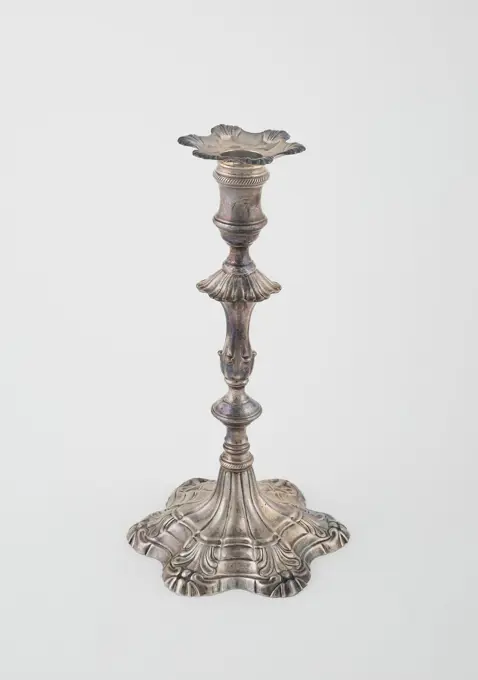
Ornate Decorative Cups

An assortment of decorative cups and ciboria from various cultures and periods, featuring detailed craftsmanship and ornate designs.
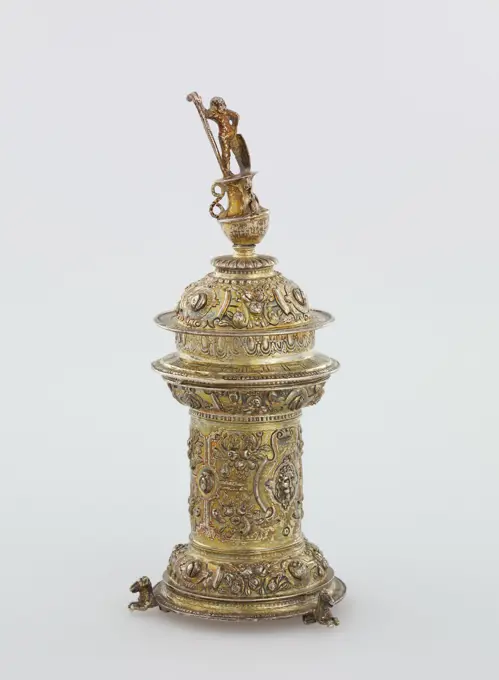
Standing salt, c. 1582, Christopher Eston, English, (Exeter), active about 1576-1592, 8 5/8 x 3 1/2 x 3 1/2 in. (21.91 x 8.89 x 8.89 cm), Silver, gilt silver, England, 16th century
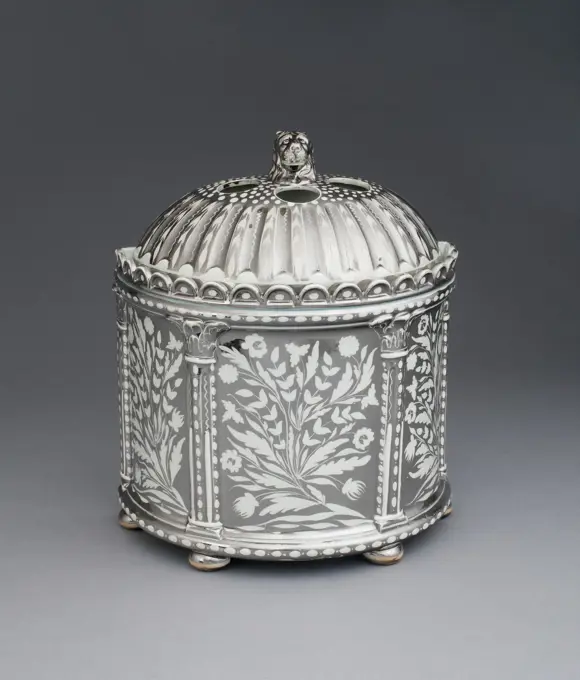
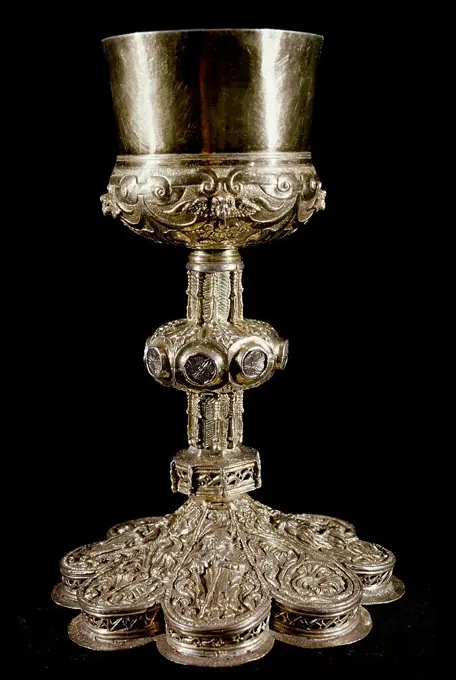
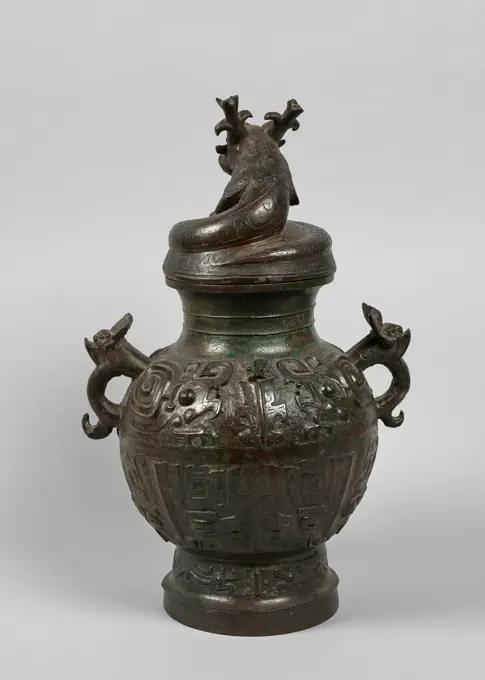
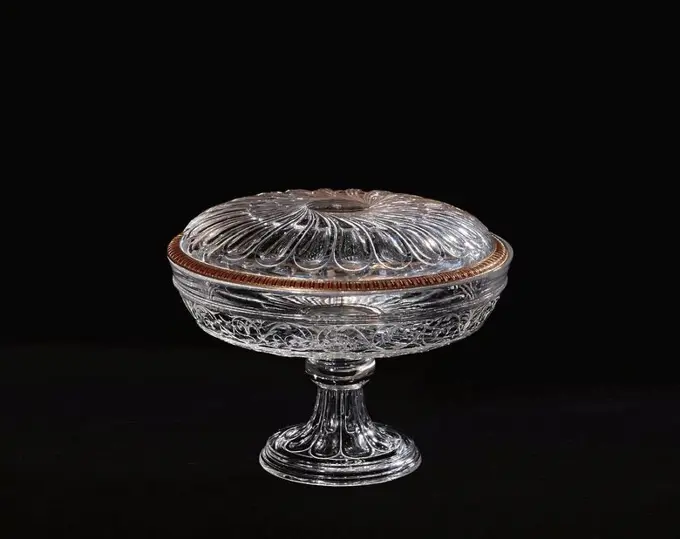
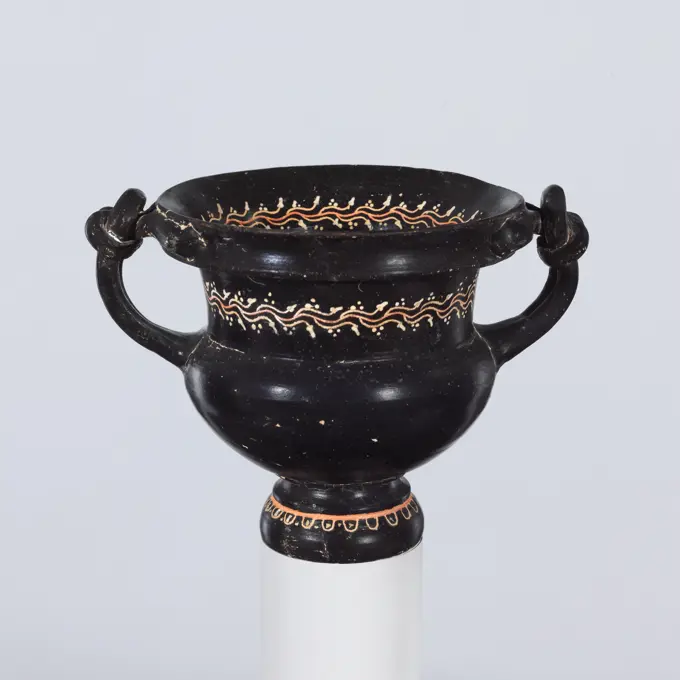
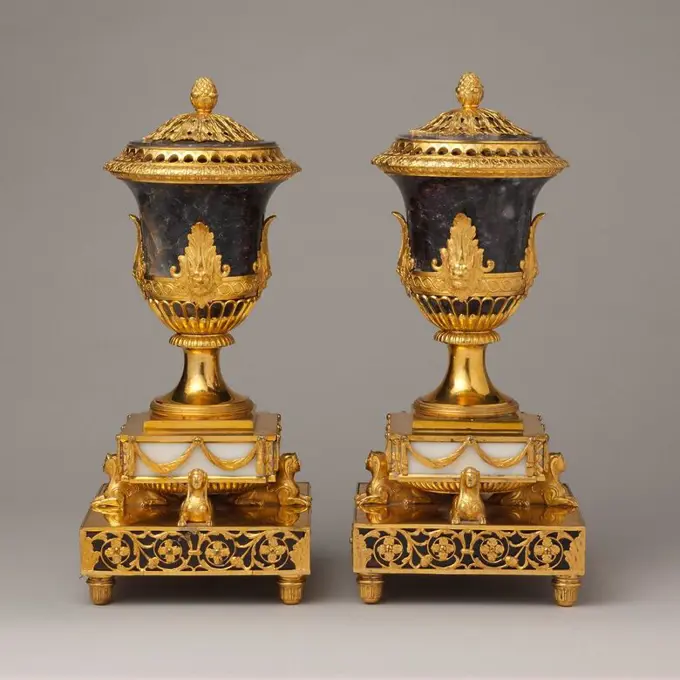
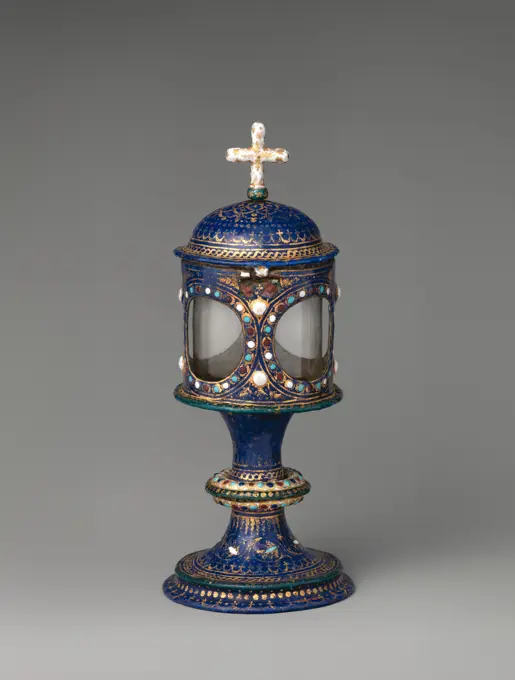
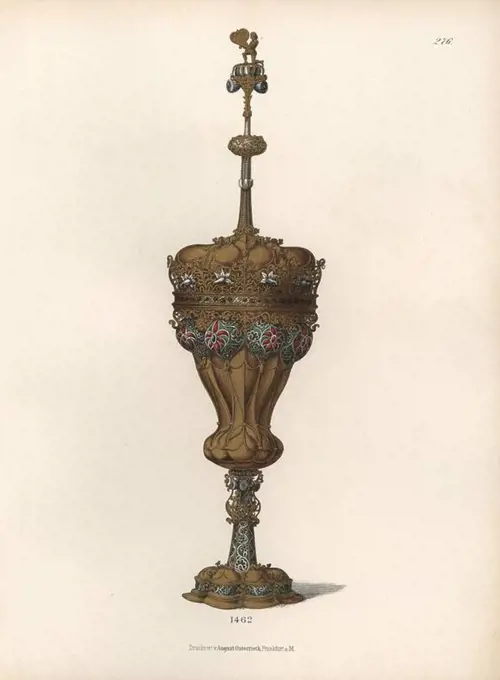
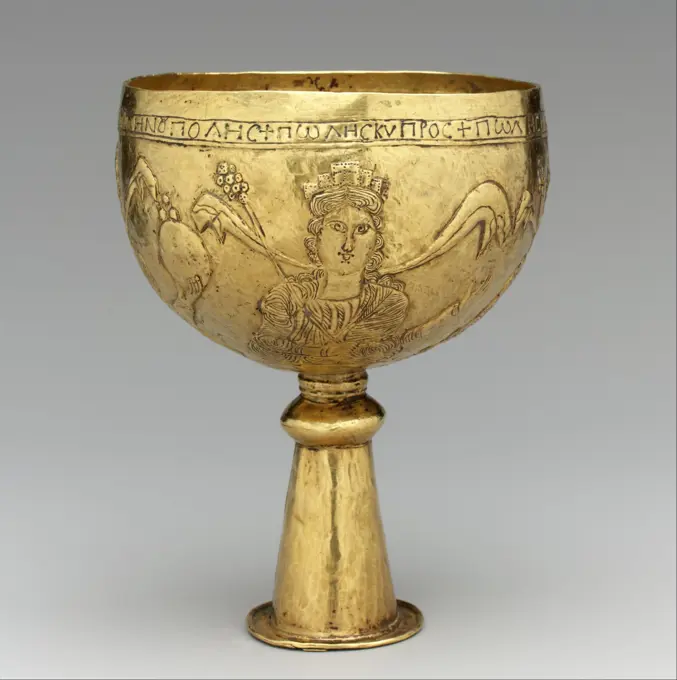
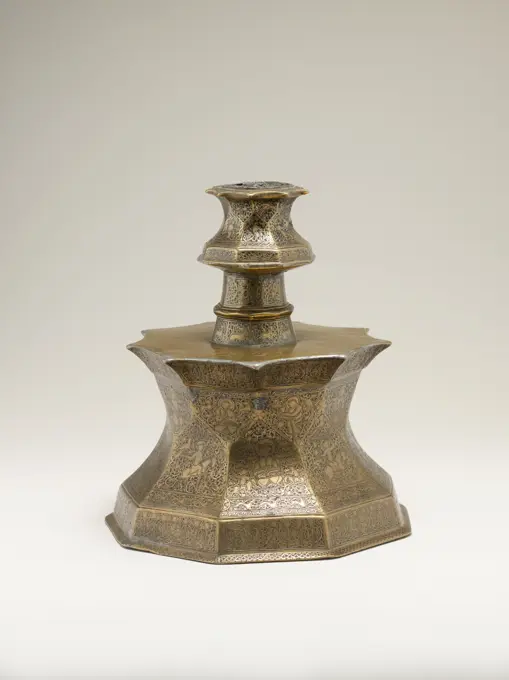
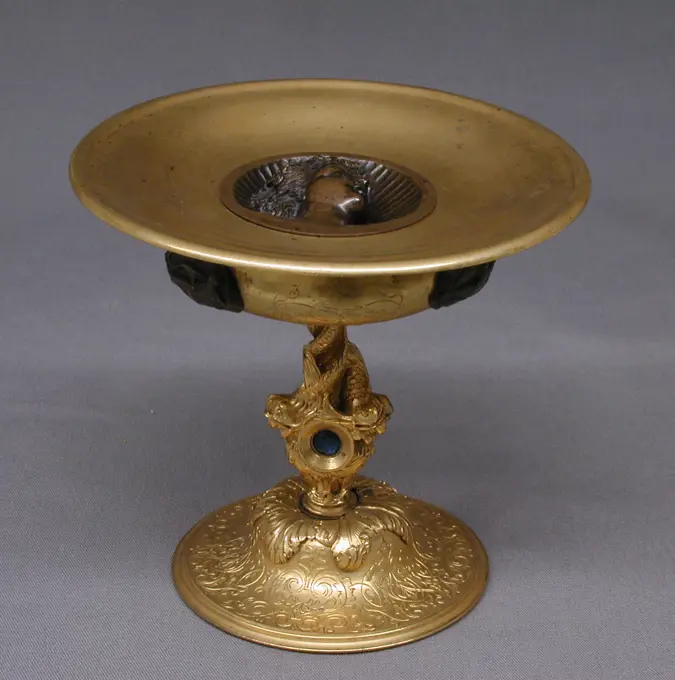
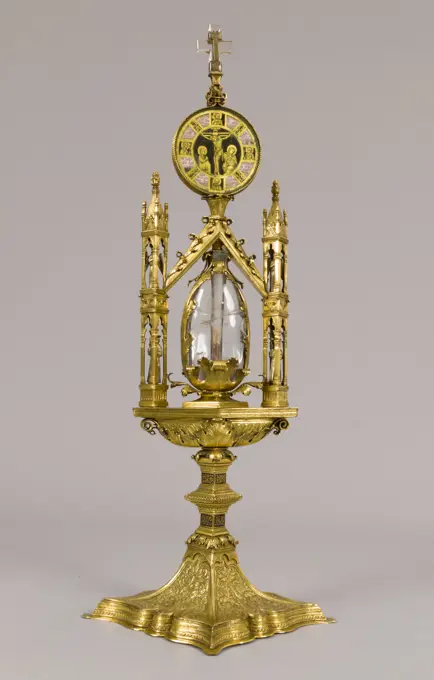
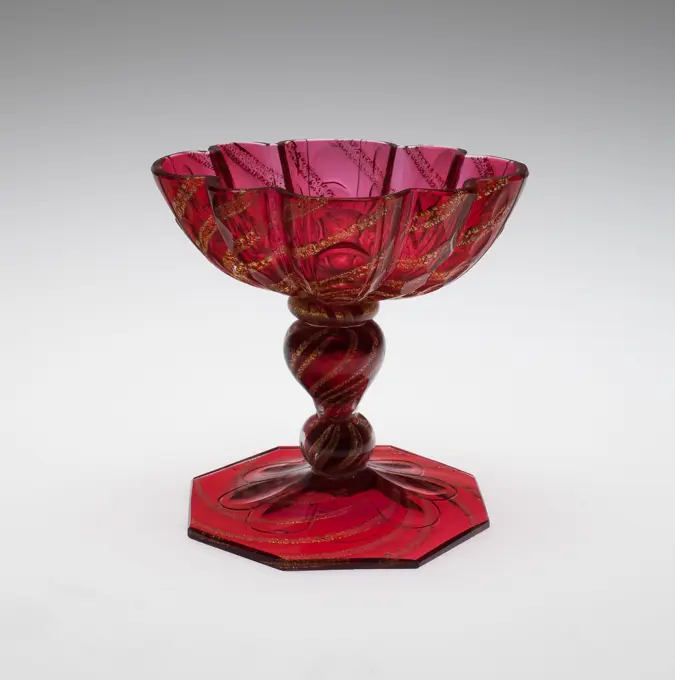
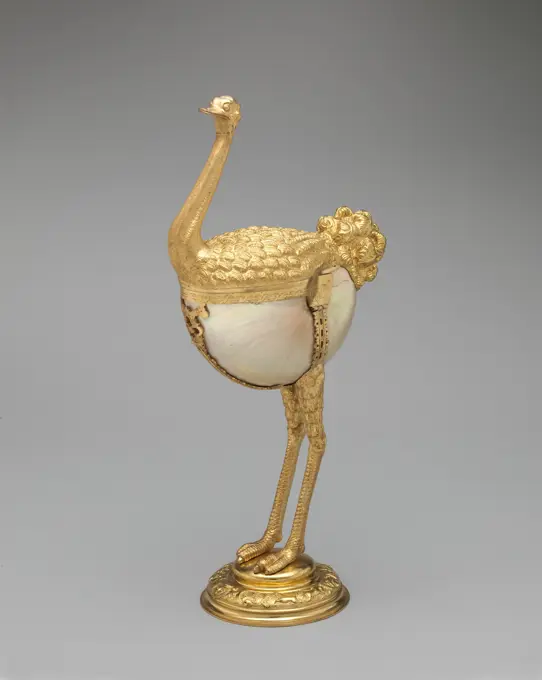
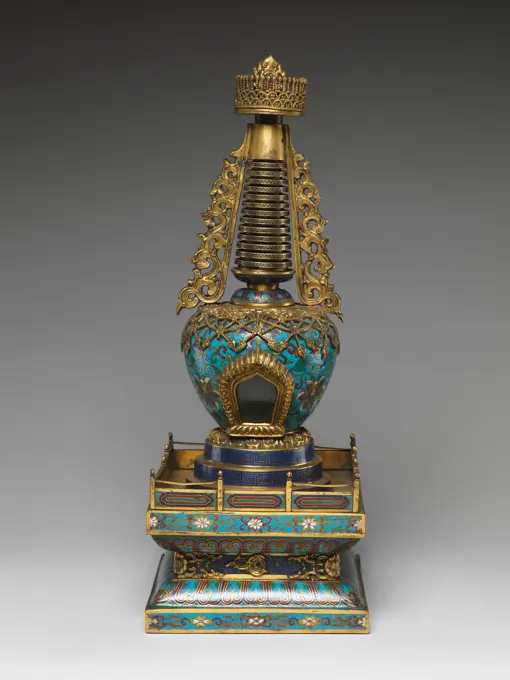
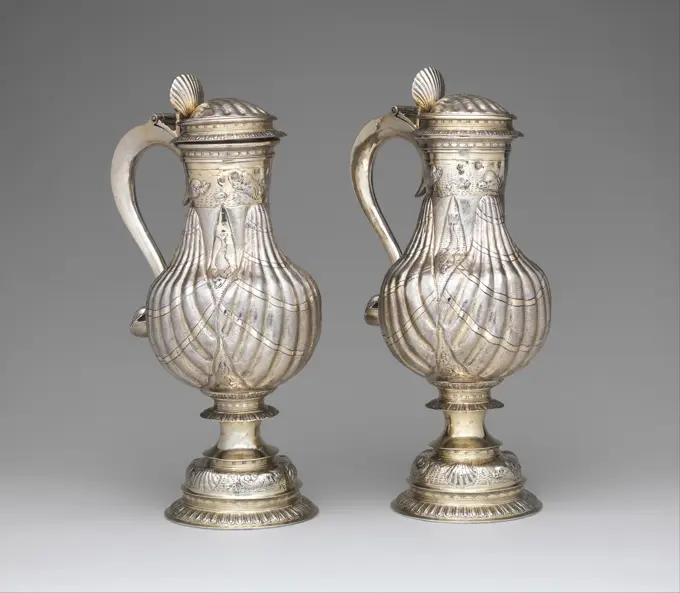
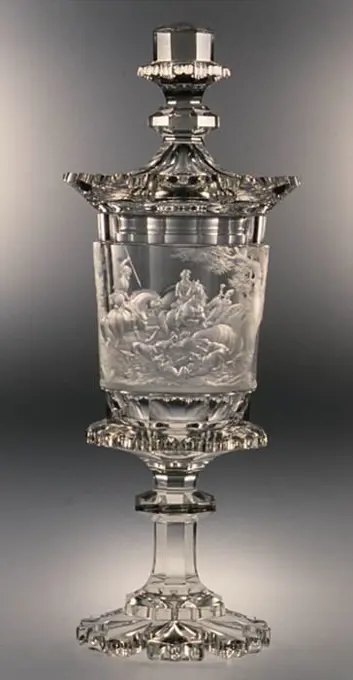
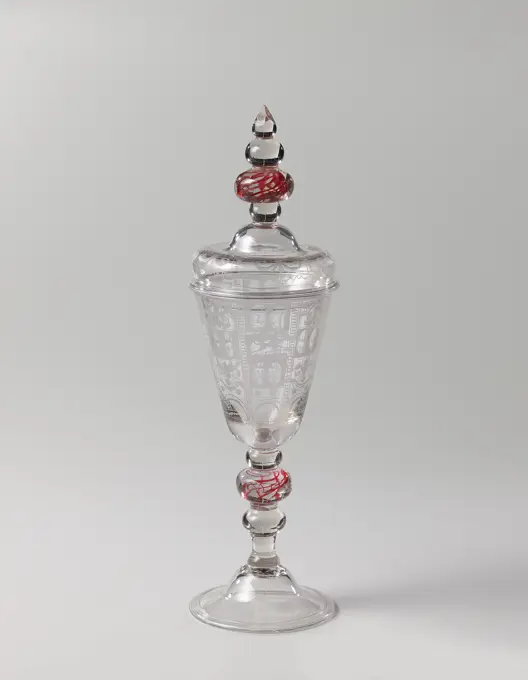
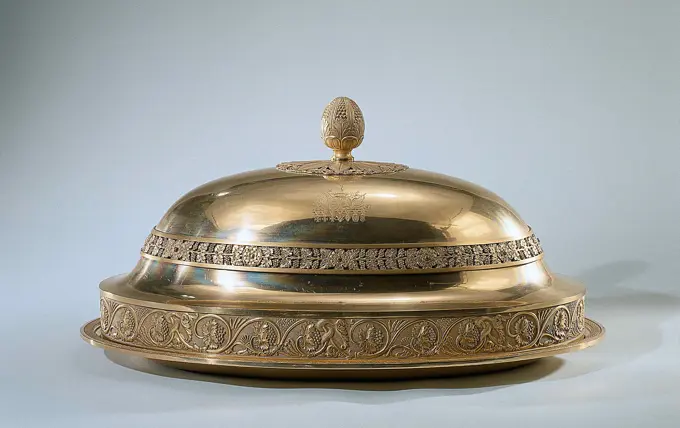
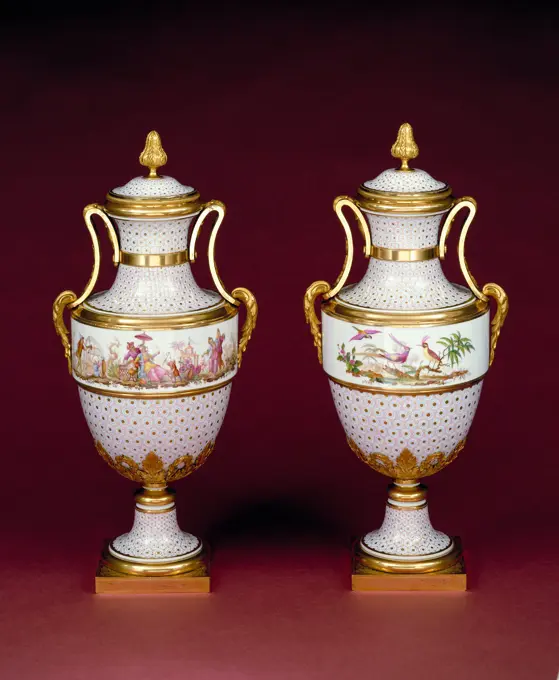
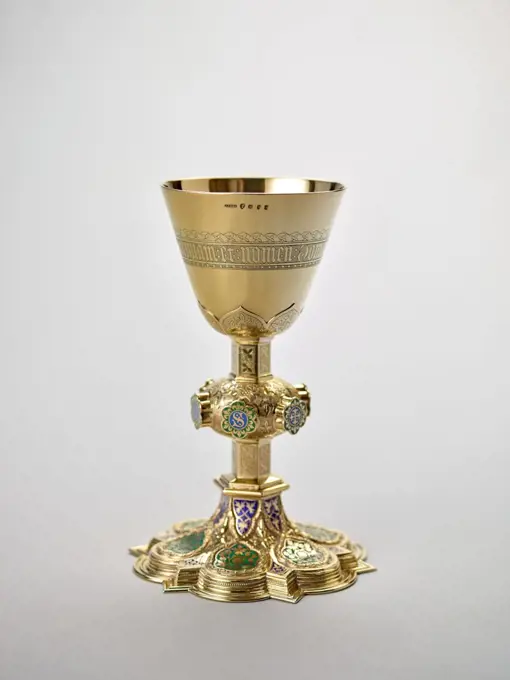
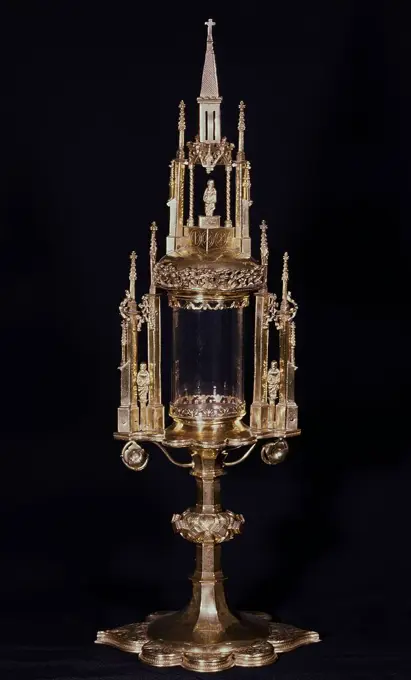
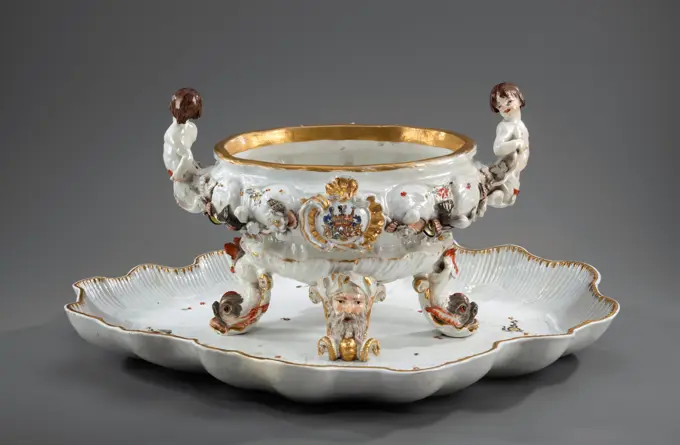
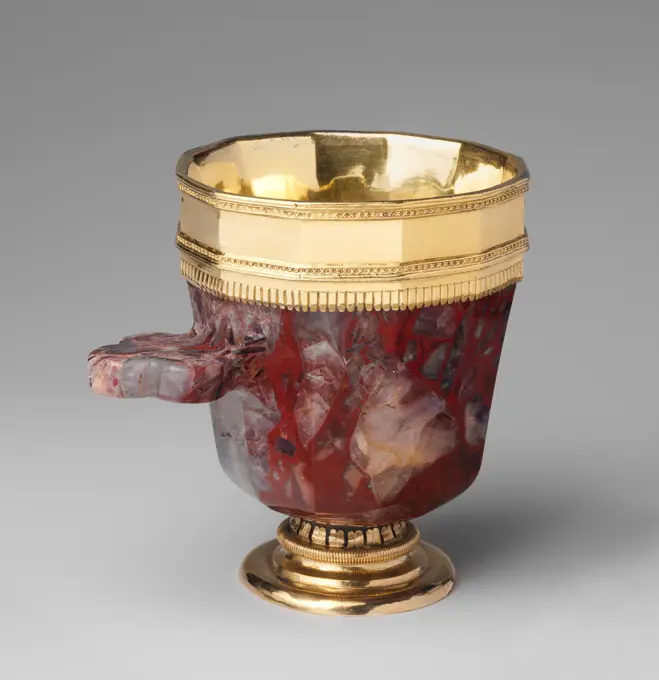
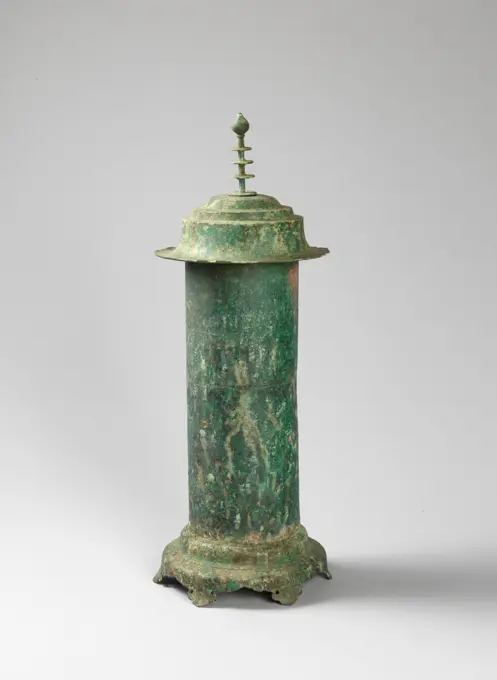
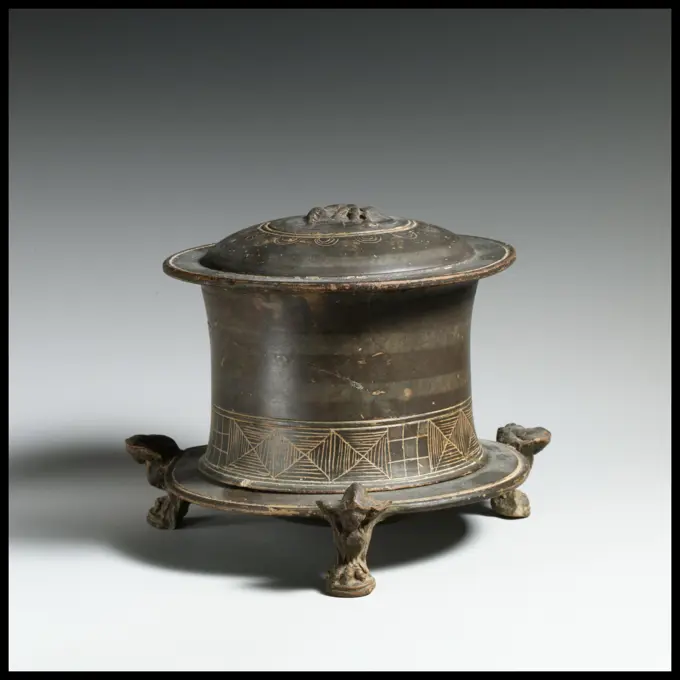
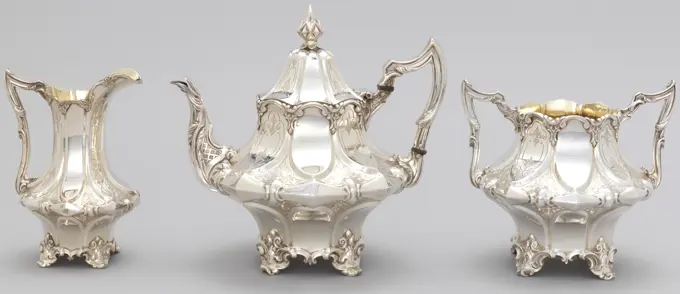
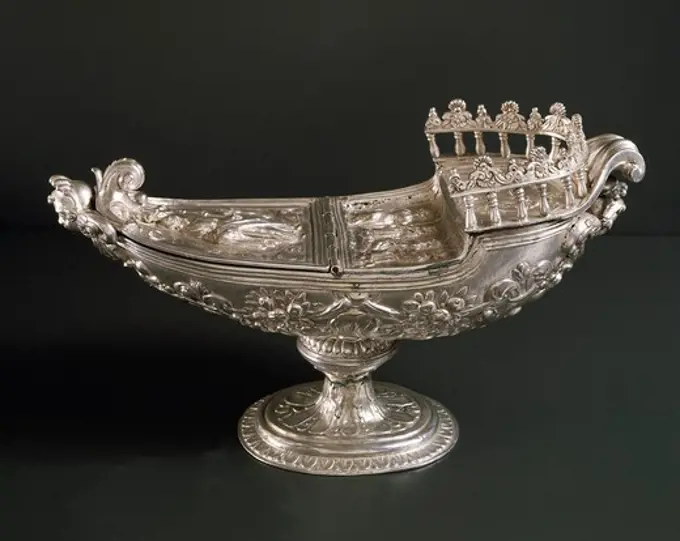
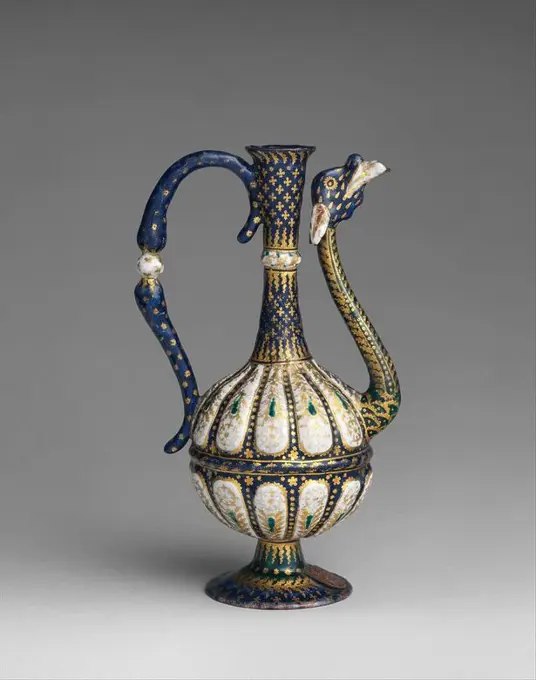
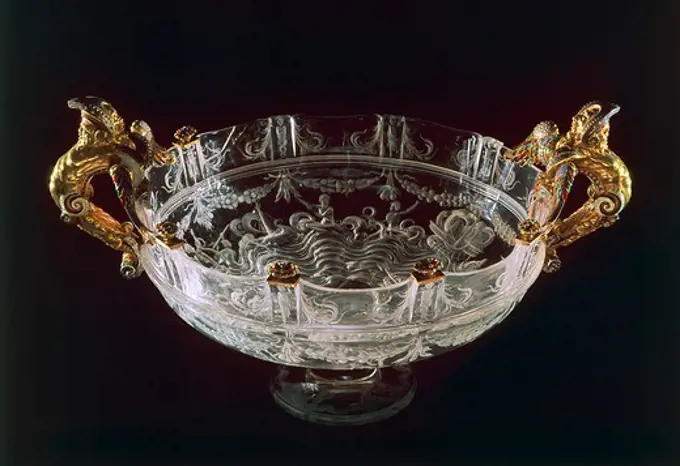
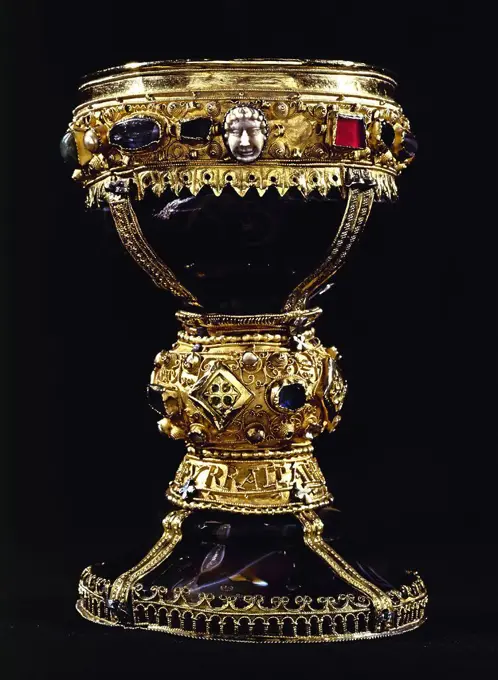
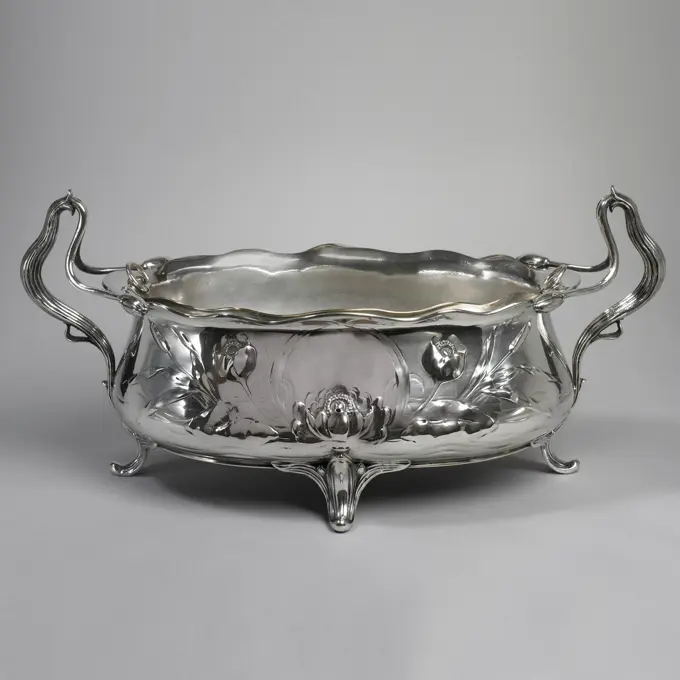
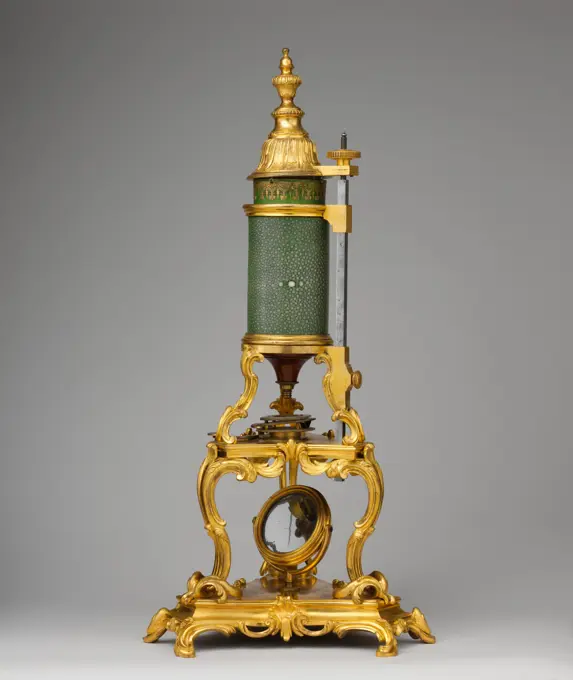
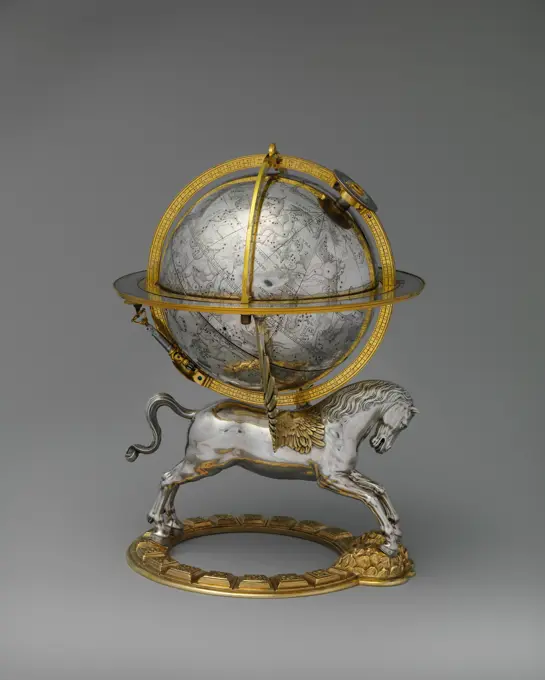
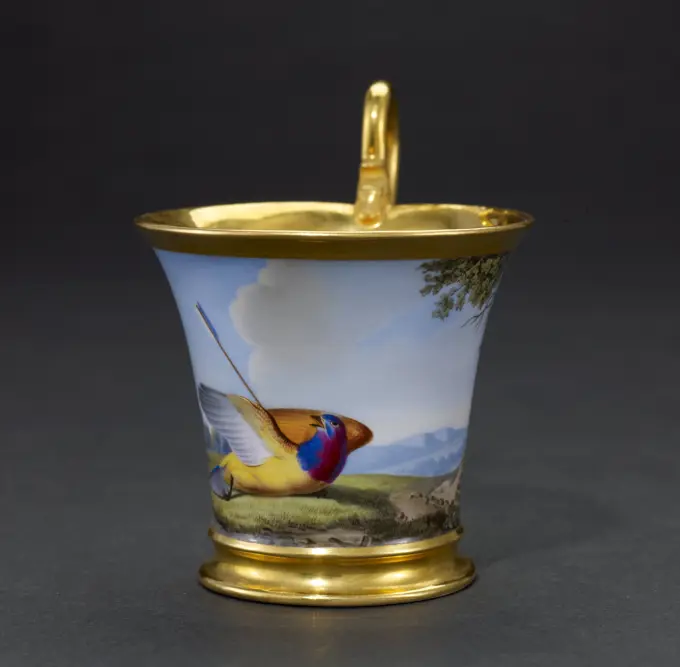
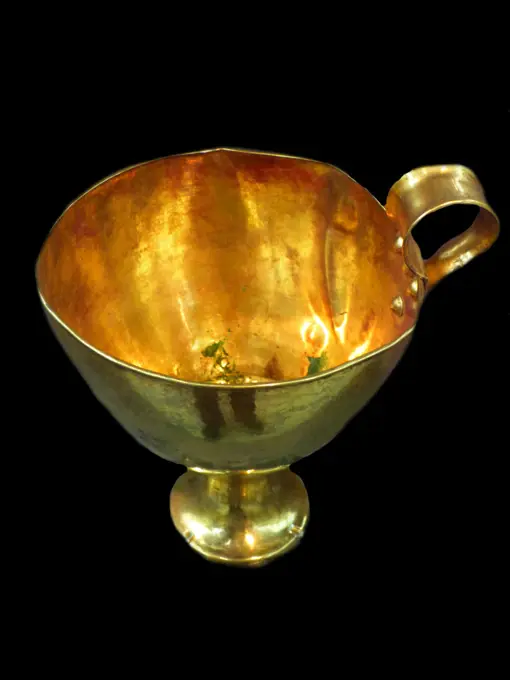
. Kroes of silver. The chalice buys upwards by the wider; The conical foot rests on three lying, crowned lions (two crowns have been broken off). To the lip edge engraved tendrils. On the foot, three coat of arms are attached, one with the weapon of Gelderland, one with a monogram (a large K between a small V and G and one with a weapon: gifted, 1 and 4 Fasted, 2 and 3 with twill by three Towers placed in 2 and 1.Lamp Stand. Dedicatee: Heydar al-Hoseyni. Dimensions: H. 18 5/8 in. (47.3cm). Date: A.H. 1027-29/A.D 1617-18.This distinctive tall, cylindrical shape is characteristic of a group of Safavid lamp stands which share a similar silhouette and ornamentation. Many are covered with lyrical and mystical verses by celebrated poets of the period, reflecting the important relationship between Persian poetry and the visual arts. Rhythmic, scrolling vegetal arabesques serve as a background for the interspersed verses in Persian nasta'liq script from Sa`di's "The Moth and the Candle", which read:"I remember a glance of your eye. I have heard that the moth said to the candle: I love you and if I shall be burned so be it. My tears and burning give you pleasure; I am the moth and it is my destiny to be burned; my heart is not quiet if I am not burned."This poem references the story of the moth and the flame, a sufi allegory in which the moth (the believer) is spellbound by the light of the beloved (Potpourri Jar 1810-1820 Staffordshire. Lead-glazed earthenware with lustre decoration .CALIZ. Location: MUSEO DE ARTE SACRO. Padrón. A CORUÑA. SPANIEN.Chain of a copper hanging lamp, c. 1916 Chain of a copper hanging lamp. The chains consist of links and three rods, the lower and upper ones of which are etched and strictered tivulus. Amsterdam copper (metal) etching Chain of a copper hanging lamp. The chains consist of links and three rods, the lower and upper ones of which are etched and strictered tivulus. Amsterdam copper (metal) etchingAnonymous, Vase Lei (usual name), 1050. CERUNUSCHI Museum, Museum of Arts in Asia in the city of Paris.Gasparo Miseroni () / 'Rock crystal cup with cover and tall stem'. Ca. 1550. Rock crystal / Hyaline quartz, Enamel, Gold. Museum: Museo del Prado, Madrid, España.Cup, c. 1735. Ignaz Preissler (Bohemian, 1676-1741). Opal glass; diameter: 11.5 x 8.3 cm (4 1/2 x 3 1/4 in.); overall: 7.2 x 10 cm (2 13/16 x 3 15/16 in.).Galvanoplastic reproduction of the "Kirchenväterschale" from the Lüneburg Ratssilber. Galvanoplastic reproduction of a bowl of four legs with images of the church fathers in a gothic niche. In the middle of the scale an enamelled coat of arms around which the words: HANC Apotecarius Tribuit Dominis Mathias Must 1476. Partly gilt.Beaker 19th century, after 16th century original British, after Russian original This electrotype is after a sixteenth-century original a treasure of the Kremlin, Moscow, at the time of reproduction.. Beaker. British, after Russian original. 19th century, after 16th century original. Silver on base metal. Metalwork-ElectrotypeMounted Bowl. UnknownTerracotta kantharos (drinking cup) ca. 330-300 B.C. Greek, South Italian, Campanian, Teano The site of Teano produced a variety of black-glazed pottery that is a simpler counterpart of Gnathian in Apulia. Embellishment consists of added white, incision, and impressed motifs. These three vases belong to a large set that was found together; the remaining pieces are exhibited in the Greek and Roman Study Collection.. Terracotta kantharos (drinking cup) 248194Pair of perfume burners. Culture: British, Soho near Birmingham. Dimensions: Overall (each, wt. confirmed): 13 × 5 5/8 × 5 5/8 in., 13 lb. each (33 × 14.3 × 14.3 cm, 5.9 kg). Maker: Matthew Boulton (British, Birmingham 1728-1809 Birmingham); and James Fothergill (died 1782). Date: probably ca. 1770.Called "sphinx" vases, the sphinx supports were probably based on a design by Sir William Chambers (1723-1796), architect to George III, who supplied Boulton with several models for gilt bronze in 1770. Museum: Metropolitan Museum of Art, New York, USA.Covered SugarBowl. Maker, possibly by: Boston and Sandwich Glass Works, American, 1826-88Lazio Roma Velletri Museo Capitolare8. Hutzel, Max 1960-1990 Medieval: Breviaries (two, 14-15th century); "The Passion" on vellum (French school, late 13th century); reliquaries. Post-medieval: Paintings, frescoes, vestments, sculpture, metalwork, panel painting Object Notes: Bibliographic material housed in Center library. Hutzel photo campaign dates: one undated, another November 9, 1985. It is likely that notes for the Pinacoteca Cattedrale (no separate Hutzel entry) describe items under this heading. TCI seems to indicate that the Museo Capitolare is adjacent to the cathedral. As well, some prints are missing; the initial Hutzel entry indicates that there are 422 prints. At this count, I can find 142. German-born photographer and scholar Max Hutzel (1911-1988) photographed in Italy from the early 1960s until his death. The result of this project, referred to by Hutzel as Foto Arte Minore, is thorough documentation of art historical development in Italy up to the 18th century, incluReliquary late 15th-early 16th century Italian, Venice. Reliquary. Italian, Venice. late 15th-early 16th century. Painted enamel on copper, partly gilt; glass. EnamelsTiled, astronomical clock; Eichstedt, Johann (Fl. Ca 1666-Ca 1688); around 1680 (1675-00-00-1685-00-00);Goblet in gold-plated silver and enamel from the mid 15th century from Vienna New Town. Chromolithograph from Hefner-Alteneck's "Costumes, Artworks and Appliances from the early Middle Ages to the end of the 18th Century," Frankfurt, 1883. IIlustration lithographed by I.K., and published by Heinrich Keller. Dr. Jakob Heinrich von Hefner-Alteneck (1811-1903) was a German archeologist, art historian and illustrator. He was director of the Bavarian National Museum from 1868 until 1886.Candlestick;  1st half 19th century (1801-00-00-1850-00-00);Gold Goblet with Personifications of Cyprus, Rome, Constantinople, and Alexandria 700s Avar or Byzantine This goblet is decorated with female personifications of four major ecclesiastical centers in the Byzantine world. The awkwardly written identifications suggest that this goblet was an Avar attempt to imitate a Byzantine chalice.The AvarsThe Avars were a nomadic tribe of mounted warriors from the Eurasian steppe. The Byzantine emperor Justinian negotiated with them in the sixth century to protect the Empires northern border along the Black Sea. Emboldened by their subjugation of numerous tribes, they unsuccessfully attempted to seize the Empires capital, Constantinople. They remained a scourge of both Byzantium and the Western kingdoms until Charlemagne defeated them through a series of campaigns in the 790s and early 800s.All the money and treasure that the Avars had been years amassing was seized, and no war in which the Franks have ever engaged.. brought them such riches and suSilver gilt cup from Sincreani, Romania. Jewellery. Geto-Dacian Civilization, 1st Century BC.Candlestick with Figural Imagery first half 14th century This unusual ninesided candlestick is ornamented with figural scenes executed in an intricate inlay of precious metals, including silver and gold. Its decoration includes carefully drawn depictions of courtly pastimes—enthroned figures entertained by musicians and mounted riders playing polo or hunting.. Candlestick with Figural Imagery. first half 14th century. Brass; cast, engraved, and inlaid with silver and black compound. Attributed to Iran or Iraq. MetalTazza 1842 Henri-Baron de Triqueti French. Tazza 208526Box (possibly England); glass, gold; Overall: 2.3 x 1.7 x 1.3 cm (7/8 x 11/16 x 1/2 in.)Reliquary of Mary Magdalene 14th and 15th century North Italian Reliquary of Mary Magdalene, 14th and 15th centuryMade in Tuscany, ItalyGilded copper, gilded silver, rock crystal, verre églomisé; Overall 22 x 9 3/8 x 7 15/16 in. (55.9 x 23.8 x 20.2 cm), roundel 3 3/8 in. (8.6 cm)Gift of J. Pierpont Morgan, 1917 (17.190.504)While their choir books were richly colored, Franciscan communities frequently chose more somber verre églomisé, a reverse-glass painting technique, for reliquaries. Although the palette of the glass medallion that crowns the reliquary is limited, the overall effect of crystal and gilded metal is sumptuous. The relic, enclosed in rock crystal, is said to be Mary Magdalene's tooth. Listen to experts illuminate this artwork's story Listen Play or pause #866. Kids: Reliquary of Mary Magdalene Supported by Bloomberg Philanthropies We're sorry, the transcript for this audio track is not available at this time. We are working to make it available as soon as possible.. ReliSweetmeat Dish 1745-1755 Bohemia. Ruby glass .Nautilus shell cup with cover 19th century, after 17th century original Elkington & Co. British This electrotype is after a seventeenth-century original in the treasury of the Kremlin, Moscow.. Nautilus shell cup with cover 186518Vase;  1st half 20th century (1900-00-00-1950-00-00);Reliquary China. Reliquary. China. Cloisonné enamel and bronze. Qing dynasty (1644-1911), Qianlong period (1736-95). CloisonnéCOPA DE PLATA REPUJADA DEL AYUNTAMIENTO. Location: MUSEO MUNICIPAL, CORDOBA, SPAIN.Cups unknownFlagon (one of a pair) 1597-98 British, London The decoration on these ewers, which shows dolphins frolicking in the waves, was done by a great master who was at ease with his tools, capable of improvising and animating his subject. Used for wine, the ewers are believed to have been part of the famous Paston Treasure, a collection of exotica recorded in a still life in the 1660s.. Flagon (one of a pair) 238576. The goblet is engraved with the biblical figures of King David and Jonathan. The inscription, Gleyck deese twee bestaan moet onse trouwe gaan’ (Our loyalty should be like that of these two), alludes to their faithful friendship.. Chrismatorium of silver. The cylindrical box has a loose, slightly bold lid with a round button that is crowned by a cross. The body of the box has been composed of two parts, the upper of which closes on the lower, and can be locked by means of a bayonet closure. Profiled tires run along the lower and top edge of both parts. The inside of the lower part is subdivided into four compartments by bulkheads. These are closed by a flat lid. The letters O, C and I are engraved on the lid. The inside of the upper part is gold-plated and is closed with a flat lid. The cross on the lid is decorated with engraving: three pierced hearts and the letters IHS. On the underside is engraved: Geesteren 1761.Torch to the Chinese, Louis XV period (seen from the front) ". Paris, Carnavalet museum, photo: Philippe Joffre MB 425 (1) To the Chinese, candlestick, Chinese, Decoration, Louis XV time, torch, flowerTerracotta chalice Etruscan ca. 550 BCE Goblet-shaped vase with incised lines and pointed bosses on edge of rim.Goblet with cover ca. 1830-50 Engraved decoration in the style of August Böhm. Goblet with cover 207802Charm Box (LupongManang)Double Cup. Culture: German or Bohemian. Dimensions: Overall (together): 3 x 4 15/16 x 4 3/16 in. (7.6 x 12.5 x 10.7 cm)Bowl only: 2 5/16 x 4 15/16 x 4 3/16 in. (5.8 x 12.5 x 10.7 cm)Lid only: 1 7/16 x 3 3/4 in. (3.6 x 9.5 cm). Date: 1325-50.The only known example of its type and date, this double cup is inscribed with the names of the Three Kings--"Caspar + Melchior + Waltazar"--and was probably used for traditional toasts on the Feast of the Epiphany, which marks their arrival in Bethlehem. The heraldic devices are unidentified, but one on the upper section also appears on one of a set of beakers excavated near the residence of Emperor Charles IV at Kutná Hora, near Prague. The hats on the coat of arms correspond to those worn by Jews but do not necessarily indicate that the cup's owners were Jews, since Gentiles and Jewish converts used similar emblems. Museum: Metropolitan Museum of Art, New York, USA.Bokaal with hunting performance, Anonymous, c. 1725 - c. 1750 Cup with lid, with three knots in the trunk, the middle one with a red spiral. Chalice divided into the rounds in courses in which sharpened a hunting presentation. Bohemia glass glassblowing Cup with lid, with three knots in the trunk, the middle one with a red spiral. Chalice divided into the rounds in courses in which sharpened a hunting presentation. Bohemia glass glassblowingCock lid with hunting performance, anonymous, c. 1725 - c. 1750 Lid with decoration, the button contains a red spiral. Bohemia glass glassblowing Lid with decoration, the button contains a red spiral. Bohemia glass glassblowingCloches (dish covers), coolers, soup tureens, sauceboats, salt cellars, pepper and mustard pots.A confidante of the Russian empress commissioned this 140-piece service, several items of which are displayed here. Silversmith Odiot, the painter Prudhon and the architect Cavelier proudly presented the new models at the 1819 French national exhibition of decorative art. Notable are the kneeling angels supporting the soup tureen, which are characteristic of the late Empire style.Wall lantern ca. 1780 British. Wall lantern. British. ca. 1780. Gilt bronze, glass. Metalwork-Gilt BronzeCovered vase, one of a pair, 1780, Sèvres Porcelain Factory, Paris, 1756-present, 20 x 8 3/4 x 7 in. (50.8 x 22.23 x 17.78 cm), Hard-paste porcelain, enamel, gilt bronze, France, 18th centuryMaker Unknown, Decanter and Stopper, c. 1820-40, colorless lead glass.Painting on antique wooden pot, Jodhpur, Rajasthan, India Copyright: xSafatxAli/DinodiaxPhotoxMugLampstand. Iraq, Iran, or Syria, first half of 8th century. Ceramics. Earthenware, incised, stamped, and glazedView 1 of 2 Chalice Manufacturer: John Hardman & Co, Applied Arts, Religion, ChristianPre-RaphaeliteClose-up of a perfume bottle, FranceEwer 19th century Scythian. Ewer 468776Chalice Spanish first half 16th century The inscription on the bowl reads: hic est envm calix sangvinis mei nvovi (For this is my blood of the New Testament). It also has the marks for the maker (luis) and for Córdoba. View more. Chalice. Spanish. first half 16th century. Silver gilt, enamel. Metalwork-SilverInkyuzan Flower Flower Manufacture (Hana-ike) with fish-shaped handle (usual name), 1800. sandstone. Brown covered. Cernuschi Museum, Asia Museum of Asia in the city of Paris. On the body, two shaped fish are fixed as a handles.SEMILLA DE FLOR EN INFRARROJO.Close-up of a container, FranceTwo Candle Stands Gueridons, Anonymous, c. 1700 Couple carved gueridons of gilded Lindehout, conceived as each other's pendant. Three kinked S-shaped legs are placed around a vase baluster, ending in an acanthus button. They are decorated with leaf and flower arrangements and crowned by a women's head. On a triangular leaf with concave sides and beveled corners there is a dressed hermcaryatide with a hanging flowerguirle. On the head an ionic capital that she supports with one hand. A vase with chalice -shaped crown rests on this. The Hague (possibly) wood (plant material). linden. gilding (material) gilding Couple carved gueridons of gilded Lindehout, conceived as each other's pendant. Three kinked S-shaped legs are placed around a vase baluster, ending in an acanthus button. They are decorated with leaf and flower arrangements and crowned by a women's head. On a triangular leaf with concave sides and beveled corners there is a dressed hermcaryatide with a hanging flowerguirle. On theWaza from the "swan" service, base for dessert setting; Koenigliche Porcellain Fabrique, Meissen (1710-1763), Eberlein, Johann Friedrich (1695-1749), Kaendler, Johann Joachim (1706-1775); 1737-1741 (1737-00-00-1741-00-00), 1739 (1739-00-00-1739-00-00);Bruehl, Henryk (1700-1763), swan service, coats of arms, soup vases, purchase (provenance)Jasper Cup with Gilded-Silver Mounts ca. 1350-80 Bohemian With its integrally carved trefoil handle, deep dodecahedral bowl, and massive gilt mounts, this cup is as rare as it is spectacular. There are few surviving examples of Western medieval lapidary. Indeed, medieval European vessels carved from semiprecious stone are so little known that preserved examples are sometimes mistakenly attributed to imperial courts of Rome and Byzantium. The confusion is one othat would have delighted the cup's creators.Carved from a material that is immediately perceived as precious and exotic, the vessel is a product of the imperial court of Charles IV (crowned at Rome 1355; d. 1378). Its jasper with characteristic amethyst inclusions, could have been mined only in the foothills of the Ore Mountains, northwest of Prague. A sixteenth-centuty source tells of the emperor's sending men there to search for semiprecious stones to decorate his cathedral and royal chapel. In recent years geologists have founOld Abe /Frosted Eagle pattern compote c 1880-1890 Ohio. Glass . Crystal Glass Company (Manufacturer)Silver Corinthian order columns on the white backgroundTerrapin Soup Tureen, Lid And Liner; Manufactured by Samuel Kirk & Son; USA; repoussé and chased silverAnonymous / 'Case for boat-shaped agate cup with a winged siren'. 1650 - 1711. Leather, Wood, Metal, Cloth. Museum: Museo del Prado, Madrid, España.Pedestal of gilt bronze, belonging to the muse urania. Gold-plated bronze pedestal in Louis XVI style, belonging to 'De Muze Urania' from painted Meissen Porcelain (BK-1964-21-A). The pedestal is oval and hollow. The top contains three holes. The center piece is concave and wise to the bottom. One of the sides has been opened. The pedestal has four round feet, above which volutes, which are decorated on both sides with an acanthus sheet. The feet are attached to the pedestal with cement.Presentation Quaich, Robert Naughton (Inverness, Scotland, active 1813 - 1857) c. 1820Cylindrical Sutra Container, first half 12th century, Unknown Japanese, 17 × 6 5/16 × 6 1/4 in. (43.18 × 16.03 × 15.88 cm) (with lid), Bronze, Japan, 12th century, According to Japanese Buddhist belief, the year 1052 marked the beginning of a degenerative era known as mappō, the Latter Days of the Buddhist Law. During these so-called Latter Days, the practice of the Buddhist Law (or 'dharma') would die out, preventing anyone from gaining enlightenment and escaping the cycle of death and rebirth. The arrival of Miroku, the buddha of the future, at the end of ten thousand years would return the dharma to legitimacy. In response, Japanese Buddhists set out to preserve the dharma, zealously copying Buddhist scriptures (sutras), enclosing them in sutra containers, and burying them in sutra burial mounds.Terracotta pyxis (cosmetic box) 3rd-2nd century B.C. Greek, Macedonian on the lid, a relief of Dionysos with maeanadsThis fine pyxis is decorated in the so-called "West-Slope" technique, named after the site on the Acropolis hill in Athens where pottery of this type was first identified. Distinguishing hallmarks of the technique are the use of incision, added white, and decoration with a dilute slip that produced a superposed red, pink, or orange color on top of the black-glaze ground. Other notable features of this pyxis are the sculpted feet in the shape of lion's paws, and the relief medallion on the lid. These plastic details suggest that this pyxis was made in Macedonia, since other vessels with similar motifs have been found in tombs from this region. In addition to the crisply incised design on the body, the sculptured additions recall metallic prototypes that reflect the Macedonian taste for luxury items in gold and silver.. Terracotta pyxis (cosmetic box) 255663Sugar Bowl (England); Designed by Joseph Angell III (English, ca.1816-ca.1891); silver; Overall: 16.5 x 18 x 16 cm (6 1/2 x 7 1/16 x 6 5/16 in.)Standing Vase. Mounts attributed to Pierre-Philippe Thomire (French, 1751 - 1843, master 1772)French Porcelain Vase Depicting Italian Landscape Antiques Three-light candelabrum (one of a pair) ca. 1785 French. Three-light candelabrum (one of a pair) 238554Ritual Wine Beaker (Gu). Culture: China. Dimensions: H. 12 1/4 in. (31.1 cm); Diam. 6 11/16 in. (17 cm). Date: 13th-11th century B.C.. Museum: Metropolitan Museum of Art, New York, USA.Pair of Stem Cups with Sun amid Clouds and Stylized Characters for Long Life” (Shou) 1723-1735 China. Porcelain painted in underglaze blue and overglaze enamels (doucai) .Silversmith's art, Italy, 17th century. Unknown Florentine artist, silver boat, 1642. From Florence.Ewer or cruet. Culture: Italian, Venice. Dimensions: H. 7 1/2 in. (19.1 cm); W. 4 1/4 in. (10.8 cm.); D. 2 7/8 in. (7.3 cm.). Date: late 15th or early 16th century. Museum: Metropolitan Museum of Art, New York, USA.Goldsmith's art, Italy, 16th century. Rock crystal and enamelled gold cup. Height cm. 19. Milanese manufacture.Compote - Canadian Flange PatternPitcher ca. 1850-56 E. & W. Bennett Pottery. Pitcher 5767CALIZ DE DOÑA URRACA CON INCRUSTACIONES DE RUBIES Y ZAFIROS - ORFEBRERIA DEL SIGLO XI. Location: COLEGIATA DE SAN ISIDORO. LEON. SPAIN.Goblet with Cover. Germany, Zechlin, 1737. Furnishings; Serviceware. Glass, giltCompote.  Maker: Clemens Friedell, American, 1872-1963Sasanian Art. Ewer showing a Simurgh. Silver; chasing, gilding. Iran. 6th-early 7th century. Found in Kharkov region. The State Hermitage Museum. Saint Petersburg. Russia.Gu-type chalice/cup on a stand. unknown, craftsman'Silver-Gilt Cup', 1938. Creator: Unknown.Anonymous; Sasanians Workshop / 'Daggerboard shaped vessel with honeycomb work'. Ca. 1680. Enamel, Bloodstone, Gold, Ruby. Museum: Museo del Prado, Madrid, España.Jardinière And Liner (Germany); Designed by A. Mayers Söhne; silverRoman Sculptor; Pierre Delabarre / 'Boat-shaped agate cup with Cupid on a dragon'. After 1625. Agate, Diamond, Enamel, Emerald, Gold, Ruby. Museum: Museo del Prado, Madrid, España.Microscope ca. 1750 Optical elements by Claude-Siméon Passemant Qualifying both as a work of art and as a scientific instrument, this microscope exemplifies beautifully the broad interests of mid-eighteenth century amateurs who dabbled in the sciences to explore the mysteries of the natural world. This compound microscope contains three convex lenses in its inner cylinder, which fits into a wooden tube covered with green shagreen, an animal or fish skin, in this case from the tropical stingray Dasyatis (or Trygon) sephen. The three white pearls” visible on the shaft of the microscope originally marked the center of the ray’s back and hide. Polished and often tinted green, the attractive granular surface of ray- and sharkskin was fashionable in mid-eighteenth century France for the decoration of small cases, snuffboxes, and other luxurious objects.In order to use the instrument, the ornamental gilt-bronze finial must be unscrewed, thus giving access to the eyepiece and allowing the ownCelestial globe with clockwork 1579 Gerhard Emmoser This globe once rotated, charting the constellations. A unique object uniting extraordinarily complex mechanical technology with great aesthetic beauty, it belonged to the Holy Roman Emperor Rudolf II, who displayed it in his curiosity cabinet. It was valued both for its function as a scientific apparatus and for its rich, elegant casework. Pegasus bears the seemingly weightless globe on his outstretched wings. Astronomy was enabled by knowledge of arithmetic and geometry, then considered "the wings of the human mind."Elizabeth Cleland, 2017. Celestial globe with clockwork. Austrian, Vienna. 1579. Partially gilded silver, gilded brass (case); brass, steel (movement). Metalwork-Silver In CombinationGlass perfume bottle. Culture: Roman. Dimensions: H.: 4 3/8 in. (11.1 cm)Diam.: 2 1/4 x 1 in. (5.7 x 2.5 cm). Date: 2nd-3rd century A.D..Candlestick unguentarium.Colorless.Rim with rounded outer lip, partially folded over and in; short, flaring mouth; slender, tall, slightly concave neck; low conical shoulder; sides of body horizontal, then sloping downwards; low kick in bottom.Intact; pinprick bubbles and blowing striations; dulling, some pitting, patches of thick creamy brown weathering, and iridescence. Museum: Metropolitan Museum of Art, New York, USA.Salt Cellar. United States, Ohio, 1815-1840. Furnishings; Serviceware. Pattern-molded and blown glassSilversmith: Johannes Jansen, Silver bonbon box, bonbon container tableware holder silver, sawn engraved cast Oval shape pivoting wall on four leaf legs two handles bottom undersideWater Pipe Base 18th-19th century. Water Pipe Base 447090Pair of Candlesticks; Designed by Filippo Pelagio Palagi (Italian, 1775 - 1860); about 1830 - 1840; Gilt bronze;Candlestick (one of a pair) early 18th century Italian One of a pair with 17.190.832.. Candlestick (one of a pair). Italian. early 18th century. Gilt bronze and crystal. Natural Substances-Rock CrystalCup from a tea service for twelve, 1807-1808, Christophe-Ferdinand Caron; Manufacturer: Sèvres Porcelain Factory, French (Sèvres), French, 1774-1831, 4 5/16 x 4 1/2 x 3 3/8 in. (10.95 x 11.43 x 8.57 cm), Hardpaste porcelain, gilt, France, 19th century, This cup and saucer is from a tea service for twelve that was a diplomatic gift from the Emperor Napoleon to Prince William of Prussia in September, 1808. This richly-decorated service is an excellent example of of porcelain meant to impress another head of state. To achieve such quality, Sèvres employed top animal painter Caron from 1792-1815. The paintings on the service (including the bird shown here), based in part on Jean de la Fontaine's Fables, are considered among his highest achievements.Workshop of the Sarachi () / 'Gondola or galley with three winged serpents'. 1570 - 1600. Rock crystal / Hyaline quartz, Enamel, Gold. Museum: Museo del Prado, Madrid, España. Author: TALLER DE LOS SARACHI.Gold kylix with one handleGoldsmith's art, Italy, 17th century. Silver, coral and gilded copper inkpot. Trapani (Sicily) manufacture, late 1600.Candlestick 1762-1763 London. Silver . Ebenezer CokerDress Pin. Unknown