Ornate Decorative Cups

An assortment of decorative cups and ciboria from various cultures and periods, featuring detailed craftsmanship and ornate designs.
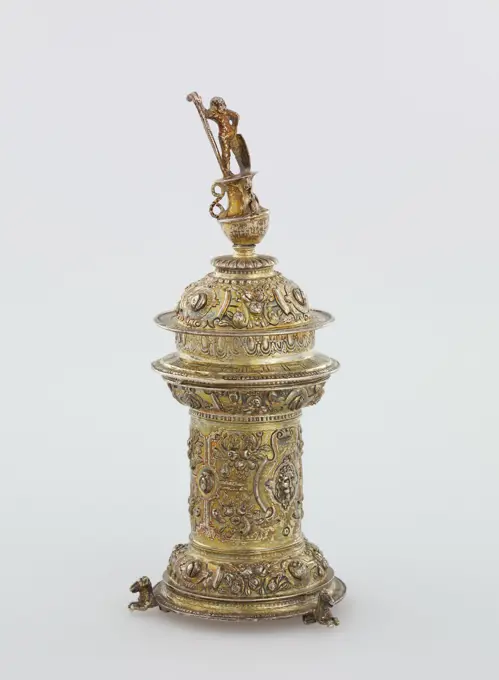
Standing salt, c. 1582, Christopher Eston, English, (Exeter), active about 1576-1592, 8 5/8 x 3 1/2 x 3 1/2 in. (21.91 x 8.89 x 8.89 cm), Silver, gilt silver, England, 16th century
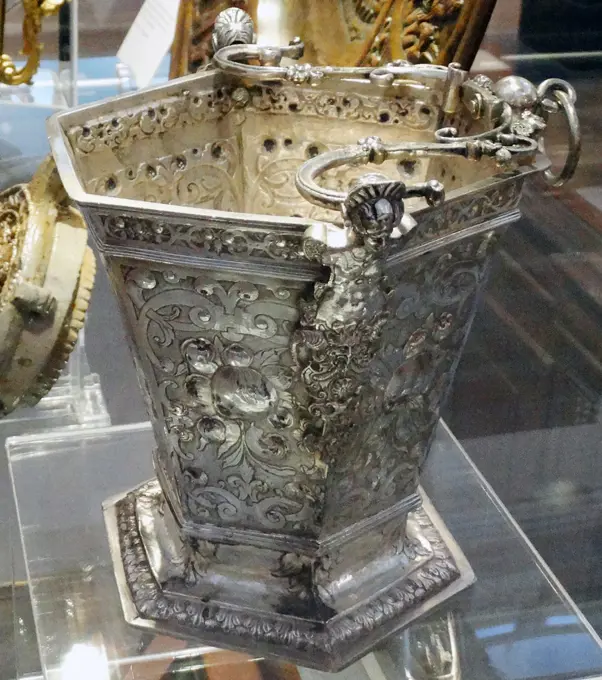
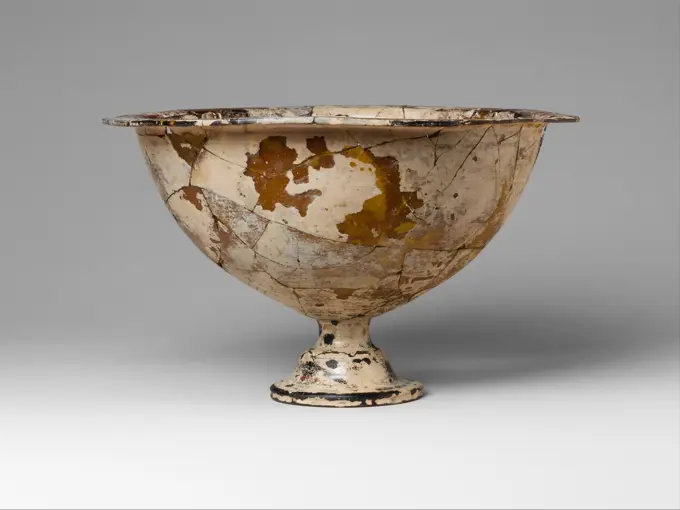
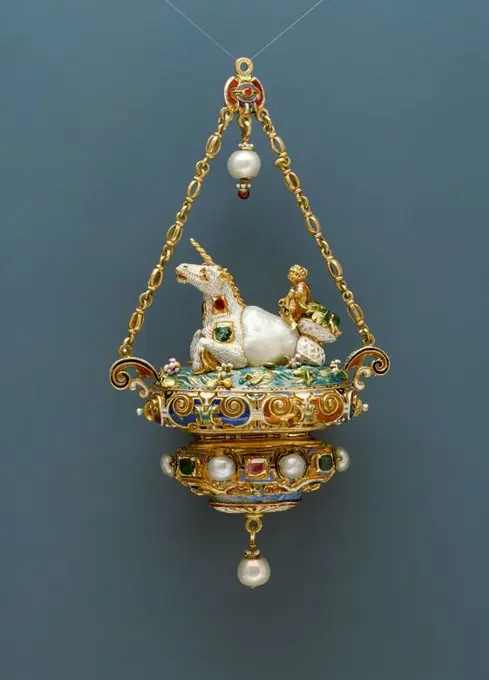
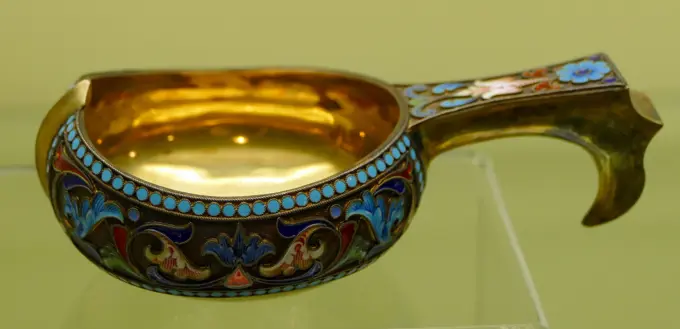
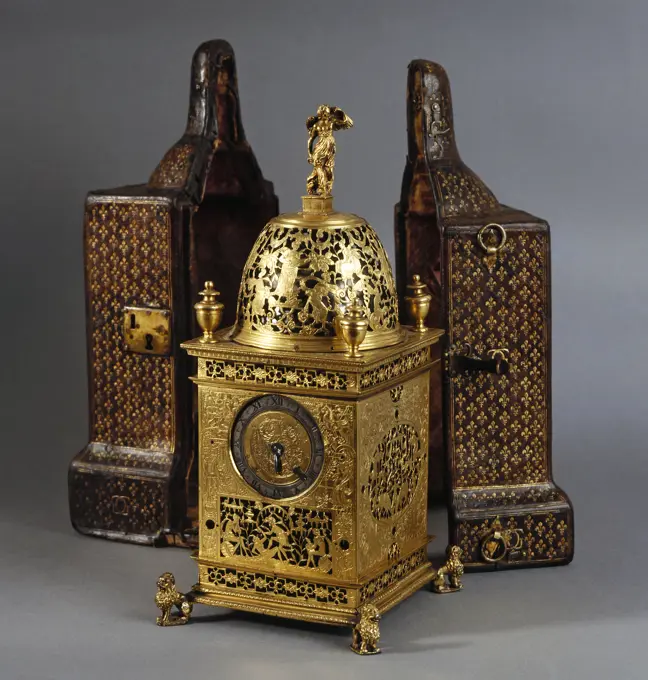
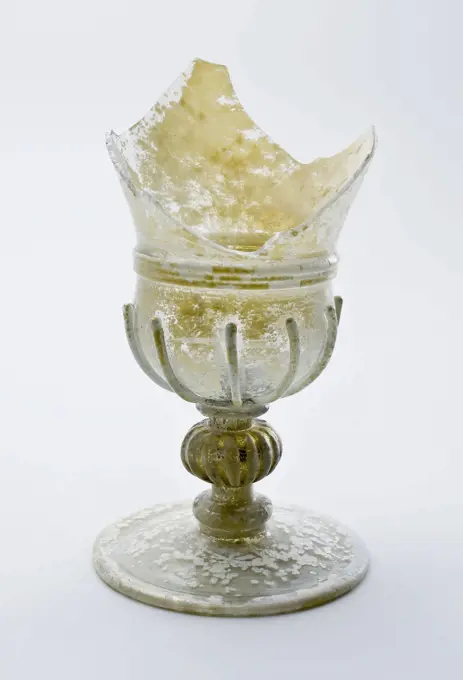
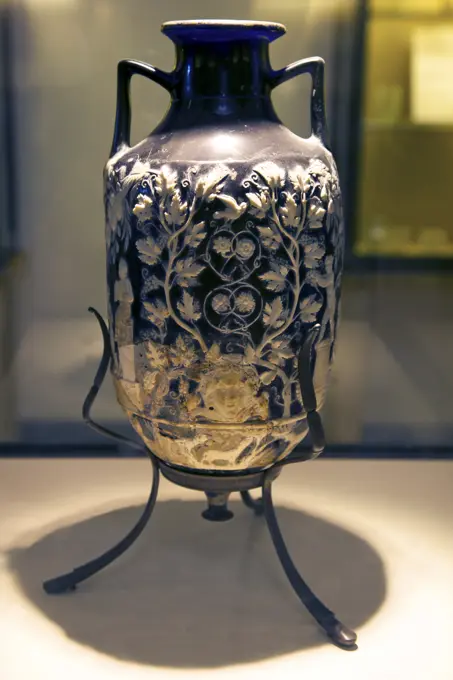
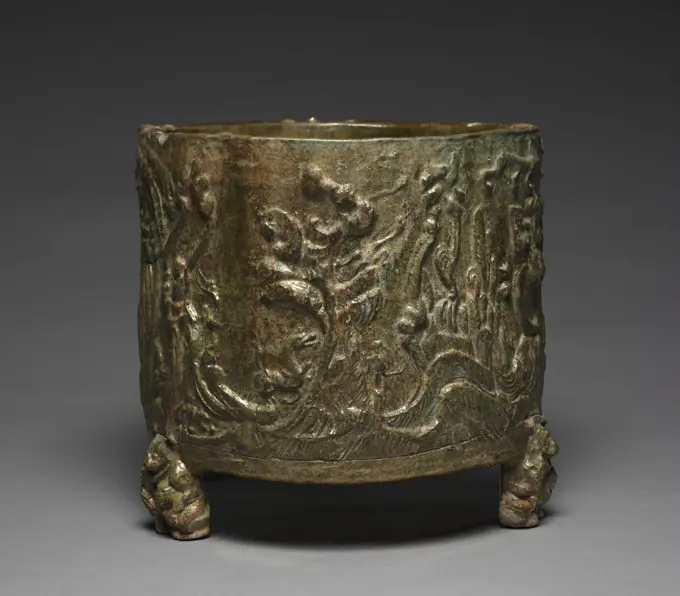
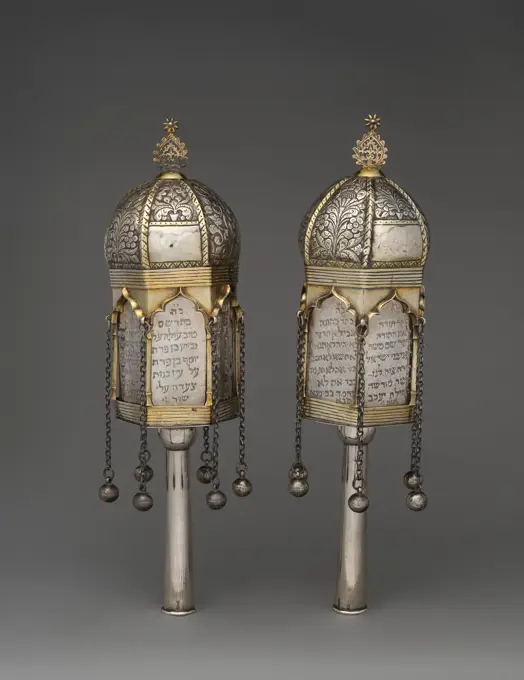
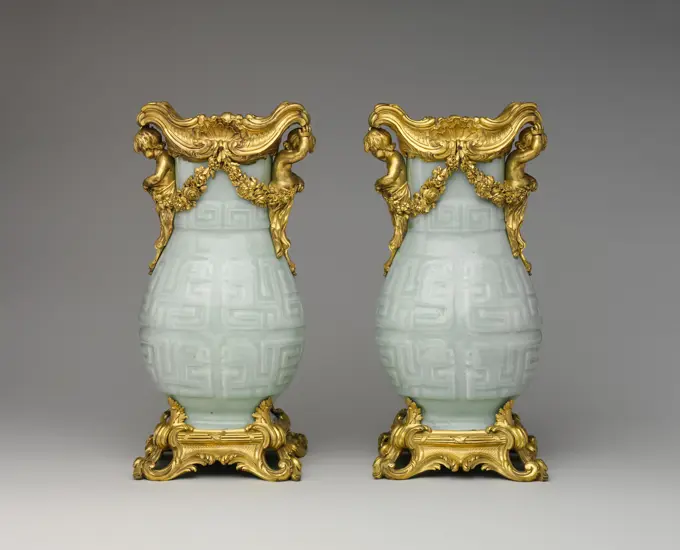
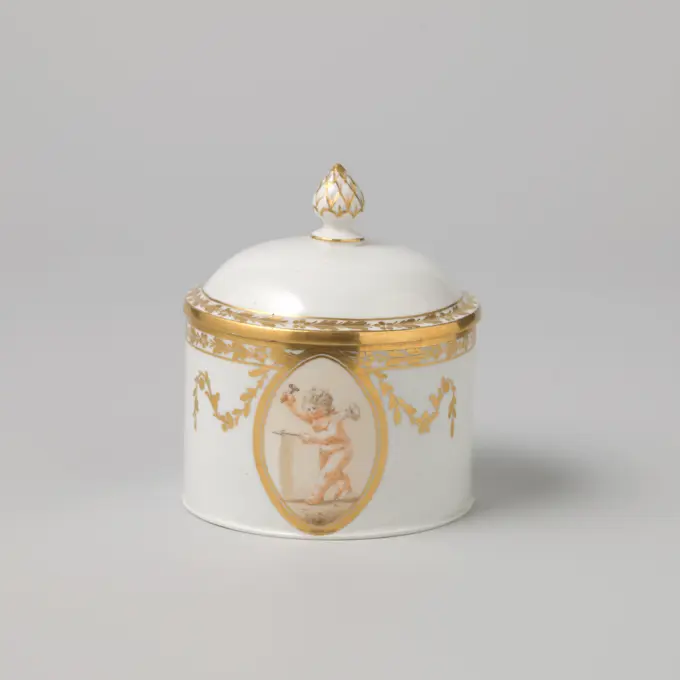
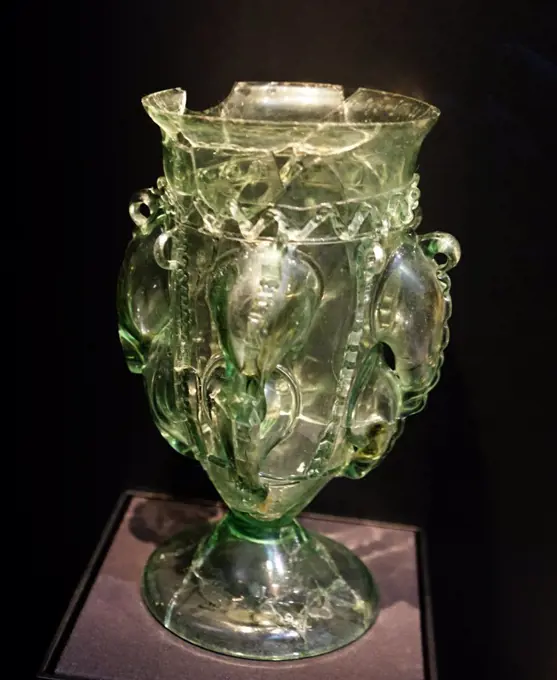
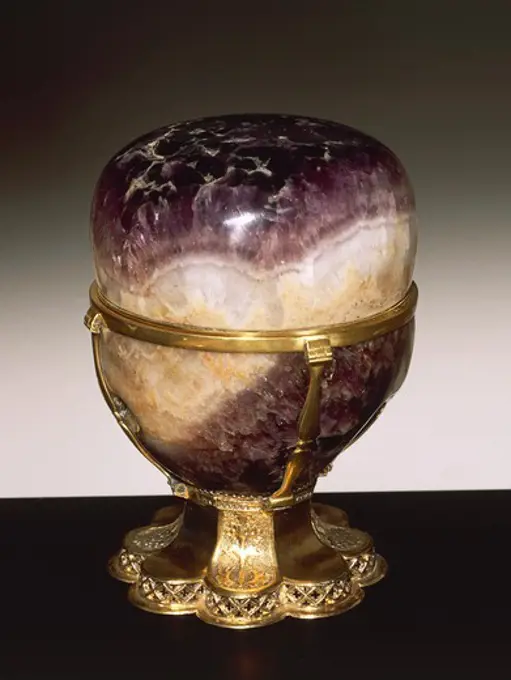
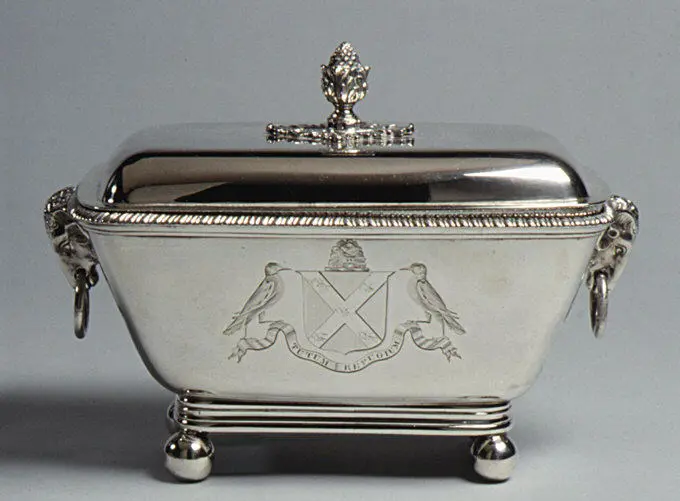
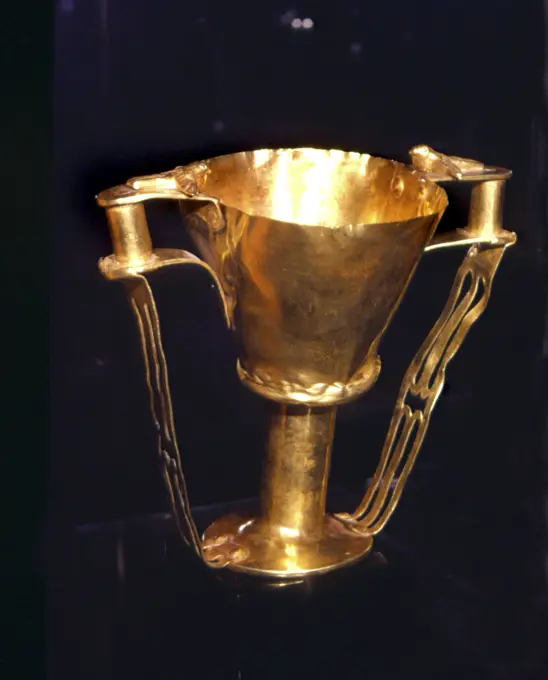
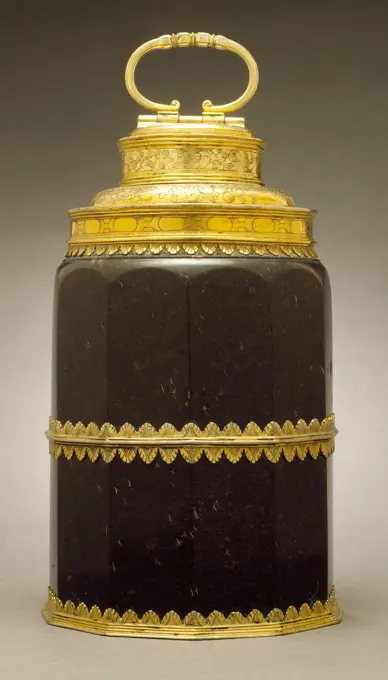
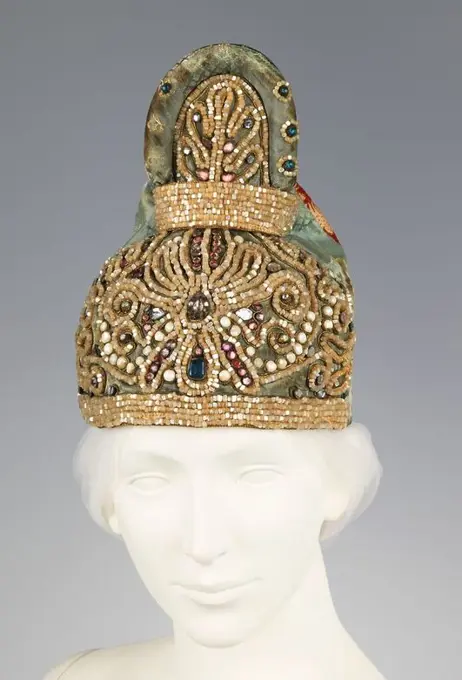
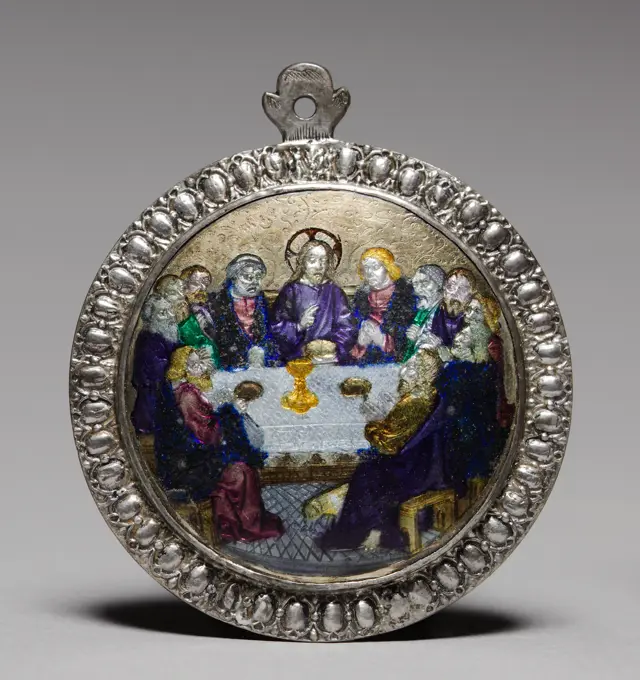
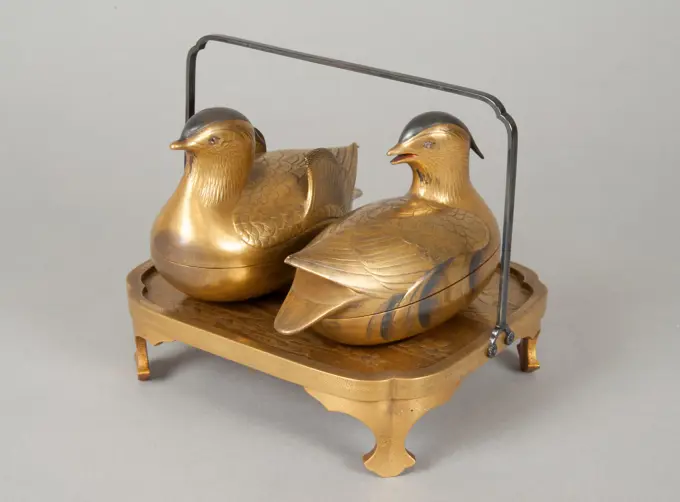
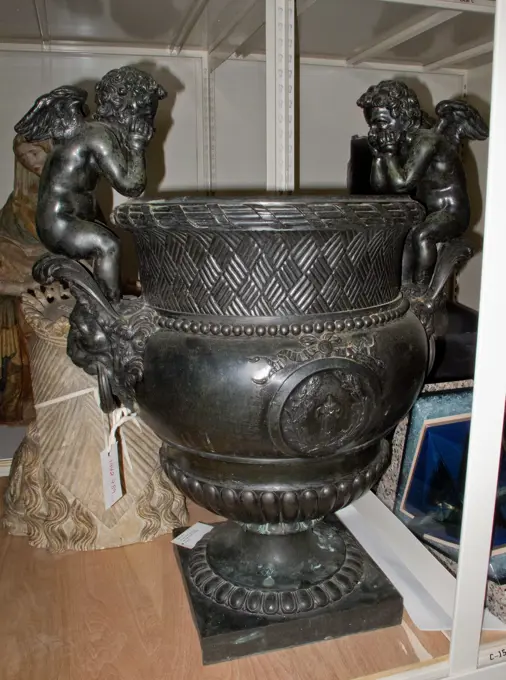
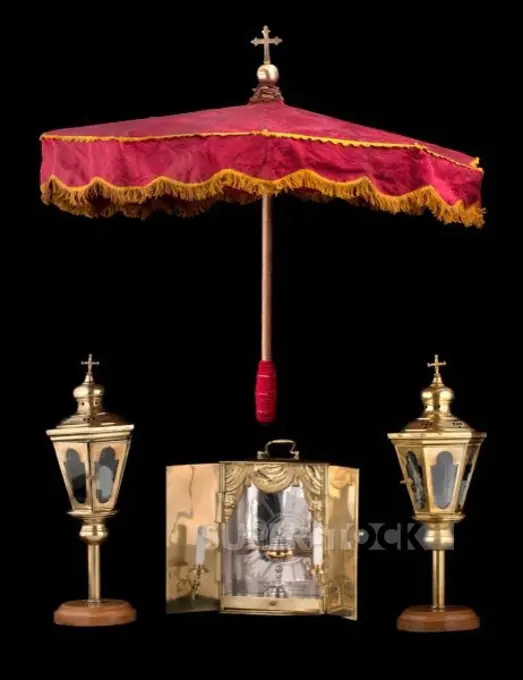
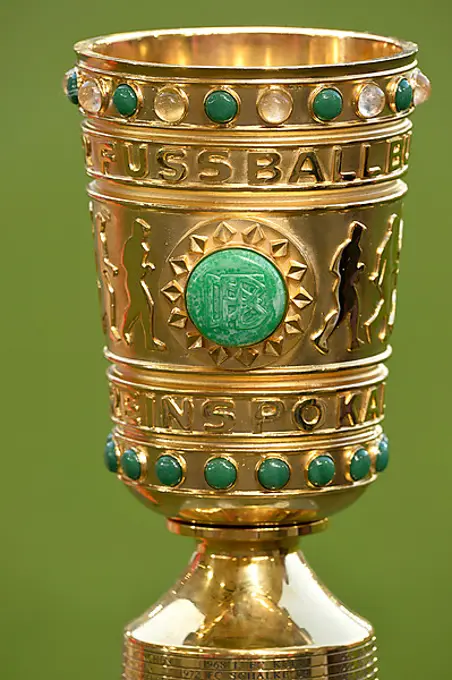
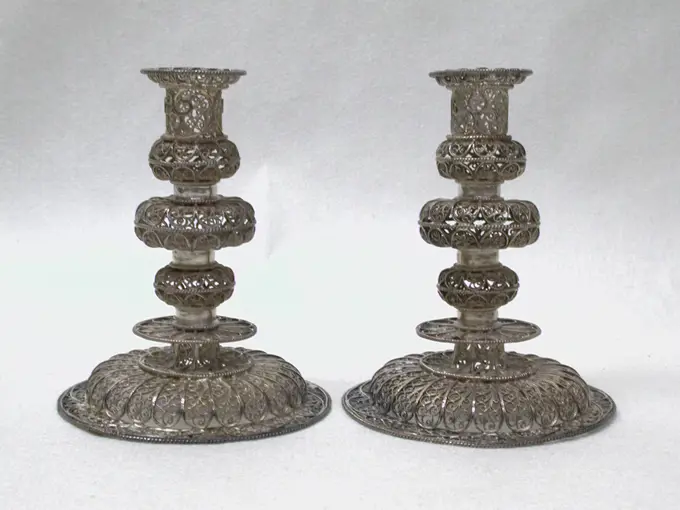
Miniature candlestick (one of a pair) (part of a set) 1675-1700 Southern German Part of set of silver miniature furniture, 31.37.1-.22, and a box, 31.37.23.. Miniature candlestick (one of a pair) (part of a set) 196830Situla or Holy Water bucket made with silver. Augsburg (Germany) 1580-1600). The bucket was made to contain Holy Water for use during baptisms and other church services. It is decorated with garlands of flowers and fruit and emblems of the crucifixion of Christ.Glass krater (mixing bowl) 2nd-1st century B.C. Greek Translucent deep honey yellow.Outsplayed horizontal rim with slightly rounded edge; hemispherical body with convex curving sides; small, slightly convex bottom on interior; applied tall, outsplayed base with a solid, cylindrical stem with slightly concave profile, a deep concave bottom, and a thick vertical outer edge.On upper edge of rim, two broad concentric grooves; on interior, a single broad horizontal groove below rim; on exterior, three concentric grooves around bottom and applied base; on base, a single broad horizontal groove below stem, another around top of outer edge, and a third groove in vertical edge.Broken and repaired, with many small areas missing, especially in body; a few pinprick and larger bubbles; patches of thick creamy weathering and elsewhere some dulling and iridescence.Rotary grinding marks on interior and exterior of both body and base. One small jagged piece of same-colored glass is attached to the bottPendant with a Triton Riding a Unicorn-like Sea Creature. Culture: probably German or French. Designer: Reinhold Vasters (German, Erkelenz 1827-1909 Aachen). Dimensions: Height: 4 1/2 in. (11.4 cm). Date: ca. 1870-95.With the exception of the links of the chain, an additional molding separating the two bands of decoration on the base, and the unicorn's horn, this jewel is identical to one in a design in the Victoria and Albert Museum, London (inv. No. E 2818-1919), by Reinhold Vasters of Aachen. The design was included among the nineteenth-century Renaissance-style jewels and jewelry designs in that museum's exhibition Princely Magnificence: Court Jewels of the Renaissance, 1500-1630. It is illustrated in the exhibition catalogue,1 where it was noted that the base of a jewel in the same exhibition lent by Lord Astor of Hever was made from the design for the lower part of the base of the jewel in the drawing.2 The same jewel was illustrated in the catalogue of the collection of FreDrinking vessel (Kovsch); Russian, enamelled brass. Attributed to Carl Faberge 1898Scent Bottle And Lid; enameled and gilt glassMiniature secretary incorporating a watch. Culture: British, London. Dimensions: Overall (confirmed): 12 1/8 × 5 3/4 × 4 1/8 in. (30.8 × 14.6 × 10.5 cm). Entrepreneur: James Cox (British, ca. 1723-1800). Date: ca. 1766-72.Bejeweled butterflies and flowers that tremble in the slightest breath of air adorn this whimsical object, which plays tunes on a hidden music box and incidentally tells the time. The spring mechanism that powers the music is wound by inserting a key into a hole hidden behind one of rosettes near the bulls that support the cabinet. Based on actual rococo European cabinet designs, but with some improbable additions, the miniature is known to have been in the collection of Princess Z. M. Youssoupof in Saint Petersburg in 1904. Although it has been said to have been taken from China after the Boxer Rebellion in 1899, it may, in fact, have been imported into Russia long before. Museum: Metropolitan Museum of Art, New York, USA.Table clock next to its leather case with the arms of Gaston of Orleans, France, XVIIth century. Museum of Fine Arts of the City of Paris, Petit Palais. 26359-10 Weapon, stutch leather, table clock, watchmaking, french princeWorkshop of the Sarachi () / 'Footed heliotrope cup in the form of a duck'. 1590 - 1620. Enamel, Bloodstone, Gold. Museum: Museo del Prado, Madrid, España. Author: TALLER DE LOS SARACHI.Gold tableware from graves in Mycenae. The scalloped box, with a straight back, has a hinged lid. The bottom is surrounded by a profile edge. In it a plate has been fitted, driven with an asymmetrical, fading-built fantasy structure made by voltened with seed beads and leaf raft. In the structure there is an asymmetrical vase, from which a flower garland leaves, which is ceased by a boy sat on the ground with a flower basket. The wall of the box describes a fectal S-curve and is driven to all sides with asymmetrical, irregularly shaped fields with representations on a roughened ground. The field at the front, in the middle of a rocaille with volutes and leaf buttons, has two rabbits in a landscape with buildings and furthermore fruits and flowers. That at the rear shows two sheep in a similar landscape; Left is a second, narrower field that follows the contour of the large, with a foam edge and flowers. On both sides two fields with flowers and fruits with a small field with scaling pattern in the lower right corner. The Fragment of foot, stem and part of chalice of chalice in Facon de Venise style, wine glass drinking glass drinkware tableware holder soil find glass gold, free blown and formed glass application Fragment of foot stem and part of chalice of chalice in Facon de Venise style in clear colorless glass. Pontil mark under concave very slightly ascending foot with down turned rim Hollow balustere stem on flat knot to concave convex knot (dm 2.2 cm) with 14 ridges with remnants of gilding to flat knot Bottom of chalice round with 12 vertically imposed opaque white glass wires of which two are slightly damaged. Three all-round opaque white glass wires on the transition to wide jug, many of which lack archaeological informationDecorated glass vase, National Archaeological Museum, Naples, Campania, Italy, EuropeCylindrical Jar, 202 BC-AD 220. China, Han dynasty (202 BC-AD 220). Lead glazed earthenware with molded relief; diameter: 27.3 cm (10 3/4 in.); height: 26.7 cm (10 1/2 in.).Alabastron. UnknownPair of Torah finials (rimonim) 1896 A.M. Georgian In synagogues the scroll of the Torah, the first five books of the Hebrew Bible, is often decorated with silver finials. The eclectic shape merges Ottoman architectural details, neo-gothic and traditional Judaic ornaments with extensive Hebrew citations, which refer to the Torahs central status in Jewish life. The use of diverse motifs documents the constant cultural exchange between the Jewish congregations in various regions of Europe and Asia.. Pair of Torah finials (rimonim). Georgian, Tiflis. 1896. Silver, parcel gilt. Metalwork-SilverPowder FlaskLewis Fueter, Pair of Salts, c. 1770, silver.CALIZ DE ORO DE CARLOS III. Location: MUSEO DE NAVARRA. Pamplona. NAVARRA. SPAIN.Candlestick, Silver, (a) Square base with bead molding and anthemion motifs on corners. Urn-shaped candleholder with four repoussé figures of Victory with palm leaf and laurel wreath above flower swags. (b) removable bobêche., London, England, 1878-1879, metalwork, Decorative Arts, CandlestickToilet Vase 4th century. Toilet Vase 446977Pair of vases mounts ca. 1760-70, porcelain early 18th century Chinese with French mounts Chinese porcelain vases decorated with a celadon glaze enjoyed great popularity among French art collectors of the eighteenth century. Frequently they were fitted in France with gilt-bronze mounts that served to enhance the porcelain in the eyes of the potential buyer. The marchandsmerciers, who did so much to influence eighteenth-century French taste, were usually responsible for commissioning the gilt-bronze mounts, which were required to closely fit the shape of the vase. In the case of this pair of vases, the design of the mounts includes both Rococo and Neoclassical motifs, suggesting a date of manufacture between 1760 and 1770, a period of transition between the two styles. The mounts incorporate putti, floral swags, shells, and scrolling vegetation, all unrelated stylistically to the vases molded designs, which echo the decoration of archaic Chinese bronzes. Typically they venerate the ChiCup and SaucerCover of a sugar bowl with a foliate scroll, Fürstenberg, c. 1785 - c. 1795 Cover of a porcelain sugar bowl, painted on the glaze in gold. Decorated with a leaf vank and lid button in the shape of a pine cone. Fürstenberg porcelain. glaze. gold (metal) painting / gilding / vitrification Cover of a porcelain sugar bowl, painted on the glaze in gold. Decorated with a leaf vank and lid button in the shape of a pine cone. Fürstenberg porcelain. glaze. gold (metal) painting / gilding / vitrificationGlass claw beaker, an example of Anglo-Saxon England vessels. Dated 350 ADSilversmith's art, Italy, 15th century. Amethyst vase with lid, gilded silver setting. Height cm. 15.3. Signed LAV.R.MED.Pair of vegetable dishes 1803-4 Probably by William Simons The arms, crest, motto, and supporters of the Gillon family are engraved on the side. The vegetable dish, one of a pair and part of a dinner service, is in the form of a classical sarcophagus.. Pair of vegetable dishes 198039Nestor's Cup. Mycenaean gold cup. Shaft Grave IV, Mycenae. bronze Age. GREECE.Plaque with Two Cranes. China, Chinese, late Ming dynasty, about 1550-1644. Jewelry and Adornments; plaques. Abraded jade, silver and enamelAlarm case. Culture: French. Dimensions: 4 5/8 × 2 7/8 in. (11.7 × 7.3 cm). Date: late 16th century.Punching and embossing were used to decorate this case, which may have been made to carry an alarm clock. The raised passages were intended for a carrying cord. Museum: Metropolitan Museum of Art, New York, USA.Canister. Erhardt Scheffner Lübeck (Germany, active mid-17th century). Germany, circa 1650. Furnishings; Accessories. Green serpentine stone and silver mounts with gildingAn Ottoman Turquoise Inset Silver Mounted Zinc Bottle, Istanbul Turkey 17th Century Islamic Art AntiqueRELICARIO CON ESMALTE DE LIMOGES S XIV. Location: CONVENTO DE SAN CLEMENTE-MUSEO. Toledo. SPAIN.Goldsmith's art, Germany, 18th century. Agate snuffbox in the shape of a ram's head, with gold mount and set with rose-cut diamonds. Dresden, around 1760.CUSTODIA DE PLATA DORADA - 1515 AL 1523 PARA OSTENSORIO DE ORO DE JAUME AIMERIC SOBRE PEANA DE PLATA Y SOBREPUESTOS DE BRONCE OBRA DE MANUEL VARGAS M. Author: ENRIQUE DE ARFE (1475-1545). Location: CATEDRAL-INTERIOR. Toledo. SPAIN.Headdress. Culture: Russian. Date: first quarter 19th century.This object is from the collection of Natalia de Shabelsky (1841-1905), a Russian noblewoman compelled to preserve what she perceived as the vanishing folk art traditions of her native country. Traveling extensively throughout Great Russia, she collected many fine examples of textile art of the wealthy peasant class. From the 1870s until moving to France in 1902, Shabelsky amassed a large collection of intricately embroidered hand-woven household textiles and opulent festival garments with rich decoration and elaborate motifs. The Brooklyn Museum holdings include many fine examples including the majority of the garments. Portions of Shabelsky's collection are also housed at the Museum of Fine Arts, Boston, the Cleveland Art Museum, and the Russian Museum of Ethnography in St. Petersburg.Headdresses, or kokoshniks had the greatest abundance of ornamentation of any type of garment in Russia. They were most often made of damaMedallion: The Last Supper, late 1400s. France, 15th century. Basse-taille enamel on silver; diameter: 5.8 cm (2 5/16 in.).Pair of Incense Boxes (Kōgō) in the Shape of Mandarin Ducks second half of the 19th century Japan The Altman bequest to The Met included fifty Japanese lacquers, featuring a group of small decorative incense boxes. Such objects were popular collectibles in Europe during the second half of the nineteenth century, following the eighteenth-century fashion of collecting small maki-e objects as part of aristocratic interior decoration. In East Asia mandarin ducks represent marital bliss and fidelity; they are often depicted on ceramics, lacquers, and textiles as auspicious symbols associated with weddings.. Pair of Incense Boxes (Kōgō) in the Shape of Mandarin Ducks 57907IJslee pillow, Anonymous, c. 1400 - c. 1950  Northern Netherlands (possibly)Netherlands (possibly) textile materials  Northern Netherlands (possibly)Netherlands (possibly) textile materialsBeaker. Heidelbacher Hütte (huta szkła ; -), creatorBox with Lid 12th century. Box with Lid 450928Urn with Putti, 1700s. France, 18th century. Bronze; overall: 88.9 x 73.7 x 52.1 cm (35 x 29 x 20 1/2 in.).Helmet for artillery officers, Grand Duchy of Baden, Germany, 1897ESCRIBANIA DE PLATA. Location: CONSEJO DE ESTADO. MADRID. SPAIN.Small lantern, umbrella, tabernacle with pyx used for processions, Lombardia, Italy.The Imperial Orb decorated with precious stones. Dated 12th CenturyExhibits at The Louvre, Paris, France. (Editorial Use Only)Retro style golden metal oil lamp hand drawn watercolor illustration.Original DFB trophy, Mercedes-Benz Arena, Stuttgart, Baden-Wuerttemberg, Germany, Europe