Ornate Decorative Items

A collection of decorative elements like pendants and candle holders, showcasing intricate craftsmanship and historical significance in design.
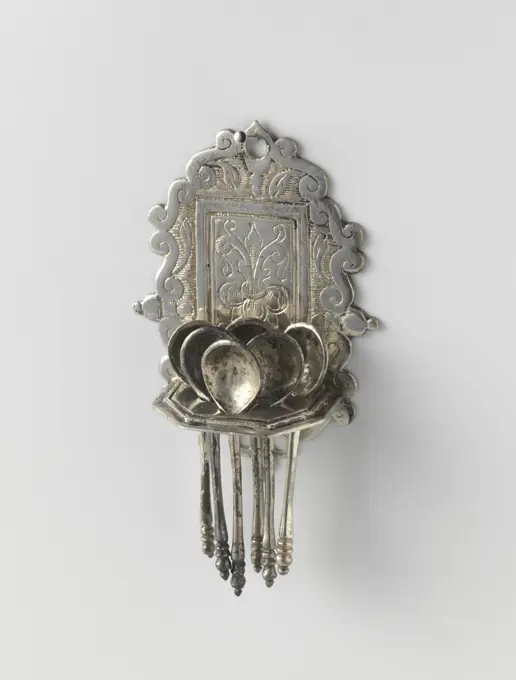
Spoon rack with six spoons, anonymous, c. 1600 - c. 1699 Spoon rack with six spoons. An ornament is engraved in the plate of the spoon rack. The spoons are round with a stem that is profiled at the end and ends in a button. The spoon rack is not marked. Some spoons are marked with a Zwijnskop (cf. inventory no. BK-NM-111177-236). Amsterdam silver (metal) Spoon rack with six spoons. An ornament is engraved in the plate of the spoon rack. The spoons are round with a stem that is profiled at the end and ends in a button. The spoon rack is not marked. Some spoons are marked with a Zwijnskop (cf. inventory no. BK-NM-111177-236). Amsterdam silver (metal)
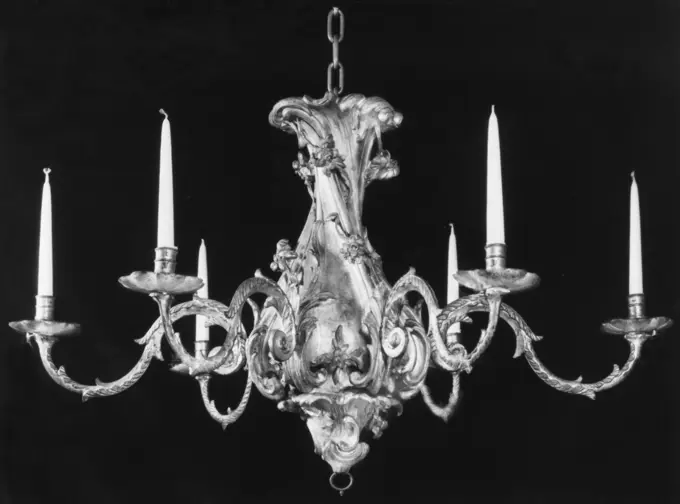
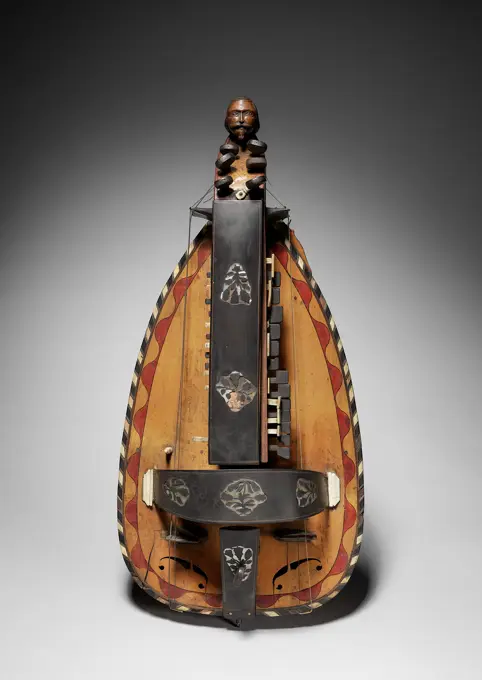
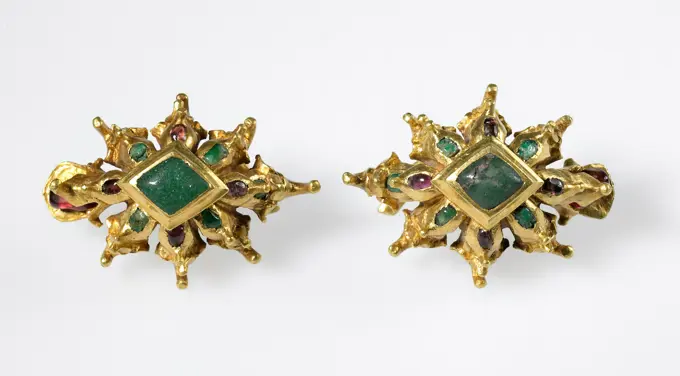
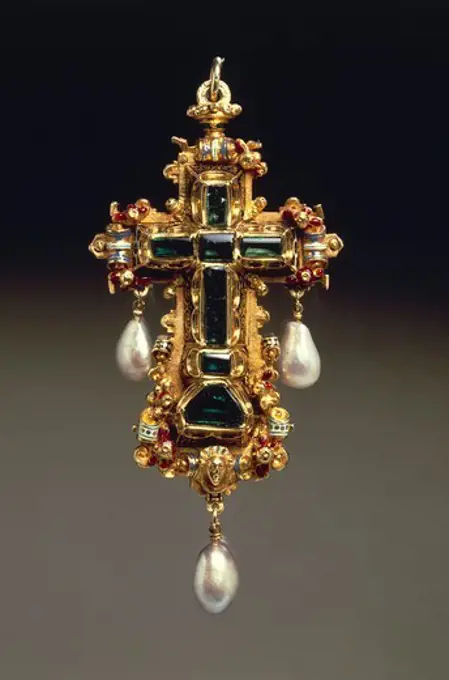
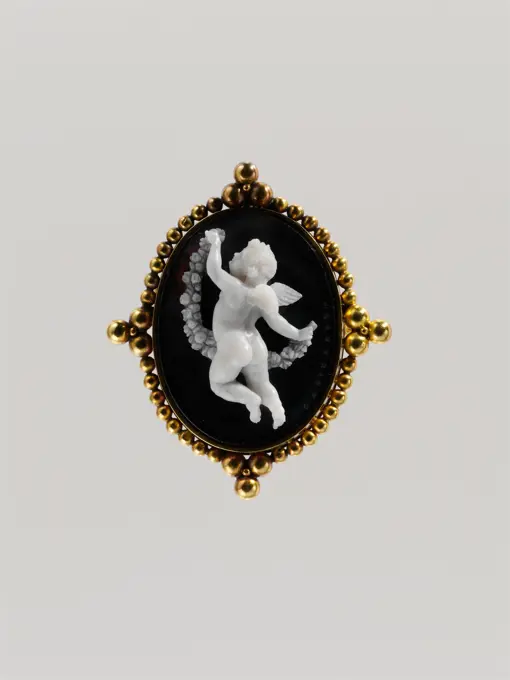
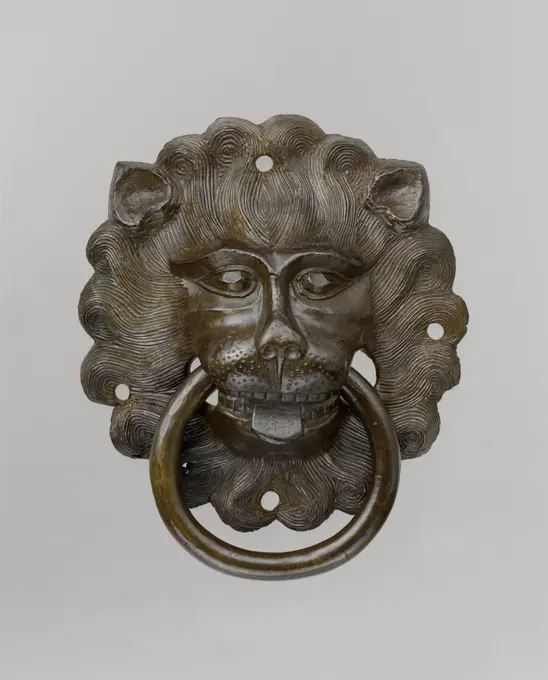
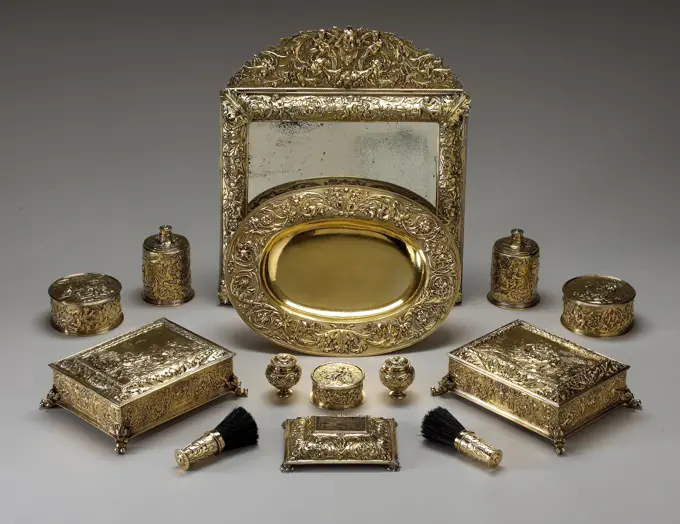
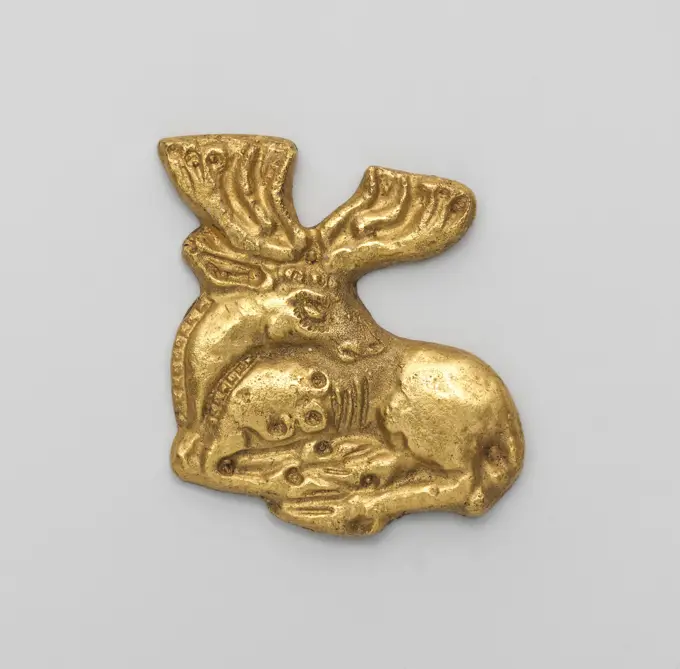
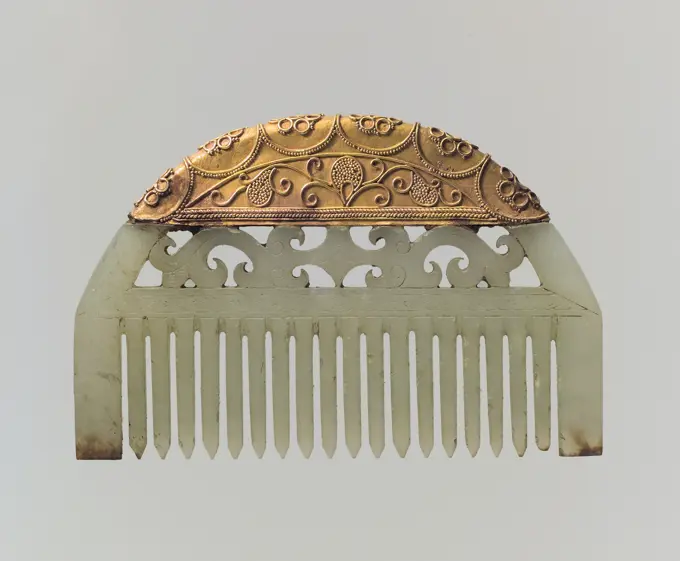
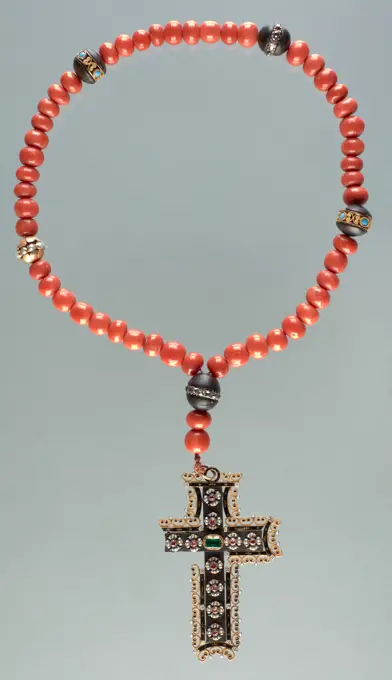
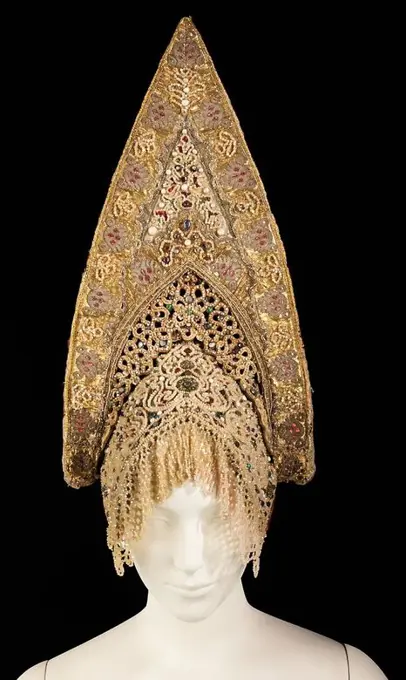
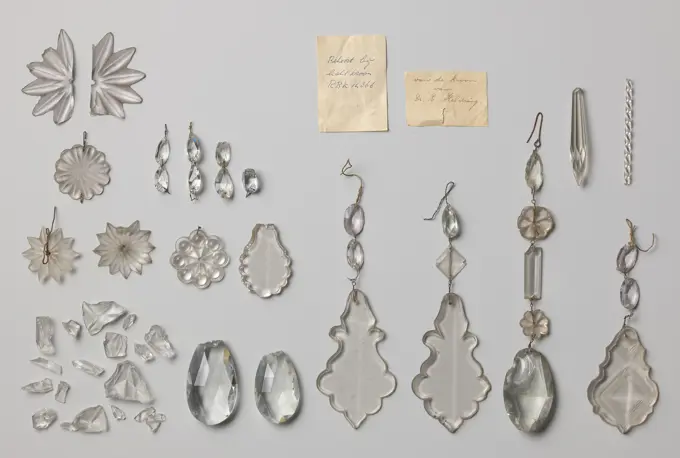
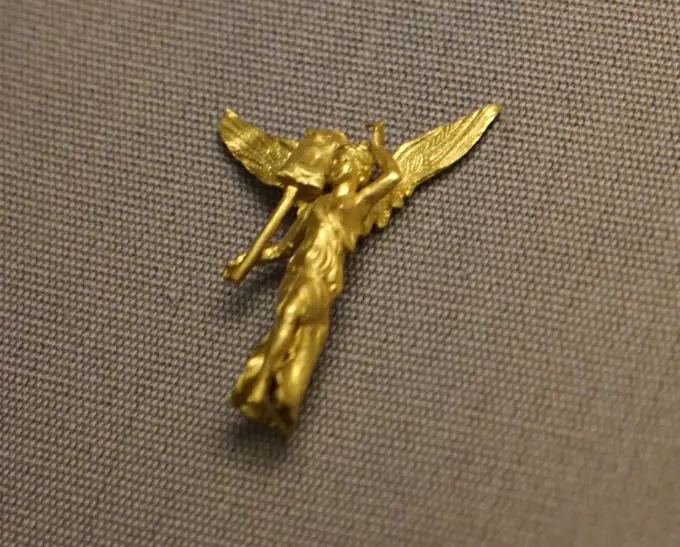
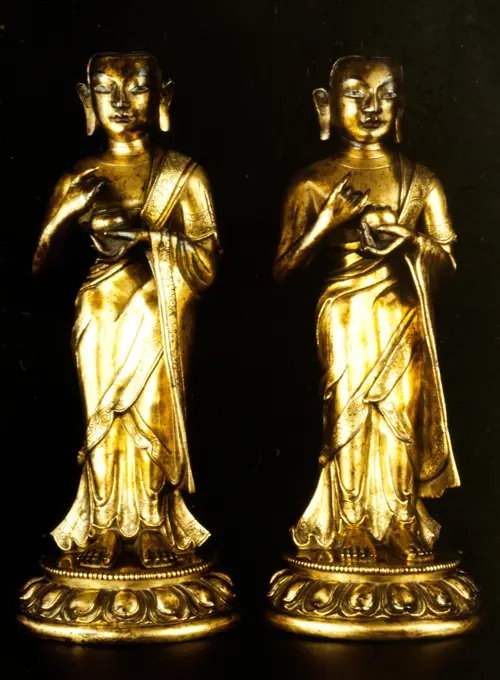
Pendant in the shape of a branch of blue rain, Georges Fouquet, c. 1908 - c. 1910 Pendant of gold, pearls and email, in the form of a branch of blue rain. Made in Art Nouveau style. Paris gold (metal). pearl. Pendant of gold, pearls and email, in the form of a branch of blue rain. Made in Art Nouveau style. Paris gold (metal). pearl.Watch. Culture: French, Paris. Dimensions: Diameter (case): 1 1/2 in. (3.8 cm); Diameter (back plate): 1 3/16 in. (3 cm). Maker: Watchmaker: Daniel Vauchez (French, born 1716, active 1767-90). Date: ca. 1783-90.French enthusiasm for ballooning was sparked by the June 4, 1783, ascent of a hot air balloon created by Joseph and Étienne Montgolfier. Four months later, a Montgolfier balloon with a crew of a sheep, a duck, and a rooster was launched at Versailles in the presence of Louis XVI (1754-1793) and Marie Antoinette (1755-1793). The first human flight, which took place on November 21 that year, was witnessed by Benjamin Franklin, among others. The Museum's watch is a typical novelty, and it demonstrates how greatly early attempts at human flight captured the French imagination. In the enamel a balloon is launched by three men, one carrying burning straw with which to ignite the flame that heated the air in the balloon. Museum: Metropolitan Museum of Art, New York, USA.Willem V, Prince of Oranje -Nassau, Anonymous, 1787 - 1795  Willem V, Prince of Oranje-Nassau, one-sided silver open-up carrying sign with eight-pointed rays of jet to Sea Toog. Front: breastpiece man inside edge of cubes such as precious stones. Reverse: Blanco. Netherlands silver (metal) soldering historical personsMedallion with "Health is Restored". Wedgwood Manufactory; England, founded 1759. Date: 1775-1799. Dimensions: 8.6 × 5.1 × 1 cm (3 3/8 × 2 × 3/8 in.); frame width: 0.6 cm (1/4 in.). Stoneware (jasperware). Origin: Burslem. Museum: The Chicago Art Institute, Chicago, USA.Chandelier ca. 1765 British. Chandelier. British. ca. 1765. Gilt wood, metal. Woodwork-FurnitureMountSilversmith's art, Italy, 17th century. Giovan Domenico Vinaccia (1625-1695), Silver centerpiece with flower shaped decoration, 1671.Vielle à roue, 1700s. Pajot of Jánzat (French). overall: 73.7 x 33 cm (29 x 13 in.). The instrumentalist could play melodies on the keyboard that presses tangents against one or more strings. Often there are also multiple drone strings, which give a constant pitch accompaniment to the melody, resulting in a sound similar to that of bagpipes.This type of instrument is depicted in several artworks in the CMA collection: 1924.656, 2008.34.2, 1960.20.The vielle à roue is also related to the Swedish nyckelharpa, which was featured on the CMA performing arts series in 2017 played by Emilia Amper.Pair of Earrings, 8th-10th century, 2-3/8 x 1-5/8 x 1-3/4 in. (6.0 x 4.1 x 4.4 cm) (each), Gold, stone, glass, Vietnam, 8th-10th centuryGoldsmith's art, Germany, 16th century. Pendant reliquary cross, front side with cabochon cut emeralds, enamel and pearls.Amorino with a Garland ca. 1860-70 Giovanni Antonio Girardet. Amorino with a Garland 198616Watch with an Allegory of Motherhood, Jean Antoine Lépine, c. 1760 - c. 1770 jewellery Gold watch. On the closet an enamelled performance of a mother with two children. Paris gold (metal).Lion mask door pull ca. 1425-50 German Door pulls in the form of lion masks were a feature of many medieval churches throughout the Middle Ages. Such pulls functioned not only as decorative door hardware but also as sanctuary rings, symbols of the protection the church offered to those fleeing legal prosecution and other dangers.This bold example was cast in copper alloy, and the radiating locks of hair representing the mane were reinforced with an engraving tool after casting. Stylistic and elemental analyses reveal that this door pull was likely made in the first half of the fifteenth century in Nuremberg, in southern Germany, where prolific workshops also created impressive aquamanilia (water vessels in animal and human form used for washing hands) and other cast objects. It is strikingly close to a pair of door pulls still found on the doors of the Cathedral of Augsburg, in Bavaria, and another closely related example is in the National Gallery of Art in Washington, D.C. This groupMiniature of the Order of St. StanisławINRO, SHOKASAI, 1800-1900 Five-part inro decorated with a Gagaku dancer. Signed "Shokasai". Japan wood (plant material). lacquer (coating) Five-part inro decorated with a Gagaku dancer. Signed "Shokasai". Japan wood (plant material). lacquer (coating)Headdress Ornament 6th-7th century Moche (Loma Negra). Headdress Ornament 313402Beautiful gold Christmas ball, isolated on white background Beautiful gold Christmas ball, isolated on white background Copyright: xZoonar.com/OleksandrxKostiuchenkox 8911441Scent flask, from a toilette service, 1683, William Fowle, English, 1658-1684, 5 9/16 x 3 15/16 x 3 15/16 in. (14.13 x 10 x 10 cm), Vermeil (gilt silver), England, 17th centuryOrnaments (France); silk and metal threads, glass beadsMulti-Plate Helmet of Thirty-One Lames Mongolian or Tibetan possibly 15th-16th centuryPendant (Italy); Made by Antonio Civilotti (Italy); enamel, gold, 24 pearls and 46 diamonds.; Overall: 8.2 x 4.5 cm (3 1/4 x 1 3/4 in.)Reproduction of a Sarmatian plaque in the form of an elk 19th century, after 1st century original Electrotyping is a chemical process used historically to make high quality reproductions of works of art. During the Victorian era, one of the main producers was Elkington & Co. of Birmingham. They were licensed by the South Kensington Museum of London (now the Victoria & Albert Museum) to produce replicas of objects from royal treasuries and museums across Europe. The electrotypes approved by the Department of Science and Art, a British governmental agency, carry Messrs. Elkingtons mark in the form of an official stamp in metal. This modern electrotype is a copy of a gold plaque in the Hermitage Museum, St. Petersburg. The original was probably found in 1864 in the Khokhlach kurgan (burial mound) in the vicinity of Novocherkassk, one of the largest cities of the Don region. It was part of a group of precious objects - a crown, collars, ornaments, cups, flacons or perfume-boxes - known asSilver trophy buckle on leather beltComb China. Comb. China. Jade (nephrite) and gold. Eastern Han dynasty (25-220). JadeSpice Box Shaped as a Skull 1600-1699 Germany. A fitting accessory for an eerie end, this tiny macabre pendantóunder an inch tall and wideóis also a rather surprisingly complicated spice box. The miniature spring-loaded button on the top opens the skull to reveal two sections, the back one divided into four compartments, and a panel engraved with the names of four aromatics Negal (cloves), Muscha (nutmeg), Canel (cinnamon) and Schlag (schlagwasser, a mixture of brandy, primrose petals, and violets, thought to be a cardiac stimulant). The openings for the eye sockets, nasal passages, and missing teeth are not just anatomically correct; these perforations would have allowed the fragrances of the secreted spices to waft out and work their medicinal magic.. Silver gilt .Clip.  Manufacturer: Eisenberg & Sons, Chicago, active 1914-77Carved intagliogemstoneMEDALLA DE MARFIL Y ESMALTES ENGARZADA EN ORO CON BRILLANTES.Przeszo Przyszoci unknownHeaddress. Culture: Russian. Date: fourth quarter 18th century.This object is from the collection of Natalia de Shabelsky (1841-1905), a Russian noblewoman compelled to preserve what she perceived as the vanishing folk art traditions of her native country. Traveling extensively throughout Great Russia, she collected many fine examples of textile art of the wealthy peasant class. From the 1870s until moving to France in 1902, Shabelsky amassed a large collection of intricately embroidered hand-woven household textiles and opulent festival garments with rich decoration and elaborate motifs. The Brooklyn Museum holdings include many fine examples including the majority of the garments. Portions of Shabelsky's collection are also housed at the Museum of Fine Arts, Boston, the Cleveland Art Museum, and the Russian Museum of Ethnography in St. Petersburg.Peter the Great's (1672-1725) attempts to Westernize Russia were partially manifested in changes to the traditional costume of the court.Pendant in the form of a ship. Culture: French, Paris. Dimensions: Overall: 4 3/8 × 3 3/4 in. (11.1 × 9.5 cm). Maker: Alfred André (French, 1839-1919). Date: probably late 19th century. Museum: Metropolitan Museum of Art, New York, USA.Ottoman art example of Mother of Pearl inlays from IstanbulCORONA DE ISABEL LA CATOLICA - SIGLO XV. Location: CATEDRAL-CAPILLA REAL-INTERIOR. GRANADA. SPAIN.Pendant with monogram Pendant; silver, gold, enamel, glassCORONA DE PLATA REPUJADA CON PIEDRAS FALSAS - SIGLO XVIII. Location: CONVENTO DE SAN CLEMENTE-MUSEO. Toledo. SPAIN.Clock ornament 18th century French. Clock ornament 189948 French, Clock ornament, 18th century, Gilt bronze, Overall (confirmed): 4 3/4  5 1/4  7/8 in. (12.1  13.3  2.2 cm). The Metropolitan Museum of Art, New York. Gift of J. Pierpont Morgan, 1906 (07.225.510.199)Cup and saucer. Funnel shaped tea cup on a dish. The dish has an upright edge, is unfamiled and marked: mt. = Foot 430. The tea cup has been engraved along the top edge and has not been marked. The head and saucer are stored as part of a tea set (BK-NM-11177-142). The tea service has a total of twelve head and saucers that are equal to this instance.Diamond tiara and necklace. Chromolithograph from Edwin Streeter's Gems Catalog, Bond Street, London, circa 1895.Badge of "Zum Goldenen Apfel", Dresden;  around 1806 (1900-00-00-1900-00-00); the Muse of the National Museum in Warsaw was downloaded from the Muse; Metallurgical / casting, painting / painting, metallurgical / Galvanization / Z "assessment; inorganic material / metal / metal stop / mosa ; 207783 MNW; all rights are reserved.Apple (iconography), Masonic Lodge, Freemasonry, FreemasonryPendant 17th-18th century Russian or Spanish. Pendant 197153Mount, bronze (gilt), Architectural or funiture cornice with lapped tongue decoration of acanthus corners over frieze of pendant tongues over cut-out with laurel decoration, France, early 19th century, metalwork, Decorative Arts, MountEtruscan Jewelry, Designs & Patterns from HistoryCross Pendant 17th-19th century Philippines. Cross Pendant 40581Workshop of the Miseroni () / 'Rock crystal boat with a dragon, two fantastical creatures and wheels'. Ca. 1610. Copper alloy, Rock crystal / Hyaline quartz, Enamel, Gold, Silver-gilt. Museum: Museo del Prado, Madrid, España. Author: TALLER DE LOS MISERONI.Glass Horning with a Chandelier, Anonymous, 1785 - 1800 Glass horing with a chandelier. Northern Netherlands (possibly)Netherlands (possibly) glass. iron (metal) gilding Glass horing with a chandelier. Northern Netherlands (possibly)Netherlands (possibly) glass. iron (metal) gildingGold earring shaped in the form of a sirenLohan, one of a pair, 18th century, 10 3/4 x 4 1/4in. (27.3 x 10.8cm), Gilt bronze, Tibet, 18th century