Ornate Decorative Metalwork

Exquisite metalwork pieces featuring intricate designs, including book clasps and decorative mounts, showcasing artistry from 17th-century Italy.

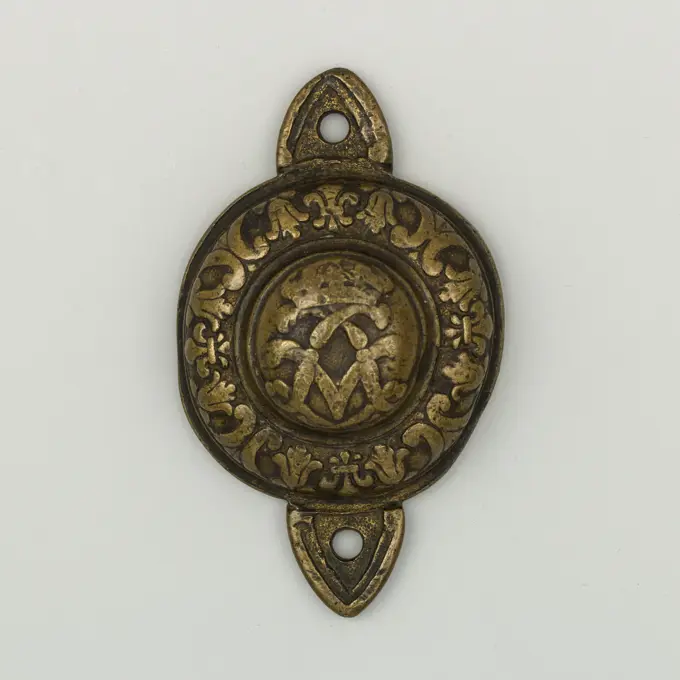
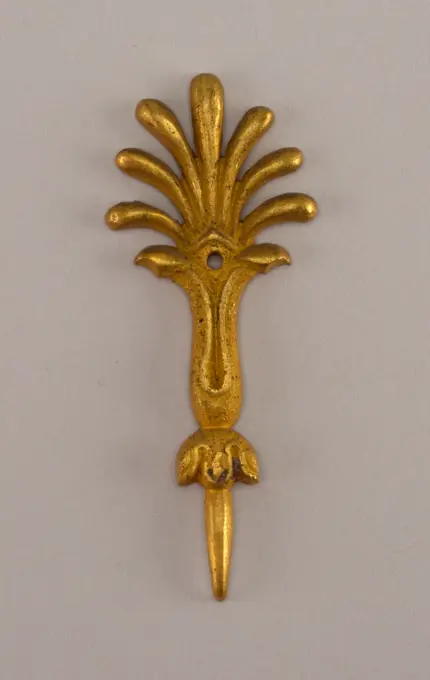
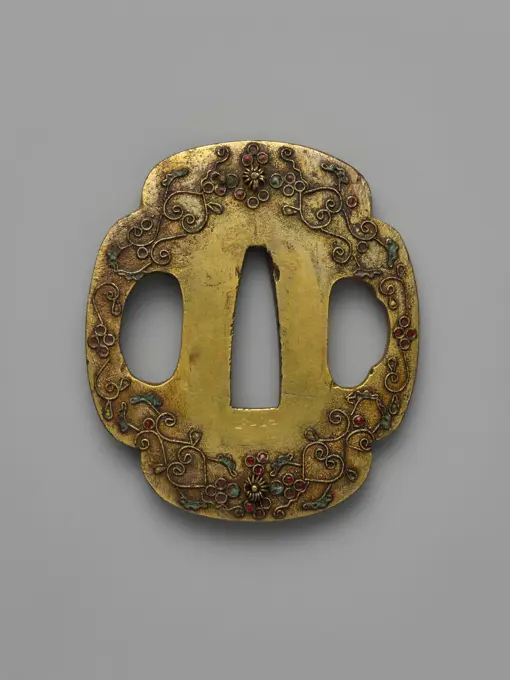
Escutcheon; bronze, gilt
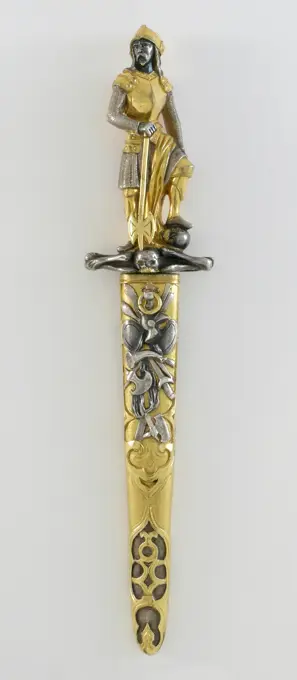
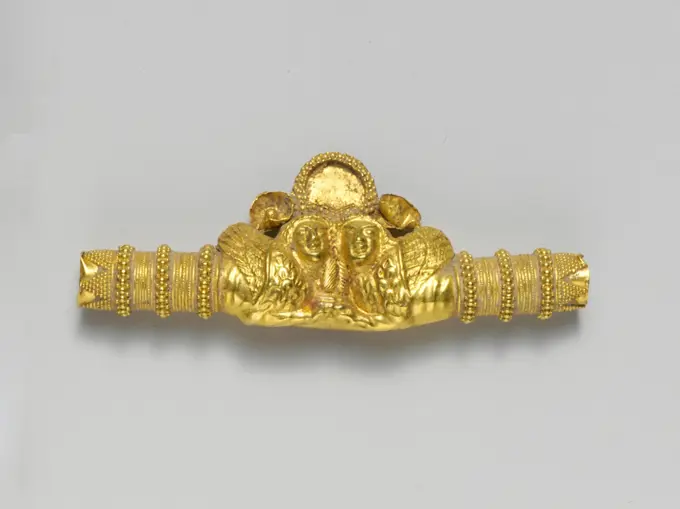
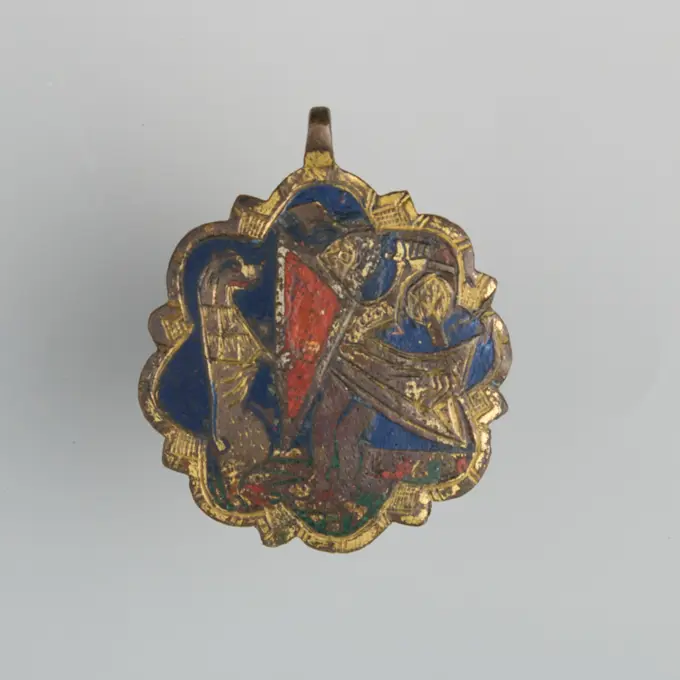
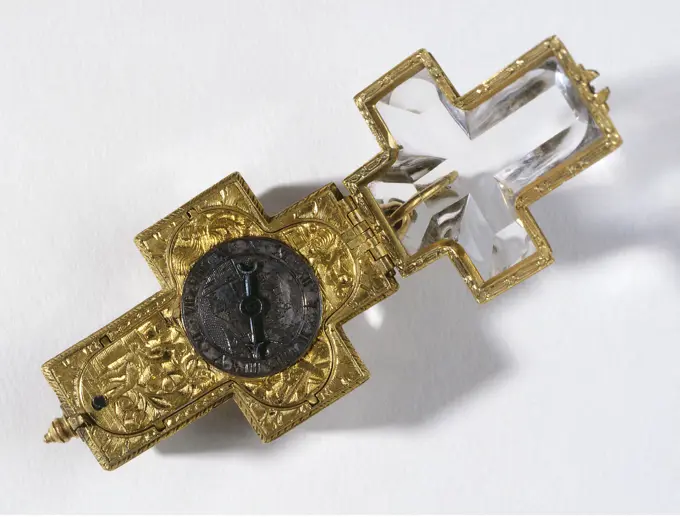
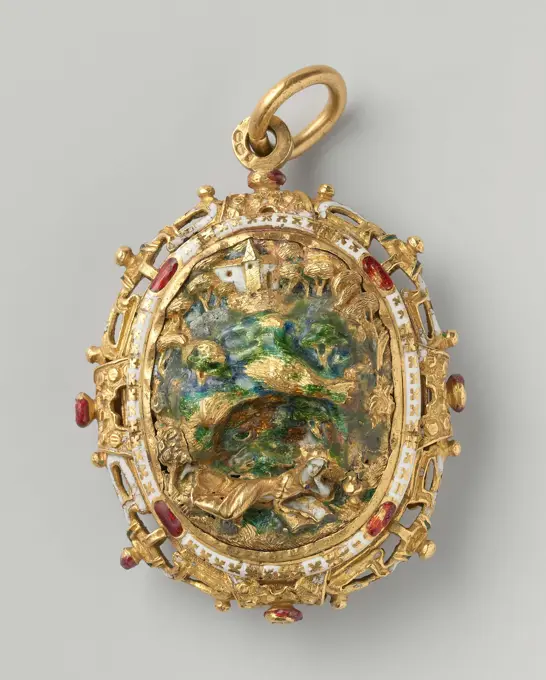
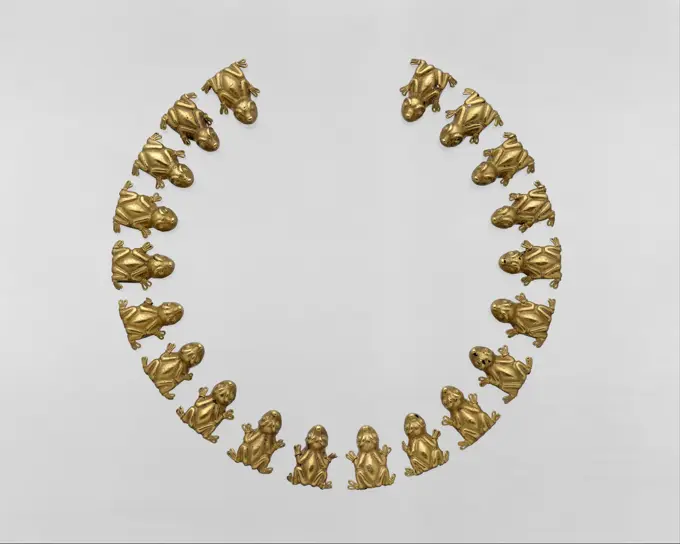
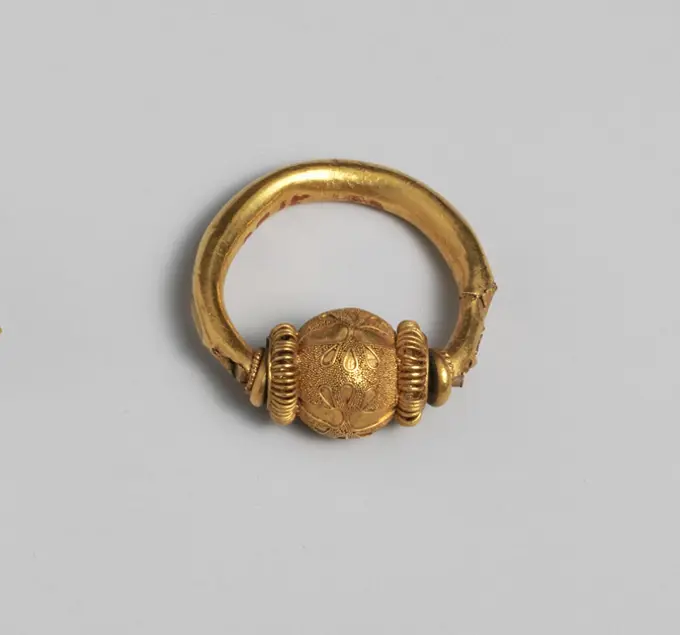
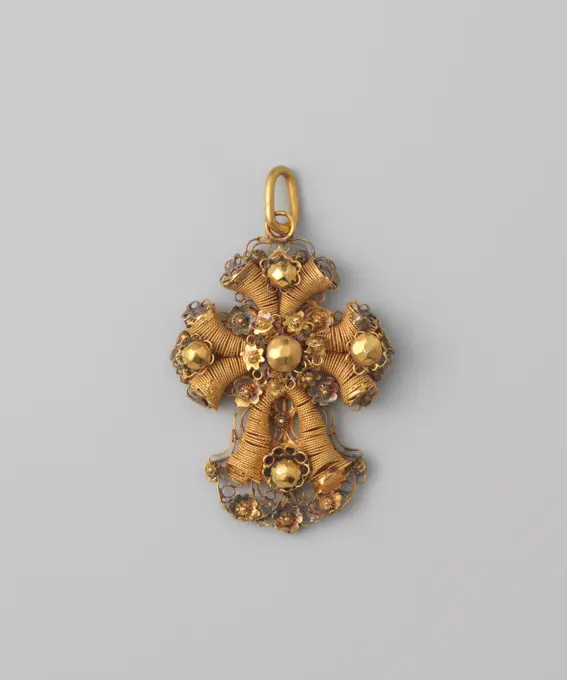
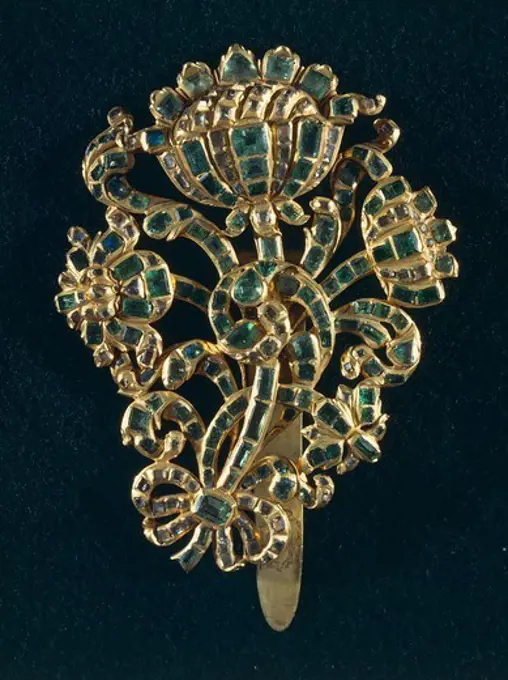
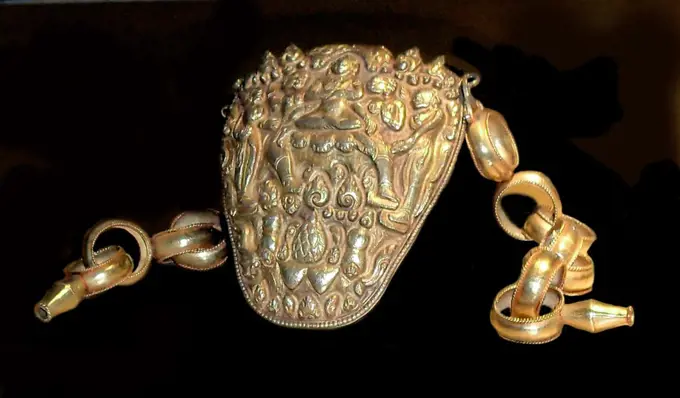
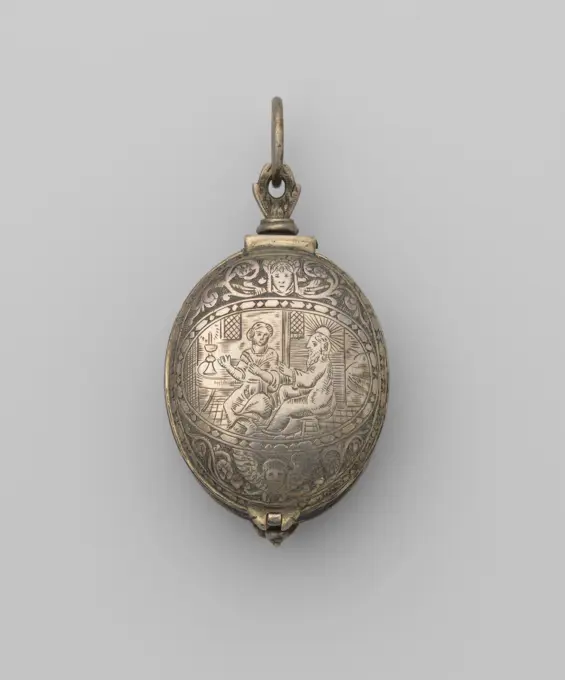
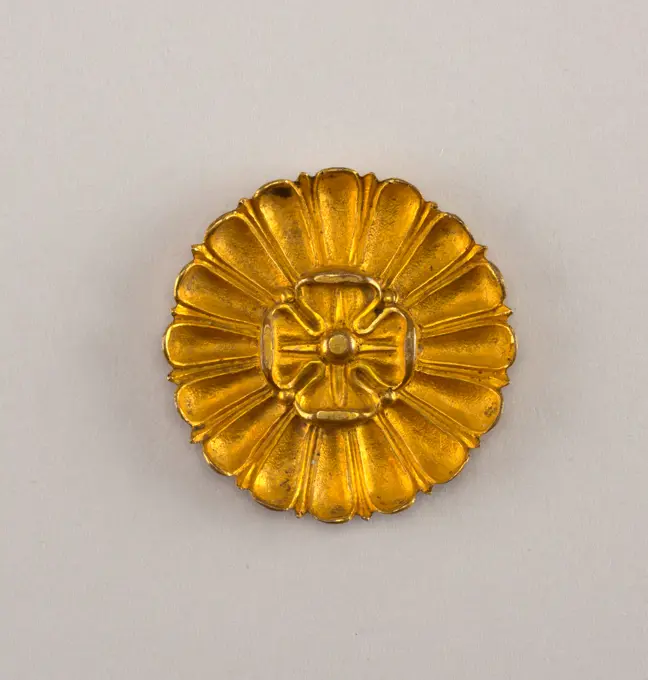
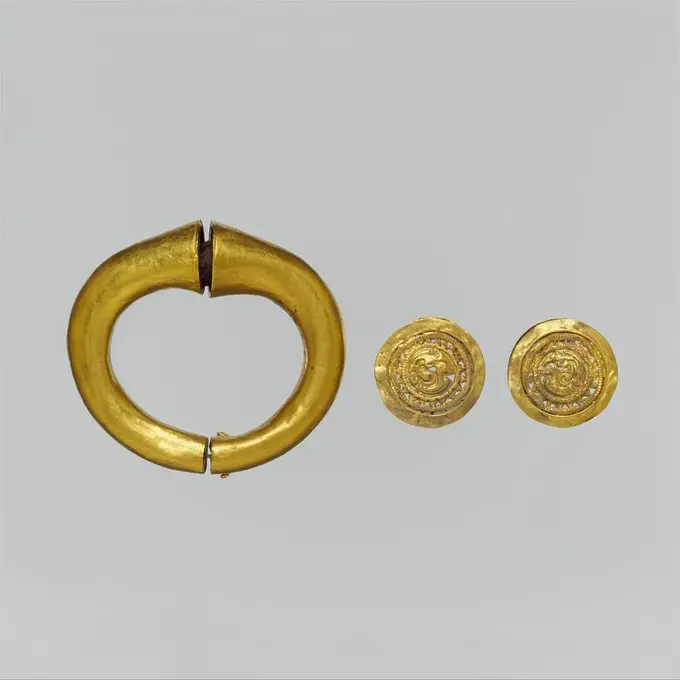
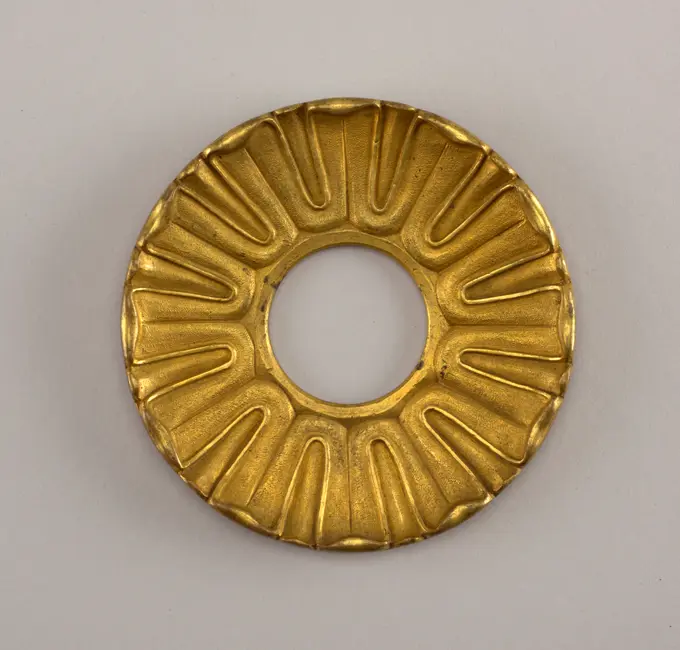
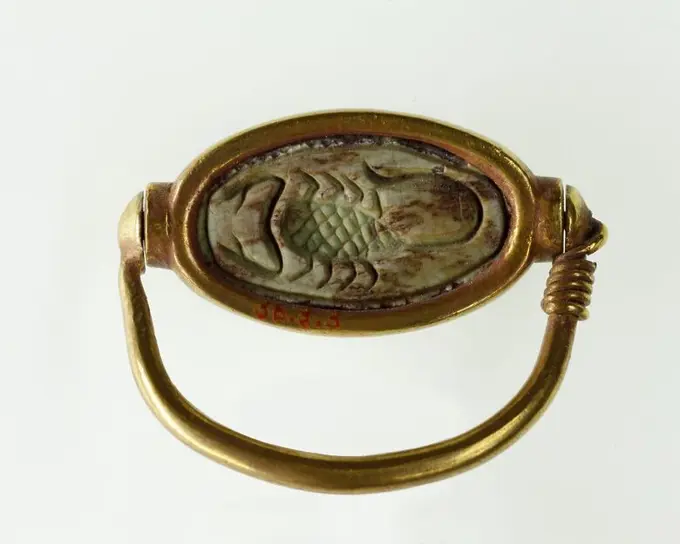
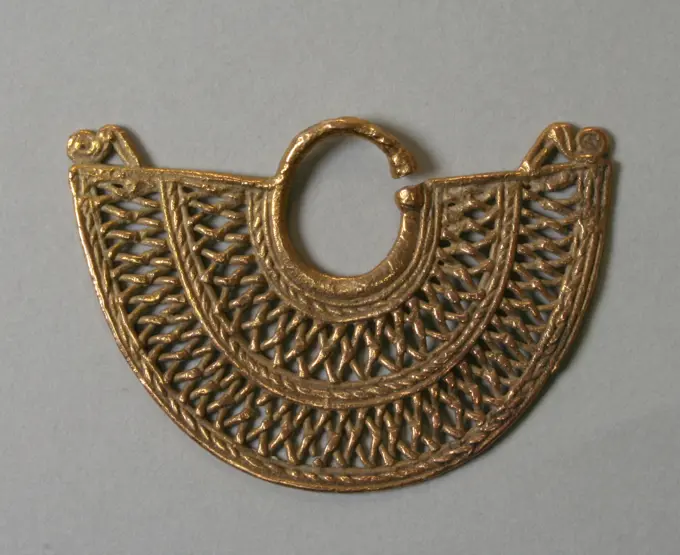
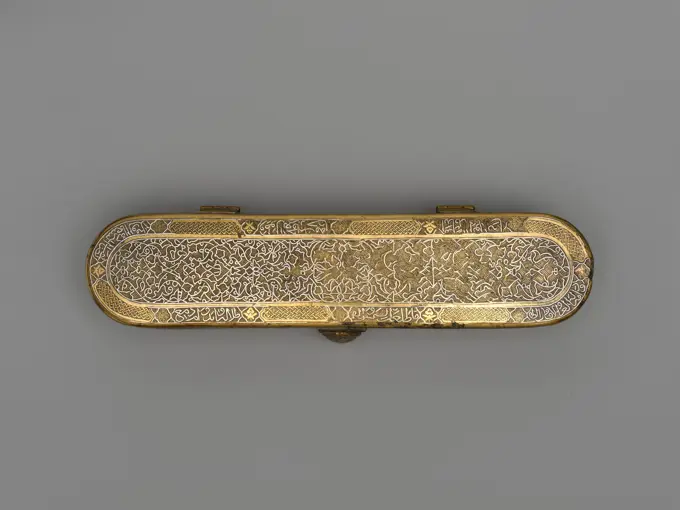
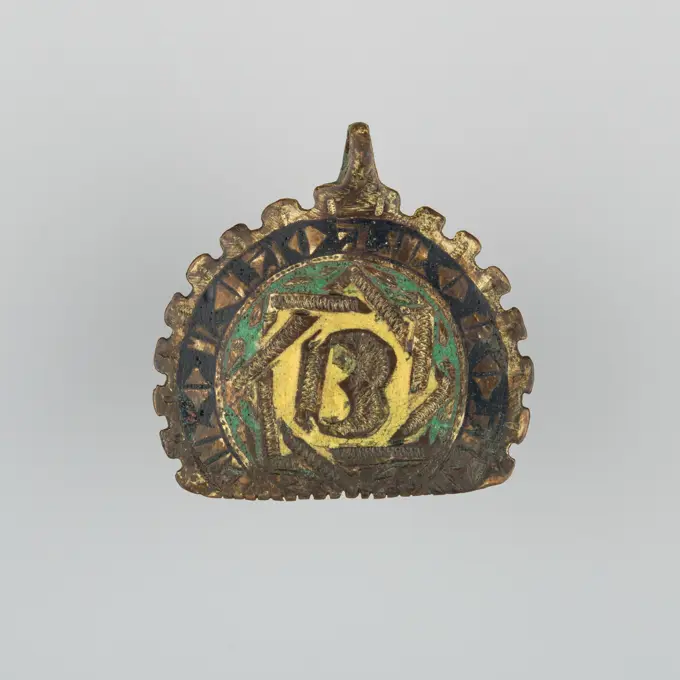
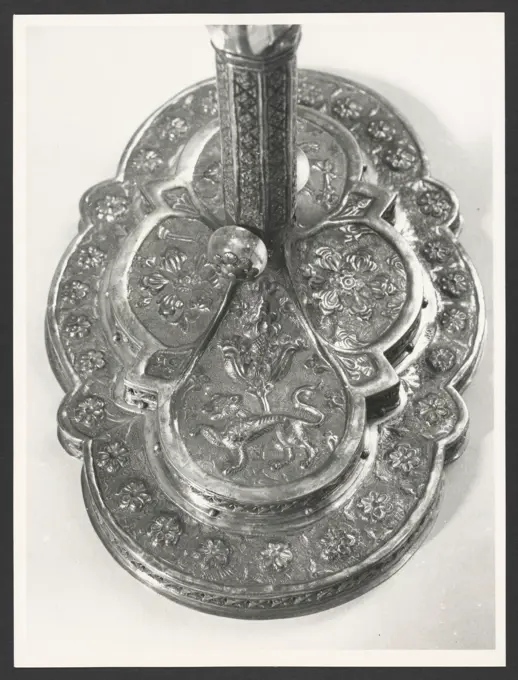
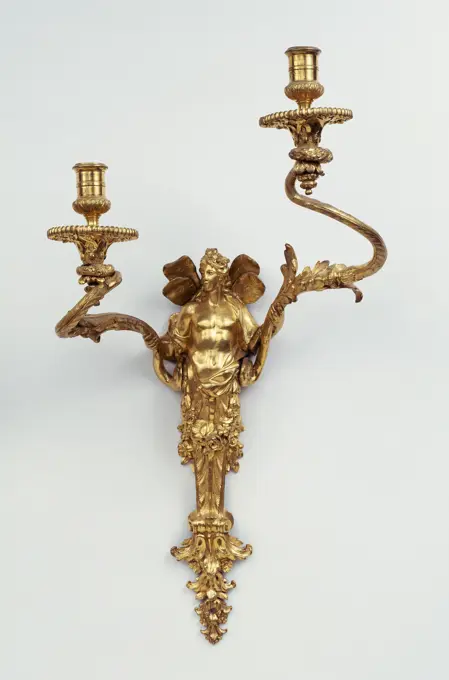
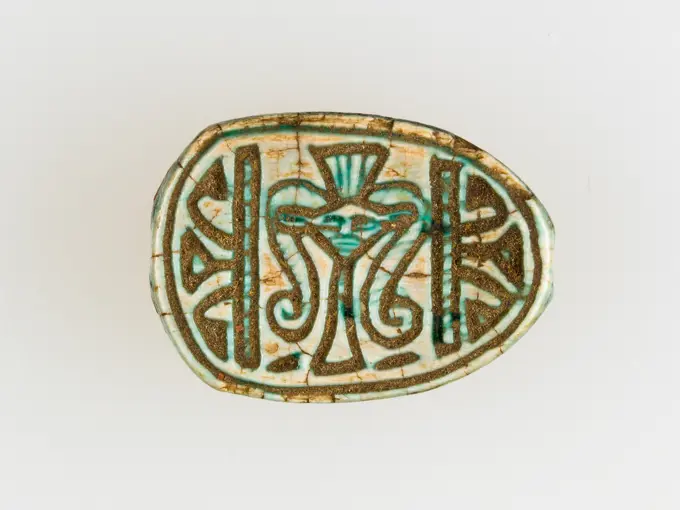
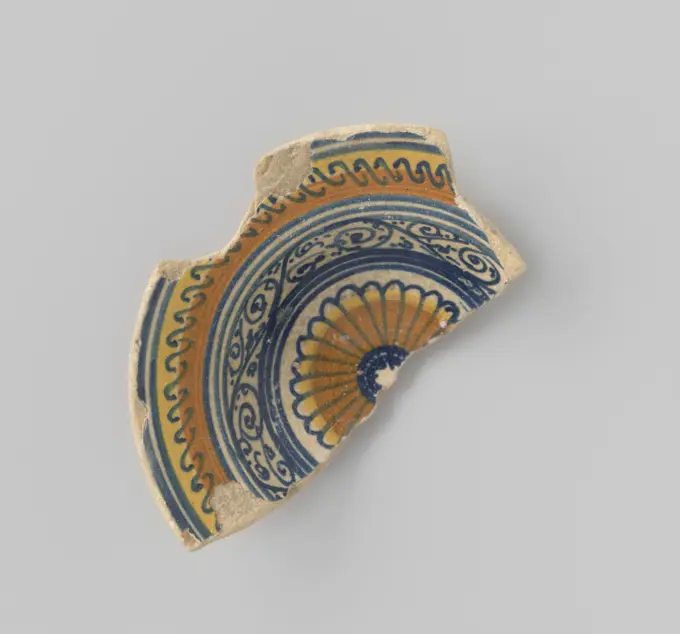
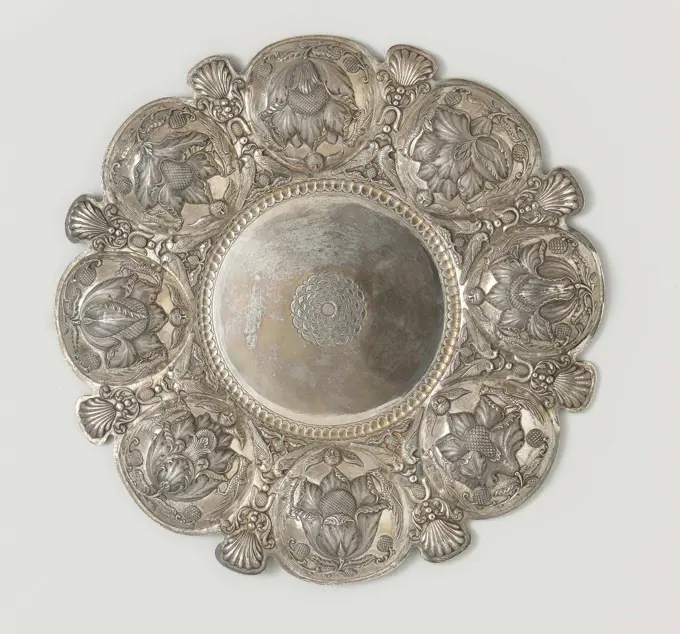
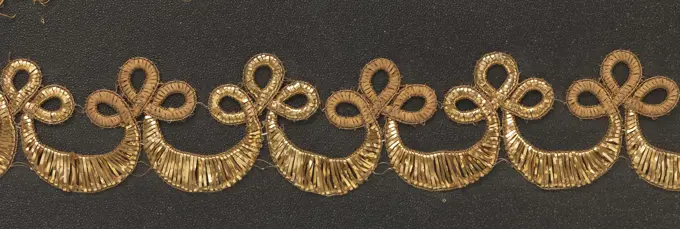
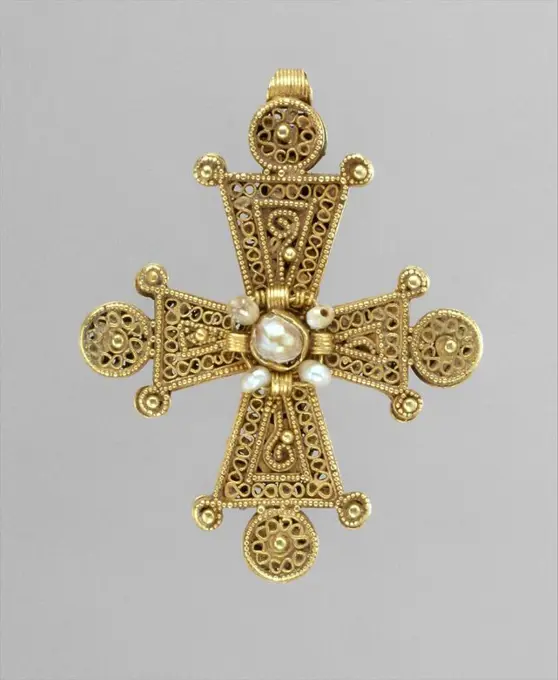
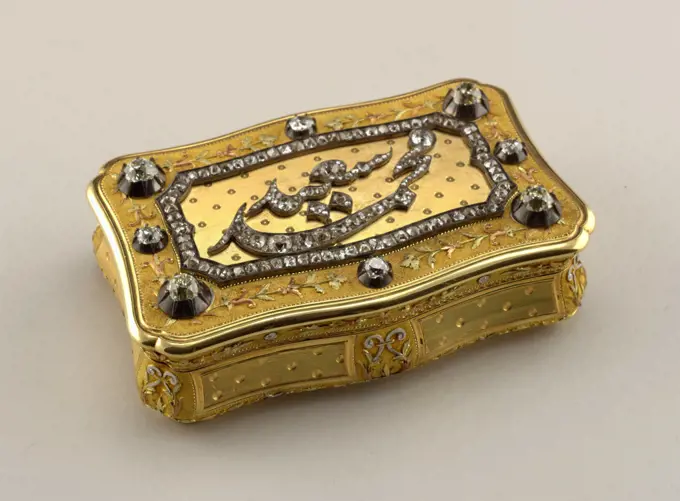
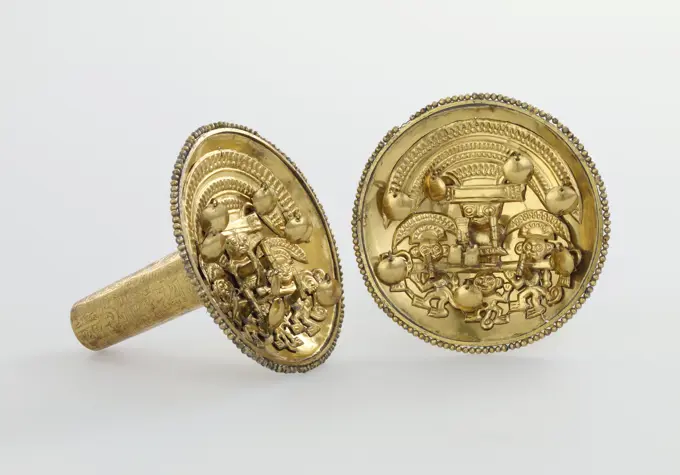
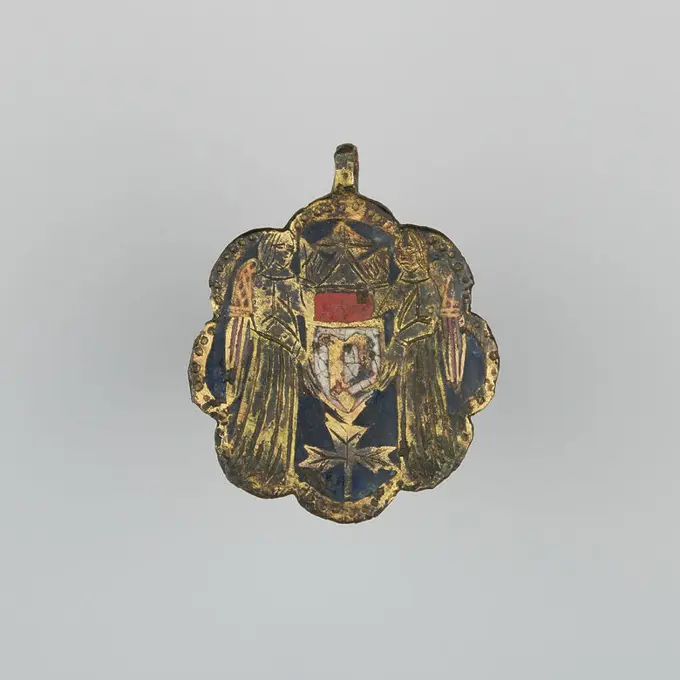
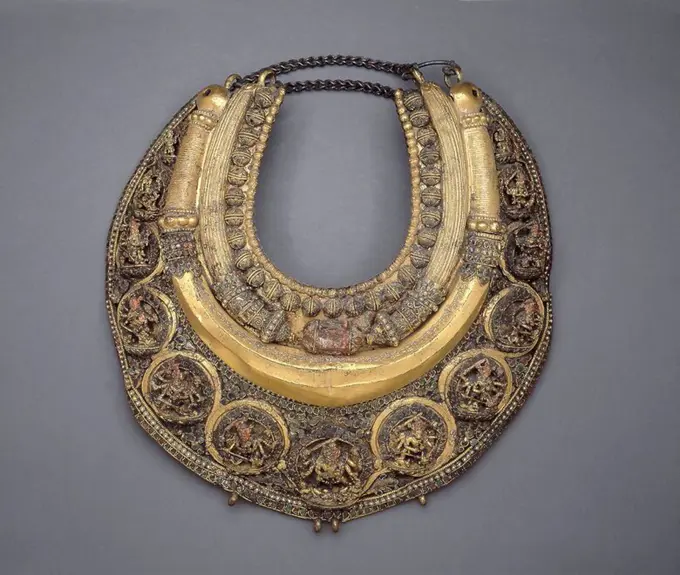
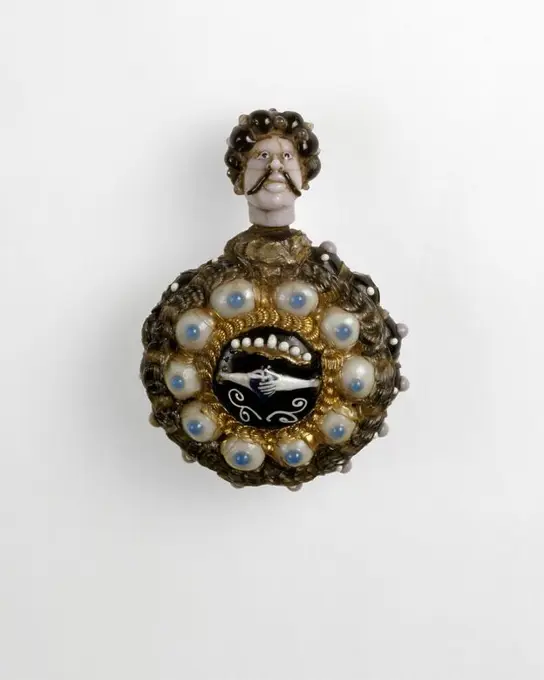
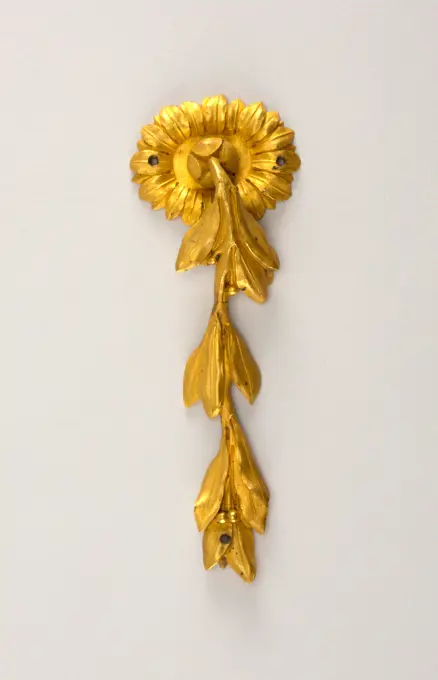
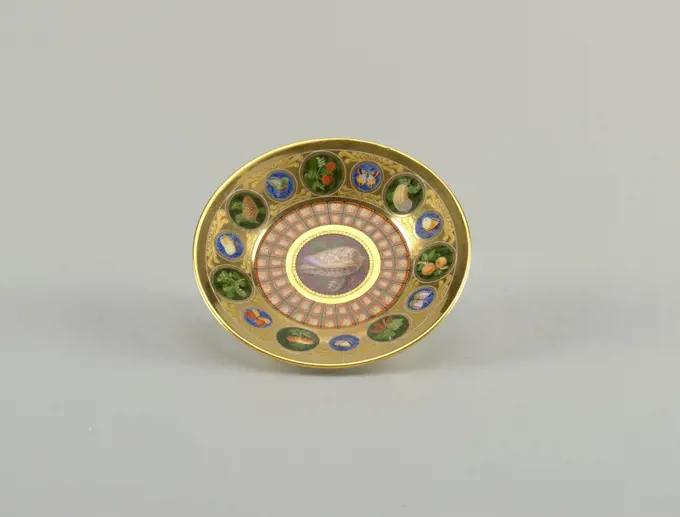
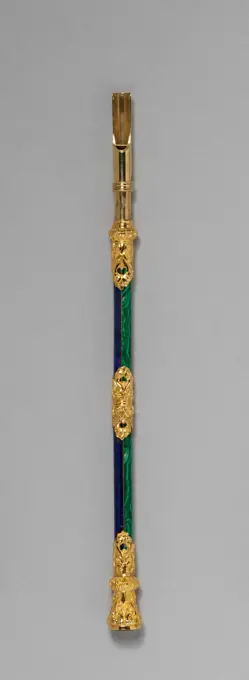
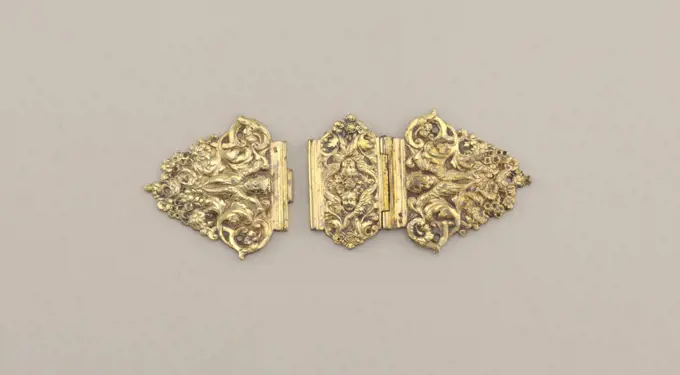
Book clasp, Gilt silver, Two hinged parts of triangular clasp, relief decorated with scroll and openwork and putto head with wings; single piece identical to hinged part., probably Italy, probably 17th century, metalwork, Decorative Arts, Book claspCapitalMountClasp, DraperyMountMount; L x W x D: 34 x 16 cm (13 3/8 x 6 5/16 in.)Dagger. Felicie de Fauveau (Italy, Florence, 1801-1886, active France 1824-1832). France, circa 1845. Arms and Armor; daggers. Silvered and gilt bronze, and steelEscutcheon; bronze, giltOrnament in the Shape of a Peacock, 1600s-1700s. Nepal, Kathmandu Valley. Gold with jewels; overall: 3.4 cm (1 5/16 in.).Earring. Iran, first half of 11th century. Jewelry and Adornments; earrings. Gold, fabricated entirely from sheet, wire and granules. Church lock of silver, with ornament. Signature: PosthoornSaddle Steels (Front three piece) Made 1500-1575 Milan. Chivalryówith its connotation of the knightly idealówas intimately connected with the horse (cheval in French). A knight took care to protect his mount, on which he was dependent for the mobility and speed required in both attack and retreat. In Roman times, some heavy cavalry used armor made of iron or bronze scales to protect their horses. From the twelth century on, knights covered their steeds in bands of iron mail (a network of interlocking rings). By the fifteenth century, full-plate armors were not uncommon. This shaffron, or headpiece, is etched in gilt bands with decoration on a finely dotted ground. Riveted between the eyes is an elongated conical spike, perhaps inspired by the horn of the mythical unicorn. A manifestation of great power and wealth, the shaffron has been valued for centuries as an object of beauty, not just as a tool of warfare and sport.. Steel with gilding .Bead, control 6th century B.C. Etruscan From a necklace; two female heads, or in the form of two sphinxes ending at the waist in cylinders decorated with filigree, beaded wire and granulation surmounted by a disc and two flowers. The hair is worked at the back, which is otherwise left plain.. Bead, control. Etruscan. 6th century B.C.. Gold. Archaic. Gold and SilverBadge or Harness Pendant 13th century () Spanish Heraldry, or coat-of-arms, were vitally important in Europe throughout the Middle Ages and the Renaissance. Heraldic emblems were used to identify noble families, cities, regions, and even countries. In addition to being displayed on shields and flags, heraldry was incorporated into architectural decoration on the interior and the exterior of buildings, on furniture, works of art, clothing, and horse equipment. Harness pendants, like this example, would have been attached to a headstall, bridle, or other straps making up the tack of a horse ridden by a nobleman or noblewoman, or a member of their household. Many harness pendants also have decoration that is simply ornamental, or have symbols that are not specifically heraldic in nature.. Badge or Harness Pendant. Spanish. 13th century (). Copper, gold, enamel. Miscellaneous-BadgesARRACADA DE ORO DE MADRIGALEJO. ANVERSO. PERIODO TARTESICO. JOYERIA. (DEPOSITO: MUSEO ARQUEOLOGICO NACIONAL).Frame, Medallion 18th century () British. Frame, Medallion. British. 18th century (). Gilt-copper alloy. Made in Egypt. MetalworkBit Boss first half 18th century French The rim of this bit boss is decorated with four fleurs-de-lis. At its center are the two interlaced Ls of King Louis XIV (r. 1643-1715) or, more likely, King Louis XV (r. 1715-1774), crowned at the top. What looks like a letter V behind the monogram is actually a very simplified representation of the two crossed palms often seen on this kind of composition.This symbolism suggests that this boss decorated the side of a bit worn by a cavalry or a coach horse used by the French Royal Household.. Bit Boss. French. first half 18th century. Copper alloy. Equestrian Equipment-BitsFurniture Mount, Gilt bronze, Quiver of arrows, torch with flame crossed with arrows, and sword sheath in garland of flowers, France, ca. 1780, metalwork, Decorative Arts, Furniture MountZacharie Fonneveau. Cross -shaped watch, La Rochelle, between 1570 and 1610 (overview open on the dial side). Museum of Fine Arts of the City of Paris, Petit Palais. 26359-12 Dial, cross, watchmaking, La Rochelle, watch, openMount. Pendant of gold and email, with the alleging Mary Magdalene in the cave.Mechanical watch ca. 1710 British, London. Mechanical watch 194027Door or gear fitting;  XVII-XVIII century (1701-00-00-1800-00-00);Necklace Ornaments, Frogs 15th-early 16th century Aztec or Mixtec Necklaces made of numerous small beads often in the form of animals, including shells, turtles, and frogs, are among the many types of gold ornaments worn by Aztec nobility. These creatures are all associated with water and rain and the sustenance it assures. Fertility connotations of frogs and turtles are further supported by the fact that these animals lay thousands of eggs and assume a squatting position similar to that of women in childbirth.The ornaments were cast individually by the lost-wax process, each with its own separate clay mold which was broken after casting to release the object, explaining the slight differences in size and detail. These ornaments are said to have been found in the southern Mexico state of Chiapas.Ancient Mexican gold objects are usually attributed to the Mixtec people, contemporaries of the Aztecs in southern Mexico. Important burials in the state of Oaxaca particularly have yielded theMountGold ring 4th-3rd century B.C. Etruscan Revolving ball with filigree decoration.. Gold ring. Etruscan. 4th-3rd century B.C.. Gold. Classical. Gold and SilverCommemorative medal of the 60th anniversary of the reign of Franciszek Józef I unknownLoop . Flowers and leaves at the top and bottom, simple strip on the sides.Earring, trumpet-shaped 5th-3rd century B.C. Etruscan. Earring, trumpet-shaped. Etruscan. 5th-3rd century B.C.. Gold. Gold and SilverMedallion, FloralTab, 600s. Byzantium, Avaric, 7th century. Gold; overall: 5.8 x 2 cm (2 5/16 x 13/16 in.).MountBrooch - Oval claps with carnelian plaque. unknown, craftsmanPendant in the shape of a cross formed by horns that end in a rosette ,, 1840 - 1850 Gold pendant in the shape of a cross. The beams of the cross are formed by two horns of gold thread. The mouth of these horns is closed by a rosette. A large rosette in the heart of the cross. Marked: oak leaf. Netherlands gold (metal) filigree Gold pendant in the shape of a cross. The beams of the cross are formed by two horns of gold thread. The mouth of these horns is closed by a rosette. A large rosette in the heart of the cross. Marked: oak leaf. Netherlands gold (metal) filigreeBliżej Kultury unknown labelGoldsmith's art, Italy, 18th century. Gold clasp set with emeralds.Polish highlanders' decorative claspLoop.Woman's Amulet Box (Ga'u) 1695-1705 Tibet. Silver and turquoise .Gold chastity belt from the Moluccas Islands in Indonesia. Early 20th centuryPlaque 6th-8th century Conte (). Plaque 312696Earring-hook type with pendant Roman. Earring-hook type with pendant 243387MountBuckle dated 1500 French. Buckle. French. dated 1500. Bronze. Miscellaneous-Buckles & OrnamentWoman's Fixed Fan. England, circa 1740. Costumes; Accessories. Silk plain weave with straw embroidery and woodSilver watch, oval, boudier, c. 1800 - c. 1900 Oval silver watch with a quoted dial. The cabinet is engraved with Christ with Mary and the Merciful Samaritan. The watch is a follow -up of an early 17th century watch. Paris silver (metal) Oval silver watch with a quoted dial. The cabinet is engraved with Christ with Mary and the Merciful Samaritan. The watch is a follow -up of an early 17th century watch. Paris silver (metal)RosetteCommemorative badge of the Polish Technician Association in Warsaw. Oval tsuba with a cut-away decoration of two dragons between stylized tendrils on either side of a flaming jewel; Around the central opening of European characters: "Rdam's e-Tanky".Pair of Ear Plugs with Hamsas (Wild Geese). Culture: Pakistan (ancient region of Gandhara). Dimensions: Diam. 11/16 in. (2.7 cm). Date: 1st century. Museum: Metropolitan Museum of Art, New York, USA.Woman's Head in Exotic Headdress, Plated brass, In the shape of a woman's head, dressed in exotic, Egyptian style headdress; she wears long pendant earrings in the shape of obelisks with heiroglyphics, and necklace strung with smaller pendants. Front and reverse decoration identical. Box lid with thumb catch on bottom, hinged on reverse. Striker on bottom of lid., late 19th century, containers, Decorative Arts, Matchsafe, MatchsafeBadge (probably from Horse Harness). Culture: Spanish. Dimensions: H. 3 1/4 in. (8.3 cm); W. 2 3/4 in. (7 cm); Wt. 1.5 oz. (42.5 g). Date: ca. 1400. Museum: Metropolitan Museum of Art, New York, USA.Sword Guard (Tsuba) With the Motif of Chrysanthemums and Arabesques () 19th century Japanese Both sides of this small tant-tsuba show an arabesque karakusa-design with each two small chrysanthemums on both sides that are embedded into an arabesque inlay that features red and blue cloisonné.. Sword Guard (Tsuba) With the Motif of Chrysanthemums and Arabesques (). Japanese. 19th century. Brass, enameled cloisonné (shipp), copper. Sword Furniture-TsubaMountReduction of the Cross of Leopold Sigisbert Hugo "Enamel (metal technique). 1808. Paris, Maison de Victor Hugo. 123534-4Smell bottle, also cachet, of gold and decorated with rocailles and flowers in multi -colored email. Stop in the form of birds. On the cachet a corn sheaf of Kornalijn, Anonymous, c. 1750 Double smell bottle also cachet, made of gold, decorated with rocailles and flowers in multicolored email. The stops have the shape of birds. On the cachet a corn sheaf from Kornalijn. London gold (metal). carnelian Double smell bottle also cachet, made of gold, decorated with rocailles and flowers in multicolored email. The stops have the shape of birds. On the cachet a corn sheaf from Kornalijn. London gold (metal). carnelianFragment, Swag; wood, gildedBobecheSilversmith: Hendrik Vrijman, Silver sugar sprinkle spoon with round, open-worked container, scoop spoon spoon kitchenware silver, sawn Deep round cut-away tray (transversely placed) to back-bent stem with rolled end backside stem (smashed) sugar spreading sprinkle serve sugarSnuff Box, c. 1790-1810. Germany or England. Gold, agate, pearls, enamel;Ring of Hatnefer. Dimensions: Ring: H. 2.1 cm (13/16 in.); W. 2.9 cm (1 1/8 in.); Cowroid: L. 2.1 cm (13/16 in.); W. (with bezel) 2.4 cm (15/16 in.); Th. (with bezel) 0.7 cm (1/4 in.). Dynasty: Dynasty 18, early. Reign: reign of Thutmose II-Early Joint reign. Date: ca. 1492-1473 B.C..In addition to her exceptional heart scarab (36.3.2), Hatnefer was buried with two small scarabs (36.3.5, .6), and two cowroids set in swivel rings (36.3.3, .4). This ring was found on the little finger of Hatnefer's left hand. It has a scorpion inscribed on its base. Museum: Metropolitan Museum of Art, New York, USA.Ear Ornament A.D. 1-1000 Zenú Metalworkers made this ear ornament by lost-wax casting. (For more information on this process, please see Metropolitan Museum of Art 2008.569.13a, b.) The entire piece was designed in wax at one stage, whether created from a pre-existing mold or not (please see Metropolitan Museum of Art 1974.251.59 for further discussion). It has the appearance of filigree, that is, work in metal wire, but these wire-like elements in the design were built in wax and then cast as metal. The object is made of gold or more likely a gold alloy with copper. Coarse, or large, metal grains, in a dendritic or tree-like form, are visible on the surface on both sides, suggesting that the workers pre-heated the mold and the molten metal cooled slowly, facilitating the growth of large grains. This ear ornament is distinctive of the work of Zenú artists, who lived and live today in the Caribbean Lowlands of Colombia. In recent centuries, people in Mompox, in the Zenú region, have beePullInscribed Pen Box 15th century This brass pen box was made in the late fourteenth century but significantly altered by the mid-fifteenth century. The interior decoration of a small-scale pattern of roundels with flying birds and running motifs provides a glimpse into the original decoration of the box. After the exterior surface was burnished to remove this original decoration, new patterns, including a series of interlocking medallions and cartouches and incised lotus blossoms, were set against a cross-hatched background. The inkwell and surrounding insert were added at a yet later date. The inscriptions in thuluth and naskh scripts include poetic verses and good wishes to the owner.. Inscribed Pen Box. 15th century. Brass; engraved and inlaid with silver and gold. Attributed to Iran. MetalMountBadge or Harness Pendant ca. 1400 Spanish Heraldry, or coat-of-arms, were vitally important in Europe throughout the Middle Ages and the Renaissance. Heraldic emblems were used to identify noble families, cities, regions, and even countries. In addition to being displayed on shields and flags, heraldry was incorporated into architectural decoration on the interior and the exterior of buildings, on furniture, works of art, clothing, and horse equipment. Harness pendants, like this example, would have been attached to a headstall, bridle, or other straps making up the tack of a horse ridden by a nobleman or noblewoman, or a member of their household. Many harness pendants also have decoration that is simply ornamental, or have symbols that are not specifically heraldic in nature.. Badge or Harness Pendant. Spanish. ca. 1400. Copper, gold, enamel. Miscellaneous-BadgesTassel 18th century French. Tassel. French. 18th century. Silk and metal thread. Textiles-TrimmingsBadge or Harness Pendant 15th century probably Spanish Heraldry, or coat-of-arms, were vitally important in Europe throughout the Middle Ages and the Renaissance. Heraldic emblems were used to identify noble families, cities, regions, and even countries. In addition to being displayed on shields and flags, heraldry was incorporated into architectural decoration on the interior and the exterior of buildings, on furniture, works of art, clothing, and horse equipment. Harness pendants, like this example, would have been attached to a headstall, bridle, or other straps making up the tack of a horse ridden by a nobleman or noblewoman, or a member of their household. Many harness pendants also have decoration that is simply ornamental, or have symbols that are not specifically heraldic in nature.. Badge or Harness Pendant. probably Spanish. 15th century. Copper, gold, enamel. Miscellaneous-BadgesSecurity Service BadgeBelt Buckle late 6th-7th century Frankish Belts were important features of early medieval dress. Not only did they serve the practical function of holding weapons and tools, but their fittings, which could vary in terms of material, decoration, and size, were also highly visible indicators of rank and status. Iron buckles, many imposing in size, were worn by both men and women. Their intricate decoration was achieved by squeezing narrow twisted strips of silver into patterns engraved on the surface of the prefabricated iron pieces. A complete belt would have consisted of a buckle, a counter plate that was placed opposite the buckle, and sometimes a rectangular plate placed in the middle of the belt at the back for decoration.. Belt Buckle 465826 Frankish, Belt Buckle, late 6th7th century, Iron inlaid with silver, iron rivets with heads of copper alloy, Overall: 3 1/2 x 1/2 x 2 1/4 in. (8.9 x 1.3 x 5.7 cm). The Metropolitan Museum of Art, New York. Gift of J. Pierpont Morgan, 1917 (17Pendant with a Lion 1600-1699 Europe. Gold, amber, enamel, and pearls .Earring 6th-7th century Langobardic. Earring 465181 Langobardic, Earring, 6th7th century, Gold, Overall: 1 5/8 x 1 1/2 x 3/8 in., 0.1oz. (4.2 x 3.8 x 1 cm, 3g). The Metropolitan Museum of Art, New York. Gift of J. Pierpont Morgan, 1917 (17.192.125)Lazio Rieti Rieti Museo del Tesoro del Duomo4. Hutzel, Max 1960-1990 Photos are all of metalwork: crucifixes, chalices and monstrances in most part. Negatives without prints also show some statuary. Owner: Cathedral Object Notes: Hutzel photo campaign date: December 27, 1982. His notes indicate that this is the "Museum of the Processional Cross," however TCI indicates that it is the Museo del Tesoro del Duomo. It is also possible that negatives without prints may belong to the Museo Civico in Rieti. German-born photographer and scholar Max Hutzel (1911-1988) photographed in Italy from the early 1960s until his death. The result of this project, referred to by Hutzel as Foto Arte Minore, is thorough documentation of art historical development in Italy up to the 18th century, including objects of the Etruscans and the Romans, as well as early Medieval, Romanesque, Gothic, Renaissance and Baroque monuments. Images are organized by geographic region in Italy, then by province, city, site cFragment, Swag; wood, gilded; 1906-9-3leather strap with carabiner on a green backgroundList fragment: Gilded list of pâte ornaments, under rule., C. 1700 - c. 1899 frame Gilded list of oak leaves with acorns. List part, under line. With written on the back: 'Top, no. 4'.  wood (plant material). gold leaf gildingSpuier of a water pump, anonymous, c. 1625 - c. 1675 The object consists of a lead tube with a yellow -peaked and accompanying mouthpiece. This has the shape of a mask with eyes, nose and dragon wings as ears, with a profiled edge around the opening. Northern Netherlands brass (alloy). lead (metal) casting The object consists of a lead tube with a yellow -peaked and accompanying mouthpiece. This has the shape of a mask with eyes, nose and dragon wings as ears, with a profiled edge around the opening. Northern Netherlands brass (alloy). lead (metal) castingWall Light with Zephyr. Unknown about 1700-1715Belt buckle 19th century Bulgarian. Belt buckle 90120Pin, Gold, garnet, almandine, USA, mid-19th century, jewelry, Decorative Arts, PinScarab with Hathor emblem ca. 1550-1425 B.C. New Kingdom The Hathor emblem at the center of this scarab has a tall striated element on top of her head. Some have thought this is derived from a fringe of hair - like a cows - seen on early Bat symbols, others have interpreted it as a low reed crown. In later periods this element is assimilated to a podium or a cornice.Papyrus clumps figure at either side.. Scarab with Hathor emblem 554195Badge (probably from Horse Harness). Culture: Spanish. Dimensions: H. 2 15/16 in. (7.5 cm); W. 2 3/8 in. (6 cm); Wt. 1.5 oz. (42.5 g). Date: 14th century. Museum: Metropolitan Museum of Art, New York, USA.White -baking earthenware saucer, with white glaze on the top, on which a stylized flower is painted in blue, yellow and orange, anonymous, c. 1500 - c. 1699 fragment   earthenware. glaze. Walled silver bowl with driven decoration of flowers and cherubs in the wide edge. Between the curves are excellent shells and each time a few of two birds with a shocked head. The swollen lobes have a decoration of a flower with a bird and a winged cup underwright. In the middle of the flat an engraved rose. Middle 18th century.Fragment goudgalon.Fragment gold galon, decorated with garlands with flowers and a branch with leaves and flowers.Cross with Pearls. Culture: Byzantine. Dimensions: Overall: 1 7/8 x 1 3/16 x 1/4 in. (4.8 x 3 x 0.7 cm)Overall (without modern loop): 1 1/2 x 1 3/16 x 1/4 in. (3.8 x 3 x 0.7 cm). Date: 1200-1400.This intricately worked cross is decorated with elaborate patterns in gold filigree, granulation, and wire on sheets of gold, a technique that is typical of late Byzantine art. The shape echoes that of earlier Byzantine crosses, like the adjacent example decorated with cloisonné enamel. Museum: Metropolitan Museum of Art, New York, USA.Fire-Making Tool or Decorative Finial(Loting/Santik)Box, Diamonds, gold, Box and cover with diamond decoration in corners and cartouche framing the central abstract design. Gold foliate motifs along the periphery of the cover as well as on the sides of the box. Classical motif on each corner of the box and center of the front separated by rectangular forms encasing small circular pattern., France, ca. 1860, containers, Decorative Arts, BoxDisk Brooch 7th century Frankish. Disk Brooch 464805 Frankish, Disk Brooch, 7th century, Gold, silver core, nails, paste cabochon, gold wire, copper alloy pin, Overall: 3/4 x 7/16 in. (1.9 x 1.1 cm). The Metropolitan Museum of Art, New York. Gift of J. Pierpont Morgan, 1917 (17.191.116)Ear Spool, c. 1150-1450, 5 x 5 3/8 in. (12.7 x 13.65 cm), Gold alloy, Peru, 12th-15th century, Chimu authorities broadcast their power and status by sporting luxurious attire like feather work, ornate headdresses, and precious jewelry. Only the most elite authority would have worn these gold ear spools. While gold was not valued as currency, its symbolic connection to the sun gave it powerful spiritual currencyespecially when fashioned into intricate jewelry. Many ancient Andean societies, including the Chimu, believed their ruler was a living representative of the gods.Badge (probably from Horse Harness). Culture: Spanish. Dimensions: H. 2 3/8 in. (6 cm); W. 2 in. (5.1 cm); Wt. 1 oz. (28.3 g). Date: ca. 1400. Museum: Metropolitan Museum of Art, New York, USA.Necklace Inscribed with the Name of King Pratapamalladeva. Nepal; Kathmandu Valley. Date: 1645-1655. Dimensions: 36.2 × 35.6 × 8.9 cm (14 1/4 × 14 × 3 1/2 in.). Gilt copper with semiprecious stones. Origin: Kathmandu Valley. Museum: The Chicago Art Institute, Chicago, USA.MountScent bottle and stopper. Culture: Possibly France, Nevers or Orléans. Dimensions: H. with stopper 6.2 cm, diam. 4.5 cm.. Maker: possibly factory of Bernard Perrot (Italian, active in France, 1619-1709). Date: late 17th century. Museum: Metropolitan Museum of Art, New York, USA.PendantSaucer, from a Breakfast Service (Soucoupe; Déjeuner Mosaïque Florentine), Sèvres Porcelain Manufactory, French, established 1756 to the present, hard paste porcelain, vitreous enamel, gold, Circular form with alternating large roundels of fruit on faux malechite background. Smaller roundels of butterflies on lapis background. Center contains a shell on a marbelized background surrounded by a coffered pattern., France, 1813, ceramics, Decorative Arts, saucer, saucerSnuffbox ca. 1750 British. Snuffbox. British. ca. 1750. Sheffield plate. Metalwork-SilverplatePen from a Writing Set, c. 1830. John Hamilton Mortimer (British, 1740-1779), and Paul Storr (British, 1771-1844). Hardstones including lapis lazuli, malachite, carnelian, agate, gold; original fitted velvet-lined case; overall: 16.2 x 1 x 1 cm (6 3/8 x 3/8 x 3/8 in.).Bliżej Kultury unknownVotive Polycandelon (Lamp Holder), 500s. Byzantium, Byzantine period, 6th century. Gold; overall: 13.4 x 6.4 cm (5 1/4 x 2 1/2 in.).