Ornate Decorative Metalwork

Exquisite metalwork pieces featuring intricate designs, including book clasps and decorative mounts, showcasing artistry from 17th-century Italy.

Escutcheon; bronze, gilt
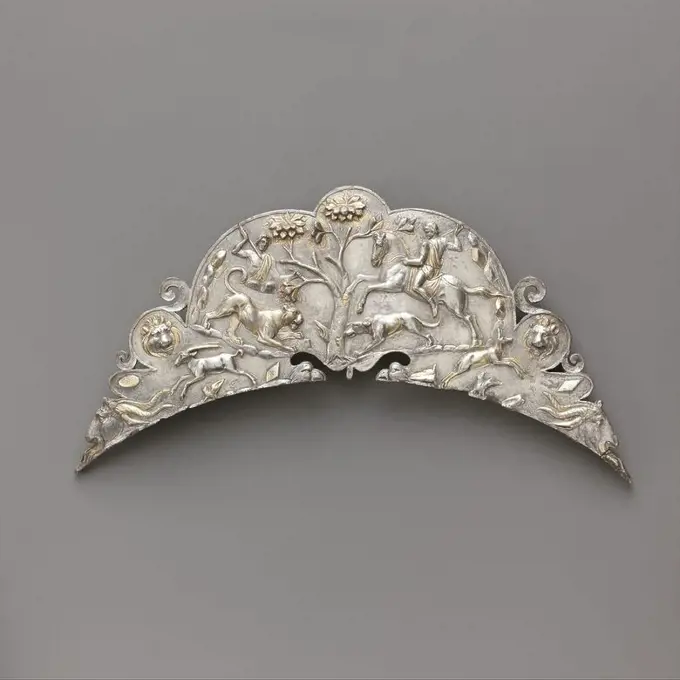
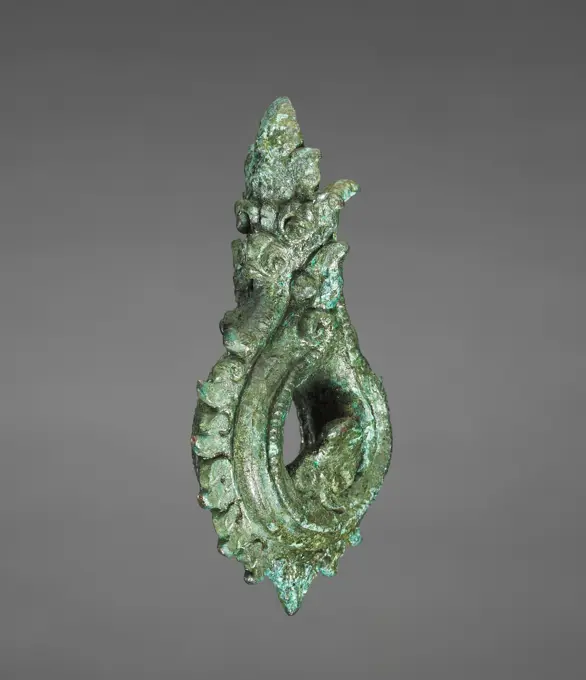
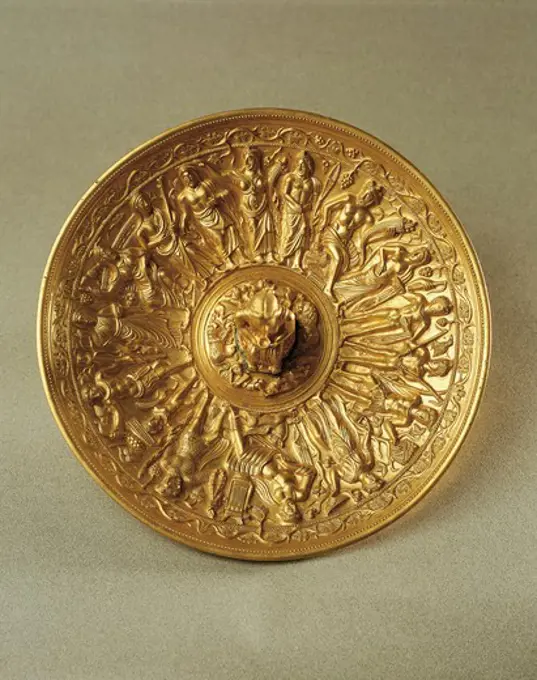
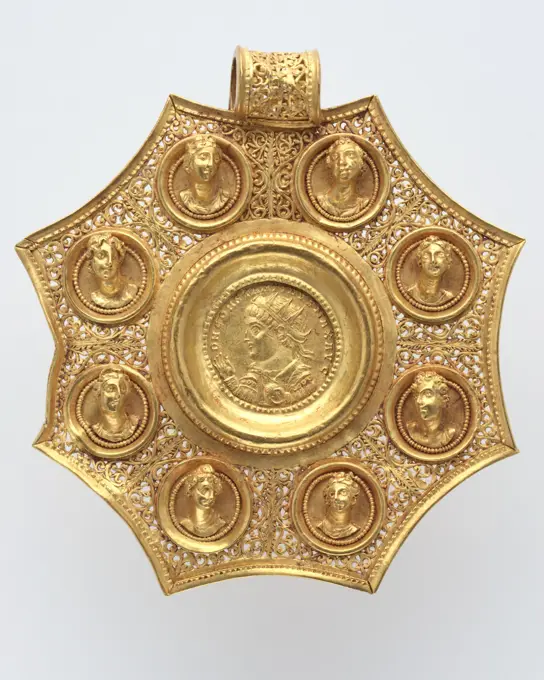
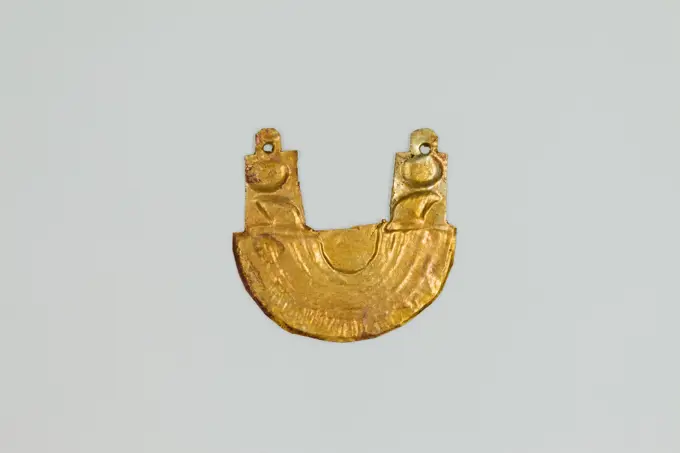
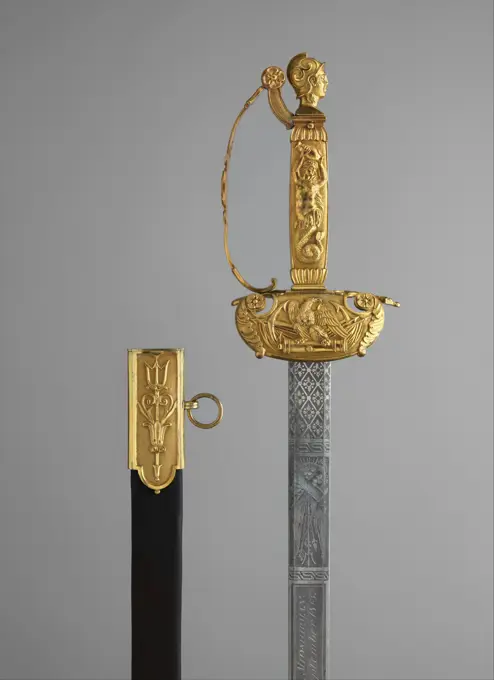
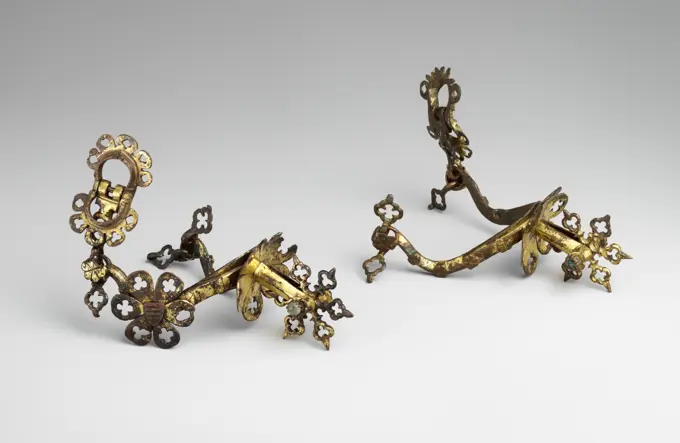
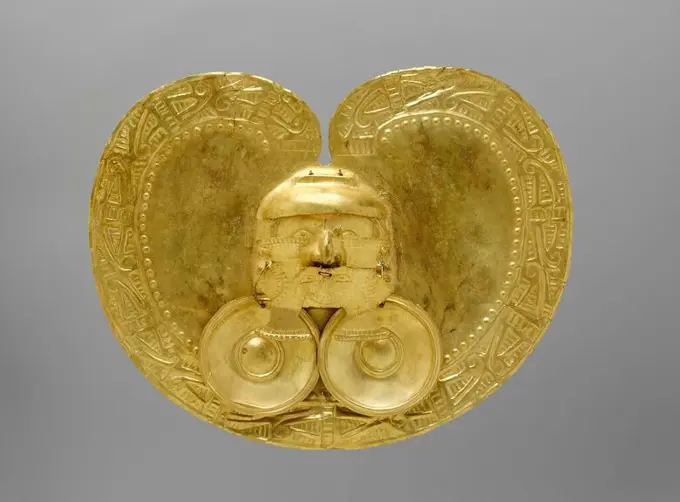
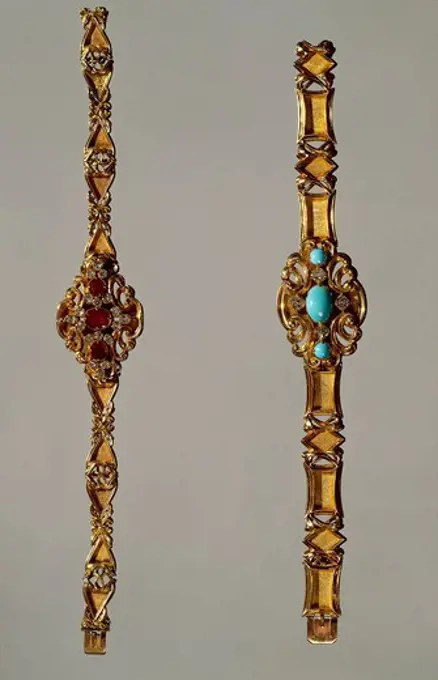
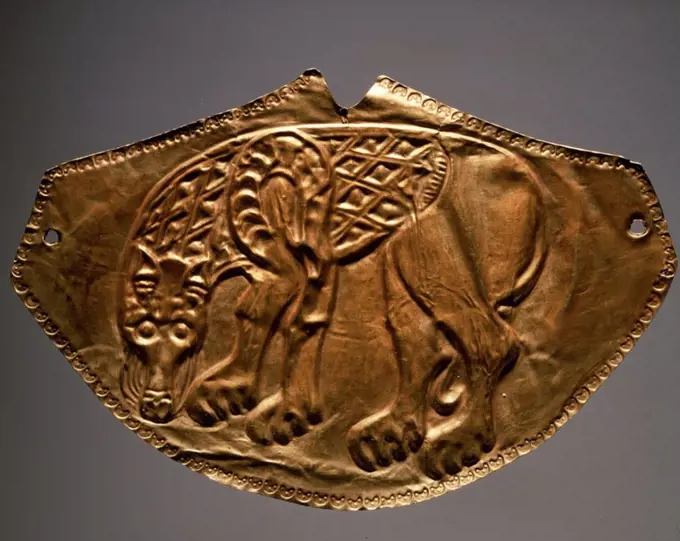
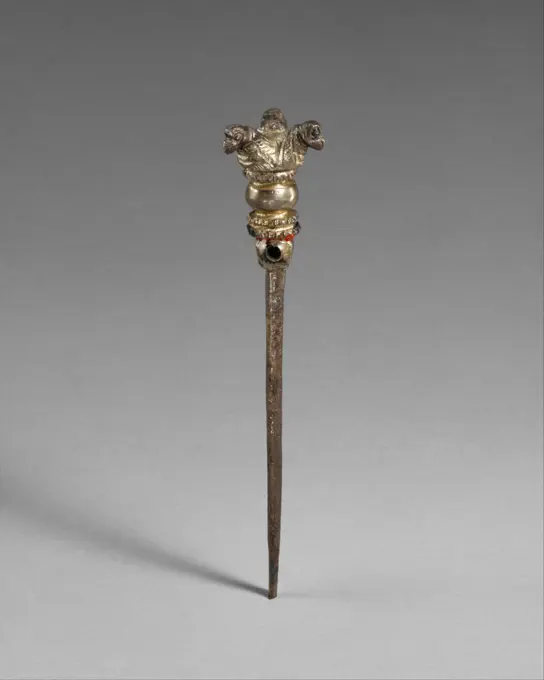
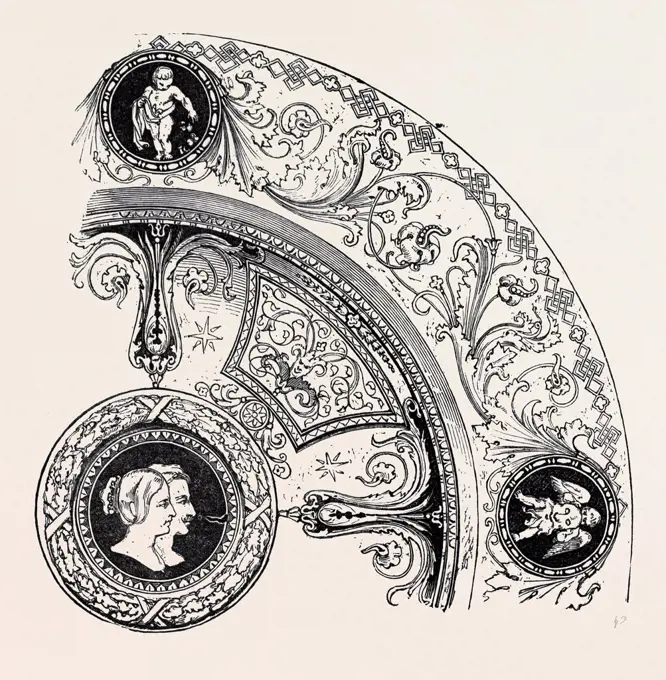
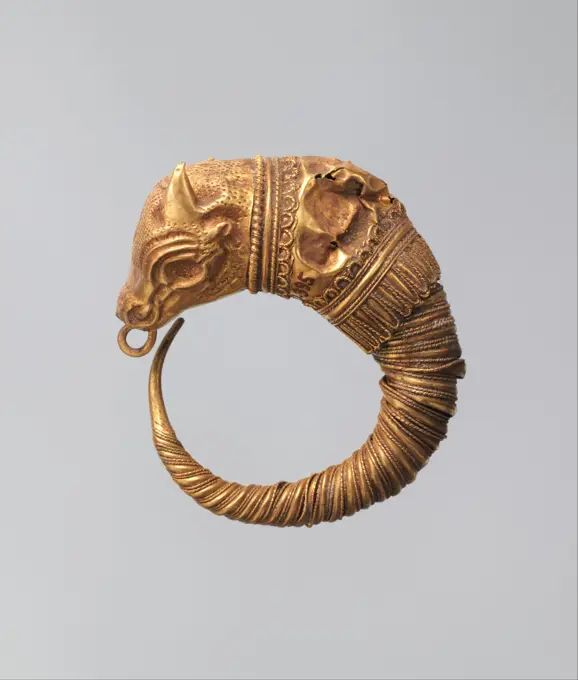
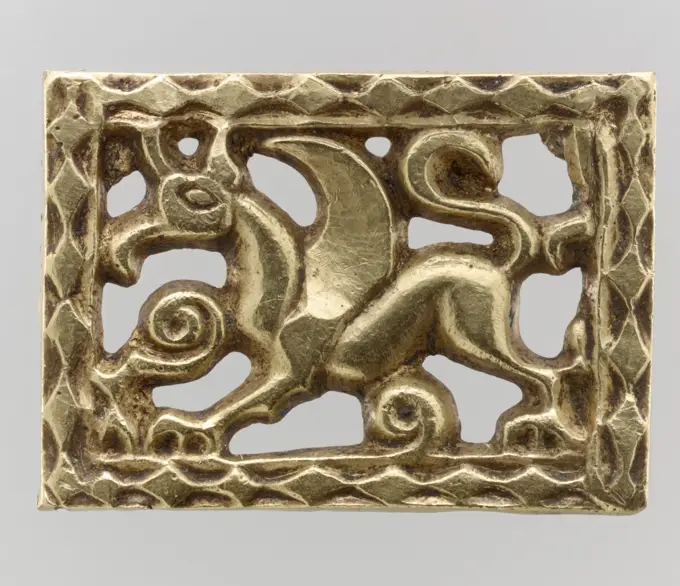
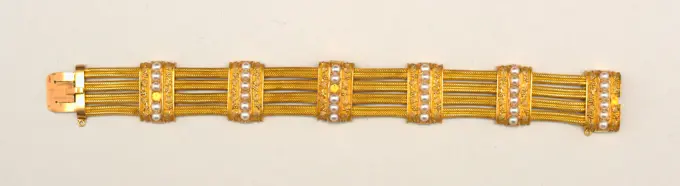
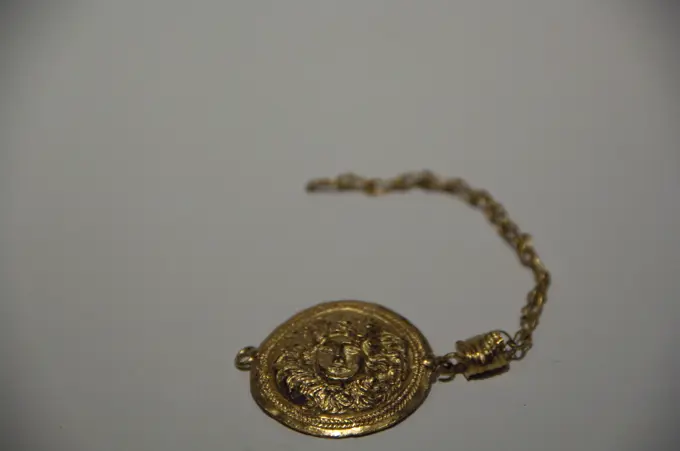
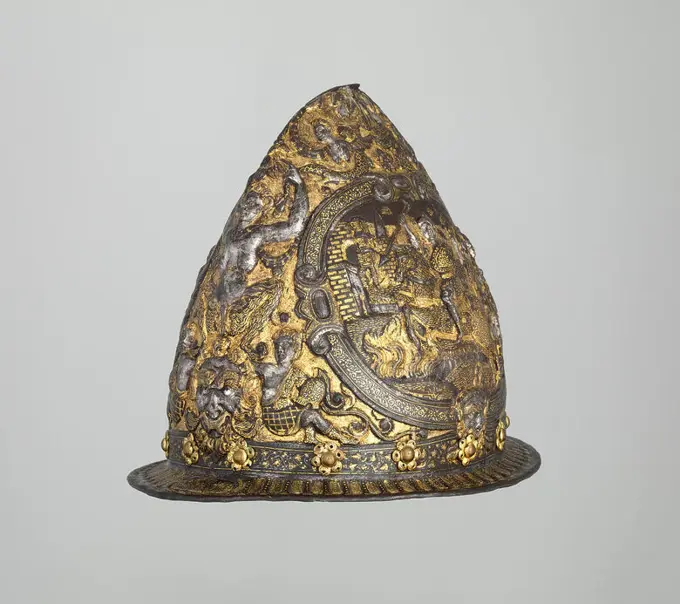
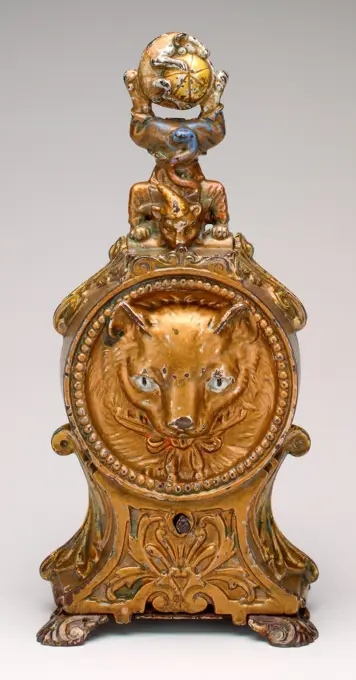
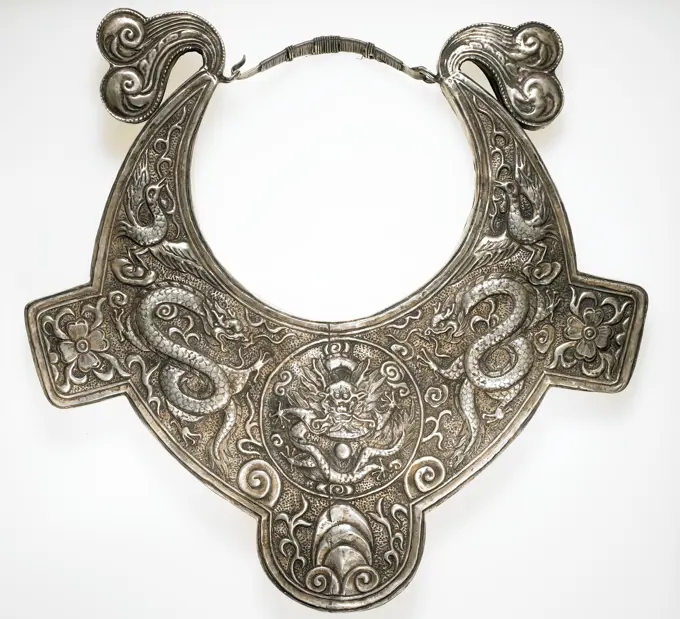
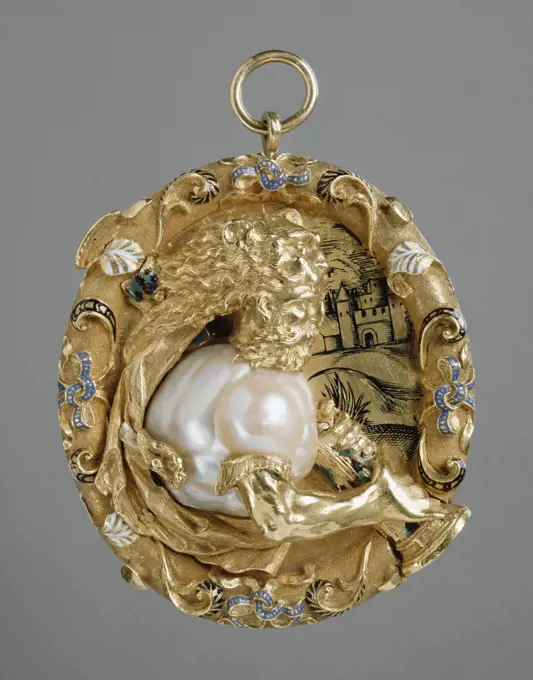
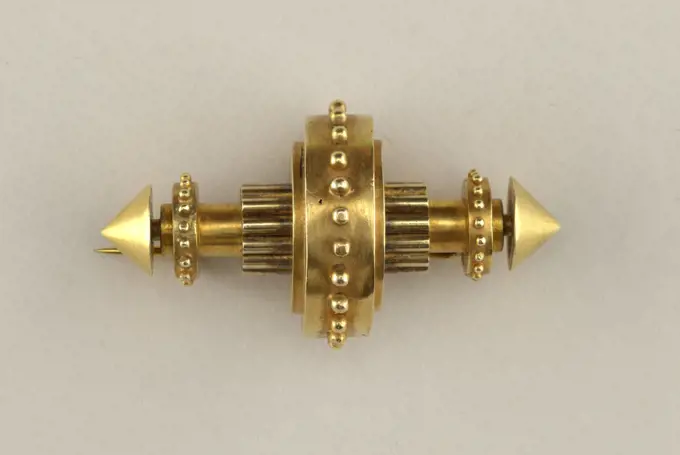
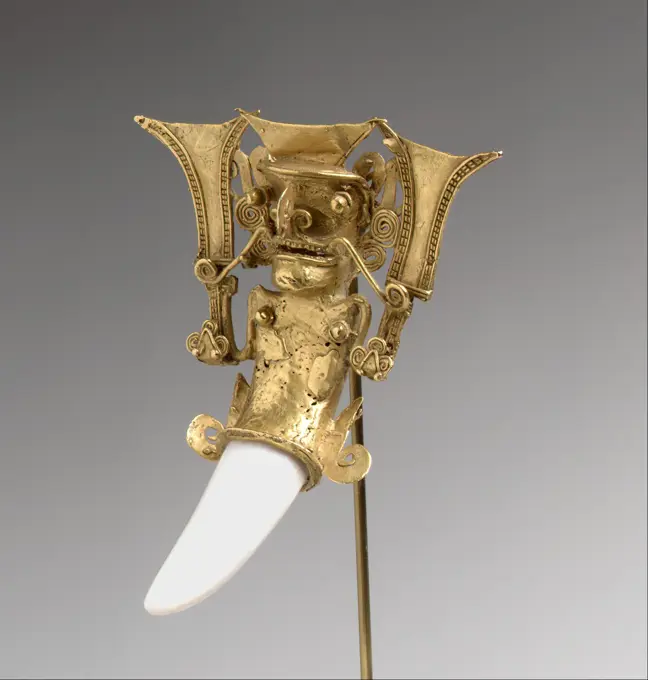
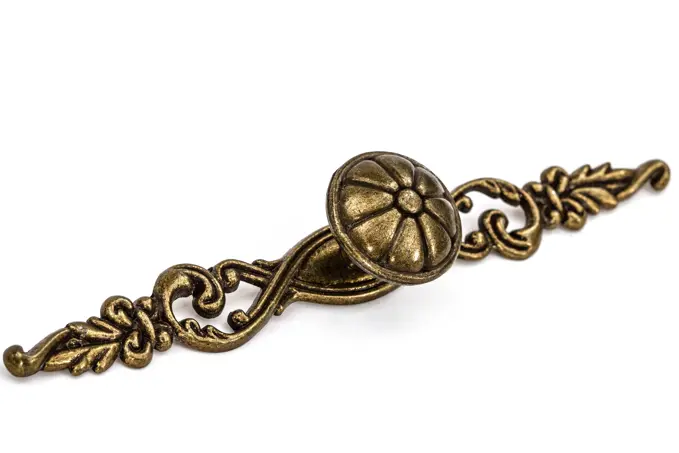
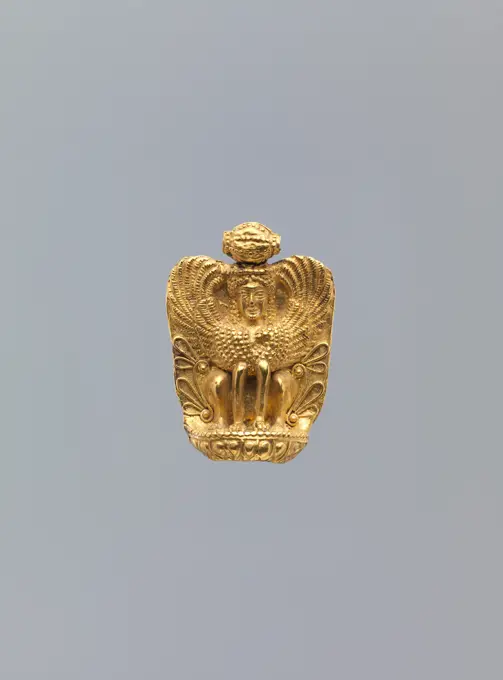
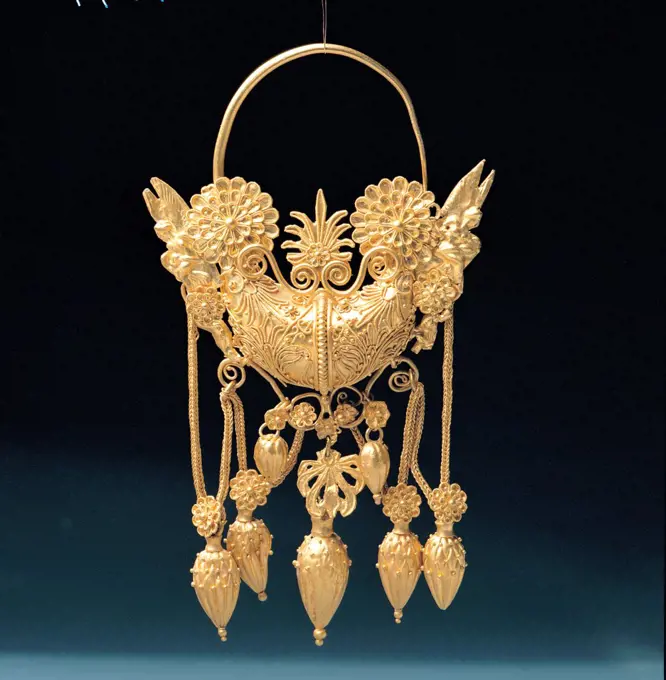
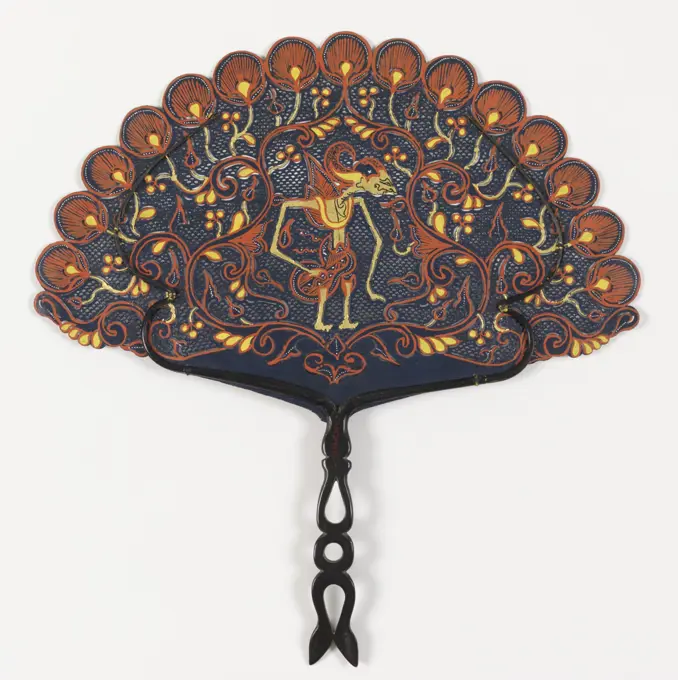
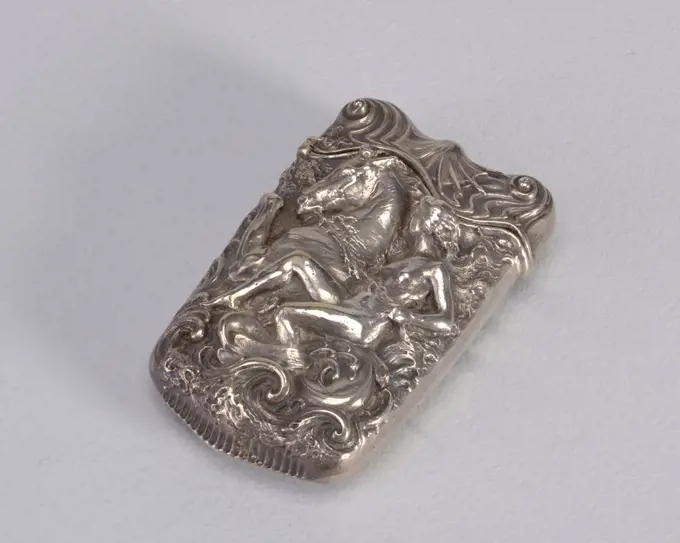
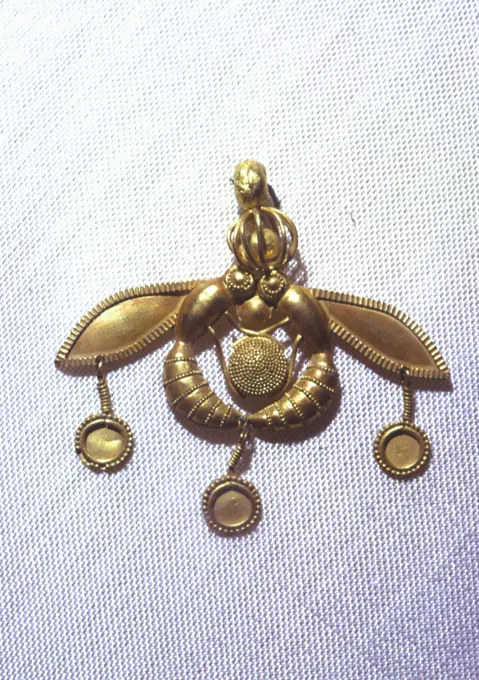
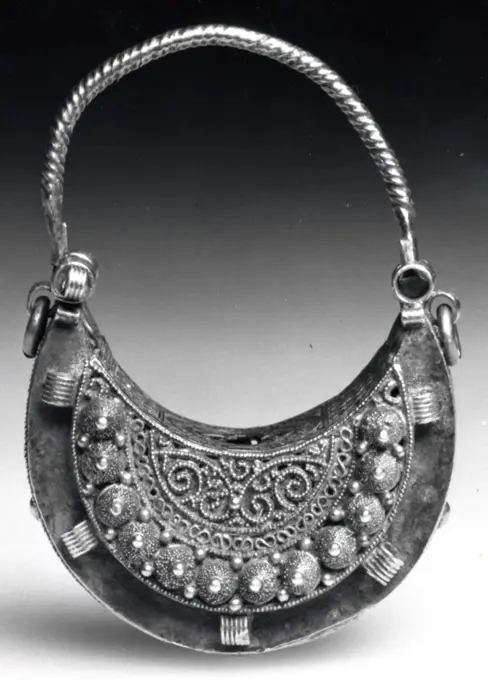
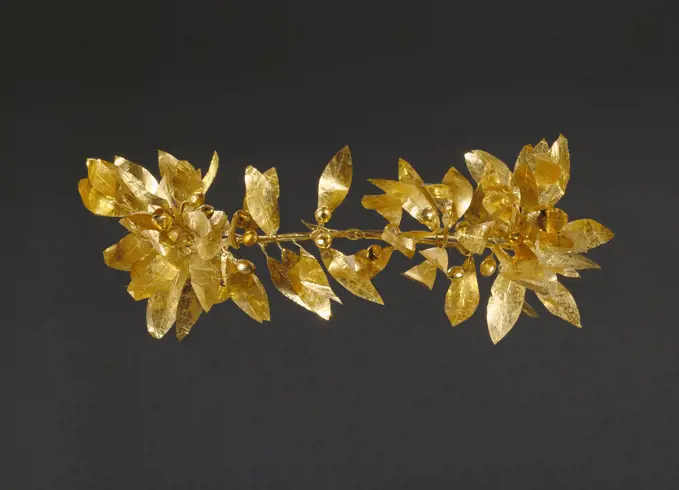
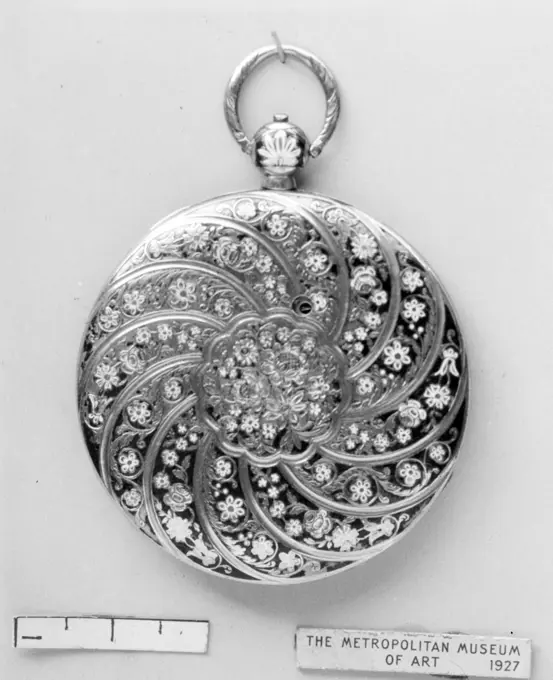
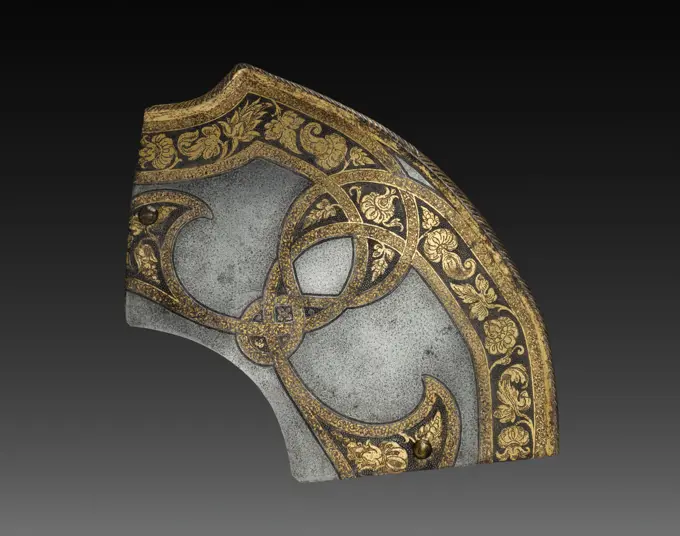
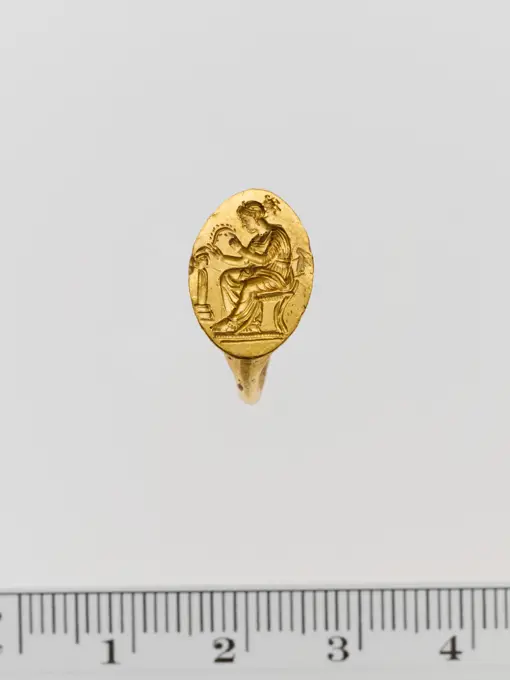
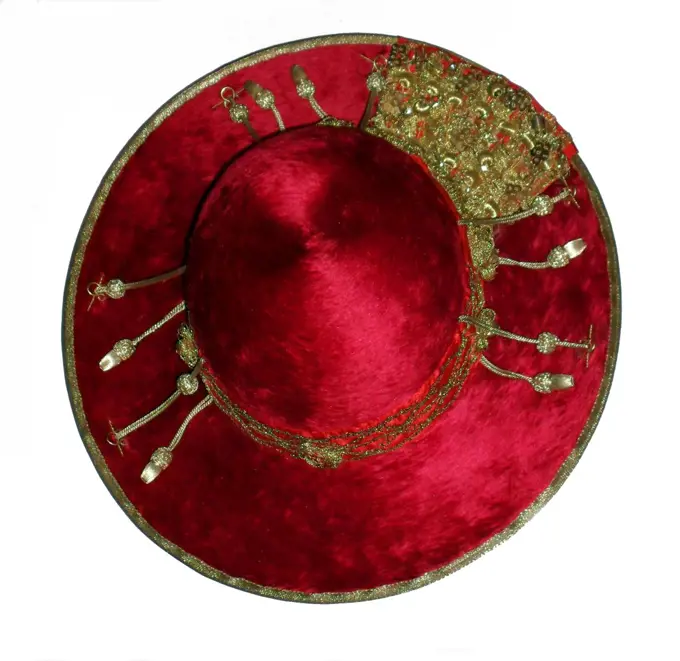
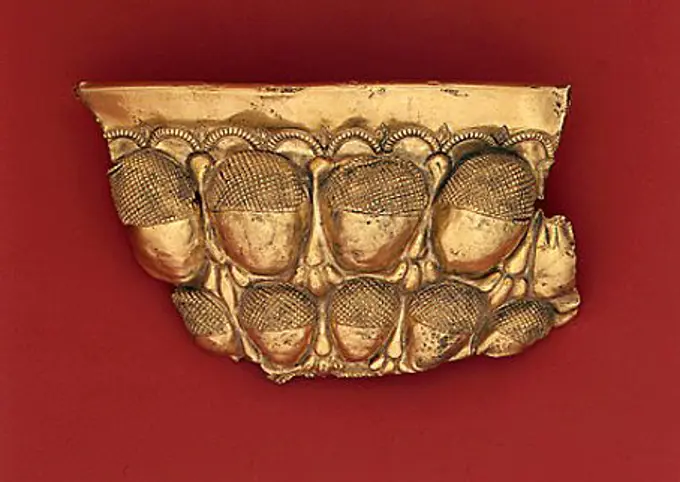
Right Half of a Cantle Plate from a Saddle. Culture: Tibetan or Chinese. Dimensions: H. 8 1/4 in. (21 cm); W. 6 1/4 in. (15.9 cm); Wt. 5 oz. (141.7 g). Date: 16th-18th century. Museum: Metropolitan Museum of Art, New York, USA.Hat Badge with the Head of Saint John the Baptist Adapted as a Pendant 1490-1510 France. Gold, carnelian, and enamel .Watch. Culture: British, London movement with French case. Dimensions: Diameter: 1 1/2 in. (3.8 cm). Maker: Watchmaker: Simon Hackett (before 1620-1664, active 1630-60, master 1646). Date: ca. 1632-40."How goes your watches ladies What's o'clock now First Lady: By mine full nine. Second Lady: By mine a quarter past." These three lines by the Jacobean playwright Thomas Middleton (d. 1627) sum up the unreliability of pre-balance-spring watches, which for the most part were more useful as jewelry than as timekeepers. The case of this example displays panels of the rare French émail en resille sur verre, a technique for embedding enameled gold designs in colored glass. Hackett was a goldsmith before becoming a member of the London Clockmakers' Company in 1632, and he may have imported the case himself. Museum: Metropolitan Museum of Art, New York, USA.Silver handle of a large dish. Culture: Roman. Dimensions: 3.2lb. (1.4kg)Other: 14 3/8in. (36.5cm). Date: 2nd-early 3rd century A.D..The Romans prized silver tableware very highly and liked to collect large sets for show as much as for use. Consequently, many of the vessels were highly decorative; mythological scenes and favorite pastimes such as hunting frequently served as subjects. Here many details of the relief have been highlighted with gilding. Museum: Metropolitan Museum of Art, New York, USA.Earring, 1200s. Cambodia. Bronze; overall: 6.4 x 3.7 cm (2 1/2 x 1 7/16 in.).Watch and key ca. 1835 French, Paris. Watch and key. French, Paris. ca. 1835. Gold, enamel. HorologyRomania, Repousse gold patera from the Pietroasele treasure, found in 1837Eagle Pendant. Culture: Veraguas. Dimensions: Height 2 in.. Date: 11th-16th century. Museum: Metropolitan Museum of Art, New York, USA.Octagonal Pendant, AD 324-26. Byzantium, Late Roman, Eastern Mediterranean, (probably Sirium or Nicomedia), Byzantine period. Gold; overall: 9.7 x 9.4 x 1.7 cm (3 13/16 x 3 11/16 x 11/16 in.). Mounted at the center of this octagonal pendant is a rare coin issued by Constantine the Great, the Roman Empires first Christian emperor. Constantines portrait appears on the coins front, those of two of his sons on the back. Constantines image is surrounded by male and female busts, some of which are mythological figures. The pendant once formed the centerpiece of a sumptuous gold necklace, likely a gift for a high-ranking court official or member of the imperial family.Rings: divine birth of the king and king in front of gods. Goddesses nursing the king Gold, Silver.Gold earring with pearl and pendant 1st2nd century A.D. Roman. Gold earring with pearl and pendant 243211Falcon-headed collar amulet 664-380 B.C. Late Period. Falcon-headed collar amulet 561557Congressional Presentation Sword and Scabbard of Peleg K. Dunham (1794-1822) 1817 William Rose Sr., 1783-1856 American This sword is considered the finest example, in terms of condition and completeness, among the eight swords known to survive from a group of approximately twenty-seven that were commissioned by Congress during the War of 1812 for presentation to junior warrant officers (sailing masters and midshipmen) who took part in the Battle of Lake Erie on September 10, 1813. While many nineteenth-century presentation swords in both the United States and Europe follow conventional patterns and forms, this hilt combines classical elements, nautical motifs, and patriotic emblems to create a completely original design that was used only for these 1812 Congressional presentation swords. It is thought that the hilt design was created by one of the diesinkers at the US Mint in Philadelphia, which may account for its innovative and nontraditional appearance. In addition to the remarkablePair of Rowel Spurs ca. 1350 French or Italian This very decorative pair of spurs was probably used during parades or other ceremonial purposes.Their pierced decoration consists of alternated trefoils and quatrefoils. On the external side of the left spur, a rosette bears an enameled shield bearing the arms of an unidentified family (the rosette is missing on the right spur). Each rowel is adorned with a glass cabochon in its center.This pair of spurs was said to have belonged to a member of the French family de Goth (Or, 3 fasces Gules), but this shield actually bears a border Gules (red) that does not match with this identification. Its so-said provenance from a tomb of the now demolished collegiate church of Villandraut, France, unfortunately cannot be proved. The decoration of these spurs is also close to 14th-century Italian examples.. Pair of Rowel Spurs. French or Italian. ca. 1350. Copper alloy, enamel, gold, glass, glass paste. Villandraut. Equestrian Equipment-SpursAnonymous. "Ceinturon medallion with high -performance trays for an officer's 3rd Republic". Copper. 1870-1940. General Leclerc Museum of Hauteclocque and the Liberation of Paris, Jean Moulin Museum. 158815-8Sword-Hilt Collar and Pommel (Fuchigashira). Culture: Japanese. Dimensions: Fuchi (a); H. 1 1/2 in. (3.8 cm); Wt. 0.7 oz. (19.8 g); kashira (b); H. 1 1/4 in. (3.2 cm); Wt. 0.3 oz. (8.5 g). Date: ca. 1615-1868. Museum: Metropolitan Museum of Art, New York, USA.Pectoral with Face. Culture: Calima (Yotoco). Dimensions: H. 8 3/4 x W. 11 x D. 1 3/8 in. (22.2 x 27.9 x 3.5 cm). Date: 1st-7th century.A large H-shaped nose pendant almost entirely obscures the face at the center of this gold, kidney-shaped pectoral. Both the shape of the pectoral and the form of the nose pendant are hallmarks of Yotoco-period Calima art. The Yotoco period was the second of three societies--Ilama, Yotoco-Malagana, and Sonso--to successively occupy the Cauca Valley region in west-central Colombia. The three societies are known collectively as the Calima culture. The upper portions of the eyes are just visible above the H-shaped pendant, and the head itself is surmounted by a dome shaped cap with a small rectangular crest at the top. Two large, circular, convex ear pendants with concave, circular centers hang from gold wires. The H-shaped pendant itself bears a smaller, more stylized embossed face. Through layers of adornment and repetition, the pectoral simultaneouslVotive crown of Recesvinto. 653-672. Made with gold, gems and pearls. Visigothic art. Jewelry. SPAIN. MADRID (AUTONOMOUS COMMUNITY). Madrid. National Museum of Archaeology. Proc: SPAIN. CASTILE-LA MANCHA. TOLEDO. Guadamur.Goldsmith's art, 19th century. Gold and garnets or gold and turquoises bracelets, around 1840.Pair of Sword-Grip Ornaments (Menuki). Culture: Japanese. Dimensions: L. of each 1 1/2 in. (3.8 cm); Wt. of each 0.3 oz. (8.5 g). Date: 18th century. Museum: Metropolitan Museum of Art, New York, USA.EscutcheonGold pectoral, Thracian, 5th century b.C., from Tumulo Basova near Duvan. Museum: Historiscal Museum, Sofia, BULGARIA.Pin terminating in three eagles' heads ca. 7th century B.C. Urartian. Pin terminating in three eagles' heads. Urartian. ca. 7th century B.C.. Silver. Iron Age III. UrartuCurb Bit 17th century German This mouthpiece was designed for a horse with a regular good mouth and a very thick tongue. The thin curb chain, attached at the wrong place on the purchases, is a modern replacement, as well as the articulated connecting links between the shanks.This kind of bit, with its engraved, pierced and chiseled ornamentation, is a very common type of German 17th-century bit, found in many collections. They might have been pre-made generic bits, mounted with mouthpieces and shanks of regular strength suitable for most horses.. Curb Bit. German. 17th century. Iron alloy, tin, copper. Equestrian Equipment-BitsGold and garnet pendant amphora and chain with tripod stand ca. 125-100 B.C. Greek Miniature amphorai were a popular type of decoration for necklaces and earrings in the third and second centuries B.C. They form some of the most attractive and finely worked pieces of Hellenistic jewelry. In addition to a gold suspension chain, there is a stand with three charming dolphin-shaped legs. The combination of amphora and stand is extremely unusual, suggesting that not only the pendant but also its contents were highly prized.. Gold and garnet pendant amphora and chain with tripod stand 256890Kolczyki dekorowane rozetami. unknown, authorNEW PATTERN FOR DINNER PLATE, BY J. FELL AND CO., NEWCASTLE-UPON-TYNEGlass baptism bottle. Museum of Mataró.Brooch Firm of Castellani Mosaic possibly by Luigi Podio before 1888 The pale yellow-gold mount is a subtle foil for the head of medusa, whose grisly coiffure crawling with snakes is no less exquisitely configured in blond hues of the tesserated glass known as micromosaic. Luigi Podio was the chief micromosaic specialist in the Roman firm of Fortunato Pio Castellani. Matching ancient imagery with technologies also re-created from classical antiquity, Castellani served an avid international clientele. View more. Brooch. Italian. before 1888. Glass micromosaic, gold. JewelryEarring with head of a bull 2nd-1st century B.C. Ptolemaic Period Hoops formed of wound wire with animal head terminals are the commonest type of Hellenistic earring. The bull-head earring appears throughout the Mediterranean, probably a positive image because of the physical and sexual prowess attributed to bulls. Examples like this one with a gold or stone bead incorporated into the collar behind the animal's head date mostly to the second and first centuries B.C.. Earring with head of a bull 551354Bliej Kultury Zająk, Franciszek ( 1937), Jarnuszkiewicz, Czes Aw (1888 1988)Goldsmith's art, Italy, 20th century. Mario Buccellati, gold and silver band bracelet set with rose cut diamonds, 1920s.Clasp for Cord orChainGold Openwork Belt Mount 700s Avar The treasure contains an array of belt fittings, some elaborately decorated, some unfinished or defectively cast. Some show no signs of use, while others are quite worn.The AvarsThe Avars were a nomadic tribe of mounted warriors from the Eurasian steppe. The Byzantine emperor Justinian negotiated with them in the sixth century to protect the Empires northern border along the Black Sea. Emboldened by their subjugation of numerous tribes, they unsuccessfully attempted to seize the Empires capital, Constantinople. They remained a scourge of both Byzantium and the Western kingdoms until Charlemagne defeated them through a series of campaigns in the 790s and early 800s.All the money and treasure that the Avars had been years amassing was seized, and no war in which the Franks have ever engaged.. brought them such riches and such booty. Up to that time the Avars had passed for a poor people, but so much gold and silver was found.. that one may well think Bracelet (France); pearls, goldGold openwork hairnet with medallion. Culture: Greek, Ptolemaic. Dimensions: 2 3/8 in. (6 cm) x 3 9/16 in. (9cm). Date: ca. 200-150 B.C..This hairnet, with its combination of delicate filigree, carefully hammered decorative bust, and spool-shaped beads, is a superb example of the Hellenistic goldsmith's skill. The medallion represents the head of a maenad, one of the female followers of the god Dionysos, wearing spiral earrings, a wreath of vine leaves and grapes, and a panther skin. Museum: Metropolitan Museum of Art, New York, USA.Pair of Earrings, Oval Gem Settings 8th-12th century Indonesia (Central Java). Pair of Earrings, Oval Gem Settings 64331Germany, Cologne. Roman Germanic Museum (aka Romisch-Germanisches), ancient gold artifact.Cabasset. Culture: Italian, Milan. Dimensions: H. 9 1/4 in. (23.5 cm); W. 9 1/2 in. (29.9 cm); D. 11 3/4 in. (29.9 cm); Wt. 3 lb. 7 oz. (1551 g). Date: ca. 1575.The decoration depicts the Roman soldier Marcus Curtius leaping into a fiery abyss. This legend served in antiquity and in the Renaissance as an example of self-sacrifice and virtue. Museum: Metropolitan Museum of Art, New York, USA.Cat and Mouse, Cat Balancing' mechanical bank, c. 1891, James H. Bowen; Manufacturer: J. & E. Stevens Company, Cromwell, Connecticut, 1843-1950s, American, active c. 1877-1906, 12 x 5 3/8 x 3 9/16 in. (30.48 x 13.65 x 9.05 cm), Iron, pigment, 19th centuryBuckles (France); steel, diamond pasteSilver loop 1st title 950/1000th from 1793. Large decor strip of different imitated stones patterns, 2 large patterns at the top and bottom.Fragment of the lace;  2. PO. 18th century (1751-00-00-1800-00-00);Pair of Sword-Grip Ornaments (Menuki) 18th century Japanese Menuki are a pair of ornamental sword fittings attached to either side of a sword hilt.. Pair of Sword-Grip Ornaments (Menuki). Japanese. 18th century. Copper-gold alloy (shakud), gold, copper. Sword Furniture-MenukiHandle (England); gilt brassPocket Watch, Jean Baptiste Baillon, c. 1755 Gold watch on chatelaine. The cupboard is decorated with a flower wreath of gold in 3 colors and set with diamonds. On the golden chatelaine there are a performance of a shepherd and a shepherdin. It is in a particial foal of Groen Robbenvel. Paris gold (metal). diamond (mineral). sealskin Gold watch on chatelaine. The cupboard is decorated with a flower wreath of gold in 3 colors and set with diamonds. On the golden chatelaine there are a performance of a shepherd and a shepherdin. It is in a particial foal of Groen Robbenvel. Paris gold (metal). diamond (mineral). sealskinTorque, 16 5/8 x 16 3/8 x 1 7/16 in. (42.23 x 41.59 x 3.65 cm), Silver, ChinaBronze ritual thunderbolt from Tibet. Dated 19th CenturyHercules Pendant; French; Paris, France; about 1540; Gold, enamel (white, blue and black), and a baroque pearl; 6 × 5.4 cm (2 3,8 × 2 1,8 in.)MountPair of Sword-Grip Ornaments (Menuki) 18th century Japanese Menuki are a pair of ornamental sword fittings attached to either side of a sword hilt.. Pair of Sword-Grip Ornaments (Menuki). Japanese. 18th century. Gold. Sword Furniture-MenukiRepoussé Tiger Claw Pendant 8th-12th century Indonesia (Central Java). Repoussé Tiger Claw Pendant. Indonesia (Central Java). 8th-12th century. Gold. JewelrySword-Hilt Pommel (Kashira), 1700-1850. Japan, Edo period (1615-1868). Shakudo; average: 3.5 x 2 cm (1 3/8 x 13/16 in.).TESORO DEL CARAMBOLO - COLLAR DE ORO CON SIETE SELLOS - SIGLO VI/VII AC - ARTE TARTESICO. Location: MUSEO ARQUEOLOGICO-COLECCION. Sevilla. Seville. SPAIN.Willem V, Prince of Oranje -Nassau, Anonymous, 1785 - 1795  One -sided, oval, open -up carrier, in decorative edge, trimmed with twenty -one small stones on carrier and carrying ring, finished with blue silk. Front: breastpiece man. Reverse: Blanco Netherlands precious stone (material). silk casting / gildingAnkle Bells. Culture: Dan, Wobe. Dimensions: Diameter: 8 1/16 in. (20.5 cm). Date: early 19th century. Museum: Metropolitan Museum of Art, New York, USA.One square. UnknownBrooch, Gold, Central cylindrical shaft on horizontal axis; ten smaller cylinders bundled around center and over that a large cylindrical band with beaded border; conical terminals at each end of central shaft and small beaded bands just inside. Back has hinged clasp with hook closure., probably England, 1870-80, jewelry, Decorative Arts, BroochBat-Nosed Figure Pendant 12th-14th century Coclé (Parita) The powerful Prehispanic rulers of present-day Panama and Costa Rica expressed their authority and status by the ostentatious display of gold ornaments in both life and death. Pendants that combine human form with those of various animals selected for specific behavioral characteristics were suspended from the neck by a thong or cord. The ability of a bat to move in the dark might have led to the use of abstractions of its features in the goldwork of the region, particularly the loop nose and eyes on stalklike projections. In present-day Central American lore, bats are associated with sacrifice, agriculture, and vegetation.At his sides, the bat-headed human torso holds two paddles with flared tops that repeat the shape of his headdress. The open mouth of the figure reveals bared teeth, and catfishlike barbels extend from above its corners. The unclothed torso features prominent knoblike breasts and is flanked by two spiraling flFurniture accessories: Stylish bronze handles, isolated on a white background Furniture accessories: Stylish bronze handles, isolated on a white background Copyright: xZoonar.com/OleksandrxKostiuchenkox 9780882Pair of Ear Clips with Granulate Design Second half of the 8th-second half of the 10th century Indonesia (Java). Pair of Ear Clips with Granulate Design 50047Harness Accoutrement. Western Inner Mongolia, 4th-3rd century B.C.. Tools and Equipment; horse trappings. Bronze, castGold pendant in the form of a sphinx 5th-4th century B.C. Greek, Cypriot The representation of the sphinx shows an awkward compromise between rendering the figure three-dimensionally, as in the treatment of the legs, and adapting it to a predominantly two-dimensional surface.. Gold pendant in the form of a sphinx. Greek, Cypriot. 5th-4th century B.C.. Gold. Classical. Gold and SilverSpandrel for a Reliquary Shrine 1165-1180 Cologne. Gilt copper, champlevÈ enamel .A boat ear-ring with acorn pendants, by Unknown artist, 4th Century, . Italy: Puglia: Taranto: Taranto: National Archaeological Museum. Whole artwork. Front boat body hammered chased floral applique Nike attachment ring body chains pendilia oval hammered chiselled granulation filigreeBracelet (part of a set). Culture: Italian, probably Naples. Dimensions: Overall: 1 15/16 x 6 15/16 in. (4.9 x 17.6 cm); visible cameo (confirmed): 35.3 x 27.7 mm. Date: mid-19th century.Made to catch the eye of a shopper bent on ballroom glory, the cameos in this set of jewelry (99.33.1-.6) bear typical Grand Tour images, including (on the necklace's clasp) Guido Reni's Aurora fresco of 1614 (Palazzo Pallavicini-Rospigliosi, Rome), mythological scenes, peasants of the Roman campagna, and (on both the pin and the necklace) Bertel Thorvaldsen's ever-popular marble relief Night of 1815 (Thorvaldsens Museum, Copenhagen). Billing doves grace the earrings, and on one of the bracelets are a comely marine divinity and a dolphin.The rather flimsy fittings of stamped gold filigree suggest that this was costume jewelry, not meant to be worn often. Museum: Metropolitan Museum of Art, New York, USA.Gold earringsHandscreen, late 19th-early 20th century; pierced and painted buffalo hide leaf, carved buffalo horn handleSnuffer. Now chiseled guilloche and enamelled with a painted enamel: "the continence of Scipio". Switzerland (), 2nd half of the 18th century. Paris, Cognacq-Jay museum. 36968-1 Tobacco box, painted email, the continence of scipio, art object, gold cisele guilloche, orfevreryMountSpring Attachment for Rapier. Italian or Spanish. Date: 1650-1700. Dimensions: Overall. Iron. Origin: Italy. Museum: The Chicago Art Institute, Chicago, USA.Water Nymph and Horse, Whiting Manufacturing. Co., Silver, Oblong, with undulating curves on lid's uppermost edge, as well as where lid's seam meets the case body. Lid adorned with central, raised shell form, flanked by watery, nautilus-like swirls. Body features highly sculpted, relief work of a nude water nymph riding a horse amid roiling waves. Reverse of lid features same decoration as lid front. Reverse body unadorned except for a sprig of seaweed that falls downward from lid's seam, over left side of box, as well as an elaborate, intertwined monogram (possibly CK). Lid hinged on side. Slightly curved and protruding striker on bottom., ca. 1900, containers, Decorative Arts, Matchsafe, MatchsafeSponge Box 1895-1905 Netherlands. Silver .Musical Clock Stand (France); molded and chased gilt bronzeBorder, Medium: linen, metal thread Technique: embroidered cutwork, Border fragment with a serpentine floral motif edged with elaborate floral pendants. Pattern outlined by gold thread., Italy, 16th century, embroidery & stitching, BorderInk Tablet. Artist: Workshop of Xiu Fangzhai (Chinese). Culture: China. Dimensions: Diam. 2 3/8 in. (6 cm). Museum: Metropolitan Museum of Art, New York, USA.Ancient Greece. Jewellery. 5th-4th century BC. The State Hermitage Museum. Saint Petersburg. Russia.Labret, Eagle Head 14th-early 16th century Aztec. Labret, Eagle Head 310663Minoan Gold Bee Pendant. Bronze Age Jewellery. From Mallia. Heraklion Museum. Crete. Greece.Golden blazon Old golden blazon decoration at black Copyright: xZoonar.com/MarkoxBericx 7013160Earring 11th century This crescent-shaped (hilal) earring has been fabricated with filigree, beaded granulation, and several loops around the perimeter and interior which once attached gems. These characteristics, along with the hemispherical ornament, are typical of the opulent jewelry from the Fatimid Period (909-1171). The Fatimids ruled a kingdom that stretched across North Africa, the Levant and Hijaz, and as far south as Nubia, modern day Sudan, where it maintained control over the important gold mines which provided the raw materials required to make these sumptuous jewels. This earring is made from electrum, a natural alloy of gold and silver.. Earring 452941Home stake; Klimaszewski, Kazimierz (Ca 1803-1853); around 1840 (1835-00-00-1845-00-00);Gold Wreath; Greece; 300 - 100 B.C; Gold; 21.7 × 64.5 cm (8 9,16 × 25 3,8 in.)Ring with Claw setGemPendant with Egyptian motifs. Pendant with silver and email chain in a neo-egyptian style. The pendant consists of a kneeled, winged, egyptizing women's figure. Above her head, she holds a sapphire. The wings are decorated with green and lilac window email. Two chains hang off from the wings that come together at the bottom, to which a stylized Lotus () Depend.23 carat antique gold jewellery, india Copyright: xHarixMahidhar/DinodiaxPhotoxEar Clip with Stone in Four Prong Lotus Base Setting Second half of the 8th-second half of the 10th century Indonesia (Java). Ear Clip with Stone in Four Prong Lotus Base Setting 50007Mount; bronze, giltUndulating RibbonOrnamentSpice container, mid 19th century, 1-7/8 x 4-1/8 x 1-1/8 in. (4.8 x 10.5 x 2.9 cm), Copper alloy, 19th centuryMount; 1904-21-64-a/dWatch ca. 1620 Watchmaker: Johan Bock. Watch 194119Watch ca. 1840 Watchmaker: F. Pernetti. Watch. Swiss. ca. 1840. Gold, enamel, silver. HorologyPommel Plate of a Saddle (from the "Flechtband" Garniture of Rudolf II and Archduke Ernst, Vienna), c. 1571. Anton Peffenhauser (German, 1525-1603). Blued, etched, and gilded steel; overall: 33 x 17.8 cm (13 x 7 in.). This plate, one of two was once part of a saddle, are from tournament armor for man and horse made for the sons of Emperor Maximilian II, archdukes Rudolf and Ernst. Most of the remaining elements of this armor are still in the collections of the Imperial Armouries in Vienna. The decorative pattern (in the imperial colors of black and gold) forms elegant knots, with distinctive foliage and hop sprigs filling the loops.Gold ring early 4th century B.C. Greek Seated woman crowning female herm.. Gold ring. Greek. early 4th century B.C.. Gold. Classical. Gold and SilverSilk and gold threaded cardinals cap/hat of Cardinal Alfrink (1900-1987), Archbishop of UtrechtFragment fiale dekorowanej motywem żołędzi. unknown, authorCord Knob (Kurigata) 19th century Japanese. Cord Knob (Kurigata). Japanese. 19th century. Copper-gold alloy (shakud?), copper-silver alloy (shibuichi), gold. Sword FurnitureOrnament, one of a pair, 7 x 4 1/2 x 3 in. (17.78 x 11.43 x 7.62 cm), Silver, ChinaGold bracelet with paired cupules, Pompei, 79 AD.