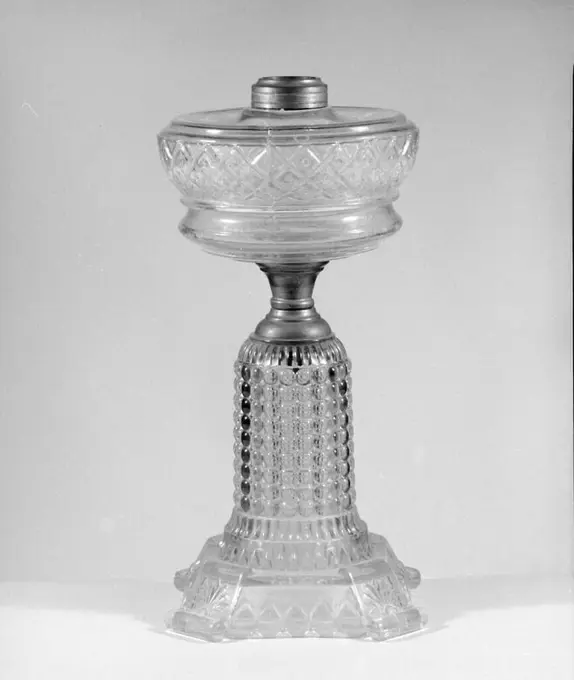
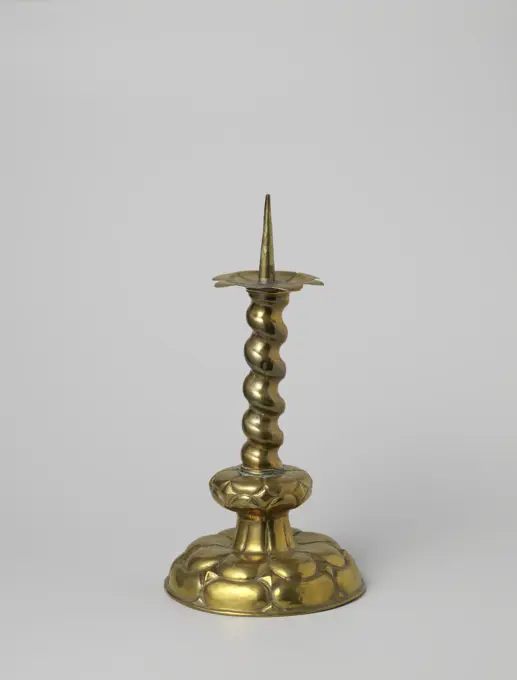
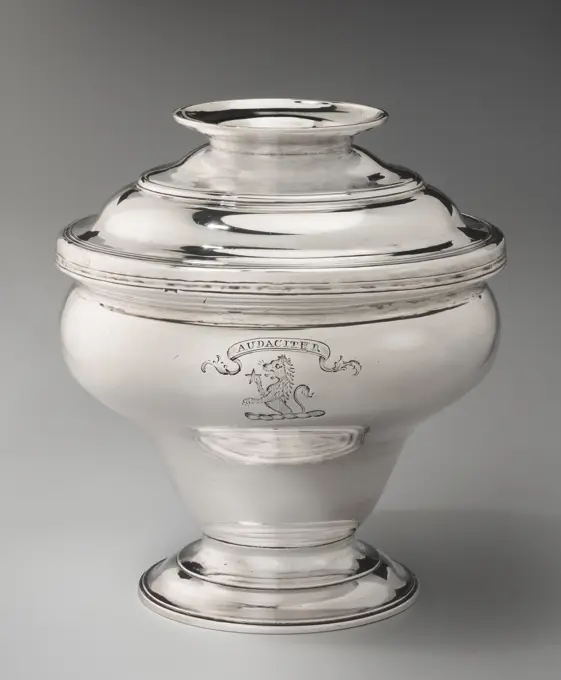
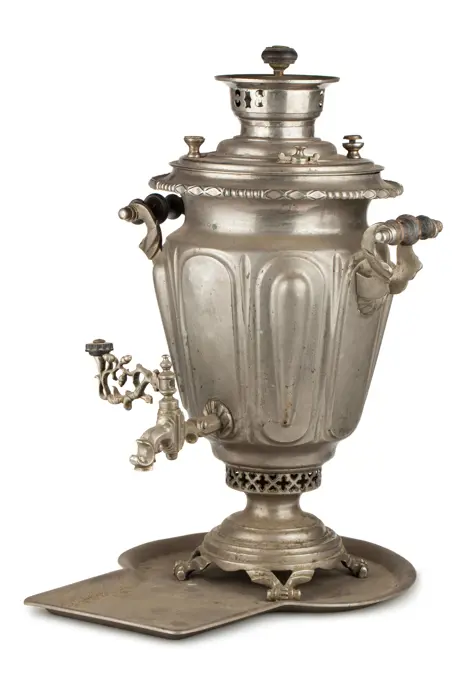
Ornate Drinking Vessels

Lavishly designed drinking vessels and bowls made from metal, featuring intricate engravings and decorative elements from historical contexts.
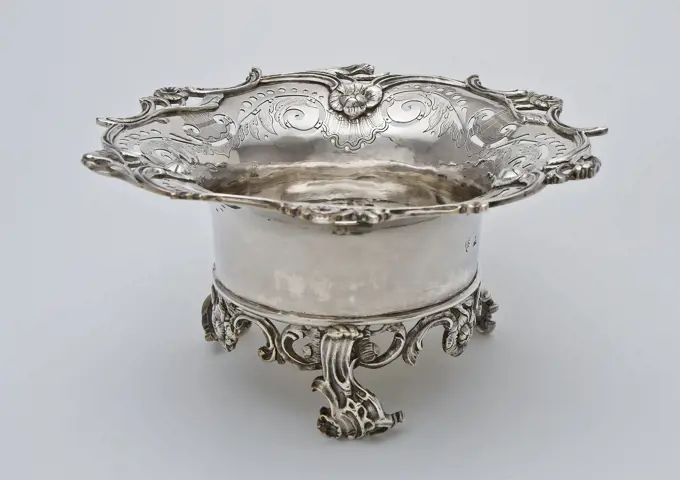
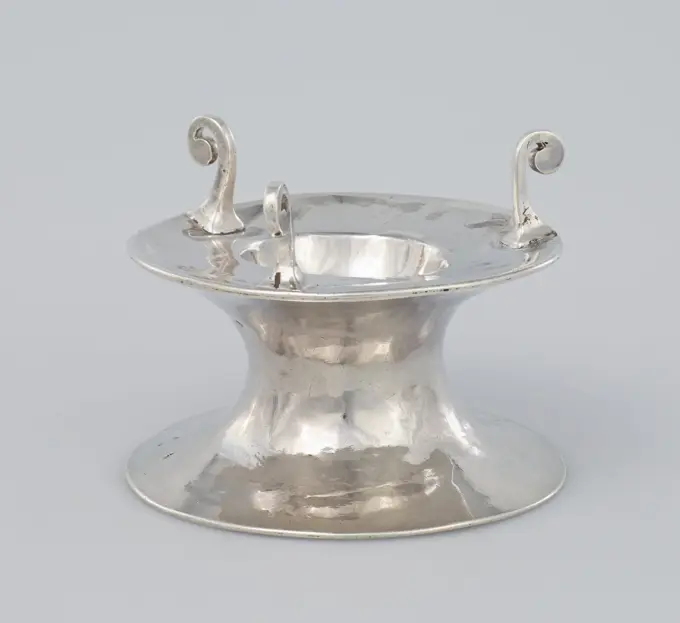
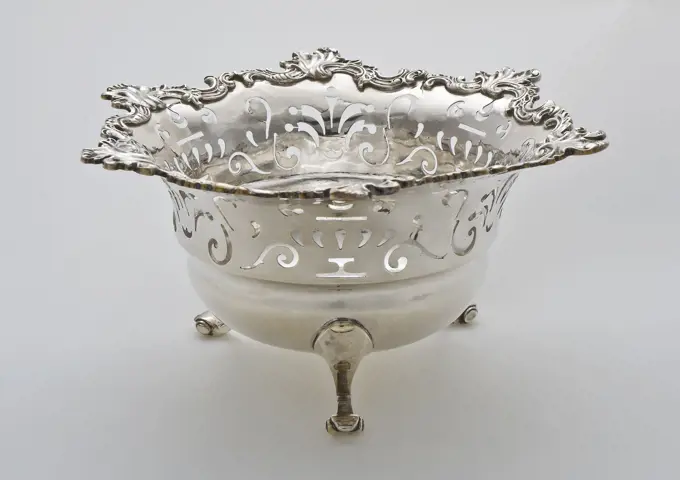
Silversmith: Johannes Jansen, Silver pipe bowl, smoking pipe cookware smoking utensils silver, cast sawn engraved Round chafing ring slewing top edge on three curling feet wall outside (smashed) smoking lighting
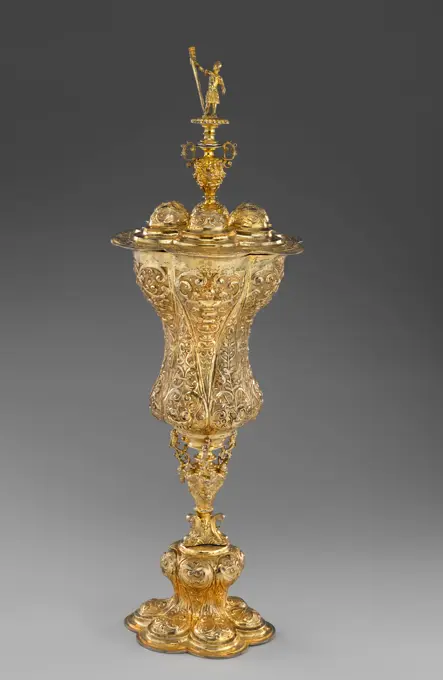
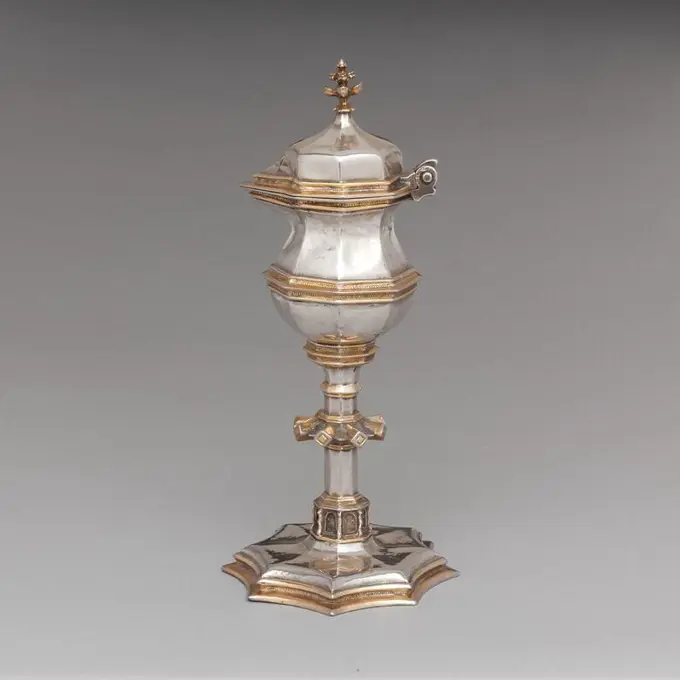
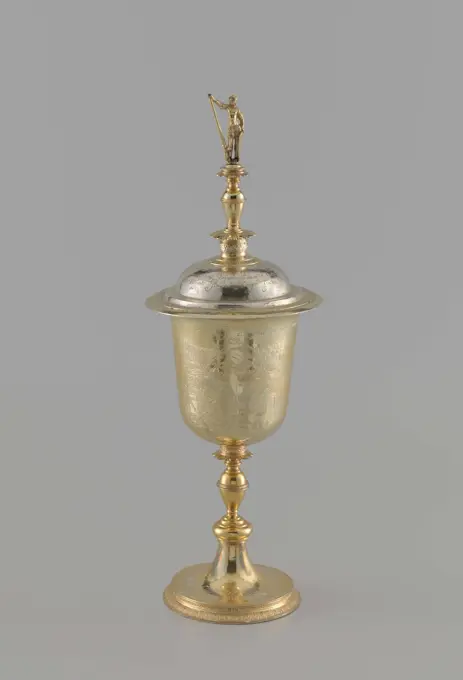
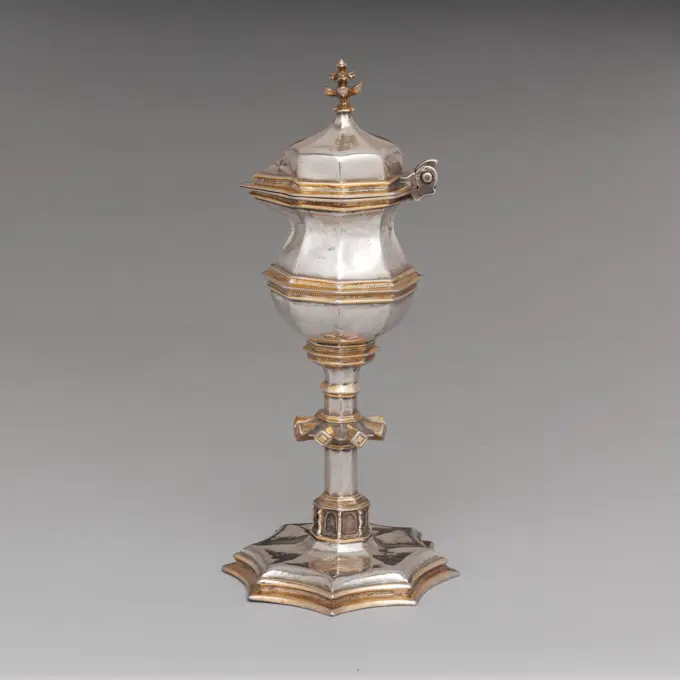
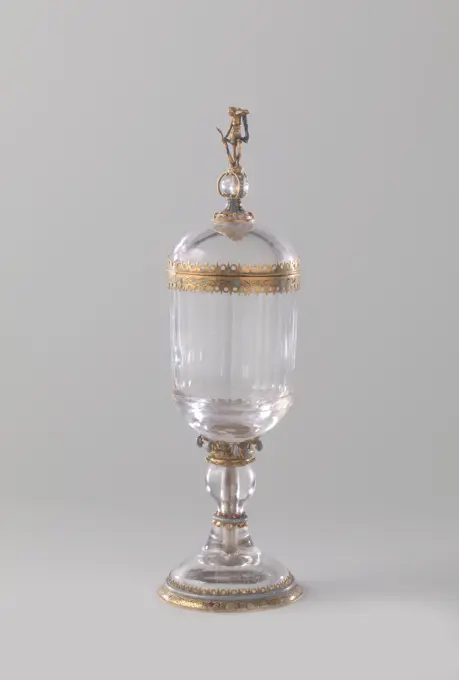
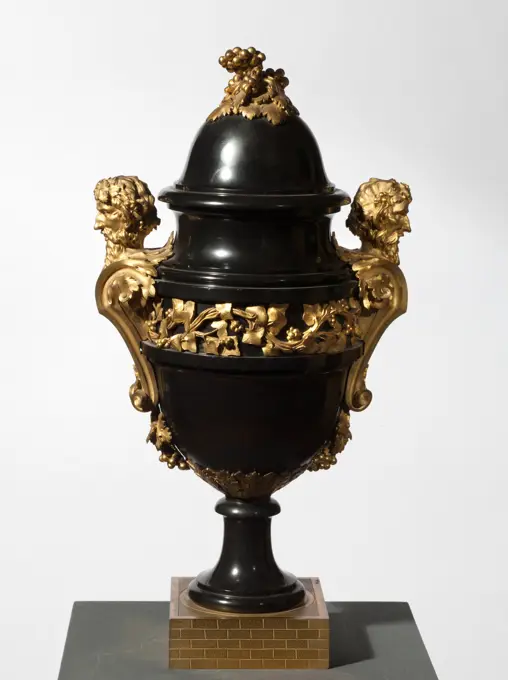
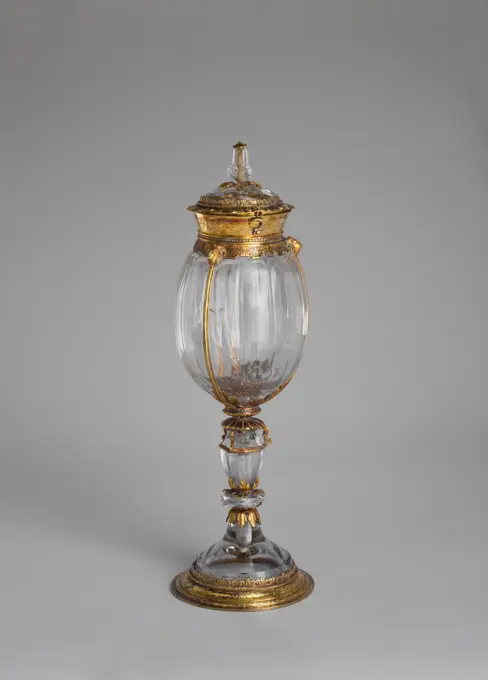
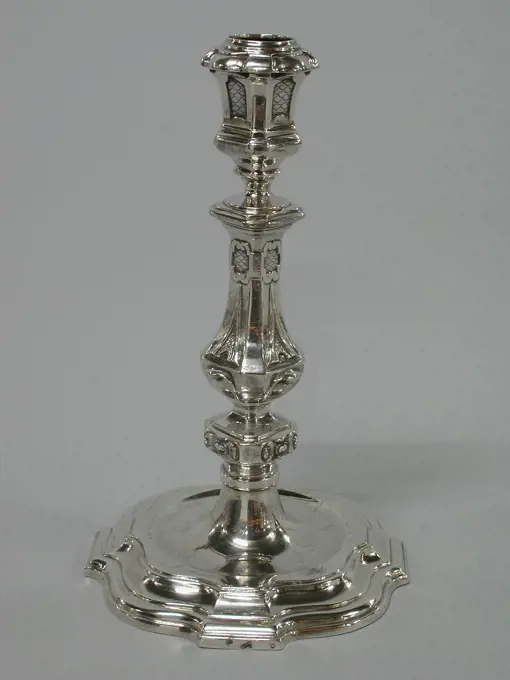
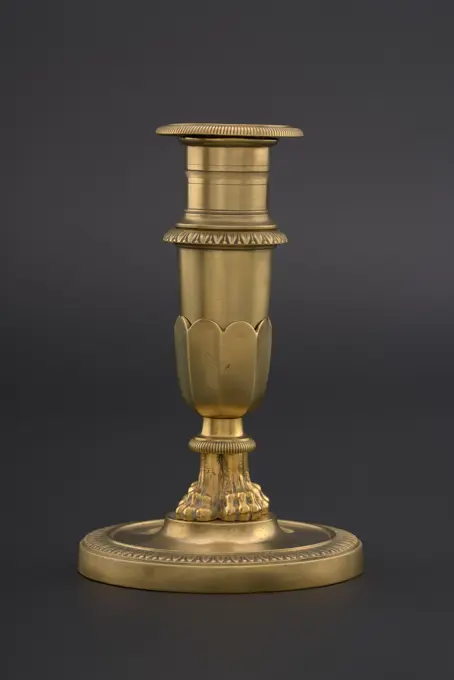
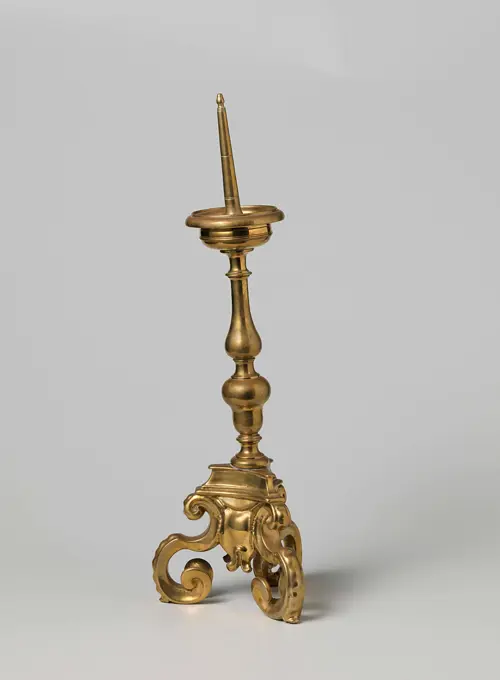
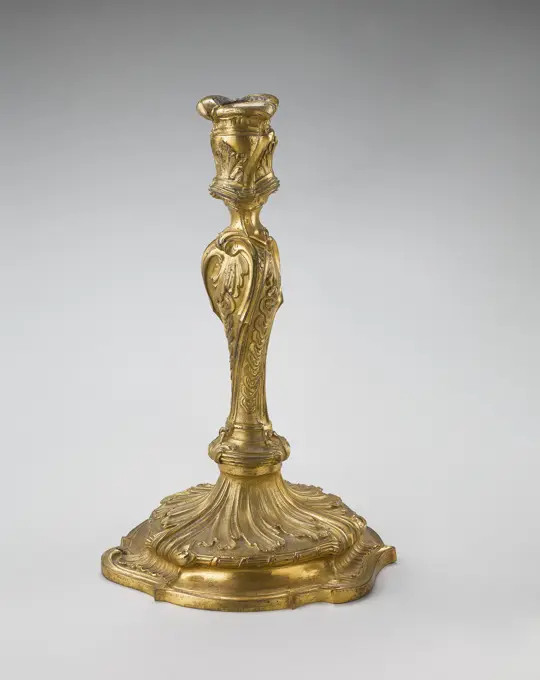
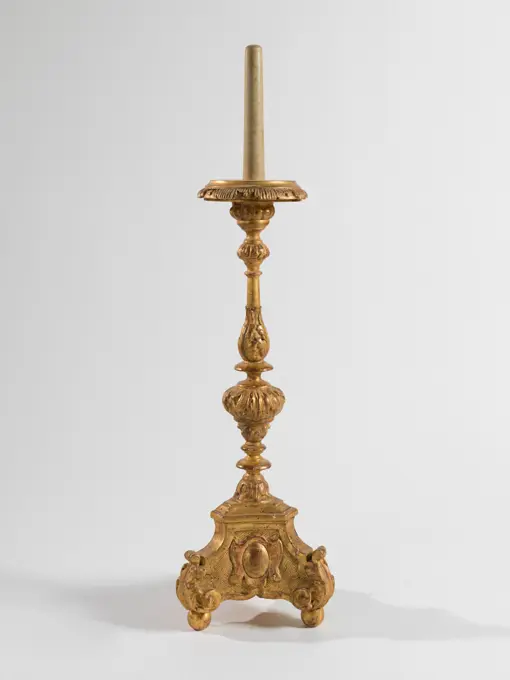
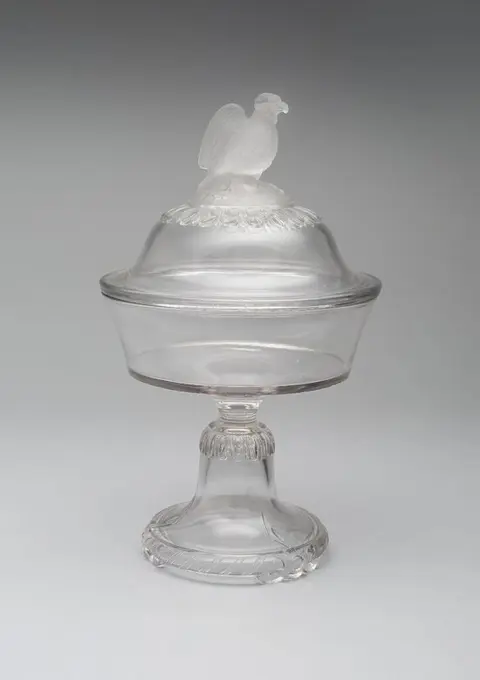
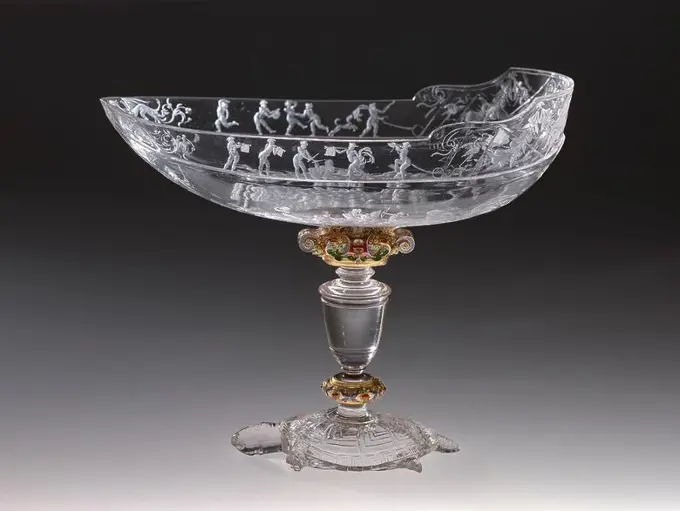
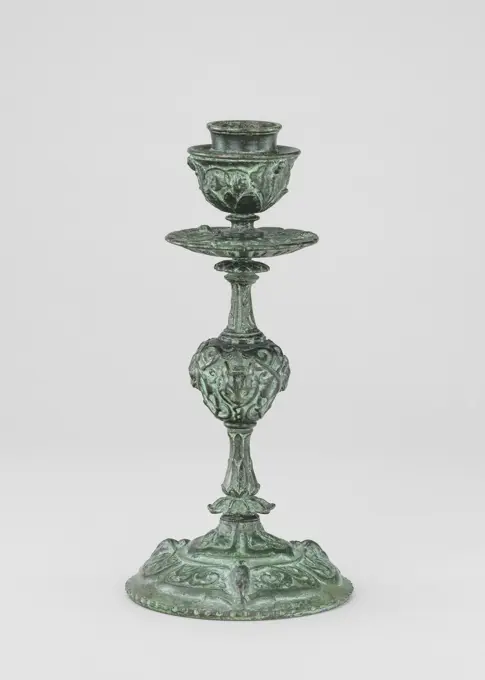
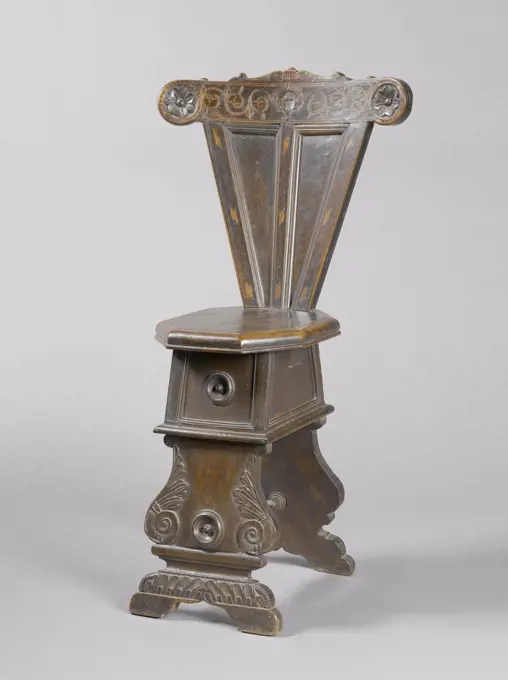
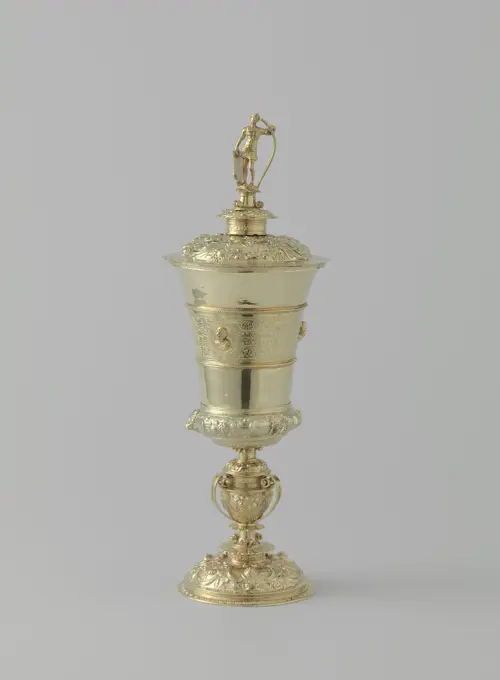
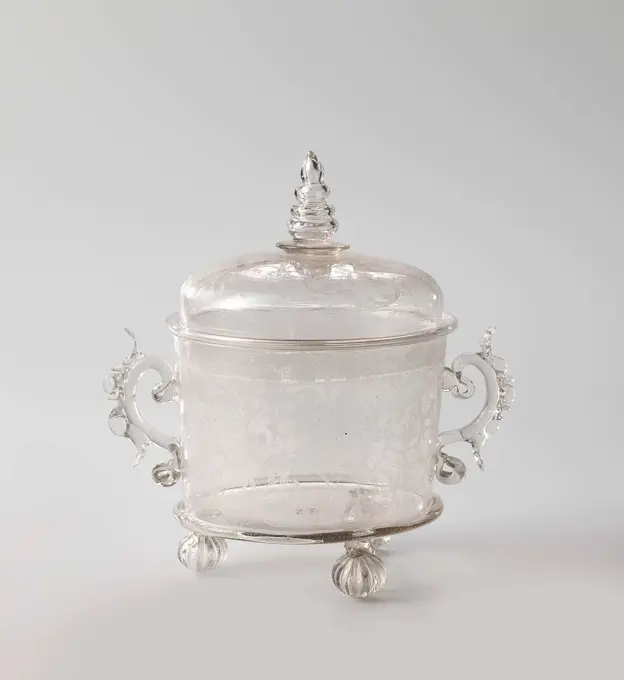
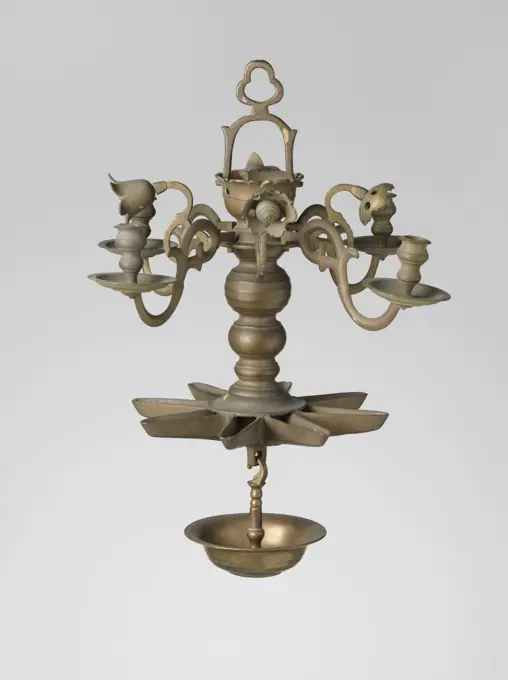
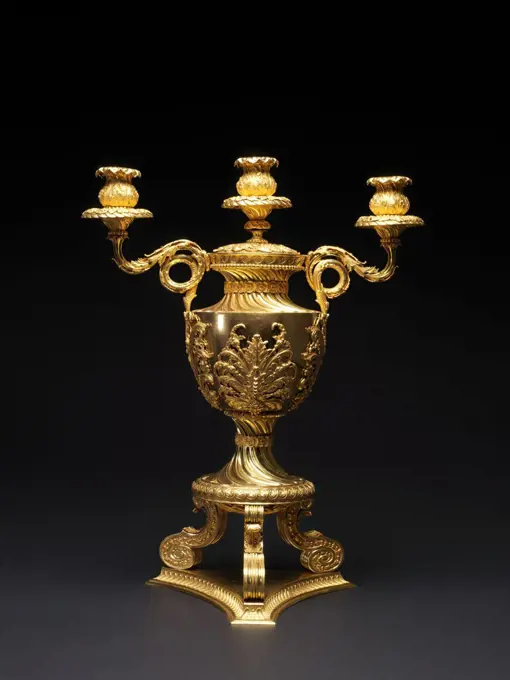
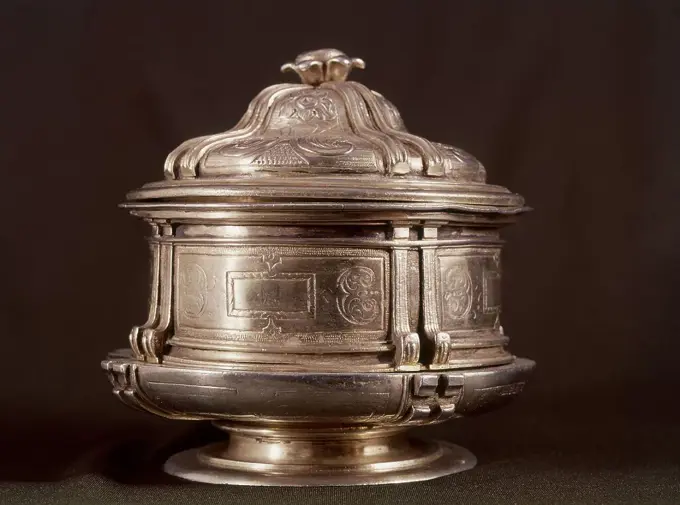
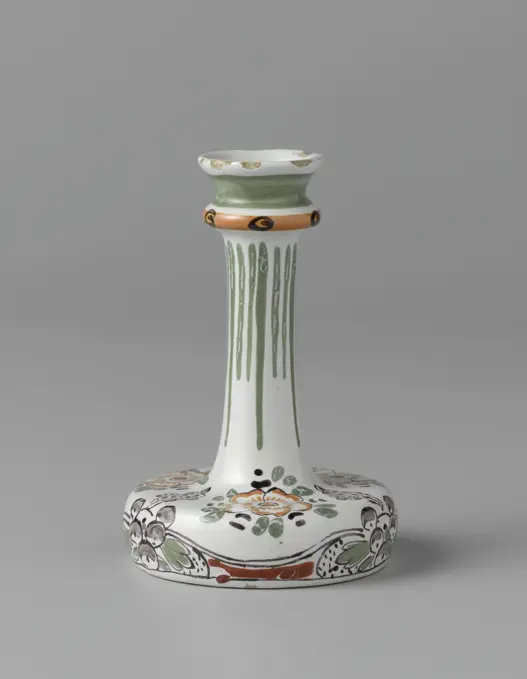
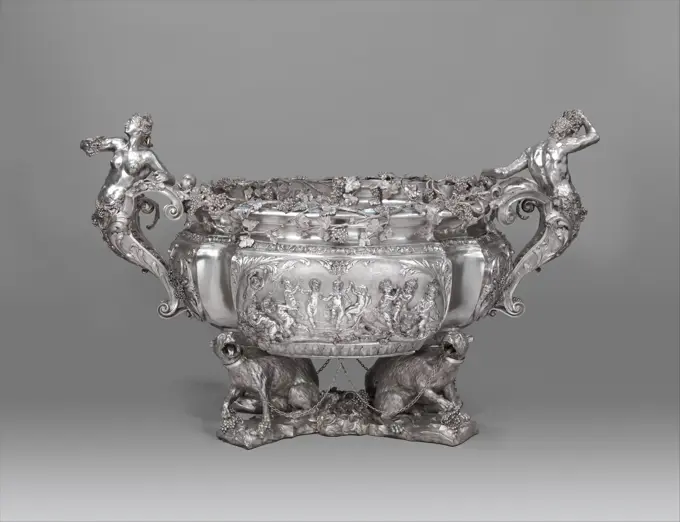
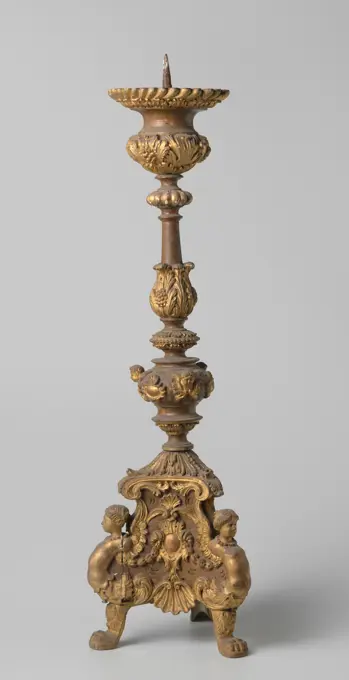
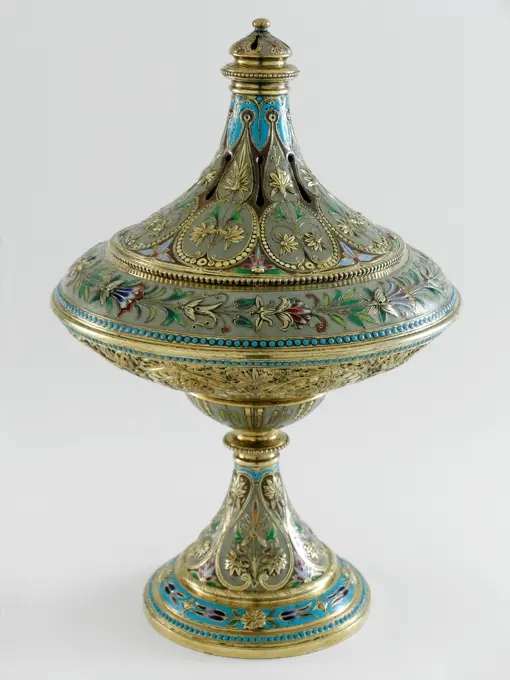
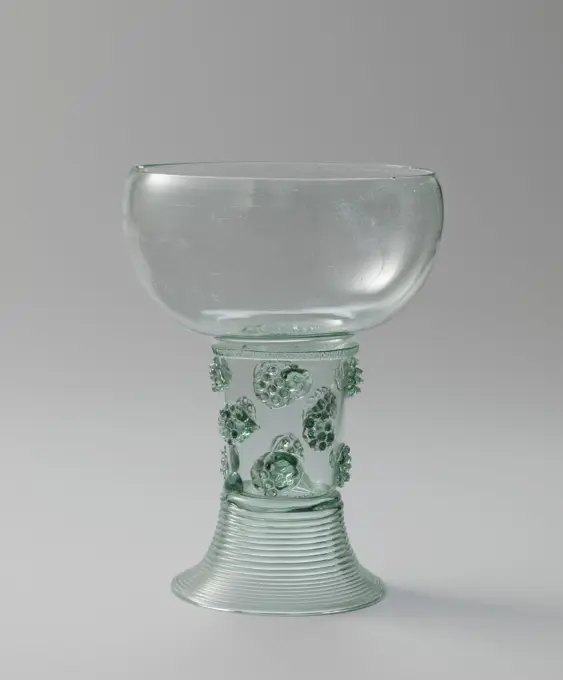
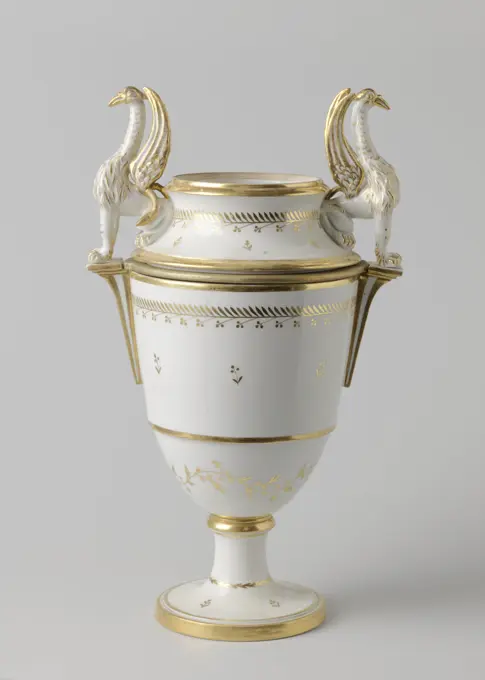
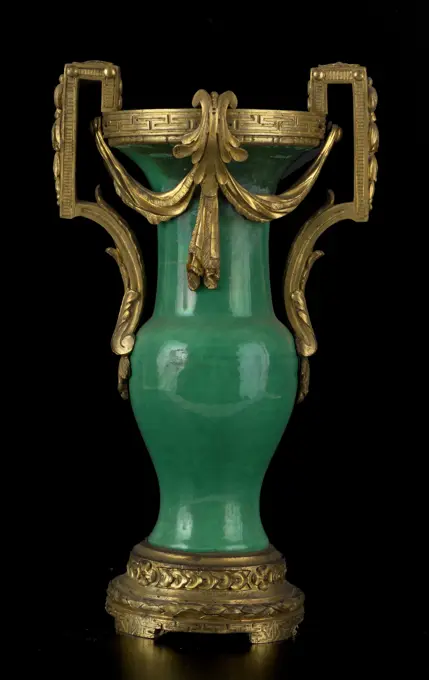
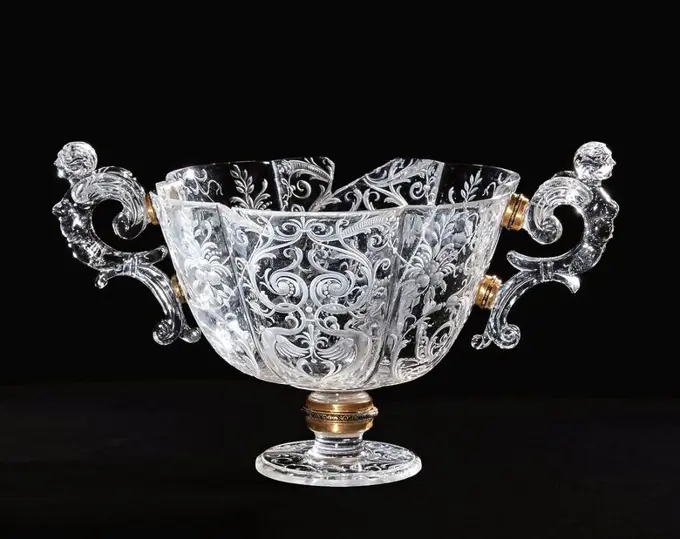
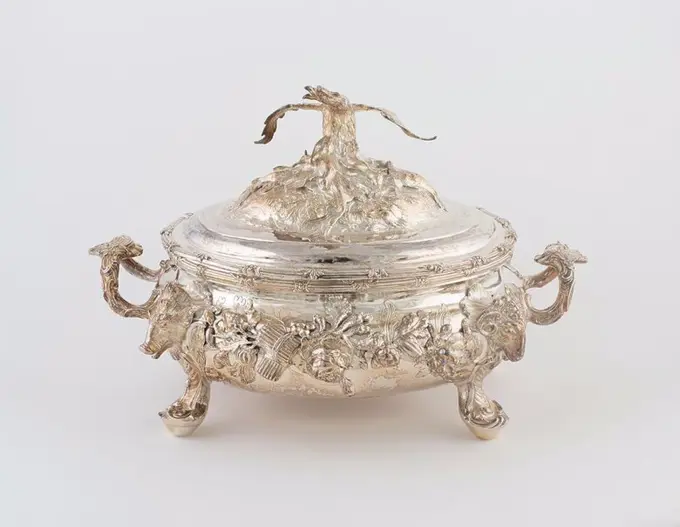
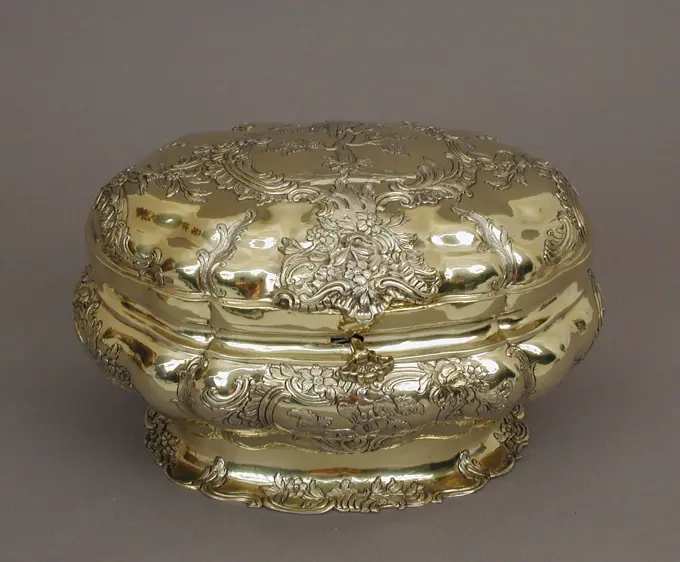
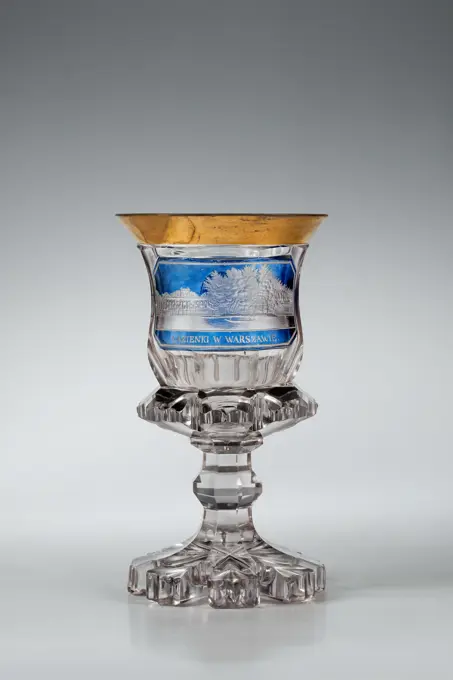
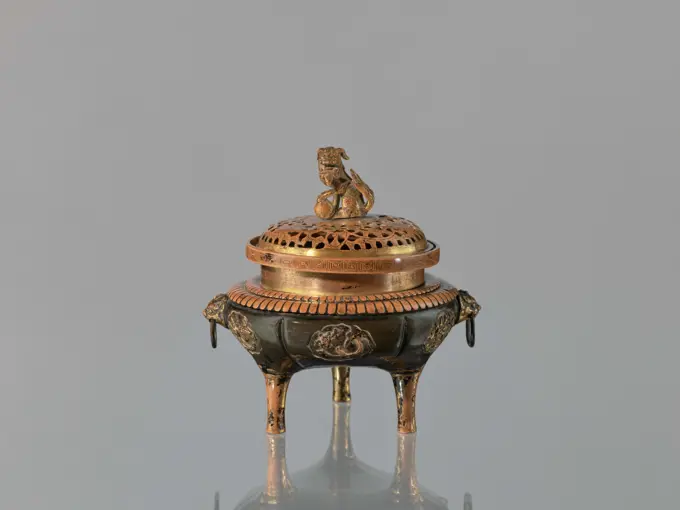
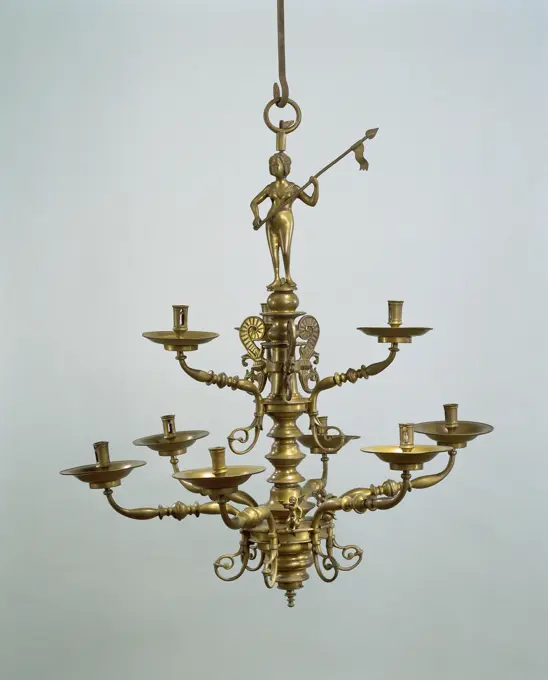
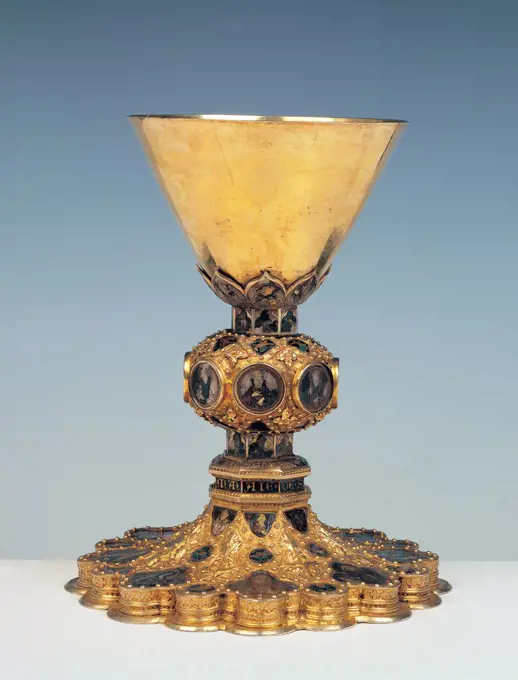
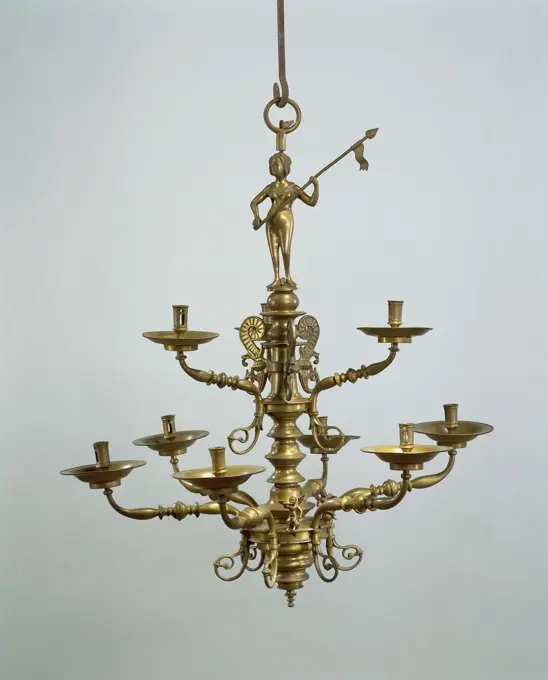
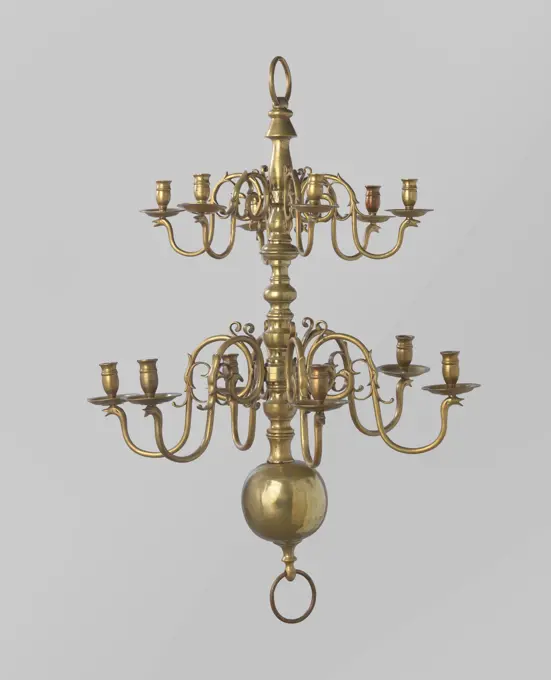
Drinking scale with allegories on pure and impure love, Matthias Molckman (attributed to), 1595 Drinking scale on foot, completely gilded. A baluster tribe rises from a vaulted base with raised in the middle, which carries the round bowl with a loose cover plate. In the scale, surrounded by a leaf wreath, a driven relief in which the pure and impure love are allegorically presented (see below). Various hunting performances are engraved in the edge. On the deck plate, in floating, masks on Rolwerk-Cartouches between fruit races. For the nodus and to the sections above and below, each three freestanding volutes. At the Nodus fruit festivals and lion masks in relief. The curve of the profiled foot, which is surrounded by three godron lists and from above is closed by a ribbed, hemisphere, is decorated with four lying female figures between Cherubs and Blacklingers. Middelburg silver (metal) gilding Drinking scale on foot, completely gilded. A baluster tribe rises from a vaulted base with Cup visited figurine knight; Lauer, David (fl. 1583-1619); approx. 1600 (1595-00-00-1605-00-00);Karyatyda, sheep's head (ornament), dolphins, flowers, mascarons, fruit, renaissance (style), knights, volutes, purchase (provenance)Altar Cruet. Culture: Central European. Dimensions: Overall: 8 3/4 x 4 1/16 x 3 3/4 in. (22.2 x 10.3 x 9.5 cm)vessel part only: 6 5/8 x 4 1/16 x 3 3/4 in. (16.8 x 10.3 x 9.5 cm). Date: mid-14th century.Altar cruets were used to mix water with wine for Holy Communion and were thus usually made in pairs. Although frequently crafted in silver throughout the Middle Ages, cruets, because they held the water and wine before consecration, were not required to be made of precious metals. For the same reason, the shape and decoration of the cruet were less standardized than those of the chalice and paten. This mid-fourteenth-century example is notable for its strong profile and restrained decoration. The form is characteristic of the silver production of a broad area of central Europe, making it difficult to determine a precise place of manufacture. Museum: Metropolitan Museum of Art, New York, USA.Galvanoplastic reproduction of a drinking bowl with the weapon of Zierikzee on the flat. Galvanoplastic reproduction of a drinking scale with a driven shield with carriers with the weapon of Zierikzee; the baluster-shaped strain with lion heads with rings; With inscription and dated 1674.. Driven cup with lid and feet of gold-plated silver. On the lid a Roman lance carrier with a broken lance (which may have been a freedom hat) and a shield on which the coat of arms of veert and inscription. On the chalice engraved two hands together and the weapons of Willem III and Van Veere. Inscription above that. A garnet at the foot. In the cup a knight with horse and shield. Master's sign: Swimming dolphin.Altar Cruet mid-14th century Central European Altar cruets were used to mix water with wine for Holy Communion and were thus usually made in pairs. Although frequently crafted in silver throughout the Middle Ages, cruets, because they held the water and wine before consecration, were not required to be made of precious metals. For the same reason, the shape and decoration of the cruet were less standardized than those of the chalice and paten. This mid-fourteenth-century example is notable for its strong profile and restrained decoration. The form is characteristic of the silver production of a broad area of central Europe, making it difficult to determine a precise place of manufacture.. Altar Cruet 469902Silversmith: Johannes Jansen, Silver pipe bowl, smoking pipe cookware smoking utensils silver, cast sawn engraved Round chafing ring slewing top edge on three curling feet wall outside (smashed) smoking lightingCrater vase. Korzec (manufaktura porcelany ; 1790-1832), factoryDouble salt 1620/21 R. P., London. Double salt. British, London. 1620/21. Silver. Metalwork-SilverCock lid, anonymous, c. 1575 - c. 1599 On the lid a female figure with hand mirror. Breisgau (possibly) gold (metal). On the lid a female figure with hand mirror. Breisgau (possibly) gold (metal).Simulated vase. Polished basalt, chiseled and gilded bronze. 1775. Paris, Carnavalet museum. Polished basalt, bronze chisel, gilding, gilding, sheet sheet, handle, vase, vase simulated, 18th 18th 18th 18th 18th 18th centuryCup with cover ca. 1560-70 German, Freiburg im Breisgau This cup and cover was at some point converted to a reliquary; hence the hook and eye for attaching the cover and the two small holes opposite for attaching cord and seal.. Cup with cover 193513Silver candlestick. Candlestick of silver. The round, lobed foot, is decorated with driven lobe ornaments. The alliance weapon with wedding knot of Gerard Meerman and Agneta Deutz is engraved on the foot.Turban shell cup, Jörg Ruel, c. 1600 - c. 1625 Knobbelhoorn cup with gold -plated silver frame. On the vaulted lid with driven leaf work a triton in half with harpoon in the right hand and a shield in the left hand. The shell is worn on the back of a kneeling Neptune, which holds a trident with both hands. The pedestal consists of openwork, stylized tendrils, on which a plate rests with driven waves. The shell is set in figural clamps with rolling work; The mouth rim is surrounded by a wide -ranging board with etched representations of fighting and sexual tritons, a neree and sea monsters. In the lid the weapon of Backer, placed on a ground, already present coat of arms. Under the bottom plate the same weapon, a private label and the initials GB. Nuremberg silver (metal). etching / gilding Knobbelhoorn cup with gold -plated silver frame. On the vaulted lid with driven leaf work a triton in half with harpoon in the right hand and a shield in the left hand. The shell is worn on the back Altar vase Löbell, MichaelSalt, 1640, George Gallant, Irish (Dublin), Irish (Dublin), active 1630s-1649, 4 1/2 x 5 3/4 x 5 3/4 in. (11.43 x 14.61 x 14.61 cm), Silver, Ireland, Charles IUnknown, Celadon Vase crackled. Porcelain sandstone with cracked celadon covered, golden bronze frame (Louis XVI period). Petit Palais, Museum of Fine Arts of the City of Paris.Goblet with Cover 1725-1735 Schleswig. Glass .Land;  beginning of the 19th century (1800-00-00-1810-00-00);Silversmith: Anthony Huijs, Silver pipe fittings on legs, smoking pipe stove smoking utensils silver, sawn cast Round chafing ring slewing top edge on three curling feet bottom underside (smashed) smoking lighting HuysSilversmith: Hendrik van Beest, Silver candlestick, candlestick candleholder lighting medium silver, cast (outer part profiled foot trunk and candleholder) Four-sided base with rounded corners composed of baluster-shaped hollow trunk the candleholder repeats the basic shape of the foot. Foot: ascending profile edges stem: rosettes leaf motifs and scaly panels candleholder: scalloped panels foot bottom outer part (incised) illuminationCenterpiece, 1838-1848. Charles-Nicolas Odiot (French, 1826-1868). Silver gilt; overall: 37 x 30.2 x 25.1 cm (14 9/16 x 11 7/8 x 9 7/8 in.). Made for Louis Philippe (1773-1850), King of France 1830-48.Candlestick;  19th century (1801-00-00-1900-00-00);Candlestick with foot in lobe style. Foot, trunk, fat catcher and pin are poured separately. The triangular base carried out in lobe is made up of three S volutes, which are connected by three cartouches, and carrying the triangular base for the trunk. This consists of a vase and a baluster. The profiled fat catcher includes a rib in the middle of the strongly curving edge. The candle pin decorated with grooved rings has been profiled to the foot and ends at the top of a gang. The candlestick is aged inside at the bottom to give more firmness. The trunk and candle pin are slightly crooked relative to the foot.Anonymous, torch, 1750. chiseled and gilded bronze. Carnavalet museum, history of Paris.Cup and Cover early 20th century (original dated 16th century) Hungarian. Cup and Cover 463215Anonymous. "Candelabra". Golden beech. 1700-1800. Paris, Carnavalet museum. 100082-3 FURNITURE"Old Abe/Frosted Eagle" pattern medium covered compote on pedestal. Attributed to Crystal Glass Company; Bridgeport, Ohio. Date: 1880-1890. Dimensions: 25.7 × 15.2 cm (10 1/8 × 6 in.). Glass. Origin: United States. Museum: The Chicago Art Institute, Chicago, USA.Vase offered to Balzac by Ida de Bocarmé. Bohemian crystal. Paris, Balzac house.. This unusually small terrine was probably made for John Hope, an Amsterdam merchant and banker, who was one of Schiotlings main clients.Silver tobacco spot, Arnoldus Coolhaas, 1757 Round, standing on three rocaille feet. The vaulted lid with raised center is crowned by a flower bud and decorated with Louis XV motifs. Utrecht silver (metal) Round, standing on three rocaille feet. The vaulted lid with raised center is crowned by a flower bud and decorated with Louis XV motifs. Utrecht silver (metal)Spice dish;  18th century (1785-00-00-1795-00-00);Annibale Fontana () / 'Turtle boat'. 1570 - 1590. Rock crystal / Hyaline quartz, Enamel, Gold. Museum: Museo del Prado, Madrid, España.Antoine Louis Barye, Candlestick, Cup Form, with Arabesques, Bell Flowers, Owls, and Panthers' Heads, model nd, cast 1845 1874 Candlestick, Cup Form, with Arabesques, Bell Flowers, Owls, and Panthers' HeadsToasting wineglass with cover ca. 1740 British, Newcastle with Dutch engraving. Toasting wineglass with cover. British, Newcastle with Dutch engraving. ca. 1740. Glass. GlassThey weigh;  19th century (1801-00-00-1900-00-00);Sgabello, chair of walnut, Anonymous, 1500 - 1600Candlestick with Floral Decor, Volkstedt-Rudolstadt Porcelain Manufactory, German, established 1762, porcelain, vitreous enamel, Candlestick with wide spreading base. And molded floral and scrollwork decoration. At center, a rocaille cartouche enclosing painted flowers., Germany, 18th century, ceramics, Decorative Arts, candlestick, candlestickPitcher; enameled tôle, woodCandle crown of two heights, each with eight arms, Anonymous, 1525 - 1550 The object consists of an iron rod and an iron split pin and the following cast parts of yellow copper: the hanging ring, the maria figure with the crown crowned on her head, the trunk, the lion's head with the tensile ring, twice eight arms with the there belonging fat catchers and candle holders. The hanging ring turns at the bottom into an eight -fold tube. The maria figure placed on the crescent moon is surrounded by a jet wreath. Her rug is decorated with punched star motifs, the hem of the mantle has been punched. The hair reaches the back to the waist. Her crown is composed of five leaves. The trunk is formed in such a way that there are two balls and a few double to be recognized by a rib holy -round profiles. The trunk has two stand rings with eight notches each, which are unnoticed, or are marked with one to seven points. The stand rings are decorated with fine grooves. On the bottom round, narrowing enBowl in gilt bronze mounts with figures in a landscape, anonymous, c. 1850 - c. 1878 Come from porcelain with flared wall caught in a gilded bronze frame, painted on the glaze in red, green, yellow, black and brown with people in a landscape. The bowl is completely covered with a gray, crackled glaze; On the wall a combat scene with warriors, some on horseback, three people in a pavilion and on a gate attack; On the inside of the bowl, offering a woman offering tea to three scholars at a pavilion; The edge has a decorative edge with a pattern with rosettes and a lobed cartouche with lucky symbols. The contemporary, possibly French, frame has two ears, an openwork edge, garlands and a square foot. Bottom with four-character Xuande brand. Famle Verte. China Come: Porcelain. Come: Glaze. Come:. frame: Gold (Metal). frame: bronze (metal) painting / vitrification / casting / gilding Come from porcelain with flared wall caught in a gilded bronze frame, painted on the glaze in red, green, yelKandelaar, Ebenezer Coker, 1764 Silver candlestick, with square base and baluster -shaped trunk. The candle holder has two ribbed edges and a loose fat catcher. London silver (metal) Silver candlestick, with square base and baluster -shaped trunk. The candle holder has two ribbed edges and a loose fat catcher. London silver (metal)Communion set. Central to the Protestant celebration of the Holy Communion is the remembrance of the Last Supper, when Christ and his disciples gathered for the last time. Christ asked that his suffering and death be commemorated with a communal meal. This is why wine is poured into cups and bread is placed on plates during religious services. This communion set from Dordrecht ranks among the most richly decorated altar plate.Goblet with Cover, Adriaen de Groet, 1561 - 1562 Cup with lid of gilded silver. Driven cartouches and fruit bounds on the profiled, curved foot, on the widened bottom piece and on the vaulted lid; On the latter also mascarons. The vase -shaped nodus, decorated, is contained in four band -shaped pierced clamps. The dilating chalice is divided into three horizontal strips by two profiles; Only the middle one is decorated: three raised heads (youth, adulthood and old age) against a background of fine band work and Maurkenken. The lid is crowned by a shielded warrior on a doubled pied-de-stable. the Bosch silver (metal) engraving / soldering / gilding Cup with lid of gilded silver. Driven cartouches and fruit bounds on the profiled, curved foot, on the widened bottom piece and on the vaulted lid; On the latter also mascarons. The vase -shaped nodus, decorated, is contained in four band -shaped pierced clamps. The dilating chalice is divided into three horizontal strips by two profiles; OnlPot with lid on legs, with a lace pattern. Pot with lid, cylindrical, standing on three spherical, ribbed legs. The bottom edge has been trimmed with a smooth wire. S-shaped ears with pinched combs. The vaulted lid has a double-folded edge and a conical, four-input button. Box and lid are engraved with the diamond in a lace pattern.Arm with candle crown candle holder, Anonymous, 1795 - 1800 The S-shaped arm has a curl at the end at the tribe side and turns outside into a thickening with screw hole. The candle holder is secured with the fat catcher. The round holder has a hol round pedestal, narrows upwards and then has an excellent edge. The fat catcher has a grooved ring at the top. This is the sixth arm, numbered with 6 round points. Amsterdam brass (alloy) casting The S-shaped arm has a curl at the end at the tribe side and turns outside into a thickening with screw hole. The candle holder is secured with the fat catcher. The round holder has a hol round pedestal, narrows upwards and then has an excellent edge. The fat catcher has a grooved ring at the top. This is the sixth arm, numbered with 6 round points. Amsterdam brass (alloy) castingArm van sabbathlamp, unknown, 1700 - 1800 Arm from a Sabbath lamp. The S-shaped arm ends towards the trunk in a curl and turns outside into a flat mounting part, in which the bulb and hollow round is screwed to the base of the foot on the profiled round fat catcher. This is the third arm, numbered with 3 round points. Nuremberg brass (alloy) casting Arm from a Sabbath lamp. The S-shaped arm ends towards the trunk in a curl and turns outside into a flat mounting part, in which the bulb and hollow round is screwed to the base of the foot on the profiled round fat catcher. This is the third arm, numbered with 3 round points. Nuremberg brass (alloy) casting. Candlestick consisting of a square foot and a round trunk, candle holder and separate fat catcher. Signature and dated.Anderson Candelabra, 1765-70 Ormolu Candelabra, one of a pair Manufacture attributed to Diederich Nicholas Anderson, Design attributed to James 'Athenian' Stuart, One of a pair of George III ormolu three-branch candelabra, see also 2005.4465.2, Applied Arts, 18th Century, Candle, Metal, LampRenaissance Renaissance Cup Rudolf II; Hocke, Hans (Fl. 1577-1611); 1577 (1577-00-00-1577-00-00);Rudolf II Habsburg (Roman-German emperor-1552-1612), Shooting Brotherhood, Okuciowo-Cygowo (Ornament), Two-headed Eagles, Putta, Renaissance (Style)Tureen, 1753. Edward Wakelin (British, 1784). Silver; overall: 24.3 x 40.4 x 22.8 cm (9 9/16 x 15 7/8 x 9 in.). A very successful silversmith, Edward Wakelin may have been more a businessman than a craftsman or designer.CAJA DE CORPORALES EN PLATA DORADA. Location: CATEDRAL-INTERIOR. Toledo. SPANIEN.Candlestick 1756-57 Jean-François Balzac. Candlestick 192337Vase with wide flattened body, long neck and outstanding mouth edge including a ring, the porcelaine bottle, c. 1880 - c. 1920 Vase of earthenware, with broadly flattened body and long neck and outstanding mouth edge including a ring. Decorated with fruits, flowers and leaves in the colors black, green and orange. On the neck vertical stripes. Delft earthenware. glaze Vase of earthenware, with broadly flattened body and long neck and outstanding mouth edge including a ring. Decorated with fruits, flowers and leaves in the colors black, green and orange. On the neck vertical stripes. Delft earthenware. glazeWine cistern ca. 1880 After an original by Charles Frederich Kandler This is an electrotype reproduction of the magnificent silver wine cistern commissioned by the English banker and silversmith Henry Jernegan (ca. 1688-1745/6) for his client Littleton Pointz Meynell (ca. 1695-1752) who was desirous to have the "largest and finest silver cistern that ever was or could be" A first sketch of the design honoring the wine god Bacchus was done by the antiquarian and engraver George Vertue (1684-1756) and the wax models for the figures were executed by the Flemish-born English sculptor John Michael Rysbrack (1694-1770). The actual cistern, now in the Hermitage Museum, St. Petersburg, was the work of the silversmith Charles Frederick Kandler (act. 1720-1770s). When this remarkable piece was finally ready in 1734, Meynell had changed his mind and Jernegan was stuck with the extravagant object for which he failed to find a buyer. Offered as first price in a lottery of 1739, the wine cistern enPair of candlesticks ca. 1776-78 Probably by Tudor and Leader. Pair of candlesticks. British, Sheffield. ca. 1776-78. Sheffield plate. Metalwork-SilverplateChurch candlestick. Large wooden carved church candlestick, standing on three legs, showing women's figures. The knot is decorated with winged angel heads. The sculpture is golden, on a white ground. A pin is available to turn the candle.DecanterVase, the ears of which consisted of hoses enticed each other. Vase of porcelain. Biscuit. The ears consist of hoses entangled, of which the heads with arrow-shaped tongues rest against the wall of the vase. Their lowercuts enters into the middle of the vase around a men's head. On the shoulder embossed a Frisian of Acanthus leaves. On the neck and mouth edge elongated leaves in relief.Potpourri. Elkington and Co. (England, Birmingham, 1829-1963). England, Birmingham, circa 1873. Furnishings; Accessories. Copper electroplated with silver, gold, and enamelDrinking cup with a portrait of Emperor Charles V. Whether an object is religious’ or secular’ in nature depends on its function. In the case of this cup, both apply. It bears a portrait of Holy Roman Emperor Charles V, indicating that it originally was intended as a secular object. However, the inscription records that it served as a communion cup at the first Protestant service held in the Dutch town of Vlissingen in 1572.Roemer with three rows of raspberry prunts, anonymous, c. 1675 - c. 1700 High, concave base of wounded glass wire. Inserted soil. Cylindrical shaft blown on one piece with bowl -shaped chalice. On shaft three rows of Braamnoppen. The transition from the chalice to the shaft indicated by a ribbed thread. Germany glass glassblowing High, concave base of wounded glass wire. Inserted soil. Cylindrical shaft blown on one piece with bowl -shaped chalice. On shaft three rows of Braamnoppen. The transition from the chalice to the shaft indicated by a ribbed thread. Germany glass glassblowingChalice 1755-1765 Hungary. Silver gilt .Garniture of five vases, Theo Colenbrander, 1886 Vase with lid from a series of five pieces, design Colenbrander. Marked: WG with the letter F in between with an extra crossbar, hedge and b (= 1886). The Hague earthenware Vase with lid from a series of five pieces, design Colenbrander. Marked: WG with the letter F in between with an extra crossbar, hedge and b (= 1886). The Hague earthenwareSalver (Germany), ca. 1725; Made by Johann Erhard Heuglin II (active 1717 - 1757); gilt silverWinged glass. Norymberga, engraverLamp. Culture: American. Dimensions: H. 12 1/8 in. (30.8 cm). Maker: Adams and Company. Date: 1870-80. Museum: Metropolitan Museum of Art, New York, USA.Candlestick with twisted trunk and eight -lobe base, anonymous, c. 1625 - c. 1650 The candlestick is composed of the following parts driven: the foot, the nodus, the trunk, the fat catcher and the candle pin. There are two profiled rings around the top and bottom of the trunk. On the wide, curved, eight lobes decorated, the fairly flat nodus is placed, the decoration of which corresponds to that of the foot. The tribe is twisted. The fat catcher has the shape of an eight -leaf rosette. The candlestick has a hole on the edge of the foot and above it an opening in the Nodus. Stam and fat catcher are soldered. Northern Netherlands (possibly) brass (alloy) soldering The candlestick is composed of the following parts driven: the foot, the nodus, the trunk, the fat catcher and the candle pin. There are two profiled rings around the top and bottom of the trunk. On the wide, curved, eight lobes decorated, the fairly flat nodus is placed, the decoration of which corresponds to that of the foot.Vase 1828-38 Probably decorated by Thomas Tucker This pair (see also 1992.362.2) of ornamental vases recalls the popular French form in their classical ovoid shape and gilded caryatid handles. The finely painted views, in this case of European landscapes, were probably derived from prints or travel books of the time.. Vase 14318Komfoor van brass. The object consists of the following cast or rotated from plate, then riveted parts: the in-and-pivotted connections on claw legs and with buttons on top, a container and the profiled ring. Foldable sites in the form of a French lily are hinged to the connecting parts. Two eyes are riveted to the profiled ring, to which rings are attached, with which the object can be included.Benjamin Halsted Myer Myers, Sugar Bowl and Cover, c. 1756-58, silver.Kandelaar, Jan Bonket, 1781 Golden, tormented, round candlestick on a vaulted foot. The edge of the foot is sculpted. The trunk is baluster -shaped. The candle holder is smooth and the fat catcher has the shape of a six -leaf flower. The candlestick is marked: stk. = Amsterdam, Jrl. = W (1781) and Mt. = Jan Bonket. Amsterdam gold (metal) Golden, tormented, round candlestick on a vaulted foot. The edge of the foot is sculpted. The trunk is baluster -shaped. The candle holder is smooth and the fat catcher has the shape of a six -leaf flower. The candlestick is marked: stk. = Amsterdam, Jrl. = W (1781) and Mt. = Jan Bonket. Amsterdam gold (metal)Old russian tea samovar with tray Old russian tea samovar with tray isolated on white background Copyright: xZoonar.com/AndreyxEreminx 7166192Kastanjevaas decorated with griffins, porcelain factory aan den Amstel, c. 1810 vase Chestnut cheese decorated with griffins. NetherlandsTureen with Cover, Lead-glazed earthenware (cream ware”), Elliptical in outline, with ogee sides, twisted loop handles and a high foot. Raised decoration of plumrose scrolls. Cover has similar decoration and a twisted handle terminating in raised leaves and a floral rosette., Leeds, England, late 18th century, ceramics, Decorative Arts, Tureen with Cover. Bowl with lid, from gold. Vaulted foot with scalloped edge. Baluster-shaped strain. Concave funnel-shaped chalice. Vaulted profiled lid, with button in the shape of a lion. Foot, trunk, chalice and lid are decorated with volutes and seed beads. Two cartouches with allegorical representations on the chalice. In the first cartouche, Minerva guides a child to the temple under the watchful eye of the Godiness and the Vlijt. In the second cartouche a marriage ceremony is being taken away in the presence of Juno and Venus. Between the cartouches in his weapons of the march Jonker Johan van Borssele van der Hoge (1707-1764) and Anna Margaretha Elisabeth Coninck (1733-) And the weapons of the couple Mr. Wilhem van Citters (1685-1758) and Maria Kien (1694-1753) depicted, ceased by angels. The lid knob presents a lion rising out of the water with the Zeeland arms spell lucor et emergo.Anonymous. Vase mounted. Céladon, golden bronze, 1775-1785. Paris, Cognacq-Jay museum. 78926-16 Anse, bronze Dore, Celadon, Ceramique, Gorn, Vase Monte, Green, 18th 18th 18th 18th 18th 18th 18 centuryWorkshop of the Sarachi () / 'Rock crystal drinking vessel with four lobes and handles with fantastical creatures'. 1590 - 1610. Rock crystal / Hyaline quartz, Enamel, Gold. Museum: Museo del Prado, Madrid, España. Author: TALLER DE LOS SARACHI.Tureen with Cover. Peter Archambo I; English, 1680-1768; London, England. Date: 1745-1746. Dimensions: H. 28.9 cm (11 3/8 in.). Silver. Origin: London. Museum: The Chicago Art Institute, Chicago, USA.Goldsmith's art, Italy, 16th century. Engraved rock crystal pitcher with two handles, bands in enamelled gold, 20x20x15 cm.Arm with candle crown candle crown of two heights, Anonymous, 1650 Candle belonging to a brass candle crown of two heights. The S-shaped arm has a curl at the start, halfway through a dolphin head and turns outside into the flat thickening with a screw hole. The candle holder is secured with the fat catcher. The fat catcher is ribbed at the bottom of the opening and has one down and a slightly excellent edge. The Cylindrian candle holder has a profiled and an excellent edge, two grooved rings, a rib and a profiled narrower bottom piece, which turns into a protrusion with a thread with a center hole. The pin to attach the arm is cone -shaped with a round button on top. The Vetvanger has closed a close one, which indicates that the candle crown has ever been elected. This is the first arm of the upper position ring, numbered with the number 5. Amsterdam (possibly) brass (alloy) casting Candle belonging to a brass candle crown of two heights. The S-shaped arm has a curl at the start, halfArm with candle crown candle crown of two heights, Anonymous, 1650 Candle belonging to a brass candle crown of two heights. The S-shaped arm has a curl at the start, halfway through a dolphin head and turns outside into the flat thickening with a screw hole. The candle holder is secured with the fat catcher. The fat catcher is ribbed at the bottom of the opening and has one down and a slightly excellent edge. The Cylindrian candle holder has a profiled and an excellent edge, two grooved rings, a rib and a profiled narrower bottom piece, which turns into a protrusion with a thread with a center hole. The pin to attach the arm is cone -shaped with a round button on top. The Vetvanger has closed a close one, which indicates that the candle crown has ever been elected. This is the first arm of the upper position ring, numbered with the number 1. Amsterdam (possibly) brass (alloy) casting Candle belonging to a brass candle crown of two heights. The S-shaped arm has a curl at the start, halfKastanjevaas lid, Porcelinfabriek aan den Amstel, c. 1810 lid. vase Kastanjevaas lid. Netherlands porcelainLarge oval box (one of a pair) 1775-77 Gottlieb Satzger The boxes and accoutrements of a toilet service were often made for stock; so, rather than being specially commissioned, a service might be assembled from pieces that were already on the shelf. The whole was usually supplied in a fitted leather case; as a household moved from country to city for the annual season, they transported their silver as well. Gottlieb Satzger was a younger brother of Johann Martin Satzger I, who marked the smaller boxes of the same model.. Large oval box (one of a pair). German, Augsburg. 1775-77. Silver gilt. Metalwork-SilverTureen and Stand. Marked as by Jean-Françoise Dapcher; French, 1721-1780; Attributed to François-Thomas Germain; French, 1726-1791. Date: 1773-1774. Dimensions: Overall: H. 34.3 cm (13 3/4 in.); Diam. 49.2 cm (19 3/8 in.)Tureen: 28.6 × 42.6 × 29.2 (11 1/4 × 16 3/4 × 11 1/2 in.). Silver. Origin: France. Museum: The Chicago Art Institute, USA. Author: FRANCOIS-THOMAS GERMAIN.Goblet. Huta szkła "Czechy" (Trąbki ; 1836-1939), glass worksJar and lid, Glass, Tall urn-shaped body; short fluted stem; square base with star cutting on bottom; high domed lid with tall faceted finial; body cut with row of narrow flutes, band of diamonds, a garland circlet, wide flutes down to base; cover cut with conforming pattern; glass greenish, bubbly, heavy., Waterford, Ireland, ca. 1800, glasswares, Decorative Arts, Jar and lidCandelabrum 19th century, after 1769 original French This electrotype is after an eighteenth-century original (1769), at the time of reproduction, in the Winter Palace, St. Petersburg.. Candelabrum. French. 19th century, after 1769 original. Silver gilt on base metal. Metalwork-ElectrotypeStanding cup with cover ca. 1855 Engraved by Franz Paul Zach. Standing cup with cover. German, Munich. ca. 1855. Glass, silver gilt. Engraved by Franz Paul Zach (1819-1881). GlassGarden Vase. This vase, one of a set of two, is from Enghuizen Estate near Lochem. During the Second World War this 19th-century country house was used as a military hospital, and torn down shortly thereafter. The vases will have originally come from an older country manor. They are made of marble from the famous Carrara quarries in Italy and have two handles in the shape of female busts.Cover for a Tureen, 1753. Edward Wakelin (British, 1784). Silver; overall: 24.3 x 40.4 x 22.8 cm (9 9/16 x 15 7/8 x 9 in.). A very successful silversmith, Edward Wakelin may have been more a businessman than a craftsman or designer.Hand bell, Anonymous, 800 - 900Ding-typ censer (kôro) with lid. unknown, craftsmanEwer 19th century Possibly by Alexandre Gueyton. Ewer 187135Diana and Actaeon Cup, Paulus Willemsz. Van Vianen, 1610 The round cup stands on a hollow curved, rejuvenating base, has a bulb body. The body is divided by three convex tires, the middle one with a bay leaf, divided into a frieze with main frame. A continuous forest landscape has been installed on the Frisian, in which both the encounter between the bathing Diana and Prince Actaeon, and his death were included by his hunting company. The body of the vase -shaped button is made up of abstract ornament. Fully signed on the underside of the foot: S: Caes.m.tis.aur. Paulus de Viana ultrajectensis.fe. 1610. Prague gold (metal) casting The round cup stands on a hollow curved, rejuvenating base, has a bulb body. The body is divided by three convex tires, the middle one with a bay leaf, divided into a frieze with main frame. A continuous forest landscape has been installed on the Frisian, in which both the encounter between the bathing Diana and Prince Actaeon, and his death were included by . Small arm with the accompanying fat catcher and holder. The labeled arm has a bol and hollow-profiled nodus in the middle and thickened a little on either side. At the trunk she walks out in spiral curls. It goes outwards in the screw ends of iron, on which the candle holder can be attached. The round fat catcher has lowered edges. The round in each other's extended openwork holders have holronde feet, which are screwed on the arms.Chalice of Nicholas IV, by Guccio di Mannaia, 1291 - 1318, 13th Century, pressed silver, embossed and gilded and enamel. Italy: Umbria: Perugia: Assisi: Treasury Museum of San Francesco Basilica. Whole artwork. Chalice silver gold enamel decoration. Sauce bowl, oval, spouts at the ends and ribbed ears attached to the center of both sides. Along the corrugated upper edge, an imposed profile, including the crowned alliance weapon of parts of Wijhe in engraving, consisting of two oval shields: 1 on a crossbar two surrounded boar heads; 2 A climbing lion in a field strewn with blocks.. The object consists of two iron rods, two copper skewers and the following parts of yellow copper: the hanging ring, the figure of a naked woman with spear and vaantje, three ornamental elements, two angels, the trunk, the button, six and three arms with the fat catchers and holders associated with it. The round hanging ring leaves at the bottom in a severe tube piece. The standing naked women's figure (Venus) is on a ground with a hole in the middle (to be able to attach a key in the iron rod) and a notch on the edge. She holds a rocket with a vaantje. To her neck she wears a chain (). The hair is draped around her head. On the head a short iron rod has been applied to the hanging ring. The strain is profiled by bulb and hollow, at the top of a stand ring with notches for the three ornaments, then a stand ring with notches for the three upper arms, then a stand ring with notches for the lower six arms and with six holes locating the on one Bulb seated bazuinengels. All notches and Arm of a candle crown in two heights, Anonymous, 1890 - 1910 The arm has an S-shape, ending out in a snake head and on the other end in bird heads. The arm is decorated with curls there. Screws have been applied in the protrusion on the candle holder, the arm or at the end of the connecting rod. This is the sixth arm of the upper position ring, numbered with the number 6. Netherlands brass (alloy) casting The arm has an S-shape, ending out in a snake head and on the other end in bird heads. The arm is decorated with curls there. Screws have been applied in the protrusion on the candle holder, the arm or at the end of the connecting rod. This is the sixth arm of the upper position ring, numbered with the number 6. Netherlands brass (alloy) casting