Ornate Drinking Vessels

Lavishly designed drinking vessels and bowls made from metal, featuring intricate engravings and decorative elements from historical contexts.
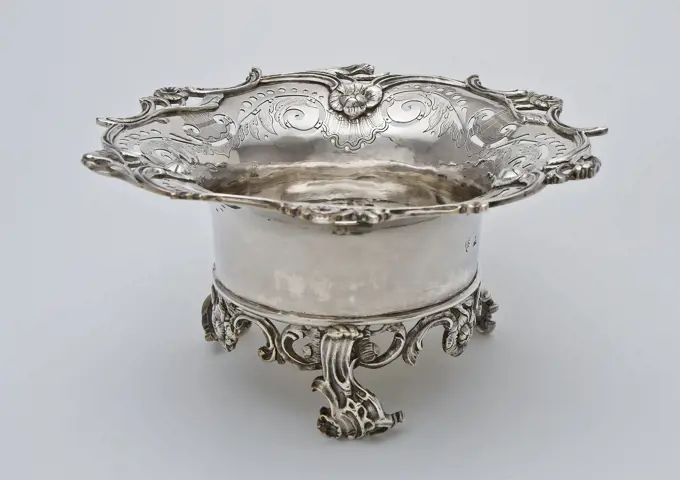
Silversmith: Johannes Jansen, Silver pipe bowl, smoking pipe cookware smoking utensils silver, cast sawn engraved Round chafing ring slewing top edge on three curling feet wall outside (smashed) smoking lighting
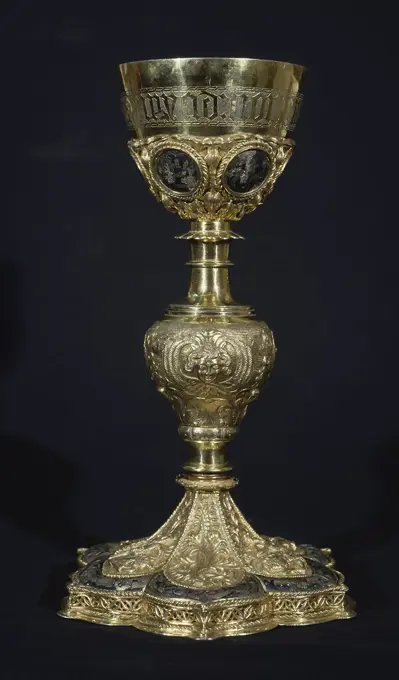
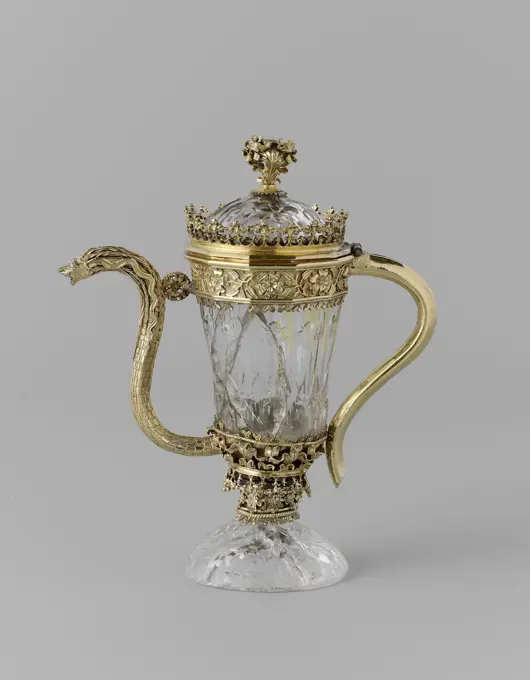
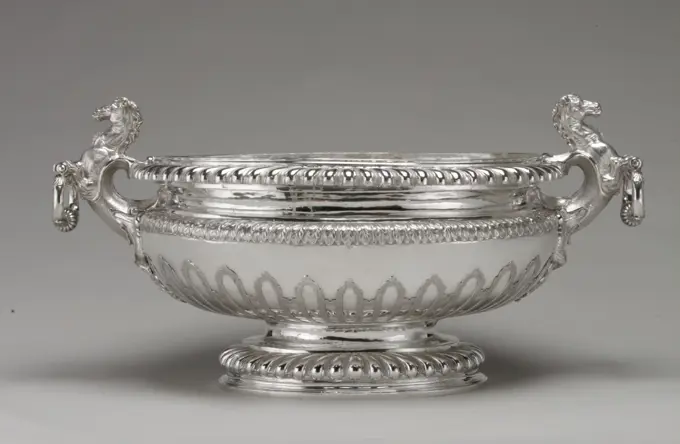
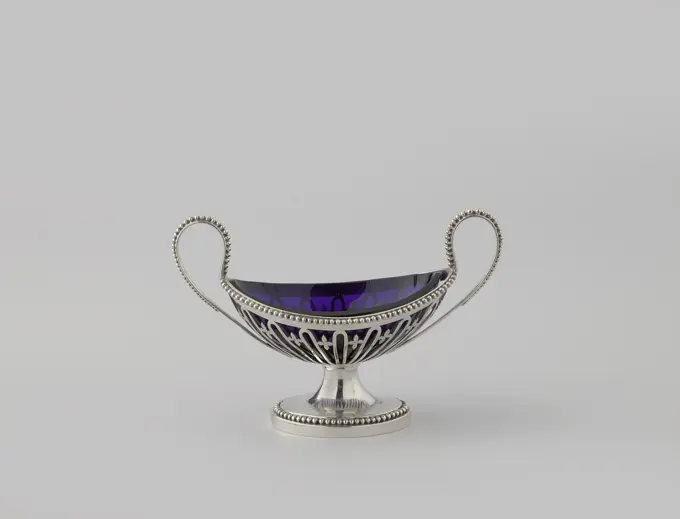
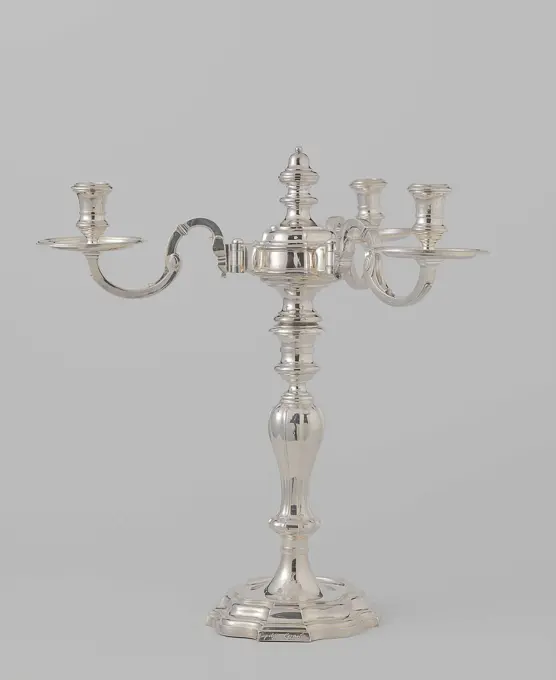
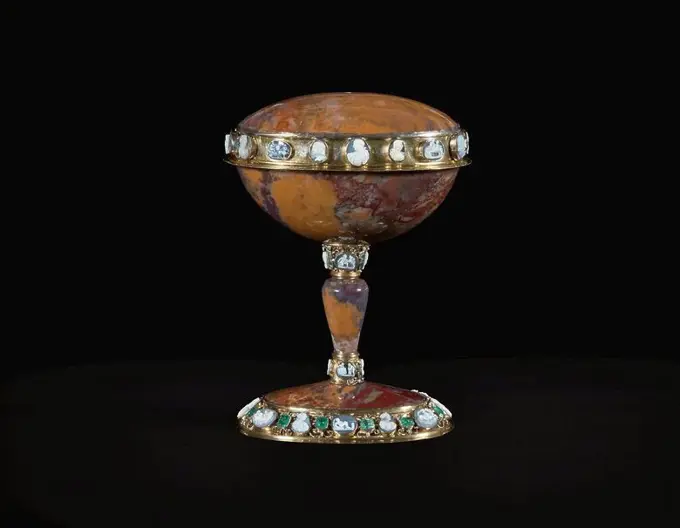
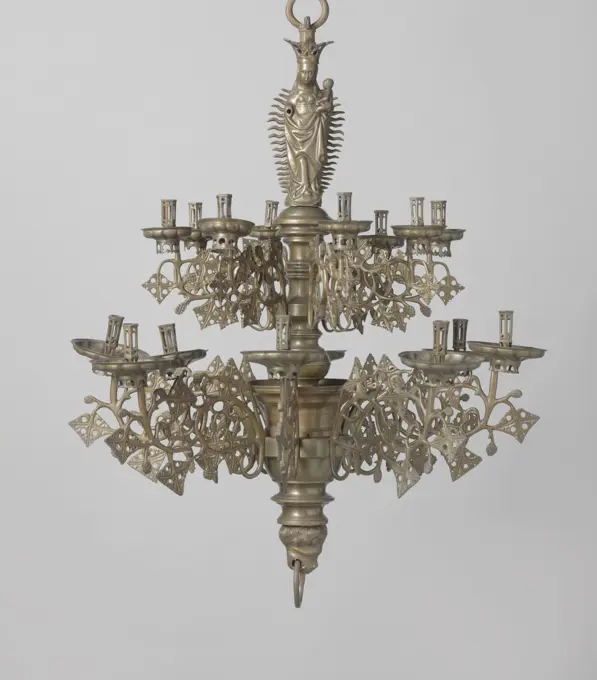
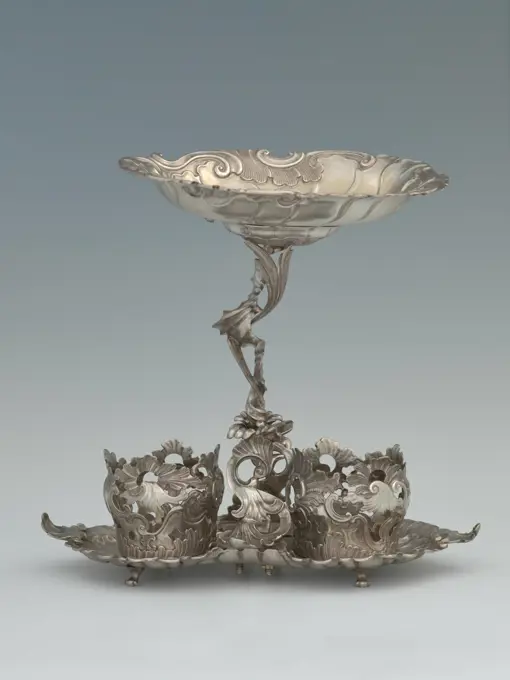
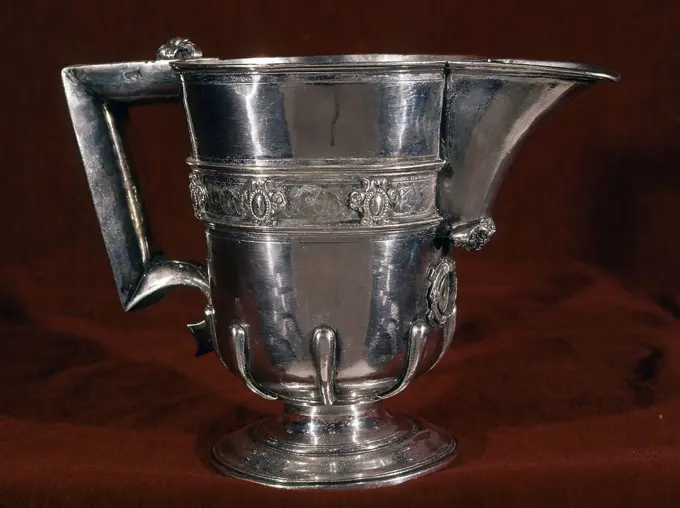
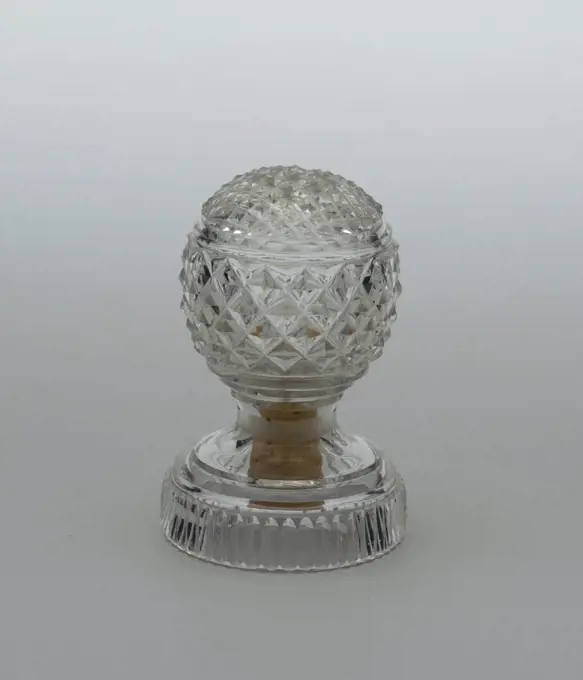
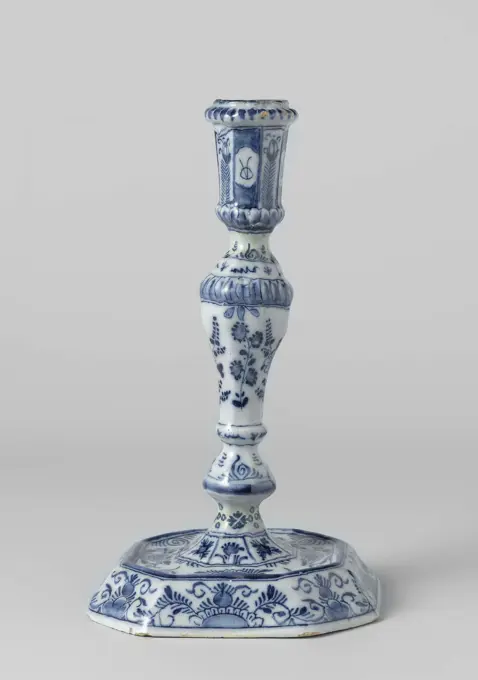
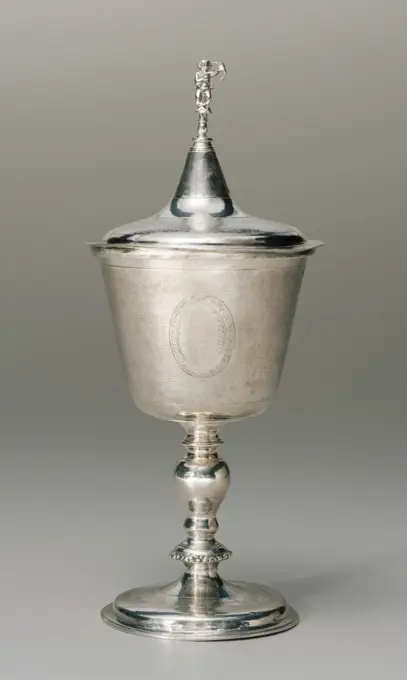
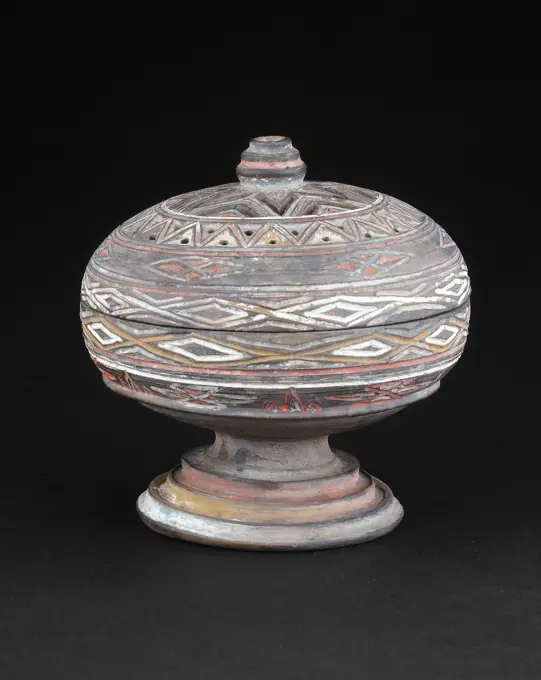
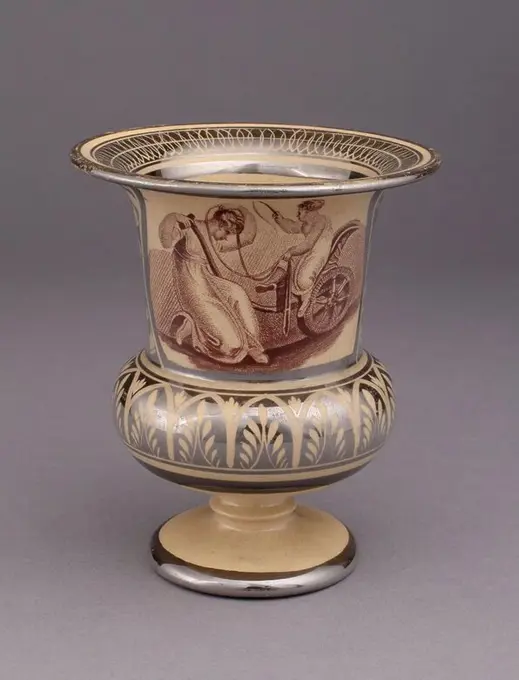
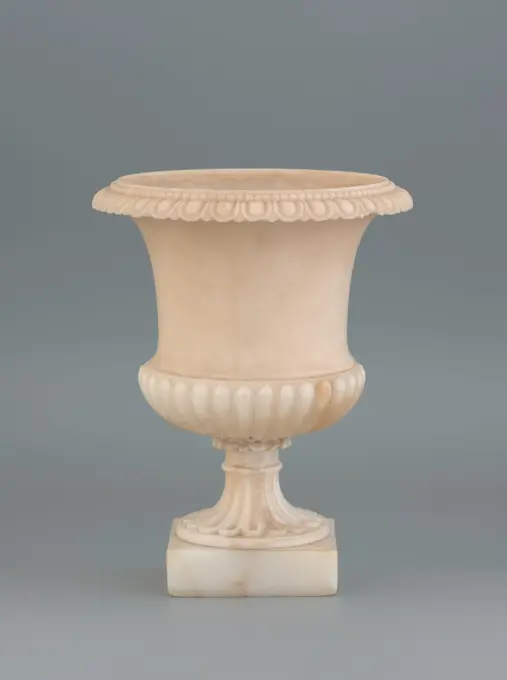
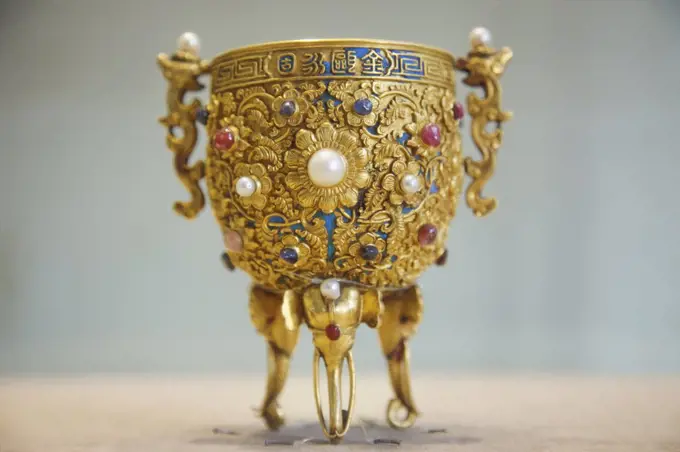
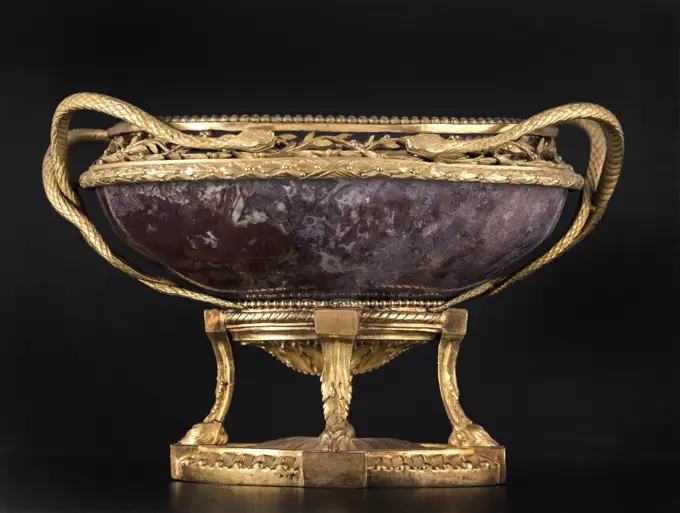
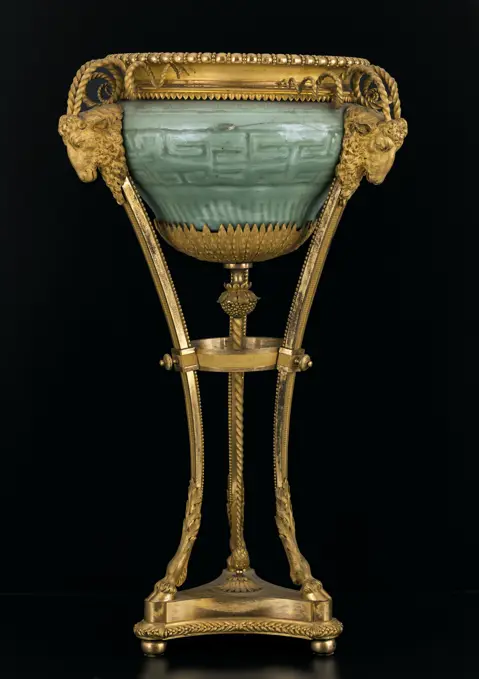
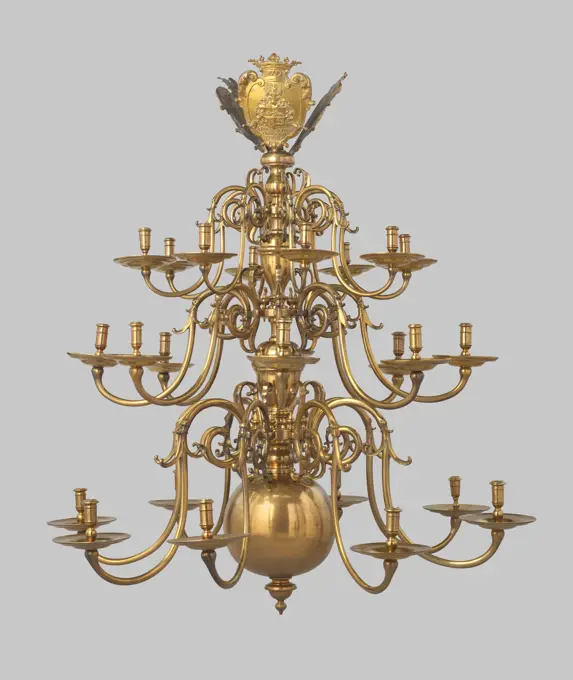
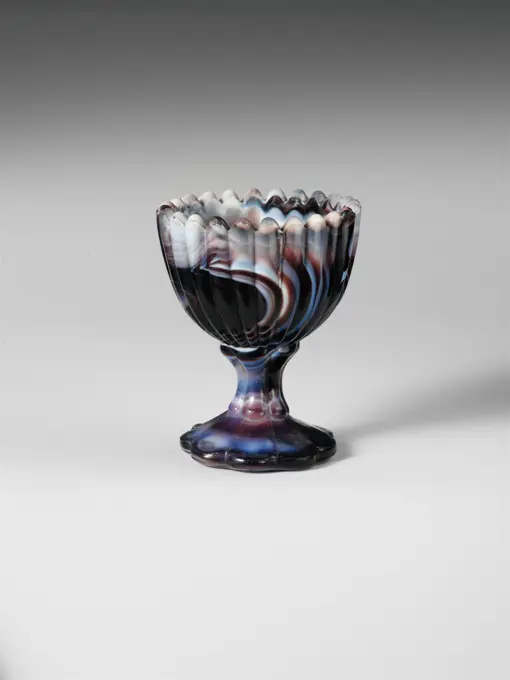
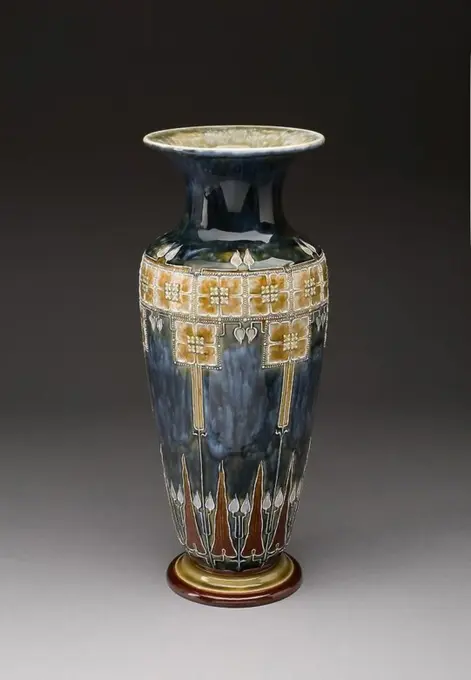
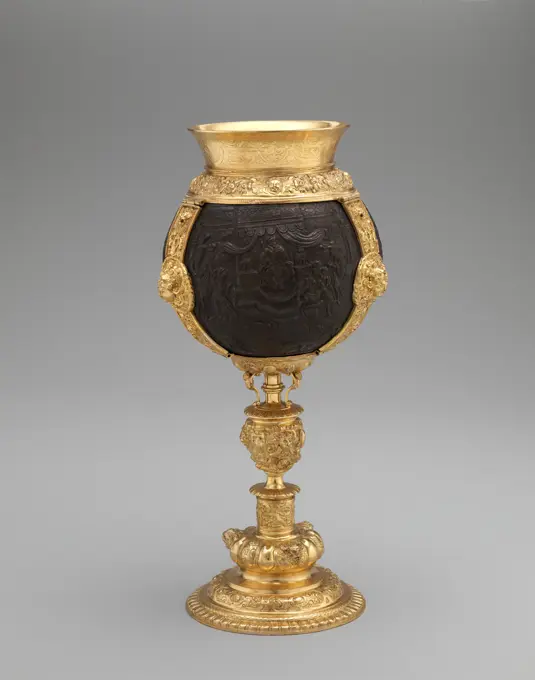
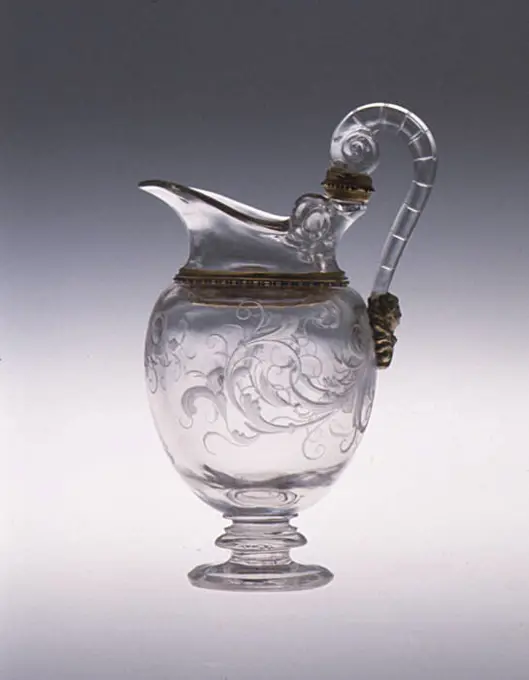
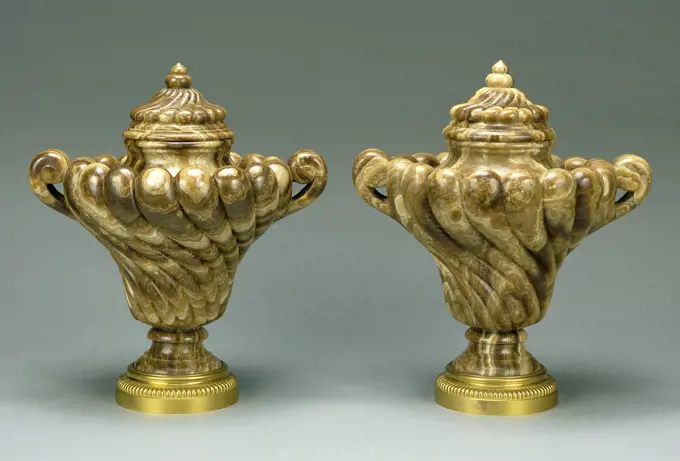
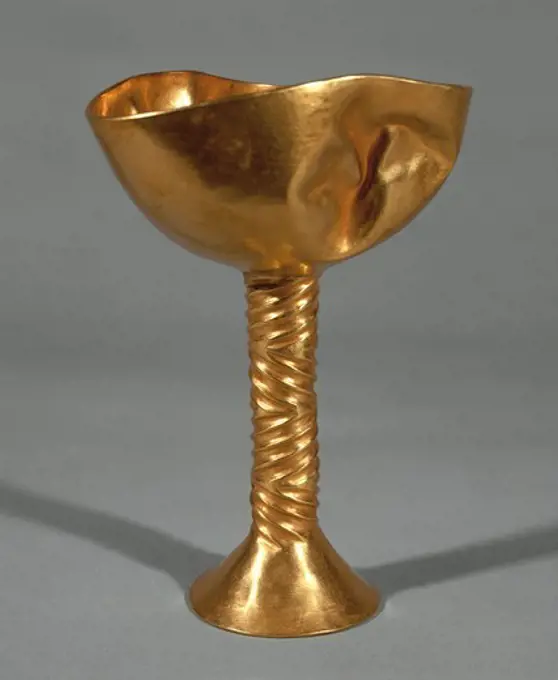
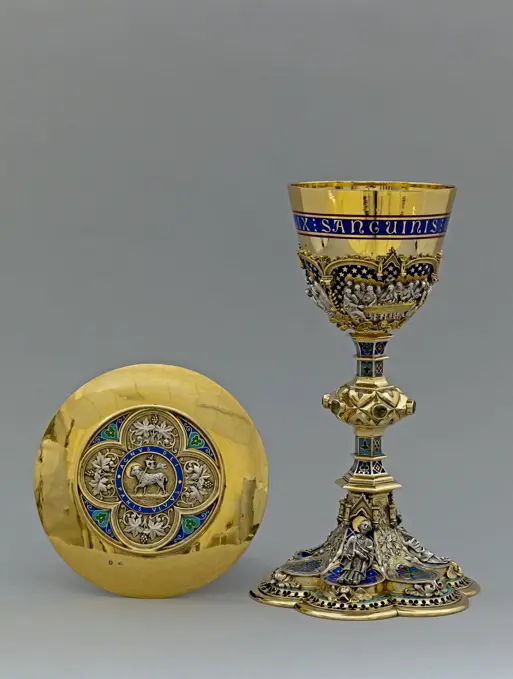
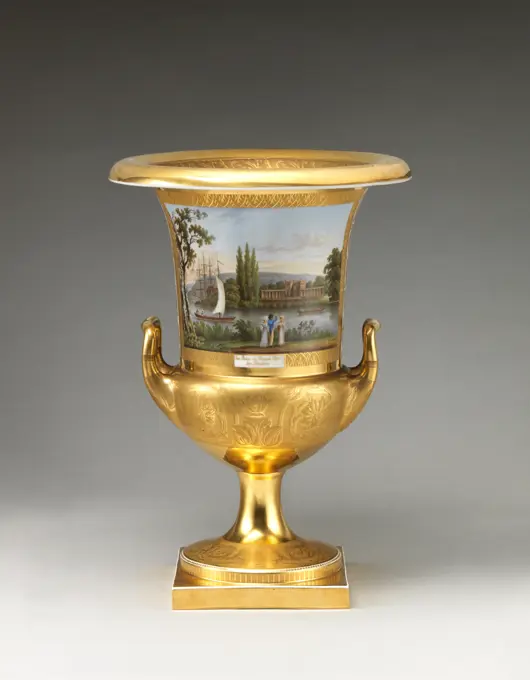
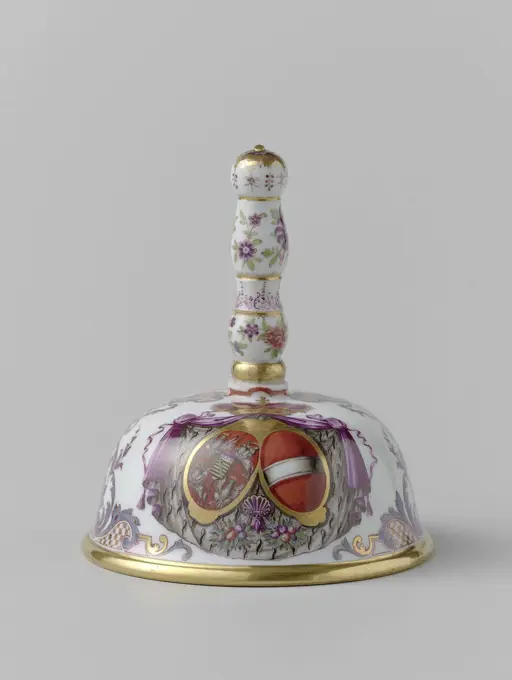
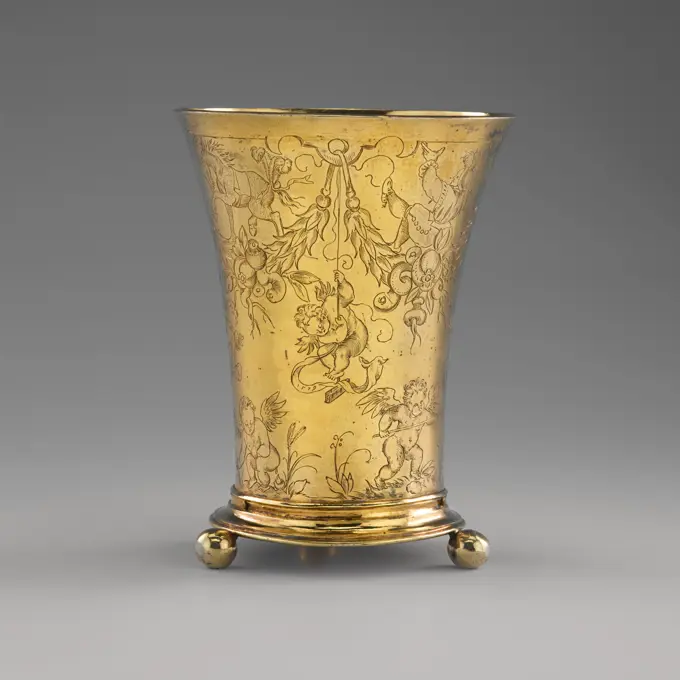
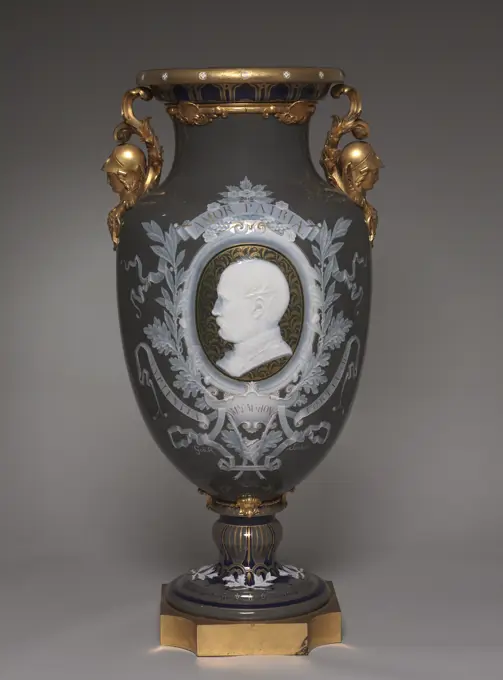
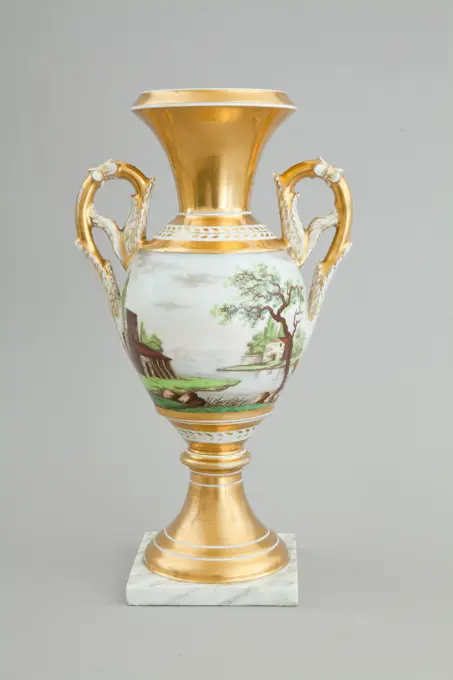
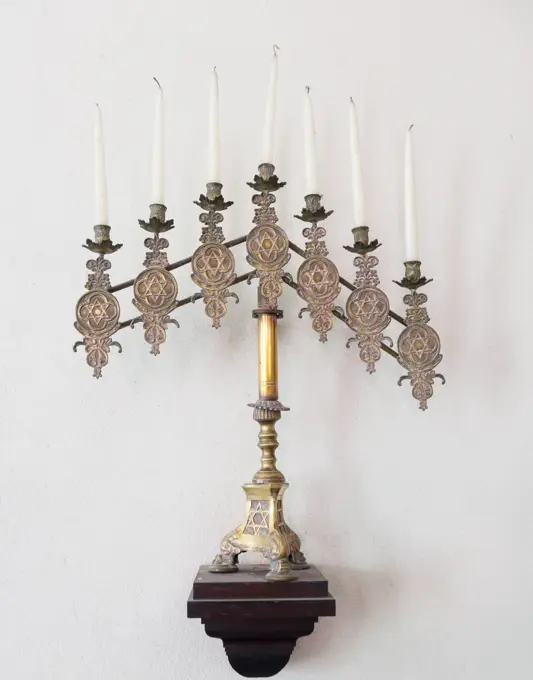
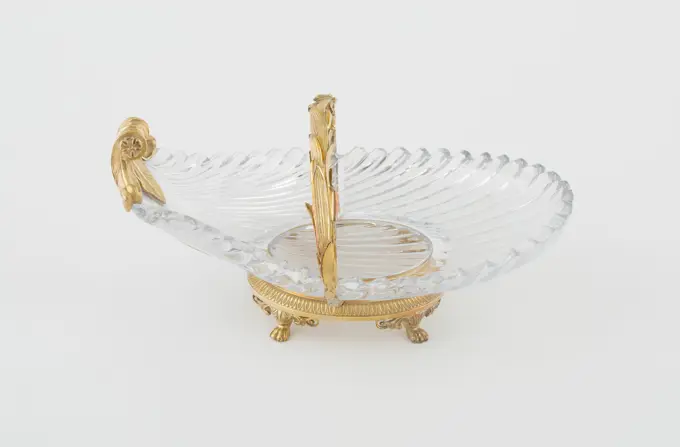
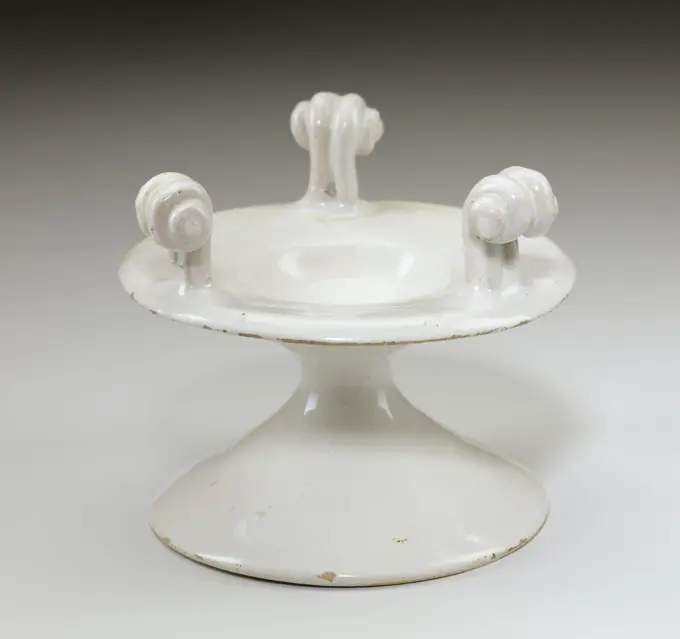
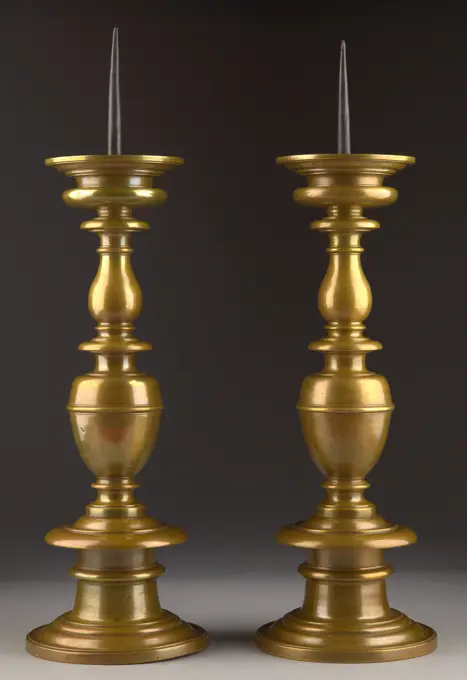
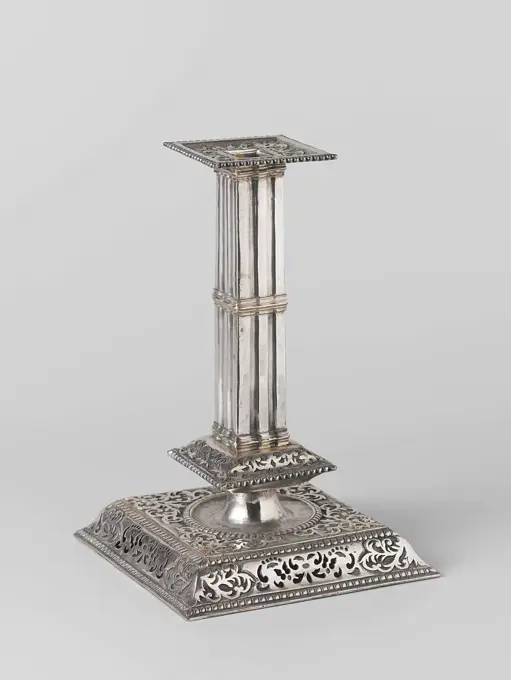
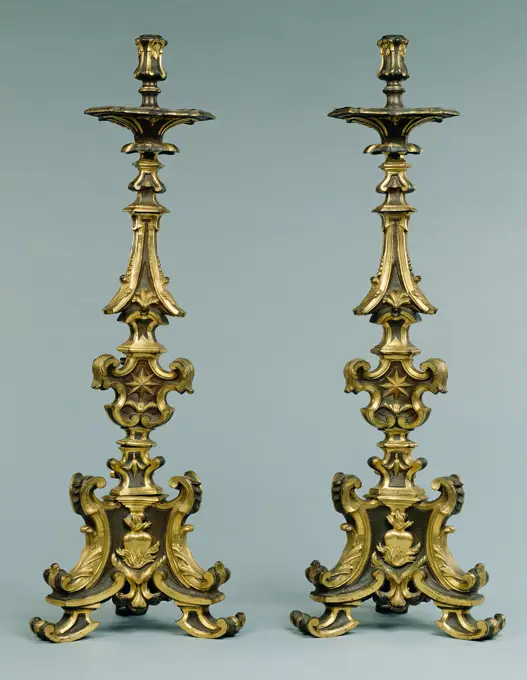
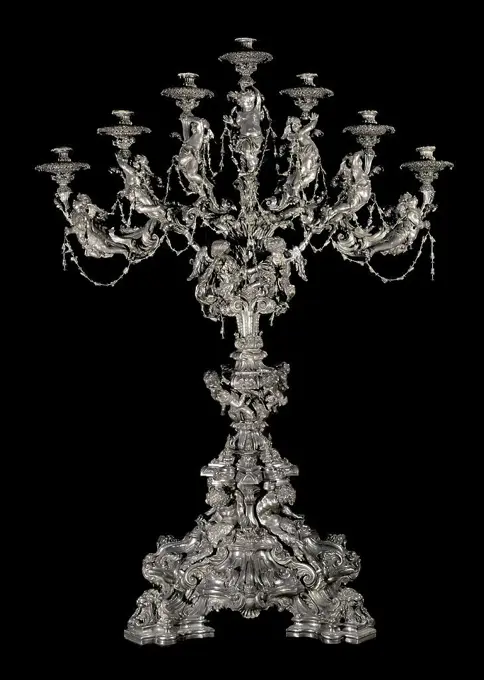
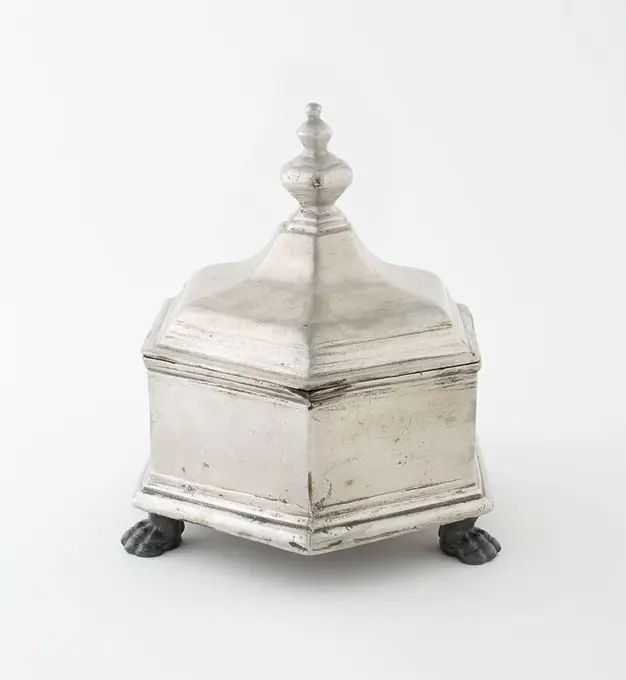
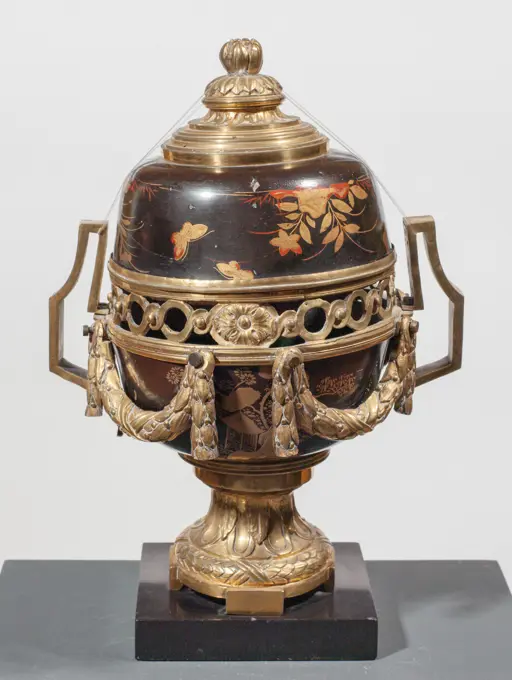
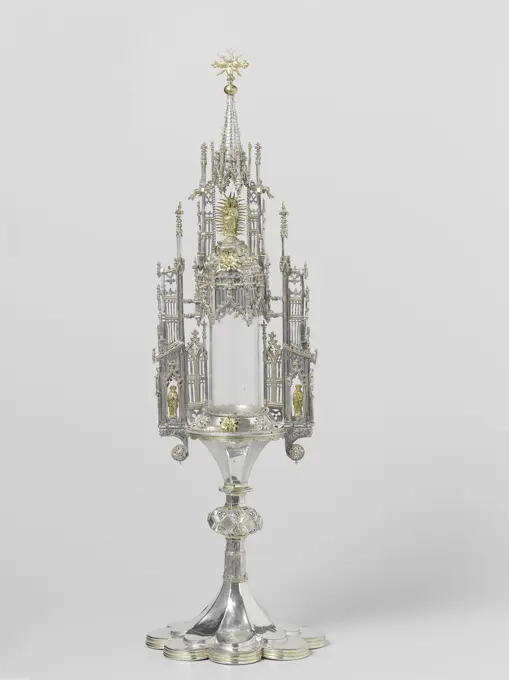
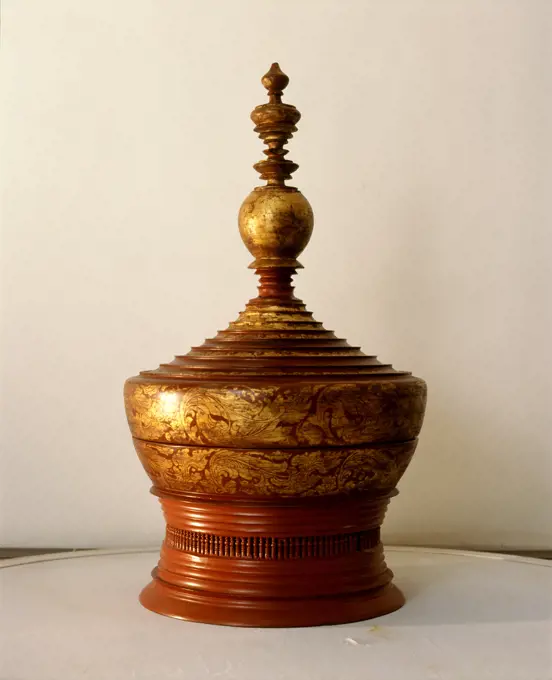
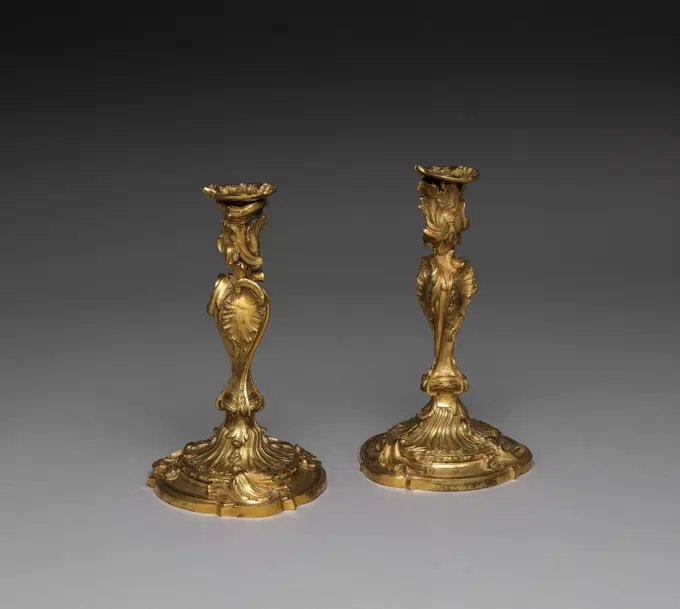
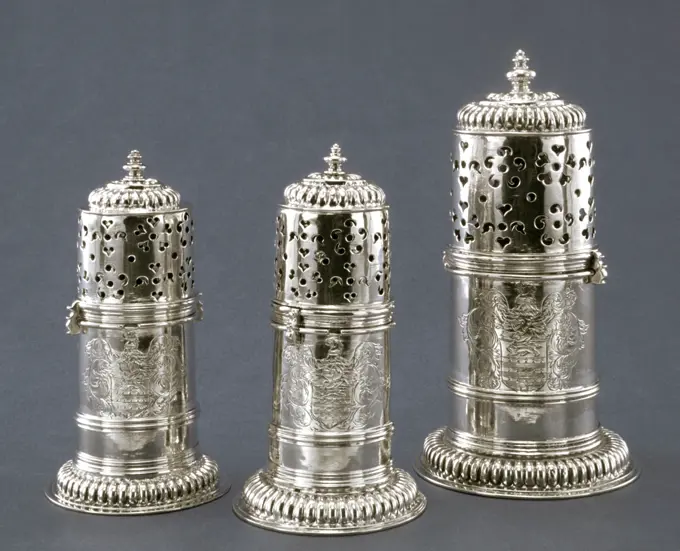
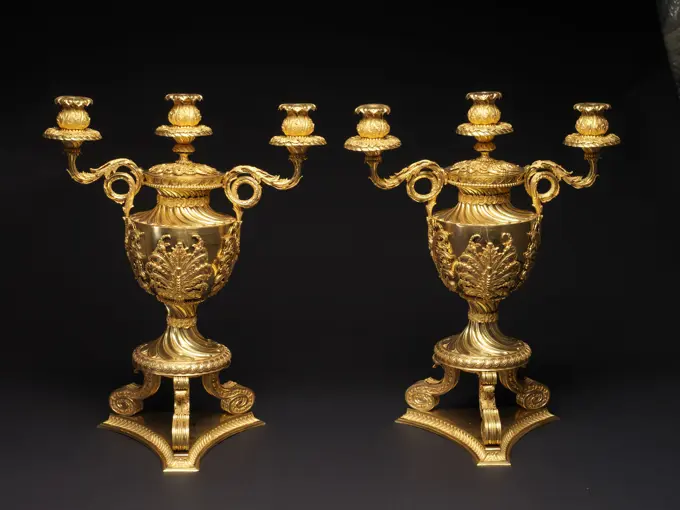
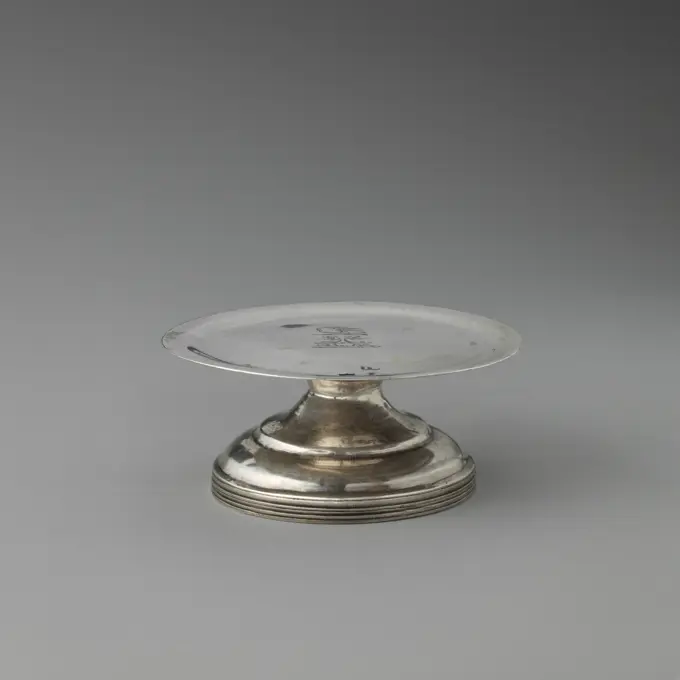
Vase, c. 1820-1830. St. Petersburg Imperial Porcelain Factory (Russian). Gilt porcelain; overall: 54.6 x 28.3 cm (21 1/2 x 11 1/8 in.).Teacup with ruins of Helioss temple in Rome. Baranówka (manufaktura porcelany ; 1804-post 1900 ), factoryCALIZ CON ESMALTES. Location: CATEDRAL DE SANTA MARIA. ASTORGA. LEON. SPAIN.Ewer, anonymous, c. 1400 - c. 1500 Can from rock crystal with gilded silver frames. Foot, barrel and lid are sharpened in twelve vertical facets, in which four passes as decorations. The conception consists of gothic leaf work, tendrils with flowers and as a crowning of the lid a crucifix. The S-shaped spout, in the form of a dragon's head, and the smooth ear are also made of gilded silver. Burgundy silver (metal) gilding / grinding Can from rock crystal with gilded silver frames. Foot, barrel and lid are sharpened in twelve vertical facets, in which four passes as decorations. The conception consists of gothic leaf work, tendrils with flowers and as a crowning of the lid a crucifix. The S-shaped spout, in the form of a dragon's head, and the smooth ear are also made of gilded silver. Burgundy silver (metal) gilding / grindingWine cistern 1709-10 Lewis Mettayer British Wine cisterns were common in Europe, but do not come into general use in England until the late seventeenth century. The period of their greatest utilization was the eighteenth century. This wine cooler now bears the coat of arms of William Wyndham Grenville and his wife Anne Pitt, who were married in 1792. The original owner is unknown, although the two seahorses that form the prominent handles may refer to his or her coat of arms.In spite of its imposing size and precious material, this wine cistern probably would have been placed on the floor where, filled with water, it served to keep bottles of white wine cool until needed at table. Its form, curving in both the vertical and horizontal sections, presented a difficult shape for symmetrical ornamentation, here executed with exactitude and a high degree of refinement. Listen to experts illuminate this artwork's story Listen Play or pause #2152. Cistern (Wine) Supported by Bloomberg PhilanthSilver Butter Dish. Set with Chrysoprase gemstones. Maker: Charles Robert Ashbee. Maker: Guild of Handicraft. Made in Chipping Campden, Gloucestershire, EnglandKettle and stand.Chamberstick -Zoutvat, Spitsovaal, with openwork wall with pearl lists, Nathanael Teuter, 1805 The striker ovale, vaulted barrels (A, B, C and D), who have slightly raised walls on the sides, rest on an oval, strongly rejuvenating foot with a straight -walled base. The body is open with alternating knots and rosettes. Pearl lists run around the foot, around the top edge of the body and over the high rising ears. Amsterdam silver (metal) The striker ovale, vaulted barrels (A, B, C and D), who have slightly raised walls on the sides, rest on an oval, strongly rejuvenating foot with a straight -walled base. The body is open with alternating knots and rosettes. Pearl lists run around the foot, around the top edge of the body and over the high rising ears. Amsterdam silver (metal). The candelabers (BK-NM-12502 and BK-NM-12503) consist of a candlestick and a tightener with three hinged arms. The profiled, rejuvenating foot is octagonal in diameter, with alternating straight and corrugated sides. In the flat top there is a round floor from which it also rises round, rubbed by a ring articulated top. Then the baluster-shaped strain, standing on a widened spherical base. The trunk is also octagonal; The alternating straight and pumping sides correspond to that of the foot. The vase-shaped, profiled candle holder is in diameter again. The thrilled body of this is led by a ring. In the candle holder, the attachment consists of a hexagonal core that has varied straight and corrugated sides, and three arms connected by hinges with the straight sides of the core. The profiled core, which drops first and then rejuvenates, rests on a round, cured foot and is crowned by a round, multi-profiled button with a clock-shaped closure. The arms built up from two C-voltages are sqJohann Daniel Mayer () / 'Jasper cup with cameos and emeralds'. 1662 - 1675. Agate, Chalcedony, Emerald, Jasper, Silver-gilt. Museum: Museo del Prado, Madrid, España.Arm with candle holder of candle crown of two heights with eight arms each, c. 1525 - c. 1550 Candle arm belonging to a candle crown of two heights with maria figure at the top. The arm is bent twice and is decorated with nine grape bunches and five vine leaves. The round fat catcher is decorated with fish bladder motifs at the bottom and has an excellent edge of cross flowers towards the middle, which masks the placement on the arm. The candle holder is six -flat, opened, placed on three vertical styles, transferring to a threaded protrusion. This is the second arm of the bottom ring, numbered with 5 round points. The candle holder is unnumbered. Southern Netherlands brass (alloy) casting  Barneveld Candle arm belonging to a candle crown of two heights with maria figure at the top. The arm is bent twice and is decorated with nine grape bunches and five vine leaves. The round fat catcher is decorated with fish bladder motifs at the bottom and has an excellent edge of cross flowers towaPaphom. Round brandy bowl on a foot. The bowl is eighted by incense. The bowl has two horizontal, flat opened ears. The foot is lobbed and walks wide. The Brandewijnbom has been marked with an unreadable femaline sign.Workshop of the Miseroni / 'Heliotrope jug with spout'. Ca. 1610. Enamel, Bloodstone, Gold, Pearls, Silver-gilt. Museum: Museo del Prado, Madrid, España. Author: TALLER DE LOS MISERONI.Beaker, Silver gilt, Tall, trumpet-shaped cup with incised flowers and fruits between c-scrolls surrounding three cartouches, each containing a woman symbolizing Faith, Hope and Charity respectively; 'crown of thorn' band encircles the beaker where footed section decorated with strapwork and winged cherub joins cup., Groningen, Holland, 1680, metalwork, Decorative Arts, BeakerCandlestick, one of a pair, 1824-1825, Rundell, Bridge & Rundell; Designer: John Flaxman R.A., British, 1755-1826, 10 1/4 × 5 1/16 × 5 1/16 in. (26 × 12.86 × 12.86 cm), Silver gilt, England, 19th centuryClose-up of two cruet in a basket, FrancePrzeszłość Przyszłości Elias, Adam (1663 1745)JARRA DE PLATA PARA EL VINO CONSAGRADO S XVI. Location: MUSEE D'ARTS DECORATIFS. MADRID. SPAIN.caster, glass, Globular body, on stemmed circular foot. body decorated with diamond cutting, and prismatic rings. Diamonds on upper portion are smaller and contain holes for pouring. Hole for cork on bottom of foot., Ireland, ca. 1820, glasswares, Decorative Arts, caster. attributed to De Metaale Pot (Pieter Paree) Delft, c. 1760-1775tin-glazed earthenware (faience)Maker's mark TI, possibly for Thomas Jones or Thomas Judd, Standing Cup and Cover, 1640/41, silver.Standing cup with cover ca. 1730 Bohemian. Standing cup with cover. Bohemian. ca. 1730. Zwischengold glass. GlassSilversmith's art, Italy, 18th century. Carlo Bartolomeo Minutto, silver two branch candelabra.Incense Burner (Xianglu) 206 BCE-9 CE China. This stemmed cup and domed, openwork cover, pierced with geometric patterns, is distinctive to Han ceramics of south-central China. Its model was probably an incense burner of bronze, cast with a perforated lid for the release of fragrant smoke.. Gray earthenware with polychrome painting and openwork decoration .Vase. England, Leeds; With Transfer Decoration after Adam Buck; Irish, 1759-1833. Date: 1815-1825. Dimensions: H. 11.4 cm (4 1/2 in.). Earthenware with silver lustre decoration, monochrome brown, and yellow ground. Origin: Leeds. Museum: The Chicago Art Institute, Chicago, USA.Cup with Allegorical Scenes and Shields of Este Arms. Dated: 1560s. Dimensions: overall: 13 x 14.6 x 13.9 cm (5 1/8 x 5 3/4 x 5 1/2 in.). Medium: bronze. Museum: National Gallery of Art, Washington DC. Author: Attributed to Circle of Guglielmo della Porta.Crater;  KON. XVIIIW. (1785-00-00-1790-00-00);Arm of a candle crown in three heights, Anonymous, 1625 - 1650 The arm is provided with a ridge on the tribe side, in which a hole is applied to secure them with a pin in the stand rings. The S-shaped arm has the shape of a hose with a tail-wrinkled tail and outside a lifted head with a round button on it, in which the hole provided for a thread is applied to confirm the candle holders with the fat catchers. The arm is cast using the same model as the other arms of the wreath. The round candle holder is vase -shaped with a profiled rib. At the top she has two holid profile, and a protruding edge and at the bottom of a foot consisting of two holy -round profiles. The foot runs out in a rejuvenating screw end with a center hole. The convex fat catcher is smooth at the top and has fish bladder -like godrons and a rib at the bottom. The fat catcher is cast using the same model as the other fat catchers of the wreath. The pins are decorated with convex buttons. This is the fourth arm of theArm of a candle crown in three heights, Anonymous, 1625 - 1650 The arm is provided with a ridge on the tribe side, in which a hole is applied to secure them with a pin in the stand rings. The S-shaped arm has the shape of a hose with a tail-wrinkled tail and outside a lifted head with a round button on it, in which the hole provided with a thread is applied to confirm the candle holders with the fat catchers. The arm is cast using the same model as the other arms of the wreath. The round candle holder is vase -shaped with a profiled rib. At the top she has two holid profile, and a protruding edge and at the bottom of a foot consisting of two holy -round profiles. The foot runs out in a rejuvenating screw end with a center hole. The convex fat catcher is smooth at the top and has fish bladder -like godrons and a rib at the bottom. The fat catcher is cast using the same model as the other fat catchers of the wreath. The pins are decorated with convex buttons. This is the seventh arm of tOrnate Crystal Standing Cup - 19. Jahrhundert Französisch dekorative Kunst Eleganz Ornate Crystal Standing Cup - 19. Jahrhundert Französisch dekorative Kunst Eleganz LicenseRF Copyright: xZoonar.com/GallóxGusztávx 23397578Close-up of a decorative Gold Cup, Gallery Of Treasures, Forbidden City, Beijing, ChinaCandlestick on three Bolpoten, Anonymous, c. 1600 - c. 1625 The candlestick is cast in four parts: the balls, the foot, the trunk with the pin and the fat catcher. The three balls, on which the candlestick rests, which, like the other parts are provided with grooved rings, are attached to cams at the bottom of the foot. The profiled Konical foot turns into a profiled trunk in the form of a vase, a knot and a baluster, and then in a profiled fat catcher with a fairly wide edge. Southern Netherlands brass (alloy) casting The candlestick is cast in four parts: the balls, the foot, the trunk with the pin and the fat catcher. The three balls, on which the candlestick rests, which, like the other parts are provided with grooved rings, are attached to cams at the bottom of the foot. The profiled Konical foot turns into a profiled trunk in the form of a vase, a knot and a baluster, and then in a profiled fat catcher with a fairly wide edge. Southern Netherlands brass (alloy) castingVase with landscapes, musical instruments and guirlandes in relief, anonymous, c. 1800 vase Vase of porcelain with a spreading foot and trumpet -shaped edge, painted on the glaze in cream and gold. The lower part of the outside wall is covered with a cream -colored glaze with cartouches and medallions on it. Here a landscape, musical instruments and a Roman soldier are engraved. The upper part is covered with gold, in which a zigzag pattern and musical instruments are engraved. It is saved two large, imposed garlands in Biscuit. The foot is covered with gold. France porcelain. glaze. gold (metal) painting / gilding / vitrificationAnonymous. Vase mounted. Jaspe, gilded bronze, 1775-1785. Paris, Cognacq-Jay museum. 78927-14 Bronze gilded, gilding, jasper, rock, tripod, vase monte, 18th 18th 18th 18th 18th 18th 18th centuryAnonymous. Vase mounted. Céladon, golden bronze, 1775-1785. Paris, Cognacq-Jay museum. 78926-9 Bronze gilded, ceramic, ceramic, gilding, headlist, tripod, vase monte, 18th 18th 18th 18th 18th 18th 18 centuryVase Italian, Venice (Murano) 19th century View more. Vase. Italian, Venice (Murano). 19th century. Glass. GlassCOPON DE CARLOMAGNO - SIGLO VIII/IX. Location: ABADIA DE SAN MAURICIO. Valais. Switzerland.Arm of a candle crown in three heights, Anonymous, 1717 chandelier The S-shaped arm is equipped with a ridge on the tribe side to secure it with a pin in the stand ring. At the trunk, the arm is decorated at the end and to the center with two stylized dolphin heads and with curls, the shape of which is derived from the lobe ornament. To the outside, the arm ends in a thickening, in which a hole provided with a thread is applied to attach the candle holder to the fat catcher. The arm is cast using the same model as the other arms of the wreath. The candle holder is cylinder -shaped with profiled excellent edge and with a baluster foot, which turns into a threaded end, in which the center hole at the bottom. The fat catcher is deepened twice at the top towards the center. At the bottom it is profiled around the hole in the somewhat spherical center and the edge is ribbed. The fat catcher has been cast using the same model as the other fat catchers of this wreath. The pin is equipped withEgg Cup 1880-90. Egg Cup 3508Bowl, glass, silver, Oval bowl with wide flared lip scalloped at edge; cut with star on bottom, row of printies around base; tall silver loop handle, lobed and engraved with floral motifs, ornate mounts at joining to bowl., Netherlands, ca. 1856, glasswares, Decorative Arts, BowlVase. Royal Doulton Co.; English, 1815-1965. Date: 1893. Dimensions: 39.4 × 16.5 × 14.9 cm (15 1/2 × 6 1/2 × 5 7/8 in.). Tin-glazed earthenware, slip-decorated. Origin: Burslem. Museum: The Chicago Art Institute, Chicago, USA.Coconut cup 19th century, after 16th century original Elkington & Co. British This electrotype is after a sixteenth-century original in the treasury of the Patriarch, Moscow, at the time of reproduction.. Coconut cup 186599Ewer 1685/86 P. K., London. Ewer. British, London. 1685/86. Silver. Metalwork-SilverAltar cruet (one of a pair) early 17th century Italian, Milan. Altar cruet (one of a pair) 206279Pair of Lidded Vases; about 1700; Marble and gilt bronze;Claude-Nicolas Delanoy. "Cup". Money. 1766-1767. Museum of Fine Arts of the City of Paris, Petit Palais. 74381-27 Money, silverware, gobletPipes comforter. Round blowjob come on three legs and a steal for a handle. The handle is missing. The bin is widely clock-shaped and has a wide openwork edge. There is a copper inner bin in the container. The Komfoor has been labeled: STK. = Amsterdam, JRL. = V (1780) and an unknown master sign. The Komfoor is equal to a komfoor with Invnr. BK-NM-11177-147.. Cover bowl of porcelain on three legs and with two ears, covered with a monochrome gray-green glaze. The bowl is covered with geometric motifs and 'taotie' masks in relief; a sample head on the legs; undeglaze. Lid with the same decoration and three openwork boxes. A ear broken off. Monochromes.Kandodelab in lobe style with three candle holders. The candlestick now consists of the following parts: the foot and the tribe riveted therein, the two-armed turner and the accompanying fat catchers. The screw to secure the rotator on the smooth piece of the trunk is missing. Similarly one of the candle holders, which belong to the turner, as well as the candle holder and the fat catcher, which can be screwed up in the strain. The foot-standing foot and the two-poor pivot are carried out in lobe style. The lower part of the trunk has been taught. The fat catchers are provided at the top of a standing edge.Standing cup and lid, Parcel-gilt repoussé and chased raised silver, repoussé pineapple pattern on cup(a) and lid (b), with parcel-gilt band at connection, above a lobate stem and foot. Cover finial is gilt silver ball secured to cover by pin with small round silver head., Nuremberg, Germany, ca. 1620, metalwork, Decorative Arts, Standing cup and lidSpoon Holder 1850-70 Bakewell, Pears and Company. Spoon Holder 7850Arm with candle holder of candle crown of three heights, c. 1675 - c. 1725 Candle belonging to a brass candle crown of three heights. The S-shaped arm has a curl and turns outside into the flat thickening with a screw hole. The candle holder is secured with the fat catcher. The fat catcher is ribbed at the bottom of the opening and also has twice two grooved rings. The cylindrical candle holder, who has a profiled excellent edge, two grooved rings and a thickening, turns into a baluster with the end of threads at the bottom and a button in which the center hole can be seen. This is the fifth arm of the middle stand ring, numbered with 5 round points. The pin, to attach the arm to the stand ring, is missing. Southern Netherlands (possibly) brass (alloy) casting Candle belonging to a brass candle crown of three heights. The S-shaped arm has a curl and turns outside into the flat thickening with a screw hole. The candle holder is secured with the fat catcher. The fat catcher is ribbed at Turkey, Alaca Hoyuk, Gold goblet with spiral stemTrioullier et fils (association founded in 1863). "Chalice and his paten". Golden silver, stamped, molded and chopped, enamels and hard stones. After 1863. Museum of Fine Arts of the City of Paris, Petit Palais. 71340-4 Lamb Pascal, silver dore print, silver mussel chisel, chalice, cene, chretien, last meal, email, eucharist, religious object, goldsmith, patene, hard stone, precious stone, Catholic religion, religious scene, 19th centuryTable Bell. Dated: 16th century. Dimensions: overall: 15.9 x 10.3 cm (6 1/4 x 4 1/16 in.). Medium: bronze//Medium brown patina. Museum: National Gallery of Art, Washington DC. Author: Flemish 16th Century.Krater vase with a signed view of Potsdam ca. 1825 Royal Porcelain Manufactory (Königliche Porzellan-Manufaktur), Berlin Prince Carl of Prussia (1801-83) possibly commissioned this vase to commemorate the completion of his summer residence in Glienicke just outside of Potsdam, renovated in the neoclassical style by the renowned architect Karl Friedrich Schinkel in 1825. This is suggested by the intimate view from the princes apartment window painted and signed by Johan Eusebius Anton Forst on one side. This vignette is accompanied on the reverse side by a view of the palace seen across the Havel River.. Krater vase with a signed view of Potsdam. Johann Eusebius Anton Forst (German, 1783-1866). German, Berlin. ca. 1825. Hard-paste porcelain. Ceramics-Porcelain. Meissen porcelain manufactory ice cream, c. 1728Hard Paste PorcelainPair of Candlesticks. UnknownA cup of Wroclaw Strzelecki Brotherhood; Hiller, Joachim (fl. 1573-1610),  1509 (1509-00-00-1509-00-00);Wrocław (Shooting Brotherhood), Strzeleckie Brotherhood, Festony (Ornament), Groteska, Fruit, Putta, Renaissance (Style), AnimalsTerracotta kylix (drinking cup). Culture: Mycenaean. Dimensions: H. 4 13/16 in. (12.2 cm.)Diam. 5 7/16 in. (13.8 cm.). Date: ca. 1400-1050 B.C..Two-handled cup on high foot with bands and tongues around the body. Museum: Metropolitan Museum of Art, New York, USA."Jumbo"/Elephant pattern covered butter dish. Attributed to Canton Glass Company; Canton, Ohio. Date: 1883-1885. Dimensions: 17.2 × 17.8 cm (6 3/4 × 7 in.). Glass. Origin: United States. Museum: The Chicago Art Institute, Chicago, USA.Gold Stand, before 1896. Alexander Edward Tillander (Russian, 1837-1918). Gold, enamel, sapphire, gold easel and stand, photograph covered with faceted green glass; overall: 4.2 cm (1 5/8 in.). In the Russian Orthodox religious tradition, eggs are offered as Easter gifts to symbolize rebirth, renewal, and the resurrection of Christ. This jeweled Russian egg is engraved with XB symbolizing the phrase, Christ is risen,” and would have been given to a lady in a wealthy household, perhaps someone of high rank within the imperial court, given the richness of materials.Vase with Portrait of President MacMahon, c. 1872-1874. Alfred-Thompson Gobert (French, 1822-1894), Constantin Renard (French), Emile-Bernard Rejoux (French, 1832-), Jean-Denis Larue (French, 1884), Jules Archelais (French, 1865-1902). Porcelain with gilt bronze mounts; overall: 89.2 x 43.8 cm (35 1/8 x 17 1/4 in.).Miniature cup and cover probably first quarter 17th century German, Kitzingen. Miniature cup and cover 210061Workshop of the Miseroni; Ottavio Miseroni () / 'Smoky quartz vase with mascarons and handles in the form of snakes'. Ca. 1647. Diamond, Enamel, Emerald, Gold, Cuarzo ahumado. Museum: Museo del Prado, Madrid, España.Vase KorzecAntique jewish menorah and candles Antique ornate menorah in brass with old tallow candles Copyright: xZoonar.com/StevexHeapx 4452432Caster, 1719. William Spackman (British). Silver; overall: 15.6 cm (6 1/8 in.); diameter of base: 5.8 cm (2 5/16 in.).Two-HandledBowl.  Maker: Jeremiah Dummer, American, 1645-1718Chalice 1500-1520 Germany. This chalice stands on a foot with six lobes, each with an engraving of a saint. On the stem are additional images of the Crucifixion, the four fathers of the Church (Saints Ambrose, Augustine, Jerome and Gregory), and Saint Agnes, each modeled of gilt silver and ensconced in Gothic arches. Above these miniature sculptural components are enameled plaques spelling out IHESUS (Jesus).As the imagery suggests, this chalice was used for Christian liturgical ceremony of the Eucharist to hold wine as it is consecrated. This chalice was possibly made in Saxony, Germany, just prior to the Protestant Reformation.. Silver gilt and enamel .Two Sweetmeat Dishes 1819-1838 Paris. Silver gilt and glass . Martin-Guillaume BiennaisMosterdpot, Martinus van Stapele, 1787 Mustard pot, round, with a loose lid and a loose inner box of blue glass. The vaulted body rests on a strongly rejuvenating foot on a straight -walled, indented base decorating with each other, crossing golf lines performed in trembling stitch. Where the base comes in, a pearl edge is installed. The body is opened with a pattern of bay leaves decorated in various engraving stitches, above which intersecting each other and open circles, sealed at the top by a wide tire, decorated with a continuous pattern of a wavy band, swingered with a laurel wreath, on a ramp . The pot has high wing -shaped ears with straight tops. The vaulted lid is open with trembled knots and is closed at the top by bay leaves. The lid is crowned by a flame-shaped button. In the lower edge of the lid, also decorated with a trembling stitch, there is a rectangular recess in which the (lost) mustard spoon could be inserted. The Hague Mustard pot: Silver (Metal). Inner box: GlasSalt, c. 1680, 4 1/4 x 5 x 5 in. (10.8 x 12.7 x 12.7 cm), Glazed ceramic, England, 17th centuryThe past of the future unknownPair of candlesticks. In Batavia, Dutch silversmiths worked alongside Chinese, Indian and local craftsmen. These candlesticks bear the hallmarks of Batavia and the marks of a master IVC, possibly Jan van Cloon. His candlesticks have no Asian features and closely follow European models.Pair of Altar Candlesticks. UnknownKiddush (a prayer for wine on a holy day) Cup, Nurenburg, 16th. cen.CANDELABRO BARROCO.1703/21.PLATA. Author: MATONS JOAN. Location: CATEDRAL. Palma. MALLORCA. SPAIN.Tobacco Box. Netherlands. Date: 1735-1745. Dimensions: 15.9 x 13.3 cm (6 1/4 x 5 1/4 in.). Pewter. Origin: Netherlands. Museum: The Chicago Art Institute, Chicago, USA.Covered vase. Wood decorated with black black lacquer, chiseled and golden bronze; Black marble. 1701-1800. Paris, Carnavalet museum. Anse, polished basalt, decoration wood, bronze chisel, gilding, gilding, black European lacquer, black marble, decorative pattern, sheet sheet, handle handle, vase, covered vase, simulated vase, 18th 18th 18th 18th 18th 18th 18Small vase with a lid and a base. Kaiserliche Porzellanmanufaktur in Wien (1744-1864), factoryMonstrance, Jan Geldolfs Hoghenzoon (attributed to), c. 1520 Monstrans of partially gilded silver. The eight -lobby base is interrupted at the narrowest point by an eight -sided nodus. Above the nodus on a concave vaulted stage, the glass cylinder rests. This is caught in an architectural complex. The cylinder is crowned by a hexagonal roof on which Mary with the Christ child stands in a jet wreath. Breda silver (metal). glass gilding Monstrans of partially gilded silver. The eight -lobby base is interrupted at the narrowest point by an eight -sided nodus. Above the nodus on a concave vaulted stage, the glass cylinder rests. This is caught in an architectural complex. The cylinder is crowned by a hexagonal roof on which Mary with the Christ child stands in a jet wreath. Breda silver (metal). glass gildingEwer 1830-40 Thomas Fletcher American Vessels for dispensing beverages such as water, beer, cider, and wine became increasingly popular during the first half of the nineteenth century. This handsome ewer, replete with cast, chased, and die-stamped ornament, is marked by Fletcher, who had founded, together with his partner Sidney Gardiner (1787-1827), the preeminent American silversmithing firm of the era. A preparatory drawing for the ewer survives in the Metropolitan Museums collection.. Ewer 19405. Candle arm belonging to a candle wreath of two heights with maria figure at the top. The arm is bent twice and is decorated with nine grape vegetables and five winger leaves. The round fat catcher is decorated at the bottom with fishing blozen motifs and has a downward edge of cross flowers in the middle, which masks the placement on the arm. The candle holder is sixted, opened, placed on three vertical styles, overtreen in a thread protrusion. This is the second arm of the lower ring, numbered with 6 round points. The candle holder is numbered with 6 diagonal notches.. Candle arm belonging to a candle wreath of two heights with maria figure at the top. The arm is bent twice and is decorated with four grape fees and five winger leaves. The round fat catcher is decorated at the bottom with fishing blozen motifs and has a downward edge of cross flowers in the middle, which masks the placement on the arm. The candle holder is sixted, opened, placed on three vertical styles, overtreen in a thread protrusion. This is the sixth arm of the upper ring, numbered with 6 round points. The candle holder is numbered with 6 diagonal notches.OilLampSauceboat ca. 1815 Anthony Rasch These commanding sauceboats, fashioned in the French Empire taste, are marked by Rasch, a Bavarian-born Philadelphia silversmith. They are among the most sophisticated silver vessels produced in the United States in the early nineteenth century and are distinguished by their bold ornamental scheme, which includes magnificent cast serpent handles and rams-head spouts. The engraved armorials are those of the Milligan family of Maryland.. Sauceboat. American. ca. 1815. Silver. Made in Philadelphia, Pennsylvania, United StatesBurmese Lacquerware, BurmaCandlesticks, 1745-1749. France, 18th century. Gilt metal; overall: 24.5 x 14.4 x 14.8 cm (9 5/8 x 5 11/16 x 5 13/16 in.); average: 23.4 cm (9 3/16 in.).Hanukkah lamp Pietro Borrani Italian ca. 1830 Italian silver Hanukkah lamps are among the rarest items of Judaica and only a few eighteenth-century examples are known. This is the only currently known silver Hanukkah lamp in a bench-shape style made for a domestic setting. The iconography is typical of Judaica: the miniature oil jug and the lit nine-stem Hanukkiot (the modern Hebrew term for a nine-branched Hanukkah lamp used outside the Temple) gesture to the lamps traditional use during Hanukkah, the Festival of Lights. The combination of malleable precious material and innovative design of the first half of the 19th-century exhibited in this object exemplifies the progressive Neo-rococo style of Italian, if not European, Judaica at its best. View more. Hanukkah lamp. Italian, Turin. ca. 1830. Silver. Metalwork-Silverinkstand, Brass, inlaid marble, glass, Inkstand with two containers. Brass scrollwork and inlaid decoration of dove and florals., USA or England, ca. 1860, metalwork, Decorative Arts, inkstandCarriage Clock 1720-1730 Dresden. Silver, gilding, leather, velvet, and crystal . Johann Gottlieb Graupner (Maker)George Garthorne, Set of Three Casters, 1694/95, silver.2005.4465.1 and 2005.4465.2.. Pair of Anderson Candelabra, 1765-70. Manufacture attributed to Diederich Nicholas Anderson.. Design attributed to James 'Athenian' Stuart. A pair of George III ormolu three-branch candelabraView 2 of 2. Chalice, 1854-55. Silver gilt. Manufacturer: John Hardman & CoMiniature Table with Compass, c. 1890-95. Mikhail Evlampievich Perkhin (Russian, 1860-1903), House of Fabergé (Russian, 1842-1918). Gold, enamel, glass, steel; overall: 5.6 x 4.2 cm (2 3/16 x 1 5/8 in.).Wall lamp from lamps kerosene;  XIXW. (1801-00-00-1900-00-00);Four candlesticks, Cornelis Hendrik Bömcke (attributed to), 1783 - 1784 The candlesticks are round in diameter. The profiled foot, which is decorated with phases and a pearl edge, rests on the right -wing base. Above it, a vaulted, scanned section rises, which gradually turns into the trunk and which is crowned by a series of profiles, the most important of which is decorated with phases. This rests the cube -shaped nodus that shows a rosette on each side and that carries the top of the scanned trunk, crowned by a smooth band with four round heads. The two scanned parts of the trunk are decorated with bay heads hanging on two nail heads. The loose fat catcher is surrounded by a pearl edge. Amsterdam silver (metal) The candlesticks are round in diameter. The profiled foot, which is decorated with phases and a pearl edge, rests on the right -wing base. Above it, a vaulted, scanned section rises, which gradually turns into the trunk and which is crowned by a series of profiles, the most iMiniature tazza ca. 1828 James Scott. Miniature tazza. James Scott. Irish, Dublin. ca. 1828. Silver. Metalwork-Silver-Miniature