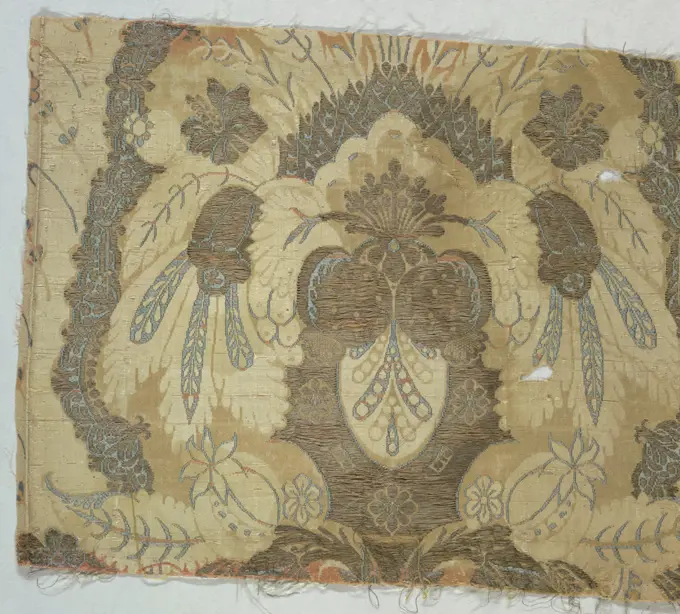
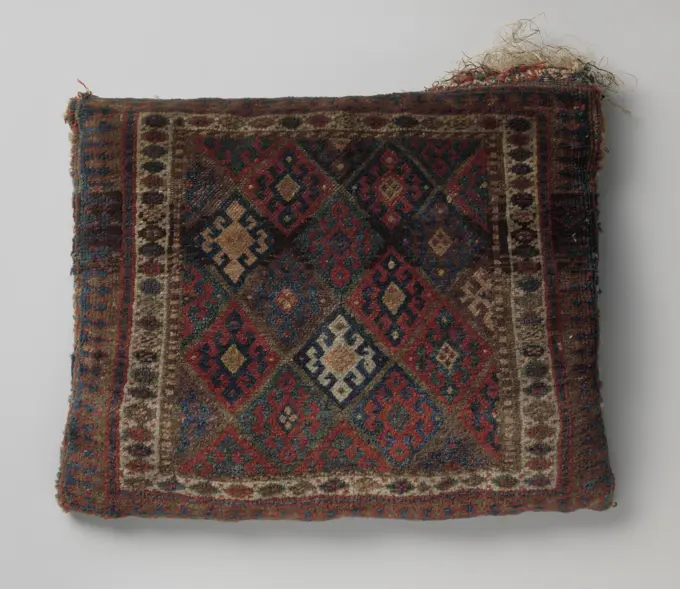
Ornate Historical Textiles

A collection of intricate textiles featuring rich colors, floral patterns, and historical origins from Italy, Iran, and Spain, showcasing the artistry of different cultures.
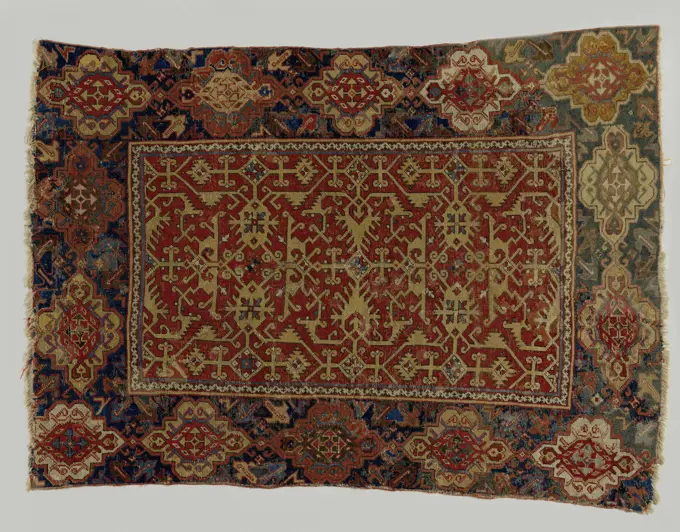
Eastern carpet ,, c. 1600 - c. 1699 Eastern carpet, arabesk dress, lotto carpet. Midfield with yellow arabesk motifs against a stone red background. Lottop pattern made of the Kelim style. Double edge, the wide of which is decorated with similar cartouches. Button: Ghiordes Knoop. Asia Klein (Possible) Usak (Possible) Walachije (Possible) Necklace and impact: Wool Eastern carpet, arabesk dress, lotto carpet. Midfield with yellow arabesk motifs against a stone red background. Lottop pattern made of the Kelim style. Double edge, the wide of which is decorated with similar cartouches. Button: Ghiordes Knoop. Asia Klein (Possible) Usak (Possible) Walachije (Possible) Necklace and impact: Wool
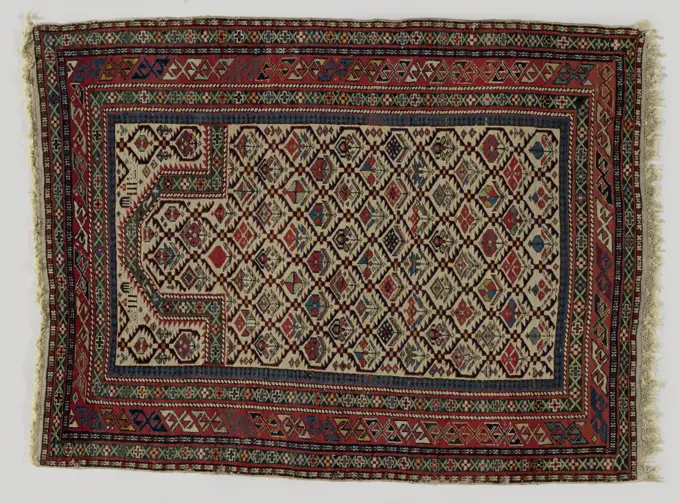
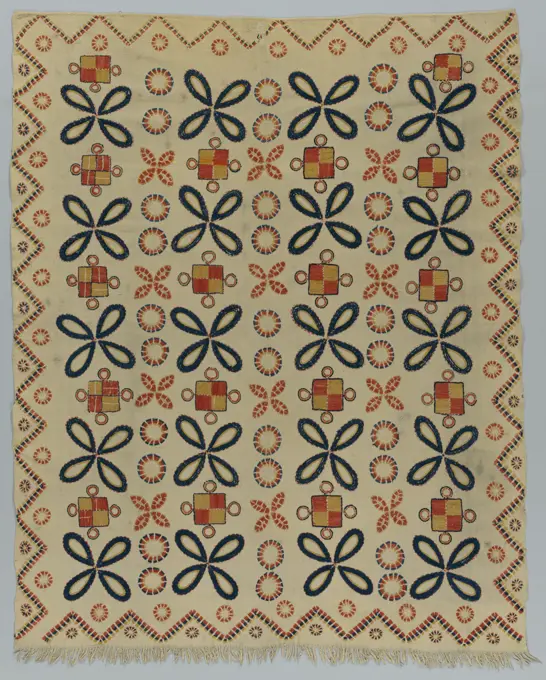
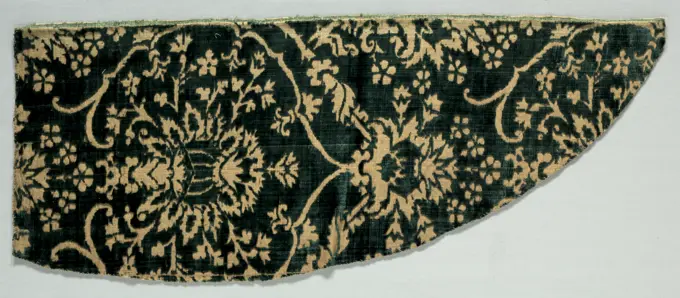
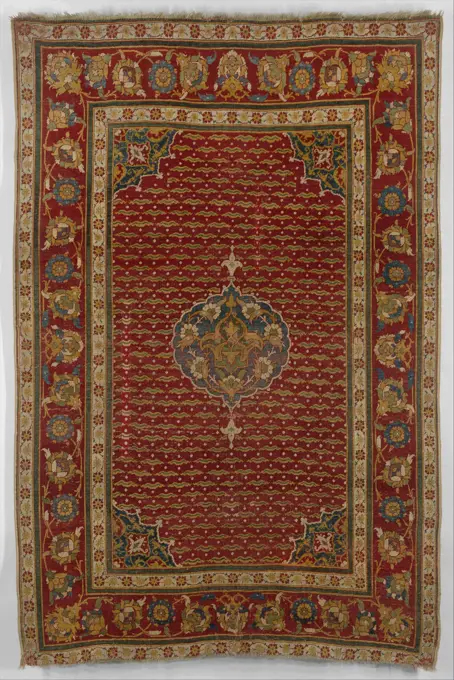
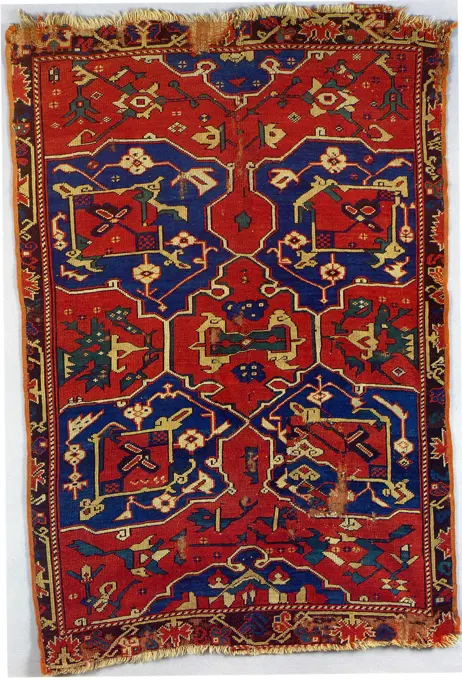
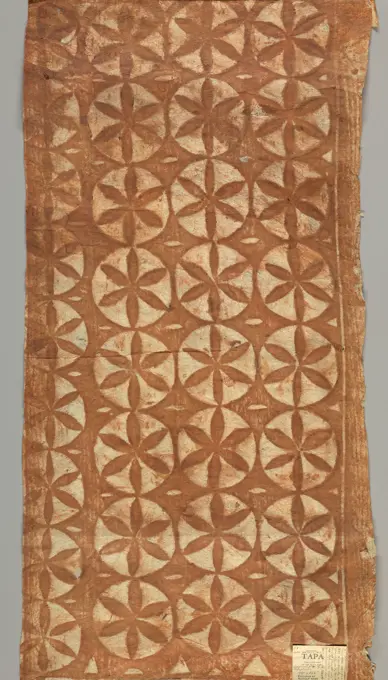
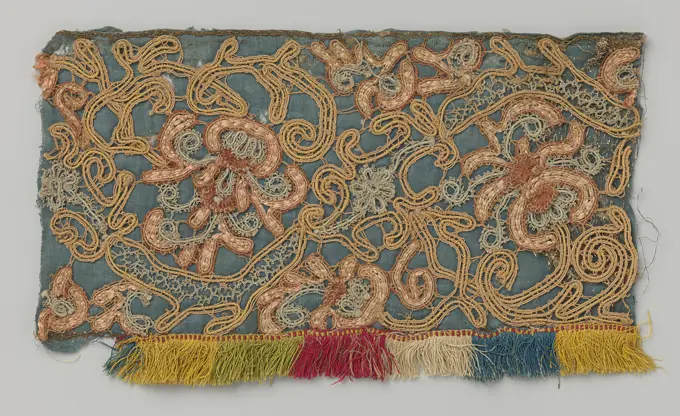
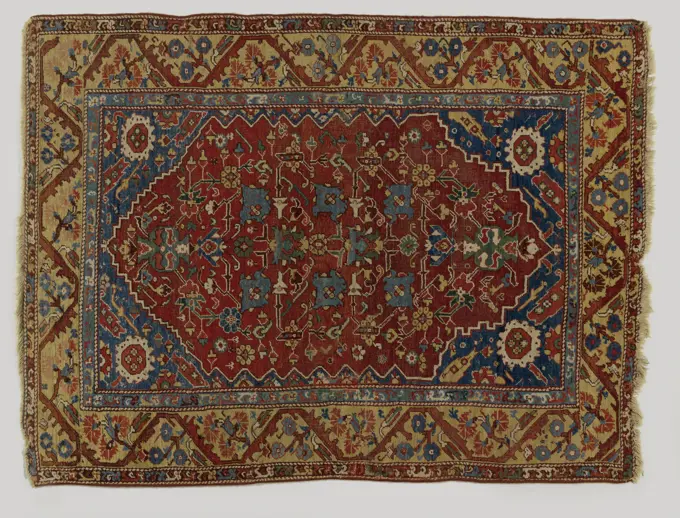
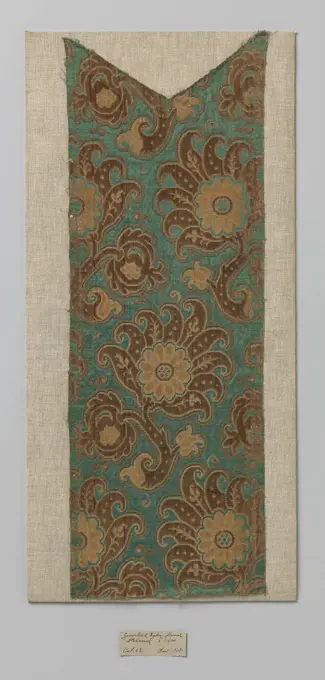
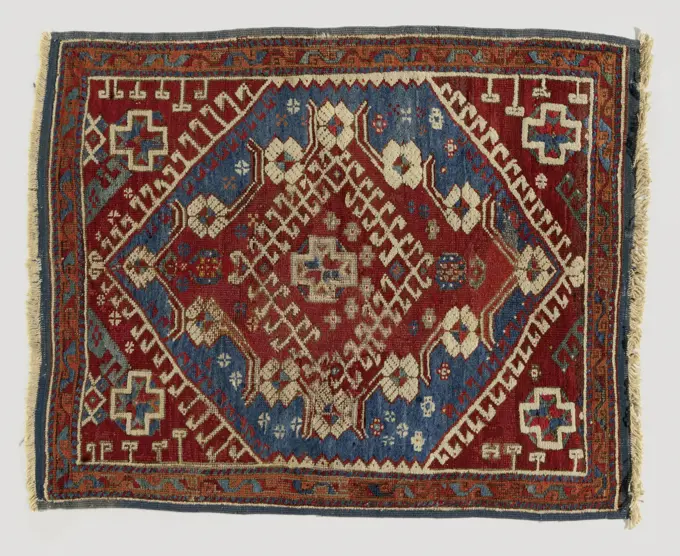
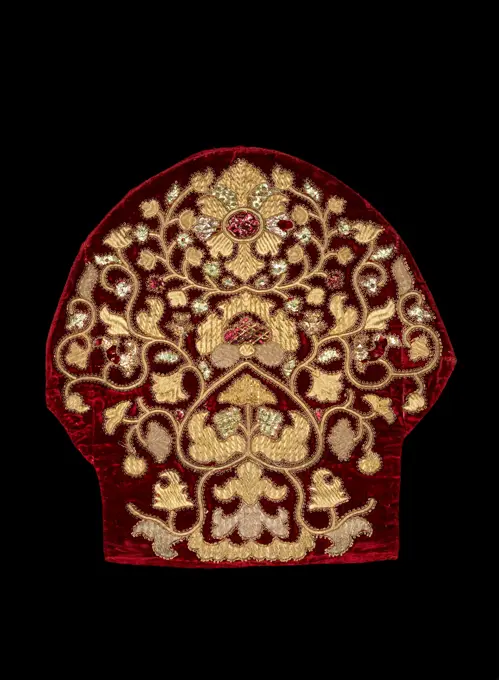
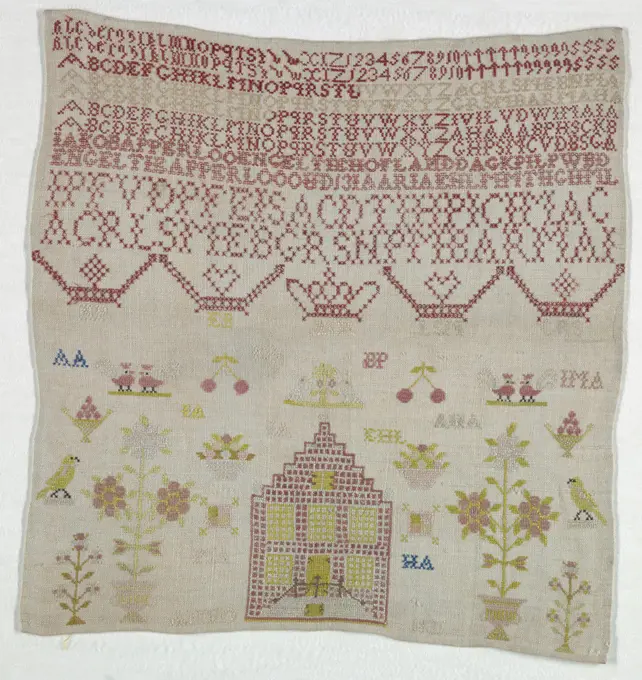
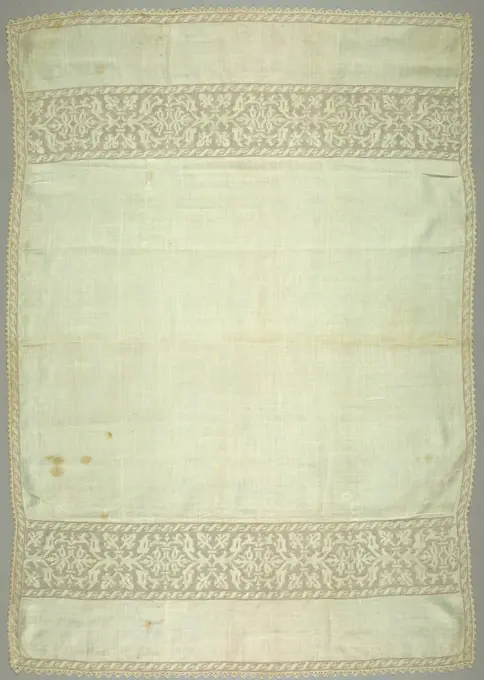
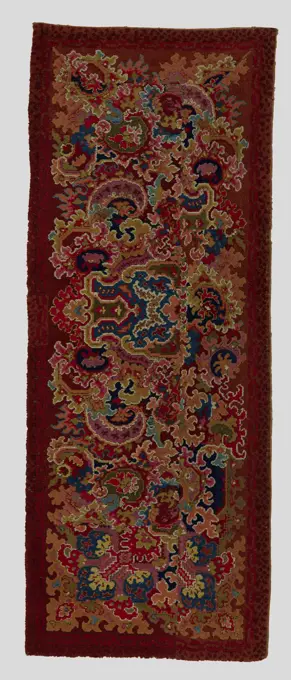
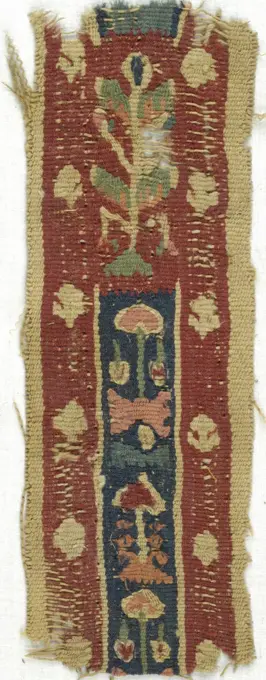
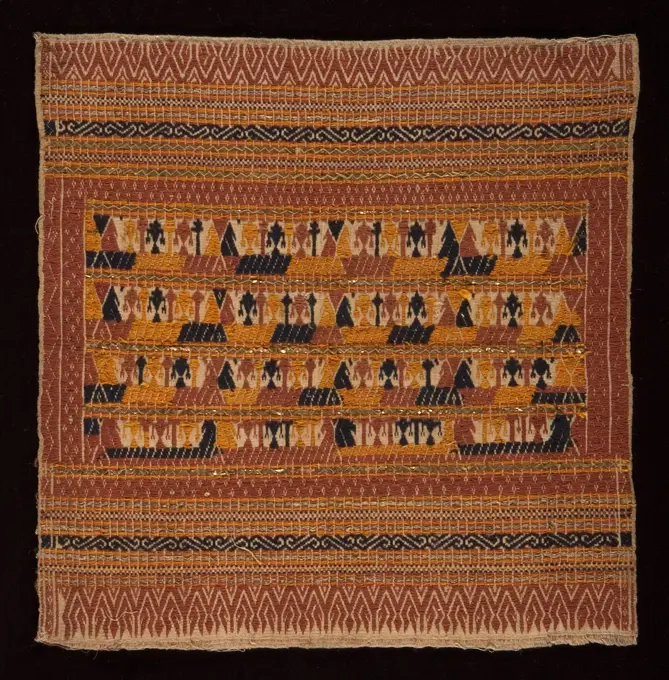
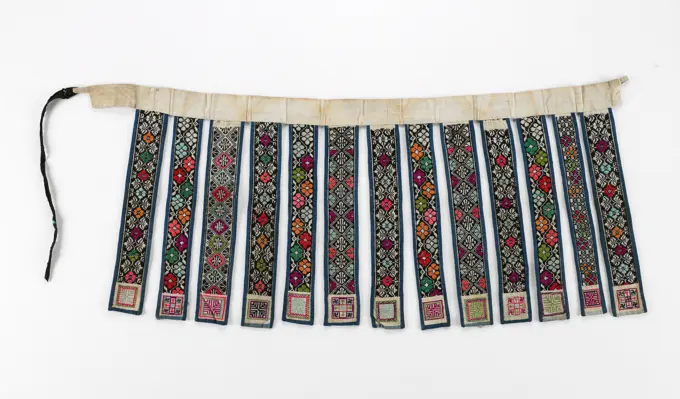
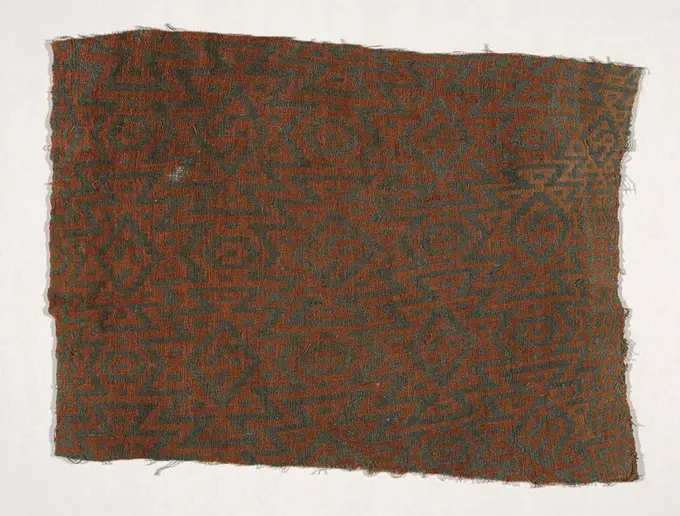
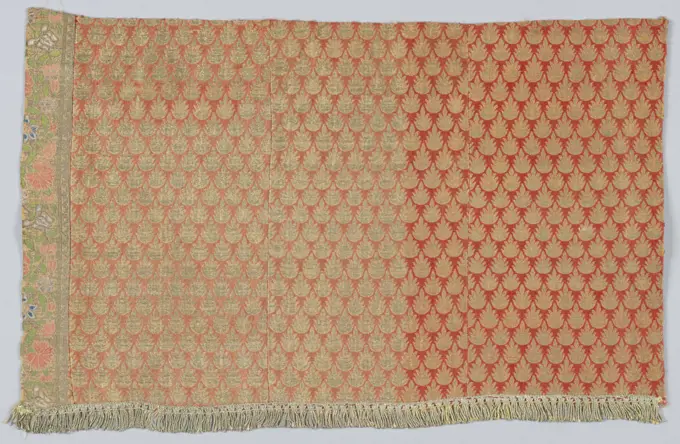
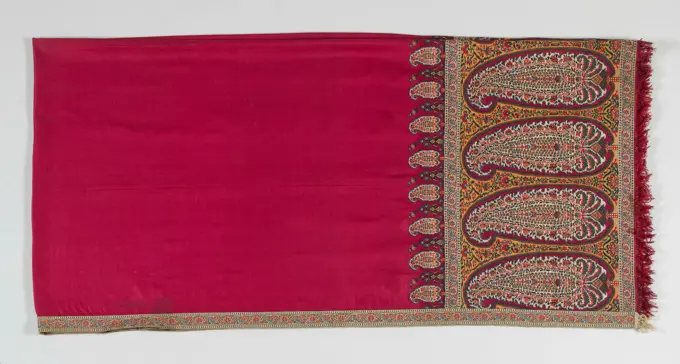
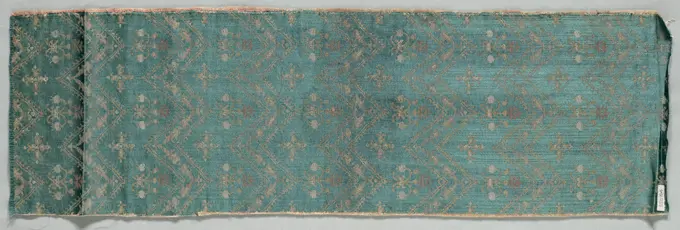
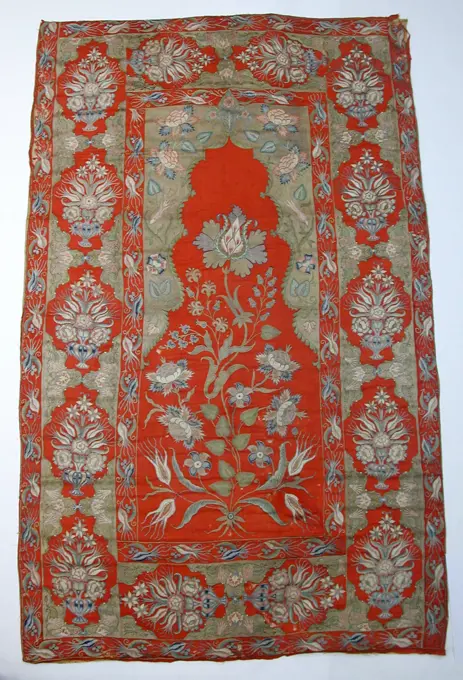
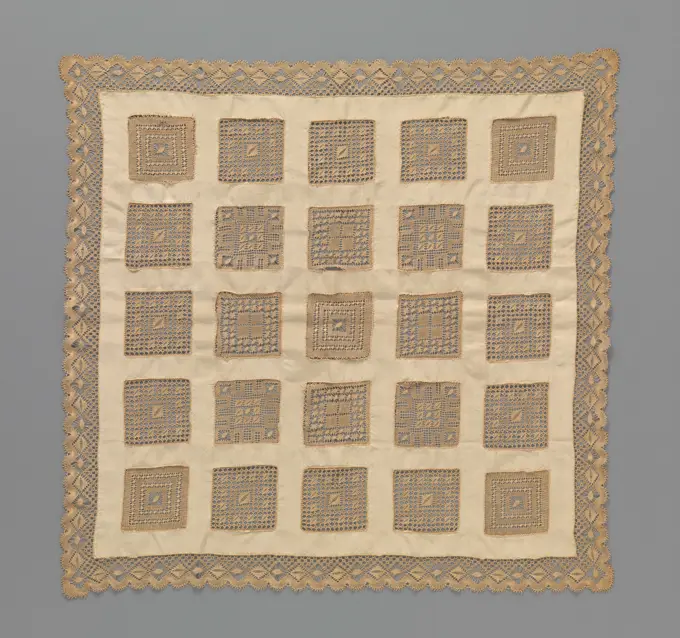
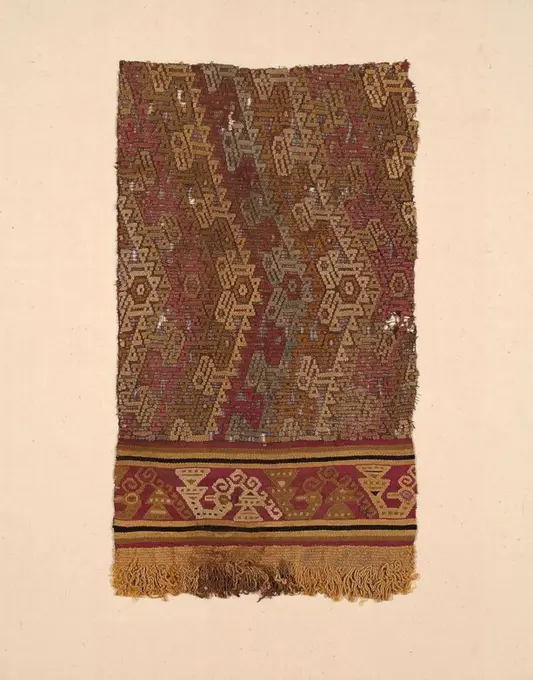
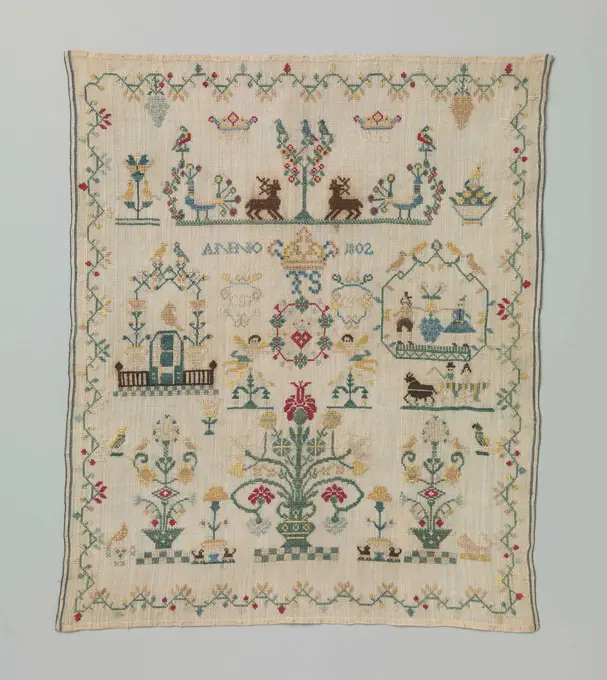
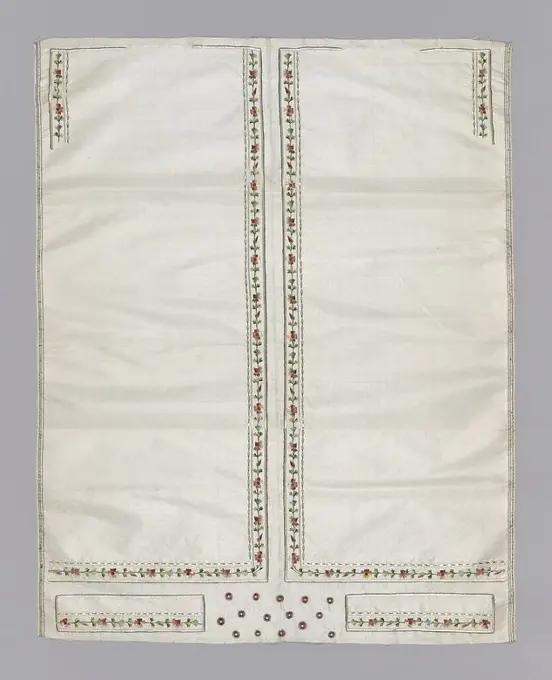
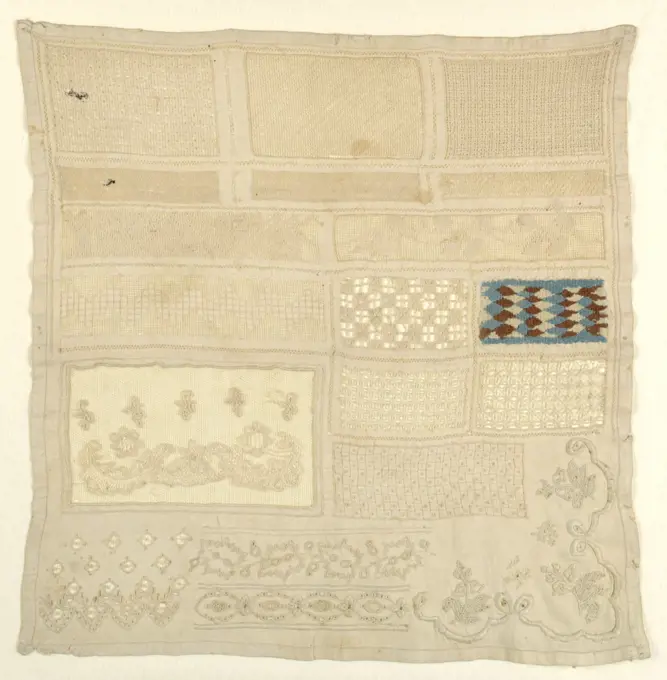
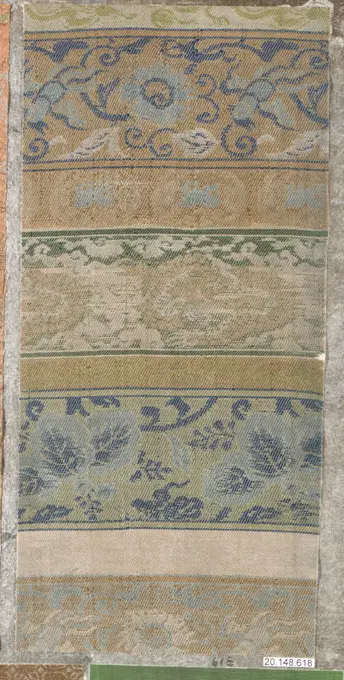
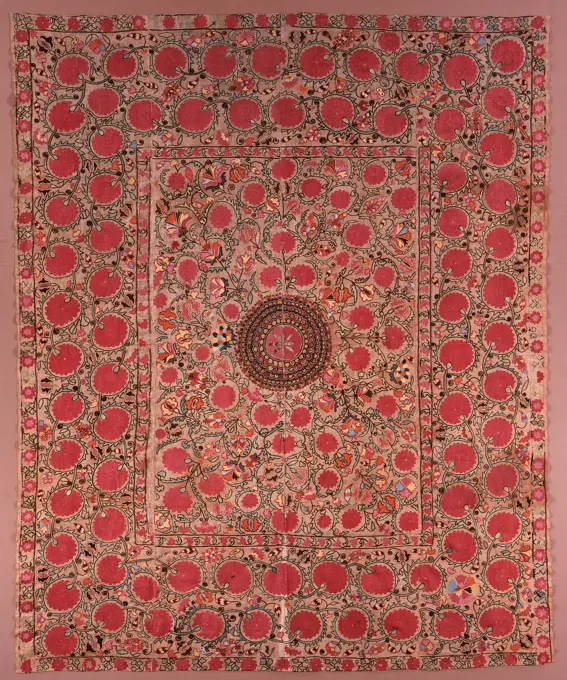
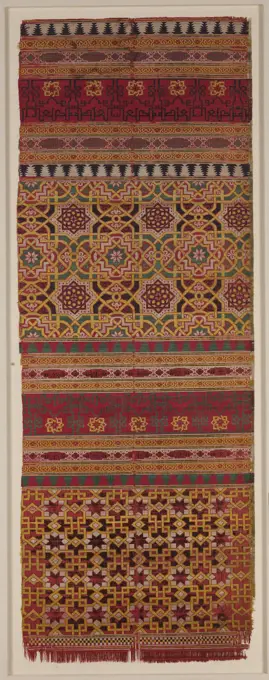
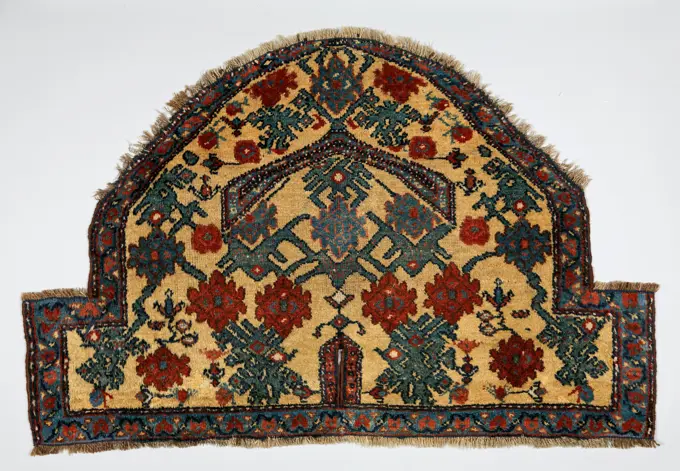
Fragment. Dimensions: Rug: L. 19 1/2 in. (49.5 cm) W. 27 3/16 in. (69.1 cm)Mount: L. 23 1/4 in. (59.1 cm)W. 31 1/4 in. (79.4 cm)D. 2 1/8 in. (5.4 cm). Date: 16th century.This fragment depicts a variety of vegetal forms, including scrolling leaf and vines along the border, as well as a popular blossom or pomegranate-style design inside an alternating pyramidal merlon border. Museum: Metropolitan Museum of Art, New York, USA.Velvet Fragment, 1400s. Italy, 15th century. Silk velvet; overall: 59.7 x 24.2 cm (23 1/2 x 9 1/2 in.).Carpet ca. 1550 This wool carpet presents a large border with repeating large blossoms, framing an extensive surface decorated with repeating chintamanis, the pearl-like spots that were popular in the Ottoman court. A circular medallion occupies the center, with a fleur-de-lis like motif at its top and bottom forming a vertical axis. The design of a central medallion and four corner quarter-medallions is thought to have originated in decorative book bindings. While displaying a Turkish design, the technique and materials of this carpet are actually Egyptianreflecting the presence of Egyptian carpet weavers in sixteenth-century Ottoman workshops.. Carpet 452309Carpet with Quatrefoil Design probably 18th century This small carpet shows a large quatrefoil design in dark blue on a red ground that stretches across the entire width of the center field, while partial cartouche-like medallions fill the upper and lower-end edges of it. Various highly stylized floral motifs decorate the larger blue motifs and the red ground. The strong geometric rendering of the flowers makes their identification difficult. However, the comparison with earlier Ushak carpets with quatrefoil designs (see for example 1972.80.4), allows the viewer to distinguish lotus flowers, fleur-de-lis and split-palmettes. The small size, the irregularity and the simplification of design of this rug confirm that it was made in a village, where women are known rather than men to have established small workshops.. Carpet with Quatrefoil Design 456974Panel, 1900-1910, H.93-1/2 x W.65-1/2 in., Silk, cotton; ikat, quilting, Uzbekistan, 20th centuryTapa Cloth (Samoa); paper mulberry barkRalph Atkinson, Coverlet, 1937 CoverletBorder (Greece); silk embroidery on linen foundationCushion Cover. Date/Period: 1600 - 1700. Cushion. Author: Turkey Unknwon.Sampler, Benita Hernandes, Medium: cotton embroidery on linen foundation Technique: drawnwork stitches, whipped bars, aztec, loop, counted satin, cross, and double running stitches on plain weave, Geometric and floral patterns in cross borders; also birds, animals, alphabet and inscription: made by Benita Hernandes under the direction of Dona Eclita Ramirez. Hemstitched on four sides., Yucatan, Mexico, 19th century, embroidery & stitching, SamplerConciliate belt;  2nd half 18th century (1751-00-00-1800-00-00);Embroidered band sampler 17th century British Band samplers are composed of horizontal rows ("bands") of embroidered patterns stitched along the linen foundation fabric. Many of the patterns stitched onto band can be traced to sixteenth-century pattern books, and often include depictions of fruit, flowers, and geometric patterns. This sampler is made up of bands of varying heights that feature birds, acorns, pineapples, and a variety of flowers. The bottom of the sampler includes an alphabet consisting of a mix of uppercase and lowercase letters and small, seemingly randomly placed motifs, resembling a spot sampler.. Embroidered band sampler 228211Edge, frills and galon in wool, silk and gold thread.edge, frills and galon in Wool, Silk and Gold Thread. Steel.Kontusz sash. unknown, creatorBid rug, so -called Kumurcu -Kula, i.e. Staalkolenkula/formerly also 'Zevenburger' ,, 1790 - 1810 Bid rug, so-called Kumurcu-Kula, i.e. Staalkolenkula/formerly also 'Zevenburger'. Midfield: Double Mihrab in Terracotta with different stepped peaks and zigzag lines on the sides. There is a green vase in every top, between which blue and yellow palmet and rosette flowers stand on branched branches. Blue swing, each with a white rosette and red and yellow lancet leaves. Edges: triple. The widest is Goudoker with Zigzagrank in Terra with turns a triple carnation in red and three bunches in blue, each accompanied by a pointed tulip. The inner hem is blue, the outside zoom dark brown with equal volute bines, so -called Kommarank. Care wool Bid rug, so-called Kumurcu-Kula, i.e. Staalkolenkula/formerly also 'Zevenburger'. Midfield: Double Mihrab in Terracotta with different stepped peaks and zigzag lines on the sides. There is a green vase in every top, between which blue and yellow palmet and Textile (Portugal); cottonChintz Fragments (India); cotton; Warp x Weft (a): 93.5 x 19 cm (36 13/16 x 7 1/2 in.) Warp x Weft (b): 16 x 26 cm (6 5/16 x 10 1/4 in.) Warp x Weft (c): 11.5 x 31 cm (4 1/2 x 12 3/16 in.) Warp x Weft (d): 24 x 17 cm (9 7/16 x 6 11/16 in.)Fragment; silk, metallic threadRitual Cloth (Bidak orSokong)Fragment of gold leather. Square piece of gold leather, formed from pieces sewn "Corduan" leather. The decoration in gold on a gold-blue fond distributes the whole in four vertical jobs, which are closed by narrower straight ties. In the tracks a pomegranate motif will be repeated five times above each other; The tires show rollerwork. A cardinal arm has been installed in the middle.Fragment ciselé fluweel in okergeel en bruin op groen..A fragment of a multicolored silk velvet, on the ground of green satin, large S-shaped figures of flowers and buttons to a curved stem in light and dark brown velvet cuts on drawn pole.Fragment, Medium: silk, metallic thread Technique: brocaded satin, Satin damask silk weave in pink and silver with delicate scrolls and silver brocaded palmettes., France, ca. 1700, woven textiles, FragmentOriental carpet ,, 1700 - 1900 Eastern carpet, medailla rug. In the blue hexagonal center there is a concentric window, surrounded by hooks and stems with rosette flowers. A cross -shaped star flower in the heart. Button: Ghiordes Knoop. Klein-Azië (possibly)Bergama (possibly)Yagcibedir (possibly) Necklace and impact: Wool Eastern carpet, medailla rug. In the blue hexagonal center there is a concentric window, surrounded by hooks and stems with rosette flowers. A cross -shaped star flower in the heart. Button: Ghiordes Knoop. Klein-Azië (possibly)Bergama (possibly)Yagcibedir (possibly) Necklace and impact: WoolHeaddress late 19th century Russian This object is from the collection of Natalia de Shabelsky (1841-1905), a Russian noblewoman compelled to preserve what she perceived as the vanishing folk art traditions of her native country. Traveling extensively throughout Great Russia, she collected many fine examples of textile art of the wealthy peasant class. From the 1870s until moving to France in 1902, Shabelsky amassed a large collection of intricately embroidered hand-woven household textiles and opulent festival garments with rich decoration and elaborate motifs. The Brooklyn Museum holdings include many fine examples including the majority of the garments. Portions of Shabelsky's collection are also housed at the Museum of Fine Arts, Boston, the Cleveland Art Museum, and the Russian Museum of Ethnography in St. Petersburg.Russian women are renowned for masterful embroidery, as evidenced by this headdress back from the 19th century. The sinuous lines in the embroidery motifs add to an oSampler, Medium: silk embroidery on cotton foundation Technique: embroidered in cross, star, and four-sided stitches on plain weave foundation, Alphabets, lettering, and crowned monograms in top half; isolated floral motifs and house with stepped roof at the bottom., Netherlands, 1831, embroidery & stitching, SamplerBliej Kultury unknownCarpet late 17th century. Carpet 452808Tunic, c. 1400-1540. Peru, Inca, 15th-16th century. Tapestry; cotton and camelid fiber; average: 85.1 x 76.2 cm (33 1/2 x 30 in.).Border (Italy); linenInner wedding veil (Patori), late 19th century, 89 x 64 in. (226.06 x 162.56 cm), Cotton; tied resist dye, India, 19th century, Muslim brides in the Banni district of Kutch wore layers of veils. Hidden from view, like the bride herself, was a red and green, lotus-patterned cloth called patori. The finest patoris were done in tie-dye, for which Kutch was famous. Printed versions mimicking tie-dye were also popular.Fragment 17th century French. Fragment 213032Fragment silk tissue of a seat cover., C. 1805 Fragment yellow silk tissue, from a seat cover. The pattern has pink palmets and arabesks on a yellow ground. The fragment is part of thirteen fragments with invnr. BK-1992-18-A to BK-1992-18-M. France silk Fragment yellow silk tissue, from a seat cover. The pattern has pink palmets and arabesks on a yellow ground. The fragment is part of thirteen fragments with invnr. BK-1992-18-A to BK-1992-18-M. France silkOriental carpet ,, 1700 - 1900 Oriental carpet, ghiordes prayer rug with cross panels. In midfield a corn-blue mihrab with a hanging oil can and a flower branch in a vase The upper and lower warpanelen are dark blue. Multiple edge. The middle one consists of seven stripes. Button: Ghiordes Knoop. Asiaghiordes Minor Necklace and impact: Wool Oriental carpet, ghiordes prayer rug with cross panels. In midfield a corn-blue mihrab with a hanging oil can and a flower branch in a vase The upper and lower warpanelen are dark blue. Multiple edge. The middle one consists of seven stripes. Button: Ghiordes Knoop. Asiaghiordes Minor Necklace and impact: WoolCover, Medium: linen Technique: withdrawn element work; needle lace, Table cover of fine white linen ornamented with white bands across the ends and sides. The pattern is reserved in the white linen. Edging of narrow pointed needle lace., Italy, 17th century, lace, CoverFragment; silk, metallic yarns; 1899-17-1-gEastern carpet ,, c. 1900 Oriental carpet, prayer rug. In midfield a white mihrab with a grid and flowers. Four-time edge of which the widest karmine red is and decorated with S-Motives. Shirvan Necklace and impact: Wool Oriental carpet, prayer rug. In midfield a white mihrab with a grid and flowers. Four-time edge of which the widest karmine red is and decorated with S-Motives. Shirvan Necklace and impact: WoolFragment; silk, cotton, metallic threadEastern carpet ,, c. 1900 Bid rug in Kelim technology. In midfield a cardinal -saving mihrab. There are alternatingly crossed tifles on the central axle. In addition, hex corners. Furthermore rows of s-sen. Little Asia ketting: wool Bid rug in Kelim technology. In midfield a cardinal -saving mihrab. There are alternatingly crossed tifles on the central axle. In addition, hex corners. Furthermore rows of s-sen. Little Asia ketting: woolCarpet decorated with palmets and scallops ,, 1800 Carpet. On the dark red stock is placed in the middle, placed across, an omega-shaped palm with blue and green, with broken C-voluten contoured and flanked by whimsical serrated sculpts in dark blue, rose, orange, mustard yellow, red and violet; All sculptures are made up of concentric shapes in different nuances, and surrounded by black or white line. In two corners, a sloping red palmet, from which a branch originates with three blue palmets. The contours are also multi -colored and surrounded with whimsically. The edge shows panest spots in various nuances dark red and an inner zoom as a angular switch chain in brick red. Composed of fragments of a much larger rug. Such that no pure pattern is formed. Deventer wool Carpet. On the dark red stock is placed in the middle, placed across, an omega-shaped palm with blue and green, with broken C-voluten contoured and flanked by whimsical serrated sculpts in dark blue, rose, orange, mustard2 Band Fragments with Botanical Decoration Coptic. 2 Band Fragments with Botanical Decoration, 5th-7th century C.E. Linen, wool, Combined measurements: 1 3/4 x 9 3/4 in. (4.4 x 24.8 cm).   Egyptian, Classical, Ancient Near Eastern Art 5th-7th century C.E.Fragment (Italy); linen; 1946-42-42Eastern carpet, anonymous, c. 1800 Oriental carpet, presumably prayer rug, knotted wool, decorated with a double mihrab with high top facades. Three edges with two between. Shirvan (possibly) wool Oriental carpet, presumably prayer rug, knotted wool, decorated with a double mihrab with high top facades. Three edges with two between. Shirvan (possibly) woolBetty Jacob, Coverlet, c 1940 CoverletPiece 18th-19th century Japan. Piece 66944Embroidered Woman's Garment, 1800s. Mexico, Yucatan, 19th century. Plain weave cotton; embroidered; overall: 114.3 x 95.7 cm (45 x 37 11/16 in.).Ceremonial Textile (Tampan). Indonesia, South Sumatra, Lampung, late 19th century. Textiles. Cotton plain weave, silk and metallic thread supplementary weft patterningStreamer Skirt, 15 3/4 x 53 3/4 in. (40.01 x 136.53 cm) (including ties), Cotton, paper, ChinaFragment. Chiquerillo, Palpa Valley, south coast, Peru. Date: 900 AD-1476. Dimensions: 33 × 45.8 cm (13 × 18 in.). Cotton, plain weave, double cloth. Origin: Peru. Museum: The Chicago Art Institute, Chicago, USA.Textile, Medium: silk, metallic threads Technique: complementary weft patterning with brocading, a) Two broad vertical strips, one gray and one red, each with an all-over pattern of small gold palmettes. The two areas are separated by a narrow orange stripe with a floral serpentine brocaded in polychrome silks and metal thread., b) Red ground with gold palmettes, with a portion of the brocaded floral band sewn to one side. Composed of four pieces sewn together, with metal fringe at the bottom., Iran, 17th century, woven textiles, Textile. The warm and colourful shawls that the British East India Company brought back from Kashmir were in high demand in Great Britain. Not everyone, however, could afford such luxurious imported items. This soon led weavers in England and Scotland to imitate them successfully. The method used in Europe differed from that in Kashmir; the reverse side of a shawl often gives away whether it is an original or an imitation.Fragment Made 1650-1700 Italy. Silk, gold gilt strips, and gold gilt strips wound around silk fiber core, plain weave with supplementary brocading wefts .Brocade Textile, 1500s. Italy, 16th century. Lampas weave, silk; overall: 60.3 x 19.2 cm (23 3/4 x 7 9/16 in.).Sash 1801-1900 Turkey. Sash, with ends embroidered in floral design in silks and gilt . AnonymousCover or Hanging early 19th century. Cover or Hanging 443025Theetafelkleed van beige zijde met vierkante inzetten van lichtbruine kloskant.Tea tablecloth of beige silk completed with light brown dick and with twenty-five square deployment of light brown dick. Square model. The twenty-five bets are in five rows of five. The bets have a geometric pattern, five variants are decorated with, among other things, spiders, windows and rows of shape strokes between decorative tires in a slot base. The motifs are connected to each other or not by a grille: a twisted cross beats. The edge around the rug has a sling side pattern with windows in which a spider and a window alternately, connected by a twisted cross bands. The tube edge stems from the wavy tape that runs under the windows and is made in a slurel. The shelters are finished with pointed papers made with a continuous braid with picots.Sleeve Band (China); wool on cottonTextile, China, 18th-19th century, woven textiles, TextileConciliate belt;  End of the 18th century (1791-00-00-1800-00-00);Carpet 16th century. Carpet 450470Pouch 1830-60 Mexican. Pouch 170247Silk fabric;  before 1795 (1780-00-00-1795-00-00);Textile Fragment. Dimensions: L: 19 in (48.3 cm) x W: 11 in (27.9 cm). Date: 18th century. Museum: Metropolitan Museum of Art, New York, USA.Fragment, c. 1100-1400. Peru, Central Coast, Chancay, 12th-15th century. Tabby, brocaded; cotton; average: 31.1 x 44.5 cm (12 1/4 x 17 1/2 in.).Fragment. Probably Chancay; Probably central coast, Peru. Date: 1000-1476. Dimensions: 55.6 x 31.4 cm (21 7/8 x 12 3/8 in.). Cotton and wool (camelid), gauze weave with brocading wefts with border of slit tapestry weave; edged with plain weave extended weft loop fringe. Origin: Peru. Museum: The Chicago Art Institute, Chicago, USA.Fragment (France); silkCarpet. Dimensions: H. 72 in. (182.9 cm)W. 46 in. (116.8 cm). Date: late 18th-early 19th century. Museum: Metropolitan Museum of Art, New York, USA.Chalice Cover Made 1701-1800 Italy. Silk, warp-faced plain weave; same lining; edged with bobbin lace of metal thread; embroidered in silk floss, gold metal strip wrapped on silk coreóused singly and as 2-ply twist, metal strip; stitches long and short, couching, stem, knot, herring-bone (threaded with metal strip) couching in brick and other patterns .Cover 16th century Italian. Cover 215024Fragment, Medium: cotton Technique: plain weave foundation. block-printed; black, red and yellow. Blue brushed over yellow for green., Flower in diamond grid on picottage background., Jouy, France, late 18th century, printed, dyed & painted textiles, FragmentPiece of "Patka" (Girdle or Sash), 1700s - 1800s. India, 18th-19th century. Brocade, "kimkhwab"; overall: 30.5 x 48.3 cm (12 x 19 in.).Merklap from linen canvas on which figures and flowers in pots are embroidered with silk in pots in pots to 1802 and TS. Layout: Symmetrical, but not mirror image. Signature by made maker ts under big crown. Lettering Letters HM and the year 1958 below the upper crowns. The corner of the decorative edge left below differs from the other three. So-called second test.Sutra Cover. China. Date: 1590-1599. Dimensions: 35.2 × 12.1 cm (13 7/8 × 4 3/4 in.)Repeat: 9.3 × 5.6 cm (3 5/8 × 2 1/4 in.). Silk, satin weave self-patterned by areas of twill weave; wrapped over cardboard and backed with paper. Origin: China. Museum: The Chicago Art Institute, Chicago, USA.Embroidered envelope with closures, late 1700s to early 1800s. Turkey. Satin weave: silk; embroidery, couched stitches: gilt-metal thread and cotton; average: 91.5 x 95.9 cm (36 x 37 3/4 in.).Waistcoat (Uncut and Unassembled). France. Date: 1801-1825. Dimensions: 70.8 × 55.7 cm (27 7/8 × 21 7/8 in.). Silk, plain weave; embroidered with silk threads in satin and stem stitches with borders worked in diagonal satin stitch; French knots. Origin: France. Museum: The Chicago Art Institute, Chicago, USA.Embroidered pall unknownSampler, Medium: cotton and wool embroidery, linen foundation Technique: buttonhole, overcasting, darning and drawnwork stitches on plain weave, Twenty patterns worked in drawnwork, cutwork and embroidery. Geometric and floral patterns., Mexico, 19th century, embroidery & stitching, SamplerFragment seat cover in red and white velvet. Backpiece of a chair covering of velvet velvet.Shawl (India); wool, cashmereDecorative pillow covering  yastik unknownPiece 18th century China or Japan. Piece 71613Sarong  plant and floral motifs unknownSampler (Netherlands); silk embroidery on linen foundationSouthern Persian Isfahan carpet, 16th century. Artist: Unknown.Curtain or Hanging (Suzani). Uzbekistan, Shakhrisabz or Ura Tube, third quarter of the 19th century. Textiles; hangings. Silk and wool embroidery on linen plain weaveSkirt Cloth (Saput endek) Bali. Two panels joined silk, weft resist dyed (weft ikat), plain weave .Piece 18th-19th century Japan. Piece 67369Textile Fragment 14th century This textile exhibits bands of varying patterns, some including interlacing calligraphic inscriptions. Here, the texts convey wishes for happiness, good fortune and prosperity. The hues of this brightly-colored fragment - with its contrasting red, green and gold - characterize the textiles produced during the Nasrid and later periods in Spain and North Africa. Its appearance is in sharp contrast to textiles produced in earlier periods. The earlier pieces exhibit a lighter, more delicate palette of minty greens, light blues and a heavy use of golden metal-wrapped threads.. Textile Fragment 448232Fragment, Medium: silk Technique: embroidered on plain weave, Red ground fabric with embroidery in yellow, green and white in floral pattern., India, 19th century, embroidery & stitching, FragmentSaddle Cover last quarter 19th century Elaborate caparisons, or ornamental coverings for horses and camels, are an essential part of almost every nomadic art tradition. Textiles were often designed to cover leather saddles. Some examples, including this one, feature side panels to provide cushioning for the riders thighs. The floral motifs, rendered in a naturalistic style, are characteristic of Bakhtiari tribal works. Also common among Bakhtiari carpets is the symmetrically knotted pile technique the weaver used here.. Saddle Cover. last quarter 19th century. Wool (warp, ground weft, and pile); symmetrically knotted pile. From Western Iran, Bakhtiari tribe. Textiles-RugsPanel (Apparel) 17th century () Italian or Spanish. Panel (Apparel) 460393Piece 18th-19th century Japan. Piece. Japan. 18th-19th century. Silk. Textiles-WovenFragment, Medium: silk, metallic thread Technique: woven, Fragment of a continuous symmetrical pattern of a palmette with leafy forms and flowers. Primarily cream-colored with tarnished gold metallic thread and grey and pale orange silk., France, 18th century, woven textiles, FragmentCovert of saddle bag, decorated with gridwork in which cross flowers, Jaffi Volk, c. 1800 - c. 1900 Cover of a saddle bag, Jaffi Kurdistan-Mosul. The midfield is divided into windows in which cross flowers. Double edge. At the top a bearded beard. Kurdistan Necklace and impact: Wool Cover of a saddle bag, Jaffi Kurdistan-Mosul. The midfield is divided into windows in which cross flowers. Double edge. At the top a bearded beard. Kurdistan Necklace and impact: WoolFragment. Netherlands. Date: 1601-1625. Dimensions: . Fancy simple cloth; twill weave. Origin: Netherlands. Museum: The Chicago Art Institute, Chicago, USA.Close-up of a Demirci carpet, TurkeyTextile Fragment 19th century. Textile Fragment 445878Blanket, early 19th century. America, early 19th century. Hand weave and embroidery: wool; average: 236.2 x 188 cm (93 x 74 in.).Band (from Woman's Trousers) Made 1875-1900 China. .Textile; linen, silk, metallic threadsPiece 18th-19th century Japan. Piece 66848