Ornate Historical Textiles

A collection of intricate textiles featuring rich colors, floral patterns, and historical origins from Italy, Iran, and Spain, showcasing the artistry of different cultures.
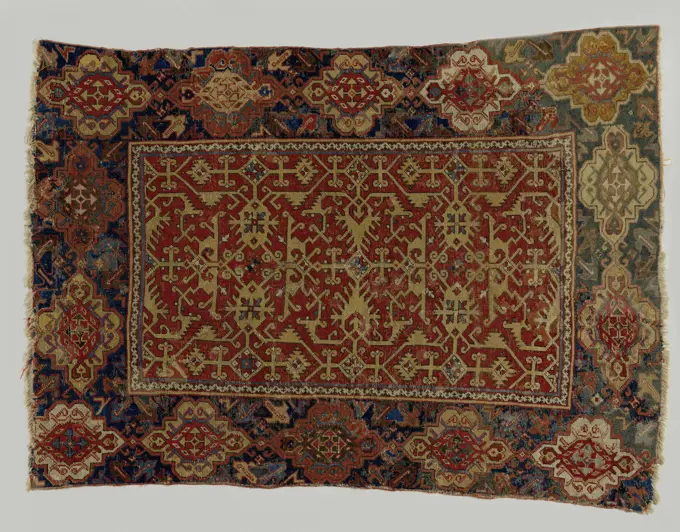
Eastern carpet ,, c. 1600 - c. 1699 Eastern carpet, arabesk dress, lotto carpet. Midfield with yellow arabesk motifs against a stone red background. Lottop pattern made of the Kelim style. Double edge, the wide of which is decorated with similar cartouches. Button: Ghiordes Knoop. Asia Klein (Possible) Usak (Possible) Walachije (Possible) Necklace and impact: Wool Eastern carpet, arabesk dress, lotto carpet. Midfield with yellow arabesk motifs against a stone red background. Lottop pattern made of the Kelim style. Double edge, the wide of which is decorated with similar cartouches. Button: Ghiordes Knoop. Asia Klein (Possible) Usak (Possible) Walachije (Possible) Necklace and impact: Wool
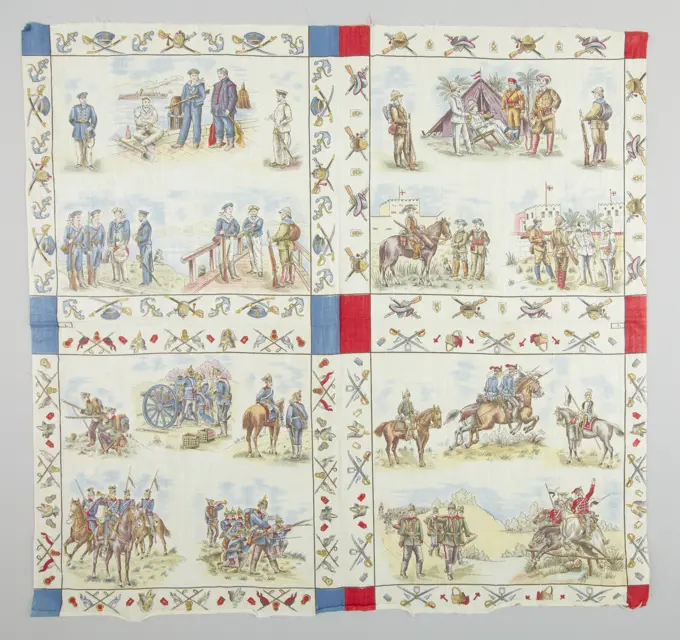
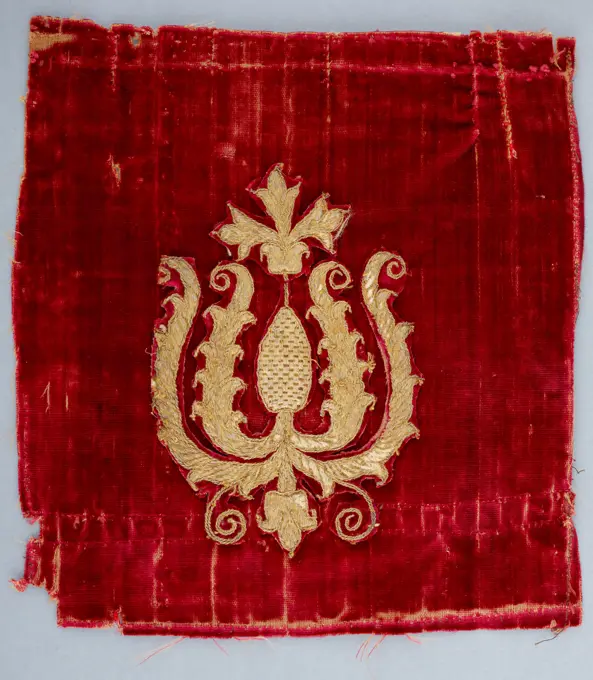
Fragment of embroidery  pomegranate motif unknownSampler (Southern Germany); silk embroidery, linen foundationBliżej Kultury unknownSari, 19th century, Silk; dyed, India, 19th centuryBorder (France); linen, silkDalmatic and Humeral Veil Made 1675-1725 Bayern. Silk, plain weave; underlaid with linen, plain weave; embroidered with silk, gilt-metal strips and purl, and gilt- and silvered-metal-strip-wrapped silk in back, satin, split, and stem stitches; laid work, couching, padded couching, and French knots; gilt-metal spangles; edged with appliquÈd linen, plain weave; embroidered with gilt-metal strips and gilt-metal-strip-wrapped silk in laid work, couching, and padded couching; lined with linen, plain weave .Sampler (England); silk embroidery, linen foundationWindow Shade (USA); machine-printed; 72.5 x 76 cm (28 9/16 x 29 15/16 in. )blur in iran antique carpet textile  handmade beautiful arabic ornamentHandkerchiefs (England); cottonPouch 1820-40 American. Pouch 168417Bamboo slipPurse. Culture: French. Dimensions: Overall: 5 1/2 x 6in. (14 x 15.2cm). Date: early 14th century. Museum: Metropolitan Museum of Art, New York, USA.Coin caseMittens. Culture: Russian. Date: late 17th century.These Russian gloves, with their beautiful gold metallic embroidery, were collected by Stewart Culin (1858-1929) during a collection expedition in 1920. Culin was the Brooklyn Museum's first Curator of Ethnology, serving from 1903 to 1929. Possessing an insatiable curiosity and appetite for collecting objects of all kinds, Culin conducted over twenty worldwide collecting expeditions between 1901 and 1928. The trips covered American Indian territories, New England, Asia, India, Great Britain, and all of Eastern and Western Europe. The seven expeditions between 1917 and 1928 were specifically focused on collecting regional textiles and costumes from Eastern and Western Europe and, to a lesser extent, New England. Culin's goals for these trips were not just to expand the Museum's holdings, but also to preserve their cultural contexts. He did so through amassing photographs, notebooks, and ephemera which documented the social, commercial,Prayer Niche (Mihrab), Islamic; quartz Ceramic, glazed. Kashan, Iran. 623-1226 ADPouch 1830-60 American. Pouch 168397Handkerchief  scenes from the Prussian Wars in the 19th century unknown