Ornate Metal Fasteners

Decorative metal elements such as powder flasks and book clasps, featuring intricate designs and craftsmanship from European and Asian cultures.
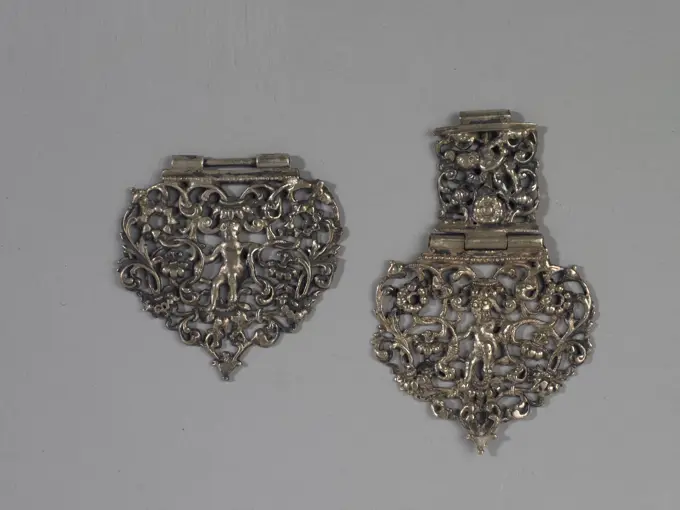
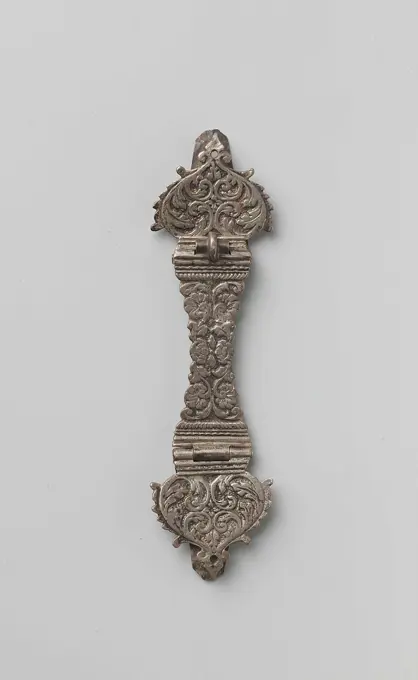
Book Clasp (probably Italy); silver; L x W x D (a,b: overall): 11.4 x 5 x 0.1 cm (4 1/2 x 1 15/16 x 1/16 in.)
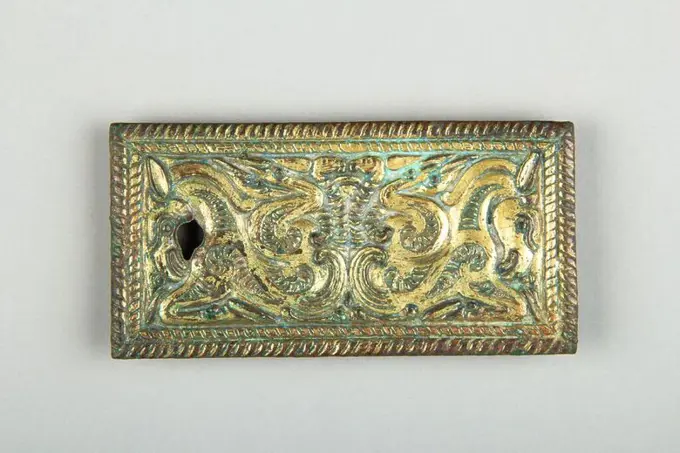
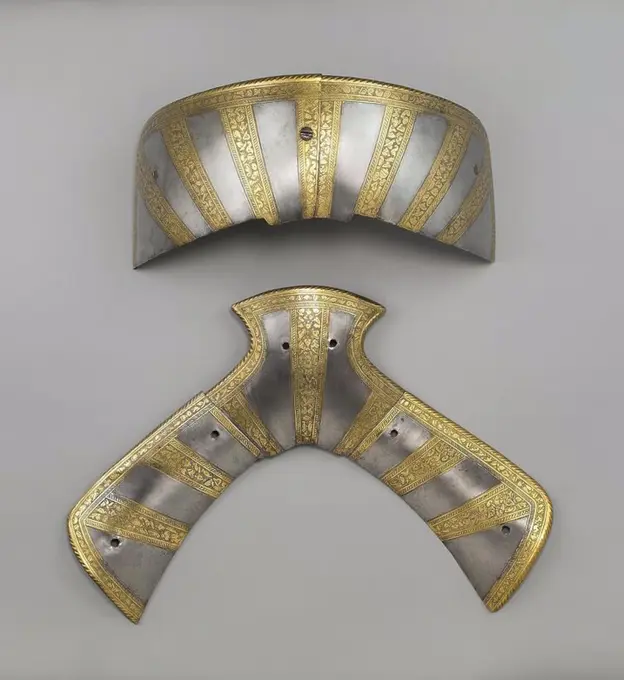
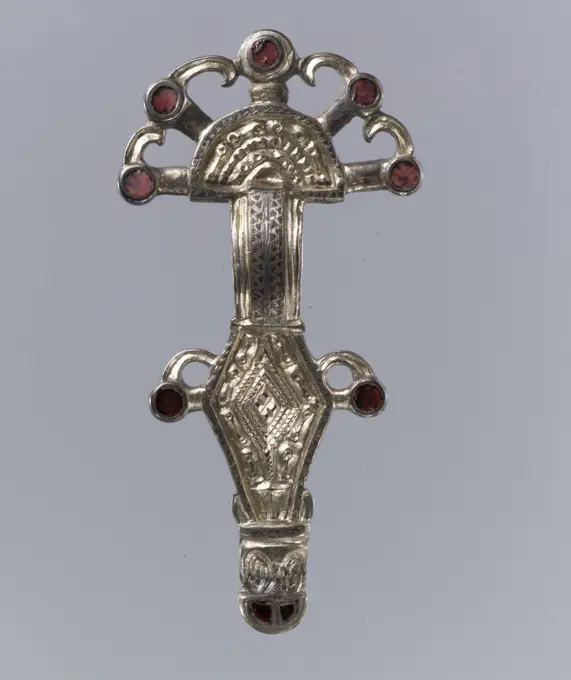
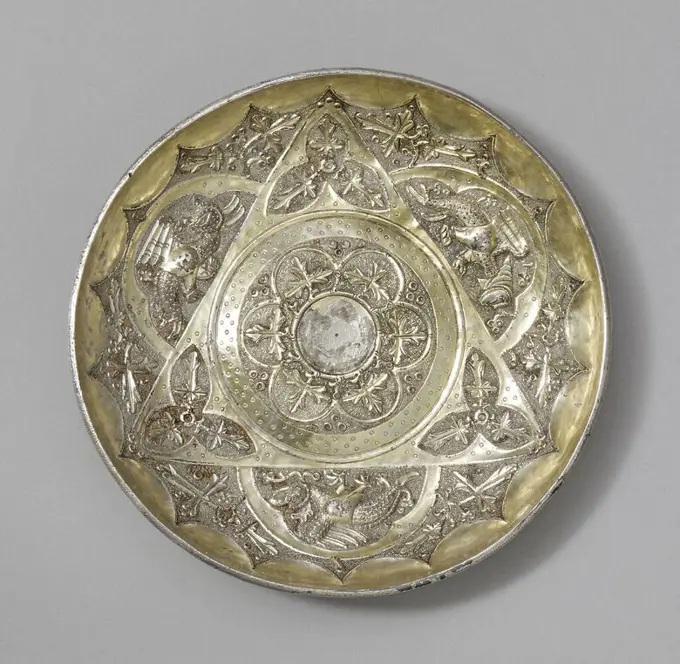
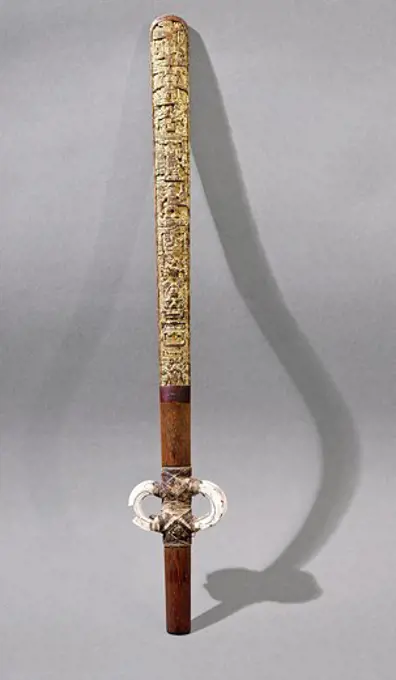
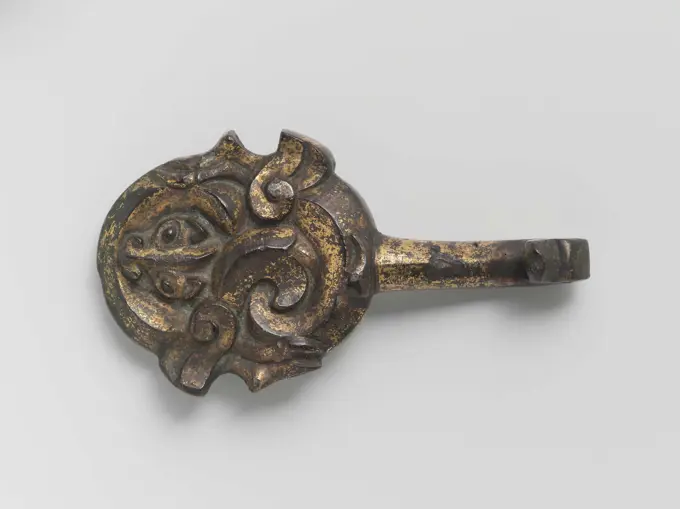
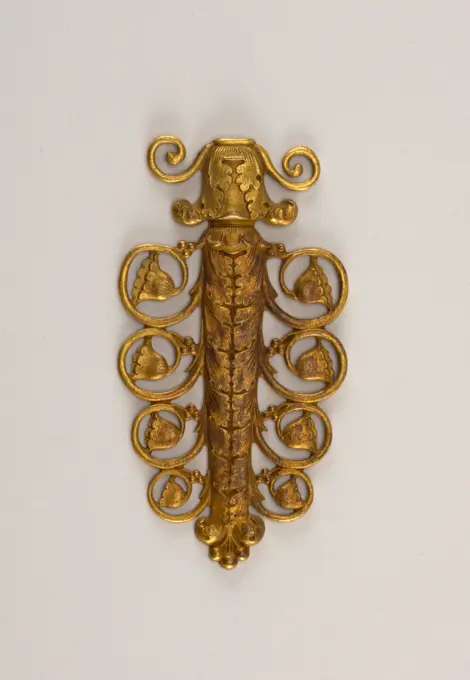
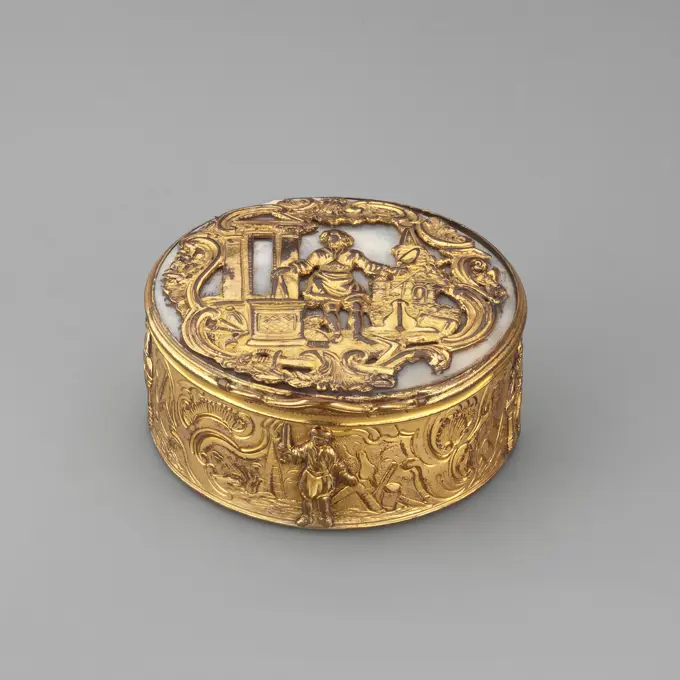
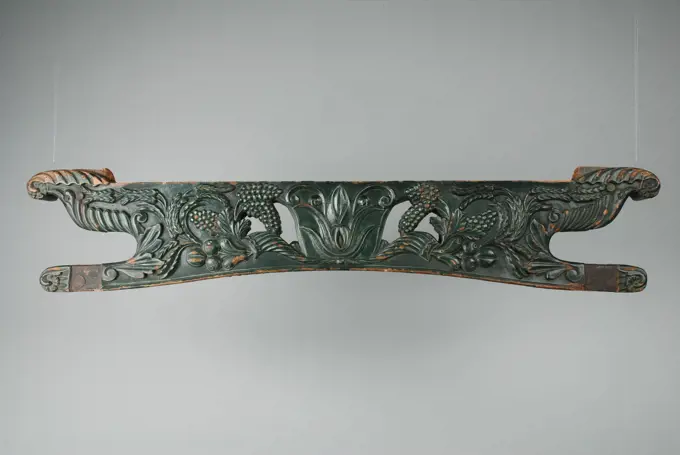
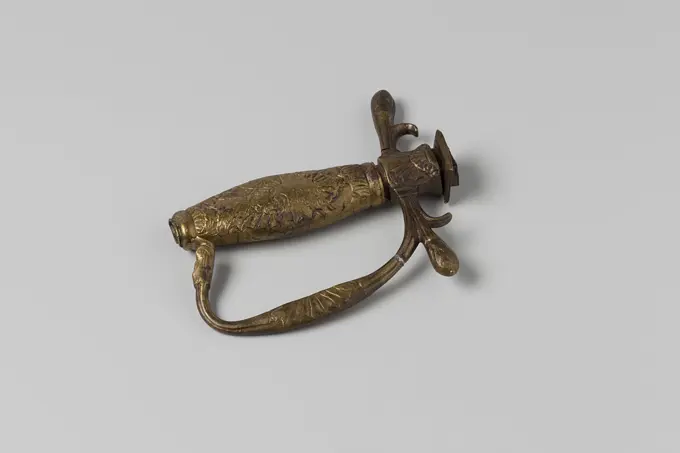
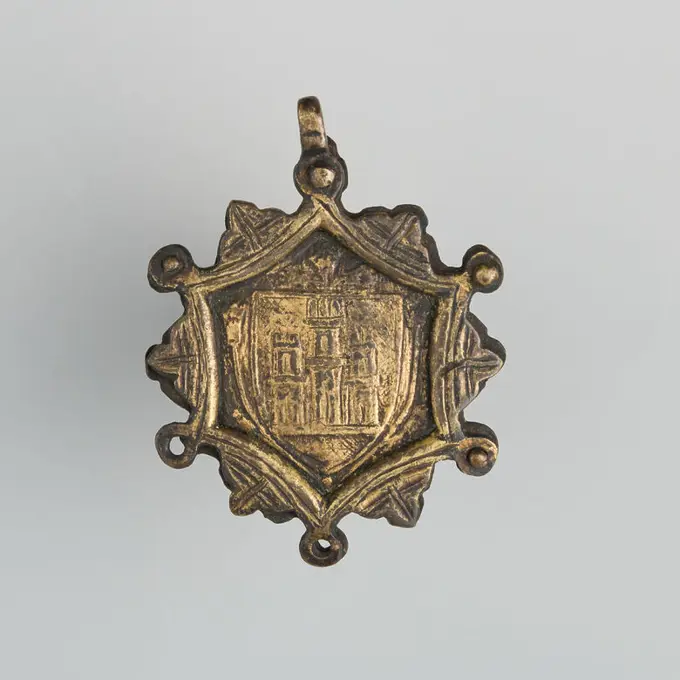
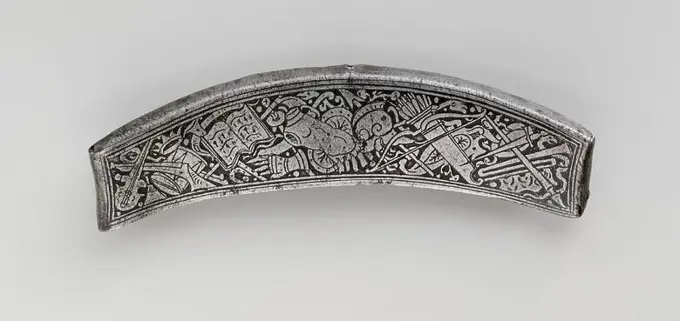
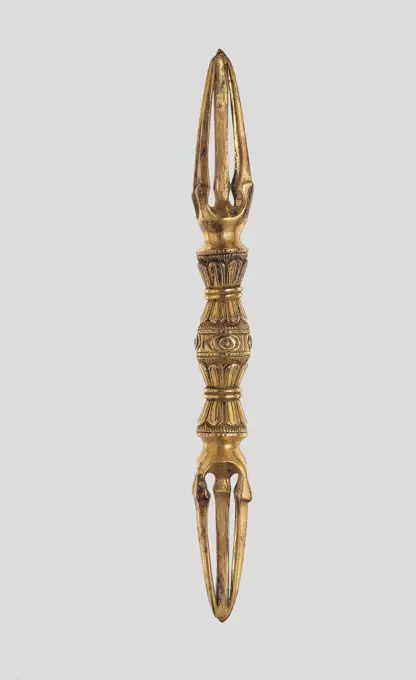
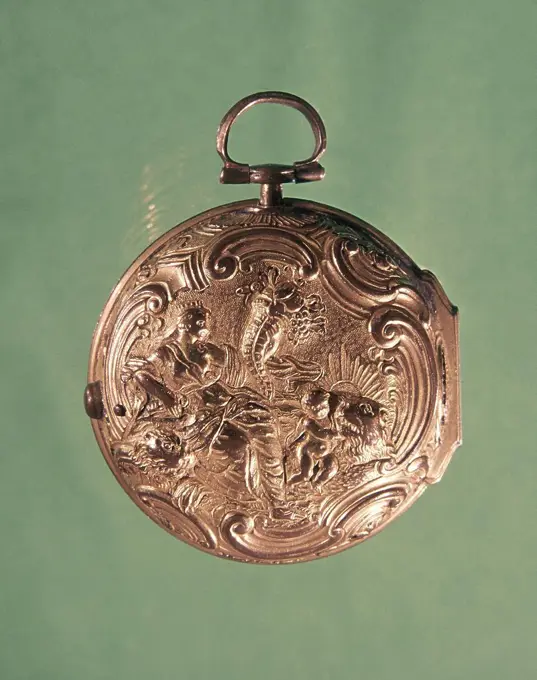
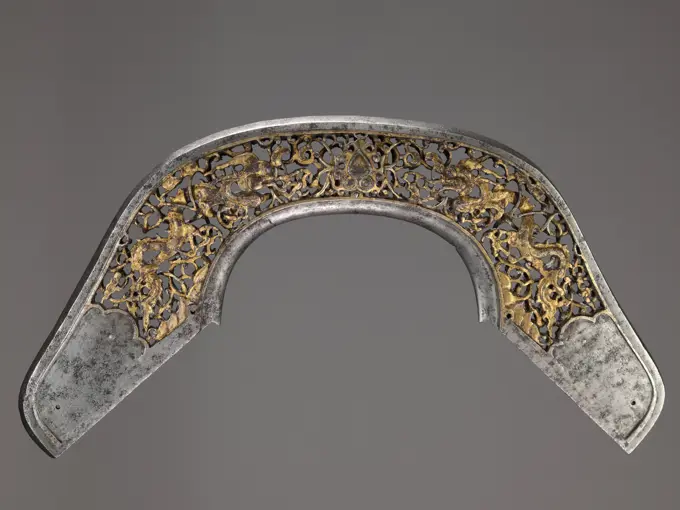
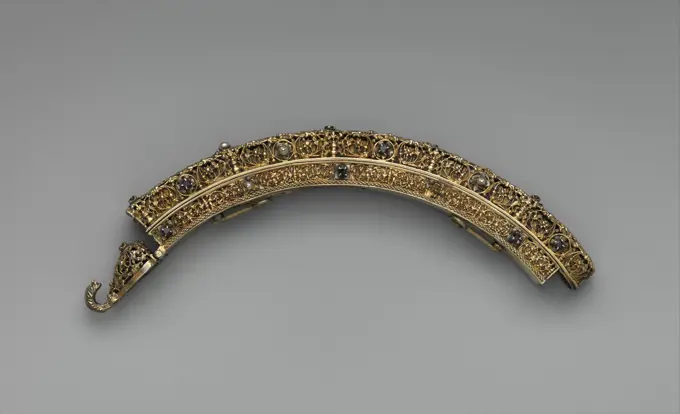
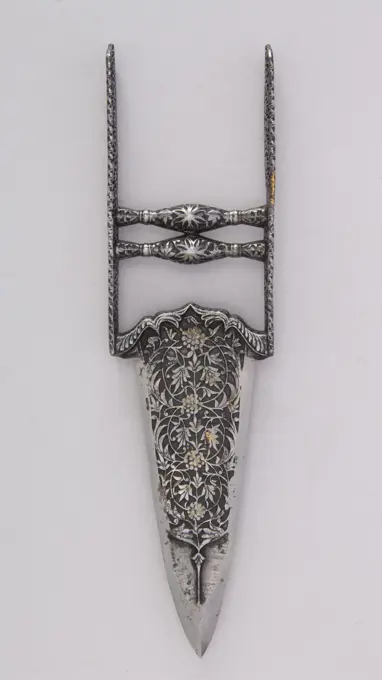
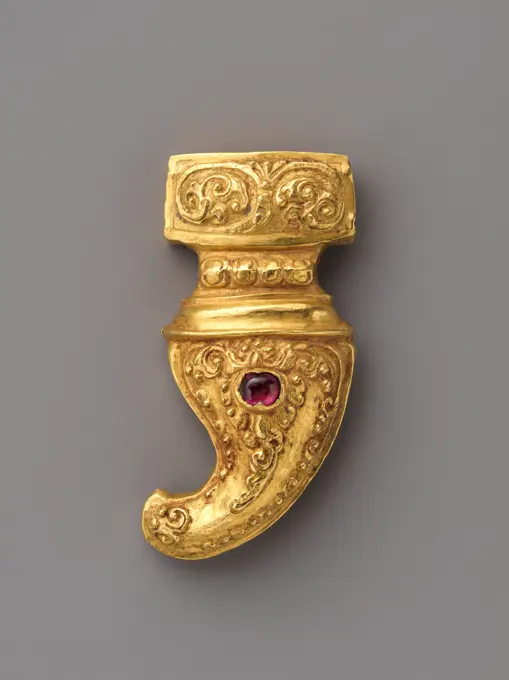
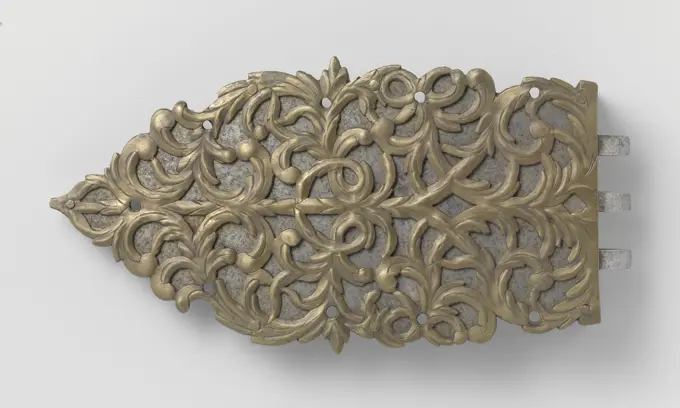
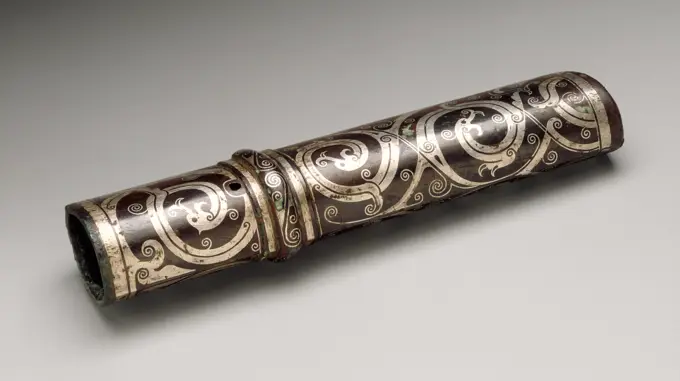
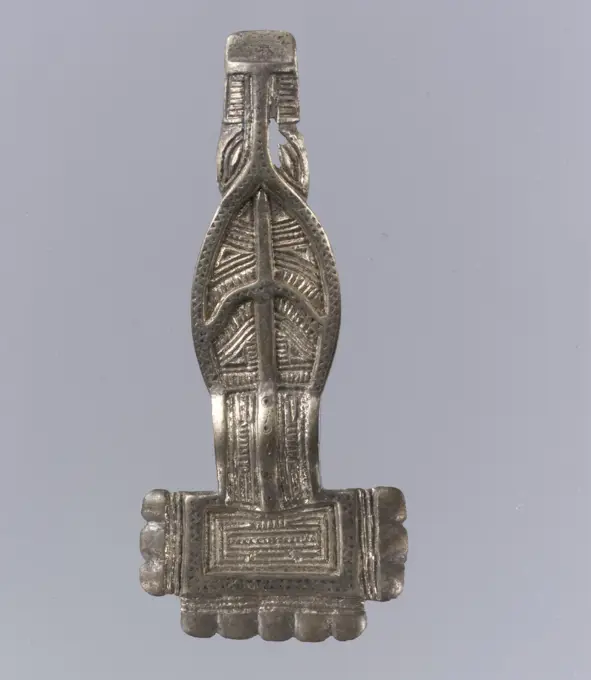
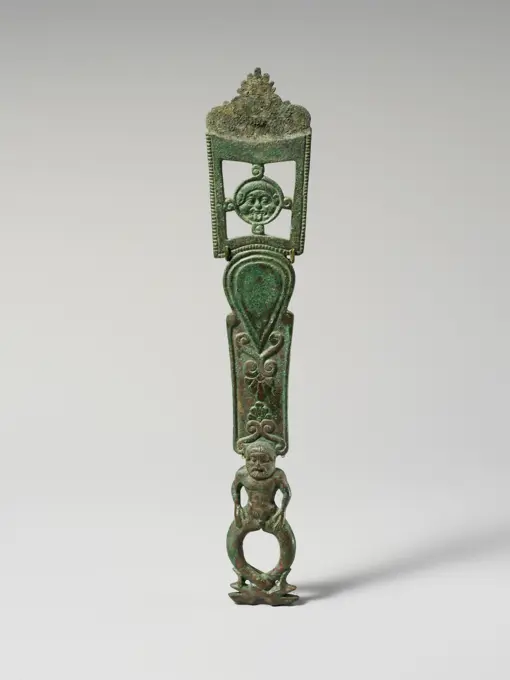
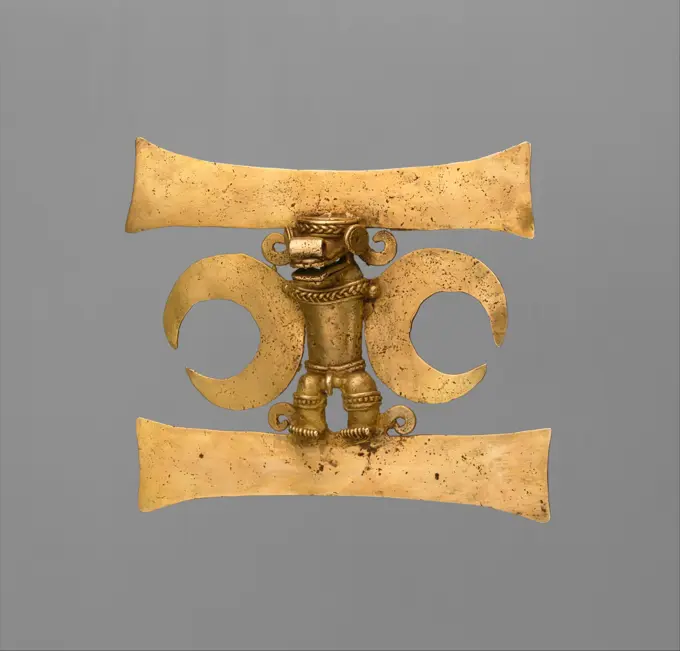
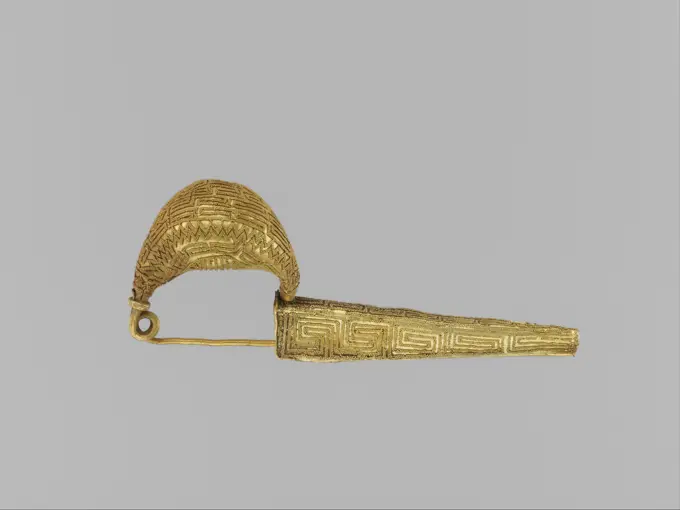
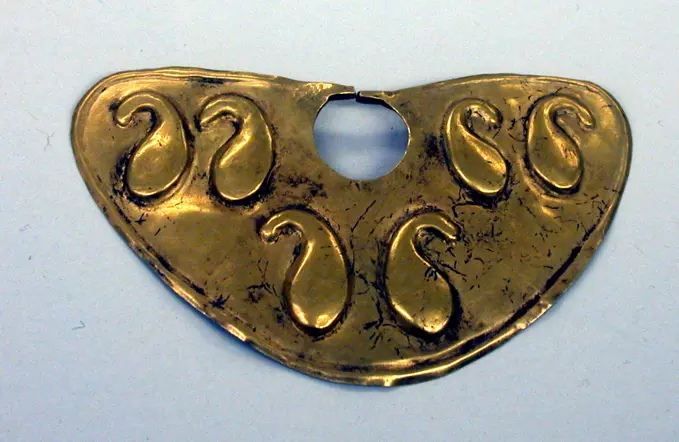
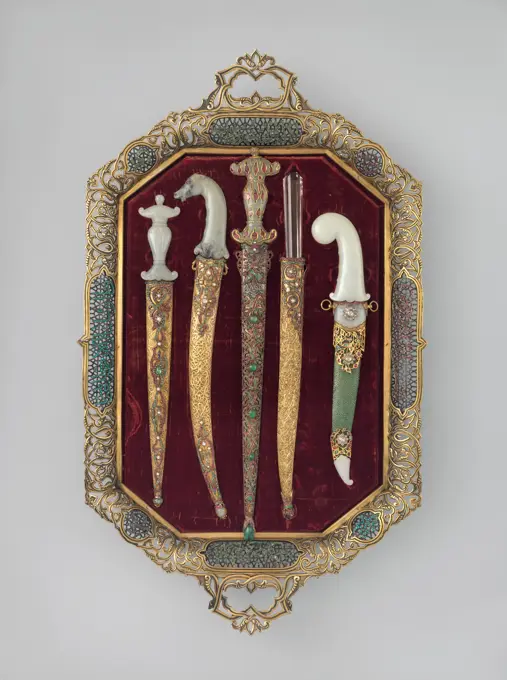
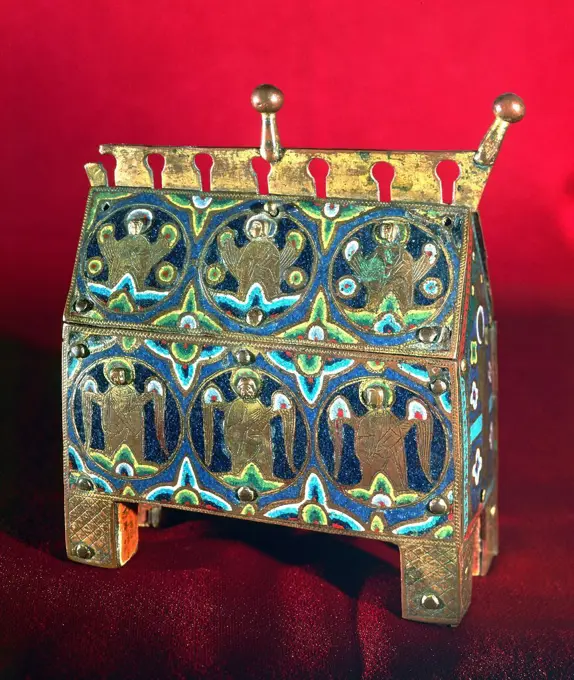
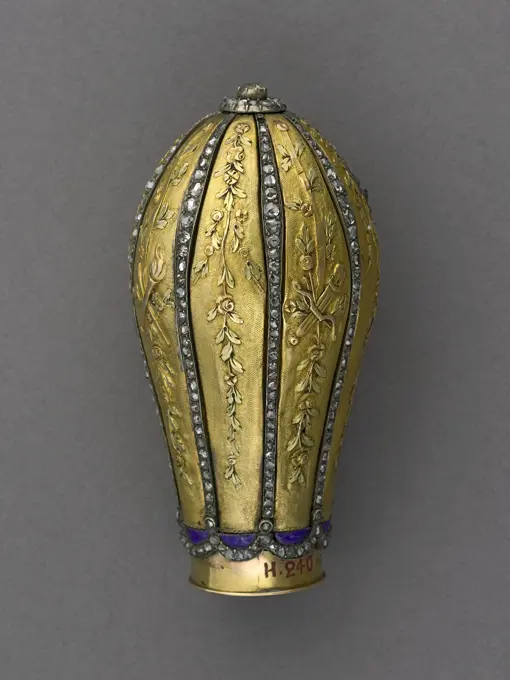
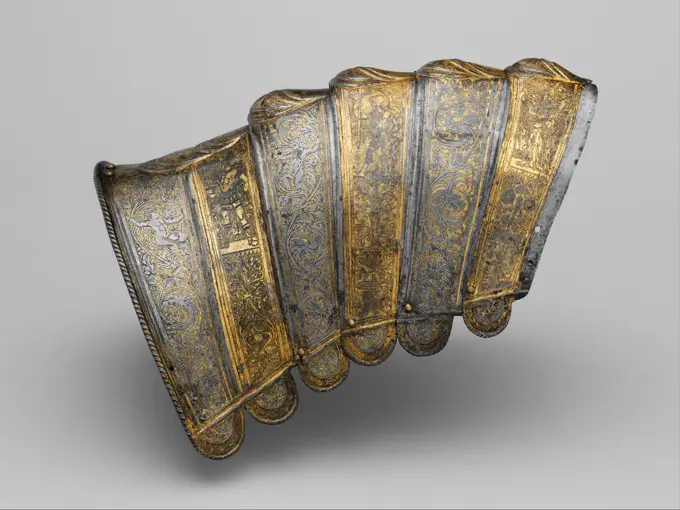
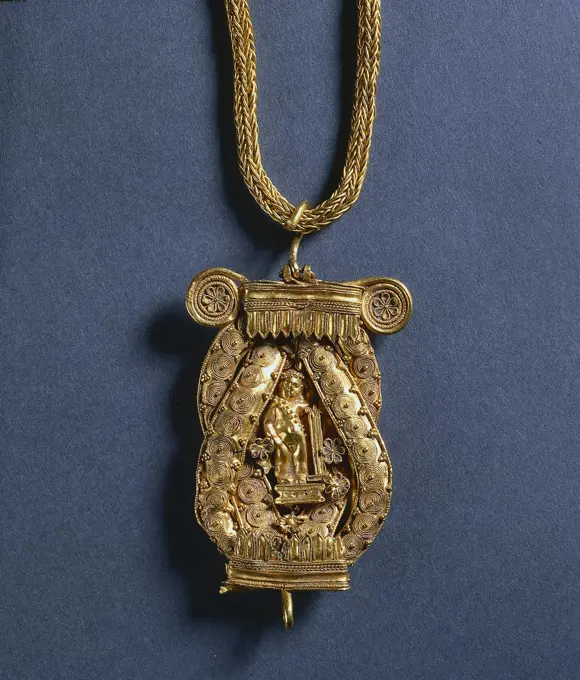
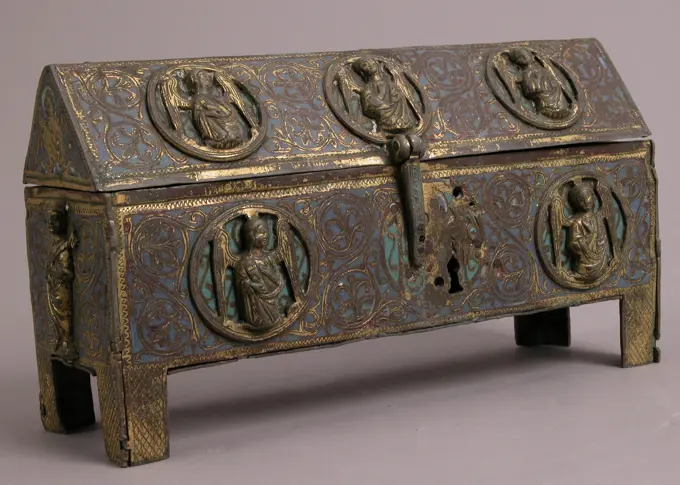
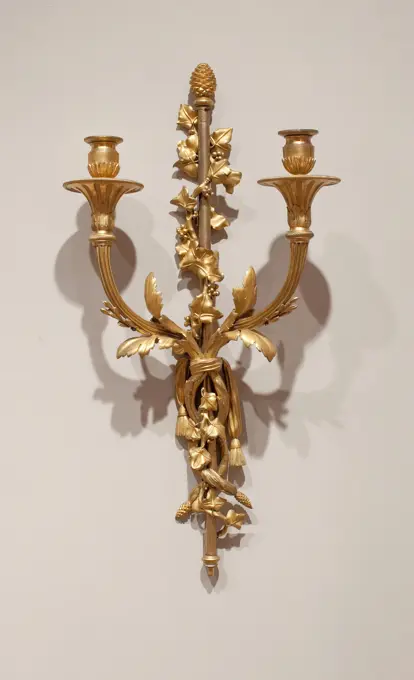
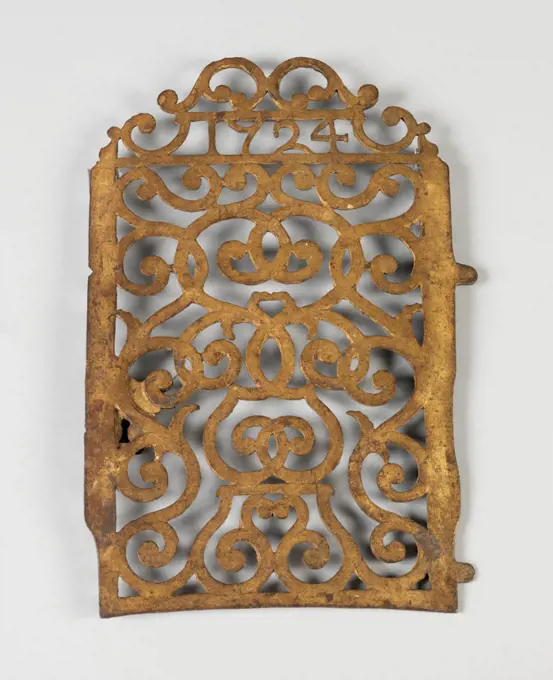
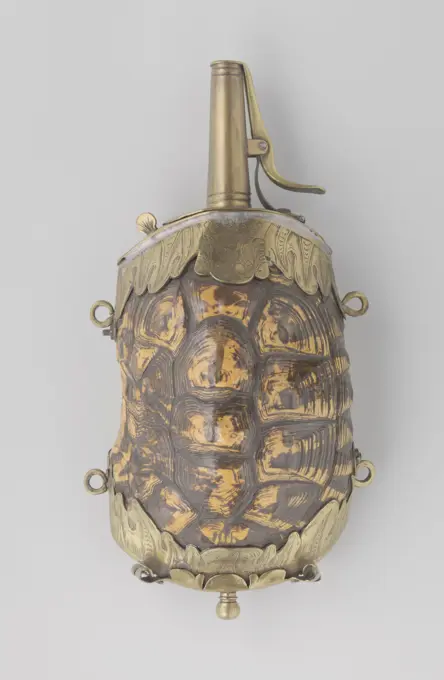
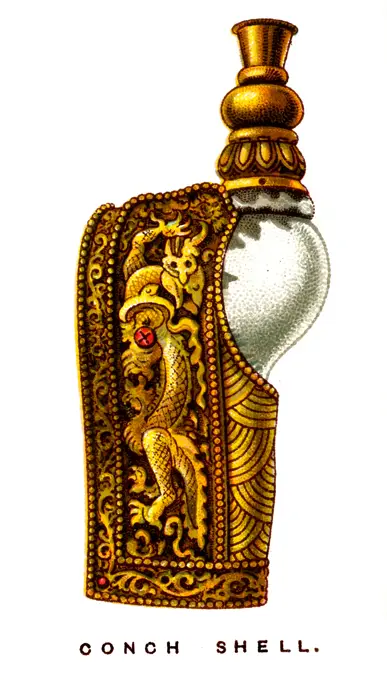
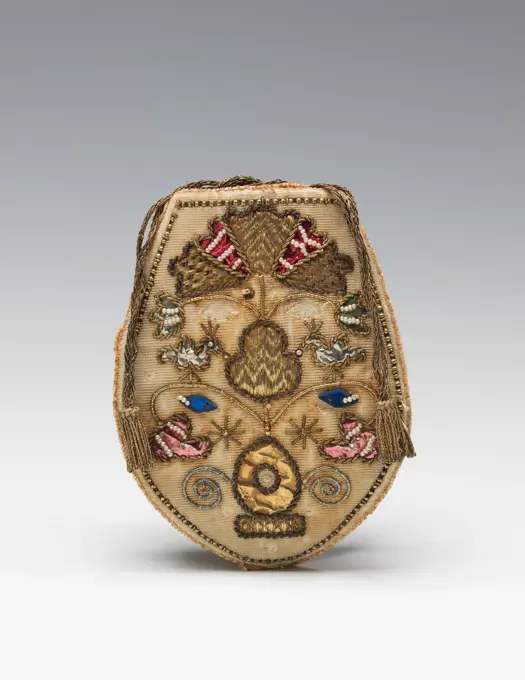
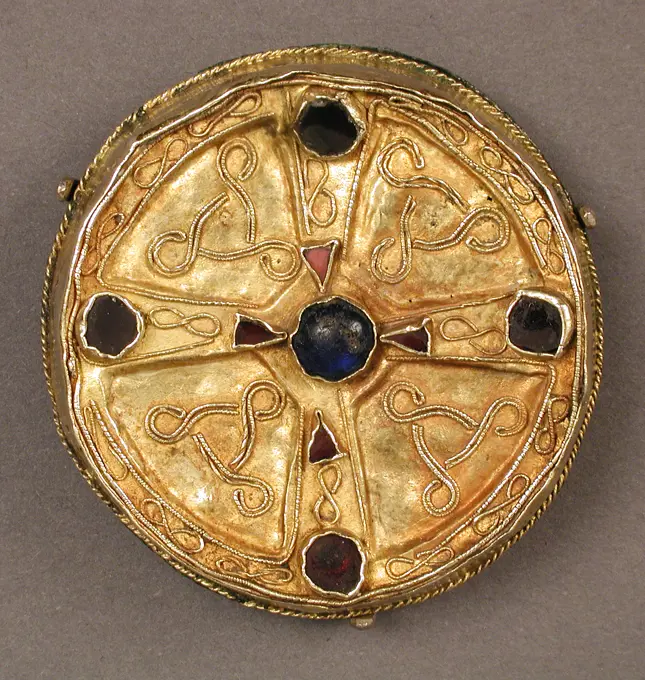
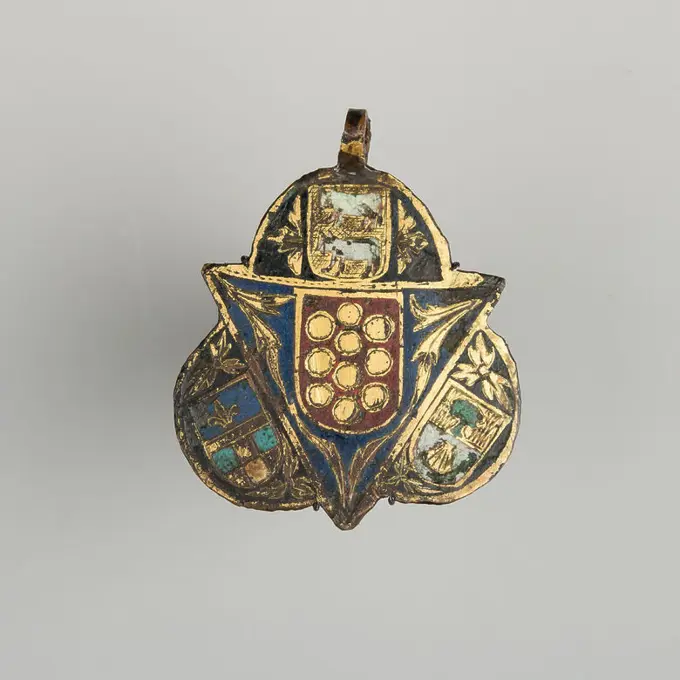
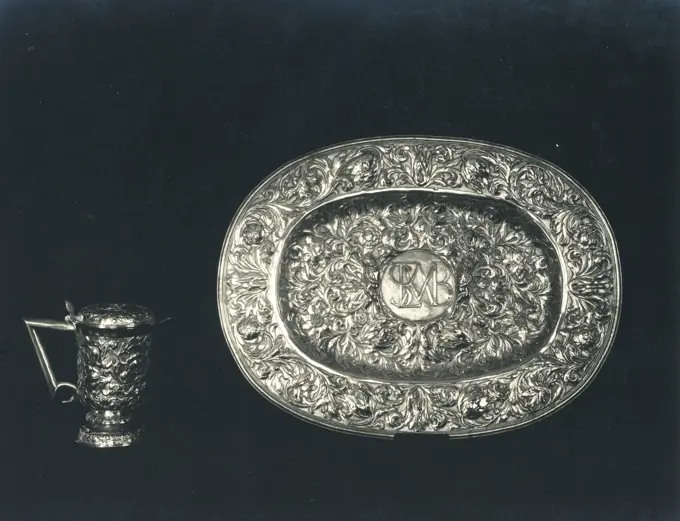
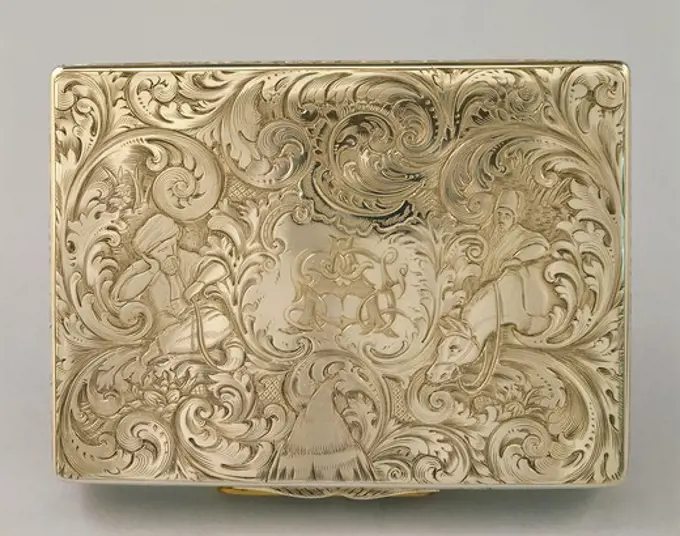
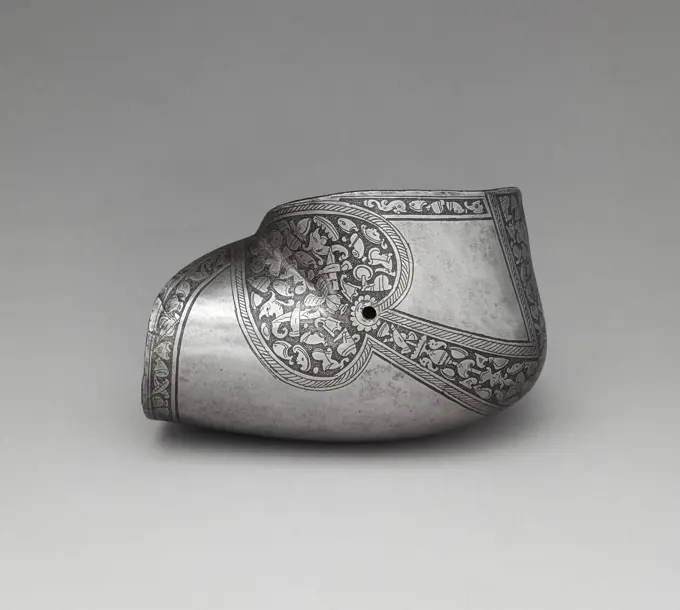
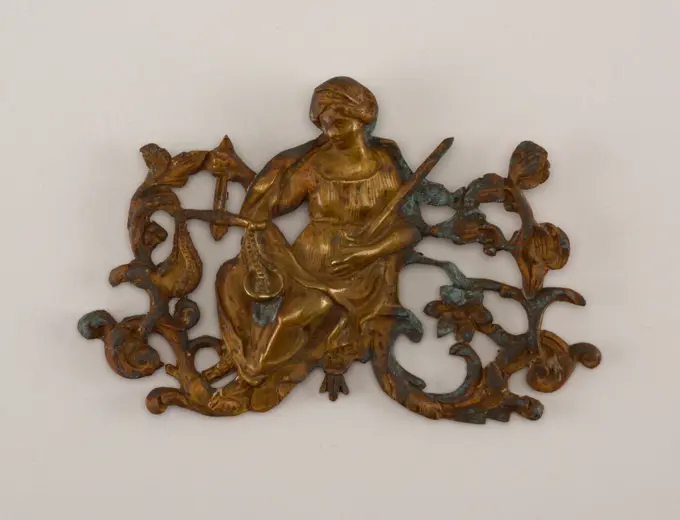
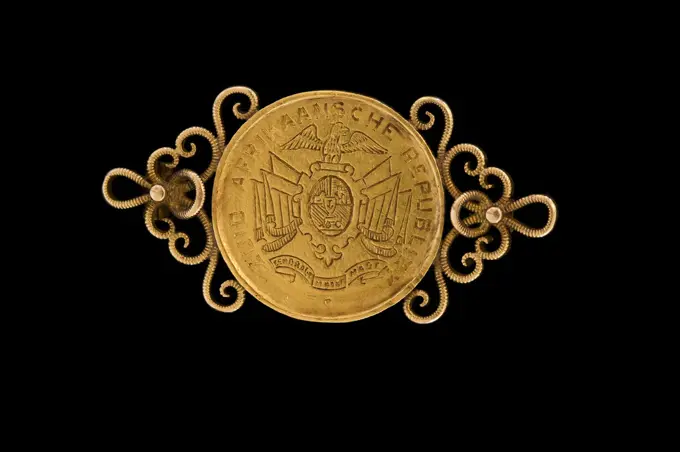
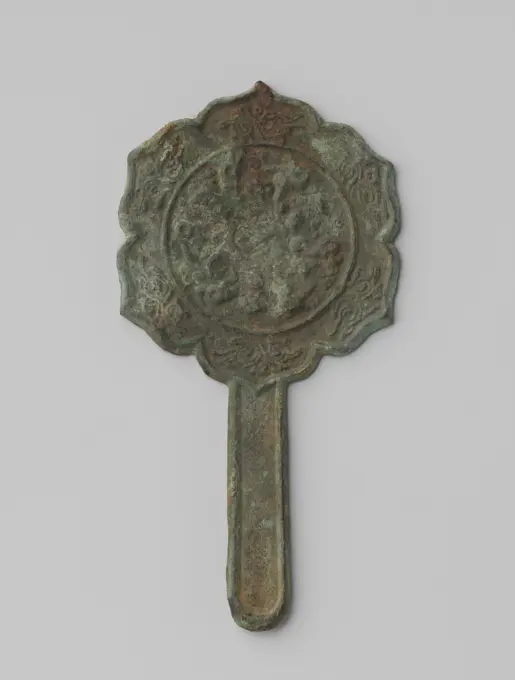
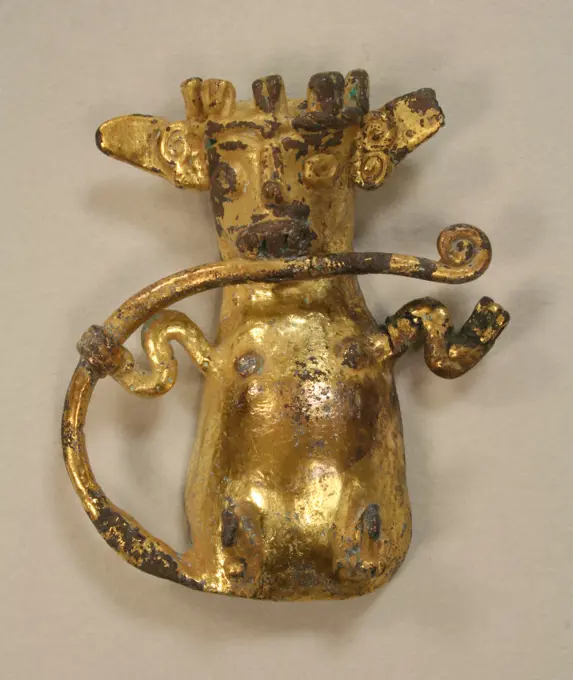
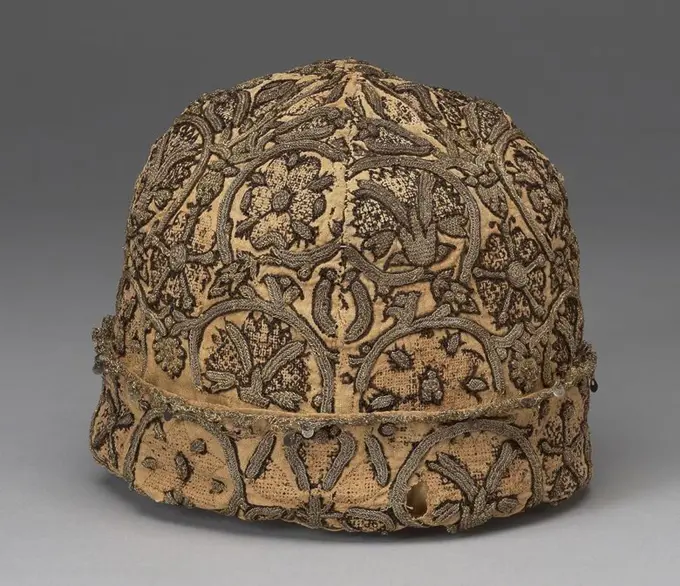
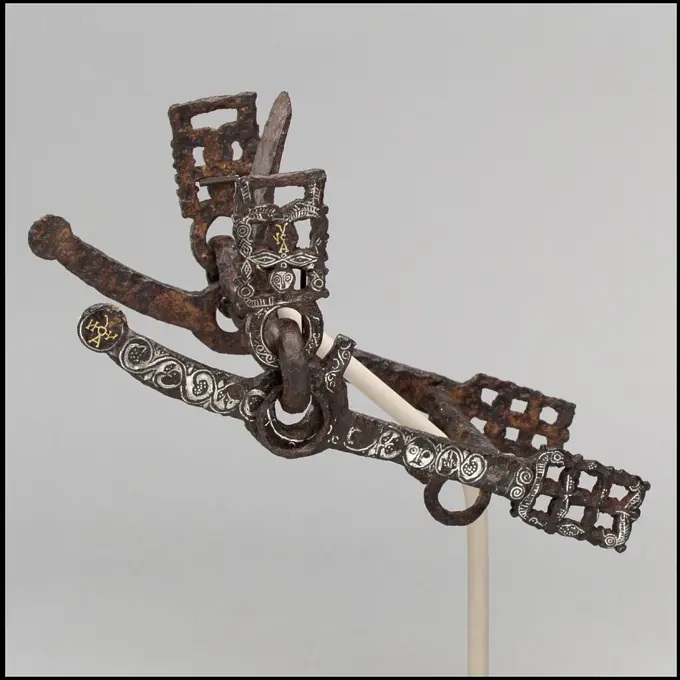
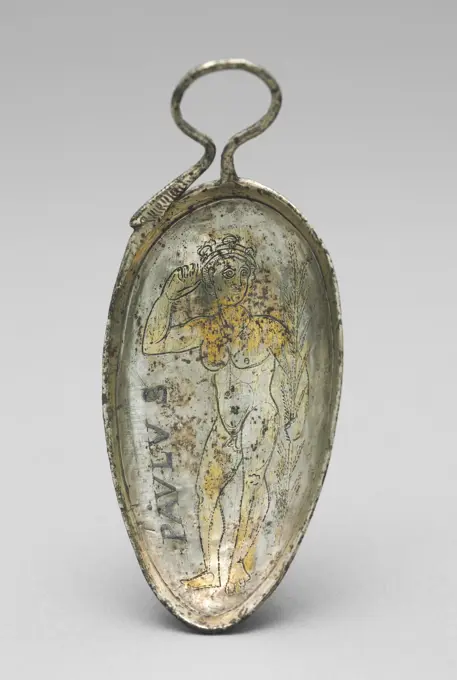
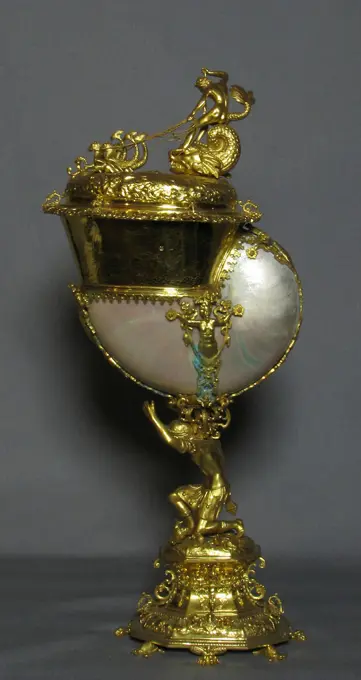
Powder Flask. Italian. Date: 1590. Dimensions: H. 25.4 cm (10 in.). Wood, red velvet, brass, and enamel. Origin: Italy. Museum: The Chicago Art Institute, USA.Book ClaspBook Clasp (probably Italy); silver; L x W x D (a,b: overall): 11.4 x 5 x 0.1 cm (4 1/2 x 1 15/16 x 1/16 in.)Mount; L x W x D: 16 x 5.5 cm (6 5/16 x 2 3/16 in.)Belt Buckle with Beaked Ungulates. Culture: North China. Dimensions: H. 2 13/16 in. (7.1 cm); W. 4 1/4 in. (10.8 cm). Date: 2nd century B.C.. Museum: Metropolitan Museum of Art, New York, USA.Mold, Cow; L x W x D: 11.1 x 6 cm (4 3/8 x 2 3/8 in.)MountBook lock of silver. Book lock of silver.MountCantle (Back two piece saddle steels). Italian, Milan. Date: 1560-1590. Dimensions: Height:. Steel with gilding. Origin: . Museum: The Chicago Art Institute, Chicago, USA.Gold Ornament from a Sword Grip ca. 600 Langobardic These objects were once part of a set of four that would have been applied in pairs to the grip of a luxury sword.This group of objects was found in the grave of a Langobardic horseman, who was buried in his warrior dress, with weapons, shield, helmet, and the fittings for his horse. What remains are the many gold pieces that would have ornamented his clothing and equipment, and they attest to the great wealth of the Langobardic aristocracy within a generation of settling in Italy.. Gold Ornament from a Sword Grip 469020Bow Brooch 500-550 Frankish The bow brooch was a component of many Germanic womens dress. In Frankish territory brooches were generally worn in pairs, as decorative elements on a strap hanging from the belt. The bow refers to the bend or curve that links two terminals.. Bow Brooch 464868 Frankish, Bow Brooch, 500?550, Silver-gilt, niello, garnets, Overall: 1 7/8 x 3 3/4 x 3/8 in. (4.7 x 9.5 x 1 cm). The Metropolitan Museum of Art, New York. Gift of J. Pierpont Morgan, 1917 (17.191.173)Drinking Bowl (Hanap). Culture: Eastern European or Bosnian or Serbian (). Dimensions: Overall: 1 3/8 x 6 15/16 in. (3.5 x 17.6 cm). Date: 1350-75.This hanap, known as the Sanko Bowl, has been associated with Kaznac Sanko Miltenovi, an important fourteenth-century figure in the Bosnian court. The inscription around the lip can be translated, "In the name of the Father, and the Son, and the Holy Ghost, may God give joy to him who drinks from it but let him not forget the poor." The repoussé, punched, and incised decoration on the interior strongly reflects French influence. The hybrid beasts are analogous to drolleries in the margins of contemporary manuscripts. Museum: Metropolitan Museum of Art, New York, USA.Angel Carrying a Crown ca. 1230-50 French During the French Revolution, large church furnishings of copper were often sold as scrap metal. Charming fragments like this were sometimes preserved, but their original context cannot be completely established. The angel descending from a cloud probably carried a crown for the Virgin Mary.. Angel Carrying a Crown 468544Gold leaf on wood javelin thrower (atlatl), recto. Aztec civilization, Mexico. Belt hook of gold-plated bronze.MountBracketFinialSword Guard (Tsuba). Culture: Japanese. Dimensions: H. 3 1/2 (8.9 cm); W. 3 1/8 in. (7.9 cm). Date: 19th century. Museum: Metropolitan Museum of Art, New York, USA.Snuffbox;  around 1750 (1745-00-00-1755-00-00);Ministry of Finance (Warsaw - 1950-) - message, National Bank of Poland (Warsaw - 1945-), architecture, Masonic emblems, Freemasonry, message (provenance), Rocaille (ornament), Rococo (Styl)Przeszo Przyszoci unknownWooden caramel Of car with cut fruit, ornament wood carving carving wood carving wood sculpture figurines wood paint, Wooden ornament with carved floral motifs probably caress of car driving status adornBeugel van gevest uit het wrak van de Oost-Indiëvaarder Hollandia. Hilt, guard; fragm, guard-cross with double vestigial arms (pas d'ane), 2 straight quillons, knuckle-guard broken off (knuckle-guard NG 1980-27H588), quillon-block decorated with shell motif, rectangular front with (ricasso) washer, other end with oval rim, ass. grip NG 1979-173H542.Sleutel.Key with baluster-shaped shaft that slows down slightly under the dual beard. The round handle is formed by cut-away acanthus leaf and rest on a ball-shaped cap.Belt buckle, gold inlaid with garnets & blue glass filigree toplow Buckinghamshire Angld, Saxon 6th exit 9.8c.m. Copyright: xHarixMahidhar/DinodiaxPhotoxBadge (probably from Horse Harness). Culture: Spanish. Dimensions: H. 2 1/2 in. (6.3 cm); W. 2 1/4 in. (5.7 cm); Wt. 1.5 oz. (42.5 g). Date: ca. 1400. Museum: Metropolitan Museum of Art, New York, USA.Inner Pommel Plate. Culture: Italian (Milan or Brescia). Dimensions: L. 8 in. (20.3 cm); W. 2 in. (5.1 cm); Wt. 2 oz. (65 g). Date: dated 1546. Museum: Metropolitan Museum of Art, New York, USA.Five-pronged vajra, late 14th century, Unknown Japanese, 5 1/2 × 9/16 × 5/8 in. (13.97 × 1.43 × 1.59 cm), Gilt bronze, Japan, 14th century, A Vajra (thunderbolt) is a ritual implement used in Esoteric Buddhist ceremonies. Originally a weapon carried by ancient Indian gods, it was adopted into Buddhism as a symbol of the indestructible truth of the Buddhas teaching. Five-pronged vajras are said to represent the Five Wisdoms of the Five Cosmic Buddhas. This is an unusual example with its prongs positioned closely together and, in fact, attached to the tip of the central prong. This arrangement is said to suggest the nascent enlightened mind.. Candlestick of gold-plated buyer and email champlevé. On the three sides of the triangular base in a blue circle arms enameled with a beam of throat in gold. The strain with engraved tendrils is divided by an enamelled nodus. The fat catcher is also enamelled.RELOJ CON CAJA REPUJADA DEL SIGLO XVIII. Location: PRIVATE COLLECTION. MADRID. SPAIN.MountPrzeszo Przyszoci unknownStandard FinialMount (Italy); bronzeBelt buckle 16th century Hungarian The snake-shaped hook at the left of this buckle would have engaged with a nearly identical one at the other end of the belt, possibly with the aid of a short chain-linked element. The intricate pierced openwork on this belt buckle demonstrates how a discerning patron would ensure his rank was reflected in each and every detail of his stylish costume. The number inscribed in ink on the back is evidence that this buckle was once in the Andrássy Treasury.LiteratureEuropean Silver. Sale cat., Sothebys, Geneva, May 13, 1986, p. 35, no. 94.Judit H. Kolba. Hungarian Silver: The Nicolas M. Salgo Collection. London, 1996, p. 25, no. 3.[Wolfram Koeppe 2015. Belt buckle 236983Mount (France); bronze (gilt), goldDagger (Katar) 18th century North Indian. Dagger (Katar) 31864Icelandic 12th century AD copper stirrupTiger Claw Pendant with Red Stone 8th-12th century Indonesia (Central Java). Tiger Claw Pendant with Red Stone. Indonesia (Central Java). 8th-12th century. Gold. JewelrySlot, anonymous, 1650 - 1700 A lock with beautifully openwork copper cover plate.  copper (metal) A lock with beautifully openwork copper cover plate.  copper (metal)Shaft Grip (Zun) with Interlaced Dragons. China, Late Eastern Zhou dynasty, late Warring States period, or early Western Han dynasty, about 300-100. Arms and Armor; handles. Cast bronze with silver inlaySquare-Headed Bow Brooch second half 6th century Frankish. Square-Headed Bow Brooch 465212 Frankish, Square-Headed Bow Brooch, second half 6th century, Silver-gilt, niello, Overall: 3 3/4 x 1 5/8 x 3/8 in. (9.6 x 4.2 x 1 cm). The Metropolitan Museum of Art, New York. Gift of J. Pierpont Morgan, 1917 (17.192.153)ManiPle, Embroidered, Violet unknownPulls. .Bronze handle of a strainer 5th century B.C. Etruscan The finial terminates in a twin-tailed merman; Gorgon head in open work.. Bronze handle of a strainer 255718Basket of flowers 18th century French. Basket of flowers 189625 French, Basket of flowers, 18th century, Wood, Overall: 8 1/4  10 1/4 in. (21  26 cm). The Metropolitan Museum of Art, New York. Gift of J. Pierpont Morgan, 1906 (07.225.362)Earring 6th-10th century. Earring. 6th-10th century. Gold; filligreed. Attributed to Iraq. JewelryMasked Figure Pendant 11th-16th century Veraguas Gold ornaments depicting animal-headed humans positioned between horizontal plaques have been found throughout Costa Rica and Panama. Although depictions featuring aspects of predatory animals, such as this figure with a crocodile mask, are common, the meaning of the figures and of the framing elements is not known. Perhaps the ability of such creatures to cause harm also engendered their capacity to inspire religious awe and respect. A minimally clothed, masked male figure stands with knees flexed, facing forward, arms replaced by large crescents, perhaps stylized wings. The crescent shape is reiterated at the sides of the head and by the flares at the ankles. The graphic quality of the repeated forms and the large flat shapes top and bottom anchor the figure. A single wide suspension loop is attached to the pendant at the back of the figure's neck.. Masked Figure Pendant 312955Gold sanguisuga-type fibula (safety pin) with patterns in granulation 7th century B.C. Etruscan With granular pattern of zigzags and meanders.. Gold sanguisuga-type fibula (safety pin) with patterns in granulation. Etruscan. 7th century B.C.. Gold. Geometric. Gold and SilverMountNose Ornament 6th-7th century Moche (Loma Negra). Nose Ornament 313409TiebackTray of Jeweled Daggers probably late 19th century Turkish This opulent array of daggers belongs to a large group of flamboyant gem-studded weapons that were probably made in Istanbul in the waning years of the Ottoman Empire. Their traditional shapes and luxurious materials were intended to evoke romantic notions ofthe exotic orient, Arabian Nights, or perhaps the sultans treasury. As most of these weapons are found today in American and European collections rather than in Turkish museums, they may have been made exclusively for Western tourists.. Tray of Jeweled Daggers 32930Commemorative badge of the anniversary of the Supreme National CommitteeBrooch 18th century probably Spanish. Brooch. probably Spanish. 18th century. Gold, diamondsARQUETA DE ESMALTE DE LIMOGES DEL S XII BRONCE. Location: MUSEO ARQUEOLOGICO NACIONAL-COLECCION. MADRID. SPAIN.Cane knob, gold of two tones and diamonds on silver, enamel. Unknown author, end of the 18th century or 19th century. Paris, Cognacq-Jay museum. 35352-38 Silver, diamond, email, gold, pommel, caneBuckle 1802 Dutch. Buckle 102492Portions of a Crinet (Horse's Neck Defense) ca. 1580-90 Italian, probably Brescia This splendid fragment, etched overall and richly gilt, must have belonged to one of the most magnificcent Brescian horse armors of the sixteenth century. It consists of five plates forming the rear half of a crinet that originally must have comprised ten or more plates; the poor alighment of the plates indicates that they are not in their original order. The inverted, U-shaped plates are embossed along the medial ridge with backward-overlapping scales etched with foliage. The sides of each plate are etched in alternating designs. One pattern consists of foliate scrolls inhabited by birds, grotesque creatures, and nude putti (with and without wings), the ornament left white against a plain recessed and gilt ground. The other comprises symmetrical, vertically aligned candelabra ornament consisting of vases or foliage, trophies of arms, and platforms supporting images of warriors or allegorical figures. AllPouch. Culture: Russian. Date: early 18th century.This object is from the collection of Natalia de Shabelsky (1841-1905), a Russian noblewoman compelled to preserve what she perceived as the vanishing folk art traditions of her native country. Traveling extensively throughout Great Russia, she collected many fine examples of textile art of the wealthy peasant class. From the 1870s until moving to France in 1902, Shabelsky amassed a large collection of intricately embroidered hand-woven household textiles and opulent festival garments with rich decoration and elaborate motifs. The Brooklyn Museum holdings include many fine examples including the majority of the garments. Portions of Shabelsky's collection are also housed at the Museum of Fine Arts, Boston, the Cleveland Art Museum, and the Russian Museum of Ethnography in St. Petersburg. Depictions of the goddess are common in Russian embroidery, traditionally associated with fertility. Later depictions of the goddess are very stylizeMagic gemma with a snake with the head of SeapisPrehistory, Italy, Bronze Age. Ornamental disk.Mount for a Belt Buckle() with Ram's Heads; Central Asia; 100 B.C.-A.D. 50; Gold and inlaid stones; 5.2 × 4.9 × 2 cm (2 1,16 × 1 15,16 × 13,16 in.)MountHinge 15th-16th century European. Hinge. European. 15th-16th century. Iron. Metalwork-IronOxus Treasure. Stylised griffin- head ornament. 4th-5th cent. BC. PERSIA- IRAN.Chain and Pendant, 200s BC. Greece, Hellenistic period, 3rd Century BC. Gold; pendant: 6.8 cm (2 11/16 in.); chain: 66.7 cm (26 1/4 in.).Chasse 13th century French. Chasse 467495Wall sconce, one of a pair, 19th century, 22 3/4 x 12 x 5 3/4 in. (57.79 x 30.48 x 14.61 cm), Gilt bronze, France, Louis XVI, These wall sconces, which are in the Louis XVI style, probably date from the nineteenth century. They may have been made by Henri Dasson & Cie. (1825-1896) of Paris as they correspond to a pair advertised by Dasson in 1894.Rang scissors of a horse bit, anonymous, c. 1650 The two cast and accompanying objects each consist of five parts: the rod, the two sounded mounting pieces of both sides of the place where the actual bit was mounted, the rosette and this rod section mounted rosette and the Eye, which was applied to the opening at the end of the loop. At A there is a ring on it, to which the rein was attached, as well as the mounting switch for the now missing switch chain, which connected the two rod shells. This link is placed in the opening in the loop surrounded by two cruel ends. There is another hole in the long part of the rod, in which the second now missing switch chain was mounted. The slightly larger opening in the part where the rod makes a sharper corner may have served for the short rein (trens). The two large holes masked by the rosette have either for one chain or rod and for the belt under the chin of the horse. The kidney -shaped hole on the bar end above this section was the mounting MountLock with backplate, key, Gilt iron, Pierced scroll rectangular plate surmounted by the date 1724, the lock on left lower side., possibly Netherlands or England, 1724, metalwork, Decorative Arts, Lock with backplate, keyLoop .Powder flask, anonymous, c. 1625 - c. 1675 powder horn Powder bottle made of the shield of a turtle and with copper batter. With two carrying rings on the sides. On the upper edge, under a crown with pearls (graven crown) and between two palm branches the upper part of a lion to the right with a sickle -shaped object is engraved in its claws. A year () Is engraved on the lower edge on either side of a pointed ornament. Netherlands copper (metal) engraving / cutting / striking (metalworking)Pair of Rowel Spurs 15th century French In the 15th century, rowel spurs with very long necks were of common use in Western Europe. At this period, the elevated war saddles and the very specific riding style, with long stirrup leathers and legs extended forward, had the consequence of taking away the riders feet from the horses flank. Thus, these long necks gave them easier access without having to disturb the riders position. As a knights status was closely related to his horse, spurs became one of the symbols of chivalry, and one of the tokens given to him during his knighting.. Pair of Rowel Spurs. French. 15th century. Copper alloy, gold. Equestrian Equipment-SpursPin terminating in three eagles' heads. Culture: Urartian. Dimensions: 3.19 in. (8.1 cm). Date: ca. 7th century B.C.. Museum: Metropolitan Museum of Art, New York, USA.Door hinge;  18th century (1701-00-00-1800-00-00);Conch Shell, 1923. Artist: UnknownBrooch 2nd-3rd century () Roman. Brooch 473297Pouch early 18th century Russian This object is from the collection of Natalia de Shabelsky (1841-1905), a Russian noblewoman compelled to preserve what she perceived as the vanishing folk art traditions of her native country. Traveling extensively throughout Great Russia, she collected many fine examples of textile art of the wealthy peasant class. From the 1870s until moving to France in 1902, Shabelsky amassed a large collection of intricately embroidered hand-woven household textiles and opulent festival garments with rich decoration and elaborate motifs. The Brooklyn Museum holdings include many fine examples including the majority of the garments. Portions of Shabelsky's collection are also housed at the Museum of Fine Arts, Boston, the Cleveland Art Museum, and the Russian Museum of Ethnography in St. Petersburg. Depictions of the goddess are common in Russian embroidery, traditionally associated with fertility. Later depictions of the goddess are very stylized, resembling a plaPaterka;  beginning of the 20th century (1901-00-00-1910-00-00);Disk Brooch 7th century Frankish The dress of Frankish women generally consisted of a tunic, cinched by a belt from which hung an array of pendants. A wrap or cloak went over the tunic. Shoes and hosiery, fastened with buckles, covered the legs. Earrings, necklaces, and hairpins completed the ensemble.Aspects of this dress changed from the 300s to the 600s, and brooches in particular convey changes in taste. From the 300s to the 500s, pairs of small brooches, in an array of inventive shapes, held the wrap in place. By the 600s, a single large disc brooch, usually elaborately decorated, served the same function. No other piece of jewelry is more characteristic of Frankish dress than the brooch, and no other better demonstrates the virtuosity of Frankish metalworkers.. Disk Brooch 474277Pendant for Horse Trappings. Culture: Spanish. Dimensions: H. 2 5/16 in. (5.9 cm); W. 2 in. (5.1 cm); Wt. 1 oz. (28.3 g). Date: 15th century.The decoration of this and similar pendants in the Metropolitan Museum's collection (04.3.326, .365, .371, .384, .429, .437) includes heraldic arms, mottoes, and religious expressions. Originally, they were attached to the straps of a horse's bridle, reins, crupper, or saddle. Museum: Metropolitan Museum of Art, New York, USA.Image of a scale and cup, parts of the exhibition Oude Kunst from private ownership in the city and province that was organized in the Centraal Museum (Agnietenstraat 1) in Utrecht on the occasion of the 100th anniversary of the Stedelijk Museum van Antiquities.Silversmith's Art, Great Britain 19th century. Silver cigar case with rococo' decoration. Detail: back side with initial letters and scene of oriental inspiration.Small Elbow Reinforce ca. 1550 to 1575 Italian This small elbow reinforce is part of an unusually large armor garniture (acc. no. 27.159.1) from the armory of the Dos Aguas family in Valencia, Spain. The garniture contains pieces for use in battle and for the tilt in both the Italian and German fashions. The tilt was a tournament fought on horseback between two opponents armed with lances and separated by a lengthwise barrier.The armor as mounted is equipped with a helmet and vambraces (arm defenses) for the tournament. The buffe (chin defense), second breastplate (27.159.2), and manifer (reinforced left gauntlet) (27.159.6) would have been added to make the armor ready for exchange pieces for different forms of the tournament. For the German tilt, the trellised targe (shield) (27.159.7), small elbow defense (27.159.5), and small stomach defense (27.159.3) were added. For the Italian tilt, these elements were replaced by the form-fitting reinforce covering the left half of the torso anMolding Plane 1691 Germany. Carved wood, old iron knife .Mount; 1908-10-3Three fragments around the evangelical: two present In. Mark, and one  Ukasza; Unknown workshop Orthodox (988-2000); XVII-XVIII century (1601-00-00-1800-00-00);South African Coin refashioned into pendant by Anglo-Boer War POW'sMirror, six times lobed leaf shape, edge of plant motifs to medallion, with flat handle. .Galvanoplastic reproduction of a book lock. Galvanoplastic reproduction of a golden book lock. On the Moses and Aaron clings. On each of the four closing pieces an evangelist, caught in rich ornament. The lock attached to a bronze velvel-covered block. Pouch of green velvet, consisting of four pattes on which a crowned heart pierced by two arrows and resp. The initials Da and Ms surrounded by tendrils, embroidered with silk, gold-plated silver thread and freshwater pearls. Embroidery is a symmetrical built-up floral ornament in which violins, clover-three and tulip flowers are embroidered in a Puntit Achild. The whole is in relief and with canetille. The exhibition is closed by two cords of braided gold thread with fucks at the ends. Openings at the same distance at the top of the fabric of the fair. On two seams, diagonally opposite each other, extra cords: decoration (). Under the exhibition a flat disk that eyes with balls with a pearl and a green silk brush. Lining of, red silk discolored to pink.Monkey Pendant 11th-16th century Veraguas (). Monkey Pendant 312698Man's Cap. England. Date: 1501-1600. Dimensions: 15 × 18 cm (6 × 7 in.). Linen, plain weave; embroidered with silk and gold thread. Origin: England. Museum: The Chicago Art Institute, Chicago, USA.Badge or Harness Pendant 14th century Spanish Heraldry, or coat-of-arms, were vitally important in Europe throughout the Middle Ages and the Renaissance. Heraldic emblems were used to identify noble families, cities, regions, and even countries. In addition to being displayed on shields and flags, heraldry was incorporated into architectural decoration on the interior and the exterior of buildings, on furniture, works of art, clothing, and horse equipment. Harness pendants, like this example, would have been attached to a headstall, bridle, or other straps making up the tack of a horse ridden by a nobleman or noblewoman, or a member of their household. Many harness pendants also have decoration that is simply ornamental, or have symbols that are not specifically heraldic in nature.. Badge or Harness Pendant. Spanish. 14th century. Copper, gold, enamel. Miscellaneous-BadgesHorse Bit. Culture: Visigothic or Byzantine. Dimensions: Overall: 10 5/8 x 7 1/16 x 5 5/16 in. (27 x 18 x 13.5 cm). Date: 7th-9th century.This elaborately decorated bit, resembling the spade bit used by some (Western-style) riders today, has a large projecting tongue, or port, that would have been inserted into the horse's mouth. The bridle was attached to the moveable rectangular plaques, while the reins were strung through the rings on the straight bar, beneath the horse's jaw. The severity of the bit implies both a well-schooled horse and a skilled rider; a misstep by either would inflict great pain on the beast. The rich inlaid decoration includes Greek monograms, human faces, animal heads, and vine scrolls. Perhaps copied from or inspired by Byzantine art, the Greek monogram likely indicated the importance of the horse's owner. Museum: Metropolitan Museum of Art, New York, USA.Spoon with Saint Paul as an Athlete, 350-400. Late Roman Empire, perhaps Syria, early Byzantine, 4th century. Silver, silver gilt, and niello; overall: 4.6 x 5.6 cm (1 13/16 x 2 3/16 in.).Nautilus shell cup with cover. Culture: British, after German, Nuremberg original. Dimensions: Overall (confirmed): 18 3/8 × 8 5/8 × 6 5/8 in. (46.7 × 21.9 × 16.8 cm). Date: 19th century, after 16th century original.This electrotype is after a sixteenth-century original in the Chéréméteff collection, St. Petersburg at the time of reproduction. Museum: Metropolitan Museum of Art, New York, USA.