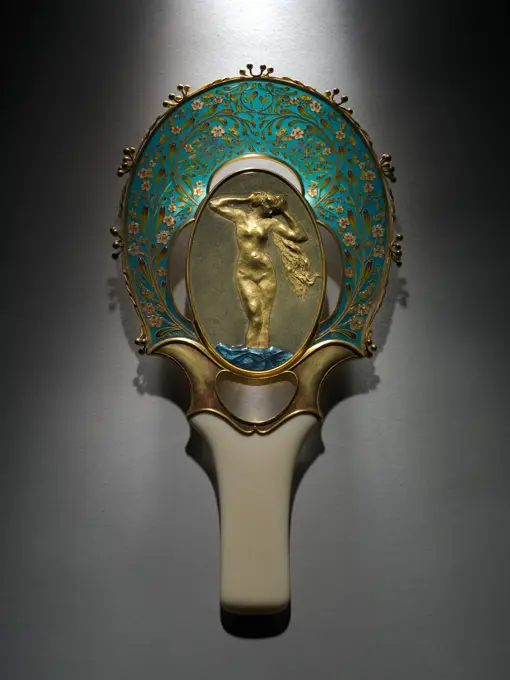
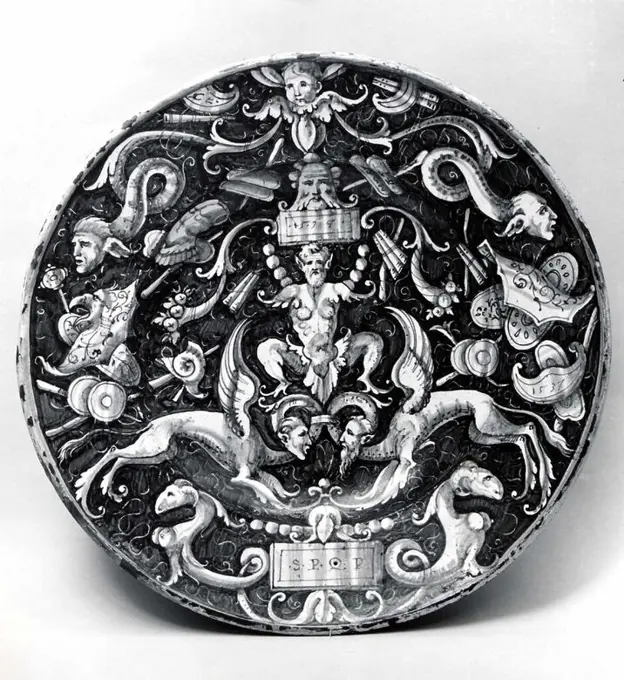
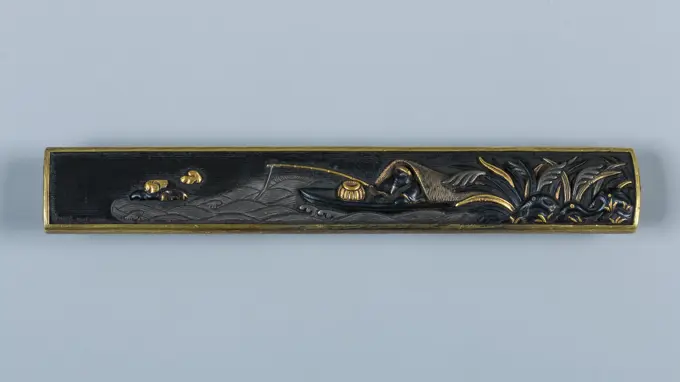
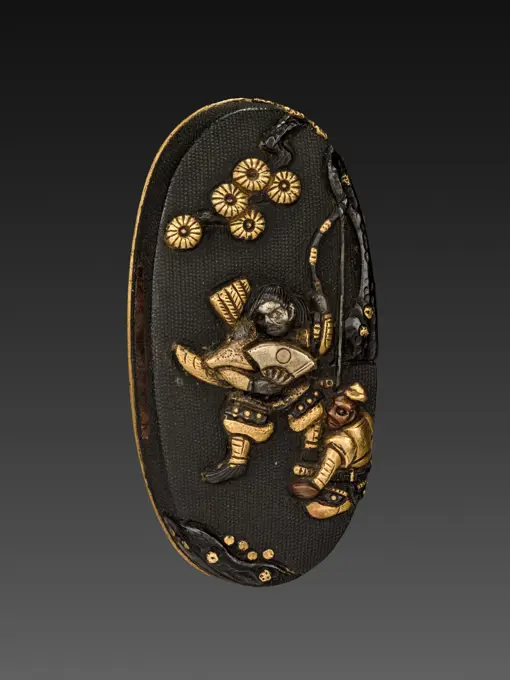
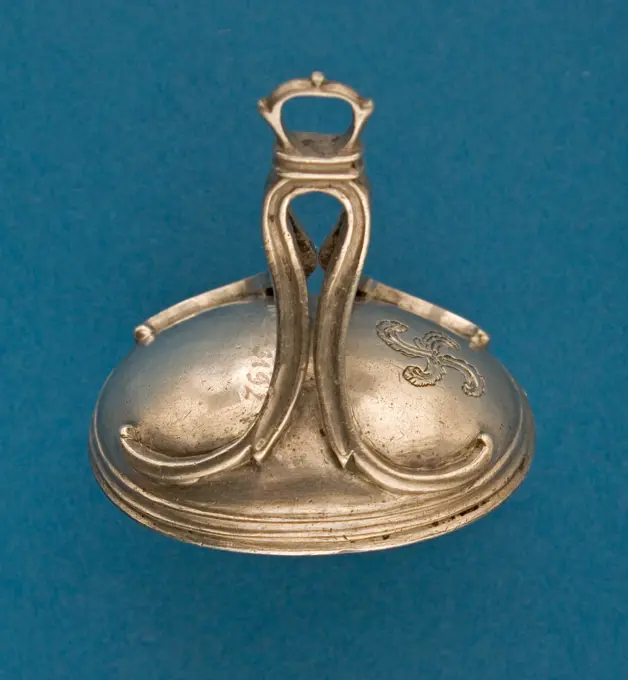
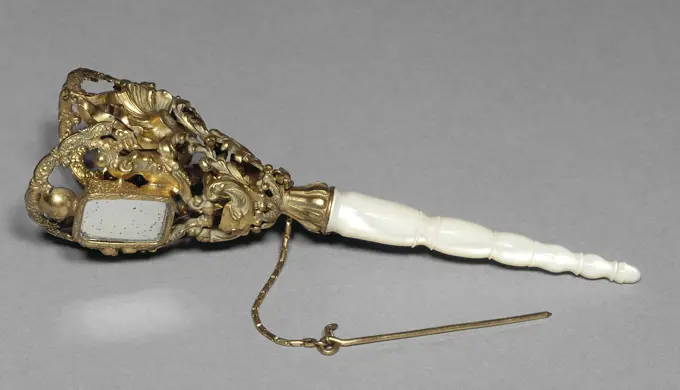
Ornate Metal Fasteners

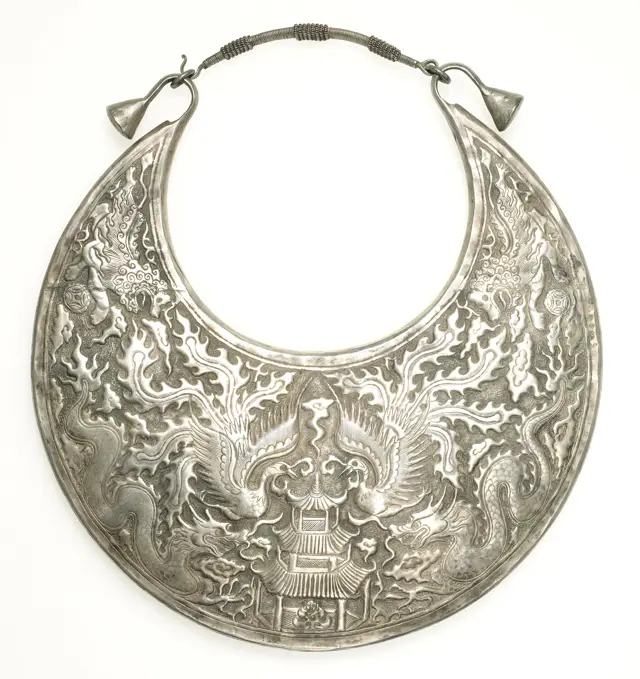
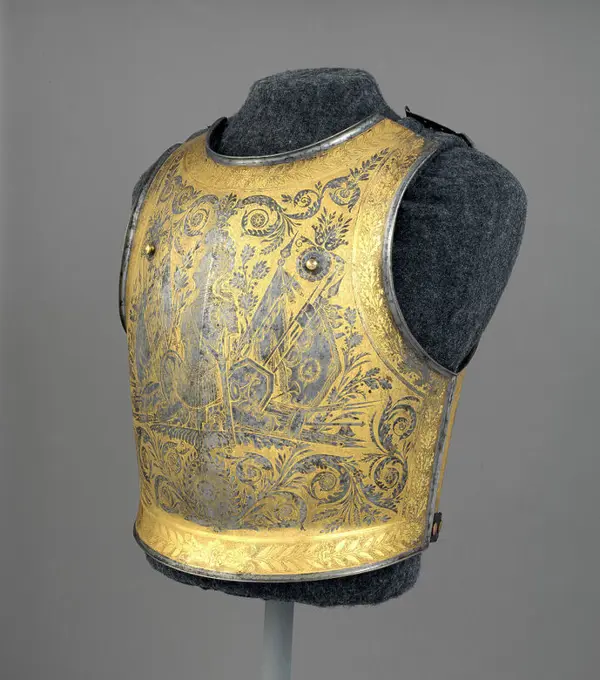
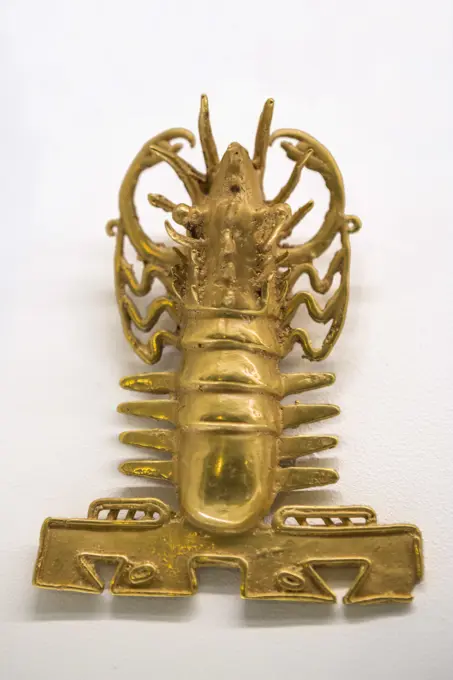
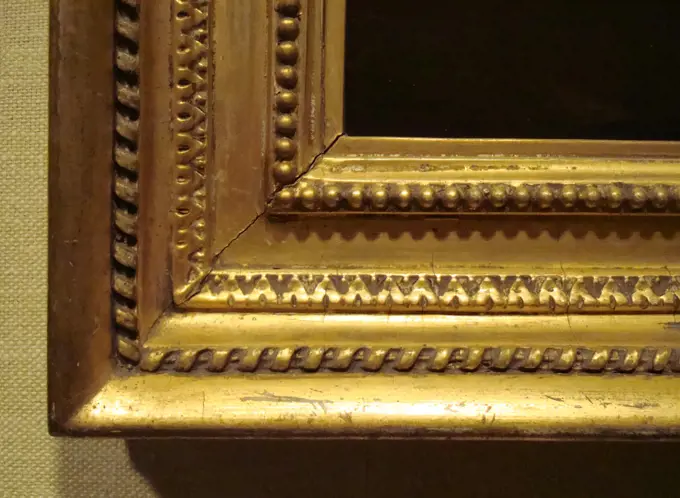
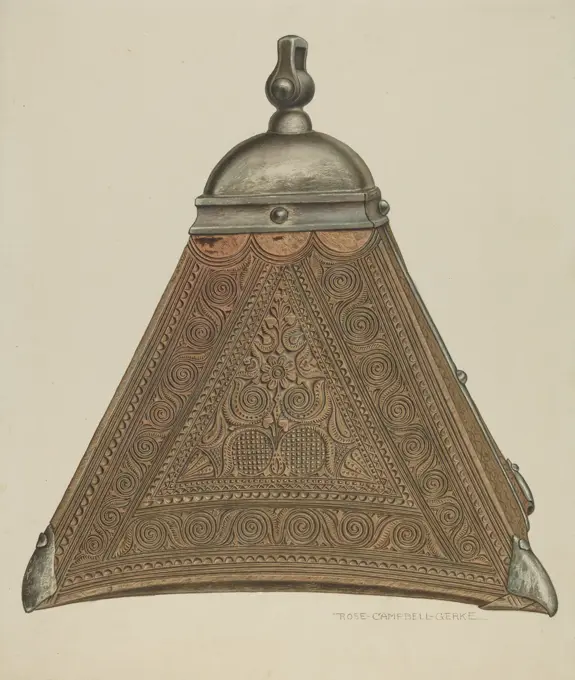
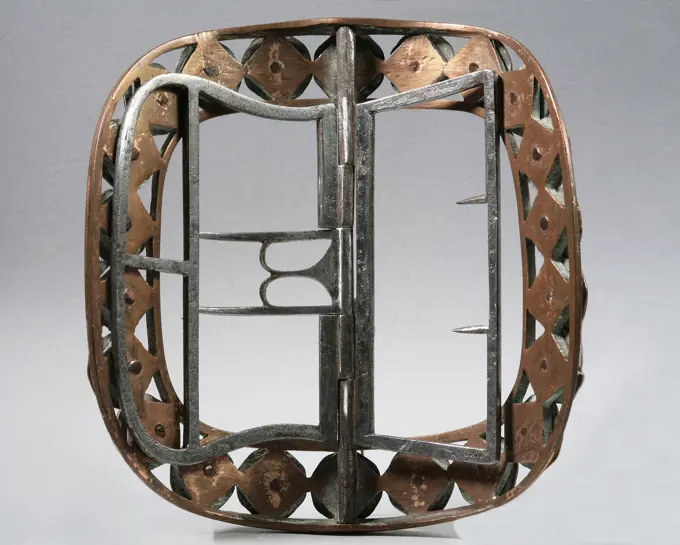
Decorative metal elements such as powder flasks and book clasps, featuring intricate designs and craftsmanship from European and Asian cultures.
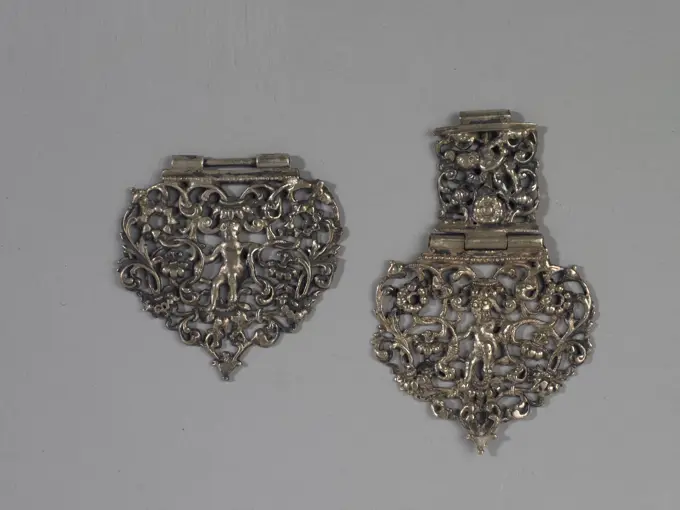
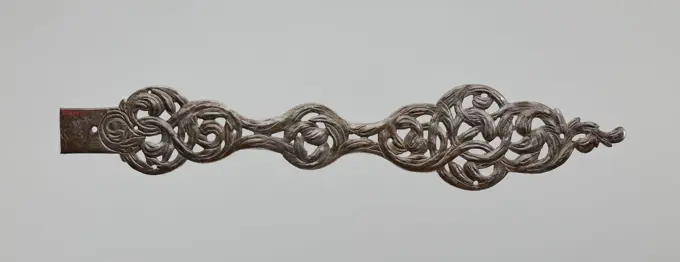
Book Clasp (probably Italy); silver; L x W x D (a,b: overall): 11.4 x 5 x 0.1 cm (4 1/2 x 1 15/16 x 1/16 in.)
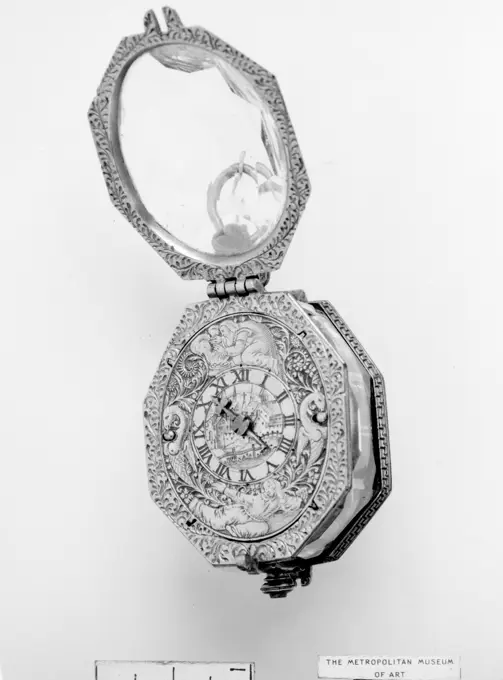
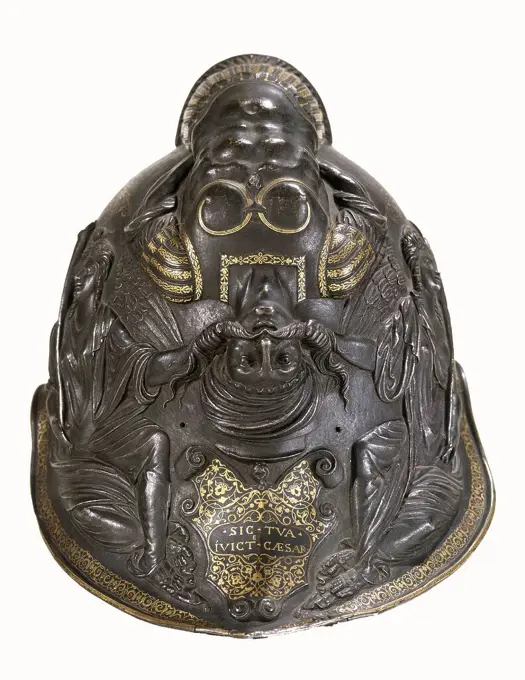
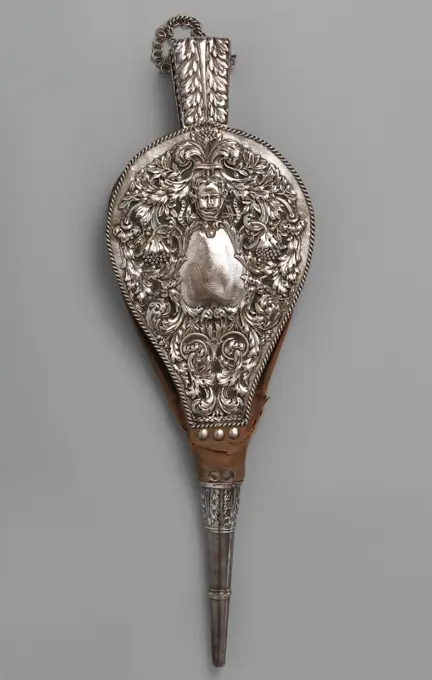
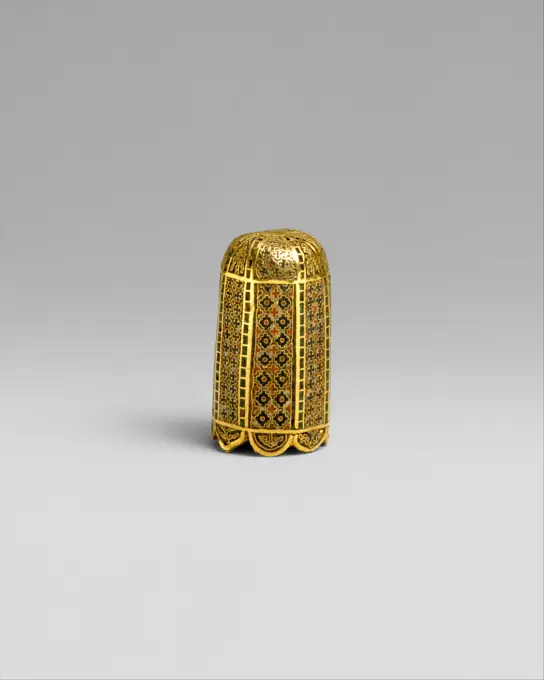
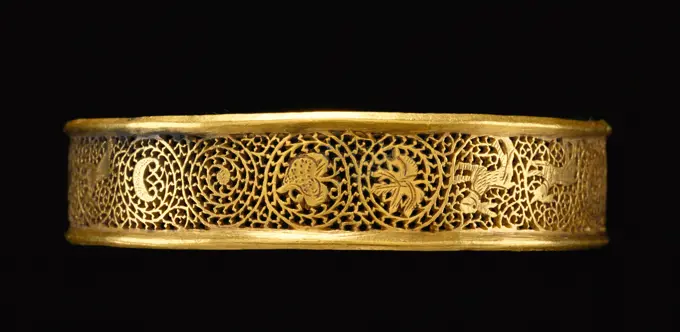
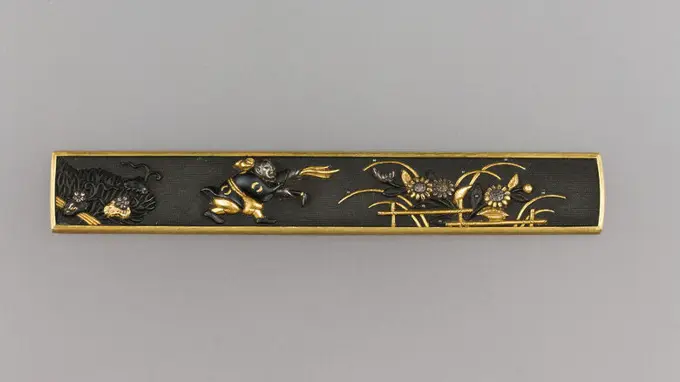
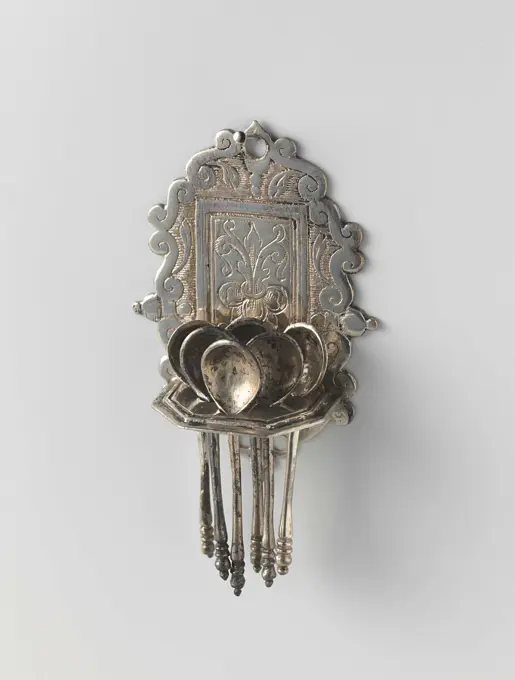
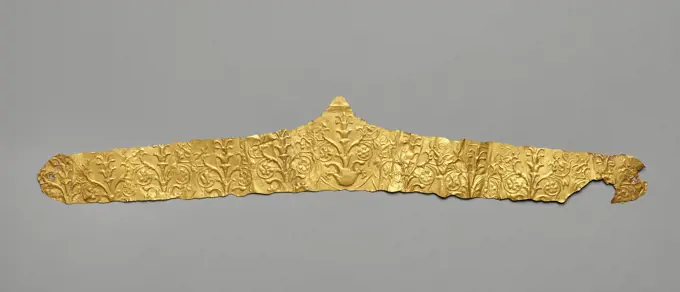
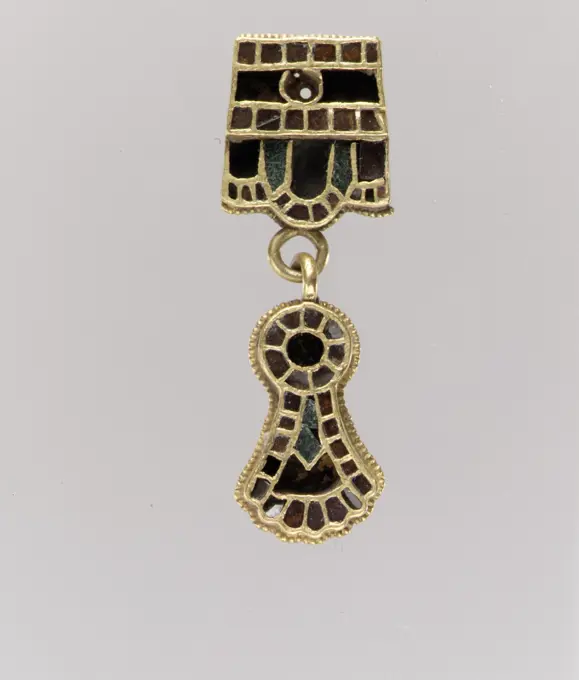
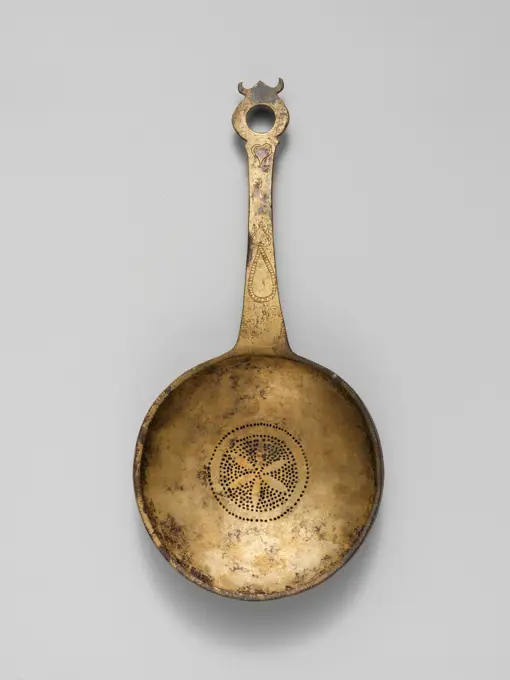
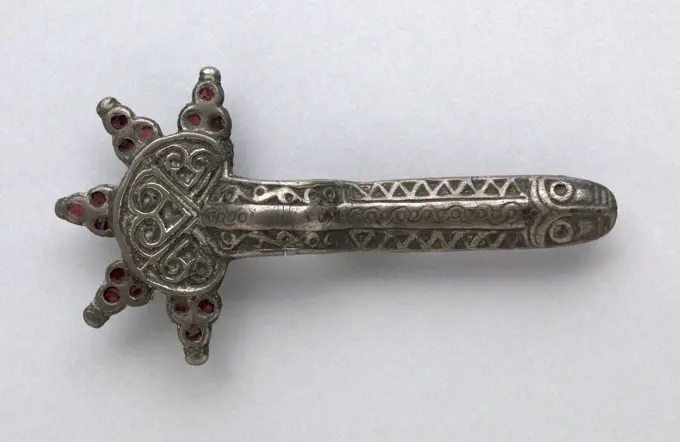
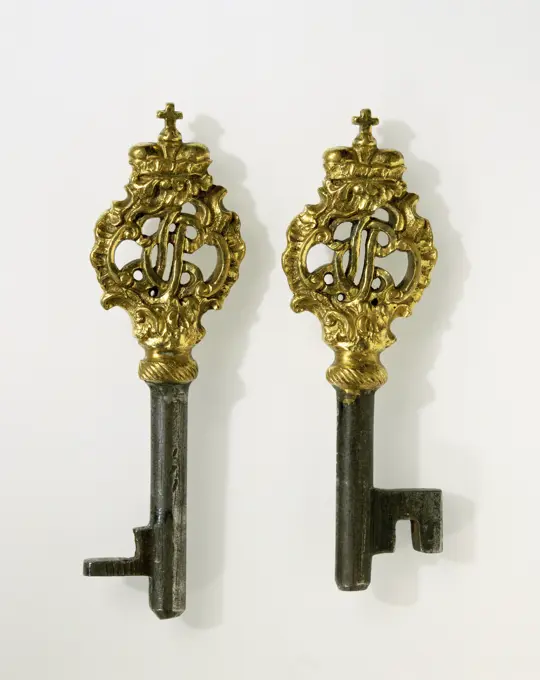
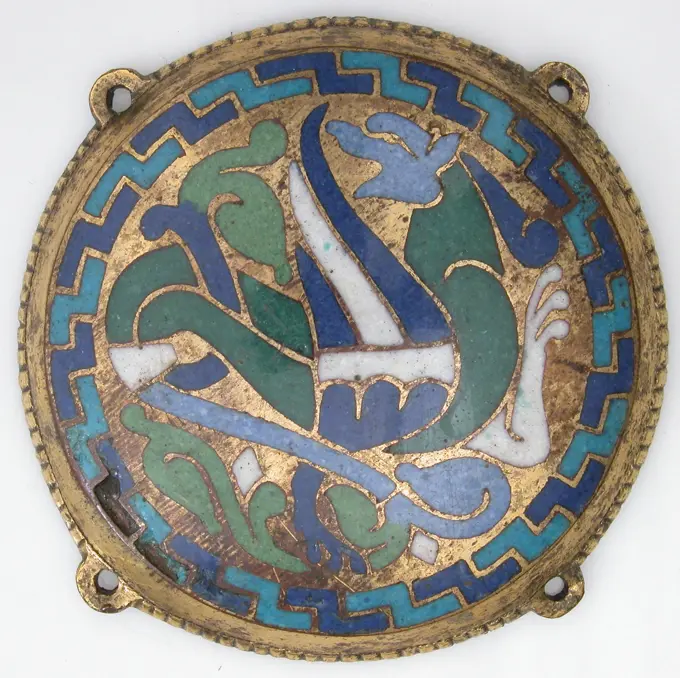
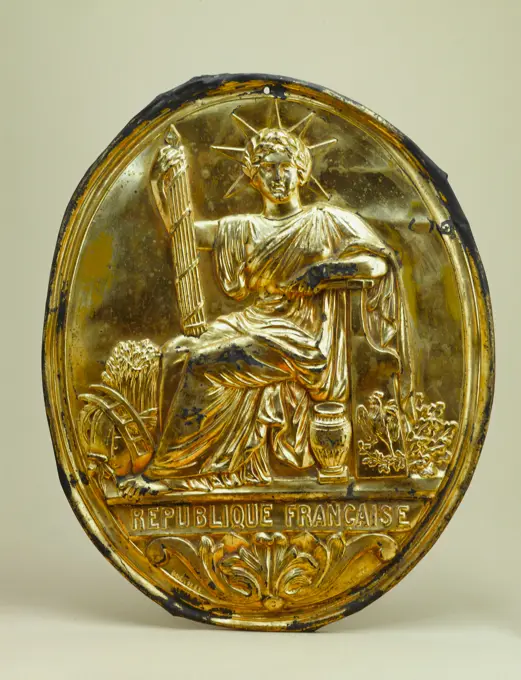
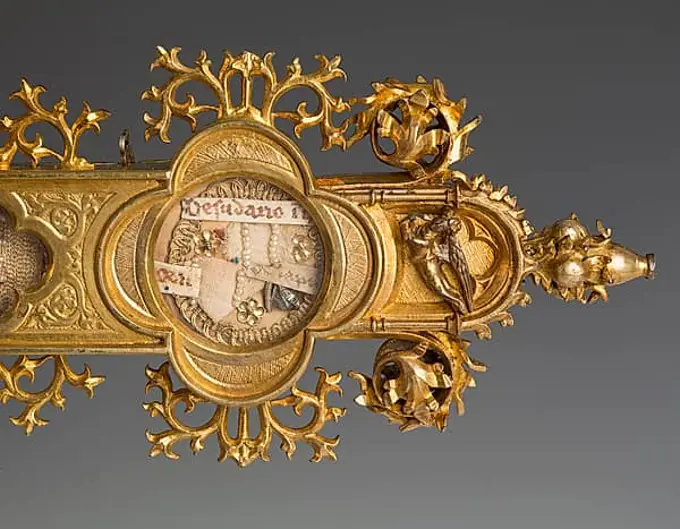
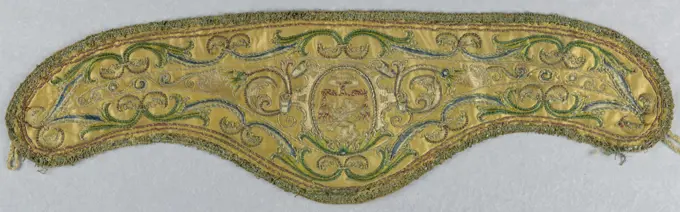
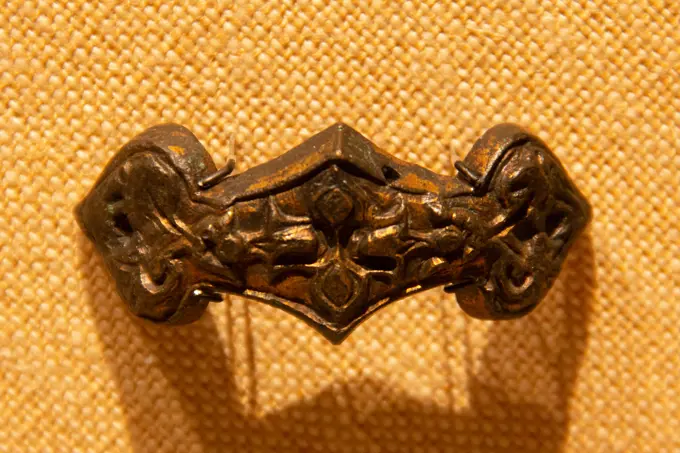
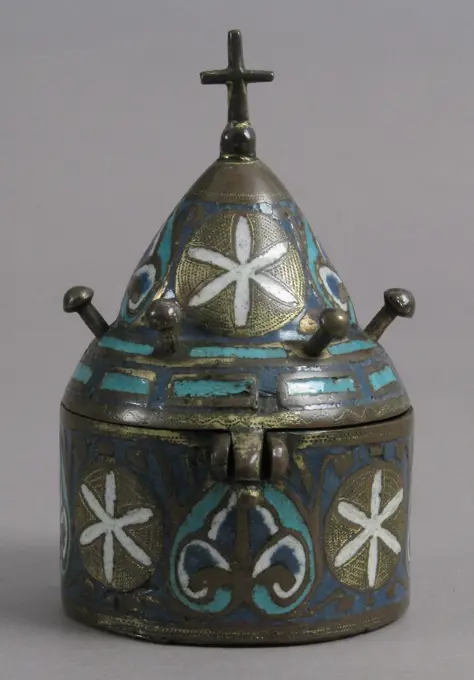
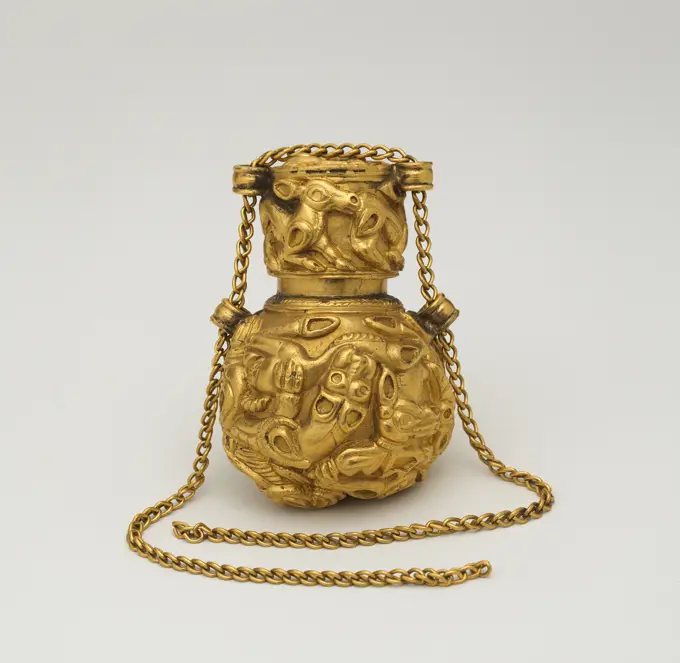
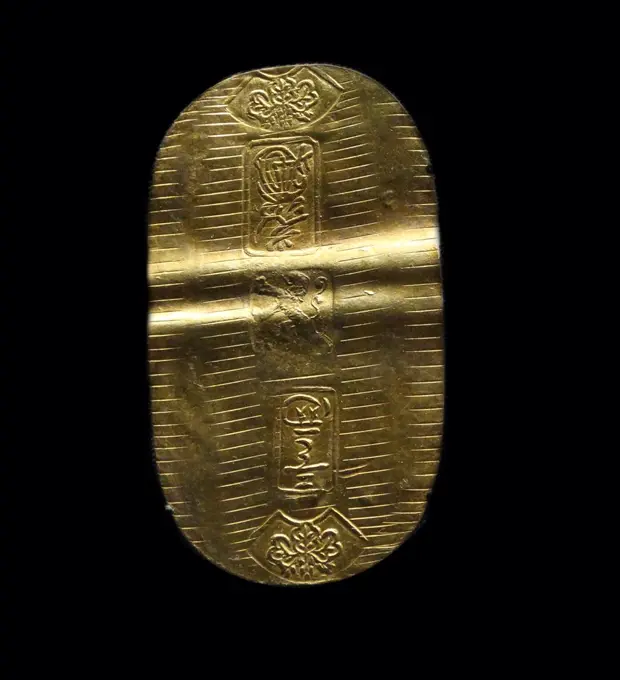
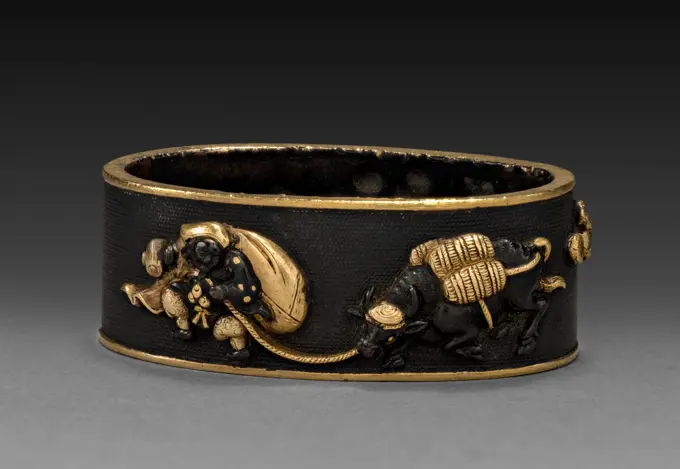
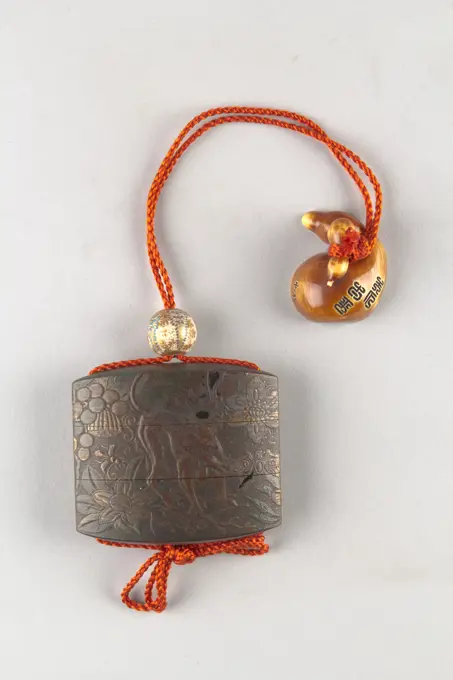
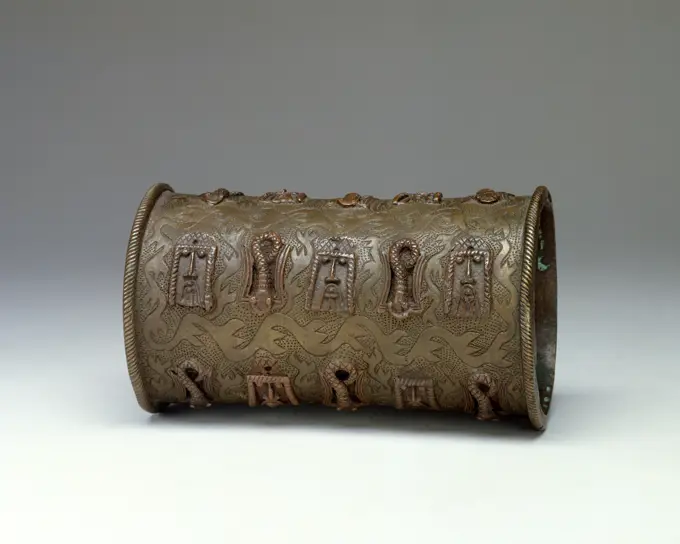
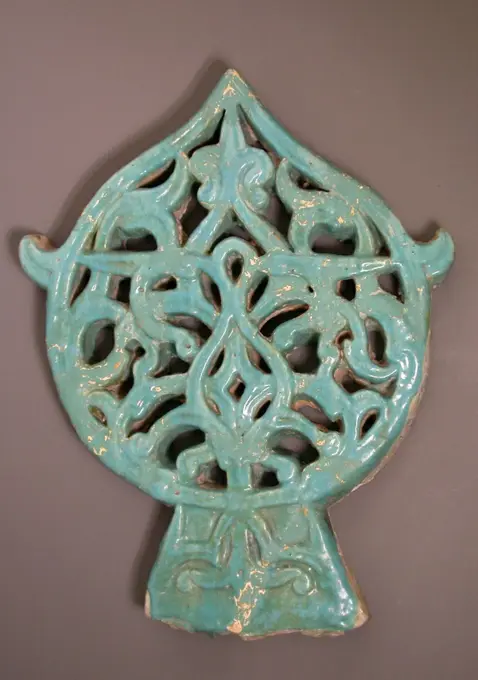
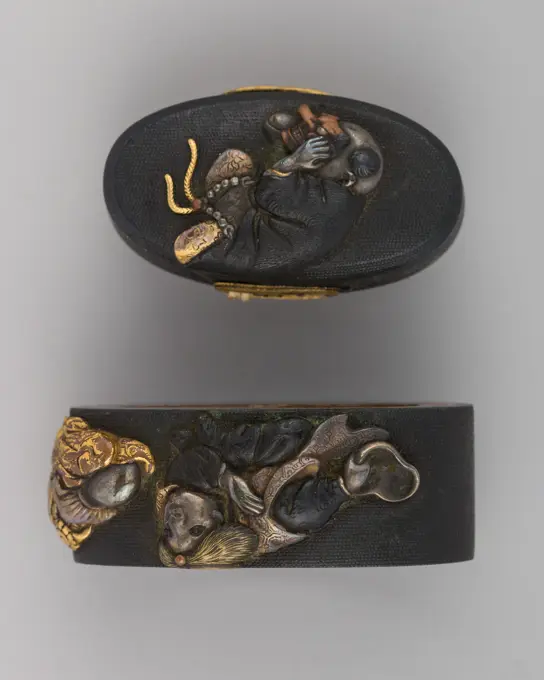
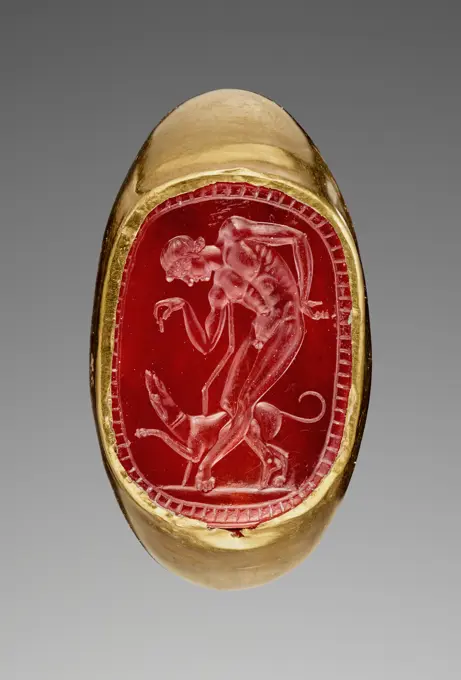
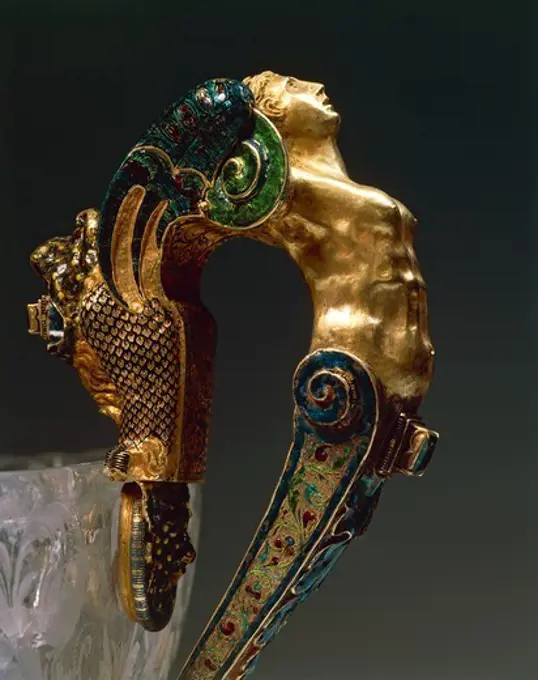
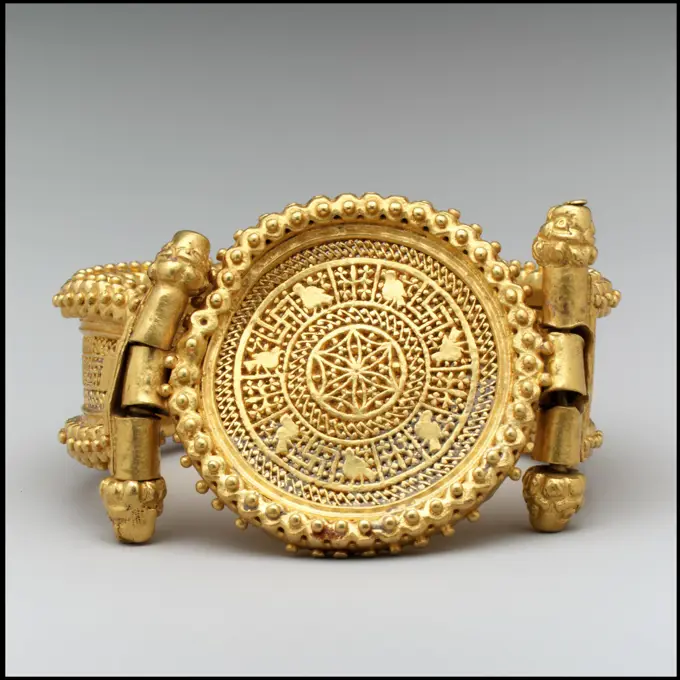
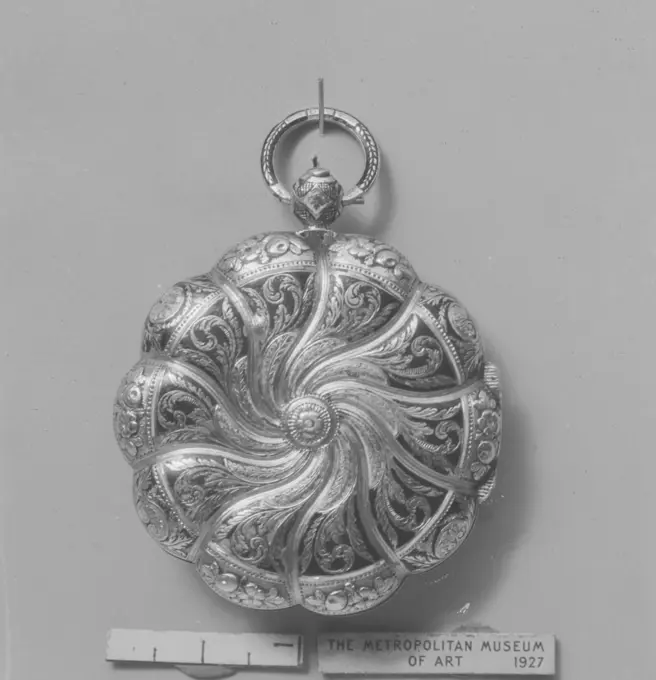
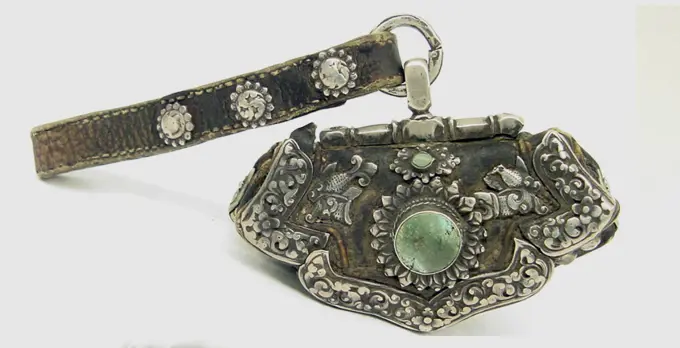
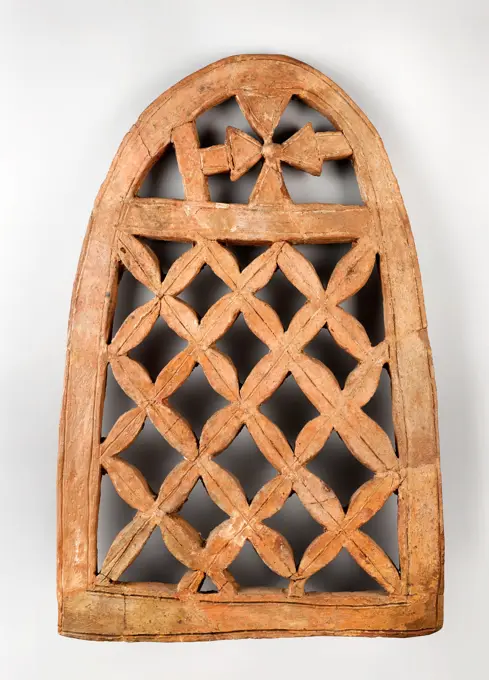
Square-Headed Bow Brooch second half 6th century Frankish The bow brooch was a component of many Germanic women's dress. In Frankish territory brooches were generally worn in pairs, as decorative elements on a strap hanging from the belt. The bow refers to the bend or curve that links two terminals.. Square-Headed Bow Brooch 465797 Frankish, Square-Headed Bow Brooch, second half 6th century, Silver-gilt, niello, Overall: 4 x 9/16 x 9 15/16 in. (10.1 x 1.4 x 25.2 cm). The Metropolitan Museum of Art, New York. Gift of J. Pierpont Morgan, 1917 (17.193.72)Watch ca. 1680 German. Watch 194123CASCO DE CARLOS V VISTA FRONTAL - SIGLO XVI. Location: PALACIO REAL-REAL ARMERIA DE MADRID. MADRID. SPAIN.. Parure of gold consisting of a necklace, two bracelets, a brooch, a pair of earrings, a few cufflinks, two hair needles and a hanger. Made from a Filigree.Priming Flask. Culture: Indian. Dimensions: L. 9 7/8 in. (25.1 cm); Wt. 5 oz. (142 g). Date: second half 17th century.Zoomorphic priming flasks of carved ivory, such as these, were among the first Mughal decorative arts to reach Europe, with numerous examples listed in princely collections of art and natural history dating from 1650. These small containers held fine-grain gunpowder used to set off (or prime) the main charge in the barrel. The flasks are typically carved with fantastic animals that merge into one another. The observed naturalism is characteristic of Mughal art. Museum: Metropolitan Museum of Art, New York, USA.Bellows (part of a set) ca. 1675 British This set of fire tools 68.141.156-.159) was probably made for John Maitland on the occasion of his wedding to the Countess of Dysart. In 1647 Maitland raised an army to rescue Charles I. After the Battle of Worcester, when he was taken prisoner by Commonwealth troops, he was sent to the Tower. After his release (166) he became Prime Minister and Secretary of State. On May 1, 1672, he was created Marquess of March and Duke of Lauderdale, and on June 3 he was installed at Windsor as Knight of the Garter.. Bellows (part of a set). British. ca. 1675. Silver, iron, leather, wood. Metalwork-Silver In CombinationHand screens first quarter 17th century French. Hand screens 229070Inrō with Owl and Crows in Tree 19th century Japan. Inrō with Owl and Crows in Tree 58711Tip of a Pointer 1080-1150 Byzantine This delicately wrought and finely detailed tip of a pointer, or, less likely, a scepter, is one of the outstanding examples of cloisonné enameling produced during the Middle Byzantine era. Intimate in scale, it is entirely covered in elaborate foliate and geometric designs predominately worked in white, red, and translucent blue enamels. Ladderlike strips of cloisons in translucent green enamel separate the decorative patterns on the sides and hide the angles of the hexagonal form. The top is a flat dome; the base is finished with alternating lobes and semicircles. The enameled patterns are similar to designs found in Byzantine manuscript illuminations of the period. This tiny masterpiece was probably the end of a long pointer used to assist the speaker during the public reading of a manuscript.The refinement of the decoration and the outstanding craftsmanship suggest that this is one of a small group of works associated with the imperial capital oFragments of gold breastplate from Elefsis (Greece). Goldsmith art, Greek Civilization.Bracelet. UnknownKnife Handle (Kozuka). Culture: Japanese. Dimensions: L. 3 13/16 in. (9.7 cm); W. 9/16 in. (1.4 cm); thickness 1/4 in. (0.6 cm); Wt. 1.4 oz. (39.7 g). Maker: Goto Eijo (Japanese, 1577-1617, sixth-generation Goto master). Date: 17th century. Museum: Metropolitan Museum of Art, New York, USA.Sword Belt late 18th century French. Sword Belt 23344Pair of Pendants. Egypt, 11th century. Jewelry and Adornments; pendants. Bronze, castHinge;  XVII century (1601-00-00-1700-00-00);Keman (Flower Garland” Temple Decoration) Japan ca. 1725 Keman (Sanskrit: kusumamala) literally means garland of flowers,” and refers to pendant decorative disks, usually made of bronze in the shape of a round fan (uchiwa), that are suspended from beams of inner sanctuary of a temple, above a Buddhist statue. They are thought to have their origin in the garlands of fresh flowers that were offered to nobles in ancient India.Brooch from a Viking grave. Artist: UnknownPossibly James Collins, Caddy Spoon, 1822/23, silver.Spoon rack with six spoons. Spoon rack with six spoons. An ornament is engraved in the scoop of the spoon rack. The spoons are round with a stem that has been profiled at the end and runs into a button. The spoon rack has not been marked. Some spoons are marked with a boar cup (cf. inventory no. BK-NM-11177-236).Funerary Headband; Italy; about 300 B.C; Gold; 28 cm (11 in.)Collar Pendant late 5th-early 6th century Ostrogothic This pendant, which would have originally been strung closely with perhaps nine others to form a flat, collar-like necklace, comes from the grave of a sixth-century Ostrogothic woman in Domagnano, Italy. It was discovered by a farmer in 1892, and subsequently sold off to several different collectors. All the pieces from the find exhibit the same characteristics: almost pure gold, into which various cloisonné fillings are setsuch as pearl, colored paste, lapis lazuli, and of course garnets like the ones shown here.The importance of this piece, apart from its beauty, lies in the fact that it proves not only the presence of the Goths in northern Italy around the year 500, but also some degree of settlement there by themto the extent of burying their dead in the area.. Collar Pendant 464570Strainer Etruscan 5th century BCEFibula, 500s. Frankish, Migration period, 6th century. Silver with garnets; overall: 11 x 6 x 1.6 cm (4 5/16 x 2 3/8 x 5/8 in.).Key of iron and gilt bronze, with monogram JPC by Johann Philipp von Waldorff, Elector of Trier, Anonymous, c. 1765 Key of iron and gilt bronze, with monogram JPC by Johann Philipp von Waldorff, Elector of Trier (1756-1768). Key belongs to Bureau that was manufactured around 1765 by Abraham Roentgen (BK-16676). France iron (metal). bronze (metal). gilding (material) gilding Key of iron and gilt bronze, with monogram JPC by Johann Philipp von Waldorff, Elector of Trier (1756-1768). Key belongs to Bureau that was manufactured around 1765 by Abraham Roentgen (BK-16676). France iron (metal). bronze (metal). gilding (material) gildingPanel 13th-14th century. Panel 445102Fragment of a Pipe Stem 18th-19th century. Fragment of a Pipe Stem. 18th-19th century. Silver, wood, and brass. Attributed to probably Iran. MetalWinged Dragon (one of five medallions from a coffret) ca. 1110-30 French The blue and green beasts, locked in battle and compressed into these circular medallions, are emblematic of goldsmiths work created at Conques under the patronage of Abbot Boniface (r. 1107-after 1121). On a similar box still at Conques, an inscription proudly proclaims: “In all respects, the coffrets of Conques demonstrate brilliant workmanship.”. Winged Dragon (one of five medallions from a coffret) 464565Panonceau d'offier ministerial (V) A ministerial officer sign. Teaches. Golden and pushed iron, late eighteenth century.Reliquary cross in the German Blade Museum, detail with relicsGolden pre-Columbian Inca mask, replica, sheet brass with semi-precious stones, souvenir, Cusco, Peru, South AmericaCollar, Medium: silk, metal, linen Technique: satin stitch embroidery, edged in couched gold cord, Pair of separate collars called apparels, slightly curved along top edge, with deep rounded side at bottom, to be worn over and outside a vestment. Yellow satin, embroidered in silk and metal thread. Design shows, center, in oval; a cardinal's hat above a lion rampant. Strap work frame around oval; a curving vine flows from each side, and borders of conventionalized vine edge top and bottom. Flowers and leaves worked in colored silk, in satin stitch and edged in gold cords, which are couched in colored thread. Trimmed with narrow edging formerly of heavy gold thread now tarnished, and with silver strip through center, Apparels have loops for fastening, at each end. Lined with linen., 17th century, embroidery & stitching, CollarEkran owalny w oprawie. unknown, craftsmanEarflare Frontal 3rd-7th century Moche. Earflare Frontal 309426Clamp 9th-10th century. Clamp. 9th-10th century. Bronze; relief cast, gilded. Excavated in Iran, Nishapur. MetalReliquary casket, gilded copper on wood with enamels, 13th century, Limoges workshops, Huesca Diocesan Museum, Aragon community, Spain.Pyx 13th century Spanish. Pyx 467491Bellows (part of a set). Culture: British. Dimensions: Overall: 32 11/16 × 34 1/4 × 27 3/4 in. (83 × 87 × 70.5 cm). Date: ca. 1675.This set of fire tools 68.141.156-.159) was probably made for John Maitland on the occasion of his wedding to the Countess of Dysart. In 1647 Maitland raised an army to rescue Charles I. After the Battle of Worcester, when he was taken prisoner by Commonwealth troops, he was sent to the Tower. After his release (166) he became Prime Minister and Secretary of State. On May 1, 1672, he was created Marquess of March and Duke of Lauderdale, and on June 3 he was installed at Windsor as Knight of the Garter. Museum: Metropolitan Museum of Art, New York, USA.Bliej Kultury unknownReproduction of a Sarmatian bottle and lid 19th century, after 1st century original Electrotyping is a chemical process used historically to make high quality reproductions of works of art. During the Victorian era, one of the main producers was Elkington & Co. of Birmingham. They were licensed by the South Kensington Museum of London (now the Victoria & Albert Museum) to produce replicas of objects from royal treasuries and museums across Europe. The electrotypes approved by the Department of Science and Art, a British governmental agency, carry Messrs. Elkingtons mark in the form of an official stamp in metal. This modern electrotype is a copy of a gold bottle with a lid in the Hermitage Museum, St. Petersburg. The original was found in 1864 in the Khokhlach kurgan (burial mound) in the vicinity of Novocherkassk, one of the largest cities of the Don region. It was part of a group of precious objects - a crown, collars, ornaments, flacons or perfume-boxes - known as the “Treasure of Dutch East India Company coin. Gold Koban coin, Japan, countermarked for use in Indonesia. Dated 17th CenturyStrap End 650-700 Frankish or Allemanic Belts were important features of early medieval dress. Not only did they serve the practical function of holding weapons and tools, but their fittings, which could vary in terms of material, decoration, and size, were also highly visible indicators of rank and status. Iron buckles, many imposing in size, were worn by both men and women. Their intricate decoration was achieved by squeezing narrow twisted strips of silver into patterns engraved on the surface of the prefabricated iron pieces. A complete belt would have consisted of a buckle, a counter plate that was placed opposite the buckle, and sometimes a rectangular plate placed in the middle of the belt at the back for decoration.. Strap End 466250Tobacco box, Brass, Oval box with hinged cover. Engraved lid with harbor scene and inscription. In foreground, figure at shore greets two figures about to alight a smaller boat. In the near distance, a boat sits in harbor. On the underside, farmyard scene and inscription. In the foreground towards right, a man stands near a well() surrounded by chickens and a horse or mule. In the background, a woman stands near pair of pigs and a spindle(). Bordering both scenes and decorating the side of the box are engraved wave patterns., Netherlands, mid-18th century, metalwork, Decorative Arts, Tobacco boxSword-Hilt Collar (Fuchi), 1700-1850. Japan, Edo period (1615-1868). Shakudo; average: 3.9 x 2.3 cm (1 9/16 x 7/8 in.).Case (Inr) with Design of Monkey on Background of Flowers (obverse); Flowering Scrolls (reverse) 19th century Japan. Case (Inr) with Design of Monkey on Background of Flowers (obverse); Flowering Scrolls (reverse). Japan. 19th century. Lacquer, dark brown, grey and brown hiramakie, takamakie, fundame, red, silver; Interior: roiro and fundame. Edo period (1615-1868). InrBracelet: Portuguese Heads and Mudfish 18th-19th century Edo peoples At its origins, the centralized city-state of Benin was founded by Edo-speaking peoples. The accounts by official court historians and descriptions provided by visitors evoke a vibrant cultural center continually redefined by its leadership through shifting internal and external power dynamics. According to oral tradition, circa 1300, Edo chiefs are reputed to have reached out to the leader of neighboring Ife, Oranmiyan, to establish a new divinely sanctioned royal dynasty. Since then, the investiture of Benins rulers to the title of obas has conferred upon them at once a role of chief priest officiating in important religious ceremonies and presiding over an elaborate structure of palace officials. During the fifteenth century reign of Oba Ewuare, Benins armies were formed and the fortification of its capital with a massive wall undertaken. In parallel, delegations of Portuguese traders assiduously sought to secureReplica Anglo Saxon Belt Buckle UKHand Mirror, c. 1900. Designed by Félix Bracquemond (French, 1833-1914), relief by Auguste Rodin (French, 1840-1917), enamel by Alexander Riquet (French), goldsmith work by Alexis Falize (French, 1811-1898). Gold, enamel, and ivory; overall: 32.2 x 16.1 x 1.2 cm (12 11/16 x 6 5/16 x 1/2 in.).Dish (piatto). Culture: Italian, probably Castel Durante. Dimensions: Diameter: 16 5/8 in. (42.3 cm). Date: 1537. Museum: Metropolitan Museum of Art, New York, USA.Vajra. unknown, craftsmanKnife Handle (Kozuka) with Certificate of Authenticity (Orikami) 17th century Got Renj (Mitsutomo) Japanese This kozuka features a design of Taikb (the Chinese sage Chuang Tzu) fishing.. Knife Handle (Kozuka) with Certificate of Authenticity (Orikami). Japanese. 17th century. Copper-gold alloy (shakud), gold, silver. Sword Furniture-KozukaSword-Hilt Pommel (Kashira), 1700-1850. Japan, Edo period (1615-1868). Shakudo; average: 3.7 x 1.8 cm (1 7/16 x 11/16 in.).Head ornament, Gold, jade, pearls; velvet-covered silk-lined case, with original box, China, ca. 1890, jewelry, Decorative Arts, Head ornamentMount; L x W x D: 13.3 x 6.3 cm (5 1/4 x 2 1/2 in.)Plate in the shape of a warrior with hellaard, c. 1400 - c. 1950 The plate consists of a bouquet on pedestal with hellaard in the left hand, and belongs to a door beater (BK-NM-9070-2).  iron (metal) The plate consists of a bouquet on pedestal with hellaard in the left hand, and belongs to a door beater (BK-NM-9070-2).  iron (metal)CAJA DE CORPORALES MOZARABE. Location: CATEDRAL DE SANTA MARIA. ASTORGA. LEON. SPAIN.Woman's Belt Hangings. Culture: Newari for Tibetan market. Dimensions: 12 31/32 x 2 7/8 in. (33 x 7.3 cm). Date: 17th-19th century.Personal grooming tools were integrated into the elaborate ensemble of jewelry worn by women on important occasions. Dangling below this pair of belt hangings are nail clippers, an ear pick, a nail cleaner, a pin, and tweezers. Museum: Metropolitan Museum of Art, New York, USA.Bag (France); gilt wire, silk and silver-wrapped silk; H: 9 cm (3 9/16 in.); Bequest of Richard Cranch Greenleaf in memory of his mother, Adeline Emma Greenleaf; 1962-58-27Ceramic Architectural Decoration 1199-1299 Rayy. Tiles like this would probably have embellished the tops of fortress walls as decorative projections. The molding process used to make this tile would have allowed for the easy production of identical pieces, an important consideration in a region in which symmetry and repetition were highly valued. The arabesque design, molded in three dimensions, emphasizes the interlacing pattern of elements weaving over and under one another. This decorative feature can also be found in other objects from the era, such as metalwork.. Fritware, with carved and molded decoration under a turquoise glaze . IslamicAmulet case from Tibet, 18th century AD. These carried a clay image or part of a sacred text.Sword-Hilt Collar and Pommel (Fuchigashira) 19th century Japanese A fuchigashira is a pair of matching sword fittings comprising the fuchi (collar at the base of the grip of the sword hilt) and kashira (pommel cap at the end of a sword hilt).. Sword-Hilt Collar and Pommel (Fuchigashira). Japanese. 19th century. Copper-gold alloy (shakud), gold, silver, copper. Sword Furniture-Fuchi-KashiraEngraved Gem with a Youth and his Dog inset into a Hollow Ring. UnknownGoldsmith's art, Italy, 16th century. Rock crystal and enamelled gold table fountain, set with cameos, emeralds, rubies, gilded bronze, 38.5 x40x33 cm. Saracchi Workshop manufacture. Detail of a Harpy-shaped handle.Belt Plaque with Tigers and Dragon. Culture: Mongolia and eastern Siberia. Dimensions: H. 2 5/8 in. (6.7 cm); W. 5 1/2 in. (14 cm). Date: 2nd century B.C.. Museum: Metropolitan Museum of Art, New York, USA.Flying-Fish Pendant 10th-15th century () Tolima (). Flying-Fish Pendant 3166865th century BC Etruscan Gold work: pendant representing Achelous, the Greek River God (left) and a Serpentine fibula (right). The Serpentine bow fibula, known as the Chiusi fibula dates from the 9th-1st centuries BC. The Etruscan civilization is the modern name given to a powerful and wealthy civilization of ancient Italy in the area corresponding roughly to Tuscany, from 700 BC) until its assimilation into the Roman Republic, beginning in the late 4th century BCMorse Fragments. Culture: French. Dimensions: Overall: 3 7/16 x 1 15/16 x 1/4 in. (8.8 x 5 x 0.7 cm). Date: ca. 1250. Museum: Metropolitan Museum of Art, New York, USA.Attic Red-Figure Skyphos Fragment. UnknownBracelet (one of a pair) ca. 400 Byzantine The medallions and hoops of these handsome bracelets were worked by tracing the design onto a gold sheet and then punching holes in the background to reveal the pattern of small doves.. Bracelet (one of a pair). Byzantine. ca. 400. Gold. Made in probably Rome. Metalwork-GoldWatch ca. 1830 Watchmaker: Firm of Alliez, Bachelard et Terond Fils. Watch. Swiss, Geneva. ca. 1830. Case of gold and enamel, with radiating design of foliage. HorologyTobacco Box (Netherlands); brassBroche, obra de Jacinto Roca Fuster, siglo XX. Colección privada. Author: JACINTO ROCA FUSTER (S. XX).Pouch 19th century Tibet. Pouch. Tibet. 19th century. Leather with silver repoussé and turquoise inlay. LeatherworkDagger (Jambiya) with Sheath 19th century Arabian. Dagger (Jambiya) with Sheath 31539Curtain Tieback ca. 1825. Curtain Tieback. ca. 1825. BrassKnife Handle (Kozuka). Culture: Japanese. Dimensions: L. 3 13/16 in. (9.7 cm); W. 9/16 in. (1.4 cm); thickness 1/4 in. (0.6 cm); Wt. 1.3 oz. (36.9 g). Date: ca. 1615-1868. Museum: Metropolitan Museum of Art, New York, USA.Stone Dhammacakra, or Wheel of the Law (7th century, Davaravati style) from Nakhon Pathom. National Museum, Bangkok, ThailandMarriage Chest (Cassone), mid 1500s. Italy, Venice, mid 16th century. Walnut; overall: 68.6 x 168.9 x 57.2 cm (27 x 66 1/2 x 22 1/2 in.).Silver amulets holders and a heart-shaped pendant with carnelian applications, produced by the Ersari tribe, Afghanistan. Goldsmith's art. Afghan Civilisation, 19th century.Bottle for smelling salts, c. 1867 - c. 1870 Flacon with an enamelled representation of a crane in a flowering tree. Paris gold (metal). Flacon with an enamelled representation of a crane in a flowering tree. Paris gold (metal).Window grille; Unknown Nubian workshop; 2. PO. VII-1. after. VIII century (651-00-00-750-00-00);Torque, 13 x 12 3/8 x 3/8 in. (33.02 x 31.43 x 0.95 cm), Silver, ChinaGa'u (reliquary, amulet casket). unknown, craftsmanCuirass. Culture: French, Klingenthal, Alsace. Decorator: Etched and gilt by François-Xavier Bisch (French, active in Klingenthal and Boersch, Alsace 1793-1841). Designer: Designed by François-Joseph Bisch (French, Klingenthal, Alsace 1756-1831). Dimensions: H. 17 1/2 in. (44.5 cm); W. 14 1/8 in. (35.9 cm); D. 12 3/4 in. (32.4 cm); Wt. 12 lb. 2.2 oz. (5505.5 g); breastplate; H. 17 1/2 in. (44.5 cm); W. 14 1/8 in. (35.9 cm); D. 7 in. (17.8 cm); Wt. 8 lb. 0.5 oz. (3642.9 g); backplate; H. 16 15/16 in. (43 cm); W. 14 1/8 in. (35.9 cm); D. 5 3/4 in. (14.6 cm); Wt. 4 lb. 1.7 oz. (1862.6 g). Manufactory: Manufactured at Coulaux Frères, Manufacture Royale d'Armes de Klingenthal (French, Klingenthal, Alsace 1801-1836). Date: ca. 1825.This is one of only two known cuirasses with rich etched and gilt ornamentation dating from the restoration of the French monarchy, and a very rare example of nineteenth-century luxury armor. Forged and decorated in the Royal manufactory of Arms at Klingenthal inCosta Rica, San Jose, Pre-Columbian Gold Museum. A Pre-Columbian gold ornament made by the loss wax process by the diquis people, ancient inhabitants of southwestern Costa Rica.Jeweled belt, Gilt silver, turquoise, Belt with open filigree work with turquoise stones and semi-spherical caps throughout, on flat backing., Russia, ca. 1890, jewelry, Decorative Arts, Jeweled beltKnife Handle (Kozuka). Culture: Japanese. Dimensions: L. 3 3/4 in. (9.5 cm); W. 9/16 in. (1.4 cm); thickness 5/16 in. (0.8 cm); Wt. 0.9 oz. (25.5 g). Date: ca. 1615-1868. Museum: Metropolitan Museum of Art, New York, USA.British, NeoClassical style frame, Unknown framemaker, late 18th to early 19th century, Wood and compo, later oil gilding over original gildingGoldsmith's art, France, 19th-20th century. Rene' Lalique (1860-1945), Plique a jour enamel, diamond and gold plaque shaped like a pansy, around 1900.Votive Pin with Decorated Disc, 800-600 BC. Iran, Luristan, 9th-7th Century BC. Silver, repoussé and incised; overall: 35.1 x 15.9 x 1.7 cm (13 13/16 x 6 1/4 x 11/16 in.).Sassanian Art , Silver, gilded , 4th century, Russia, St. Petersburg, State Hermitage, D 28Hanukkah lampKnife Handle (Kozuka). Culture: Japanese. Dimensions: L. 3 3/4 in. (9.5 cm). Date: ca. 1615-1868. Museum: Metropolitan Museum of Art, New York, USA.Mirror with deities and mythical creatures late 2nd century China. Mirror with deities and mythical creatures. China. late 2nd century. Bronze. Eastern Han dynasty (25-220). MirrorsHat Jewel Depicting the Adoration of the Magi, c. 1540. France, 16th century. Enameled gold; diameter: 4.8 cm (1 7/8 in.).Rose Campbell Gerke, Wooden Stirrup, 1935 1942 Wooden StirrupLoop .Ear Disk Stud. UnknownOne square. UnknownStamp seal with the coat of arms of GrzymałaBouquet carrier, around 1840: gold metal body, mother-of-pearl handle, golden metal bouquet, body-shaped body with two mirrors decorated with two honeycomb. Galliera, fashion museum of the city of Paris. 25963-10 Accessory, benitier, jewelry, basket, bouquet fixed, flower, mother-of-pearl handle, dore metal, mirror, female mode, bouquet holder