Ornate Metalwork and Vases

An exquisite array of decorative metal objects including chalices, jars, and candle holders, featuring intricate engravings and luxurious finishes.

verschnörkelter blattverzierter buddhistischer bildsockel aus dem 12. jahrhundert in indien this image showcases an ornate foliate pedestal, likely from bengal, india, dating to the late 12th century, designed to hold a buddhist image. the antique metalwork, possibly brass or gold, features intricate carvings and a decorative foliate design, representing a rich historical and religious artifact. ideal for projects related to asian art, buddhism, and historical sculpture. LicenseRF Copyright: xZoonar.com/GallóxGusztávx 23315776
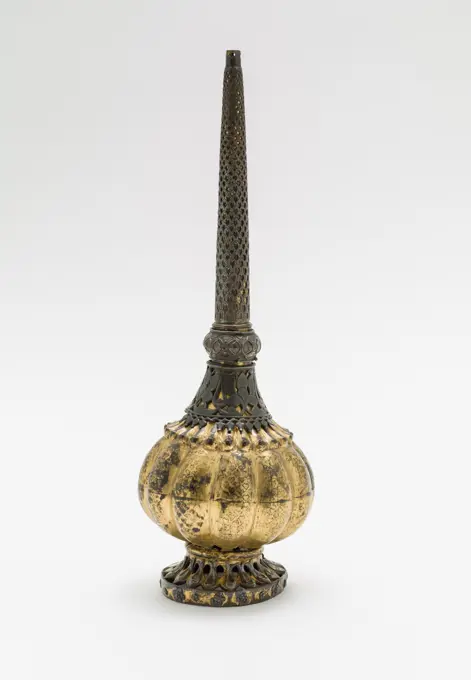
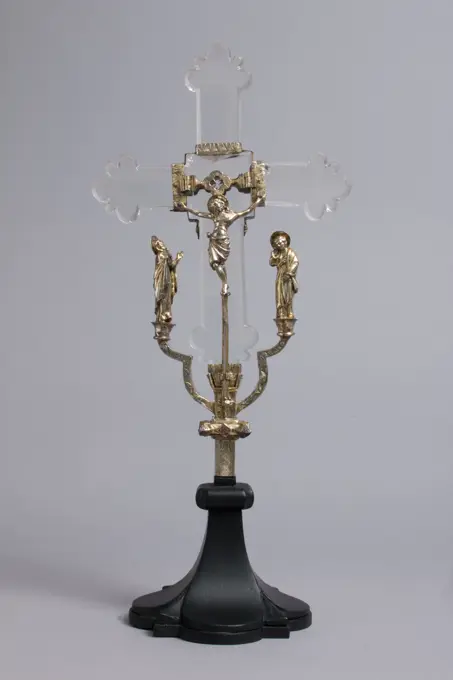
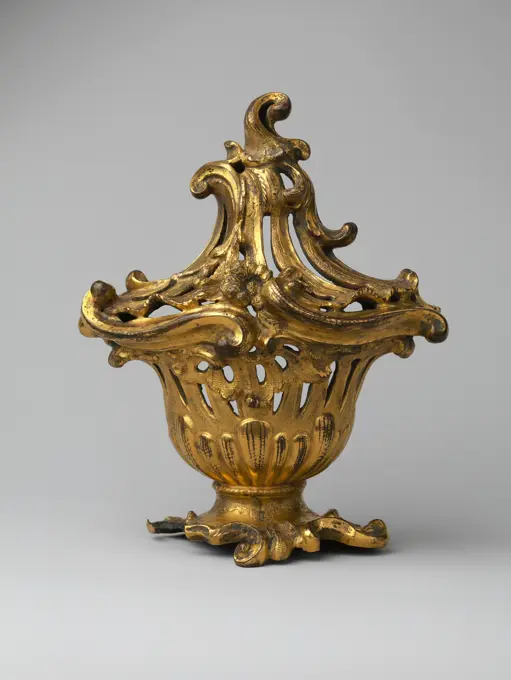
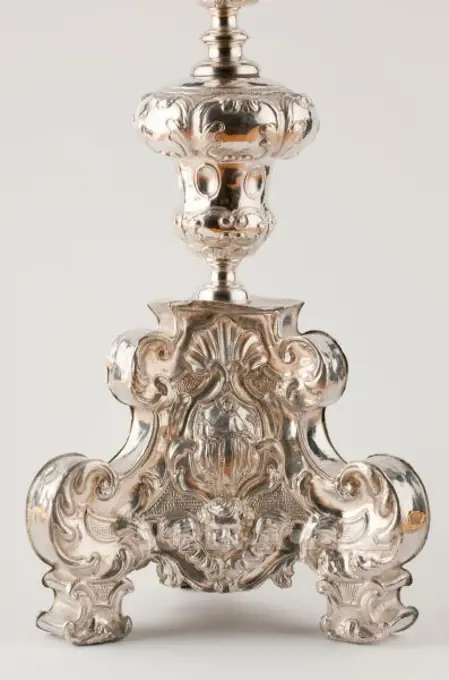
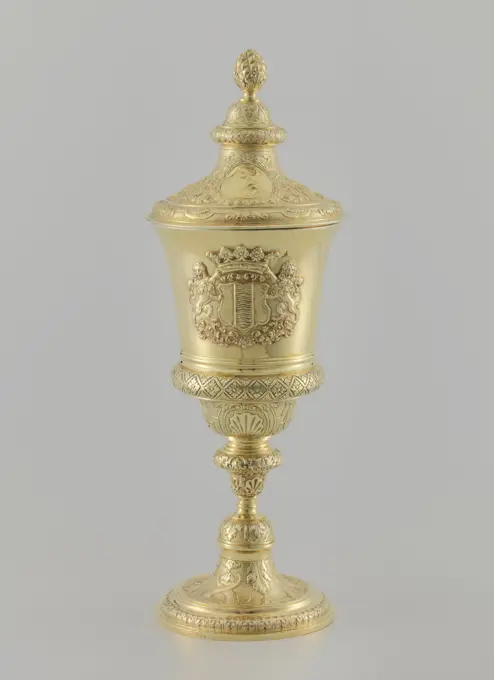
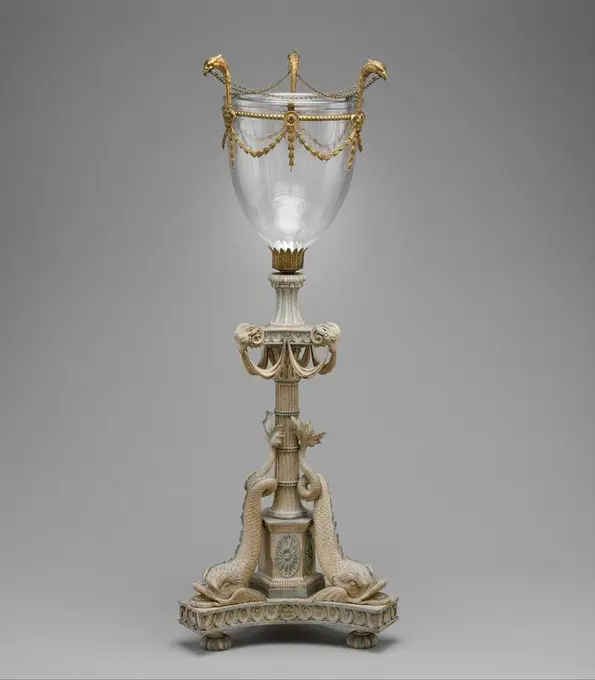
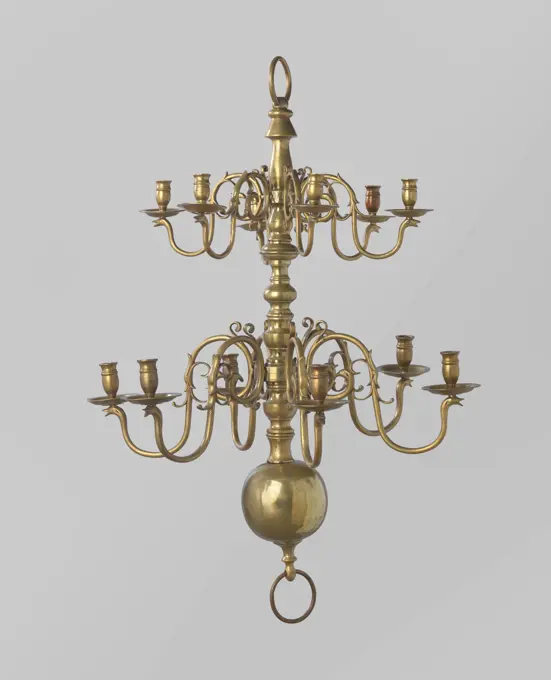
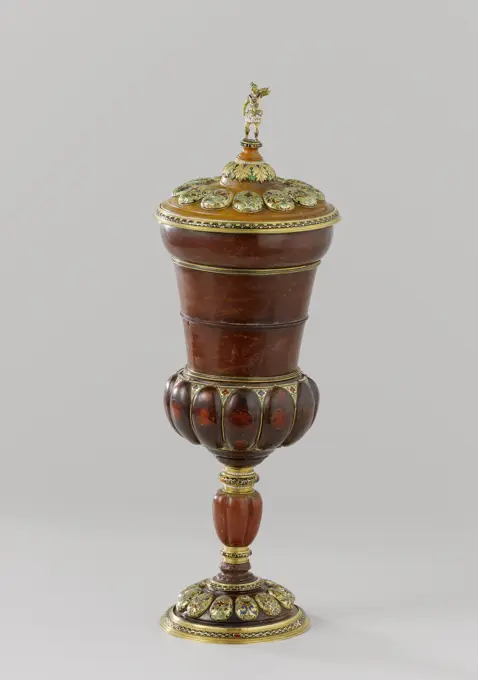
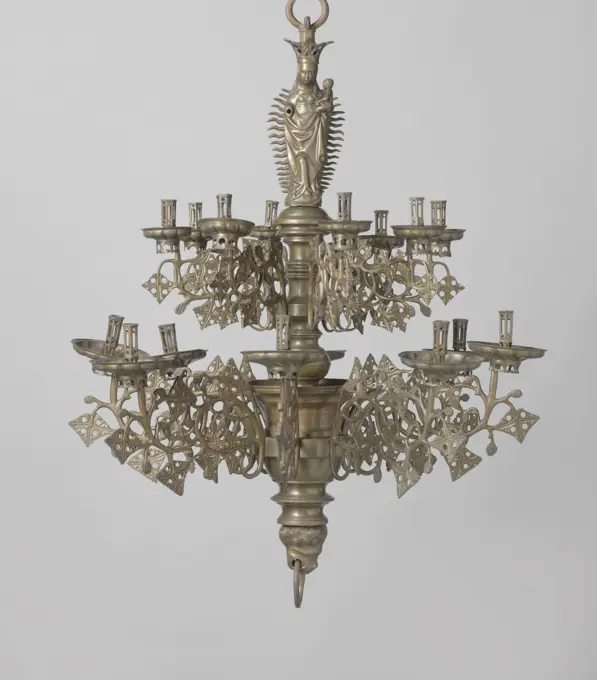
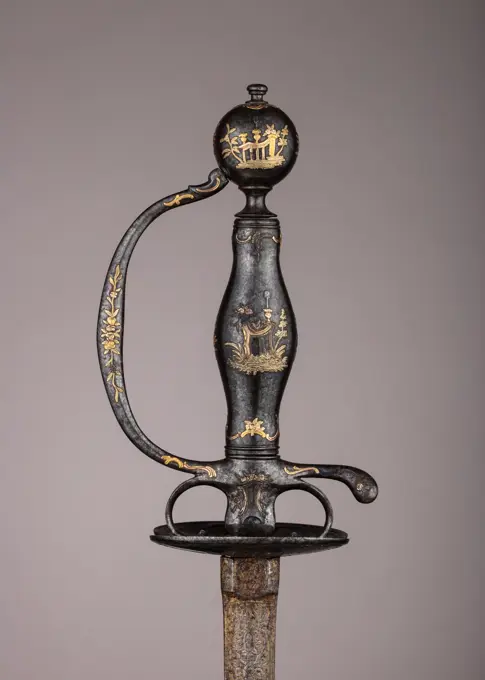
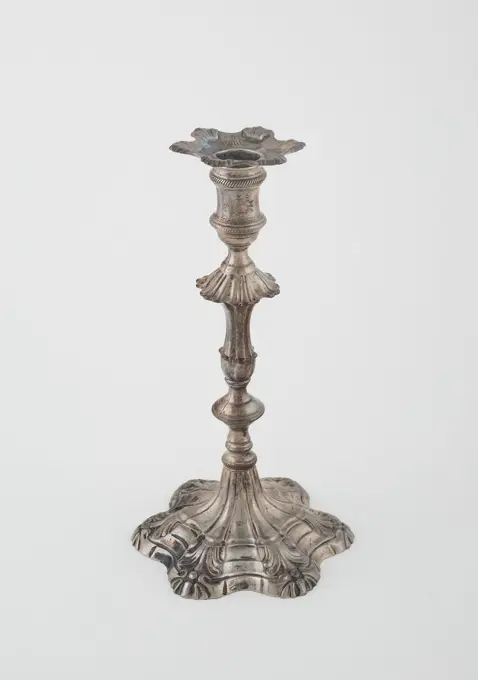
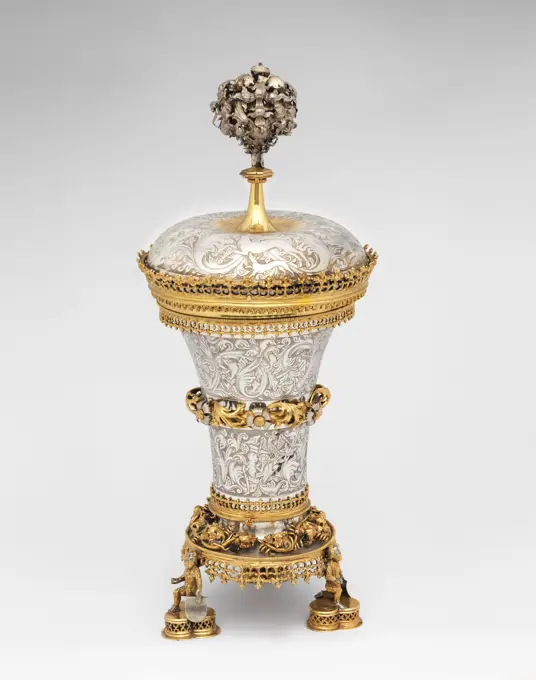
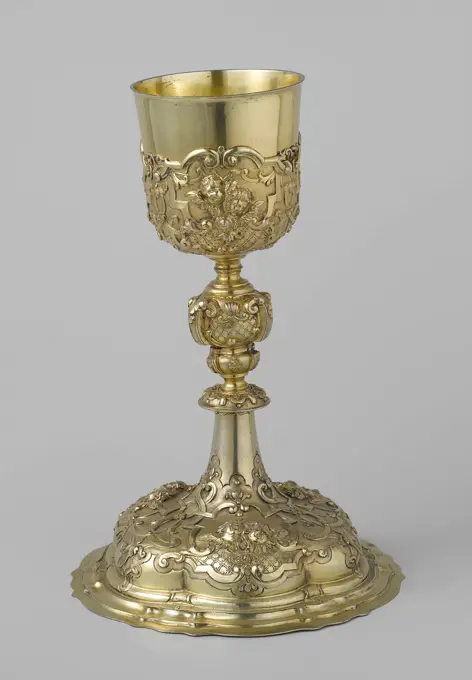
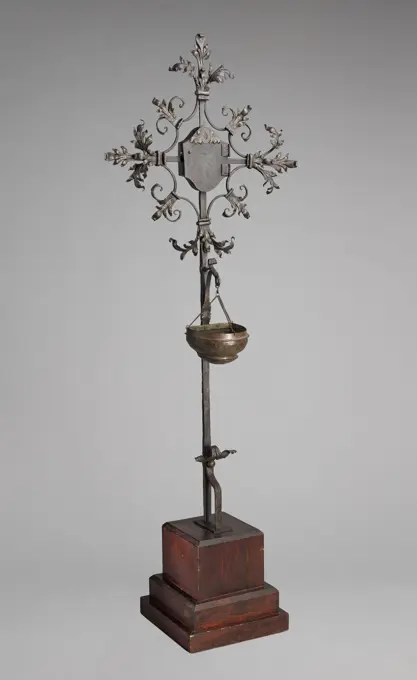
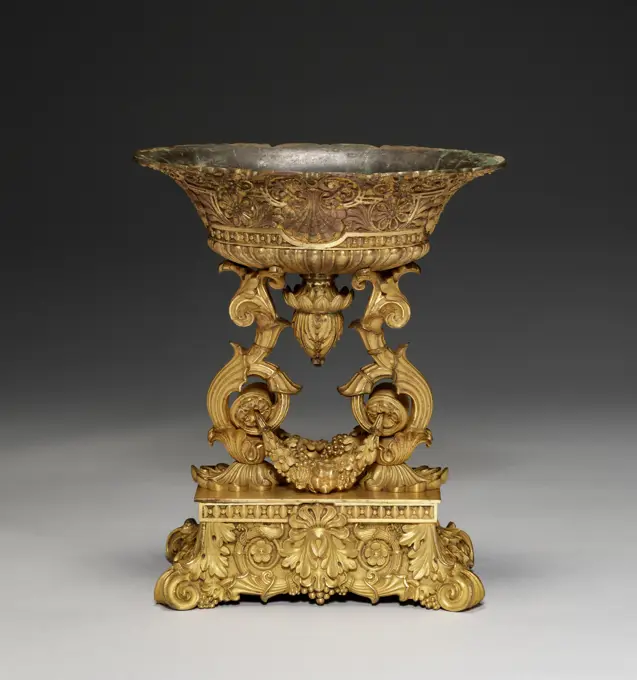
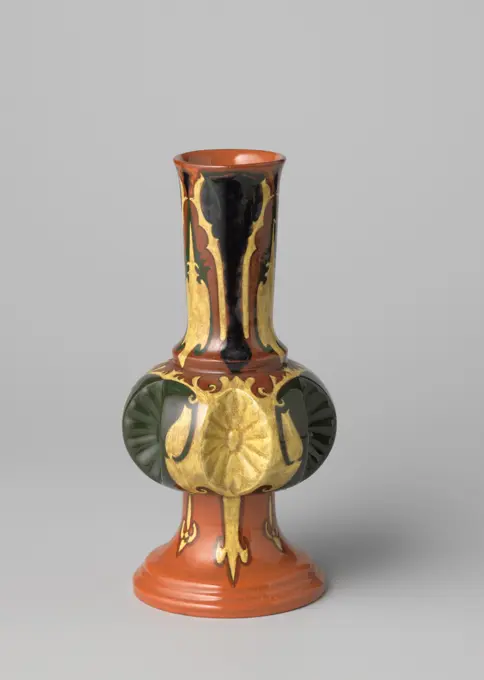
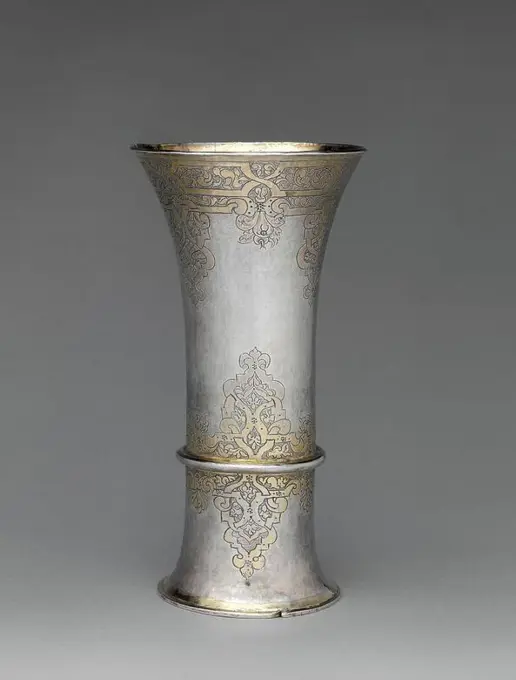
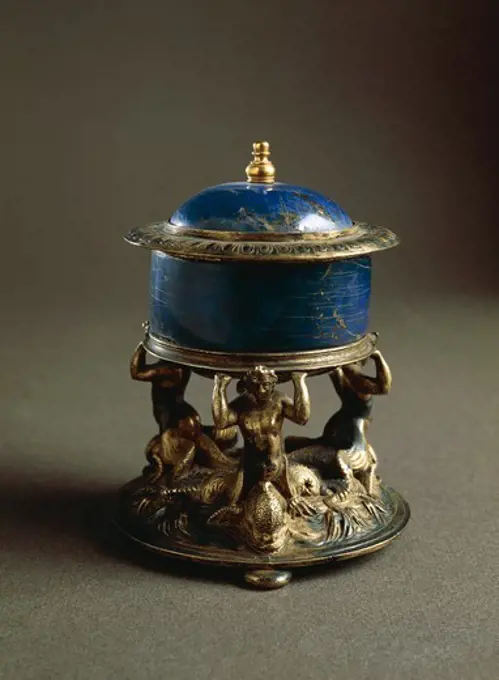
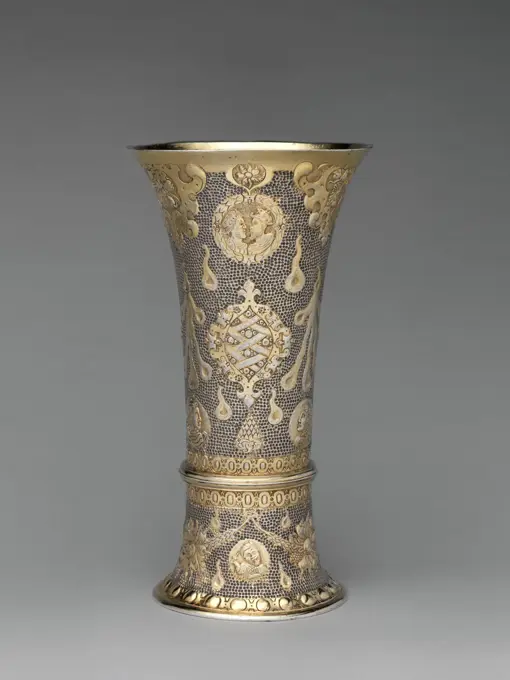
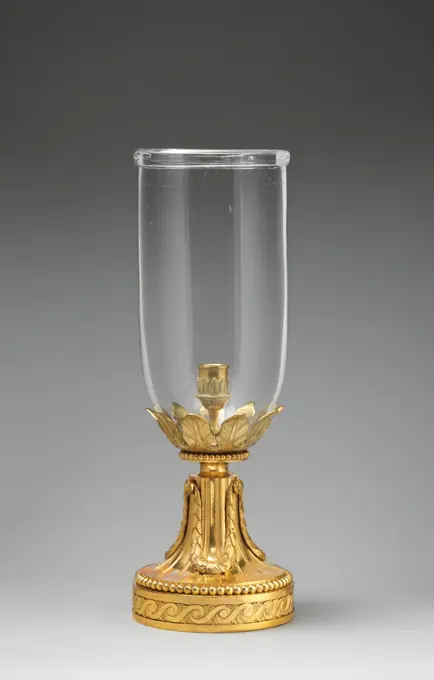
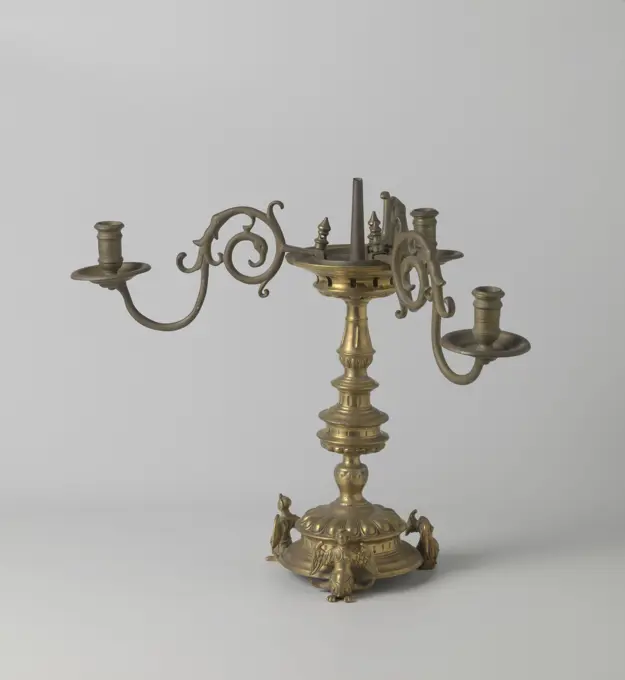
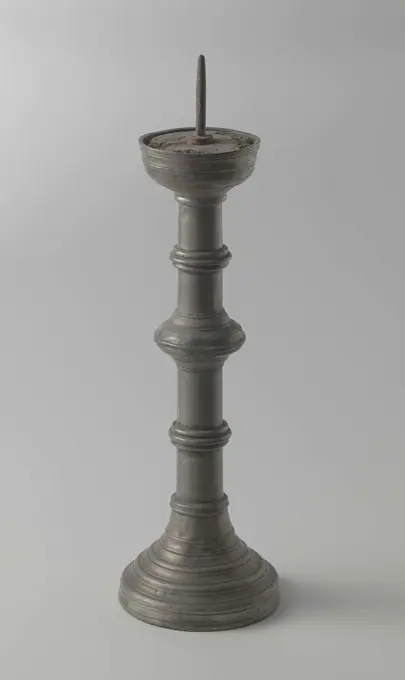
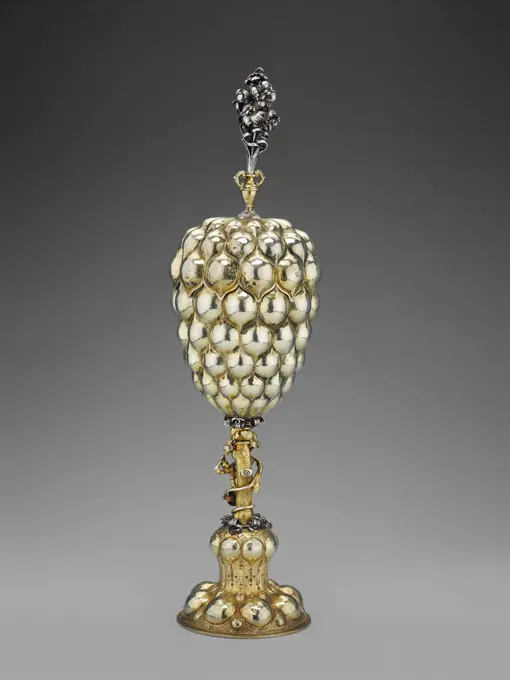
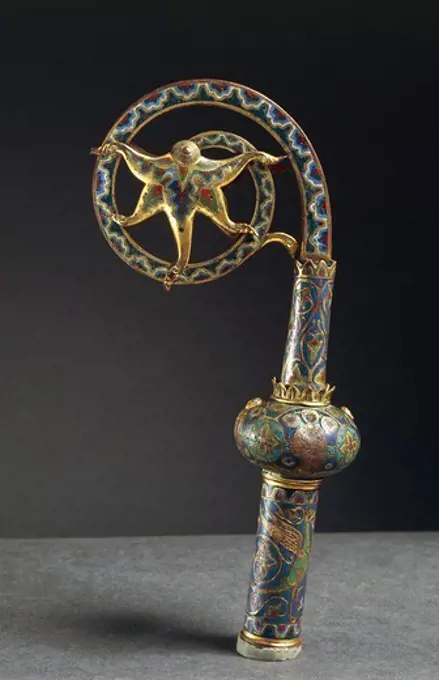
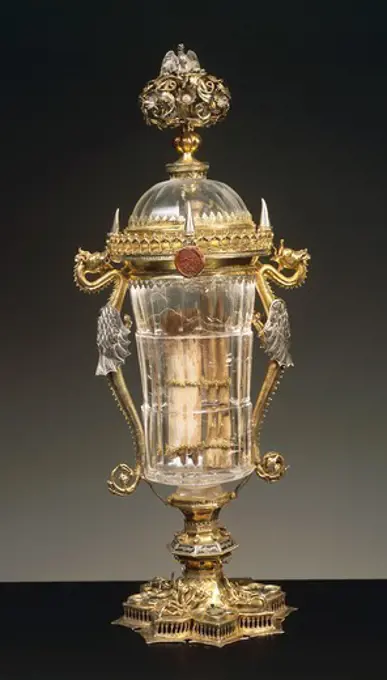
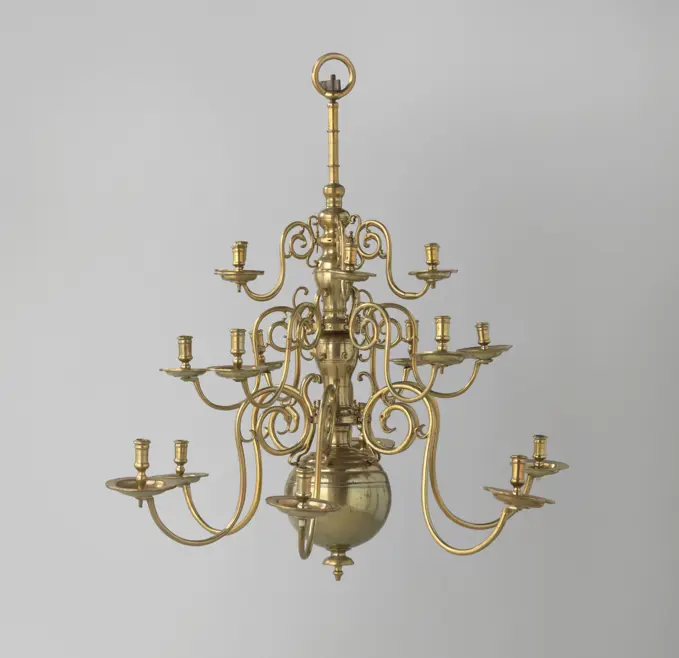
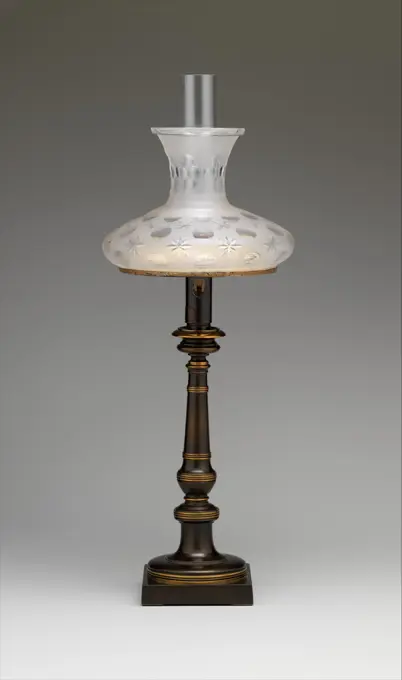
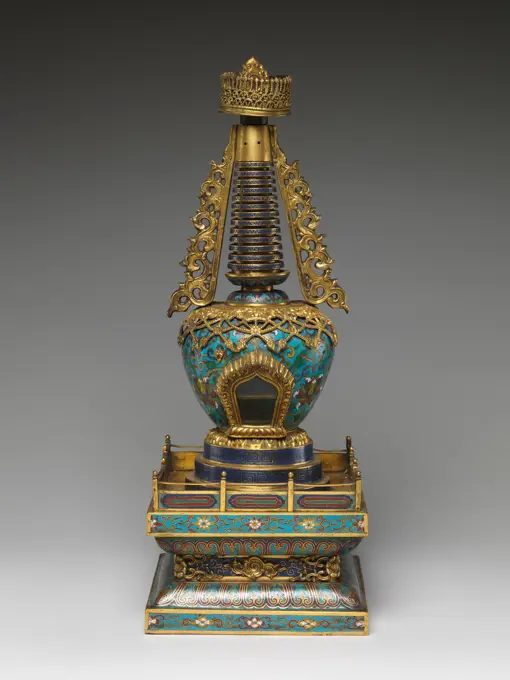
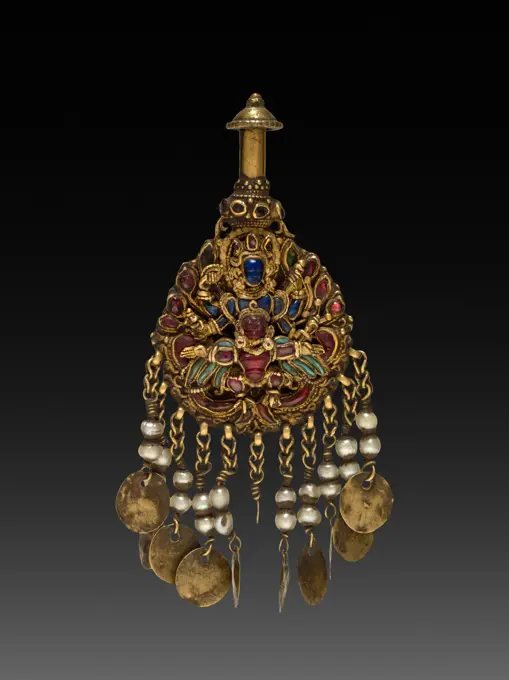
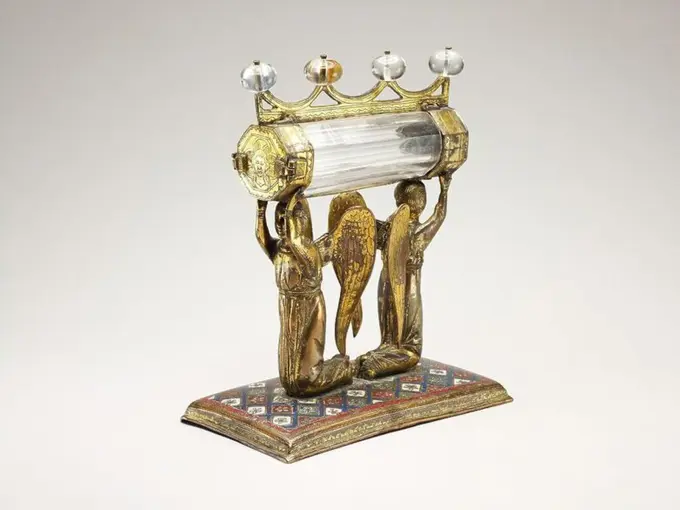
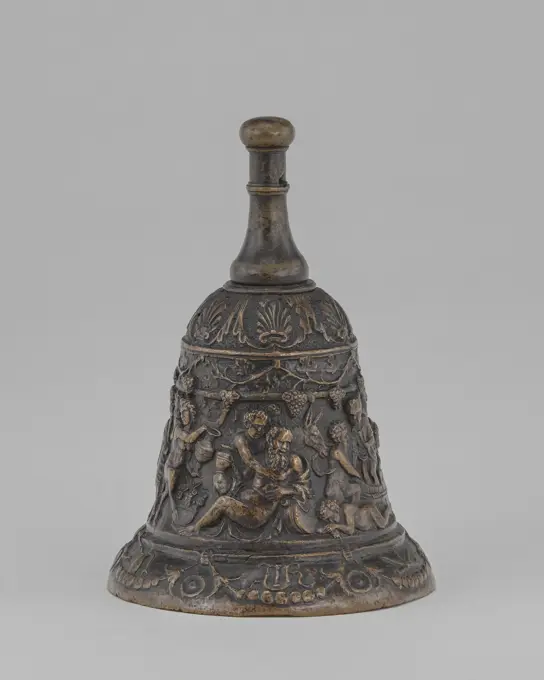
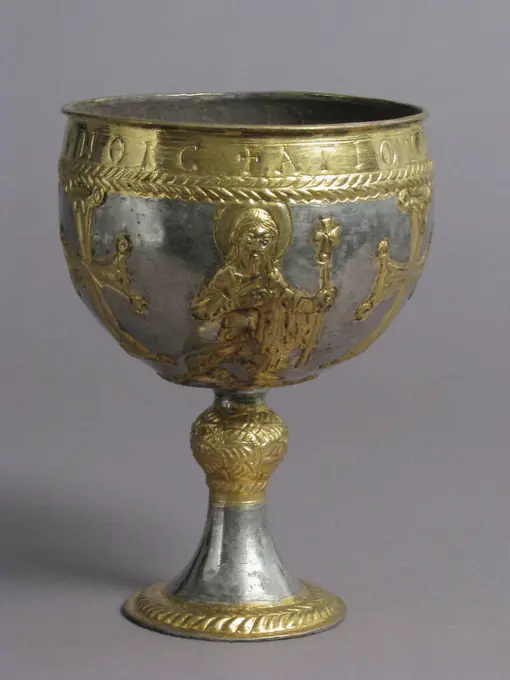
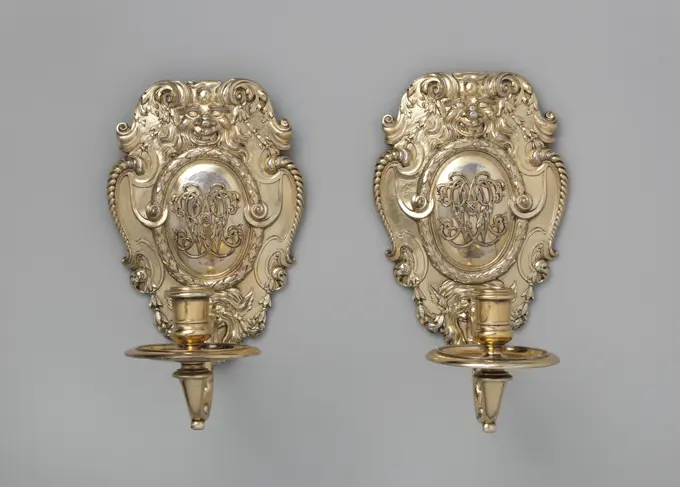
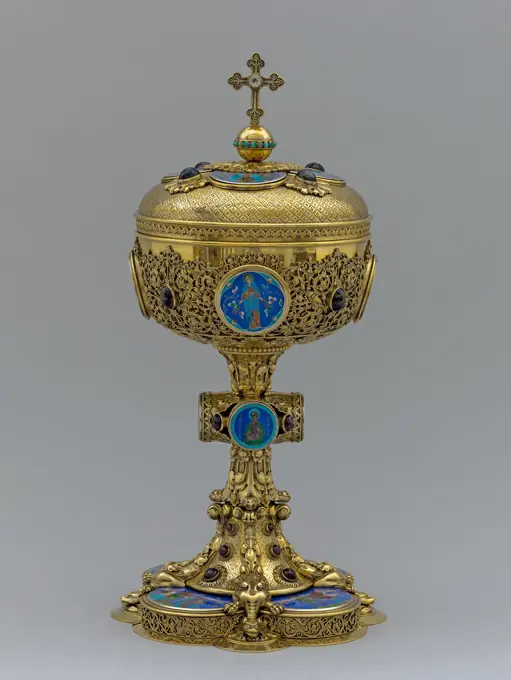
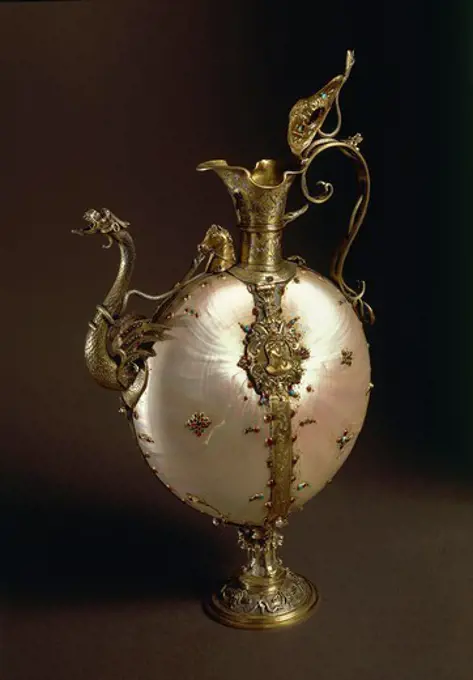
Standing cup and cover, Parcel-gilt repoussé and chased raised silver., Chalice (a) with six double repousse swellings surrounded by wrigglework, gilded, on matching foot. Stem, urn-shaped with three scrolled handles. Silver cut and scrolled collars at junctions. Cover (b) silver-gilt with six swellings and cut and scrolled finial., Nuremberg, Germany, ca. 1650, metalwork, Decorative Arts, Standing cup and coverGalvanoplastic reproduction of the "Pokal Mit Jonas" from the Lüneburg Ratssilber. Galvanoplastic reproduction of a jar of gold-plated silver, known as the Pocal Mit Jonas of 156. With lid.Jar with lid, of gold, with the weapon Dedel, Anonymous, 1743 Apart from the asymetrical scalloped underrand and the stock of the Cuppa, the cup is completely covered with finely -free considated decorations against a rouguated surface. On the bell -shaped foot the decorations consist of foam edges, vines and fruits. Three pairs of shiny against the rusted stock of the foot, rising volutes give structure and movement to the bcale. They are continued in the baluster -shaped tribe, where they are interspersed by flower vines. The asymetrical weapon Dedel is applied on the smooth bell -shaped cuppa. The Hague gold (metal) Apart from the asymetrical scalloped underrand and the stock of the Cuppa, the cup is completely covered with finely -free considated decorations against a rouguated surface. On the bell -shaped foot the decorations consist of foam edges, vines and fruits. Three pairs of shiny against the rusted stock of the foot, rising volutes give structure and movement to the bcale. Arm with candle holder of candle crown of two heights, each with eight arms, 1525 - 1550 Candle arm belonging to a candle crown of two heights with maria figure at the top. The arm is bent twice and is decorated with nine grape bunches and five vine leaves. The round fat catcher is decorated at the bottom with six round lobes. The candle holder is six -flared, opened, placed on a double hollow -round -profiled pedestal, transferring to a protruding with thread. This is the second arm of the bottom ring, numbered with 2 round points. The candle holder is unnumbered. Southern Netherlands brass (alloy) casting Candle arm belonging to a candle crown of two heights with maria figure at the top. The arm is bent twice and is decorated with nine grape bunches and five vine leaves. The round fat catcher is decorated at the bottom with six round lobes. The candle holder is six -flared, opened, placed on a double hollow -round -profiled pedestal, transferring to a protruding with thread. This is Vase, from the Hôtel Guimard; Designed by Hector Guimard ((French, 1867-1942)); Founded by Paul Philippon (French, active 1893 - 1919); France; bronze, goldSprinkler with a Lotus-Shaped Bowl. Iran, 17th century. Metal. Gilt bronze with pierced silver encasingsCandlestick, Fire-gilt bronze, Circular base, of ogee profile, decorated with beading and acanthus. Shaft formed by three terms, addorsed. Socket a Krater with three lion-mask handles and large brim., France, 19th century, metalwork, Decorative Arts, Candlestickverschnörkelter blattverzierter buddhistischer bildsockel aus dem 12. jahrhundert in indien this image showcases an ornate foliate pedestal, likely from bengal, india, dating to the late 12th century, designed to hold a buddhist image. the antique metalwork, possibly brass or gold, features intricate carvings and a decorative foliate design, representing a rich historical and religious artifact. ideal for projects related to asian art, buddhism, and historical sculpture. LicenseRF Copyright: xZoonar.com/GallóxGusztávx 23315776Anonymous, torch, 1750. chiseled and gilded bronze. Carnavalet museum, history of Paris.Stam of a Sabbathlamp, Unknown, 1700 - 1800 The object consists of the following cast parts: the handle, the trunk, the oil box. The handle has a cloverleaf -shaped eye at the top. The profiled downwards, narrowing trunk is chalice -shaped, then has a position ring with four holes and four notches (to fix the arms and the decorative elements) and is then profiled spherical three times. The eight -pointed star -shaped oil box, which has a smashed ornament at the bottom around the eye, is attached to the trunk with a bayonet closure. The holes and notches are unnumbered or numbered with 1 to 3 points. Nuremberg brass (alloy) casting The object consists of the following cast parts: the handle, the trunk, the oil box. The handle has a cloverleaf -shaped eye at the top. The profiled downwards, narrowing trunk is chalice -shaped, then has a position ring with four holes and four notches (to fix the arms and the decorative elements) and is then profiled spherical three times. The eight -pointCrucifix 14th century Italian. Crucifix. Italian. 14th century. Silver-gilt, crystal, enamel. Made in Venice, Italy. Metalwork-SilverPascal Candlestick 1731 Paris. Bronze . De La MacqueFinial 18th century French. Finial 189855 French, Finial, 18th century, Gilt bronze, Overall (confirmed): 7 x 5 1/2 x 3 1/2 in. (17.8 x 14 x 8.9 cm). The Metropolitan Museum of Art, New York. Gift of J. Pierpont Morgan, 1906 (07.225.510.104)Silver chiselded liturgical object, detail from the base depicting a saint, Lombardy, Italy.Gilt silver jar with lid, decorated with the weapon Delft and the weapon of Gerard van Loon, Cornelis van Dijk, 1723 A gilded silver jar. The foot, the trunk and the underside of the chalice are decorated with shells, leaves and the like in the style of Marot. On the chalice the weapon of Delft was applied on one side, on the other the coat of arms of Gerard van Loon. On the lid, a female portrait appears in a medallion, among other things. Brands: Delft; Boom = Mastert sign of Cornelis van Dijk; S = 1723; lion. Delft silver (metal). gilding (material) gilding A gilded silver jar. The foot, the trunk and the underside of the chalice are decorated with shells, leaves and the like in the style of Marot. On the chalice the weapon of Delft was applied on one side, on the other the coat of arms of Gerard van Loon. On the lid, a female portrait appears in a medallion, among other things. Brands: Delft; Boom = Mastert sign of Cornelis van Dijk; S = 1723; lion. Delft silver (metal). gilding (mCandlestick (one of a set of eight). Culture: British, London. Dimensions: Overall (confirmed): 11 1/2 x 6 1/8 x 6 1/8 in., 34 oz. 13 dwt. (29.2 x 15.6 x 15.6 cm, 1078g). Maker: Andrew Fogelberg (British, active by 1767-d. before 1815). Date: 1774/75.An early development of the neoclassical style, le goût grecque (Greek taste) was highly fashionable at the end of the 1760s. While in Paris, the Duke of Bedford acquired a set of boldly architectural candlesticks by the French goldsmith Robert-Joseph Auguste. The design was later borrowed by several English makers, among them Andrew Fogelberg, who made these examples for James Dutton, 1st Baron Sherborne. Museum: Metropolitan Museum of Art, New York, USA.Candlestick. Culture: American. Dimensions: H. 8 1/8 in. (20.6 cm). Date: 1830-70. Museum: Metropolitan Museum of Art, New York, USA.Pair of candlestands. Culture: British. Dimensions: Overall (each): 48 × 18 1/2 × 16 in. (121.9 × 47 × 40.6 cm). Date: ca. 1780-90.The pale gray and light blue are original. Museum: Metropolitan Museum of Art, New York, USA.Candlestick with profiled foot and trunk, worn by three lions, anonymous, c. 1400 - c. 1450 The object is composed of the following parts: the foot and the trunk, which are cast in one whole, the fat catcher, the candle pin and the three pedestals. The trunk is hollow on the inside, up to the upper knot. The profiled Konical foot turns into the round -profiled trunk with two knots. The round fat catcher connects to this, with the large candle pin on top. The deepened fat catcher has a flat lying edge, which turns into a narrow raised edge with six tilting. Foot, trunk, fat catcher and pin are decorated with fine grooved rings. In the foot and in the fat catcher, six decorations consisting of a perforation in the form of a five pass are applied each time. The candlestick has three reinforcements at the bottom of the inside, to which the three sitting lions are attached, which serve as pedestals. These were not originally and later renewed. Northern Netherlands (possibly) brass (alloy) cArm of a candle crown in two heights, Anonymous, 1890 - 1910 The arm has an S-shape, ending out in a snake head and on the other end in bird heads. The arm is decorated with curls there. Screws have been applied in the protrusion on the candle holder, the arm or at the end of the connecting rod. This is the second arm of the upper position ring, numbered with the number 2. Netherlands brass (alloy) casting The arm has an S-shape, ending out in a snake head and on the other end in bird heads. The arm is decorated with curls there. Screws have been applied in the protrusion on the candle holder, the arm or at the end of the connecting rod. This is the second arm of the upper position ring, numbered with the number 2. Netherlands brass (alloy) castingArm of a candle crown in two heights, Anonymous, 1890 - 1910 The arm has an S-shape, ending out in a snake head and on the other end in bird heads. The arm is decorated with curls there. Screws have been applied in the protrusion on the candle holder, the arm or at the end of the connecting rod. This is the third arm of the upper position ring, numbered with the number 3 upside down. Netherlands brass (alloy) casting The arm has an S-shape, ending out in a snake head and on the other end in bird heads. The arm is decorated with curls there. Screws have been applied in the protrusion on the candle holder, the arm or at the end of the connecting rod. This is the third arm of the upper position ring, numbered with the number 3 upside down. Netherlands brass (alloy) castingLidded goblet, anonymous, c. 1600 Bokaal with lid of amber with enamelled gold frame. Conversely, conical cuppa with semi-spherical, lobed soil. The trunk consists of a stretched, melon -shaped nodus between two profiles. The underside of the cuppa is surrounded by vaulted ovals of amber, with medallions behind a translucent mass. Above that, the cuppa, surrounded by two narrow profiles, gradually ends wider. Golden ovals are on the vaulted lid. On an elevation in the center is an enamelled golden warrior who holds a bird on the left. In the lid an alliance weapon: a white cross on a red soil and a dark star between two red mane. On the curve of the foot, between enamelled tires, a series of golden bombarded ovals with ornaments in sunken translucid enamel. A sunken portrait medallion under the foot. Koningsbergen amber (fossil resin). gold (metal). Bokaal with lid of amber with enamelled gold frame. Conversely, conical cuppa with semi-spherical, lobed soil. The trunk consists of a strGauntlet Sword (Pata) with Scabbard. Culture: hilt, Indian; blade, European. Dimensions: L. with scabbard 48 1/2 in. (123.2 cm); L. without scabbard 47 1/2 in. (120.7 cm); W. 4 in. (10.2 cm); D. 3 3/8 in. (8.6 cm); Wt. 3 lb. (1360.8 g); Wt. of scabbard 3.5 oz. (99.2 g). Date: 18th-19th century. Museum: Metropolitan Museum of Art, New York, USA.Mantle clock with two candelabra, Hendrik Petrus Berlage (possibly), c. 1900 Kandelaber made of brass, equipped with three round candle holders on round fat catchers. This is on four swiveling feet, has a square rejuvenating tribe. The foot section is closed above by a horizontal connecting piece. Against the trunk, two arms are riveted up and right. These are provided with thread on top, to confirm the holders to the fat catchers. The arms are at the top with a connecting piece in relation to the top of the tribe. The vertical arm part was then placed on which holder and fat catcher are confirmed in a corresponding manner. The Kandelaber is also finished with sheet metal at the bottom. Amsterdam brass (alloy) striking (metalworking) / soldering Kandelaber made of brass, equipped with three round candle holders on round fat catchers. This is on four swiveling feet, has a square rejuvenating tribe. The foot section is closed above by a horizontal connecting piece. Against the trunk, two. The design of this ensemble is sober and rational, the distinctive style of the influential Dutch architect Berlage.Connecting elements, such as rivets, are clearly visible and accentuate both the construction and the form. The broad, splayed feet resemble the base of the Eiffel Tower, completed in 1889, which was the shining example of engineering of its time.Arm of a candle crown, anonymous, 1700 - 1800 The S-shaped arm runs towards the trunk in a stylized dolphin head and outside in a thickening, in which the screw hole is applied. The round -profiled and grooved -rings -decorated candle holder was screwed with the fat -lined fat catcher with grooved rings. The arm, the fat catcher and the candle holder are cast using the same models as the other arms, fat catchers and candle holders. This is the second arm of the middle stand ring, marked on the ridge with two points. Northern Netherlands brass (alloy) casting The S-shaped arm runs towards the trunk in a stylized dolphin head and outside in a thickening, in which the screw hole is applied. The round -profiled and grooved -rings -decorated candle holder was screwed with the fat -lined fat catcher with grooved rings. The arm, the fat catcher and the candle holder are cast using the same models as the other arms, fat catchers and candle holders. This is the second arm of the middle stand riCandle crown with six arms, Anonymous, 1700 - 1800 The object consists of a round wrought iron rod, a split pin of plate iron and the next cast and then parts of brass processed on the lathe: the hanging ring, a baluster -shaped intermediate piece, the strain with the stand ring, the ball, the button, six arms with the there is associated fat catchers, candle holders and pins. The tribe with the stand ring is profiled above the stand ring Balus-shaped and below that. The stand ring decorated with grooved rings has six confirmation points, five of which are marked by one to five points, in accordance with the signs on the ends of the poor. The profiled button has a acorn button on the end and is attached to the iron rod. This is provided with a crack for the split pin on the other end. The S-shaped arms run out towards the trunk in a stylized dolphin head and outside in a thickening, in which the screw hole is applied. The round -profiled and grooved rings of candle holders with the fatCandlestick;  IPO .Xixw. (1815-00-00-1830-00-00);Arm with candle holder of candle crown of two heights, Anonymous, c. 1525 - c. 1575 Candle arm belonging to a candle crown of two heights with naked woman at the top. The arm has a sphere and hollow-rounded nodus in the middle and thickens a little on both sides. At the trunk she ends in a spiral curl. She flows out in the screw end of iron. On it is the round fat catcher with a rim at the bottom. The round in each other's extended openwork candle holder has a holy -round base that is screwed onto the arm. This is the first arm of the bottom ring. The arm and the candle holder are unnumbered. Northern Germany (Possible) brass (alloy) casting Candle arm belonging to a candle crown of two heights with naked woman at the top. The arm has a sphere and hollow-rounded nodus in the middle and thickens a little on both sides. At the trunk she ends in a spiral curl. She flows out in the screw end of iron. On it is the round fat catcher with a rim at the bottom. The round in each other's extendePricket Candlestick with Fantastic Creatures ca. 1150-75, with later restoration South Netherlandish Three hybrid winged creatures emerge from abstract feet to form these candlesticks. Their appearance suggests that the artist intended to symbolize the ability of light to chase away the powers of darkness.. Pricket Candlestick with Fantastic Creatures 468343Arm with candle holder of candle crown of two heights with eight arms each, c. 1525 - c. 1550 Candle arm belonging to a candle crown of two heights with maria figure at the top. The arm is bent twice and is decorated with nine grape bunches and five vine leaves. The round fat catcher is decorated with fish bladder motifs at the bottom and has an excellent edge of cross flowers towards the middle, which masks the placement on the arm. The candle holder is six -flat, opened, placed on three vertical styles, transferring to a threaded protrusion. This is the first arm of the bottom ring, numbered with 1 round point. The candle holder is unnumbered. Southern Netherlands brass (alloy) casting  Barneveld Candle arm belonging to a candle crown of two heights with maria figure at the top. The arm is bent twice and is decorated with nine grape bunches and five vine leaves. The round fat catcher is decorated with fish bladder motifs at the bottom and has an excellent edge of cross flowers towardSmallsword ca. 1750 probably Russian, Tula By the early seventeenth century, the rapier, a long slender thrusting sword, began to dominate as the gentlemans weapon of choice. During the course of the century, however, as civilian fencing techniques became more specialized and refined, the rapier developed into a lighter, trimmed-down weapon known by about 1700 as the smallsword. Smallswords, often richly decorated, remained an integral part of a gentlemans wardrobe until the wearing of swords in civilian settings went out of fashion at the end of the eighteenth century, at which time pistols were replacing swords as arms most frequently used in personal duels. The majority of smallsword hilts are made of silver or steel, but many also employ a wide variety of luxurious materials, such as gold, porcelain, and enamel. At their best, smallswords combine the crafts of swordsmith, cutler, and jeweler to create an elegant weapon that was also a wearable work of art.. Smallsword. probably RVintage, Raised, cast, and applied gilt silver, Hexagonal in plan, slight engraved decoration on foot; belly plain, shaped neck straight; hexagonal domed cover, crowned with putto on cask, extending upward to cover lip; handle in form of acanthus tendril, forked and double looped; ewer covered with framework of trellises, vines and putti in various wine-making activities., London, England, 1854-55, metalwork, Decorative Arts, Jug, JugCandlestick, four-piece candlestick, four-part consisting of a wide range of circular base decorated with egg list, a flat battle shape decorated with egg list, a baluster-shaped shaft above which a disc-shaped knot and a cylindrical candle holder with two round leak holes. Housewalk.Pyx. Culture: Spanish. Dimensions: Overall: 8 in. × 3 1/4 in. (20.3 × 8.3 cm)Other (Vessel): 2 1/16 × 3 1/16 in. (5.3 × 7.8 cm)Other (Vessel and foot): 4 5/16 × 3 1/4 in. (11 × 8.3 cm)Other (Lid): 4 1/16 × 3 in. (10.3 × 7.6 cm). Date: 15th century. Museum: Metropolitan Museum of Art, New York, USA.. Silver . Ebenezer CokerArm with candle crown candle crown of two heights, Anonymous, 1650 Candle belonging to a brass candle crown of two heights. The S-shaped arm has a curl at the start, halfway through a dolphin head and turns outside into the flat thickening with a screw hole. The candle holder is secured with the fat catcher. The fat catcher is ribbed at the bottom of the opening and has one down and a slightly excellent edge. The Cylindrian candle holder has a profiled and an excellent edge, two grooved rings, a rib and a profiled narrower bottom piece, which turns into a protrusion with a thread with a center hole. The pin to attach the arm is cone -shaped with a round button on top. The Vetvanger has closed a close one, which indicates that the candle crown has ever been elected. This is the first arm of the upper position ring, numbered with the number 4. Amsterdam (possibly) brass (alloy) casting Candle belonging to a brass candle crown of two heights. The S-shaped arm has a curl at the start, halfArm with candle crown candle crown of two heights, Anonymous, 1650 Candle belonging to a brass candle crown of two heights. The S-shaped arm has a curl at the start, halfway through a dolphin head and turns outside into the flat thickening with a screw hole. The candle holder is secured with the fat catcher. The fat catcher is ribbed at the bottom of the opening and has one down and a slightly excellent edge. The Cylindrian candle holder has a profiled and an excellent edge, two grooved rings, a rib and a profiled narrower bottom piece, which turns into a protrusion with a thread with a center hole. The pin to attach the arm is cone -shaped with a round button on top. The Vetvanger has closed a close one, which indicates that the candle crown has ever been elected. This is the first arm of the upper position ring, numbered with the number 2. Amsterdam (possibly) brass (alloy) casting Candle belonging to a brass candle crown of two heights. The S-shaped arm has a curl at the start, halfCovered Beaker ca. 1470 Hans Greiff German This lavish silver beaker from the medieval town hall of Ingolstadt, in Bavaria, bear clear witness to the prosperity of the city and its residents, above all the fraternal members of the town council. The town hall boasted a treasury full of silver, and an on-site pub or "Trinkstube," in addition to its predicable tall towers and a fine clock. Tiny bunches of grapes, fashioned from green and red glass beads, peek out from the vine tendrils at the base, quietly proclaiming this to be a vessel for wine. Hirsute wildmen supporting the base hint at a party atmosphere. The engraved hunting scene on the exterior, complete with unicorn, is not original.. Covered Beaker. Hans Greiff (German, active ca. 1470-died 1516 Ingolstadt). German. ca. 1470. Silver, gilded silver, enamel, and glass. Made in Ingolstadt, Bavaria, Germany. Metalwork-Silver. Succulic of gold-plated silver, at six-spectant foot, decorated with Cherubs and Louis Xvide band ornament. The smooth chalice is caught in a wide band on which the same decoration appears as closely.Cross tombstone from the stories;  XVIII-XIX W (1701-00-00-1830-00-00);Centerpiece, or Jardinière, c. 1830-1850. France, Paris, 19th century. Gilt bronze with enamel flowers; overall: 36.7 x 31 x 17.5 cm (14 7/16 x 12 3/16 x 6 7/8 in.); with flowers: 51 x 38.2 x 26.4 cm (20 1/16 x 15 1/16 x 10 3/8 in.). Regrettably, a maker's mark does not appear on this piece: thus the factory that made it remains unknown. Nevertheless, its design, castings, and gilding are of fine quality and indicate that it is the product of a group of talented craftsmen who worked in the robust taste of the second quarter of the 19th century.Lid of a vase, painted with flower and leaf refines on a black fond. Lid of red böttger-stoneware. The lid has the shape of the neck of a vase with a vaulted lid with button. The neck is equipped with profiles at the top and bottom and has an all-round running band in the middle. The lid is entirely covered with a black glaze, also on the inside. The multicolored painting in white, blue, red, green, purple and black is equipped with cold lacquer and gold and consists of flower and leaf refines on the neck under the relief strap and an ornamental Frisian in gold above it. On the curved part of the lid, remnants of a multicolored painter are visible. The profiles are largely plated. Halfway through the button a deepened golden trim is running. The lid is not noticed.Vase with a rosette in relief, N.V. Haagsche Plateel Factory Rozenburg, 1888 Vase of earthenware, cylindrical, on the outstanding foot and halfway a flattened spherical nodus with notches, covered with a rosette in relief. Painted with ornament in yellow, green, dark blue and brown on light brown stock. Marked: WV (with flag) G/The Hague/D and W.N. (above which a triangle with a dot), in black. The Hague earthenware Vase of earthenware, cylindrical, on the outstanding foot and halfway a flattened spherical nodus with notches, covered with a rosette in relief. Painted with ornament in yellow, green, dark blue and brown on light brown stock. Marked: WV (with flag) G/The Hague/D and W.N. (above which a triangle with a dot), in black. The Hague earthenwareChalice (Cáliz). Mexico, Mexico City, 1575-1578. Furnishings; Serviceware. Silver gilt, rock crystal, boxwood, feathersTwo chandeliers, anonymous, c. 1700 - c. 1725 Gilded bronze crown with six arms. The trunk is articulated. The arms are attached to the thickened cylindrical part, arising from consoles, which alternately wear a men's and women's head, between which a shell motif. The arms consist of two opposite C-volutes, decorated with leaf motifs. The thickening at the top of the trunk shows three women's breast images, ending in consoles, between which children's heads. The trunk has a vase -shaped crown and ends in an acanthus leaf with acorns. See No. Paris bronze (metal) gilding Gilded bronze crown with six arms. The trunk is articulated. The arms are attached to the thickened cylindrical part, arising from consoles, which alternately wear a men's and women's head, between which a shell motif. The arms consist of two opposite C-volutes, decorated with leaf motifs. The thickening at the top of the trunk shows three women's breast images, ending in consoles, between which children's heads. The trCandelabrum (England); Manufactured by Edward Barnard & Sons (United Kingdom); silverFooted beaker. Culture: Hungarian, Nagyszeben. Dimensions: Overall: 7 15/16 x 3 1/4 in. (20.2 x 8.2 cm). Maker: Attributed to Paulus Brölfft (active 1574-1602). Date: second half 16th century.In terms of silver content, one of these beakers (see also 2010.110.72) was considered equal to ten of the Show-Thaler coins, though their overall value is amplified by ornament and craftsmanship. Transylvania, a Hungarian province, supplied much of Europe's silver and gold at the time. Alchemists regarded silver as the moon's metal, imbued with magic powers. It was also the currency of cash, in particular the Thaler: a coin minted throughout sixteenth-century Europe. In an era marked by constant threat of war, precious silver vessels were literally worth their weight in currency--easily melted down in times of need.Elizabeth Cleland, 2017. Museum: Metropolitan Museum of Art, New York, USA.Small table. unknown, creatorGlass perfume bottle 2nd-3rd century A.D. Roman Candlestick unguentarium.Colorless.Rounded rim, pressed into sides of flaring mouth; tall cylindrical neck, flaring slightly downward; sides of wide, flat body expanding sharply outward; broad, pushed-in bottom with central circular pontil mark. Intact; pinprick bubbles; deep pitting, dulling, and brilliant iridescence with patches of creamy brown weathering.. Glass perfume bottle 244712Hanukkah lamp, 20th century, 7 1/16 x 7 5/16 x 2 1/2 in. (17.94 x 18.57 x 6.35 cm), Copper alloy, Poland (probably), 20th centuryChalice. Culture: German, Westphalia (probably Lichtenau). Dimensions: Overall: 9 × 6 in. (22.9 × 15.2 cm). Maker: Probably Otto Meier (active 1604-21). Date: 1608, with later restorations.Because of their extraordinary monetary worth, few gold pieces of this size survived the melting pot. Here, radiant angels are enameled in the round (en ronde bosse), a technique developed in the fourteenth century that involves painting molten glass colors over a sculpted gold core. Made for the dean of Speyer Cathedral to use in celebrating Mass, the vessel is set with gemstones, believed to embody the glorious detailing of God's divine order. Part of the original chalice is lost; in an indication of the object's enduring appeal, its damaged bowl was carefully replaced with a new one in the nineteenth century.Elizabeth Cleland, 2017. Museum: Metropolitan Museum of Art, New York, USA.Monstrance. The object consists of the following parts: six edge pieces under the foot; the foot; the decoration element to the strain of the trunk; the trunk with the nodus (where bottom and above two pins are clenched); the transition from trunk to cupboard; the soldered hog decorations on both sides; a horizontal serrated and tilted edge; It is absolutely absorbed to the top (on which six stars are split pens) with the upper edge border; The two lower soldered portions of the vertical connecting pieces (support bears), to which two stars are attached each time; the two upper parts of the support bears, each clocked with two pins and to which two protrusions have been soldered inwards; the upper cylinder frame, to which two protrusions are soldered, which are riveted in the vertical connecting parts; the lid, which can be attached to the upper cabinet frame with a horizontal and a vertical protrusion, and on which six stars are secured, and the lantern is also soldered; The image of Candelabrum, 1757-1758. François Thomas Germain (French, 1726-1791). Silver; diameter: 19.9 cm (7 13/16 in.); overall: 38.1 x 24.5 cm (15 x 9 5/8 in.).Arm of a candle crown in three heights, Anonymous, 1625 - 1650 The arm is provided with a ridge on the tribe side, in which a hole is applied to secure them with a pin in the stand rings. The S-shaped arm has the shape of a hose with a tail-wrinkled tail and outside a lifted head with a round button on it, in which the hole provided for a thread is applied to confirm the candle holders with the fat catchers. The arm is cast using the same model as the other arms of the wreath. The round candle holder is vase -shaped with a profiled rib. At the top she has two holid profile, and a protruding edge and at the bottom of a foot consisting of two holy -round profiles. The foot runs out in a rejuvenating screw end with a center hole. The convex fat catcher is smooth at the top and has fish bladder -like godrons and a rib at the bottom. The fat catcher is cast using the same model as the other fat catchers of the wreath. The pins are decorated with convex buttons. This is the first arm of the Goldsmith's art, Italy, 16th century. Lapis lazuli salt cellar with gilded bronze stand.Bracket. UnknownFooted beaker late 16th century Hungarian, Nagyszeben In terms of silver content, one of these beakers (see also 2010.110.4) was considered equal to ten of the Show-Thaler coins, though their overall value is amplified by ornament and craftsmanship. Transylvania, a Hungarian province, supplied much of Europes silver and gold at the time. Alchemists regarded silver as the moons metal, imbued with magic powers. It was also the currency of cash, in particular the Thaler: a coin minted throughout sixteenth-century Europe. In an era marked by constant threat of war, precious silver vessels were literally worth their weight in currency—easily melted down in times of need.[Elizabeth Cleland, 2017. Footed beaker 237054Candlestand (flambeau de jardin) with shade (one of a pair) ca. 1770 French The glass shades would prevent the candle from being extinguished in a draft and these so-called hurricane lamps were, therefore, not only decorative but also highly practical. The Vitruvian scrolls and laurel leaf swags are typical for the Neoclassical style fashionable during the Louis XVI period.. Candlestand (flambeau de jardin) with shade (one of a pair). French. ca. 1770. Gilt bronze; glass. Metalwork-Gilt BronzeCandelabra from a centerpiece, c. 1864, H.12-1/4 x Dia.13 in. (overall), Electroplate, England, 19th centuryArm of a candle crown in three heights, Anonymous, 1717 chandelier The S-shaped arm is equipped with a ridge on the tribe side to secure it with a pin in the stand ring. At the trunk, the arm is decorated at the end and to the center with two stylized dolphin heads and with curls, the shape of which is derived from the lobe ornament. To the outside, the arm ends in a thickening, in which a hole provided with a thread is applied to attach the candle holder to the fat catcher. The arm is cast using the same model as the other arms of the wreath. The candle holder is cylinder -shaped with profiled excellent edge and with a baluster foot, which turns into a threaded end, in which the center hole at the bottom. The fat catcher is deepened twice at the top towards the center. At the bottom it is profiled around the hole in the somewhat spherical center and the edge is ribbed. The fat catcher has been cast using the same model as the other fat catchers of this wreath. The pin is equipped withArm of a candle crown in three heights, Anonymous, 1717 chandelier The S-shaped arm is equipped with a ridge on the tribe side to secure it with a pin in the stand ring. At the trunk, the arm is decorated at the end and to the center with two stylized dolphin heads and with curls, the shape of which is derived from the lobe ornament. To the outside, the arm ends in a thickening, in which a hole provided with a thread is applied to attach the candle holder to the fat catcher. The arm is cast using the same model as the other arms of the wreath. The candle holder is cylinder -shaped with profiled excellent edge and with a baluster foot, which turns into a threaded end, in which the center hole at the bottom. The fat catcher is deepened once at the top to the middle. At the bottom it is profiled around the hole in the somewhat spherical center and the edge is ribbed. The fat catcher has been cast using the same model as the other fat catchers of this wreath. The pin is equipped with a vasCandlestick on three legs in the form of sirenen, anonymous, anonymous (rejected attribution), c. 1500 - c. 1600 The three legs, the foot, the trunk, the fat catcher and the candle pin are cast separately. The legs have the shape of sirens. The profiled foot is decorated with grunts on top. The trunk consists of an inverted baluster decorated with leaf motifs, a middle part that is decorated with grunts and cannelures and has three sections, and a baluster, which is also partially decorated with grunts at the bottom and has cannelures above it. The fat catcher is also fitted with grunts on the bottom, has twelve openings in the wall in the form of standing rectangles and a profiled rim. The grooves of the lathe can be seen at the bottom of the candlesticks. The cavity in the bottom of the trunk has remained visible, a narrower piece has been used in the trunk under the vase and the pin has been re -attached. The candlestick has attachments with a pin and a fat catcher in the middle andHat standard of wood, c. 1910 - c. 1930  Hat standard of wood. On the round, profiled foot a baluster trunk on which a sphere rests support. Netherlands wood (plant material)Kandelaar van tin met drie nodi en kaarsenpin.Candlestick of tin, from the inside. The base is, with a wooden core, is at the bottom of a wide and runs to the top and convenient rings placed above each other. At the foot is a cylindrical shaft, separated with four smooth parts by three wide nodi. The upper and lower nodi consist of three convex rings. The middle nodus is higher and wider. The fat catcher stands on the shaft, with a wooden core and in the middle of a candle pin of iron.Tray Stand. Dimensions: H. 9 9/16 in. (24.3 cm)Diam. (Rim) 9 3/16 in. (23.3 cm). Date: 14th century.This tray stand exemplifies the work produced for highranking Mamluk patrons. The inscription's honorifics indicate that its owner was a governor under Sultan al-Nasir Muhammad (1310-41), during whose reign human and animal imagery lost favor, even on objects for secular use. A few groupings of small ducks are the only creatures depicted. Note on the central band and upper rim the inclusion of six-petalled rosettes, an emblem sometimes used by this sultan and his amirs. Museum: Metropolitan Museum of Art, New York, USA.Candlestick 18th century Dutch or Flemish. Candlestick 193311Pineapple-shaped cup. Müllner, Michael (fl. 1612-1650), goldsmithCrozier head, anonymous, c. 1220 - c. 1230 Curl of a bishop's staff of gilded copper and light blue enamel Champlevé. The cylindrical sleeve of the staff is decorated with leaf vines and appliqued dragons. Above that an openwork nodus with winding dragons. The crowning of the staff is formed by a dragon, with the head at the end of the spiral -shaped curl. In the curl, an angel (Saint Michael) kills a dragon with a sword, which is decorated with light blue glass pearls. Limoges copper (metal). gilding Curl of a bishop's staff of gilded copper and light blue enamel Champlevé. The cylindrical sleeve of the staff is decorated with leaf vines and appliqued dragons. Above that an openwork nodus with winding dragons. The crowning of the staff is formed by a dragon, with the head at the end of the spiral -shaped curl. In the curl, an angel (Saint Michael) kills a dragon with a sword, which is decorated with light blue glass pearls. Limoges copper (metal). gildingCup, Anonymous, 1700 - 1725 Small oval coupe from Agate. The ears, base, frame are made of openwork gold and partly decorated with green translucid enamel. Italy (possibly)Dresden (possibly) agate (chalcedony). gold (metal). diamond (mineral) Small oval coupe from Agate. The ears, base, frame are made of openwork gold and partly decorated with green translucid enamel. Italy (possibly)Dresden (possibly) agate (chalcedony). gold (metal). diamond (mineral)Cup and cover, rhinoceros horn mounted in silver-gilt, Tapering cup covered with the figures of the Four Continents; Asia with turban and crescent sceptre; Africa with ostrich-feather headdress and parasol; Europe with imperial crown, orb, and sceptre; America with feather headdress and cape, and sceptre; step with two putti; foot with elephant and rhinoceros interlocked in battle, and eagle. Domed cover with six putti in relief and one, standing, as finial., Germany, probably Franconia, 17th century, tableware designs, Decorative Arts, Cup and coverHand bell with the alliance Arms of Frederick Augustus ii of Saxony and Maria Josepha of Austria, Meissener Porzellan Manufaktur, c. 1728 Table bell made of painted porcelain. The bell is half -ball and has a profiled handle. The bell is painted on both sides with a royal crown with an ermine cloak, on which the alliance weapon Friedrich August III (1696-1763) and Maria Josepha van Habsburg (1699-1757) on the other side, a mirror monogram on the other. Leaf and band work runs between the heraldic representations on both sides. The bell is a copy to a Viennese du Paquier-Bel. The bell is not marked. Float porcelain Table bell made of painted porcelain. The bell is half -ball and has a profiled handle. The bell is painted on both sides with a royal crown with an ermine cloak, on which the alliance weapon Friedrich August III (1696-1763) and Maria Josepha van Habsburg (1699-1757) on the other side, a mirror monogram on the other. Leaf and band work runs between the heraldic representationGoblet 19th century Italian, Venice (Murano). Goblet. Italian, Venice (Murano). 19th century. Glass. GlassCenser;  19th century (1801-00-00-1900-00-00);Goldsmith's art, Poland, 13th century. Enamelled copper crosier.Silversmith's art, Italy, 15th century. Enamelled gilded silver mounted rock crystal glass with lid. Height cm. 44.4.Arm with candle holder of candle crown of three heights, c. 1675 - c. 1725 Candle belonging to a brass candle crown of three heights. The S-shaped arm has a curl and turns outside into the flat thickening with a screw hole. The candle holder is secured with the fat catcher. The fat catcher is ribbed at the bottom of the opening and also has twice two grooved rings. The cylindrical candle holder, who has a profiled excellent edge, two grooved rings and a thickening, turns into a baluster with the end of threads at the bottom and a button in which the center hole can be seen. This is the sixth arm of the upper position ring, unnumbered. The pin, to attach the arm to the stand ring, has a round button on top. Southern Netherlands (possibly) brass (alloy) casting Candle belonging to a brass candle crown of three heights. The S-shaped arm has a curl and turns outside into the flat thickening with a screw hole. The candle holder is secured with the fat catcher. The fat catcher is ribbed at tRELICARIO CON LA ESPINA DE LA CORONA DE CRISTO. Location: CONVENTO DE LAS CLARISAS / MUSEO DE ARTE SACRO. MONFORTE DE LEMOS. LUGO. SPANIEN.Sinumbra lamp ca. 1835 William Carleton. Sinumbra lamp 670147Reliquary China. Reliquary 40758Earring with Vishnu Riding Garuda, 1600s or 1700s. Nepal, Kathmandu Valley. Gold set with precious and semiprecious stones; overall: 2.5 cm (1 in.). This earring was made to hang on sculptures of deities worshipped in Nepalese temples. Nepalese craftsmen excelled at the detailed encrustation of jewels to depict complex figural imagery. They shaped gold wires into a framework, then inserted polished stones into the spaces, held in place with an adhesive. Four-armed Vishnu is made of sapphires; his mount the man-eagle appears to be made of carnelian and spinel with wings of turquoise.GU cup on the base;  18th century (1701-00-00-1800-00-00);Paderewski, Ignacy Jan (1860-1941), Paderewski, Ignacy Jan (1860-1941)-collection, qing (style), Chinese (culture), cloisonné, gift (provenance), ritual vessels, stands, GU cups, Chinese art, Chinese art, Lotos (ornament)Spreader, 1800 - 1900    wood (plant material)Church chandelier mid-18th century Dutch. Church chandelier. Dutch. mid-18th century. Brass. Metalwork-BrassCOPON S XVII-PLATA SOBREDORADA Y PINCELADA. Author: ANONYMOUS. Location: IGLESIA DE SAN MATEO APOSTOL. Alburquerque. Badajoz. SPAIN.Reliquary Monstrance. French; Limoges. Date: 1301-1400. Dimensions: 18.3 × 15.6 cm (7 3/16 × 6 1/8 in.). Gilt copper alloy, champlevé enamel, rock crystal. Origin: Limoges. Museum: The Chicago Art Institute, Chicago, USA.Console Table; Paris, France; about 1775; Painted and gilded oak with bleu turquin marble top; 85.7 x 104.8 x 46.4 cm (33 3,4 x 41 1,4 x 18 1,4 in.)Probably Paduan 15th or 16th Century, Table Bell, late 15th  early 16th century Table BellGoldsmith's art, Germany, 17th century. Carved agate vase with lid and enamelled silver-gilt mount set with diamonds, height cm. 21.Candlestick of tin in the form of a Greek column. Candlestick of tin in the form of a Greek column. The square base is equipped with an egg list on the edge. Below there is a channeled strain with the candle holder in the form of a corintotic capital.The Attarouthi Treasure - Chalice. Culture: Byzantine. Dimensions: Overall: 8 1/16 × 5 15/16 in., 13oz. (20.5 × 15.1 cm, 369g)Diam. of foot: 3 9/16 in. (9 cm)Diam. of knop: 1 9/16 in. (3.9 cm)Capacity of cup: 1100 ml. Date: 500-650.With Saint John the Forerunner, a deacon saint (probably Saint Stephen), a bishop saint, and crossesInscribed in Greek: Of Saint John of the village of AtarothisThe figure carrying a Gospel book and swinging a censer to cense and honor the text is probably Saint Stephen. One of the first seven deacons of the Christian church and its first martyr (Acts of the Apostles 6 and 7), he was a popular saint throughout the Christian world in this period. Museum: Metropolitan Museum of Art, New York, USA.Pair of sconces 1709-10 Isaac Liger British The fluid and whimsical satyrs masks chased on the backplate of these sconces are the work of a gifted master, most likely one trained abroad. Sconces were often made in large sets to light the private rooms of a great house—in this case, perhaps the bedroom.. Pair of sconces 204998Placide Poussielgue-Rusand (1829-1889). "Ciborian". Golden silver, stamped, molded and chopped, enamels, grenats, turquoise and rock crystal. After 1850. Museum of Fine Arts of the City of Paris, Petit Palais. 71340-5 Silver dore print, silver cisele mold, chretian, ciborium, rock crystal, cross, email, evangelist, garnet, book, religious object, orfevrery, precious stone, Catholic religion, saint, turquoise, 19th centuryCaster. John Gardiner; American, 1734-1776; New London, Connecticut. Date: 1760-1775. Dimensions: 13.5 × 5.4 × 5.4 cm (5 5/16 × 2 1/8 × 2 1/8 in.). Silver. Origin: United States. Museum: The Chicago Art Institute, Chicago, USA.Ring, 20th Century. India. Silver; diameter: 4.2 cm (1 5/8 in.).Square-Headed Bow Brooch second half 6th century Frankish The bow brooch was a component of many Germanic women's dress. In Frankish territory brooches were generally worn in pairs, as decorative elements on a strap hanging from the belt. The bow refers to the bend or curve that links two terminals.. Square-Headed Bow Brooch 465798 Frankish, Square-Headed Bow Brooch, second half 6th century, Silver-gilt, niello, Overall: 3 15/16 x 9/16 x 1 3/4 in. (10 x 1.4 x 4.5 cm). The Metropolitan Museum of Art, New York. Gift of J. Pierpont Morgan, 1917 (17.193.73)Inkstand. Culture: Italian, Turin. Dimensions: Overall: 6 × 13 in. (15.2 × 33 cm). Maker: Probably by Andrea Boucheron (ca. 1701-1761). Date: ca. 1753.In this virtuosic execution of spiraling scrolls Boucheron has defined the French-oriented character of the Rococo style in Turin. Although more solid and robust, our inkstand recalls one made in Paris in 1746-47 by the court silversmith Thomas Germain. Boucheron may have known this piece, as he is said to have trained in Germain's studio in the 1730s and is shown in a later portrait surrounded by examples of Germain's silver. The actual model of the Museum's inkstand is not necessarily Boucheron's, however, and may well have been the creation of his compatriot Francesco Ladatte (1706-1787), who had practiced as a designer and sculptor in Paris before returning to Turin in 1744. Both artists worked for the court of Savoy--Ladatte as sculptor, Boucheron as silversmith--and they are known to have collaborated on at least one occasion. ThWall sconce (bras de cheminée) (one of a pair). Culture: French, Sèvres. Dimensions: 17 1/8 × 10 1/2 in. (43.5 × 26.7 cm). Factory: Sèvres Manufactory (French, 1740-present). Modeler: After a design by Jean-Claude Duplessis (French, ca. 1695-1774, active 1748-74). Date: ca. 1761.In the 1760s, the Sèvres factory was not only introducing new shapes, but also experimenting with the use of porcelain in different and unprecedented ways. One of the more inventive applications is evident in the design of these wall lights, a type of object typically made in either gilt bronze or wood rather than porcelain.Due to the complexity of the molding process needed to create each wall light, very few exampels were produced by the factory. Of the approximately twenty pairs of wall lights sold by the factory in the 1760s, the king acquired at least five pairs and Madame de Pompadour purchased two. One pair, now in the Louvre, was decorated in pink, green, dark blue, and gold; the other pair was green Jail-shaped font, by Saracchi workshop, 1589, 16th Century, crystal. Italy: Tuscany: Florence: Palazzo Pitti: Silver Museum. Whole artwork. Vase crystal galley siren fishSilversmith's art, Flanders, 16th century. Ewer with a double nautilus, with silver gilt mount, set with rubies and turquoises, height cm. 30