Ornate Storage Boxes and Chests

Decorative boxes and chests made from different materials featuring intricate designs and craftsmanship, suitable for storing valuables or as display pieces.

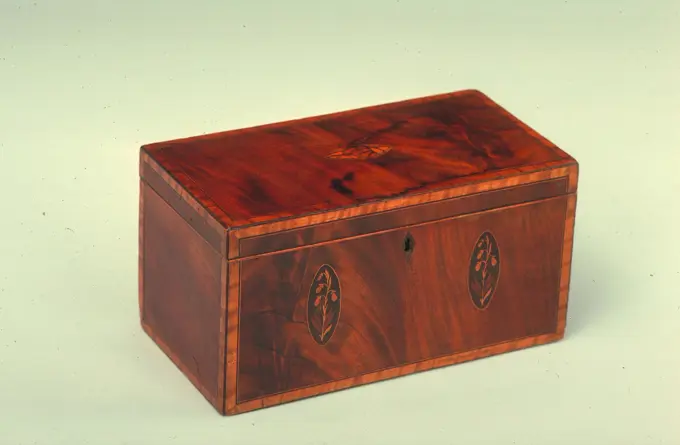
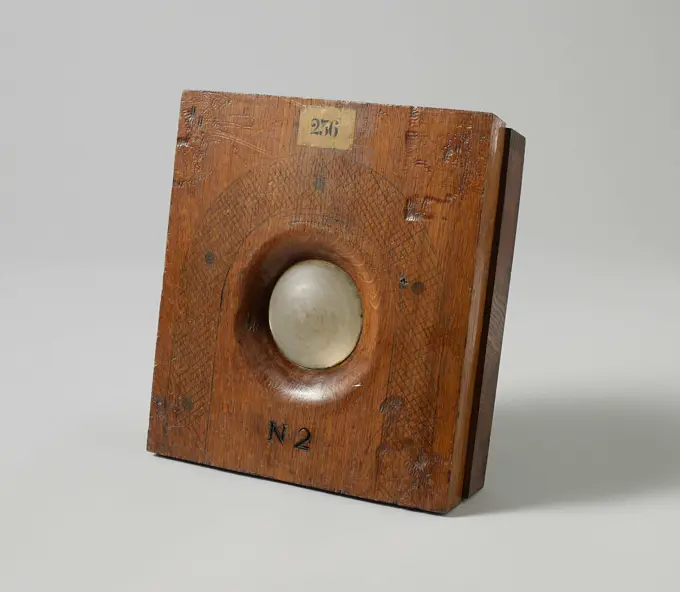
Senet;  Ca 1900 (1898-00-00-1902-00-00);
Senet; Ca 1900 (1898-00-00-1902-00-00);
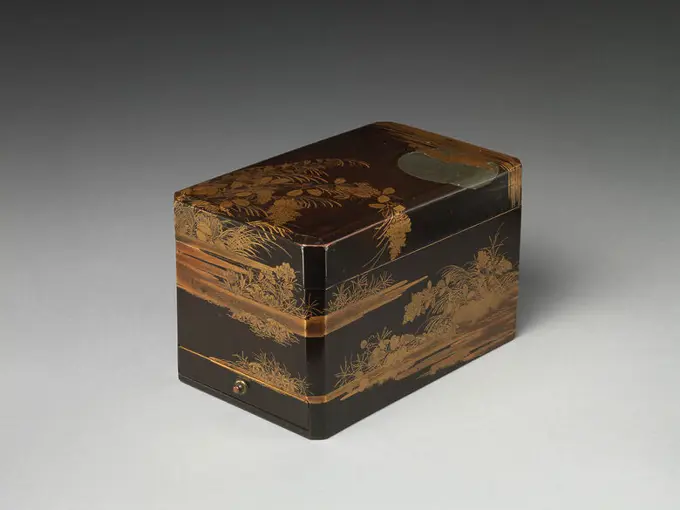
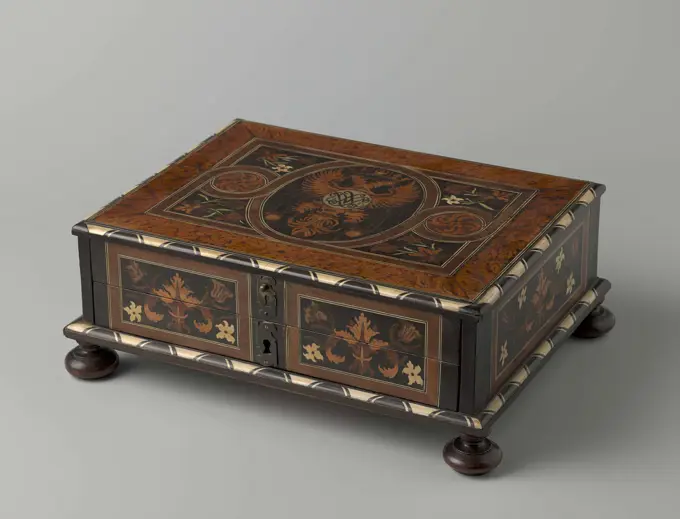
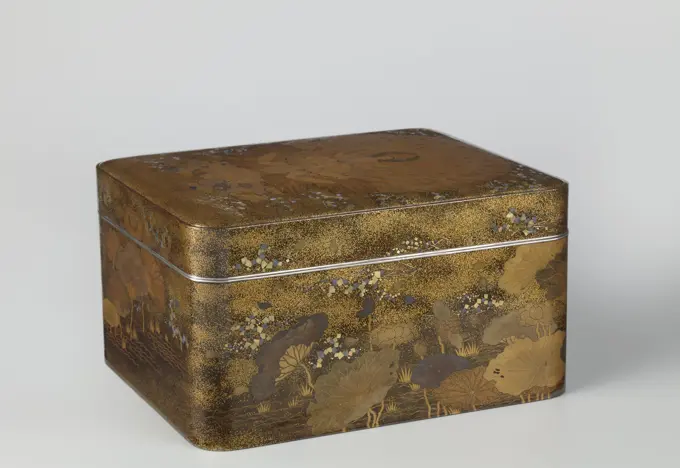
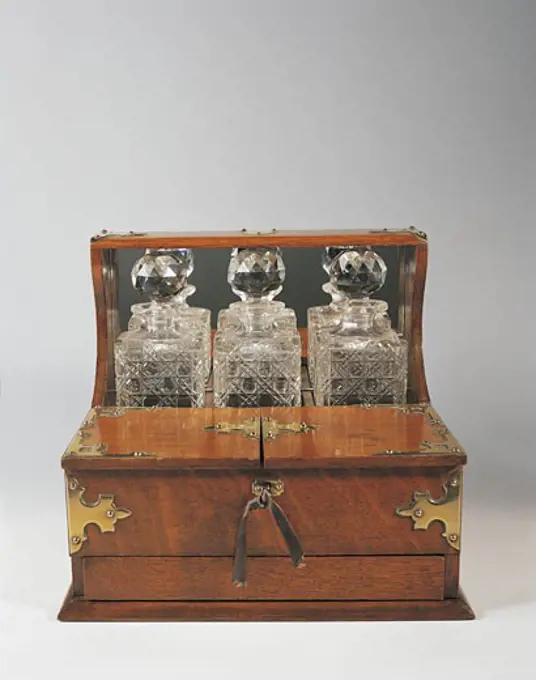
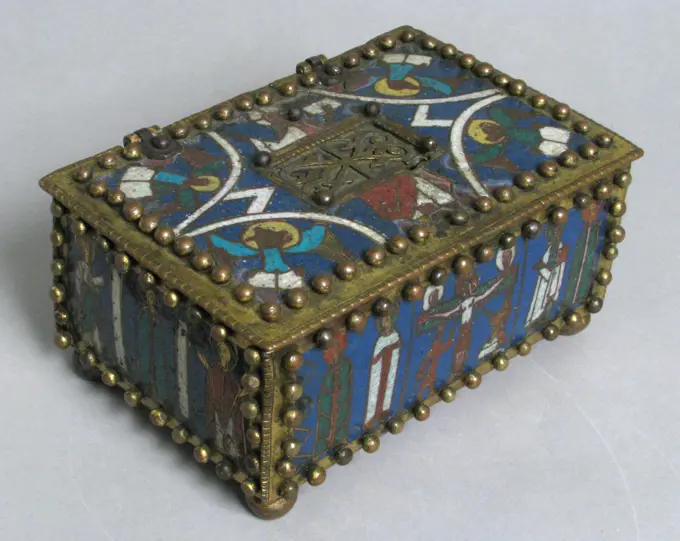
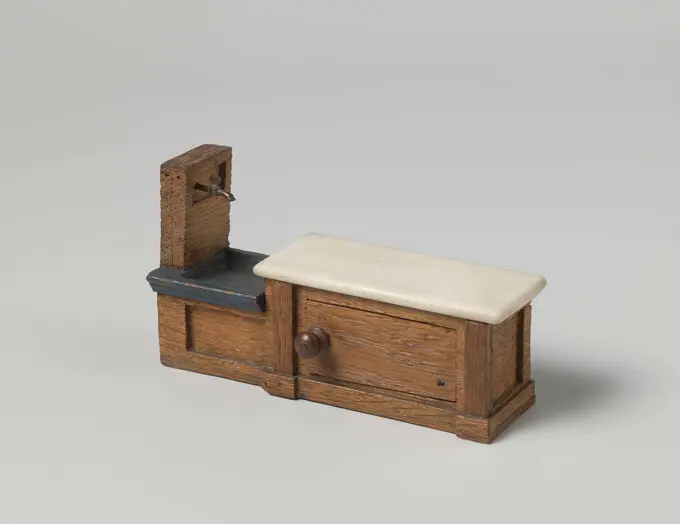
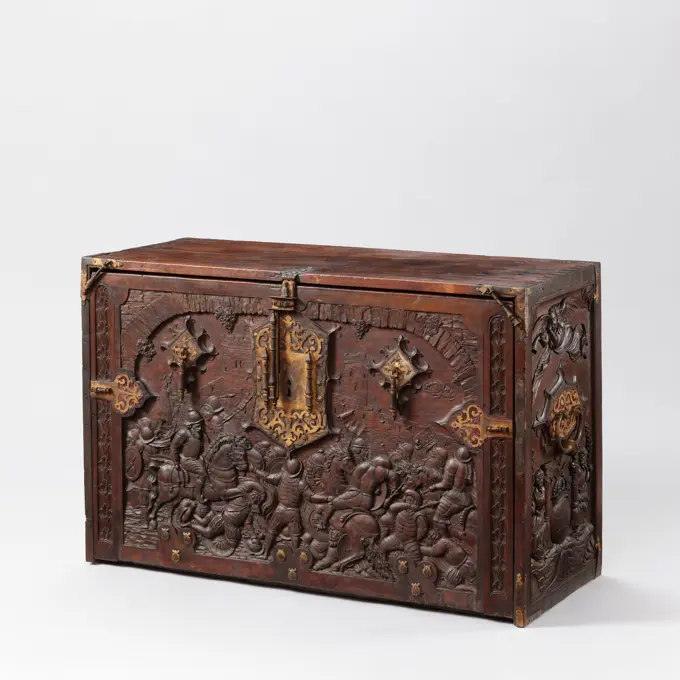
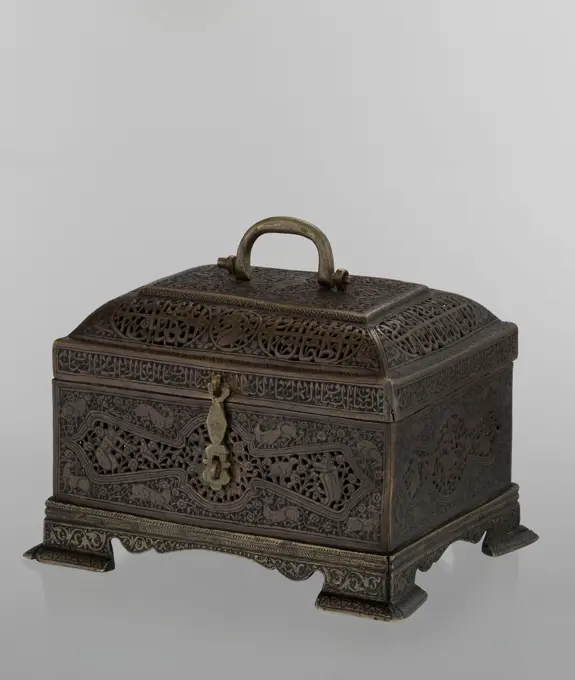
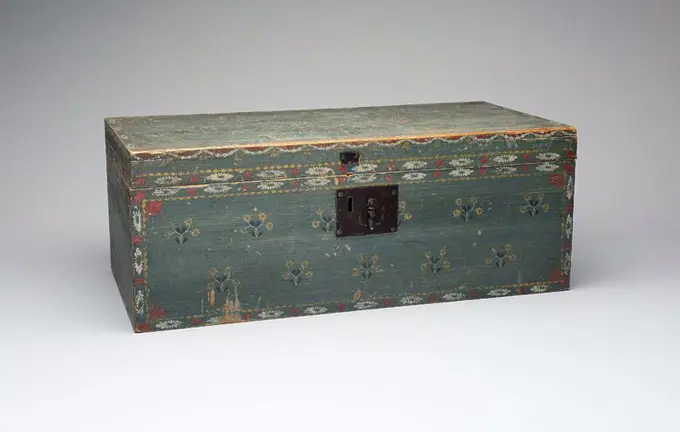
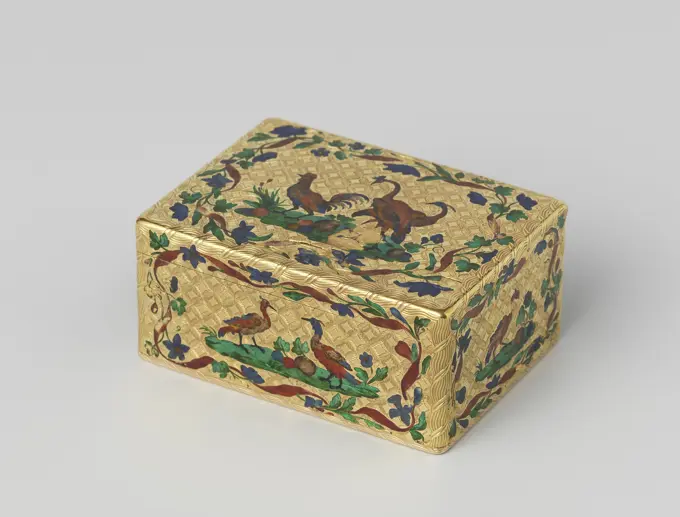
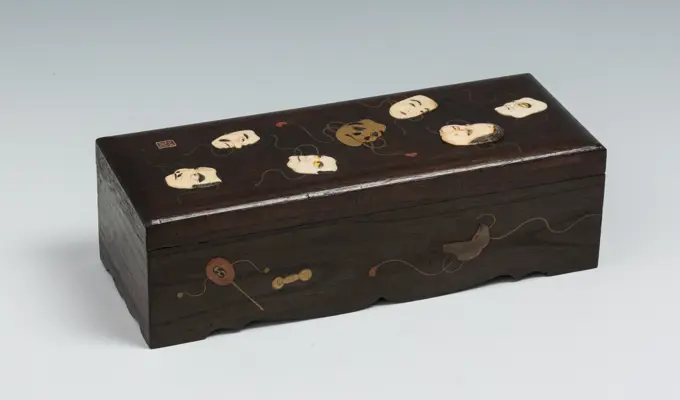
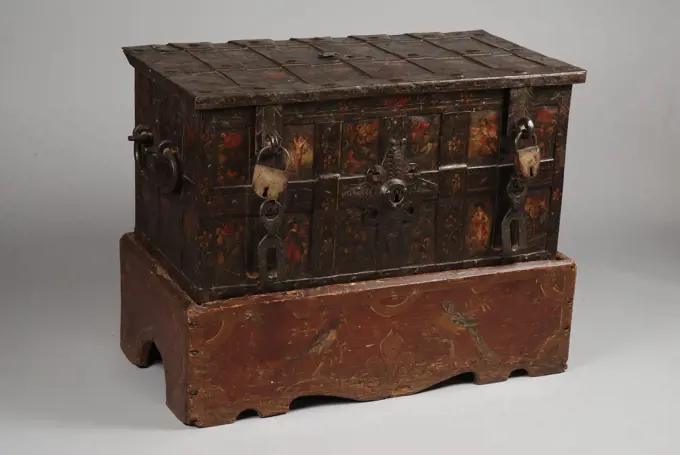
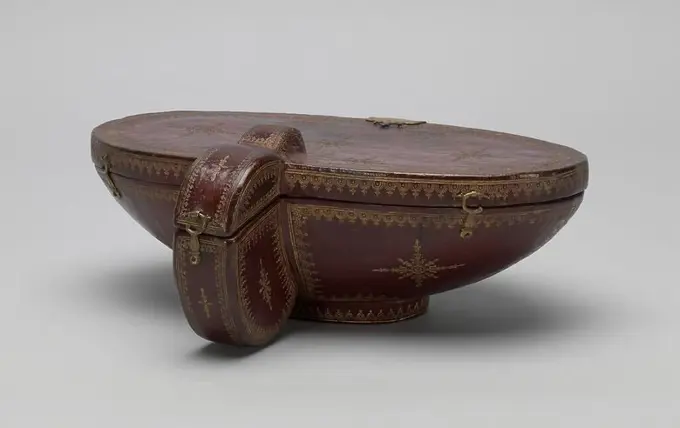
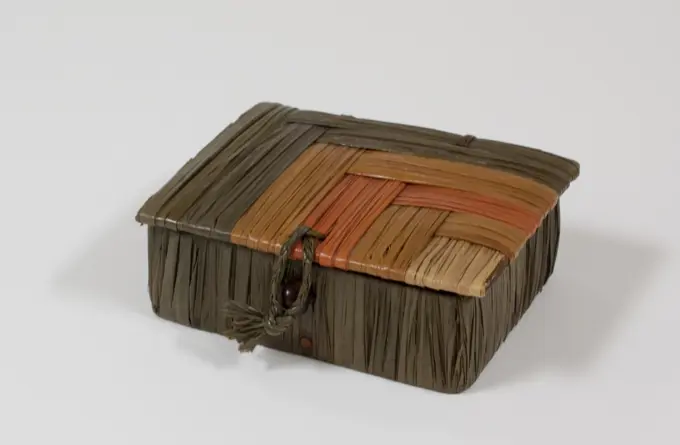
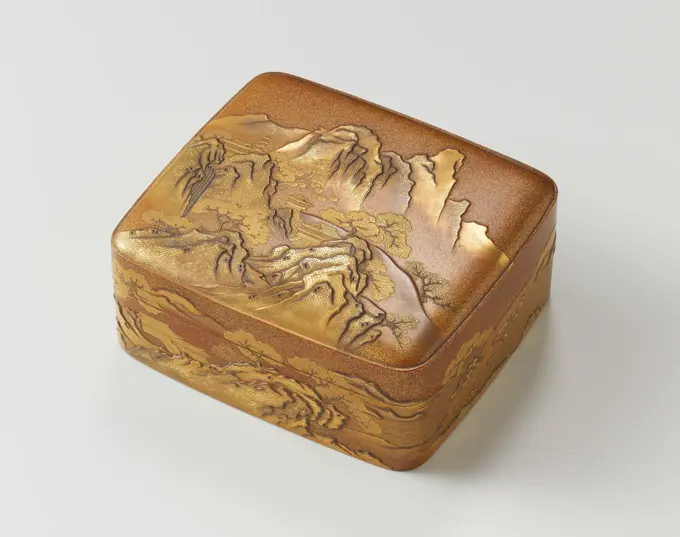
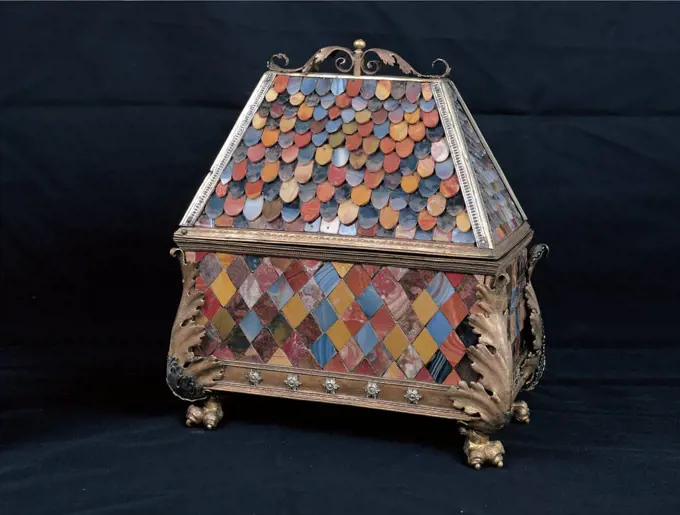
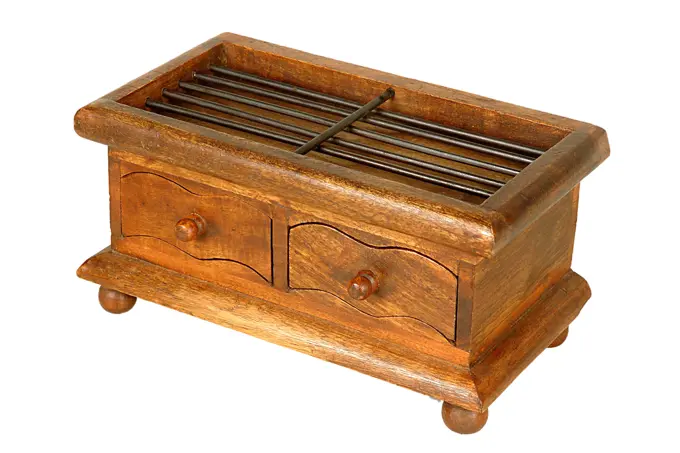
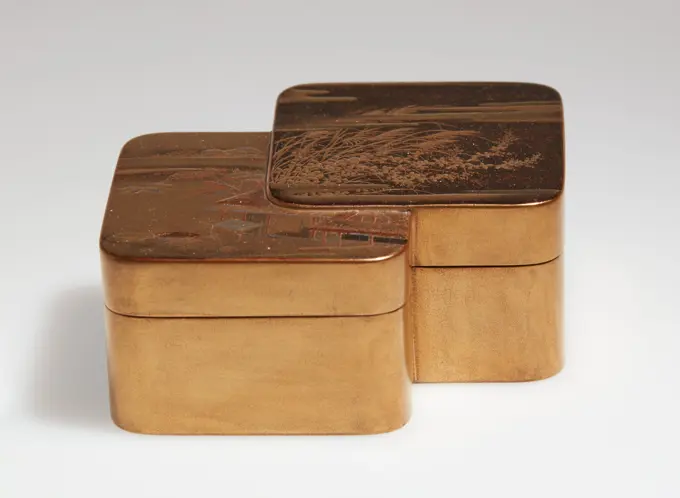
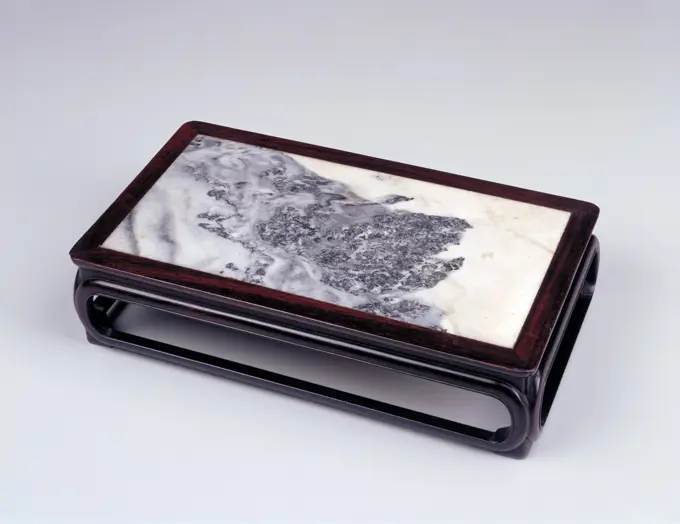
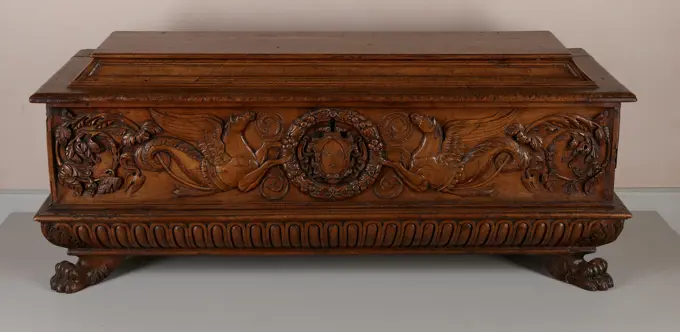
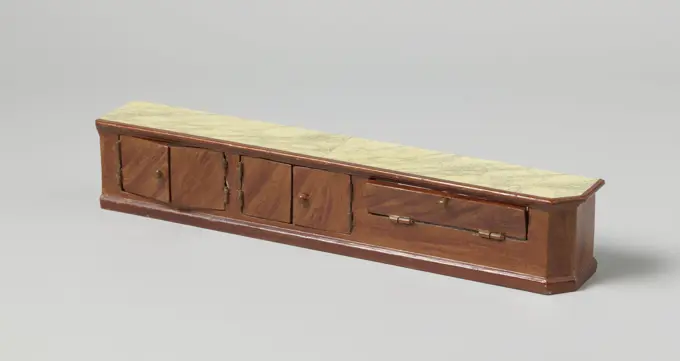
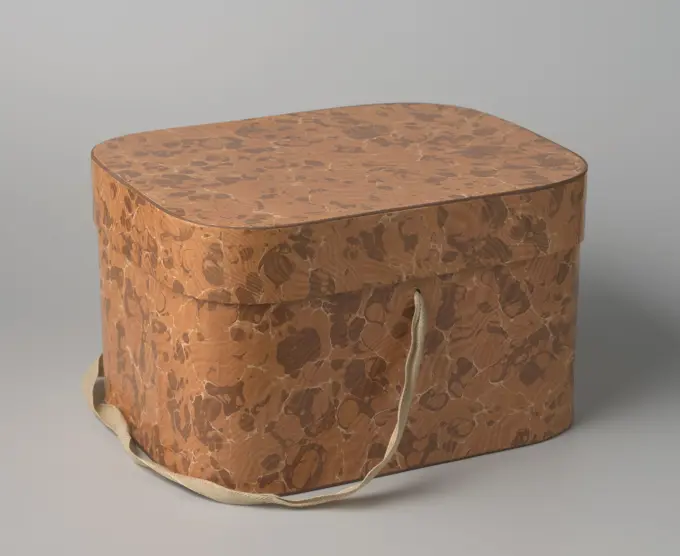
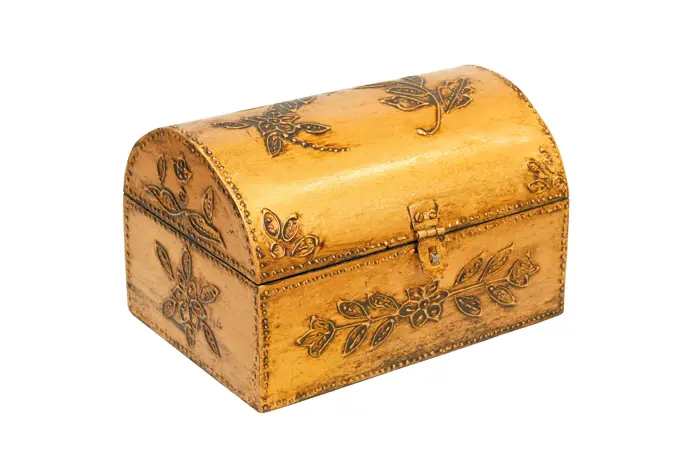
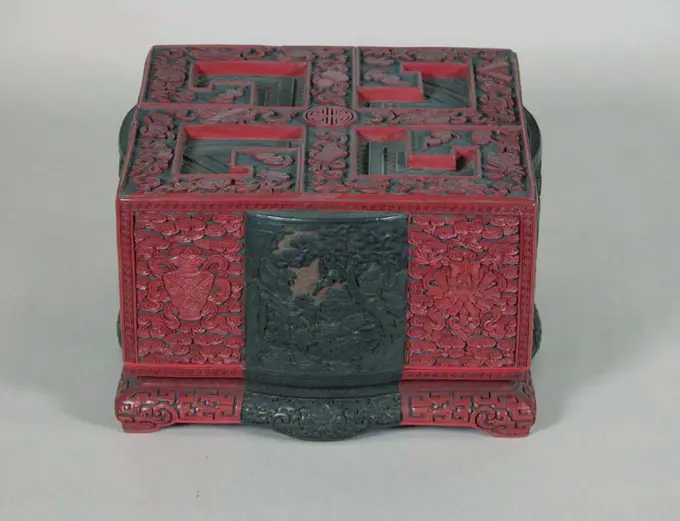
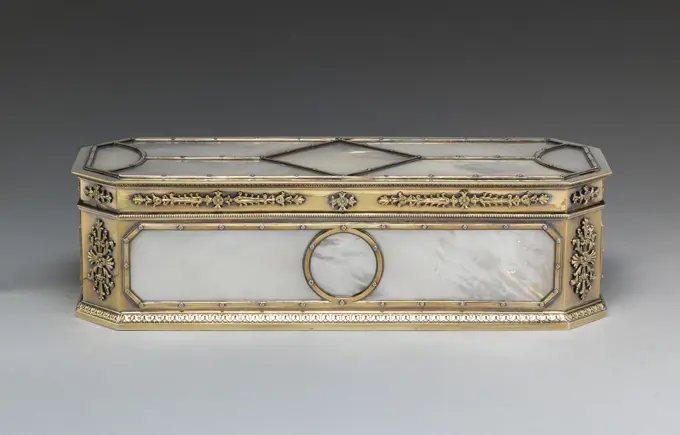
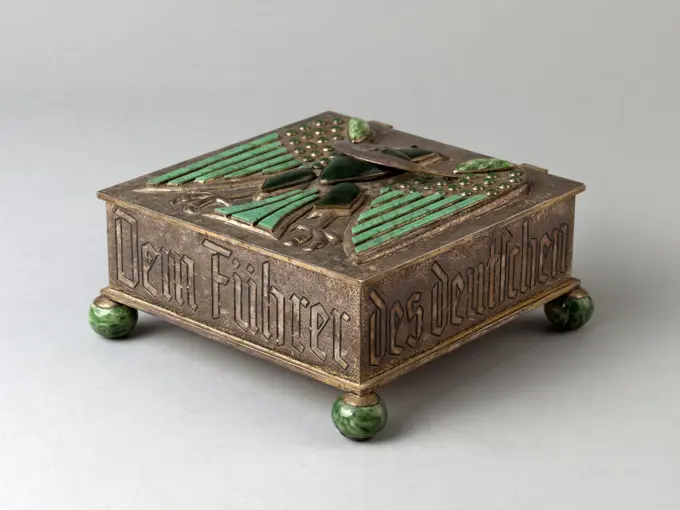
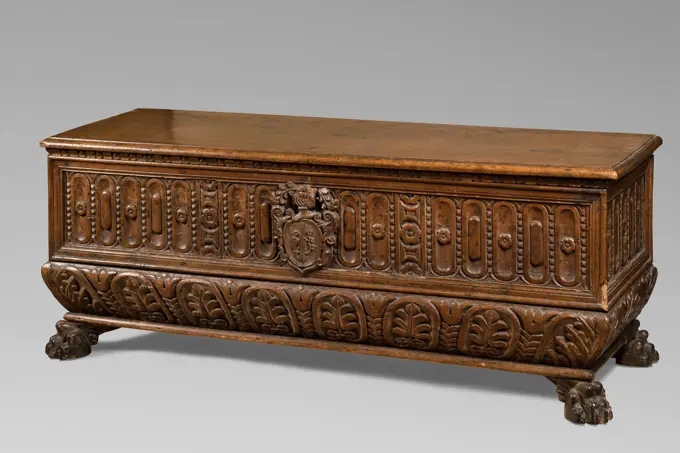
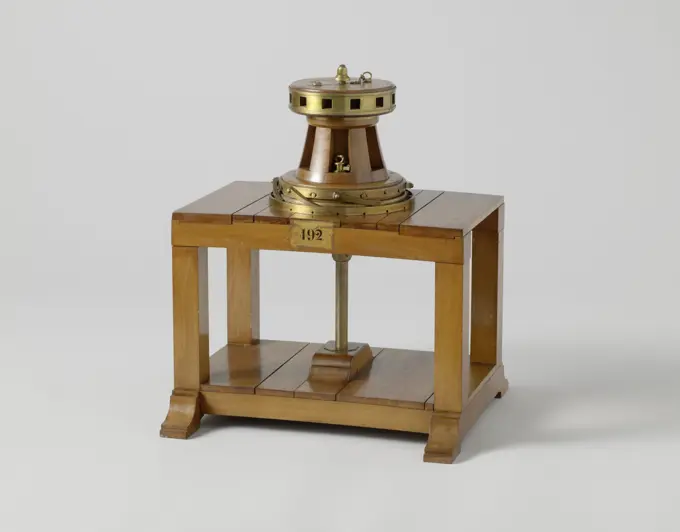
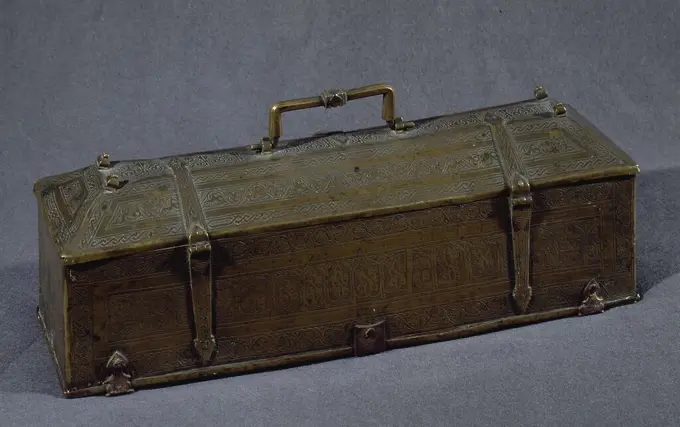
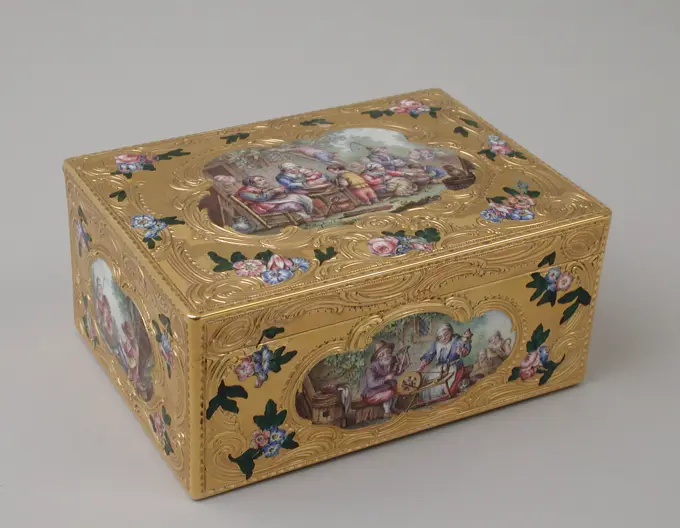
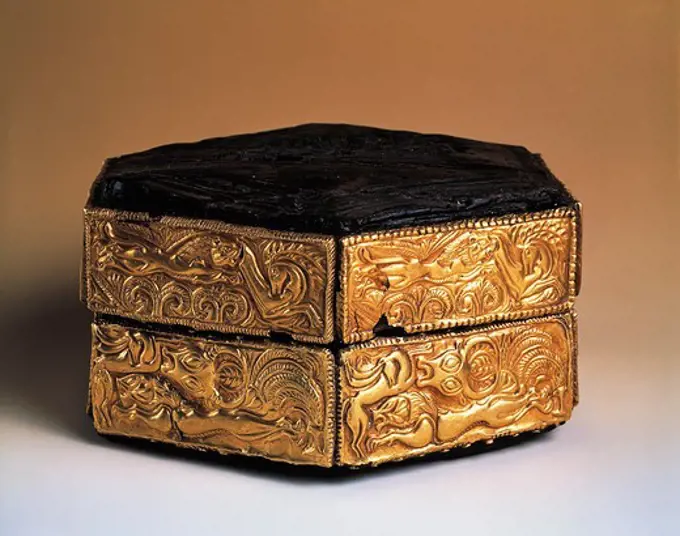
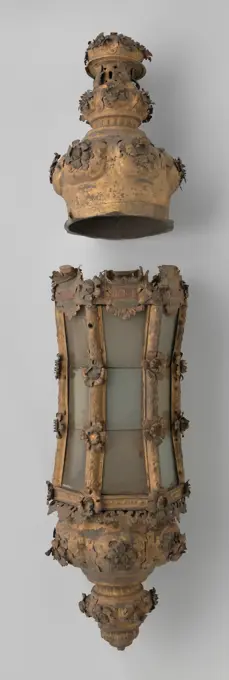
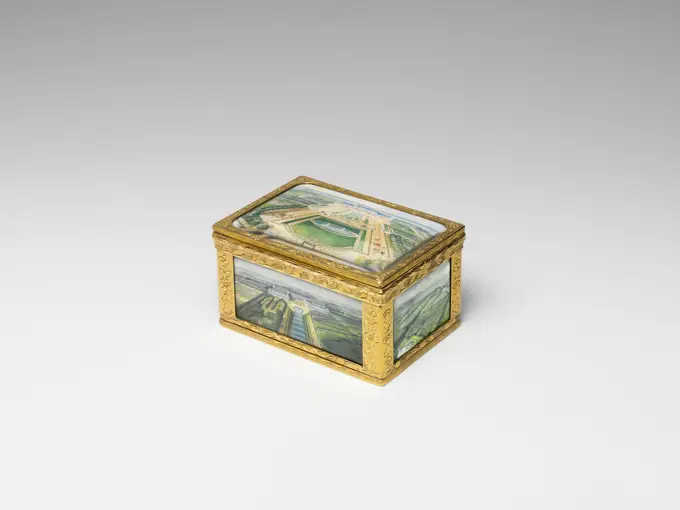
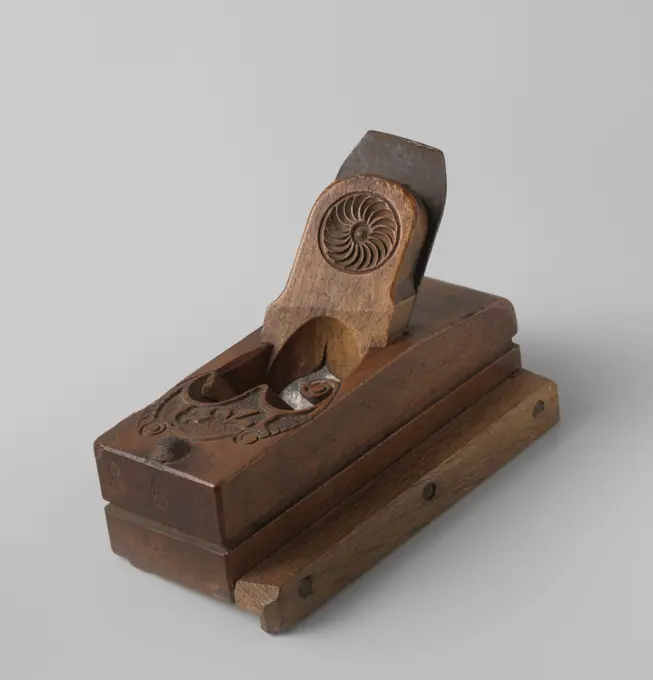
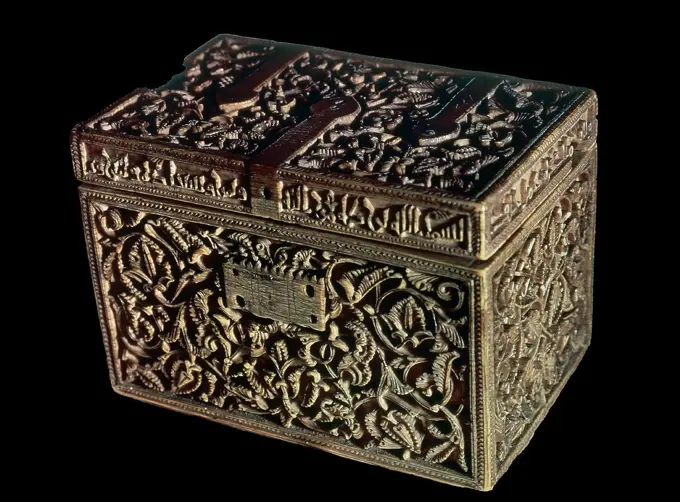
BoxTrunk;  2. PO. 18th century (1773) (1750-00-00-1800-00-00);Nazi chess set. This chess set glorifies Nazi Germanys terratorial ambitions during World War II. The pieces are shaped like weapons. The text in the border lists the countries that Germany had attacked in 1939 and 1940. This set may have been presented in 1941 by SS Commander Heinrich Himmler to Anton Mussert, leader of the NationaalsocialistischeBeweging (NSB), the National Socialist Movement in the Netherlands.Stationery Box with Moon and Autumn Grasses. Culture: Japan. Dimensions: H. 5 3/4 in. (14.6 cm); W. 5 7/8 in. (14.9 cm); L. 9 1/4 in. (23.5 cm). Date: 18th century.The almost indiscernible bits of silver foil and powder that line the edges of the wild grasses, bush clover, and miscanthus are intended to illustrate the reflection of bright moonlight in an autumn field. Also found in China, the custom of holding moon-viewing parties is thought to have begun in Japan during the Heian period (794-1185). In addition to contemplating the harvest moon, offering sake while praying for an abundant harvest and writing poetry were also part of the festivities. Museum: Metropolitan Museum of Art, New York, USA.Casket with marquetics with a double eagle and a monogram on the lid within an oval frame. Coffin of oak, with on the flat lid in Marqueteria of O.A. ebben, mahogany, maple, green stained leg, ivory and brass, inside an oval frame a double eagle and a monogram. The box has a la and rest on the front on twisted ballpaths.Senet;  Ca 1900 (1898-00-00-1902-00-00);BasketPauw -myoo, 1890 - 1900 A rectangular, high box with a lightly bulging lid of paintwork with stake of gold and silver foil and mother-of-pearl, with an image of Kujaku Myoo on the lid, a figure with six arms, two of which are folded in front of the chest and four a bow, two, two Arrowing, holding a Vajra and a trident, sitting on a peacock with spread tail springs that stands on a lottery thrid, surrounded and on the sides of the box of lotus plants in water. The edges of lid and box with a silver border, the inside decorated with Nashiji, on the inside of the lid in Goud Makie the signature 'Shosai' and in red the seal 'Shosai'. In a wooden box with inscription on the lid 'Kujaku Myoo Makie Tebako' and on the side of the lid a paper label with inscription 'Shirayama Shosai'. Tokyo wood (plant material). lacquer (coating). gold (metal). silver (metal). mother of pearl A rectangular, high box with a lightly bulging lid of paintwork with stake of gold and silver foil and mother-of-pearl,Picnic basket with scene from Investiture of the Gods 19th century China The decorative designs on this box attest to the popular taste for the fantastical and the auspicious. Its cover displays an exciting scene from the sixteenth-century mythological novel Investiture of the Gods (Fengshen Yanyi). The fairy at the top left corner sends out magic scissors to cut her enemy; in the story he escapes, but his deer is less fortunate.. Picnic basket with scene from Investiture of the Gods. China. 19th century. Hardwood (zitan) inlaid with mother-of-pearl and soapstone. Qing dynasty (1644-1911). Woodwork. Exterior lid and box decorated with pain and plum trees in silver and gold on a golden fond.Duitse soldier case E.L. Koch, Solingen, c. 1925 - c. 1950  Rectangular brown suitcase with wood handle. A lock on the short side. Solingen kist: wood (plant material). slot: metalBrass design fitting on orange wooden box, Jodhpur, Rajasthan, India Copyright: xSafatxAli/DinodiaxPhotoxCasket, Tooled leather over wood, metal, silk (interior), Casket-shaped box, fitted with iron lock, made of tooled leather over wood; surface design showing Renaissance style masks, and foliated scrolls with bird-like animals, decorated with large curves. Inside lining of brown silk taffeta with embroidery in green and brown silk showing trees, leaves, and architecture., Italy, first half 16th century, containers, Decorative Arts, CasketDough Trough. Dated: c. 1940. Dimensions: overall: 28 x 42.3 cm (11 x 16 5/8 in.) Original IAD Object: 10 1/4" high; 28 1/2" wide. Medium: watercolor and graphite on paper. Museum: National Gallery of Art, Washington DC. Author: M. Rosenshield-von-Paulin.Ink well. Dimensions: H. 4.5 × L 12.2 × D. 5.6 cm (1 3/4 × 4 13/16 × 2 3/16 in.). Dynasty: Dynasty 13-17. Date: ca. 2030-1640 B.C..To make black ink, Egyptians mixed the carbon derived from partially burned organic materials, such as oil or wood, with some sort of binder, probably gum arabic. Red ink was made from hematite, a naturally occurring mineral form of iron oxide. Museum: Metropolitan Museum of Art, New York, USA.Liqueur cellar, anonymous, c. 1800 - c. 1899 Liqueur cellar of mahogany in which seven bottles, one glass and a funnel. With copper handle and lock plate.  wood (plant material). oak (wood). mahogany (wood). velvet (fabric weave). copper (metal) Liqueur cellar of mahogany in which seven bottles, one glass and a funnel. With copper handle and lock plate.  wood (plant material). oak (wood). mahogany (wood). velvet (fabric weave). copper (metal)Close-up of three bottles in a wooden box, EnglandCasket or Portable Altar with the Crucifixion, Standing Saints, and Christ in Majesty with Symbols of the Evangelists ca. 1100-1150 North German or Danish Several related caskets functioned as cross bases with sockets for accommodating a crucifix. This example may have originally served the same purpose, but it was perhaps later adapted as a portable altar.. Casket or Portable Altar with the Crucifixion, Standing Saints, and Christ in Majesty with Symbols of the Evangelists 464383Pump with countertop. An oak fountain or pump with countertop on it: container with two copper faucets with heart-shaped buttons and two holes of booms sink anthracite-colored painted with gutter; Curvisor with outstanding door with round, palm wood button and on top of white, marble top.Kist, 1600 - 1699 Bijouteriekist made of wood with leg. Eight secret drawers  bone (material). paint (coating) Bijouteriekist made of wood with leg. Eight secret drawers  bone (material). paint (coating)Cabinet;  XVII century () (1601-00-00-1700-00-00);old style wooden decorated box isolated on whiteCabinet of ebony with two doors with panels with robber lists. Inside with nine drawers, painted with O.A. Landscapes. Ebony cabinet in miniature with two doors, which exhibit a panel on the inside and exterior with a robber frame, filled on the inside with a painted representation of a mans and a woman's enthusiasm behind Mica. The cabinet contains 9 drawers, which painted landscapes with houses with houses, placed behind Mica within a Robbol list. The top shows an empty panel with a robble list; The sides wear gold-plated handles and the doors each two rosettes and a key plate. Key.Box;  19th century (1801-00-00-1900-00-00);Tobacco box. Tobacco box of brass. With inscriptions: 6 thing that my deer resounded short predicat scen and long worship. Young meat fresh fish a Moije girl and wine at Den Dis. The throat costs a lot.Box. American; New England. Date: 1801-1820. Dimensions: 20.3 × 53.3 × 25.4 cm (8 × 21 × 10 in.). White pine. Origin: New England. Museum: The Chicago Art Institute, Chicago, USA.Box ca. 1760-70 British, South Staffordshire. Box. British, South Staffordshire. ca. 1760-70. Enamel on copper. Enamels-PaintedModel of a Section of an Armored Turret. Semi-model of a fourteen-sided gun dome, on a base board. The outer shell consists of vertical segments, representing armored plates, with a shooting hole at three-quarters height, which becomes wider inwards. The inner wall is made of wood and has a circular inside diameter. Inside the shooting holes can be closed with armored plates, which are slid back and forth between rails. Heavy wooden beams reinforce the top and top of the tower around. The model shows all bolts that run through armored plates and inner wall. Scale 1:10 (Scale by model).Gold snuff box, rectangular, decorated with animals and tendrils in translucid Émail, Jean George, c. 1752 Rectangular golden snuff box, with animals and tendrils in translucid enamel on a Golden Fond engraved with diamond pattern. Paris gold (metal). Rectangular golden snuff box, with animals and tendrils in translucid enamel on a Golden Fond engraved with diamond pattern. Paris gold (metal).Casket of wood. Beaching at 29 magic lantern plates in wooden frame with (five) round glass plates used for magic lantern.CDK unknownCasket;  beginning of the 20th century (1901-00-00-1910-00-00);Jewel casket. Culture: British. Dimensions: Overall (with handle raised, confirmed): 3 15/16 × 4 1/8 × 3 1/4 in. (10 × 10.5 × 8.3 cm). Date: mid-18th century.Elegant nécessaires de poche filled with minute utensils for grooming, writing, or sewing were fashionable during the eighteenth century. Made of gold with hard stones, mother-of-pearl, or tortoiseshell, they were the work of a goldsmith and often served as New Year's presents. Here, an openwork pattern of scrolls, floral garlands, small animals, birds, and dancing musicians in gold is placed on panels of striated agate. The original contents of the nécessaire are missing. Museum: Metropolitan Museum of Art, New York, USA.Brass iron design fitting on antique wooden box, Jodhpur, Rajasthan, India Copyright: xSafatxAli/DinodiaxPhotoxPainted wrought iron Nuremberg chest, archive case casket cabinet furniture furniture interior fittings iron paint, Iron box with outside band iron fastened with rivets; two large handles on both sides turned halfway; two transfer wackets at the front which can be pushed over the protruding staples but which now hang downwards; to the two staples are two closed padlocks attached with half oval disc-shaped lock cases with locking wackets On the front star-shaped fake key plate of driven iron for decoration. Lid can be opened with the help of key that is inserted into the keyhole, placed centrally on the lid and over which round keyhole protector can be slid. On the inside lid rectangular removable openwork and engraved cover plate with two square similar images next to each other. On each stand four interwoven mythical creatures ( kind of cross between dolphin and dragon) with above them winged man with goatee and mustache and turned cross on his clothes (the outpouring of the holy spirAnonymous / 'Case for tazza with a handle in the form of a serpent'. XVI century. Leather, Wood, Cloth. Museum: Museo del Prado, Madrid, España.Raffia Box, early 1900. Early 20th century. Raffia; overall: 3.2 x 8.7 x 6.8 cm (1 1/4 x 3 7/16 x 2 11/16 in.).Inlaid Box for the Portuguese Market. Dimensions: H. 3 1/4 in. (8.3 cm)W. 13 1/2 in. (34.3 cm)D. 5 11/16 in. (14.5 cm)Wt. 40.2 oz. (1139.8 g). Date: ca.1600.From the late sixteenth century onward, Mughal India actively exported goods to Europe, particularly to Portugal, where such inlaid work was treasured. While many Europeanizing elements are evident in the decoration of this box, the hunting scenes were originally inspired by Persian compositions, which had in turn become popular in Mughal painting. The undulating branches of the bird-filled trees against which the European hunters and animals have been set make this one of the most expressive pieces of its type. Museum: Metropolitan Museum of Art, New York, USA.Shawabty Box of Ditamenpaankh (cover), 715-656 BC. Egypt, Late Period, Dynasty 25. Painted wood; overall: 29.7 x 15.4 cm (11 11/16 x 6 1/16 in.). High demand for shawabtys in the Late Period, a time when as many as 400 or more shawabtys were placed in the tomb with the deceased, gave rise to a specialized container for storing them: the shawabty box. This example is inscribed for the lady of the house, Ditamenpaankh, and was probably one of a pair originally made for her. The single-masted boat on the boxs lid is perhaps an allusion to the pilgrimage of the deceased to the holy city of Abydos, the cult city of Osiris, king of the dead. The shawabtys inside are crude, mass-produced examples cast in an open mold. Made of terracotta, their blue paint imitates more costly shawabtys made of faience. As for the shawabty spell, it has been removed from its traditional location on the shawabtys front and relocated onto the sides of box, where it needed only to be written once, thus expeditiMiniaturechestSmall chest of the hares. 11th -12th c. Made with larch and aloe wood and bone figures. Romanesque art. Furniture. SPAIN. MADRID (AUTONOMOUS COMMUNITY). Madrid. National Museum of Archaeology. Proc: SPAIN. CASTILE AND LEON. LeÑn. Royal Collegiate Church of San Isidoro.Table clock 17th century Clockmaker: Johann Heinrich Kleinschmidt. Table clock. German. 17th century. Brass, silver. HorologyBox with Lid. Culture: Moche (Loma Negra). Dimensions: H. 2 15/16 x W. 4 5/16 in. (7.5 x 11 cm). Date: A.D. 390-450. Museum: Metropolitan Museum of Art, New York, USA.. Rectangular box. Lid and sides with landscapes decorated in gold.Red-Lacquered Reading Table. Korea, Joseon dynasty (1392-1910), 19th century. Furnishings; Furniture. Carved wood with red lacquer and brass fittingsSuitcase of black wood with history of Joseph, Anonymous, c. 1599 - c. 1624 Black wood suitcase, decorated with Niello's, representing the history of Joseph.  wood (plant material). oak (wood). ebony (wood). glass Niello (technique) Black wood suitcase, decorated with Niello's, representing the history of Joseph.  wood (plant material). oak (wood). ebony (wood). glass Niello (technique)Stew. .Furniture by Michel Dufet 1888-1985. French architect and designer. He is most known for designing furniture and decorating luxury yachts and cruise shipsCasket (possibly Netherlands); wood, rose wood, ivory, and brass1 Schepel from Culemborg, Anonymous, 1799  Spans and iron content measure for dry goods (grain, salt, lime) with bridge and style of 1 scoop, v.z.v. Stamps and labels. Culemborg wood (plant material). iron (metal)   CulemborgIvory box with silver batter. Completely covered with symmetrical sculpture, anonymous, 1600 - 1699 Ivory box with silver. It has a bulb lid and a drawer and is completely covered with symmetrical sculpture, which reflects a proliferating tropical vegetation of winding flower vines. Colonial. Indonesia (possibly) ivory. silver (metal) Ivory box with silver. It has a bulb lid and a drawer and is completely covered with symmetrical sculpture, which reflects a proliferating tropical vegetation of winding flower vines. Colonial. Indonesia (possibly) ivory. silver (metal)Reliquary Casket, by Florence workmanship, 15th Century, gilded and engraved silver, semi, precious stones. Italy: Tuscany: Florence: Opera di Santa Maria del Fiore Museum. Whole artwork. Reliquary colors tesserae tasselsIron rods fitting on antique wooden box, Jodhpur, Rajasthan, India Copyright: xSafatxAli/DinodiaxPhotoxIncense box, late 18th century, Unknown, 1 3/16 × 2 3/4 × 2 7/16 in. (3.02 × 6.99 × 6.19 cm), Lacquer on wood, Japan, 18th centuryRectangular stand, 18th century, 3 1/4 x 13 1/2 x 7 5/8 in. (8.26 x 34.29 x 19.37 cm), Wood, marble, China, 18th centuryCassone (chest), 16th century, 29 x 71 1/2 x 29 1/4 in. (73.66 x 181.61 x 74.3 cm), Walnut, Italy, 16th centuryFins with two cupboards and a marbled leaf, anonymous, c. 1750 Folder of painted oak, the leaf marbled as a kitchen floor and the rest gehout as frames, chimney cap and pump. In the countertop two cupboards with double, doors in which a shelf and a wide compartment with downing valve (peat bin) Amsterdam oak (wood) Folder of painted oak, the leaf marbled as a kitchen floor and the rest gehout as frames, chimney cap and pump. In the countertop two cupboards with double, doors in which a shelf and a wide compartment with downing valve (peat bin) Amsterdam oak (wood)Cabinet. Culture: American. Dimensions: 76 7/8 x 60 x 12 in. (195.3 x 152.4 x 30.5 cm). Maker: Herter Brothers (German, active New York, 1864-1906). Date: 1879-82.William H. Vanderbilt, son of Cornelius "Commodore" Vanderbilt, inherited a vast fortune and a lucrative transport business, which he expanded exponentially, becoming one of the wealthiest men in America. In 1879, to mark his elevated social and economic status, he built a mansion that spanned an entire city block on Fifth Avenue, between Fifty-First and Fifty-Second Streets. He commissioned Herter Brothers, one of the premier cabinetmaking firms in New York City, to decorate and furnish his home. In devising distinct decorative schemes for each room of the mansion, Herter Brothers drew inspiration from a wide range of historical styles and utilized expensive, exotic materials.Adjacent to the drawing room was the Japanese parlor. Evocative of Asian designs, the ceiling was sheathed in golden bamboo set between red lacquer bGoldsmith's art, Italy, 16th century. Rock crystal and enamelled silver-gilt coffer, panels engraved with scenes from Christ's Passion, commissioned by Pope Clement VII to Valerio Belli, 1532.Japanese lacquer cabinet.Model of the Fore Part of A 32-Gun Floating Battery, Rijkswerf Vlissingen, 1859 scale model. half model. construction model Diameter of the fore ship of a floating battery of pre -steven over the length of five ports, demonstrating the construction of the plane. Two parts of the bottom surface can be removed, making the floor beams and the connections with the trusses visible. Scale 1:50 (scale on model). model maker: Flushingafter design by: Netherlands wood (plant material). brass (alloy)Frances Lichten, Pa German Chest, c 1936 Pa. German ChestLessar of oak. Lessar of oak. The top and bottom are braco-shaped and decorated with carving.Portlight. Around patent glass in a wooden porthole. The glass has accumulated the convex matt side and is blinded in the wood so that it doesn't stick; The edge of the glass is clamped between the two layers of wood. A layer of cardboard is applied between the layers of wood. Outer head shows a horseshap-shaped batter with scratches.Writing Box with Warbler in Plum Tree 18th century Japan The writing box contains only a water dropper. The lid is embellished with a flowering plum tree and a warbler singing among the branches. The first song of the warbler is the harbinger of spring and, as an auspicious motif symbolizing a new beginning, is often featured in classical literature. (It is the main theme of chapter 23 of The Tale of Genji, centered on an exchange of New Years greetings.) The inside of the box is decorated with a frog among fallen plum blossoms and four characters that refer to the murmur of the river (see ill.). The frog is also associated with spring. In the kana preface of the Kokin wakashū by Ki no Tsurayuki, there is an often cited sentence: “The song of the warbler among the blossoms, the voice of the frog dwelling in the water—these teach us that every living creature sings.”. Writing Box with Warbler in Plum Tree 44875Cardboard hat box, rectangular with rounded corners and covered with marbled paper in light and dark brown, anonymous, c. 1900 Cardboard hat box, rectangular with rounded corners and covered with marbled paper in light and dark brown. The inside is covered with blue paper. With linen carrying tape. Netherlands Cardboard. upholstery: paper. Lint: Linen (Material) marbled paper Cardboard hat box, rectangular with rounded corners and covered with marbled paper in light and dark brown. The inside is covered with blue paper. With linen carrying tape. Netherlands Cardboard. upholstery: paper. Lint: Linen (Material) marbled paperBox of stab by J.R. Thorbecke, c. 1850 box Box of two -hand stab belonging to the office of J.R. Thorbecke as Minister of the Interior. Netherlands cardboard. rope. textile materialsCasket isolated Casket with oval cover isolated including clipping path Copyright: xZoonar.com/Baloncicix 14240916Box 18th century China. Box. China. 18th century. Lacquer. Qing dynasty (1644-1911). LacquerSeBox, anonymous, c. 1500 - c. 1700 Lacquer box with lid, inlaid with mother -of -pearl floral motifs. Korea wood (plant material). lacquer (coating). mother of pearl Lacquer box with lid, inlaid with mother -of -pearl floral motifs. Korea wood (plant material). lacquer (coating). mother of pearlRectangular box 1887-1911 André Aucoc A member of a Parisian family of gold- and silversmiths, André Aucoc often worked in an eighteenth-century style and also dealt in antique silver. These boxes are part of a dressing-table set that also comprises a mirror and stand, a pair of candelabra, two glove trays, and two pincushions.. Rectangular box. French (Paris). 1887-1911. Silver gilt, mother-of-pearl. Metalwork-Silver"Travel camera for daguerreotype, anonymous maker, wooden body, dimensions 7 x 8.5 cm, around 1840, used for early photographic processes."1 Schepel from Amersfoort. Chain chain with iron fittings for dry ones of 1 scoop with bridge and style, v.z.v. Labels.Snuffbox with mythological scenes. unknown, authorModel of The Construction of the Screw Aperture for a Twin Screw Steamer. Model of a part of the stern of a wooden ship (starboard side), on a base board. The model shows the keel, the trusses with sents and a part of the weathering and the propeller shaft. The trusses just before and just behind the propeller shaft gasket are different from form, to let the axle run through. The gasket is in a thick wooden block, reinforced on the outside with a toothed metal plate and on the inside with a cross-landscaped bar and metal knee.War 1939-1945. Silesia eagle box, offered to Adolf Hitler by the golden guild. General Leclerc Museum of Hauteclocque and the Liberation of Paris, Jean Moulin Museum. 75314-10 Eagle de Silesie, box, gift, box, military decoration, freikorps, war 1939-1945 39-45, IIIeme 3e III 3e Reich, insurrection of Silesie, object, goldsmith, republic of Weimar, Second World War, Symbol, Troisieme Reich, NaziModel of a 30-Pounder Carronade on Deck, Rijkswerf Amsterdam (possibly), c. 1825 demonstration model Model of a carronade of 30 pounds on a canal on a ship's part, incomplete. The wooden loop is 14 cm long and not drilled. It has an Eleveers screw through the grape. The upper slide has a light trape-shaped body with brass batter and rings, the front and back are completed. Against the back the baking tub in brass batter and on top of the track in front of the Eleveers screw, at the front the ears with tapas and the vertebral bolt walking in the slit of the submerged. The submerged is a wooden window, rounded at the front, partially fitted with brass and equipped with two bolts. At the back the deducted and a little has been completed. In the middle and rear the window is supported by bobbins with wheels: the wheels in the middle walk in the longitudinal direction; The wheels behind are radial with their axes in relation to the pivot bolt. The ship's part has two different gates: one haGold Larnax coffin containing bones of Philip II of Macedonia, from treasures of royal room in Philip II's tomb, VerginaChest. unknown, creatorModel of A Capstan, Rijkswerf Vlissingen, 1819 demonstration model Model of a capstan in a wooden frame that represents two decks. The Cape Storge is for twelve wind trees and has eight places in the heel against the decline. The metal king continues into a track on the lower deck. This Cape Storer has two speeds, which are obtained by letting or lifting the piles in the head and in the heel; The Raderwerk, consisting of sun-and-plan trailer, is placed under the upper deck between the beams of the fishing. Scale 1:10. model maker: Flushingafter design by: United Kingdom wood (plant material). brass (alloy). iron (metal)Casket with gold leather covered with ave Maria Gra in the lid. Coffin, rectangular, of wood, completely covered with gold leather; The lid on the sides descending. The decoration consists of, in the thin parchment of the cladding cut figures and inscriptions. On the lid a banderole with Ave Maria Gr, otherwise two rows of naked children between vines. On the edge of the lid on the front: single text rules interspersed with heart shapes. On the upright sides of the coffin of the front a men's head and three naked children with a nap and cladding between vines; At the rear of naked children at vintage, right Hercules struggling with Anteus as Have figures, left naked children at wine presses. All figures in gold on blue ground with ornaments in red and green. Rosettes, characters, chessboard and rhombus patterns in red, green and gold.CAJA HISPANOMUSULMANA DE AZOFAR - SIGLO XIII - 56x10x12 cm. Location: MUSEO ARQUEOLOGICO NACIONAL-COLECCION. MADRID. SPAIN.Snuffbox 1757-58 Barnabé Sageret In eighteenth-century Europe, Paris led the production of high-quality luxury goods. Parisian goldsmiths made a wide range of small, personal articles such as snuffboxes; étuis to hold sealing wax, tweezers, or utensils for sewing; souvenirs, which contained thin ivory tablets for note taking; and shuttles for knotting lace. Gold snuffboxes and boxes decorated with portrait miniatures were prized and frequently given as royal gifts, often to ambassadors or members of the court in lieu of cash payments for their services. Coveted and admired, these boxes were produced from a variety of materials. The best were skillfully made of gold and embellished with diamonds, enameled decoration, lacquer, and other luxurious materials. By the middle of the century, the taking of snuff had become an entrenched social ritual, and the snuffbox, too, had become an important social prop. Snuffboxes were considered highly fashionable accessories, with some merchants adverHexagonal box with gold panels decorated with vegetable and animal motifs, from Mycenae, GreeceLantaarn met wapens boven de ruiten.A lantern, for use in processions (). The lantern consists of a six-sided middle part, formed from slightly in curved styles, a dome-shaped roof consisting of different sections, a soil reversed equal to the roof, but without the last articulation. Weapons are applied above the windows. The lamp is decorated with rosettes. From the collection of Dr. F. Mannheimer.Coffer. Culture: Flemish or Dutch. Dimensions: Overall: 7 3/8 × 10 5/8 × 6 7/16 in. (18.7 × 27 × 16.4 cm). Date: 1613.The coffer was probably intended to contain a dowry. Scenes of the front and back depict hunts for wild boar and bear; the figures on the sides are from classical mythology. Museum: Metropolitan Museum of Art, New York, USA.Snuffbox with views at the chteau of Chanteloup 1748/49, miniatures 1767 Possibly by Pierre-François Delafons The miniatures that decorate this box lend it unusual importance and interest. The six scenes, which are painted in gouache on vellum, depict views of the Chteau de Chanteloup and of the gardens that surrounded it. The miniature on the lid, which provides the primary view of the chteau, is signed "Van Blarenberghe 1767." Three members of the Van Blarenberghe family painted miniatures, but these views of Chanteloup are attributed to Louis-Nicolas, considered the most talented of the three. His skills as a miniaturist were exceptional, and the small body of his work that survives provides an extraordinary record of various aspects of French life in the second half of the eighteenth century.Chanteloup was owned by Étienne-François de Choiseul-Stainville, duc de Choiseul (1719-1785). As a principal governmental minister to Louis XV, and supported by the kings mistress, Madame dOuter coffin of Senebtisi ca. 1850-1775 B.C. Middle Kingdom. Outer coffin of Senebtisi 544325Model or a skylight. Model of a cuckoo on a standard. The upper part is square with flat roof and three windows on each side. It can be left up and down by beating the edges of the hatch head, which rotate with hinges; The cuckoo is based on these edges when it is established, and hangs on it with its eaves when it is lowered.blackboard used for advertisement advertisingBlack-lacquered Box with Auspicious Design. Korea, Joseon (1392-1910), 19th century. Furnishings; Accessories. Black lacquer on wood core with mother-of-pearl inlay and metal fittingsCasket late 15th or early 16th century Italian, Florence This sarcophagus-shaped casket may have been made to contain a relic.. Casket. Italian, Florence. late 15th or early 16th century. Gold. Metalwork-Gold and PlatinumSponning slicer with carving and year 1751, Anonymous, 1751 Sponning slicer with carving and year 1751. furnished as a bossing plane. Netherlands wood (plant material). iron (metal). oak (wood). beech (wood) Sponning slicer with carving and year 1751. furnished as a bossing plane. Netherlands wood (plant material). iron (metal). oak (wood). beech (wood)Chinese (culture), gift (provenance), oak (motif), plant motifs, Chinese art, export productsBox.   Maker: M. B., Chinese, active ca. 1840-50Two Models of Filtering Machines, anonymous, 1800 - 1858 filtering machine. demonstration model Two identical models of a filtering machine for purifying drinking water, brown painted. The design consists of a flat, square container on a narrow side. Inside a pipeline system is laid: a thick pipe with a narrow branch runs from above diagonally downwards, where a narrow horizontally running tube connects that has an outlet in the side; On the other hand, a narrow vertical pipe with an open end is running at the bottom slightly above the bottom, where there is a ramp in the side and above it a small compartment where the pipe ends up and is finished with a basket. Netherlands (possibly) tin plate. brass (alloy)Casket Containing a Sugar Box and two Tea Caddies 1755-1765 Birmingham. Glass, metal mounts, enameled copper .ARQUETA DE MARFIL DE FITERO - HISPANOARABE - CALIFAL - REALIZADA EN EL AÑO 966. Author: CULTURA DE HALAF. Location: MUSEO DE NAVARRA. Pamplona. NAVARRA. SPAIN.Azimuth Compass with Tripod, W. & T. Gilbert, c. 1810 - c. 1858 compass. compass card Azimut compass in a wooden box. The compass has a fixed level device. The ocular of this consists of a prismatic visor to read the rose, combined with a crack-vizier with a black and green blackout glass; The wire vizier on the other side is equipped with a tilting black mirror. The boiler is weighted with a lead weight at the bottom. With two mechanics in the boiler, the rose can be secured: one is a lever with a ring around the pen that lifts the rose of the pen; The other is a spring that is pushed against the edge of the rose. The compass has two green compass roses, printed on green paper, one of which is mounted in the Azimut compass. The second compass rose is stored in a separate wooden box that offers space for two compass roses under two metal clamps so that the magnetic poles are aimed so that the magnetic properties are optimally stored. The compass rose in the box has a metal edge on whic