Ornate Textile Artifacts

Vividly colored chasubles and decorative textiles, featuring intricate patterns and historical designs, representing traditional craftsmanship from various cultures.
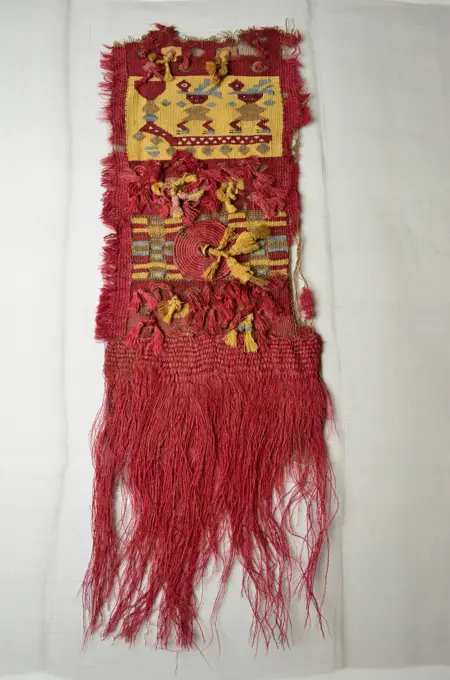
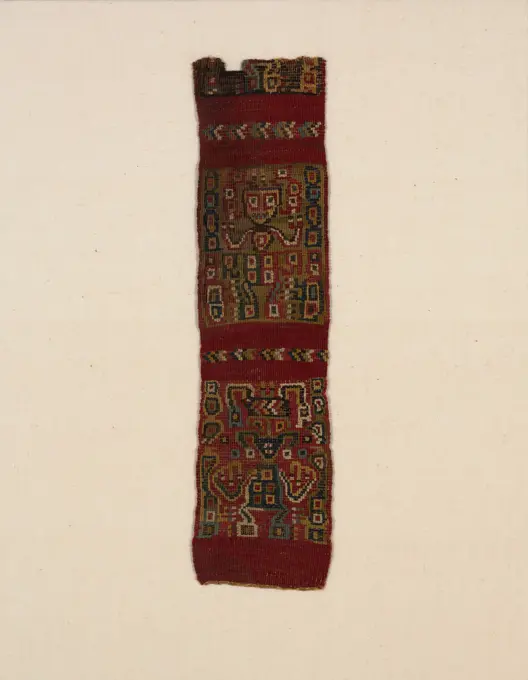
Turban-end Panels 12th-15th century Chimú. Turban-end Panels 312795
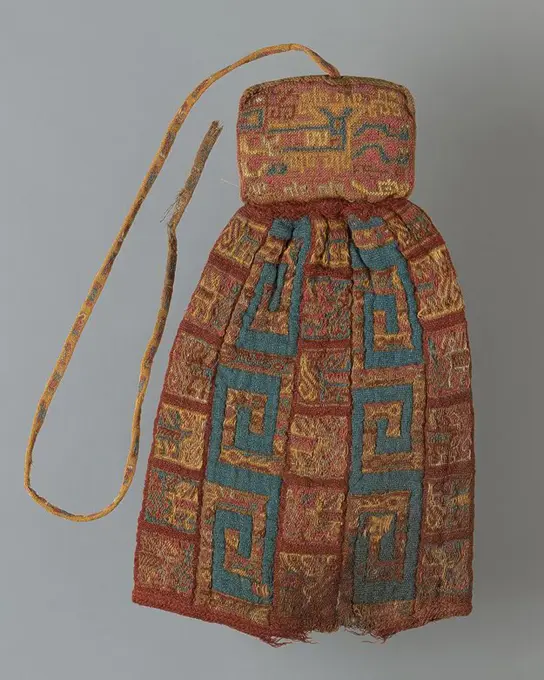
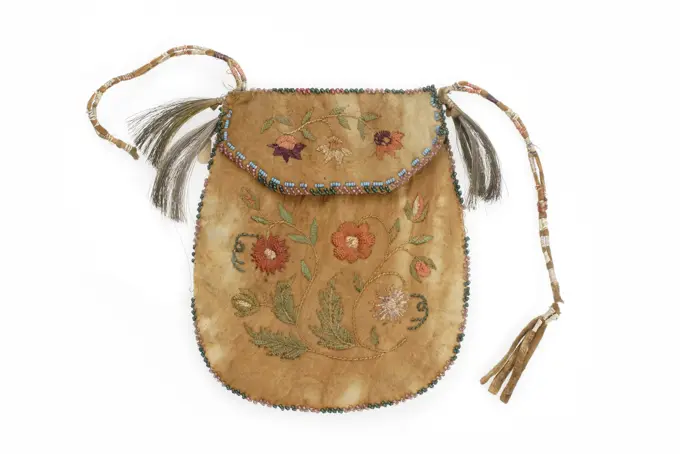
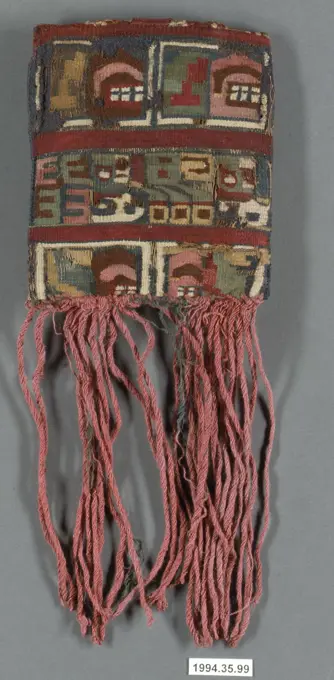
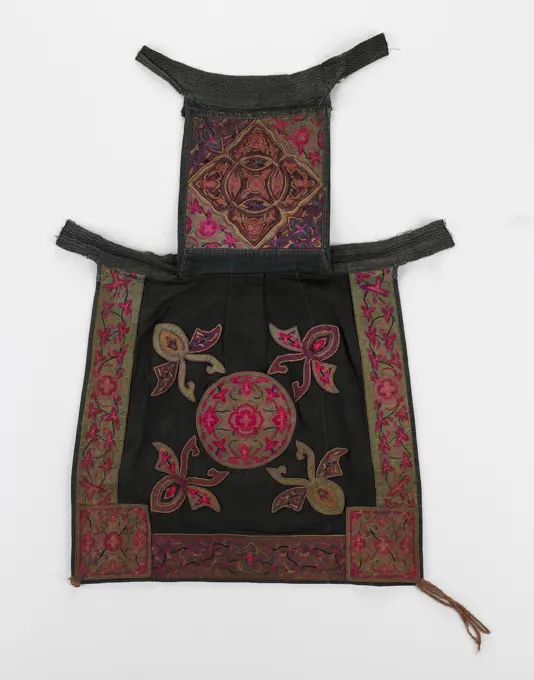
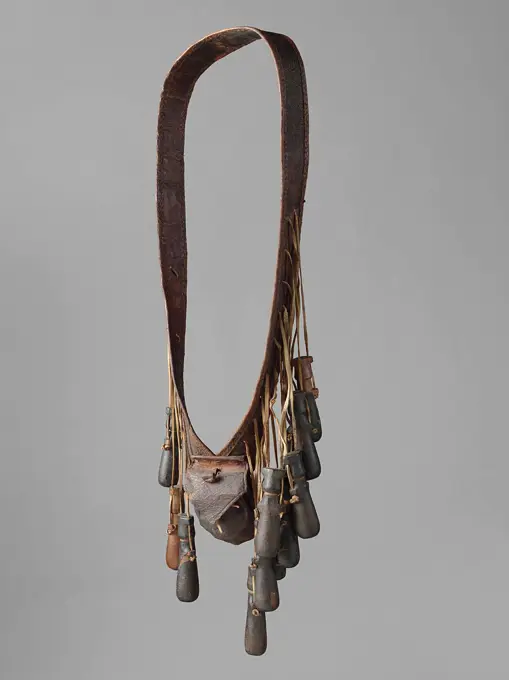
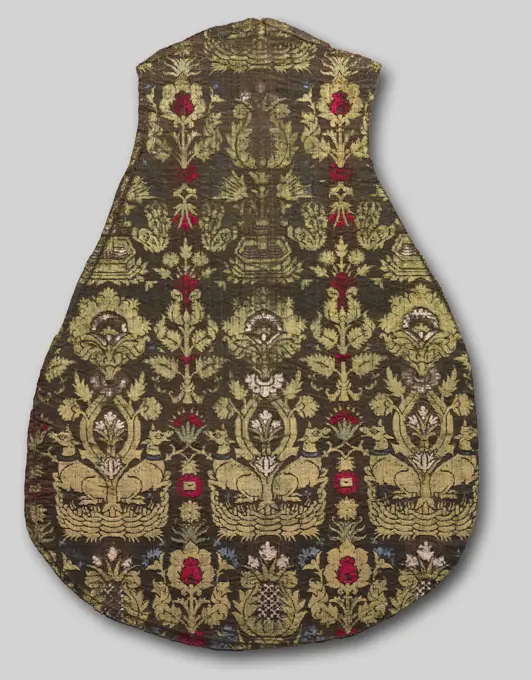
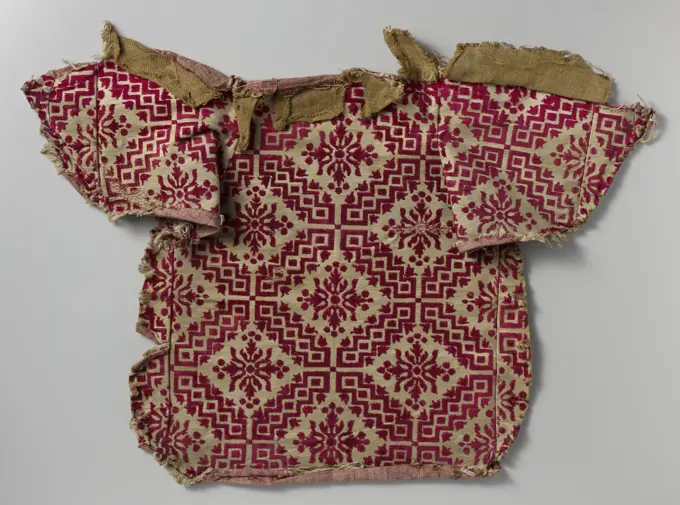
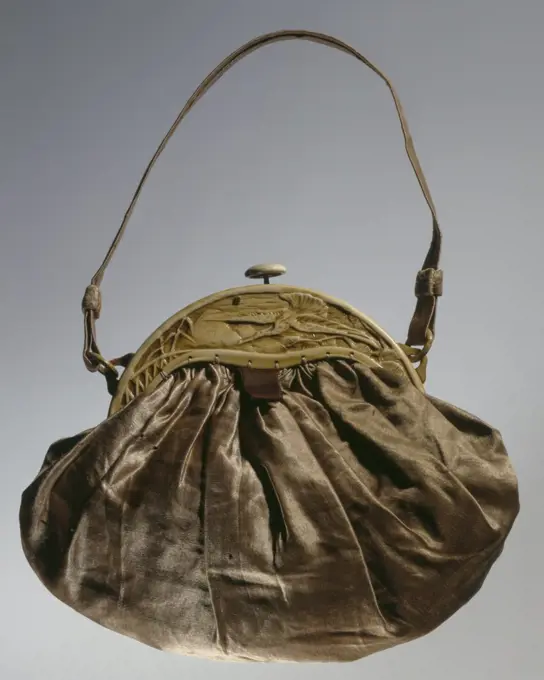
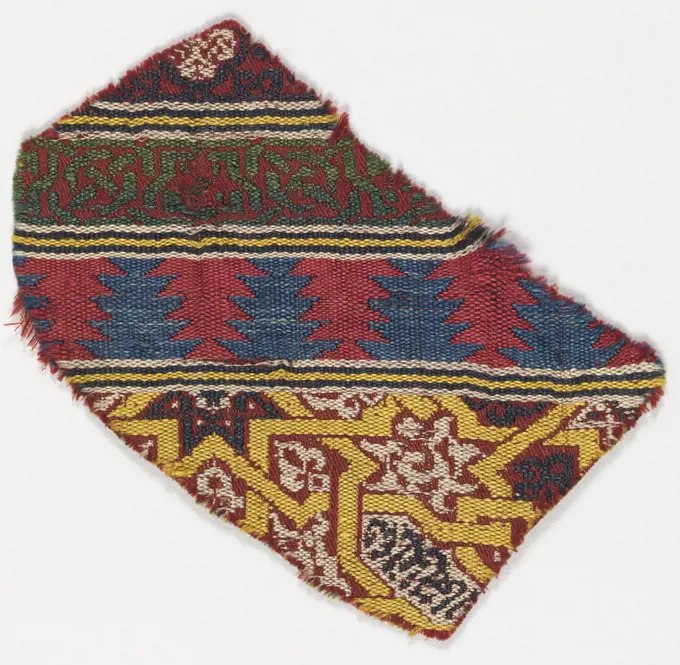
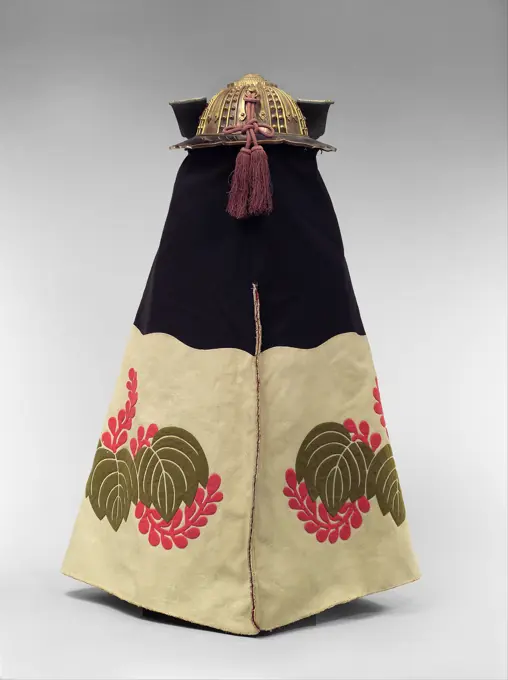
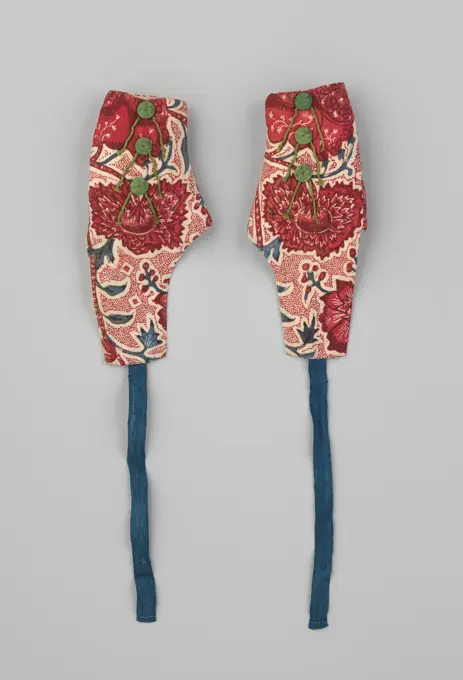
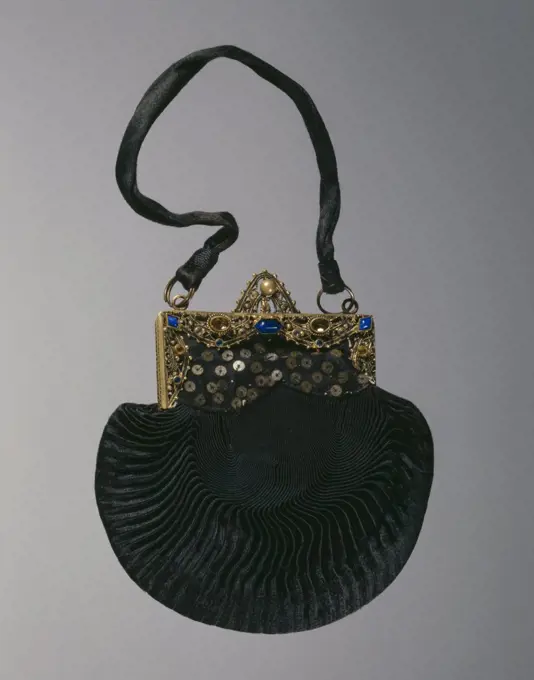
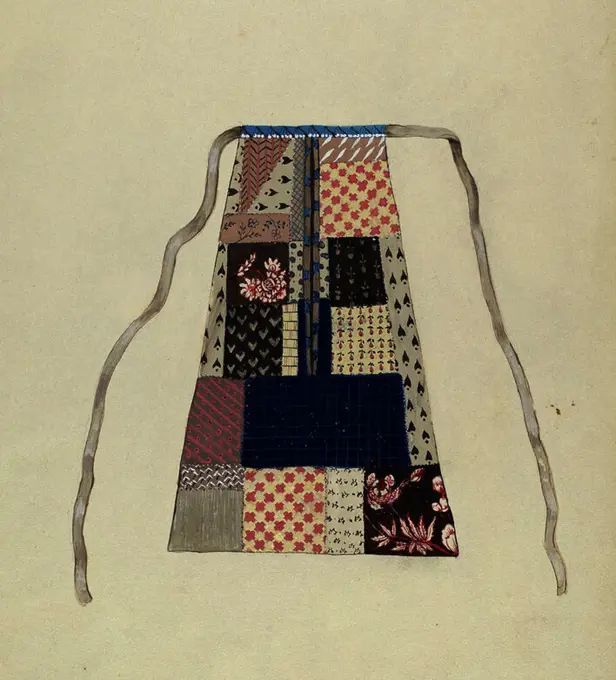
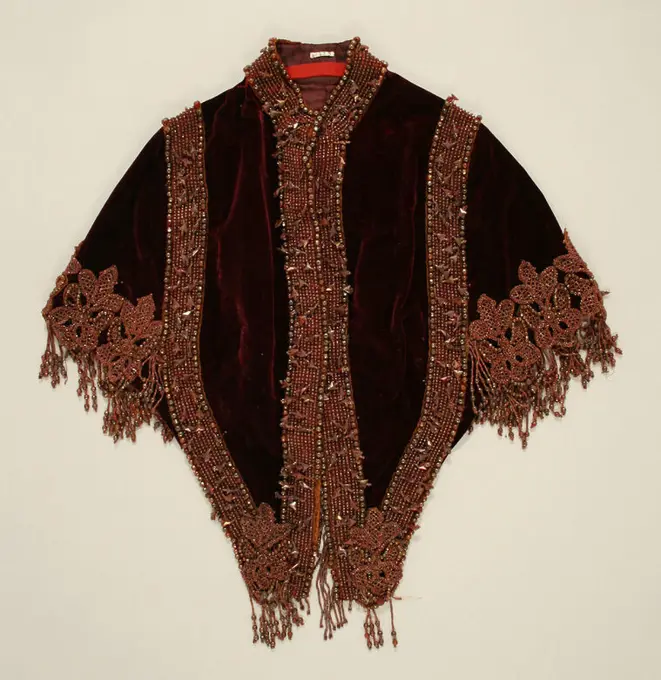
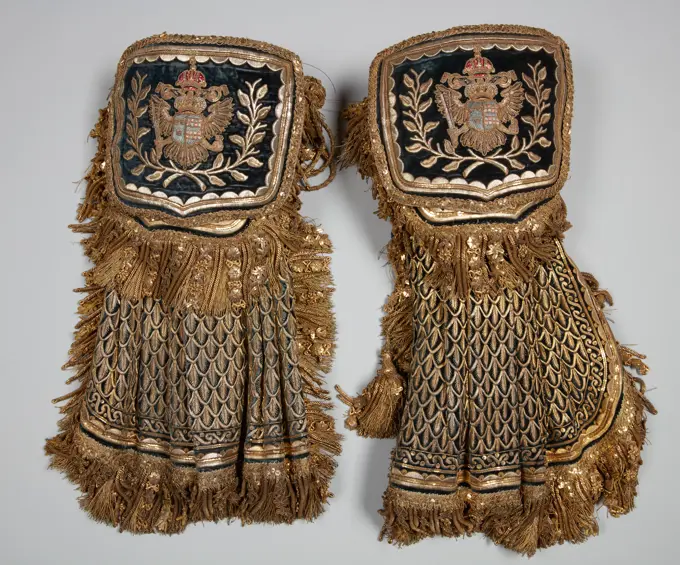
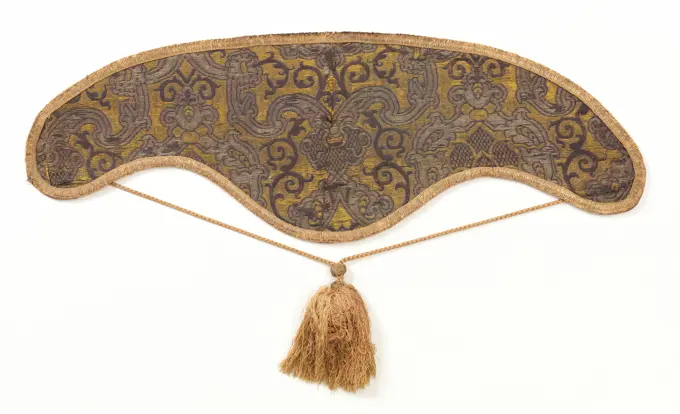
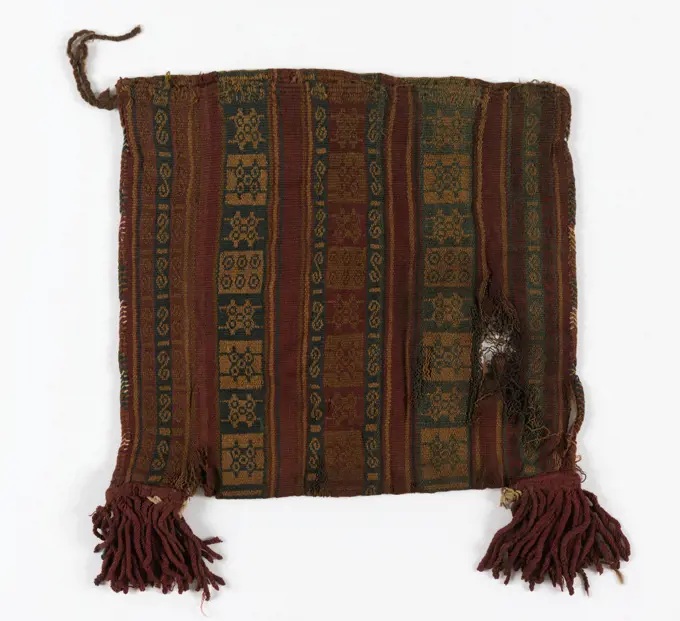
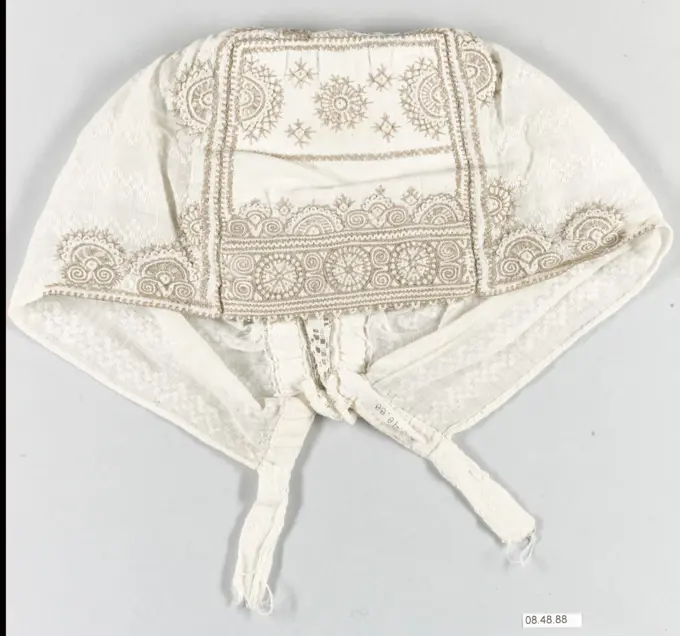
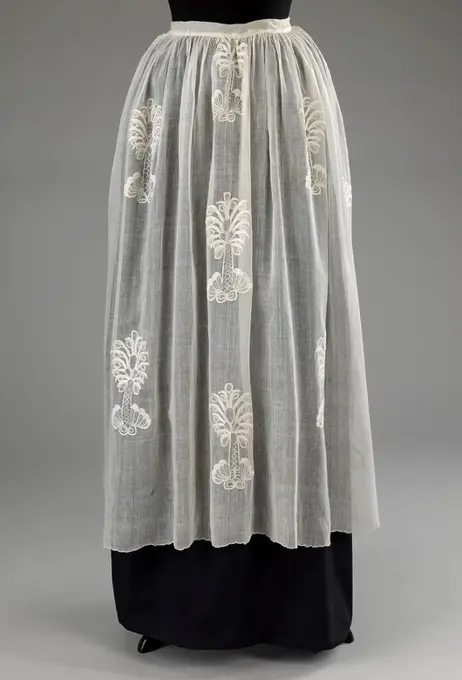
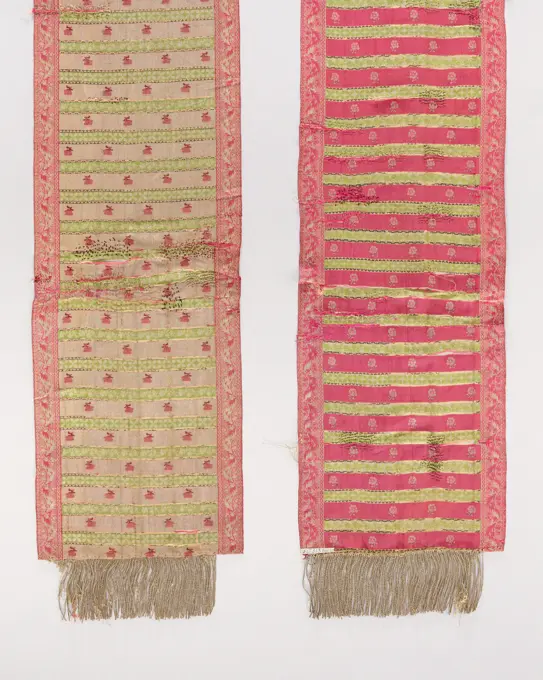
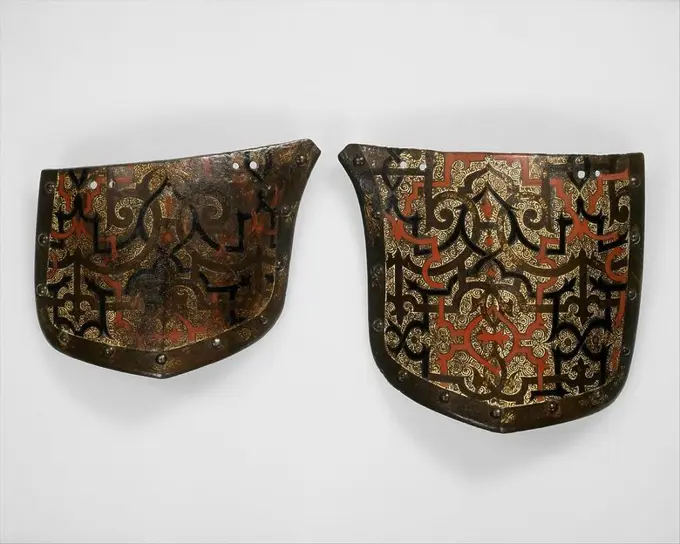
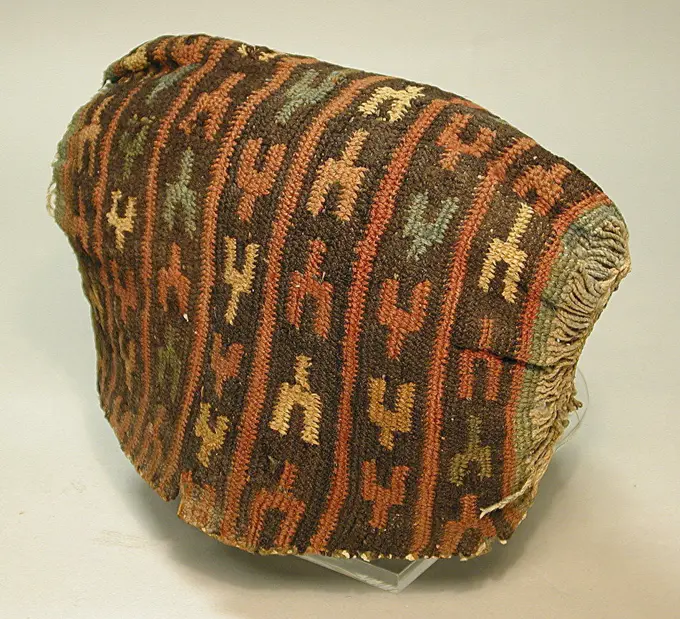
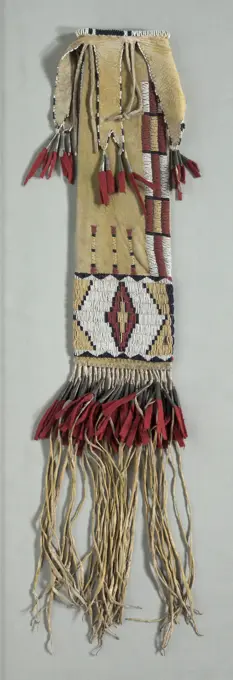
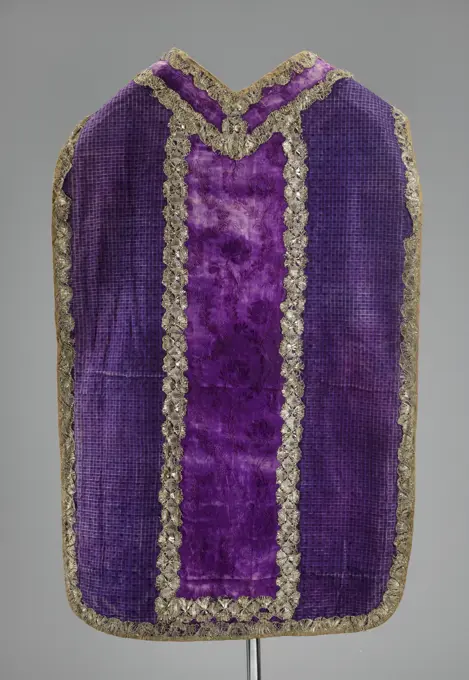
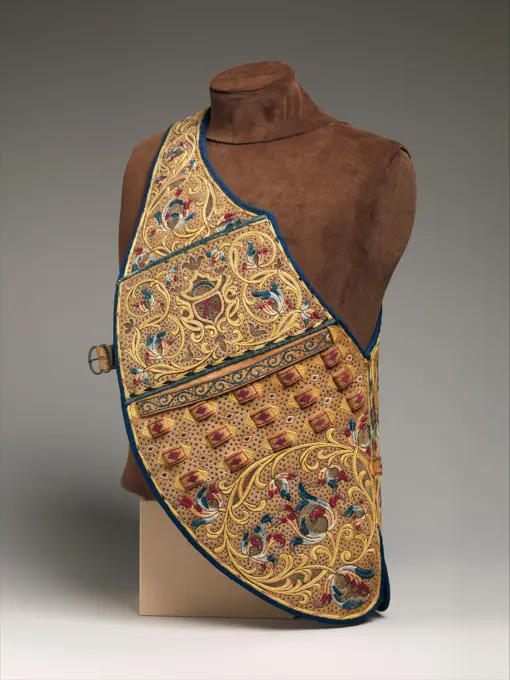
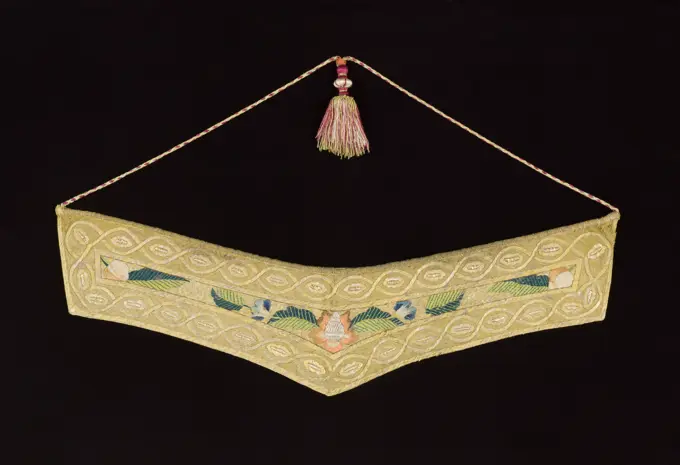
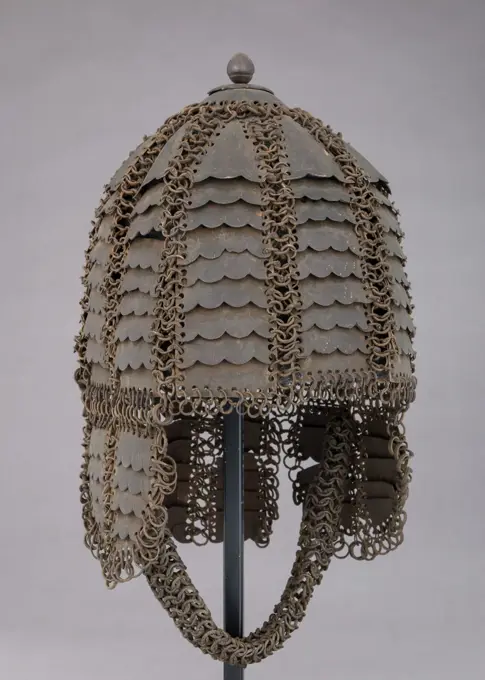
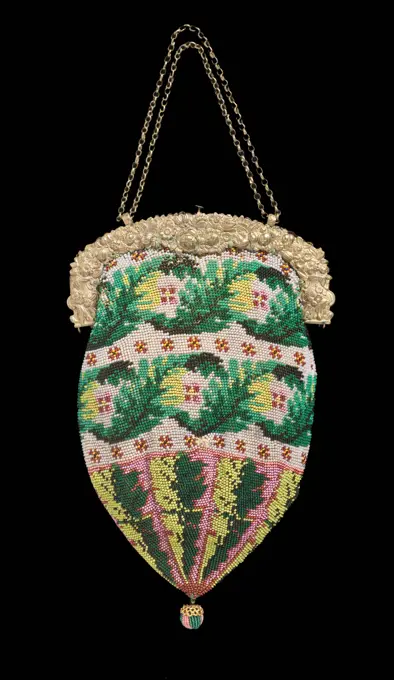
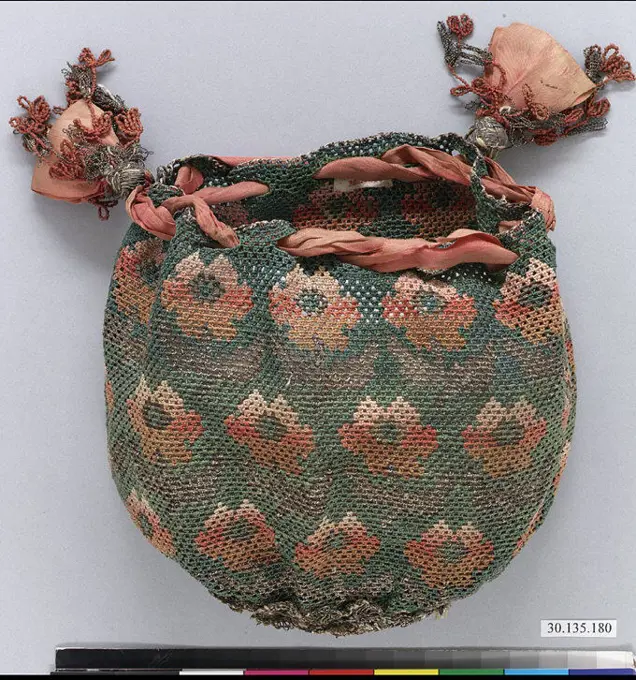
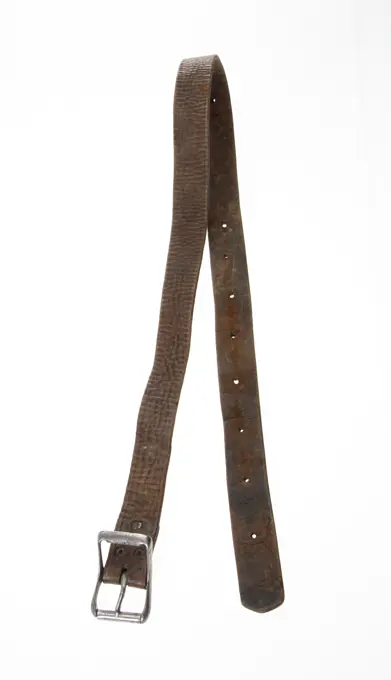
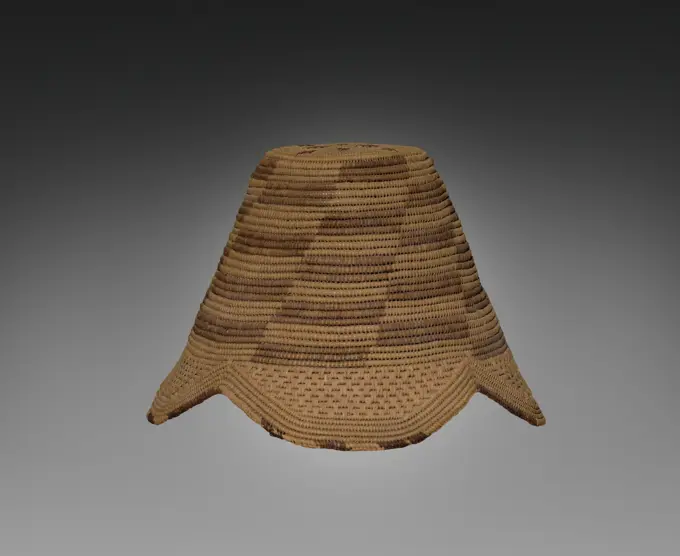
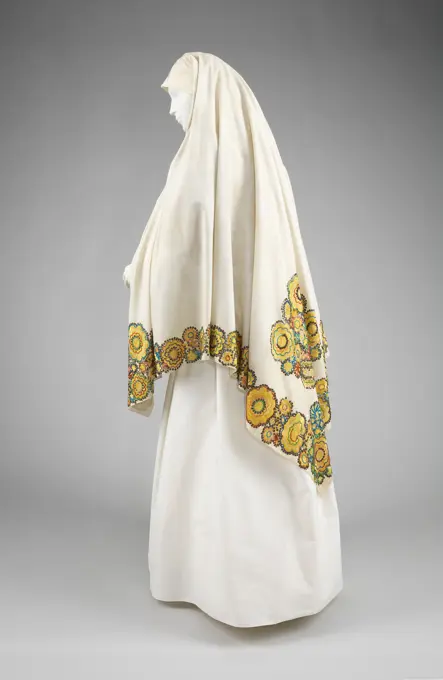
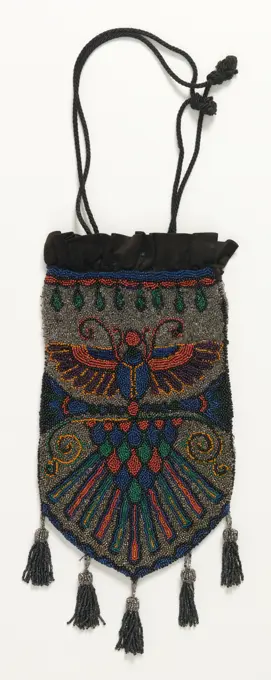
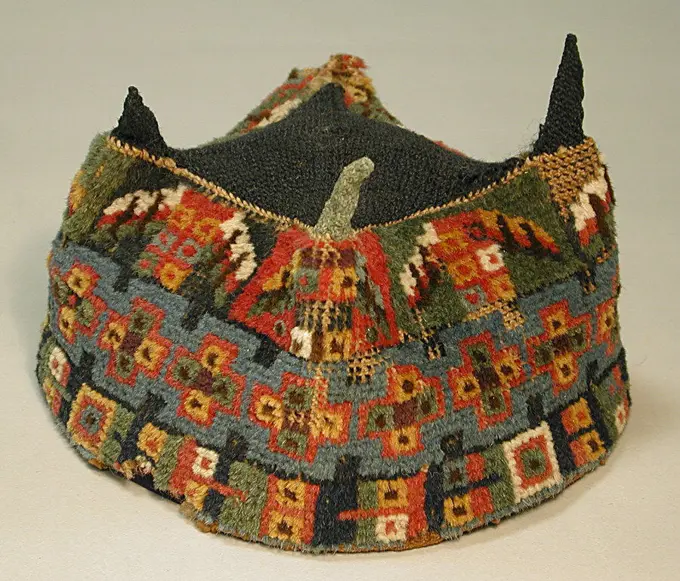
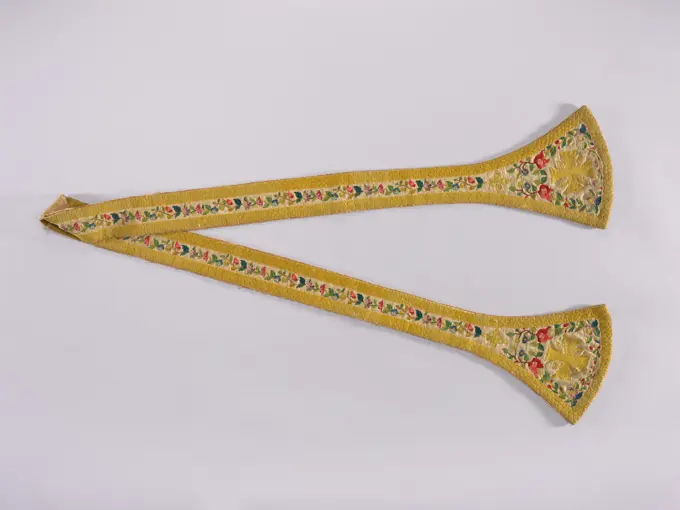
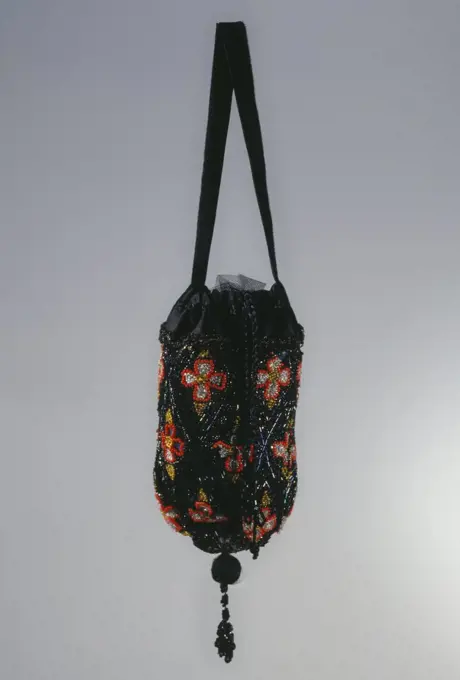
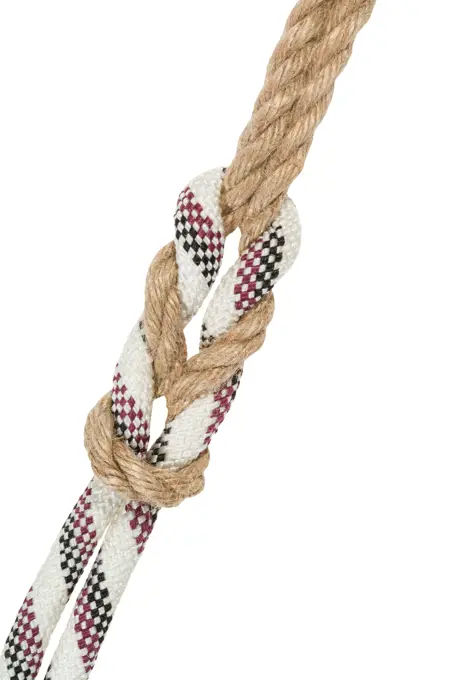
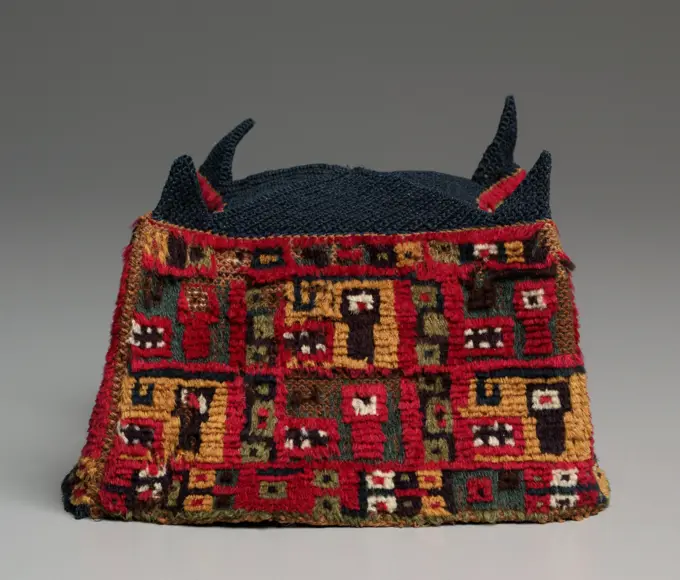
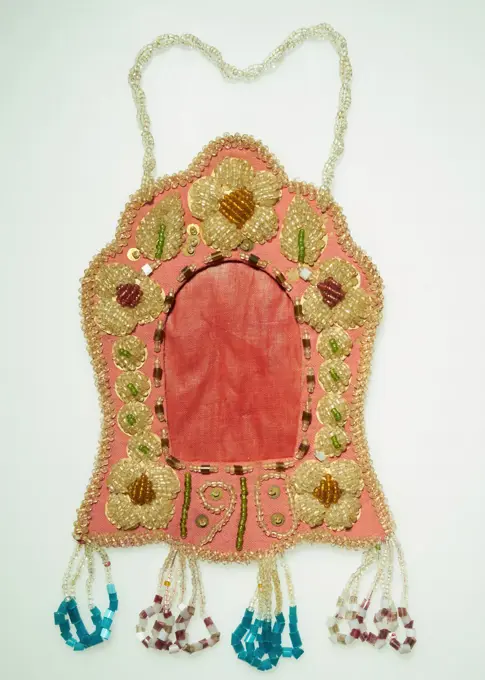
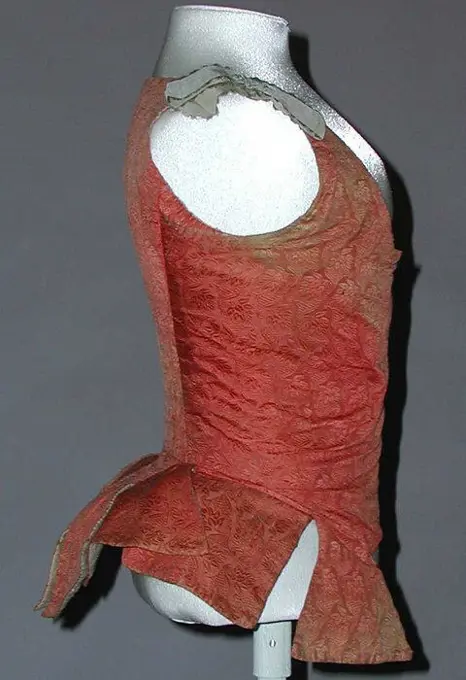
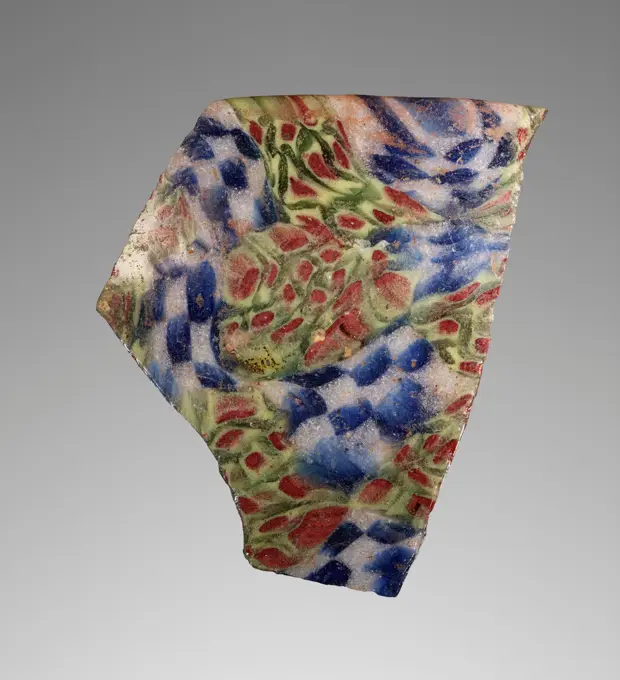
Chasuble FrontPrediter Belt After Edmund RóżyckiTurban-end Panels 12th-15th century Chimú. Turban-end Panels 312795Maniple unknownTassels. Nazca; Peru, south coast, Probably Nazca Valley. Date: 500 AD-900 AD. Dimensions: 33.3 x 20 cm (13 1/8 x 7 7/8 in.). Wool (camelid); strap: tubular plain weave with stripes of four-color complementary warp-float weave; top: cross-knit looping; top and bottom bands: oblique twill interlacing; center: stripes of tubular plain weave double cloth and five-color complementary warp weave and stripes of plain weave with five-color complementary warp weave; double cloth; bottom band: oblique twill interlacing. Origin: Peru. Museum: The Chicago Art Institute, Chicago, USA.Fragment of the index belt; Manufaktura Paschalis Jakubowicz (Warsaw; label Pasów; 1788-1794); 1791-1794 (1791-00-00-1794-00-00);Cradle Board, c. 1900. America, Native North American, Lakota (Sioux), Post-Contact. Leather, quills, beads; overall: 20.3 x 22.9 cm (8 x 9 in.).Cape. Dated: c. 1938. Dimensions: overall: 34.8 x 24.1 cm (13 11/16 x 9 1/2 in.). Medium: watercolor, gouache, and graphite on paper. Museum: National Gallery of Art, Washington DC. Author: Joseph L. Boyd.Fragment (Band) Made 800 CE-1100 Peru. Cotton and wool (camelid), tapestry weave with supplementary weft slit closure . WariTobacco pouch -Back of a chasuble. unknown, authorPouch (), ChinaPurse, Medium: silk embroidery on linen foundation Technique: embroidered in rococo stitch on plain weave, Pocket book covered with embroidery in lattice pattern worked in polychrome silks; lined in green silk and with green ribbon tie., England or Netherlands, 19th century, costume & accessories, PurseCap 1880s American. Cap 116217Fragment sits with symmetrical edge pattern and flower vines on ocher yellow stock, c. 1720 - c. 1730 Fragment sits. Dessin: Symmetrically built -up band work, filled with grid pattern, supposedly lace pattern, and flower vines; In the ashes large flower arrangements in red, blue, eggplant, yellow and green against an ocher yellow stock; The stock of the band work is white. Hindeloopens fur. Note: rather other inv.nrs. Got in: BK-NM-3725 and BK-NM-12206-B, with references to the catalog of textile art in the Dutch Museum of History and Art in Amsterdam (1903), Cat.nrs 344 and 345. Coromandelkust cotton (textile). stain (coating). paint (coating) Fragment sits. Dessin: Symmetrically built -up band work, filled with grid pattern, supposedly lace pattern, and flower vines; In the ashes large flower arrangements in red, blue, eggplant, yellow and green against an ocher yellow stock; The stock of the band work is white. Hindeloopens fur. Note: rather other inv.nrs. Got in: BK-NM-3725 and BKBag with Fringes 7th-10th century Wari. Bag with Fringes 316924Small scholarship. Gal1959.18.5Velvet Fragment, late 1600s. Italy, late 17th century. Velvet; overall: 70.3 x 37 cm (27 11/16 x 14 9/16 in.).Cap early 19th century German. Cap 216319Apron, 30 x 22 in. (76.2 x 55.88 cm) (including ties, excluding corner fringe), Cotton, ChinaRibbon (France); silkKyogen Kataginu Kyogen Kataginu, 19th century. Textile, 34 1/2 x 24 1/2 in. (87.6 x 62.2 cm).   Asian Art 19th centuryRobe, 20th century, W.62 x L.58 in., cotton, silk, tinsel, Egypt, 20th centuryBourse.Bandelier with powder buds and bullet pocket. Bandelier with 12 wooden powder buddies, the so-called twelve apostles and a leather ball pocket. The powder buddies are connected to the Bandelier with straps. The lids slide over the straps. A horn for storing the pankrowder is missing.Six-Color Chasuble Front with Animal Pattern, 1415-25. Italy. Silk, polychrome velvet with cut pile; overall: 80 x 57.8 cm (31 1/2 x 22 3/4 in.); mounted: 86.4 x 63.5 cm (34 x 25 in.).Fragment chair covering in red and white velvet, anonymous, 1600 - 1699 Seat of a chair covering of citized silk velvet. Broussa (possibly)maker: West-Europa (possibly) cotton (textile). silk velvet (fabric weave) Seat of a chair covering of citized silk velvet. Broussa (possibly)maker: West-Europa (possibly) cotton (textile). silk velvet (fabric weave)Purse, Medium: silk, metal Technique: beaded crochet, Fine grey silk crocheted net with cut steel beads; steel bars, ring, and chain at top. Pendant ornament of cut steel at bottom., France, early 19th century, costume & accessories, PurseHelmet. Culture: Indian, Sikkimese. Dimensions: H. including nape defense 18 1/2 in. (47 cm); H. excluding nape defense 6 1/2 in. (16.5 cm); W. 8 in. (20.3 cm); D. 8 1/2 in. (21.6 cm); Wt. 14.2 oz. (402.6 g). Date: 19th century. Museum: Metropolitan Museum of Art, New York, USA.Bag in hazelnut-colored silk faille with rodoris clasp and frame, 1930, fashion accessories, Italy, 20th century.Stole (France); silk, jetBag for Koran, early 20th century, 9 15/16 x 12 x 1/2 in. (25.24 x 30.48 x 1.27 cm) (without cord), Cotton, wool, silk; needlework, Turkmenistan, 20th centuryFragment, Medium: silk Technique: two connected structures; twill and plain weave (lampas), Small fragment from a larger piece showing interlacings and bands., Spain, 15th century, woven textiles, FragmentFireman's Helmet (Kajikabuto) for a Daimyo 18th century Japanese. Fireman's Helmet (Kajikabuto) for a Daimyo 30955A Pair of Oversleeves, anonymous, c. 1750 - c. 1775 Sleeve, white with colored flowers and green silk knots and decoration (part of a Frisian children's costume.) From Schiermonnikoog. Coromandelkust cotton (textile). chintz. lint: linen (material). knoop: wood (plant material). silk chintz Sleeve, white with colored flowers and green silk knots and decoration (part of a Frisian children's costume.) From Schiermonnikoog. Coromandelkust cotton (textile). chintz. lint: linen (material). knoop: wood (plant material). silk chintzBag in pleated black satin, golden metal clasp and frame filigreed with semiprecious stone, late 1920s, fashion accessories, Italy, 20th century.Four -day INRô (medication box); Yamada, Jôkasai (1811-1879), Yamada; 1. PO. 19th century (1840-00-00-1868-00-00);Collar (Russia); silk, metallic threadsEvening cape late 1880s probably American. Evening cape 107584Coif, Medium: silk and metal-wrapped silk-core embroidery on linen foundation Technique: embroidered in stem, coral, leaf, and chain stitches with looping and detached looping on plain weave foundation Label: linen embroidered with silk and metallic threads in stem, coral, leaf, chain, and detached looping stitches, Woman's coif of off-white linen, with a point over the forehead, shaped at the cheeks, and with a pleated detail at the crown. Embroidered in light colored silks and metal threads with scrolling vines in silver metallic thread framing flower heads, among which appear caterpillars, bees and insects, embroidered in in red, pink, green, blue, yellow and gray silk. The ground is spotted with silver sequins stitched down with red thread., England, late 16th-early 17th century, costume & accessories, CoifColonial Pocket. Dated: c. 1936. Dimensions: overall: 35.5 x 24.7 cm (14 x 9 3/4 in.). Medium: watercolor, gouache, and graphite on paper. Museum: National Gallery of Art, Washington DC. Author: Ann Gene Buckley.. Two gold bracelets. Made from a Filigree. Decorated with a rosette.Cape. Culture: American or European. Date: 1880s. Museum: Metropolitan Museum of Art, New York, USA.One of pair of holsters with flaps and saddle pockets - part of the horse tack after Prince Adam Kazimierz Czartoryski, Captain of the Galician Noble Guard in Vienna Morycz Warszawski embroidered, Sender Z Otnik WarszawskiApparel From A Dalmatic (Spain); silkCap 17th century-18th century European. Cap 98324Turban, 24 x 5 1/4 in. (60.96 x 13.34 cm), Cotton, ChinaCoca bag, Medium: wool Technique: Section A) complimentary warps, plain weave; Section B) warp-faced plain weave, Flat bag, woven in alternate perpendicular stripes of red with geometric pattern, green and tan with geometric pattern; narrow green with S-curve in tan. Sides hand stitched to form bag. Tassels at corners. warp selvage for opening of bag, Peru, possibly 1200, woven textiles, Coca bagCap Hungarian-Slovak 19th centuryWoman's Hat. United States, circa 1890. Costumes; Accessories. Silk velvet, silk satin, metallic braid, ostrich feathersBasket 1867-1899 California. Plant fibers . PomoPipe Bag ca. 1890 Cheyenne. Pipe Bag 318350Apron. Culture: British. Date: 1760-70.This apron is deemed special for it is an unusual eighteenth century example. The exotic motifs show the interest in botanical rarities at that time. Supporting this observation, the accession records note that the "whitework embroidery motifs are based on ancient Near Eastern (Mesopotamia) and cylinder seal motifs of date palm.". Museum: Metropolitan Museum of Art, New York, USA.Chasuble Back 18th century Italian. Chasuble Back 460770Hat ca. 1850 British. Hat 81306Sidewall - fragment, Block-printed, Lonzenge pattern of blue with red dots at points of intersection, enclosing white geometrical pattern and floral spray., possibly USA, ca. 1840, Wallcoverings, Sidewall - fragmentLength of Cotton, early 1900s. India, early 20th century. Cotton; tied and dyed; overall: 78.8 x 35.6 cm (31 x 14 in.).Apron, 13 5/8 x 14 13/16 in. (34.61 x 37.62 cm) (without ties), Cotton, ChinaKontusz sash/belt. unknown, authorMantle ca. 1885 probably French. Mantle. probably French. ca. 1885. silk, metalPair of Tassets (Thigh Defenses) Belonging to an Armor for Field and Tournament Made for Duke Nikolaus "The Black" Radziwill (1515-1565), Duke of Nesvizh and Olyka, Prince of the Empire, Grand Chancellor and Marshal of Lithuania. Armorer: Kunz Lochner (German, Nuremberg, 1510-1567). Culture: German, Nuremberg. Dimensions: right tasset (a): H. 6 in. (15.2 cm); W. 7 3/4 in. (19.7 cm); Wt. 1 lb. 5 oz. (587 g); left tasset (b): H. 7 1/2 in. (19 cm); W. 8 1/2 in. (21.6 cm); Wt. 1 lb. 10 oz. (726 g). Date: ca. 1555; probably repainted later. Museum: Metropolitan Museum of Art, New York, USA.Cap 14th-early 16th century Peruvian. Cap 316953Pipe Bag, c. 1870. America, Native North American, Plains, Tsitsistas (Cheyenne) people, Post-Contact. Native-tanned hide with yellow pigment, glass beads, red trade cloth, tin cones, sinew thread; overall: 71.1 x 12.7 cm (28 x 5 in.).Fragments of silk fabrics from a chasuble unknownPistol Baldric (Xarpa) late 18th-early 19th century Spanish, Catalonia A belthook on the back of a pistol would pass through the sets of loops on the baldric, which could carry up to five pistols.. Pistol Baldric (Xarpa) 22372Four-Cornered Hat 7th-9th century Wari Finely woven, brightly colored hats, customarily featuring a square crown, four sides, and four pointed tips, are most frequently associated with two ancient cultures of the Andes: the Wari and the Tiwanaku. The Wari Empire dominated the south-central highlands and the west coastal regions of what is now Peru from 500-1000 A.D. The Tiwanaku occupied the altiplano (high plain) directly south of Wari-populated areas around the same time, including territory now part of the modern country of Bolivia. The cultures not only developed and flourished as contemporaries, but also occupied adjacent lands for nearly four centuries. A Wari ceremonial center called Cerro Baúl was located a mere five miles from Tiwanaku-settled fields in the Moquegua Valley of Peru. The two cultures likely encountered each other at Cerro Baúl and elsewhere, but the nature of these interactions remains largely unknown. Four-cornered hats from both the Wari and the Tiwanaku were Reticulum bag. 1880. GAL1971.32.4Set of Ecclesiastical Vestments (Collar). Mexico, first quarter of the 18th century. Costumes; ecclesiastical. Silk, metallic-thread, and lamella embroidery with silk and metallic-thread plaired cord and silk and metallic-thread tasselHelmet of Mail and Plate probably 17th-18th century Indian. Helmet of Mail and Plate 26806Trimmings, Medium: wool, silk, metallic thread Technique: embroidered, Dress trimmings consisting of embroidered bodice detail, collar and cuffs mounted on red felt. Tassels have woven and wrapped metallic thread over red silk base., India, 19th century, embroidery & stitching, TrimmingsCape 1830-39 French. Cape 103872Woman's Bag (Reticule). France, 1810-1820. Costumes; Accessories. Silk knit with glass beads, metal-hinged clasp, and metal chainBag 17th century possibly British. Bag 222499Baby hat, 20th century, 5 1/2 x 9 1/2 in. (13.97 x 24.13 cm)1 1/2 x 5 1/2 in. (3.81 x 13.97 cm) (object part, pompom), Cotton; needlework, Thailand, 20th centuryPair of Gauntlets ca. 1585 Italian, Milan These small gauntlets belong to an armor for foot tournament made for the seven-year-old heir to the Spanish throne, the future Philip III (1578-1621, king from 1598). The decoration is typically Milanese, with bands of chiseled and gold-damascened trophy and grotesque ornament outlined with silver dots. A figure of Mars, god of war, is seen at the top of each cuff.. Pair of Gauntlets 21939ShieldArmband -One hundred;  2. PO. 18th century (1751-00-00-1800-00-00);Contact belts, Polish belts, Poland (culture)Textile (India); cottonTrachten nach Porzellanfiguren in Deutschland und Österreich, Rokoko, Wien und Nymphenburg, 1760, Historisch, authentisch, digital restaurierte Reproduktion von einer Vorlage aus dem 19. Jahrhundert, Record date not stated 1f-4904048Belt -Hat (laket), Early 1900s. Africa, Democratic Republic of Congo, Kuba peoples, Early 20th century. Raffia and dye; overall: 11.4 x 16.2 x 16.2 cm (4 1/2 x 6 3/8 x 6 3/8 in.). Titled Kuba men and prominent women wear the laket, a small ornate dome-shaped hat. An essential fashion item of adult men in good social standing, it focuses special attention on the head as a significant marker of individual identity, ethnic affiliation, status, and role in society. This prestige object is secured on the crown of the head with a nine-and-a-half-inch metal pin that pierces through the hat onto a clump of hair. The laket is made from raffia palm fiber coiled into threads and woven in two alternating patterns and contrasting light and dark (dyed) wefts. There are two examples of the laket: the plain type with the flat top, and the more elaborate type called the laket mishiing.Wedding veil late 19th century Czech. Wedding veil. Czech. late 19th century. linen, silk, metal, glassPurse (France); cotton, glass and metal beadsFour-Cornered Hat 7th-9th century Wari Finely woven, brightly colored hats, customarily featuring a square crown, four sides, and four pointed tips, are most frequently associated with two ancient cultures of the Andes: the Wari and the Tiwanaku. The Wari Empire dominated the south-central highlands and the west coastal regions of what is now Peru from 500-1000 A.D. The Tiwanaku occupied the altiplano (high plain) directly south of Wari-populated areas around the same time, including territory now part of the modern country of Bolivia. The cultures not only developed and flourished as contemporaries, but also occupied adjacent lands for nearly four centuries. A Wari ceremonial center called Cerro Baúl was located a mere five miles from Tiwanaku-settled fields in the Moquegua Valley of Peru. The two cultures likely encountered each other at Cerro Baúl and elsewhere, but the nature of these interactions remains largely unknown. Four-cornered hats from both the Wari and the Tiwanaku were Baby Carrier, 19th-20th century, 26 x 17 in. (66.04 x 43.2 cm) (body of carrier)3/4 x 182 1/2 in. (1.91 x 463.55 cm) (ties), Cotton, corduroy, metal half-spheres,ribbon, metal sequins, quilting, embroidery,applique, China, 19th-20th centuryStorage belt -Stole. unknown, authorBucket bag with jet and glass beads that form a floral- pattern decoration, 1920, fashion accessories, Italy, 20th century.Bliżej Kultury unknownCover for a Basket, Unassigned, before 1917. Northwest Coast, Haida, Unassigned. Twilled; overall: 10.5 x 13 cm (4 1/8 x 5 1/8 in.).Cape of black bobbin with bouquet on the back, anonymous, c. 1860 - c. 1870 Cape of black bobbin: Chantilly side. The Cape has a pressed triangular shape with rounded points, with a wide strip at the bottom that has been wrinkled and at the top a narrow strip that has been laid in the right shape with some large figures. In the middle of the back, a large bouquet is central to a symmetrical pattern with loose flower branches where a zigzag pendulum runs in between. The wide-ranged strip along the bottom has a scrap edge that is made up of large C-Voluten, which averted from each other a kind of horns of abundance forms from which flower branches spring. The pattern of the narrow strip along the top consists of loose flower branches in oval cartouches of pearl lists. The motifs are connected by a Maas soil. The motifs are made in netslag and one type of decorative land has been used, thicker contour threads run around the motifs. The Cape can be closed with a cost ribbon and buttons unkanother side of academic surgeon s knot isolated another side of academic surgeon s knot, double reef knot joining two ropes isolated on white background Copyright: xZoonar.com/ValeryxVoennyyx 13966642Four-Cornered Hat, c. 700-1100 A.D.. Peru, South Coast, Wari Culture, Tiwanaku Style, Middle Horizon, 8th-12th Century. Needle network with and without cut pile: cotton and wool; average: 10.2 x 13.4 cm (4 x 5 1/4 in.).Four-Cornered Hat. Peru, South Coast, Wari, 600-800. Costumes; Accessories. Camelid fiber in larkshead knotting with cut pilePicture Frame, 1910, 8 3/8 x 6 3/8 x 5/8 in. (21.27 x 16.19 x 1.59 cm) (without dangles or hanger), Beads, cotton, paper, sequins, United States, 20th century, As photography became more accessible in the late 1800's, picture frame whimsies became desirable items of home décor. Often beaded with three-dimensional flowers and other motifs, picture frames illustrate the broad pallet artists employed to make these pieces. They fashioned patterns for designs and passed their templates along to younger artists in the family. Younger women and girls first learned how to bead the looped fringe and would later bead entire whimsies. By creating them in this way, Iroquois women insured the survival and growth of their artistic traditions.Bodice 18th century European. Bodice. European. 18th century. silkFragment of a Mosaic Glass Vessel. Unknown 1st century B.C.-1st century A.D. Dark blue and milky white checkerboard with green, white and red scales. Rim fragment.Fragments of embroidery  a symmetrical tulip and leaves motif unknownTassel (Spain); metallic thread on wood core