Ornate Textile Bands

Woven textile bands and borders featuring intricate patterns, created from silk and linen, showcasing historical craftsmanship from different centuries.

Border; medium:
Border; medium:
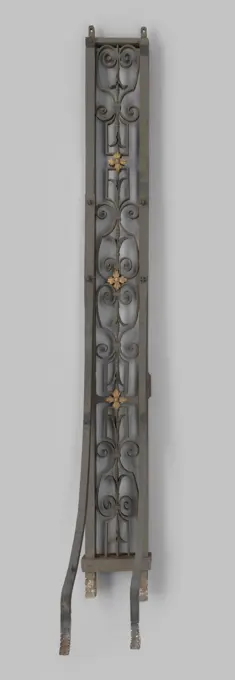
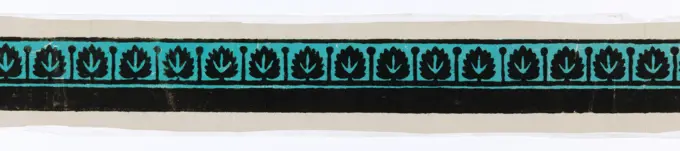
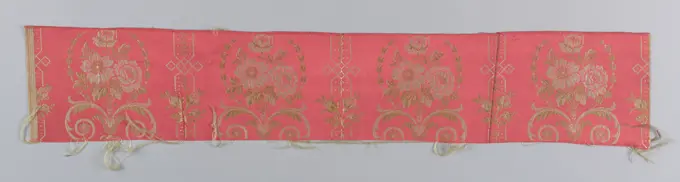
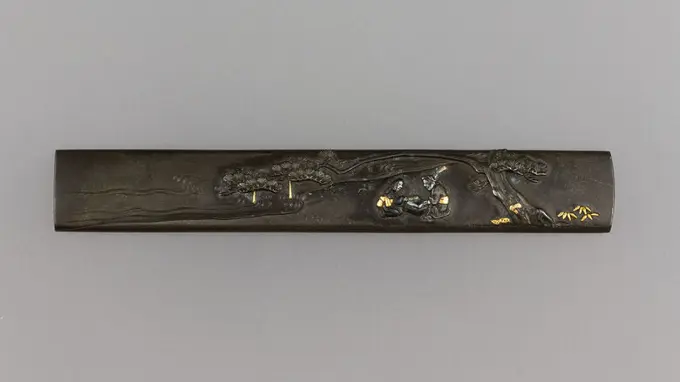
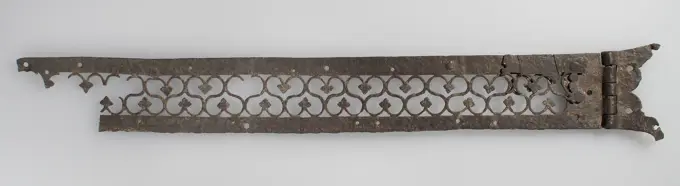
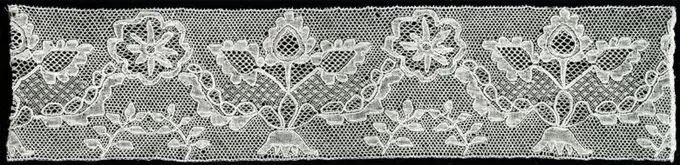
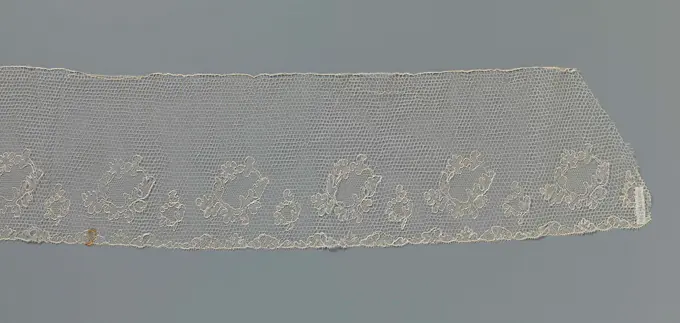
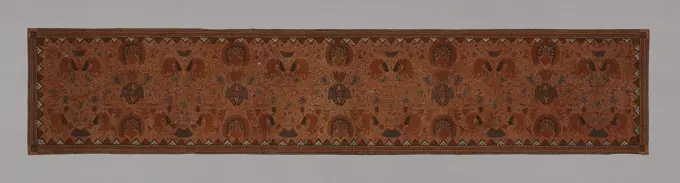
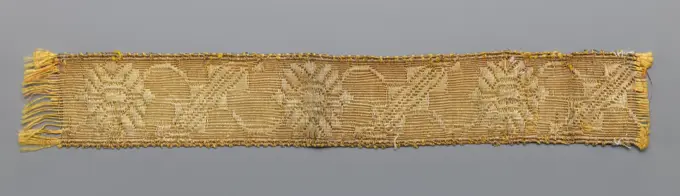
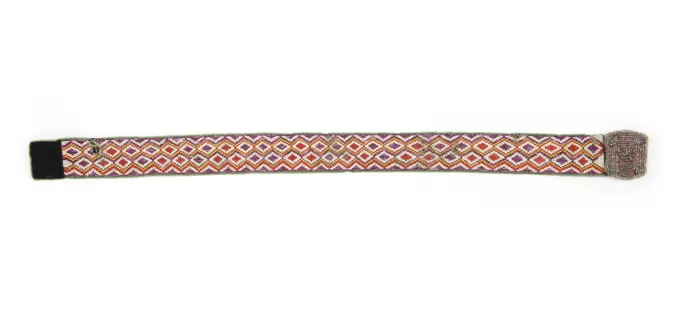
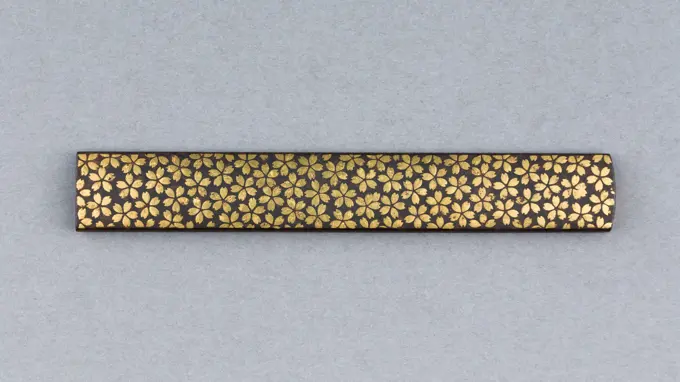
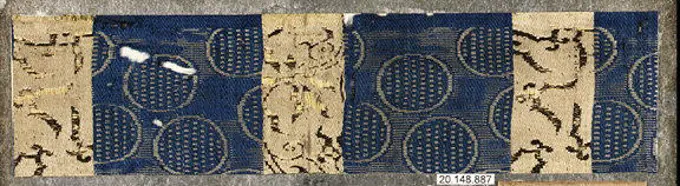
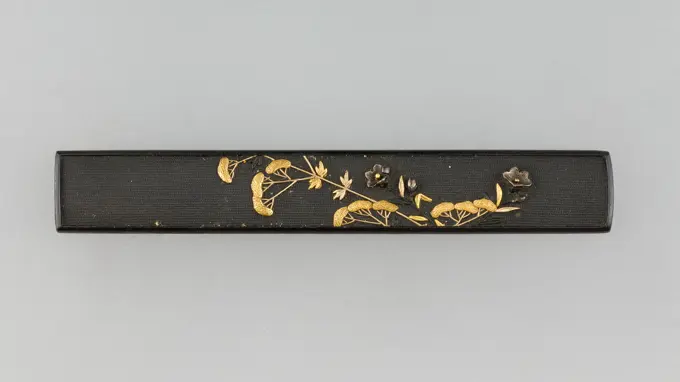
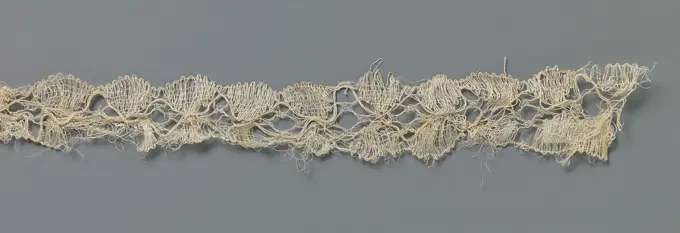
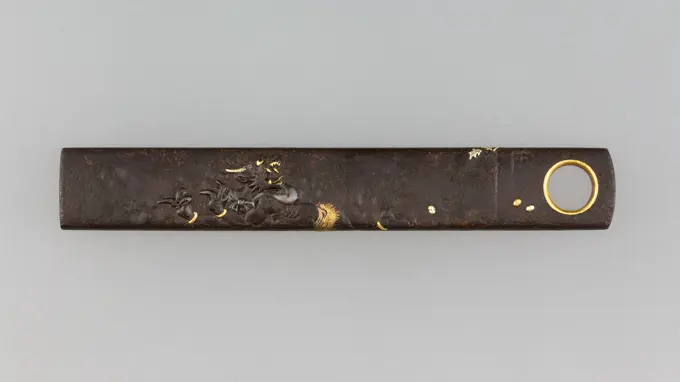
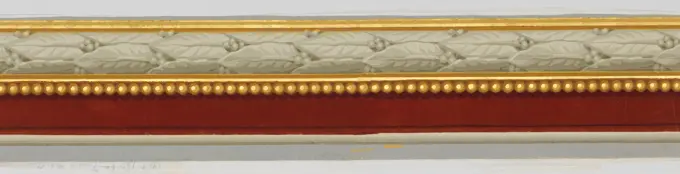
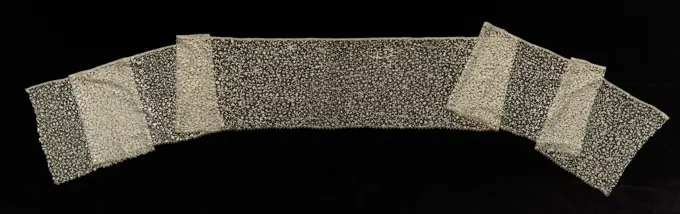
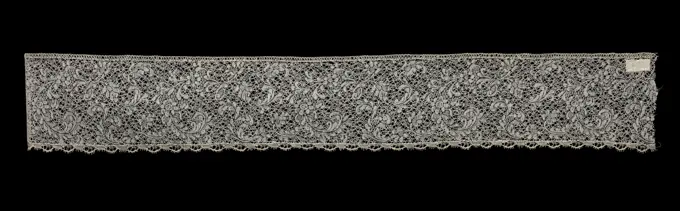
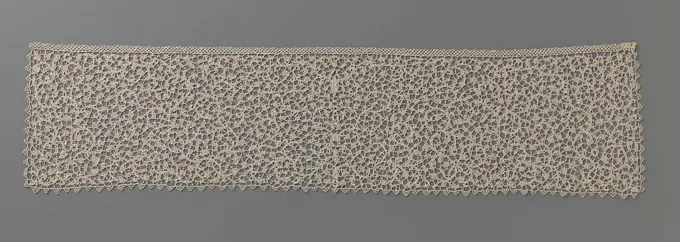
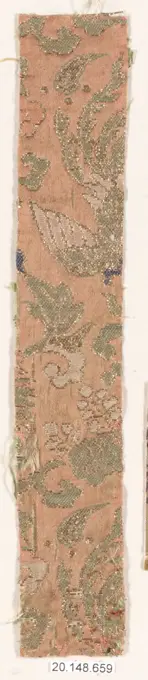
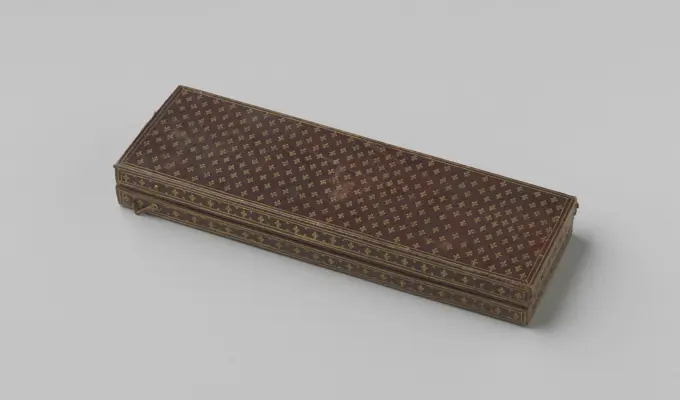
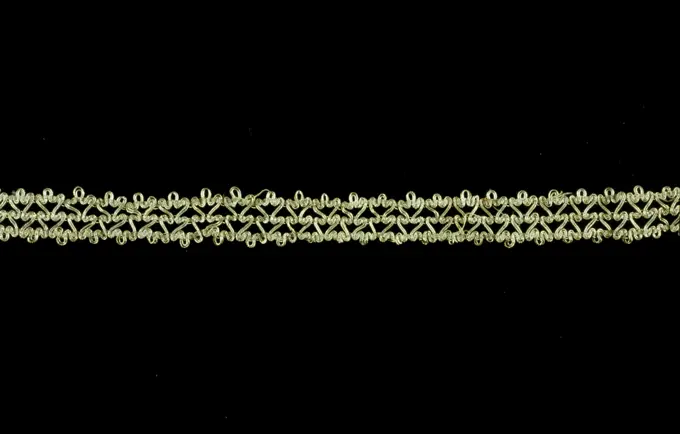
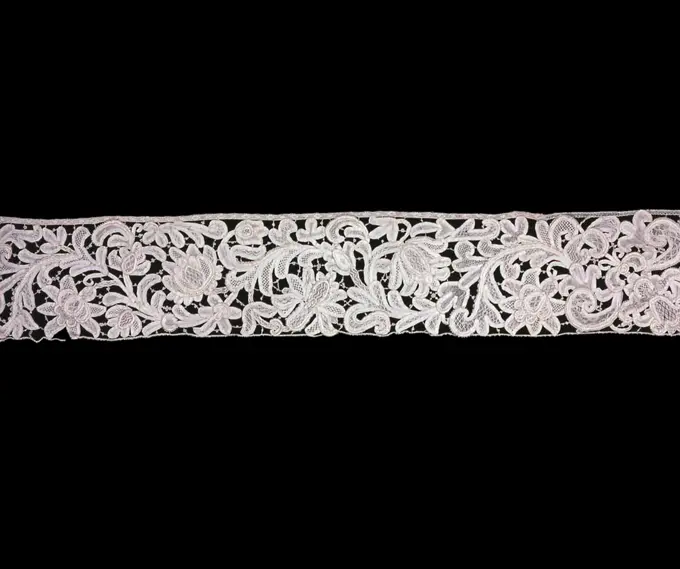
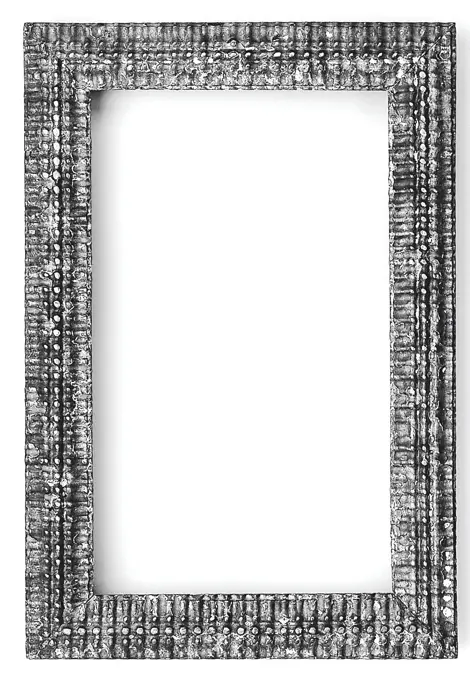
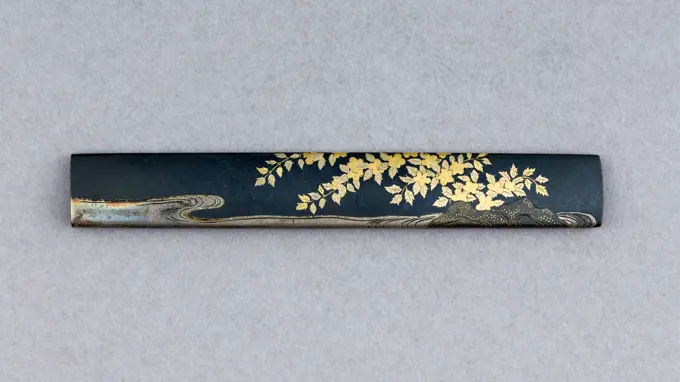
Ribbon, Medium: silk, metallic thread Technique: compound weave with supplementary weft; bobbin lace, France, mid- 18th century, woven textiles, RibbonTrimming, Medium: silk Technique: cut, uncut and voided velvet, Design of flowers and leaves on a curving stem set between rope borders. In blue, yellow, green and white., Italy, 17th century, trimmings, TrimmingBorder (France); block-printed on handmade paper; a) Overall: 90.5 x 13.5 cm (35 5/8 x 5 5/16 in.) b) Overall: 13 x 13.5 cm (5 1/8 x 5 5/16 in.)Capslip from Valenciennes side, Anonymous, c. 1750 Hapslip van Kloskant, which consists of two hat slips sewn together. The pattern consists of flowers and insects. The edge has flower and leaf motifs and is trimmed with picots. France linen (material). Valenciennes lace Hapslip van Kloskant, which consists of two hat slips sewn together. The pattern consists of flowers and insects. The edge has flower and leaf motifs and is trimmed with picots. France linen (material). Valenciennes laceBorder, Medium: linen Technique: bobbin lace, Binche style with Binche ground, Belgium, 18th century, lace, BorderValance (Furnishing Fabric) Made 1769-1784 Crayford. Cotton, plain weave; copperplate printed; edged with cotton, plain weave; copperplate printed . John Munns (Designer)Ornamental fence of the De Voorst house, Daniël Marot (I), c. 1675 - c. 1700 Wrought iron decorative fence of the entry fence of Huize De Voorst. Warnsveld iron (metal) forging / gilding  House De Voorst Wrought iron decorative fence of the entry fence of Huize De Voorst. Warnsveld iron (metal) forging / gilding  House De VoorstBorder (France); flocked and stencilled on handmade paper; 75.5 x 8.5 cm (29 3/4 x 3 3/8 in.)Bobbin Lace Edging, 20th century. France, Valenciennes or Flanders, 20th century. Lace, bobbin: linen; average: 4.8 x 115.6 cm (1 7/8 x 45 1/2 in.).Mangle-board 18th century Dutch. Mangle-board 191718Galloon 17th-18th century Unknown. Galloon 213874Trimming, Medium: silk, gilt foil on a silk core Technique: woven, Heading of green silk with an overlay of gold threads. Gold and silk threads form a very narrow looped fringe on one border., Italy, 16th century, trimmings, TrimmingBand, Technique: two integrated structures (plain weave plus plain weave), Italy or Spain, 16th century, woven textiles, BandFringe European 19th centuryHeupdoek, anonymous, 1900 - 1949 Cloth with geometric motifs. Thailand silk Cloth with geometric motifs. Thailand silkShort sword (common name). Bronze. Carnavalet museum, history of Paris. Sword blade broken in half. Part of the silk remains and it is decorated with notch.Sample (USA); Manufactured by Orinoka Mills (United States); Warp x Weft: 12 x 63 cm (4 3/4 x 24 13/16 in.)Fragment (Morocco); silkGalloon late 18th-early 19th century European. Galloon 225001Berthe Van Naaldant, Anonymous, c. 1770 Berthe Van Naaldant side with a scalloped edge that consists of oval medallions that are connected by garlands. Different flowers grow from the medallions. Sprinkling flowers adorn the ground. France . Alençon Lace Berthe Van Naaldant side with a scalloped edge that consists of oval medallions that are connected by garlands. Different flowers grow from the medallions. Sprinkling flowers adorn the ground. France . Alençon LaceCol Rabat in Venise à la Rose with spiral vines with leaves, flour and button, anonymous, c. 1800 - c. 1900 Col Rabat in Venise à la Rose with spiral vines with leaves, flour and button. The edges are equipped with picoted arches. Venice (possibly) linen (material) Venetian rose point Col Rabat in Venise à la Rose with spiral vines with leaves, flour and button. The edges are equipped with picoted arches. Venice (possibly) linen (material) Venetian rose point. Waongoos of thick paper coated with a green side with a honeycomb pattern in which swastikas, lined with red paper. Taked on the bottom with yellow paper on which a fifth chinese characters are written by hand with pen. Originally there were two paper ribbons that connected the lid with the box. Now only leftovers.Pendant Made 1870-1890 Japan. .Galloon 17th century French. Galloon 213917Knife Handle (Kozuka). Culture: Japanese. Dimensions: L. 3 13/16 in. (9.7 cm); W. 9/16 in. (1.4 cm); thickness 1/4 in. (0.6 cm); Wt. 1.2 oz. (34 g). Maker: Ichiyosai Hironao (Japanese, died ca. 1825-50). Date: 19th century. Museum: Metropolitan Museum of Art, New York, USA.Fringe (Spain); silkNeedlepoint Lace Lappet, 1715-1774. France, Argentan, 18th century (Louis XV Period, 1715-1774). Lace, needlepoint: linen; average: 104.2 x 10.2 cm (41 x 4 in.).Strap Hinge 15th-16th century European. Strap Hinge. European. 15th-16th century. Iron. Metalwork-IronBorder (Fragment). Belgium, Flanders, Antwerp. Date: 1801-1850. Dimensions: 9 × 37.5 cm (3 1/2 × 14 3/4 in.)Width repeat: 15.4 cm (6 1/8 in.). Cotton, bobbin straight lace. Origin: Flanders. Museum: The Chicago Art Institute, Chicago, USA.Strook kloskant ovalen gevormd door grillige bladmotieven.Strip natural colosside, blonde. The repeating pattern consists of alternately a small and a large shape under the middle line, which is made of whimsically shaped leaf motifs that lie like a ring around a center of a fine tulet. Along the bottom, an edge runs with a concatenation of such motifs. The motifs are connected by a Maas soil, a Paris soil. The motifs are made in the battery, where the thick and shiny contour wires have a highly accentuating effect. The top of the strip is straight finished. The very bland scaled underside is finished with fine picots.Embroidery Sample, 15 x 103 in. (38.1 x 261.62 cm), Cotton, rayon; needlework, ChinaBracelet (England); Made by Carlo Giuliano (Italian, 1831 - 1895); gold, diamonds, rubies, pearls, enamelEdging 1750-1800 Flemish, Mechlin. Edging 222816Trimming (Russia); silk, metallic threadKemben  with the Modang diamond motif and stylized flames Cemurikan unknownBand, Medium: linen Technique: grid of laid cords with needle lace (reticella style), Spain, late 16th-early 17th century, lace, BandBorder; 1974-52-47Border, Medium: linen Technique: bobbin lace, Brussels style, Border with floral sprays and volutes balanced by animals at intervals., Belgium, 18th century, lace, BorderBand, Medium: linen Technique: needle lace, Band in an open design of floral sprays., France, mid-18th century, lace, BandFringe ca. 1750 British. Fringe 224875Cap streamers, Medium: linen Technique: needle lace with ground of loop & twist with twist return, France, late 18th-early 19th century, lace, Cap streamersShoulder Cloth (Selendang) Made 1875-1900 Java. A shoulder cloth is a long, narrow cloth worn by women over the shoulder as a shawl or to carry a baby or market goods. This fine example was produced within the palace compound of a central Javanese court. Classic colors have been employedóblue, white or cream, and the soga reddish brownóand the major motifs of birds and paired Garuda wings have been symmetrically arranged on the field in an almost heraldic way.. Cotton, plain weave; hand-drawn wax resist dyed (batik tulis) .Balance-Beam Scale with Row of Cut-Out Figures and Incised Circles 500 CE-800 CE Peru. Bone with pigment . NazcaBorder possibly Italian ca. 1600Gallon;  18th century (1701-00-00-1800-00-00);Tent band, late 19th-early 20th century, 225 13/16 x 17 5/16 in. (573.56 x 43.97 cm) (approximate), Wool, silk, cotton; embroidery, Kyrgyzstan, 19th-20th centuryFragment van een wandbespanning.An edge of silk wall tension in silk lamp axle. On a light blue fond, in beige and white, sixty rosettes, to which an aside and a downing ochet branch with acorns. Straight lists left and right. Note: Self side; 3 mm, plain bond.Band, Medium: linen Technique: (a/d) lace of early premade bobbin tape with needlework fillings; two pieces have bobbin ground and two have needle gound, Italy, 17th century, lace, BandFragments (3) 16th century Italian. Fragments (3). Italian. 16th century. Needle lace. Textiles-LacesTextile, Medium: cotton Technique: block printed on plain weave, Scattered flowers in deep pink, blue, yellow and white on a black ground closely covered with deep green flowers and leaves., France, ca. 1800, printed, dyed & painted textiles, TextileScreen 16th-17th century. Screen. 16th-17th century. Wood; turned, carved, and painted. Country of Origin Morocco. WoodGimp 17th century Italian. Gimp. Italian. 17th century. Metal thread. Textiles-TrimmingsBelt -Sampler Made 1690 England. Linen, plain weave; bands of cut and drawn thread work in darning, interlocking lace, satin, and needle lace filling stitches; bands of needle lace or a cut and drawn thread grid and bands embroidered with silk and linen in Algerian eye, back, cross, long-armed cross, two-sided Italian cross, double running, running, satin and a variety of buttonhole stitches . Parnell MackettKnife Handle (Kozuka) ca. 1615-1868 Japanese A kozuka is a handle of a by-knife that is part of a sword mounting. It is kept in a slot on the reverse of a katana scabbard, often with a matching kōgai (hairdressing tool).. Knife Handle (Kozuka) 34686Trimming (France); linen, silk, metal, chenillePiece 17th century China. Piece 71878Knife Handle (Kozuka) 18th century Japanese A kozuka is a handle of a by-knife that is part of a sword mounting. It is kept in a slot on the reverse of a katana scabbard, often with a matching kgai (hairdressing tool).. Knife Handle (Kozuka). Japanese. 18th century. Copper-gold alloy (shakud), gold. Sword Furniture-KozukaWheat boats, Fishmonger fresh water, Boatman passer, vintage engraving. Wheat boats, Fishmonger fresh water, Boatman passer, vintage engraved illustration. Magasin Pittoresque 1846. Copyright: xZoonar.com/PatrickxGuenettex 10673367Strook kloskant met ruitvormig veld tussen gespiegelde waaiers.Strip natural colosside, blonde. The repeating pattern consists of a impeller mirrored over the length axis, which form slots on the top and bottom of the strip. A cut-away diamond field is formed between the mirrored impellers in which an ornamental ground is applied. The windows are equipped with continuous contour wires, which cross each other on the length axis.Edging 18th century Flemish. Edging. Flemish. 18th century. Bobbin lace. Textiles-LacesUpholstery trimming, Medium: silk Technique: woven, Pink, green and white trimming in an open design., USA, ca. 1902, trimmings, Upholstery trimmingTextile; linen, silkFragments of a Belt, c. 400. Peru, South Andes, Tiwanaku style, late 4th-early 5th Century. Camelid wool; tapestry; average: 86.5 x 4.7 cm (34 1/16 x 1 7/8 in.).Border, Block-printed, flocked, Central motif of bead and reel, surrounded by red flock, with edge banding in shades of gray at top and botom edges., England, 1825-50, Wallcoverings, BorderKnife Handle (Kozuka) dated 1864 Japanese A kozuka is a handle of a by-knife that is part of a sword mounting. It is kept in a slot on the reverse of a katana scabbard, often with a matching kōgai (hairdressing tool).. Knife Handle (Kozuka) 29914Sword with Scabbard late 15th century Spanish. Sword with Scabbard. Spanish. late 15th century. Steel, copper, gold, enamel, silver, leather, metallic thread. SwordsBorder (France); machine-printed paper, gilt, flocked; 77 x 15 cm (30 5/16 x 5 7/8 in.)Pair of Banners Made 1650-1700 China. Silk, 7 1 satin damask weave over boards; streamers silk, warp-float faced 5 1 satin weave with plain interlacings of secondary binding warps, supplementary patterning wefts, and self-patterning ground wefts; lined with cotton, plain weave .Needlepoint (Coralline Point) Lace Flounce, mid 17th century. Italy, Venice, mid 17th century. Lace, needlepoint; average: 350.6 x 34.3 cm (138 1/16 x 13 1/2 in.).Greek Ornament and Etruscan OrnamentHandkerchief French late 19th centuryShawl, Medium: silk, cotton Technique: twill weave, Long scarf of crimson silk twill brocaded in multicolored cotton with deep end borders of a horizontal row of large close-set 'cones,' stylized floral guards bands top and bottom) and smaller detached 'cones' in close-set horizontal rows on body of scarf. Silk and cotton floral galloon applied up long sides, which have been cut., France or Scotland, 19th century, woven textiles, ShawlBobbin (Appliqué) Lace Edging, late 18th century. Belgium, Brussels, 18th century. Lace, bobbin: linen; average: 9 x 111.1 cm (3 9/16 x 43 3/4 in.).Bobbin Lace Edging, 18th century. Belgium, Binche, 18th century. Lace, bobbin: linen; average: 7.7 x 48.9 cm (3 1/16 x 19 1/4 in.).Head or Waist Wrapper (Pewo or Mbesa TaliTobatu)Jabot van naaldkant met serpentines.Jabot of natural needle side: Flat Venetian side. There are spiral drinks with small knob-shaped ends symmetrical with respect to a standing center axle. In the straight corners there is a group with large and smaller triangles.Sampler 19th century German. Sampler 228638Strip -Paper fan box, placed on the outside with multicolor printed paper. Loose lid.Bed curtain border 1800-1850 Russian. Bed curtain border 173342Sampler, Medium: silk and linen embroidery on linen foundation Technique: embroidered in satin, chain, double running, running, montenegrin cross, eyelet, and loop and twist (needle lace) stitches on plain weave foundation, Bands of pattern in green, blue, faded red, and yellow. Two alphabets and monograms RW, TV, GV, and GW., England, 17th century, embroidery & stitching, SamplerTextile 19th century Japan. Textile 68075Four empty vintage tin signs on a white background Four empty vintage tin signs on a white background Copyright: xZoonar.com/BorisxZerwannx 16037957Piece 17th century Japan. Piece 71654Foedraal in chain of the Order of St. Michel van Cornelis Lampsins, Anonymous, 1662 case Foedraal in chain of the Order of St. Michel. Elongated box with decoration and closure. France leather. brass (alloy)   West IndiaTrim, 19th century, 13 x 7/8 in. (33.02 x 2.22 cm), Metallic fringe; passementerie, Spain, 19th centuryTrimming, Medium: silk Technique: woven, Yellow trimming fragment in a design of a grape vine with leaves and fruit., France, 19th century, trimmings, TrimmingBorder Made 1720-1739 Valenciennes. Linen, bobbin straight lace of a type known as Valenciennes with a square Valenciennes mesh ground .Border Made 1675-1725 Northern Europe. Linen, needle lace with woven tapes .Trimming, Medium: silk, metallic thread Technique: woven, Design with loops on both edges formed by carrying down the heavy wefts. In yellow silk and metallic thread., Italy, 17th century, trimmings, TrimmingKnife Handle (Kozuka) ca. 1615-1868 Japanese A kozuka is a handle of a by-knife that is part of a sword mounting. It is kept in a slot on the reverse of a katana scabbard, often with a matching kōgai (hairdressing tool).. Knife Handle (Kozuka) 25788Ripple molding 1610-70 Spanish or Spanish provinces in Central America (). Ripple molding. Spanish or Spanish provinces in Central America (). 1610-70. Pine with mahogany () ripple top molding.. FramesKnife Handle (Kozuka) 1667-1736 Japanese A kozuka is a handle of a by-knife that is part of a sword mounting. It is kept in a slot on the reverse of a katana scabbard, often with a matching kōgai (hairdressing tool).. Knife Handle (Kozuka) 29750Fringe (France); silk, cardboardBorder, Medium: linen Technique: bobbin lace, continuous braid-like, Border of pendants alternating with small inset areas of grid work. Pendants edged all around by zigzag lines., Venice, Italy, 16th century, lace, BorderDesign drawing for a stove. Elevation and plan  | Library of CongressTrimming (France); silkSpine. Prud'hon, Pierre-Paul (1758-1823). Bonaparte, Lucien, prince de Canino (1775-1840). bindings (gathered matter components), Book covers. 1799. Spencer Collection. BookbindingKnife Handle (Kozuka) ca. 1615-1868 Japanese A kozuka is a handle of a by-knife that is part of a sword mounting. It is kept in a slot on the reverse of a katana scabbard, often with a matching kōgai (hairdressing tool).. Knife Handle (Kozuka) 34558