Ornate Textile Bands

Woven textile bands and borders featuring intricate patterns, created from silk and linen, showcasing historical craftsmanship from different centuries.

Border; medium:
Border; medium:
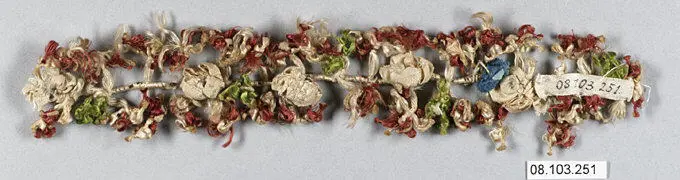
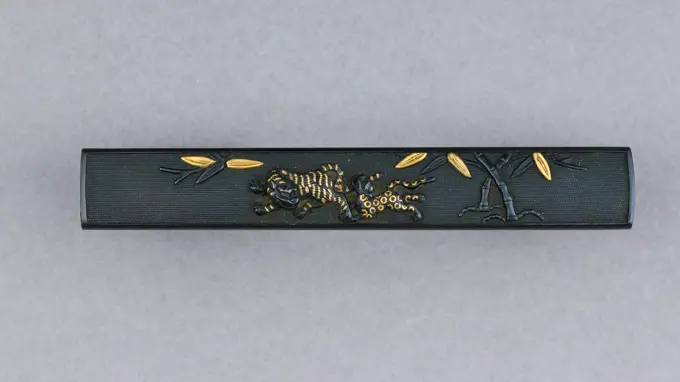
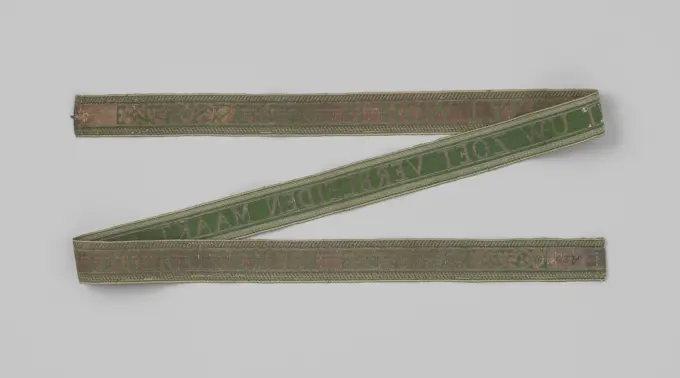
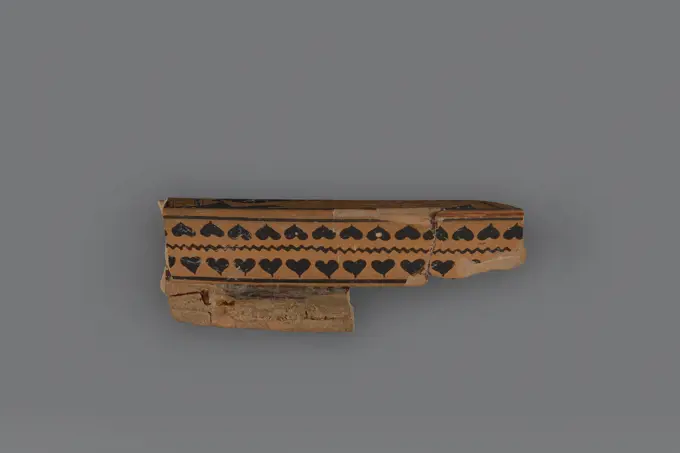
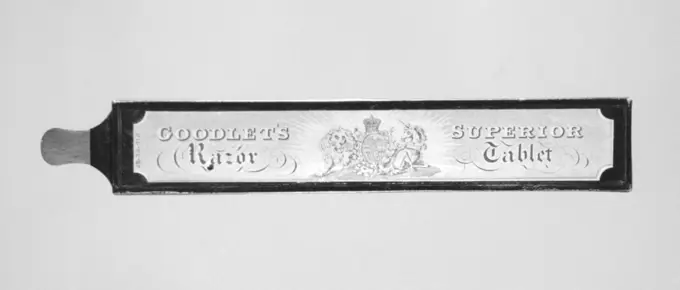
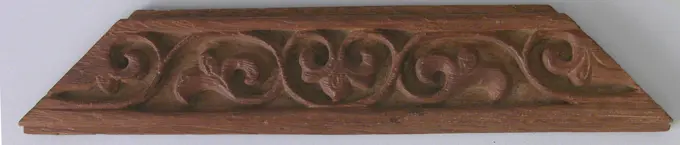
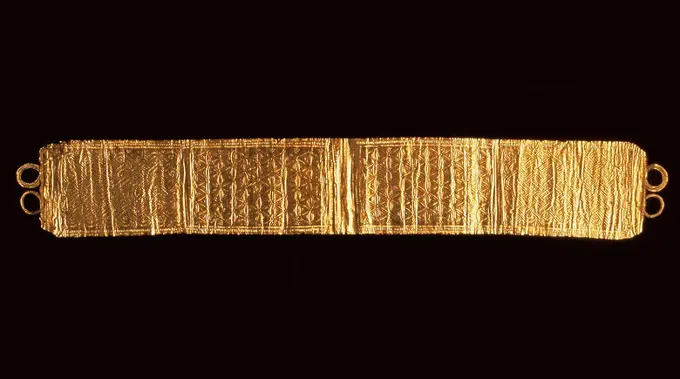
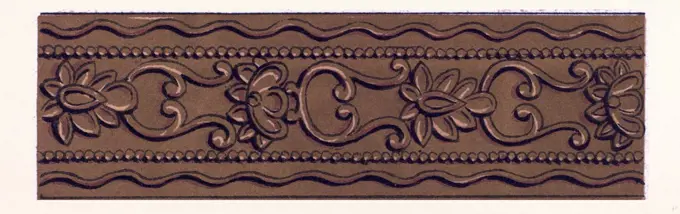
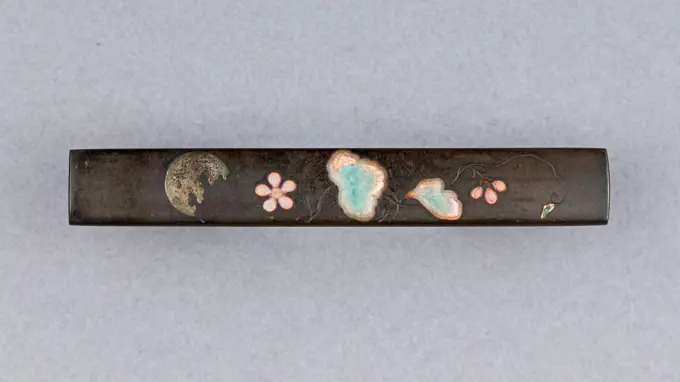
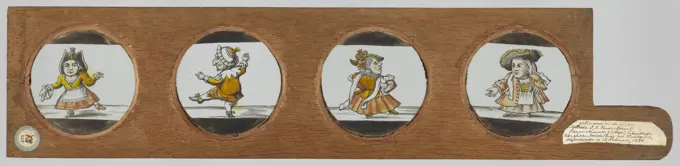
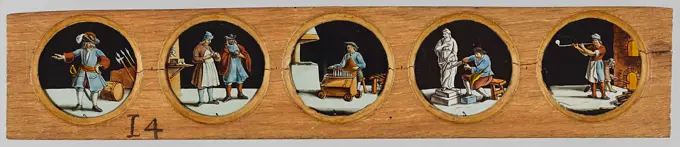
Knife Handle (Kozuka). Culture: Japanese. Dimensions: L. 3 13/16 in. (9.7 cm); W. 9/16 in. (1.4 cm); thickness 1/4 in. (0.6 cm); Wt. 1.2 oz. (34 g). Date: ca. 1615-1868. Museum: Metropolitan Museum of Art, New York, USA.Fringe, Medium: silk Technique: woven, Fringe in pink, tan, yellow, and white with a plain-woven heading. Skirt threads are arranged to form pink, tan, yellow and white stripes., Spain, 17th century, trimmings, FringeGimp ca. 1750 French or British. Gimp 213748Ribbon 1860 British. Ribbon 222591Oranjelint ,, 1775 - 1800 ribbon (material) Ribbon with serrated ends and centrally two medallions with portraits of Wilhelmina (left) and Willem V. between them in an Oranjeboom in a round container. An Oranjezon is displayed on the left and right. At the ends of the ribbon, three crowned coats of arms (Oranje-Nassau, Prussian eagle, Nederlandse Leeuw), connected to each other by a ribbon together. Inscription: Now. Sgijnt. Hy. Finished. For a long time, the Orange and then Adeleaer lives that Sy Beware Our Land by Gevaer Vivat Oranje. Now. Sgijnt. Hy. Finished. Netherlands silk. paper printingGUIRLANDE with flowers and fruits of gilded and painted Lindehout from home De Voorst, Anonymous, c. 1700 Garlande with flowers and fruits of gilded and painted lindenhout. Northern Netherlands wood (plant material). linden. paint (coating). gilding (material) gilding  House De Voorst Garlande with flowers and fruits of gilded and painted lindenhout. Northern Netherlands wood (plant material). linden. paint (coating). gilding (material) gilding  House De VoorstKnife Handle (Kozuka) 17th century Japanese A kozuka is a handle of a by-knife that is part of a sword mounting. It is kept in a slot on the reverse of a katana scabbard, often with a matching kōgai (hairdressing tool).. Knife Handle (Kozuka) 35044Piece 19th century Japan. Piece 72224Belt -Molding; wood, painted and gildedRevers of needle side with crosses and C-monograms, anonymous, c. 1690 - c. 1699 Revers of natural needle side, venise flat. Pattern with two crosses and two C-monograms in a curly tendril pattern of simple flowers. Above the monograms a flowerpot with three flowers. Ground with hexagonal picoted bars. The top is trimmed with a border bobbin. The bottom is finished with a picot edge with arcs. Europe linen (material) flat Venetian (needle point) Revers of natural needle side, venise flat. Pattern with two crosses and two C-monograms in a curly tendril pattern of simple flowers. Above the monograms a flowerpot with three flowers. Ground with hexagonal picoted bars. The top is trimmed with a border bobbin. The bottom is finished with a picot edge with arcs. Europe linen (material) flat Venetian (needle point)Border (France); Company: Oberkampf & Cie. (France); cotton; Warp x Weft: 51.5 x 6.5 cm (20 1/4 x 2 9/16 in.)Garter of green Ripszijde, with silver broched; With the text 'O huw'lyksbandt your sweet softened makes everything among you in common', Anonymous, Before 1877 Garter from green Ripszijde, with silver broched. A silver band runs over the center of the band in which the text 'O huw'lyksbandt jeense your sweet makes everything in common' has been saved. Netherlands whole: Silk Garter from green Ripszijde, with silver broched. A silver band runs over the center of the band in which the text 'O huw'lyksbandt jeense your sweet makes everything in common' has been saved. Netherlands whole: SilkHammock end, 18th century, 1 1/4 x 27 1/4 x 1/2 in. (3.18 x 69.22 x 1.27 cm), Ivory, China, 18th centuryBand, Medium: cotton Technique: bobbin lace (late Valenciennes ground), Curving stem with leaves and flowers on diamond mesh., 19th century, lace, Band, Band, Medium: cotton Technique: bobbin lace (late Valenciennes ground), Curving stem with leaves and flowers on diamond mesh., 19th century, lace, BandFringe 18th century Italian or Spanish. Fringe 213710Embroidered Strip, late 1800s-early 1900s. Japan, late 19th-early 20th century. Embroidery; silk and gold thread on silk ground; average: 168.9 x 33.7 cm (66 1/2 x 13 1/4 in.).Trimming, Medium: silk Technique: woven, Green and cream trimming fragment in a design of a Greek fret worked in diagonal lines., France, early 19th century, trimmings, TrimmingBorder (France); block-printed on machine-made paper; 79.5 x 8.5 cm (31 5/16 x 3 3/8 in.)Four empty vintage tin signs on a white background Four empty vintage tin signs on a white background Copyright: xZoonar.com/BorisxZerwannx 16119770Cornice Block. UnknownAttic Red-Figure Dinos Rim Fragment; Attributed to Kleophrades Painter (Greek (Attic), active 505 - 475 B.C.); Athens, Greece; 500-480 B.C; Terracotta; 11.5 cm (4 1,2 in.)Trimming (France); silkKnife Handle (Kozuka). Culture: Japanese. Dimensions: L. 3 3/4 in. (9.5 cm); W. 9/16 in. (1.4 cm); thickness 3/16 in. (0.5 cm); Wt. 1.1 oz. (31.2 g). Date: ca. 1615-1868. Museum: Metropolitan Museum of Art, New York, USA.Cylinder seal ca. 3100-2700 B.C.. Cylinder seal 326919Fringe (Italy); silkBobbin Lace Lappet, 18th century. Belgium, Binche, 18th century. Lace, bobbin: linen; average: 127.3 x 10.9 cm (50 1/8 x 4 5/16 in.).Hone with case (part of a set) 1848-49 Goodlet Co. () The firm of Nicholls & Plincke was founded by members of the relatively large community of English silversmiths and craftsmen working in Saint Petersburg. After 1840 it was one of the most important retailers of luxury items before Carl Fabergé overshadowed all competitors. Several contemporary Saint Petersburg newspapers praised the high-quality products of the magasin anglais Nicholls & Plincke.According to the donor's family tradition, this rare set with more than fifty items bearing the monogram CMI was "originally made for and used by Colin Macrae Ingersoll [1819-1903, when he accompanied his father, Ralph Isaacs Ingersoll [1788-1872, to the Court of Czar Alexander II of Russia, where the latter served President [James Knox Polk [1795-1849 as Minister Plenipotentiary from 1846 to 1848.. The family story has always been that [the set and case were made for stagecoach travel in Russia."Plain silver objects—like the ewer andPanel 909-1171ARTE CELTA. ESPAÑA. "DIADEMA DE RIBADEO". Realizada en oro, está fechada hacia el siglo II a. C. Museo Arqueológico Nacional. Madrid.Headcovering (France); silkCeltic ornamentTextile Swatches Onondaga Silk Company, Inc. (1925-1981). Textile Swatches, 1948-1959. 81 silk; 19 metal, (a) - (c): 9 x 4 in. (22.9 x 10.2 cm).    1948-1959Miser's Purse (France); silk, metal; L: 37.5 cm (14 3/4 in.)Fragments of semi famous fabric from the hundred unknownOrnament with plants, Bernard Willem Wierink, c. 1910 print   paper  ornaments ~ art. fable of Reynard the FoxCDK unknownborders, Machine-printed paper, flocked, Four equal dark tan flocked strips are separated by narrow white, dark brown and gilt lines., France, ca. 1860, Wallcoverings, bordersPleated fan and case, Gilded and gouache-painted vellum leaf; carved à jour, silvered, gilded, and painted ivory sticks, Larger central cartouche with maiden holding basket of cherries and two youths in Boucher style. Two smaller side cartouches with heroic landscapes. Spaces between filled with still life ornaments of Louis XVI style. Reverse has a simple landscape without a frame with a pink and blue floral border., France, Germany, ca. 1780, costume & accessories, Pleated fan and caseEdging, Technique: bobbin lace, Edge of bobbin lace, bracketed blossom; late 18th century Buckinghamshire., late 18th century, lace, EdgingFringe, Medium: silk Technique: plain weave, Red fringe with a plain weave heading, band in trellis pattern and skirt threads., Greece, 17th century, trimmings, FringeHindu ornamentFanière brothers, variations for bracelet plaque (main title). Graphite, gouache on transparent vellum, white paper and gray cardboard. Petit Palais, Museum of Fine Arts of the City of Paris.Border, Medium: cotton, wool Technique: satin stitch embroidery, Component A is black cotton heavily embroidered with white cotton in a stylized floral and geometric design. Component B is black cotton heavily embroidered with white cotton in a geometric design with insets of brightly colored wool., Balkans, 19th century, embroidery & stitching, BorderShaped Sleeve Ruffle (Engageanté) Made 1770-1789 Burano. Linen, needle lace .Trimming, Medium: silk Technique: cut supplementary warp pile on satin ground (velvet), Red trimming fragment in a design of an open flower alternating with a conventional ornament, France, 18th century, trimmings, TrimmingBobbin Lace (Point d'Angleterre) Edging, 18th century. Belgium, Brussels, 18th century. Lace, bobbin: linen; average: 7.7 x 142.2 cm (3 1/16 x 56 in.).Knife Handle (Kozuka) ca. 1615-1868 Japanese A kozuka is a handle of a by-knife that is part of a sword mounting. It is kept in a slot on the reverse of a katana scabbard, often with a matching kōgai (hairdressing tool).. Knife Handle (Kozuka) 25794Spine. 1900. Bourget, Paul (1852-1935). bindings (gathered matter components), Book covers. Spencer Collection. BookbindingDoor Surround, 20th century, 69 x 27 in. (175.26 x 68.58 cm) (object part, a)70 1/2 x 27 1/4 in. (179.07 x 69.22 cm) (object part, b)24 x 170 in. (60.96 x 431.8 cm) (object part, c), Cotton, silk, mirrors; needlework, India, 20th centuryFringe, Medium: silk Technique: woven, Green fringe with a plain-woven heading and a skirt of green threads., Italy, 16th century, trimmings, FringeA sash from the funeral of Adam Mickiewicz in Krakow on July 4, 1890Man's blanket, late 20th century, 51 1/8 x 63 13/16 in. (129.86 x 162.08 cm) (without fringe), Cotton, India, 20th centuryRibbon (USA); silkFringe late 18th century probably European. Fringe 213652Piece 18th century Japan. Piece. Japan. 18th century. Silk / Compound weave. Edo period (1615-1868). Textiles-WovenViking gilt bronze brooch. Artist: UnknownStained glass component isolated on grey backgroundTrimmings; silkFour caricatures of small people, one of whom to the dwarf tone, anonymous, c. 1710 - c. 1790  Four round glasses with caricatures of small people in a wooden rough with handle. The most left three glasses contain images of dancing small people. On the far right: a standing woman with hat, one hand in the side, the other extended, made to the dwarf tone. Netherlands glass. wood (plant material). oak (wood). oil paint (paint)  one person dancing aloneFan case mid-18th century French This precious fan and its protective case may have been a gift to King Ferdinand VI of Spain (1713-1759) and his wife, Maria Magdalena Barbara, Infanta of Portugal (1711-1758), whose conjoined coat of arms is worked into the lace and its mount.. Fan case 209749Vijf beroepen naar Het Menselyk Bedryf.Five glasses with images of professions in a wooden mount. Extreme left: Officer, with outstretched arm, in the weapons background. To the right: eyeglassesmaker, standing with a suitcase with glasses on a shelf, to the right of him a client. In the middle: a candle maker lifts a stretch with candles from the bath. To the right: a sculptor, with hammer and chisel working on a white stone statue of a woman. Extremely right: glass blower, with an oven, blowing on a long pipe with a bell glass at the end.Spine.. 1902 - 1843. bindings (gathered matter components), Book covers. Spencer Collection. BookbindingBorder (France); block-printed, flocked; 46 x 9 cm (18 1/8 x 3 9/16 in.)Garter from white and blue browed silk; With the text I give you dese garbant mdccxxii, anonymous, 1722 Garter of white and blue browed silk. The text is the text: I geue dese geignebant mdccxxii over the entire length of the garter. A Keizerskroon between inscription and the year. North Netherlands whole: Silk Garter of white and blue browed silk. The text is the text: I geue dese geignebant mdccxxii over the entire length of the garter. A Keizerskroon between inscription and the year. North Netherlands whole: SilkA sash from the funeral of Adam Mickiewicz in Krakow on July 4, 1890