Ornate Textile Fragments

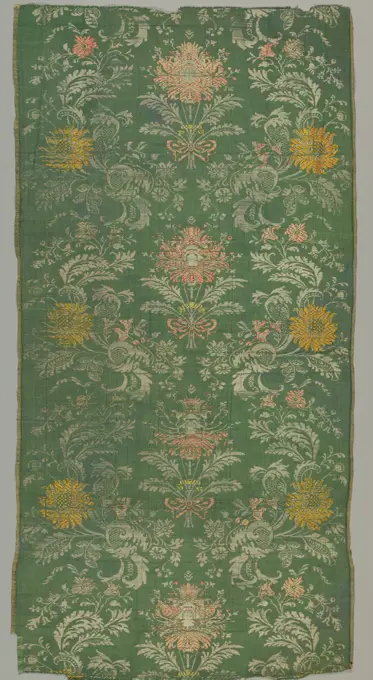
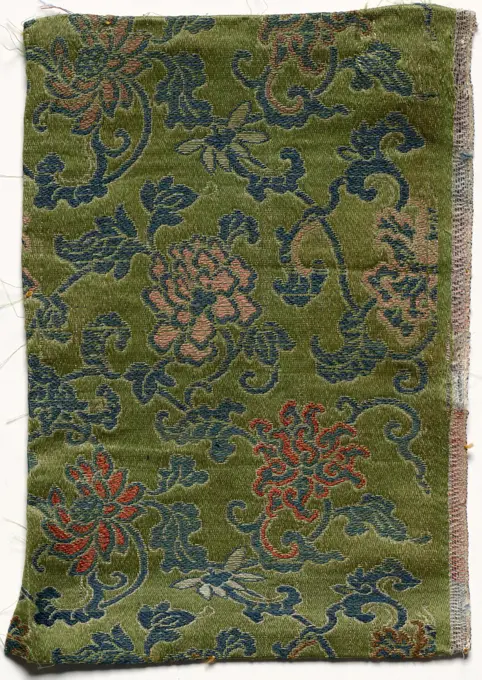
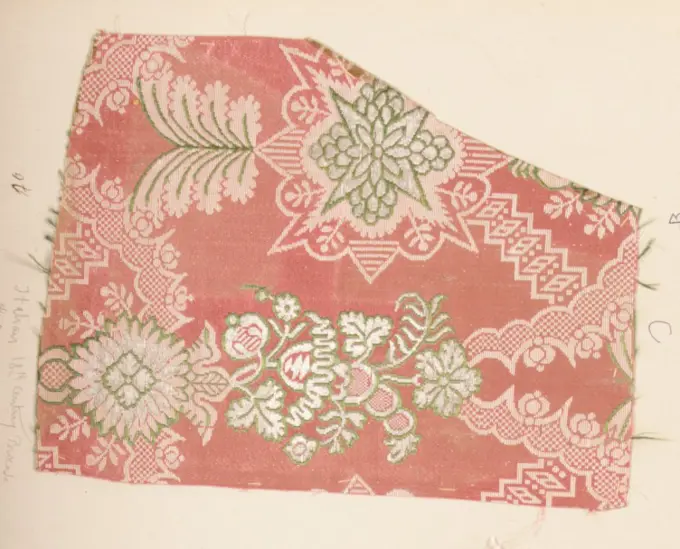
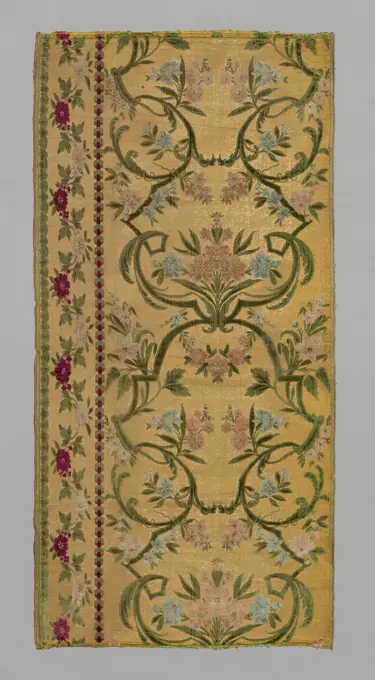
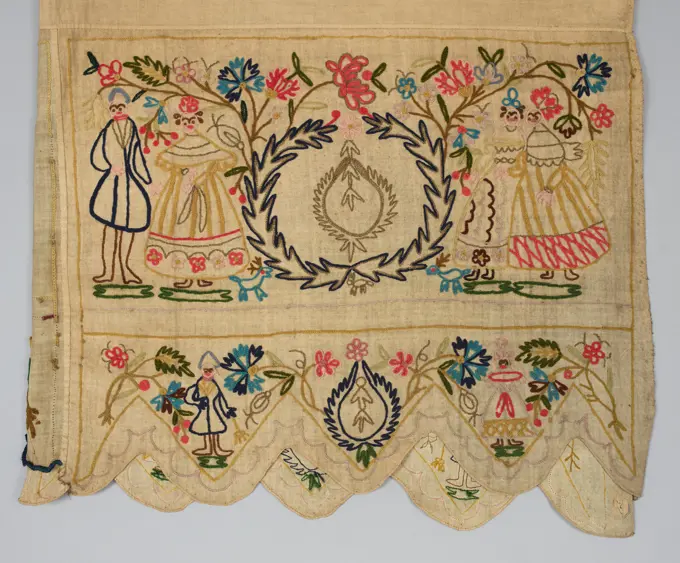
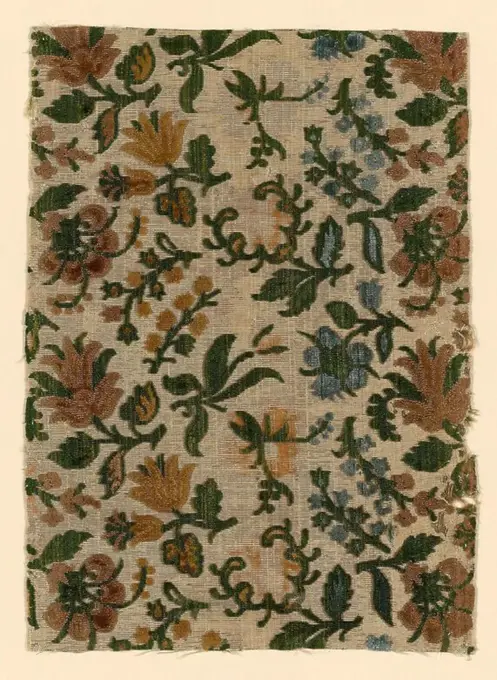
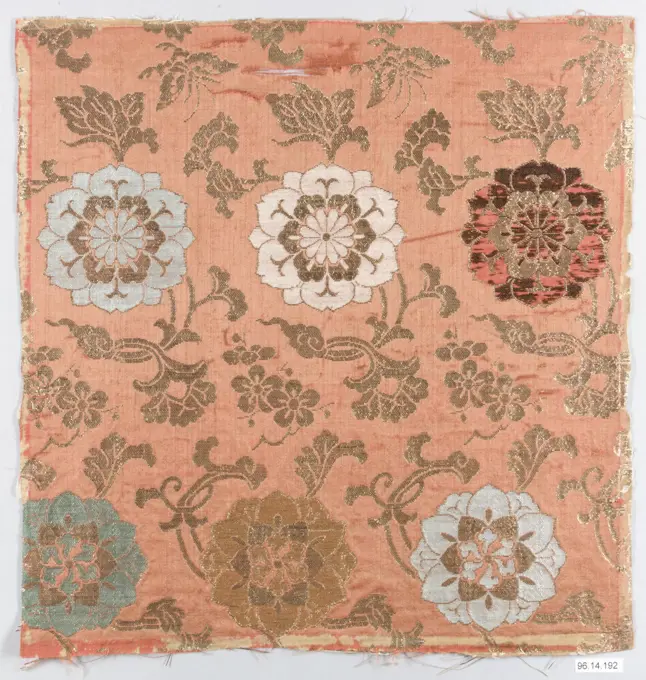
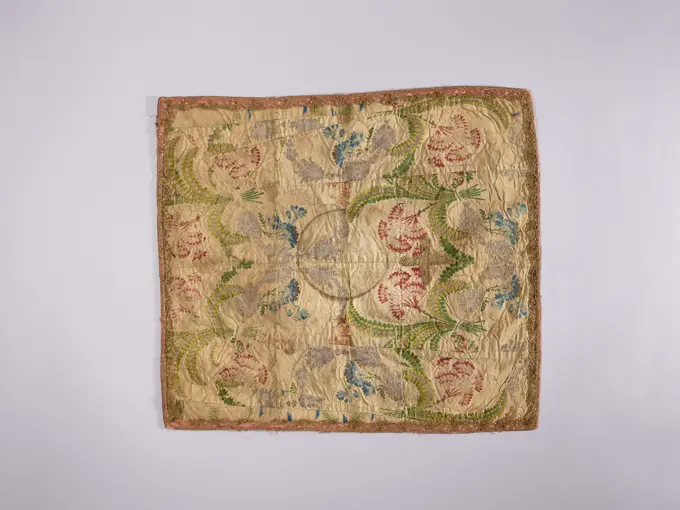
Historical textile remnants featuring floral patterns and intricate designs, showcasing different weaving techniques from the early modern period.
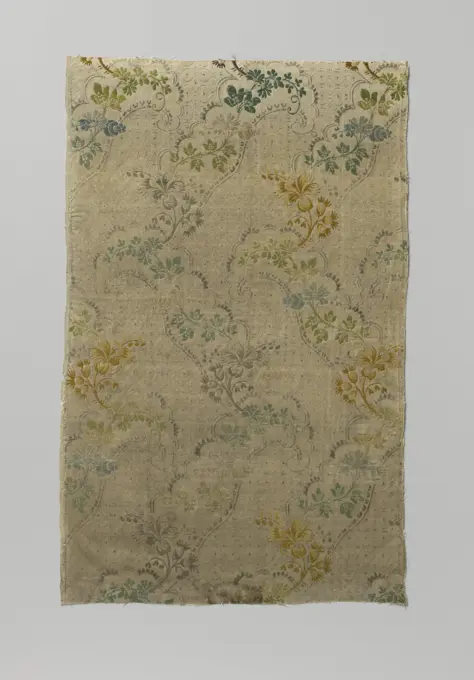
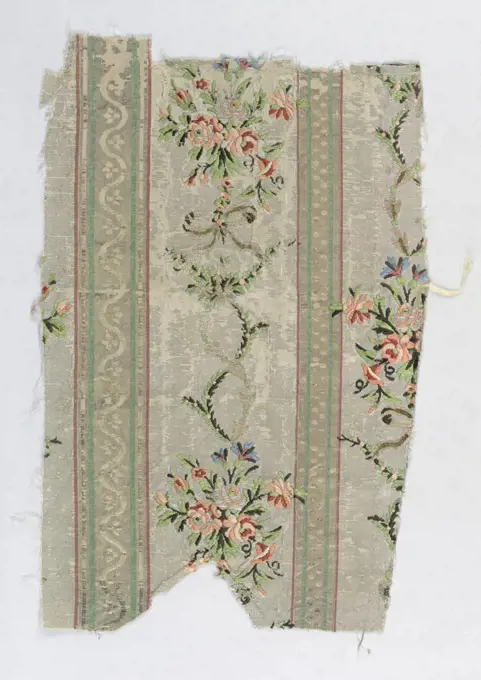
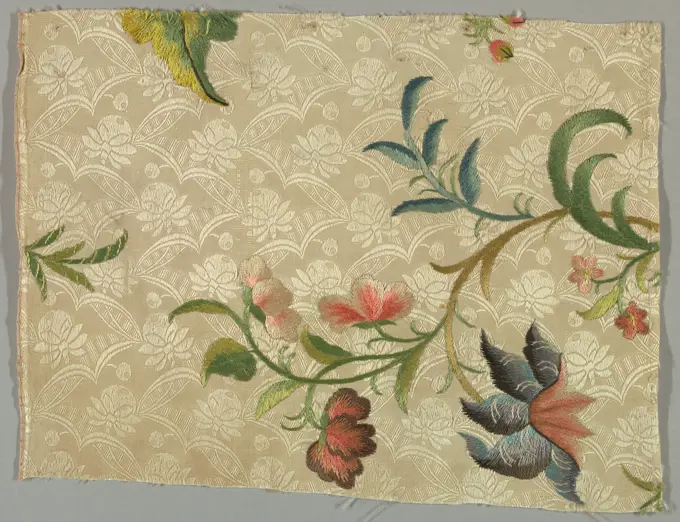
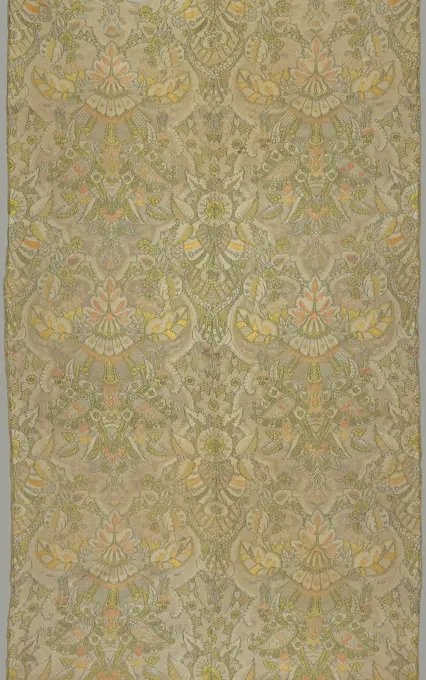
Fragment multicolored brochure silk, c. 1700 - c. 1730 Fragment multicolored silk tissue. The pattern has a gray soil on which wavy, scaly lace -like fields with saved spaces in which a multicolored flower branch. Netherlands silk twill Fragment multicolored silk tissue. The pattern has a gray soil on which wavy, scaly lace -like fields with saved spaces in which a multicolored flower branch. Netherlands silk twill
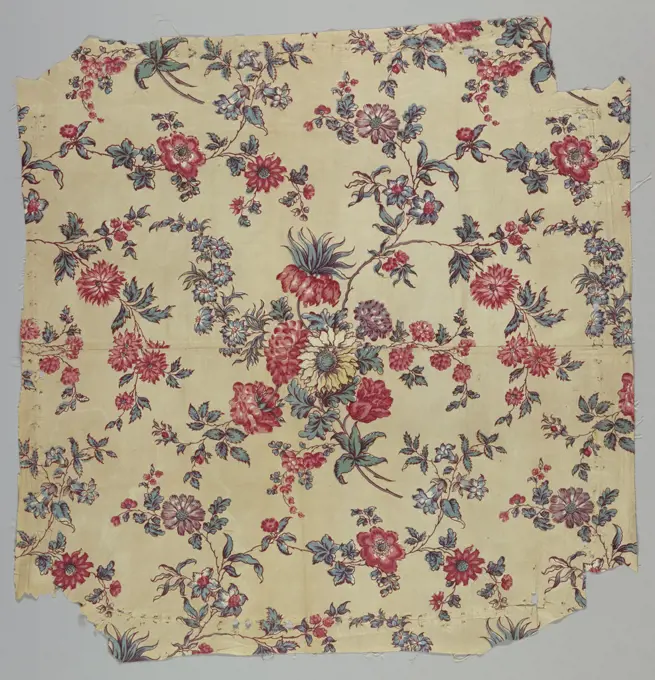
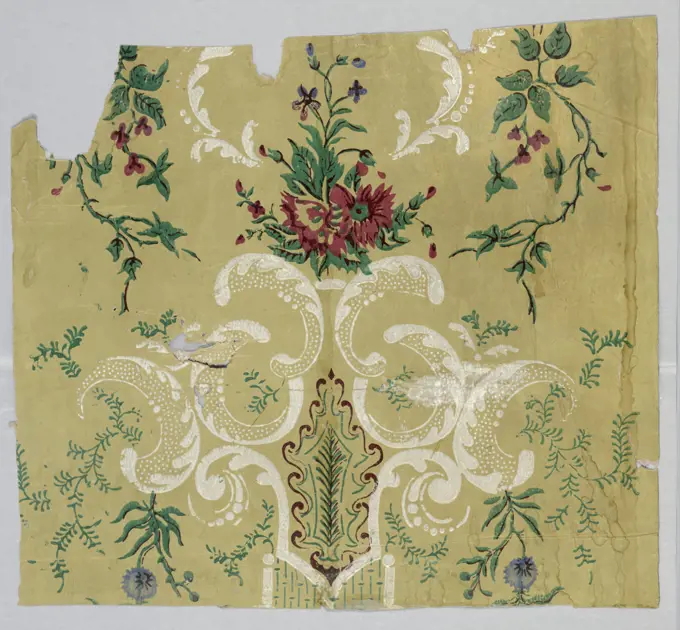
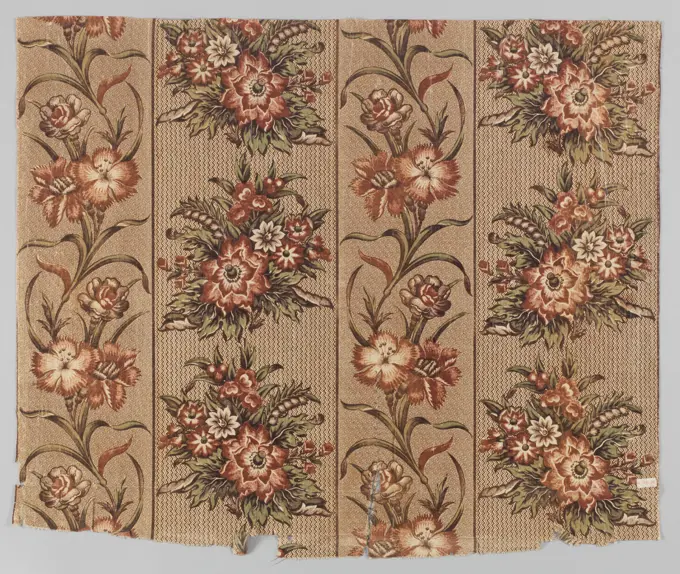
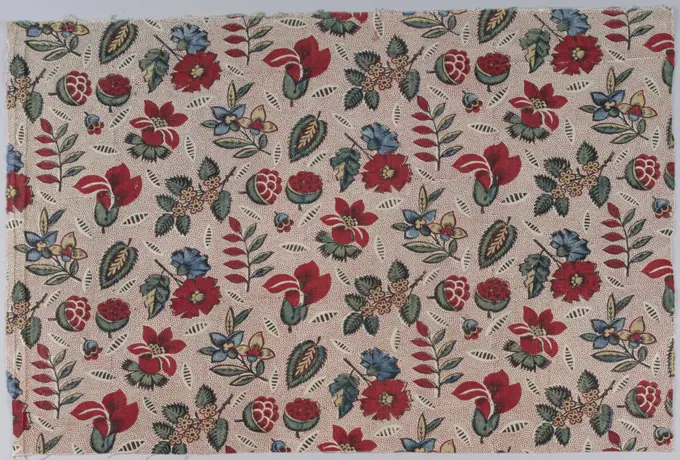
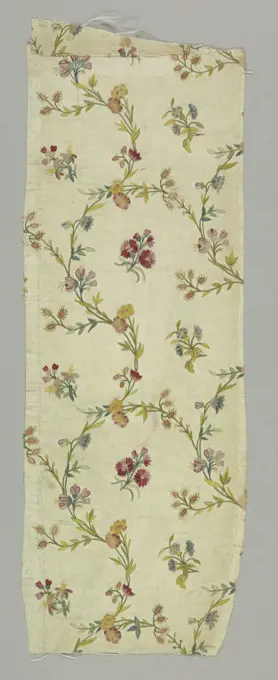
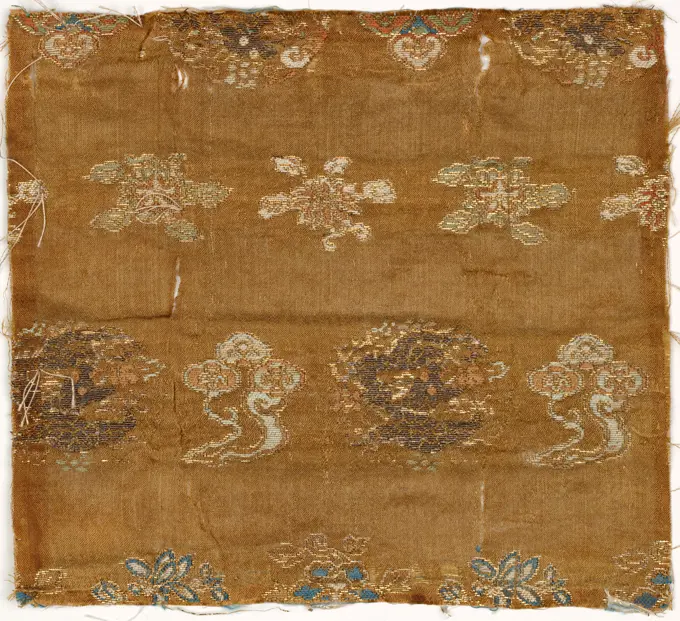
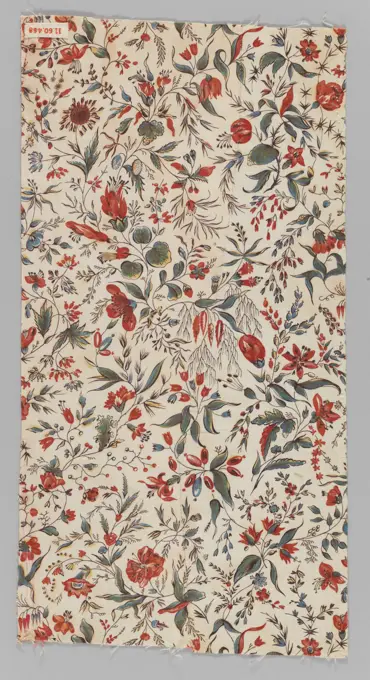
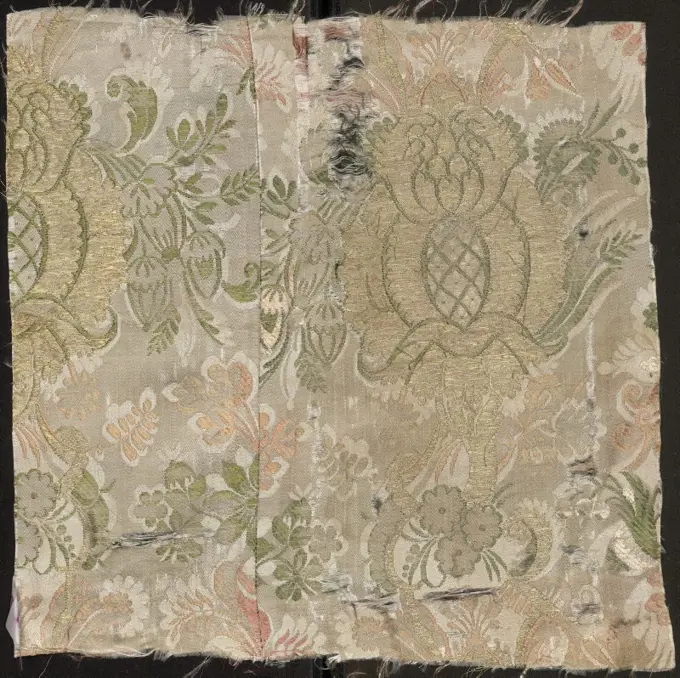
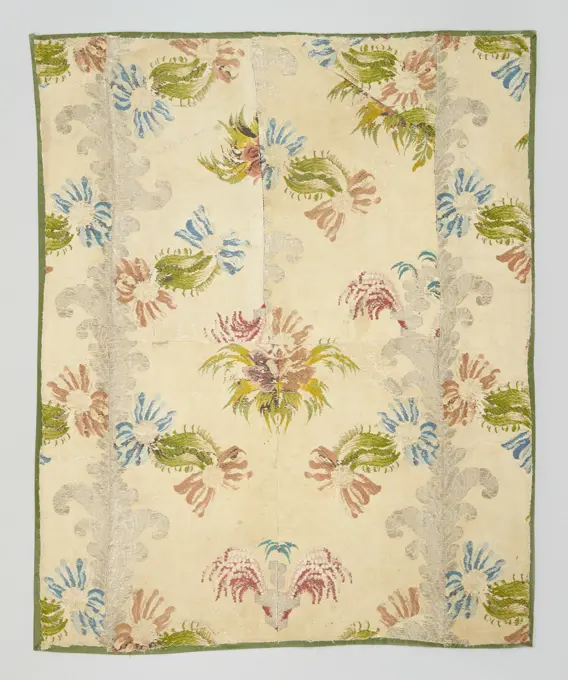
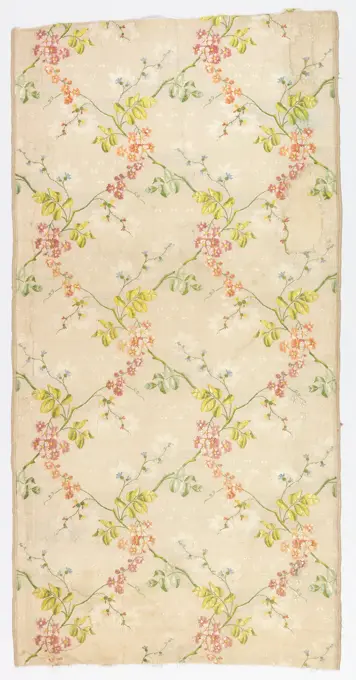
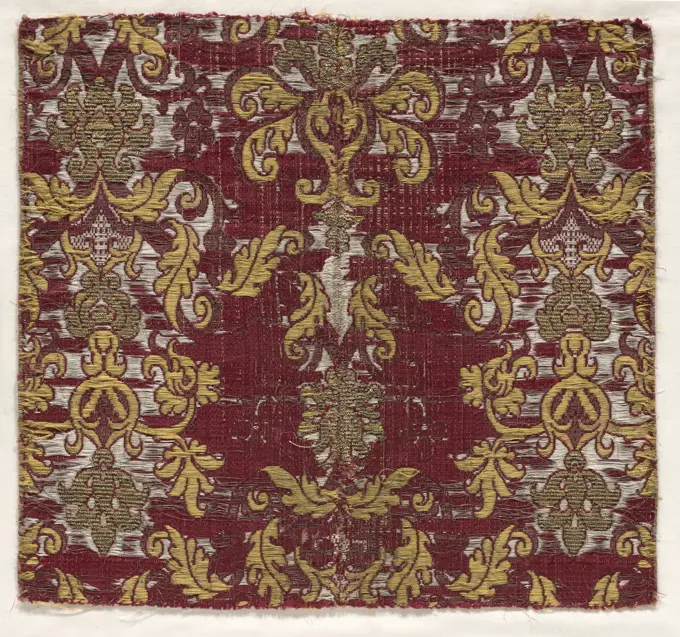
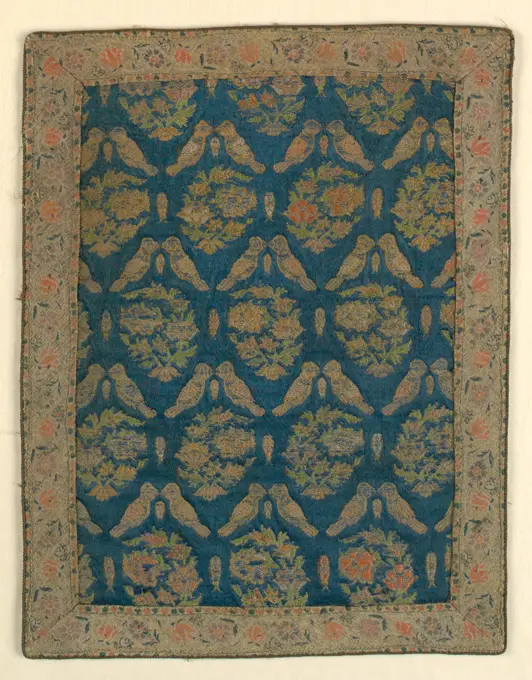
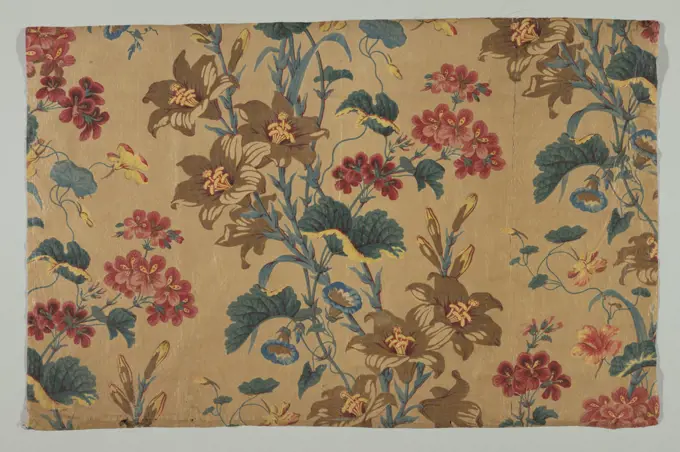
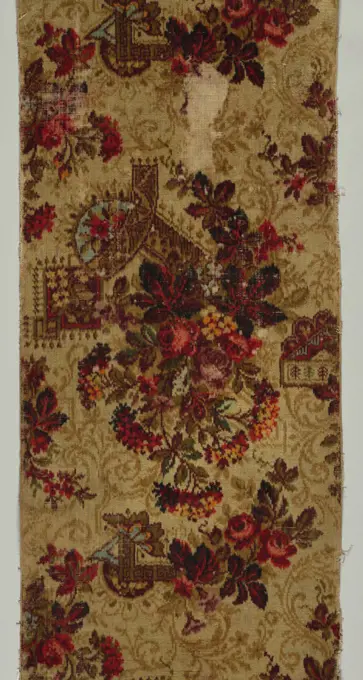
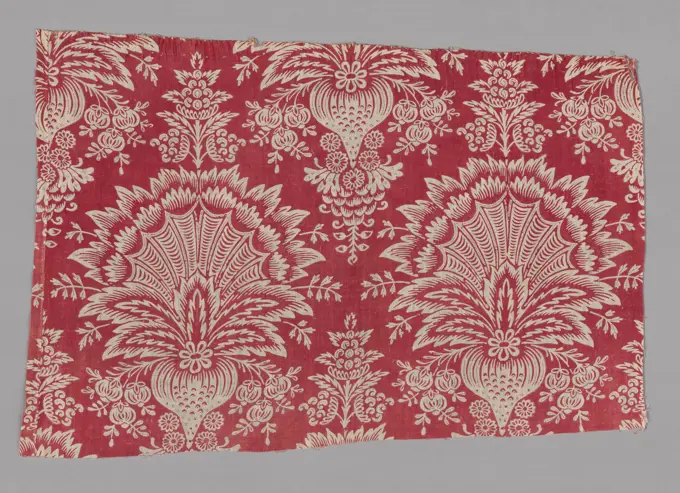
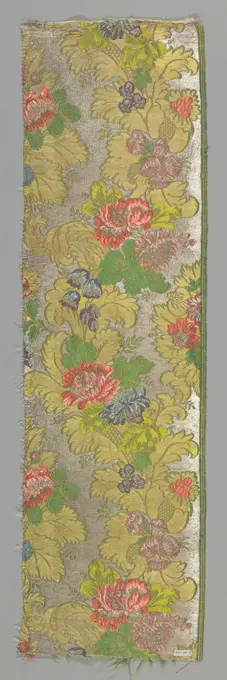
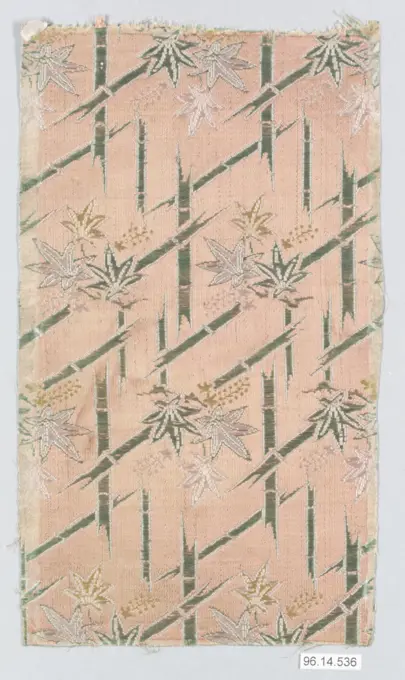
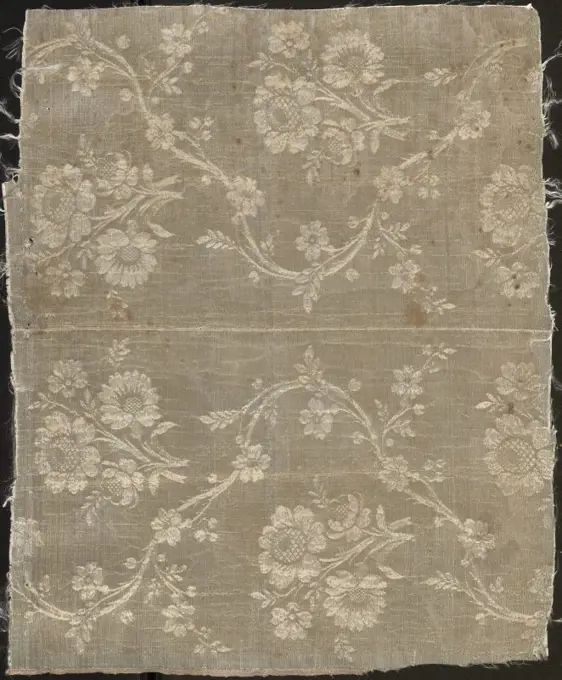
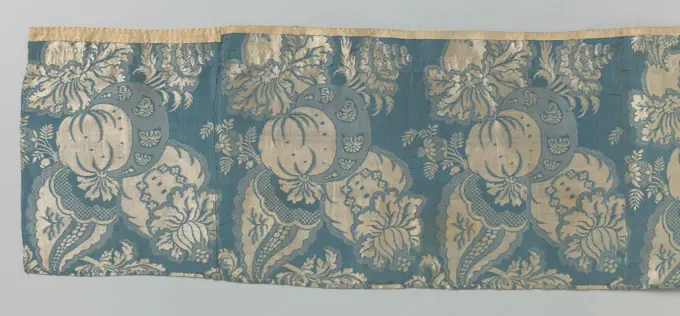
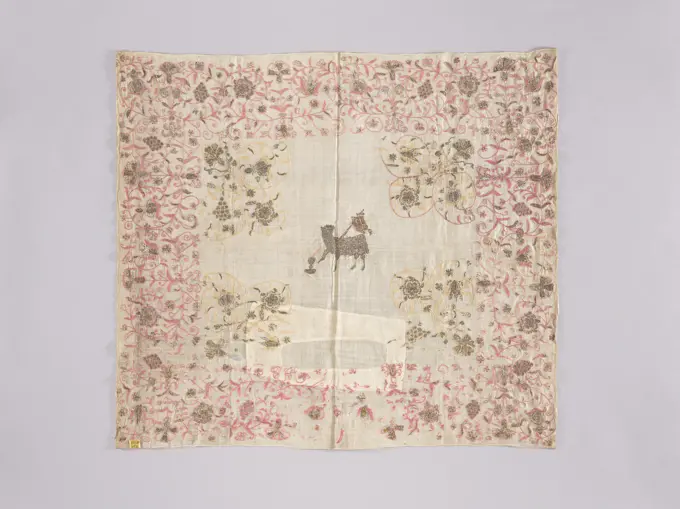
Brocaded Silk, early 1700s. France, early 18th century, late Baroque. Plain compound cloth, brocaded; silk; overall: 66.5 x 56 cm (26 3/16 x 22 1/16 in.).Fragment, Medium: silk Technique: woven, Flowers on striped white ground., late 18th century, woven textiles, FragmentFragment multicolored brochure silk, c. 1700 - c. 1730 Fragment multicolored silk tissue. The pattern has a gray soil on which wavy, scaly lace -like fields with saved spaces in which a multicolored flower branch. Netherlands silk twill Fragment multicolored silk tissue. The pattern has a gray soil on which wavy, scaly lace -like fields with saved spaces in which a multicolored flower branch. Netherlands silk twillFragment (Furnishing Fabric) Made 1837-1838 England. Cotton, plain weave; engraved roller printed .Piece 18th-19th century Japan. Piece 67475Fragment ca. 1775 Indian, for French market. Fragment 221832Fragment multicolored seals, c. 1730 - c. 1760 Two fragments of multi -colored silk tissue. The pattern has white leaf vines with heart -shaped leaves and multicolored flower branches. Netherlands silk Two fragments of multi -colored silk tissue. The pattern has white leaf vines with heart -shaped leaves and multicolored flower branches. Netherlands silkTextile (India); cottonFragment, Medium: silk, metallic Technique: brocaded plain weave, Floral motif facing in alternate rows on red ground., 17th century, woven textiles, FragmentTextile (England or United States); linenTextile, Medium: cotton Technique: roller and block printed on plain weave, Naturalistic flowering vine and flower sprays in allover design in shades of red, blue, violet, and yellow with dark purple outlining. Made into a chair seat., France, late 18th-early 19th century, printed, dyed & painted textiles, TextileSidewall - fragment, Machine-printed, In thinly applied colors, white scroll work, deep pink flowers with maroon shading, green foliage with brown-black veining, blue flowers on tan ground., possibly USA, 1840-60, Wallcoverings, Sidewall - fragmentFragment multicolored striped brochure silk, c. 1750 - c. 1800 Fragment multicolored silk tissue. A cream -colored soil has stripes in white and pink with thrown flower branches.  silk Fragment multicolored silk tissue. A cream -colored soil has stripes in white and pink with thrown flower branches.  silkPiece ca. 1840 British or American. Piece. British or American. ca. 1840. Cotton. Textiles-PrintedFragment, Medium: silk, metallic thread Technique: plain compound satin weave, Fragment has a ground of gold twill, nearly worn away, with a design of slender sprays of carnations and lilies arranged in horizontal rows turning alternately left and right, in blue satin outlined by extra white silk weft., Iran, 17th century, woven textiles, FragmentTextile, Medium: linen, cotton Technique: block printed on plain weave, Half-drop repeat of flower blossoms, leaves and seed pods in bright colors heavily outlined in black on a white ground with red picotage., 1760-70, printed, dyed & painted textiles, TextileTextile, Medium: silk Technique: embroidered in chain stitch on plain weave, White ribbed silk embroidered in colored silks and chenille (in chain stitch) in design of interlacing stems and floral sprays., Europe, ca. 1760, embroidery & stitching, TextileFragment, early 1700s. China, early 18th century. Brocaded satin; silk; overall: 16.5 x 15.3 cm (6 1/2 x 6 in.).Piece ca. 1835-40 British. Piece. British. ca. 1835-40. Cotton. Textiles-PrintedPiece of fabric. unknown, authorFragment; silk; Warp x Weft: 46.2 x 26.8 cm (18 3/16 x 10 9/16 in.); 1896-10-1Fragment (France); linen warp, cotton weft; Warp x Weft: 101 x 61 cm (39 3/4 x 24 in.); Bequest of Elinor Merrell; 1995-50-234Fragment, Medium: linen, cotton Technique: block printed on plain weave, Fragment printed in red on a white ground in a smale-scale floral design., England, late 18th-early 19th century, printed, dyed & painted textiles, FragmentPiece of fabric. unknown, authorChasuble, 1700s. Italy, 18th century. Embroidery; silk and metallic threads; overall: 104.8 x 66.6 cm (41 1/4 x 26 1/4 in.).Fragment Made 1701-1750 France. Silk, warp-float faced satin weave with supplementary brocading wefts and self patterning ground wefts tied by supplementary binding warps in plain interlacing (lampas) .Textile; silkTextile (India); cotton; Warp x Weft: 29.2 x 38.7 cm (11 1/2 x 15 1/4 in.)Fragment (From a Karaori) Made 1601-1700 Japan. Brocaded plain simple twill silk and gilt paper wound on silk core (kara ori) .Fragment (Italy); silk, metallic yarnsFragment of silk fabric  naturaIIstic flower pattern unknownTextile; silkFragment, 1700s. China, 18th century. Silk; overall: 19.7 x 15.9 cm (7 3/4 x 6 1/4 in.).Fragment 18th century Italian. Fragment 230228Piece Japan 18th-19th centuryTextile, Medium: cotton Technique: printed on plain weave, glazed, Allover design of asters in red, purple, blue and green on an off-white ground., England, late 19th century, printed, dyed & painted textiles, TextileOvergrain from printed cretonne with swans and lissen. Overgrain from printed cretonne with swans and lissen. Lined and equipped with passement with metal rings.Fragment 18th century Italian. Fragment 230355Piece 18th-19th century Japan. Piece 67539Textile (France); Company: Oberkampf & Cie. (France); cotton; Warp x Weft: 59 x 23 cm (23 1/4 x 9 1/16 in.) Repeat (offset) H: 24.8 cm (9 3/4 in.)Panel Made 1601-1800 France. This 19th-century velvet demonstrates the fashion for historical furnishings. The silk textile firm of Mathevon and Bouvard produced these velvets using designs and patterns from earlier eras. In comparing this particular design to the smaller and earlier example to the right, similarities in color palette as well as pattern become apparent. Anxieties about the inferiority of modern manufacturing contributed to the popularity of textiles such as these, in which works from the past seem to have been replicated.óModern Velvet A Sense of Luxury in the Age of Industry, Oct 21, 2016-Mar 19, 2017, Galleries 57-59. Silk and gilt-metal strip, twill weave with supplementary patterning wefts and pile warps forming cut and uncut voided velvet Silk, cut, uncut, voided velvet with additional patterning wefts of gilt strips against twill weave foundation .Fragment multicolored brochure side. Fragment white silk tissue with white lace garlands between which multicolored flower reflections.Textile panel, Medium: silk, paper with applied silver foil Technique: plain compound twill, Panel of tan silk with figured design of fine pendant branches with leaves, in green, brown, blue and tan silks and silver paper., Japan, late 19th century, woven textiles, Textile panelPiece ca. 1735 Italian. Piece 222658Textile; silkFragment (Italy); silk, metallic threadCeiling Paper (USA); Manufactured by Maxwell & Co., S.A. (United States); machine-printed paper, liquid mica; 82.5 x 49 cm (32 1/2 x 19 5/16 in.)Brocatille Textile Fragment, 16th century. Spain, 16th century. Silk, metallic thread; average: 34.4 x 36.9 cm (13 9/16 x 14 1/2 in.).Sampler (Spain); cotton and wool embroidery, cotton foundation; Warp x Weft: 39 x 32.5 cm (15 3/8 x 12 13/16 in.); Bequest of Mrs. Henry E. Coe; 1941-69-257Textile (Japan); silkTextile; silkFragment Made 1800-1900 Japan. .Textile, Medium: cotton Technique: printed by block and engraved roller on plain weave, glazed, Large flowers in bright colors on a ground of pin-dots. Printed in brown, blue, yellow and red., England, 1830-50, printed, dyed & painted textiles, TextileTextile LengthTextile; cottonPortiere; cotton, rayonSarong, early 1900s. Indonesia, Java, North Coast, Indramaju , early 20th century. Batik; cotton; overall: 196.9 x 106.7 cm (77 1/2 x 42 in.). Batiks made along the northern coast of Java were influenced not only by Chinese motifs and designs but also European, as a result of the Dutch presence in Indonesia from the sixteenth to the twentieth centuries. In this sarong, European influence is clearly evident in the sprays of flowers and types of birds represented. Batiks dyed only in indigo were a specialty of Indramaju. Shading and contrast are skillfully achieved through different intensities of blue, through the character and thickness of line, and by the use of tiny dots.Textile (France); silk; Warp x Weft: 182 x 110 cm (5 ft. 11 5/8 in. x 43 5/16 in.) Repeat H: 62.5 x 28 cm (24 5/8 x 11 in.)Carpet fragment, Medium: cotton, bast fiber, wool Technique: printed supplementary warp-cut pile, Repeat of sprays of flowers within geometric brackets in bright and dark colors, mainly reds, black, browns, yellow-tans, and light blue on a vine pattern background in dark orange on ivory., USA, 1850-1900, woven textiles, Carpet fragmentPanel Made 1820-1840 France. Cotton, plain weave; block printed .Fragment (England); cotton; Warp x Weft: 31 x 67 cm (12 3/16 x 26 3/8 in.); Bequest of Elinor Merrell; 1995-50-246Piece 18th-19th century Japan. Piece 66945Piece 18th century Japan. Piece 71183Length ca. 1750 British, London, Spitalfields. Length 229943Piece 17th century Japan. Piece 71835Leaf with flower pattern, Anonymous, 1800 - 1900 paste paper Leaf with pattern of large and small flowers. Printed from two the same block. Possibly used as a cover.  paper. block printing (relief printing process) ornament derived from plant formsFragment (China); silk; temperaSidewall Sample; machine-printed on paper; 22.5 x 22.5 cm (8 7/8 x 8 7/8 in.)Wedding handkerchief 1855 American. Wedding handkerchief 169653Ceiling Paper (USA); Manufactured by Maxwell & Co., S.A. (United States); machine-printed paper; 95 x 49 cm (37 3/8 x 19 5/16 in.)Textile (France); cottonFragment (Russia); silk, metallic yarnsPiece 18th-19th century Japan. Piece 66260Textile (France); silkFragment of silk fabric unknownFragment of fabric brocaded with silver unknownPiece of fabric. unknown, authorFragment 17th century Italian. Fragment 230337Fragments ; silk, metallicFragment van een zijdeweefsel met een patroon van een fors boeket en granaatappel in wit op blauw, een zogenaamd mozaïekdecor.Fragment of a silk tissue with an ongoing pattern of very large flowers and a fruit. A bouquet is arranged a hanging pomegranate. At the bottom left a pear-shaped leaf with lobed contours and mosaic edges and grain. At the bottom right of a loose flour, upper left a poppy with large seed bulb as a heart and at the top right of three dusting flowers. Under the leaf a curved flower branch on an obliquely cut base. Note: Fragment upholstery () From a "cheek seat".Samples, Orinoka Mills, (Philadelphia, Pennsylvania, USA), a. red ground with white and pink/orange motifs, b. red ground with pink/orange and gold motifs, USA, ca. 1910, woven textiles, SamplesValentine Greeting, Brush and watercolor, cut-paper on embossed paper, A bunch of flowers in an embossed paper enframement and in the center a printed inscriptional ribbon: 'Firm and faithful, fond and true / Such my love I'll be with you'., United States, ca. 1850, Greeting Card, Greeting CardPiece 1808-12 British. Piece. British. 1808-12. Cotton. Textiles-PrintedFragment (Japan)Chalice Veil, 1600s. Italy, Genoa, 17th century. Velvet; overall: 56.7 x 56.7 cm (22 5/16 x 22 5/16 in.).Piece 18th-19th century Japan. Piece. Japan. 18th-19th century. Silk. Textiles-WovenBrocade Textile, 1600s. Italy, Venice , 17th century. Brocade; silk and metal; overall: 63.5 x 20.9 cm (25 x 8 1/4 in.).Fragment Made 1350-1400 Lucca. Silk and animal-substrate-wrapped linen, warp-float faced 5 1 satin weave with weft-float faced 1 3 's' twill interlacings of secondary binding warps and supplementary patterning wefts .Veil. unknown, authorTextile; cottonEmbroidry Frezie is iinen unknownFrieze (USA); Manufactured by Maxwell & Co., S.A. (United States); machine-printed paper; 91.5 x 49 cm (36 x 19 5/16 in.)Textile, Cambon et Cie, Medium: cotton Technique: relief printed, Cream-colored cotton block printed in blue, red and dark brown for outlines. Medallion framing a man in a tie wig. Perched above the medallion is an eagle with a snake in its beak. Wide curving band crossed with flower sprays with background printed in red stripes and small dots., Montpellier, France, 1777, printed, dyed & painted textiles, TextileFragment. Italy. Date: 1601-1625. Dimensions: 31.1 x 22.5 cm (12 1/4 x 8 7/8 in.)Repeat: 17.1 cm (6 3/4 in.). Silk, cut, uncut, and voided velvet with additional patterning wefts in gold foil against plain weave foundation. Origin: Italy. Museum: The Chicago Art Institute, Chicago, USA.Textile (France); linen, cottonPiece 18th century Japan. Piece 65918Textile (France); silk; Warp x Weft: 82 x 49 cm (32 5/16 x 19 5/16 in.)Textile (China); silk; Bequest of Richard Cranch Greenleaf in memory of his mother, Adeline Emma Greenleaf; 1962-56-192-a,bVeil. unknown, authorPiece 18th-19th century Japan. Piece 67092