Ornate Textiles and Carpets

A variety of intricate textiles and carpets featuring rich patterns, colors, and motifs, including traditional weavings and oriental designs.
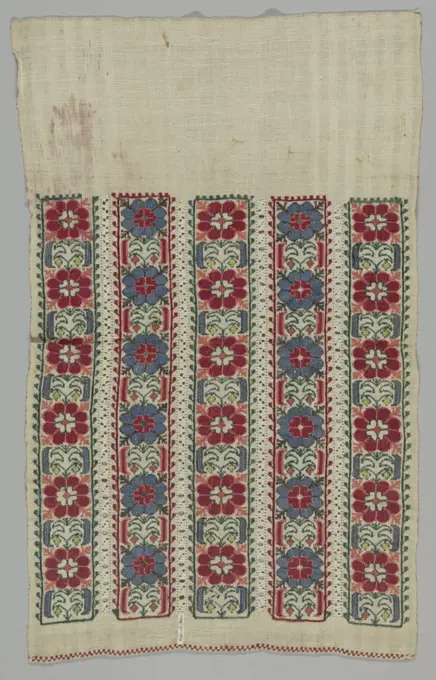
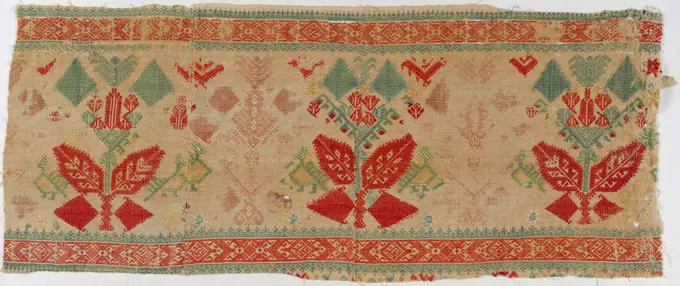
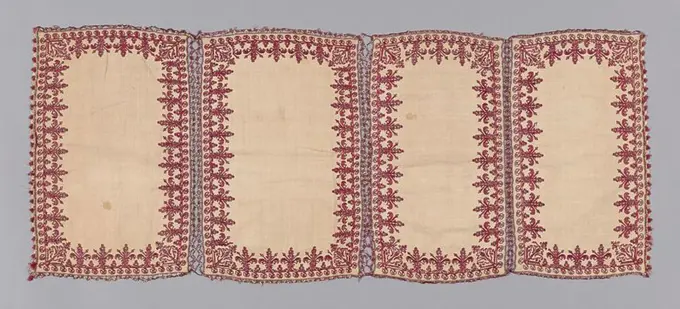
Towel end, Medium: cotton, silk Technique: embroidery and drawnwork on plain weave, Piece of white cotton with five vertical embroidered stripes separated by lines of drawnwork. The stripes are alternately of red flowers, blue leaves, yellow buds and blue flowers, red leaves and orange buds. Ornamental hem of red cross stitch., Turkey, 19th century, embroidery & stitching, Towel end
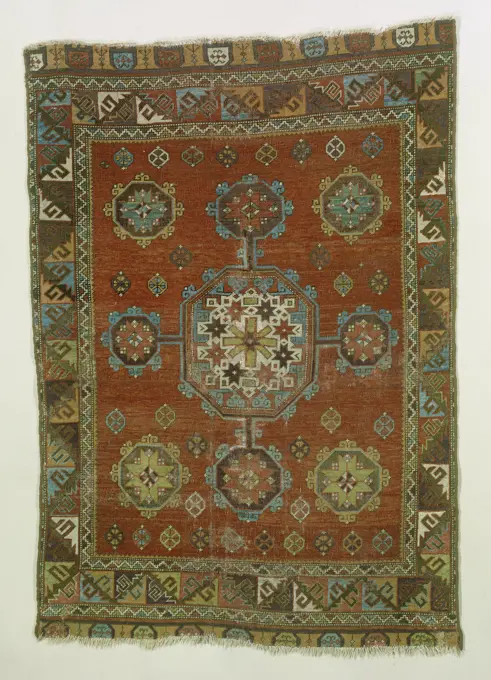
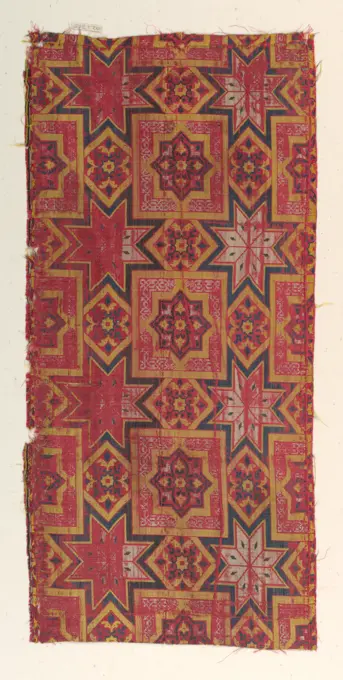
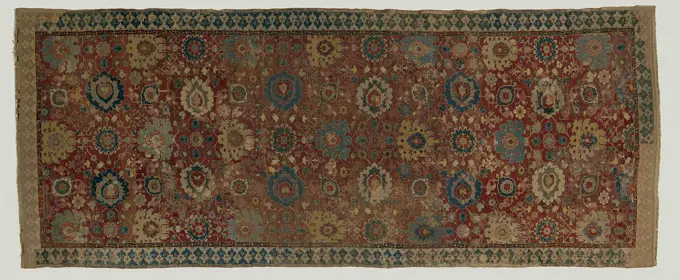
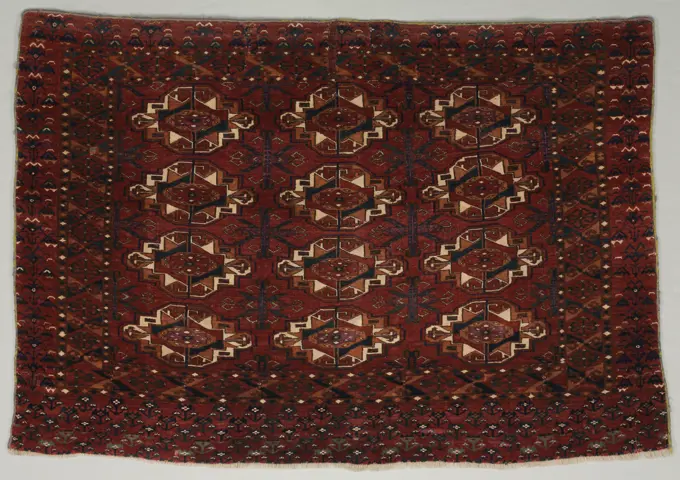
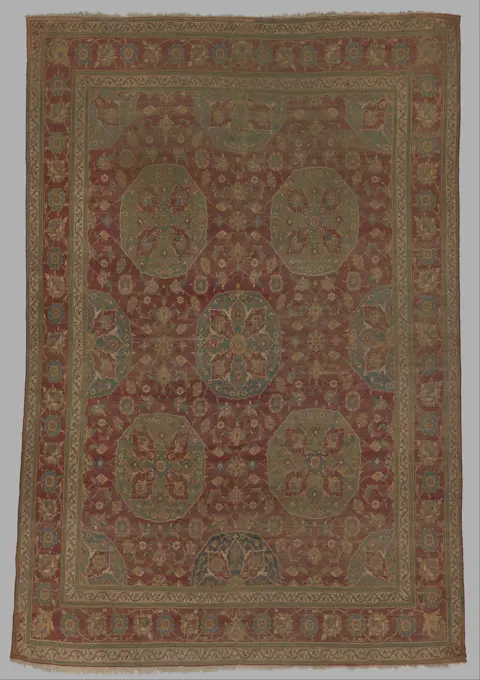
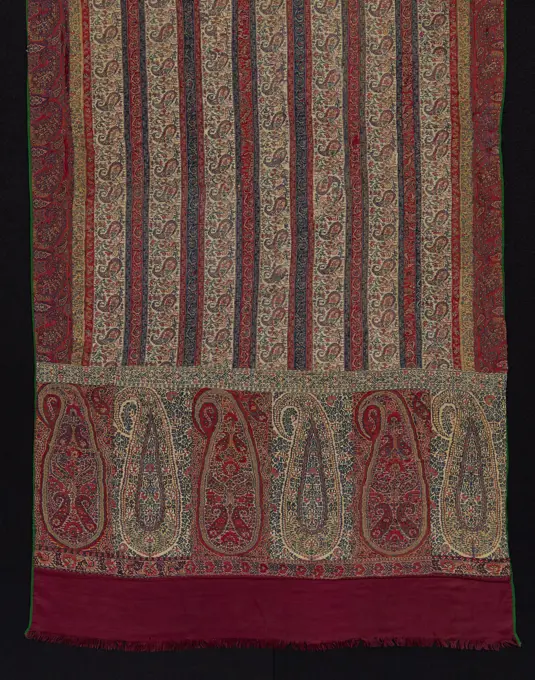
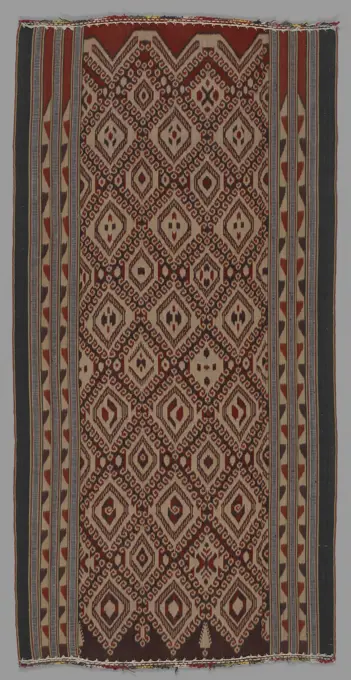
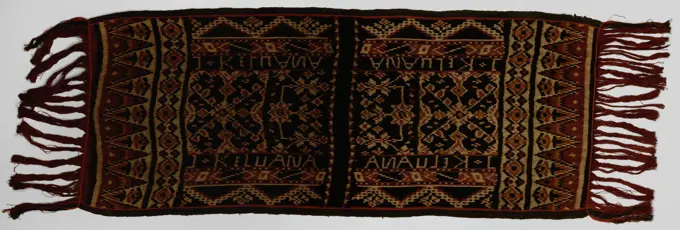
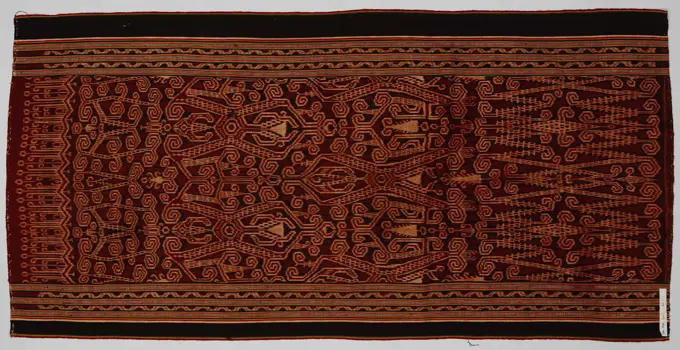
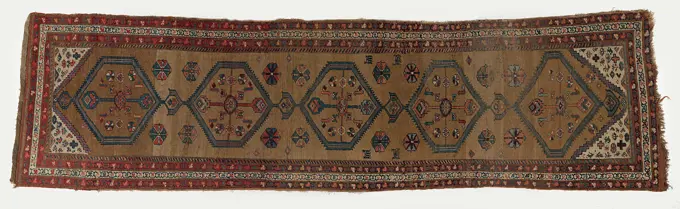
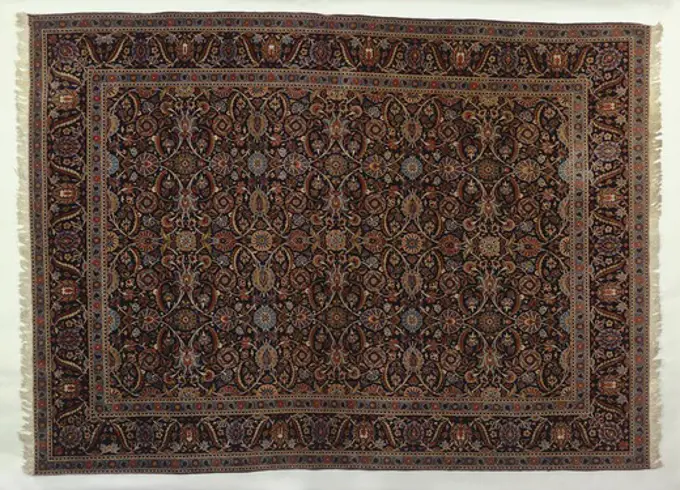
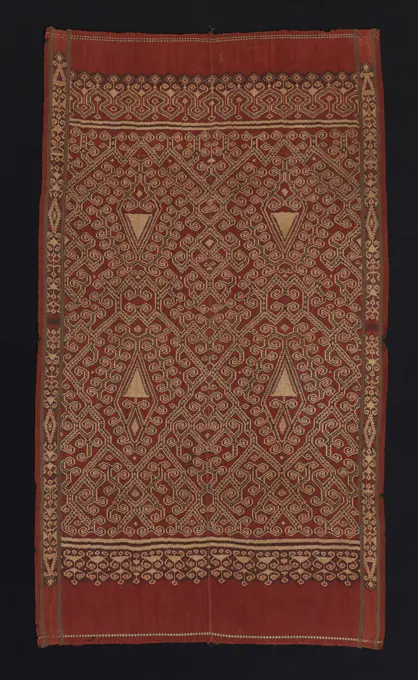
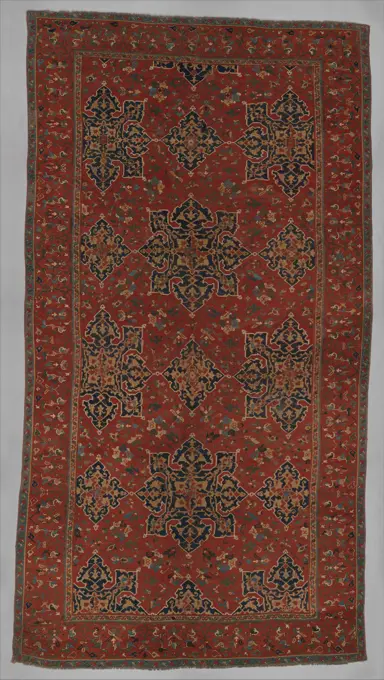
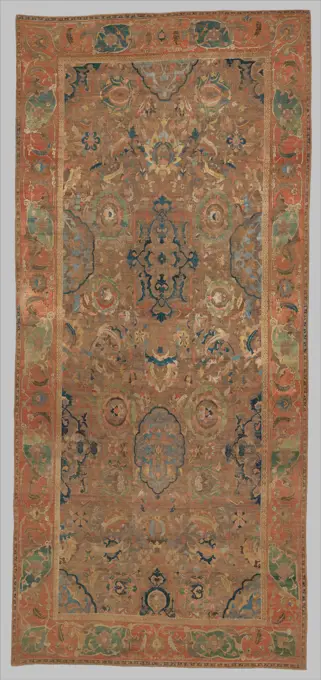
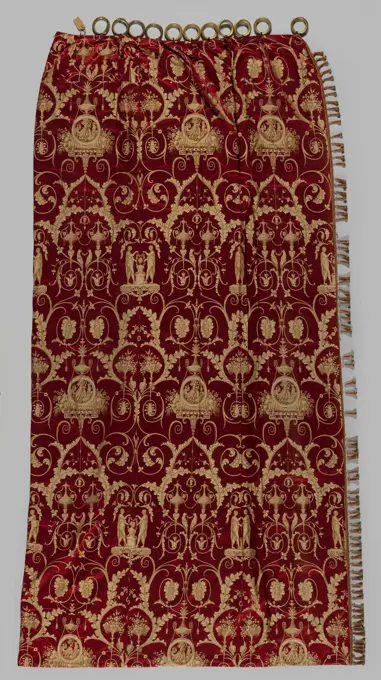
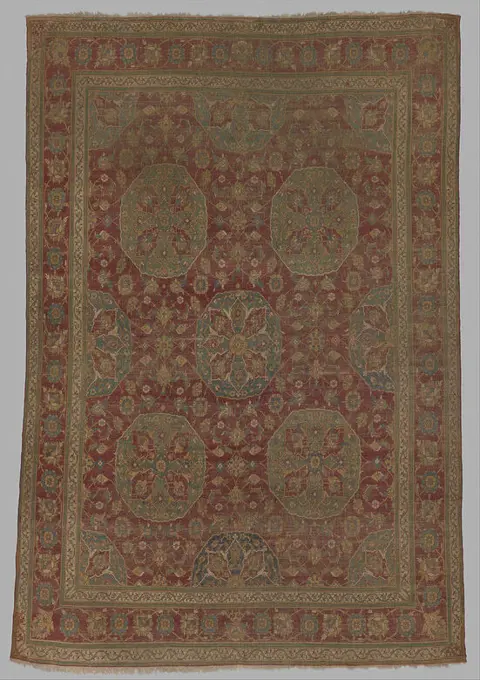
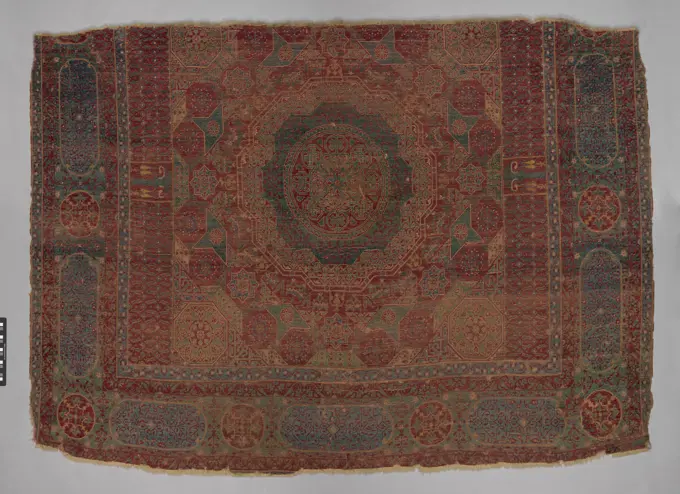
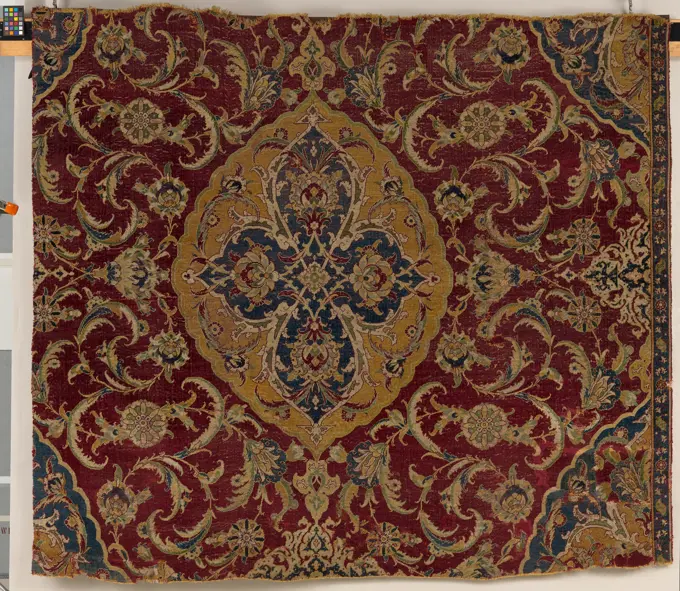
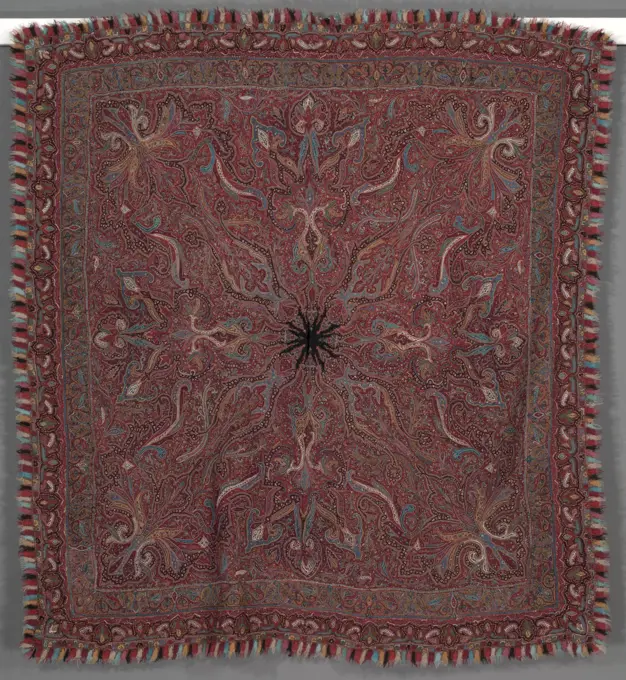
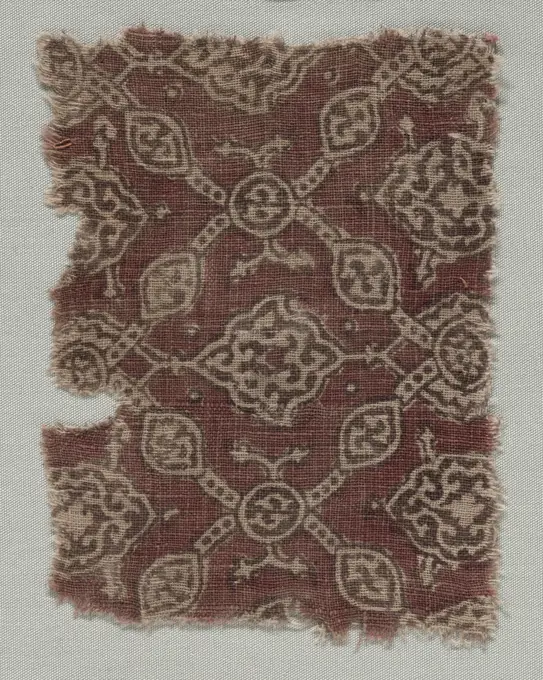
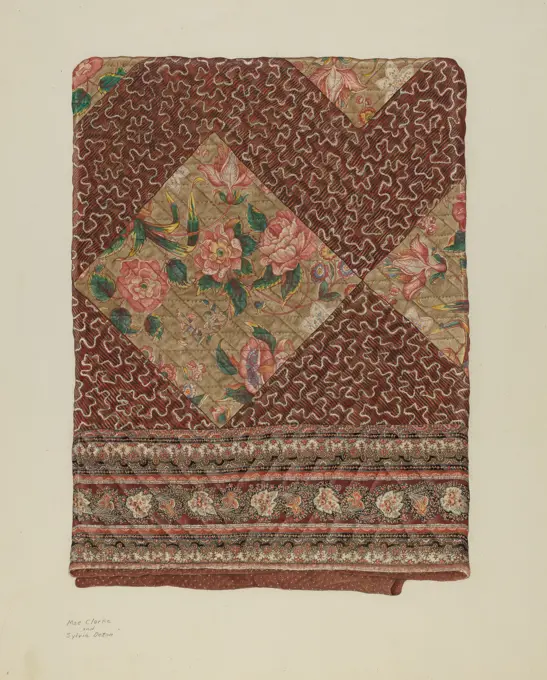
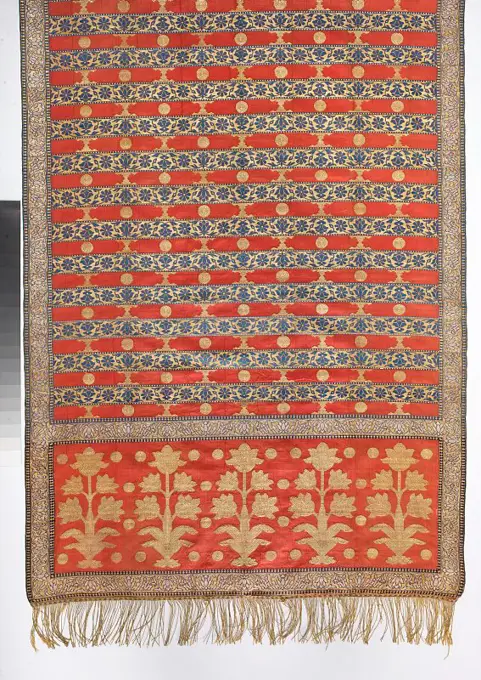
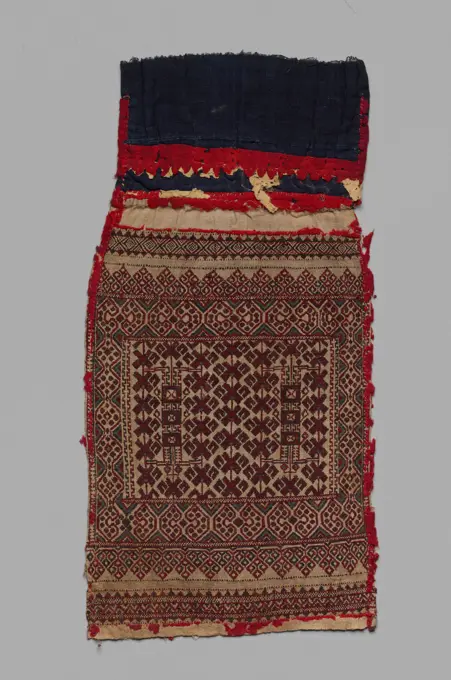
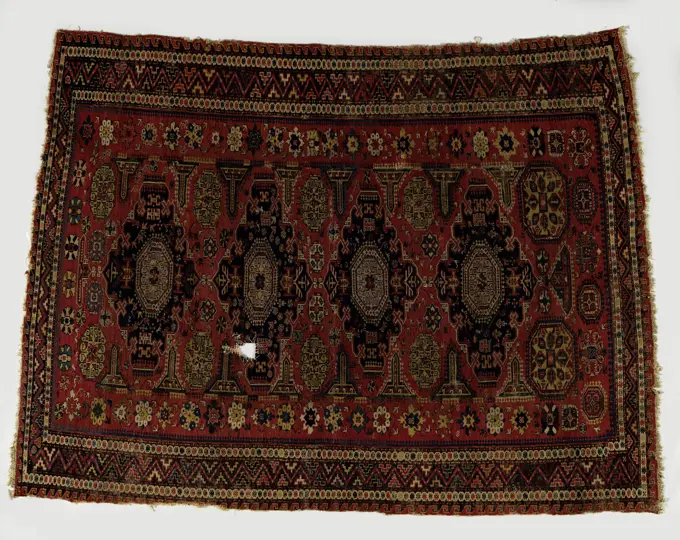
Ritual Weaving(Cepuk)Oriental carpet. Oriental carpet, prayer, tent entrance. In midfield four fields, each with a row of styled coupling animal figures. Two vertical triple beams ending in a point occupied with double crochet motifs. Narrow elem decorated with clover leafy ornaments against a brunette background.Border (Greece); silk embroidery on linen foundationEastern carpet ,, c. 1600 - c. 1800 Eastern carpet, arabesk dress, lotto carpet. Bergama or Holbeint carpet. In midfield a large octagon with smaller around it. Three edges on the sides, four up and bottom. Widest edge with squares. Button: Ghiordes Knoop. Klein-AziëBergama (possibly)Sivrihisar (possibly) Necklace and impact: Wool Eastern carpet, arabesk dress, lotto carpet. Bergama or Holbeint carpet. In midfield a large octagon with smaller around it. Three edges on the sides, four up and bottom. Widest edge with squares. Button: Ghiordes Knoop. Klein-AziëBergama (possibly)Sivrihisar (possibly) Necklace and impact: WoolCarpet, Z.G. Arabic rug, with a green edge. Arabic rug with green edge, lotto carpet. Midfield with arabic motifs. Double edge. Button: Ghiledes knot.Perkenkleed of tuinkleed, anonymous, 1850 - 1900 Bed or garden rug. Midfield: classification of three rectangles, the middle one in cobalt blue and two in red, on which cross medallions are supplemented with triangles such as swing. The crosses, light blue and brown, are randed white, each gulped with star flowers that are contained in a cross or in an octagon; The flowers in orange, red, blue and white. The triangles are sprinkled with blossoms and the long sides of them shoot long hooks to the middle. Rand: one narrow hem of black with stretched s-s-en in white, blue, orange and brown, inside plain piping. Kemerihisar (possibly) wool Bed or garden rug. Midfield: classification of three rectangles, the middle one in cobalt blue and two in red, on which cross medallions are supplemented with triangles such as swing. The crosses, light blue and brown, are randed white, each gulped with star flowers that are contained in a cross or in an octagon; The flowers in orange, red, blue and whitTowel end, Medium: cotton, silk Technique: embroidery and drawnwork on plain weave, Piece of white cotton with five vertical embroidered stripes separated by lines of drawnwork. The stripes are alternately of red flowers, blue leaves, yellow buds and blue flowers, red leaves and orange buds. Ornamental hem of red cross stitch., Turkey, 19th century, embroidery & stitching, Towel endRitual Textile (PuaSungkit)Fragment (Spain); silkOosters tapijt.Oriental carpet, floral and tide rug. In the midfield lotus flowers and palmets connected by thin tendrils and rosettes with flowers; Interspoken by larger rosettes and pointed ugival cartouches. The widest edge is decorated with lilies in cobalt green and white.Carpet fragment, Medium: cotton Technique: machine made, Fragment in a pattern of varied stripes of geoemetric patterning in reds, browns, green, black and white., England, 1880-1910, woven textiles, Carpet fragmentTurkmen Bag Face, 1800s. Turkmenistan, Saryk tribe of the Turkmen people (1850-1899), 19th century. Wool, silk, cotton; 252 symmetrical rug knots per square inch; overall: 88.9 x 127 cm (35 x 50 in.).Hanging 1851-52. Hanging 448591Textile; silk, linen, metallicFragment (Iran); silk, metallic threadsCarpet 17th century. Carpet. 17th century. Wool (warp, weft and pile); asymmetrically knotted pile. Attributed to Egypt. Textiles-RugsSampler (Spain); cotton embroidery on linen foundationShawlTextile; cottonSkirt Cloth (KainKebat)Leaf with a job pattern of round with branch with two fruits in decorative frame with dots, anonymous, 1700 - 1850  Leaf with aan pattern of twig with two fruits in a circle surrounded by stripes and of motif with three circles in the bar with points.  paper. block printing (relief printing process) ornament derived from plant formsShroud(Porisitutu’)Fragment; silk, metallic thread; Bequest of Richard Cranch Greenleaf in memory of his mother, Adeline Emma Greenleaf; 1962-56-129Doek, Anonymous, 1900 - 1949 Cloth with patola motifs and in Latin letters J. Keluana. Roti cotton (textile) Cloth with patola motifs and in Latin letters J. Keluana. Roti cotton (textile)Ornament strip of a red and white fabric. Ornament Strip with an Ongoing Pattern of Red, Stylized Leaf and Flower branches.Chagsi pangkheb, 20th century, 104 x 29 3/4 in. (264.16 x 75.6 cm), Silk, cotton, Bhutan, 20th century"Medallion Ushak" Carpet. Dimensions: Rug: H. 234 1/2 in. (595.6 cm)W. 132 in. (335.3 cm). Date: 17th century.Made in large numbers and hugely popular both in the Ottoman empire and in Europe, medallion Ushak carpets such as this were produced from the later fifteenth century to the eighteenth. The design in theory repeats infinitely in all directions, although "cut" by the border. It consists of ogival medallions alternating with smaller eight-lobed "stars.". Museum: Metropolitan Museum of Art, New York, USA.Hip cloth; Kain Kebat; Bidang. Hip cloth with geometric motifs.Shoulder Cloth (kain parada) Made 1801-1900 Indonesia. Cotton, plain weave; hand-drawn resist dyed (batik tulis); hand painted adhesive with applied gold leaf .Oosters tapijt.Oriental carpet in loper format, the midfield of which is decorated with five medallions, filled with hexagonal motifs and animal figures. White corner pieces. Four edges.Rugs and Carpets: Iran - 19th century. Qazvin carpetCeremonial Textile (PuaKumbu)Sarong, Medium: cotton Technique: wax resist dyeing (batik) on plain weave, Red and blue batik sarong. Shows 'ceplokkan' pattern: flowers or blossoms, symmetrically distributed over surface, stylized, star-like,and contained within a geometric shape. Borders show batiked on fringe., Palembang, South Sumatra, Indonesia, 19th century, printed, dyed & painted textiles, SarongTenzaVoorblad, Ersari Volk, c. 1850 - c. 1900 Cover for an animal. The midfield is decorated with a flower inside a window. Concentric windows left and right. Rand shaded with roller corners. At the top and bottom a beard. East-turkmenie Necklace and impact: Wool Cover for an animal. The midfield is decorated with a flower inside a window. Concentric windows left and right. Rand shaded with roller corners. At the top and bottom a beard. East-turkmenie Necklace and impact: WoolMan's Linen Kerchief. Dated: c. 1937. Dimensions: overall: 30.5 x 23.2 cm (12 x 9 1/8 in.) Original IAD Object: 36" square. Medium: watercolor and graphite on paper. Museum: National Gallery of Art, Washington DC. Author: Percival Jenner.Bemskleed, Yuruk -Nomadenkleed ,, 1850 - 1875 Bems rug, yuruk-nomaden rug. Midfield: Three lying rectangles with white hexagons in dark orange are separated and bordered by tires with colorful sloping S-sen. Fulls of eight -time night blue cross and a lying cerise hexagon in the heart. Rand: triple. The main edge is dark orange with large loose flowers in light green, dark brown and cobalt blue. The inside is the tire around the limits; The outside zoom is the same. Beard: short bearded with embroidered figures in many colors, translating into knotted frills. Southeast Asia Minor wool Bems rug, yuruk-nomaden rug. Midfield: Three lying rectangles with white hexagons in dark orange are separated and bordered by tires with colorful sloping S-sen. Fulls of eight -time night blue cross and a lying cerise hexagon in the heart. Rand: triple. The main edge is dark orange with large loose flowers in light green, dark brown and cobalt blue. The inside is the tire around the limits; The outside z'Star Ushak' Carpet late 15th century This freshcolored carpet is one of the earliest, largest, and best-preserved examples of its type. Woven in the Ushak region of western Turkey, "Star Ushak" carpets were made for regional consumption and for export throughout Europe. A similar carpet is depicted under the throne of the Venetian doge in a painting by Paris Bordone dating to 1534, and another is seen under the feet of Henry VIII in a sixteenth-century portrait of that ruler. Their association in European painting with royalty and sanctity underscores the status these carpets enjoyed as luxury trade goods.. 'Star Ushak' Carpet 451471The 'Doria' Carpet 17th century This carpet is one of a pair; its counterpart is in the Carpet Museum in Tehran. The field pattern of both carpets is identical, and a balanced design is achieved when the two carpets are placed endtoend. Both carpets are examples of the "Polonaise" type, so called for a nineteenth-century misattribution of this type of carpet to Poland rather than Iran. This group, distinguished by a silk pile and metallic brocading, is now known to have been made during and after the reign of Shah 'Abbas I in workshops in Isfahan, Yazd, and Kashan.. The 'Doria' Carpet 451028Panel, 19th century, 25 1/2 x 45 1/4 in. (64.77 x 114.9 cm), Silk, cotton, Turkey, 19th centuryCurtain with imitation style directoire, anonymous, c. 1800 - c. 1825 Curtain with grotes' pattern of medallions, portrait busts, vases and volute vines in cream against a satin surface in dark brick red. Neo-Pompeiaan. Red lining. With large, profiled rings and fringes on one side.  satin. silk. ringen: brass (alloy). voering: cotton (textile) Curtain with grotes' pattern of medallions, portrait busts, vases and volute vines in cream against a satin surface in dark brick red. Neo-Pompeiaan. Red lining. With large, profiled rings and fringes on one side.  satin. silk. ringen: brass (alloy). voering: cotton (textile)Eastern carpet, Ersari Volk, 1875 - 1925 Oriental carpet, flower rug. There are staggered rows of flowers in midfield. Four -time edge. Four -double rank. Beard with embroidery stitches. Central Asia Maker: Turkestan (Possible) Chain and impact: Wool. Embroidery: Goat Hair Oriental carpet, flower rug. There are staggered rows of flowers in midfield. Four -time edge. Four -double rank. Beard with embroidery stitches. Central Asia Maker: Turkestan (Possible) Chain and impact: Wool. Embroidery: Goat HairCarpet. Dimensions: Rug: L. 164 in. (416.6 cm)W. 112 in. (284.5 cm). Date: 17th century. Museum: Metropolitan Museum of Art, New York, USA.Medallion and zoo ,, 1650 - 1700 On a green soil, animal stalls move between plants, symmetrically opposed to each other. In the middle a cherry red medallion with light blue and yellow arabesks. The edge is littered with small birds and flower ornaments. Middle Persia wool On a green soil, animal stalls move between plants, symmetrically opposed to each other. In the middle a cherry red medallion with light blue and yellow arabesks. The edge is littered with small birds and flower ornaments. Middle Persia woolCover, 16th century. Turkey, 16th century (). Compound weave; average: 96.6 x 68.6 cm (38 1/16 x 27 in.).Piece 17th century Japan. Piece 71762Mamluk Carpet early 16th century Mamluk style carpets figured significantly in Mediterranean commerce and appear in Venetian paintings as early as the sixteenth century. They are characterized by a central medallion surrounded by a variety of smaller geometric motifs, forming a kaleidoscopic appearance. The palette is limited to red, blue, green, and yellow tones. Documents first refer to Cairo as a center of carpet weaving in the last quarter of the fifteenth century, and production continued until the mid-sixteenth century, shortly after the 1517 Ottoman conquest of Egypt.. Mamluk Carpet 447510Fragment of an Ottoman Court Carpet last quarter 16th century Although Mamluk Cairo fell to the Ottomans in 1517, the city continued to be a major center for artistic production. Using the same materials and techniques as earlier Mamluk carpets, Ottoman court carpets such as this were produced in Egypt for export, primarily to the Ottoman court in Istanbul. The immense scale of this carpet's drawing suggests it once formed part of an even larger carpet.. Fragment of an Ottoman Court Carpet. last quarter 16th century. Wool (warp, weft and pile); asymmetrically knotted pile. Probably made in Egypt. Textiles-RugsCushion Cover, 26 x 28 1/4 in. (66.04 x 71.76 cm), Silk (); needlework, ChinaShawl, 1870s - 1880s. India, Kashmir, late 19th century. Embroidery, large pieced areas: wool; overall: 179.7 x 193 cm (70 3/4 x 76 in.).Fragment late 16th century Italian. Fragment 230129Textile, Medium: silk, metallic thread Technique: plain weave with supplementary weft, Small bird-on-bush repeat on a reddish-orange ground. Bird motif in blue, brown, white, green, and yellow. Yellow thread originally wrapped with silver, but now is mostly worn off., Iran, 18th century, woven textiles, TextileFragment, 1400s (). India, 15th century (). Stamped and painted () mordants, dyed; cotton; overall: 17.2 x 12.7 cm (6 3/4 x 5 in.).Oriental carpet. Oriental carpet, prayer dress. In midfield a light blue mihrab with stepping top and filling of triangles, oil men and stars. Corner pieces decorated with sawtooth motifs and oil men. The widest edge is decorated with sloping fields in different colors.Head Wrap, 31 1/4 x 19 in. (79.38 x 48.26 cm), Cotton; needlework, ChinaHandkerchief (USA); cottonShawl 1825-30 European. Shawl. European. 1825-30. woolFragment. Dimensions: Textile: H. 13 3/4 in. (34.9 cm) W. 6 in. (15.2 cm). Date: 15th century.Geometric designs such as the ones in this fragment are found ornamenting a wide variety of media produced in Nasrid period (1232-1492) Spain, including tile work, woodwork, book binding, and painted stucco. The basic principle of the design is an eight-pointed star, and this pattern expands into a lattice of geometric possibilities. Such bold designs recall the famous wall patterns in the Alhambra palace in Granada. Museum: Metropolitan Museum of Art, New York, USA.Sampler ca. 1825 British. Sampler. British. ca. 1825. Silk. Textiles-EmbroideredFragment of Lampas with pattern formed by yellow band, anonymous, 1400 - 1499 Fragment of Wijnrode silk with pattern of cross shapes and stars formed by yellow band work, between which arabesken. Along right -hand side horizontal bond with heart shapes. Spain silk lampas (textile material) Fragment of Wijnrode silk with pattern of cross shapes and stars formed by yellow band work, between which arabesken. Along right -hand side horizontal bond with heart shapes. Spain silk lampas (textile material)Cushion Cover. Turkey, Bursa. Date: 1601-1700. Dimensions: 116.8 x 63.5 cm (46 x 25 in.). Origin: Turkey. Museum: The Chicago Art Institute, Chicago, USA.Eastern carpet ,, 1800 - 1900 Eastern carpet, medaillas, in Soumak-Techniek. In midfield there are three diamonds and eight octagons against a brick -red stock. The remaining field is decorated with flower vines. Double edge. Caucasus ketting: wool Eastern carpet, medaillas, in Soumak-Techniek. In midfield there are three diamonds and eight octagons against a brick -red stock. The remaining field is decorated with flower vines. Double edge. Caucasus ketting: woolRitual Textile (PuaKumbu)Prayer Rug with Coupled Columns. Dimensions: H. 68 in. (172.7 cm)W. 48 in. (121.9 cm). Date: early 18th century.Prayer rugs or "seccade" carpets were among the most popular rugs woven in Anatolia. Common features are the characteristic niche design evoking the mihrab or prayer niche and the smaller size that makes such carpets suitable for individual use. Departing from classical Ottoman court carpets, distinct designs and styles were created over time in villages and smaller towns of Anatolia, which explains the existence of a variety of types. This example from Ladik, near Konya in central Turkey shows a stylized niche with a triple arch - each arch shaped in triangles, supported by double-columns. Poly-lobed lozenge shaped medallions are repeated in the border. While the stylized design and motifs as well as the palette dominated by deep red are typical for carpets woven in Ladik during the later Ottoman period, the overall composition as well as the series of tulips atop the nichALFOMBRA DE ALCARAZ (ALBACETE) SEGUNDA MITAD DEL SIGLO XV. Location: MUSEO ARQUEOLOGICO NACIONAL-COLECCION. MADRID. SPAIN.Perk rug, yuruk-noomadsdress. Perk rug, yuruk-noomadsdress. Midfield: three lying rectangles with white hexagons in dark orange are separated and surrounded by tires with colorful slopes. Fillings of eightfold night blue cross and a lying cerise hexagon in the heart. Edge: Triple. The main edge is dark orange with large loose flowers in light green, dark brown and cobalt blue. The indoor zoom is the band to limit; The outside zoom is the same. Beard: short beard with embroidered figures in many colors, accused in knotted frills.Fragment of Spitalfields Silk, 1800s. England, Spitalfields, 19th century. Silk; overall: 45.4 x 50.2 cm (17 7/8 x 19 3/4 in.).Eastern carpet ,, 1800 - 1900 Oriental carpet, of which midfield is decorated with arabesks against a background of stiff tifles with flowers and leaves. Widest edge decorated with angular running border with rosette flowers. Northwest Perzia wool Oriental carpet, of which midfield is decorated with arabesks against a background of stiff tifles with flowers and leaves. Widest edge decorated with angular running border with rosette flowers. Northwest Perzia woolCushion Cover, c. 1950, 24 1/4 x 48 3/4in. (61.6 x 123.8cm), silk, Syria, 20th centuryFragment (Loincloth). Chimú; Peru, Probably north coast. Date: 1250-1470. Dimensions: 50.8 x 41 cm (20 x 16 1/8 in.). Cotton and wool (camelid), slit tapestry weave; edged with plain weave extended weft cut fringe. Origin: Peru. Museum: The Chicago Art Institute, Chicago, USA.Mae A Clarke and Sylvia De Zon, Applique Quilt, c 1940 Applique QuiltKontusz sash. unknown, authorRed side fragment with pattern in gold and silver wire, anonymous, c. 1600 - c. 1699 Fragment of red silk with a pattern in a twill of browned gold and silver thread, probably in the form of cartouches, filled with feather plume-shaped figures, and surrounded by wide ornament tires. Netherlands silk.. lampas (textile material) Fragment of red silk with a pattern in a twill of browned gold and silver thread, probably in the form of cartouches, filled with feather plume-shaped figures, and surrounded by wide ornament tires. Netherlands silk.. lampas (textile material)Tapa Cloth, c. 1960-1970, 72 7/16 x 35 15/16 in. (183.99 x 91.28 cm), Bark, pigment, Fiji, Tonga, or Samoa Islands, 20th centuryLoincloth(Sirat)Ritual Textile (PuaSungkit)Eastern carpet ,, 1800 - 1900 Eastern carpet, medaillas, in Soumak-Techniek. There are four window medallions in midfield, filled with hooks and animals. False edge with huge corners. Beyond a row of rosettes. Four -time edge, the widest with a red zigzag. Caucasus Embroidery/ Necklace: Wool Eastern carpet, medaillas, in Soumak-Techniek. There are four window medallions in midfield, filled with hooks and animals. False edge with huge corners. Beyond a row of rosettes. Four -time edge, the widest with a red zigzag. Caucasus Embroidery/ Necklace: WoolKelim. Oriental carpet, hexagon rug, Kelim. The midfield is decorated with staggered rows of interconnected crosses. Borders on the sides are twofold. Above and under a triple border. Edges decorated with geometric motifs.Cover. Italy. Date: 1625-1675. Dimensions: 51.1 x 126.3 cm (20 1/8 x 49 3/4 in.). Linen, plain weave; embroidered in silk. Origin: Italy. Museum: The Chicago Art Institute, Chicago, USA.Textile 1700-1899 Russian. Textile 173412Cover, late 18thcentury, Silk embroidery on plain weave cotton, 43 × 24 in. (109.22 × 60.96cm), Azerbaijani,Islamic, 18thcentury, TextilesHanging, Medium: cotton, silk, mirrors Technique: embroidered, Heavy rust red cotton heavily embroidered in multi-colored silks and mirrors. Many patterned borders run parallel to the central area which is worked in small detached geometric motifs. Panel consists of two pieces stitched together., India, 19th century, embroidery & stitching, HangingEmbroidered Table Cover, early 19th century. Turkey, Hereke, early 19th century. Brocade; average: 108 x 72.5 cm (42 1/2 x 28 9/16 in.).Complete Double Saddle Bag (Khorjin) 19th century. Complete Double Saddle Bag (Khorjin). 19th century. Wool; sumak brocaded (fronts), tapestry weave (backs). From Northwestern Iran. Textiles-Woven-BrocadeCanopy or CoverChalice cover, Medium: silk on linen Technique: embroidered in counted double running and Montenegrin cross stitches on plain weave, Cover showing a geometric vine pattern at each end. Small red tassels on all four sides., Italy, 17th century, embroidery & stitching, Chalice coverOriental carpet. Fragment of an oriental carpet, herati floral rug. In the midfield a tendrilment and flower pattern against a ceriser-standard fond. The edge is decorated with spiral drinks with palmets and flowers.Rugs and Carpets: Armenia and Azerbaijan - 20th century. Kilim carpet with Shatrandji motifFragment, Medium: linen, silk Technique: plain weave patterned by supplementary weft floats, Addorsed animals between bunches of grapes and vine leaves., Germany or Italy, 14th century, woven textiles, FragmentFragment; silk, linen and metal thread; Warp x Weft: 44.5 x 9.6 cm (17 1/2 x 3 3/4 in.)John Thorsen, US Grant Coverlet, 1939 U.S. Grant CoverletFragment Made 1367-1400 Egypt. Textiles held an important place in all Muslim courts, including that of the Mamluks in Egypt and Syria. The appeal of woven fabrics lay in their rich colors, elaborate patterns, and luxury materials such as silk and metal thread. Some woven silks were hung as wall decorations; others were made into robes worn by members of the court or given as official gifts to rulers of neighboring regions.. Silk, satin weave with plain interlacings of secondary binding warps and patterning wefts . IslamicRug China. Rug 68440Textile Fragment, 1800s. Japan, 19th century. Silk; average: 47.6 x 30.5 cm (18 3/4 x 12 in.).Piece 18th-19th century Japan. Piece 67554ALFOMBRA DE CUENCA S XVIII. Location: PRIVATE COLLECTION. MADRID. SPANIEN.Piece 18th century Japan. Piece 71266Border Fragment of a Pashmina Carpet with Pattern of Lattice and Blossoms Mughal. Border Fragment of a Pashmina Carpet with Pattern of Lattice and Blossoms, mid 17th century. Pashmina wool pile on silk foundation, 4 3/4 x 14 in. (12.1 x 35.6 cm).   Asian Art mid 17th centuryFragment. Egypt, Akhmîn. Date: 301 AD-400 AD. Dimensions: 31.1 × 27.9 cm (12 1/4 × 11 in.). Linen and wool, compound weave. Origin: Egypt. Museum: The Chicago Art Institute, Chicago, USA.Rand, fringe and galon in wool, silk and gold thread, anonymous, c. 1600 - c. 1800 Rand, fringe and galon in wool, silk and gold thread. Steel.  wool. silk. Rand, fringe and galon in wool, silk and gold thread. Steel.  wool. silk.Textile Fragment 16th century. Textile Fragment 445254