My Boards
View Pictures
  • My Boards

Planetary and Lunar Imagery Collection

A collection of images showcasing planets and moons, including Mars, Venus, Jupiter, and its moon Io with colorful and textured surface details.

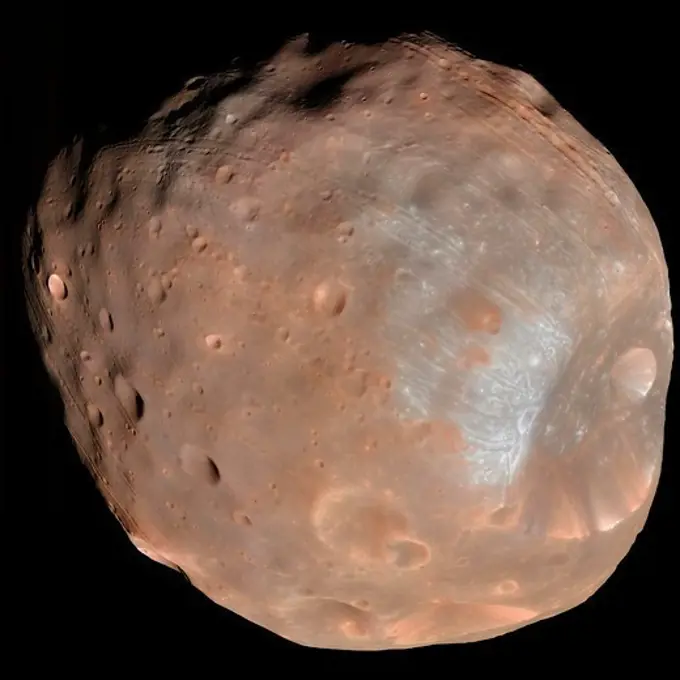
Phobos, Moon of Mars
120 assets in this story
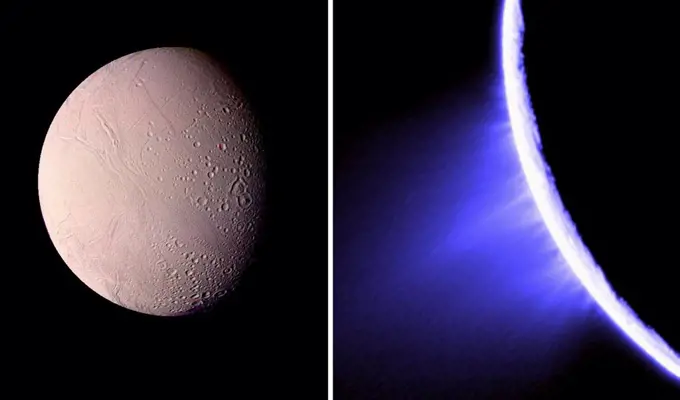
1746-21119096
images of Saturn's moon Enceladus. Dated 1985
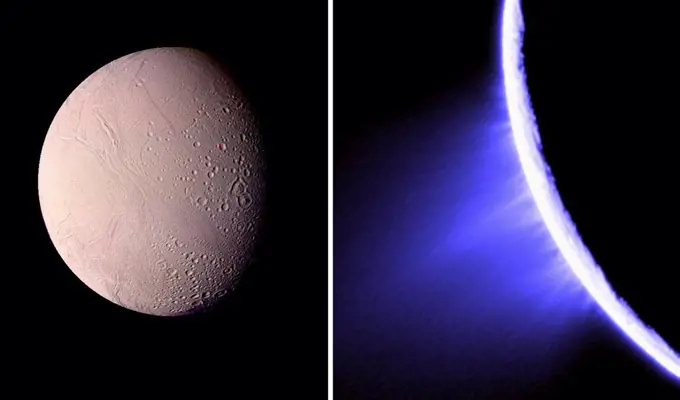
1746-21118649
images of Saturn's moon Enceladus. Dated 1985
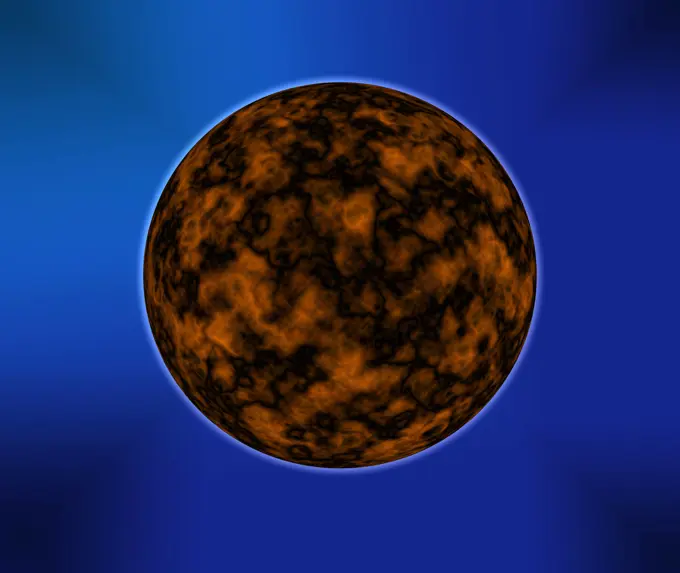
6188-54883244
Unknown planet on a dark blue background Unknown fiery planet on a dark blue background Copyright: xZoonar.com/alexmakx 3540978
4128-24796272
Venus, illustration
6145-45264368
This artist's concept summarizes our understanding of how the inside of Ceres could be structured, based on the data returned by the NASA's Dawn mission. Using information about Ceres' gravity and topography, scientists found that Ceres is differentiated, which means that it has compositionally distinct layers at different depths. The most internal layer, the mantle is dominated by hydrated rocks, like clays. The external layer, the 24.85-mile (40-kilometer) thick crust, is a mixture of ice, salts, and hydrated minerals. Between the two is a layer that may contain a little bit of liquid rich in salts, called brine. It extends down at least 62 miles (100 kilometers). The Dawn observations cannot see below about 62 miles (100 kilometers) in depth. Hence, it is not possible to tell if Ceres' deep interior contains more liquid or a core of dense material rich in metal.
6145-44905282
This image from NASA's Dawn mission shows the topography of the northern and southern hemispheres of the giant asteroid Vesta, updated with pictures obtained during Dawn's last look back.
4353-319
Digital Illustration of the Orbit of the Newly Discovered Tenth Planet of Our Solar System
1848-55218672
Planet Venus. Solar system. Cosmos art. Elements of this image furnished by NASA
4201-61053
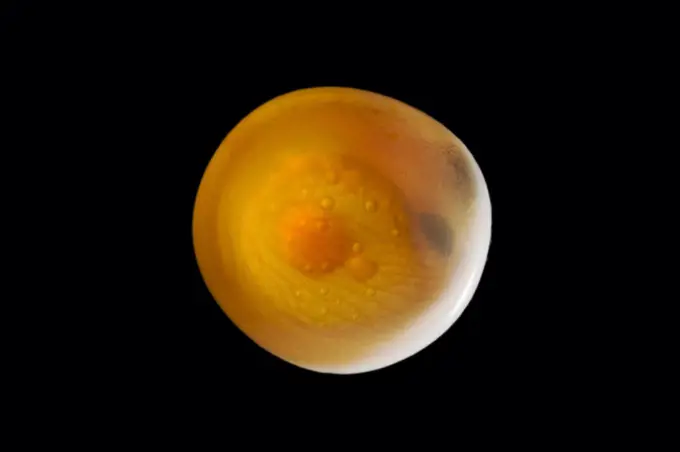
Amu-Darya Trout (Salmo trutta trutta) egg with alevin already visible through egg-shell, Europe
6145-45258917
Mars is looking mighty fine in this portrait nabbed by the Hubble Space Telescope on a near close approach! Read more a href= http //go.nasa.gov/1rWYiBT rel= nofollow go.nasa.gov/1rWYiBT /a The Hubble Space Telescope is more well known for its picturesque views of nebulae and galaxies, but it's also useful for studying our own planets, including Mars. Hubble imaged Mars on May 12, 2016 - ten days before Mars would be on the exact opposite side of the Earth from the Sun. Bright, frosty polar caps, and clouds above a vivid, rust-colored landscape reveal Mars as a dynamic seasonal planet in this NASA Hubble Space Telescope view taken on May 12, 2016, when Mars was 50 million miles from Earth. The Hubble image reveals details as small as 20 to 30 miles across. The large, dark region at far right is Syrtis Major Planitia, one of the first features identified on the surface of the planet by seventeenth-century observers. Christiaan Huygens used this feature to measure the rotation rate of Ma
6145-44725578
Exploring Mercury's Surface with MESSENGER's Color Images
1746-29972199
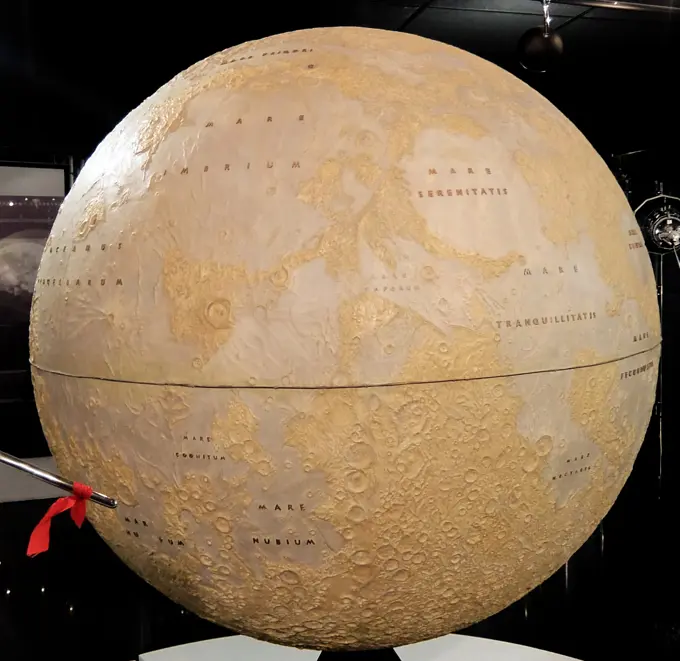
Moon Globe, based on images from automatic stations Luna-3, Zond-4, Zond-5, Zond-6, Zond-7 and Zond-8. The Soviet automatic station Luna-3 was the first to return images of the lunar far side on October 7, 1959. Signal acquisition was carried out in Crimea, Simeiz Observatory. Between 1965 and 1970 spacecraft Zond-4 - Zond-8 continued exploration of the Moon and obtained photographs from a distance of 1500 km and 9500 km. The first map of the lunar far sidewith hundreds of surface details identified by their reflection characteristics was based on collected materials. Full catalog of these details was included in the "Atlas of the far side of the Moon" (1960).
6145-44558379
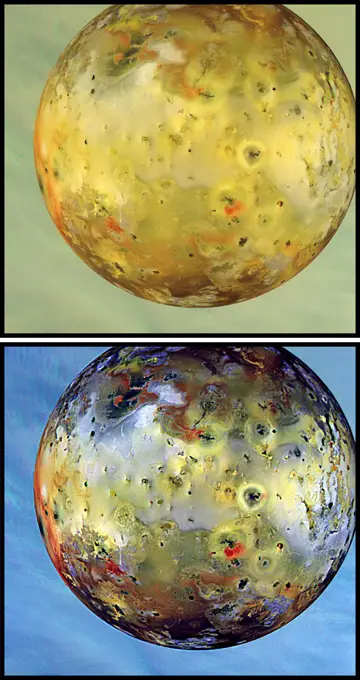
Global View of Io (Natural and False/Enhanced Color)
6145-44563561
Comparison View of Mars Cloud Cover
6145-44563566
Springtime Dust Storm Swirls at Martian North Pole
6145-45261749
. False Color View of Mercury
6145-45103429
SCI2016_0001: SOFIA/GREAT O I spectrum at 4.7 THz (63 μm) superimposed on a picture of Mars. Absorption line depth is approximately 10% of the continuum. The abundance of atomic oxygen computed from the data is less than expected from the Forget et al. 1999 global circulation & photochemical model.
6145-44944232
A Tribute to MESSENGER: Video
6145-45094664
These circular maps shows the distribution of Pluto's dark and bright terrains as revealed by NASA's New Horizons mission prior to July 4, 2015. In these maps, the polar bright terrain is surrounded by a somewhat darker polar fringe.
6145-44563565
Hubble Captures A Full Rotation Of Mars
PREVIOUS
of 2
NEXT
2401 S. Ervay, Suite 206
Dallas, Texas 75215
United States
Get Started
Free ResearchMy BoardsMy Cart
For Creators
How To License Your ContentContributor PortalFrame of Mind
Resources
API accessPricing
Contact
+1 866 236 0087help@viewpictures.co.uk Contact form
©2026 View Pictures. All Rights Reserved. -B
This site is protected by reCAPTCHA and Google Privacy Policy and Terms of Service apply.