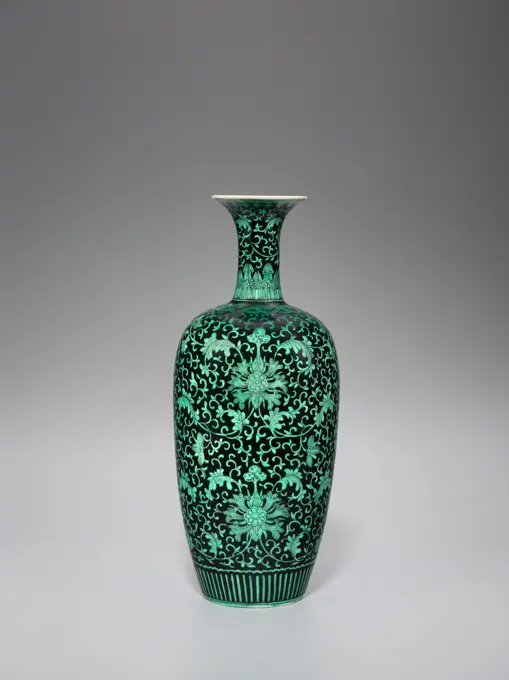
Porcelain Vases Collection

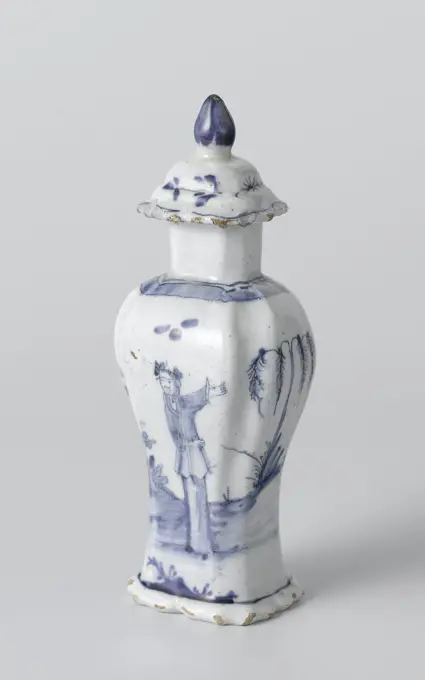
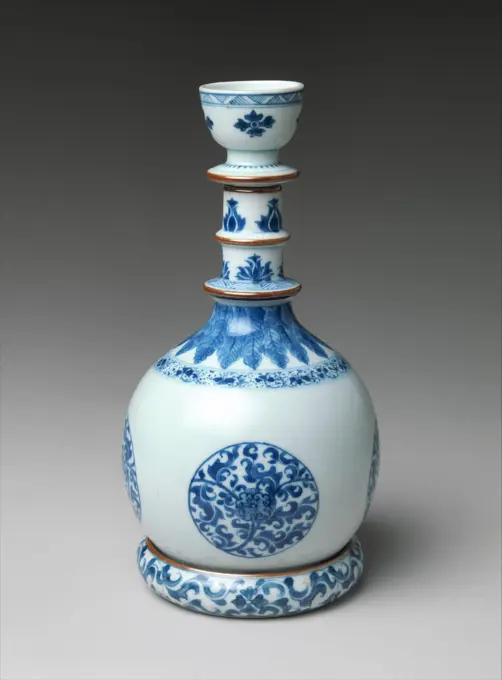
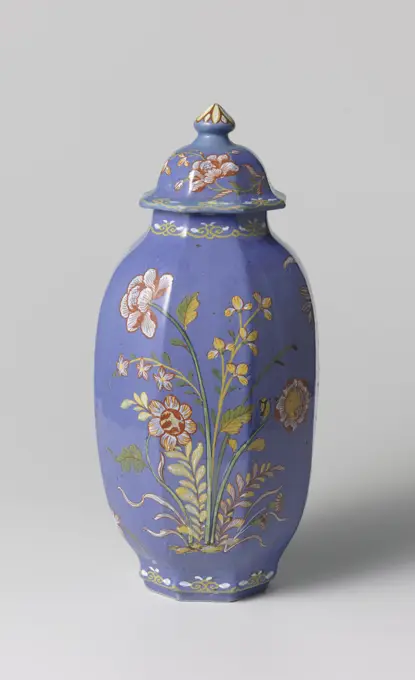
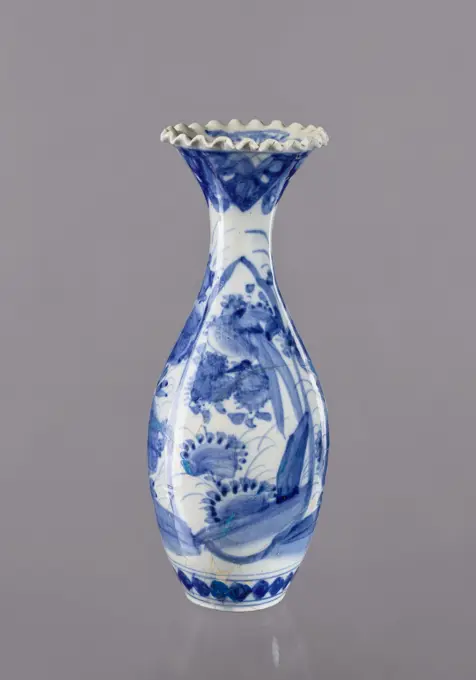
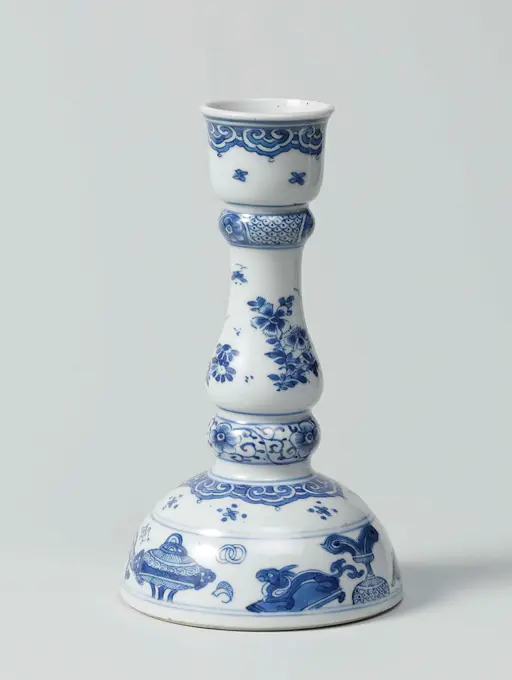
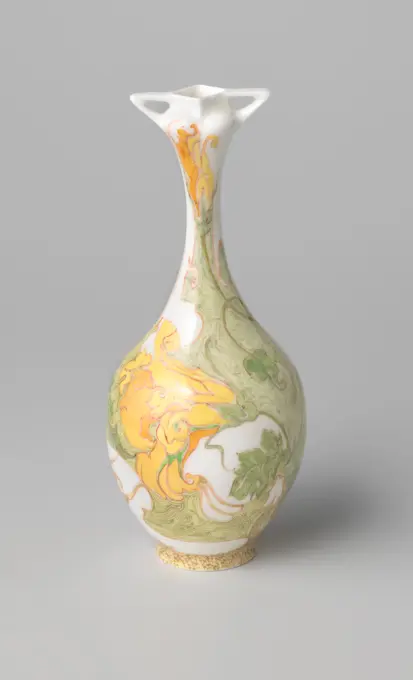
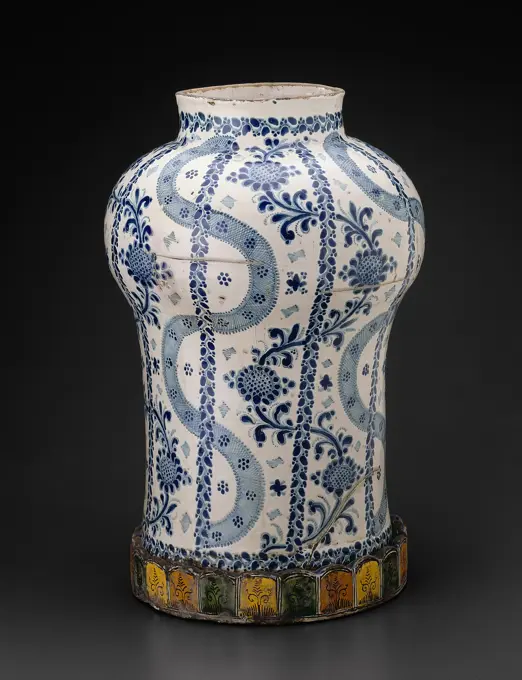
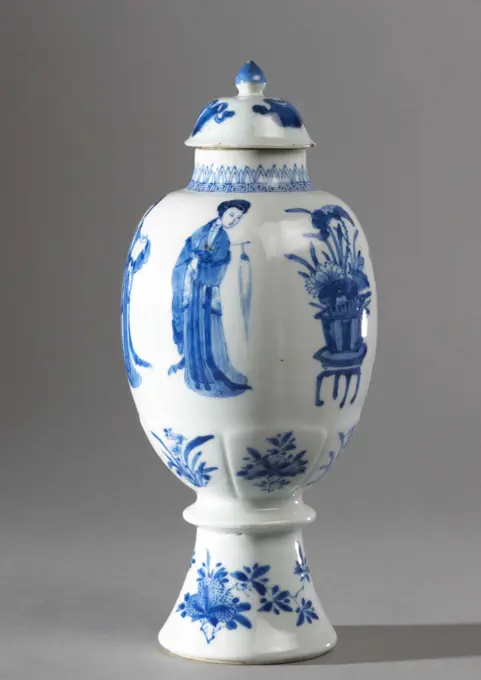
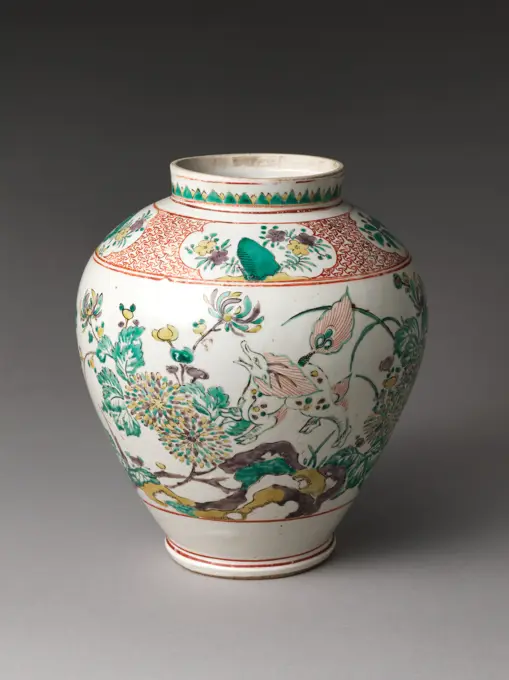
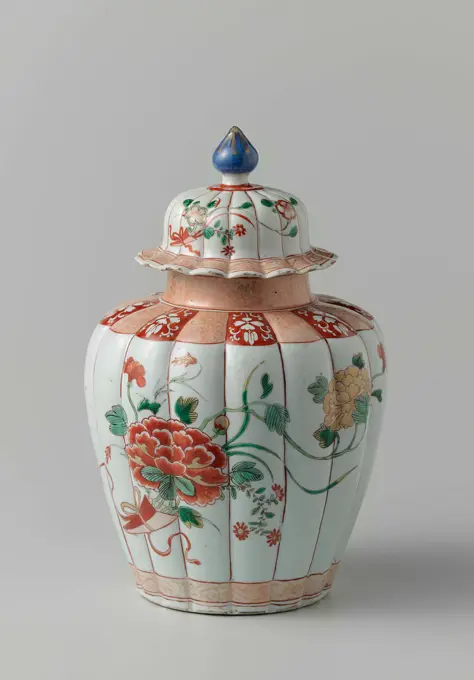
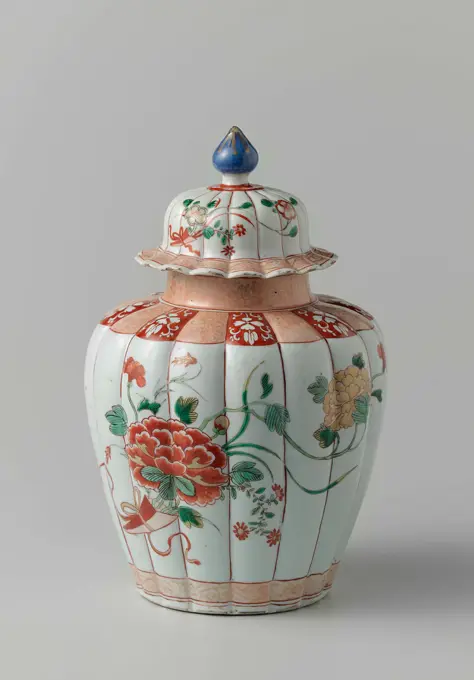
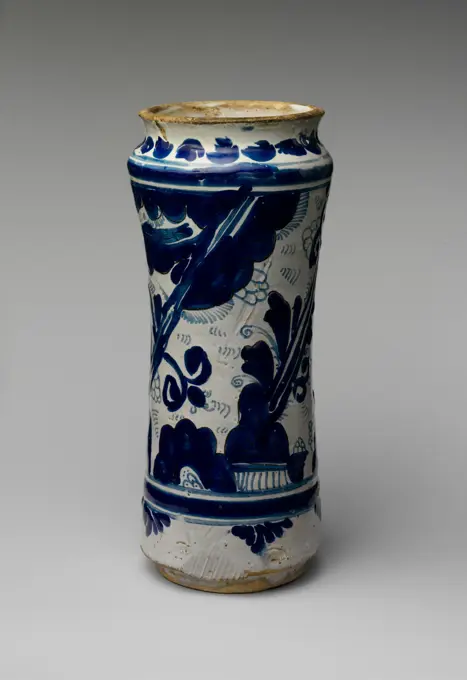
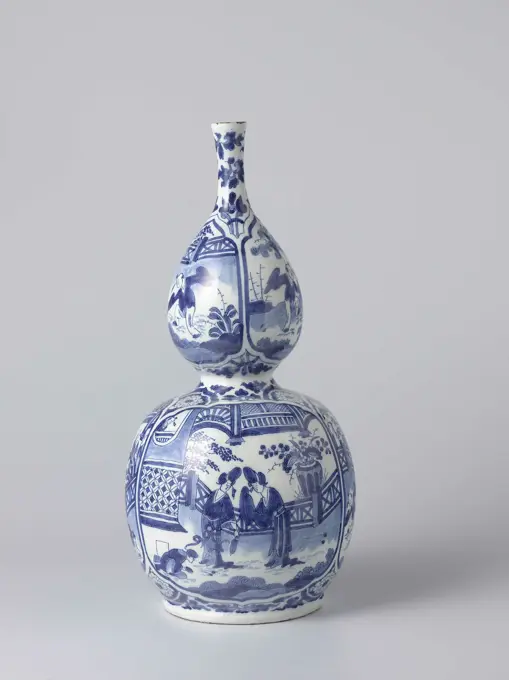
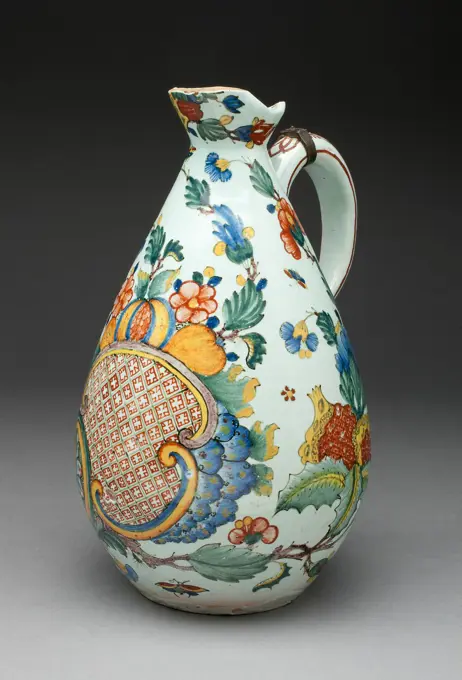
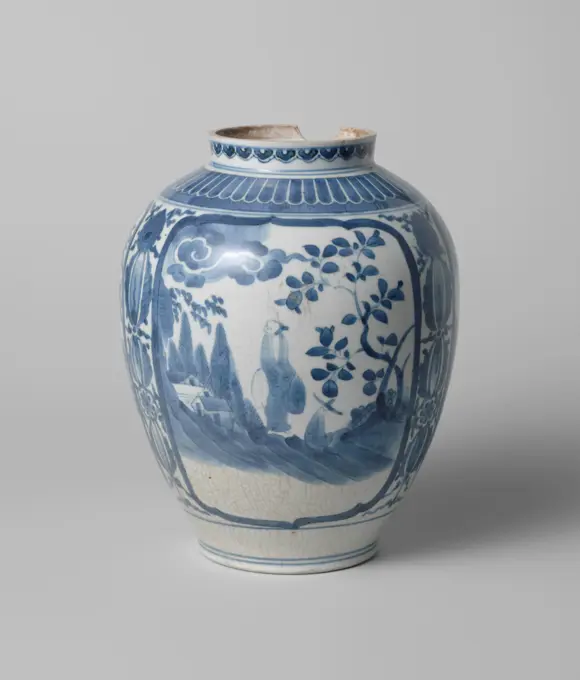
An assortment of antique vases made of porcelain, featuring intricate blue and white designs with floral and animal motifs.
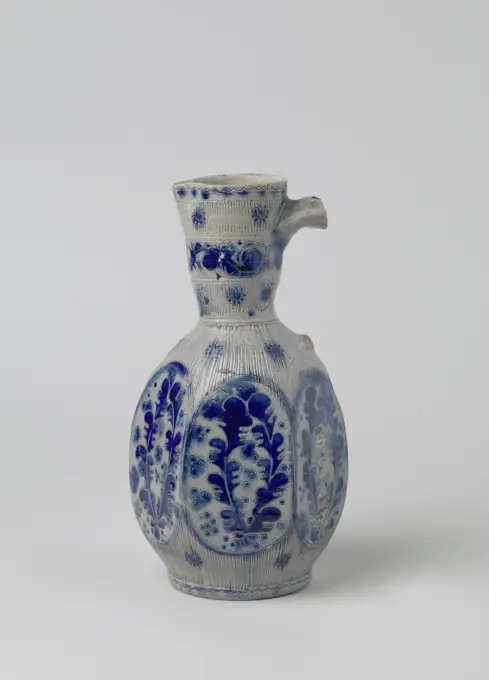
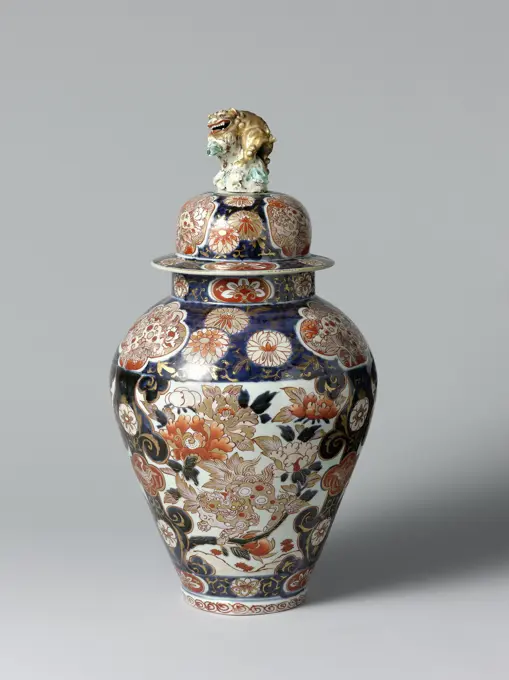
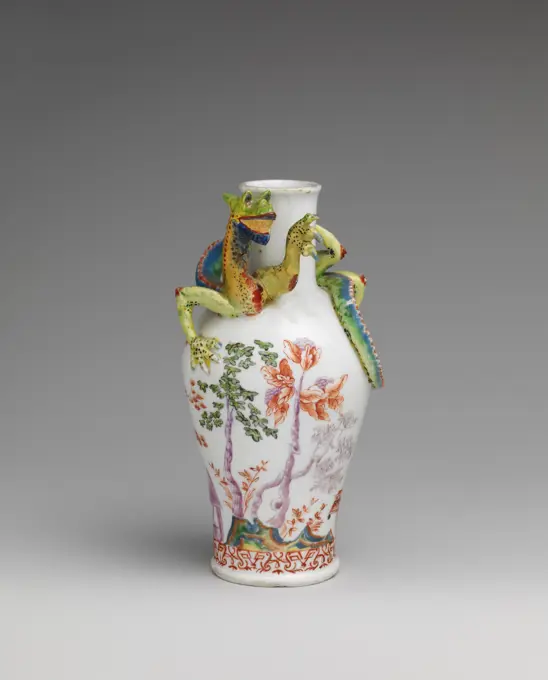
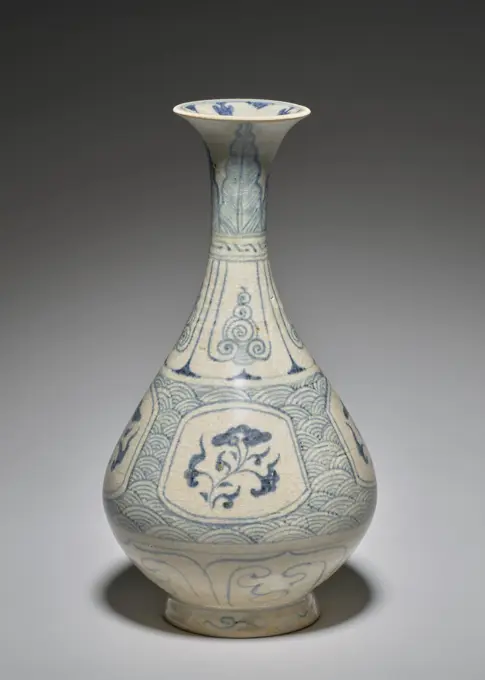
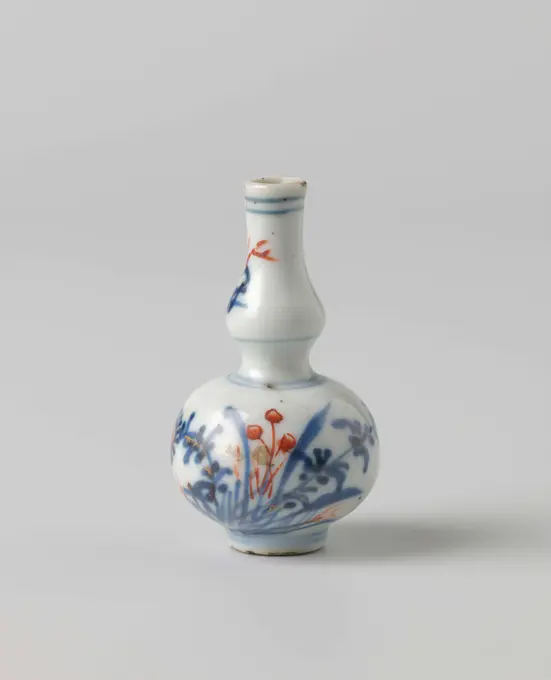
Jug with foliate scrolls in panels, anonymous, c. 1750 - c. 1799 Can be made of stoneware on the stand ring with a hexagonal, egg -shaped belly and narrow neck with a pinched spout. The C-shaped (broken) ear is attached to the neck and shoulder. Partly covered with cobalt blue. The belly is covered with pressed zigzag lines (knibis) with small, stamped flowers. Six courses with entered leaf vines and dots in blue. On the neck twice a band with zigzag lines and flowers and one with a continuous leaf vank. Westerwald. Westerwald stoneware. glaze. cobalt (mineral) vitrification Can be made of stoneware on the stand ring with a hexagonal, egg -shaped belly and narrow neck with a pinched spout. The C-shaped (broken) ear is attached to the neck and shoulder. Partly covered with cobalt blue. The belly is covered with pressed zigzag lines (knibis) with small, stamped flowers. Six courses with entered leaf vines and dots in blue. On the neck twice a band with zigzag lines and flowers and one wi
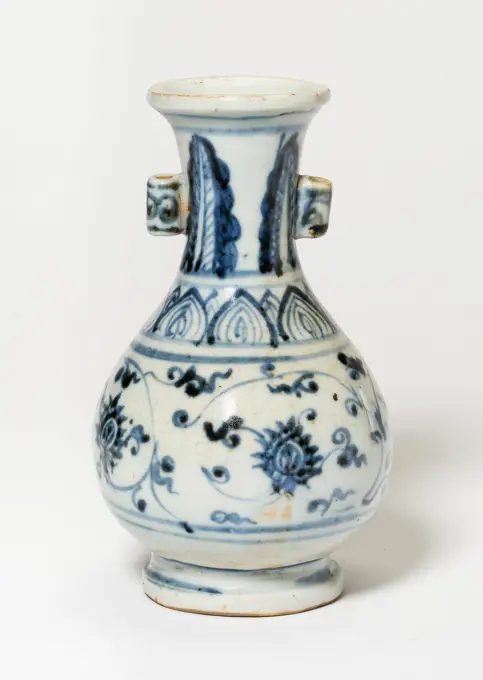
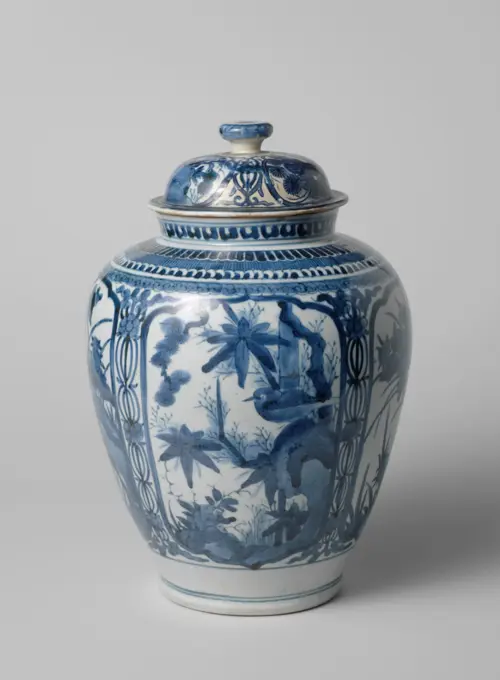
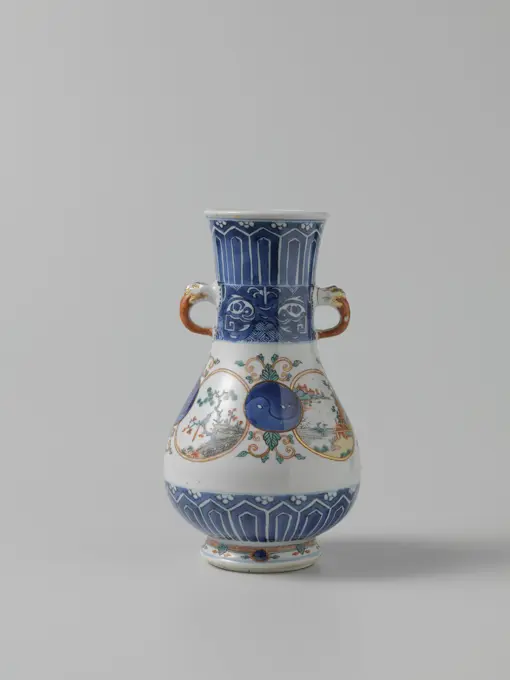
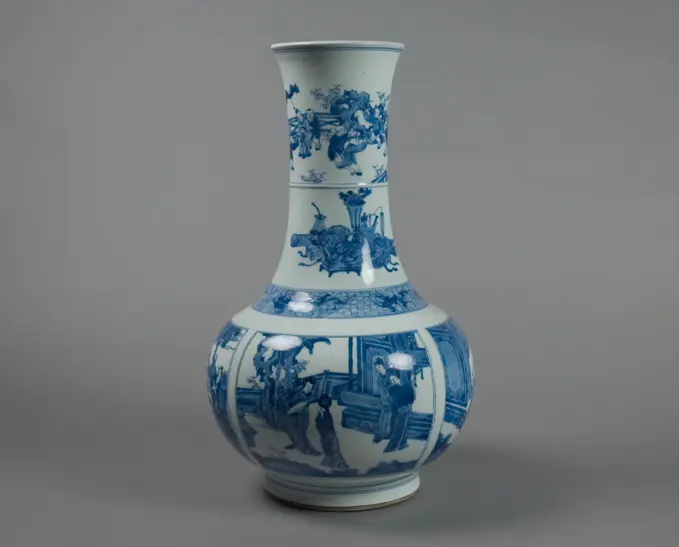
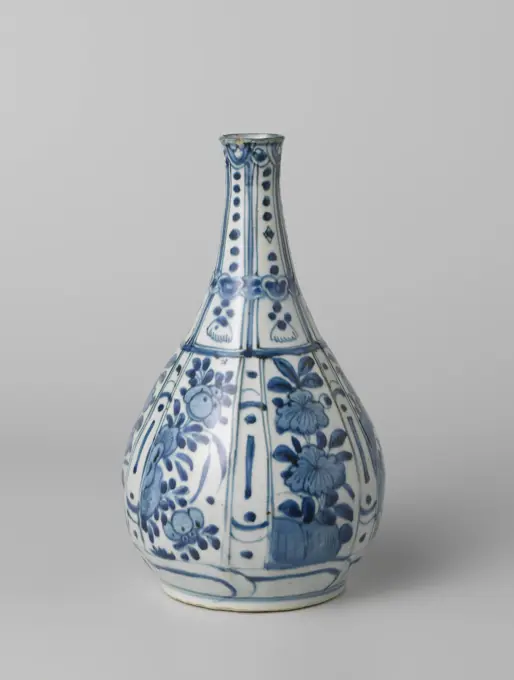
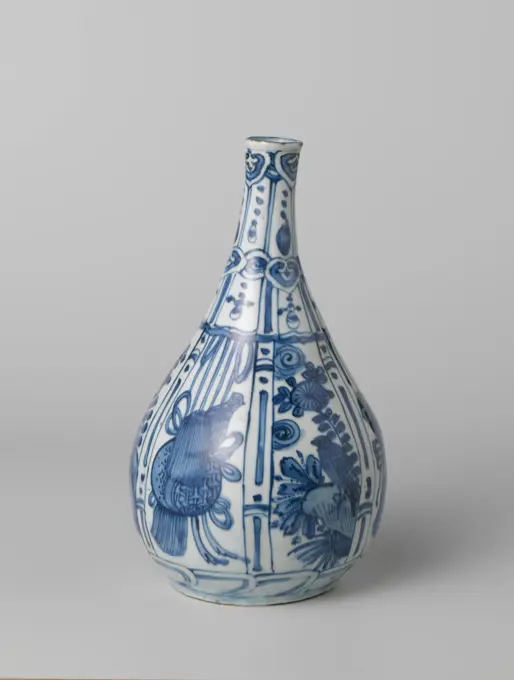
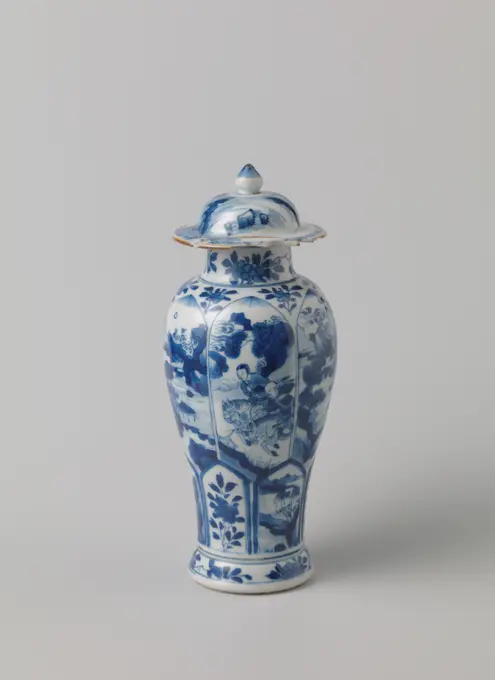
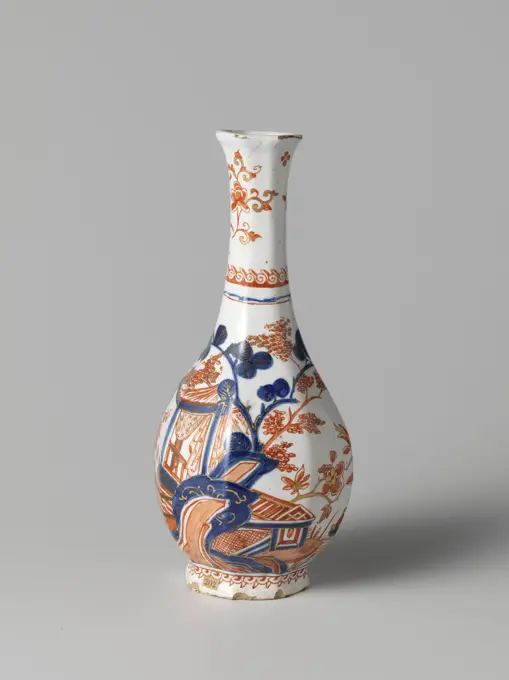
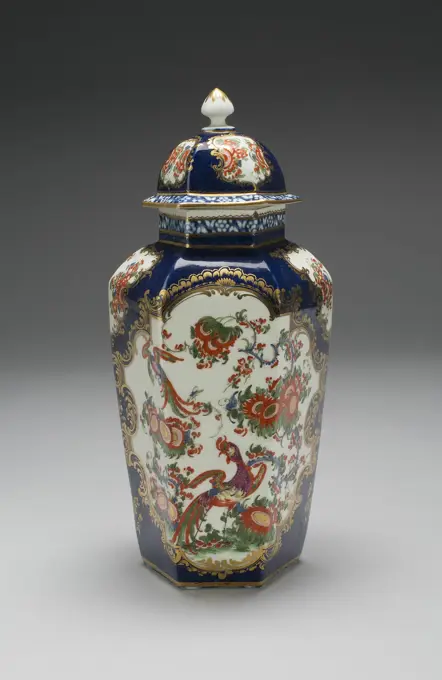
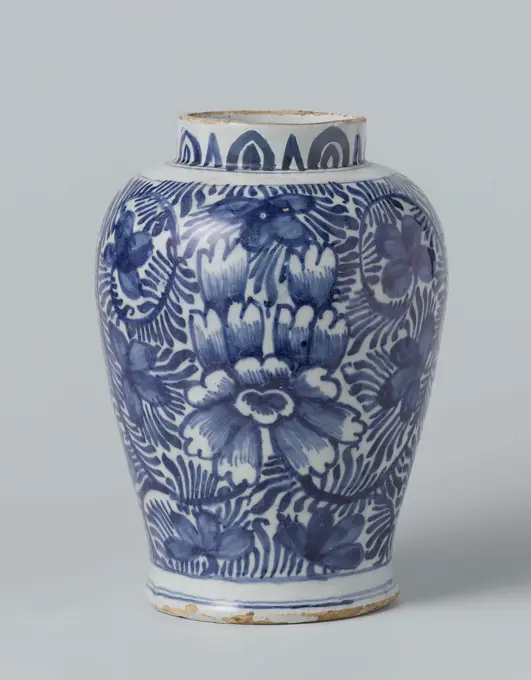
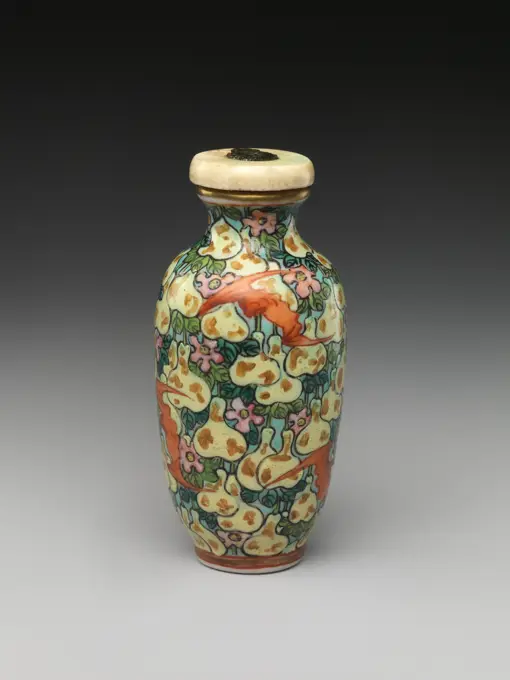
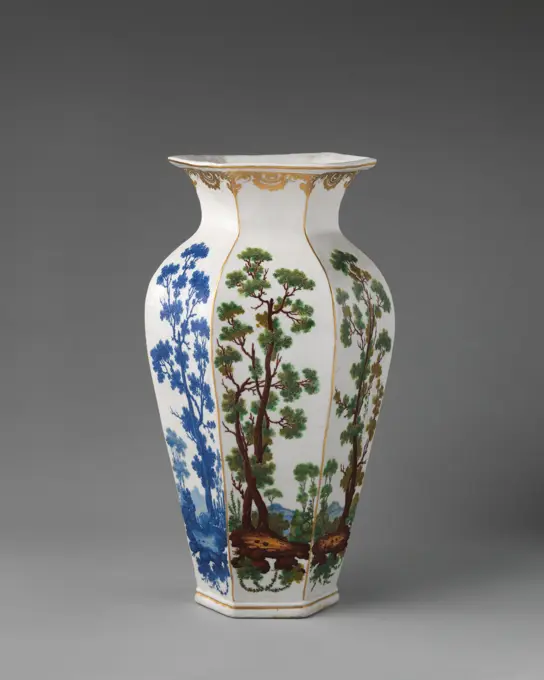
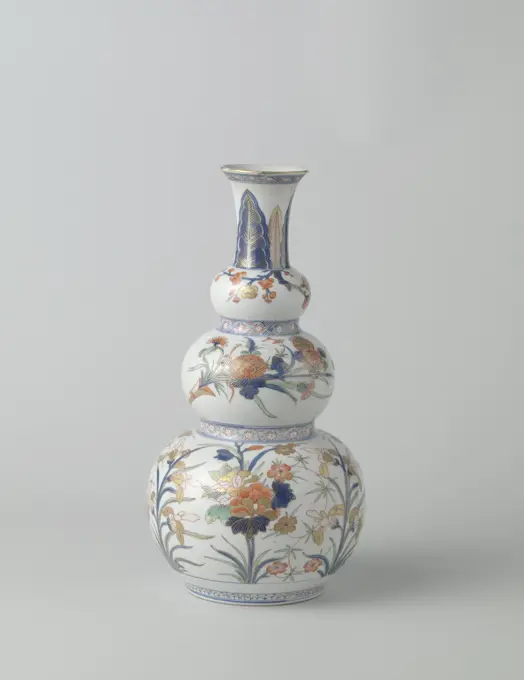
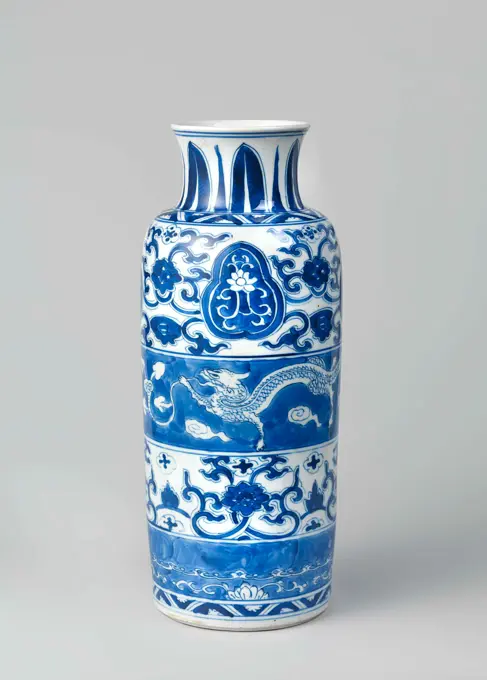
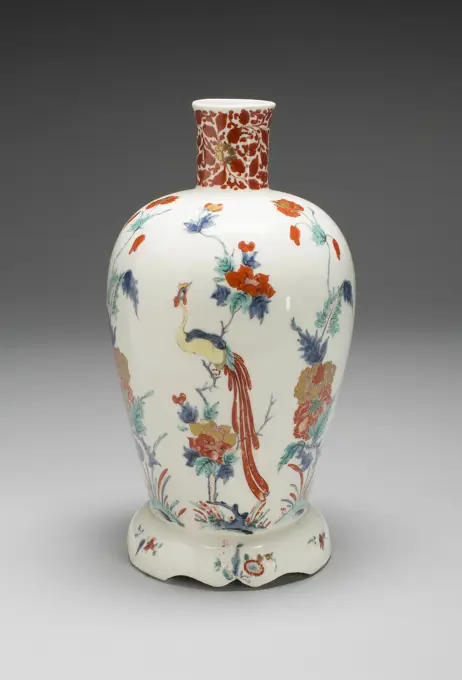
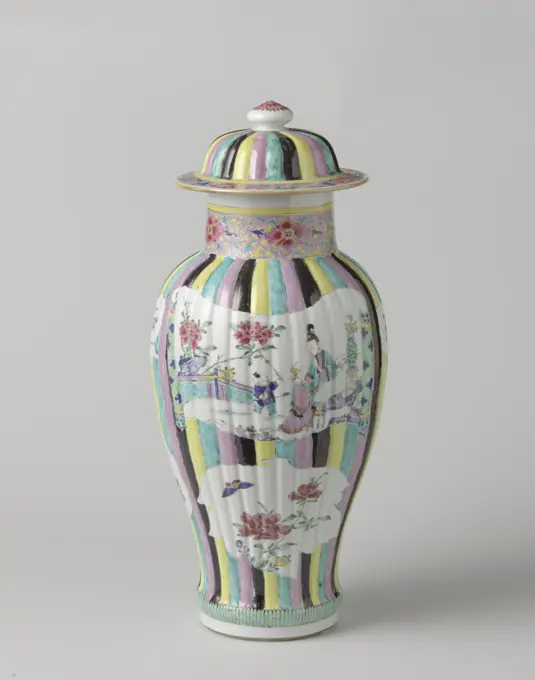
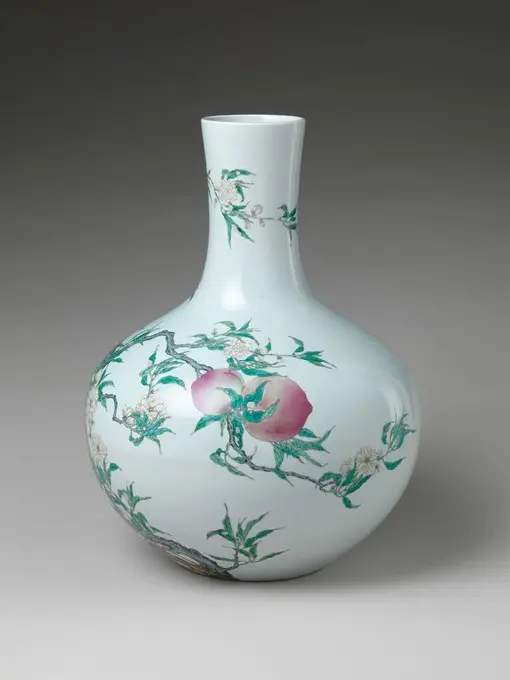
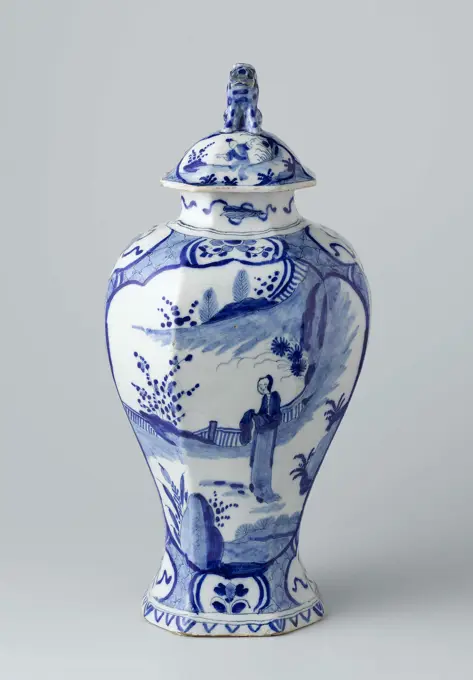
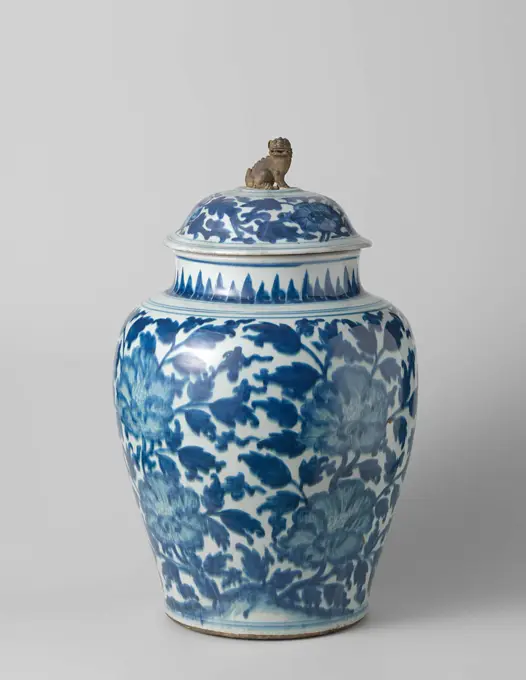
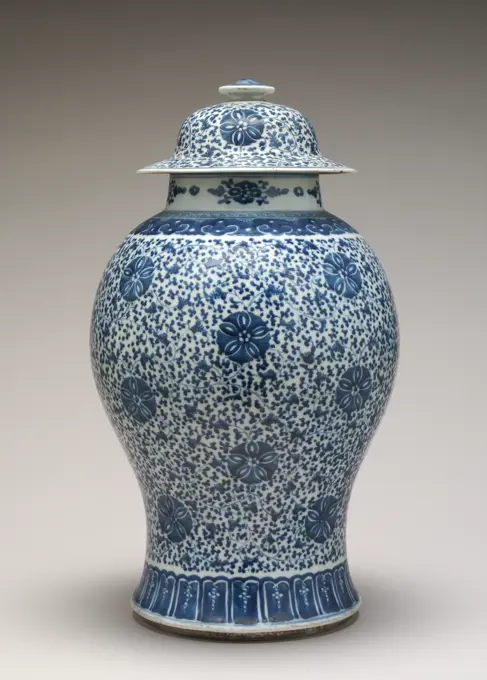
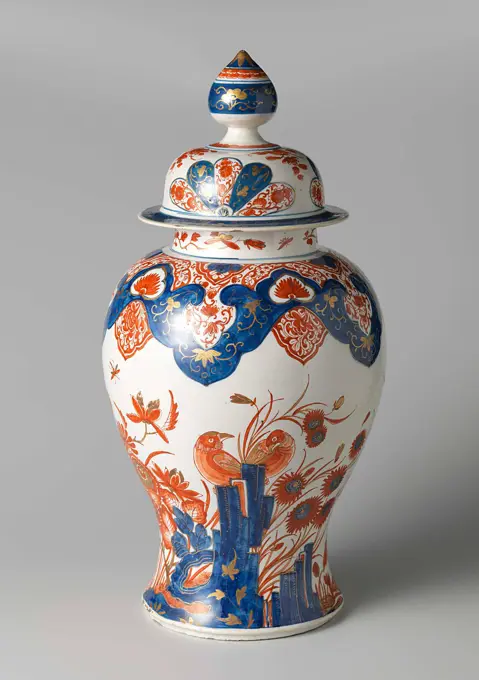
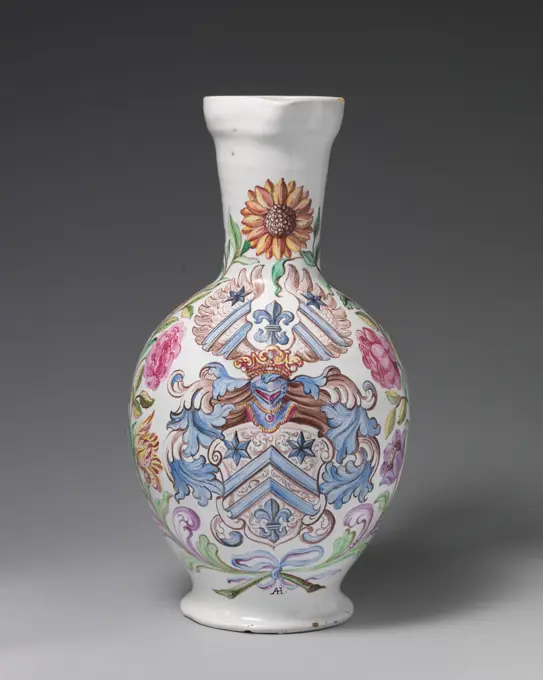
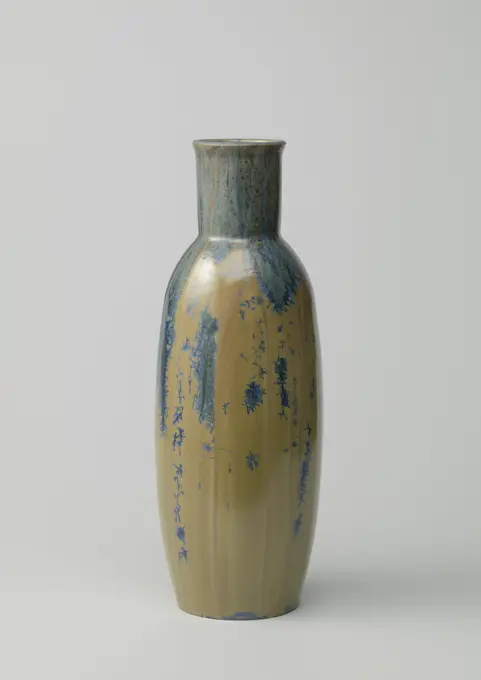
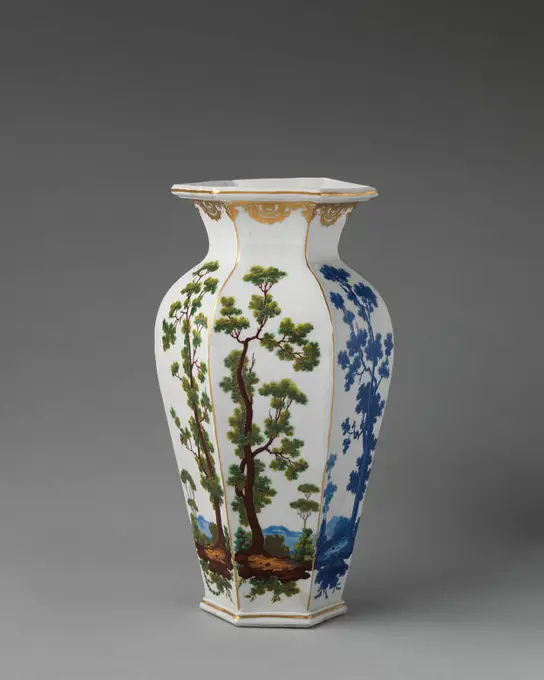
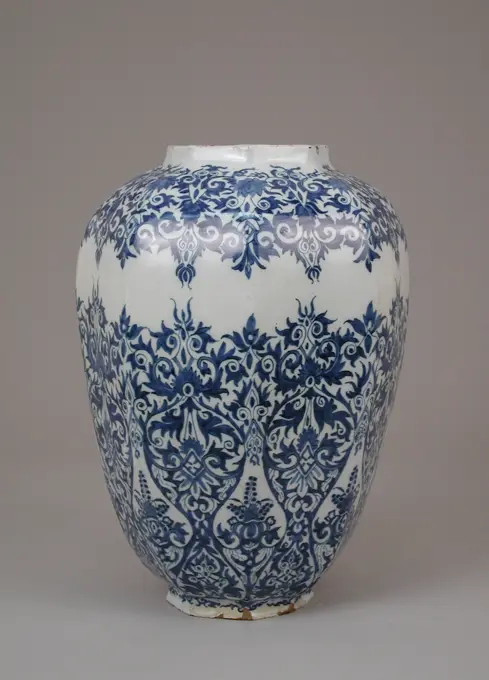
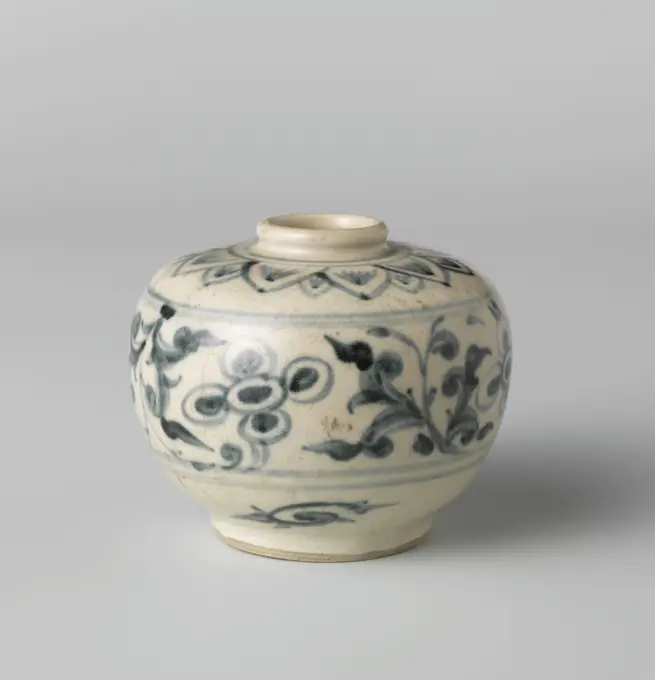
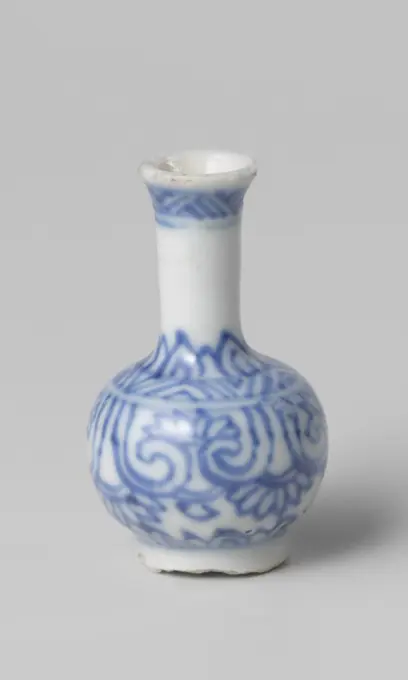
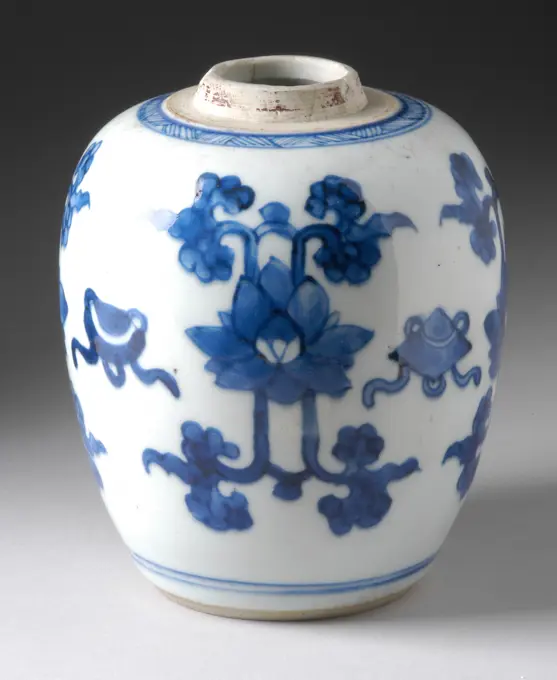
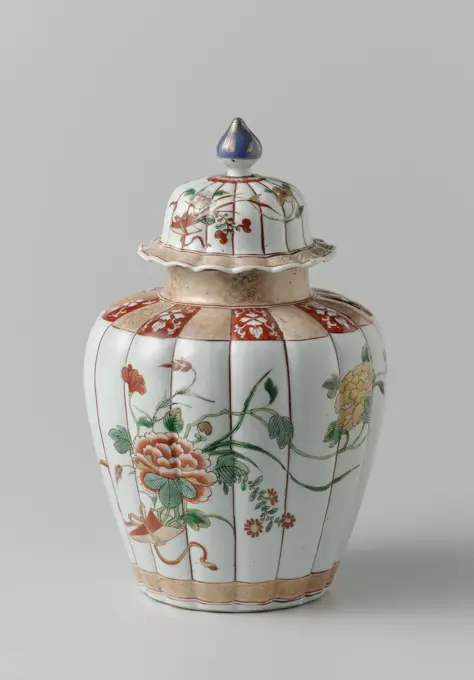
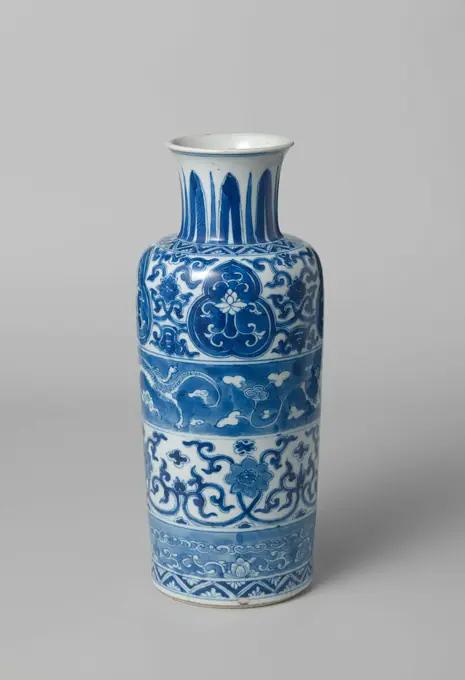
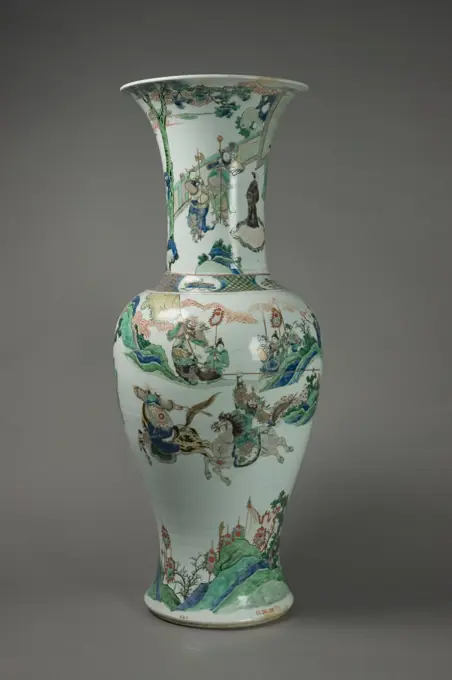
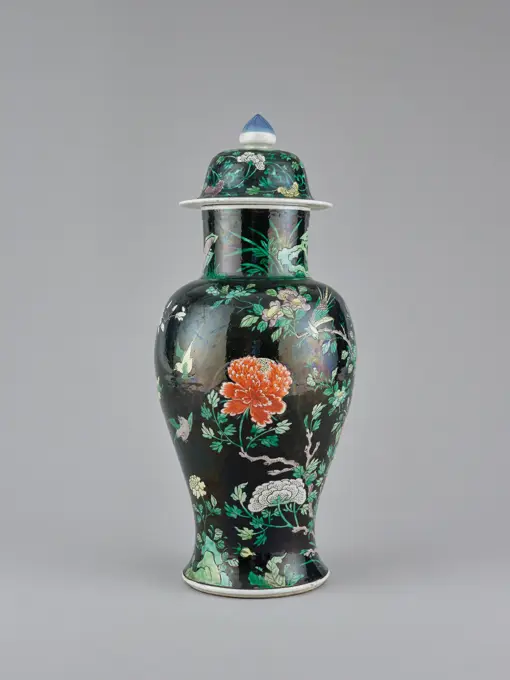
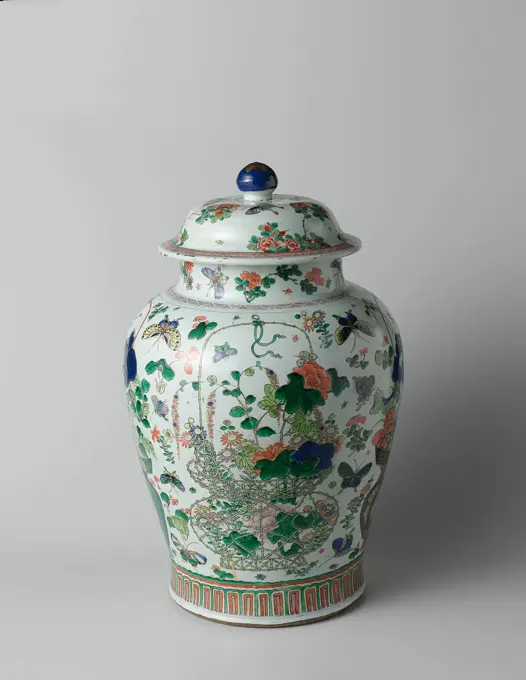
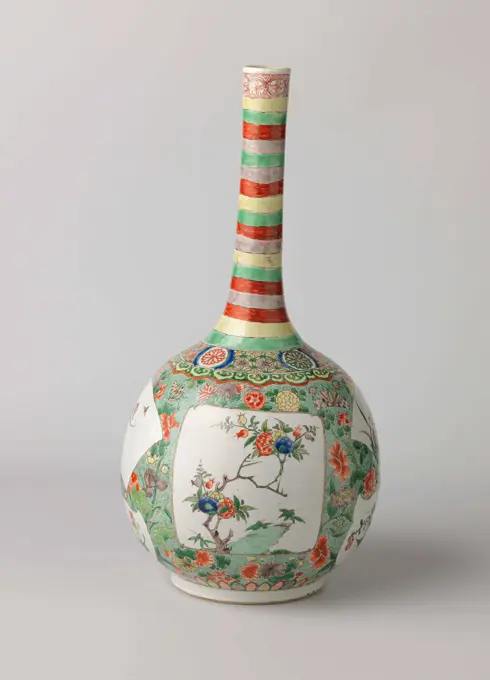
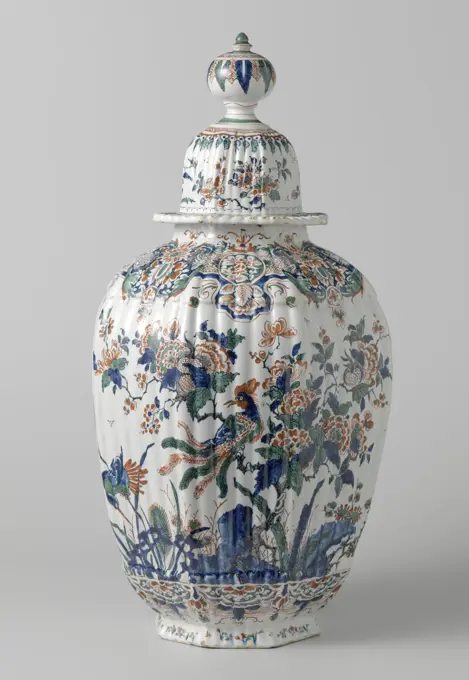
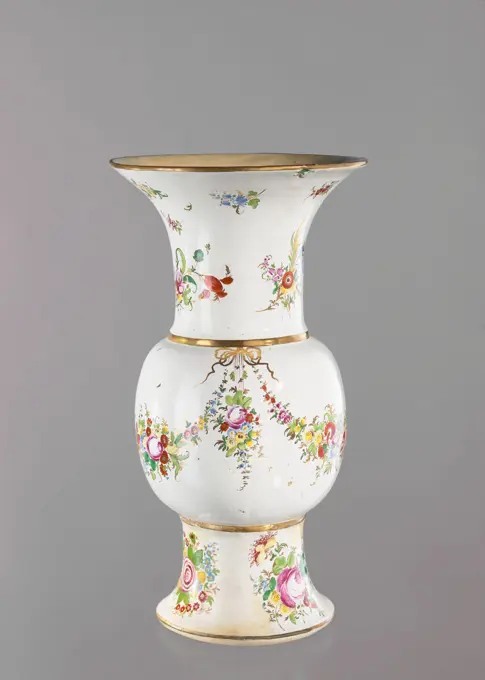
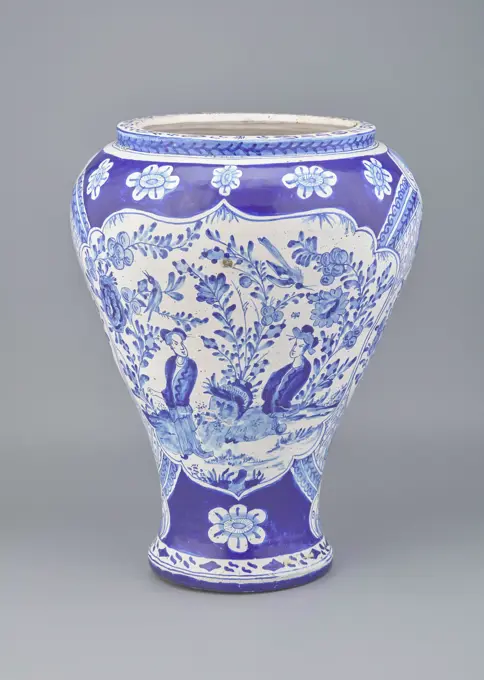
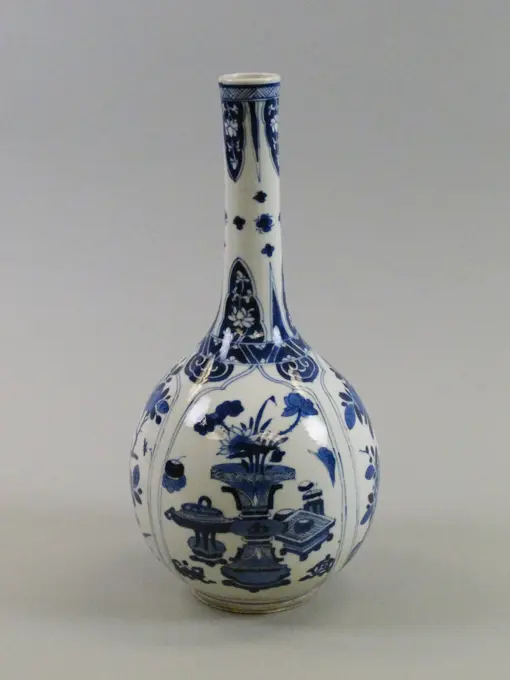
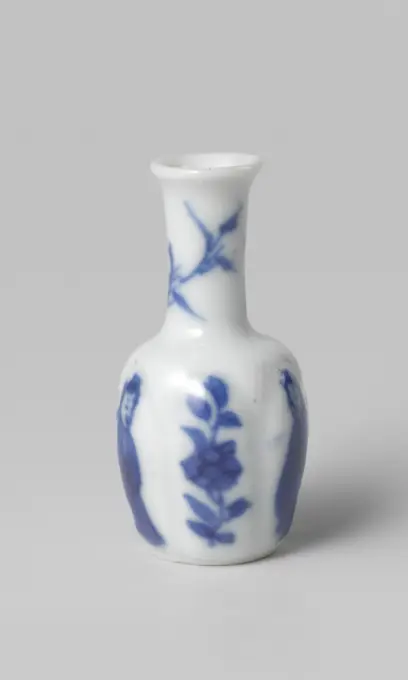
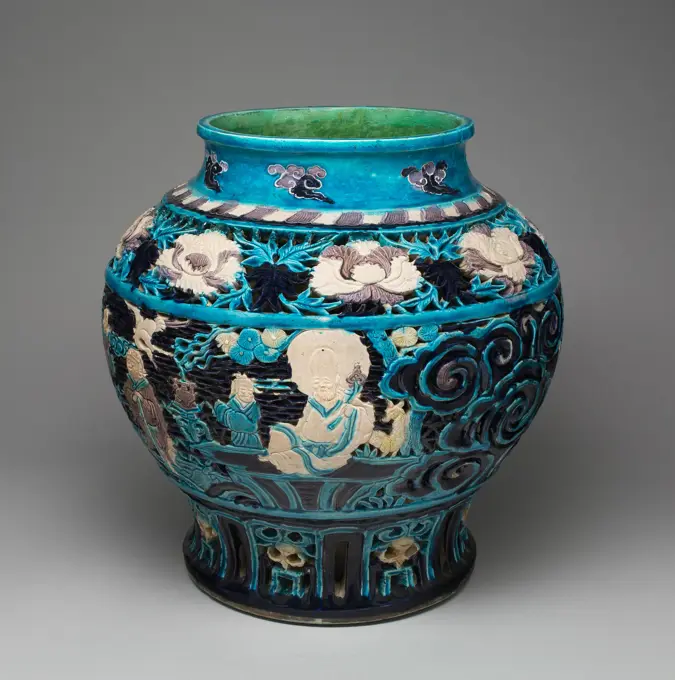
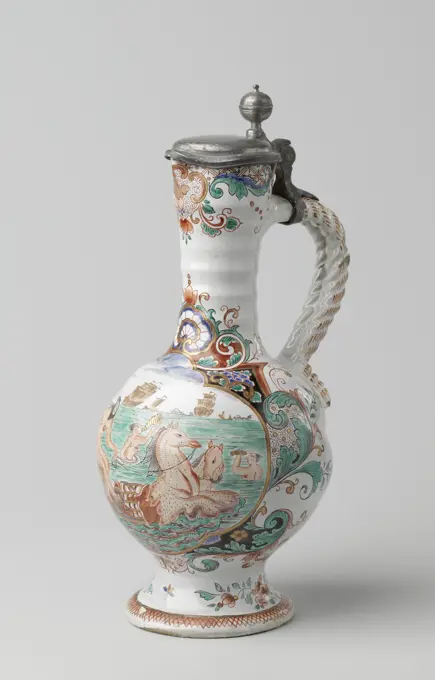
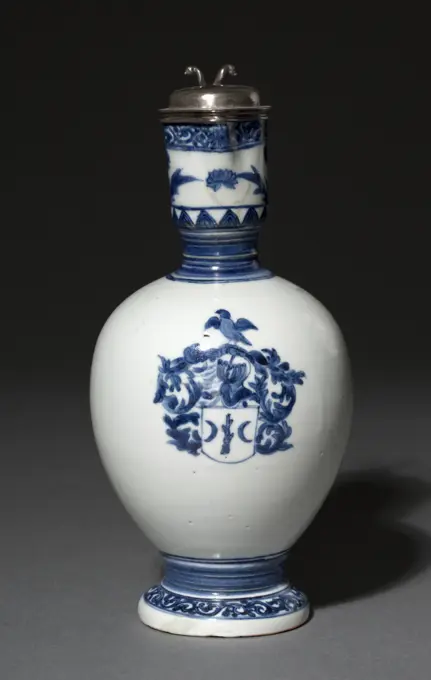
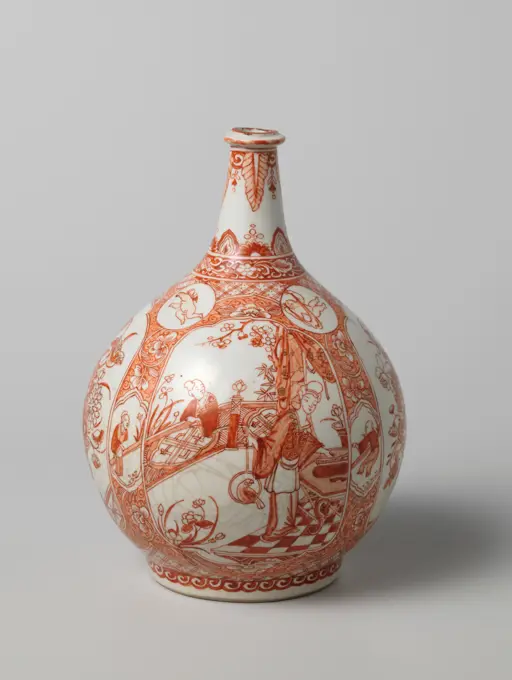
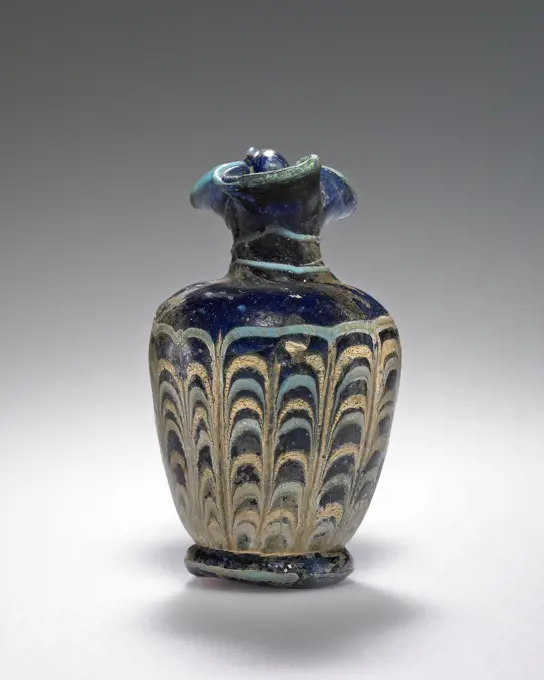
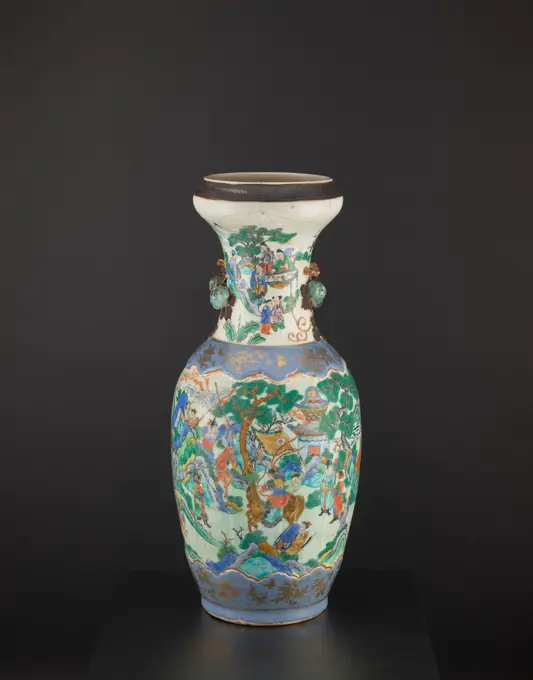
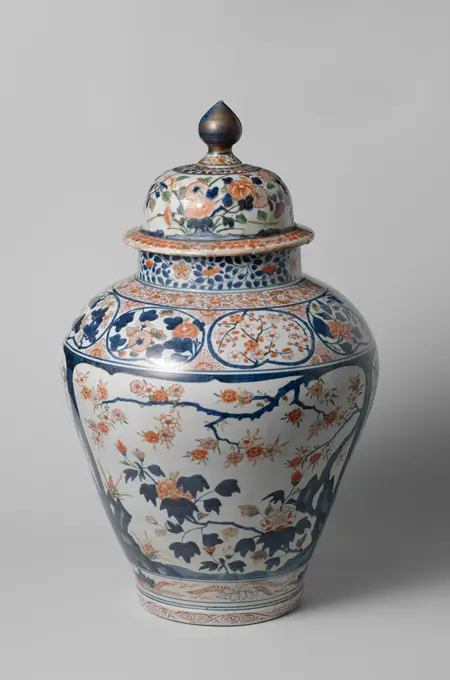
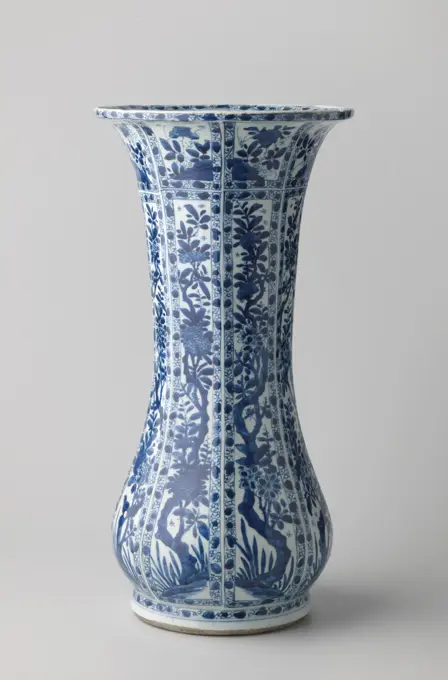
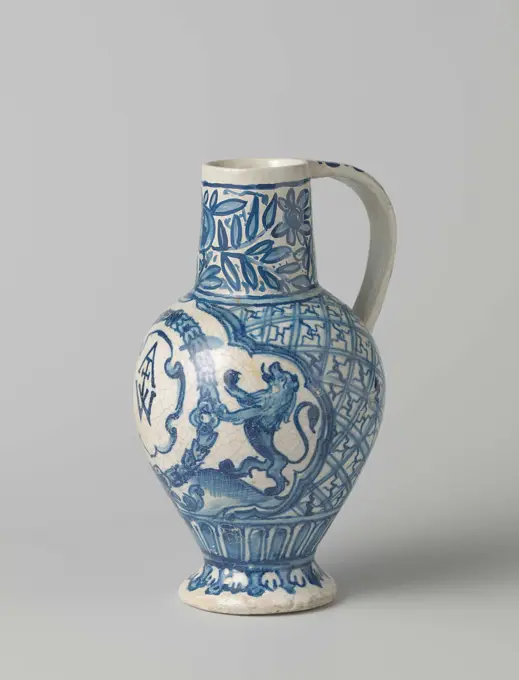
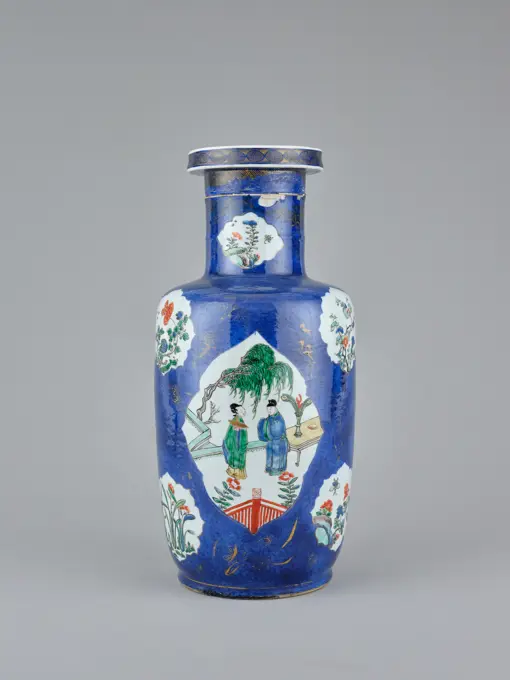
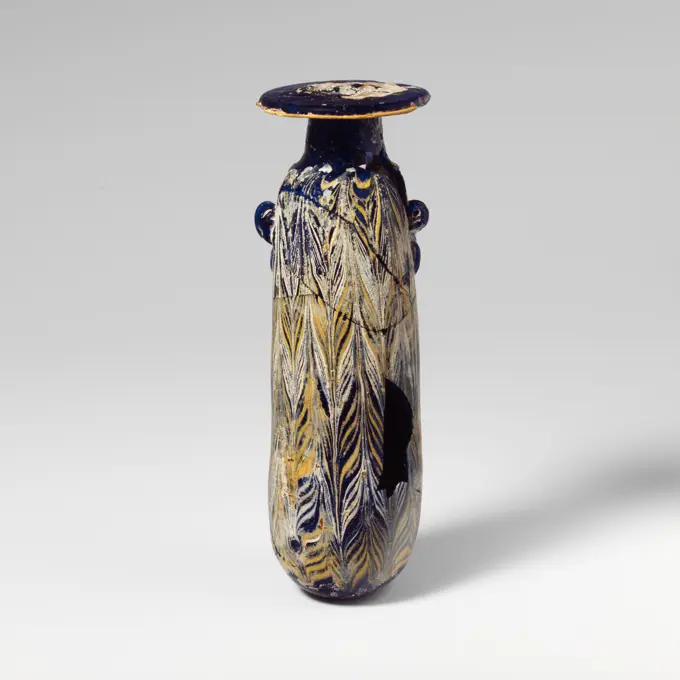
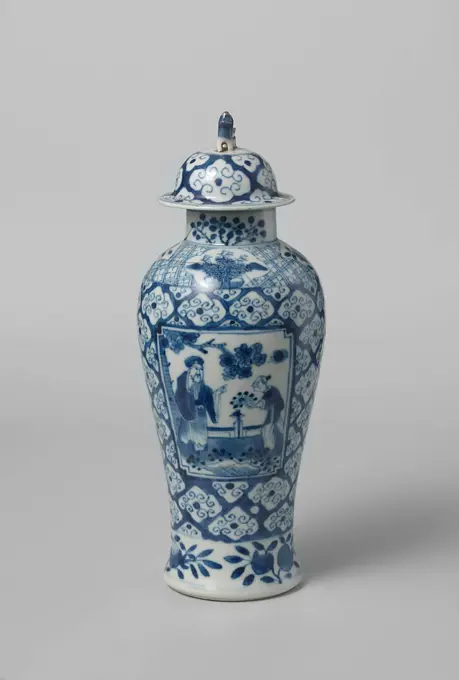
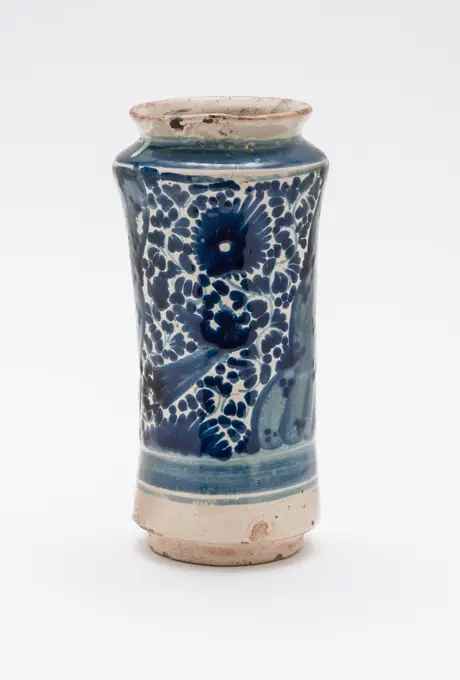
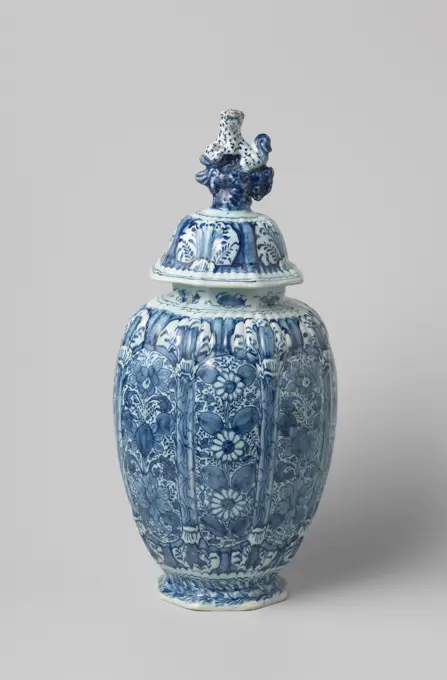
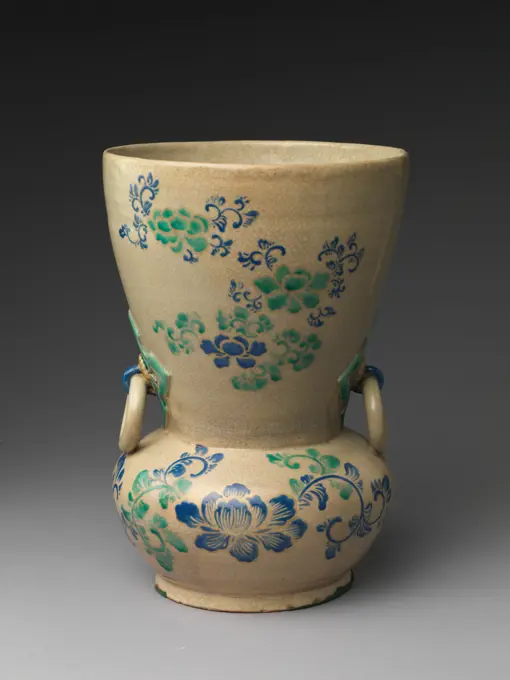
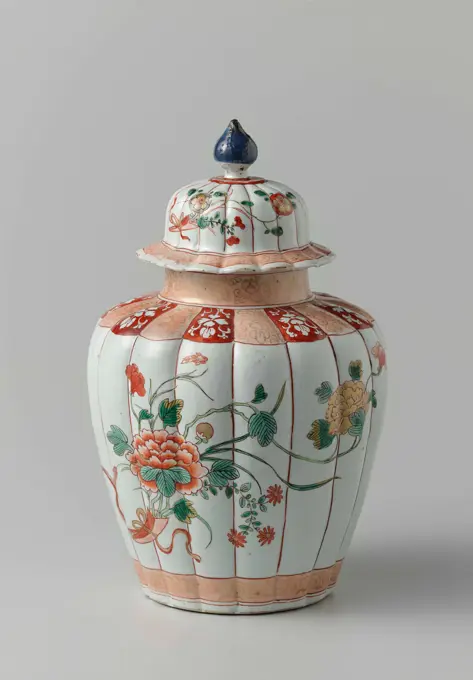
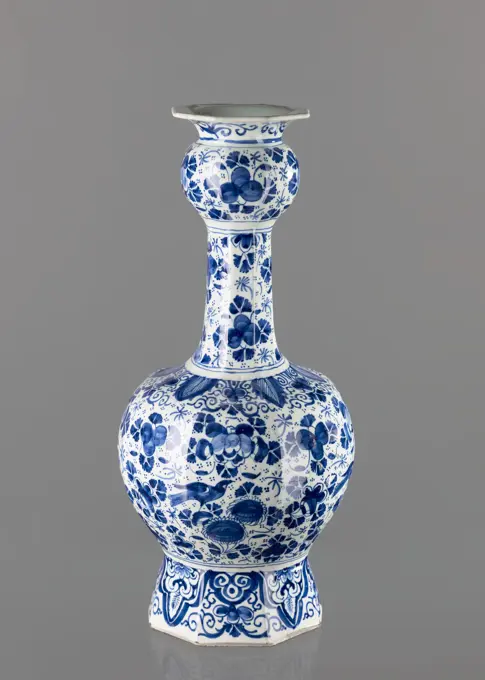
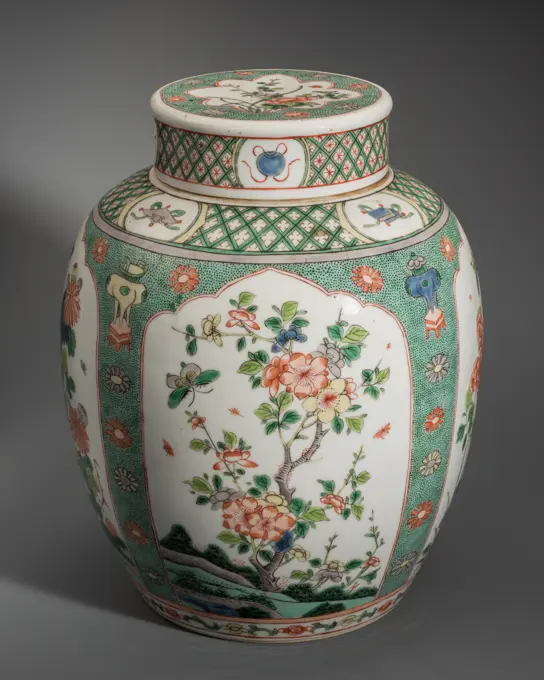
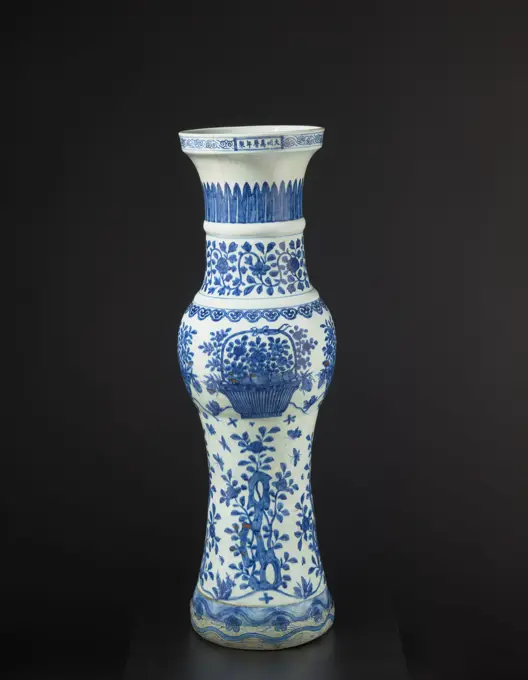
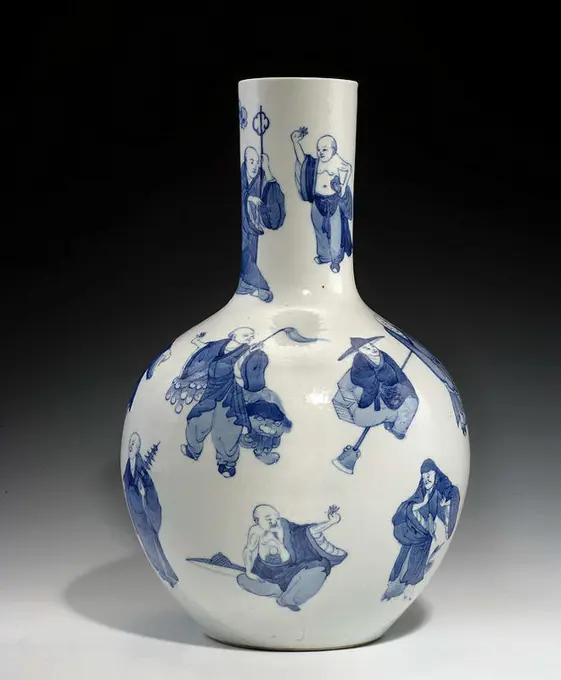
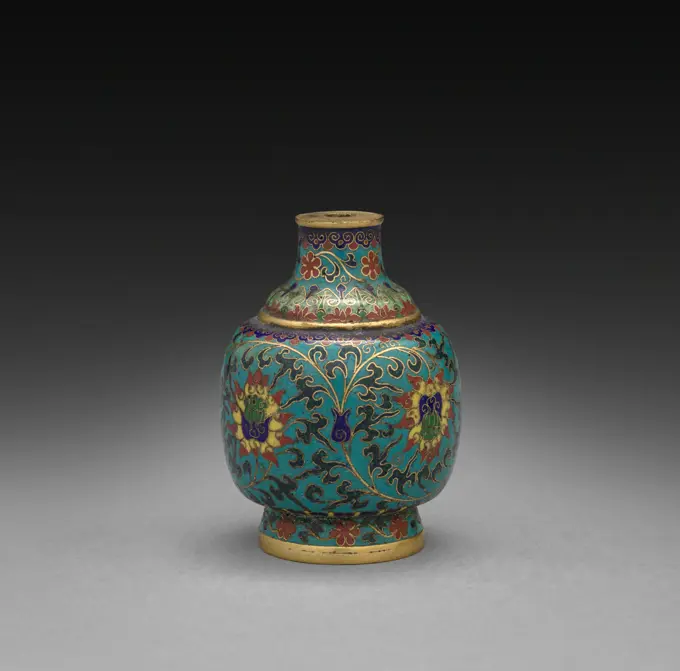
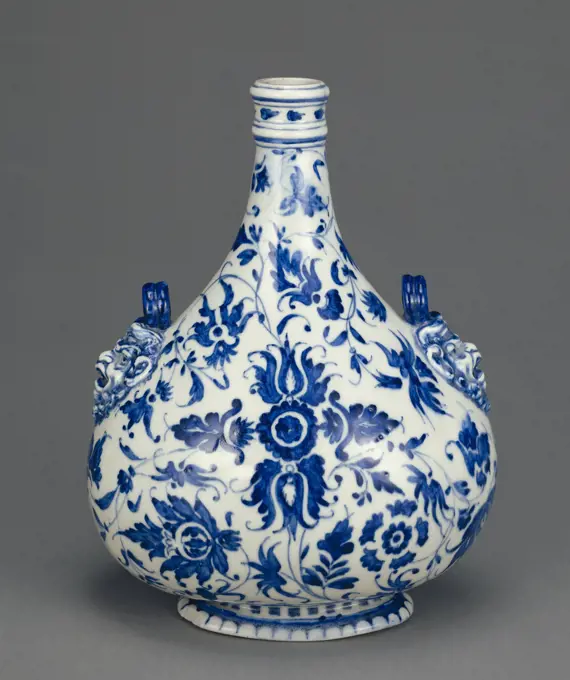
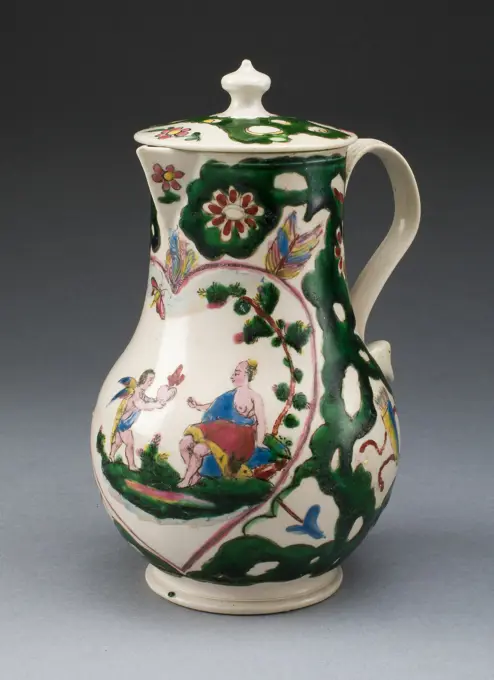
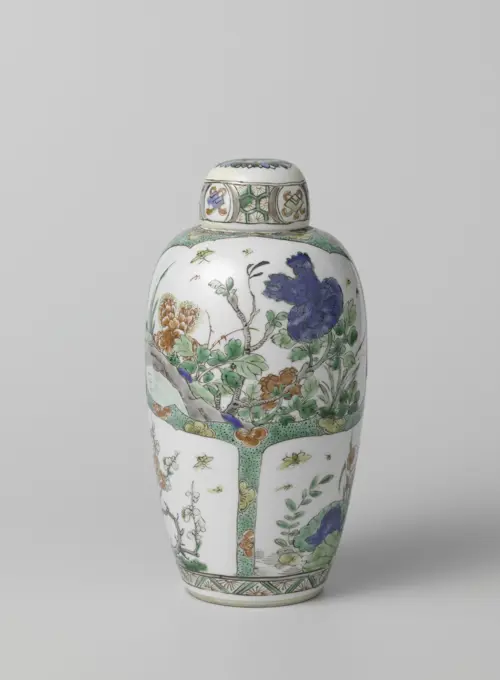
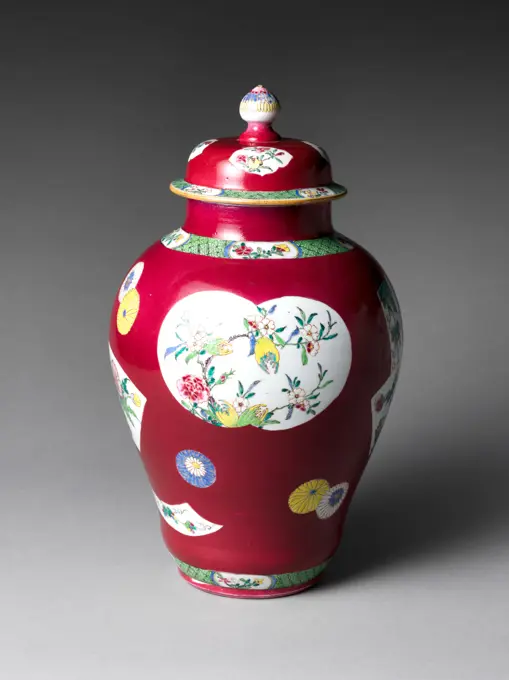
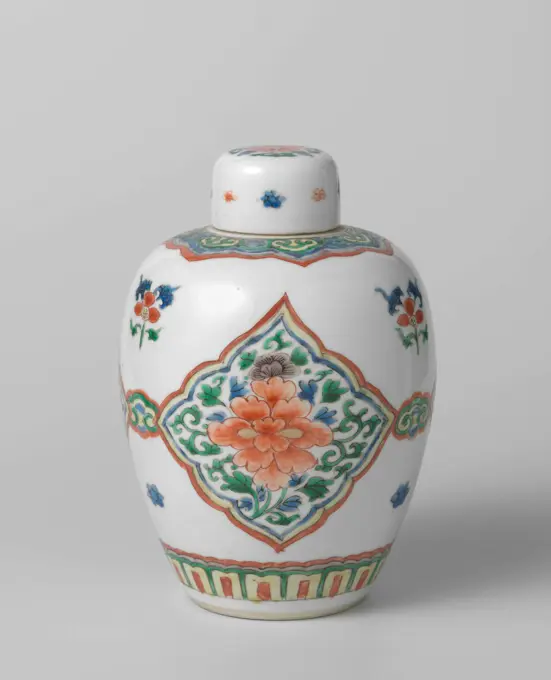
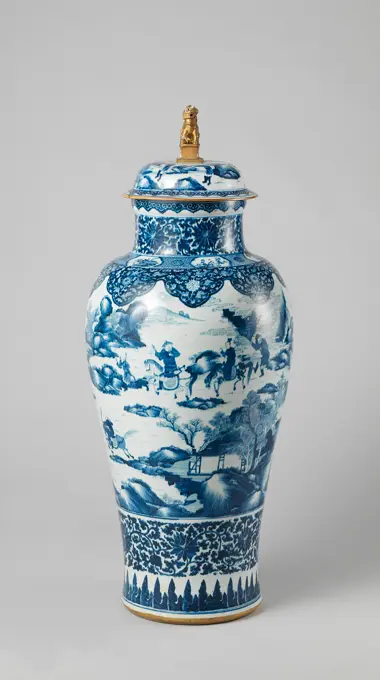
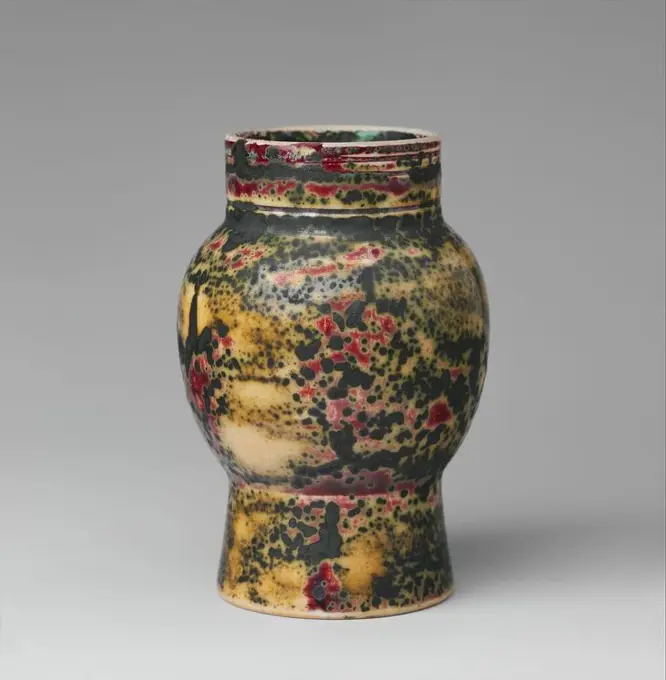
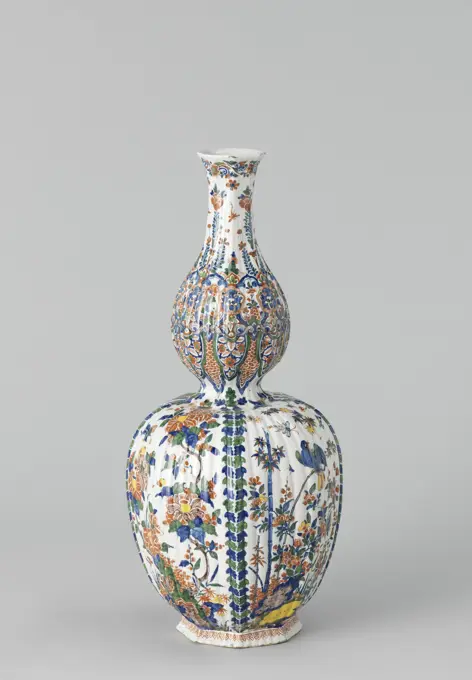
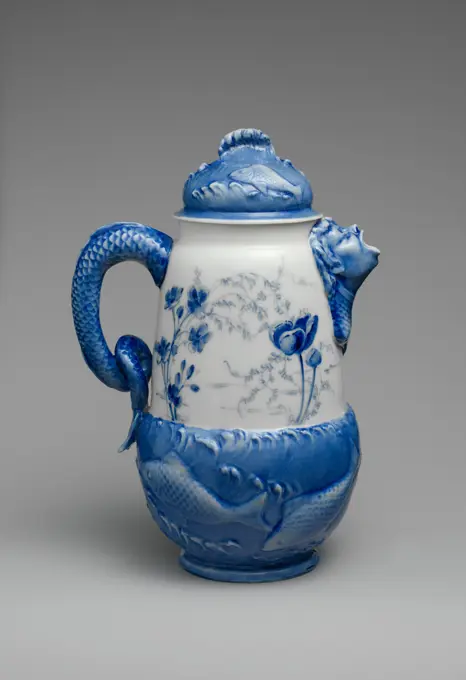
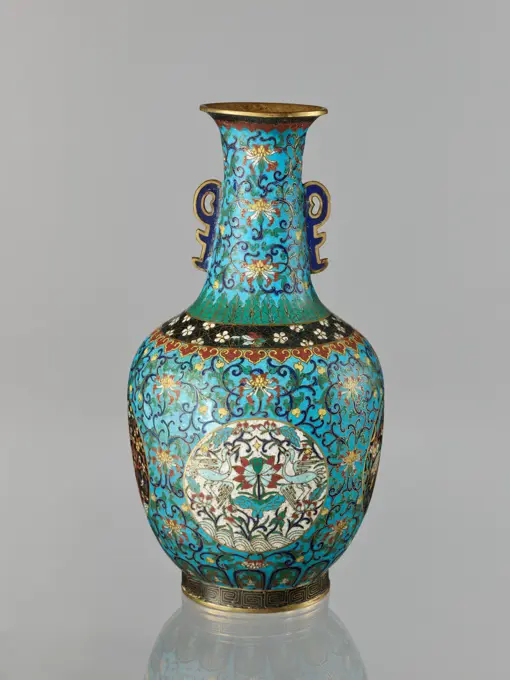
Vase with Pheasants and Horses in landscapes. Vase of porcelain with an upwardly flared body, round shoulder and a narrow, spreading neck with a raised edge, painted in underglaze blue. The belly is divided into two parts. The upper part with two pheasants - one flying, the other on a rock - in a landscape with blooming plants (peony, prunus) and clouds. At the bottom two horses surrounded by flames, running over swirling waves and rocks. Three compartments with a swastikap pattern broken on the shoulder by a cartouche with perzickers; The courses are separated by a Ruyi motif. A tire with pointed leaf motifs on the neck. A crack in the edge and one in the belly. Ming porcelain in blue and white.Vase with Loop Handles 1400-1499 China. Porcelain painted in underglaze blue .Ovoid covered jar with a bird on a rock and flowering plants in panels, anonymous, c. 1650 - c. 1680 Porcelain lid of egg -shaped lid jar, painted in underlaze blue. On the wall two scalloped cartouches with a flowering plant (peony) in a rock. Stylized flower vines between the cartouches. On the button a stylized flower. The lid has been broken. Blue White. Japan porcelain. glaze. cobalt (mineral) painting / vitrification Porcelain lid of egg -shaped lid jar, painted in underlaze blue. On the wall two scalloped cartouches with a flowering plant (peony) in a rock. Stylized flower vines between the cartouches. On the button a stylized flower. The lid has been broken. Blue White. Japan porcelain. glaze. cobalt (mineral) painting / vitrificationJug with foliate scrolls in panels, anonymous, c. 1750 - c. 1799 Can be made of stoneware on the stand ring with a hexagonal, egg -shaped belly and narrow neck with a pinched spout. The C-shaped (broken) ear is attached to the neck and shoulder. Partly covered with cobalt blue. The belly is covered with pressed zigzag lines (knibis) with small, stamped flowers. Six courses with entered leaf vines and dots in blue. On the neck twice a band with zigzag lines and flowers and one with a continuous leaf vank. Westerwald. Westerwald stoneware. glaze. cobalt (mineral) vitrification Can be made of stoneware on the stand ring with a hexagonal, egg -shaped belly and narrow neck with a pinched spout. The C-shaped (broken) ear is attached to the neck and shoulder. Partly covered with cobalt blue. The belly is covered with pressed zigzag lines (knibis) with small, stamped flowers. Six courses with entered leaf vines and dots in blue. On the neck twice a band with zigzag lines and flowers and one wiPear-shaped vase with ornamental borders and landscapes in medallions, anonymous, c. 1700 - c. 1724 Pear -shaped vase of porcelain with a wide, slightly spreading neck and two modeled ears in the form of animal heads. Painted in underly glaze blue and on the glaze blue, red, green, yellow, black and gold. In China on the belly in underlaze blue decorated with four Yin Yang symbols; Below that a blue band with saved leaf motifs and half flowers. The neck with the same band and a band with 'Taotie' masks on servetwork. In Europe on the abdomen decorated in email colors with medallions with a landscape or a bird on a branch with bound hedges and flowering plants (pine, prunus) between the Yin Yang symbols with a landscape or a bird. Ranks between the medallions. A band with shacking and flowers on the foot. Marked on the underside with five imitation Chinese character in red enamel. Decorated with email colors in Europe. Chinapainter: Europe porcelain. glaze. cobalt (mineral). gold (metalOvoid Covered Jar With A Bird On A Rock And Flowering Plants in Panels. Lid of egg-shaped porcelain lid pot, painted in underglaze blue. Two scalloped cartouches with a flowering plant (peony) at a rock. Between the cartouches styled flower drinks. On the button a stylized flower. The lid has been broken. Blue White.Vase with scenes from Romance of the West Chamber late 17th century China The scenes on this vase come from Romance of the West Chamber, arguably Chinas most popular romantic play. Written by Wang Shifu (ca. 1260-1336), the play tells the story of two star-crossed lovers. Zhang Gong is an impoverished young scholar, and Cui Yingying is the daughter of a high-ranking official. After many romantic experiences and dramatic difficulties, some of which are depicted on this vase, the two lovers eventually get married.. Vase with scenes from Romance of the West Chamber. China. late 17th century. Porcelain painted in cobalt blue under transparent glaze (Jingdezhen ware). Qing dynasty (1644-1911), Kangxi period (1662-1722). CeramicsPear-Shaped Bottle Vase With Flowering Plants And Dots in a Panel Decoration. Bottle-shaped vase of porcelain with a pear-shaped body and a slightly spreading neck, painted in underglaze blue. The outer wall is modeled on the belly in wide and narrow, rectangular compartments. In the wide boxes a thriving plant on a rock; The narrow compartments with stripes and dots. On the neck narrow, rectangular compartments with bead hangers with brushes. The courses are interrupted by a bond with Ruyi motifs. On the outer edge a band with flowers in medallions. A decorative band around the foot. A crack and a chip in the edge. Cracking porcelain in blue and white.Pear-Shaped Bottle Vase With Flowering Plants And Austricious Objects. Bottle-shaped vase of porcelain with a pear-shaped body and a slightly spreading neck, painted in underglaze blue. The outer wall is modeled on the belly in wide and narrow, rectangular compartments. In the wide subjects alternately a thriving plant on a rot or brushes with a lucky symbol (gourd, role); The narrow compartments with stripes and dots. On the neck narrow, rectangular compartments with bead hangers with brushes. The courses are interrupted by a bond with Ruyi motifs. On the outer edge a bond with Ruyi motifs. A decorative band around the foot. Cracking porcelain in blue and white.Pear-shaped bottle vase with auspicious symbols and petal borders, anonymous, c. 1680 - c. 1720 Bottle -shaped vase made of porcelain with a pear -shaped body and upwards, painted in underlaze blue. On the belly lucky symbols: antiques (tripod, incense burner, painting roll with prunus branch, flower vase with chrysanthemum, book, dragon etc.). On the shoulder and the outer edge a bond with tendrils. On the neck a tire with raised and one with hanging, pointed leaf motifs. Blue White. China porcelain. glaze. cobalt (mineral) painting / vitrification Bottle -shaped vase made of porcelain with a pear -shaped body and upwards, painted in underlaze blue. On the belly lucky symbols: antiques (tripod, incense burner, painting roll with prunus branch, flower vase with chrysanthemum, book, dragon etc.). On the shoulder and the outer edge a bond with tendrils. On the neck a tire with raised and one with hanging, pointed leaf motifs. Blue White. China porcelain. glaze. cobalt (mineral) painting Baluster covered jar with horsemen in landscapes and flower sprays, anonymous, c. 1680 - c. 1720 Balus -shaped porcelain lid jar, painted in underlaze blue. Two rows on the wall with modeled cartouches with a river landscape, riders in a landscape or flower branches. On the shoulder, the neck and on the foot flower branches. Marked on the underside with an artemisia leaf in a double circle. Blue White. China porcelain. glaze. cobalt (mineral) painting / vitrification Balus -shaped porcelain lid jar, painted in underlaze blue. Two rows on the wall with modeled cartouches with a river landscape, riders in a landscape or flower branches. On the shoulder, the neck and on the foot flower branches. Marked on the underside with an artemisia leaf in a double circle. Blue White. China porcelain. glaze. cobalt (mineral) painting / vitrificationPair of vases, anonymous, c. 1700 - c. 1715 Vase of Faïence. Multicolored painted. Delft . Vase of Faïence. Multicolored painted. Delft .Vase with Cover (one of a pair) 1765-1775 Worcester. Soft-paste porcelain with blue scale ground and gilding . Worcester Royal Porcelain Company (Manufacturer). Pot of faience. Blue painted with leaf and flower branches. Lid is missingSnuff Bottle China. Snuff Bottle 41078Beaker (part of a garniture) ca. 1773 Bristol The unusual decoration, alternating landscapes in blue and the colors of nature, is attributed to an itinerant painter "Socquet" (active 1753-73), about whom little is known.. Beaker (part of a garniture). British, Bristol. ca. 1773. Hard-paste porcelain. Bristol (British). Ceramics-PorcelainTwo small lidded jars, De Witte Ster (attributed to), c. 1760 - c. 1775 FaaMence lid jar, of a small size cupboard set. Blue painted with a Chinese landscape. Delft . FaaMence lid jar, of a small size cupboard set. Blue painted with a Chinese landscape. Delft .Base for a Water Pipe (huqqa) with Floral Medallions early 18th century China The shape and function indicates that this piece was made for export, probably to India. It remains unclear when the huqqa, used for cooling tobacco or some other substance with water prior to smoking, developed, though historical references indicate that it was used in both India and the Middle East by the sixteenth century.. Base for a Water Pipe (huqqa) with Floral Medallions 42356Lid of pot with lid of multicolored painted faïence, anonymous, c. 1700 - c. 1735 Lid of pot with faïence lid. Multicolored painted with flowers on a blue stock. Delft . Lid of pot with faïence lid. Multicolored painted with flowers on a blue stock. Delft .Vase. unknown, authorTriple gourd vase painted in Japanese style with large flower sprays, anonymous, c. 1700 - c. 1724 Porcelain lump vase with three nodules and spreading neck, painted in underly glaze blue and on the glaze with red, green and gold. Painted in Japanese style with large flower branches (Prunus, Chrysanthemum, peony, Hibiscus and Iris); On the neck a band with standing leaf motifs; Between the nodules and on the edge a tire with servetwork with flour; A decorative band around the foot. Chinese Imari. China porcelain. glaze. cobalt (mineral). gold (metal) painting / vitrification Porcelain lump vase with three nodules and spreading neck, painted in underly glaze blue and on the glaze with red, green and gold. Painted in Japanese style with large flower branches (Prunus, Chrysanthemum, peony, Hibiscus and Iris); On the neck a band with standing leaf motifs; Between the nodules and on the edge a tire with servetwork with flour; A decorative band around the foot. Chinese Imari. China porcelainCylindrical vase with dragons and floral scrolls. Cylindrical vase of porcelain with a wide, spreading neck, painted in underglaze blue. The abdomen is divided into four wide tires with from bottom to top: a band with spared lotus drinks, one with flour rinks, one with two chilongs (corneless dragon) with a mushroom (Lingzhi) between clouds and one with flower rinks interrupted by a saved lotus drink A lobby cartouche. On the shoulder and above the foot a bond with a zigzag pattern with flowers. The neck with standing, pointed leaf motifs. Blue White.Vase 1750-1760 England. Soft-paste porcelain, polychrome enamels . Bow Porcelain Factory (Manufacturer)Covered jar with figures, flower sprays and auspicious symbols in shaped panels on a multi-colored ground, anonymous, c. 1725 - c. 1740 Porcelain lid jar with baluster -shaped body and ribbed wall, painted on the glaze in blue, red, pink, green, yellow, purple, black and gold. On the wall cartouches against a frequently colored background of vertical tires (Harlequin pattern); Two cartouches in the form of open rolls with a woman (long lijs) with young (fool) in a fenced garden with flowering plants, underneath two leaf-shaped cartouches with peony branch and butterfly, a smaller pomegranate and fingercitren-shaped compartment on either side of the large courses with lucky symbols; On the neck a band with flower vines. Belonging to a five -part cupboard. Famle Rose. China porcelain. glaze. gold (metal) painting / gilding / vitrification Porcelain lid jar with baluster -shaped body and ribbed wall, painted on the glaze in blue, red, pink, green, yellow, purple, black and gold. On the waVase with Nine Peaches. Culture: China. Dimensions: H. 20 in. (50.8 cm); Diam. 16 in. (40.6 cm); Diam. of rim 4 1/2 in. (11.4 cm); Diam. of foot 7 in. (17.8 cm).The delicate pink in the painting illustrates the development of new colors in the early part of the eighteenth century. Opaque white derived from a lead arsenite, and pale pink tinted with bits of gold were added to the palette and combined with existing colors to create a range of hues. Museum: Metropolitan Museum of Art, New York, USA.. Garnitures were extremely popular decorative elements in 18th-century Dutch interiors, where they were placed on cabinets or buffets. Although the forms of some garnitures evolved with the times, popular models, like this set with decorations inspired by Chinese porcelain, remained in production for many decades.Ovoid Covered Jar With Large Peonies. Baluster-shaped lid pot of porcelain with a wide neck, painted in underglaze blue. Four large peonies on the wall with two rocks. A tire with pointed leaf motifs on the neck. The lid with the same decoration; Lid knob in the shape of a gold-plated shishi (lion dog). A few cracks in the edge of the pot; Lid has been broken. Blue White.Chinese Qing Dynasty, Blue and White Jar with Cover, 18th century Chinese Qing Dynasty, Blue and White Jar with Cover, 18th century, , Gift of Mrs. W. Murray Crane 1955.14.1Lidded Jar. Pot of Faïence. Painted multi-colored.Jug with coat-of-arms of the Cleminius Family ca. 1700 Abraham Helmhack The end of the Thirty Years War in 1648 saw the revival of domestic industries such as decorated faience wares, which catered to the German bourgeoisie. Abraham Helmhack (1654-1724) was a Hausmaler, or independent decorator, who specialized in biblical motifs, flowers, and coats-of-arms. This example, painted for the Cleminius family, features a coat-of-arms set within a lavish floral border. His monogram AH can be found at the foot of the vessel.. Jug with coat-of-arms of the Cleminius Family. German, Frankfurt with Nuremburg decoration. ca. 1700. Tin-glazed earthenware. Ceramics-PotteryVase with a Crystalline Glaze, Pierre Adrien Dalpayrat, c. 1890 - c. 1893 Vase of stoneware, decorated with blue crystal glaze on light brown stock. Slim, slightly curved cylinder shape with indented cylindrical neck. Marked with: Stamped 1008 Dalpayrat and 31 in red. Bourg-la-Reine stoneware Vase of stoneware, decorated with blue crystal glaze on light brown stock. Slim, slightly curved cylinder shape with indented cylindrical neck. Marked with: Stamped 1008 Dalpayrat and 31 in red. Bourg-la-Reine stonewareBeaker (part of a garniture). Culture: British, Bristol. Decorator: Socquet (active 1753-73). Dimensions: Height: 12 1/2 in. (31.8 cm). Factory: Bristol (British). Factory director: Richard Champion. Date: ca. 1773.The unusual decoration, alternating landscapes in blue and the colors of nature, is attributed to an itinerant painter "Socquet" (active 1753-73), about whom little is known. Museum: Metropolitan Museum of Art, New York, USA.Imari Vase and Cover, anonymous, c. 1775 - c. 1824 Balus -shaped porcelain lid jar, painted in underly glaze blue and on the glaze red, black and gold. On the abdomen three large cartouches with a shishi between a flowering pair of pair of pair of pair of pair of creeps; The cartouches are separated by tires of curls containing a lobed cartouche with a Hoo-Vogel surrounded by flower vines. On the shoulder a wide band with chrysanthnums interrupted by lobed cartouches with a shishi (lion dog) between a plant. Around the foot and on the neck a bond with lotus vines. A band with curl work on the foot. The lid with the same decoration; Cover button in the form of a shishi on a rock. The tail has been broken down. Is part of a cupboard set. Imari. Japan porcelain. glaze. cobalt (mineral). gold (metal) painting / gilding / vitrification Balus -shaped porcelain lid jar, painted in underly glaze blue and on the glaze red, black and gold. On the abdomen three large cartouches with a shishi betwVase (one of a pair) ca. 1725 Vienna The gift of the Hans Syz Collection in 1995 endowed the Museum with nearly three hundred examples of European and Asian ceramics meticulously acquired by Swiss-born collector Dr. Syz (1894-1991) to chart the migration of models and patterns from East to West. Documenting a continuous process of influence and adaptation, these pieces provide a discriminating review of the nuances of stylistic change resulting from three centuries of trade.. Vase (one of a pair) 236744Bottle Vase (Yu-hu chun), late 15th century, 10 5/8 x 5 11/16 x 5 11/16 in. (26.99 x 14.45 x 14.45 cm), Slip-covered stoneware with underglaze cobalt blue decor, Vietnam, 15th century, The inspiration for Vietnamese blue-and-white wares was derived from China. The Vietnamese potters were more than mere copyists, however, and they developed a wide range of decorative motifs including peonies, lotuses, birds, flowers, animals, fish, and even landscapes. This elegant pear-shaped bottle is closely related to Chinese prototypes both in shape and decoration. The floral panels painted in underglaze blue are set against a wave background. Cloud whirls adorn the neck, plantain leaves appear below the rim, and lotus leaf lappets encircle the base.Miniature Double-Gourd Bottle Vase With Flower Sprays. Bottle-shaped miniature vase of porcelain with balebass-shaped body, painted in underglaze blue and on the glaze red and gold. A group of blooming plants on the wall; The neck with two flower branches. Blue White.Vase first half 18th century Dutch, Delft It is a fairly safe assumption that vases of this type originally would have had high-domed, conforming lids.. Vase. Dutch, Delft. first half 18th century. Tin-glazed earthenware. Ceramics-PotteryOvoid jar with floral scrolls, anonymous, c. 1400 - c. 1499 Egg -shaped pot of porcelain, painted in undermglaze blue. On the belly a tire with flower vines with a slender four times underneath. On the shoulder a band with leaf motifs. Blue White. Vietnam porcelain. glaze. cobalt (mineral) painting / vitrification Egg -shaped pot of porcelain, painted in undermglaze blue. On the belly a tire with flower vines with a slender four times underneath. On the shoulder a band with leaf motifs. Blue White. Vietnam porcelain. glaze. cobalt (mineral) painting / vitrificationMiniature bottle vase with lotus scrolls, anonymous, c. 1675 - c. 1724 Miniature bottle -shaped vase of porcelain with a spherical body and long, narrow neck with slightly spreading mouth, painted in under -glaze blue. On the abdomen lotus drinks. The shoulder with a band with a zigzag pattern and leaf motifs. The edge with a Zigag pattern. Blue White. China porcelain. glaze. cobalt (mineral) painting / vitrification Miniature bottle -shaped vase of porcelain with a spherical body and long, narrow neck with slightly spreading mouth, painted in under -glaze blue. On the abdomen lotus drinks. The shoulder with a band with a zigzag pattern and leaf motifs. The edge with a Zigag pattern. Blue White. China porcelain. glaze. cobalt (mineral) painting / vitrificationJar. China, Qing Dynasty, 17th-19th century. Furnishings; Serviceware. Stoneware with underglaze blue painted decoration and clear glazeLobed covered jar with two bouquets and flower scrolls, anonymous, c. 1725 - c. 1735 Porcelain lid of ribbed lid jar, painted in underly glaze blue and on the glaze red, green, yellow, black and gold. Two bouquets with flowers, the stems tied together in a holder; Along the edge a band with curl work; compartments alternately covered with red with flower vessels in reserve and light red with flower vessels in gold; light red with lotus drinks in gold; Around the button a band with loose flowers and window with swastika in reserve against a red soil. Famle Verte. China porcelain. glaze. cobalt (mineral). gold (metal) painting / gilding / vitrification Porcelain lid of ribbed lid jar, painted in underly glaze blue and on the glaze red, green, yellow, black and gold. Two bouquets with flowers, the stems tied together in a holder; Along the edge a band with curl work; compartments alternately covered with red with flower vessels in reserve and light red with flower vessels in gold; light rVase (wheelchair) with Dragons and Lotus and Flower Scrolls. Vase (wheel wagon) of porcelain with cylindrical body, flat shoulder and short, straight neck with spreading edge, painted in underglaze blue. On the wall Four tires with decorations alternately against a white and blue ground: the lower bond with curlwork and lotus drinks in reserve, the following band band with flower drinks, above a band with dragons in reserve; The upper band with flower drinks and lobby cartouche filled with blue and lotus drinks in reserve; around the foot and shoulder a decorative band; on the neck vertical flower leaves; A double circle on the bottom. A crack in the edge. Blue White.Vase with historical warriors China The figures on this vase were inspired by illustrations of historical characters in woodblock-printed plays and novels. Those publications became popular in the seventeenth century and influenced porcelain design and other decorative arts.On view during Rotation 1 of exhibition from June 25, 2016 through January 13, 2017.. Vase with historical warriors. China. Porcelain painted with colored enamels over a transparent glaze (Jingdezhen ware). Qing dynasty (1644-1911). CeramicsJar 16th-17th century. Jar 453896Unknown, Balustrous Shape Potiche, Black Family Decor (Main title), 1662. Porcelain, cookie, polychrome enamels. Petit Palais, Museum of Fine Arts of the City of Paris.Baluster Covered Jar With Flower Baskets, Flower Sprays and Insects. Baluster-shaped lid pot of porcelain, painted on the glaze in blue, red, green, yellow, eggplant, black and gold. On the belly four times a flower basket with aster, peony, prunus, blue rain, lotus, chrysanthemum and iris. One basket with shishi and ruyi motifs and one basket with feng huangs and chinese characters. Between the baskets loose flower branches and insects. Above the foot a tire with stylized leaf motifs. On the shoulder a band with arrearing. The neck with flower branches and butterflies. The lid with piping branches, butterflies and a band with arcing on the edge, the round lid knob with a stylized flower. A crack in the edge of the pot; Some chips in the edge of the lid. Famille Verte.Pear-Shaped Jar with Stylized Vegetal Decoration first half 13th century. Pear-Shaped Jar with Stylized Vegetal Decoration 451365Sawankhalok Ware Covered Box with Lotus Bud Knob 1301-1500 Sawankhalok. Glazed stoneware with iron-brown underglaze . SiameseBottle Vase With Flower Sprays in cartouches in reserve on a Speckled Green Ground. Bottle-shaped vase of porcelain, with ball-shaped body and long, narrow neck, painted in underglaze blue and on the glaze blue, red, green, yellow, eggplant and black. The body of the bottle is covered with a black speckled green ground on which flowering plants and butterflies; Differently shaped cartouches with flower branches such as Aster and Peony; On the shoulder a band Ruyi motif, above which a band with flour rosettes interspersed in a lobed cartouche with napkin with flowers; the neck with horizontal tires in different colors; On the edge a bond with geometric pattern. Famille Verte.Octagonal ribbed vase of multicolored painted faïence, the metal pot, after Lambertus van Eenhoorn, c. 1695 - c. 1725 Octagonal, ribbed vase of multicolored painted faïence. The vase is painted with flowers, rocks, birds and a bird in a tree. The vase is part of a couple, the other parts are: three identical pots and an identical vase. The parts are marked. Delft earthenware. tin glaze. Octagonal, ribbed vase of multicolored painted faïence. The vase is painted with flowers, rocks, birds and a bird in a tree. The vase is part of a couple, the other parts are: three identical pots and an identical vase. The parts are marked. Delft earthenware. tin glaze.Tsun vase; Belvedere (faience manufacture; 1770-1780); End of the 18th century (1760-00-00-1770-00-00);Decorative vase; Manufaktura M.P.Radziwi  A in Nieborów; 1881-1886 (1881-00-00-1886-00-00);Vase with flowers late 17th-early 18th century China. Vase with flowers 50921Pair of candlesticks. Although Chinese porcelain was prized as a decorative, exotic product, European pieces were sent to Chinese potters for copying as early as the 17th century. This pair of Chinese porcelain candlesticks is an exact imitation of a European model.Vase, multi -colored painted with flowers, N.V. Haagsche Plateel factory Rozenburg, c. 1910 Vase of semi-porcelain, multi-colored painted in green, yellow, brown, orange and red with flowers. Two ears at the top of the neck. The Hague porcelain Vase of semi-porcelain, multi-colored painted in green, yellow, brown, orange and red with flowers. Two ears at the top of the neck. The Hague porcelainJar with Vertical Flowing Bands and Vines with Sunflowerlike Blossoms 1700-1750 Puebla. Talavera poblana, a tin-glazed earthenware, was made in the central Mexican town of Puebla beginning in the sixteenth-century. The name likely refers to the majolica-producing city of Talavera de la Reina in Spain. em Talavera emulated the designs of fashionable imported Spanish ceramics; like its Spanish prototypes, it showed the influence of Islamic, Chinese, Italian, and French ceramics, all present in cosmopolitan Spain during the fifteenth and sixteenth centuries and transmitted to Mexico during the colonial period. The shape of this jar resembles that of a Chinese quan vessel. Its decorative treatment includes flowering bands and sinuous vines with abstracted sunflower-like blossoms. The blue-and-white body is enlivened by polychrome panels with abstract vegetal motifs at the base of the vessel.. Tin-glazed earthenware . Talavera Poblana (Unknown Role). Egg-shaped porcelain lid plug at high foot with annular thickening, painted in underglaze blue. On the wall six modeled compartments with a Chinese lady (long lice) or a flower vase (Lotus, chrysanthemum); below six smaller modeled compartments with fruit branches; the foot with a flower and fruittak; On the neck a band with Meander motif above which pointed leaves; The lid with valuables (books, pearl, artimisia leaf). Glued lid; Two chips in the edge of the lid. Blue White.Miniature bottle vase with flowering plants and women, anonymous, c. 1675 - c. 1724 Miniature ashesle, bottle -shaped vase of porcelain, painted in underlaze blue. Flowing plants and women on the wall (long lips) on the wall. Blue White. China porcelain. glaze. cobalt (mineral) painting Miniature ashesle, bottle -shaped vase of porcelain, painted in underlaze blue. Flowing plants and women on the wall (long lips) on the wall. Blue White. China porcelain. glaze. cobalt (mineral) paintingJar with Eight Immortals and Peonies 1500-1599 China. Fahua ware; stoneware with biscuit outlines and underglaze openwork decoration .Pass jug, multi -colored painted with Neptune on the abdomen, anonymous, c. 1800 - c. 1899 Pass of multi -colored painted Faïence. The jug has a lid and a twisted ear. There is a representation of Neptune on the belly of the Kan. The show is the same as that on invnr. BK-NM-12400-359. Object is false. Delft earthenware. tin glaze. Pass of multi -colored painted Faïence. The jug has a lid and a twisted ear. There is a representation of Neptune on the belly of the Kan. The show is the same as that on invnr. BK-NM-12400-359. Object is false. Delft earthenware. tin glaze.Jug with Silver Mounts, c. 1662-1676. Mounts by Barent van Leeuwen (Dutch, 1637-1682). Porcelain with underglaze blue decoration; silver mounts (Hizen ware, Arita type); overall: 24.2 x 12.8 x 11.5 cm (9 1/2 x 5 1/16 x 4 1/2 in.).Bottle with women on a terras, flower vases, putti and floral scrolls, anonymous, c. 1700 - c. 1725 Spherical bottle of porcelain, painted on the glaze in red and gold. Four large cartouches on the belly with two women alternately on a terrace and a flower basket with birds or insects; In between four smaller cartouches with a woman or boy on a terrace. The cartouches are surrounded by flower vines. On the shoulder a band with servetwork with four times a medallion with a putto; Above that a band with flower ranks. The neck with half flower straws and hanging leaf motifs. Around the foot a tire with curl. A chip in the foot. In Europe, decorated in the Chinese 'milk and blood' style. Japanpainter: Europe porcelain. glaze. gold (metal) painting / gilding / vitrification Spherical bottle of porcelain, painted on the glaze in red and gold. Four large cartouches on the belly with two women alternately on a terrace and a flower basket with birds or insects; In between four smaller cartoucheOinochoe; Eastern Mediterranean; 4th - 3rd century B.C; Glass; 5.8 cm (2 5,16 in.)Vase;  19th century (1801-00-00-1900-00-00);Covered Jar With Flowering Plants in Panels, Flower Sprays and Scrolls. Baluster-shaped porcelain lid pot, painted in underglaze blue and on the glaze red, green and gold. On the belly four large, scalloped cartouches with flowering plants (prunus, peony, grasses) at rocks. On the shoulder a band with lobby cartouches with flower branches (chrysanthemum, prunus, peony); Between the Cartouches half flower rosettes with three leaves. Around the neck and the foot a bond with flower drinks. On the neck flower rinks. The foot with a band curl. The lid flowering plants at rocks (hydrangea, peony, chrysanthemum) with two tires with floral drinks around the button. The edge with a band of flowers. Lid has been broken and probably not original at the pot. Imari.Jar with Mythical Qilin (Kirin) and Chrysanthemums ca. 1660 Japan. Jar with Mythical Qilin (Kirin) and Chrysanthemums. Japan. ca. 1660. Stoneware painted with colored enamels over transparent glaze (Hizen ware). Edo period (1615-1868). CeramicsLobed Covered Jar With Two Bouquets and Flower Scrolls. Porcelain ribbed lid pot with lobby lid edge, painted in underglaze blue and on the glaze red, green, yellow, black and gold. Two bouquets with flowers on the wall, the stems together in a holder; around the foot a bond with curling; On the shoulder boxes alternately covered with red with floral drinks in reserve and light red with flower drinks in gold; On the neck light red with lotus drinks in gold. Lid with the same decoration; Around the button a band with loose flowers and diamond with swastika in reserve against a red soil. Famille Verte.Lobed Covered Jar With Two Bouquets and Flower Scrolls. Lid of ribbed porcelain lid pot, painted in underglaze blue and on the glaze red, green, yellow, black and gold. Two bouquets with flowers, the stems together tied in a holder shown; along the edge a bond with curlwork; Courses alternately covered with red with floral drinks in reserve and light red with flower drinks in gold; Light red with lotus drinks in gold; Around the button a band with loose flowers and diamond with swastika in reserve against a red soil. Famille Verte.Apothecary Jar ca. 1700 Mexican. Apothecary Jar 3458Octagonal, pear-shaped beakervase with narrow panels with flowering plants, anonymous, c. 1680 - c. 1720 Octagonal, pear -shaped cup of porcelain, with trumpet -shaped neck. Painted in underlaze blue. The wall is divided into eight elongated compartments with flowering plants; Around the courses a band with leaf vines. Under the edge a band with square compartments with flowering plants on rocks. Around the foot, inner and outer edge a band with leaf vines. Blue White. China porcelain. glaze. cobalt (mineral) painting / vitrification Octagonal, pear -shaped cup of porcelain, with trumpet -shaped neck. Painted in underlaze blue. The wall is divided into eight elongated compartments with flowering plants; Around the courses a band with leaf vines. Under the edge a band with square compartments with flowering plants on rocks. Around the foot, inner and outer edge a band with leaf vines. Blue White. China porcelain. glaze. cobalt (mineral) painting / vitrificationCan, decorated with diamond pattern with cutout in which two climbing lions with a wreath. Can of blue painted faience. The can have an inverted egg-shaped belly, a cylindrical neck and stands on a foot. A diamond pattern is painted on the belly in which a recess at the front. Within the recess two climbing lions hold a wreath, within which a cartouche with a monogram. The can be excavated in the Waalseiland in Amsterdam.Unknown (n. - d.), Vase with a whipped blue background decor green family, 1662. Porcelain, polychrome enamels. Petit Palais, Museum of Fine Arts of the City of Paris.Glass alabastron (perfume bottle) mid-4th-early 3rd century B.C. Greek, Eastern Mediterranean or Italian Translucent cobalt blue, with handles in same color; trails in opaque yellow and opaque white.Broad horizontal rim-disk, sloping slightly outward; cylindrical neck, expanding downwards; narrow rounded shoulder; straight-sided cylindrical body, with slight upward taper; convex bottom; below shoulder, two vertical ring handles, not pierced through, with short pointed trails, applied over trail pattern.A fine yellow trail attached at edge of rim-disk; on body, alternating bands of yellow and white, tooled from shoulder to undercurve at bottom into a close-set feather pattern in ten vertical panels with alternating upward and downward strokes.Broken and repaired around body, with three large holes; dulling, some deep pitting holes, and patches of creamy iridescent weathering.. Glass alabastron (perfume bottle). Greek, Eastern Mediterranean or Italian. mid-4th-early 3rd century B.C.. GlaBaluster Covered Jar With Figures in Panels. Baluster-shaped porcelain lid pot with lid knob in the shape of a lion, painted in underglaze blue. The wall is covered with a geometric pattern in which two cartouches with two people in a fenced garden; around the foot a bond with fruit branches; Around the shoulder a band with napkin interspersed with impeller-shaped compartments with landscape or flower branch; The neck with flower branches. The lid with the same pattern as on the wall of the pot. Marked on the bottom with the four-character mark of Emperor Kangxi. Pot has been broken; Part missing from the edge of the lid. Blue White.Baluster Covered Jar With Figures in Panels. Baluster-shaped lid pot made of porcelain, painted in underglaze blue. The wall is covered with a geometric pattern in which two cartouches with two people in a fenced garden; around the foot a bond with fruit branches; Around the shoulder a band with napkin interspersed with impeller-shaped compartments with landscape or flower branch; The neck with flower branches. Marked on the bottom with the four-character mark of Emperor Kangxi. Pot has been broken. Blue White.Apothecary Jar (Albarelo). Unidentified artist. Mexico, Puebla de los Ángeles, circa 1750-1800. Furnishings; Furniture. Tin-glazed earthenwareVase van Faience, De Lampetkan, 1740 - 1780 lid Vase of Faience. Blue painted with floral decorations. The vase with lid are part of a cupboard set. Delft .Flower vase ca. 1700-80 Japan. Flower vase. Japan. ca. 1700-80. Stoneware (Ko-Kiyomizu ware). Edo period (1615-1868). CeramicsLobed Covered Jar With Two Bouquets and Flower Scrolls. Porcelain ribbed lid pot with lobby lid edge, painted in underglaze blue and on the glaze red, green, yellow, black and gold. Two bouquets with flowers on the wall, the stems together in a holder; around the foot a bond with curling; On the shoulder boxes alternately covered with red with floral drinks in reserve and light red with flower drinks in gold; On the neck light red with lotus drinks in gold. Lid with the same decoration; Around the button a band with loose flowers and diamond with swastika in reserve against a red soil. Famille Verte.Vase - cylinder; De Drye Vergulde Astonnens (Facans Factory; 1655-1803); 1 PO. 18th century (1700-00-00-1750-00-00);Chinese, Famille Verte Ginger Jar, porcelain.Vase;  XVI/XVII century (1573-00-00-1619-00-00);Bottle-shaped vase. unknown, craftsmanSnuff Bottle with Floral Scrolls, 1736-95. China, Qing dynasty (1644-1911), Qianlong mark and reign (1736-95). Cloisonné enamel; overall: 7 cm (2 3/4 in.).Pilgrim Flask; Medici Porcelain Factory (Italian, 1575 - early 17th century); Florence, Tuscany, Italy; 1580s; Soft-paste porcelain, underglaze blue decoration; 26.4 × 18.7 × 4.8 cm (10 3,8 × 7 3,8 × 1 7,8 in.). Salt-glazed stoneware, polychrome enamels .. The form of these vases, resembling a double gourd, is often found in Chinese porcelain. It was so popular that a number of Delft potteries copied it. This pair of vases features an exceptionally narrow neck and Asian decorationwith what is known in the West as Long Elizas’ (elongated female figures).Cider Jug Made 1755-1765 Rouen. Tin-glazed earthenware (faience) and metal mount .Ovoid jar with floral scrolls and panels with a figure in a landscape, anonymous, c. 1675 - c. 1699 Egg -shaped pot of porcelain, painted in undermglaze blue. On the belly three scalloped cartouches with a sitting and a standing person in a landscape with trees, houses and clouds. Stylized leaf and flower vines between the cartouches. A decorative band around the neck. A band with Ruyi motif on the neck. Craqueled glaze; Scherf missing from the neck; Lid is missing. Blue White. Japan porcelain. glaze. cobalt (mineral) painting / vitrification Egg -shaped pot of porcelain, painted in undermglaze blue. On the belly three scalloped cartouches with a sitting and a standing person in a landscape with trees, houses and clouds. Stylized leaf and flower vines between the cartouches. A decorative band around the neck. A band with Ruyi motif on the neck. Craqueled glaze; Scherf missing from the neck; Lid is missing. Blue White. Japan porcelain. glaze. cobalt (mineral) painting / vitrificationSake Bottle with Chatter Effect. Japan, Meiji period, 1868-1912, 19th century. Ceramics. Onta ware; stoneware with white and green glazesOvoid covered jar with flowering plants in panels, anonymous, c. 1700 - c. 1724 Slender egg -shaped pot with lid of porcelain, painted on the glaze in blue, red, green, yellow, aubergine and black with two lobed cartouches stumped on top of each other with rocks, flowers and butterflies separated by a band with sprinkling flowers against a green surface With black dots. The four seasons are depicted in the cartouches: peony (spring), lotus (summer), chrysanthemum (autumn) and prunus (winter). Around the foot and shoulder a band with geometric motifs. On the lid a stylized chrysanthemum and a bond with geometric motifs interspersed with valuables. Glued lid; Two cracks in the lid. Famle Verte. China porcelain. glaze. painting / vitrification Slender egg -shaped pot with lid of porcelain, painted on the glaze in blue, red, green, yellow, aubergine and black with two lobed cartouches stumped on top of each other with rocks, flowers and butterflies separated by a band with sprinkling floweSmall meiping-type vase. unknown, craftsmanJar with Flowers mid-18th century China. Jar with Flowers. China. mid-18th century. Porcelain painted with colored enamels over transparent glaze (Jingdezhen ware). Qing dynasty (1644-1911), Yongzheng (1723-35)-Qianlong (1736-95). CeramicsCovered Jar With Ruyi-Heads And Flowers. Egg-shaped pot with porcelain lid, painted on the glaze in blue, red, green, yellow, eggplant and black. The pot is decorated with three compartments in the form of a lobed window with a peony surrounded by styled tendrils; between the three courses a ruyi motif and flower branches. Around the foot an ornamental band; Around the shoulder a bond with Ruyi motifs. On the lid a stylized peony with branches and spreader flowers. A crack in the lid. Famille Verte.Baluster vase with a hunting scene and borders with floral scrolls.Large, baluster-shaped porcelain vase, painted in underglaze blue and on the glaze gold. On the belly a yacht scene with hunters on horseback and on foot with weapons and dogs in a landscape with trees, mountains and rocks. Below a band with lotus drinks. Above the foot a band with standing leaf motifs. On the shoulder a band with lambrequins with alternating lotus and flower refines. Above a band with server work with a flower rosette interrupted by cartouches with flowering plants (lotus, peony, bamboo, chrysanthemum, prunus). The neck with a band with lotus drinks. On the edge a bond with Ruyi motif. The lid with the same decoration. Deksclop in the shape of a shishi. Blue White.Vase. Culture: American. Designer: Designed by Louis Comfort Tiffany (American, New York 1848-1933 New York). Dimensions: H. 4 5/8 in. (11.7 cm). Maker: Tiffany Glass and Decorating Company (American, 1892-1902). Date: 1898. Museum: Metropolitan Museum of Art, New York, USA.Bottle of multi -colored fowence, anonymous, c. 1695 - c. 1715 Ribbed, octagonal multicolored painted bottle. Part of a cupboard set consisting of five parts. Delft earthenware. tin glaze. painting Ribbed, octagonal multicolored painted bottle. Part of a cupboard set consisting of five parts. Delft earthenware. tin glaze. paintingChocolate Pot ca. 1890-96 Attributed to Ceramic Art Company, Trenton, New Jersey. Chocolate Pot 20753Vase;  18th century (1701-00-00-1800-00-00);Ping-type vase. unknown, craftsman