Satellite Images of African Regions

A collection of true color satellite images showcasing various African countries, featuring landscapes, borders, and nearby water bodies.

Color satellite image of Yemen, with borders and mask.
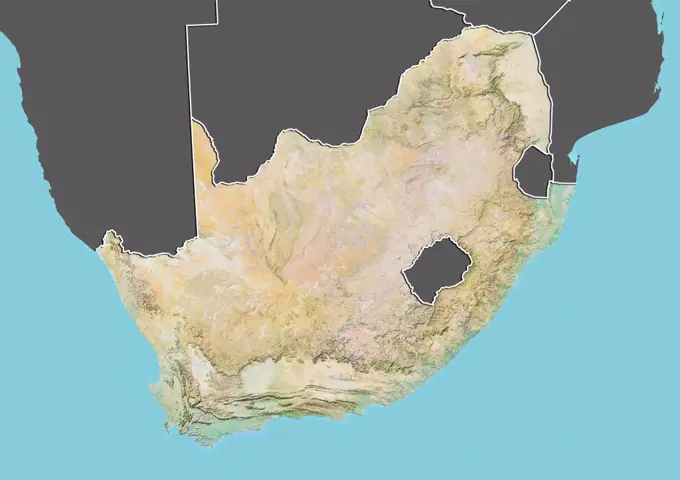
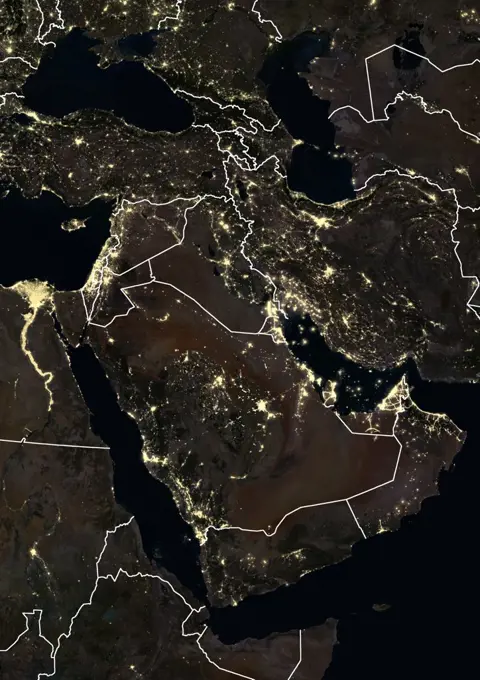
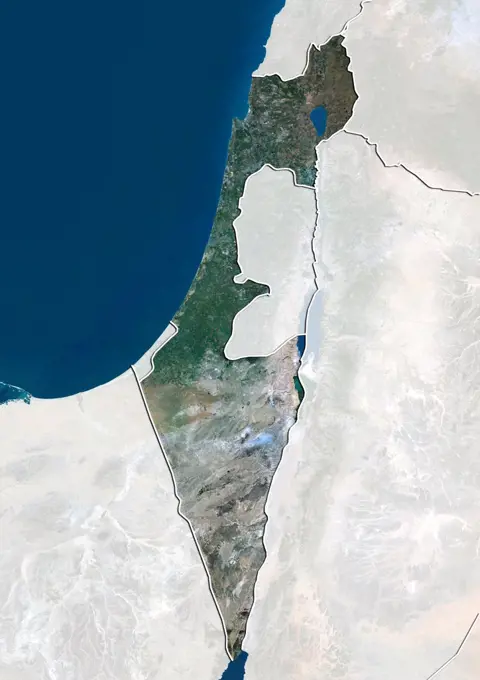
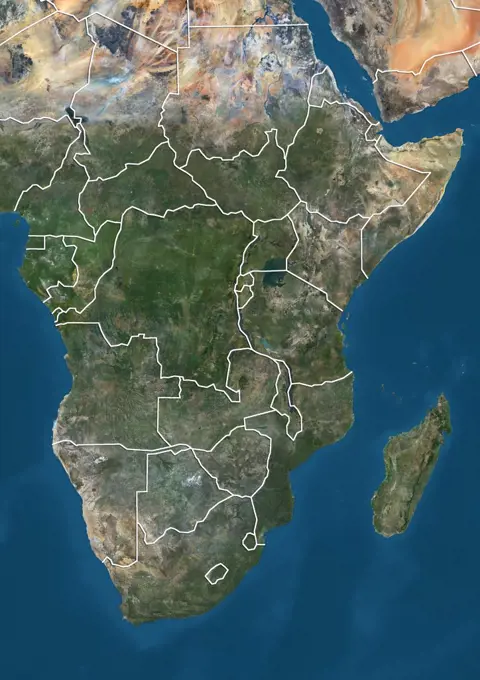
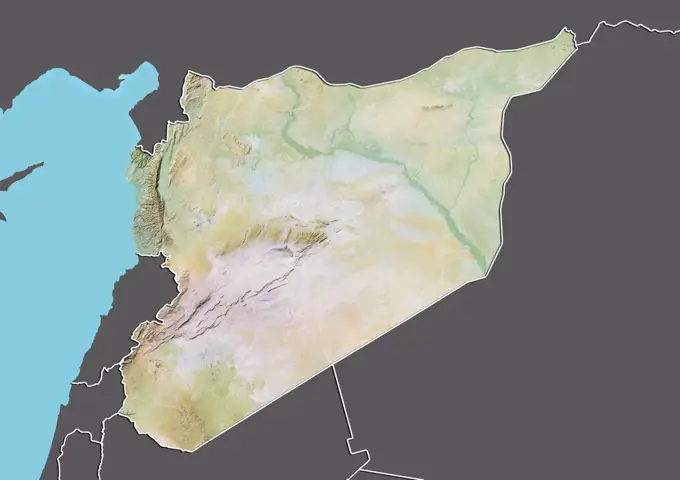
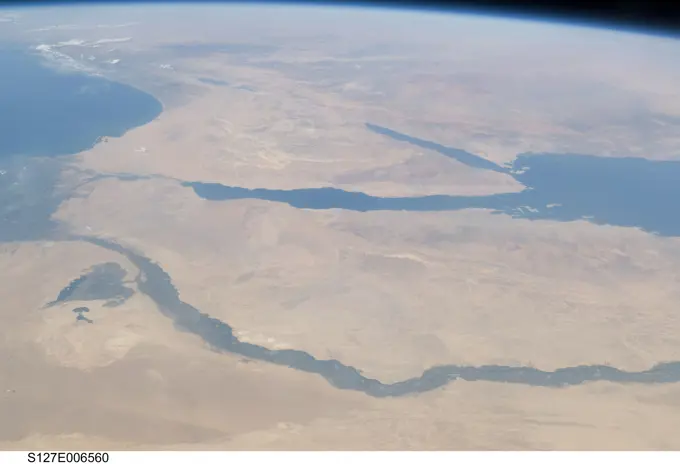
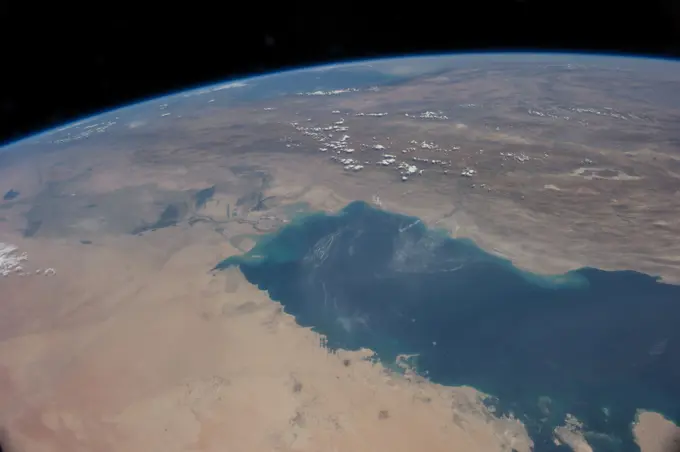
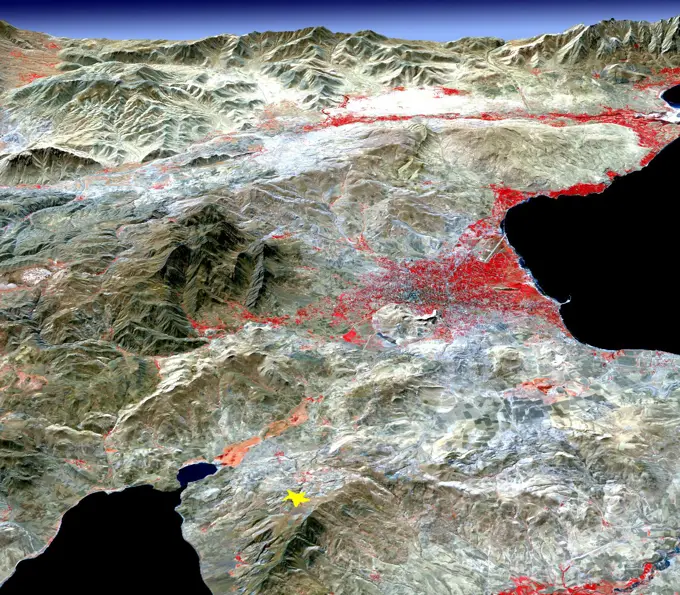
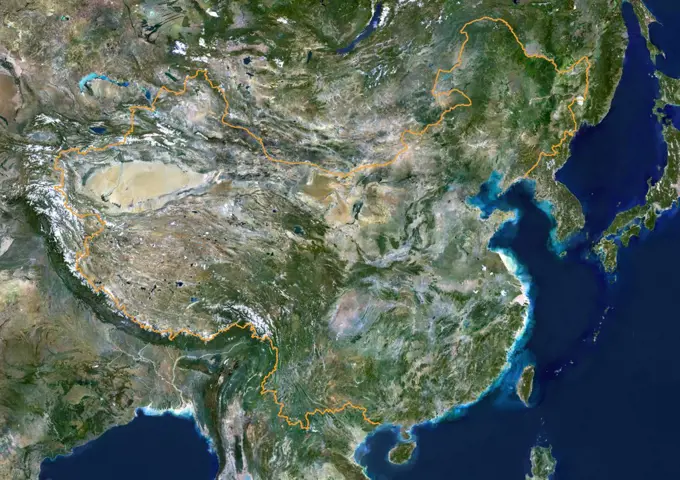
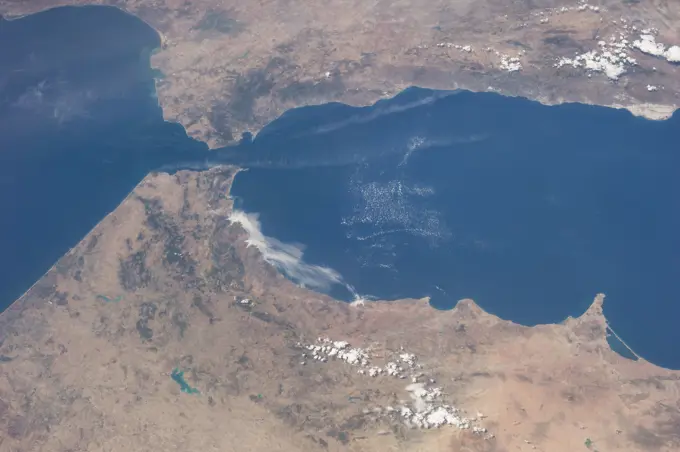
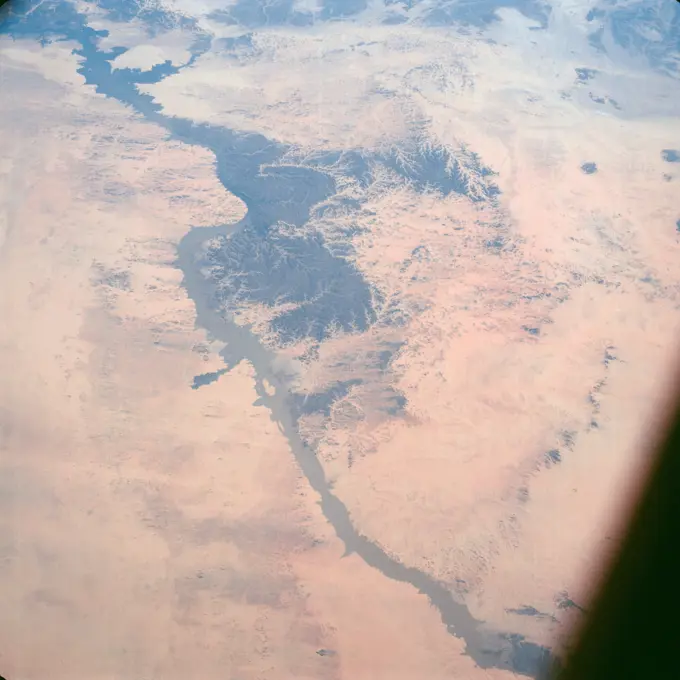
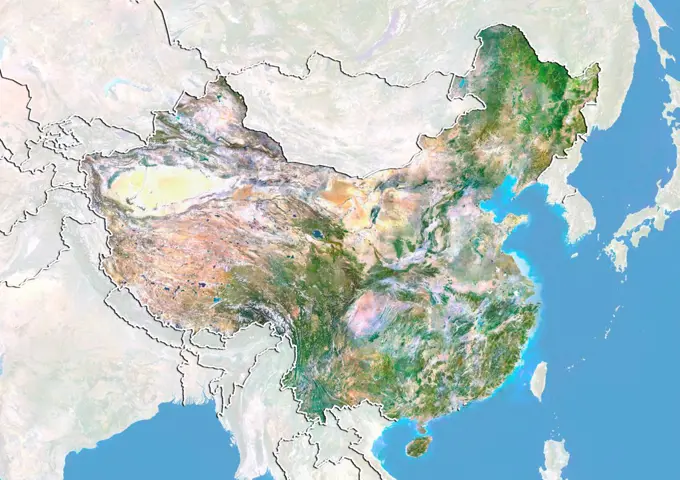
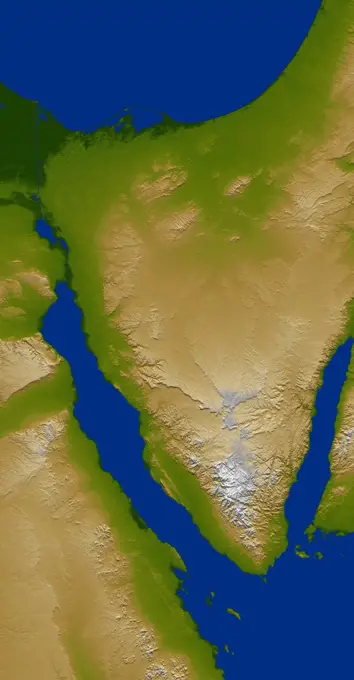
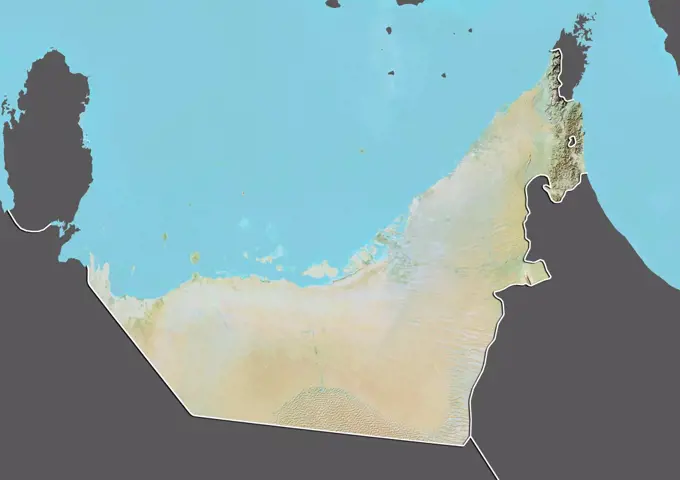
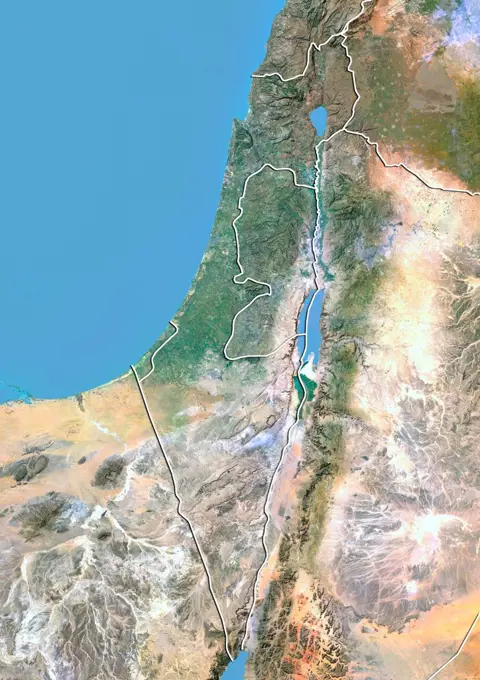
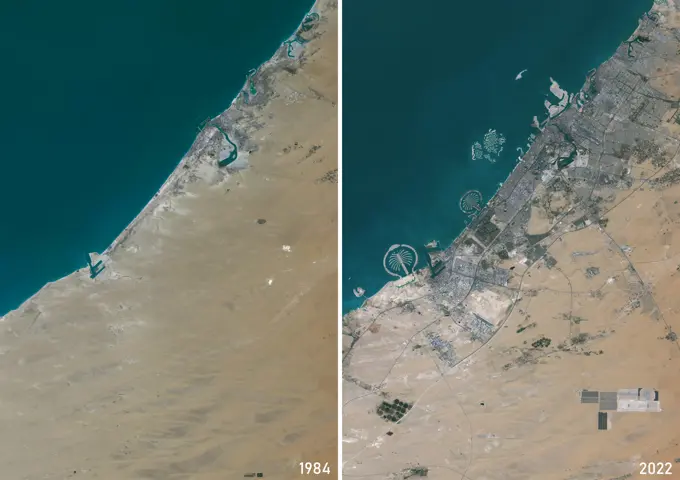
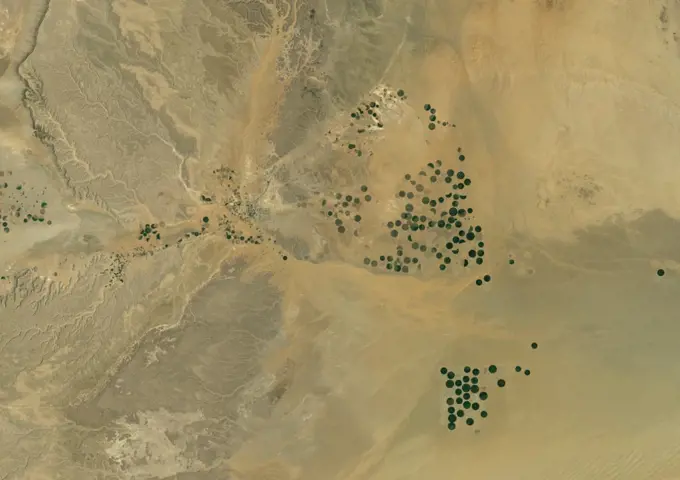
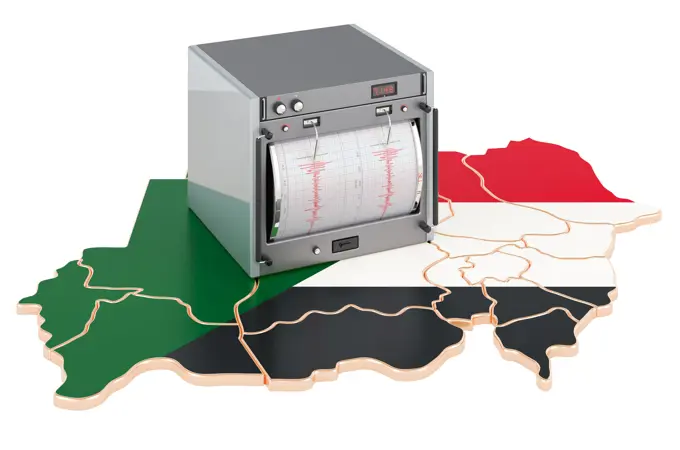
The northwest coast of the African nation of Libya is pictured from the International Space Station as it orbited 259 miles above the Mediterranean Sea.Relief map of South Africa (with border and mask). This image was compiled from data acquired by landsat 5 & 7 satellites combined with elevation data.41G-120-177 (5-13 Oct 1984) --- Egypt and the Nile River Delta are easily recognizable in this 250mm frame.  Cairo and the Egyptian pyramids are also visible in the lower left side of this photograph.  The crew consisted of astronauts Robert L. Crippen, commander, Jon A. McBride, pilot; mission specialists Kathryn D. Sullivan, Sally K. Ride, and David D. Leestma; Canadian astronaut Marc Garneau; and Paul D. Scully-Power payload specialist.Middle East at night in 2012, with Saudi Arabia. This satellite image with country borders shows urban and industrial lights. Satellite view of Israel (with border and mask). This image was compiled from data acquired by LANDSAT 5 & 7 satellites.Relief map of Mozambique (with border and mask). This image was compiled from data acquired by landsat 5 & 7 satellites combined with elevation data.East Africa and Saudi Arabia background. Elements of this image furnished by NASA. 3d rendering. East Africa and Saudi Arabia backgroundSatellite view of Southern Africa (with country boundaries). It shows the African Great Lakes region. This image was compiled from data acquired by Landsat 7 & 8 satellites.Winter rains and possibly melting snow from Iran's Zagros Mountains fill the marshes and shallow lakes of Southern and Eastern Iraq. Light blue is the snow-capped mountains in Iran. Credit NASA. Science Earth Geology Relief map of Syria (with border and mask). This image was compiled from data acquired by landsat 5 & 7 satellites combined with elevation data.Are you ready for a challenge Become a geographical detective and solve the latest mystery quiz from NASA's MISR Multi-angle Imaging SpectroRadiometer (MISR) instrument onboard the Terra satellite. Prize submissions for perfect scores accepted until Wednesday, June 28, at 4 00 p.m. PDT. Happy sleuthing! Take the quiz here http //climate.nasa.gov/quizzes/misr_quiz_29.Satellite view of the State of Bahia, Brazil. This image was compiled from data acquired by LANDSAT 5 & 7 satellites.On June 26, 2016, the Moderate Resolution Imaging Spectroradiometer (MODIS) on NASAs Terra satellite acquired this natural-color image of cloud gravity waves off the coast of Angola and Namibia. “I [regularly look at this area on Worldview because you quite often have these gravity waves,” said Bastiaan Van Diedenhoven, a researcher for Columbia University and NASA's Goddard Institute for Space Studies interested in cloud formations. “On this day, there was so much going on—so many different waves from different directions—that they really started interfering.” A distinctive criss-cross pattern formed in unbroken stretches hundreds of kilometers long. Similar to a boats wake, which forms as the water is pushed upward by the boat and pulled downward again by gravity, these clouds are formed by the rise and fall of colliding air columns. Off of west Africa, dry air coming off the Namib desert—after being cooled by the night—moves out under the balmy, moist air over the ocean and bumpsSouth Africa, True Colour Satellite Image With Border. South Africa, true colour satellite image with border. This image was compiled from data acquired by LANDSAT 5 & 7 satellites.S127-E-006560 (17 July 2009) -- The Nile Riverand its delta in Egypt and the Sinai Peninsula and part of the Mediterranean Sea and Red Seaare just a few of the geographic features recognizable in this photograph, taken from an aft window on the Earth-orbiting Space Shuttle Endeavour.Color satellite image of  Tengger Desert Solar Park in Zhongwei, Ningxia, China. Image collected on June 28, 2020 by Sentinel-2 satellites.ISS040-E-106243 (25 Aug. 2014) --- This panorama view, photographed by an Expedition 40 crew member on the International Space Station, shows the tropical blue waters of the Persian Gulf. Strong north winds often blow in summer, churning up dust from the entire length of the desert surfaces of the Tigris and Euphrates valleys (top left). Dust partly obscures the hundreds of kilometers of Iraqs light-green agricultural lands along these rivers (left). The Caspian Sea cuts the horizon.Color satellite image of Kuwait and neighbouring countries.Color satellite image of East Asia with China at center.The Chubut River flows into the Atlantic Ocean on Argentina's southern coast in this picture from the International Space Station as it was orbiting 270 miles above the South American nation.On Oct. 23, 2011, a magnitude 7.2 earthquake struck eastern Turkey, near the city of Van, the result of the collision between the Arabian and Eurasian tectonic plates. Turkey is a tectonically active country, experiencing frequent devastating earthquakes.North Africa at night in 2012. This satellite image shows urban and industrial lights. Relief map of Namibia (with border and mask). This image was compiled from data acquired by landsat 5 & 7 satellites combined with elevation data.Color satellite image of South Africa and neighbouring countries, including Lesotho and Eswatini (former Swaziland).China, True Colour Satellite Image With Border. People's Republic of China, true colour satellite image with border. This image was compiled from data acquired by LANDSAT 5 & 7 satellites.India, True Colour Satellite Image With Mask. India, true colour satellite image with mask This image was compiled from data acquired by LANDSAT 5 & 7 satellites.ISS036-E-036611 (23 Aug. 2013) --- One of the Expedition 36 crew members aboard the International Space Station on Aug. 23 exposed this image of the Strait of Gibraltar, where Europe and Africa meet and where the Atlantic Ocean waters flow through the strait into the Mediterranean Sea. A popular photographic target of astronauts has always been the Strait of Gibraltar, easily spotted at left center in this wide photograph, shot from the International Space Station. Spain is to the north (top) and Morocco to the south. The strait is 36 miles (58 kilometers) long and slims down to 8 miles (13 kilometers) at its most narrow point. The British colony of Gibraltar is north of the strait.Lake Nasser on the Nile River in southeastern United Arab Republic (Egypt) as seen from the Apollo 7 spacecraft during its 10th revolution of the earth. Photographed from an altitude of 130 nautical miles, at ground elapsed time of 14 hours and 56 minutes. Lake Nasser was created by the contruction of the Aswan Dam on the Nile.Nighttime Earth observation taken by the Expedition 35 crew aboard the ISS.Satellite view of East Asia and Indian Subcontinent (with country boundaries). This image was compiled from data acquired by Landsat satellites.Satellite view of China with Bump Effect (with border and mask). This image was compiled from data acquired by LANDSAT 5 & 7 satellites.The Sinai Peninsula, located between Africa and Asia, is a result of those two continents pulling apart from each other. Earths crust is cracking, stretching, and lowering along the two northern branches of the Red Sea, namely the Gulf of Suez, seen here on the west (left), and the Gulf of Aqaba, seen to the east (right). This color-coded shaded relief image shows the triangular nature of the peninsula, with the coast of the Mediterranean Sea forming the northern side of the triangle. The Suez Canal can be seen as the narrow vertical blue line in the upper left connecting the Red Sea to the Mediterranean.Relief map of the United Arab Emirates (with border and mask). This image was compiled from data acquired by landsat 5 & 7 satellites combined with elevation data.Satellite view of Israel with Bump Effect (with border). This image was compiled from data acquired by LANDSAT 5 & 7 satellites.Southern Africa at night in 2012. This satellite image with country borders shows urban and industrial lights. Respiratory Syncytial Virus. Color enhanced transmission electron micrograph (TEM) of Respiratory Syncytial Virus (RSV). A paramyovirus, RSV is the single most serious cause of bronchitis and pneumonitis in infants.Color satellite image of Dubai in 1984 and 2022.Agriculture In The Desert, Al Sulail, South Part Of The Riyadh Province, Saudi Arabia, True Colour Satellite Image. True colour satellite image of agriculture in the desert in Saudi Arabia. The image shows the south part of the Riyadh Province, about 500 km south of Riyadh, close the town of Al Sulail. Circular agricultural plots are visible on the image. Composite image from 2001, using LANDSAT 7 data.NASA image acquired June 24, 2011Since it began erupting on June 12, 2011, emissions from Eritreas Nabro Volcano have drifted over much of East Africa and the Middle East. Ash has displaced residents living near the volcano and disrupted flights in the region. Despite the volcanos widespread effects, little is known about the eruption. Nabro is located in an isolated region along the border between Eritrea and Ethiopia, and few English-language reports have been published. Satellite remote sensing is currently the only reliable way to monitor the ongoing eruption.This pair of satellite images are among the first detailed pictures of the erupting vent and lava flows. They were acquired by the Advanced Land Imager (ALI) aboard the Earth Observing-1 (EO-1) satellite on June 24, 2011.The bright red portions of the false-color image (top) indicate hot surfaces. Hot volcanic ash glows above the vent, located in the center of Nabros caldera. To the west of the vent, portions of an actiISS025-E-013054 (7 Nov. 2010) --- Man-made archipelagos near Dubai, United Arab Emirates, are featured in this image photographed by an Expedition 25 crew member on the International Space Station, flying at 220 miles above Earth. The municipality of Dubai is the largest city of the Persian Gulf emirate of the same name, and has built a global reputation for large-scale developments and architectural works. Among the most visible of these developments -- particularly from the perspective of astronauts onboard the ISS -- are three man-made archipelagos. The two Palm Islands -- Palm Jumeirah to the left of center, and Palm Jebel Ali, just to the right of center,  appear as stylized palm trees when viewed from above. The World Islands  (near left edge) evoke a rough map of the world from an air- or space-borne perspective. The Palm Jumeirah project began in 2001 and required more than 50 million cubic meters of dredged sand to raise the islands above the Persian Gulf sea level. ConstructiS66-63533 (14 Nov. 1966) --- United Arab Republic (Egypt) area as seen from the Gemini-12 spacecraft during its 39th revolution of Earth, looking southeast. Nile River is in center of picture. At bottom center is the Sinai Peninsula. Arabian Peninsula is at lower left. Large body of water is Red Sea. Gulf of Aqaba is on east side of Sinai Peninsula. Gulf of Suez separates Sinai from Egyptian mainland.At Elands Bay in South Africa's Western Cape province, about 1000 tons of rock lobsters beached themselves during February 2002 when NASA's Terra satellite acquired these images.Syrische Karte mit Coronavirus unter der Lupe, 3D-Rendering Syrian map with coronavirus under magnifier, 3D rendering isolated on white background LicenseRF Copyright: xZoonar.com/alexlmxx 23336087Karte von Saudi-Arabien mit Coronavirus unter der Lupe, 3D-Rendering Saudi Arabian map with coronavirus under magnifier, 3D rendering isolated on white background Copyright: xZoonar.com/alexlmxx 23144637Erdbeben im Sudan, Konzept. Seismograph auf der Karte des Sudan. 3D-Rendering Earthquake in Sudan, concept. Seismograph on the Sudanese map. 3D rendering isolated on white background LicenseRF Copyright: xZoonar.com/alexlmxx 23336029