Satellite Views of European Regions

True color satellite images showing borders and landscapes of various European countries, including forests, rivers, and mountainous areas.

Color satellite image of Mongolia, with borders and mask.
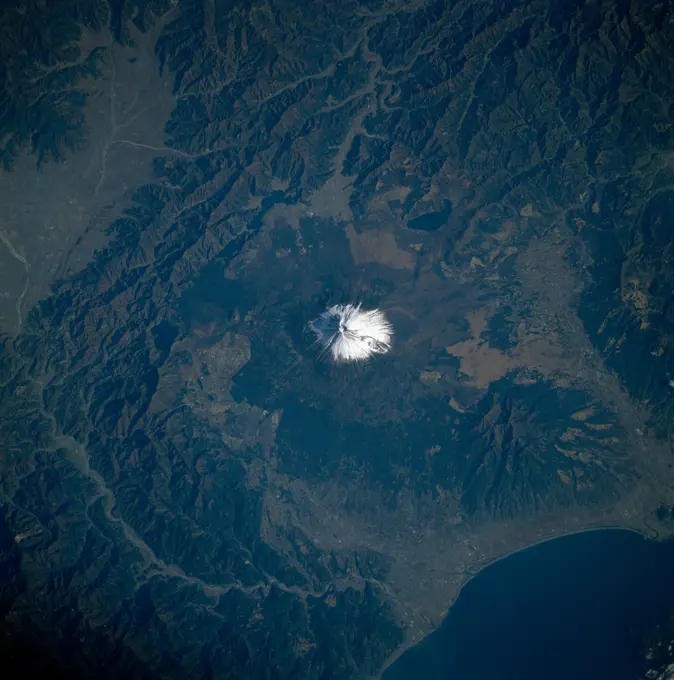
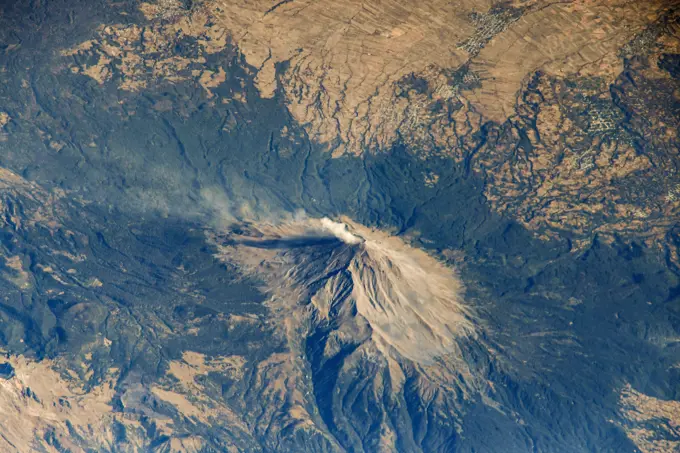
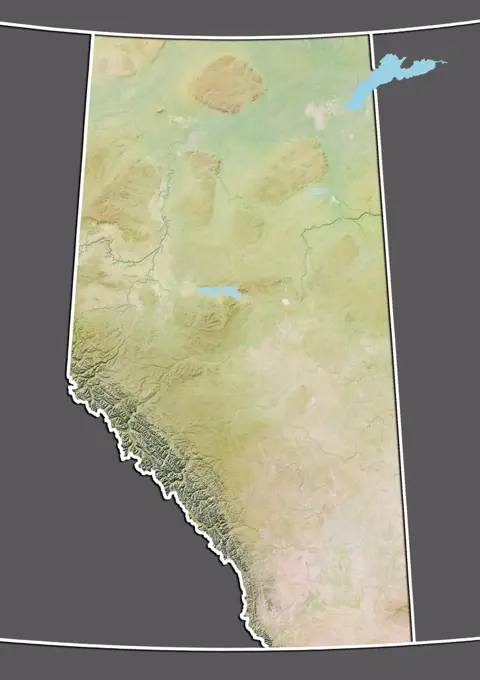
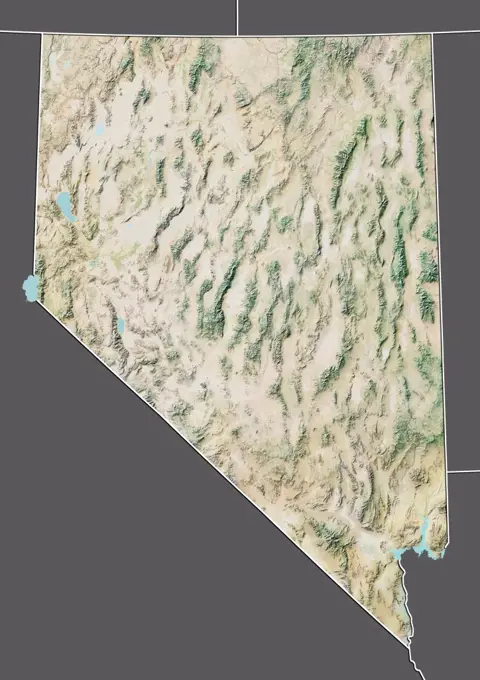
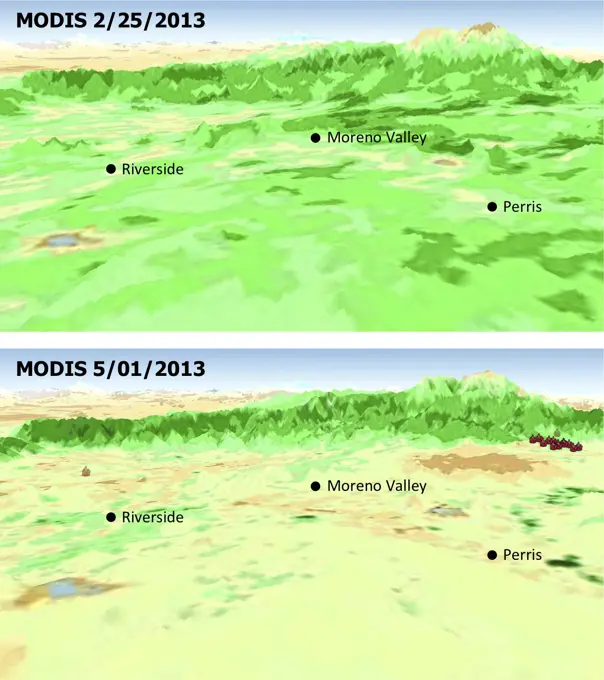
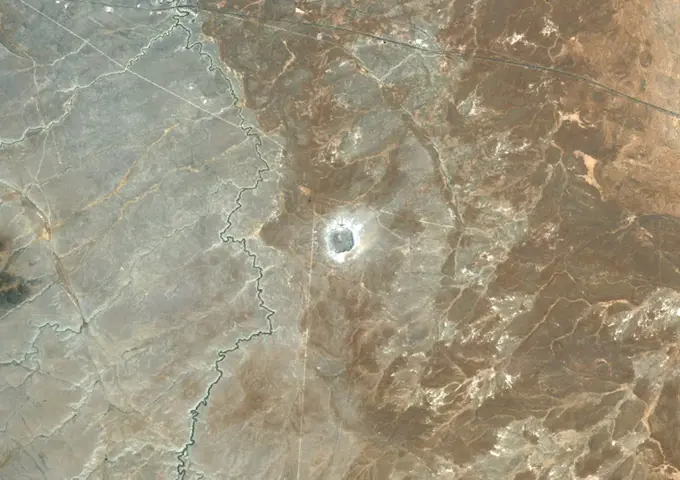
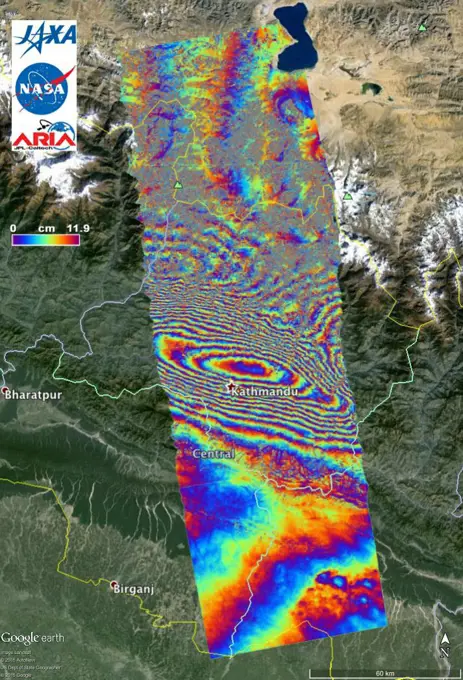
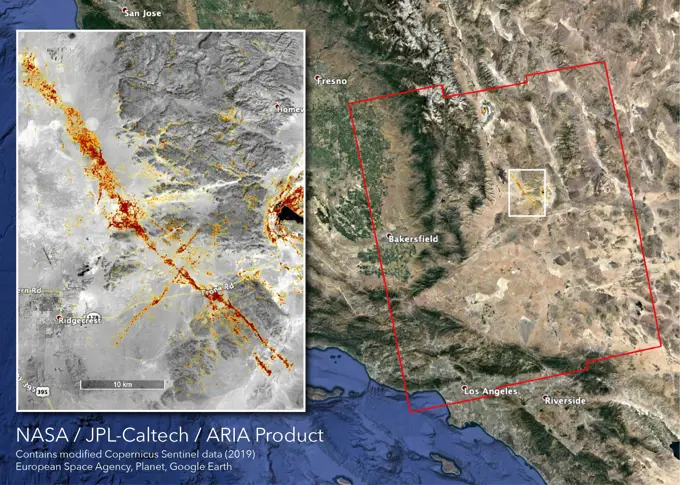
Satellite view of Eruption at Mount Etna, Sicily. This image was taken on December 3, 2015 by Landsat 8 satellite.Satellite view of Victoria, Australia (with administrative boundaries). This image was compiled from data acquired by Landsat 8 satellite in 2014.Color satellite image of Iraq, with borders and mask.This image from NASA's Terra spacecraft shows Chuquicamata, in Chile's Atacama Desert, which is the largest open pit copper mine in the world, by excavated volume.STS009-40-2575 (28 Nov-8 Dec 1983) --- This view of the Fuji volcano, Japan was taken on the 54th orbit of the Space Shuttle Columbia.  The center coordinates are 35.5 degrees north latitude and 139.0 degrees east longitude.  This was the first time a non-United States crew member was flown aboard the United States Space Shuttle, European Space Agency (ESA) payload specialist Ulf Merbold, Germany.  The crew included NASA astronauts John W. Young, commander; Brewster H. Shaw Jr., pilot; Owen K. Garriott, mission specialist, Robert A. Parker, mission specialist; and Byron Lichtenberg, payload specialist.STS090-774-028 (29 April 1998) --- This view features a 13,980-foot mountain peak in Colorado’s Sangre de Cristo Mountains in Saguache County, photographed by crewmembers of the STS-90 Space Shuttle Columbia mission in April 1998. EDITOR’S NOTE: In June 2003, the summit was named “Columbia Point” by the U.S. Department of Interior in memory of the STS-107 Space Shuttle Columbia crew, lost in an accident on February 1, 2003, and for the scientific exploration, technical excellence, and the dream of spaceflight for which the mission stood. Columbia Point is located on the east side of Kit Carson Mountain. On the northwest shoulder of the same mountain is Challenger Point, a peak previously named in memory of the Space Shuttle Challenger, which exploded soon after liftoff on January 28, 1986.ISS008-E-13212 (26 January 2004) --- This image of the El Paso-Juarez area on the U.S.-Mexico border, photographed by an Expedition 8 crewmember, is the 100,000th photograph of Earth that astronauts have taken from the International Space Station (ISS). The Rio Grande can be seen meandering through the area, forming the boundary between the sister cities of El Paso, Texas and Juarez, Chihuahua. North is to the right in this image, and the setting sun has cast the east side of the Sierra Juarez and Franklin Mountains into shadow.iss064e026423 (Jan. 25, 2021) --- The active volcano of Popocatépetl is pictured from the International Space Station as it orbited 261 miles above central Mexico.Relief map of Alberta, Canada. This image was compiled from data acquired by LANDSAT 5 & 7 satellites combined with elevation data.Gusev Crater Geology as Seen from AboveNASA image acquired Sept 7, 2010 Shiveluch (also spelled Sheveluch) is one of the largest and most active volcanoes on Russias Kamchatka Peninsula. It has been spewing ash and steam intermittently—with occasional dome collapses, pyroclastic flows, and lava flows, as well—for the past decade. Shiveluch is a stratovolcano, a steep-sloped formation of alternating layers of hardened lava, ash, and rocks thrown out by earlier eruptions. A lava dome has been growing southwest of the 3,283-meter (10,771-foot) summit. The Advanced Land Imager (ALI) on NASAs Earth Observing-1 (EO-1) satellite acquired this image on September 7, 2010. Brown and tan debris—perhaps ash falls, perhaps mud from lahars—covers the southern landscape of the volcano, while the hills on the northern side remain covered in snow and ice. The Kamchatkan Volcanic Eruption Response Team (KVERT) reported that seismic activity at Shiveluch was "above background levels" from September 3-10. Ash plumes rose to an altiGeological map of the Thalweg of the middle valley of the Cere, vintage engraved illustration. From the Universe and Humanity, 1910.Colour satellite image of San Francisco and San Jose, United States. Image taken on July 24, 2014 with Landsat 8 data. Relief map of the State of Nevada, United States. This image was compiled from data acquired by LANDSAT 5 & 7 satellites combined with elevation data.A NASA-funded disaster decision support system, provided a number of rapid response map data products to decision makers at the California Earthquake Clearinghouse following its activation for the Aug. 24, 2014 magnitude 6.0 earthquake in Napa, CaliforniaThe quick dry-out of vegetation in Southern California this year is depicted in this pair of images from the Moderate Resolution Imaging Spectroradiometer (MODIS) sensor on NASA's Aqua spacecraft.Barringer Meteor Impact Crater, Arizona, Usa, True Colour Satellite Image. True colour satellite image of Barringer impact structure, Arizona, US (age : 49000 years ; diameter : 1186 km). Image taken on 1 July 1991 using LANDSAT data.The Advanced Rapid Imaging and Analysis (ARIA) team at NASA's Jet Propulsion Laboratory in Pasadena, California, created this Damage Proxy Map (DPM) depicting areas of Northern California that are likely damaged (shown by red and yellow pixels) as a result of the Camp Fire. The map is derived from synthetic aperture radar (SAR) images from the Copernicus Sentinel-1 satellites, operated by the European Space Agency (ESA). The pre-event images were taken before (November 4, 2018) and the post-event image was acquired during the fire (6pm November 16, 2018, both local time).This false-color map shows the amount of permanent surface movement caused almost entirely by the 7.8 Gorkha earthquake in Nepal during a 70-day interval between two ALOS-2 images, acquired February 21 and May 2, 2015.The Advanced Rapid Imaging and Analysis (ARIA) team at NASA's Jet Propulsion Laboratory in Pasadena, California, created this map depicting areas that are likely damaged as a result of the recent major earthquakes in Southern California. The color variation from yellow to red indicates increasingly more significant surface change, or damage. The map covers an area of 155 by 186 miles (250 by 300 kilometers), shown by the large red polygon. Each pixel measures about 33 yards (30 meters) across. To make the map, the team used synthetic aperture radar (SAR) images from the European Space Agency's Copernicus Sentinel-1 satellites from before and after the sequence of quakes  July 4, 2019 and July 10, 2019 respectively. The map may be less reliable over vegetated areas but can provide useful guidance in identifying damaged areas.A 3D civil design model on a computer screen.Denver, Colorado reached 96 degrees Fahrenheit on July 8th, 2022. In the two days following, temperatures rose to 101 degrees Fahrenheit. For cities like Denver, heat dissipates more slowly and create urban heat islands. High temperatures due to urban heat, especially at night, can lead to adverse health effects in vulnerable populations like children and the elderly. This image also shows that bodies of water, like Barr Lake, remain warm into the night due to water's high heat capacity. ECOSTRESS captured this Land Surface Temperature image on July 8th, 2022 at 11 54 PM MDT. ECOSTRESS is a thermal instrument on the International Space Station that measures the temperature of the ground, which is hotter than the air temperature during the day. It was launched to the space station in 2018. Its primary mission is to identify critical thresholds of water use and water stress in plants and to detect the timing, location, and predictive factors leading to plant water uptake decline and/or c