Sculpture Fragments

Images of archaeological fragments and stone sculptures, showcasing remnants of ancient art from various periods with subtle details.

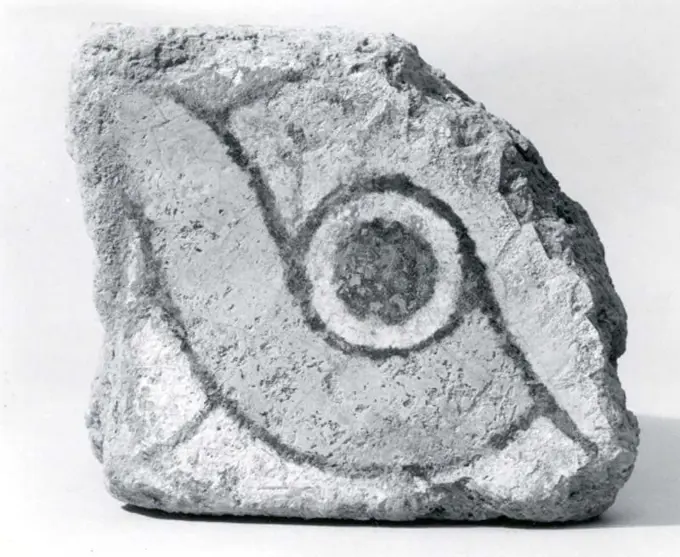
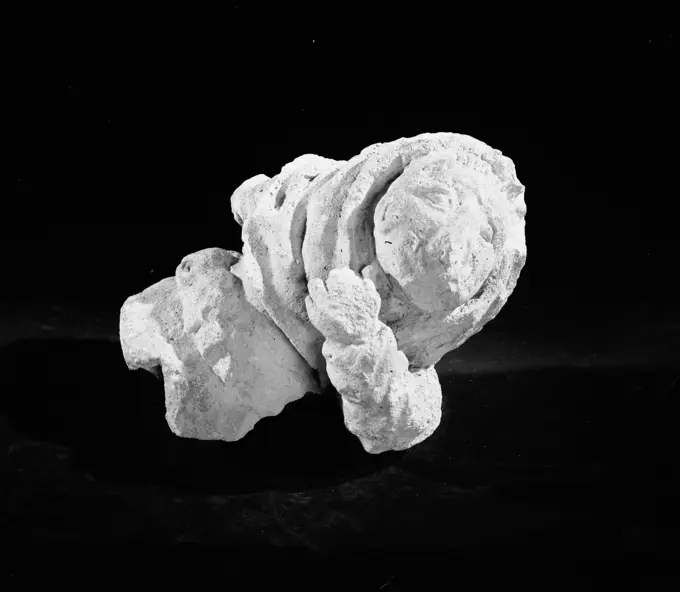
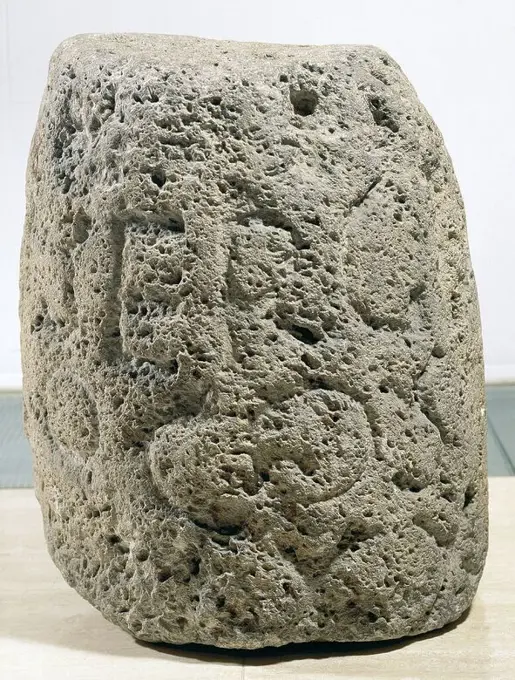
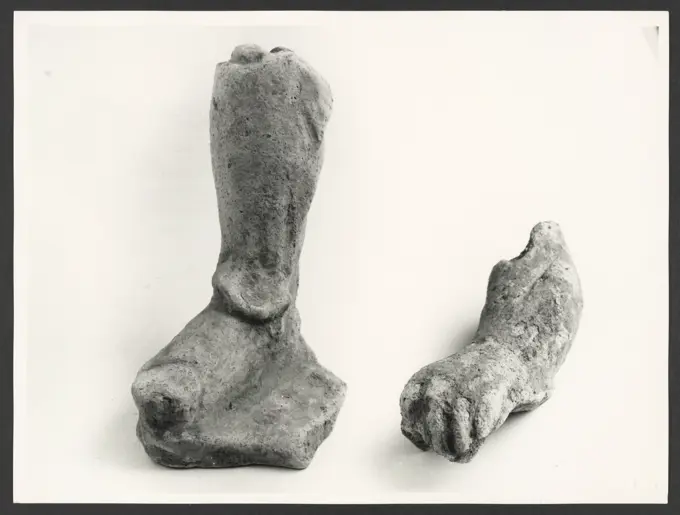
Sculpture Fragment. Unknown 530-520 B.C. This fragment belongs to a collection of thirty-nine non-joining pieces of a large relief monument that once depicted a male figure leaning on a wineskin and reclining on a kline (couch) padded with a thick cushion and pillow (J. Paul Getty Museum 81.AA.193; 81.AA.194.2-27; 82.AA.123.1-4; 85.AA.419.1-5; 86.AA.545.1-3). The scale of the Getty reclining figure is life-size and so was part of a substantial relief depicting a symposiast. This small fragment is part of a curved surface, but the original placement of the piece in the sculpture is uncertain. The carving of the relief fragments is of high quality with a refined degree of finish on the frontal surfaces; the back surface is finished with the fine pointed chisel and both sides are carefully finished with a claw chisel. The date of the relief is based on the quality of the sculpting and the style of the drapery, which is similar to sculpture dated in the last quarter of the sixth century B.
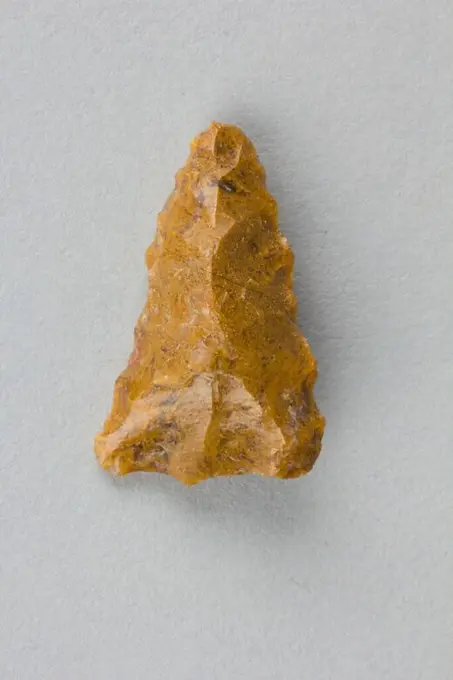
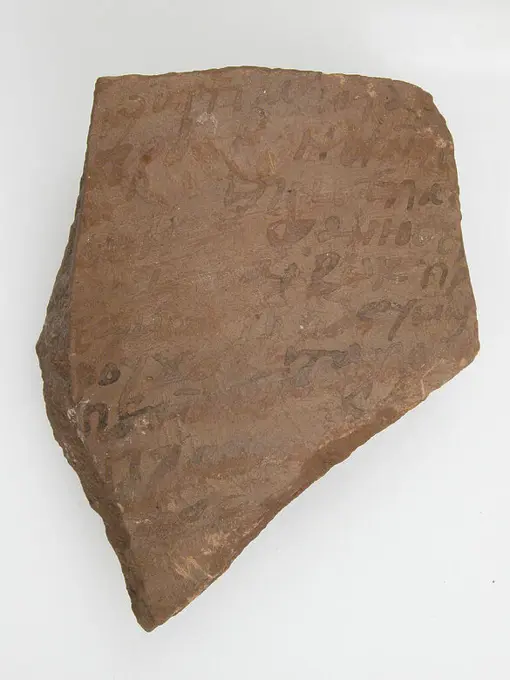
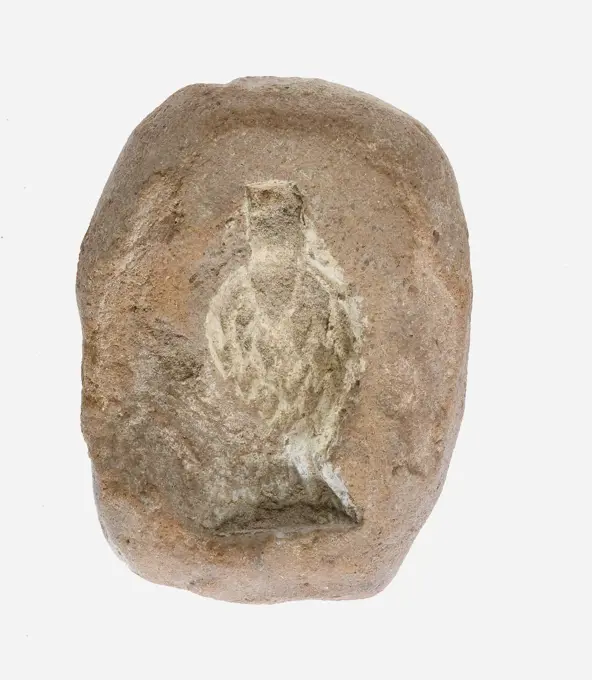
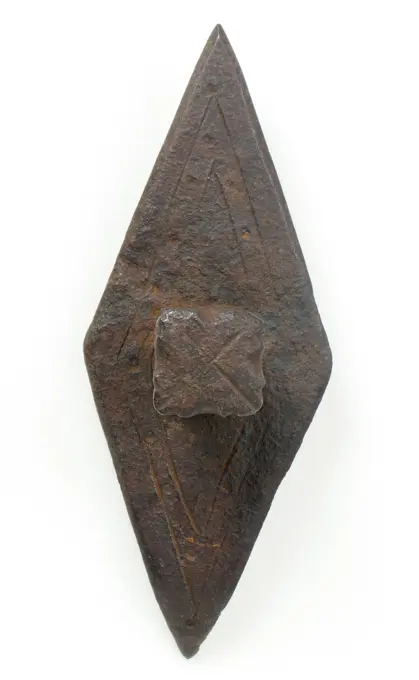
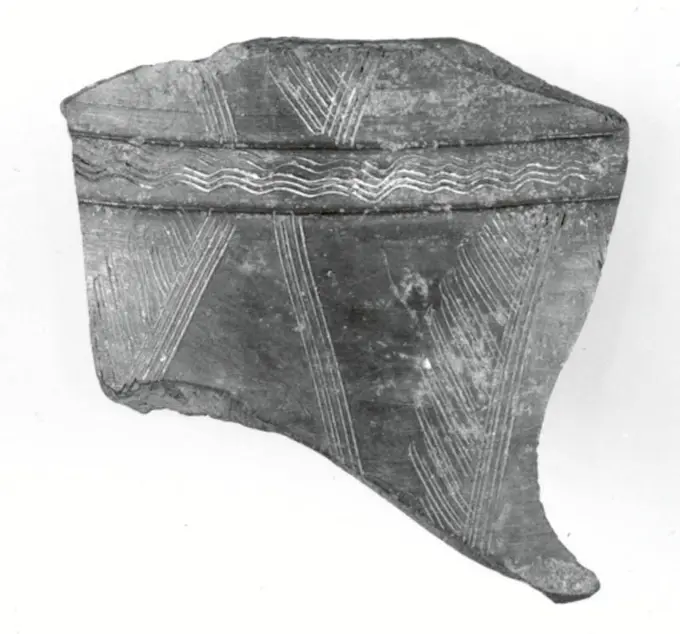
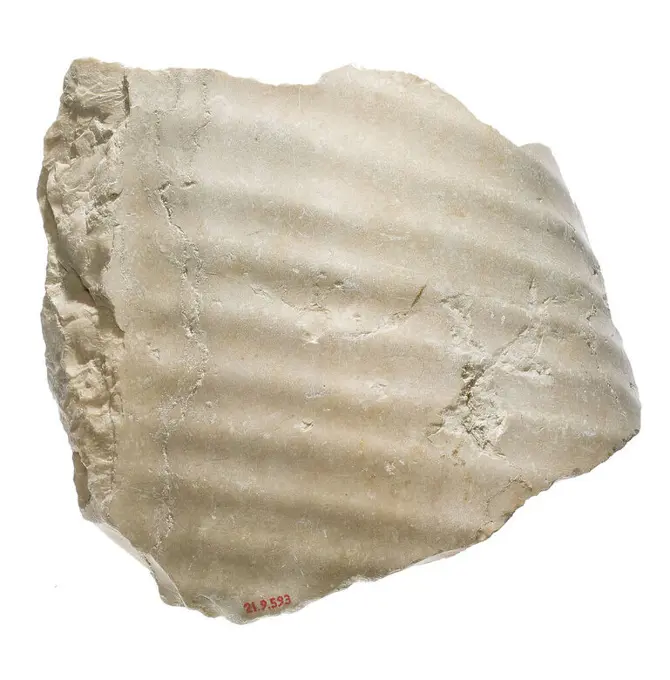
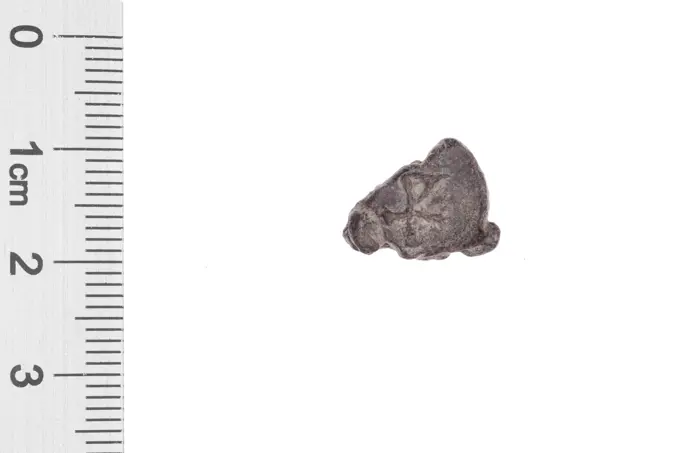
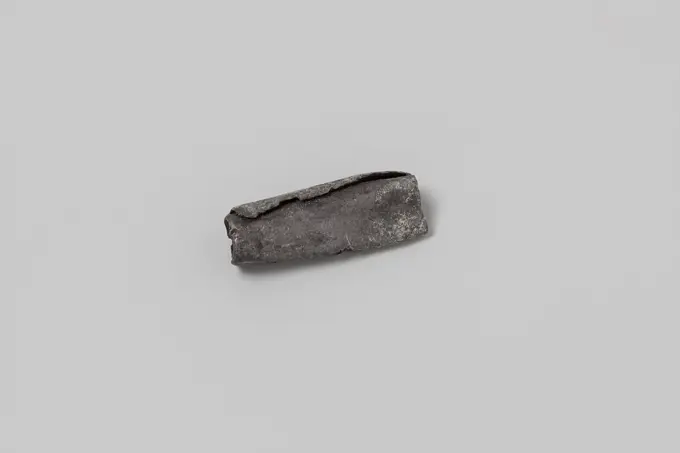
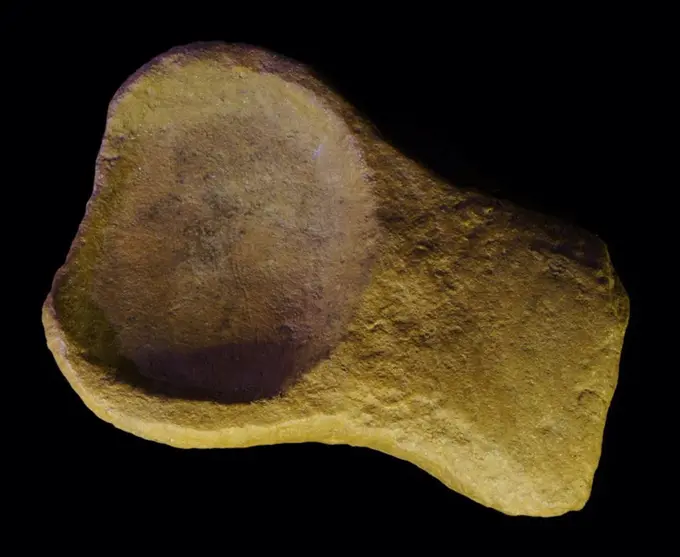
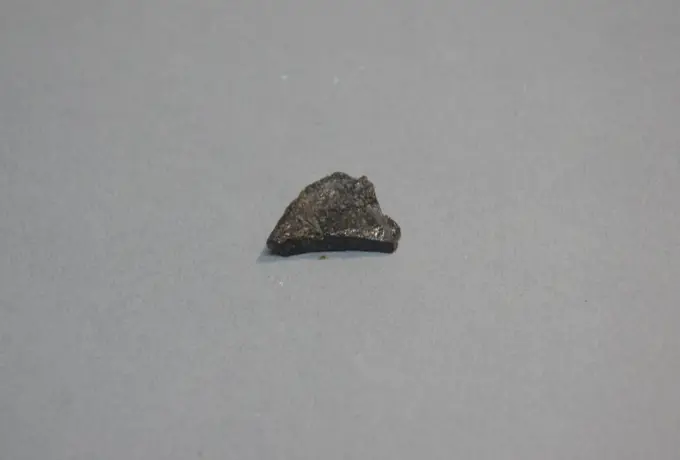
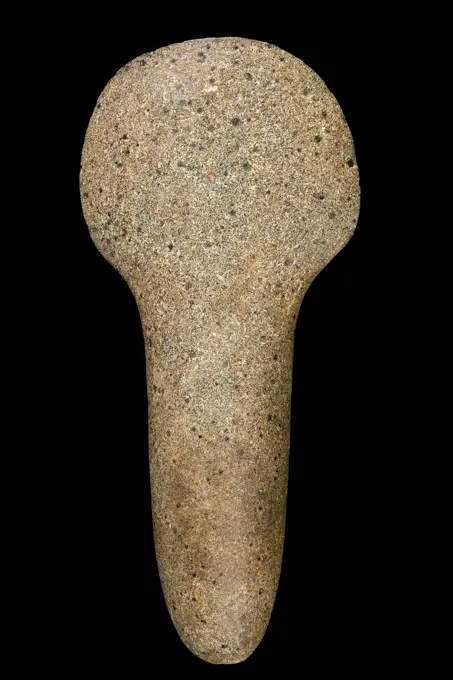
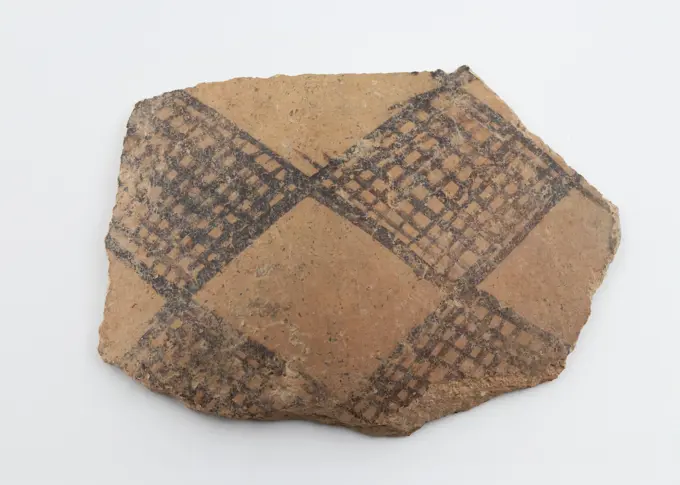
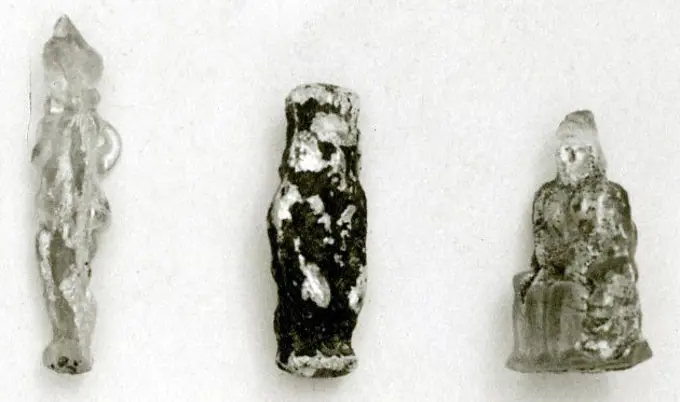
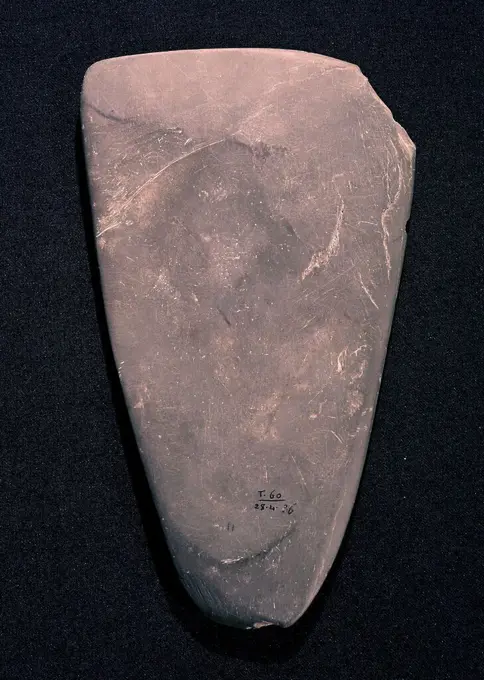
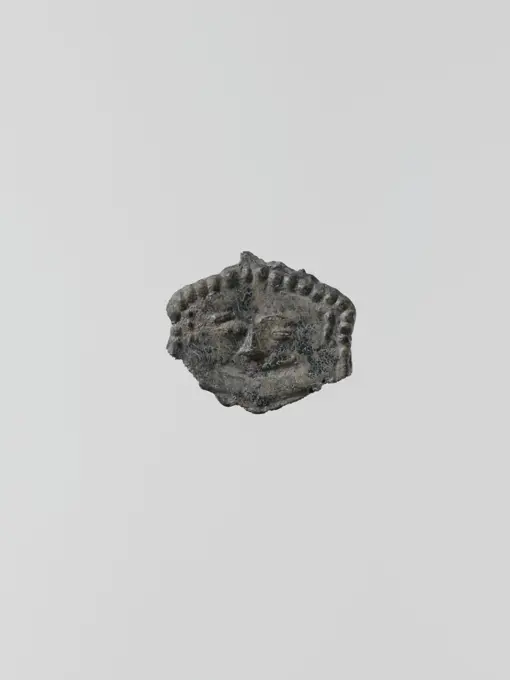
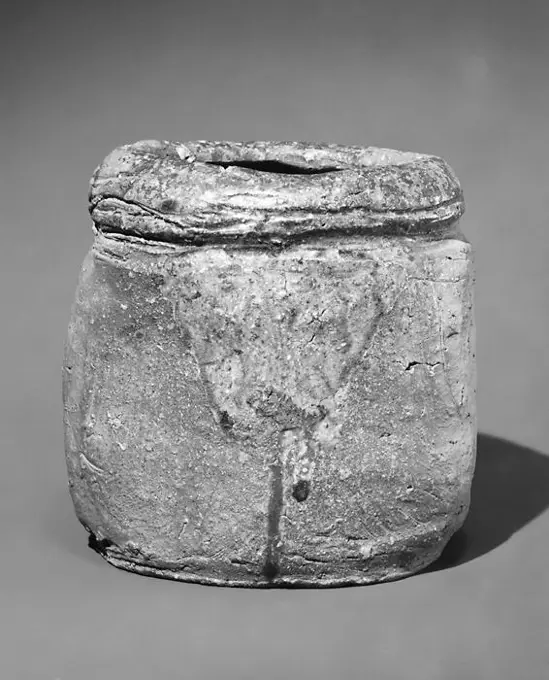
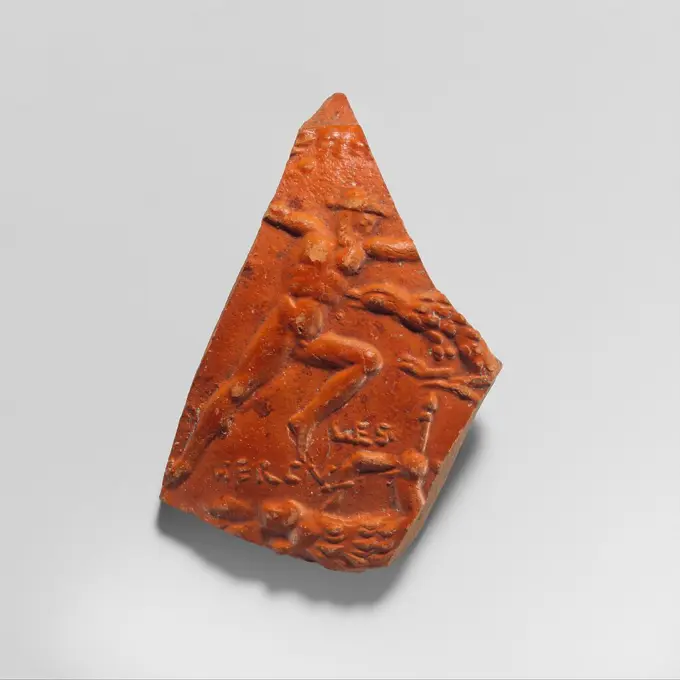
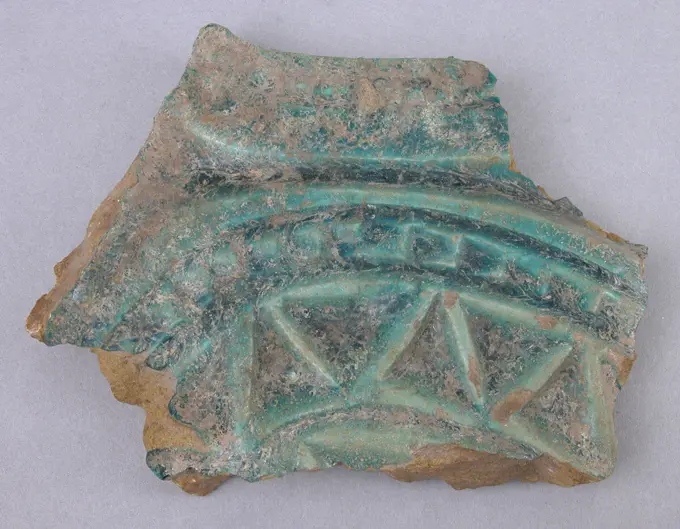
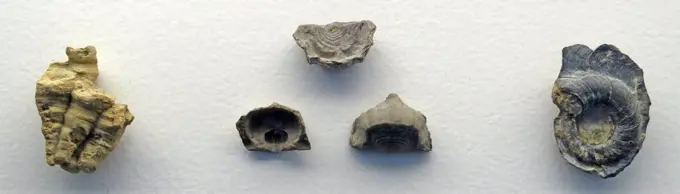
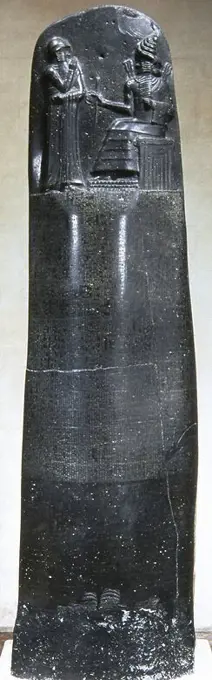
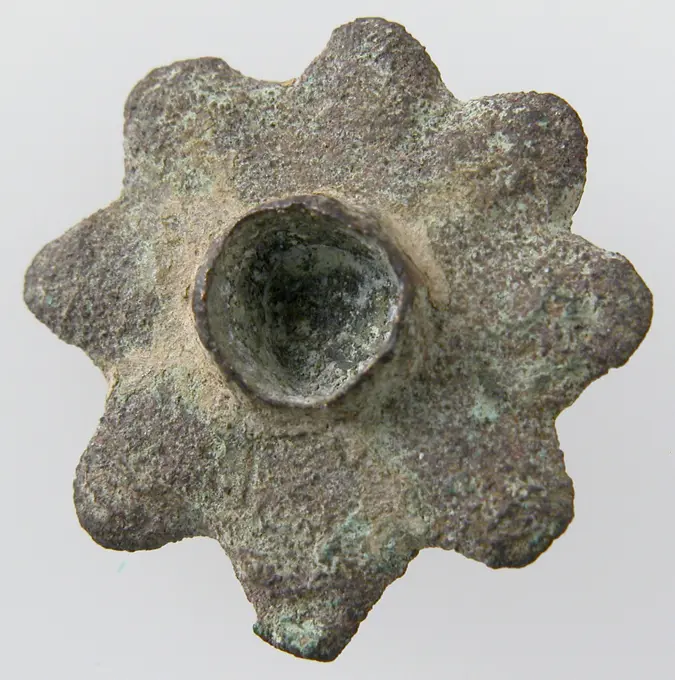
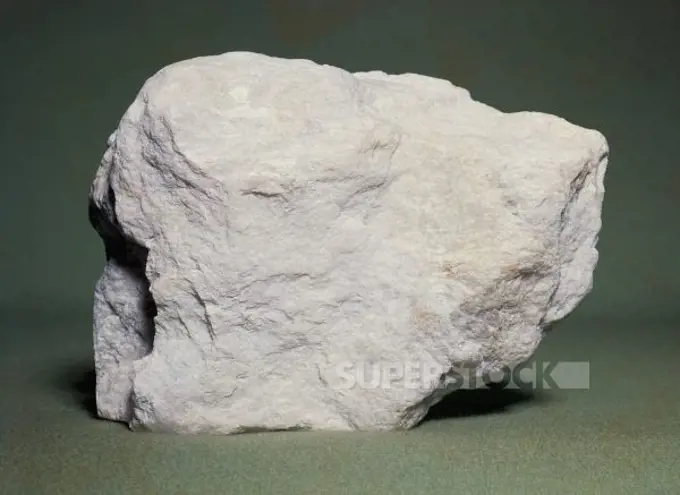
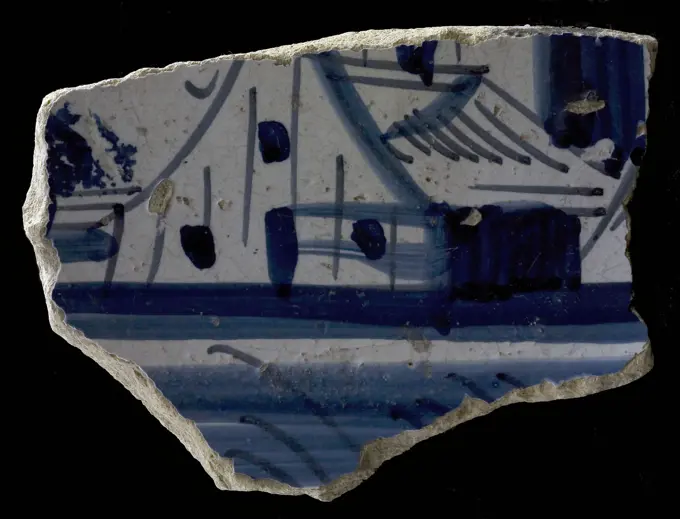
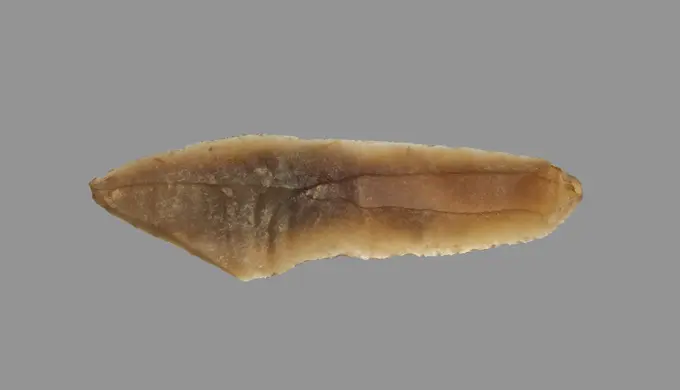
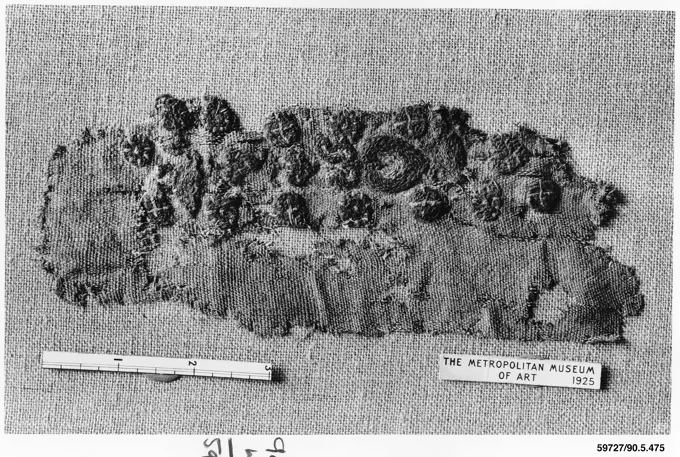
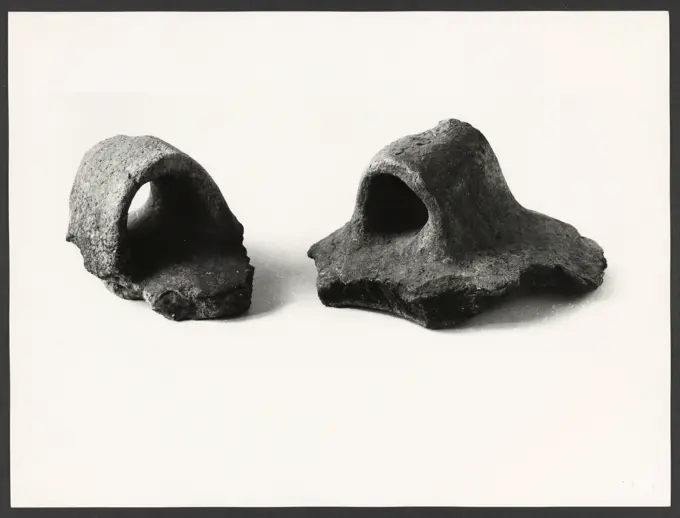
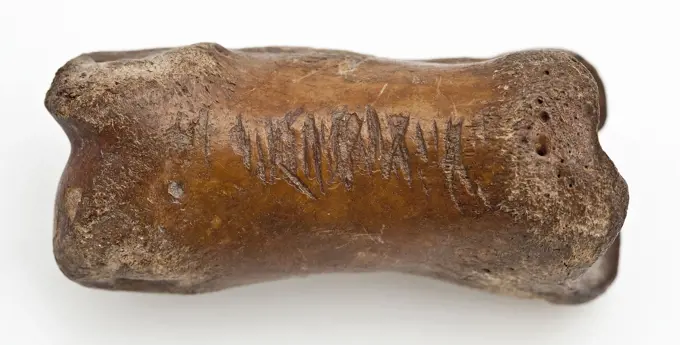
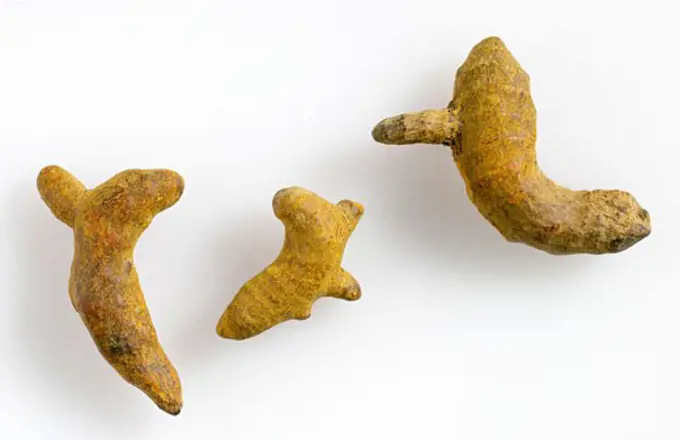
Kiln Stand 11th century. Kiln Stand 450777Arrowhead. Culture: Japan. Dimensions: L. 1 in. (2.5 cm); W. 5/8 in. 1.6 cm). Museum: Metropolitan Museum of Art, New York, USA.Coin Portraying Emperor Augustus 27 BCE-14 CE Roman Empire. The front (obverse) of this coin portrays the head of Emperor Augustus. The back (reverse) depicts a griffin, a mythological creature with the head and wings of an eagle and body of a lion.. Bronze . Ancient RomanChisel 3rd millennium B.C.. Chisel 325649Material sample -Ostrakon. Culture: Coptic. Dimensions: 2 15/16 x 3 7/16 in. (7.5 x 8.8 cm). Date: 7th century. Museum: Metropolitan Museum of Art, New York, USA.Mold for a Cornflower Bead ca. 1390-1353 B.C. New Kingdom. Mold for a Cornflower Bead. ca. 1390-1353 B.C.. Pottery. New Kingdom. From Egypt, Upper Egypt, Thebes, Malqata, E. side of S. Village or Khor west of camp, MMA excavations, probably 1911-12. Dynasty 18Plate and Nail 15th-16th century European. Plate and Nail. European. 15th-16th century. Iron. Metalwork-IronSherd ca. 3100-2500 B.C. Iran This sherd is made of grey burnished clay, with incised decoration. It is typical of Namazga IV ceramics from Turkmenistan and Hissar II ceramics from Iran, and likely date to ca. 3100-2500 B.C. It was excavated in 1937 at a prehistoric site in the vicinity of Nishapur in northeastern Iran. While Nishapur itself was founded by the Sasanian king Shapur I (reigned ca. A.D. 241-272), this sherd shows that human habitation there goes back to the prehistoric period. Furthermore, the prehistoric pottery from Nishapur has close affinities with ceramic materials from Central Asia rather than with contemporary sites in Iran, meaning that in this period its inhabitants were likely culturally linked to their neighbors to the east. At the same time, Nishapurs location on what later became known as the Great Khorasan Road suggests that it was part of the trade network that facilitated the import of precious stones such as lapis lazuli, carnelian and turquoise from CenA section of weathered grantieRattle 6th-7th century Moche (Loma Negra). Rattle 313451Cuneiform tablet: fragment, Ebabbar archive ca. 7th-4th century B.C. Babylonian or Achaemenid. Cuneiform tablet: fragment, Ebabbar archive 321845Garment fragment with pleats, probably male. Dimensions: H. 18 × W. 16 × Th. 8 cm (7 1/16 × 6 5/16 × 3 1/8 in.). Dynasty: Dynasty 18. Reign: reign of Akhenaten. Date: ca. 1353-1336 B.C.. Museum: Metropolitan Museum of Art, New York, USA.Marble fragment of an Ionic column base from the Temple of Artemis at Sardis ca. 3rd century B.C. Greek The guilloche pattern on this fragment corresponds to that used on certain column bases from the peristyle of the temple.. Marble fragment of an Ionic column base from the Temple of Artemis at Sardis 252845 Greek, Marble fragment of an Ionic column base from the Temple of Artemis at Sardis, ca. 3rd century B.C., Marble, Other (w/ on diagonal): 15 5/8 in. (39.7 cm). The Metropolitan Museum of Art, New York. Gift of The American Society for the Excavation of Sardis, 1926 (26.199.282)arrowhead, upper paleolithic, iberian peninsula, Álava Armory Museum, Vitoria, Basque Country, Spain.Brick ca. 9th century B.C. Assyrian. Brick 324619Drohiczyn seal. unknown, managerShawabty of Ditamenpaankh, 715-656 BC. Egypt, Late Period, Dynasty 25. Terracotta; overall: 2.2 x 1.6 x 0.9 cm (7/8 x 5/8 x 3/8 in.).Loden role from the wreck of the East Indiesman 't flying heart. To tube rolled lead plate. Black-gray in color. Roll or lead.Drohiczyn seal. unknown, managerApulian Black Oinochoe Shape 6. UnknownPIEZAS DE LA EXPOSICION "ARTE SIN ARTISTAS": LAMPARA DE PIEDRA, DE SOLVIEUX, PÉRIGORD (FRANCIA). MAGDALENIENSE.Coin probably 8th-9th century. Coin. probably 8th-9th century. Copper. Excavated in Iran, Nishapur. CoinsGlass fragments of a wine bottle from the wreck of the East India Flying Heart. The seven fragments were part of the bottom of a wine bottle. It is thick green glass. All shards and a rough side and irrigation are fine and rough.Miniature Stone Metate 1st-8th century Mezcala. Miniature Stone Metate 317590Shellac Specimen for Jade Carving 20th century China. Shellac Specimen for Jade Carving. China. 20th century. Shellac. HardstoneJar ca. A.D. 1st-7th century () Parthian. Jar 323017Coffin Beard Used as Plunderers' Wedge ca. 1070-945 B.C. Third Intermediate Period One of two "plunderers' wedges" found in the pit of Tomb MMA 60, this was originally a wooden beard , painted blue, and may be the missing beard from the outer coffin of Tabakmut (25.3.10a, b). It was sharpened with an adze at one end to make a wedge, and there are signs of pounding on the other end. The excavators suggested that this and its mate (25.3.179a) were used to pry up coffin lids.. Coffin Beard Used as Plunderers' Wedge 577445Aniconic Dedication to Zeus Meilichios. UnknownPolished stone ax with spatula. Neolithic period. North Africa, Neolithic. 14.8cm.Sherd ca. 1500-1000 B.C. Iran This sherd is made of a red clay, with brown painted decoration. It is typical of Yaz I ceramics from Turkmenistan, dating to ca. 1500-1000 B.C. It was excavated in 1937 at a prehistoric site in the vicinity of Nishapur in northeastern Iran. While Nishapur itself was founded by the Sasanian king Shapur I (reigned ca. A.D. 241-272), this sherd shows that human habitation there goes back to the prehistoric period. Furthermore, the prehistoric pottery from Nishapur has close affinities with ceramic materials from Central Asia rather than with contemporary sites in Iran, meaning that in this period its inhabitants were likely culturally linked to their neighbors to the east. At the same time, Nishapurs location on what later became known as the Great Khorasan Road suggests that it was part of the trade network that facilitated the import of precious stones such as lapis lazuli, carnelian and turquoise from Central Asia to Mesopotamia.. Sherd. Iran. ca. 1500-1Amulet of Harpokrates late 1st-2nd century Roman Period. Amulet of Harpokrates. late 1st-2nd century. Glass (). Roman Period. From EgyptConcretie with glass fragments from the wreck of the East India Hollandia. Parts or artifacts; eroded fragments: Materials; Lump, containing Fragm or Glass.Excerpt of a dish with yellow -baking shard, with remains of light blue glaze on the front and back, painted with dark blue glaze, anonymous, 1200 - 1899  Italy earthenware  Italy earthenwarePALETA DE FORMA ESCUTIFORME. NAGADA III 3000 A.C. PROCEDE DE ABU-UMURI. Location: EGYPTIAN MUSEUM. KAIRO. EGYPT.Lead ornament in the form of a gorgoneion (gorgon's face) 6th-5th century B.C. Greek, Laconian Small flat votive figurines of cast lead have been found in great quantities at the ancient sanctuaries of Laconia; over one hundred thousand, dating from the seventh century B.C. to the Classical period, were dedicated to the goddess Artemis Orthia in Sparta.. Lead ornament in the form of a gorgoneion (gorgon's face) 251703 Greek, Laconian, Lead ornament in the form of a gorgoneion (gorgon's face), 6th5th century B.C., Lead, Height: 3/4 in. (1.9 cm). The Metropolitan Museum of Art, New York. Gift of A. J. B. Wace, 1924 (24.195.137)Water jar ca. 1600 Japan. Water jar 63531Drohiczyn seal. unknown, managerTerracotta medallion fragment. Culture: Roman, Gallic. Dimensions: 2 3/4 × 1 5/8 × 1/4 in. (7 × 4.2 × 0.6 cm). Date: mid-2nd century A.D..Prometheus tied up with arms outstretched and eagle pecking at his chest; below Hercules armed with bow and arrow, and wearing lionskin: in field: HERCU LES. The medallion was applied to a vessel as decoration. Museum: Metropolitan Museum of Art, New York, USA.Bronze ring. Culture: Greek. Dimensions: Length: 13/16 in. (2.1 cm). Date: ca. 5th-4th century B.C..Eagle perched on top of a ram. Museum: Metropolitan Museum of Art, New York, USA.Drohiczyn seal. unknown, managerFragment with Excised Motif 7th-9th century This ceramic fragment was excavated in Ctesiphon, the Sasanian metropolis and administrative capital conquered by Arab Muslim armies in 637. The city was known in Arabic as al-Madain, or "the cities", for its extended area. Arab historians indulge in describing al-Madain/Ctesiphons grand monuments, which obsessed Muslim rulers and may have acquired a symbolic meaning related to its imperial past. This was the case of the Taq-i Kisra, an impressively-sized ivan (a vaulted hall with one side open) partially dismantled to reuse its bricks in caliphal buildings in the new capital Baghdad. Finds like this fragment attest to the patterns of continuity and change in material culture between the late Sasanian and the early Islamic period. This fragment shows deeply excised triangles framed by a beaded band. Both motifs are found on late antique and Sasanian period ceramics, but the green glaze here suggests a later period. The beaded band is a verAttic Black-Figure Amphora Fragment. UnknownAttic Red-Figure Kylix Fragment. UnknownBasin. UnknownLeft to right: Kodonophyllum truncatum, Leptaena rhomboidalis and Euomphalopterus alatusReliefs from the tomb of Meketre ca. 1981-1975 B.C. Middle Kingdom. Reliefs from the tomb of Meketre 668657Stone raven decorated with a bust of monk coming out of a big flowery hook, from the first Church Saint-Nicolas-du-Chardonnet, XIVE or Xve Ciecle (Cat 123) Anonymous. Stone raven decorated with a bust of monk coming out of a big flowery hook, coming from the first church Saint-Nicolas-du-Chardonnet, XIV or 15th century (Cat 123). Pierre.Fossil Ammonite isolate background with clipping pathSickle Blade, 1980-1801 BC. Egypt, Middle Kingdom, Dynasty 12. Flint; overall: 5 cm (1 15/16 in.).Glass Fragment 14th century French. Glass Fragment. French. 14th century. Glass. Made in Chartres (), France. Glass-StainedCoin Depicting a Stalk of Grain Struck 9 CE-11 CE Israel. The front (obverse) of this coin depicts a stalk of grain while the back (reverse) shows a palm tree.. Bronze . JudeanToe fragment ca. 1353-1336 B.C. New Kingdom, Amarna Period. Toe fragment 549367Mesopotamia. Code of Hammurabi. Babylonian law code. 1754 BC. Akkadian language. Cuneiform script. Louvre Museum. Paris. France.Anonymous / "Gothic capital of Cardina", XIV- XV.Sealing ca. 7th century A.D. Sasanian. Sealing 323447Fragment of a Bowl 14th-15th century. Fragment of a Bowl 446449Hand mill. Stone. 3rd-4th century. Andalusia. Domestic mill. Two pieces: meta, and a moveable piece called the catillus. Spain. National Archaeological Museum, Madrid. Spain.Tribute stones on a tombstone on Montparnasse cemeteryBrooch 8th-9th century Merovingian. Brooch 466210Stone Fragment. Culture: French. Date: ca. 1130-40. Museum: Metropolitan Museum of Art, New York, USA.Piece of wood petrified on the sand of the desert NamibiaDrohiczyn seal. unknown, managerStone Pulidor before 16th century Mexican. Stone Pulidor 317089Fragment of Dish with Fish Motif 15th century. Fragment of Dish with Fish Motif 446426Eagle Head Terminal. UnknownMap of Iraq on rusty metalMinerals: Compact schistose talcKnife, fork and cutting board, salt, pepper and other ingredients located on a textured concrete backgroundStud ca. 9th century B.C. Iran. Stud 329638Toothed shape. Arrowhead in chipped stone. Neolithic period. Found between 1970 and 1980 in the southern Sahara at El Golea Timimoun, eastern erg. Algeria. 4,5 cm.Musterienses tips, Axlor's cave, Dima, Arkeologi Museoa, aqueologico museum, Bilbao, Bizkaia, Basque Country, Spain.Karte von Luxemburg auf rostigem Metall - Map of Luxembourg on rusty metal Karte von Luxemburg auf rostigem Metall - Map of Luxembourg on rusty metal Copyright: xZoonar.com/lantapixx 9894196Quartz. minerals. North America; USA; North CarolinaImitation of a Toy Tortoise; Eastern Mediterranean (); 20th century; Basalt, black; 12.2 cm (4 13,16 in.)Fragment majolica dish, blue on white, on mirror landscape with house, dish crockery holder soil find ceramic earthenware glaze, baked underside covered with lead glaze. Monochrome archeology adorn serving foodLoden role from the wreck of the East Indiesman 't flying heart. To tubularly loden pictures. Silver gray in color. One has been noticed. Roll or lead.Sickle Blade, 1980-1801 BC. Egypt, Middle Kingdom, Dynasty 12. Flint; overall: 5 cm (1 15/16 in.).Roman milliarium. Inscription: XXI mile road built for Nani Sergi proconsul (2nd century AC). From Can Vendrell, Barcelona province. Archaeological Museum of Catalonia. Barcelona, Spain.Lazio Latina Sezze Antiquarium Comunale5. Hutzel, Max 1960-1990 German-born photographer and scholar Max Hutzel (1911-1988) photographed in Italy from the early 1960s until his death. The result of this project, referred to by Hutzel as Foto Arte Minore, is thorough documentation of art historical development in Italy up to the 18th century, including objects of the Etruscans and the Romans, as well as early Medieval, Romanesque, Gothic, Renaissance and Baroque monuments. Images are organized by geographic region in Italy, then by province, city, site complex and monument.Textile Fragment 5th century. Textile Fragment 443961Decoration from the wreck of the East Indies Hollandia, Anonymous, 1700 - in or before 1743  decorative, general; Fragm ID. ng 1980-27H175. Netherlands copper (metal)   Secondtop view stone collection 2Lazio Latina Sezze Antiquarium Comunale9. Hutzel, Max 1960-1990 German-born photographer and scholar Max Hutzel (1911-1988) photographed in Italy from the early 1960s until his death. The result of this project, referred to by Hutzel as Foto Arte Minore, is thorough documentation of art historical development in Italy up to the 18th century, including objects of the Etruscans and the Romans, as well as early Medieval, Romanesque, Gothic, Renaissance and Baroque monuments. Images are organized by geographic region in Italy, then by province, city, site complex and monument.Rusty piece of a metallic barrel.Digit from cow's leg, part of throwing game: flocks, koot game piece relaxant soil find leg, Bone on long side underneath each other dashes incised possible mark archeology Rotterdam rail tunnel play kootkoot fikkelen Soil discovery: trajectory rail tunnel Rotterdam.Three turmeric rootsUSA, Arizona, Coconino National Forest, Palatki Ruin, Mano and Metate, ancient grain grinding stones.Lazio Viterbo Viterbo Museo Civico04. Hutzel, Max 1960-1990 Views of paintings (Middle Ages through 18th c.), frescoes, a tabernacle, coffin, sculpture reliefs, portal fragments, busts, sculpture, tapestry found in the Pinacoteca, Second floor gallery and Second floor cloister sequences. Antiquities: Many views of Etruscan and Roman fragments, sculpture, sarcophagi, pottery, masks, jewelry and other objects found in the Storeroom sequence (inventory numbers on back of prints), and the Cloister, Second floor Cloister, Valle Giulia, Sala Romana and Sala Etrusca sequences. General Notes: There are eight separate numerical sequences for this location. The cloister as an architectural structure, rather than museum site, is documented in the record and file for S. Maria della Verita, Cloister, all views of which are stored in Medieval core collection. Five views from the Museo Civico Second floor cloister sequence are stored in Medieval. German-born photographer and scholar Max Hutzel (1911-Textured map of Poland in nice colorsFragments of Romanesque decorative stuccoes, after restoration, recto, basilica of Santa Maria Maggiore, Lomello, Lombardy. Italy, 11th century.Amphora roman clay pottery with marine fouling in Mediterranean rock beachEngland, Dorset, Lyme Regis, Lyme Regis Museum, AmmoniteMap of Saudi Arabia on rusty metalVintage Photograph. Hands chipping stone with axe tool.