Silverware and Cutlery

A variety of vintage silverware including spoons and forks, showcasing different styles and craftsmanship from various historical periods.

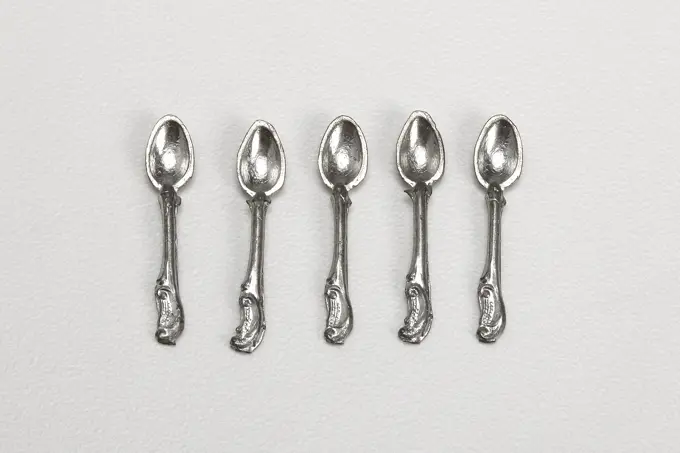
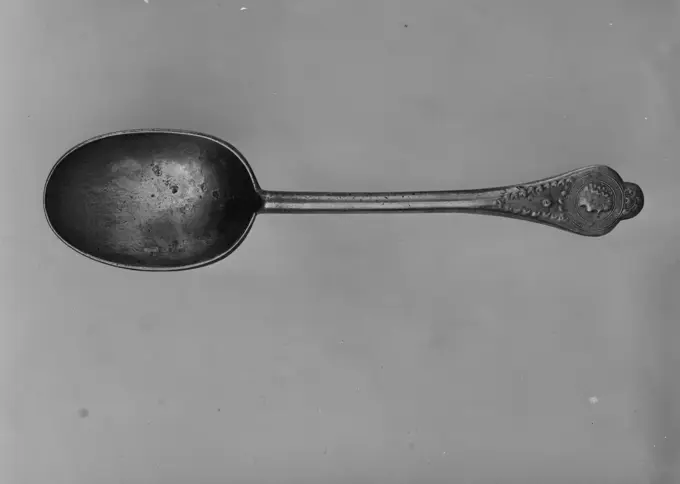
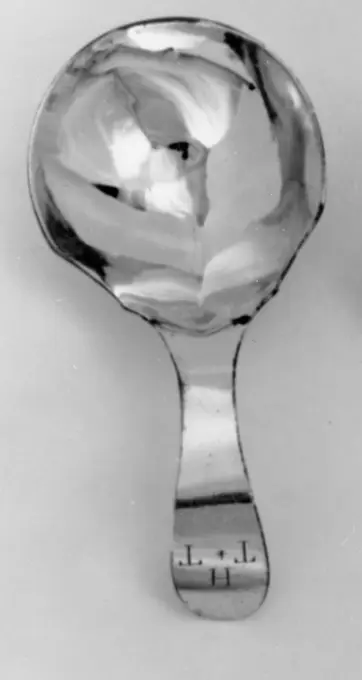
Spoon, 19th century, L. Sarson, American, 5 3/8 x 1 1/4 x 3/4 in. (13.65 x 3.18 x 1.91 cm), Pewter, United States, 19th century
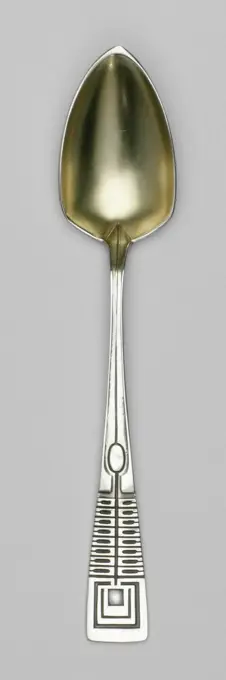
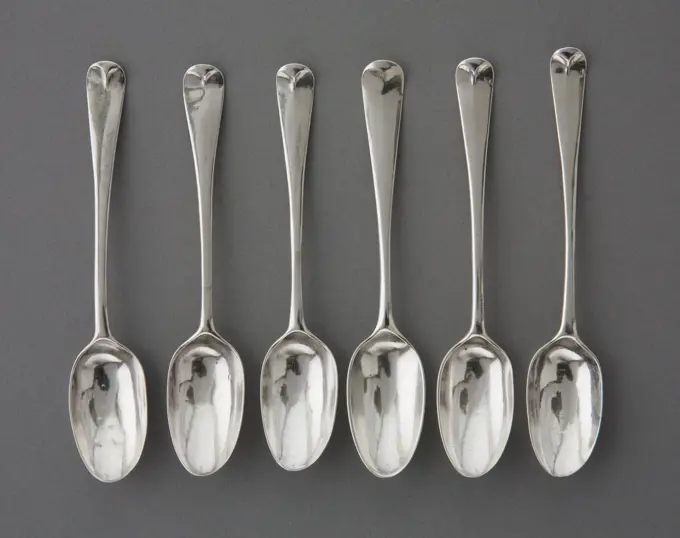
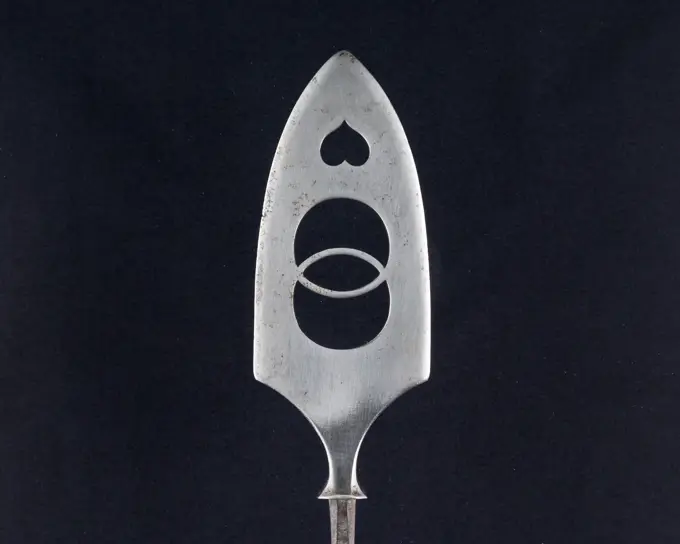
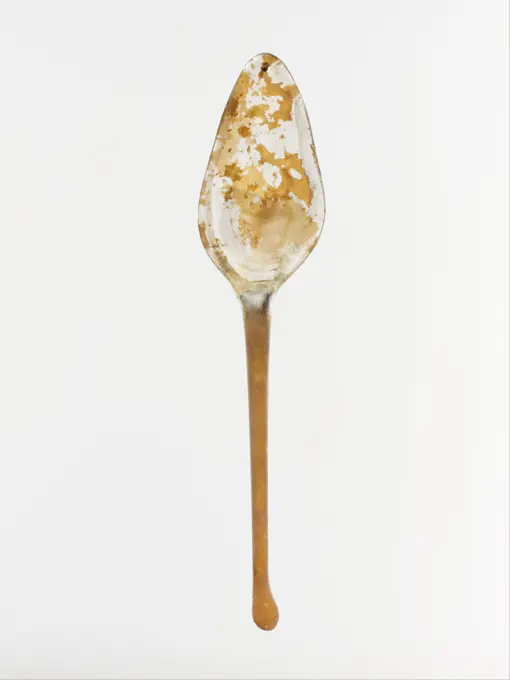
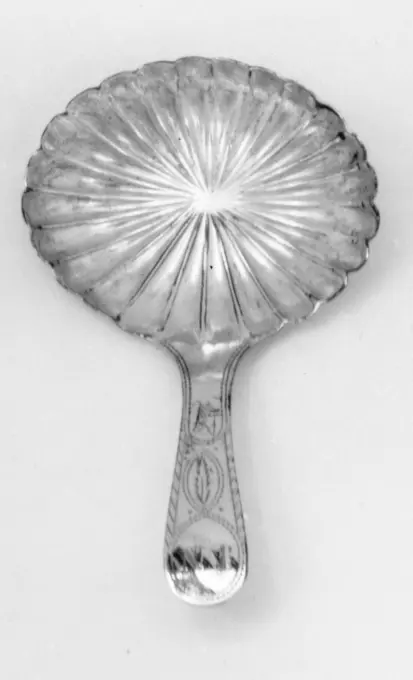
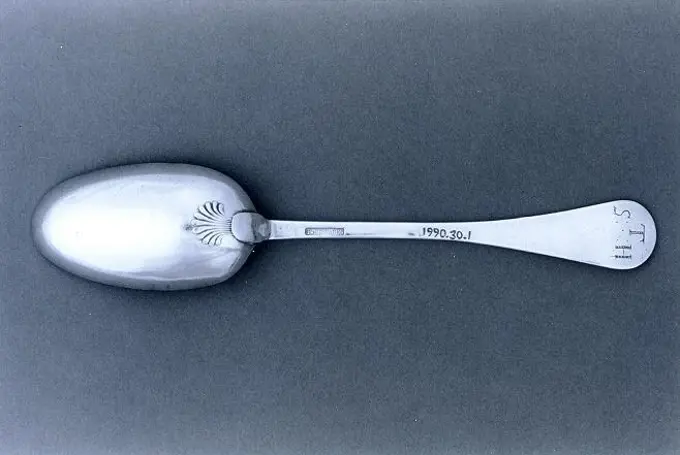
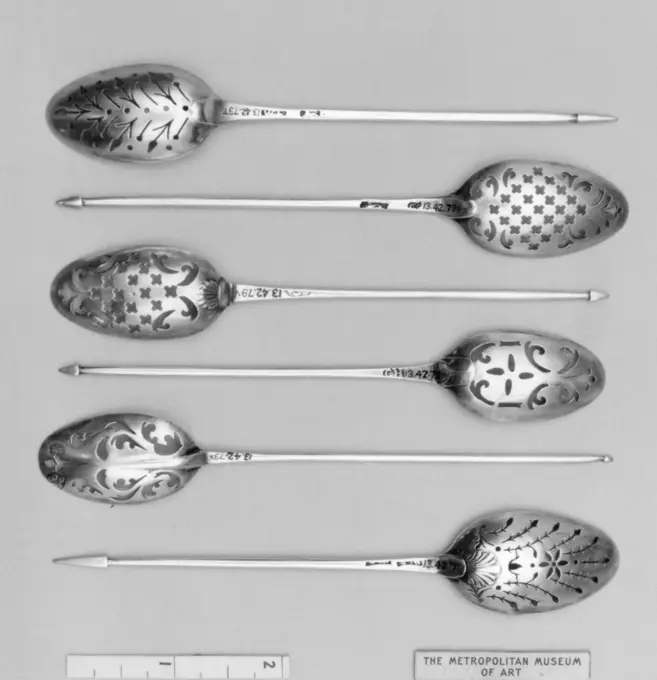
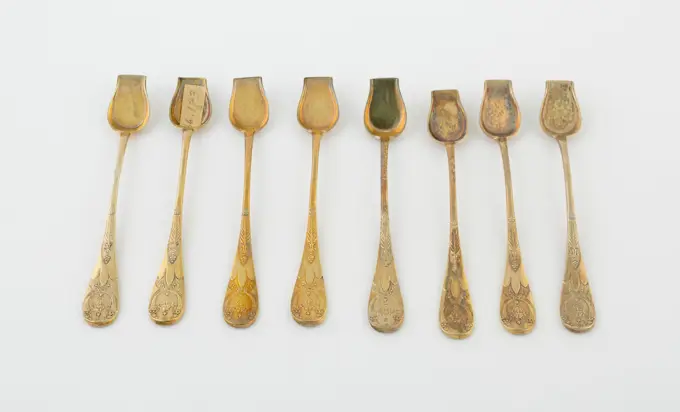
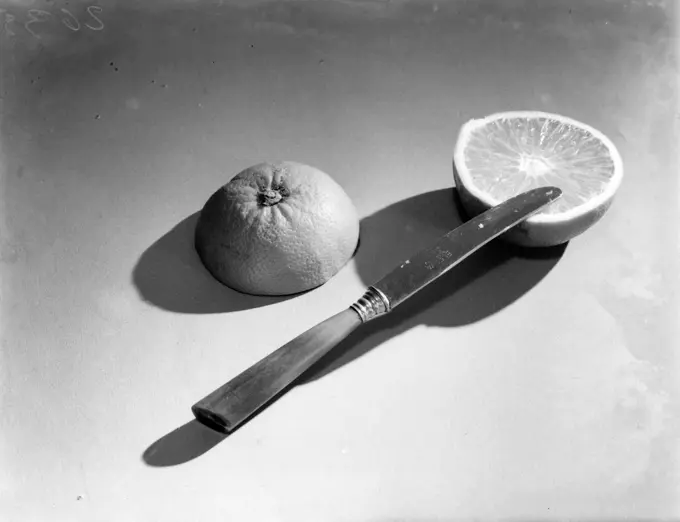
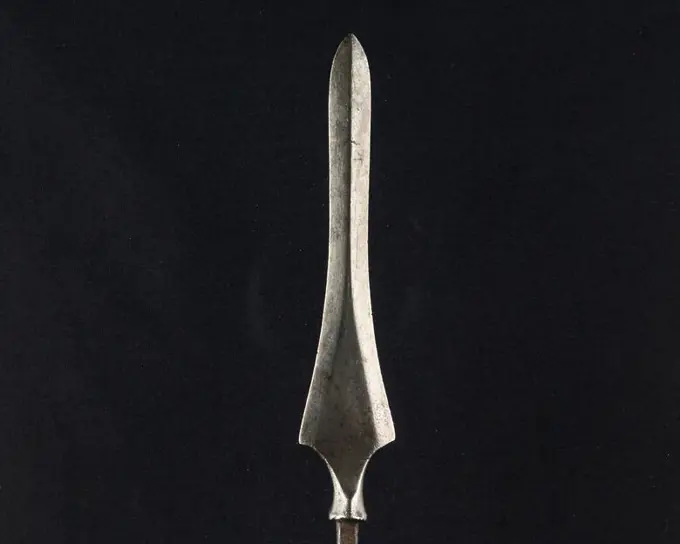
Arrowhead (Yanone). Culture: Japanese. Dimensions: L. 10 3/4 in. (27.3 cm); L. of head 4 3/4 in. (12.1 cm); W. 1 in. (2.5 cm); Wt. 1.4 oz. (39.7 g). Date: dated 1645. Museum: Metropolitan Museum of Art, New York, USA.Sugar Tongs ca. 1820 Joseph D. Chase. Sugar Tongs. American. ca. 1820. Silver. Made in New York, New York, United StatesSpoon and fork, anonymous, 1671 Fork of silver, with two teeth. The stem is crowned by a skull. Inscription on the stem. Batavia silver (metal)   Batavia Fork of silver, with two teeth. The stem is crowned by a skull. Inscription on the stem. Batavia silver (metal)   BataviaFigure-top spoon 19th century Dutch. Figure-top spoon 188230Tray. Culture: French (Rennes Mint). Dimensions: Overall: 1 1/2 × 3 1/4 × 10 1/2 in. (3.8 × 8.3 × 26.7 cm). Date: 1681-84. Museum: Metropolitan Museum of Art, New York, USA.Toy spoon - Inconnu / UnknownTea Spoon. Peter Behrens (Germany, 1868-1940). Germany, 1902. Furnishings; Serviceware. Silver, silver-colored metalMyer Myers, One of Six Teaspoons, c. 1750-60, silver.Acorn-top spoon probably 1688 Dutch, Enkhuizen. Acorn-top spoon 188087 Dutch, Enkhuizen, Acorn-top spoon, probably 1688, Silver, Overall: 7 3/4  2 3/8 in. (19.7  6 cm). The Metropolitan Museum of Art, New York. Gift of Mrs. Samuel P. Avery, 1897 (97.2.52)Ice strainer -aluminum pan isolated on white background , setWashing beater -Spoon isolated. Kitchen accessories close upSpoon 18th century German. Spoon 188168 German, Spoon, 18th century, Horn and silvered copper, Length: 6 5/8 in. (16.8 cm). The Metropolitan Museum of Art, New York. Gift of Mrs. Samuel P. Avery, 1897 (97.2.134)Probably Thomas and William I Chawner, Six Teaspoons, c. 1770, silver.Mehrzweck-Schaufel Multi-purpose scoop on white background LicenseRF Copyright: xZoonar.com/OlgaxPopovax 23324586Teaspoon.   Maker: Andrew Billings, American, 1743-1808Teaspoon. Culture: British, Sheffield. Dimensions: Length: 4 3/4 in. (12.1 cm). Date: ca. 1770-80. Museum: Metropolitan Museum of Art, New York, USA.Zeepbak, Pieter of Summer Wil (i), 1762 Soap bin with engraved lines and carrying eye. The top edge of the container is stated at the front V-shaped. The bearing eye is heart -shaped. There is a spoon in the soap bin (Invnr. BK-NM-11177-77-B). The soap bin is marked: stk. = Amsterdam, Jrl. = C (1762), Mt. = Pieter van Somerwil I and an ax. Amsterdam silver (metal) Soap bin with engraved lines and carrying eye. The top edge of the container is stated at the front V-shaped. The bearing eye is heart -shaped. There is a spoon in the soap bin (Invnr. BK-NM-11177-77-B). The soap bin is marked: stk. = Amsterdam, Jrl. = C (1762), Mt. = Pieter van Somerwil I and an ax. Amsterdam silver (metal)Fork. Fork with three teeth and a flat stem. The fork is partner with a spoon (BK-NM-11177-150-B) in a specification tray (BK-Nm-11177-150-a). The fork has not been marked.Arrowhead (Yanone) 18th century Japanese Although today Japanese warriors are renowned most for their swordsmanship, archery, especially from horseback, has been an essential part of samurai warfare and culture for centuries. Arrows were fitted with heads of varying shape according to their intended use in war, the hunt, or target practice. Arrowheads made for use on the battlefield incorporated different designs intended for specialized purposes such as the piercing of armor or to cause maximum damage to horses and unarmored personnel.Large arrowheads, pierced and elaborately chiseled with landscapes, birds, flowers, dragons, and Buddhist divinities, were created to be admired for the beauty of their metalwork and design rather than for use in archery. Such highly elaborate examples may have been made for presentation or as a votive offerings to a shrine.. Arrowhead (Yanone). Japanese. 18th century. Steel. Archery Equipment-ArrowheadsRussian National Wooden Tableware Russian national handmade wooden container on an isolated studio background Copyright: xZoonar.com/AndreyxSkatx 9861299Fish Slice c 1830-1860 Boston. Silver . Harding, Newell and CompanyHand mirror of wood, oval with handle. Hand mirror of wood, oval with handle.ChosenSnuff Bottle (stopper), 1644-1911. China, Qing dynasty (1644-1911). Glass; overall: 5.8 cm (2 5/16 in.).Spoon early 18th century German or Flemish. Spoon 193293Cream spoon 1836 Dutch, Rotterdam. Cream spoon 192249Glass spoon 4th century A.D. Roman Colorless.Shallow bowl with rounded, thickened edges, drawn out to a pointed tip with small tooling indent at apex; handle drawn up from bowl in a tubular, tapering rod, terminating in a lopsided knob, flattened and pushed in on the underside.Intact; some pinprick bubbles; some dulling and iridescence, with large areas covered by brownish enamel-like weathering.Yellowish spoon with long handle.. Glass spoon. Roman. 4th century A.D.. Glass; blown and tooled. Late Imperial. GlassTablespoon.   Maker: Samuel Pancoast, active ca. 1785 - 1795Lute 18th century Italian. Lute 501630A Spoonful of Sour CreamMaker's Mark TW, possibly Thomas Willmore, Caddy Spoon, 1796, silver.Figure-top spoon mid-18th century Dutch, probably Friesland. Figure-top spoon 188306 probably Dutch, Friesland, Figure-top spoon, mid-18th century, Silver, 6 7/8 x 1 7/8 in. (17.5 x 4.8 cm). The Metropolitan Museum of Art, New York. Gift of Mrs. Samuel P. Avery, 1897 (97.2.283)Spatel, anonymous, c. 1600 - c. 1700 Oval flat spatula with edited Steel (Ajour). The spatula is not marked. Netherlands silver (metal) Oval flat spatula with edited Steel (Ajour). The spatula is not marked. Netherlands silver (metal)Twelve dessertforks.   Maker: Rudd and Scudder, American, active ca. 1848 - 1850Serving Tray. Gijs Bakker; Dutch, born 1942; Manufactured by Royal VKB; Dutch, founded 1789. Date: 2005. Dimensions: 36 × 41 × 41 cm (14 × 16 × 16 in.). Polypropylene and stainless steel. Origin: . Museum: The Chicago Art Institute, Chicago, USA.Bottle, 2nd-3rd century A.D., Free-blown glass, colorless, 23.1 × 19 cm (9 1/8 × 7 1/2in.), Yale-French Excavations atDura-Europos, Excavated in Dura-Europos, Syria, Syrian,Dura-Europos, Roman, Containers -GlassTablespoon.   Maker: Thomas Edwards, American, 1701-1755Spoon 1700-1800 American. Spoon 7758Strainer spoon 18th century Dobson Prior and Williams. Strainer spoon 192192Balancing of spoon, spring, india, asia Copyright: xHarixMahidhar/DinodiaxPhotoxKnife ca. 1750-60 Meissen Manufactory German. Knife 206485Blow-pipeElizabeth Morley, Caddy Spoon, 1808/9, silver.barbell isolated on white backgroundMetal kitchen knife on a dark textured concrete background. Cutlery, preparation for dinnerHat pin made of steel with a drop -shaped imitation pearl, anonymous, c. 1890 - c. 1910 Hat pin made of steel with a drop -shaped imitation pearl. Netherlands pen: steel (alloy). knop: pearl forging Hat pin made of steel with a drop -shaped imitation pearl. Netherlands pen: steel (alloy). knop: pearl forgingSet of Salt Spoons (10) 1789-1825 Paris. These salt spoons are part of a vast service made for Emperor Napoleon Bonaparteís sister Pauline on the occasion of her marriage to the Roman nobleman Camillo Borghese, Sixth Prince of Sulmona.In the years after the French Revolution, architects and designers adopted the visual language of ancient Greece and Rome to express the new imperial order. Napoleon, hoping to promote Parisís luxury trades, commissioned several silver dinner services as gifts to be sent abroad.. Silver gilt . Martin-Guillaume BiennaisPlastic baby spoon on a white backgroundVintage retro tea spoons and Strainers silver  on wooden backgroundPeter and Ann Bateman, Caddy Spoon, 1791/92, silver.Poll photo collection. Advertising photography. Still life of a cut orange. 1932