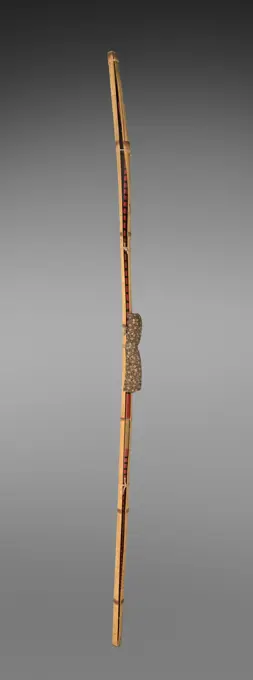
Swords and Historical Blades

Display of ornate historical swords and blades, showcasing intricate designs, materials, and craftsmanship from various time periods.

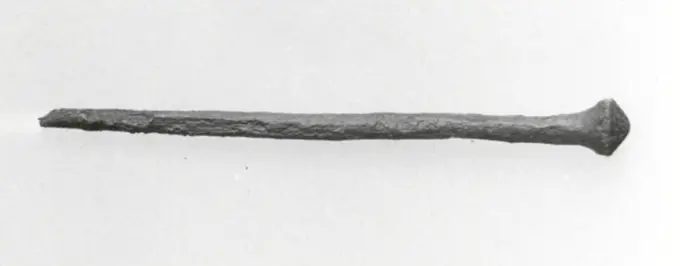
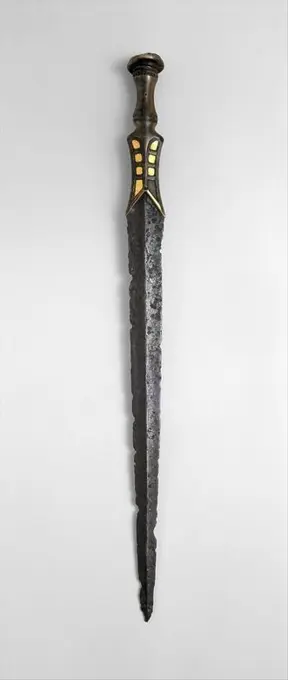
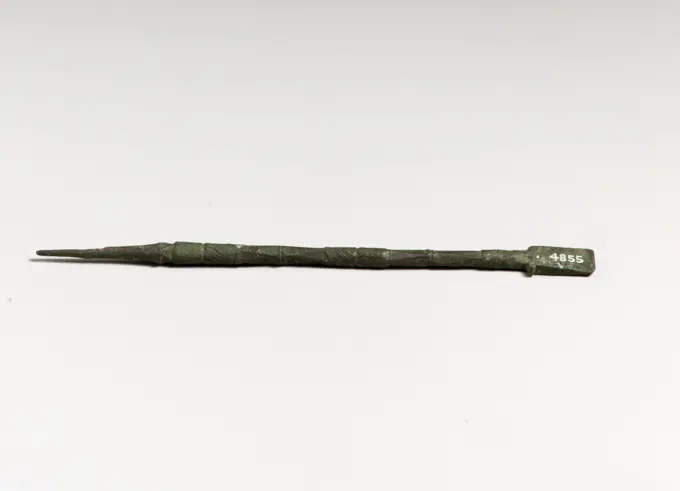
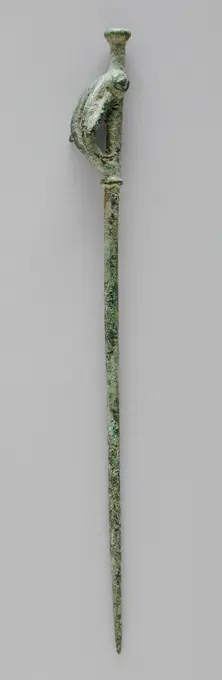
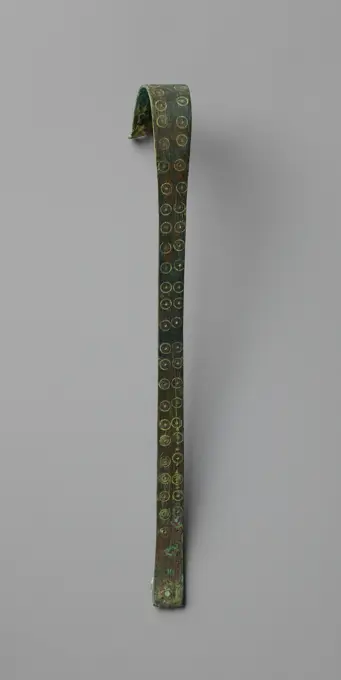
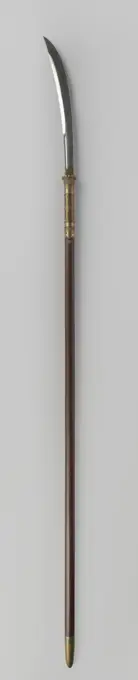
Double Edged Sword, 900-400 BCE, 28 3/4 x 3 3/4 x 1 7/8in. (73 x 9.5 x 4.8cm), Bronze, mother-of-pearl, Persia (Iran), 9th-4th century BCE
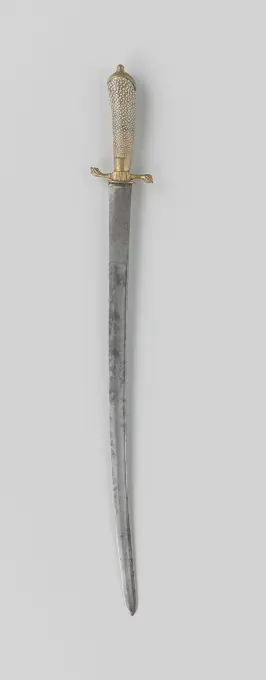
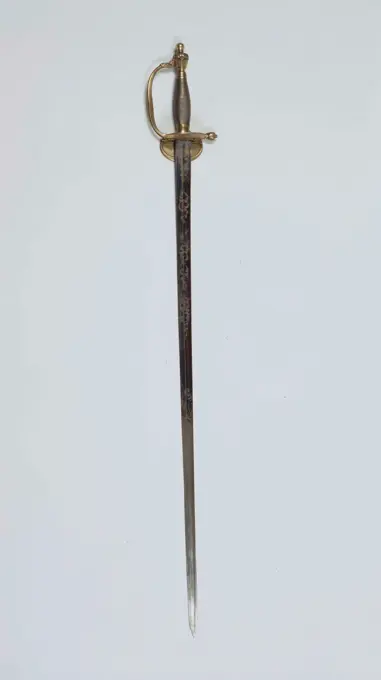
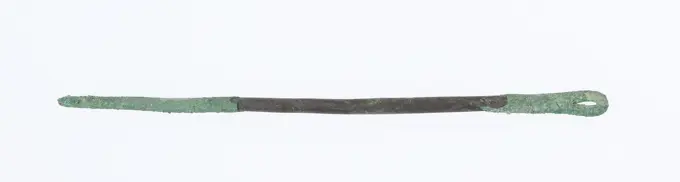
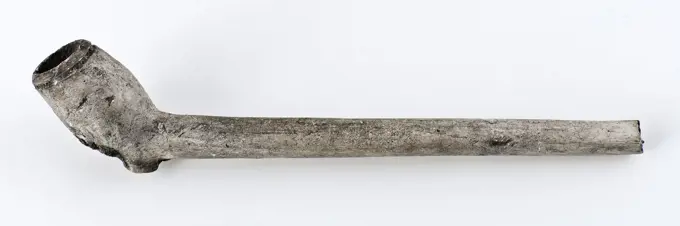
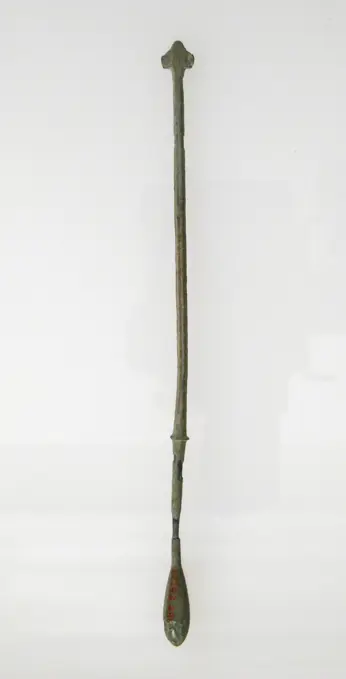
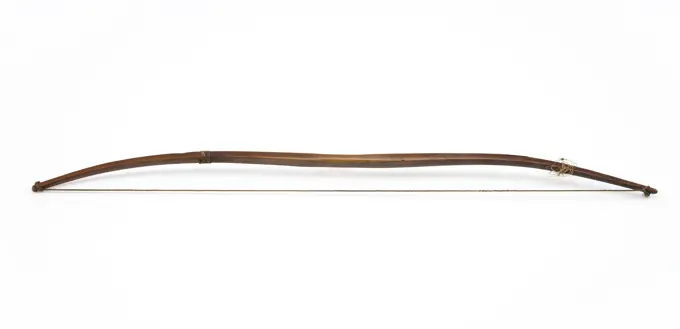
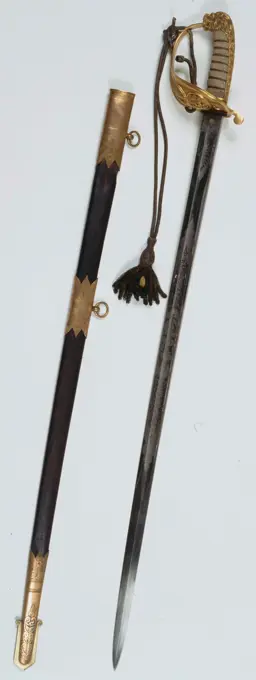
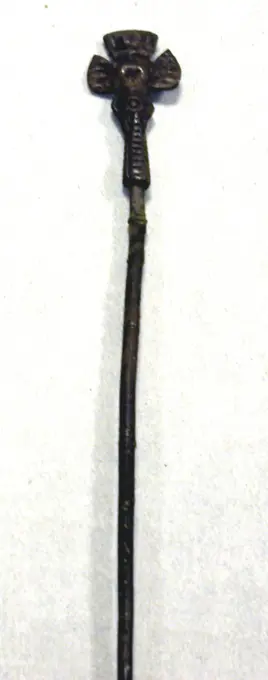
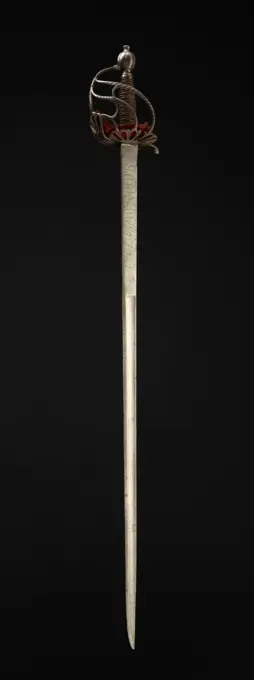
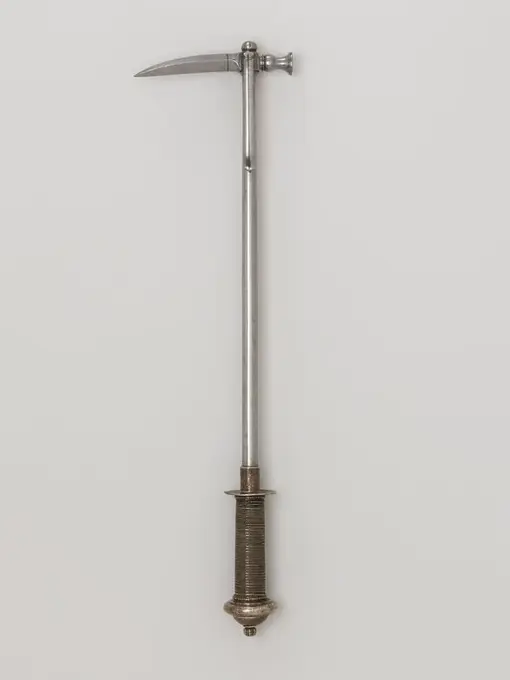
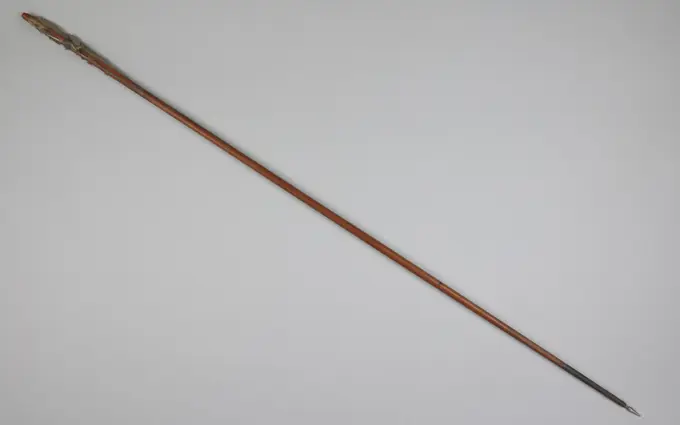
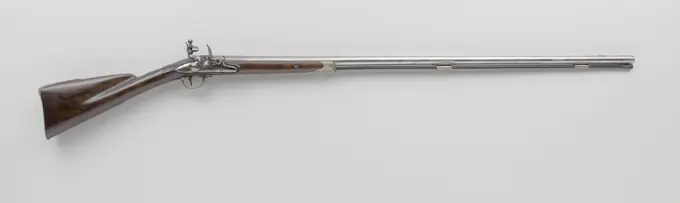
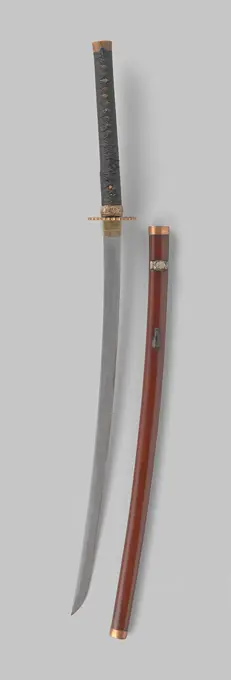
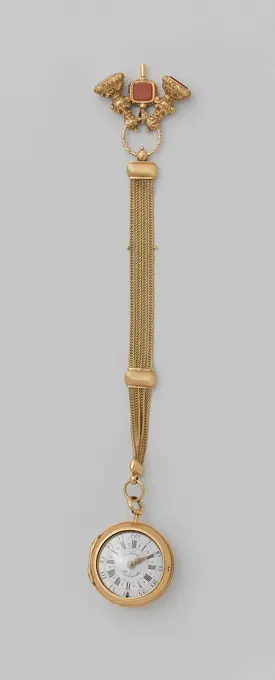
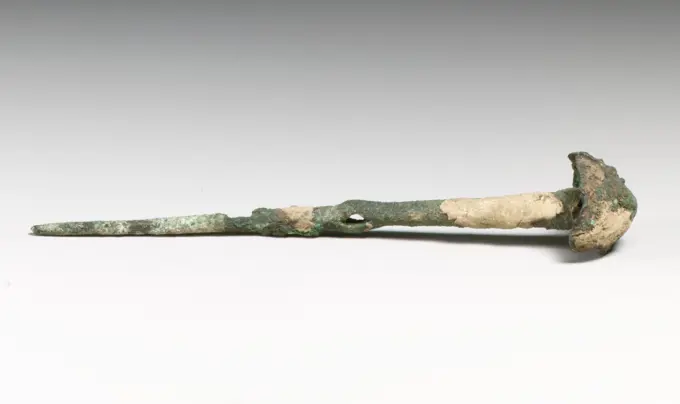
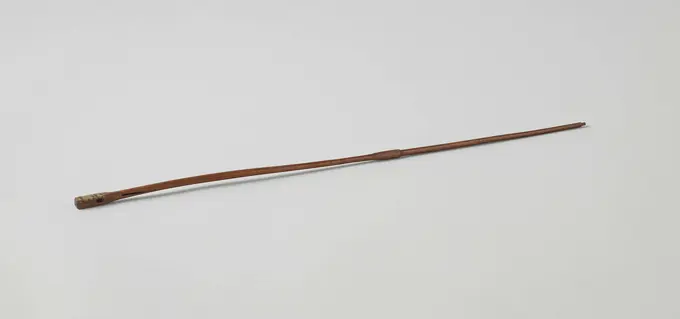
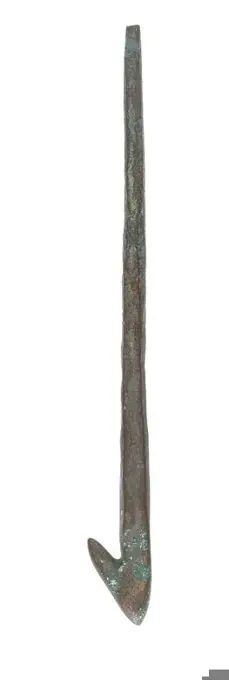
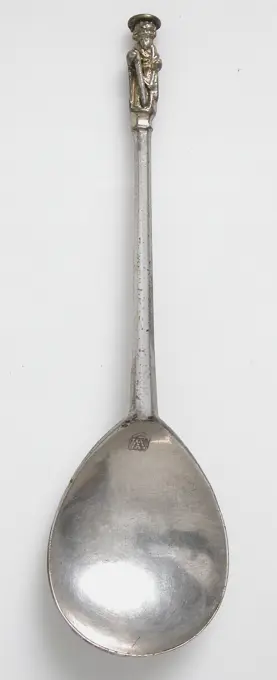
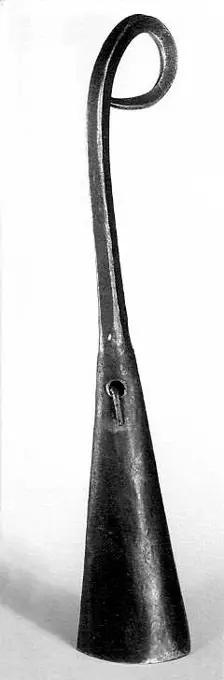
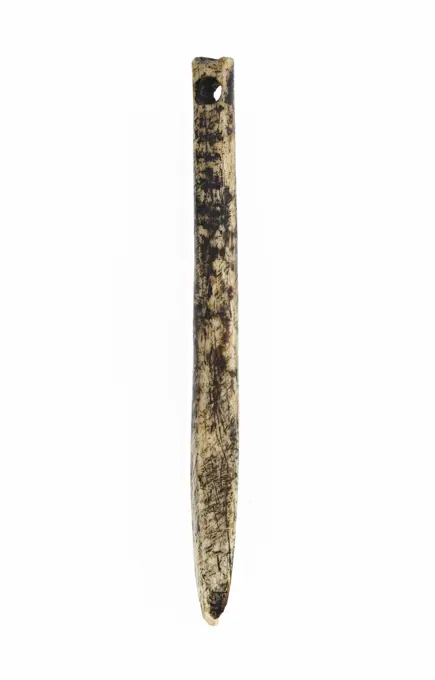
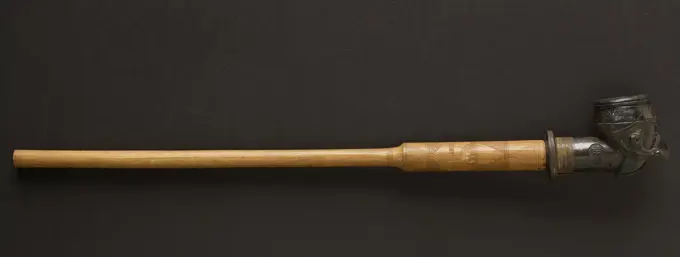
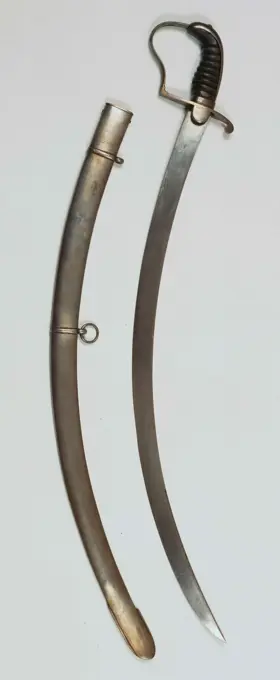
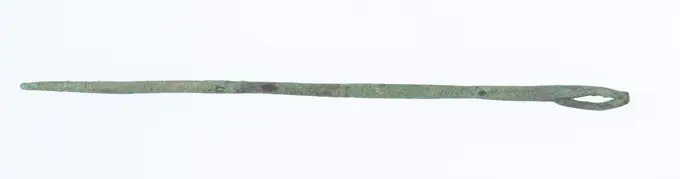
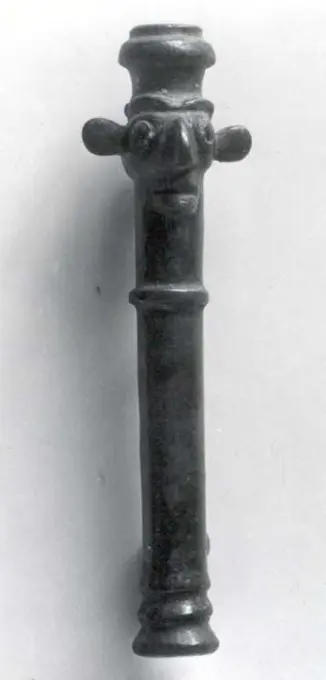
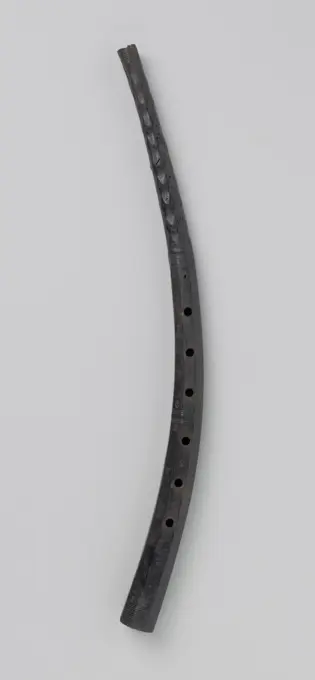
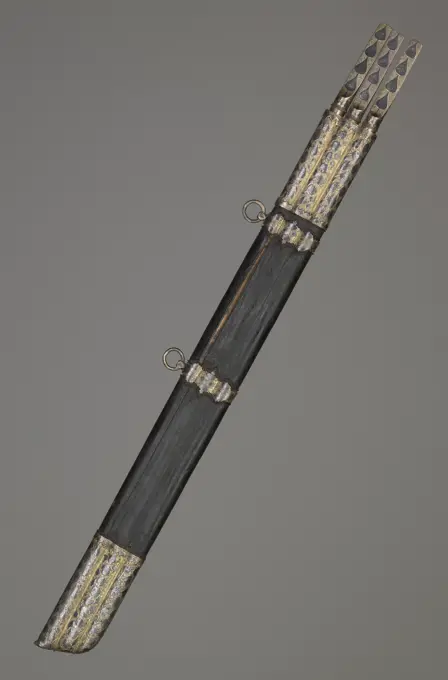
Honorable with sheath from the vice-admiral Th. F. van Capellen, Sword Cutler Brunn, c. 1805 presentation sword English officers' label for Marines, model "Stirrup Hilt", from circa 1805 (British Commissioned Naval Officers Sword). Estable: Leeuwegevest van Koper with ivory grip handle with copper wire. In the middle a shield with crowned weapon. Voorbewug and half parent rod with two shields with a engraved crowned anchor. The blade is double. Damaged in blue and gold. Leaning on an anchor on the front female figure. In addition, the initials G. R. with a crown. On the other Neptunus with trident on a shell. In addition, weapon trophy with the royal weapon. Signed. A medallion has been on the grip, possibly from the civilian destination of the carrier. London steel (alloy). ivory. copper (metal). leather cutting / casting / engraving / striking (metalworking) / forgingBemartende Officiersdegen with black leather sheath, c. 1800 - c. 1850 sword Mouth tape with button, ear band is missing.  Schede: Leather. hilt: copper (metal). Kling: Iron (Metal)Small sceptreKama kanjarBronze Needle (1 st - 3 rd CE ) - Roman period, from " House of Griffins "- Archaeological site of Complutum in Alcalá de Henares ( Madrid ). SPAIN.Hartsvanger.The hilt of this yacht sword has an asymmetrical grip as of a knife, covered with white rogging and gold-plated glass batter; The pearl rod is finished with a cap with a button on it; There is a baffle plate. Two grooves à la Montmorency run over the curved bent; The blade is decorated with an arrow, a panel surrounded by braid work motifs with the address of the sword sword in tilt, a running boar and a jumping deer buck.Sabre with the portrait of King Stephen Báthory unknownDouble Edged Sword, 900-400 BCE, 28 3/4 x 3 3/4 x 1 7/8in. (73 x 9.5 x 4.8cm), Bronze, mother-of-pearl, Persia (Iran), 9th-4th century BCEModel of a Made Mast, anonymous, c. 1819 demonstration model Round mast with octagonal top, Hommer with ears, driving bed, row and side bowls. The mast itself consists of an octagonal mast king surrounded by eight cheeks; The mast top consists of the king alone. The parts are held together by Kuipbands. A number of short shelves around the mast form a flat riding bed from the front, the ears on the sides and behind half an eight -eight. The side bowls have been extended as the back of the ears; A driving scale is applied for the mast. Netherlands wood (plant material). brass (alloy)Eresable from J.A. Pluijers.eresabel with iron blued and gold-plated double-edged cling with double blood stuff. The hilt is copper with a single lateral pearl bracket that ends with a decorated button. The donkey-shaped baffle plate consists of two parts of which one is foldable, the baffle plate is decorated with floral motifs. The handle is wrapped from wood with braided iron wire. The grip button is made of copper and diamond-shaped.Key of a money box, 1700 - 1800 Key of a money box.  iron (metal) Key of a money box.  iron (metal)Shotgun with a Shishana Rock Castle unknown labelPointed part of the wreck of the East Indies Hollandia, Anonymous, 1700 - in Or Before 1743 fragment Varied parts or fragments, points or pointed end fragments; fragm, id. 80H535. Netherlands copper (metal)   SecondTextile manufacturing tool ca. 1295-1070 B.C. New Kingdom, Ramesside. Textile manufacturing tool. ca. 1295-1070 B.C.. Bronze. New Kingdom, Ramesside. From Egypt, Memphite Region, Lisht North, Late New Kingdom Settlement, MMA excavations, 1920-22. Dynasty 19-20White clay pipe, unnoticed, with smooth handle, clay pipe smoking equipment smoke floor pottery ceramics pottery, lb stem 10.9 pressed finished baked white clay pipe unnoticed with smooth handle archeology smoking tobaccoHairpin 7th century Frankish. Hairpin 465620 Frankish, Hairpin, 7th century, Bronze, Overall: 4 7/8 x 1/4 x 3/16 in. (12.4 x 0.6 x 0.5 cm). The Metropolitan Museum of Art, New York. Gift of J. Pierpont Morgan, 1917 (17.193.291)Bow -Spear with Sheath 18th-19th century South Indian. Spear with Sheath 30670Openwork Spoon, 5th-4th century BCE, H.9-5/16 x W.1-7/16 x D.2-1/4 in., bronze, China, 5th-4th century BCE, With a handle cast to simulate bamboo, the openwork pattern in the bowl of this spoon, as well as its overall design, are characteristic of the style of the Chu kingdom during the late Eastern Chou era. This southern region also developed polychrome lacquer designs that undoubtedly influenced the complex decorative motifs found on textiles, inlaid bronzes, and cast bronzes that have been exhumed from numerous ancient Chu tombs. It is assumed that an openwork spoon such as this would have been useful in removing the olive from a martini, or for draining spaghetti.Brush shaft Kuchenreuter, Johann Andreas, I (1716 1795)Arrow Point, 1700s. Japan, Edo period (1615-1868). Steel; overall: 16.8 cm (6 5/8 in.); head: 5.8 cm (2 5/16 in.).British Naval Sword in scabbard. Language officer cable with sheath. Slightly curved saber skling with wide blood slip and backs without heel (Wilkinson blade); It is etched with leaf motifs, a crowned anchor on one side, on the other the British royal arm. It carries the inscription and a test mark. The sword has wrapped with white shark skin wrap wrapped with copper wire, a closed gobf with crowned anchor and a button in the shape of a lion's head. The subtacial part of the baffle plate can fold out and then close with a hole on a sheath ridge. A blue-and-gold galon hangs on the hilt. The sheath has a bottom strap with trail edge; The middle and top strap both have a ring for the carrying strap, and all three tires are decorated with leaf motifs.Object ID #18804381; steel, silver, gold, ivory, bone; L x W: 22.5 x 1.7 cm (8 7/8 x 11/16 in.); The Robert L. Metzenberg Collection, gift of Eleanor L. Metzenberg; 1985-103-85Copper Pin 15th-16th century Inca. Copper Pin. Inca. 15th-16th century. Silver (hammered). Peru. Metal-OrnamentsOfficers cutlass of the Horse Guards of George III HerzbergHairpin Middle Kingdom ca. 2030-1640 B.C. View more. Hairpin. ca. 2030-1640 B.C.. Wood. Middle Kingdom. From Egypt, Upper Egypt, Thebes, Asasif, East of Pabasa, Radim, Burial 6A.X.B12, MMA excavations, 1918-19. Dynasty 13-17Bow, early to mid-1800s. Japan, Edo period (1615-1868). overall: 220.9 cm (86 15/16 in.).Crossbow Bolt, 1500s-1600s. Germany, 16th-17th century. Wood, leather, steel; average: 37.2 cm (14 5/8 in.).Ellemaat uit Culemborg.Length of 1 tbsp with handle from Culemborg. V.Z.V. stamp and inscription.Pin 5th-8th century. Pin 449192War Hammer. Culture: German, Saxony. Dimensions: L. 22 1/2 in. (57.2 cm); L. of head 5 in. (12.7 cm); W. 6 1/8 in. (15.6 cm); Wt. 2 lbs. 8 oz. (1134 g). Date: 16th century. Museum: Metropolitan Museum of Art, New York, USA.Przeszo Przysoci unknownBajonet with sheath, horizing a flint rifle Staatse Army, Johannes Rousseau, c. 1780 - c. 1805 bayonet Bajonet with leather sheaths to a flint rifle Staatse Army. Amsterdam iron (metal). leather. copper (metal)Bow -Pin 5th-3rd millennium B.C. Iran This copper pin, which was likely used to fasten clothing, was excavated in 1937 at a prehistoric site in the vicinity of Nishapur in northeastern Iran. While Nishapur itself was founded by the Sasanian king Shapur I (reigned ca. A.D. 241-272), this pin shows that human habitation there goes back to the prehistoric period. Furthermore, the prehistoric pottery from Nishapur has close affinities with ceramic materials from Central Asia rather than with contemporary sites in Iran, meaning that in this period its inhabitants were likely culturally linked to their neighbors to the east. At the same time, Nishapurs location on what later became known as the Great Khorasan Road suggests that it was part of the trade network that facilitated the import of precious stones such as lapis lazuli, carnelian and turquoise from Central Asia to Mesopotamia.. Pin 323704Commandostaf vermoedelijk van Jan van Riebeeck.Staff, upwardly a bit wider, crowned by a round hollow silver button on a slightly cutting edge. At the bottom a narrow silver fittings. Dated the button: 1658.Flint hunt rifle, Johan George Erel, 1773 flintlock gun The lock is easily decorated with edges, a wide of which on the lock plate with a signature; The pan is rainproof. The loop is equipped with a basculating Kulas, a Golden Zundgat and a silver visor grain. The half drawer of the flask is cut into relief with an asymmetrical acanthus leaf. The silver batter is easily engraved and consists of, among other things, a hood in front of the drawer with a shell in relief and equipped with a silver eye for a support strap, a Asmetrical screw plate with praise, a Kolfplaat stamped with the city choir of Amsterdam and the annual letter O (1773) and probably a brand in the form of a crooked sword; An ebony lady with a hood of cow horn and an iron scratcher. Amsterdam silver (metal). gold (metal). ebony (wood). horn (animal material). iron (metal) engraving / cuttingBone Weaving Bobbin 8th-mid-16th century Peru; north coast (). Bone Weaving Bobbin. Peru; north coast (). 8th-mid-16th century. Bone. Peru. Textiles-ImplementsModel of a Made Mast, anonymous, c. 1780 - c. 1840 demonstration model Round mast with square top, Hommer with ears and driving bed. The mast itself consists of five parts: Three heavy parts are placed against each other with clucks on the inside, one at the front and two at the back; Two thin cheeks round the whole. The parts are held together by Kuipbands. The driving bed is a thickening of the front part. This model can be varied. Netherlands wood (plant material). brass (alloy)Infantry label with Schede Batavian Republic and Kingdom Holland, 1805-1810, Anonymous, 1805 - 1820 sabre Copper rigid consisting of button, handle hood, front bracket, two side brackets, half pare rod. Handle from Robbenleer (or roggen skin) with copper wire wrapped. Iron blade, black leather sheath with copper top strap with carrier button. Copper point.  iron (metal). copper (metal). schede: leather. sealskin forging / cuttingSabel behorend bij wapenrek van Cornelis Tromp.Sable with wooden sheath in which a small knife is sitting. The handle of Roggevel is wrapped with green silk, pommel from Hoorn, Ferrule (Monting above Tsuba) has a decoration that occurs a lot in North Vietnam and also the wide range of Tsuba is typical of North Vietnam. Tsuba has a chrysanthemum form. Hardened steel blade.Axe with Concealed Spear. Culture: Indian, Travancore. Dimensions: L. 35 3/8 in. (89.9 cm). Date: 17th-18th century. Museum: Metropolitan Museum of Art, New York, USA.Crossbow Bolt, 1500s-1600s. Germany, 16th-17th century. Wood, leather, steel; average: 37.2 cm (14 5/8 in.).Boar Spear. German, Saxony. Date: 1575-1600. Dimensions: L. 172.7 cm (68 in.)Blade with socket L. 34.9 cm (13 3/4 in.)Wt. 3 lb. 13 oz. Steel, brass, and ash. Origin: Saxony. Museum: The Chicago Art Institute, Chicago, USA.Back of copper from V.O.C.-ship De 'Witte Leeuw', Before 1613  Back of copper from V.O.C. ship De 'Witte Leeuw'. On one side with a hole.  copper (metal)   Sint-HelenaDistrict of Jan Stanis Stanis Awski, Jan (1860-1907); End of the 19th century (1890-00-00-1900-00-00);Souvenir of Józef Czapski  Pencil Caran d'acheFlint officer rifle for the Amsterdam militia, Lambertus Michaelis Thone, c. 1790 flintlock gun The lock plate carries a signature. The loop is stamped with the weapon of Amsterdam and has a bayonethaft under the tromp. The flask is simply cut. The mainly gilded yellow-copying batter includes four sliding running loops, a battery-shaped screw plate, an unprocessed silver thumb plate crowned with a bow and a large silver wire in the crown-inserted crown on top and a steel cheer. Amsterdam silver thread. brass (alloy). gilding (material). silver (metal). steel (alloy). wood (plant material) inlay (process) / cutting / gilding / filing / engraving  AmsterdamShort Sword (Duan Jian). Culture: Eastern Central Asia. Dimensions: L. 26 3/8 in. (67 cm); W. 2 in. (5.1 cm); Wt. 1 lb. 6.5 oz. (637.9 g). Date: ca. 4th-1st century B.C..From its inception in the third millennium B.C., the sword served equally as a weapon and as a symbol of social status and power. During the first millennium B.C., in the hands of the nomadic peoples of the Eurasian steppes, it became, along with the bow, one of the primary cavalry weapons of the ancient world. Groups such as the Scythians, the Yuezhi, the Xiongnu, and the Xianbei achieved a succession of federations and kingdoms in Eurasia by combining the use of sword and bow with an unparalleled skill in horsemanship. Archaeological investigations of burial sites have established the importance of the sword both as a valued possession and a sign of rank in various nomadic societies. While burial context has made it possible to identify some types of swords with specific nomadic peoples, others, like this example, aBronze stylus 4th-1st century B.C. Cypriot This stylus has a point on one end to scratch letters and a flattened surface on the other to scrape the surface of a writing tablet. Ancient Greek writing tablets were typically made of wood, either with a recessed inner face to hold beeswax or flat with a painted white surface.. Bronze stylus. Cypriot. 4th-1st century B.C.. Bronze. Classical or Hellenistic. BronzesPin. Iran, Luristan, circa 1350-800 B.C.. Jewelry and Adornments; pins. Bronze, castHandle. UnknownModel of a Made Mast, anonymous, c. 1780 - c. 1840 demonstration model Round mast with round top, bummer and ears, calves, longitudinal, driving bed and driving bowl. The mast itself consists of four parts: two heavy, one front and one behind, form the mast king, connected to welding inside; Two thin cheeks round the whole and are also connected to welding on the mast king. The parts are held together by Kuipbands; Black -painted tires also indicate mast growments. The driving bed is a thickening of the driving scale. The ears support the longitudinal and calves. Netherlands wood (plant material). brass (alloy). paint (coating)Lans belonging to Cornelis Tromp, Anonymous, c. 1650 - c. 1679 pike Lans with lacquered wooden stick, yellow -cut shoe, curved blade with yellow and red -copper batter. The blade of the lance has a Japanese shape, but misses a hole in the sting for the attachment of the blade to the stick. The Angel has a rough surface that was rubbed with resin and so fixed in the hole of the stick. This way of assembling is characteristic of stick weapons and white weapons from Southeast Asia. Japan copper (metal). brass (alloy). steel (alloy). cypress (wood). lacquer (coating)Officierendegen met schede..Degen with copper hilt, silver handle and movable bump plate. The claling blue is dammed on a silk inscription: f.w. Schimmelbusch, on the other side: in Solingen. With black leather sheath. Coming from F. Berikhausen, 1st Lieutenant 17th Infantry Department.Model of a Made Mast, anonymous, c. 1780 - c. 1840 demonstration model Round mast with square top, Hommer with ears and row. The Mastvoet consists of three parts, a short piece in front and two long rear, which run all the way to the top. With an oblique weld the short piece is extended to the height of the march; The masttop is once again composed of four parts. All parts are connected to each other with welding inside and are held together by tubs. The ears are fairly short and the mast is equipped with a driving scale. Netherlands wood (plant material). brass (alloy)Hinge..Alto recorder.altblute, labeled E: Singon.Horloge met horlogeketting met cachetten en een sleutel.Golden watch on a watch necklace. The dial is enamelled. The cupboard is smooth. The golden chain consists of four chains with a slide. There are two cachets and a key with a white with red () Agate.Knife (England), ca. 1610; steel, silver, gold, ivory, bone; L x W: 22.5 x 1.7 cm (8 7/8 x 11/16 in.); The Robert L. Metzenberg Collection, gift of Eleanor L. Metzenberg; 1985-103-87Spear Tip, 12th-11th century BCE, 5/8 x 6 1/8 x 7/8 in. (1.59 x 15.56 x 2.22 cm), Bronze, China, 12th-11th century BCEToy knife - Inconnu / UnknownClay pipe, unnoticed, stem decorated with fleur de lis stamps, clay pipe smoking equipment smoke floor earthenware ceramic pottery h 2,9, pressed finished baked Clay pipe unnoticed with fleur de lis stamps decorated handle. Radery ring under lip top edge over entire circumference archeology Rotterdam City center Cool Schiedamse Vest Mainland City triangle Job indigenous earthenware smoking tobacco craft Soil discovery: Vasteland-Baan Schiedamse Vest Rotterdam Complex of discovery with material from pottery and pipe making and house waste from the 17th century.Pin, eyelet type. Pin, eyelet type 244252Model of a Topgallant Mast.Round Bramsteng made from one piece, with a square heel with slotwood hole, a hole for a disk, an octagonal homer and ending in a flagpole.Harpoon point. Dimensions: l. 10.7 cm (4 3/16 in). Dynasty: Dynasty 19-20. Date: ca. 1295-1070 B.C.. Museum: Metropolitan Museum of Art, New York, USA.Apostle Spoon ca. 1490 British Apostle spoons - spoons which bear the figure of one of the apostles accompanied by his apostolic emblem - are first mentioned in a will made in York in 1494, which described them as "xiji cocliaris argenti com Apostolis super eorum fines" ("13 silver gilt spoons with apostles on the top of their ends"). It would appear from the number "xiji" (13) that this set also included a "master" spoon, on which the image of the Savior holding the orb and cross would have appeared.Sometime during the Tudor period it became customary in England for a wealthy godparent to give such a set of spoons to his godchild at his christening. When Shakespeares Archbishop Cranmer demurs to the honor of standing as the godfather at the baptism of the "fair young maid" Elizabeth, King Henry VIII responds, "Come, come, my lord, youd spare your spoons" (V, 4) - thus suggesting that is was the expense of such a gift that caused the archbishop to refuse. More generally, however, a sPrzeszo Przyszoci unknownFlint hunt rifle in the Dutch style of the 1670s, Anonymous, 1670 - 1750 flintlock gun Flint hunt rifle in the Dutch style of the 1670s; Made on Java. The lock is chiseled in relief with flower patterns that are partially enclosed in gold. The barrel is heavy in construction and roughly finished on the inside; The decoration is the same as the one on the end; Silver visor grain. The flask is painted brown-orange. The iron fittings are decorated in the same way as the lock and the loop and consists of three unadorned loading stokkers and a gilded screw plate; The narrow wooden chest of charge has a copper roof and an iron scratcher; The chest of drawers fog. Java gold (metal). silver (metal). iron (metal). gilding (material). wood (plant material). copper (metal). felt (textile) inlay (process) / painting / gildingHair pin ca. 1700-1550 B.C. Second Intermediate Period. Hair pin. ca. 1700-1550 B.C.. Ivory. Second Intermediate Period. From Egypt, Memphite Region, Lisht North, Tomb of Nakht (493), outside NE corner, Pit 468, MMA excavations, 1913-14. Dynasty 13, late-18, earlyNavigation. To determine the ships position and chart its course, the captain had an entire arsenal of instruments at his disposal. Among the items found on Nova Zembla are an astrolabium catholicum (universal astrolabe), a fragment of a copper sounding line, a cross staff, a sextant and a chart compass.Alto Recorder.Altok flute, marked with ivory, marked: T. Boekhout.Bell late 19th century Beninese. Bell. Beninese. late 19th century. Iron. Benin. Idiophone-Struck-bell-without clapperSkewer -Nail. Nail. Bronze. BronzesLadle 1766-67 Probably by Thomas Chawner. Ladle. British, London. 1766-67. Silver. Metalwork-SilverPipe, mid 20th century, 13 1/2 × 1 1/2 in. (34.29 × 3.81 cm), Wood, terra cotta, Democratic Republic of Congo, 20th centuryOracle bone China. Oracle bone. China. Inscribed bone. Shang dynasty (ca. 1600-1046 B.C.). BoneTimpani hammers, anonymous, 1800 - 1983 Ribbons of timpani sticks. Horend with three timpani sticks (BK-NM-11430-125-A to BK-NM-11430-125-D).  wood (plant material). cork (bark) Ribbons of timpani sticks. Horend with three timpani sticks (BK-NM-11430-125-A to BK-NM-11430-125-D).  wood (plant material). cork (bark)Timpani hammers, anonymous, 1800 - 1893 Ribbons of timpani sticks. Horend with three timpani sticks (BK-NM-11430-125-A to BK-NM-11430-125-D).  wood (plant material). cork (bark) Ribbons of timpani sticks. Horend with three timpani sticks (BK-NM-11430-125-A to BK-NM-11430-125-D).  wood (plant material). cork (bark)Spoon 2nd-4th century Roman. Spoon 469057Sword, c.1550. Italy, 16th century. Steel, hilt russetted, leather grip; overall: 100 cm (39 3/8 in.); blade: 87 cm (34 1/4 in.); quillions: 6.3 cm (2 1/2 in.); grip: 11.5 cm (4 1/2 in.). The hilt of this sword is russeted, a decorative technique popular in France and England that imparts a brownish color to the surface of the metal. It was achieved by a chemical process that involved treating the steel surface with a mild corrosive medium. As an added benefit the process also helps protect against rust.Medical Instrument with Hook and Fork Finial. UnknownSpindle, Fragment , Undetermined or 1000-1400. Wood, pigment, cotton, 3/8 x 3/8 x 8 1/4 in. (1 x 1 x 21 cm).   Arts of the Americas Undetermined or 1000-1400Sash Fragment 7th century Nasca. Sash Fragment 308018Fragmentary Fibula. UnknownStick unknownFlint hunt rifle, Jan Rosmole, 1685 - 1690 flintlock gun The lock is engraved with edges and praise; The lock plate is signed. Polished run, with a silver visor grain in the form of a crawling dog; chiseled in relief with leaf vines, engraved on the back with asymmetrical leaf vines and on the tail of the loop with an acanthus leaf; Stamped at the bottom with an unclear brand and on the left side with the brand in the form of a dagger of the city of Essen. The root knotwood flask is cut into relief with edges and leaf vines that run into dragon heads; The cheek plate is cut with a dragon with leaves; Branded on the bottom with a brand in the form of two curved fish above a stamped 5. The batter of polished iron includes a tractor bracket engraved on both sides with terns and a head of which the trail of the flask is off and run both sides in a chiseled leaf; An ajour processed screw plate consisting of tendrils in a hose and half a human-half leaf figure figure around a rider on horsebNail with square head, wrought iron, nail fastener bottomfound iron metal, forged Iron nail Square cross-section tapered with sharp point Square head archeology Rotterdam City triangle Newport indigenous forging nailing fastening carpentering Ground New Haven 2nd cesspool (square) 22-08-1980 (belonging to houses on the south side of Nieuwe Haven).Sabel officier lichte cavalerie model nr. 1 met schede, Gardes du Corps, 1814.In use with dragonders. Flat sharp curved blade. Steel sheath, two loose rings, one of which is missing. From and worn by Mr. Braams as a guard of the Corps of the Souvereine Vorst (1812-1814).Ukeke 19th century Hawaiian The simplest and most widely distributed of all Oceanic string instruments is the mouth bow. Consisting of a thin, bent piece of wood, in many areas resembling the bows used for shooting arrows in hunting or warfare, that is strung with one or, more rarely, more strings, the mouth bow is played by holding one end in the mouth, which serves as the resonating chamber, and plucking the strings with a finger or pick. In the past musicians in Hawai'i played the 'ukeke, a small type of mouth bow that had two or three strings and was held horizontally in the mouth and grasped with the left hand. Although occasionally used to accompany chants, 'ukeke were typically employed for personal entertainment and particularly by lovers when serenading each other. As the musician strummed the strings, he or she would silently mouth words or phrases to his or her partner. As the configuration of the player's mouth cavity, lips, and tongue changed as he or she "spoke", the qualPartisan late 15th century Italian. Partisan 26667Needle Roman. Needle 250617 Roman, Needle, Bronze, Other: 2 7/8 in. (7.3 cm). The Metropolitan Museum of Art, New York. Rogers Fund, 1917 (17.230.87)Textile manufacturing tool ca. 1295-1070 B.C. New Kingdom, Ramesside. Textile manufacturing tool. ca. 1295-1070 B.C.. Bronze. New Kingdom, Ramesside. From Egypt, Memphite Region, Lisht North, Late New Kingdom Settlement, MMA excavations, 1920-22. Dynasty 19-20Pole, 1700s. Spain, 18th century. Wood;Anthropomorphic tube ca. 8th-7th century B.C. Iran. Anthropomorphic tube. Iran. ca. 8th-7th century B.C.. Bronze. Iron Age III. Iran, probably from LuristanMiniature Lacrosse Stick 1790-1890 Mesquakie or Potawatomi. Miniature Lacrosse Stick 319049Cornett, anonymous, c. 1600 - c. 1650 Soprano zinc (also called cornetto) of fruit wood exaggerated with leather. The instrument has six finger holes on the front and one thumb hole at the rear. Decorated all around with flowers pressed into the leather. At the top a piece has been broken off as a result of woodworm eater. London boxwood. leather Soprano zinc (also called cornetto) of fruit wood exaggerated with leather. The instrument has six finger holes on the front and one thumb hole at the rear. Decorated all around with flowers pressed into the leather. At the top a piece has been broken off as a result of woodworm eater. London boxwood. leatherStory of tinned iron. Foundation of tinned iron. Seen from the hinge, the batter starts with a long rod, which flows into a trident, where the middle dental ends in a kind of French lily.Three holes in the vagina unknown