Textile Art And Craft

An assortment of historical textiles, including napkins and ceremonial kilts, showcasing intricate patterns and weaving techniques.

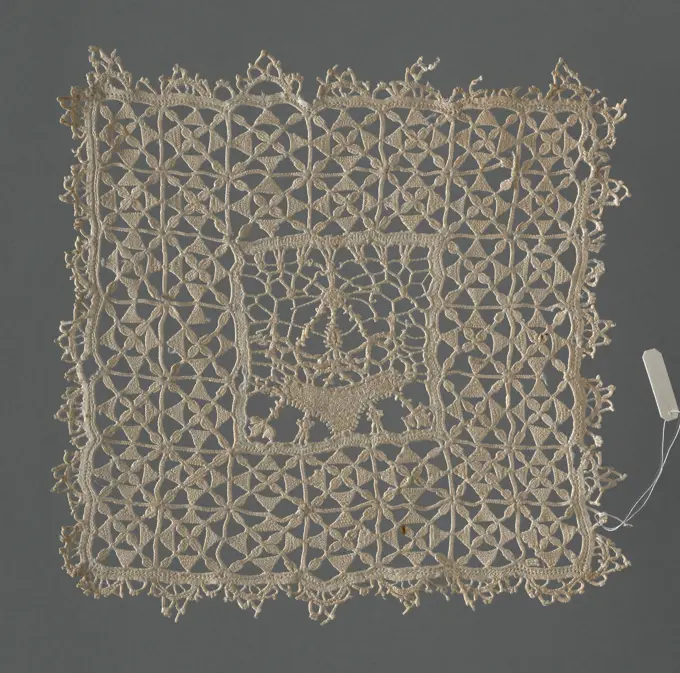
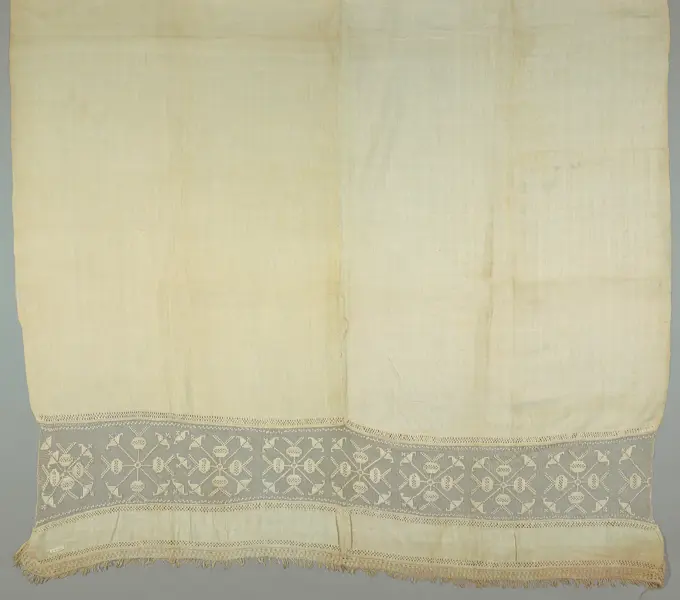
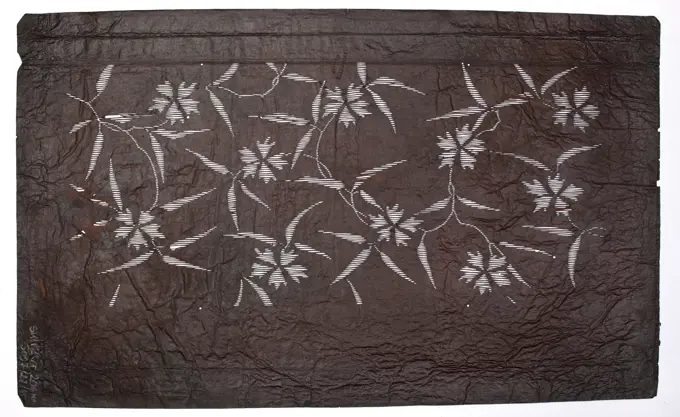
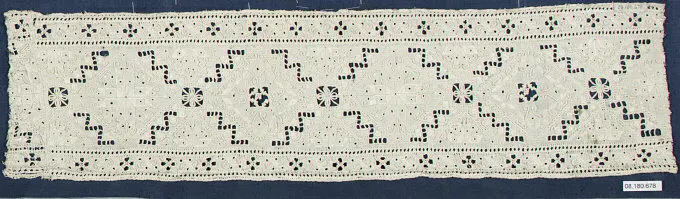
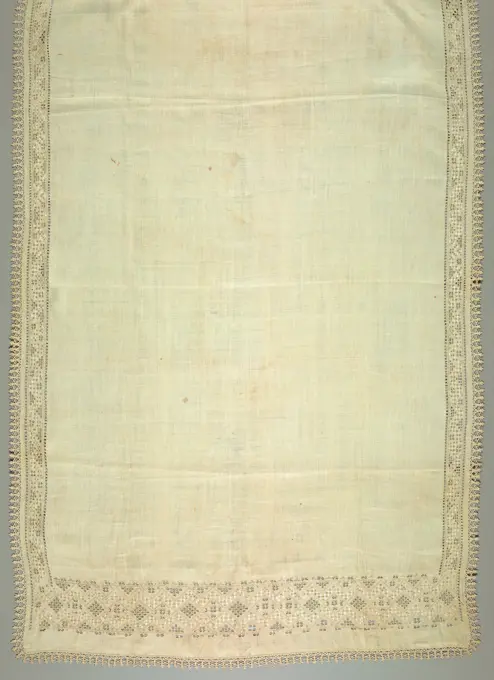
Pillowcase of linen with bobbin, c. 1600 - c. 1650 Pillowcase of Linnamast with bobbin. Model: rectangular with inner straps on one of the short sides, where the fringes also run and on the other three intermediate sinks from Kloskant. Kant pattern: double wide side in the middle and half strips next to it. Four -lobe rosettes in linen stroke change with rush -hour, who are halved along the edges. Brand: in Red Cross stitch VHT/24 (Van Hasselt-t. Southern Netherlands linen (material). bobbin lace / damask Pillowcase of Linnamast with bobbin. Model: rectangular with inner straps on one of the short sides, where the fringes also run and on the other three intermediate sinks from Kloskant. Kant pattern: double wide side in the middle and half strips next to it. Four -lobe rosettes in linen stroke change with rush -hour, who are halved along the edges. Brand: in Red Cross stitch VHT/24 (Van Hasselt-t. Southern Netherlands linen (material). bobbin lace / damask
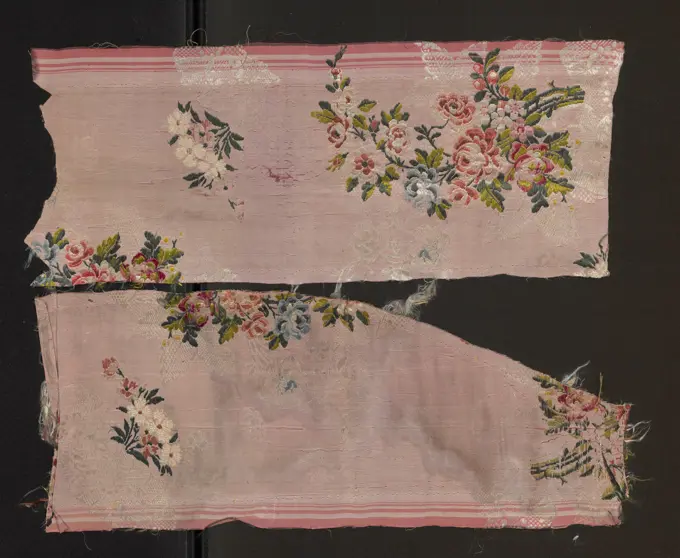
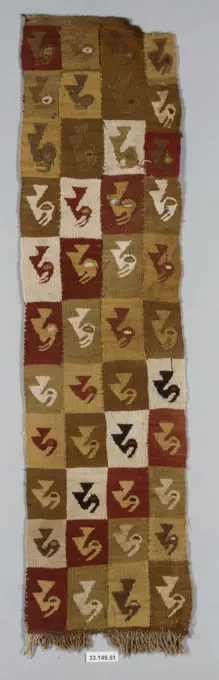
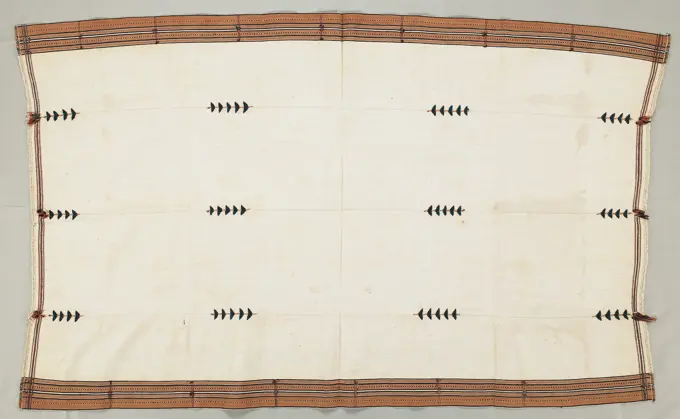
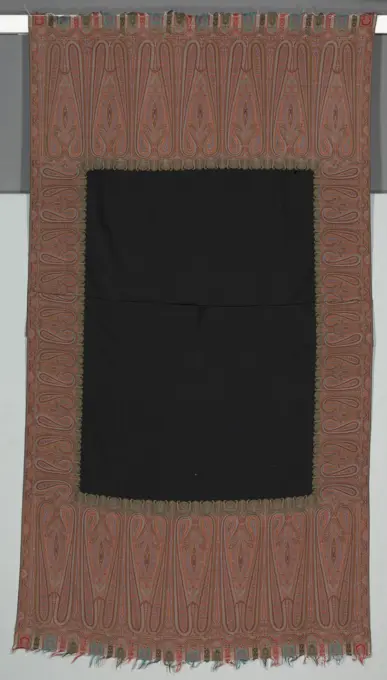
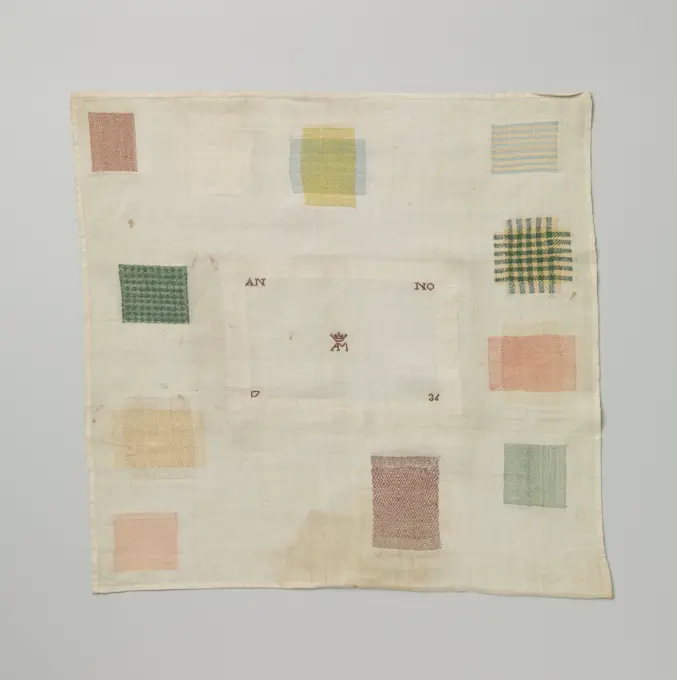
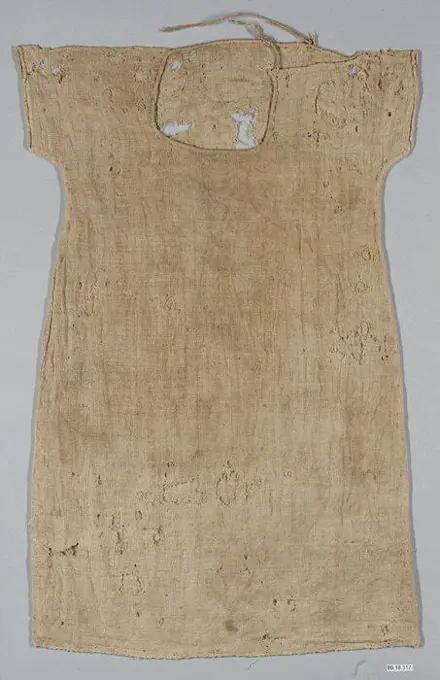
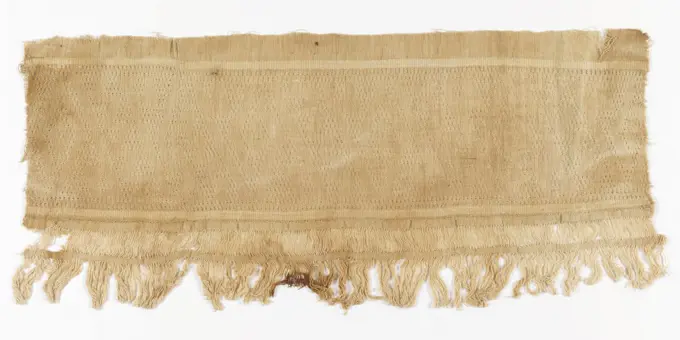
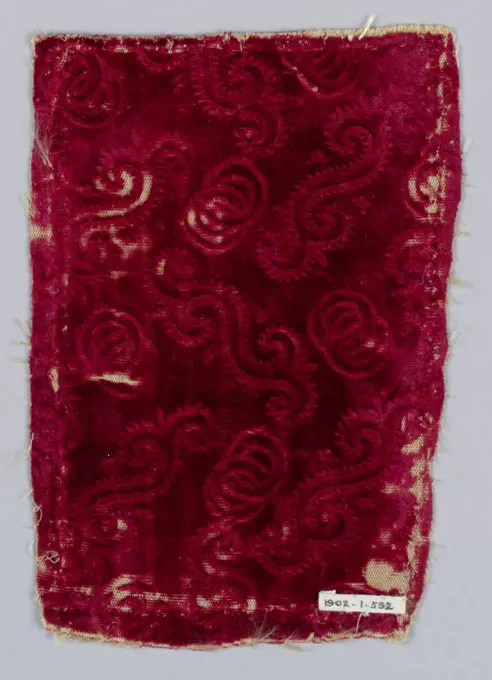
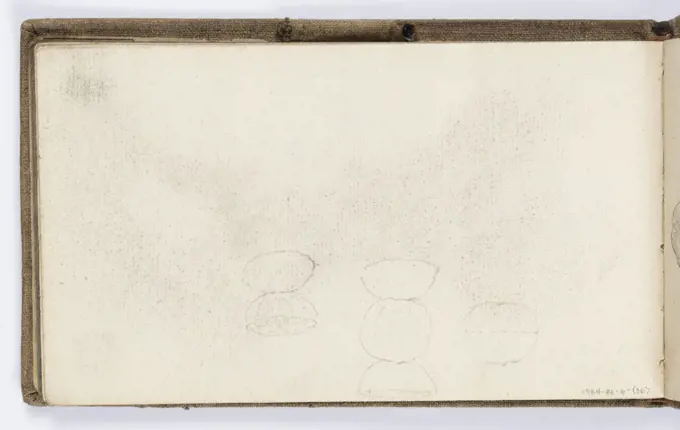
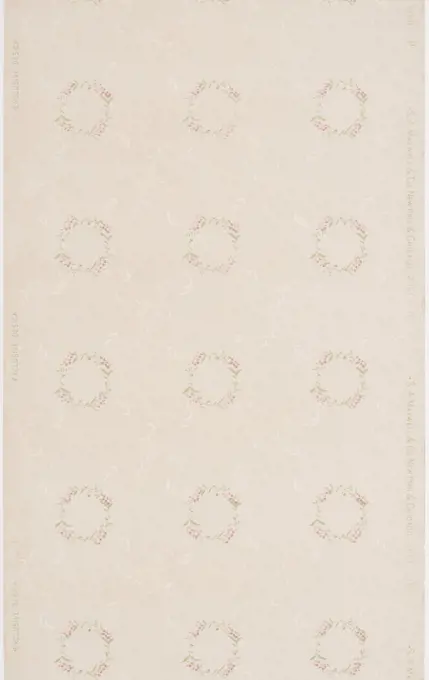
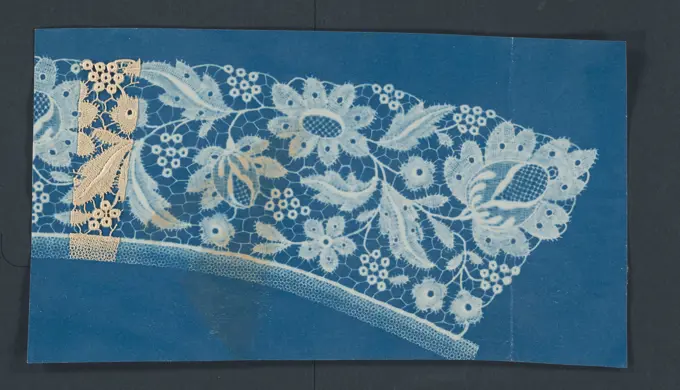
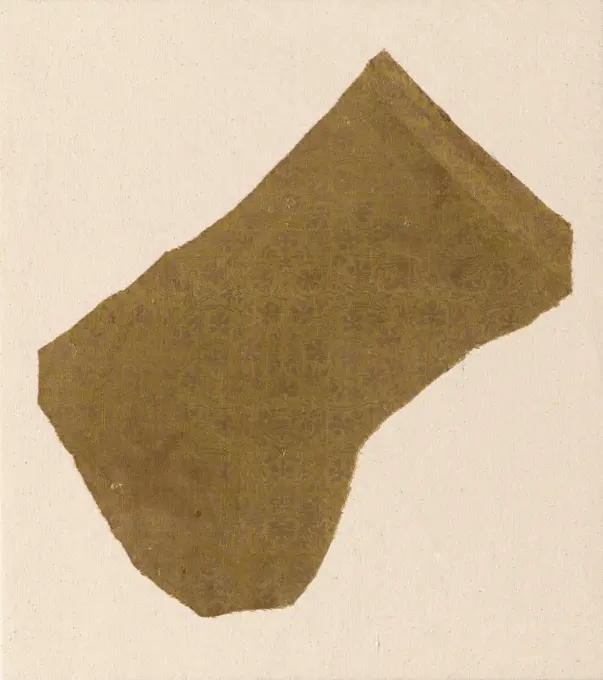
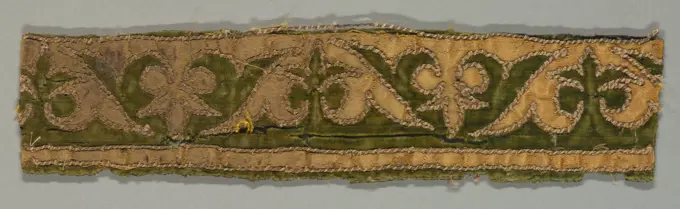
Property for a strip of bobbin on green colored parchment, anonymous, c. 1870 - c. 1880 Property for a strip of bobbin side - Valenciennes side - stung in parchment that is green colored at the top. The pattern consists of bouquets, leaves and fruits that are tied to a triangle. On the back is the handwritten text: "Piquires de Valenciennes 1870-1880; 501". On a corresponding note it says: "The pins have been punctured on these lace patterns between the indicated holes, so that the Maas becomes smaller than one would say. Belgium parchment (animal material) Property for a strip of bobbin side - Valenciennes side - stung in parchment that is green colored at the top. The pattern consists of bouquets, leaves and fruits that are tied to a triangle. On the back is the handwritten text: "Piquires de Valenciennes 1870-1880; 501". On a corresponding note it says: "The pins have been punctured on these lace patterns between the indicated holes, so that the Maas becomes smaller than one would sSidewall; machine-printed; 5.5 x 5 cm (2 3/16 x 1 15/16 in.)Vest 1785-1800 American or European. Vest 90544Fragment 16th century Italian. Fragment 230030Fragment, Medium: wool, linen Technique: tapestry weave, Fragmentary band with red roundels and guard borders in a pointed scroll pattern. Roundels contain animals and a crude winged angel. Triangular shapes fill spaces between roundels and guard borders, and these have geometrical palmettes., Egypt, 5th-6th century, woven textiles, FragmentTissue lining fabric made of double -checked linen ,, 1750 - Before 1778 Tissue lining (), Double green checked white linen. With green rectangular label with print in oval: Warranted Fast Colors. Voor-India (Possible) Europe (Possible) linen (material) Tissue lining (), Double green checked white linen. With green rectangular label with print in oval: Warranted Fast Colors. Voor-India (Possible) Europe (Possible) linen (material)Tapestry Fragment 10th-15th century Peru; central coast (). Tapestry Fragment 308086Anonymous. "Mettle embroidered with a fresse prisoner". Weaving. 1942-1942. General Leclerc Museum of Hauteclocque and the Liberation of Paris, Jean Moulin Museum. 158823-18Fragment veelkleurig droguet liseré.Fragment multicolor silk tissue. The fragment has a light green network with white intertwined garlands with a flower branch on the intersections. The garlands form fields in which a flower branch in white, brown and green.Maniple unknownBand (Near East); linen, silkPiece 18th century Japan. Piece 71904Woman's body wrap, c. 1970s, 58 1/16 x 33 1/8 in. (147.48 x 84.14 cm) (including fringe), Cotton, India, 20th centuryShoulderClothSector of a parasold deck of soft green cotton, with a batist edge embroidered with wold wire, c. 1885 - c. 1900 Sector of a parasold deck of soft green cotton, with a batist embroidered with wold wire. Nijmegenfrance parasoldek: cotton (textile). cotton (textile). draad: wool embroidering Sector of a parasold deck of soft green cotton, with a batist embroidered with wold wire. Nijmegenfrance parasoldek: cotton (textile). cotton (textile). draad: wool embroideringShawl, c. 1860s. France, Nimes , 19th century. Wool, compound weave, additional weft; overall: 325.1 x 154.9 cm (128 x 61 in.).Stop patch of multicolored silk and linen on linen musseline., C. 1736 Stop patch with embroidery. The embroidery has the letter AM under one crown, the year in 1736 and various stop patterns. Netherlands linen (material). silk embroidering Stop patch with embroidery. The embroidery has the letter AM under one crown, the year in 1736 and various stop patterns. Netherlands linen (material). silk embroideringChalice Cover Made 1601-1625 Italy. Linen, needle lace worked on a plain weave cut and drawn thread grid; embroidered in antique hem, double hem, and overcast stitches .Kerchief made of embroidered silk unknownEtagere (France); wood; 1968-158-9Fragment of the lace;  18th century (1701-00-00-1800-00-00);Linnamast finger cloth with a flower pattern, c. 1920 - c. 1930 Finger cloth from Linnamast with multicolored woven edges (cotton). In the middle rose branches in white, rose branches in the green, red and white rose branches against a yellow stock. Around Ajourzomen. In a corner a green -embroidered monogram pvr. The finger cloth belongs to five finger cloths (BK-1980-168-A to BK-1980-168-F) and a tablecloth (BK-1980-167). Germany (possibly) linen (material) damask Finger cloth from Linnamast with multicolored woven edges (cotton). In the middle rose branches in white, rose branches in the green, red and white rose branches against a yellow stock. Around Ajourzomen. In a corner a green -embroidered monogram pvr. The finger cloth belongs to five finger cloths (BK-1980-168-A to BK-1980-168-F) and a tablecloth (BK-1980-167). Germany (possibly) linen (material) damaskTextile Sample from Sample Book 19th century Japan. Textile Sample from Sample Book 68083Piece French 19th century View more. Piece. French. 19th century. Silk. Textiles-WovenPiece French 19th century View more. Piece. French. 19th century. Silk. Textiles-WovenFragment with pattern of flower vase and grape drink. Fragment with pattern of flower vase and grape drink.Chōken with tsuyushiba motif, first half 20th century, Unknown Japanese, 47 3/4 × 88 1/8 in. (121.29 × 223.84 cm), Silk, Japan, 20th centuryFragment rood zijdedamast, anonymous, 1750 - 1775 Fragment red silk tissue with a pattern of leaves, volutes and flower branches. France silk damask Fragment red silk tissue with a pattern of leaves, volutes and flower branches. France silk damaskSidewall - fragment, Machine-printed, Floral medallion printed in greens with white floral scrolls and striped shading., USA, 1850-60, Wallcoverings, Sidewall - fragmentWhite skirt bag with four ribbons, anonymous, c. 1850 - c. 1920  Europe textile materials  Europe textile materialsFragments (Italy); silkChaIIce veil made of silk fabric unknownFragment. Dimensions: 12 in. high 6.75 in. wide (30.48 cm high 17.14 cm wide). Date: 4th century. Museum: Metropolitan Museum of Art, New York, USA.Border. Probably Northern Germany. Date: 1650-1700. Dimensions: 11.6 x 167.3 cm (4 5/8 x 65 7/8 in.)Width repeat: 22.1-30.7 cm (8 3/4-12 1/8 in.). Linen, needle lace. Origin: Northern Germany. Museum: The Chicago Art Institute, Chicago, USA.Child's Tunic 5th-9th century This simple, shaped tunic ties at the proper left shoulder. Like the largest proportion of textiles found in Egypt, it is made from fibers of flax (linum usitatissimum). Linen textiles are generally woven in tabby (plain) cloth - a weave in which one weft thread passes over and under alternate warp threads; the next weft thread reverses the order-and they vary in texture from very fine to coarse and heavy. Flax was harvested at different stages of its growth, depending on its use. The cultivation of flax and production of linen dates to at least as early as the Dynastic period in Egypt (ca. 3100 B.C.) and is documented in paintings and reliefs. Linen production continued, and the fabric was exported to Mediterranean countries as well as to Arabia and India.. Child's Tunic 443530Fragment of the fabric;  18th century (1701-00-00-1800-00-00);Tarasowiczs, Konstanty and Helena - collection, gift (provenance), fragments of silk fabrics, fabrics, patterned fabricsApron woven from rough linen, anonymous, c. 1400 - c. 1950 Apron of rough woven linen, consisting of a rectangular lap and breastpiece with a collar and narrower, slightly finer woven beam ribbons. Marked in Red Cross stitch: GVL 12 (Gevers of Lennep)  linen (material) Apron of rough woven linen, consisting of a rectangular lap and breastpiece with a collar and narrower, slightly finer woven beam ribbons. Marked in Red Cross stitch: GVL 12 (Gevers of Lennep)  linen (material)Piece 18th century Japan. Piece 71898Headcloth ca. 1770 American. Headcloth 13615Grille 15th-16th century European. Grille. European. 15th-16th century. Iron. Metalwork-IronBand, Medium: cotton Technique: plain weave with gauze weave, Strip of un-dyed cotton cloth with band containing angular scrolls in cloth weave on twined background; guard strips; cord selvage on one side, to which is hand-sewn fringed border., Peru, ca. 1000-1200, woven textiles, BandFragment, Medium: silk Technique: supplementary warp forming raised cut pile in plain weave foundation (velvet), the embossed, Worn red velvet fragment with stamped (embossed) pattern of detached rings and scrolls,, 17th century, woven textiles, FragmentCover; linenDying template katagami; Dese from wild boars;  XIX/XXW. (1868-00-00-1912-00-00);ISE-CATAGAMI, FLOWER ORNAMENTS, SABLES, PURCHASE (PROPERENCIE)Fragment red brocatel with pomegranate motif. Fragment with floral pattern in spitsovals in red and silver (). Self side green white yellow striped.Fragment, Medium: silk Technique: 4&1 satin damask, Diagonal arrangement of flowering logs in deep bluish purple., 17th century, woven textiles, FragmentRibbon French 19th centurySteel bobbin with coarse wire as an example of a drachel soil (grid), anonymous, c. 1900 - c. 1930 sample Steel natural -colored bobbin with coarse wire as an example of a drachel soil with a fragment side in which this technique is used. The date concerns the steel. Amsterdam cotton (textile) bobbin lacePassementerie 18th century French. Passementerie 214179Flounce (India); cottonFragment 15th-16th century Spanish or Italian, Venice. Fragment 230573Textile, Medium: horsehair, linen Technique: 5-harness satin weave, Shiny, stiff black fabric woven in satin weave. The warps are heavy brown linen; the wefts are each a single horse hair., USA, 19th century, woven textiles, TextileFragment, late 1100s or early 1200s. Iran, Rayy, late 12th or early 13th century. Lampas weave, silk; overall: 15.2 x 33.6 cm (6 x 13 1/4 in.).Glass Fragment 14th-15th century () French. Glass Fragment. French. 14th-15th century (). Colorless glass. Glass-StainedBand 16th century Italian. Band 215028Table Cover (Italy); linenFragment, Medium: silk, metallic Technique: supplementary warp loops in plain weave foundation (velvet) with supplementary weft, Incomplete pomegranate motif. Selvage along right edge., Italy, 15th century, woven textiles, FragmentSilk Fragments, 1350-1399. Italy, Lucchese, second half of 14th century. Lampas weave, brocaded; silk and gold thread; overall: 35.9 x 14.9 cm (14 1/8 x 5 7/8 in.).Dressing cladding of cream-colored silk and organic with an edge machine embroidery on tulle with daisies in pointed slopp. Dressing rug from cream-colored silk and organza, finished around with an edge natural-colored side: machine embroidery on machine tulle. Along the edges of the rug, where the side is set on the side, a ribbon is strung by the top of the edge strip. The repeating lace pattern consists of a slip edge with pointed slopes, each with a daisy in the tip. Above it runs a loop belt that forms diamond-shaped fields together with the shelter. And above that three rows are straight down hanging flower stalks with one (top row) or three flowers. The side comes from Plauen (Germany).Sketchbook Page, Kenyon Cox, American, 1856-1919, Graphite on laid paper, Sketch of three different configurations of a bisected sphere, possibly fruit., Paris, France, 1877-78, albums (bound) & books, Sketchbook folio, Sketchbook folioSeat Covers (possibly England); velvetCeiling paper, Maxwell & Co., S.A., Chicago, Illinois, USA, Machine-printed paper, liquid mica, On gray ground, small wreaths in green and pink with lightly printed white C-scrolls. Printed on off-white ground., USA, 1905-1915, Wallcoverings, Ceiling paperNapkin with Arma Christi. White Linnendamasten napkin with circles with Arma Christi.Border Made 1650-1700 Northern Germany. Linen, needle lace .Hat of tulle decorated with tambooering, anonymous, c. 1840 - c. 1870 Hat van Tulle decorated with tambouring work, with a pattern of Margriets, a whole stem on the sides and flowers on the intermediate piece. Netherlands cap: Hat van Tulle decorated with tambouring work, with a pattern of Margriets, a whole stem on the sides and flowers on the intermediate piece. Netherlands cap:Fragment rouwfloers, , 1875 - 1882 Fragment black mourning flois of wool. Possibly used to cover a window. Netherlands wool Fragment black mourning flois of wool. Possibly used to cover a window. Netherlands woolFragment; silkTextile (Mexico); cotton; Warp x Weft: 30 x 26 cm (11 13/16 x 10 1/4 in.); Bequest of Mrs. Henry E. Coe; 1941-69-126White side, tulle with a row of moesjes, on cardboard, gustav schnitzler, c. 1920 White side, tulle with a row of moesjes, on cardboard. NijmegenFrance (possibly) cardboard. White side, tulle with a row of moesjes, on cardboard. NijmegenFrance (possibly) cardboard.Piece of fabric. unknown, authorRed Silk Velvet., 1600 - 1699 Dress of red silk velvet. The rug consists of three fragments. The rug is surrounded by a brown -tinted gold galon. The rug is lined with red satin. Italy silk. satin. velvet (fabric weave). cotton (textile) Dress of red silk velvet. The rug consists of three fragments. The rug is surrounded by a brown -tinted gold galon. The rug is lined with red satin. Italy silk. satin. velvet (fabric weave). cotton (textile)Cloth. Cloth with circular motifs.Fragments of Coptic fabric unknownChintz Fragment (India); cottonKant, anonymous, c. 1900 photograph  France paper. cyanotype laceTextile Swatch Textile Swatch, 1950s to 1960s. Silk, 21 x 7 1/2 in. (53.3 x 19.1 cm).    1950s to 1960sFragment; silk; Bequest of Richard Cranch Greenleaf in memory of his mother, Adeline Emma Greenleaf; 1962-56-87Napkin (Germany); Designed by Peter Behrens (German, 1868-1940); Manufactured by S. Frankel; cotton; Warp x Weft: 36.2 x 34.9 cm (14 1/4 x 13 3/4 in.)Fragment Made 1325-1375 Italy. Silk, plain weave with plain interlacings of secondary binding warps and supplementary patterning wefts .Excerpt blue silk daamast ,, 1700 - 1800 Fragment blue silk tissue with a pattern of blue, large flowers and leaves. Netherlands silk damask Fragment blue silk tissue with a pattern of blue, large flowers and leaves. Netherlands silk damaskA Zimet, Decoration for Stoneware, 1935 1942 Decoration for StonewareFragment of silk fabric  flower basket motif unknownflat lay monochromatic colored fabrics with copy spaceTextile Fragment 4th-5th century. Textile Fragment 443921Ralph Morton, Purse, c 1938 PurseSampler (Italy); silk on linenShip Flag, anonymous, 1815 ship flag Schotten Dutch tricolor, the sides trimmed with frills and twelve bands for attachment to stick or flagship. Netherlands wool  flag, colours (as symbol of the state, etc.) AlgiersBand; silk, metallic thread; Bequest of Marian Hague; 1971-50-47District of Is-sur-Tille, Department of Côte d'Or, French Revolution District of Is-sur-Tille, Department of Côte d'Or, French Revolution . Brass, Revers.Textile; linen, silkPortrait of Antigny Blanche (Maria Ernestine Antigny, Say), (1842-1874), (Actress) Portrait of Antigny's white (Maria Ernestine Antigny, Say) (1842-1874), Actress. Business card (verso). Photograph of Gaston, Mathieu & Cie. Draw on albuminum paper. 1870-1890.Fragment 16th century Italian. Fragment 230577Chintz Fragment (India); cotton; Warp x Weft: 13.5 x 30.5 cm (5 5/16 x 12 in.)A wreath sash from the funeral of Stanisław WyspiańskiSample of Cloth ca. 1070-945 B.C. Third Intermediate Period. Sample of Cloth 558471Sector of a parasold deck of light green cotton, with two embroidered wavy leaf vines between which a wavy openwork strip, c. 1885 - c. 1900 Sector of a parasold deck of light green cotton, with two embroidered wavy leaf vines between which a wavy openwork strip. Nijmegenfrance parasoldek: cotton (textile). draad: cotton (textile) embroidering Sector of a parasold deck of light green cotton, with two embroidered wavy leaf vines between which a wavy openwork strip. Nijmegenfrance parasoldek: cotton (textile). draad: cotton (textile) embroideringFragment 16th century Italian. Fragment 220844Six arras belts. unknown, authorHandkerchief; linen, cotton; 34.5 x 34.5 cm (13 9/16 x 13 9/16 in. )Kontusz sash/belt. unknown, author