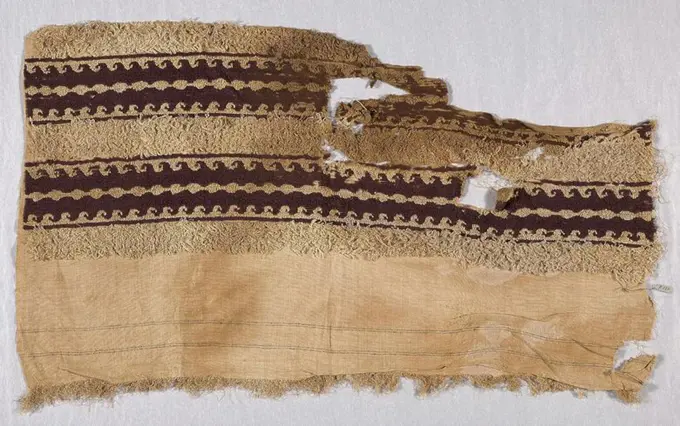
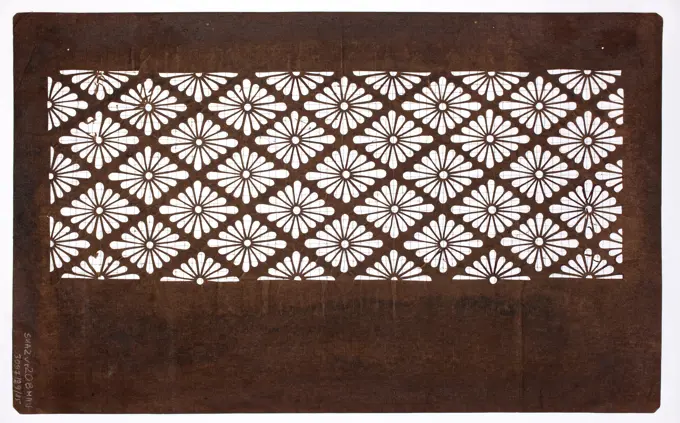
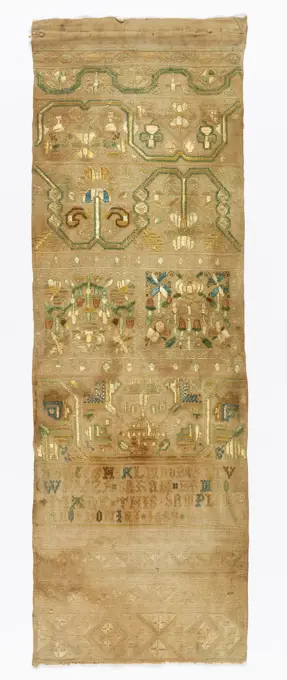
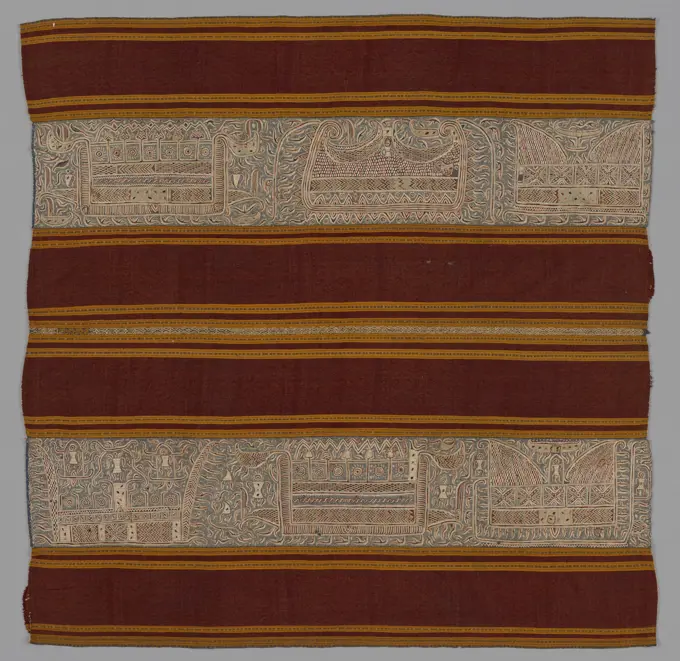
Textile Art Fragments

Historic textile fragments showcasing intricate designs and rich materials, representing various cultural weaving traditions and ceremonial uses.
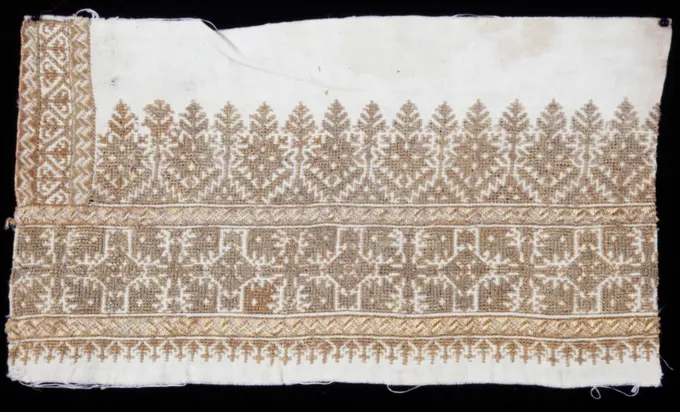
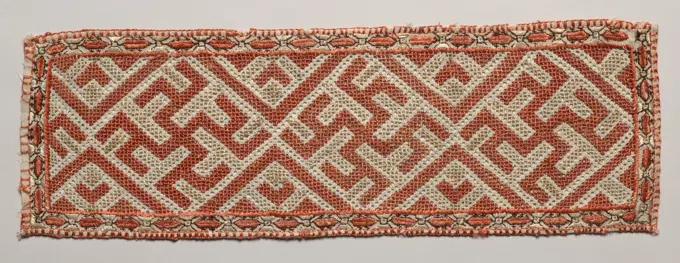
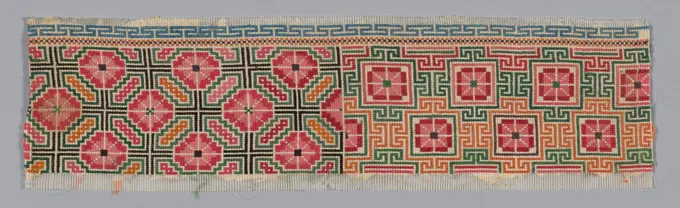
Embroidered border, 18th century, 5 3/8 x 9 1/4 in. (13.7 x 23.5 cm), Cotton; needlework, Morocco, 18th century
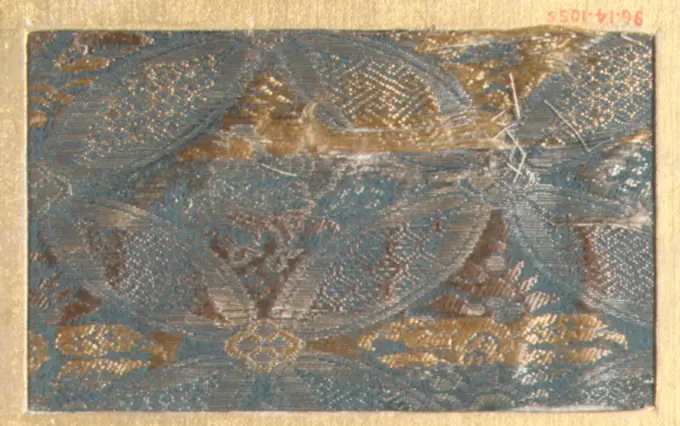
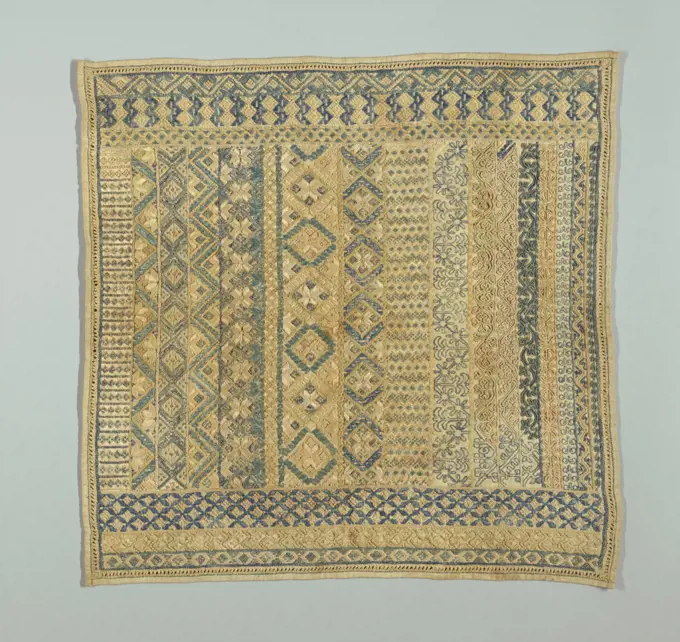
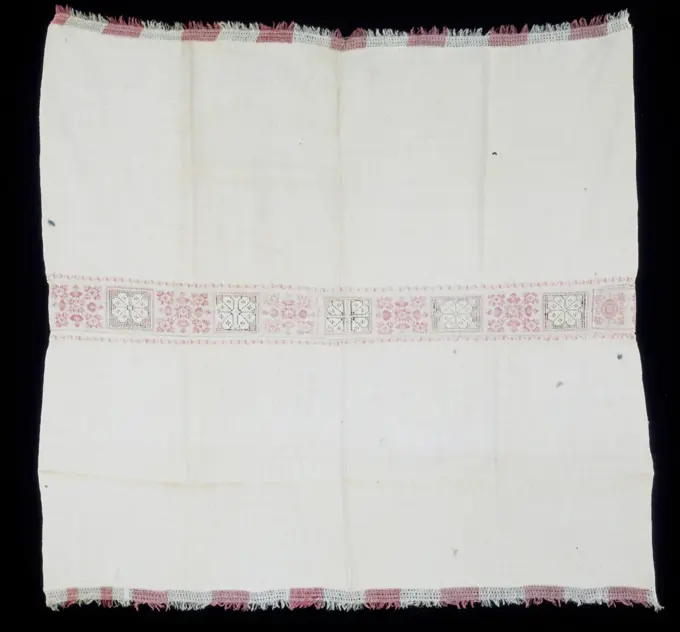
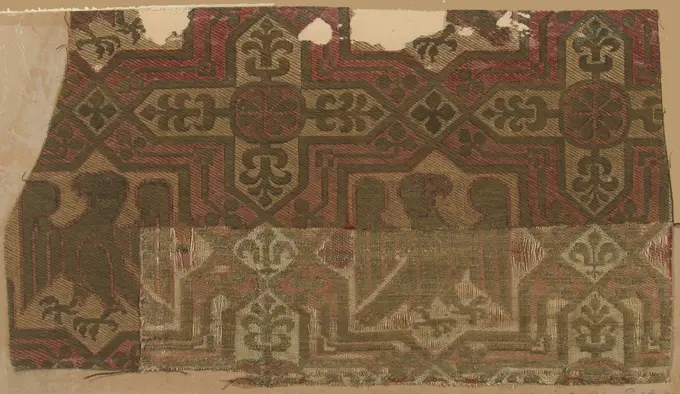
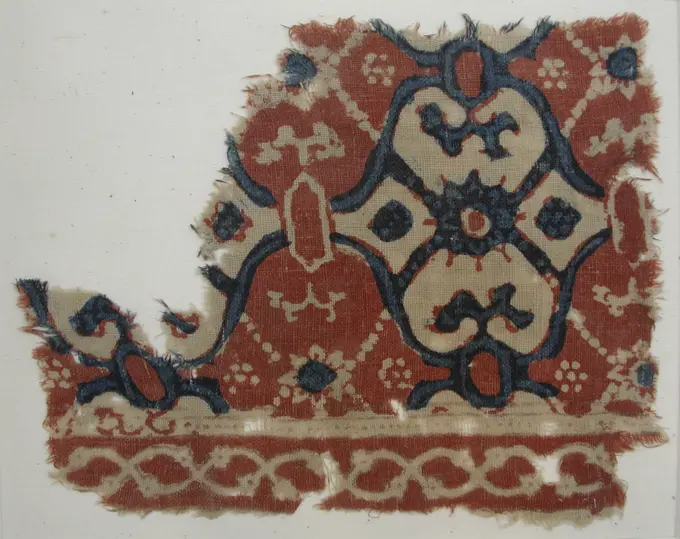
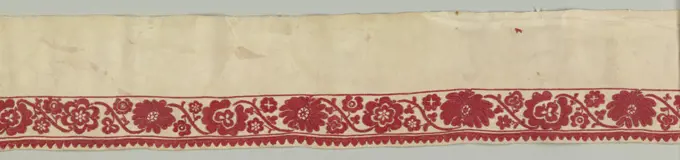
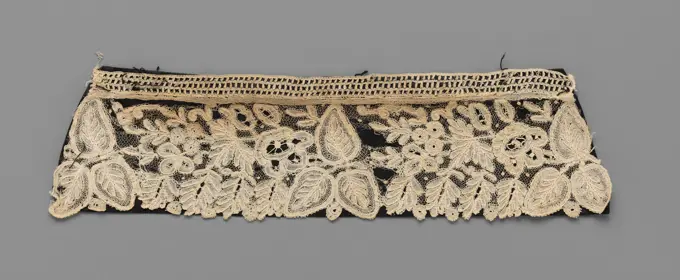
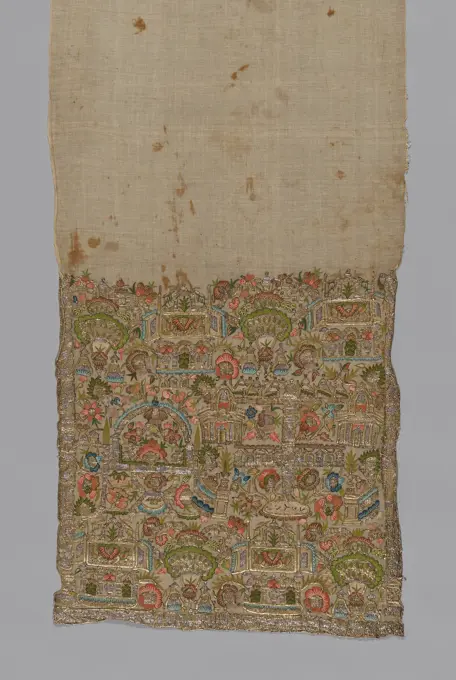
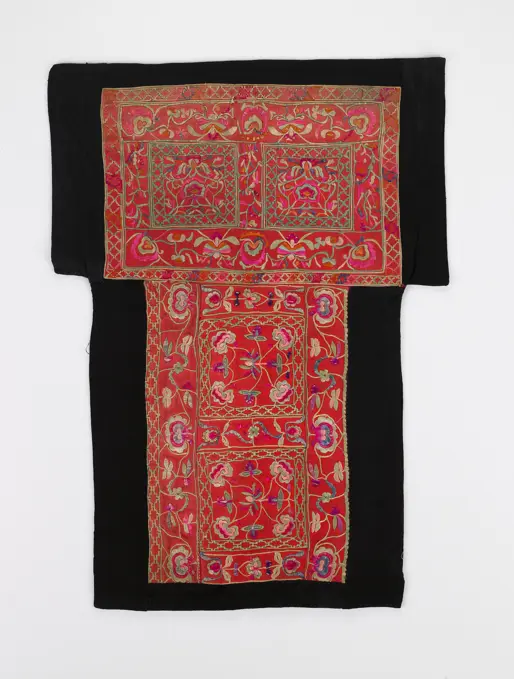
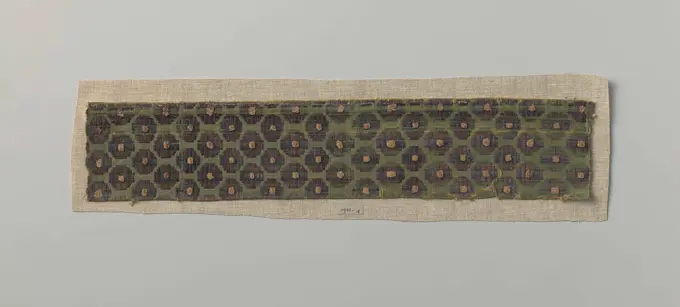
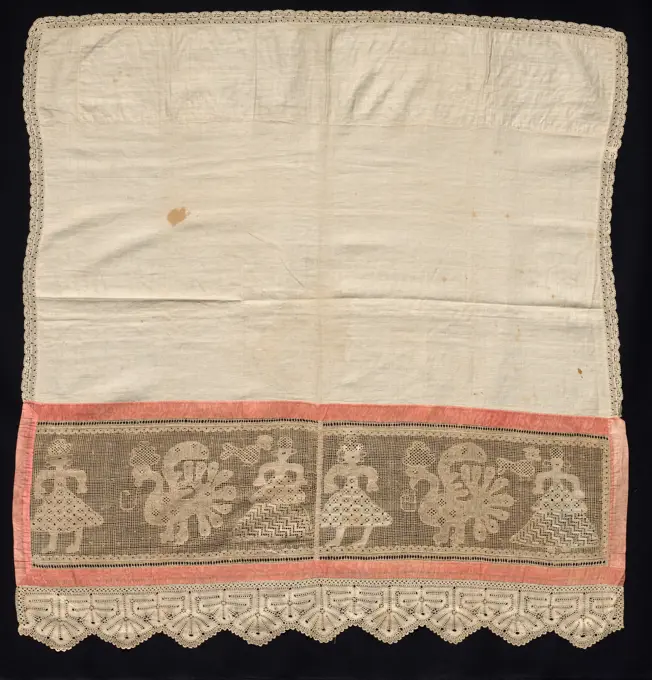
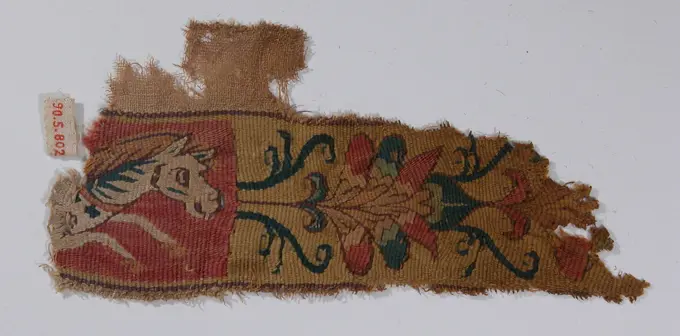
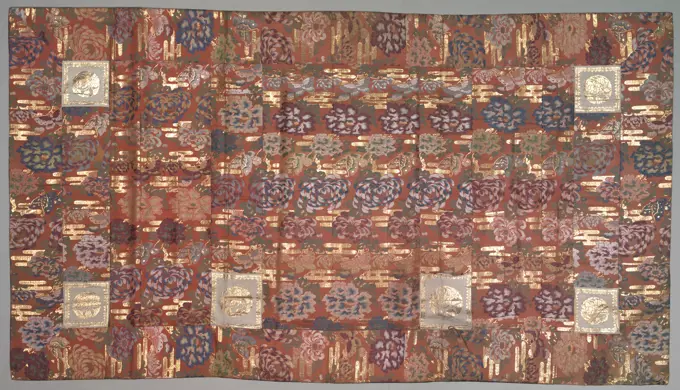
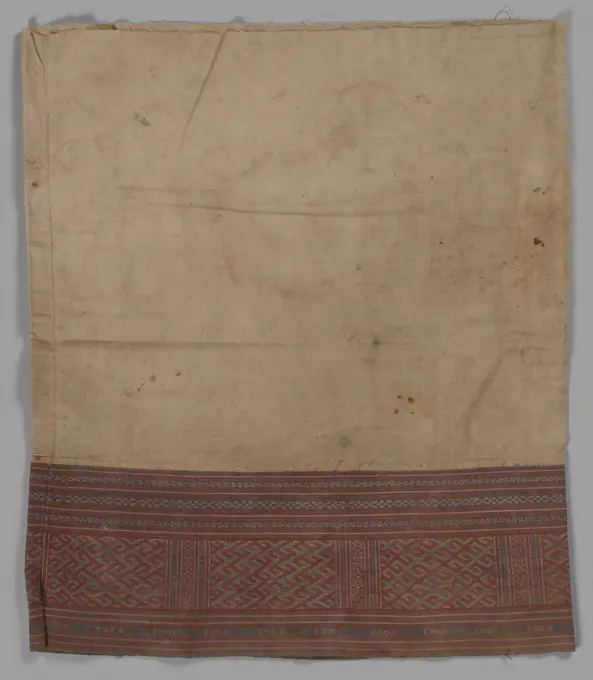
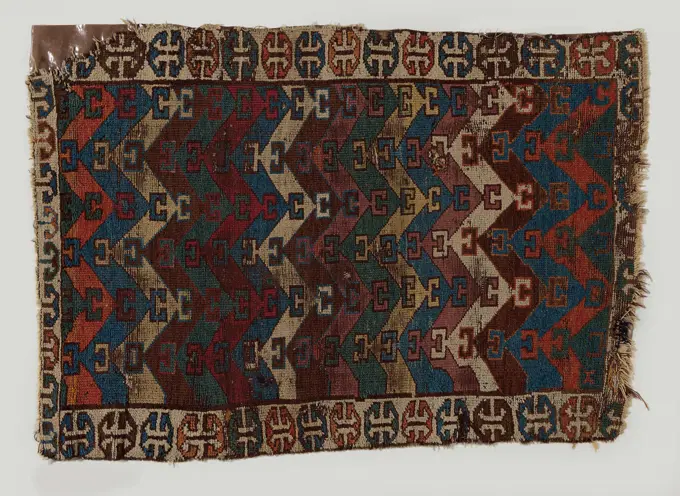
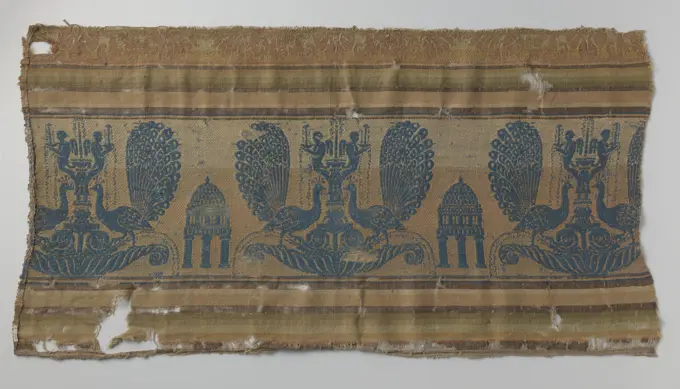
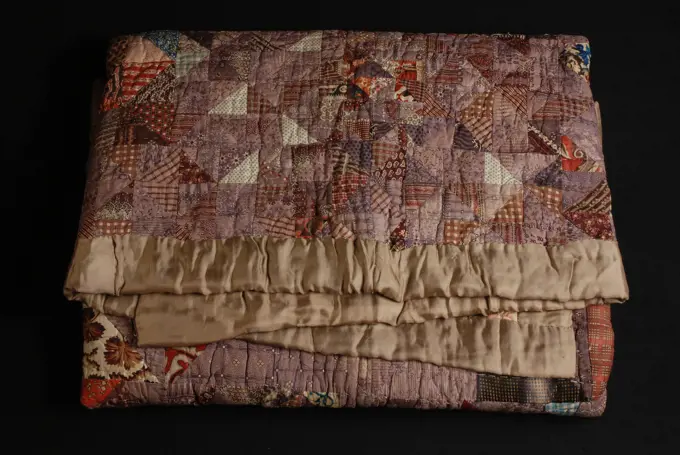
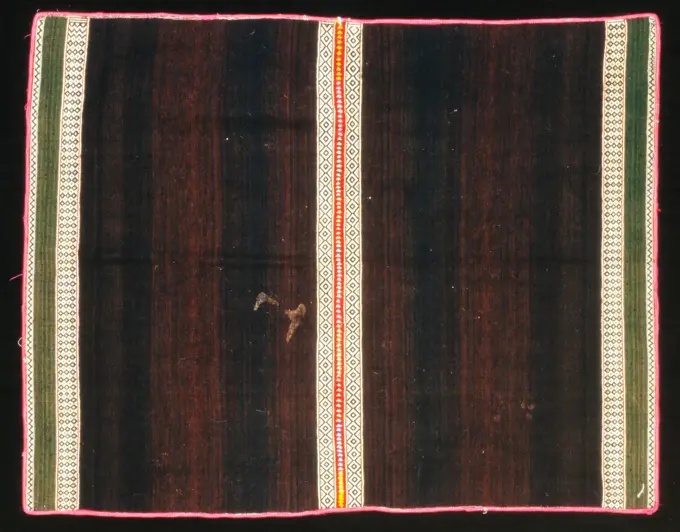
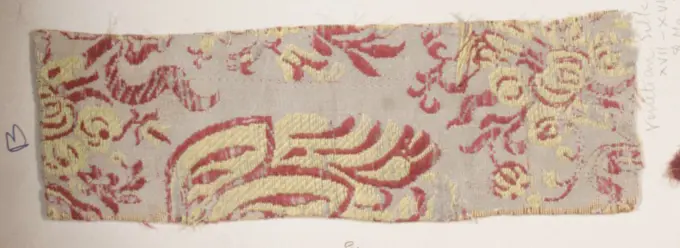
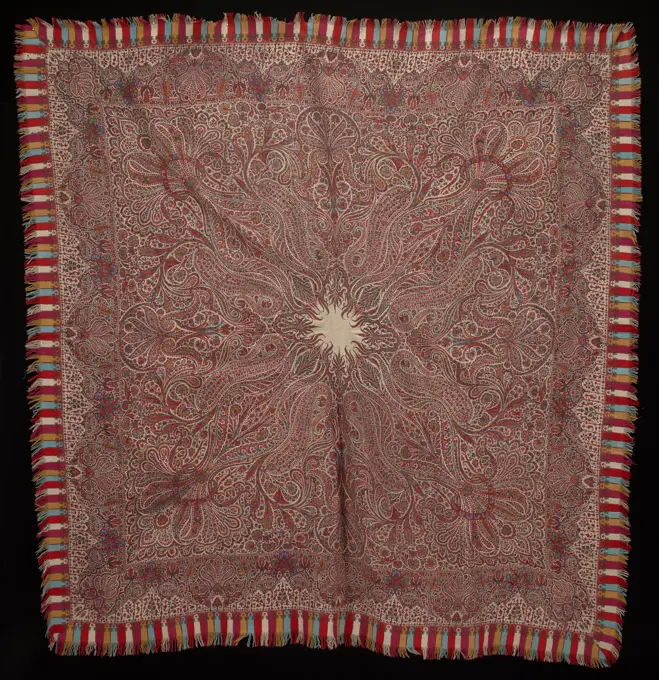
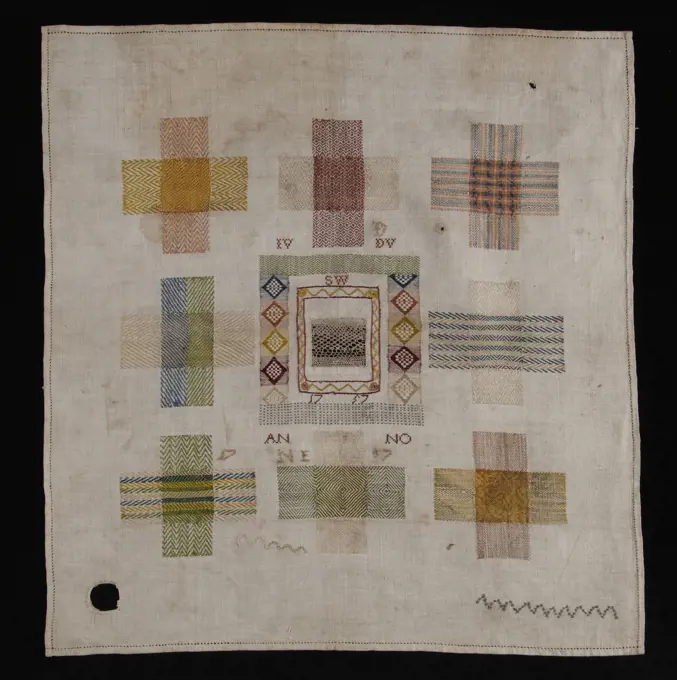
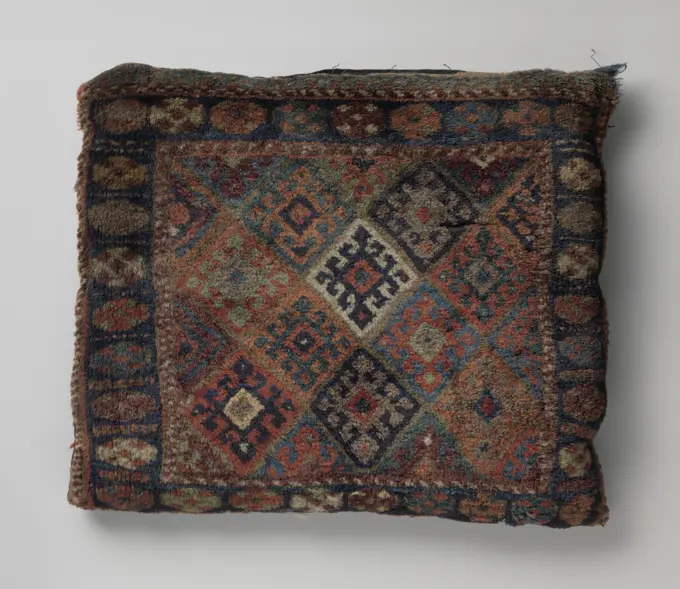
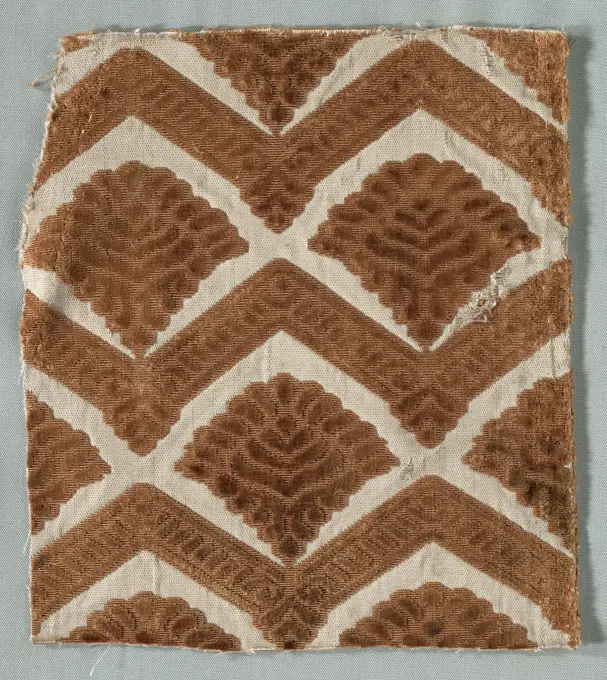
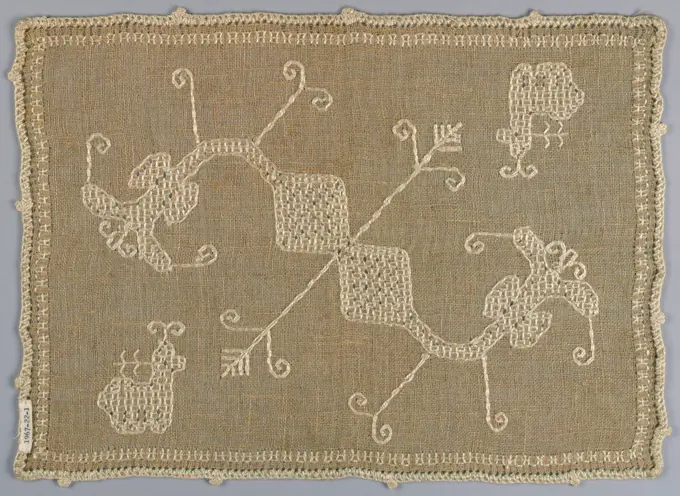
Fragment of silk fabric unknownMixed side with heart -shaped leaves interspersed by bunches of roses or berries, anonymous, c. 1875 - c. 1899 Cuff made of natural -colored mixed side - bobbin in combination with a needle -seal - Brussels Duchesse. The pattern consists of heart-shaped leaves, placed in three and five times, and interspersed by bunches of florets (or berries). The motifs have been hit in linen and mains. The large motifs are accentuated by contour threads, which consist of roughly sutured wire bundles. The side is placed on a black (artificial) silk surface. Brussels (possibly) linen (material) mixed lace / mixed Brussels / needle lace ground Cuff made of natural -colored mixed side - bobbin in combination with a needle -seal - Brussels Duchesse. The pattern consists of heart-shaped leaves, placed in three and five times, and interspersed by bunches of florets (or berries). The motifs have been hit in linen and mains. The large motifs are accentuated by contour threads, which consist of roughly suturePiece 18th-19th century Japan. Piece. Japan. 18th-19th century. Silk. Textiles-WovenSampler, Medium: silk and linen embroidery on linen foundation Technique: embroidered in satin, running, knot, chain, whipped back, cross, and overcasting over stem, and couching stitches on plain weave foundation, Bands of repeating pattern in shades of blue, green,and beige. Bands of withdrawn element work at each edge., Spain, late 18th century, embroidery & stitching, SamplerFragment (Spain); silkCeremonial Weaving(Paporitonoling)Fragment Made 1001-1200 Egypt. In early and medieval times (from the late 7th century to about 1200), throughout the Islamic world, state-owned factories produced textiles both for use at court and for commercial sale. Known as tiraz (after the word for embroidery, suggesting the original technique), these textiles were intended as furnishing fabrics or robes, to be conferred as royal gifts. early examples were decorated with narrow bands of ornament and inscriptions that often included the name of the patron and the location of the factory. Later examples tend to be more decorative.. Silk, tapestry weave . IslamicTablecloth, 19th century, 60 x 61 in. (152.4 x 154.9 cm), Linen, silk; needlework, Switzerland, 19th centuryBrocade Textile 13th century Italian. Brocade Textile 463022Textile Fragment 15th-16th century The bold designs on this textile fragment are block-printed. Dated to either the fifteenth or sixteenth century, the centers of the fragments embellishments are outlined in blue dye that are repeated twice. This alludes to the use and popularity of indigo dyes in Gujarati textile production during this period. Dotted lines extending from the floral motifs in the background form diamond shapes which echo the motifs found in Jain painted manuscripts. Made in Gujarat, India, but found in Fustat, Egypt, this piece speaks to how Gujarati block-printed, mordant, and resist-dyed fabrics became a global phenomenon and a popular commodity in regions engaged in Indian Ocean trade such as North Africa and South and Southeast Asia.. Textile Fragment 448530Lace Fragments. Southern Italy, 17th century. Textiles; textile lengths. Linen bobbin laceTextile Fragment. Dimensions: L: 9.25 in (23.5 cm) x W: 18 in (45.7 cm). Date: 16th-17th century. Museum: Metropolitan Museum of Art, New York, USA.Sidewall - fragment, Block-printed, 'a': Irregular horizontal rectangle. Diagonal rows of small closely spaced blue cornflowers with green leaves and stems; 'b': vertical rectangle of same., France, 1775-80, Wallcoverings, Sidewall - fragmentBorder, Medium: cotton Technique: stem, satin, and chain stitch embroidery, Coarse natural color cotton band embroidered in bright red in a three inch wide border along the bottom. Design of running vine of natural-size blossoms in full face with stylized leaves. Hemmed at bottom and selvage at top. Possibly a border for a bed valence or cover., Mexico, late 19th century, embroidery & stitching, BorderPiece 18th century Japan. Piece 65953Cuff of mixed side with heart-shaped leaves interspersed by bunches of roses or berries.Manchet of natural mixed side - doll edge in combination with a coniferous lace - Brussels Duchesse. The pattern consists of heart-shaped leaves, placed in three and piety, and interspersed by bunches of roses (or berries). The motifs are clamped in linen stroke and power base. The large motifs are accentuated by contour wires that consist of coarsely attached thread bundles. The side has been put on a black (art) sides underground.Fragment (From an Orphrey Band). Germany, Cologne. Date: 1401-1500. Dimensions: 20.3 × 8.2 cm (9 × 3 1/4 in.). Silk, linen, and gilt-animal-substrate-wrapped linen, bands of four color complementary weft, weft-float-faced 1:2 'S' twill weave with inner wefts and of two color complementary weft, weft-float faced 1:2 weft chevron twill weave with inner warps. Origin: Cologne. Museum: The Chicago Art Institute, Chicago, USA.Fragment Samiet. Tissue fragment with small, strict geometric angular pattern and rosettes in beige on dark brown with a piece in solid purple (purple).Sash ( ) Made 1850-1900 Turkey. Towel, embroidered in trees and flower design. .Baby Carrier, 31 1/4 x 17 5/8 in. (79.38 x 44.77 cm), Cotton; needlework, ChinaFragment groene zijdefluweel met uitsparingen noppenpatroon.Fragment silk velvet with red-paerse studs placed on light fond in uneven rows of contour and with a slightly elevated brown point in the middle. Italy, 16th century.Stripes rug with diagonal stripes, Karabagh or Daghestan. Dress with diagonal stripes, Karabagh or DagheStan. Midfield: full pattern of sloping stripes of dark blue and yellow filled with fine crotch flowers. Edge: Quadruple. The widest edge is white with stacked blasts in red, green, dark brown, ocher, blue, purple and light yellow. Here outside of two tilt edges in brown / blue and red / green. The inner edge is red with white rosettes and green S-SEN.Sari, 19th century, L.220-3/4 x W.48 in., silk; needlework, India, 19th centuryFragment, Medium: silk Technique: two integrated fabric structures; 2/1 twill plus plain weave, Palmette flanked by circular scrolls with pseudo-Kufic writing., Spain, 14th century, woven textiles, FragmentFragment, Medium: silk, metallic Technique: two integrated structures; 4&1 satin with plain weave (lampas), Eight-pointed stars and strapwork in green, blue, white and gold on red., Spain, 14th century, woven textiles, FragmentRitual Weaving(Cepuk)Indian TradeTextileCloth with Border of Female Figures and Peacocks, 18th-19th century. Russia, 18th-19th century. Cutwork and drawnwork: linen; straight (continuous) bobbin lace (tape lace) edging; applied silk (est.) ribbon; overall: 89.8 x 95.2 cm (35 3/8 x 37 1/2 in.). This cloth may have functioned as a towel. On one end, there are two panels of lace work surrounded by pink silk ribbon. Within each panel are two women flanking a stylized peacock. A smaller bird flies near the head of the woman on the right side of each panel.Kontusz sash/belt. Manufaktura Skarbu Radziwiłłowskiego (Słuck; wytwórnia pasów; 1790-1846), manufacture, Manufaktura Karola Stanisława Radziwiłła (Słuck ; wytwórnia pasów ; ca 1767-1790), manufacture, Madżarski, Leon (tkacz ; Słuck ; ca 1740-1811), contractorTextile Fragment 5th-6th century. Textile Fragment 444281Embroidered Fragment, 18th-19th century. Spain, 18th-19th century. Embroidered cotton; average: 12.8 x 14.6 cm (5 1/16 x 5 3/4 in.).Textile Fragment 5th-6th century. Textile Fragment 444063Rug of linen with an edge of edge. Dress from natural linen in which the edge is equipped with edge embroidery: open sewing. The repetitive pattern consists of a zigzag band with in the triangular fields above and there are four open-timed cubes on top of each other, three below and one in the middle on top. The zigzag band consists of a double row of openwork cubes between two narrower lines of every triple row of finer open-worked dots. Around the rug is finished with a scented bow edge, with a picot on each corner.Loincloth (Cawat, Pio(S)u(ng)ki’)Fragment; silk, metallic yarns; 1899-17-1-bFragment. Egypt. Date: 201 AD-1000. Dimensions: 55.3 × 91.8 cm (21 3/4 × 36 1/8 in.). Origin: Egypt. Museum: The Chicago Art Institute, Chicago, USA. Author: Ancient Egyptian.Dying template katagami; Dese from romboid floral rosettes (Hanabishi);  XIX/XXW. (1868-00-00-1912-00-00);ISE-CATAGAMI, geometric ornaments, templates, purchase (provenance)Kontusz sash/belt. unknown, authorStrip bobbin with flower stems bending towards each other, anonymous, c. 1640 - c. 1660 Strip of natural -colored bobbin: Old Flemish side. Symmetrical pattern with, among other things, two flower stalks bending together with a branch with a flower -oriented flower on the convex side. The motifs are made in linen battle with openwork edges. They are connected by a very sparingly used and irregular grid. At the top and bottom are straight. Antwerp linen (material) bobbin lace / old Flemish lace Strip of natural -colored bobbin: Old Flemish side. Symmetrical pattern with, among other things, two flower stalks bending together with a branch with a flower -oriented flower on the convex side. The motifs are made in linen battle with openwork edges. They are connected by a very sparingly used and irregular grid. At the top and bottom are straight. Antwerp linen (material) bobbin lace / old Flemish laceCover fragment 16th-17th century German or Swiss. Cover fragment 217954Oriental carpet. Oriental carpet, two-lane floral rug. In midfield two jobs are anjelieren against a partly beige partly pink fond. Multiple edge. At the bottom of a beard.Sampler (England); Embroidered by Sarah Hammon; silk and linen embroidery on linen foundationFragment, 1800s. India, Rajasthan, 19th century. Printed with silver leaf, painted and over-printed with gold; cotton; overall: 19.9 x 22.9 cm (7 13/16 x 9 in.).Womans Ceremonial Skirt (Tapis)Border 17th century Italian, Sardinia. Border 222696Piece 17th-18th century Italian. Piece 223117Sampler (Spain); silk embroidery on linen foundationChalice Cover Made 1875-1900 Italy. Linen, plain weave, embroidered in chain and cross stitches; edged with needle lace; with raised details in immitation of Venetian needle lace .Fragment in Kashmiertechniek, Anonymous, c. 1800 - c. 1850 A fragment of a scarf (). Nîmes (Possible) silk. cotton (textile). wool. cashmere (wool) A fragment of a scarf (). Nîmes (Possible) silk. cotton (textile). wool. cashmere (wool)Buddhist Vestment (Kesa) , late 1800s-early 1900s. Japan, Meiji period (1868-1912), late 19th-early 20th century. Diasper satin; silk and gilt paper; average: 102.4 x 201.1 cm (40 5/16 x 79 3/16 in.).Fragment of Coptic fabric unknownSquare (Egypt); wool, linenTortillacloth.   Maker: UnknownCoverlet, Wheel of Fortune pattern variation ca. 1820 American This Summer and Winter coverlet is woven of undyed cotton and dark blue wool in two panels and seamed at the center. It has natural woven fringe along the bottom border and applied woven fringe on the left and right sides.. Coverlet, Wheel of Fortune pattern variation 13639Skirt with Tablet WovenBandFragments, Medium: silk Technique: two integrated fabric structures (plain weave plus plain weave), Vines and confronted birds in purple on yellow., Italy, 14th century, woven textiles, FragmentsPiece 19th century Japan. Piece 67684Oriental carpet. Oriental carpet, zigzag rug. Midfield is decorated with zigzag tires in different colors; The peaks have been awarded U-shaped hooks.Fragment Made 1476-1532 Peru. Wool (camelid), interlocking tapestry weave and complementary weft weave . ChuquibambaFragment multicolor silk tissue. A fragment of a silk tissue. Horizontal stripes of yellow a red with decorations in red, green, gold and yellow, consisting of trees with birds, rosettes, stars etc. with a wide red border. Note: Selling; Solid bond.Fragment of the index belt;  End of the 18th century (1791-00-00-1800-00-00);Excerpt multicolour, complex silk tissue, anonymous, 1700 - 1725 A fragment of light brown silk tissue with a palm with flowers and lace motif. Netherlands silk A fragment of light brown silk tissue with a palm with flowers and lace motif. Netherlands silkRugs and Carpets: Iran - Khorasan - 19th century. Silk carpet, weaved by Tekke Turkmen people coming from BojnurdHoneycomb Centre Quilt. United States, Michigan, Union City. Date: 1877. Dimensions: 214.7 x 193.6 cm (84 1/2 x 76 1/4 in.). Cotton and silk, plain weaves, some roller printed; pieced; appliquéd with cotton and wool, plain weave wrapped cardboard; edged and backed with cotton, plain weave; roller printed; quilted with cotton thread. Origin: Michigan. Museum: The Chicago Art Institute, Chicago, USA.Panel, c. 1780-1840. Russia, Tambov province. Linen: plain weave; silk: embroidery; overall: 13.3 x 41.2 cm (5 1/4 x 16 1/4 in.). This Russian embroidered panel was likely used to embellish the end of a bathing towel. Textiles of this type are valuable for their fine embroidery of ancient folk motifs, ritual significance, exemplification of the role of textiles in their society, and in this case, connection to a prominent woman collector, Natalia de Shabelsky, without whom this textile and others like it might have been lost.Velvet Fragment, 1400s. Italy, 15th century. Velvet (cut, voided, and brocaded): silk and gold thread; overall: 21 x 40.7 cm (8 1/4 x 16 in.).Serape, c. 1900, 18 1/4 × 43 1/8 in. (46.36 × 109.54 cm), Cotton, pigments, Mexico, 20th centuryFragment, Medium: silk, metallic Technique: float patterned plain weave with complementary wefts, Four squares, each containing a rosette., 13th-14th century, woven textiles, FragmentExcerpt wool tissue with symmetrical motif of peacocks, anonymous, 1400 - 1499 Fragment with a repeating pattern in yellow, brown and green of paws that are on a shell -shaped basin with an ornament with, among other things, putti. These peacock groups are interspersed by a dome construction work. This excerpt was once cut off from fragment BK-1955-105-A. Italy ketting: cotton (textile). inslag: wool twill / double weave Fragment with a repeating pattern in yellow, brown and green of paws that are on a shell -shaped basin with an ornament with, among other things, putti. These peacock groups are interspersed by a dome construction work. This excerpt was once cut off from fragment BK-1955-105-A. Italy ketting: cotton (textile). inslag: wool twill / double weaveFragment Made 801 CE-1300 Egypt. Silk, compound weave .Narrow Strip Made 1401-1500 Spain. Silk, twill weave with supplementary patterning wefts and supplementary binding warps . IslamicPrayer rug with mihrab with three -step stop façade and white swing ,, 1800 - 1900 Bid rug, Kurdistan. Midfield: unclearly separated stone red mihrab with three -step stop façade and white swing. At the bottom, the niche is indicated by such swiking, as cornerstones, also in white. Rand: multiple. The main edge is petrol blue with a coarse S-rank with flowers in striped brown/white, blue/white, brown/green, etc. The inner and outdoor hiding are the same, From pale yellow, also with a flower drink. All three are accompanied by lists, among other things with a block band. Kurdistan wool Bid rug, Kurdistan. Midfield: unclearly separated stone red mihrab with three -step stop façade and white swing. At the bottom, the niche is indicated by such swiking, as cornerstones, also in white. Rand: multiple. The main edge is petrol blue with a coarse S-rank with flowers in striped brown/white, blue/white, brown/green, etc. The inner and outdoor hiding are the same, From pale yellow, also with a flFlag. Flag with white trousers with five attachment points, and a vertical blue course with five rosettes, both to the flight side. The flight is in two parts: on the pants side a red field with white rectangular pattern and white horizontal webs at the top and bottom; On the flight side, a red field with white crossed caterpillars or skeptists, and punctured ends.Textile Fragment 5th century. Textile Fragment 443307Patchwork in various colors, main color purple, r, quilted and quilted, with gray satin piping, patchwork blanket bedding cotton, patchwork textilePrayer dress, Z.G. Columns-prayer with two transverse panels, kula. Prayer dress, Z.G. Columns-prayer with two transverse panels, kula. Midfield: On a corn blue mihrab with flat kick-up top, two light blue, roaming columns are located on either side of a large-dependent large, branched flower stalk on "Tree of life". Red anjelieren are on light blue swing. Smalle lower and upper resources are resp. in light and cornflowers with flowers. Edges: Multiple. The widest is gray with flowers that are as it were inserted into the member and per square red, corn blue, ocher yellow and black in color. Inner and outdoor zoom exhibit a set of S-SEN.Sampler (Spain); silk on linen; Bequest of Marian Hague; 1971-50-175Sari (Fragment), 1800s. India, 19th century. Brocade; silk and metal thread; overall: 19.2 x 20.1 cm (7 9/16 x 7 15/16 in.).Skirt (Aksu), 1950-1960, 44 x 35 in. (111.8 x 88.9 cm), Wool, Bolivia, 20th centuryFragment 17th-18th century Italian, Venice. Fragment. Italian, Venice. 17th-18th century. Silk. Textiles-WovenShawl, mid 19th century, 78 1/2 x 80in. (199.4 x 203.2cm), goat-fleece base and silk embroidery, India, 19th century, Worn by elites for centuries, Kashmiri shawls are fascinating documents of style, craft, and meticulous labor. This shawl was made for the European export market in the mid-19th century when they were at the height of style among fashionable ladies of Europe.Stopper with nine stoppers worked in colored silk and white linen on finely woven linen, marked IV DV SW 1757, stoppage needlework images linen silk, textile stop embroidery open stitching topple needle lace Square stopper made of finely woven unbleached linen with colored silk and white linen. Around the entire lap is an open hem of 0.5 cm. the structure of the rag is symmetrical and regular around middle plane. This middle plane is formed by the standing rectangle which is composed of four narrow stop edges. At the top of herringbone in the bottom in matting type and on the left and right in satin binding These side edges are worked in different colors and show pattern of four and half pane where the points join together. Inside is standing rectangle that consists of two lines around which zigzag is embroided in chain stitch. At the four corners, vetergaatje and inside transverse rectangle in needle margins Above the rectangle the letters IV and DV with above the D an even larger D ITissue fragment. Fragment of two pieces sewn together with decoration of alternating human and geometric figures in white, red, yellow and black on yellow soil.Sampler, Medium: silk, linen and metal-wrapped silk embroidery, linen foundation Technique: tent, back, rococo, roumanian, half-cross, long-armed cross, eyelet, satin, stem, chain, running, plaited braid and looping stitches on plain weave, 'Random Spot' sampler of geometric figures and isolated floral forms., Selvage at top and bottom of piece., The unfinished floral motifs at the bottom reveal the outline drawn onto the foundation fabric., England, 1601-50, embroidery & stitching, SamplerCover sheet saddle bag, decorated with grid work with swastikas, Jaffi Volk, c. 1800 - c. 1900 Cover of a saddle bag, Jaffi Kurdistan-Mosul. The midfield is divided into windows in which cross flowers with hooks. At the top and bottom a beard. At the bottom of sewn loops. Kurdistan Necklace and impact: Wool Cover of a saddle bag, Jaffi Kurdistan-Mosul. The midfield is divided into windows in which cross flowers with hooks. At the top and bottom a beard. At the bottom of sewn loops. Kurdistan Necklace and impact: WoolSaddle Bag dated A.H. 1188/ A.D. 1774. Saddle Bag 452595Fragment; silk, metallicPiece 18th century Japan. Piece. Japan. 18th century. Silk / Compound weave. Edo period (1615-1868). Textiles-WovenSampler 19th century German. Sampler 228650Band Made 1875-1900 China. Forty-four pairs and eight odd pieces of embroidered sleeve, ankle bands, etc. on gauze. . Han-ChineseFragment, 1800s. China, 19th century. Silk; overall: 69.9 x 19.1 cm (27 1/2 x 7 1/2 in.).Fragment, Medium: linen Technique: grid of laid cords with needle lace, reticella style, Band with design of two types of wheel-like ornaments, alternately placed and arranged in rows., Italy, 16th century, lace, FragmentOriental carpet. Oriental carpet of knotted wool, decorated with Afshan motifs against a dark blue background and numerous additives such as stylized floral ornaments and animal figures. The field is framed by a red border with kufian ornaments.Fragment, Medium: linen, wool Technique: supplementary weft brocading (wool) on a plain weave linen foundation, Square with a checkerboard pattern in colored wool, 5th-8th century, woven textiles, FragmentVelvet Fragment, 1600s. Italy, 17th century. Velvet (cut and uncut); silk; overall: 24 x 21.3 cm (9 7/16 x 8 3/8 in.).Bedcover Made 1601-1700 Greece. Linen, plain weave; embroidered with silk in chain and running (pattern darning) stitches; edged with linen, woven fringe; four loom widths joined .Fragment 600 CE-800 CE Peru. Cotton, plain weave; printed and tie-dyed . WariSampler. Stitched by Nancy Laird (American, 1793-1884); United States. Date: 1808. Dimensions: 41.7 x 46.4 cm (16 3/8 x 18 1/4 in.). Linen, plain weave; embroidered with silk in bullion, cross, eyelet, stem, and surface satin stitches. Origin: United States. Museum: The Chicago Art Institute, Chicago, USA.Placemat (Italy); L x W: 39 × 28 cm (15 3/8 in. × 11 in.)Sash Fragment 14th-early 16th century Peruvian. Sash Fragment. Peruvian. 14th-early 16th century. Cotton. Peru. Textiles-Woven