Textile Artifacts

A diverse array of textile objects including embroidered pouches and woven fragments, highlighting intricate designs and historical craftsmanship from various cultures.
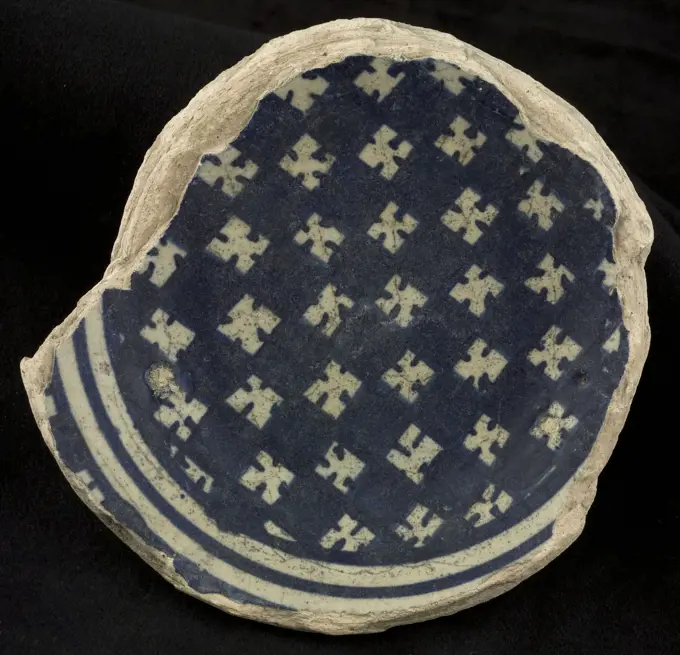
Fragment majolica bowl, blue on white, chessplate decor, bowl crockery holder soil find ceramic pottery glaze, baked underside covered with slightly green tinted lead glaze. Polychrome. Italian Dutch decor. Possible whole monochrome archeology serving food adorn Italy archaeological find in the soil 1917
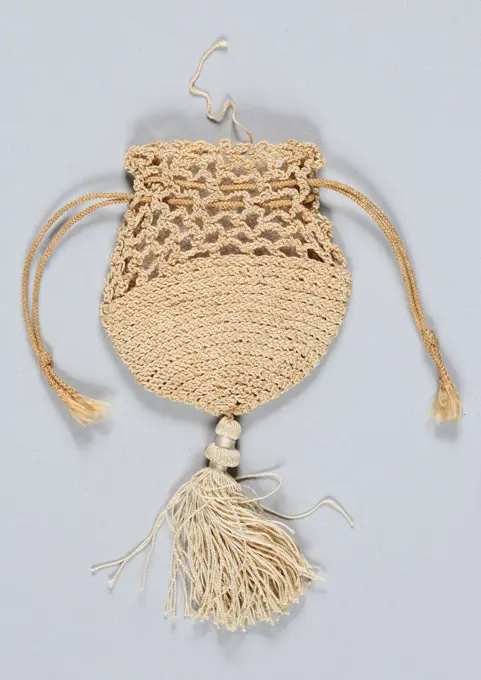
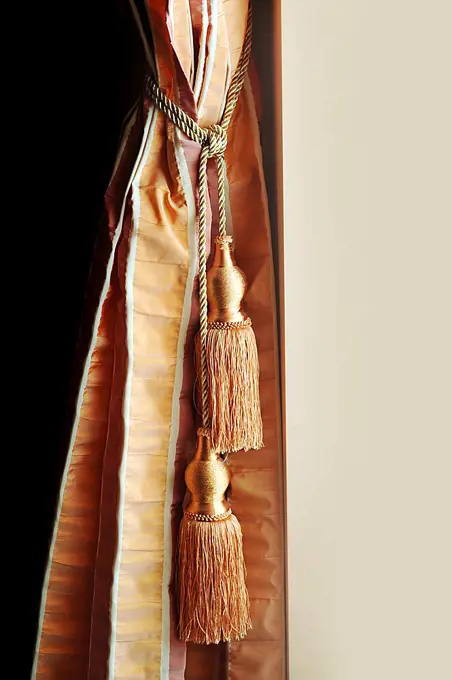
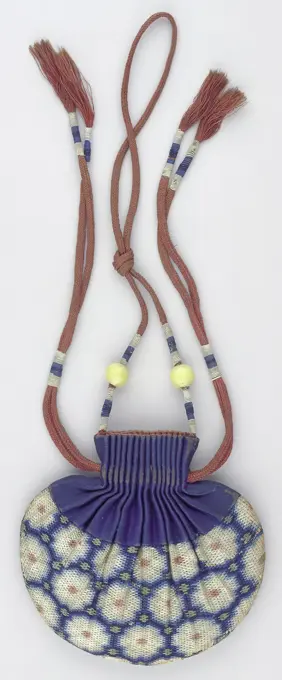
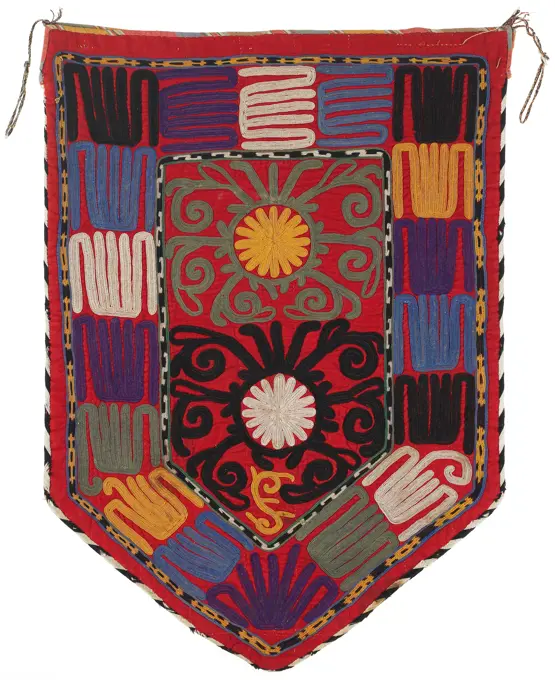
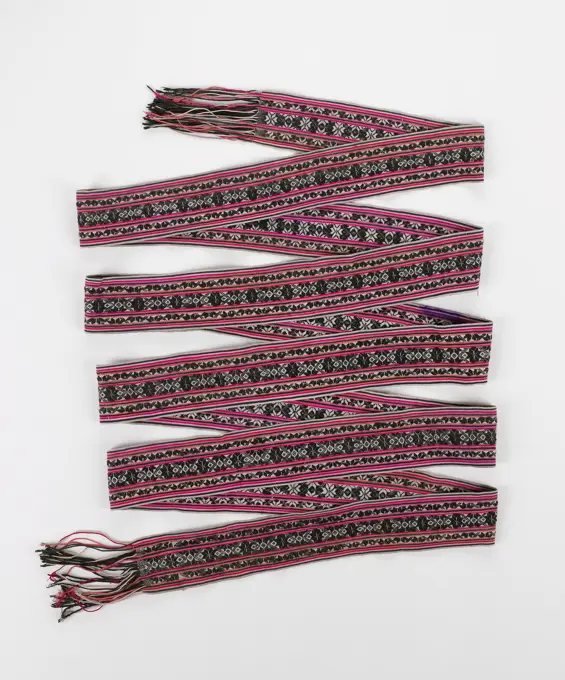
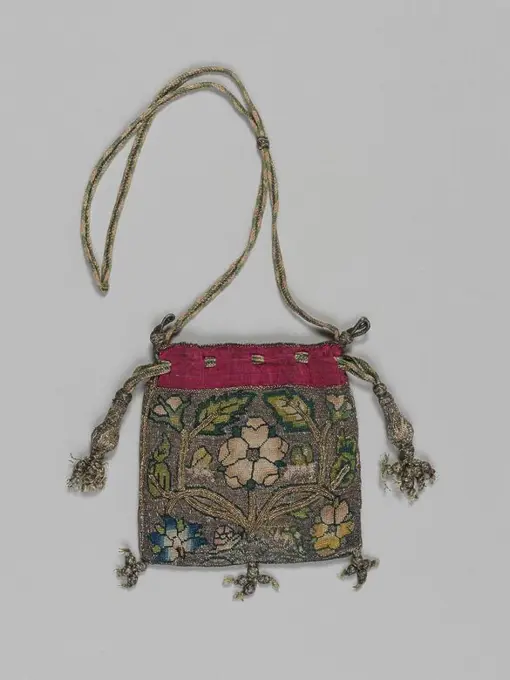
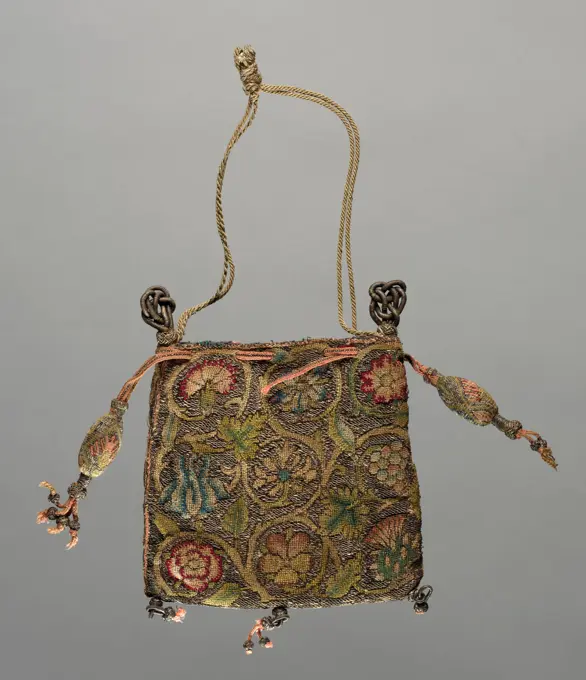
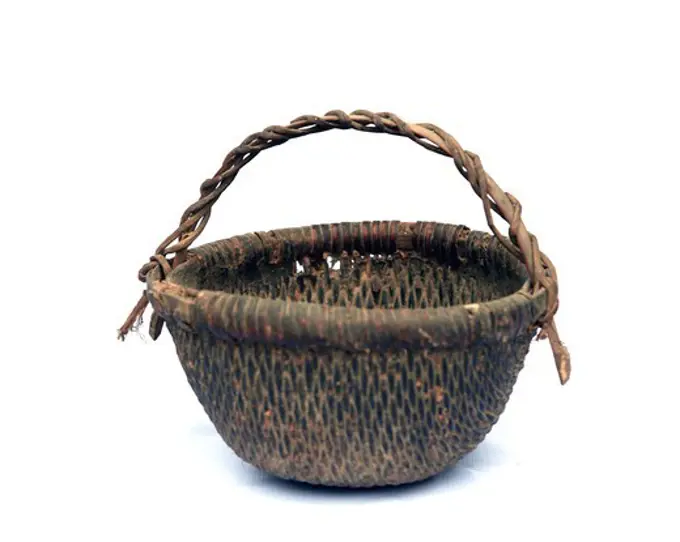
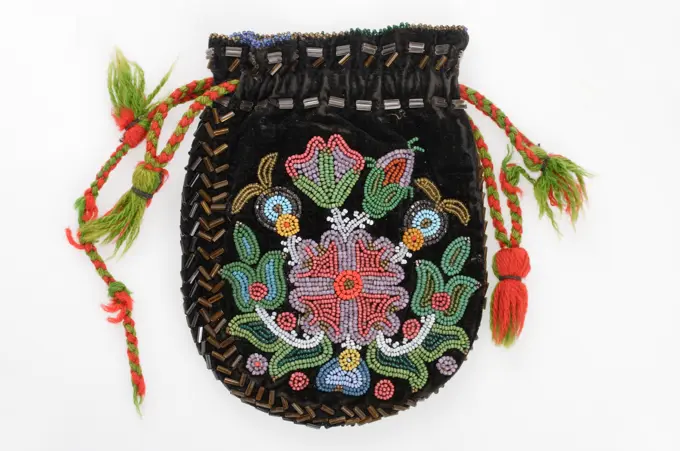
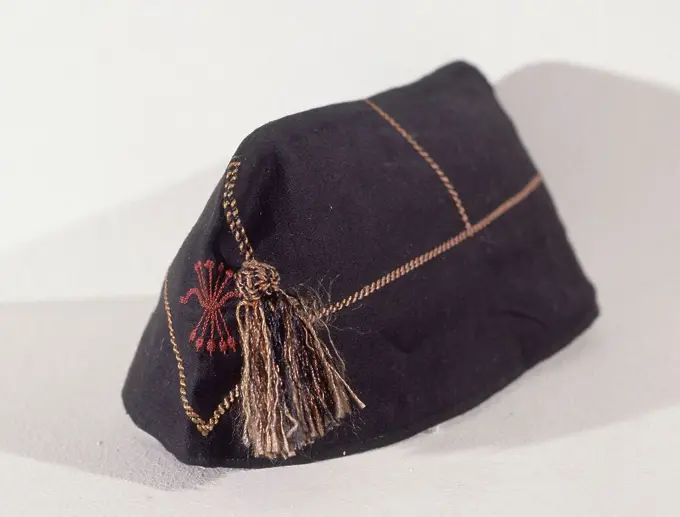
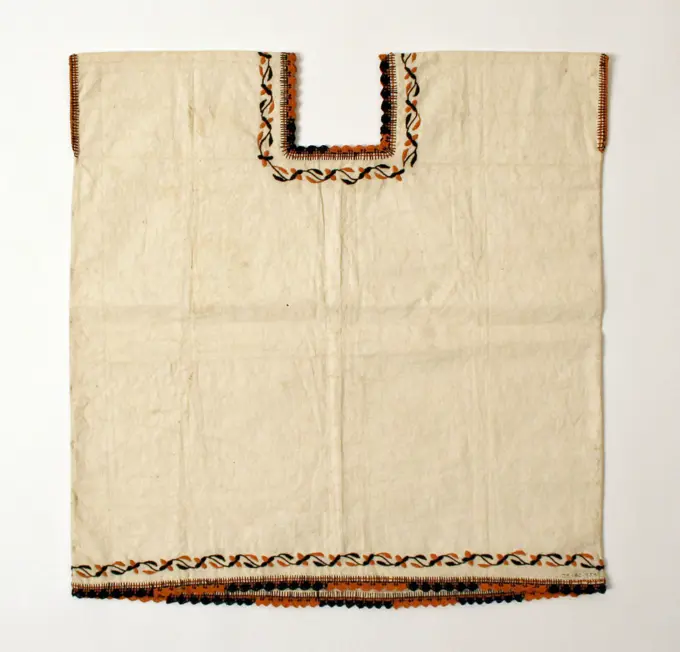
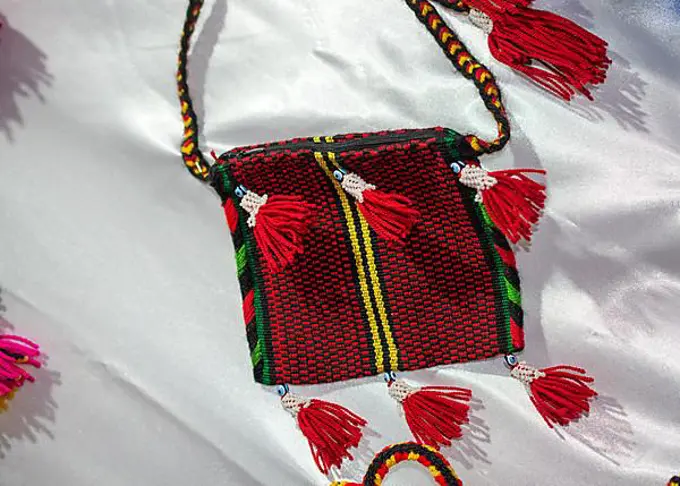
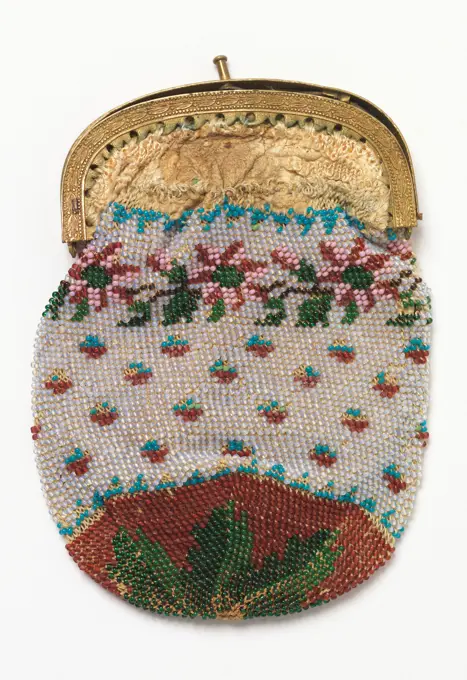
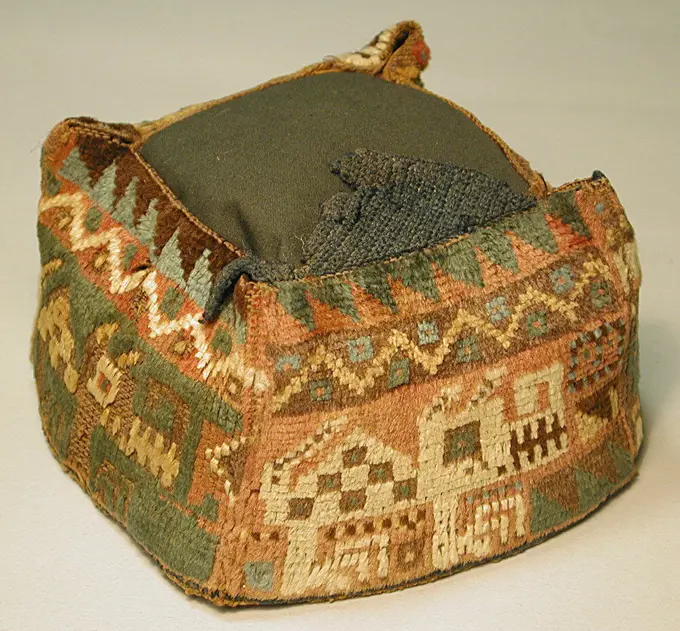
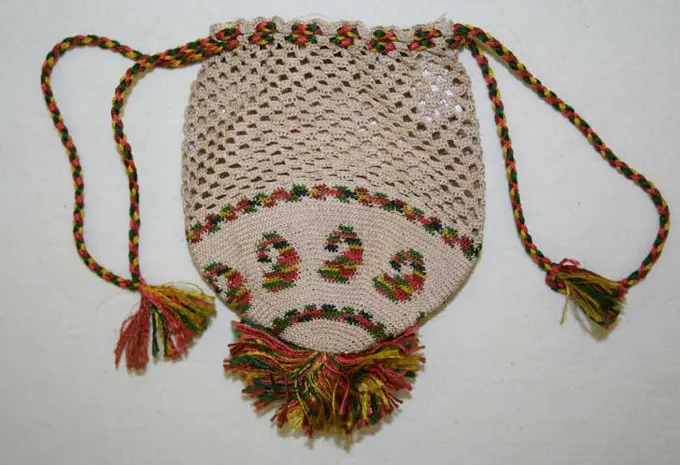
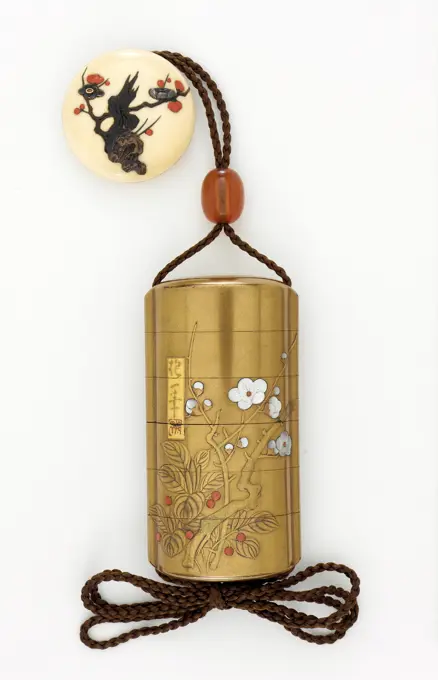
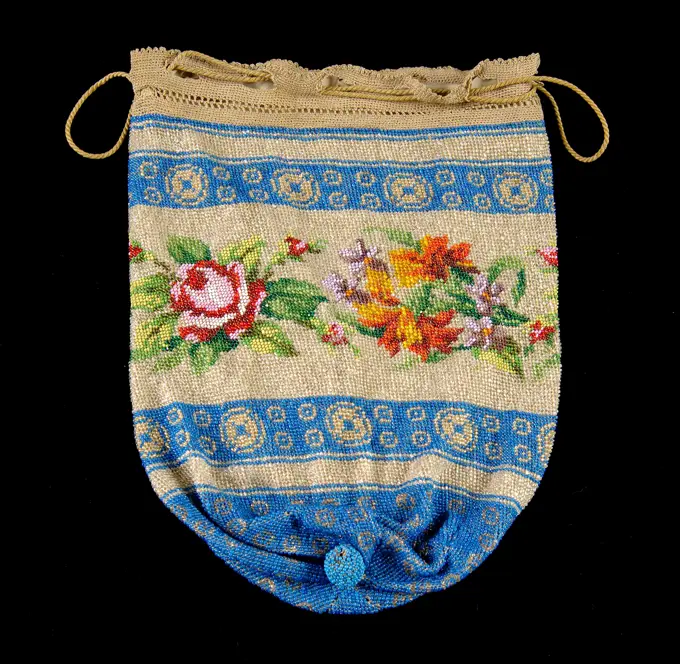
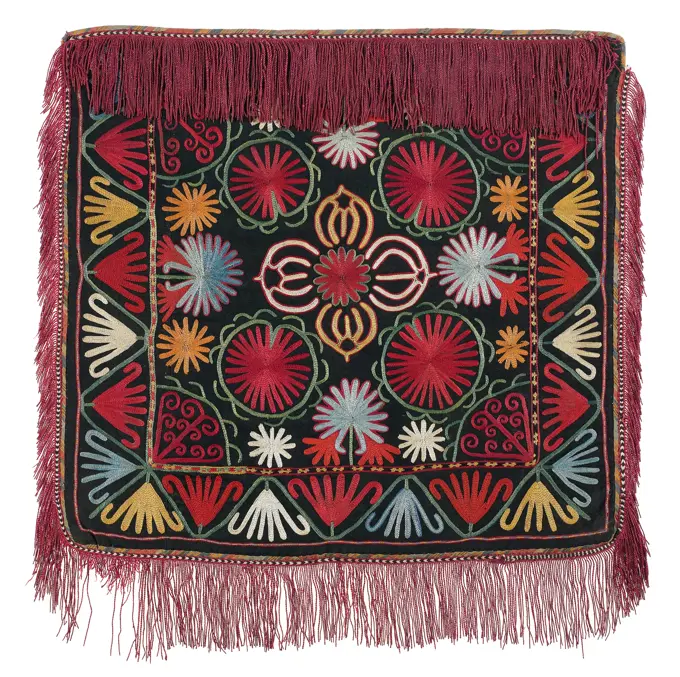
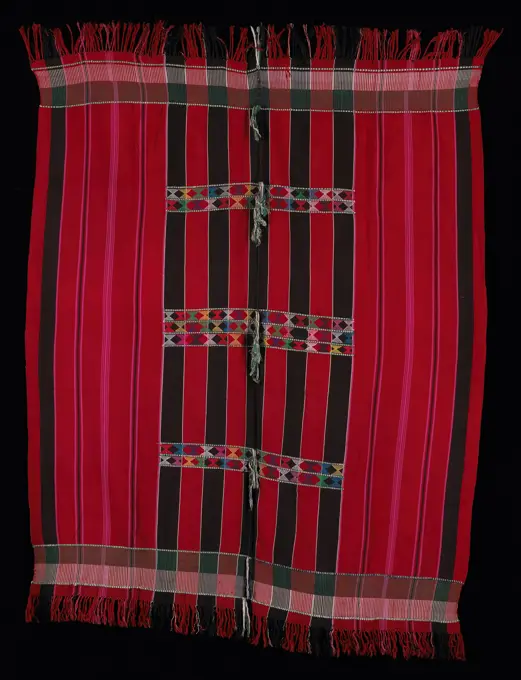
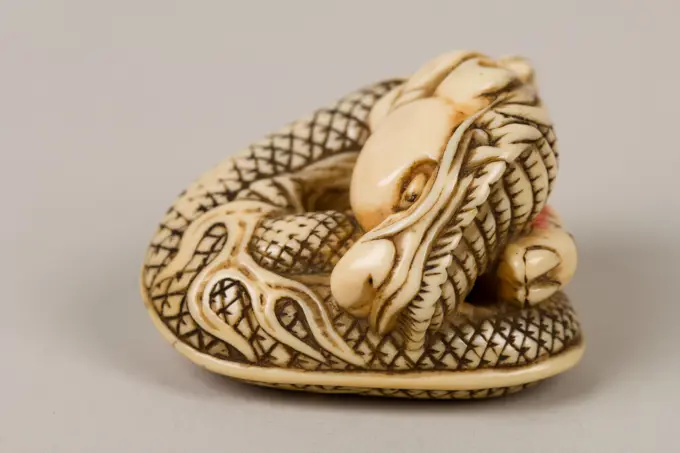
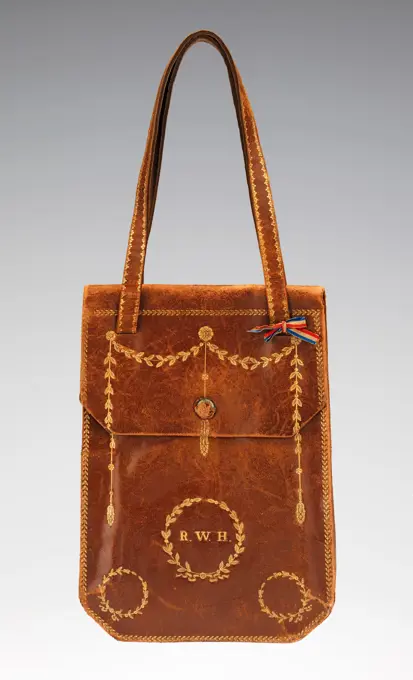
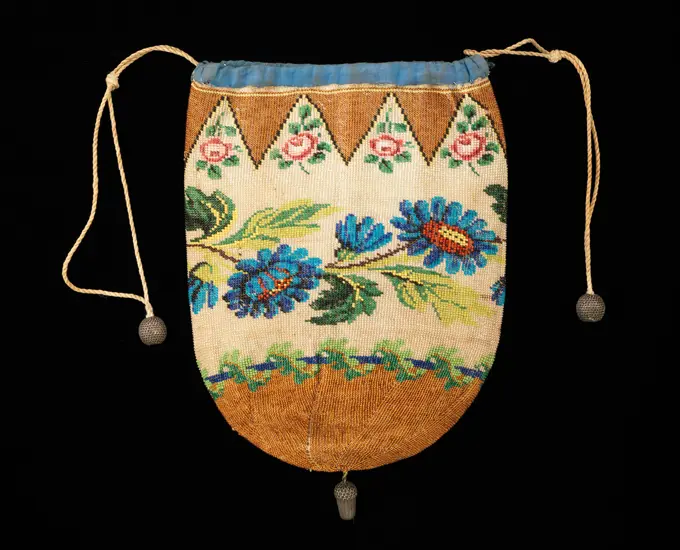
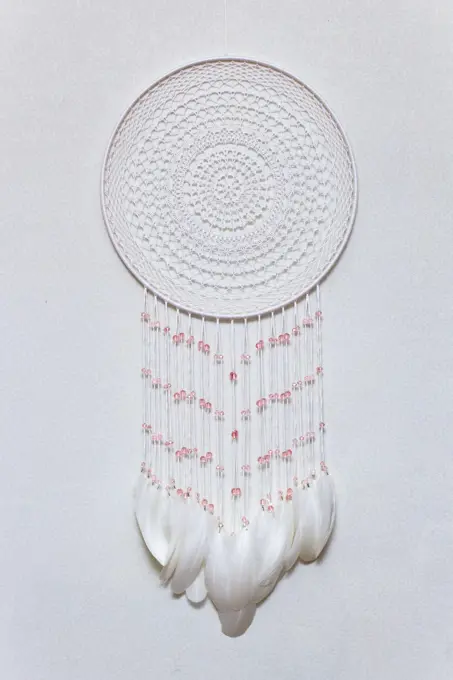
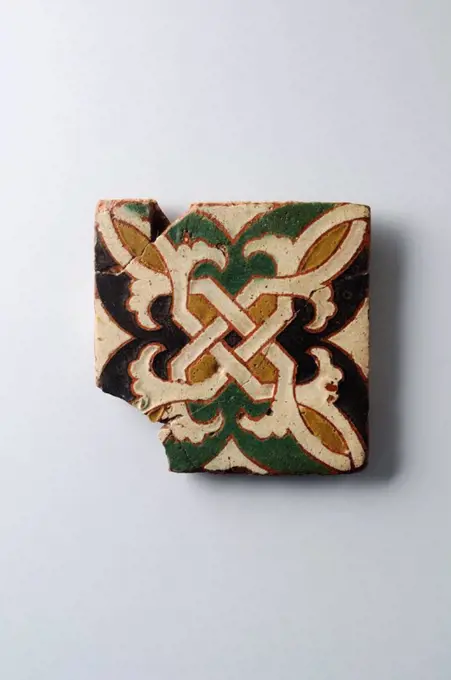
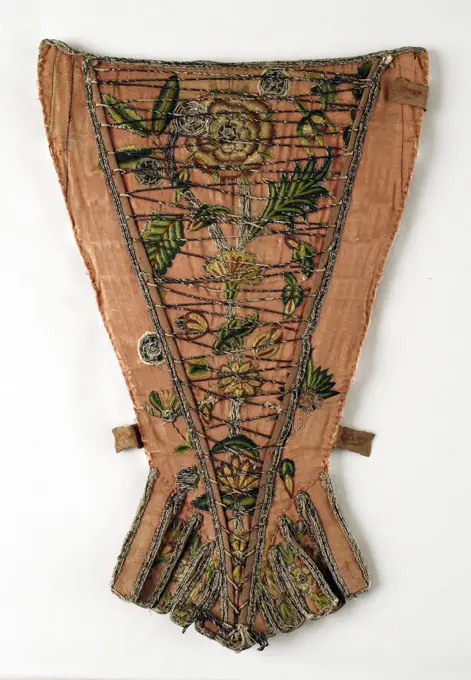
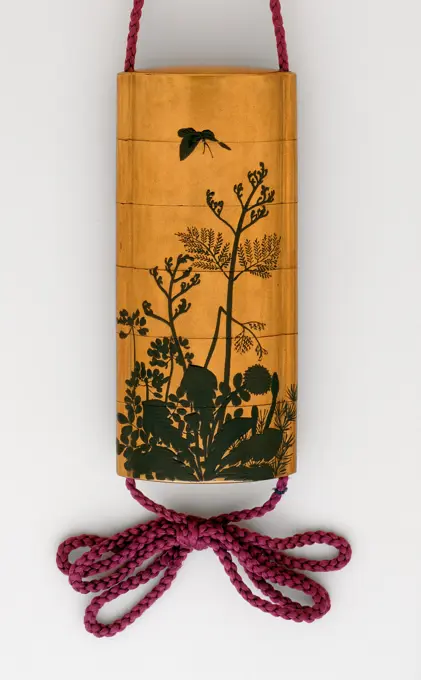
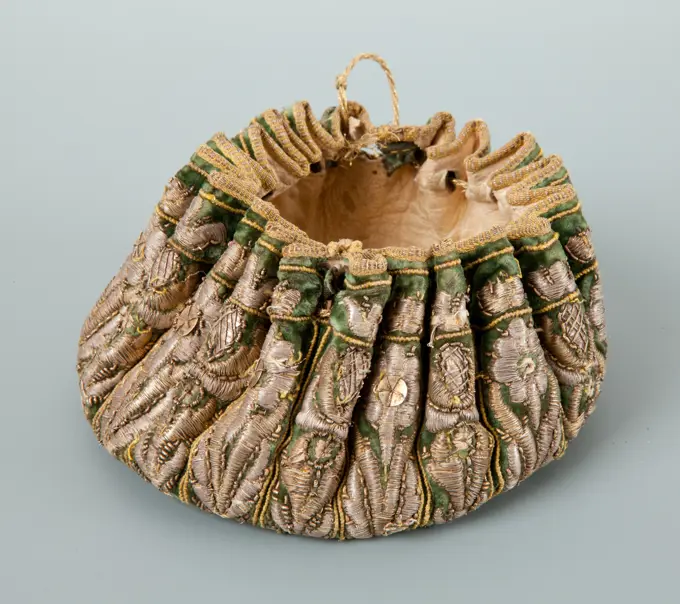
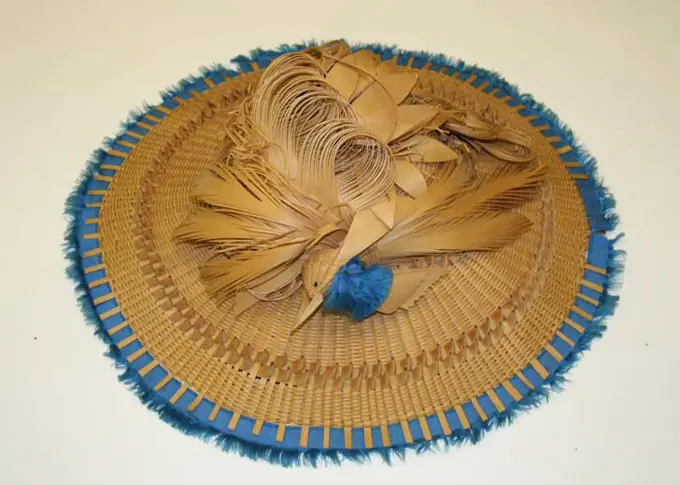
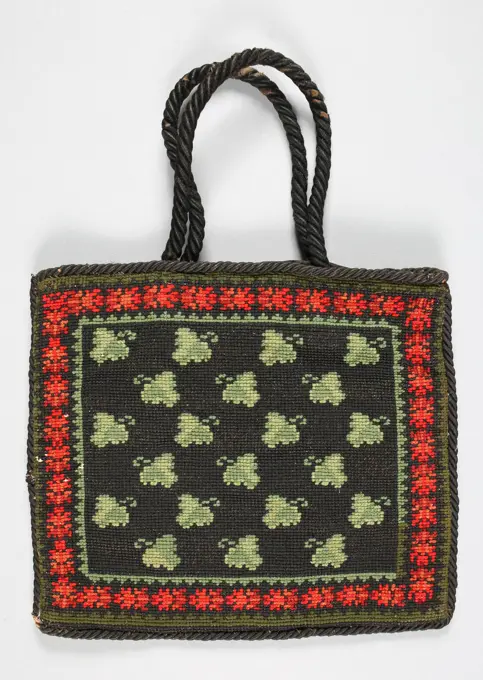
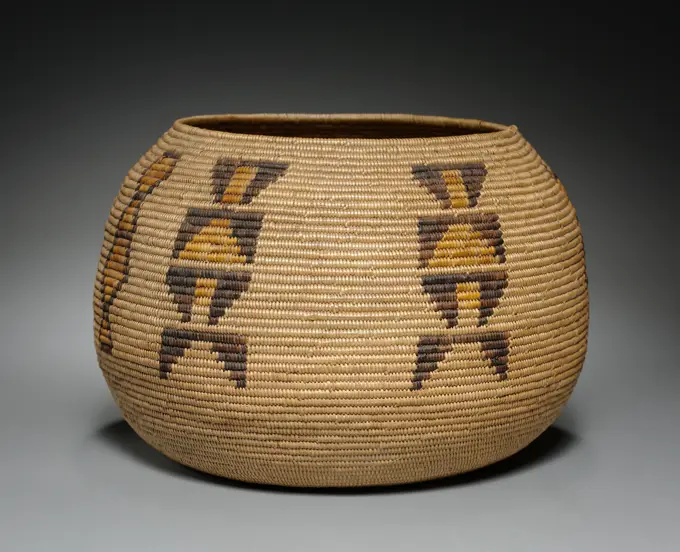
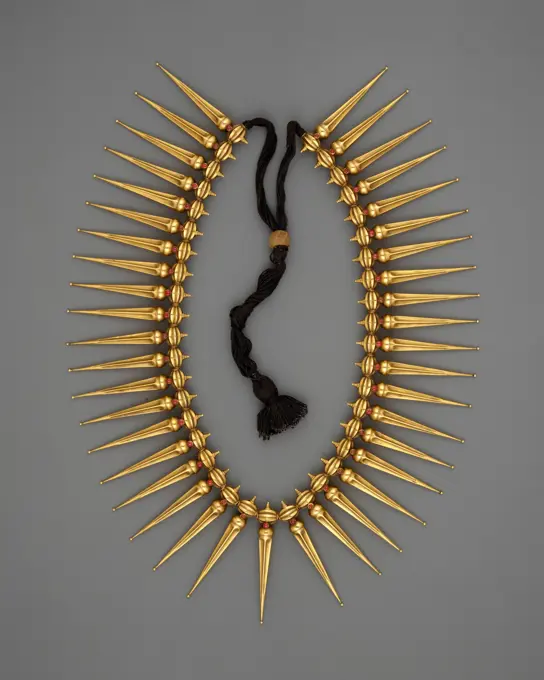
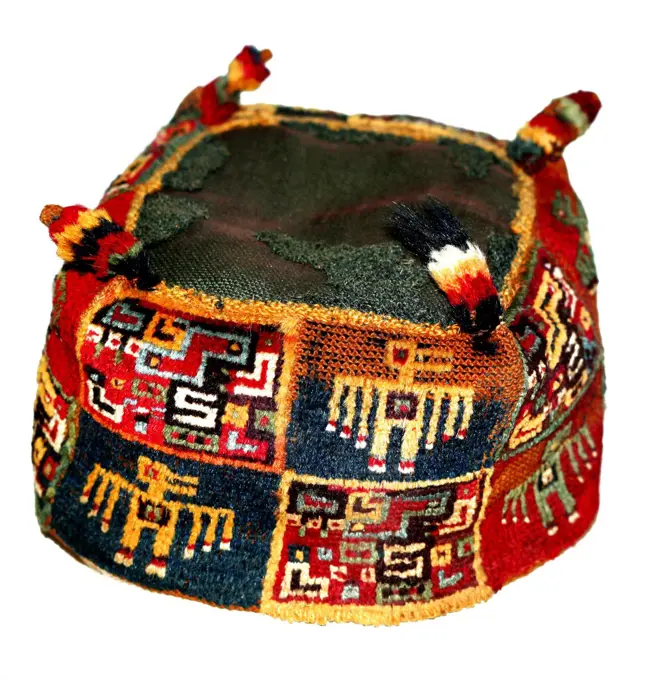
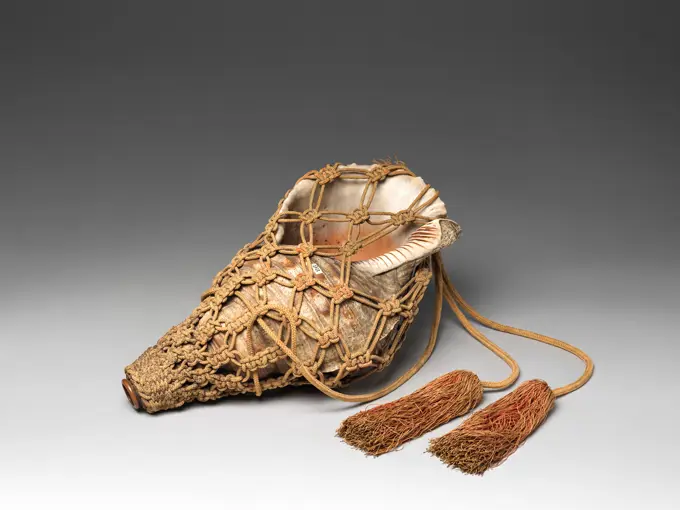
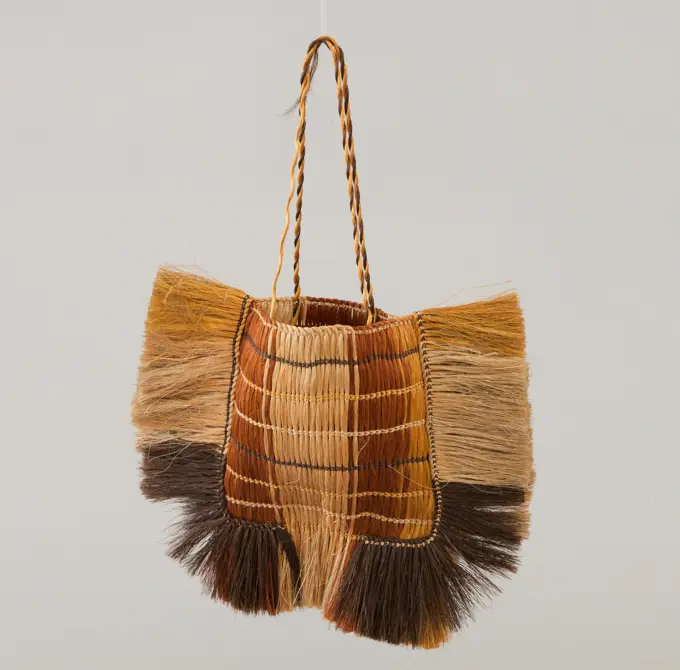
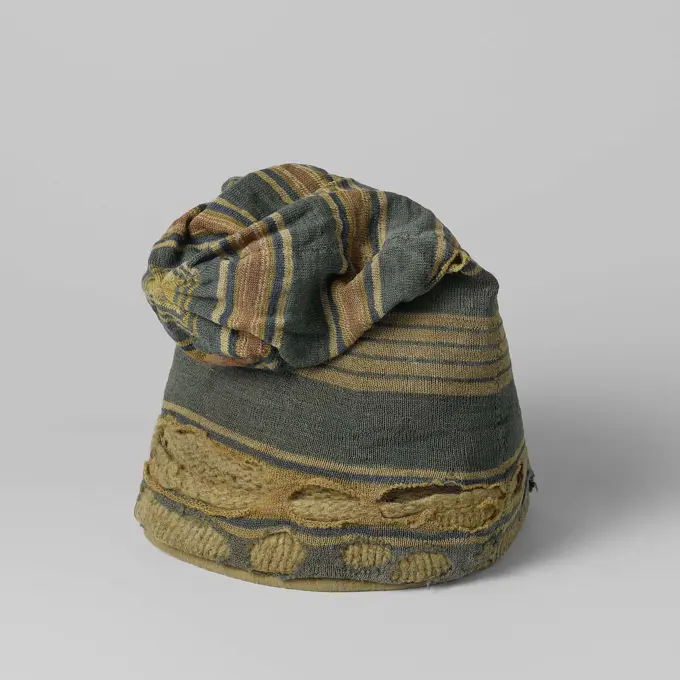
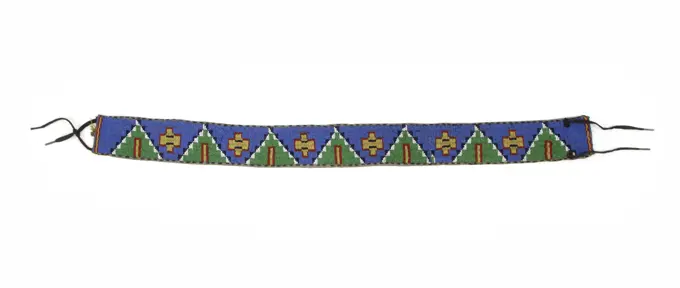
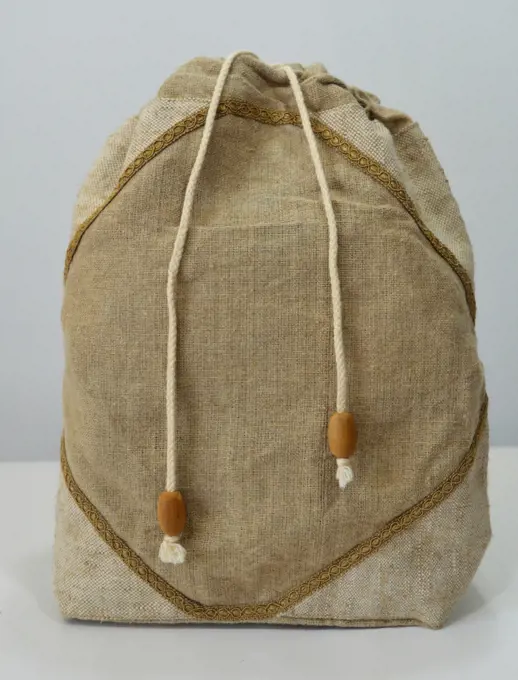
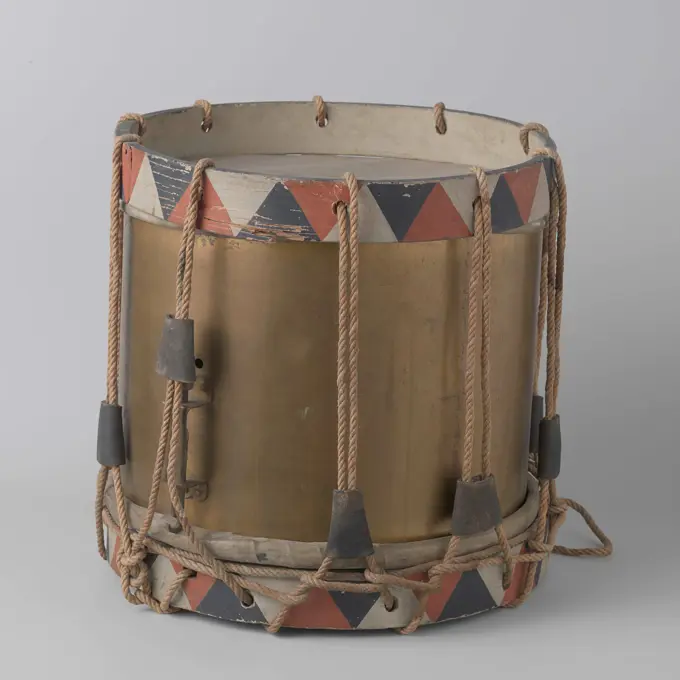
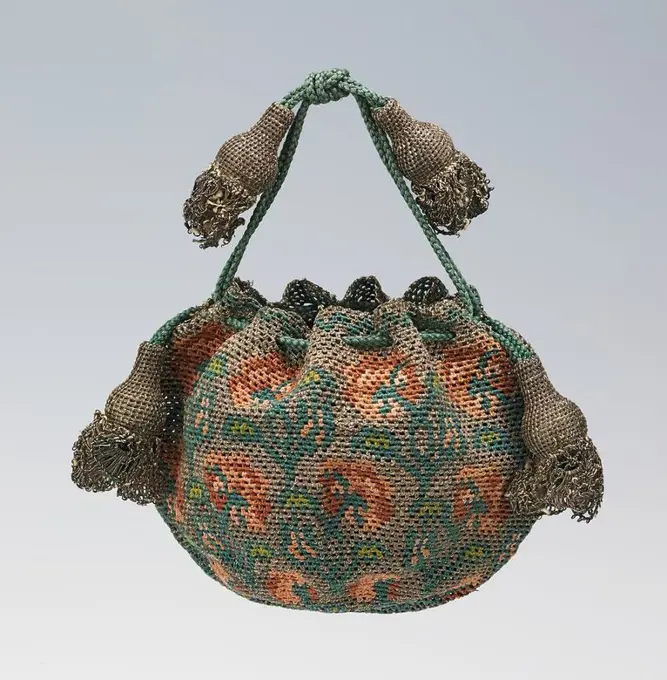
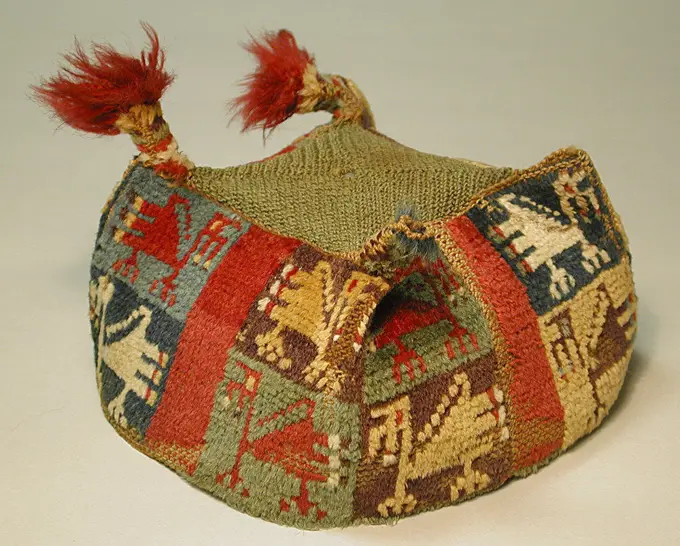
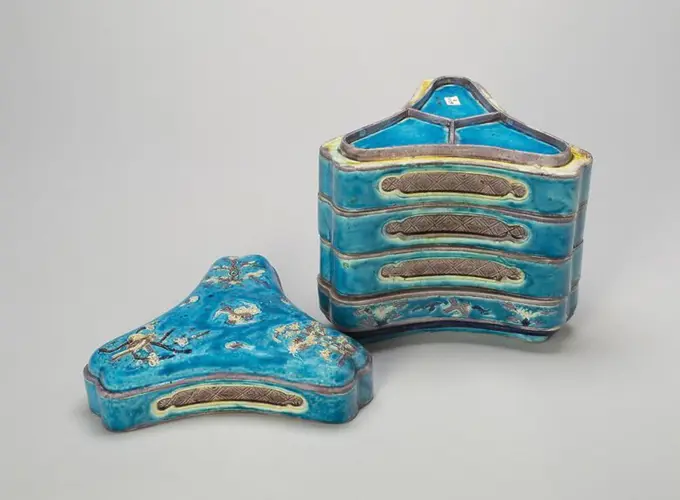
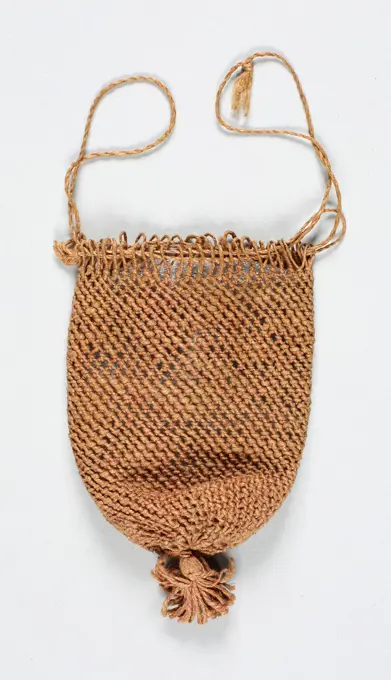
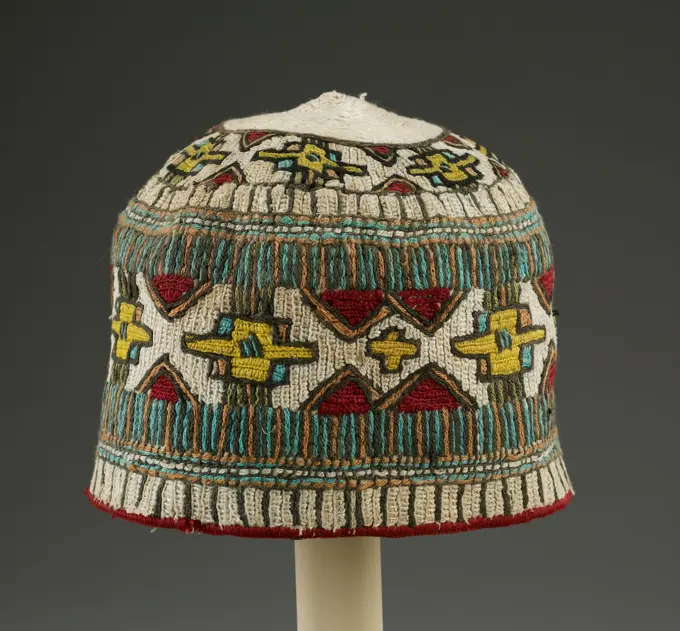
Bourse. GAL1974.23.9Fragment from a CheckerboardTunic.  Artist: UnknownTassel French 19th century View more. Tassel. French. 19th century. Silk and metal thread. Textiles-TrimmingsBourse. 1850. GAL1995.34.XWork bag. Around 1860/1870.Fragment of portiere with  decorative brushBelt -Bottle -Jacket, Medium: cotton, mica, shells Technique: embroidered on plain weave, Short jacket with long sleeves. Woven in stripes of dark blue, orange and red. Back and neck opening elaborately decorated with mica and small shells., Palembang, South Sumatra, Indonesia, 19th century, costume & accessories, JacketFragment majolica bowl, blue on white, chessplate decor, bowl crockery holder soil find ceramic pottery glaze, baked underside covered with slightly green tinted lead glaze. Polychrome. Italian Dutch decor. Possible whole monochrome archeology serving food adorn Italy archaeological find in the soil 1917. Handbag in a half round model, from brown harness leather, with hose leather at the front and back. Along the entire top two metal zippers, with a leather label on the tabs. The double handle is attached with two eyes by two loops of hose leather to the bag. The stitching on the bag and the handle is very coarse and of ecru-colored rope. The inside of the bag consists of roughened leather, with two stitched boxes, finished with a border of hose leather. The two soufflés are lined with ecru-colored satin.Purse, c. 1880, 4 1/4 x 4 3/4 x 5/8 in. (10.8 x 12.1 x 1.6 cm), Silk, China, 19th centuryUuk kap ilgich, 1920-1950, 24 1/4 x 17 1/2 in. (61.6 x 44.45 cm), Silk, cotton; open chain stitch, fishbone stitch, Uzbekistan, 20th centuryScent Flask; glass, metalCap mid-18th century European. Cap 101819Lady's work. End XIX.brown rope of jute, white backgroundPurse (France); silk, steelTie for a Baby Carrier, 209 1/2 x 3 1/8 in. (532.13 x 7.94 cm) (including fringe), Silk; needlework, ChinaCree Woollen Cloth Hood, 1840-60. Maker: Cree, Canada, Ontario.. This type of decorated woollen cloth hood was made by the women of the James Bay Cree of northern Ontario, Canada. Beaded hoods were traditionally worn by both men and women in the Fort Albany area of James Bay, and references to them occur as early as 1670... This particular type was worn by high-ranking married Cree women, the designs influenced to some extent by 19th century European decorative arts and the 'language of flowers'.Bag. Culture: British. Dimensions: Overall (without strap): 4 × 4 in. (10.2 × 10.2 cm). Date: early 17th century.This elaborately embroidered purse probably corresponds to the "sweet bags" recorded in a number of sixteenth- and seventeenth-century inventories. These purses appear to have been worn about the person and carried scented herbs and essences to ward off the evil smells of daily life. Museum: Metropolitan Museum of Art, New York, USA.Purse, early 1600s. England, early 17th century. Embroidery; silk and silver filé on linen ground; overall: 29.5 x 22 cm (11 5/8 x 8 11/16 in.).Baby Carrier, 33 1/2 x 46 in. (85.09 x 116.84 cm) (including ties)15 x 8 in. (38.1 x 20.32 cm) (object part, top section)15 1/2 x 14 1/2 in. (39.37 x 36.83 cm) (object part, bottom section), Cotton; needlework, ChinaOld objects basketRoasted travel bag. Ordered bag for toiletries.Purse, Medium: silk, glass beads, metal Technique: bead-linked mesh, Bag made of fine white and green beads strung in a diamond-shaped net pattern. Attached and held open at top by two bars of steel with cut steel knobs. Cut steel ring allows bars to slide through to open and close bag. Cut steel and gold-colored beads ornament bag at crossing points of net., Europe, 1830-60, costume & accessories, PurseTobacco pouch -GORRO DE LAS MILICIAS DE FALANGE. Location: EXPOSICION DE LA GUERRA CIVIL ESPAÑOLA. MADRID. SPAIN.Shirt Mexican 19th centuryTraditional turkish handmade bagVelvet bag with bead embroidery and floral-pattern glass little canes, phytomorphic-pattern metal clasp, 1890-1900, fashion accessories, Italy, 19th-20th century.Basket, 20th century, 5/8 x 5/8 x 5/8 in. (1.6 x 1.6 x 1.6 cm), Natural plant fibers, United States, 20th century, The supply and demand of the market that grew between the Euro-American tourists and the Akimel Oothom and Tohono Oodham basket makers demonstrate the tribes high level of ingenuity and productivity. Novelty items invented by Native artists include waste paper baskets, animal and human effigies, and miniatures of popular basket forms. The smallest basket here measures only one half inch in diameter. The use of animal and human figures in the basketry was another result of the tourist market, as consumers sought after designs that were easily recognizable. Yucca plant also replaced willow and cottontail in many instances because it grew in abundance in the desert surroundings and took little time to prepare for weaving.Purse (USA); glass, metal, leatherMiser's purse, Medium: silk, metal Technique: crocheted, Crocheted dark green silk embroidered with cut steel beads in diamond patterns. Two steel rings control side closing; at one end, a bead tassel, at the other, fringe of twisted bands. Both are made of cut steel., France, early 19th century, costume & accessories, Miser's purseMirror frame 18th-19th century India. Mirror frame. India. 18th-19th century. Jade (nephrite). Mughal period (1526-1858). JadeFour-Cornered Hat 7th-9th century Wari Finely woven, brightly colored hats, customarily featuring a square crown, four sides, and four pointed tips, are most frequently associated with two ancient cultures of the Andes: the Wari and the Tiwanaku. The Wari Empire dominated the south-central highlands and the west coastal regions of what is now Peru from 500-1000 A.D. The Tiwanaku occupied the altiplano (high plain) directly south of Wari-populated areas around the same time, including territory now part of the modern country of Bolivia. The cultures not only developed and flourished as contemporaries, but also occupied adjacent lands for nearly four centuries. A Wari ceremonial center called Cerro Baúl was located a mere five miles from Tiwanaku-settled fields in the Moquegua Valley of Peru. The two cultures likely encountered each other at Cerro Baúl and elsewhere, but the nature of these interactions remains largely unknown. Four-cornered hats from both the Wari and the Tiwanaku were Purse 1815-30 probably British. Purse 116960Woman's Coin Purse. United States, circa 1860. Costumes; Accessories. Glass beadsBag 1810-30 Potawatomi or Menominee. Bag 319018Legging strip -Legging strip  -Travel bag corresponding to the ivory hairbrush with monogram jvn. Travel bag associated with the ivory hairbrush. The travel bag is decorated with red and blue embroidered blocks.Attic jug still image. 1883. The Miriam and Ira D. Wallach Division of Art, Prints and Photographs: Picture Collection. Pottery , Greece, Pottery, Greek, Antiquities, Pitchers, Containers , To 499Plum Branch and Berries (Inrō/Ojime/Netsuke Ensemble). Kajikawa School (Japan, active 17th to 19th centuries). Japan, early 19th century. Costumes; Accessories. inrō Gold fundame lacquer ground with inlays of mother-of-pearl and coral; ojime amber(?); netsuke ivory with inlays of carved red and black lacquers, mother-of-pearl, tortoiseshell(?), gold, shakudo(?), and copperPouch third quarter 19th century American. Pouch 169519Ilgich, early 20th century, Silk, wool; chain stitch, Uzbekistan, 20th centuryBlanket/ wrapper, 20th century, 48 1/2 x 40 1/4 in. (123.19 x 102.24 cm) (without fringe), Cotton; woven fabric, Myanmar (Burma), 20th centuryBelt -Netsuke of Coiled Dragon Enclosing a Pearl late 18th century Japan. Netsuke of Coiled Dragon Enclosing a Pearl 59644Apron, ChinaBag 19th century European, Eastern. Bag. European, Eastern. 19th century. no medium availableBag first quarter 19th century A. Antinori Italian Fine leather goods have long been a souvenir of travelers to Italy during a Grand Tour of Europe. This example from a Roman workshop incorporates the motifs of garlands and wreaths prevalent in the early 19th century, when the prevailing taste in aesthetics shifted from rococo curves to neoclassical order. Napolean, upon his coronation as Emperor of France in 1804, appropriated many of these design elements in his effort to establish and legitimize his position, and the taste spread throughout Europe. The stamped leather of this bag is similar to that seen in fine book bindings of the same period, while small red, white, and blue ribbon may have been a later addition to the donor or a previous owner.. Bag 156837Hat -Pouch 1810-40 American This early-19th century bag is in its original condition; its miniscule copper beads intact. The size is worth noting as beads tended to get larger as the 19th century progressed. The central flower and vine motif is a standard element but the border decorations are somewhat unusual.Margaret S. Bedell (1861-1932) donated, by gift or bequest, over 500 objects to the Brooklyn Museum, including furniture, quilts, samplers, costume and Native American beadwork. Her collection of American and European beaded bags includes examples from Philadelphia and the Catskill Mountain region of New York State, as well as Italy, Austria, Germany, and Holland.. Pouch 156436Sash, from a three-piece set, 20th century, 73 3/4 x 4 1/4 in. (187.33 x 10.8 cm) (without tassels), Cotton, beads, wool; needlework, Vietnam, 20th centuryWoman's Mouth Veil, 20th century, 24-1/2 x 30-3/16 in. (62.2 x 76.7 cm), Cotton, silk; needlework, Morocco, 20th centuryHandmade dream catcher with feathers and pearl rope hang on white background handmade dream catchers with feathers and pearl rope hang on a white background copyright: xzoonar.com/fedorovaxdariax 22940529Play Fair of gray-blue velvet embroidered with silver wire, decorated on the bottom with unidentified alliance weapon in gold and silver brocade and multicolored silk, anonymous, c. 1680 - c. 1720 Play fair of gray-blue velvet embroidered with silver wire, decorated on the bottom with unidentified alliance weapon in gold and silver brocade and multicolored silk. Model: flat round bottom around which a wavy raised edge with holes, which originally pulled through a cord of braided silk. The cord is missing. Lined with goat leather. Decoration: The 22 bulges or 'ribs' are decorated with stacked on leaf and French lilies of silver scourge in relief. A horizontal line of silver thread runs above the holes. Along the top the whole was originally trimmed with a band of silver wire, now largely perished. The bottom is circled with a double edge within which a zigzag line of silver thread. In it a lambrequin of gold brokaat with two oval coats of arms on which a pink -red keeper on gold on the Pouch 1850-59 American. Pouch 169273Glazed ceramic tile with geometric decoration 10 x 9, 5 cm. (15 th CE ) - Modern era belonging of the " Burgo de Santiuste Museum" in Alcalá de Henares. (Madrid). SPAIN.Fringe 18th century probably European. Fringe 213651Pouch 1830-60 American. Pouch 168384Conical Beaded Basket, c 1875- 1925. California, Wappo, Pomo, Alexander Valley, Late 19th- Early 20th century. overall: 5 x 11 cm (1 15/16 x 4 5/16 in.).Bag (tobacco Pouch) (Germany); cotton, glass beads, leather liningBag (Spain); silkBasket, 1900-1942, 7/8 x 3/4 x 3/4 in. (2.2 x 1.9 x 1.9 cm), Natural plant fibers, United States, 20th centuryBag, Medium: silk, glass beads Technique: beaded crochet, Ladies bag crocheted in bands of gray, yellow and tan silk with glass beads, strung on silk and used as tassels; crocheted cord at top., USA, mid-19th century, costume & accessories, BagStomacher ca. 1720 British. Stomacher 105059Band orBorder.  Artist: UnknownConciliate belt;  2. PO. 18th century (1751-00-00-1800-00-00);Contact beltsFerns and Plants with Butterfly (Inrō/Ojime/Netsuke Ensemble). Japan, early 19th century. Costumes; Accessories. inro Black hiramakie on gold ground; ojime agate; netsuke ivory with stainingGame purse according to Puławy tradition - alms purse owned by Maria Josepha Wettin (1731-1767)Hat 1857-60 British. Hat 105032Band (Egypt); warp; s-spun linen. weft; s-spun linen, s-spun woolBag 1860-70 Italian. Bag. Italian. 1860-70. silkBasket. 1820. Gal1952.5.98_2Blanket. Dated: 1935/1942. Dimensions: overall: 35.5 x 27.8 cm (14 x 10 15/16 in.) Original IAD Object: 58" long; 80" wide. Medium: watercolor, graphite, and colored pencil on paperboard. Museum: National Gallery of Art, Washington DC. Author: Ethel Dougan.Gift Basket, c. 1900. California, Cahuilla ( Mission, Saboba Mission), Unassigned. Juncus, Sumac; Coiled; deergrass bundle foundation; diameter: 20.5 x 30.5 cm (8 1/16 x 12 in.).Fringe (Greece); silkJasmine Bud Necklace (Malligai Arumbu Malai) 19th century India (Tamil Nadu and Kerala) This dramatic neck ornament is composed of jasmine bud elements inset with ruby and with tapering extensions.. Jasmine Bud Necklace (Malligai Arumbu Malai). India (Tamil Nadu and Kerala). 19th century. Gold with rubies strung on black thread. JewelryAlpaca wool hat, Peru 7th to 9th century. Huari People.Horagai or Rappakai 19th century Japanese. Horagai or Rappakai. Japanese. 19th century. Shell; triton, tritonis.. Japan. Aerophone-Lip Vibrated-trumpet / tromboneTrimming, Medium: metallic, silk Technique: bobbin lace, metallic, Europe, 17th century, lace, TrimmingBag. In 1980 archaeologists investigated the graves of 185 Dutchmen - whale hunters, and workers at whale oil refineries - who had died on or near Spitsbergen in the 17th century. Many skeletons were still wearing their knitted woollen head coverings. These caps were highly personal. The men were bundled up against the severe cold and could only be recognized by the colours and patterns of their caps. Presumably this is the reason why the caps went with them into their graves.Belt -Retro handmade natural flax backpackDrom, old model of the arches. Groom of the militia. The brass boiler is provided with a veal sheet on both sides, held by a hoop and tense by means of a tensioner with tractors and screws. Both hoops are decorated with a motif of triangles in the colors red, white and blue.Brass design fitting on antique wooden carving pen box, Jodhpur, Rajasthan, India Copyright: xSafatxAli/DinodiaxPhotoxwooden case for the scrolls and manuscripts isolated on white backgroundMiniature moccasin vamp -Sleeves 17th century-18th century Spanish. Sleeves 102390Pouch. Culture: European, Eastern. Date: fourth quarter 17th century. Museum: Metropolitan Museum of Art, New York, USA.Four-Cornered Hat 7th-9th century Wari Finely woven, brightly colored hats, customarily featuring a square crown, four sides, and four pointed tips, are most frequently associated with two ancient cultures of the Andes: the Wari and the Tiwanaku. The Wari Empire dominated the south-central highlands and the west coastal regions of what is now Peru from 500-1000 A.D. The Tiwanaku occupied the altiplano (high plain) directly south of Wari-populated areas around the same time, including territory now part of the modern country of Bolivia. The cultures not only developed and flourished as contemporaries, but also occupied adjacent lands for nearly four centuries. A Wari ceremonial center called Cerro Baúl was located a mere five miles from Tiwanaku-settled fields in the Moquegua Valley of Peru. The two cultures likely encountered each other at Cerro Baúl and elsewhere, but the nature of these interactions remains largely unknown. Four-cornered hats from both the Wari and the Tiwanaku were Triangular Five-Tiered Box with Bamboo, Plum Blossom, and Pine Trees. China. Date: 1501-1600. Dimensions: 18.9 × 16.4 × 18.5 cm (7 7/16 × 6 7/16 × 7 1/4 in.). Fahua ware; porcelain with blue, purple, and yellow glazes and molded and incised decoration. Origin: China. Museum: The Chicago Art Institute, Chicago, USA.Student hat unknown labelAttic Black-Figure Neck Amphora Fragment (comprised of 3 Joined Fragments). UnknownSotck exchange. XIXth. GAL1960.63.1Hat, 20th century, 6 1/2 x 7 3/4 x 7 3/4 in. (16.51 x 19.69 x 19.69 cm), Cotton; needlework, Niger, 20th century, This man's cotton hat with multi-colored embroidery may be a fulan from the Hausa culture. MAde from narrow strip-cloth, fulan are usually decorated with elaborate embroidery, whose various designs often refer to specific events or people. The Hausa are credited for introduing this style of hat throughout western Africa.Purse (Italy); silk and metallic thread embroidery on silk foundation