Textile Fragments

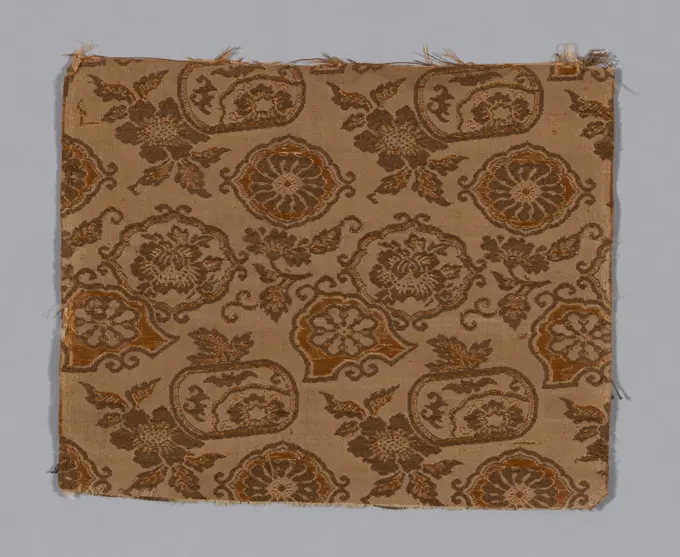
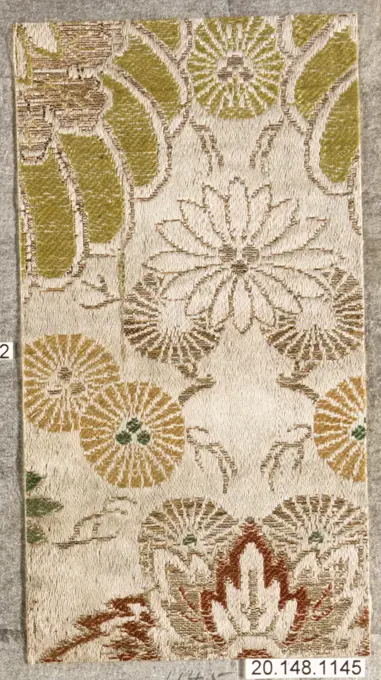
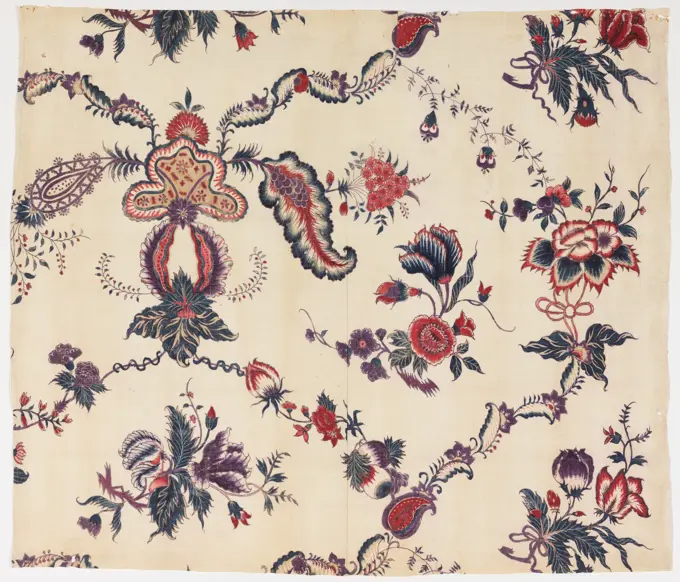
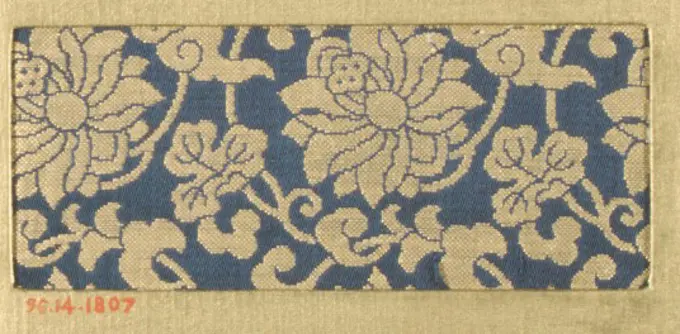
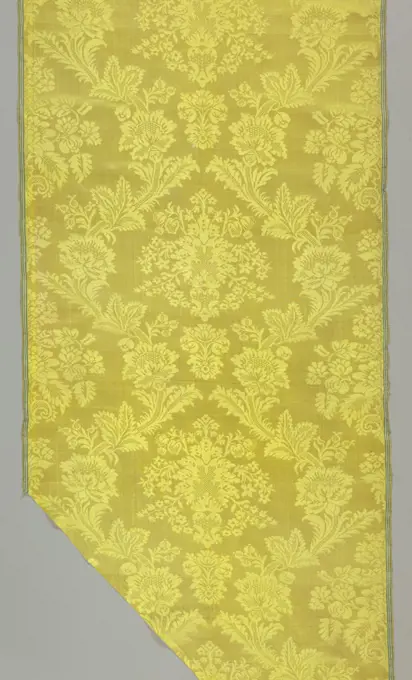
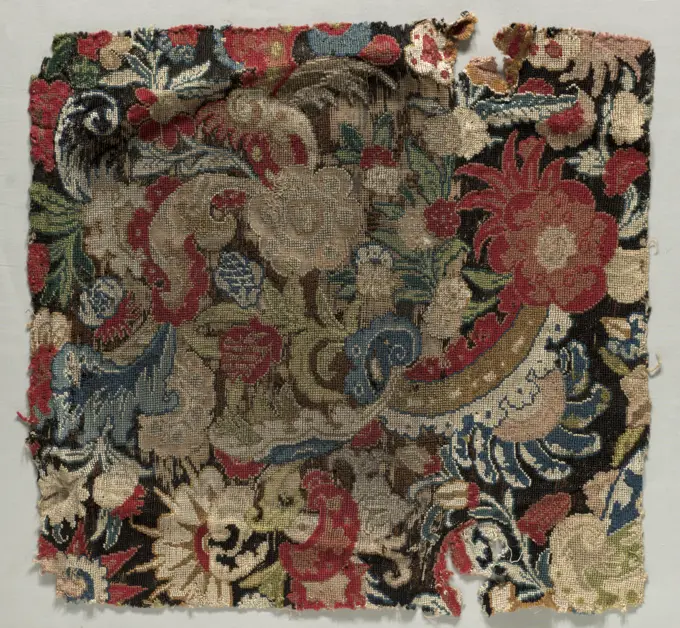
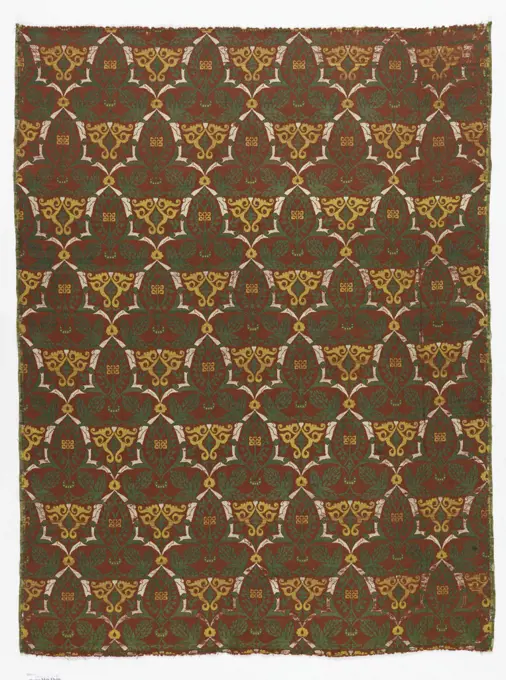
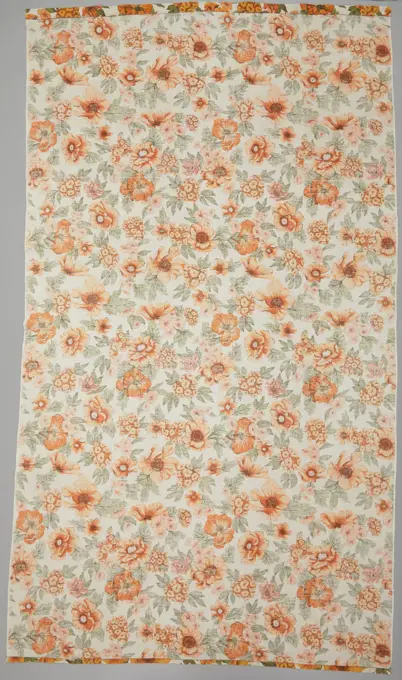
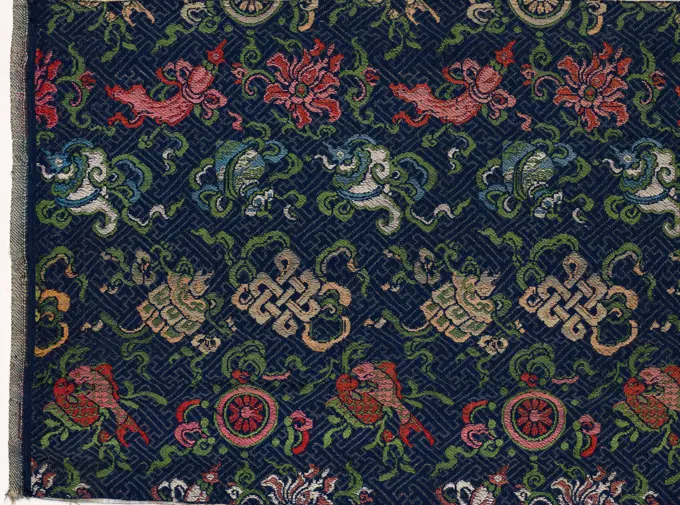
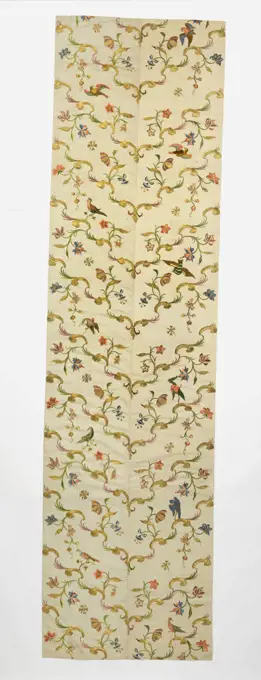
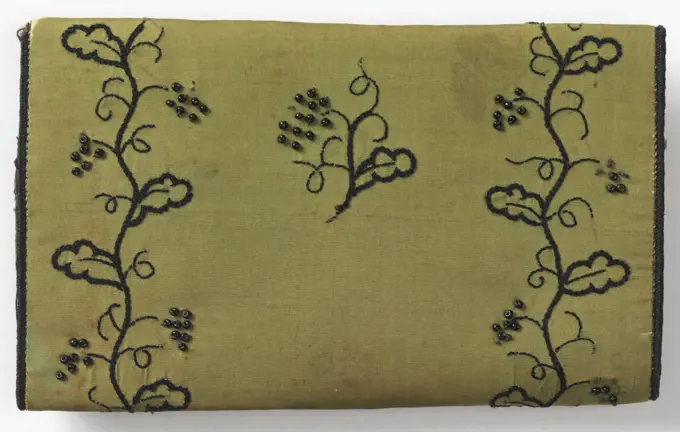
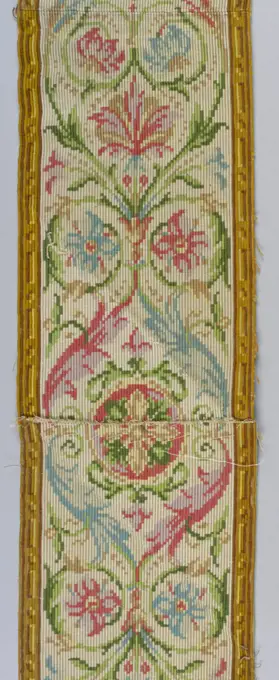
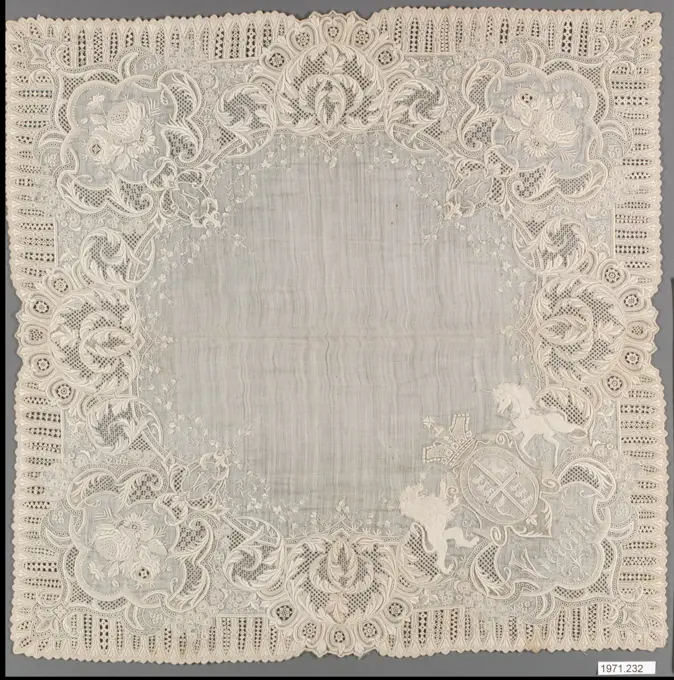
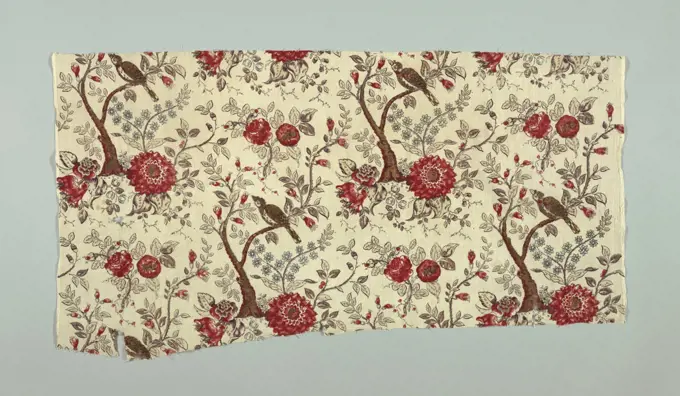
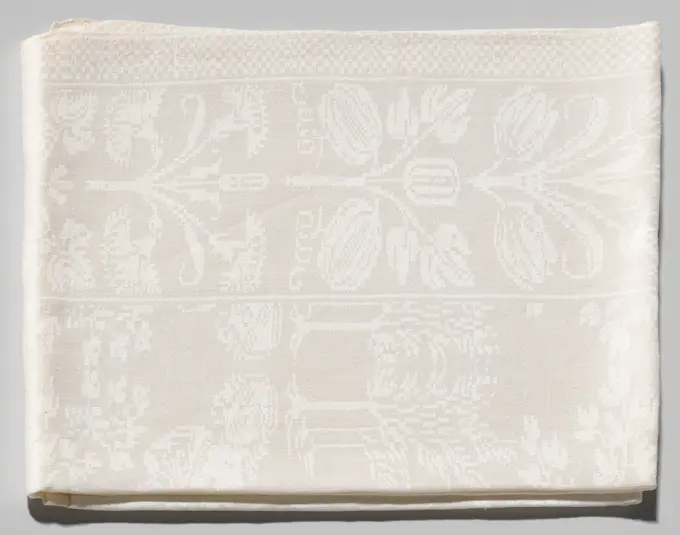
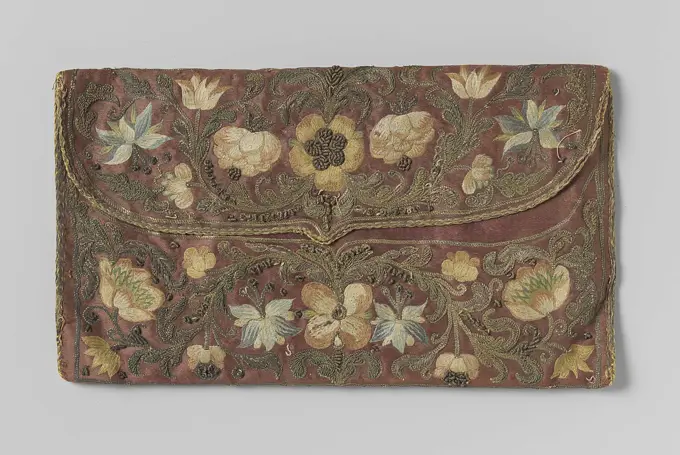
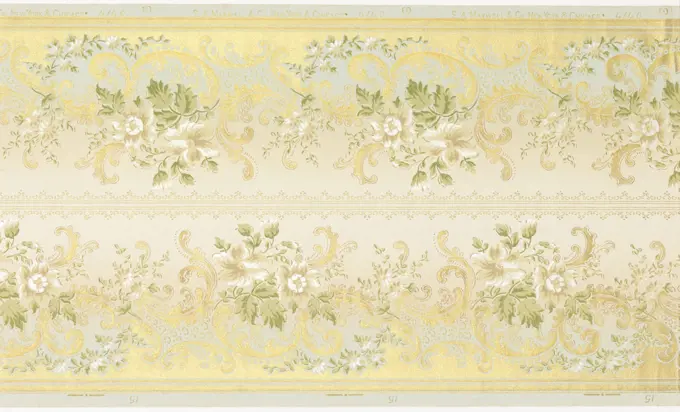
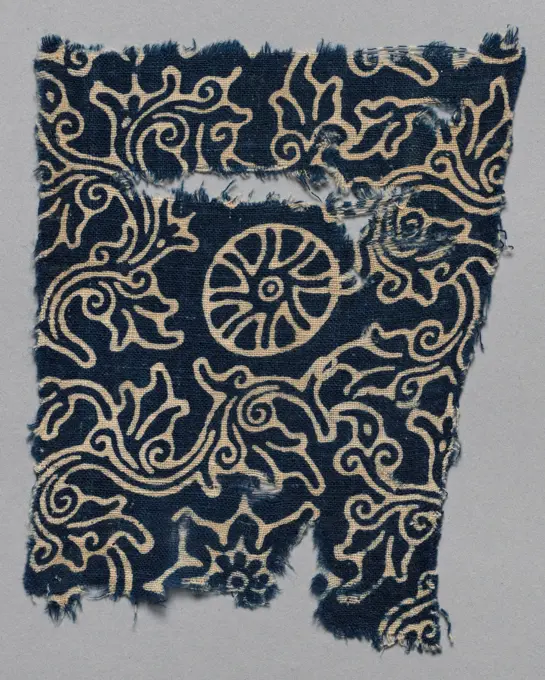
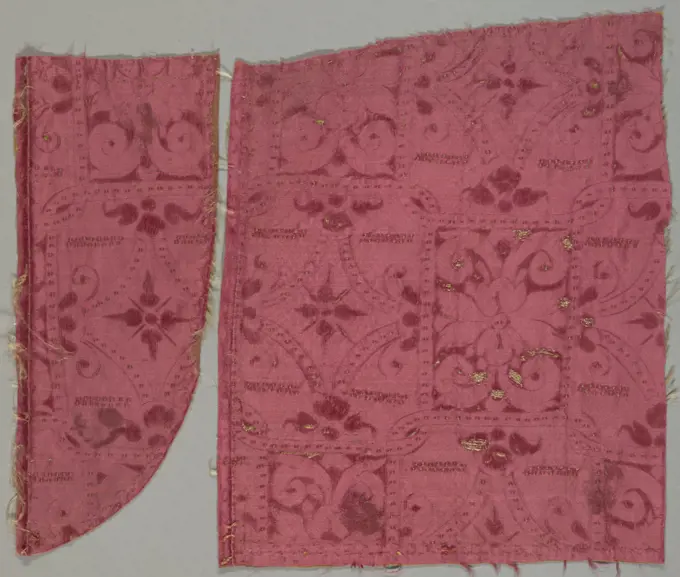
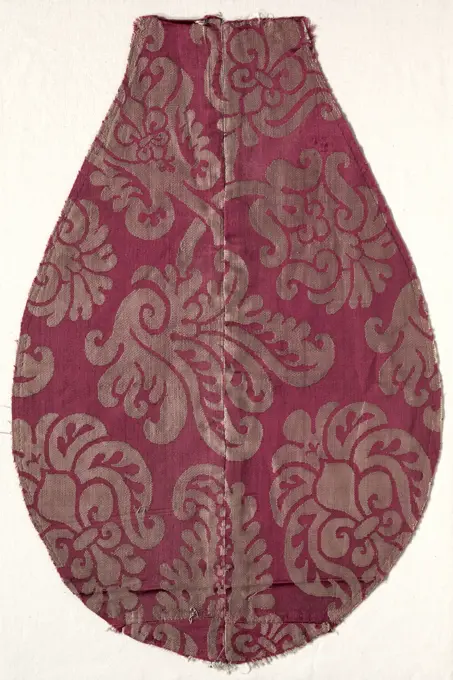
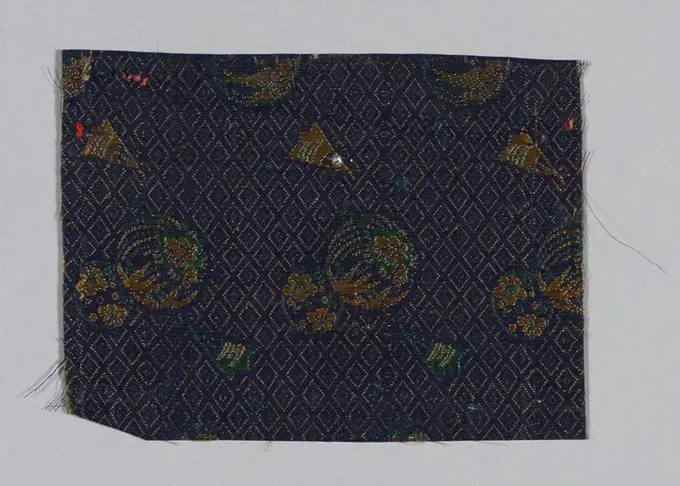
Historical textile fragments showcasing intricate designs in floral and damask patterns. The colors include muted greens, pinks, and golds, portraying a vintage feel.

Textile, Medium: cotton Technique: printed by engraved roller, White cotton, roller printed in shades of brown on greyish ground. Flower clusters around an urn of water on which perch two birds; snake coiled at side. Below urn minute naked figures appear. White cotton scallop fringe attached at bottom., 1850-99, printed, dyed & painted textiles, Textile
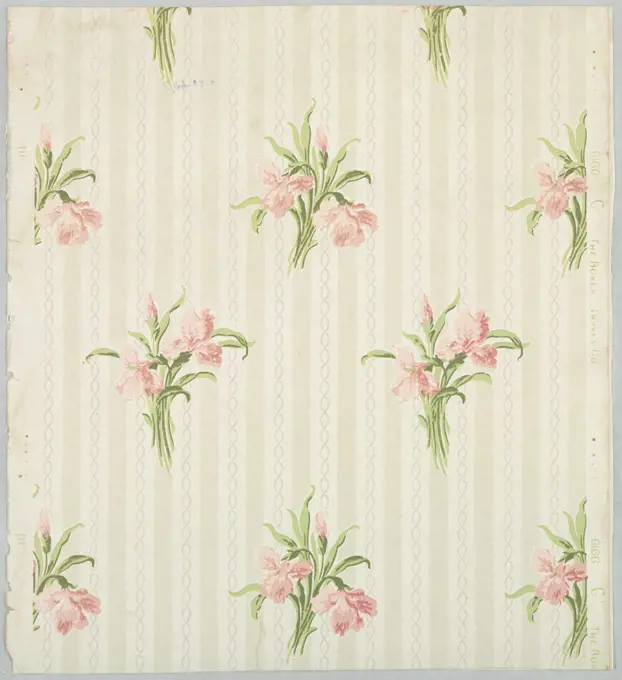
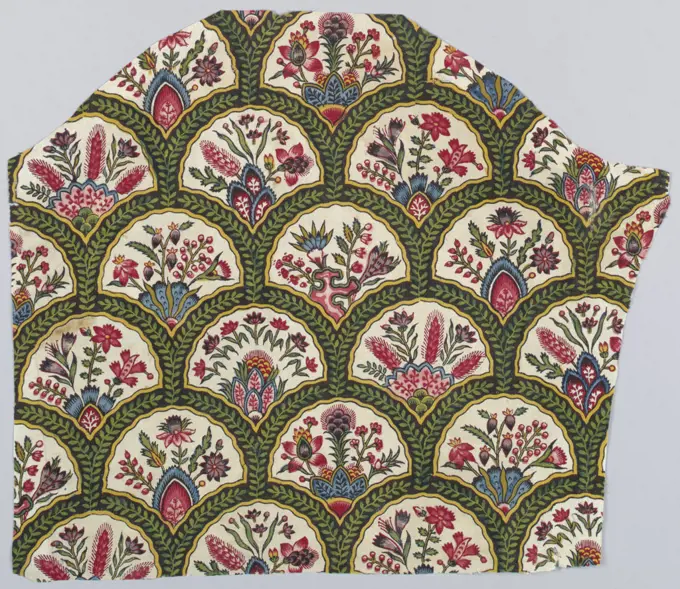
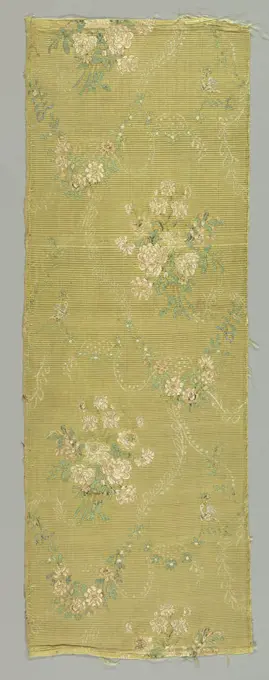
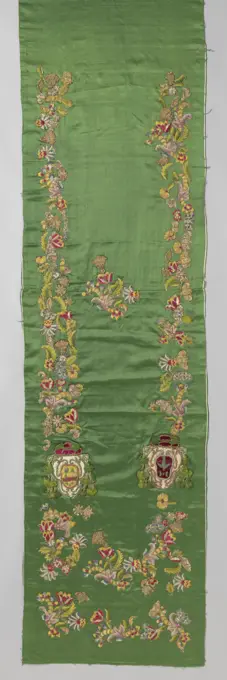
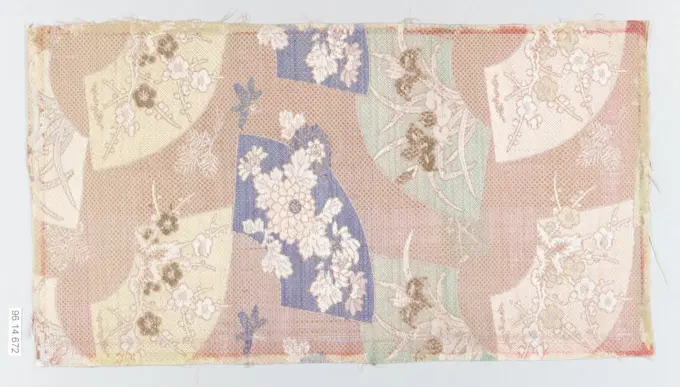
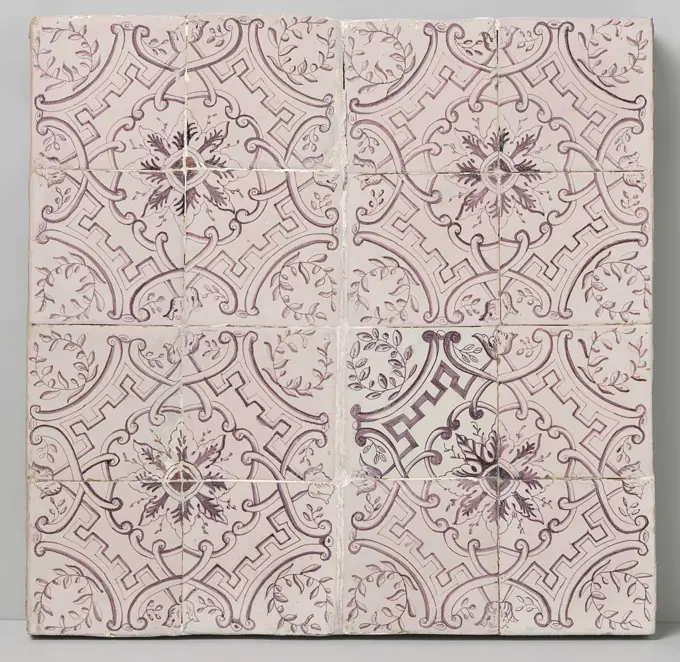
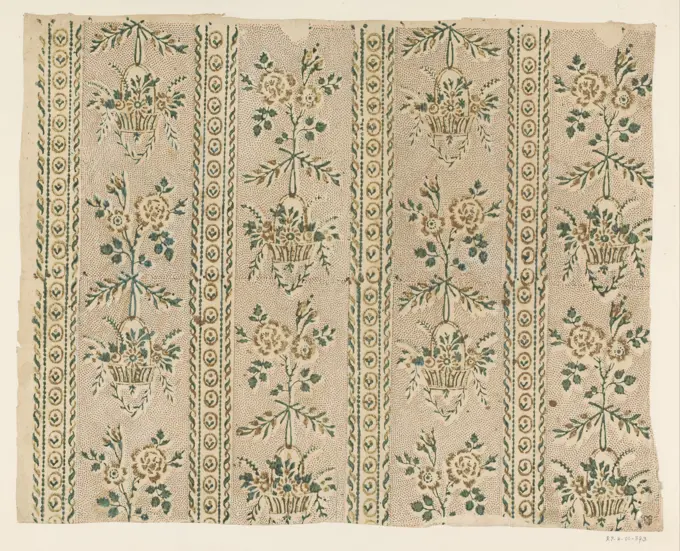
Fragment zijdeweefsel, anonymous, 1700 Fragment silk tissue with a striped pattern of light green, dark green, pink and white stripes on which flowers and tendrils in green and white. Netherlands silk Fragment silk tissue with a striped pattern of light green, dark green, pink and white stripes on which flowers and tendrils in green and white. Netherlands silkVeil; linenBook cover with overall paisley, dot, and stripe pattern 19th century Anonymous. Book cover with overall paisley, dot, and stripe pattern. Anonymous , 19th century. 19th century. Relief print (wood or metal). PrintsFragment Made 1800-1850 Japan. Single plain compound cloth, silk. .Panel Made 1780-1789 France. Linen and cotton, plain weave; block printed .Piece 18th century Japan. Piece 72130Textile (England); cottonChintz (India); cotton; Warp x Weft: 61 x 72 cm (24 x 28 3/8 in.)Fragment early 18th century Italian, Venice. Fragment. Italian, Venice. early 18th century. Silk, metal thread. Textiles-WovenSidewall, Robert Graves Co., New York, New York, Machine-printed paper, Iris design in clusters of two blossoms and one bud in rose with green leaves. These clusters alternate in parallel rows. The background consists of gray and ivory stripes. Running through the ivory stripe are two inter- facing wavy lines in frosted work. Printed in green, pink, and gray on ivory field. Printed in margin: 'Robert Graves Co. -6166 C'., USA, 1890-1900, Wallcoverings, SidewallTextile (USA); cottonFragment silk velvet brocade on golden soil with pomegranate pattern, anonymous, 1450 - 1525 Fragment silk velvet on golden soil. Design: on a stock-ignored stock in wine red pili-on-pile velvet and in some places curled gold, a pattern, consisting of a pomegranate, ombled in a large lobbed leaf, surrounded by a heavy roof wreath, varied with Two smaller leaves decorated in the same way. Note: Compare with BK-NM-12364. Italy silk. linen (material). metal thread Fragment silk velvet on golden soil. Design: on a stock-ignored stock in wine red pili-on-pile velvet and in some places curled gold, a pattern, consisting of a pomegranate, ombled in a large lobbed leaf, surrounded by a heavy roof wreath, varied with Two smaller leaves decorated in the same way. Note: Compare with BK-NM-12364. Italy silk. linen (material). metal threadPanel. France. Date: 1760-1765. Dimensions: 61.5 × 47.2 cm (24 1/4 × 18 5/8 in.)Repeat: 13.3 × 11.6 cm (5 1/4 × 4 1/2 in.). Silk, linen, silk chenille, and gilt-and-silvered-metal-strip-wrapped silk, plain weave derived float weave with supplementary brocading wefts and silvered-metal-strip supplementary facing wefts bound by secondary binding warps. Origin: France. Museum: The Chicago Art Institute, Chicago, USA.Embroidered kerchief trimming unknownSidewall; machine-printed on paper; Overall (c): 11 x 13.5 cm (4 5/16 x 5 5/16 in.)Textile, Oberkampf & Cie., (Jouy-en-Josas, France, 1759-1815), Medium: cotton Technique: madder colors applied by block; other colors applied by brush; plain weave foundation, Small-scale design of overlapping rounded arches, each containing flowers growing from mounds. Each arch is composed of a green vine on a brown ground. Printed in black, purple, blue, green, yellow, and several shades of red and pink on an off-white ground. Overlapping arched forms contain a variety of plants growing from mounds. The framing device is brown with yellow edges and a green vine within., Jouy, France, ca. 1795, printed, dyed & painted textiles, TextileTissue unknownFragment, Medium: silk Technique: 5-harness satin damask, Reddish-tan damask with a symmetrical medium-scale repeat of a vase of flowers in a ogival foliage frame. Tangents of ogives clasped by crowns., Italy or Spain, 16th century, woven textiles, FragmentTextile, Medium: silk, Silk pieces and border. Made of French 18th-century yellow ribbed silk brocaded with silks in serpentine floral design, trimmed with bands of silk striped maroon and red with yellow geometric figure., France, 18th century, woven textiles, TextilePortion from a Valance Made 1701-1725 England. Linen, plain weave over coarser and heavy plain weave linen, embroidered through both layers in wool yarns; in chain, long, short and feather stitches; French knots .Strip of the green silk wall with multi -colored embroidery, c. 1700 - c. 1799 Strip (wallpaper) From green silk with polychrome decoration on it, embroidered with silk and gold and silver thread. Also applied two on silk and velvet -embroidered prelate weapons, both covered with a red hat, twice of which six green brushes depend.  silk embroidering Strip (wallpaper) From green silk with polychrome decoration on it, embroidered with silk and gold and silver thread. Also applied two on silk and velvet -embroidered prelate weapons, both covered with a red hat, twice of which six green brushes depend.  silk embroideringEmbroidery sample for a man's suit. Culture: French. Dimensions: L. 13 1/4 x W. 11 1/8 inches (33.7 x 28.3 cm). Date: 1800-1815. Museum: Metropolitan Museum of Art, New York, USA.Piece 19th century Japan. Piece 66396Piece 18th-19th century Japan. Piece. Japan. 18th-19th century. Silk. Textiles-WovenTextile, Medium: silk Technique: 5-harness satin damask, Full width filled with a single vertical repeat of symmetrical bouquet of delicate spreading flowers in continuous ogival flowery framework. Broadcloth and warp twill selvages with narrow dark green and white stripes., France, mid-18th century, woven textiles, TextileTextile (France); cottonCeiling Paper (USA); Manufactured by Maxwell & Co., S.A. (United States); machine-printed paper, liquid mica; 94 x 49 cm (37 x 19 5/16 in.)Fragment early 19th century possibly French. Fragment 222663Piece 15th century Italian. Piece 216218Band (Italy); linen; 1959-100-1Textile, Medium: silk on cotton Techinque: embroidered on plain weave muslin, White cotton muslin flounce embroidered in silks with chain stitch. Repeat of large group of roses alternating with tiny pansy or violet. Bottom scalloped with maroon., ca. 1770, embroidery & stitching, TextileArmchair seat cover, 1685-1690. England, period of James II, 17th Century. Needlepoint; overall: 69.9 x 67.3 cm (27 1/2 x 26 1/2 in.).Textile, Medium: cotton Technique: relief printed, Fragment, unevenly shpaed, of cream white cotton with design, block-printed of fine trailing vine and natural size clusters of small wild flowers, in shades of red, violet, blue, black for outlines and faded drab. (If yellow was used, it has faded out). One selvage present, sewed in seam., England or France, late 18th-early 19th century, printed, dyed & painted textiles, TextileBrocaded Silk Textile, 1900-1930. Italy, early 20th century. Brocade, silk; overall: 55.2 x 57.2 cm (21 3/4 x 22 1/2 in.).Textile, Medium: silk Technique: 4&1 satin patterned by plain weave (lampas), Floral arabesques forming an over-all fleur-de-lys pattern, with green, yellow and white floral detail and filling on a rose-red ground., Spain, 15th-16th century, woven textiles, TextileSidewall (USA); Manufactured by Carey Bros. W.P. Mfg. Co.; machine-printed paper, textured, liquid mica; 91 x 49.5 cm (35 13/16 x 19 1/2 in.)Linen curtain with orange flowers unknownFragment (France); silkFragment (France); silk, metallic; 1900-6-3Fragment (Needlework) Made 1750-1800 Europe. Silk and silver gilt strip, plain weave with supplementary facing wefts; embroidered with silk floss and gold- and silver-gilt strips wound around silk fiber cores in herringbone, satin, and stem stitches; laid work of gold gilt coils; couching and padded couching .Textile (India); cotton; Warp x Weft: 36 x 37.5 cm (14 3/16 x 14 3/4 in.)Tile field with sixteen tiles. Tile field of 16 tiles (4 x 4) with purple painted ornaments of leaves, curling and meander. Four tiles form a rosette together in the middle.Sidewall (USA); block-printed; 46 x 26 cm (18 1/8 x 10 1/4 in.)Blade with job pattern of flower baskets on points stock and decorative frame, anonymous, 1700 - 1850  Leaf with a job pattern of hanging flower baskets on points stock and decorative frame.  paper. block printing (relief printing process) ornament derived from plant formsFragment, 1800s. China or Japan, 19th century. Silk; overall: 35 x 21.6 cm (13 3/4 x 8 1/2 in.).Ceiling Paper (USA); Manufactured by Maxwell & Co., S.A. (United States); machine-printed paper; 86.5 x 49 cm (34 1/16 x 19 5/16 in.)Hanging (India); cottonFragments, 1100s - 1300s. India, 12th-14th century. Plain cloth, resist dyed; cotton; average: 19.4 x 10.2 cm (7 5/8 x 4 in.).Piece mid-18th century French. Piece 223177Sidewall Sample; machine-printed on paper; 22.5 x 22.5 cm (8 7/8 x 8 7/8 in.)Coverlet Made 1840-1845 United States. Cotton and wool, plain weave double cloth; warp and weft fringe; woven on loom with Jacquard attachment .Band (Italy); silk on linenFragment, Medium: silk, linen Technique: double cloth, Fragment of woven silk with a symmetrical framework of scrolling leaves, confronted birds. In faded blue and gold., Spain, 17th century, woven textiles, FragmentFragment (France); 1902-1-304silk; Bequest of Richard Cranch Greenleaf in memory of his mother, Adeline Emma Greenleaf; 1962-56-189-a,bSkirts of white taf side, at the bottom decorated floral vessels, anonymous, c. 1750 - c. 1800 Rock buildings of white taf side, at the bottom decorated floral vessels, two pieces sewn. Netherlands (possibly) silk. taffeta embroidering / sewing Rock buildings of white taf side, at the bottom decorated floral vessels, two pieces sewn. Netherlands (possibly) silk. taffeta embroidering / sewingTextile, Medum: cotton Technique: block printed (two reds, purple, black, yellow-green) with yellow and blue applied by brush on plain weave, Small scale floral pattern in multi- color on drab background., France, ca. 1800, printed, dyed & painted textiles, TextileLap van geborduurde zijde.Lap of two embroidered silk together, with pattern of flower branches in green, pink, blue, yellow and grayBed hanging, Medium: silk, metal-wrapped silk-core threads Technique: embroidery in satin and couching stitches on plain weave foundation, Bed hangings of heavy white silk, embroidered in gold thread, gold foil strips, and colored silks. Each panel is made up of two breadths of fabric seamed down the center and is lined in white silk plain weave. The design is arranged so that golden rococo curves meet at the center seam to form a symmetrical v-shaped pattern, with flowering branches and birds, worked in satin stitch in colored silks. While the flowers are symmetrical, the birds are vertically off-set; each panel shows eleven birds, all different, which appear to be taken from a set of ornithological prints by Xaviero Manetti. Metallic effects in several textures are created with couched crimped gold lamella and couched foil-wrapped silk-core threads., France, 1730-70, embroidery & stitching, Bed hangingPurse, Medium: silk Technique: embroidered, Sewing case in the form of a pocket book with a metal clasp. Cover of green silk taffeta with embroidery in black silk with beads. LIning of white silk with black feather-stitch., USA, 19th century, costume & accessories, PurseBorder, Medium: silk, Multicolored border with a symmetrical scroll and leaf pattern., France or USA, 19th century, woven textiles, BorderTextile, Medium: silk Technique: compound satin, brocaded, Pink satin ground with a diagonal arrangement of flowering branches and hanging fruit. In shades of pink, green, yellow, violet and blue. Selvage to selvage, Italy or Spain, ca. 1730, woven textiles, TextileFragment, Medium: silk Technique: 5-harness satin damask, Damask lining for components a/c., France, 1750-1800, woven textiles, FragmentTextile; cottonFragment; silk, metalPiece 17th century Japan. Piece 71849Handkerchief ca. 1850 J.J. Nef. Handkerchief 229331Ceiling Paper (USA); Manufactured by Maxwell & Co., S.A. (United States); machine-printed paper, liquid mica; 92 x 49 cm (36 1/4 x 19 5/16 in.)Textile, Medium: cotton Technique: block printed, with blue and yellow applied by brush, on plain weave, Fragment of printed cotton with a flowering tree in which a bird is perched; another small branch with roses fills the space above the tree, and large blossoms at the base of the tree., 1750-1800, printed, dyed & painted textiles, TextileNapkin with scenes from the history of Pyramus and Thisbe, Quirijn Jansz. Damast (Possible), c. 1650 - c. 1674 Linnamast napkin with scenes from the history of Pyramus and Thisbe. Midfield: The symmetrically doubled pattern shows four scenes: 1 A lion contains the veil of Thisbe, which she lost, with its bloody mouth. In the middle the fountain, from where this flees away. 2 In the middle is Pyramus, with boots with wide caps, and looks at the veil, which he has picked up and recognizes. 3 Thisbe plunges into the sword of Pyramus, the backs of the back. 4 Meeting of Pyramus and Thisbe at the hole in the wall. A stone wall is visible against a background of Renaissance houses, on either side of which the two are loved ones; she in suspended overlay, sévigné hairstyle with hanging veil, and half sleeve; He in Rhingrave and Lage Lange Wig. Standing and lying edges: fruit basket with symmetrical upright stem, which among other things: Carnation, Tulp, Narcis and Pomegranate. Haarlemkortrij. Letter bag (portfolio) with different types of embroidered colored flowers on a red fond. At the rear is 'Constantinopoli 1727'.Joseph Lubrano, Printed Textile, c 1941 Printed TextileFrieze, Maxwell & Co., S.A., Chicago, Illinois, USA, Machine-printed paper, Printed two borders across the width. Floral sprigs spread out amongst foliate scrolls. Top half of background is colored very pale green, while the lower half is deeper green, USA, 1905-1915, Wallcoverings, FriezeCeiling paper, Keystone Wall-Paper Company, Machine-printed paper, On light blue ground, cluster of white flowers and rinceaux in pinwheel shape., Pittsburgh, Pennsylvania, USA, 1905-1915, Wallcoverings, Ceiling paperFragments, Medium: silk, metallic thread Technique: woven, Large scale flowers and foliage in several colors on a dark green background., France, ca. 1835, woven textiles, FragmentsTextile, Medium: cotton Technique: cut and voided velvet, Upholstery weight cotton velvet with a design of regularly spaced symmetrical floral sprays in two shades of coral with touches of white where the backing fabric shows through., possibly USA, mid-19th century, woven textiles, TextileShawl fragment, Medium: wool Technique: tapestry weave with interlocking, Very brightly colored flowers of various kinds including a rose in a curving spray on a white ground. Very fine wool in a superlative use of tapestry technique including interlocking hatching. Several shades of each color. Appears to be part of a longer panel with other flowers. Selvage on each side., Russia, 19th century, woven textiles, Shawl fragmentChalice cover, Medium: linen Technique: bobbin made continuous tape with net added, Chalice cover edged by border of Milanese lace of large and bold floral pattern., Milan, Italy, 18th century, lace, Chalice coverFragment multicolored silk mexicaine, anonymous, c. 1750 - c. 1800 A fragment of white, green and pink striped side, between which small colored bouquets. France (possibly) silk A fragment of white, green and pink striped side, between which small colored bouquets. France (possibly) silkTextile (France); silk; Warp x Weft: 140 x 54 cm (55 1/8 x 21 1/4 in.); 1955-34-3Rug;  around 1850 (1845-00-00-1855-00-00);KilimyCraft: embroidered cross-stitch flowers beautiful. Needlework: embroidered criss-cross pattern of beautiful flowers on canvas. Handmade. Copyright: xZoonar.com/GalinaxTolochkox 11557558Sample Made 1825-1850 France. Silk and straw, bands of complex gauze weave self-patterned by areas of plain weave and areas of main warp floats over plain interlacing; and band of weft-float faced satin weave with supplementary facing wefts tied by supplementary binding warps in plain interlacing and self-patterned main warp floats .Sample (USA); Manufactured by Orinoka Mills (United States); 1989-80-44Fragment, 1100s - 1300s. India, 12th-14th century. Plain cloth, resist dyed; cotton; overall: 12.3 x 15.5 cm (4 13/16 x 6 1/8 in.).Textile, Schwartz-Huguenin, Medium: cotton Technique: printed on plain weave, A) Ground molotte printed in grey in zig-zag and meandering ivy pattern; over-printed with detached flower clusters in pink, blue, yellow and green. B) Similar ground, smaller vine; over-printed with large floral sprays and detached rosebuds in reds, pinks, yellow, blue and greens., mid-19th century, printed, dyed & painted textiles, TextilePiece 17th century Japan. Piece 71893Textile (France); silk, metallic thread; Anonymous bequest in memory of Albert and Rebecca Elsberg; 1938-82-44-eSarong Fragment (Indonesia); cottonPiece 18th century Japan. Piece 71096Fragment of Painted Taffeta, 1723-1774. France, 18th century, Louis XV Period (1723-1774). Hand painted silk; overall: 35.5 x 36.2 cm (14 x 14 1/4 in.).Antependium;  beginning of the 18th century (1700-00-00-1710-00-00);slashed silk satin, Medium: silk Technique: flocked satin weave, Red satin patterned by flocking and small cuts in fabric., 17th or 18th century, slashed silk satinFragment (Japan)Fragment, early 1600s. France or Spain, early 17th century. Silk damask; overall: 62.5 x 41 cm (24 5/8 x 16 1/8 in.).Tapestry;  18th century (1701-00-00-1800-00-00);Makata, ZakupTextile (England); cottonFragment relief flesh of silk., C. 1500 A velvet tissue. On a yellow, scarce with gold -through soil, in red velvet and in some places curled gold, a large pattern consisting of a wide bent band with a flared stem in it. Note: Not put together but laid out on the surface.  silk. velvet (fabric weave) A velvet tissue. On a yellow, scarce with gold -through soil, in red velvet and in some places curled gold, a large pattern consisting of a wide bent band with a flared stem in it. Note: Not put together but laid out on the surface.  silk. velvet (fabric weave)Fragment. Japan. Date: 1775-1800. Dimensions: 12.9 × 17.1 cm (5 × 6 3/4 in.). Silk, plain weave with paired warps and self-patterning wefts. Origin: Japan. Museum: The Chicago Art Institute, Chicago, USA.Fragment multicolored silk pekin ,, 1750 A fragment of white silk tissue with pink, blue and red stripes. Colored bouquets of garlands. Netherlands silk A fragment of white silk tissue with pink, blue and red stripes. Colored bouquets of garlands. Netherlands silkFragment 18th century French. Fragment 230807