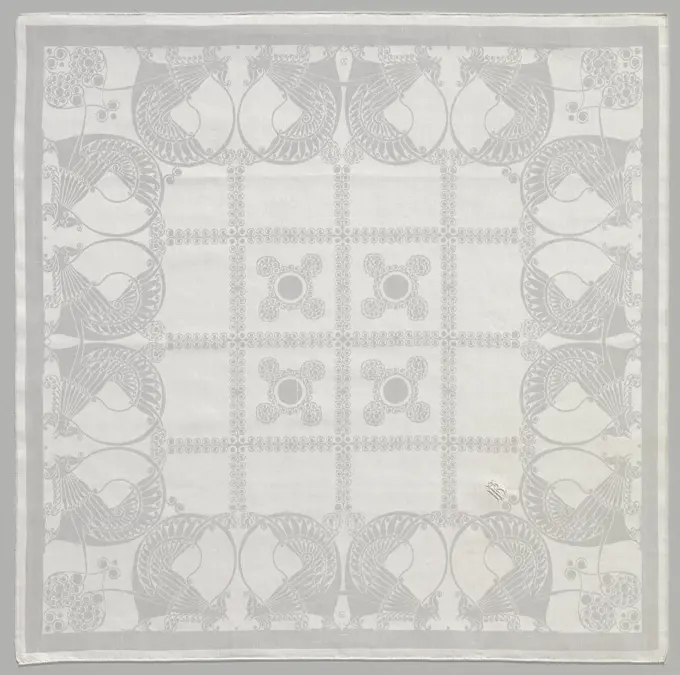
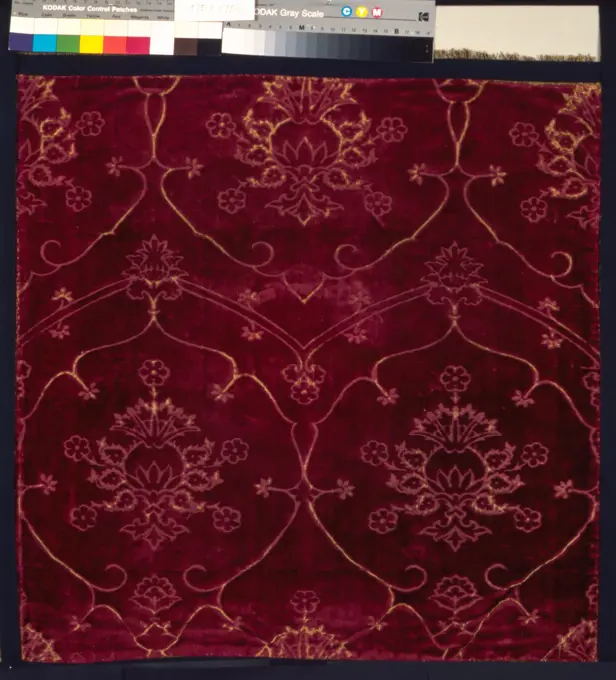
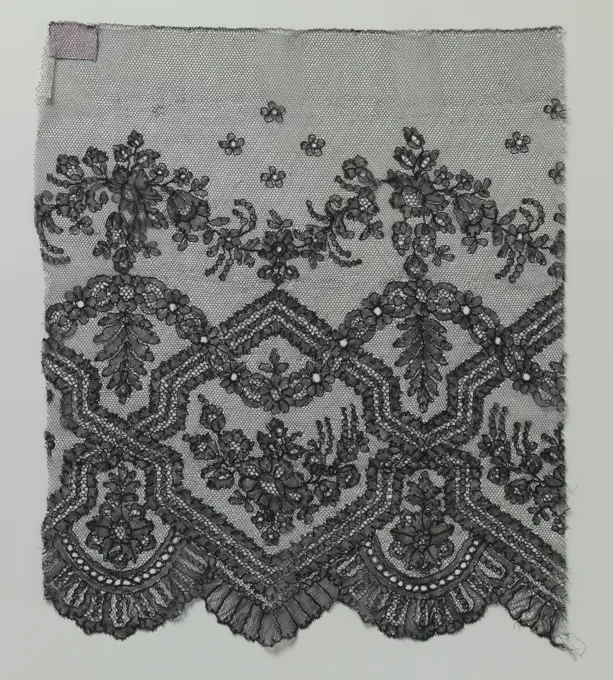
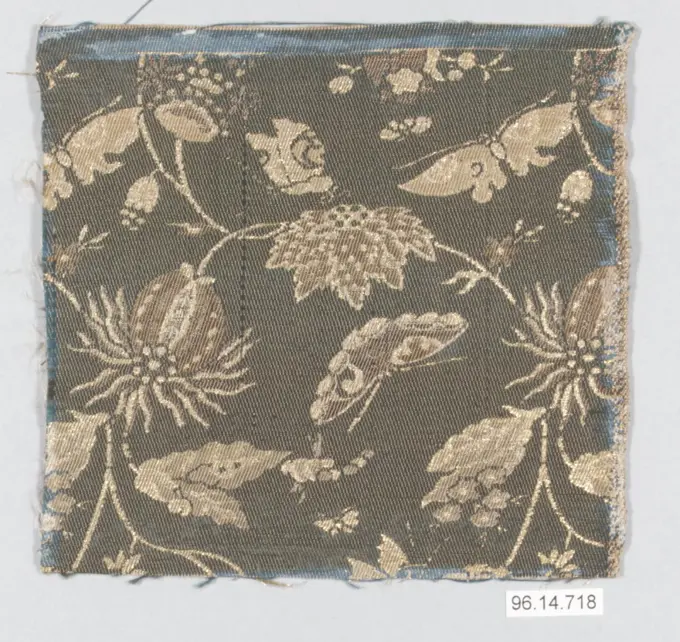
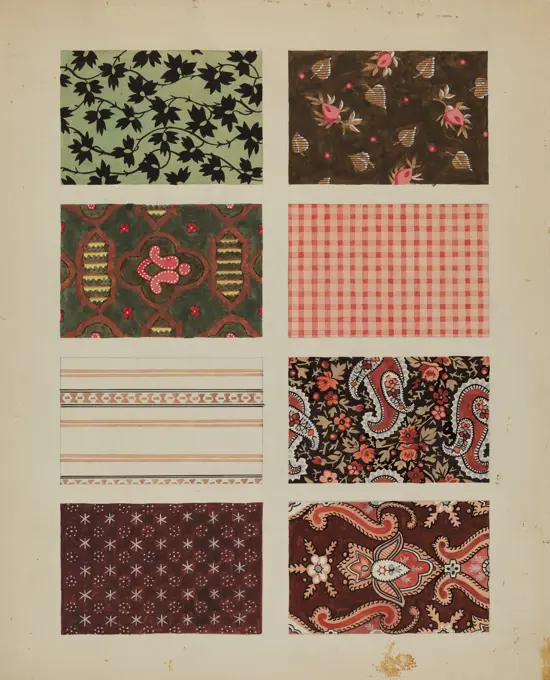
Textile Fragments

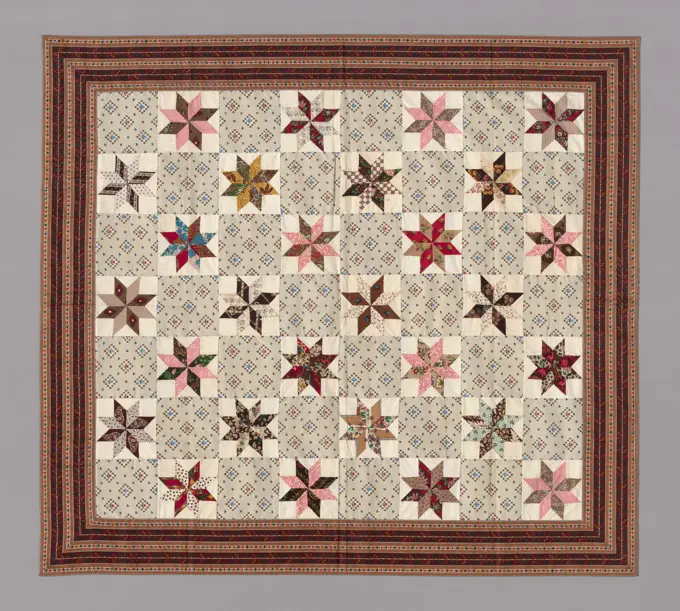
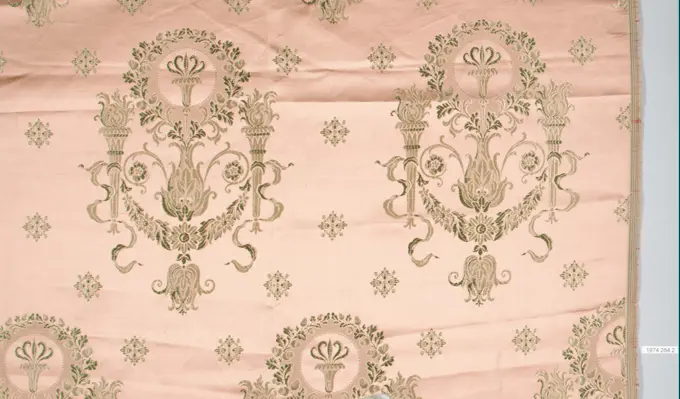
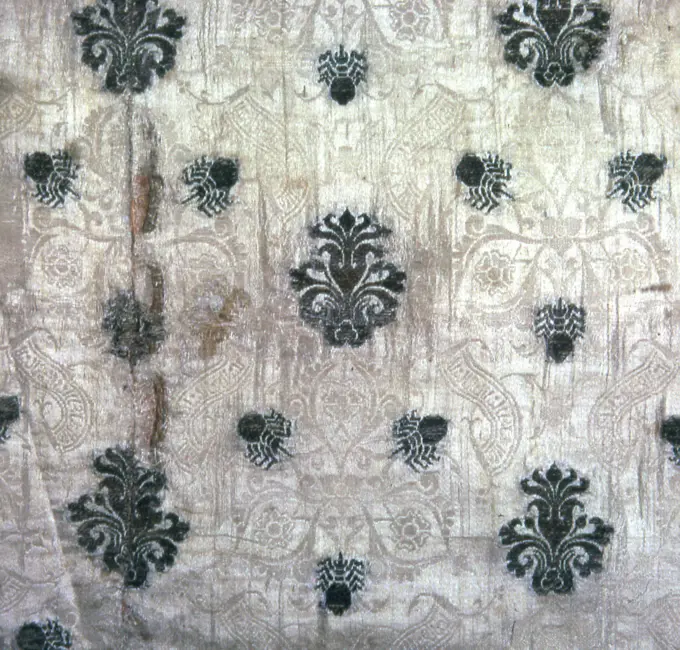
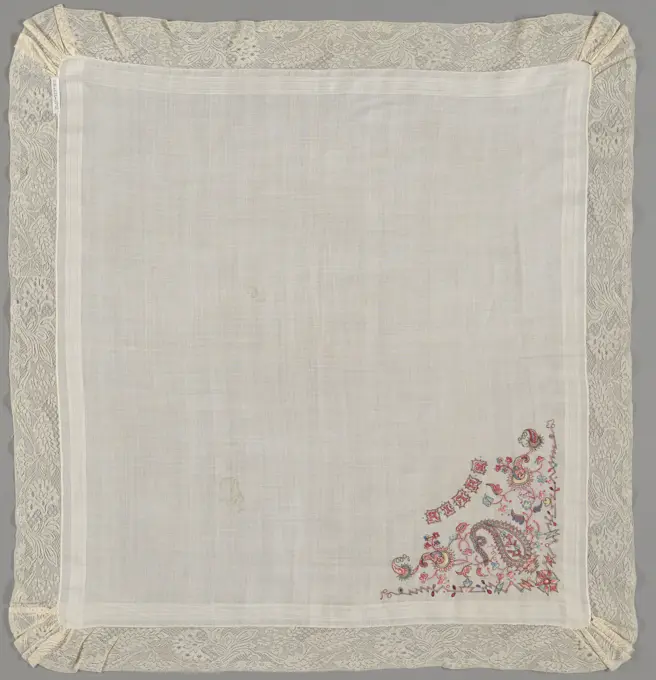
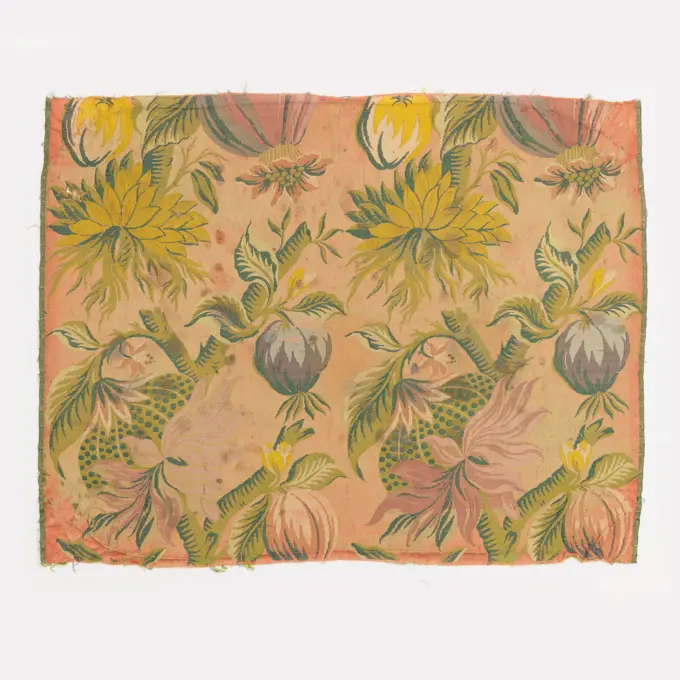
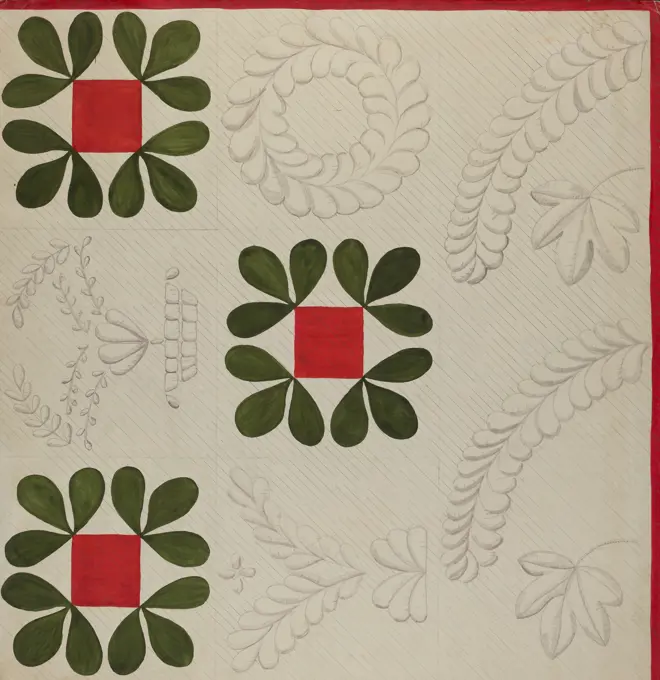
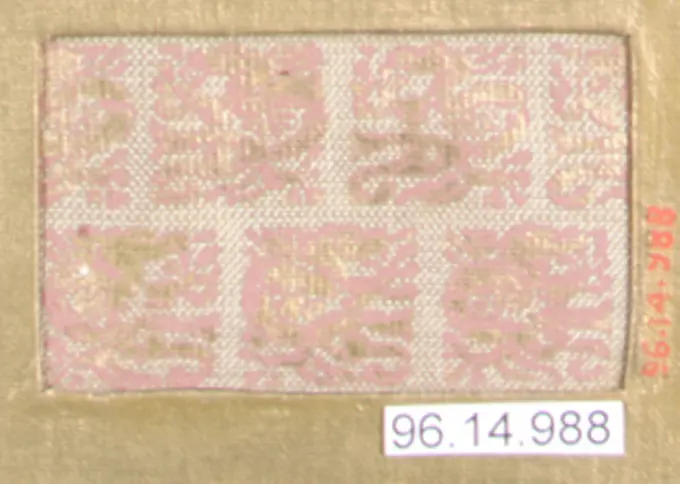
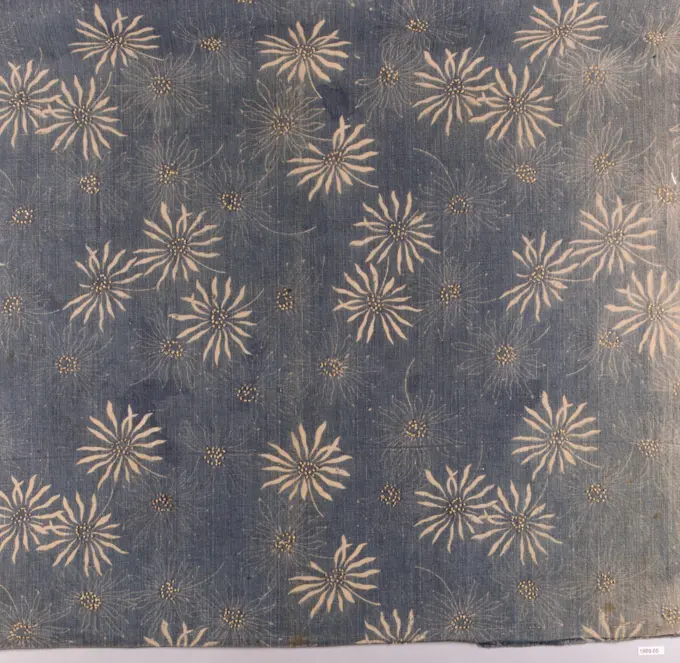
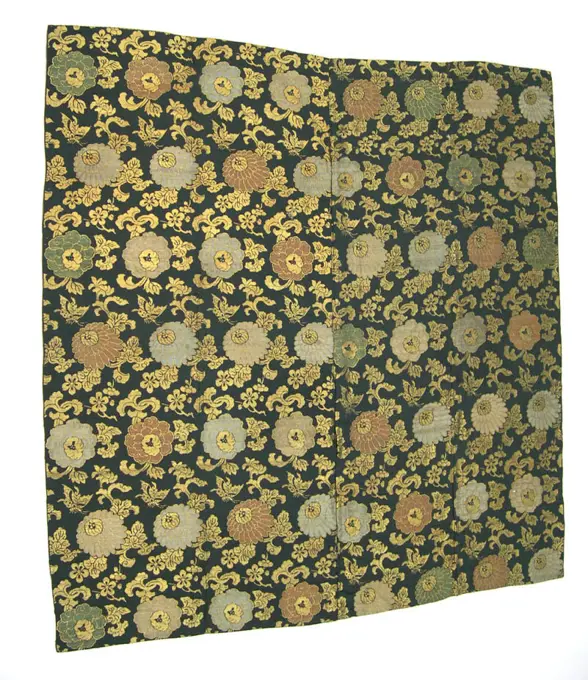
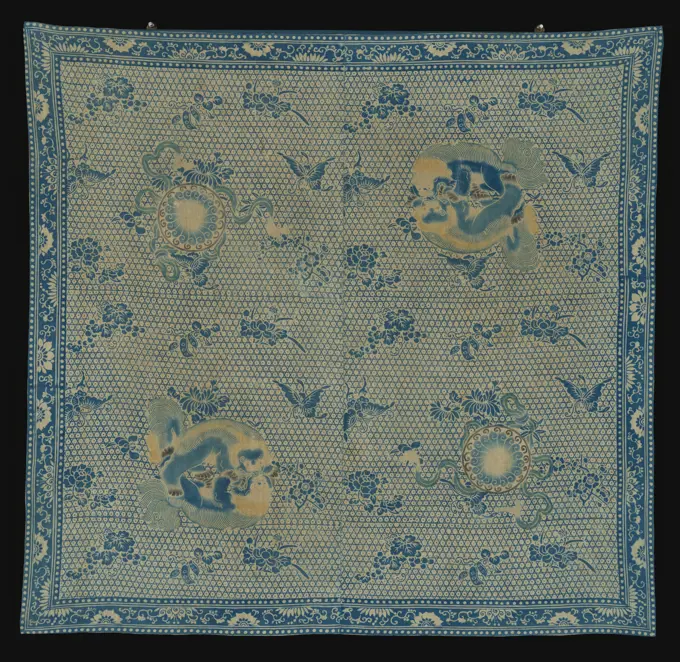
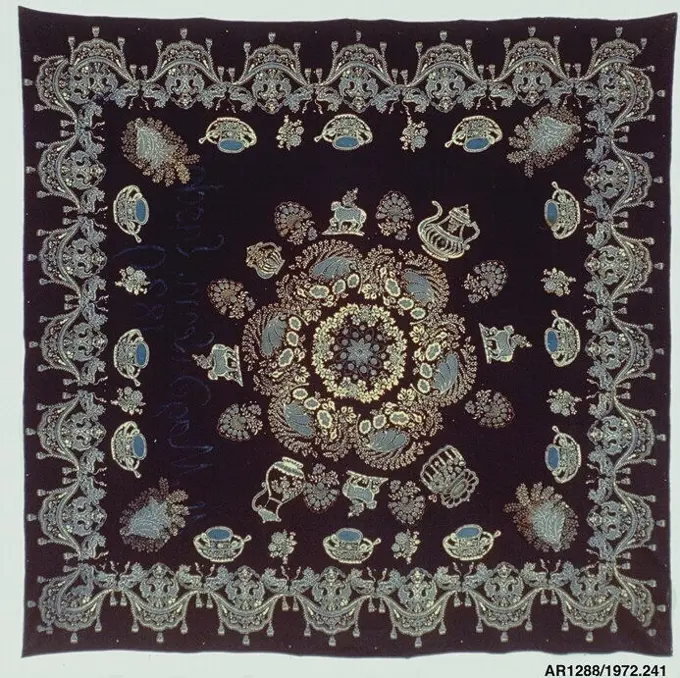
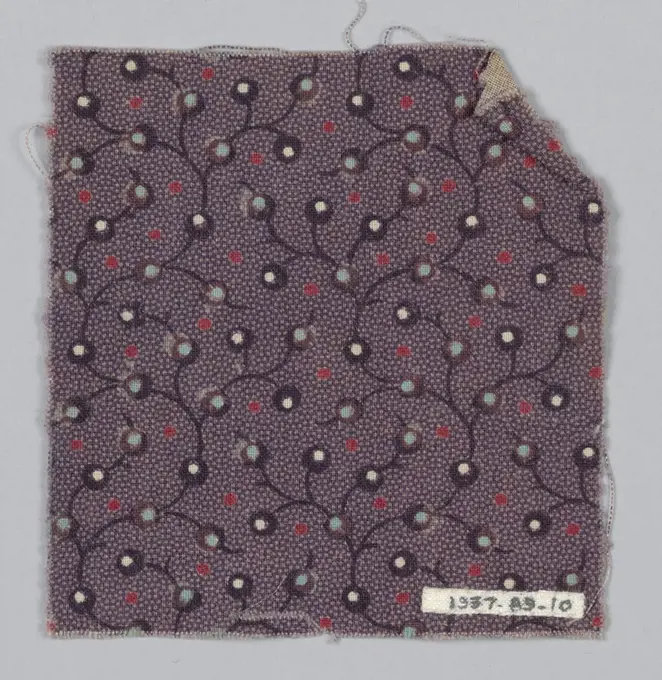
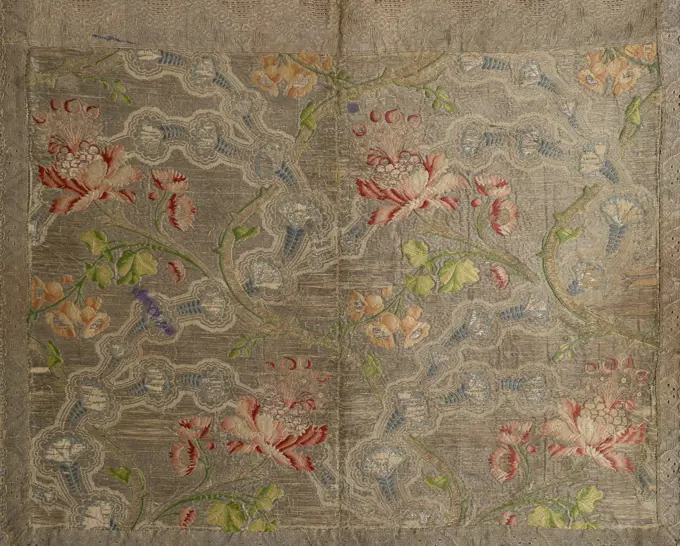
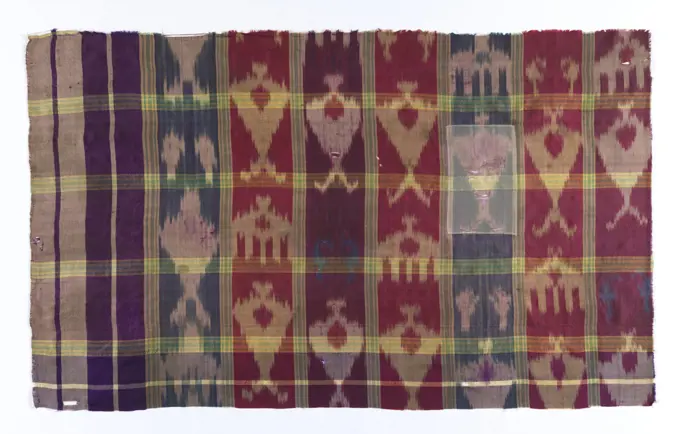
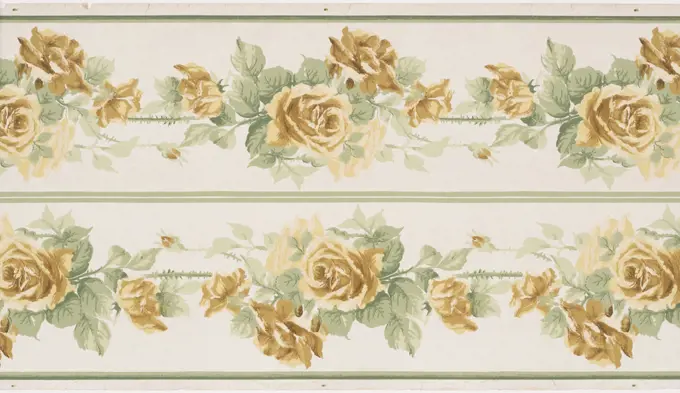
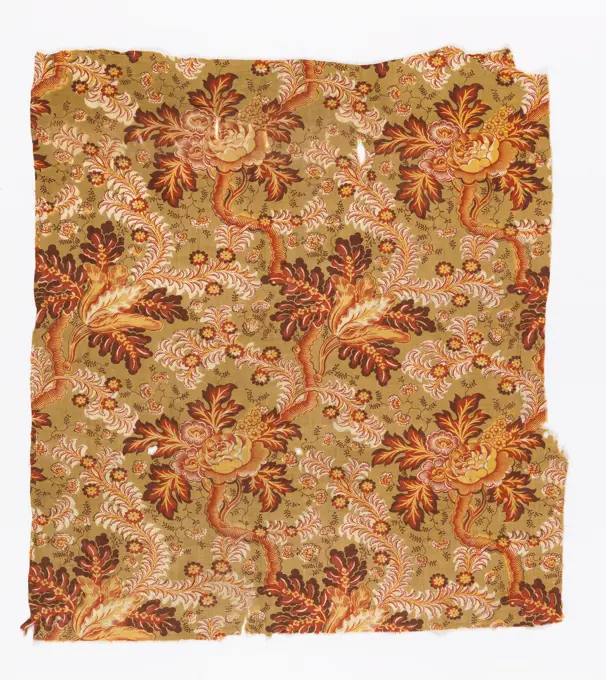
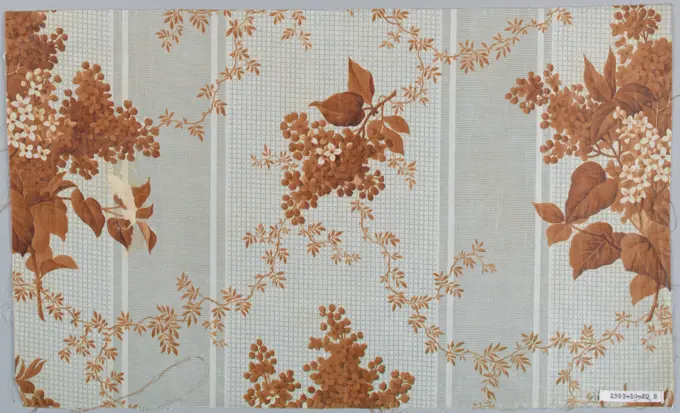
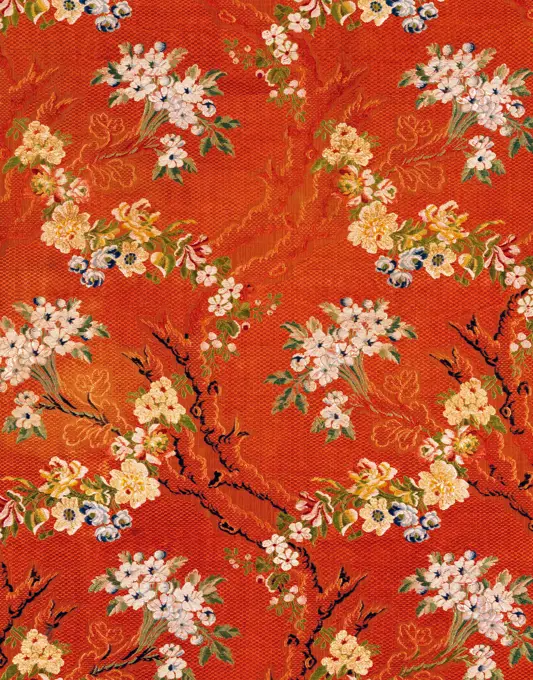
Historical textile fragments showcasing intricate designs in floral and damask patterns. The colors include muted greens, pinks, and golds, portraying a vintage feel.

Textile, Medium: cotton Technique: printed by engraved roller, White cotton, roller printed in shades of brown on greyish ground. Flower clusters around an urn of water on which perch two birds; snake coiled at side. Below urn minute naked figures appear. White cotton scallop fringe attached at bottom., 1850-99, printed, dyed & painted textiles, Textile
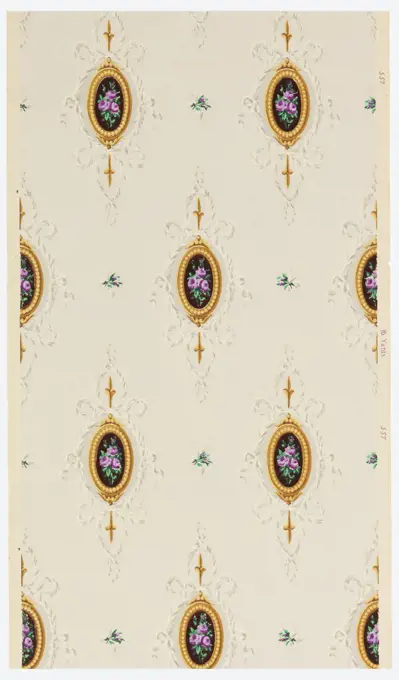
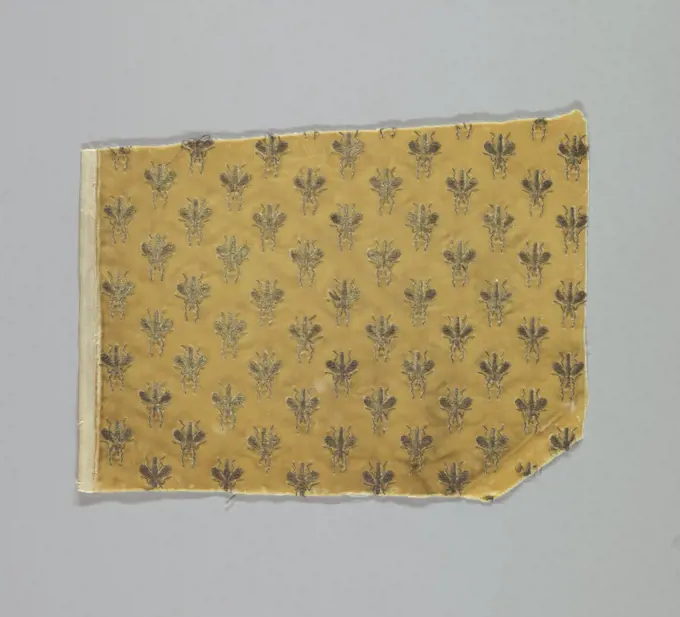
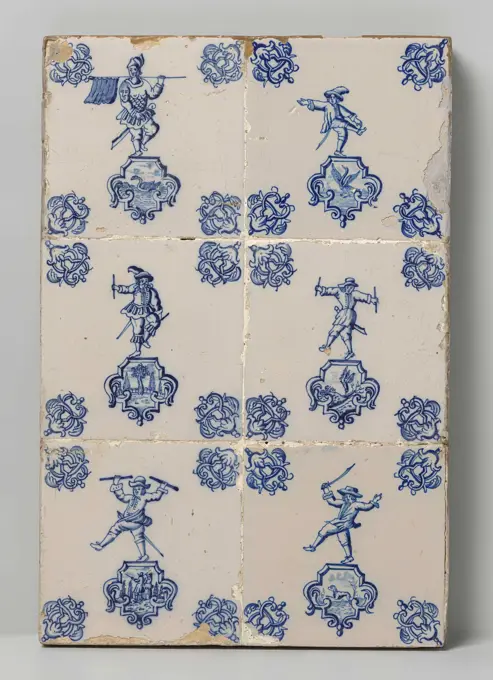
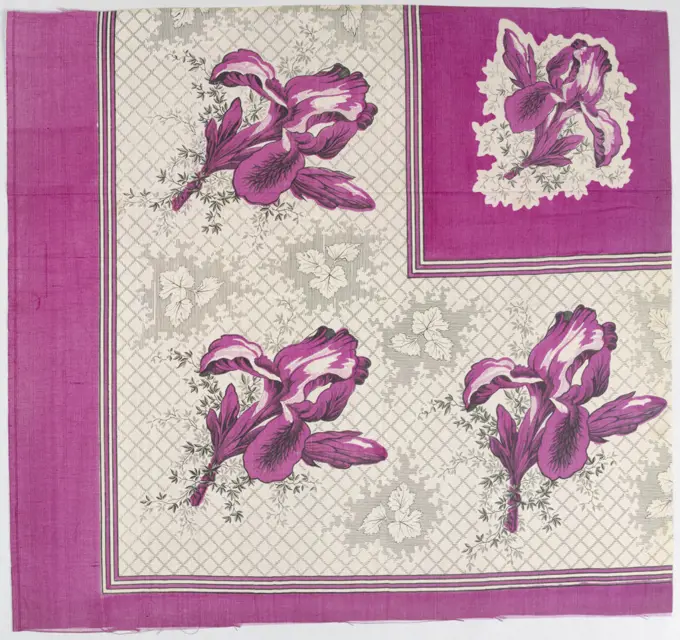
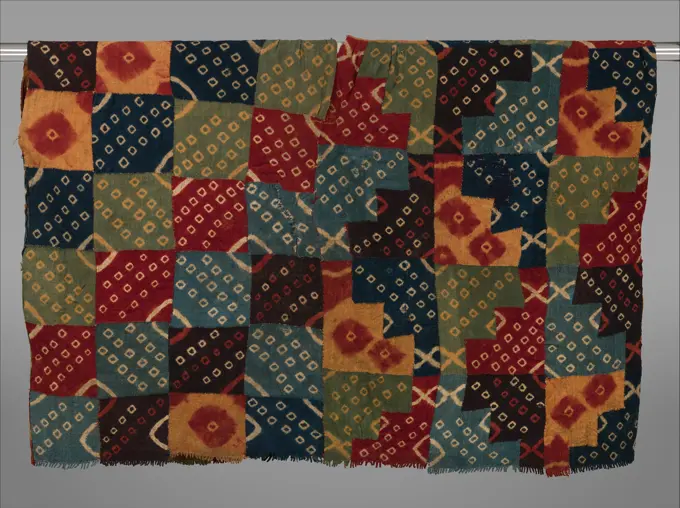
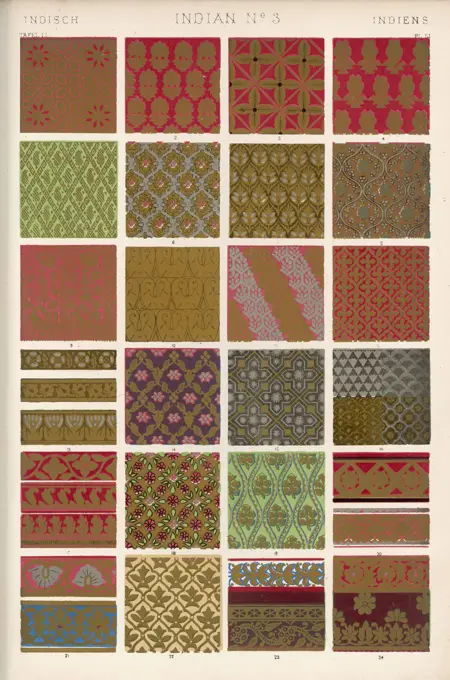
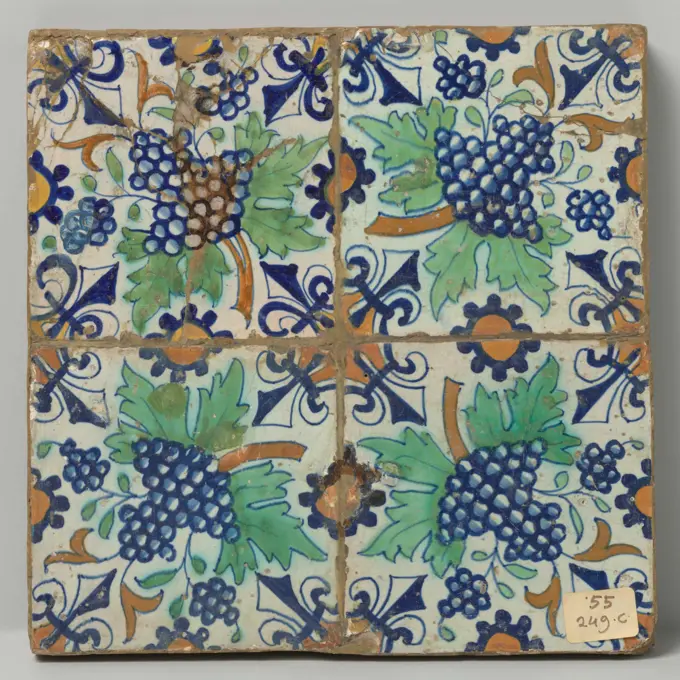
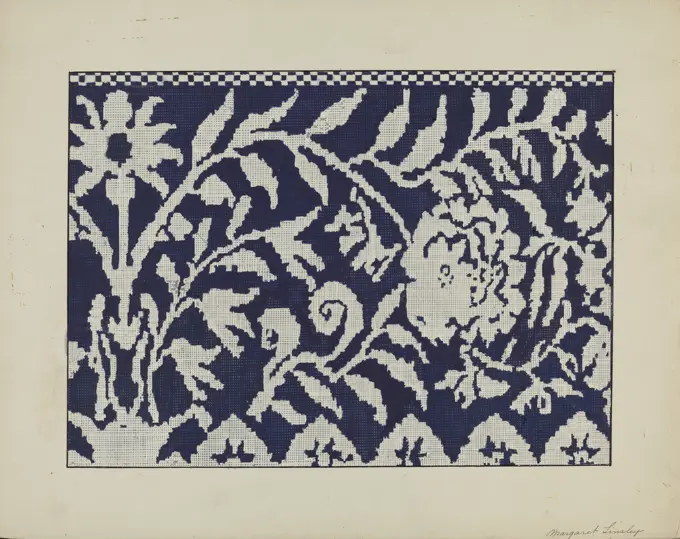
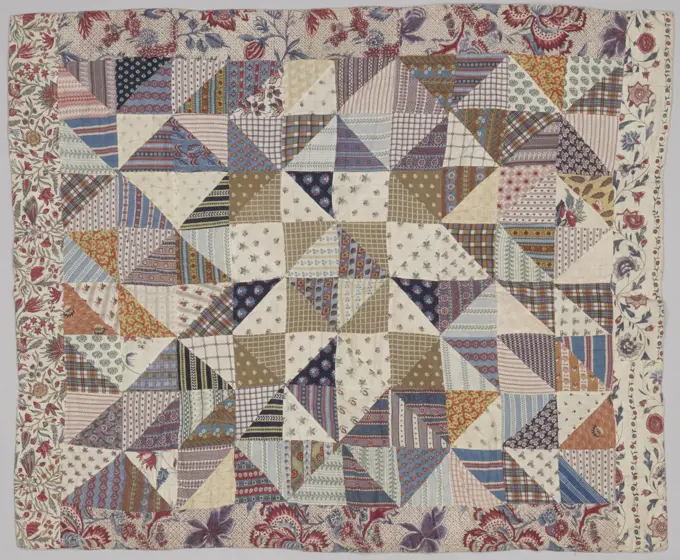
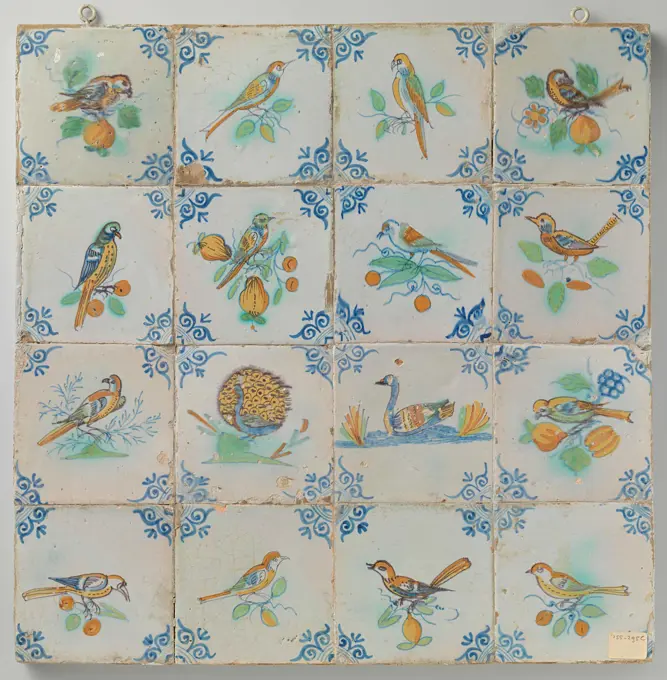
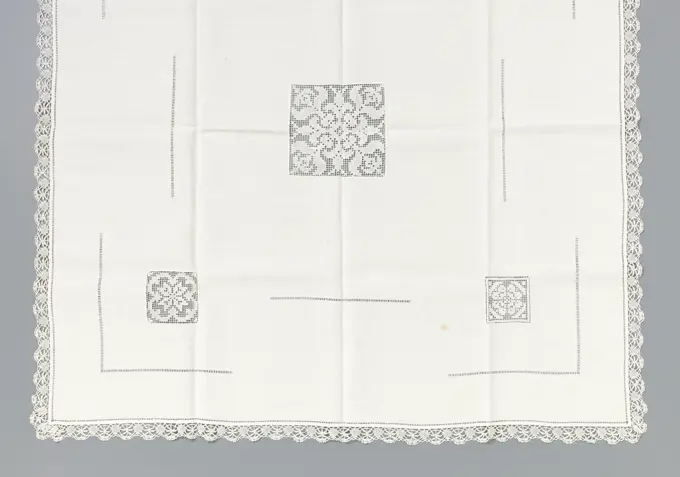
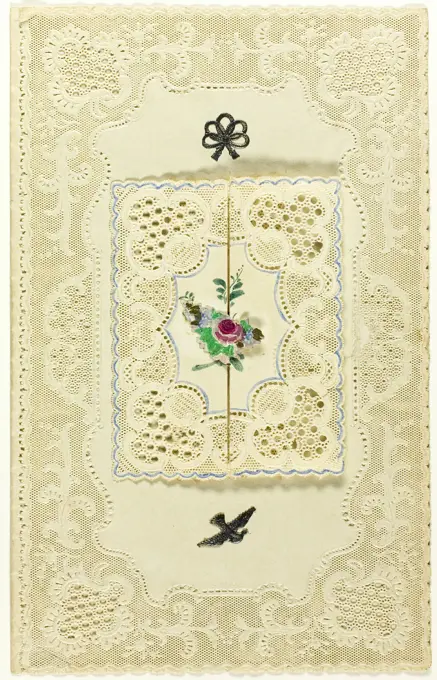
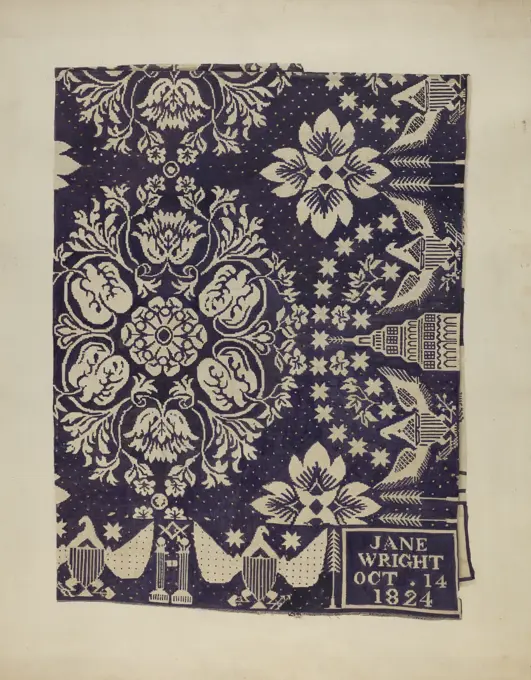
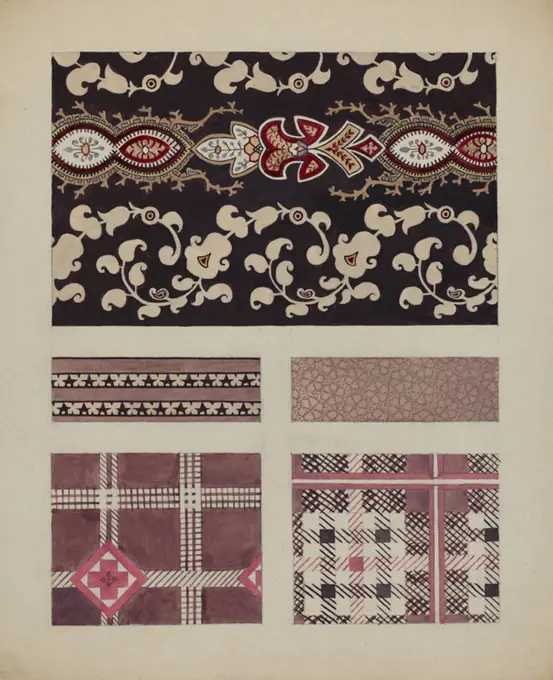
Upholstery panels for a side chair ca. 1763-64 German, Würzburg The settees and chairs illustrated here (see 1974.356.114-.121) were made for the Franckenstein Pavilion in the gardens of Seehof Castle near Bamberg, one of the three summer residences in Southern Germany used by Adam Friedrich von Seinsheim, prince bishop of Würzberg and Bamberg. A true garden enthusiast, it was under von Seinsheim that the gardens of Seehof were embellished, which must have resembled the still extant Rococo gardens completed by von Seinsheim at Veitshöchheim. His love for gardens and garden imagery also carried over into the interior decoration and furnishings of his castles, as the Seehof furniture demonstrates. A unique example of German Rococo furniture executed in a more flamboyant style than its French prototypes, the ensemble was designed specifically for the Garden Room in the Franckenstein Pavilion. Used as an audience room, it was referred to as the "Green Trellis Chamber" in the 1774 Seehof inPiece 18th century Japan. Piece. Japan. 18th century. Silk / Compound weave. Edo period (1615-1868). Textiles-WovenTable Cover Made 1875-1900 United States. .Textile; cottonPiece 1880s French. Piece 229458Fragment; silkPatchwork Quilt. Dated: c. 1936. Dimensions: overall: 29.5 x 22.8 cm (11 5/8 x 9 in.) Original IAD Object: 104" wide; 106" long. Medium: watercolor, graphite, and gouache on paperboard. Museum: National Gallery of Art, Washington DC. Author: Irene Schaefer.Sidewall, Machine-printed paper, Small oval medallion with beading containing bouquet of purple flowers. Medallion is surrounded by foliate and ribbon filigree. Printed on light gray ground., possibly USA, 1860-70, Wallcoverings, SidewallChasuble, c. 1760-1770. France, Lyon, 18th century. Taffeta, brocaded; silk, silver, and gold thread; overall: 121.8 x 73 cm (47 15/16 x 28 3/4 in.).Border (France); block-printed paper, flocked; 56.5 x 28 cm (22 1/4 x 11 in.)Textile, Medium: silk, metal-wrapped silk Technique: supplementary warp velvet in a 3/1 twill foundation, cut loops. Embroidered in satin stitch using a 3-ply metal-wrapped silk thread., Coffee-colored velvet embroidered with golden bees in off-set repeat., France, early 19th century, embroidery & stitching, TextileFragment Made 1301-1400 Italy. Silk and gilt-animal-substrate-wrapped linen, warp-float faced 4 1 satin weave with supplementary patterning and brocading wefts bound by secondary binding warps in plain and twill interlacings .Tissue Nidecka studioSidewall - Fragment (USA); machine-printed on paper; 20.5 x 17 cm (8 1/16 x 6 11/16 in.)Sidewall (England); Designed by Louis Stahl; Company: Arthur Sanderson & Sons, Ltd. (United Kingdom); machine-printed paper; 150.5 x 56 cm (59 1/4 x 22 1/16 in.)Fragment, Medium: silk, metallic Technique: supplementary warp forming raised pile in plain weave foundation with supplementary wefts, Scale pattern on gold ground., 16th century, woven textiles, FragmentLength ca. 1855 French. Length 229960Textile; silkPiece 17th century China. Piece 71869Rug Made 1801-1900 United States. Variety of fibers, plain weave with variety of fibers, yarns, felted, knitted, oblique interlaced and/or woven strips, forming hooked pile .Textile, Medium: silk, gold-wrapped silk core thread Technique: slashed and embroidered satin weave, Red silk satin with all-over embroidered pattern of lobed ornaments and leaves, interspersed with small diagonal slashes. Lined with yellow silk taffeta., Italy, 16th century, embroidery & stitching, TextileKatherine Hastings, Quilt, c 1936 QuiltNapkin with Dessin Haantjes, 1888 - 1945  Eindhoven linen (material) damask  Eindhoven linen (material) damaskPiece 18th century Japan. Piece 71365Cover mid to late 15th century Italian. Cover 461540Strip bobbin with rose branch in hexagon and two wavy flower garlands, anonymous, c. 1860 - c. 1875 Strip of black bobbin: chantilly side. The strip is part of a longer strip that is used for a crinoline dress. The repeating pattern consists of hexagonal fields, which are formed intersecting intersecting decorative tires. There is a rose branch in every hexagonal field. Two synchronous wavy flower garlands run above the hexagons, the lower sling of which cuts the top points of the hexagons. Between the hex corners, the lower flower garland and the sculpe edge, bell -shaped fields are created, with one large rose in the bottom and in the mirrored bell -shaped field above it has a spring -shaped leaf. The motifs are made in netslag with contour threads and they are connected by a fine grid, a tuler land. As a decorative land, a rose soil has been used in flower hearts and decorative tires, among other things. The top of the strip is straight finished. The scrap edge along the underside oPiece 19th century Japan. Piece 66442Field of six tiles. Field of six tiles (3 x 2) each with a blue painted pots maker on console. In the corners, a Regence motif.Piece 16th-17th century Italian. Piece 223457Scarf sample, Medium: silk Technique: printed on plain weave, Quarter of a printed scarf with iris pattern in both the border and field. In magenta and black., France, mid-19th century, printed, dyed & painted textiles, Scarf sampleEmbroidery, Medium: silk, metal thread on linen Tecnhnique: running sittch embroidery and couched metal thread, Linen, embroidered in red silk and metal thread. Pattern of detached motifs in alternate rows; one row a stylized plant evolved from fleur-de-lys; second irregularly-shaped floral spray. Red silk running stitch form outline of pattern; parts worked in couched metal thread (gilded parchment wound on linen core. Loops at one end for fastening by cord. Backed with linen pieces., Italy, 16th century, embroidery & stitching, EmbroideryDiamond pattern of points and overhoekse squares with fruit and field filling in purple and green, cover with label, anonymous, 1750 - 1900  Leaf with windscreen pattern of points and overhoekse squares with flower as field filling. With label with inscription: 'C.A. van Enschut ... Imputatione. " Half of a cover. Possibly the front of RP-D-1985-28-160.  paper. block printing (relief printing process) ornament derived from plant formsPiece 17th century Japan. Piece 67460Tie-Dye Tunic mid-8th-mid-9th century Wari In the second half of the first millennium A.D., the Wari peoples of Peru exerted strong cultural and political influence over the southern coastal and highland regions from their capital city, also called Wari (a few miles northeast of present-day Ayacucho). They introduced a distinctive art style, found on fine polychrome ceramics, exquisite personal ornaments crafted of precious materials, expertly carved works in wood, shell, and stone, and especially on elaborate textiles. The vividly colored tie-dyed tunics featuring purely geometric motifs were also highly valued. The complex process of production involved tightly bunching the fabric (it is lighter than tapestry-woven cloth), tying a yarn around the bunch, and immersing the fabric in dye. The fabric underneath the binding did not absorb the dye; releasing the tie revealed a motif in the original, lighter color, typically a hollow diamond or a circle, as seen in this example.. Tie-Dye TuPersian ornamentTextile (England); cotton; 1954-107-5-aOrnaments from embroidered and  woven fabrics, and paintings  on vases, seen in the Indian  Collection of the Great  Exhibition and later at the  South Kensington Museum     Date: 1868Field of four tiles with grape roses. Field of four tiles (2 x 2) each with a multi-colored (blue, green, orange and yellow) painted grape roos, diagonally placed. Along the edges, half a rosette and in the corners, a lily.Napkin with paradise bird and snake. Napkin of Linnendamast with paradise bird and snake. Midfield: Equal scenes that are placed next to each other and across two rows four times. On a sled branch, there is a bird of paradise with the couples, pecking to a fruit roos, while slightly higher a winding snake turned up against him. Edge: Transition from center to border without dividing line. A garland from closed flowers. Overhoeks the same bird. Outside, a bead cord and a list of C volutes and a chalis flour.Piece 18th-19th century Japan. Piece 67162Piece 18th-19th century Japan. Piece 66711Edge, Medium: linen Technique: bobbin lace made in Lille style with heavy outlining thread, Lille style, 19th century, lace, EdgePiece ca. 1885 American. Piece 13673Leaf with spreading pattern of flower branch surrounded by winding lanes of points, anonymous, 1750 - 1900  Leaf with spreading pattern of flower branch surrounded by winding lanes of points. With label with inscription: 'G. Mascovius ... Proculianorum. " Half of a cover.  paper. block printing (relief printing process) ornament derived from plant formsAltar Cloth Japan. Altar Cloth 68349Wrapping cloth 19th century China Wrapping cloth was used to bundle material for carrying and was popular in East Asia before the introduction of the modern backpack. Resist- and stencil-dyed patterns of two pairs of stylized badgers hugging each other appear on opposite corners. The Chinese word for badger” (huan) is pronounced the same as the word for happiness.” Two badgers, therefore, symbolize double happiness, a common pun in Chinese art.. Wrapping cloth. China. 19th century. Cotton with resist and stencil dyeing. Qing dynasty (1644-1911). Textiles-Painted and PrintedFragment (Italy); silkPiece Spanish 19th centuryTablecloth 1839 Czechoslovakian. Tablecloth 229403Fragments; cottonHeadcloth late 19th century American. Headcloth 170510Border (Italy); silkMargaret Linsley, Coverlet, c 1940 CoverletFragments, Medium: wool on cotton Technique: chain, stem, satin embroidery on ribbed tabby weave, Ribbed tabby cotton embroidred in polychrome wools in chain, stem, satin stitches., England, 18th century, embroidery & stitching, FragmentsFragment Gebroched Silk with a flower in yellow and green, Anonymous, 1730 A fragment of white silk with a pattern of a flower branch in yellow, green and white. Netherlands silk A fragment of white silk with a pattern of a flower branch in yellow, green and white. Netherlands silkFragments; silk; A/ H x W: 53.5 × 122 cm (21 1/16 × 48 1/16 in.) B/ H x W: 71 × 61 cm (27 15/16 in. × 24 in.)Textile; silkPiece 17th century Japan. Piece 71595Indian ornamentCushion cover first quarter 17th century British. Cushion cover 228957Machine-made Openwork Samples (USA); cardboard, linen, silk, metallic; 1971-26-2-16Lappin blanket of set triangles of colorful cotton, surrounded by eighteenth century sitsen. Lining of printed cotton with flowers in red and brown on dotted ground, Nelligje Kok -Bosma, 1800 - 1825 Lap blanket of triangled triangles of colorful cotton, bordered with eighteenth century sitsen. Lining of printed cotton with flowers in red and brown on dotted soil. Made by Nelligje Kok-Bosma. Friesland cotton (textile) Lap blanket of triangled triangles of colorful cotton, bordered with eighteenth century sitsen. Lining of printed cotton with flowers in red and brown on dotted soil. Made by Nelligje Kok-Bosma. Friesland cotton (textile)Fragments (Spain); silk; Warp x Weft (a): 157.5 x 55 cm (5 ft. 2 in. x 21 5/8 in.) Warp x Weft (b): 179 x 53.5 cm (5 ft. 10 1/2 in. x 21 1/16 in.)Fragment, Medium: cotton Technique: printed on plain weave, Purple ground with tiny dots of light purple. Design of serpentine black lines and circles with white, blue and red dots., England, ca. 1850, printed, dyed & painted textiles, FragmentPrinted Textile Design, Louis-Albert DuBois, Swiss, 1752-1818, Fabrique de Fazy aux Bergues, Brush and gouache, graphite on white laid paper, Left corner border of flowers in pink and blue against black background patterned with ten double ovals, four single flowers in white upper field., Geneva, Switzerland, ca. 1801, textile designs, Drawing, DrawingHat VeilMiniature album; "Souvenir" - a poodle with the inscription "Andenken von Carlsbad" on the lid containing miniature views of Karlsbad on separate cards;  around 1835 (1830-00-00-1840-00-00);Piece 18th-19th century Japan. Piece 67120Panel from a Skirt. France. Date: 1880-1900. Dimensions: 162.2 × 59.4 cm (63 7/8 × 23 3/8 in.)Repeat: 48 × 29.2 cm (18 7/8 × 11 1/2 in.). Silk, warp-float faced 7:1 satin weave self-patterned by complementary ground weft floats and areas of plain weave; woven on loom with Jacquard attachment. Origin: France. Museum: The Chicago Art Institute, Chicago, USA.Compiled group portrait of members of the Assembée Nationale of 1873, François Marie Louis Franck, c. 1868 - in Or Before 1873 photograph  France photographic support albumen print anonymous historical persons portrayed in a group, in a group-portrait. politician, e.g. party leader. Lower House, Parliament, ChamberFragment; silk, metallicTextile Swatches Onondaga Silk Company, Inc. (1925-1981). Textile Swatches, 1948-1959. 34 Rayon; 34 Nylon; 32 silk, (a) - (e): 8 1/2 x 4 1/2 in. (21.6 x 11.4 cm).    1948-1959Sampler (Mexico); Embroidered by Clodia Altamirano; wool embroidery on cotton foundationFragment of silk fabric  golden branches with colourful flowers and blue band motif unknownTextile, Medium: silk Technique: ikat on twill weave, Oblong panel with a large plaid design made by groups of white and green stripes. Warp print pattern in shades of purple, red, blue, green and yellow. Pattern of a tree appears in alternate rows., 19th century, printed, dyed & painted textiles, TextileFrieze, Maxwell & Co., S.A., Chicago, Illinois, USA, Machine-printed paper, yellow roses in clusters at regualr intervals along length of a single stem. Narrow solid band or stripe at either edge of both borders. Printed in white, greens, cream, ivory, khaki, and brown. Two borders printed across the width., USA, 1905-1915, Wallcoverings, FriezeField of sixteen tiles with birds. Field of sixteen tiles (4 x 4) each with a multicolored (blue, green, yellow, orange and purple) bird on a branch with berries. In the corners, an Ossekop.Edward White, Coverlet, c 1937 CoverletFragment; cottonCranes in the morning Sun, Maruyama okyo, There are two cranes in the rising sun on the trunk of a pine. In wooden box with Japanese characters. Kyoto Painting: Ink. Mounting: Silk There are two cranes in the rising sun on the trunk of a pine. In wooden box with Japanese characters. Kyoto Painting: Ink. Mounting: SilkTable cover, Medium: wool Technique: block printed on plain weave, Central medallion of an 8-lobed shape surrounded by a massed border. In black on red., USA, 1840s, printed, dyed & painted textiles, Table coverTablecloth made of linen with inserts made of lace plaque and finished all around with a strip of bobbin with wheels and dots, anonymous, c. 1925 Tablecloth made of linen with natural -colored inserts made of lace plunge: fillet side. The rug is finished all around with a strip of natural-colored bobbin: Cluny side. Square model with a square insert in each corner and a square insert fillet side in the middle. Pattern fillet side: Passed -up rosettes in filet node: a knotted network with square meshes. Pattern bobbin: connected wheels (spokes in shape) and dots (mains) in the bobbin side. The rug is decorated all around with a narrow edge open sewing: work with pulled out threads. This same type of open sewing work also comes back around the square inserts. Europe linen (material) bobbin lace / Cluny lace Tablecloth made of linen with natural -colored inserts made of lace plunge: fillet side. The rug is finished all around with a strip of natural-colored bobbin: Cluny side. Square modeTextile; cottonTile- Floral Design, 1700s. Holland/ Netherlands, 18th century. Glazed ceramic; overall: 12.7 x 12.7 cm (5 x 5 in.).Piece French 19th century View more. Piece. French. 19th century. Textiles-WovenFragment of silk fabric  vertical stripes with lace river” and festoons of small, colourful flowers in the background unknownUntitled Valentine (Bouquet) 1855-1860 England. Collaged elements and watercolor on cut and embossed ivory wove paper (lace) . George KershawBorder (France); block-printed; 23 x 16 cm (9 1/16 x 6 5/16 in.)Suzanne Roy, Coverlet, 1935 1942 CoverletBaptismal rug of lace plaice on Machine tulle with plumetis and applicated bouquets, anonymous, c. 1825 - c. 1830  Baptismal rug of natural -colored lace plumetis on mechanical tulle. Three sides have an embroidered scalley, with a feathered leaf motif in each shell. The lower edge also has eight applied flower bouquets of fine linen combined with plumetis. The top edge is finished with a zoompje. Netherlands  embroideringFront doubleur. 1900. Bourget, Paul (1852-1935). bindings (gathered matter components), Book covers. Spencer Collection. BookbindingCeiling Paper (USA); Manufactured by Cresswell & Washburn Ltd; machine-printed paper, liquid mica; 72.5 x 48.5 cm (28 9/16 x 19 1/8 in.)Textile (USA); cotton; Warp x Weft: 150 x 45.5 cm (59 1/16 x 17 15/16 in.)Materials from Quilt. Dated: c. 1937. Dimensions: overall: 28 x 23 cm (11 x 9 1/16 in.). Medium: watercolor and graphite on paperboard. Museum: National Gallery of Art, Washington DC. Author: Dorothy Posten.Piece of fabric. unknown, authorPanel, c. 1745, 41 1/2 x 21 in. (105.41 x 53.34 cm), Silk; brocaded chenille, France, 18th centurySample (France); Manufactured by Séguin et Cie; silk, metallic threadFragment of a multicolored silk tissue. A fragment of a silk tissue with irregular red stripes, between which red flowers with black border and red and red zwroe diamond shapes are woven on a silver. Note: Self side; 0.7 cm Plain bond (multiple colors in one jump.Dorothy Posten, Figured Material from Quilt, c 1936 Figured Material from QuiltTextile (England); cotton