Textile Fragments

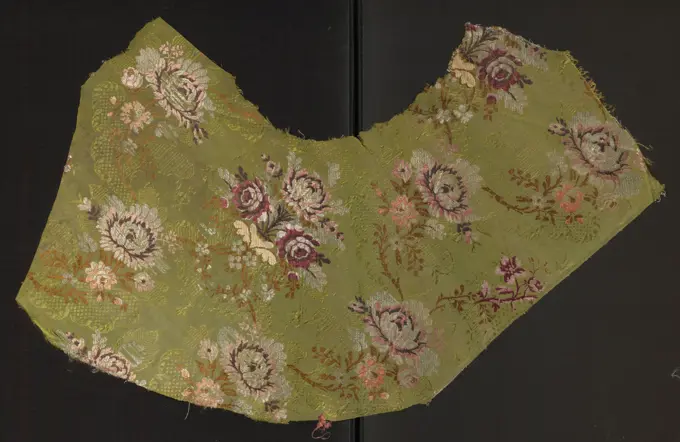
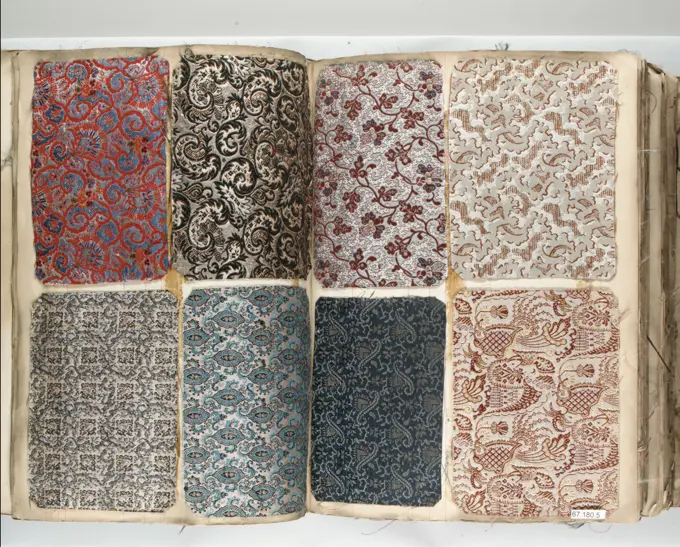
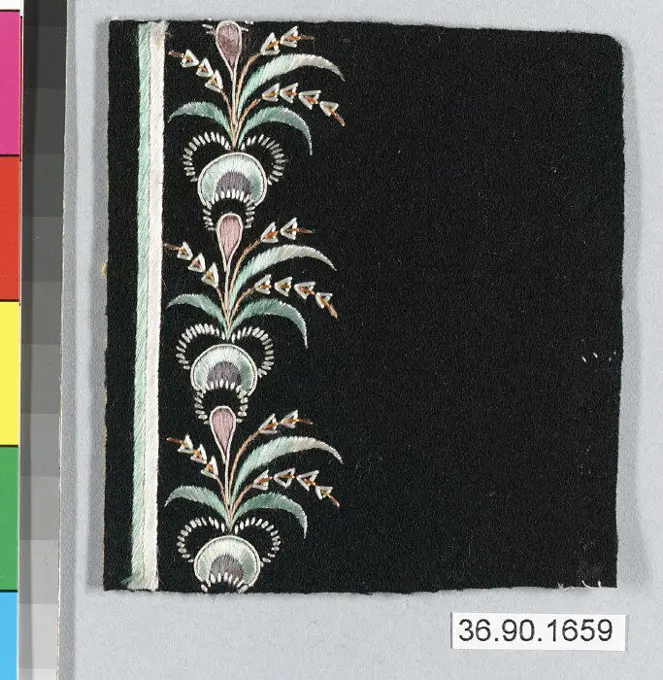
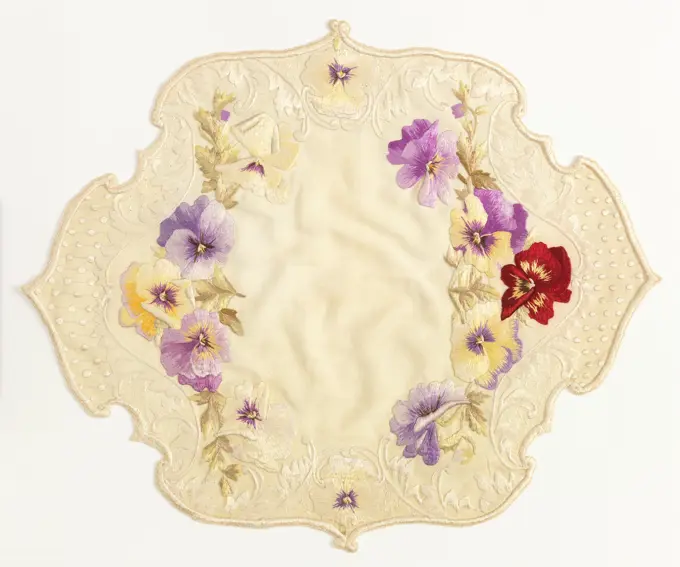
Historical textile fragments showcasing intricate designs in floral and damask patterns. The colors include muted greens, pinks, and golds, portraying a vintage feel.

Textile, Medium: cotton Technique: printed by engraved roller, White cotton, roller printed in shades of brown on greyish ground. Flower clusters around an urn of water on which perch two birds; snake coiled at side. Below urn minute naked figures appear. White cotton scallop fringe attached at bottom., 1850-99, printed, dyed & painted textiles, Textile
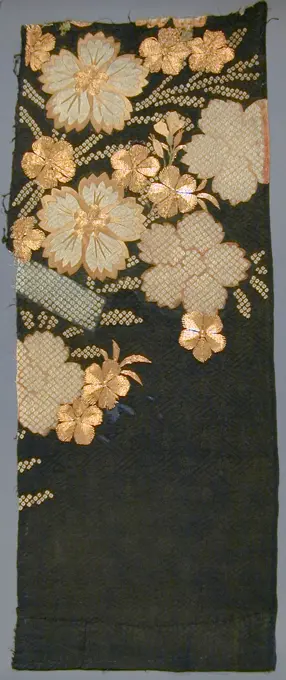
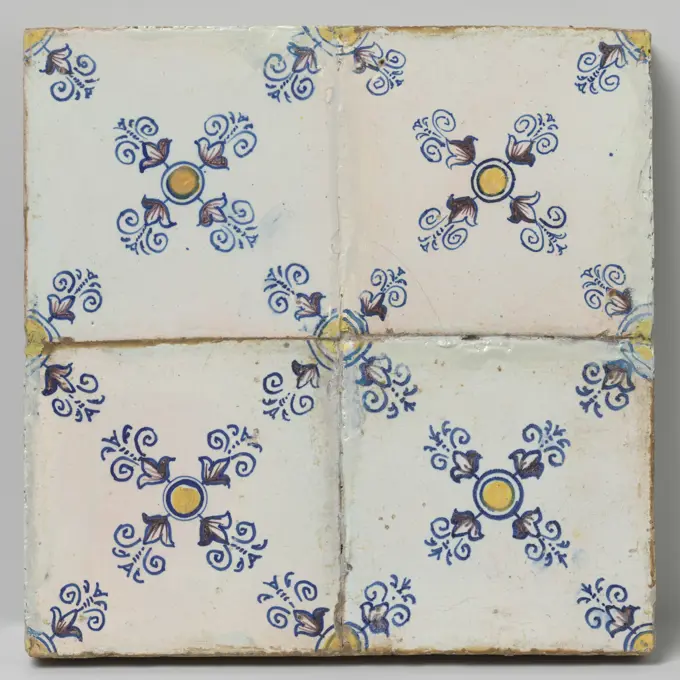
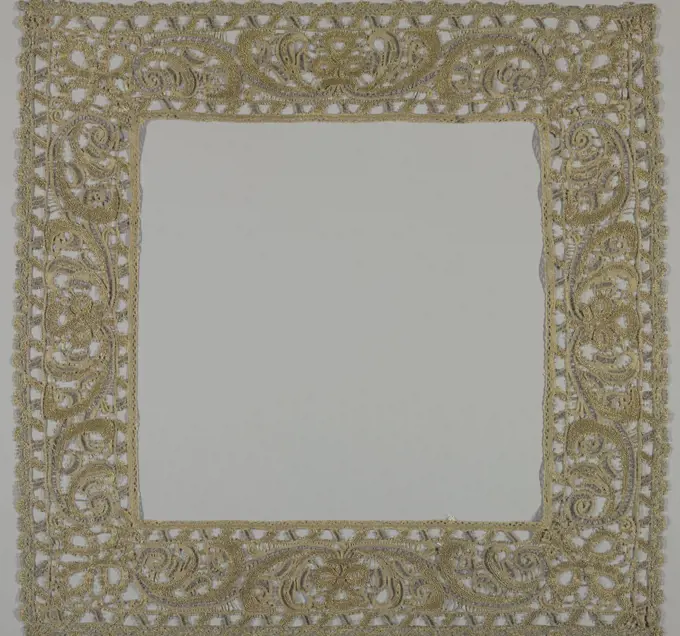
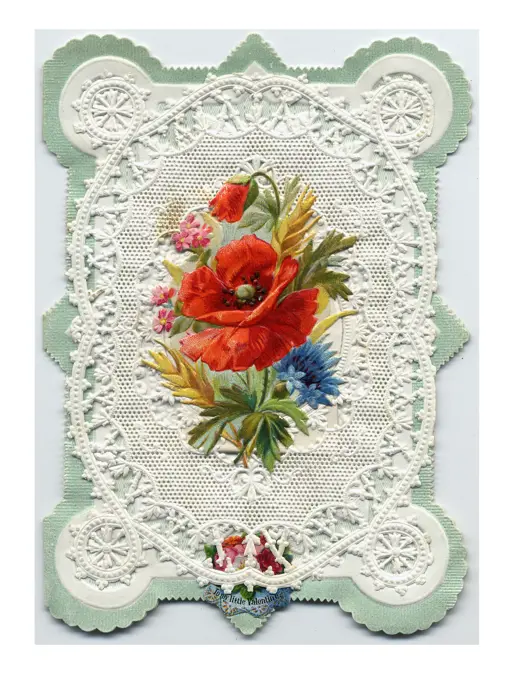
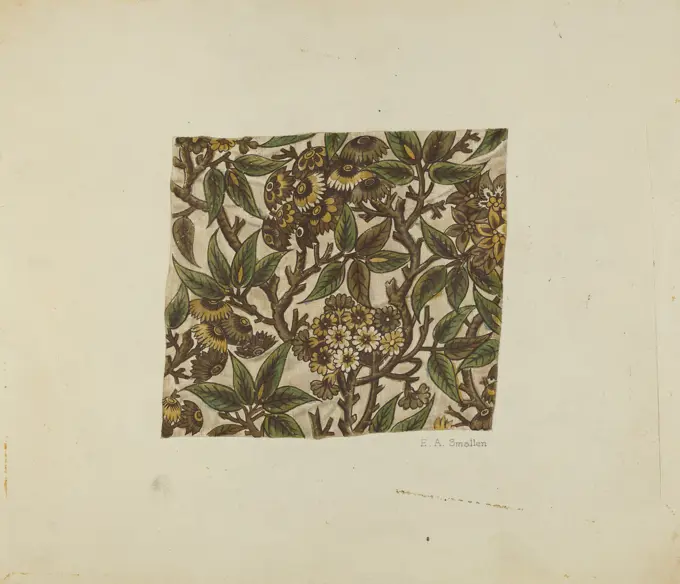
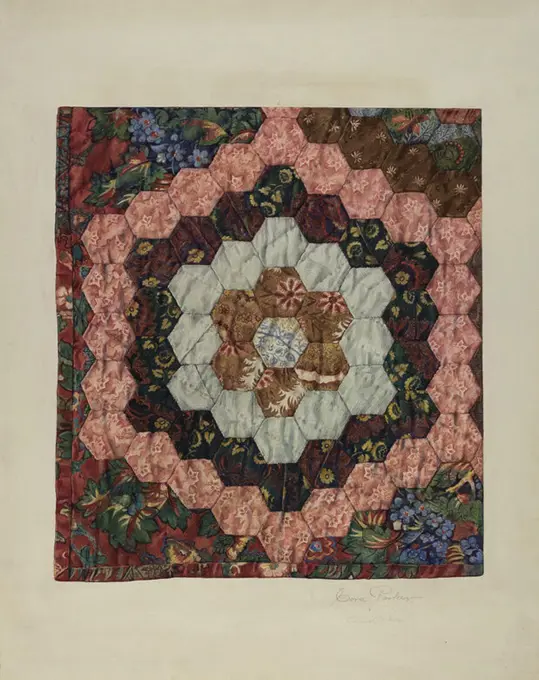
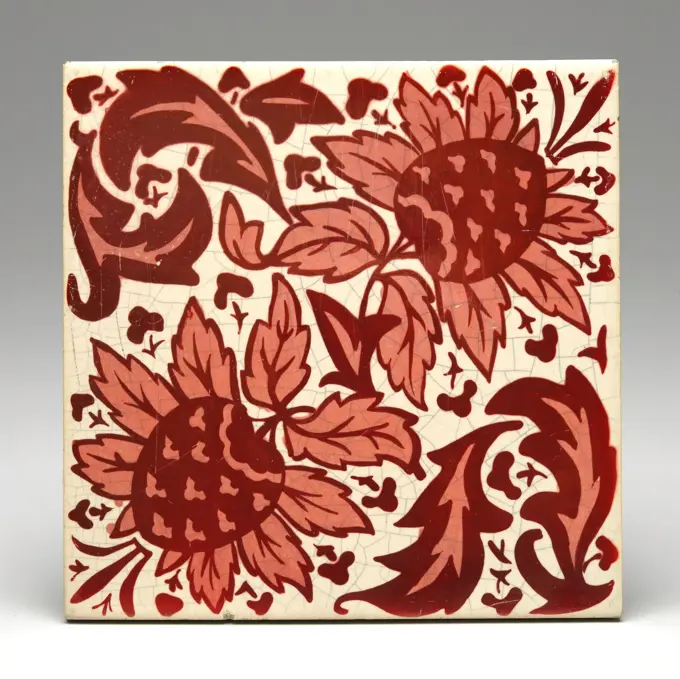
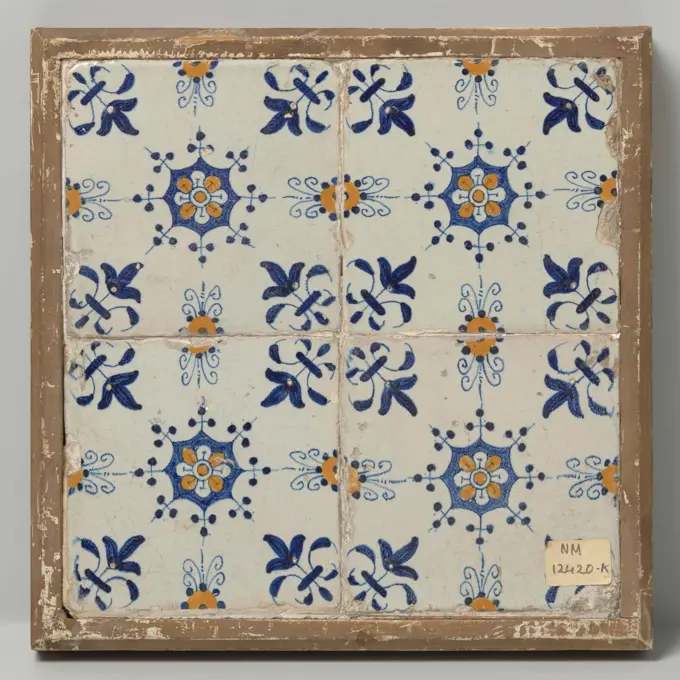
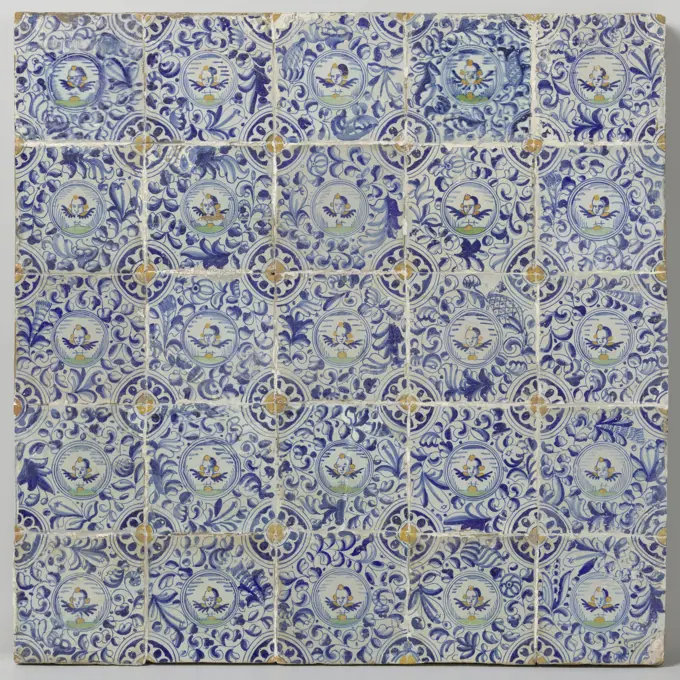
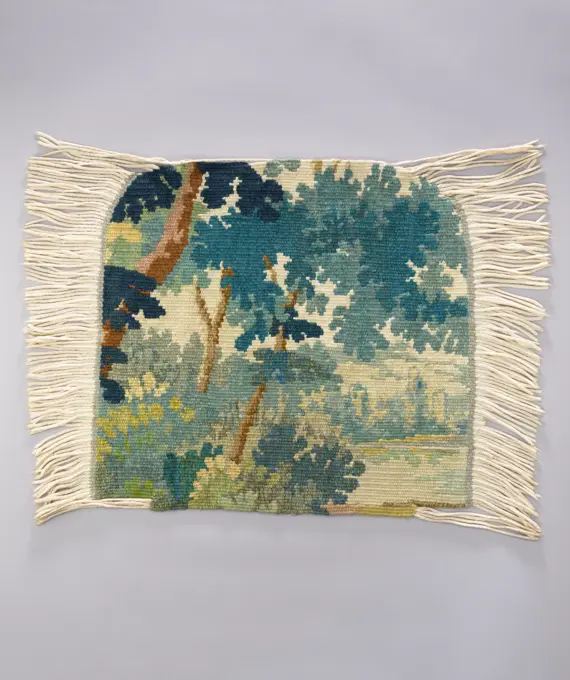
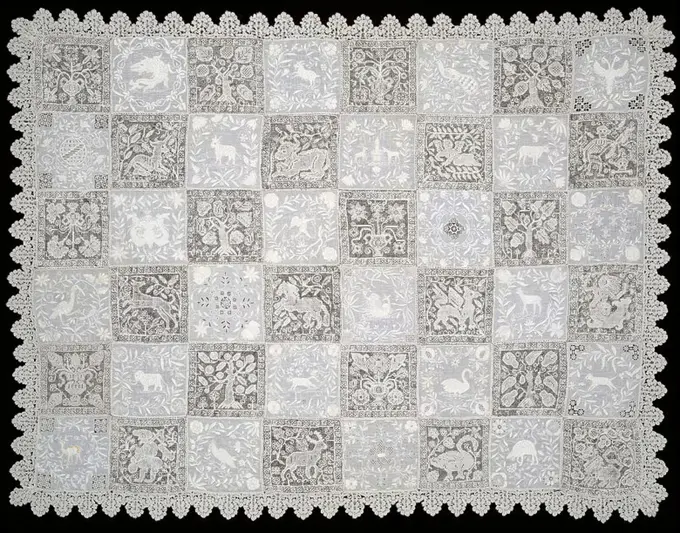
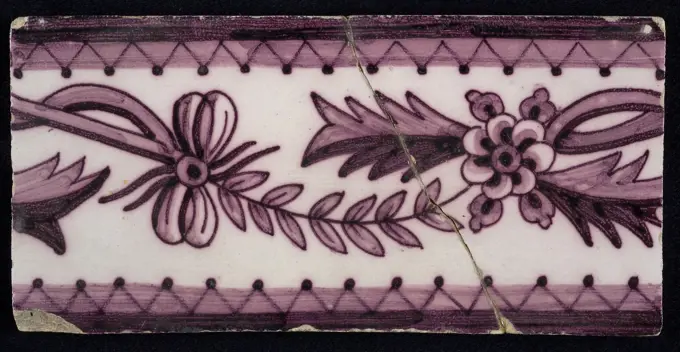
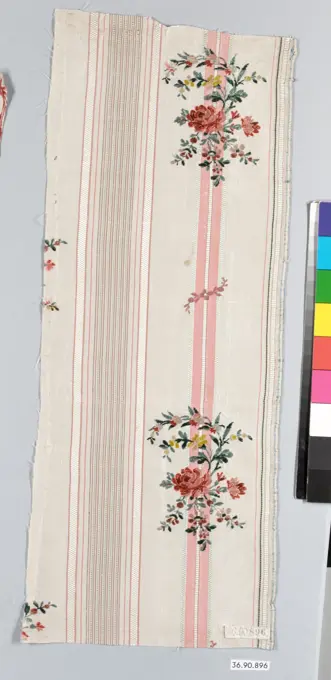
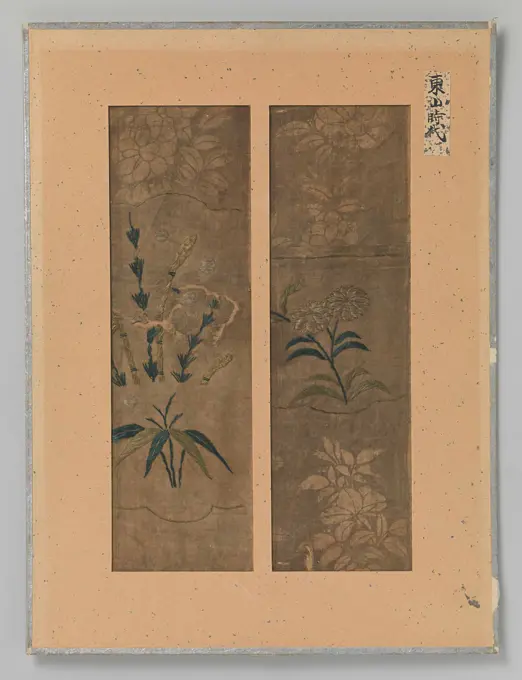
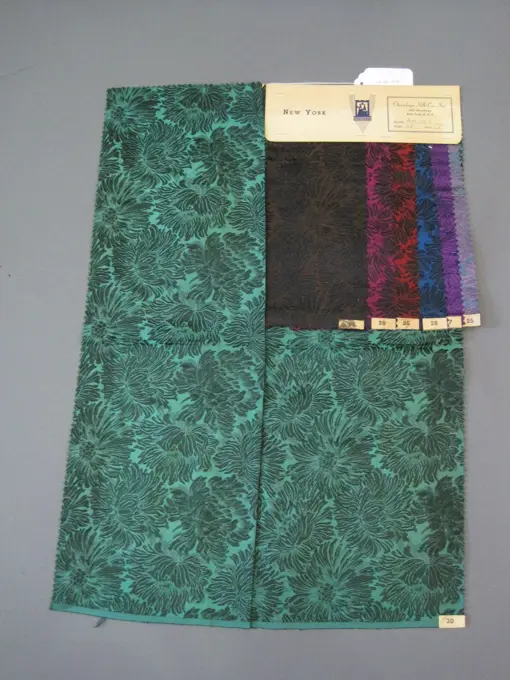
. Chair covers from tapestry. On a blue-black fond is a square with leaves and flowers. In the middle a pink and a white sanitary rose; On the corners to inward-looking red lilies, two pink-orange tulips, a sunflower (or poppy) In orange. On the middle of the sides in smaller format an carnation, dune rose and knight track. Between the flowers a dragonfly and two butterfliesKosode (Kimono) Fragment with Flowers. Japan, Edo period (1615-1868), 18th century. Textiles. Silk figured satin (rinzu), tie-resist dyed(kanako shibori), stenciled imitation tie-deyed (kata kanako shibori) with silk and gilt-paper-wrapped silk embroideryFragment (France); cottonChair cushion ,, 1500 - 1600 Seat cushion of Wijnrood Velor, topped with cord of gold thread and green silk. In the middle a rosette of four palmets; Two palmets in the corners on either side of a left -handed stam. Italy (possibly) textile materials. velvet (fabric weave) Seat cushion of Wijnrood Velor, topped with cord of gold thread and green silk. In the middle a rosette of four palmets; Two palmets in the corners on either side of a left -handed stam. Italy (possibly) textile materials. velvet (fabric weave)Field of four tiles with leaves and volutes. Four tiles (2 x 2) each with a multicolored (blue, yellow and purple) circle decorated with leaves and volutes. In the corners, a fortone.Piece Japan 18th centuryRibbon French 19th century View more. Ribbon. French. 19th century. Textiles-TrimmingsBorder, Medium: silk, metal, linen Technique: needle lace, metallic, Border for a square, possible a chalice cover, of needle lace - Point d'Espagne. Silk and linen threads in gray and tan, gold and silver thread. Design of symmetrically arranged vine and flowers. Worked in loop and varieties of relief stitches., Spain, 17th century, lace, BorderCeiling Paper (USA); Manufactured by Howell and Brothers; machine-printed paper, liquid mica; 94 x 47.5 cm (37 x 18 11/16 in.)Silk Damask Fragments, 1500s. Italy, 16th century. Damask, silk; average: 19.3 x 32.5 cm (7 5/8 x 12 13/16 in.).Traditional woven products; Orgosolo, Sardinia, ItalyFragment. China. Date: 1775-1800. Dimensions: 20.6 x 26 cm (8 1/8 x 10 1/4 in) (per old card). Fancy compound satin, silk and gilt paper; 2 strips to m.m. Origin: Japan. Museum: The Chicago Art Institute, Chicago, USA.Border (France); silk and metallic embroidery on silk foundation with metal coils and spanglesField of sixteen tiles with rosettes, anonymous, c. 1620 - c. 1625 Field of sixteen tiles (4 x 4) each with a multicolored (blue, orange and green) rosette surrounded by four rosettes with in the corners, a flower decor. Netherlands earthenware. tin glaze majolica Field of sixteen tiles (4 x 4) each with a multicolored (blue, orange and green) rosette surrounded by four rosettes with in the corners, a flower decor. Netherlands earthenware. tin glaze majolicaTile Bachmi Ski, Alexander (1820 1882)Sample early 19th century French. Sample 224742Textile (USA); cottonSidewall (USA); Manufactured by Maxwell & Co., S.A. (United States); machine-printed paper; 92 x 49 cm (36 1/4 x 19 5/16 in.)Detail of Japanese textile printFragment of the fabric;  2. PO. 18th century (1751-00-00-1800-00-00);fabricsChair cushion ,, 1500 - 1600 Seat cushion of Wijnrood Velor, topped with cord of gold thread and green silk. In the middle a rosette of four palmets; Two palmets in the corners on either side of a left -handed stam. Italy (possibly) textile materials. velvet (fabric weave) Seat cushion of Wijnrood Velor, topped with cord of gold thread and green silk. In the middle a rosette of four palmets; Two palmets in the corners on either side of a left -handed stam. Italy (possibly) textile materials. velvet (fabric weave)Valentine - To My Little ValentineTile, flowerpot in blue on white, inside small serrated square, corner pattern french lily, wall tile tile sculpture ceramic earthenware glaze, baked 2x glazed paintedEA Smaller, Textile, 1935 1942 TextileQuilt. Dated: c. 1939. Dimensions: overall: 50.4 x 40.3 cm (19 13/16 x 15 7/8 in.). Medium: watercolor and graphite on paper. Museum: National Gallery of Art, Washington DC. Author: Carmel Wilson and Cora Parker.Mary Berner, Quilt (Applique), c 1936 Quilt (Applique)Lustre tile with bird design, one of a pair, c. 1880, Maw & Company, Ltd.; Designer: William Frend De Morgan, Shropshire, England, 6 x 6 x 3/8 in. (15.24 x 15.24 x 0.91 cm), Glazed earthenware, England, 19th centuryTextile in red with dragon on itPetit Point genäht Leinwand Sample of petit point stitches handwork: bunch of flower for a cushion LicenseRF Copyright: xZoonar.com/LuisaxFumix 23194970Ribbon Samples (France); Designed by Herman A. Elsberg (American, 1869-1938); silk, metallic threadTextile (USA); Manufactured by Orinoka Mills (United States); wool, cottonTextile; silkWall hanging with embroidered samplers, 1810-1861, Rosaura Munoscano; Artist: Emiliana Alcazar; Artist: Soledad Santaella, 70 7/16 × 50 in. (178.91 × 127 cm) (including top tabs), Linen, cotton, silk, metal sequins, metallic threads, glass beads, pigments, Mexico, 19th century, This hanging is composed of nine Mexican samplers collected and stitched into this arrangement in the early 1900s. Inscriptions throughout name some of theBaltimoresignature album quilt top, 1844-45, 107 x 105 1/2 in. (271.78 x 267.97 cm), Cotton; pieced, appliquéd, embroidered, and inscribed, United States, 19th century, Thirty-six women made this quilt top, each contributing a unique square, which she signed. Signature album quilts were a collective form of remembrancea record of the names, kind sentiments, and sewing skills of a group of friends. Such quilts became popular in the 1840s, a period of national expansion when many people, moving westward, desired a material reminder of the communities they left behind.Fragment, Medium: cotton Technique: two reds and black block printed, yellow and blue applied by brush on plain weave, Non-directional pattern of small flowers on a black background., Europe, ca. 1800, printed, dyed & painted textiles, FragmentRoberta Elvis, Coverlet, 1936 CoverletTextile (France); wool on cotton; Other (band): 100 cm (39 3/8 in.) Other (top to bottom): 22 cm (8 11/16 in.)Darning sampler, Medium: silk embroidery on linen foundation Technique: embroidered in running, satin, buttonhole and eyelet stitches with overcasting over withdrawn element work on plain weave foundation, Twelve squares of darning samples within an embroidered border., Netherlands or Denmark, early 19th century, embroidery & stitching, Darning samplerSampler (Mexico); silk, metal, and metal-wrapped silk embroidery on cotton foundationtypical blue tiles in portugal typical blue tiles in on houses in portugal Copyright: xZoonar.com/chrisxwilllemsenx 8673701Headcovering (mezzaro) (Italy); cottonSampler, Mary Ann Wilson, English, Medium: silk embroidery on cotton foundation Technique: embroidered in running, overcasting, stem, and cross stitches on plain weave foundation, Darning sampler with four crosses, and four swatches with rose in the center., England, 1810, embroidery & stitching, SamplerField of four tiles. Field of 4 tiles (2 x 2) each with a multicolored (blue and orange) rosette surrounded by three dots. Along the edges half a rosette with fertilizer. In the corners, a lily.Textile Swatches Onondaga Silk Company, Inc. (1925-1981). , 1948-1959. Wool blend, a: 21 x 17 1/2 in. (53.3 x 44.5 cm).    1948-1959Ribbon mid-19th century possibly British. Ribbon 226638Field of sixteen tiles with fruit bowls, anonymous, c. 1620 - c. 1640 Field of sixteen tiles (4 x 4) each with a blue painted fruit bowl. In the corners, an Ossekop. Netherlands earthenware. tin glaze majolica Field of sixteen tiles (4 x 4) each with a blue painted fruit bowl. In the corners, an Ossekop. Netherlands earthenware. tin glaze majolicaTablecloth of Batist and Mixed Side with cartouches and flower vases. Tablecloth of Batist and natural-colored mixed side, dick edge and needle side. Rectangular model with a piece of batist in the middle with eight smaller pieces of batist around it. The pieces in the corners are palm-shaped, with four palmets and the pieces between the corners are slightly trapezoidal with rounded corners. The pieces are connected by side stitches from side, which run out in a wide edge side with shelters, with which the tablecloth has been completed. The side has a symmetrical pattern with floral drinks, c-volutes, flower vases and cartouches of climbing side overlook. In the cartouches, patterns are made in coniferous side with rosette flowers and or not leaves in combination with flower vases. The motifs in the climbing side are connected to each other by a maas soil with rectangular meshes. The needle side motifs are connected to each other by a picoted bars soil, mainly with irregular five and hEmbroidery, Germany 19th century. Pillow or carpet pattern with roses, violets and geometric motifs.Textile Sample Book 1846 French, Lyons. Textile Sample Book. French, Lyons. 1846. Textiles-Sample BooksSample early 19th century French. Sample. French. early 19th century. Silk on felt. Textiles-EmbroideredFragments, Medium: silk; metal thread; linen Technique: embroidered, Yellow horizontally ribbed ground. Large-scale polychrome silk embroidered design of flowers, fruit, ornamental rococo scrolls, and architectural motifs. Trimmed with silver galloon. Backed with red linen. Front composed of a number of small pieces. Made of material from 18th century France., France, 19th century, embroidery & stitching, FragmentsSet of wall posters. Mid century modern tapestries with bohemian flowers and plants. Retro Bauhaus wall artTable Mat; silk embroidery on linen foundationVector illustration of Ukrainian ornament in ethnic style, identity, vyshyvanka, embroidery for print clothes, websites, bannersTwo textile fragments on a leaf, embroidery and press on silk, anonymous, 1452 - 1469  Japan silk  Japan silkField of twenty -five tiles with angel heads, anonymous, c. 1615 - c. 1625 Field of twenty -five tiles (5 x 5) each with a multicolored (blue, orange and green) cherub head in a circle surrounded by oak leaf. In the corners, a quarter rosette. Netherlands earthenware. tin glaze majolica Field of twenty -five tiles (5 x 5) each with a multicolored (blue, orange and green) cherub head in a circle surrounded by oak leaf. In the corners, a quarter rosette. Netherlands earthenware. tin glaze majolicaCoverlet, 1700s. Italy, 18th century. Silk, metallic thread; overall: 235.6 x 54.5 cm (92 3/4 x 21 7/16 in.).Botanical Specimens. Artist: Attributed to Robert Hunt (British, 1807-1887). Dimensions: Sheet: 11 1/8 × 11 5/16 in. (28.2 × 28.8 cm), album pageTop Left Image: 4 1/8 × 3 15/16 in. (10.5 × 10 cm), irregularly trimmedTop Right Image: 4 1/2 × 3 11/16 in. (11.4 × 9.4 cm), irregularly trimmedBottom Left Image: 1 7/8 × 3 3/8 in. (4.8 × 8.6 cm)Bottom Right Image: 2 9/16 × 3 11/16 in. (6.5 × 9.3 cm), irregularly trimmed. Date: ca. 1841.About 1841, at the same time he wrote the first historical account of the two-year-old medium of photography and its much longer prehistory, Hunt experimented with practical uses for photography and applied some variant of Talbot's chemistry to paper, linen, and silk, perhaps seeking a new means of textile decoration. The results look like delicately patterned damask-snippets of coffee- or wine-colored ribbon woven in a floral pattern by the most skilled of artisans. Museum: Metropolitan Museum of Art, New York, USA.Gobelin chair cover;  1. PO. 20th century (1901-00-00-1950-00-00);Cover. France. Date: 1610-1640. Dimensions: 105.3 × 137.3 cm (41 1/2 × 54 in.). Linen, twenty-four squares of square netting (filet) embroidered in cloth, darning, and twined double running stitches; alternating with twenty-four squares of linen, plain weave; cut and drawn thread work embroidered in cross, darning, interlocking lace, overcast, and satin stitches; knots, overcast bars, buttonhole, darned, and woven wheels; needle lace filling stitches; appliquéd with plain weave and embroidered in back, bullion, cross, half cross, detached chain, double running, running, satin, single satin, surface satin, and stem stitches; buttonhole wheels, eyelet holes, and French knots; edged with bobbin straight lace. Origin: France. Museum: The Chicago Art Institute, Chicago, USA.Leaf with flowers and fruits, anonymous, 1700 - 1800 brocade paper Leaf with loose branches of flowers and fruits (small fragment). Germany paper. paint (coating) relief printing ornament derived from plant formsCover (USA); Designed by Frances Kingsley Reed (American, 1845-1902); silkGreek Ornament and Etruscan OrnamentNakshi kantha, a type of embroidered quilt, is a centuries-old Bengali art tradition of the Bengal region, notable in Bangladesh and Indian states of West Bengal, Tripura and part of Assam. The basic material used is thread and old cloth. The colourful patterns and designs that are embroidered resulted in the name "Nakshi Kantha", which was derived from the Bengali word "naksha", which refers to artistic patterns.These items are preserved at the "Bangladesh Folk and Karur art Museum". Bangladesh.Border tile, sling decor, border tile wall tile tile sculpture ceramic earthenware glaze, baked 2x glazed painted Purple on white background Rotterdam Kralingen-Crooswijk Kralingen East 'S Gravenweg Possible of farm 's Gravenweg 244 in Rotterdam KralingenWoman's festival head covering, first quarter 20th century, 74 3/4 x 62 1/16 in. (189.87 x 157.64 cm), Cotton, silver, metallic threads; dyed, India, 20th centuryPiece 18th century French. Piece 223997Sample book, Medium: silk Technique: variety of woven techniques, Worth sample book. There are 295 swatches in the book. 23 swatches labeled 1896-27-3; 36 labeled 1896-27-4; 15 labeled 1896-27-5; 6 labeled 1896-27-6; 20 labeled 1896-27-7; 34 labeled 1896-27-8; 7 labeled 1896-27-9 (same number as the record for the book itself); 21 labeled 1896-27-10; 8 labeled 1896-27-14; 10 labeled 1896-27-15; 65 labeled 1896-27-16; 10 labeled 1896-27-17; 1 labeled 1896-27-19; 34 labeled 1896-27-20; 3 labeled 1896-27-21; 2 with no label, France, late 19th century, sample books, Sample bookBorder, Block-printed on machine-made paper, Central band of tapestry or cross-stitch imitation. Alternating motifs of pink and orange flowers, separated by foliage. Narrow bands of small squares along top and bottom edges. Printed on black ground., H# 26, France, 1850-1900, Wallcoverings, BorderShowroom Sample, 20th century. France, Normandy, 20th century. Damask weave; overall: 61.6 x 64.1 cm (24 1/4 x 25 1/4 in.).Four fan designs with black background and floral decoration , Flowers, Fans Accessories, Leaves. Louis Prang & Company CollectionRay Price, Patchwork Quilt, 1935 1942 Patchwork QuiltSwatches, Medium: silk Technique: variety of woven techniques, France, late 19th century, woven textiles, SwatchesTwo textile fragments on a leaf, embroidery and press silk. .Window shade, Machine-printed paper, a and b) Elaborate lace design with fringe and tassel suspended from ornate cornice with lambrequin. In the center of the lace panel is a basket of flowers and two tassels hanging from lambrequin. Printed on brown ground., USA, 1875-1900, Wallcoverings, Window shadeTextile Swatches Onondaga Silk Company, Inc. (1925-1981). , 1948-1959. Silk, 24 x 16 1/4 in. (61 x 41.3 cm).    1948-1959Evening pouch 1840-60 German. Evening pouch 168388Purse, Medium: silk, metal Technique: woven, Small envelope-shaped case. Very faded and soiled rose color with a woven design in silver. Symmetrical stylized design of flowers and foliage. Lined with cream white taffeta. Has been edged with very narrow silver braid which remains under one flap., France, late 17th-early 18th century, costume & accessories, PurseEaster cards depicting flowers, crosses, vases, angels, butterflies, children and rabbits.. Proofs, Greeting cards. 1865 - 1899. The Miriam and Ira D. Wallach Division of Art, Prints and Photographs: Print Collection. Flowers, AngelsPiece. Culture: Spanish. Dimensions: 19 x 14 1/2 in. (48.3 x 36.8 cm). Date: late 15th century. Museum: Metropolitan Museum of Art, New York, USA.Egyptian OrnamentSix flower arrangements on one sheet , Flowers. Louis Prang & Company CollectionFabric swatch Fabric swatch sample isolated over white background Copyright: xZoonar.com/ClaudioxDiviziax 6537748Part of a rose pattern carpet, anonymous, in or after 1907 - 1929 photomechanical print   paper. cardboard  carpet, rug. flowers ~ ornamentTextile Design with Alternating Rows of Stylized Leaves Decorated with Rosettes and Pearls Over a Pattern of Overlapping Scales 1840 Anonymous, Alsatian, 19th century Rectangular sheet of paper with a textile design from a group, dated 1840, made in Mulhouse, Alsace, which was an important nineteenth-century center for textile production in the Haut-Rhin region of France. The design is made of alternating rows of stylized leaves of light tan color, outlined with dark red, decorated with a rosette of five petals and two pearls of white color. In the background, a pattern of alternating overlapping scales, rendered with dark brown stipples, stands out over a light tan base.. Textile Design with Alternating Rows of Stylized Leaves Decorated with Rosettes and Pearls Over a Pattern of Overlapping Scales. Anonymous, Alsatian, 19th century. 1840. GouacheThe interweaving of the webbing completed.Textiles, Sweden.Screen, Louis Comfort Tiffany, (American, 1848-1933), Favrile glass, patinated bronze, Three vertically rectangular panels of marbleized glass, each panel framed with narrow copper edging oxidized to green and orange-red tones with two small ball feet at each end. The panels are hinged together by means of wire at juncture of feet and screen. Cut out copper overlay. Glass marbleized in tones of lavender, blue and green overlaid with cut out copper in Grapevine” pattern., ca. 1905, glasswares, Decorative Arts, ScreenIndian art: paintings and niellos. Bow ornaments 1-4, sheath of a dagger 5,6, sword sheath 7,8, ornament on a weapon 9, bottleneck 10-12, weapon 13 and rim of a jug 14. Indien. Hand-finished chromolithograph by Bauer from Albert-Charles-Auguste Racinets LOrnement Polychrome, (Polychromatic Ornament), Firmin-Didot, Paris, 1869-73.Birthday cards depicting flowers and birds.. Proofs, Greeting cards. 1883. The Miriam and Ira D. Wallach Division of Art, Prints and Photographs: Print Collection. Birds, FlowersValentine 1876 Anonymous. Valentine. Anonymous. 1876. White card stock with chromolithography, gold lithography, openwork lace paper, pink tissue, pale blue paper, green watercolorBracelet mid-19th century probably American. Bracelet 110152Portugal, Madeira Island, Funchal. Traditional souvenir handicrafts, famous hand-stitched embroidery.Scarlet hibiscus, Kawai Kenji, 1939 A three -stroke challenge with edge and legs made of brown paintwork, the side panels of half width of the higher center panel. Three rectangular panels of leather, surrounded by a woven fabric frame, with inlaid pearl, a representation of flowering scarlet Hibiscus (      kōshakki, Hibiscus coccineus), with flying dragonflies above it. Signed at the bottom right of the center panel. On the rear panels of raw side, with a decoration in Batik technique in white against a brown-red background of three performances of flowering cat pie (Amaranthus tricolor). Tokyo leather. lacquer (coating). wood (plant material) lacquering A three -stroke challenge with edge and legs made of brown paintwork, the side panels of half width of the higher center panel. Three rectangular panels of leather, surrounded by a woven fabric frame, with inlaid pearl, a representation of flowering scarlet Hibiscus (      kōshakki, Hibiscus coccineus), with flying dragonflies above White embroidery project for a napkin Micid, MariaClose-up of tiger motif cross-stitch cushionEmbroidered message on a wall hanging, Sweden.