Textile Fragments

Historical textile pieces showcasing rich colors and patterns from different centuries, including fragments of velvet and printed fabrics from Europe.
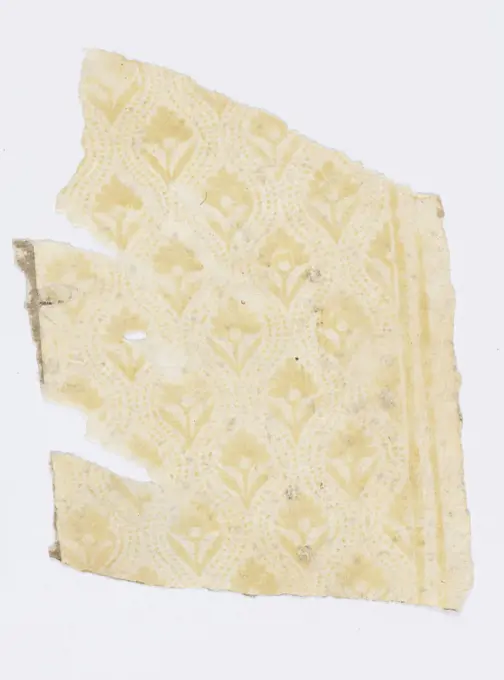
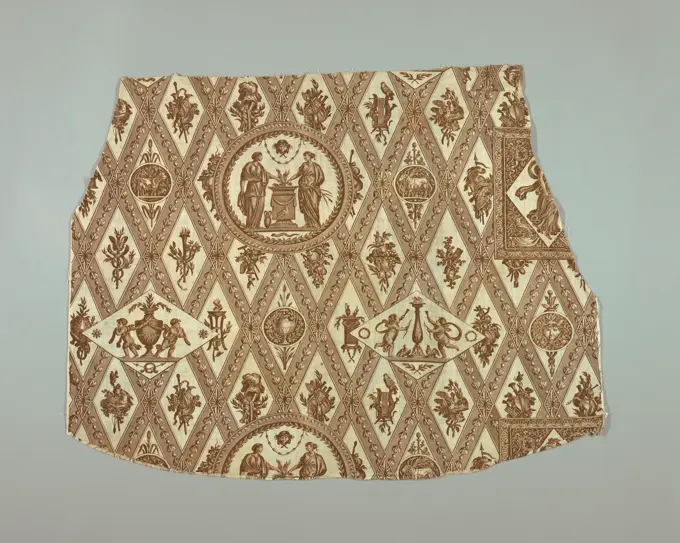
Domino paper, Block-printed and stenciled on handmade paper, A wallpaper fragment of domino pattern removed from a house in Paris, c. 1720. THe design on this paper is a ghost image from 1984-61-1., Paris, France, ca. 1720, Wallcoverings, Domino paper
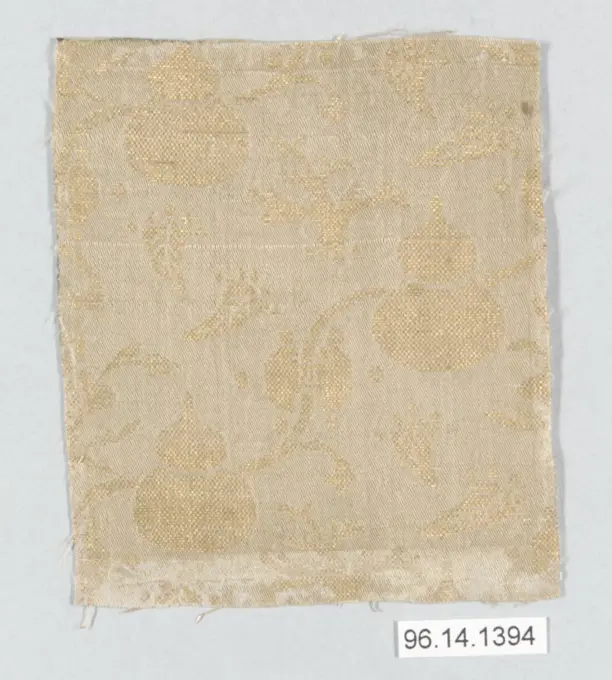
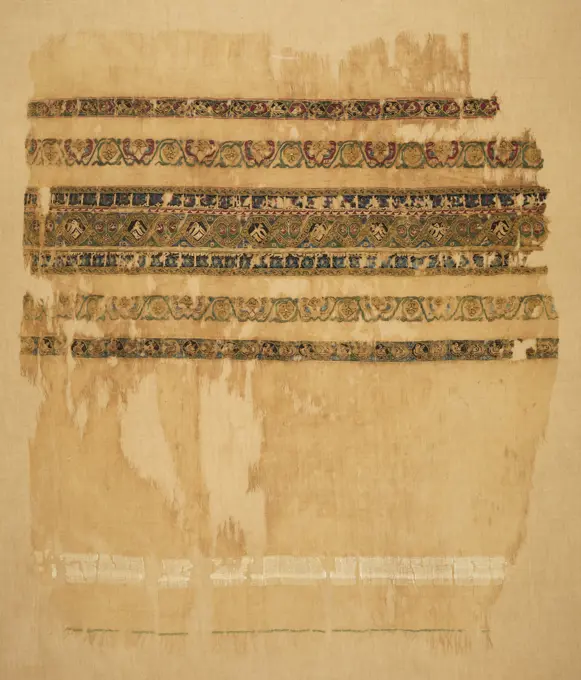
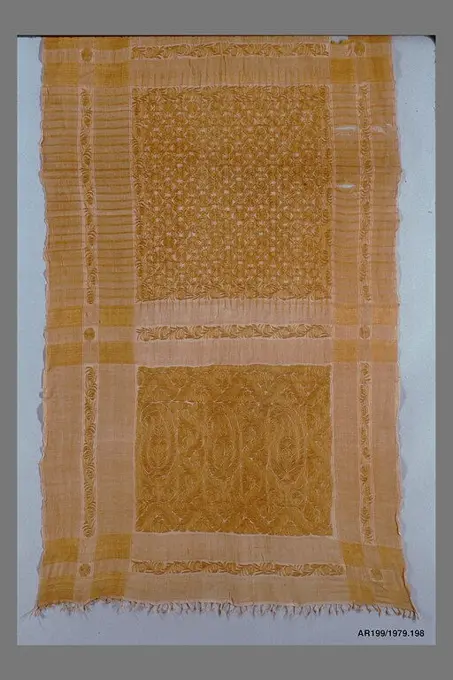
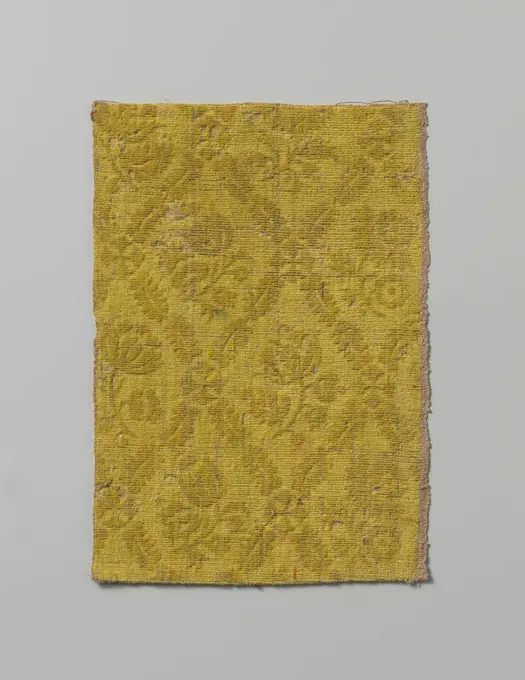
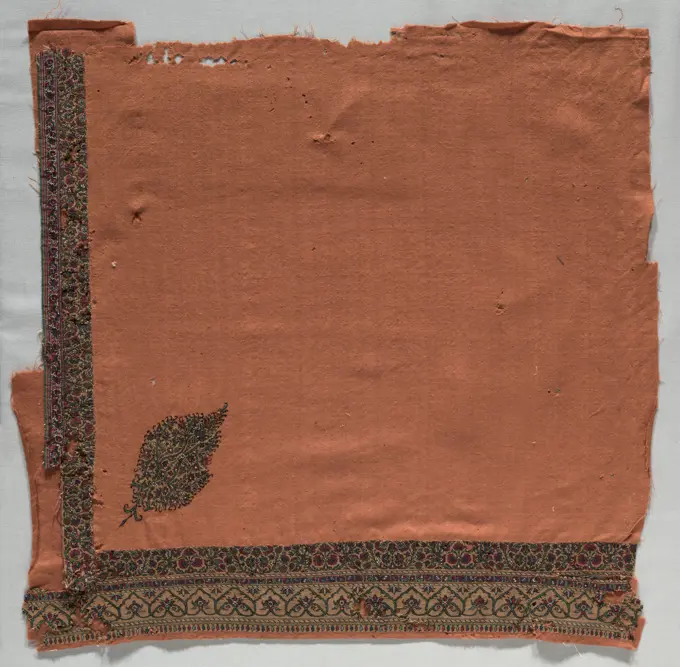
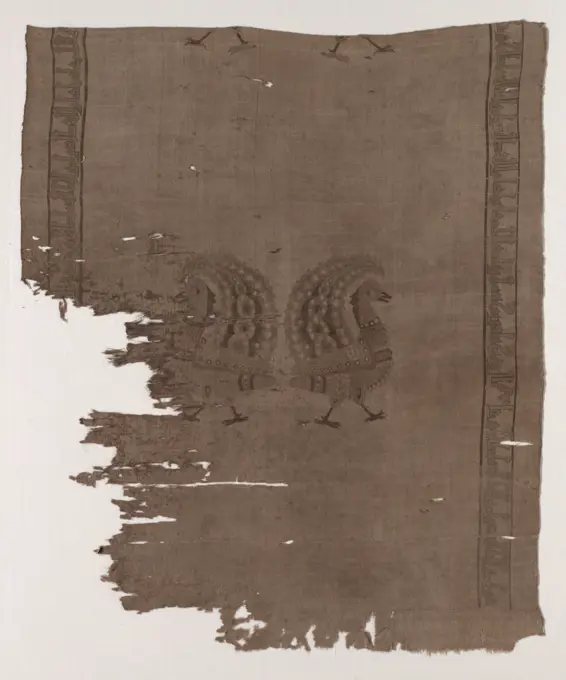
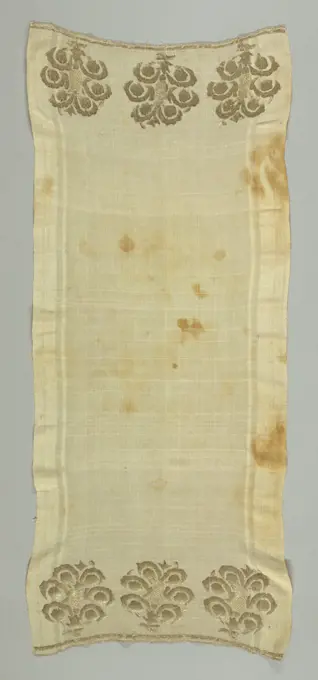
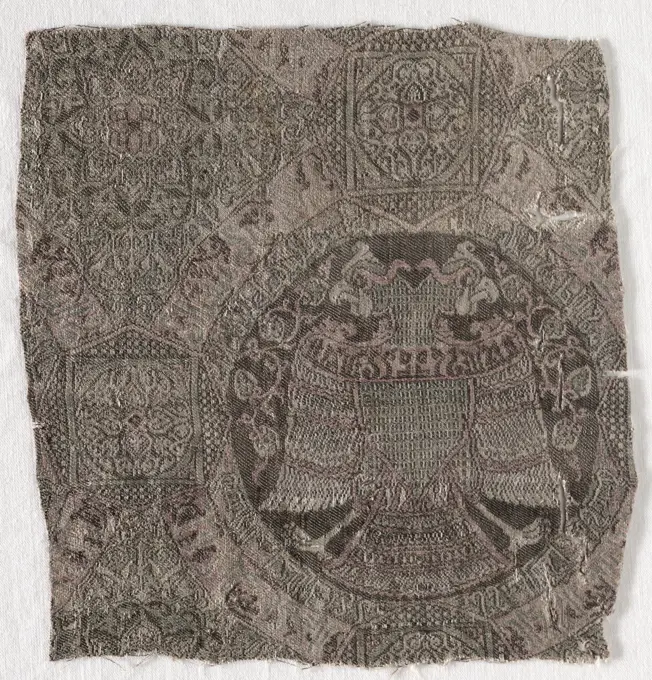
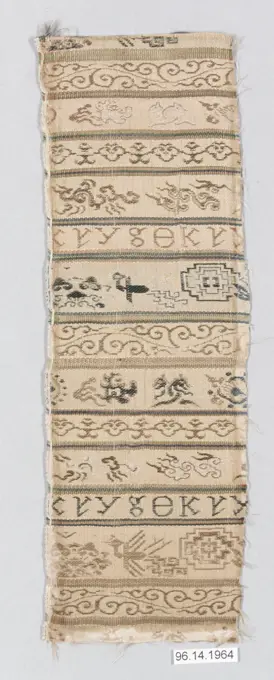
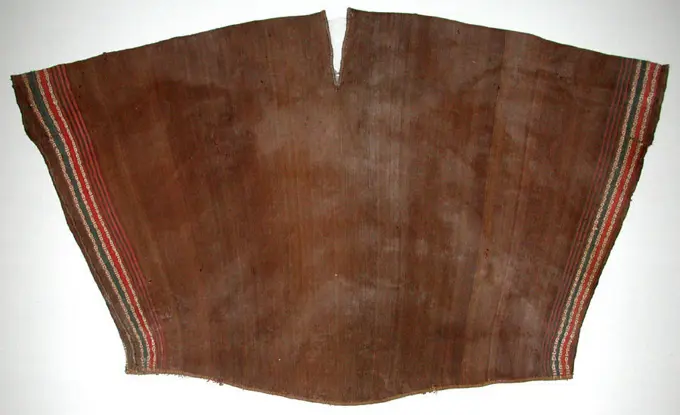
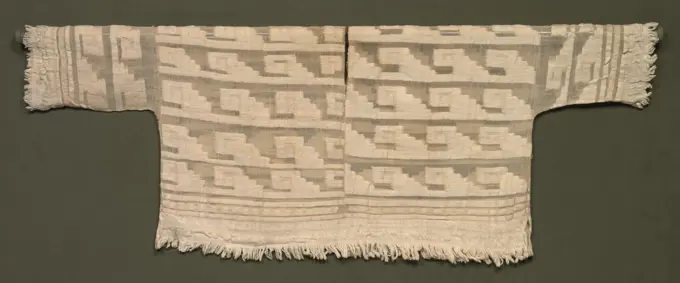
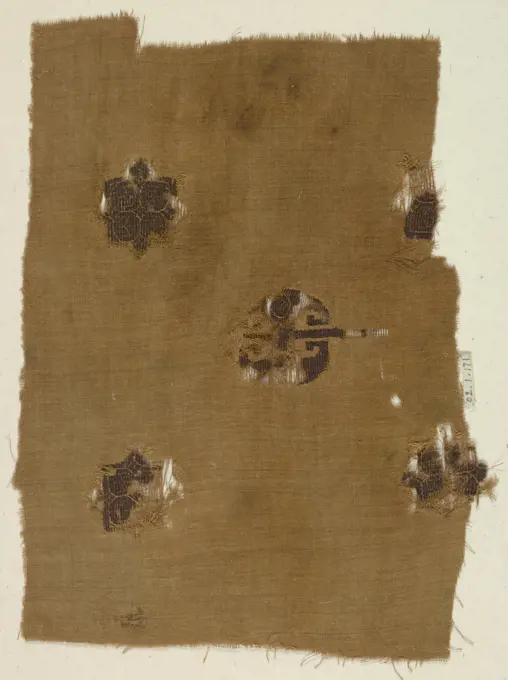
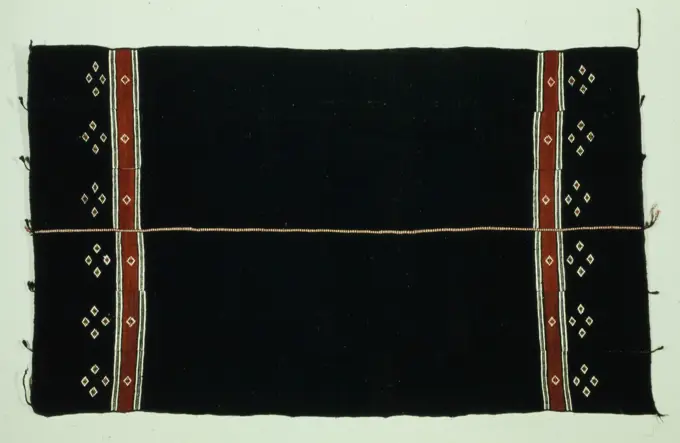
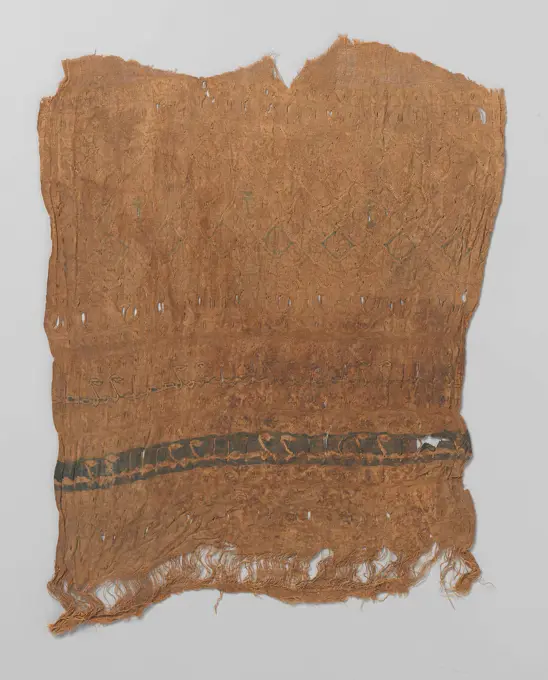
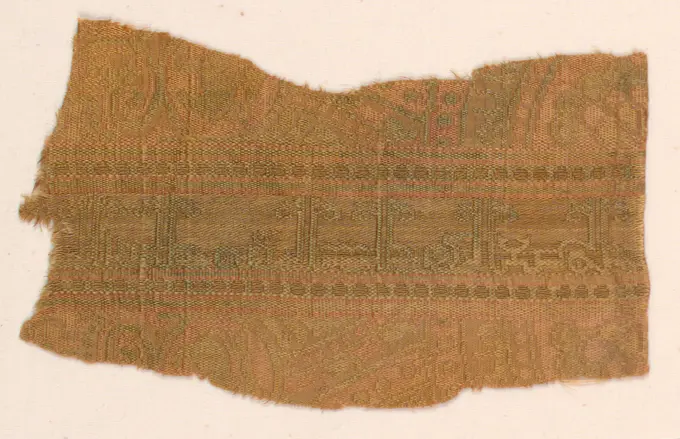
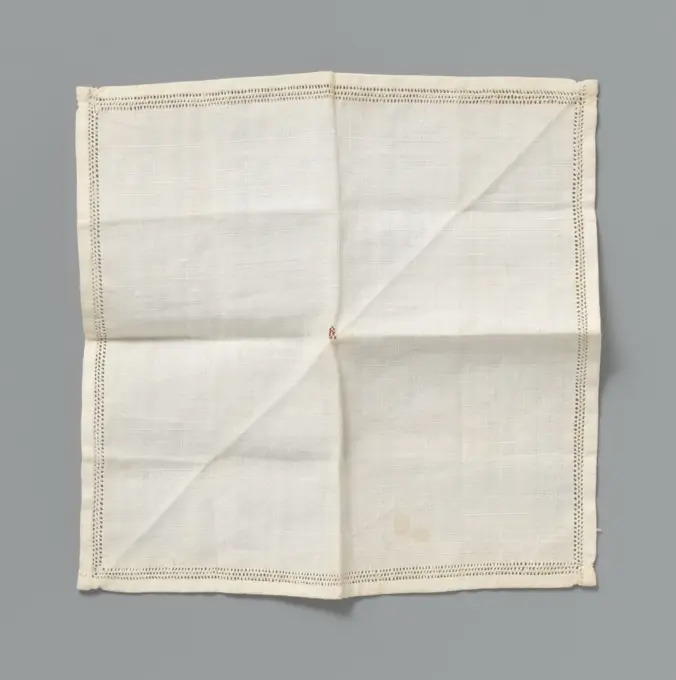
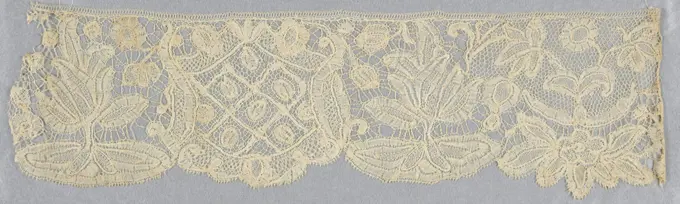
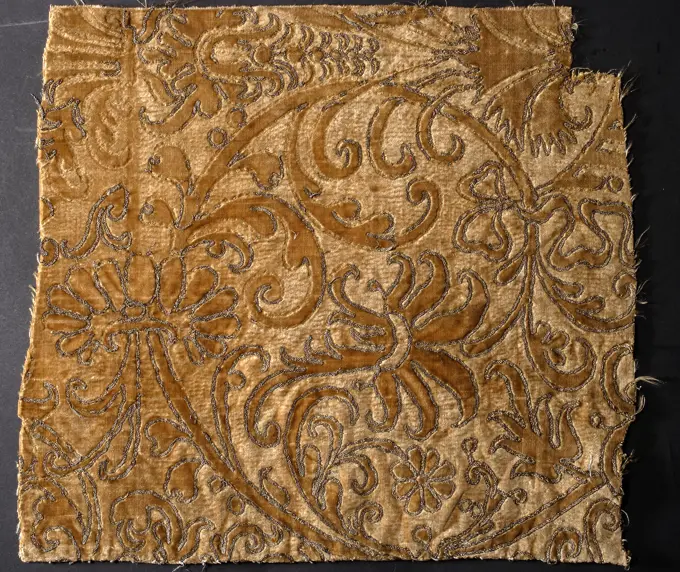
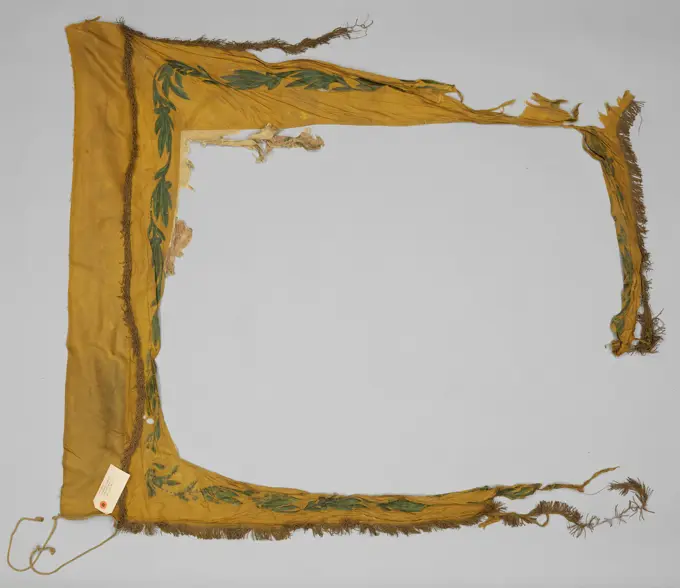
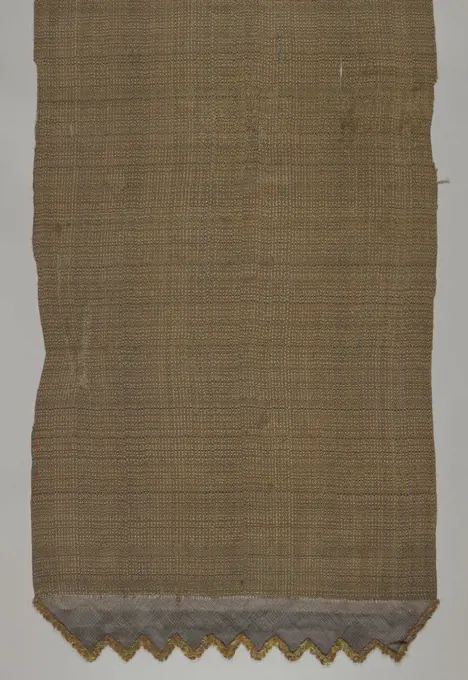
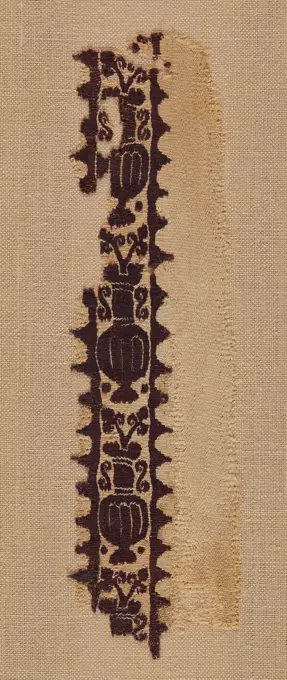
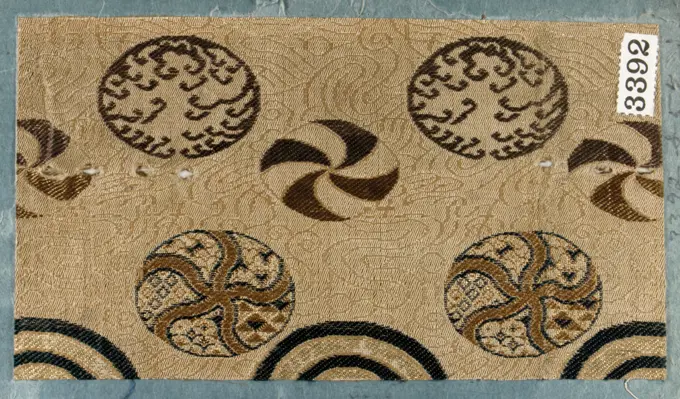
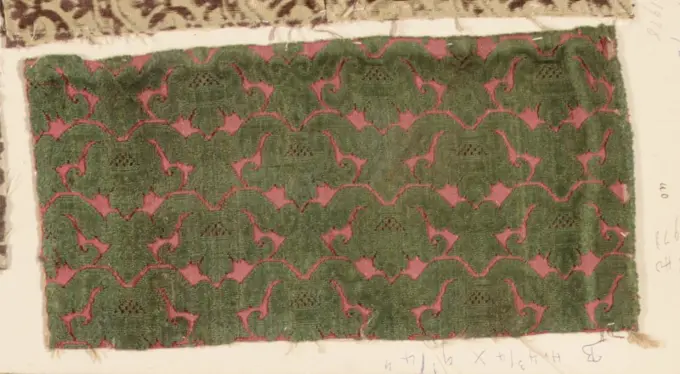
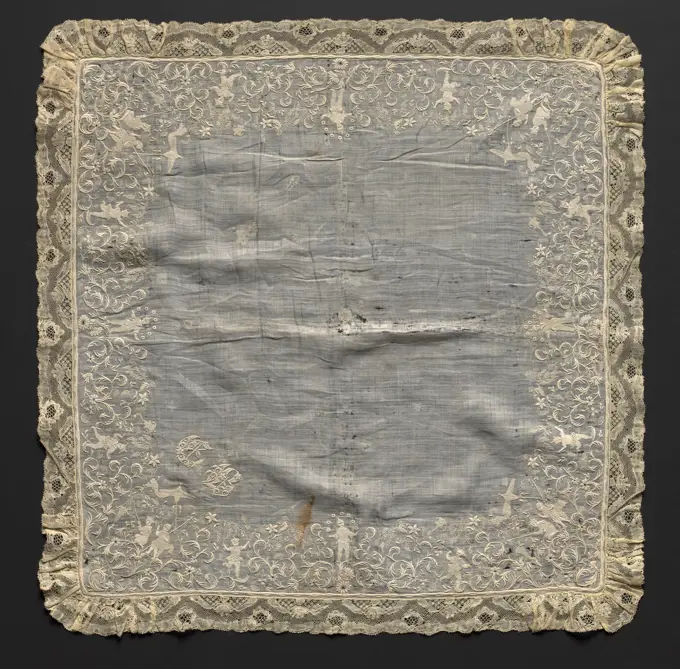
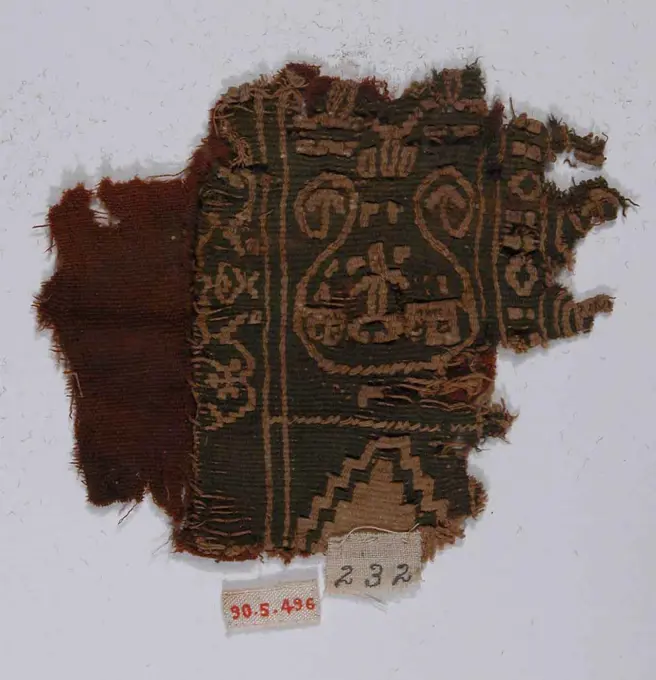
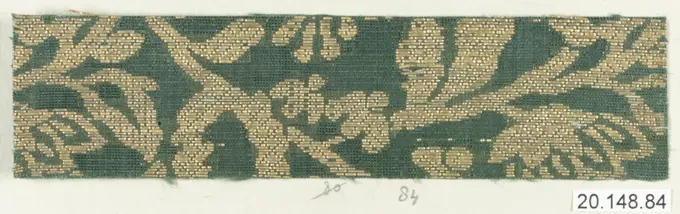
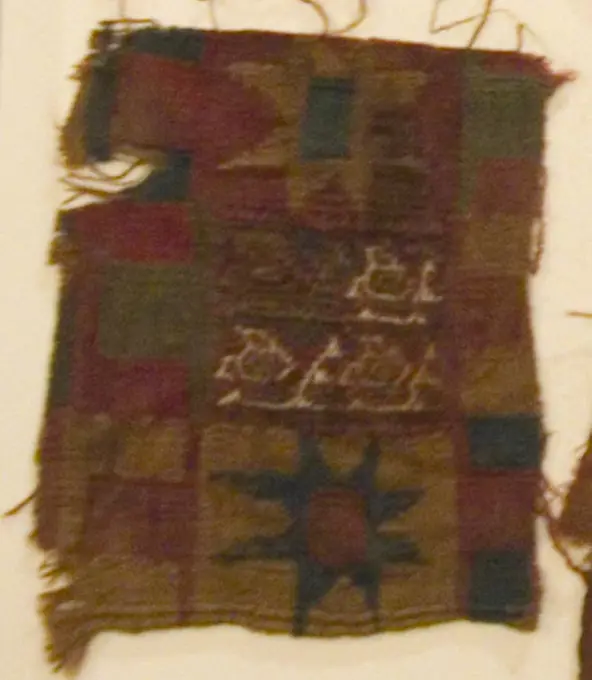
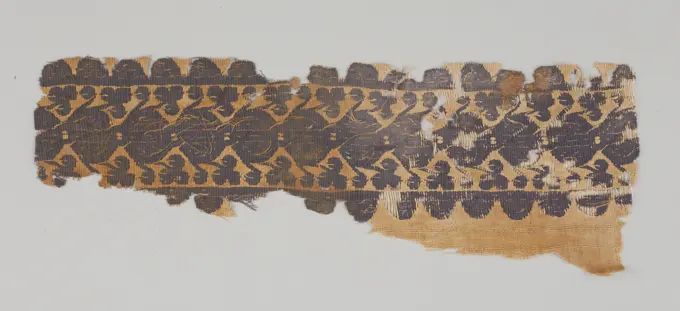
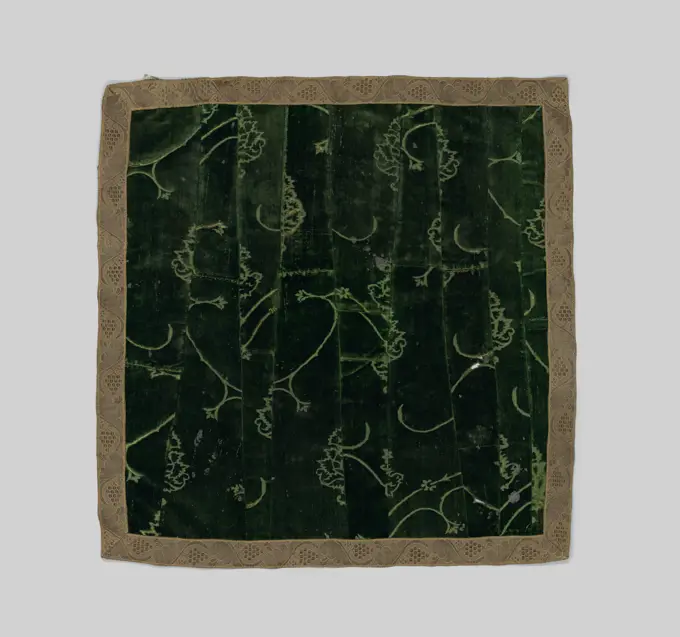
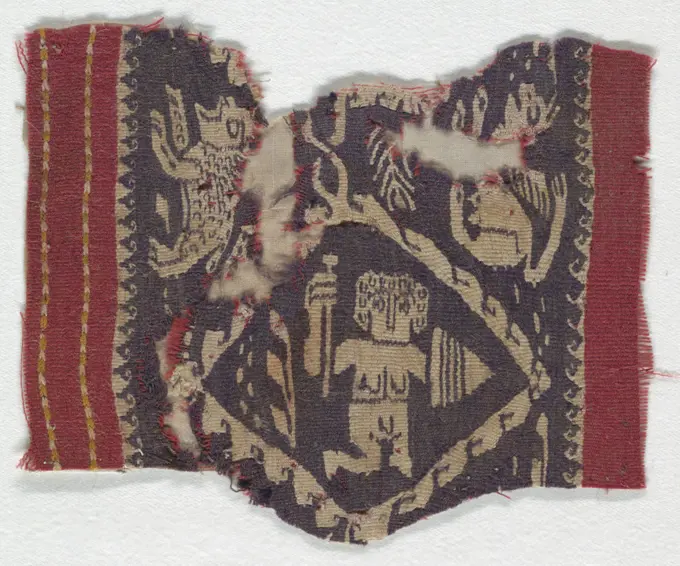
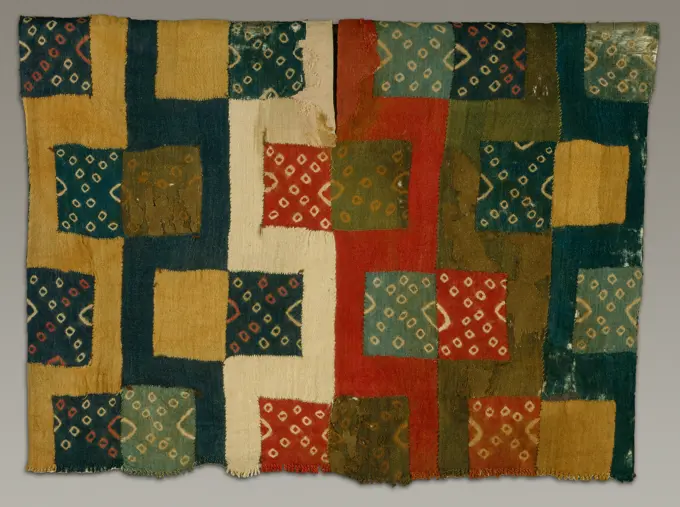
Piece 16th-17th century Italian. Piece 223537Fragment Made 1601-1700 Italy. velvet .Band Fragment; linen, silkFragment, Medium: silk Technique: cut and uncut supplementary warp pile (velvet) on satin ground, Fragment of red cut and uncut velvet on white satin ground. Portion of large-scale flower bud at left with petals on the right., Italy, 17th century, woven textiles, FragmentDomino paper, Block-printed and stenciled on handmade paper, A wallpaper fragment of domino pattern removed from a house in Paris, c. 1720. THe design on this paper is a ghost image from 1984-61-1., Paris, France, ca. 1720, Wallcoverings, Domino paperPanel; cotton, silkScience sprei or stroller sprei of coarse ripping cotton, with clover leaves. Science sprei or stroller sprei of coarse ripping cotton, with clover leaves.Fragment late 16th century Italian. Fragment 230086Textile Swatch; Manufactured by Deerfield Society of Blue and White Needlework (American, 1896-1926) (United States)Piece 18th-19th century Japan. Piece 67107Fragment of coarse linen fabric, with blue, white and dark brown studs. Fragment of coarse linen tissue, with blue, white and brunette studs on brown surface. Spain.Fragment. Japan. Date: 1601-1700. Dimensions: 20.3 x 17.1 cm (8 x 6 3/4 in.). Plain compound twill, silk and gilt paper; 2 1/2 strips to m.m. Origin: Japan. Museum: The Chicago Art Institute, Chicago, USA.Fragment 16th century Italian. Fragment 230185Fragment (Spain); silk warp and weft; Warp x Weft: 25.6 x 15.6 cm (10 1/16 x 6 1/8 in.)Fragment. Lambayeque; Probably north coast, Peru. Date: 1000-1476. Dimensions: 65.4 x 27 cm (25 3/4 x 10 5/8 in.). Cotton, plain weave; resist dyed; edged with cotton and wool (camelid), slit tapestry weave with couched supplementary weft loop pile; appliquéd with cotton, slit tapestry weave with extended weft cut fringe; embroidered with cotton in interlaced running stitches. Origin: Peru. Museum: The Chicago Art Institute, Chicago, USA.Turban or shawl end with tiraz and gold, 1094. Egypt, Fatimid period, reign of al-Mustalī. Plain weave with inwoven tapestry weave: linen, silk, and gold filé; overall: 62.3 x 54.6 cm (24 1/2 x 21 1/2 in.).Fragment late 16th century Italian. Fragment 230456Shawl Indian, Bengal, for export market 19th centuryFragment yellow tripe with pattern of tulips inside stretched diamond forms. Fragment pressed yellow tripe with a pattern embossed from rated diamond-shaped figures in which a tulip on stem.Corner of Fragment of a Shawl, 1900 - 1924. India, Kashmir, 20th century (). Tapestry twill; wool; overall: 52.7 x 53 cm (20 3/4 x 20 7/8 in.).Fragment 17th century Italian. Fragment 230623Textile Fragment 16th-17th century. Textile Fragment 454574Fragments with peacocks and inscriptions, before 1968. Iran, Buyid Period, mid 10th - mid 11th century. Lampas weave, silk; average: 61.6 x 74.3 cm (24 1/4 x 29 1/4 in.). These textile fragments preserve pairs of addorsed peacocks in tan on a plain tan background. Part 3 bears an inscription along the border.Band fragment, Medium: warp; S-spun linen. Wefts; S-spun linen, S-spun wool Technique:slit tapestry with supplementary weft wrapping, Scrolling leaves froming circles containing animals., Egypt, 4th-5th century, woven textiles, Band fragmentWoman's headdress, Medium: silk, metal Technique: embroidered in brick stitch on plain weave, Soft cream panel of creped silk, embroidered at each end in gold thread in a pattern of three large, identical bouquets with crescent leaves, round blooms, and a tulip center., Turkey, 19th century, embroidery & stitching, Woman's headdressStrip of brown side, c. 1400 - c. 1950 Strip of brown lace, probably mechanically manufactured. One of the long and two short sides is decorated with ribbon that is placed on the surface in graceful lines. The soil is littered with moesjes.  textile materials Strip of brown lace, probably mechanically manufactured. One of the long and two short sides is decorated with ribbon that is placed on the surface in graceful lines. The soil is littered with moesjes.  textile materialsFragment, before 1973. Iran, 11th century. Silk weave; overall: 16.4 x 15.6 cm (6 7/16 x 6 1/8 in.).Textile with Geometrical Designs 15th century German. Textile with Geometrical Designs 463252Fragment; silk, metallic yarns; 1899-17-1-fBliej Kultury unknownFragments (Italy); silkWaistWrapperFlounce Made 1690-1710 France. Linen, needle lace .Piece of fabric. unknown, authorTextile fragment 1700-1899 Russian. Textile fragment 173389Fragment, Medium: silk, metal-wrapped silk cord Technique: embroidered, Fragment of an all-over pattern which would have been rows of various flowering plants in alternate alignment in metal-wrapped yarns - gold and silver on a red silk satin. Many areas padded and raised., Europe, 17th century, embroidery & stitching, FragmentPiece 18th-19th century Japan. Piece 67676Fragment, Medium: silk Technique: cut and uncut supplementary warp pile (velvet), Fragment of golden tan cut and uncut velvet on self-colored ground. Geometric design of diamond-shaped motifs within larger lozenges., Italy, 16th century, woven textiles, FragmentNapkin, with woven peel pattern. Napkin of linen with peel pattern, cut from larger piece; zoomed on four sides.Man's Shaped Tunic 1000-1350 Arica. Man's Shaped Tunic 318046Bedcover, Medium: linen Technique: embroidered, late 18th century, embroidery & stitching, BedcoverTunic, 1100-1532. Peru, Chimú or Chimú-Inka, 12th-16th century. White cotton; plain weave with supplementary weft brocading; overall: 57.2 x 151.1 cm (22 1/2 x 59 1/2 in.).Tapa (bark cloth) textilesCutslip from Brussels bobbin and four birds in the pattern, anonymous, c. 1750 Capslip from Brussels bobbin and four birds in the pattern. The barbe has a round end and a scalloped edge with picots. In addition to the birds, the decoration consists of flowers and foliage. Brussels linen (material) Brussels bobbin lace Capslip from Brussels bobbin and four birds in the pattern. The barbe has a round end and a scalloped edge with picots. In addition to the birds, the decoration consists of flowers and foliage. Brussels linen (material) Brussels bobbin laceSleeve top Hungarian or Transylvanian early 19th centuryFragment, Medium: silk and metallic thread, Galloon fragment with design of flowers and leaves in vine arrangement in tinted metal threads on gilt ground; furnishing trim, France, late 19th century, trimmings, FragmentNapkin; linen; 1900-10-1Fragment , Les Losange (Lozenges); Designed by Jean-Baptiste Huët (1745 - 1811); Company: Oberkampf & Cie. (France); France; cotton; Warp x Weft: 72 x 95 cm (28 3/8 x 37 3/8 in.) Repeat H: 51.5 cm (20 1/4 in.); Bequest of Elinor Merrell; 1995-50-56Fragment, Medium: Warp; S-spun linen. Wefts; Z-spun linen, Z-spun wools technique: plain weave and tapestry weave, isolated ornaments in brown on plain weave ground, 6th-8th century, woven textiles, FragmentTextile Fragment 7th-8th century. Textile Fragment 444012Tie trimmed with strips of lace bobbins on mechanical tulle, anonymous, c. 1850 - c. 1899 Das of unprocessed natural batist with a narrow strip of lace -ups along the long sides: tuldoor stop work on mechanical tulle. Pattern with moes above a border with ovals with feathers. On the short sides, wrinkled wide strip of tuldoor stop work has been placed on mechanical tulle, with a pattern of flower branches and thrown stars. Europe linen (material) Das of unprocessed natural batist with a narrow strip of lace -ups along the long sides: tuldoor stop work on mechanical tulle. Pattern with moes above a border with ovals with feathers. On the short sides, wrinkled wide strip of tuldoor stop work has been placed on mechanical tulle, with a pattern of flower branches and thrown stars. Europe linen (material)Fragment (Egypt); cottonSimple wedding blanket, 20th century, 104 x 55 1/2 in. (264.16 x 141 cm) ((slightly irregular; with fringe)), Wool, Mali, 20th centuryPantalets ca. 1838 American. Pantalets 106032Tissue fragment in tapestry. Linen tissue fragment with a woven color-on-color pattern of mainly windows obtained by weaving the weft threads in diagonal and wavy direction. Spread over the tissue small galen woven that enliven the appearance. In between a row of nine windows in green line, above that three green vertical motifs. Two horizontal tires of wavy and vertical line motif (kufiek script or figures), One light motif on dark soil, the other with dark outlined motif on light soil.Oranjelint ,, 1775 - 1800 ribbon (material) Ribbon with white lane through which a red ribbon over the following symbols: arrow bundle with staff and two hoses, branch with orange apples and flower, freedom hat with lion with thistle in his leg, twig, eagle, twig, the word allians on banderol surrounded by laurel cross, twig. Netherlands silk printingTextile (Spain); silk, metallic threadFragment Made 201 CE-1000 Egypt. . Ancient EgyptianBorder (possibly Mexico); cotton; 1962-66-1Two block lace unknownTextile 19th century Japan. Textile 67985Diaper with openwork edge, anonymous, 1650 - 1700 Diaper, square cloth of linen, lined on four sides and decorated with an openwork edge within the hems. The cloth is marked in the middle with the letter R, executed in cross stitch with a common thread.  Linen (Material). Wire: Silk Diaper, square cloth of linen, lined on four sides and decorated with an openwork edge within the hems. The cloth is marked in the middle with the letter R, executed in cross stitch with a common thread.  Linen (Material). Wire: SilkPlaque with Openwork Phoenix 900 CE-1400 China. Jade .Border, Medium: Technique: bobbin lace, Bobbin lace border, shield and plants in repeat; early 18th century, Brabant, early 18th century, lace, BorderFragment blue velvet brocade with pomegranate moth, anonymous, c. 1470 - c. 1480 Fragment silk velvet brokate with pouring pomegranate in lobed contour on blue soil pattern of golden by flowers and leaves. See also A and B. Italy silk. velvet (fabric weave) Fragment silk velvet brokate with pouring pomegranate in lobed contour on blue soil pattern of golden by flowers and leaves. See also A and B. Italy silk. velvet (fabric weave)Fragment of the fabric;  16th century (1501-00-00-1600-00-00);CYSAMIT, embroidery, fabricsBanner of the first infantry department. Yellow cream-colored banner cloth deposited with golden frills. a crowned graceful W. the inscription below is not preserved at the front; Along the silk green branches with orange berries. On the parade capacity the crowned weapon of the kingdom, with banderole on which the arms spell: your Maintiendrai, held by two crowned lions; This whole is surrounded by two up bent laundry branches, which are held together at the bottom through a rose bow; Along the silk green branches with orange berries.Rebozo, Medium: cotton, silk, metal-wrapped silk core threads Warps: cotton, foil-wrapped silk, Weft: cotton Technique: warp resist dyed before weaving (jaspe), Japse rebozo in shades of tan and navy blue. Braided ends have warp fringe., Mexico, late 18th-early 19th century, printed, dyed & painted textiles, RebozoFragment of the fabric; Egyptian workshop; V-VI century (401-00-00-600-00-00);Fragment, 1700s. France, 18th century. Silk; overall: 8.4 x 19.6 cm (3 5/16 x 7 11/16 in.).Textile 19th century Japan. Textile. Japan. 19th century. Textiles-WovenFragment (Germany); linen; Warp x Weft: 31.1 x 30.3 cm (12 1/4 x 11 15/16 in.)Piece 18th-19th century Japan. Piece. Japan. 18th-19th century. Silk. Textiles-WovenFragment silk tissue. Fragment of orange-red silk with repeating pattern in green from showing shredding peacocks in Spitsovals. Spitsovals are interconnected with small medallions in which stylized animal figures. The ground around has a network pattern. Pattern is signed.Strip textile in which two edge strips with diamond formen. Strip Natural Textile With Two Side Strips With Diamond Shapes, Spanish Side.Fragment late 16th century Italian. Fragment 230134Handkerchief, 1700s. France, 18th century, Period of Louis XV (1723-1774). Embroidery on linen ground; lace edging; overall: 57.2 x 57.2 cm (22 1/2 x 22 1/2 in.).Sample early 19th century French. Sample. French. early 19th century. Silk and metal thread on felt. Textiles-EmbroideredPrinting block, Medium: wood, metal, Wood block with metal pins for printing textiles. Design of curving fine branches with large blossoms and leaves in raised wood. Background of lozenge-shaped areas set off by wide lines of dots, each dot being a tiny metal pin., France, late 18th century, appliances & tools, Printing blockTextile Fragment 4th-5th century. Textile Fragment 443982Fragment, 1800s. India, 19th century. Brocade; silk and metal; overall: 9.5 x 11.4 cm (3 3/4 x 4 1/2 in.).Piece 16th century China or Japan. Piece 71078Darning Sampler; silk embroidery on cotton foundationFragment Made 1476-1532 Peru. Plain simple cloth (Old card) . ChuquibambaTextile 1700-1899 Russian. Textile 173400Galloon 17th century French. Galloon 213920Headband or Narrow Band Made into Headband, Fragment Coastal or Moche Wari. , 600-1000 C.E. Cotton, camelid fiber, 3 9/16 x 20 1/2 in. (9 x 52 cm).   Arts of the Americas 600-1000 C.E.Fragment of Coptic fabric unknownLeaf with irregular structure of Verschilling Forms, Anonymous, 1750 - 1820  Leaf with irregular amorphous structure of lines and different shapes, with folding tracks.  paper.  fantasy ornamentTextile Fragment 4th-5th century. Textile Fragment. 4th-5th century. Linen; plain weave. Attributed to Egypt. TextilesChurch cope. unknown, authorCover mid-15th century Italian. Cover. Italian. mid-15th century. silk; metal;satin; cotton. Textiles-VelvetsFragment, Medium: linen, silk Technique: plain weave, Striped cloth., Middle East, 13th century, woven textiles, FragmentHandkerchief unknownFragment blue silk tissue with floral pattern, anonymous, c. 1550 - c. 1610 Fragment of a silk fabric, consisting of a blue warp with ditto impact for the stock and a blue warp with alternating pale yellow, purple and brown impact for the pattern (keper), shots with yellow silk and gold thread. The pattern consists of winding, volute -shaped twigs, on which small flower clusters and large flowers. France (possibly)Italy (possibly) Ketting an element: Silk. lampas (textile material) Fragment of a silk fabric, consisting of a blue warp with ditto impact for the stock and a blue warp with alternating pale yellow, purple and brown impact for the pattern (keper), shots with yellow silk and gold thread. The pattern consists of winding, volute -shaped twigs, on which small flower clusters and large flowers. France (possibly)Italy (possibly) Ketting an element: Silk. lampas (textile material)Fragment, Medium: wool Technique: slit tapestry weave, Purple band with undyed figures between red areas on either side., 4th-5th century, woven textiles, FragmentMan's Tunic. Peru, South Coast, Nasca, Wari-related, 500-800. Costumes. Camelid fiber plain weave with discontinuous warps and wefts, and tie-resist dyedNapkin with flowers and garlands, anonymous, c. 1800 - c. 1810 Linnamast napkin with flowers and garlands. Midfield: A straight -up fine swinging branch, with cord and brush, is intersected by a wide wavy -leafed branch. Edges: three times a straight list, coordinously wound; The middle one is wide and with leaves wound, the outer narrow and with a fine flower branch overranks. Brabant (possibly) linen (material) damask Linnamast napkin with flowers and garlands. Midfield: A straight -up fine swinging branch, with cord and brush, is intersected by a wide wavy -leafed branch. Edges: three times a straight list, coordinously wound; The middle one is wide and with leaves wound, the outer narrow and with a fine flower branch overranks. Brabant (possibly) linen (material) damaskTissue fragment in tapestry. Natural linen tissue fragment with two decorative horizontal strips in dark purple with a fine, curly rank motif. Along one side of Franjerand is visible, followed by three thicker weft threads.Printing Block (India); wood