Textile Fragments

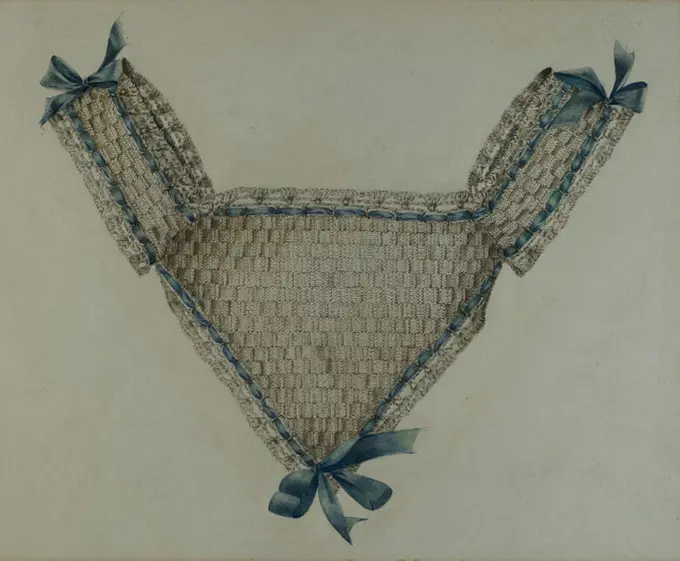
An assortment of silk textile fragments with intricate designs, showcasing floral motifs, colors, and historical significance.

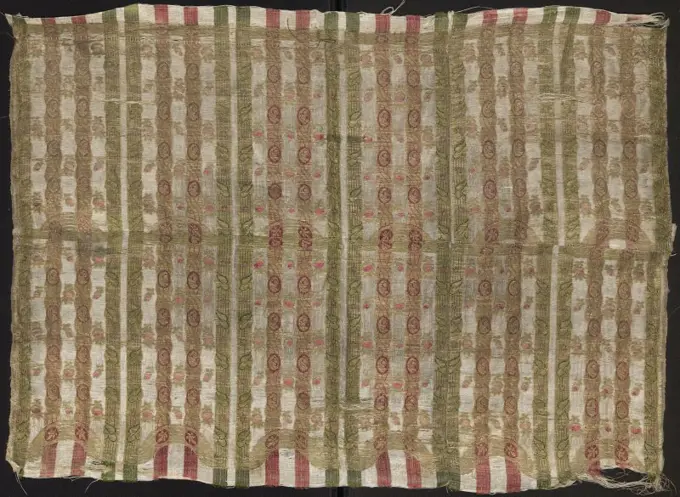
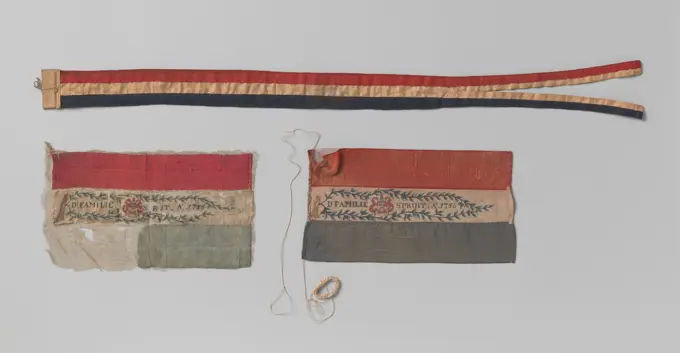
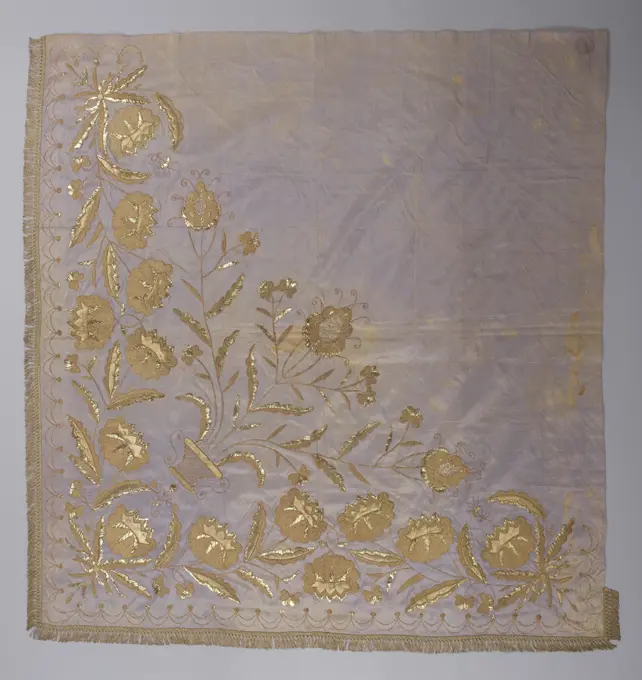
Conciliate belt; Royal Manufacture of Jedwabna in Grodno (Grodno; Silk fabric and belt fabric factory; 1768-1780); 1768-1780 (1768-00-00-1780-00-00);
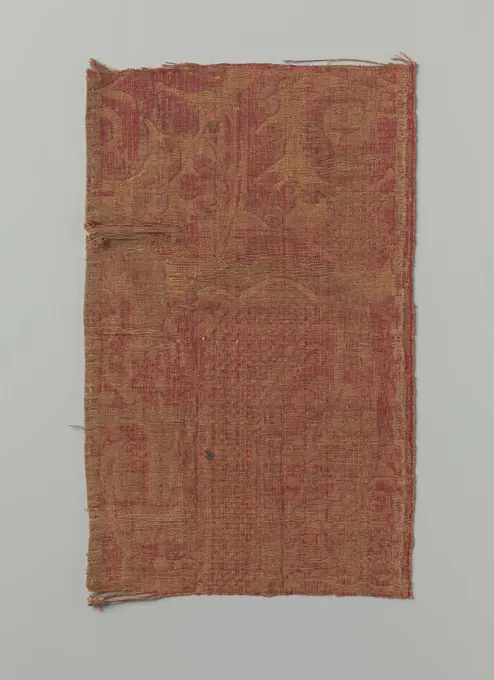
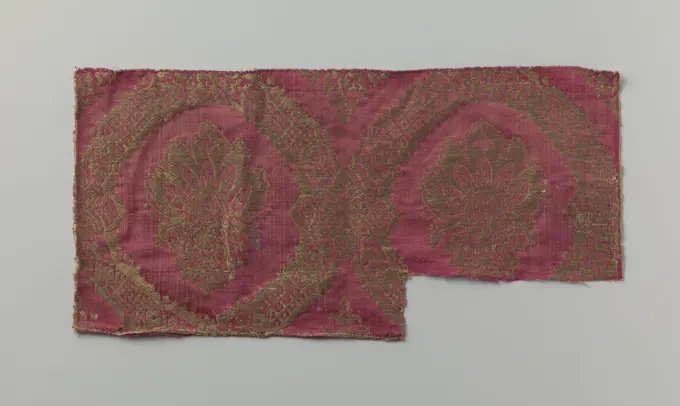
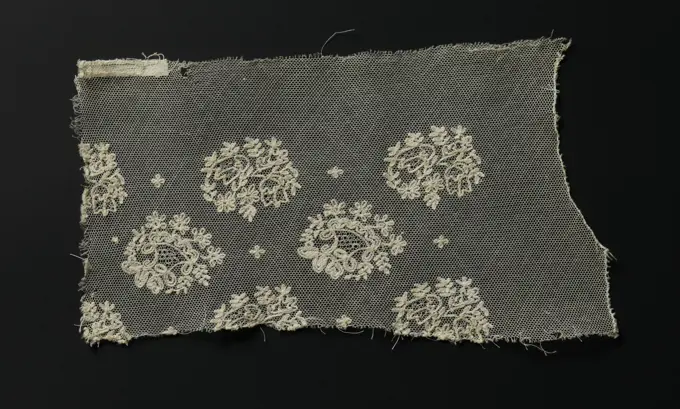
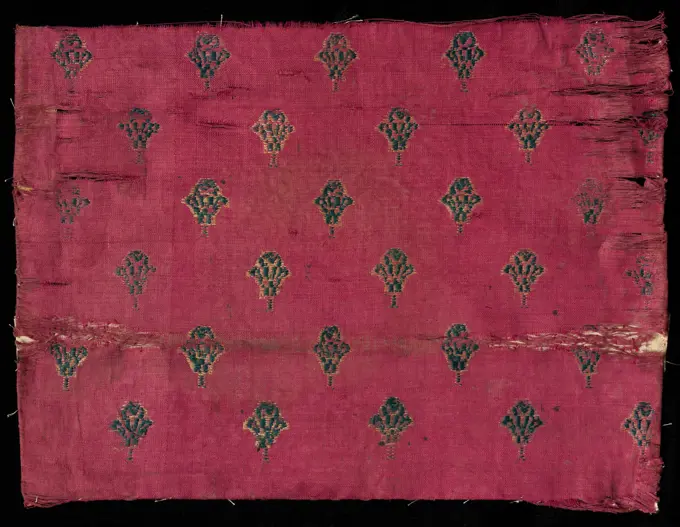
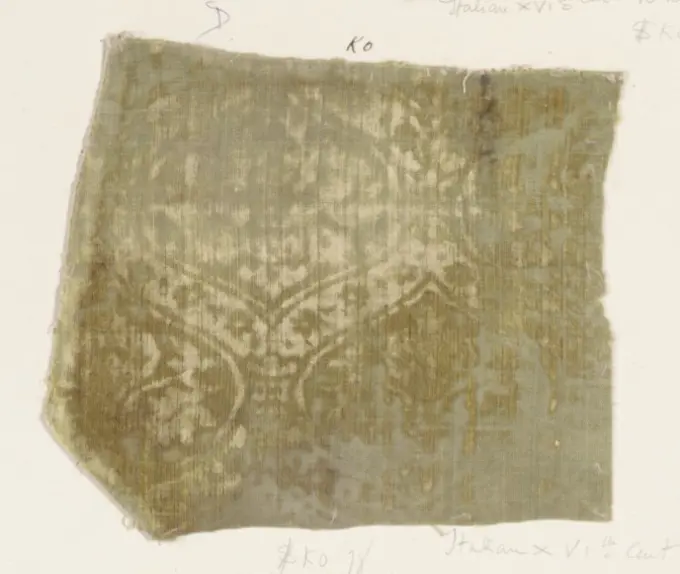
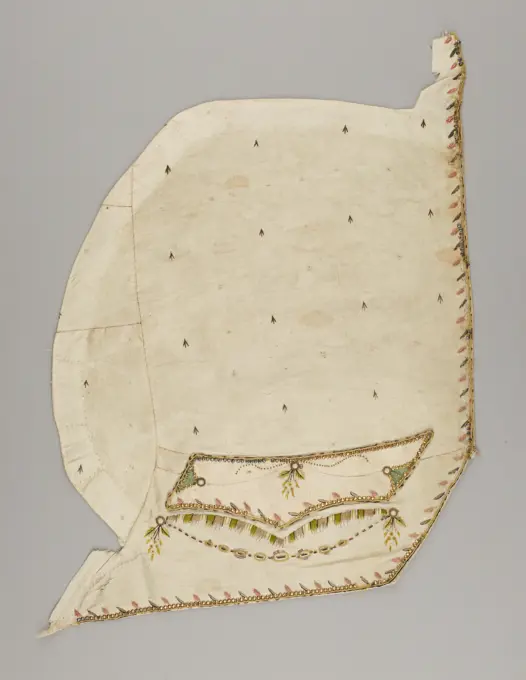
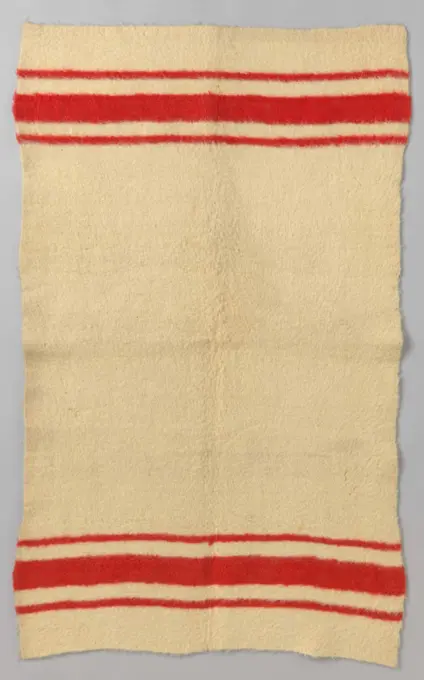
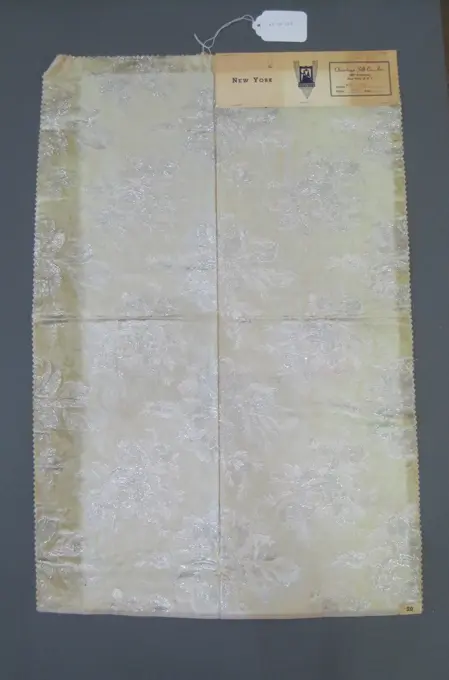
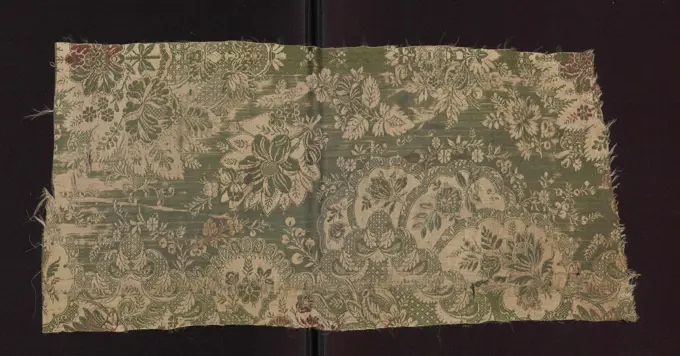
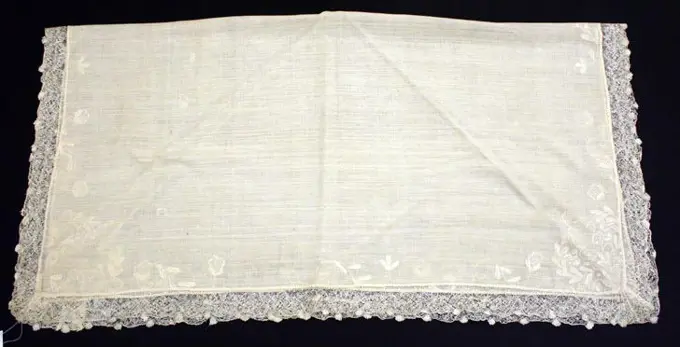
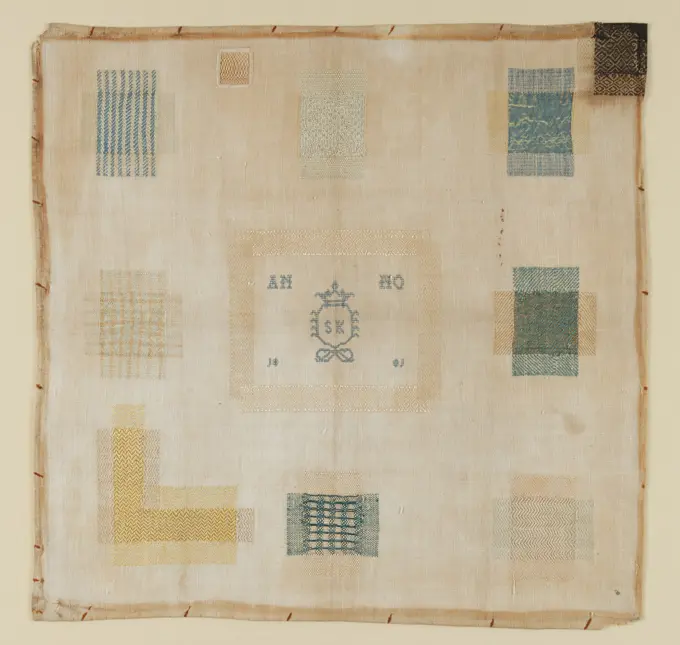
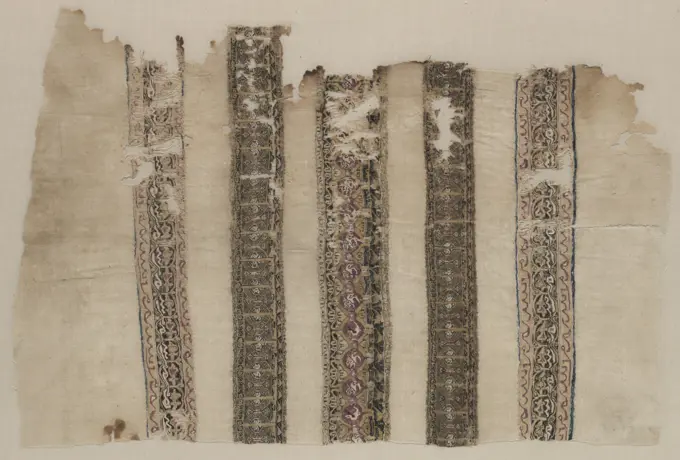
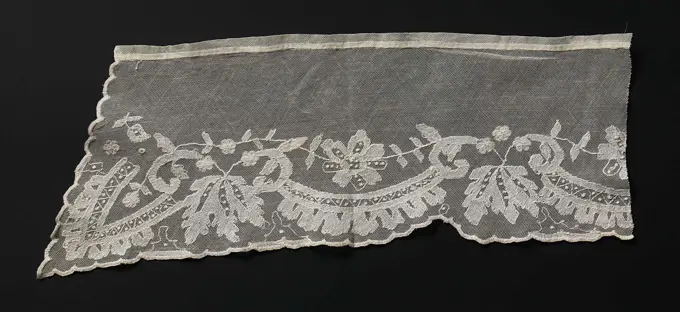
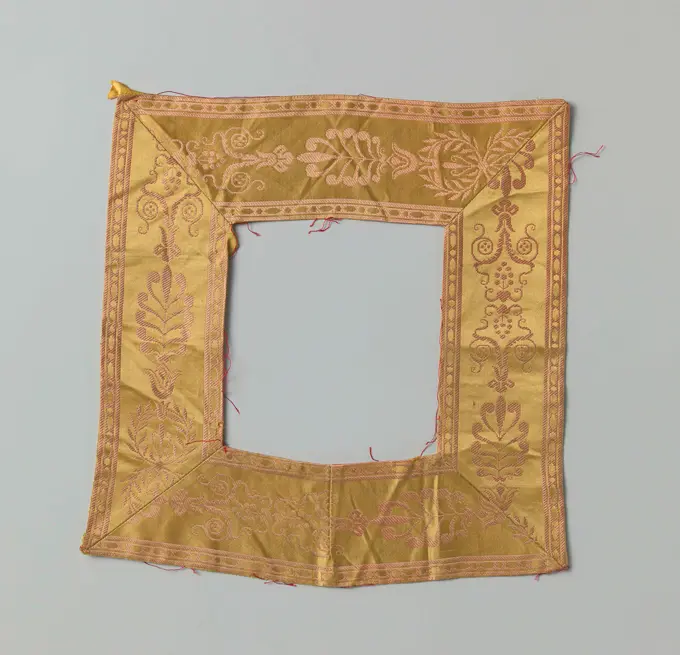
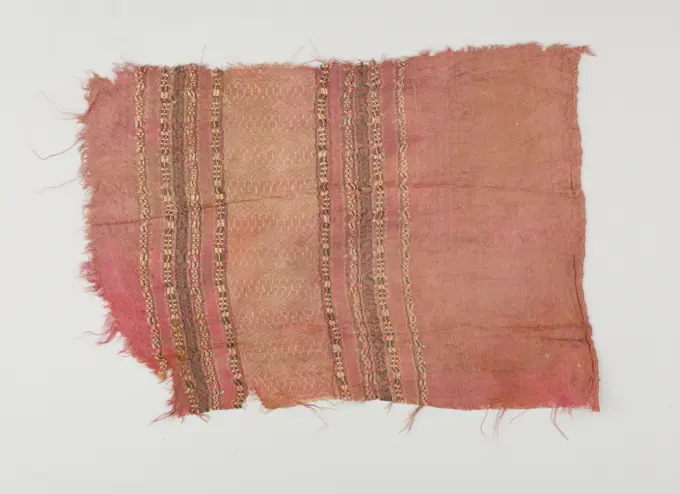
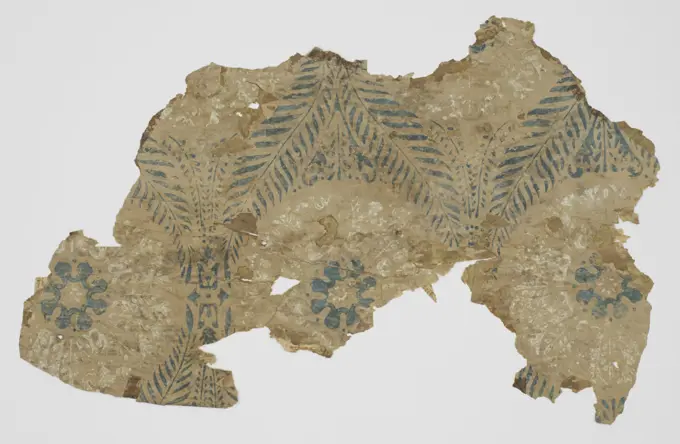
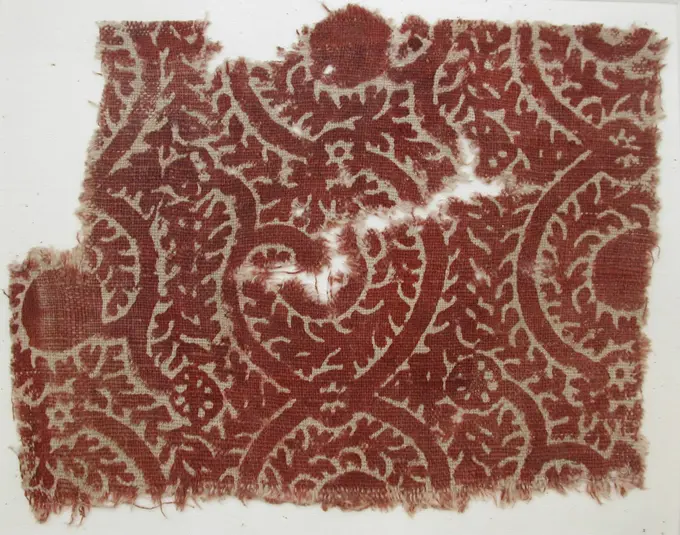
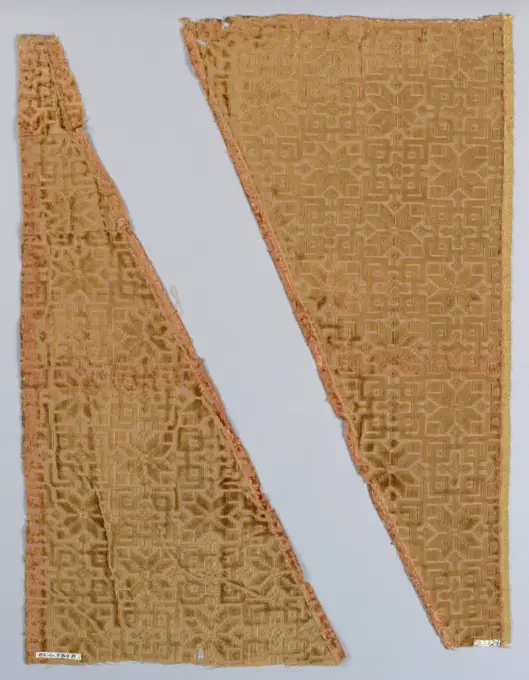
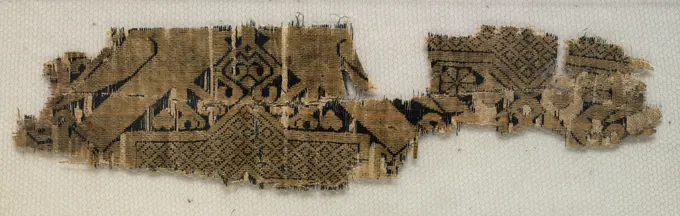
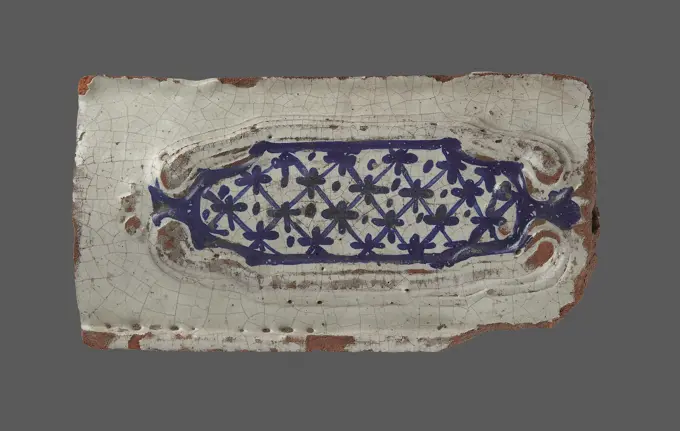
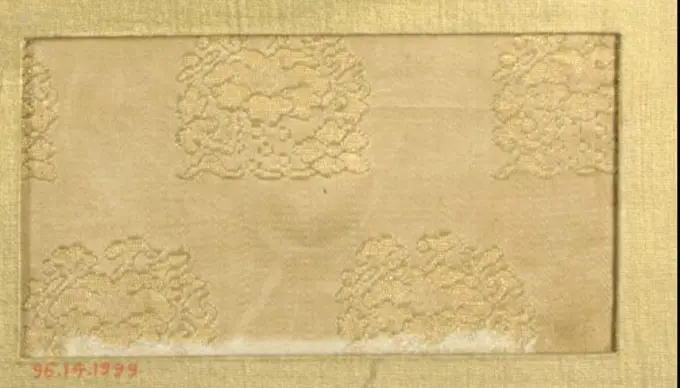
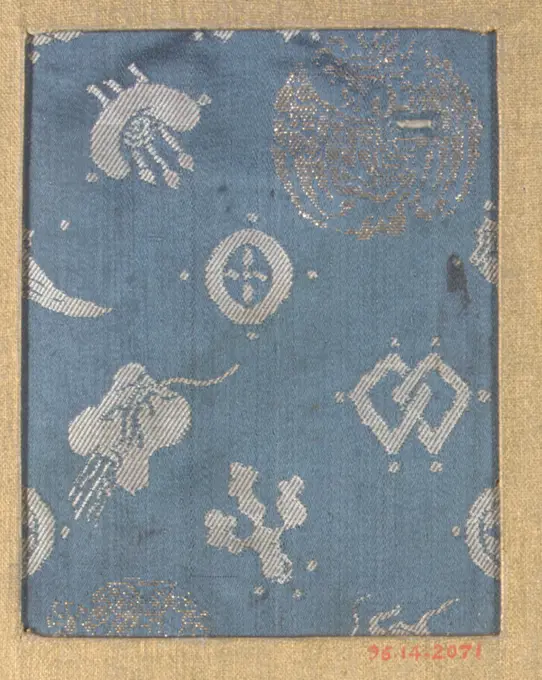
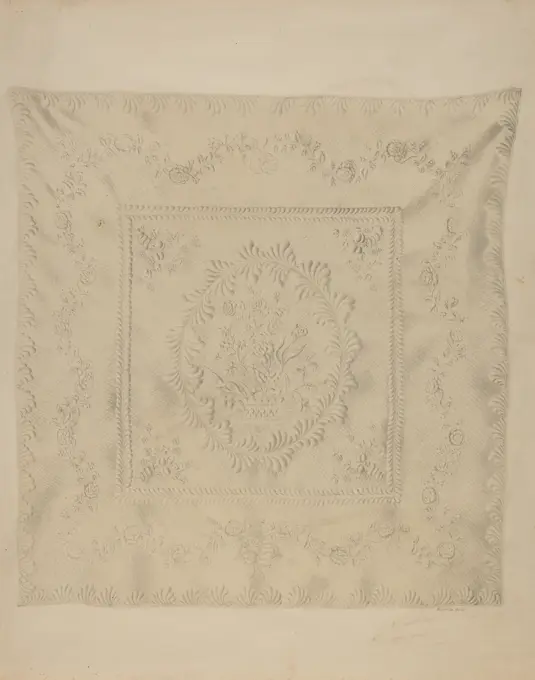
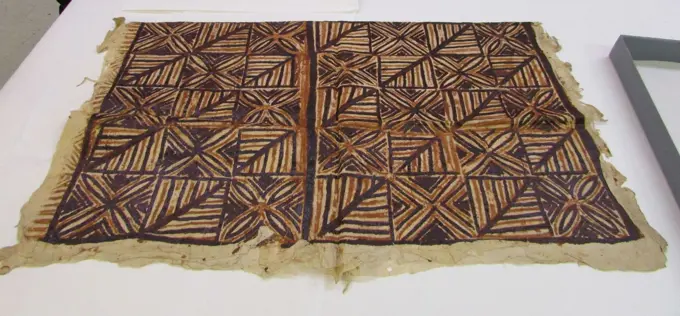
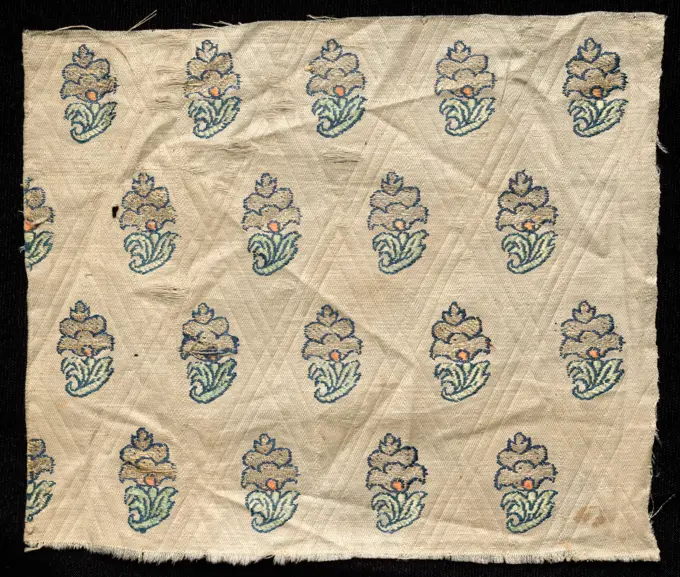
Fragment of silk fabric  small ornamentation of asymmetrical flower stems unknownTextile (Italy); silk on linenFragment (Italy); silkFragment of a Ship Flag. Fragment of a ship flag, left subcorn, with a red cross (St. George's Cross) on a white background, and a double red-white checkered edge. This flag is a 'Guinea Jack', which was lined by the English Royal Africa Company. This copy is probably conquered in 1665 from the Fort Cormante on the coast of West Africa.Fragment silk tissue with motif of stylized leaf work, 1575 - 1625 Fragment of woolen, woven fabric. Purple and yellow. Germany, 1600. Germany Ketting an element: Silk. Entry: Wool Fragment of woolen, woven fabric. Purple and yellow. Germany, 1600. Germany Ketting an element: Silk. Entry: WoolPiece of fabric. unknown, authorHuipil (Mexico); cottonFragment yellow with red silk brocatel with pattern of flower ornament flanked by vases. Fragment of yellow and red satin broker, with a pattern of a large flower ornament, flanked by vases from which wide garlands develop. Fond is formed by the yellow warp.Piece of fabric. unknown, authorConciliate belt; Royal Manufacture of Jedwabna in Grodno (Grodno; Silk fabric and belt fabric factory; 1768-1780); 1768-1780 (1768-00-00-1780-00-00);Fragment of red brocatel, anonymous, c. 1620 - c. 1640 Fragment of two parts composite with pattern of two medallions with flour. Germany Ketting: Silk. Elements: Linen (material). Fragment of two parts composite with pattern of two medallions with flour. Germany Ketting: Silk. Elements: Linen (material).Fragment, Medium: silk Technique: supplementary warp forming cut and uncut pile in a plain weave foundation (velvet), Stylized leaf forms with diamond shaped compartments. Design from by cut and uncut pile of the same red color., 17th century, woven textiles, FragmentFragment lace plunger on mechanical tulle, anonymous, c. 1900 - c. 1924 fragment Fragment natural -colored lace -up work: tambooering on mechanical tulle, lierse side. Rectangular in shape with a cut out turn on one short side. A pattern with round shapes constructed from flower branches and round shapes made from a flower pot surrounded by flowers and leaves. Between the round a small clover always forms. The side with the bend is finished with a wire or braid, the other edges are not finished. West-EuropaBrocaded Book Cover, 1800s. India, 19th century. Brocade; silk and cotton; overall: 21 x 29.2 cm (8 1/4 x 11 1/2 in.).Fragment (Spain); silk, metallicFragment of a Sleeve 4th century. Fragment of a Sleeve 444009Fragment of a Tunic 7th century. Fragment of a Tunic 444336Fragment late 16th century Italian. Fragment 230084Half of a waistcoat unknownDeken.Woolen children's blanket, white with red edges.Textile Swatches Onondaga Silk Company, Inc. (1925-1981). , 1948-1959. 72 acetate, 16 rayon, 12 metal, 27 x 18 in. (68.6 x 45.7 cm).    1948-1959Excerpt yellow brocatel with spire and stylized flowers, anonymous, 1400 - 1599 Fragment of two pieces of silk tissue with pattern of spire in which stylized flowers in which stylized flowers. Colors red and yellow. Spain Ketting an element: Silk. Entry: Linen (Material) broach Fragment of two pieces of silk tissue with pattern of spire in which stylized flowers in which stylized flowers. Colors red and yellow. Spain Ketting an element: Silk. Entry: Linen (Material) broachCeremonial Hanging (Bed Spread), 59 x 44 1/2 in. (149.86 x 113.03 cm), ChinaPiece 18th-19th century Japan. Piece 65995Fragment of the fabric;  beginning of the 18th century (1715-00-00-1725-00-00);Górska, Jadwiga - collection, gift (provenance), fabricsFragment Italian 16th-17th centuryPiece 18th-19th century Japan. Piece 67501Handkerchief 19th century American. Handkerchief 100198Sampler, Medium: linen, silk Technique: embroidered on plain weave, Sampler divided vertically into quadrants; three show embroidered silk bands and rectangles of geometric patterning; one shows bands of drawnwork., Toledo, Spain, 18th century, embroidery & stitching, SamplerSampler (Mexico); silk embroidery, linen foundation; Warp x Weft: 57 x 14 cm (22 7/16 x 5 1/2 in.); Bequest of Mrs. Henry E. Coe; 1941-69-136Napkin or wander with pellen pattern, c. 1790 - c. 1800 Napkin or wander from white Linnamast with peel pattern: an infinite report of checkered squares within a diamond pattern, with blocked squares and rectangles checked at the junctions. Marked in Red Cross stitch Ka 10 and in open flat stitch A 12.  linen (material) Napkin or wander from white Linnamast with peel pattern: an infinite report of checkered squares within a diamond pattern, with blocked squares and rectangles checked at the junctions. Marked in Red Cross stitch Ka 10 and in open flat stitch A 12.  linen (material)Fragment 16th century Italian. Fragment 230581Darning SamplerTissue fragment in tapestry, anonymous, c. 1000 - c. 1199 Black -colored tissue fragment with three woven jobs. The widest track at the top is divided by solid stripes in yellow, red and green and has a switch motif in red to yellow centrally. In the tires above and under a yellow braided motif. The narrower band below has lines in yellow, red and green. The narrow strap at the bottom in yellow and red has a thicker slant that mixes the two colors. Egypt Ketting: Linen (material). Entry: Wool. Entry: Silk tapestry Black -colored tissue fragment with three woven jobs. The widest track at the top is divided by solid stripes in yellow, red and green and has a switch motif in red to yellow centrally. In the tires above and under a yellow braided motif. The narrower band below has lines in yellow, red and green. The narrow strap at the bottom in yellow and red has a thicker slant that mixes the two colors. Egypt Ketting: Linen (material). Entry: Wool. Entry: Silk tapestryFragments; silk, metallicFragment Composed of Parts of Three Tiraz-Style Textiles, 1094 - 1101. Egypt, Fatimid period, probably during Caliphate of al-Musta'li, AH 487-495 (A.D. 1094-1101). Tapestry (originally inwoven in a tabby ground); linen and silk; overall: 59.4 x 39.2 cm (23 3/8 x 15 7/16 in.).Gedeelte van een kraag van kantborduurwerk op machinale tule.Portion of a collar of natural-colored edge embroidery, cross-pitch on machine tulle. The crossed-on pattern has interspersed a bond with godrews and a landscape flower branch with a large three-free leaf with three flowers above. In the tip of the collar, the pattern has a pointed band with godrewes. One short and one long side are finished with a feston stitch. The top is finished with a soil. The other short side is not finished, but cut.Fragments, Medium:silk Technique: 4&1 satin plus 1/4 twill, Large roundel with acanthus foliage in yellow on green., 17th century, woven textiles, FragmentsFragment of a Sleeve. Dimensions: 10 5/8 in. high 5 1/8 in. wide (27 cm high 13 cm wide). Date: 3rd-4th century. Museum: Metropolitan Museum of Art, New York, USA.Cope Made 1675-1725 Italy. Silk, satin weave self-patterned by ground weft floats; embroidered with gilt- and silvered-metal coil and gilt- and silvered-metal-strip-wrapped hemp in couching and padded couching; glass beads and metal spangles; edged with woven tape; closures of square braiding and in oblique interlacing; embroidered in fishbone stitches; self fringe .Tissue fragment with deployment in carpet work, anonymous, c. 200 - c. 399 Natural linen tissue fragment with deployment with scalloped edge in carpet work. Geometric motifs in flying wire technology on red soil. Egypt Ketting an element: Linen (material). Entry: Wool tapestry Natural linen tissue fragment with deployment with scalloped edge in carpet work. Geometric motifs in flying wire technology on red soil. Egypt Ketting an element: Linen (material). Entry: Wool tapestryFragment, Medium: silk Technique: plain compound weave, Fragment of a garment in blue silk with narrow and broad stripes in tan with minute geometric figures., 13th-15th century, woven textiles, FragmentFragment 16th-17th century Italian. Fragment 230539Fragment Werra plate, mirror decor with fish and plant, year 1614, pale yellow, brown and green glaze, bowl crockery holder earth discovery ceramic earthenware enamel, Red earthenware with drawing in light yellow and green glaze year glazed: 1614 archeologyTextile Fragment 6th-7th century. Textile Fragment 444236Piece 18th-19th century Japan. Piece 66866Needlepoint (Reticella) and Bobbin Lace Pillow Case, 17th-18th century. Italy, Genoa, 17th-18th century. Lace, needlepoint and bobbin: linen; overall: 4.1 x 40.6 x 30.5 cm (1 5/8 x 16 x 12 in.).Textile Fragment 6th-7th century. Textile Fragment. 6th-7th century. Wool, linen; plain weave, tapestry weave. Made in Egypt. TextilesPiece 18th-19th century Japan. Piece 66831Cover Made 1801-1825 Turkey. Silk and tinsel; embroidered .Eva Wilson, Linen Towel  Flower Design, c 1936 Linen Towel - Flower DesignFragment silk tissue of a seat cladding .. Fragment yellow silk tissue, of a chair covering. The pattern has pink palmets and arabesken on a yellow ground. The fragment belongs to thirteen fragments with Invnr. BK-1992-18-A T / M BK-1992-18-m.Fragment of fabric unknownFragment, Medium: silk, metallic Technique: supplementary warp forming raised pile in  foundation (velvet), Stylized pineapple motifs within wreaths in grey and soft pink., Selvage both sides., 18th century, woven textiles, FragmentEmbroidery sample for a mans suit or waistcoat ca. 1785-1815 French. Embroidery sample for a mans suit or waistcoat 224834Fragment of the lace;  2. PO. 19th century (1851-00-00-1900-00-00);Sidewall - fragment, Three fragments: a) newspaper, lining; b) brownish paper; c) blue and white medallions, transfer of B's pattern on verso., possibly USA, 1850-99, Wallcoverings, Sidewall - fragmentSampler; linen embroidery on linen foundationTextile, Medium: wool Technique: stamped, Stamped wool, England, late 17th-early 18th century, woven textiles, TextileTowel Made 1601-1725 Turkey. Towel embroidered in flower design. .Album with performances of animals. Album with a series of animals consisting of twelve prints. Cardboard tire, decorated with marbled paper, with a blank sheet in front and back. Also a bracts and in the back.Textile Fragment 14th-15th century This block-printed, cotton textile fragment features a repeated stylized tendril pattern on a radiant brown-red background. The textiles block-printed technique is revealed which can be seen from the vertical lines which divide the fragment into three sections. Dated to the fourteenth to fifteenth century, this fragments vibrancy of dye alludes to the demand and way in which Gujarati textiles were recognized as popular commodities traded across the Indian Ocean. Found in Fustat, Egypt (Old Cairo), this textile sheds light on the maritime trade of textiles between North Africa and Western India during this period.. Textile Fragment 448527Quilt, Medium: linen, cotton Technique: trapunto (two layers of plain weave, pattern outlined in back stitch, pattern shapes stuffed with unspun cotton or heavy cotton cord, background areas textured by running stitches which also hold two layers together, Octagon and diamond grid covering entire surface of half a quilt. Each diamond contains a four-legged animal: one with large antlers, another with a bird perched on its back. Each octagon has an eight-pointed star containing fantastic animals of various types with wings, antlers, tails; some are four-legged and others are bird-like. Weft-loop fringe on three sides., Sicily, Italy, 15th century, embroidery & stitching, QuiltSet of IIturgical garments, embroidered  pall unknownFragments (Spain); silkFragment blue velvet brocade with pomegranate moth, anonymous, c. 1420 - c. 1499 Fragment blue silk velvet brocade with pomegranate potato motif. Italy silk. velvet (fabric weave) Fragment blue silk velvet brocade with pomegranate potato motif. Italy silk. velvet (fabric weave)Textile Fragment with Portions of Eight-Pointed Star and Birds, 11th-12th century. Syria, Ayyubid period, 11th-12th century. Lampas weave, silk; overall: 4.7 x 18.5 cm (1 7/8 x 7 5/16 in.).Textile Fragment 3rd-4th century. Textile Fragment 444008Fragments from a Tunic, 600s. Egypt, Umayyad period (661-750). Tabby weave, inwoven tapestry ornament; wool and linen; overall: 53.9 x 11 cm (21 1/4 x 4 5/16 in.).Elongated cornice tile. unknown, manufacturerFragment of Peruvian fabric unknownPiece 18th-19th century Japan. Piece 67711Two flags and a pennant of the ship model of a corner of the Spruit family, 1756 part. flag On the two tricolor flags the inscription is: D 'Family family crest Spruit Aº 1756. The pennant is also red-white-blue. The flags belong to the ship model of a corner of the Spruit family (NG-NM-12047-A). Netherlands linen (material). silk printingFragment, Medium: linen Technique: bobbin lace (Lille-style with heavy thread), Fragment of Lille type bobbin lace with threads knotted together on one side., 19th century, lace, FragmentPiece 18th-19th century Japan. Piece 67783Textile fragment, textile fragment, Textile Fragment, embroidery of flowers and leaves on purple silk ground, anonymous, Japan, 1573 - 1591, silk, height 24.7 cm × width 13.5 cmSewing Sampler (Germany); cotton, wool, silk, linenFragment Made 1250-1470 Peru. Cotton, plain weave with paired warps; embroidered with wool (camelid) and cotton in running and stem stitches . ChimúTextile Fragment 10th century. Textile Fragment 456917Fragment, Medium: silk Technique: combination of two structures, 2/1 twill and plain weave, Small floral and berry shapes in tan and green silk., 17th century, woven textiles, FragmentTextile Fragment 10th-11th century. Textile Fragment 451778Minnetta Good, Quilt Coverlet, c 1938 Quilt CoverletTapa (Siapo) Samoan. Tapa (Siapo). Barkcloth, pigment, 49 1/2 x 59 in. (125.7 x 149.9 cm).   Arts of the Pacific IslandsBatists handkerchief with embroidery and bobbin with the initials CB, Anonymous, c. 1860 - c. 1870 Handkerchief with a batist center on which embroidery and an edge of bobbin side: Mechelen side. The lace has a repeating pattern on a tralion ground, with a continuous branch along the top (inside) on which a pomegranate and a triple flower branch hangs alternately. The motifs are made in linen battle, the contours around the motifs are made with a thicker wire. The motifs, pomegranate and half -shaped cartouches along the bottom edge, are filled with a simple diamond -shaped ornamental soil. A flat scallop runs along the bottom (the outer edge). The side is put on the handkerchief, with the exception of the corners that are wrinkled. The embroidery pattern has four double straight pisses with meander corners and middle parties. Between the inner two lines, leaf tringers, among the outer two, run a spiral, crowned on the corners by a volute ornament. A closed palmetrand runs against the Blade with flower pattern, Anonymous, 1750 - 1900  Leaf with flower pattern. Used as a cover, with incisions at the back. With glued label with bust of a man with printed inscription 'Question' and label with handwritten inscription: 'Book ... Exercises'.  paper. lacquer (coating) block printing (relief printing process) / lacquering ornament derived from plant formsFragment, 1100s - 1300s. India, 12th-14th century. Plain cloth, resist dyed; cotton; overall: 18.5 x 12.5 cm (7 5/16 x 4 15/16 in.).Fragment Made 201 CE-1000 Egypt. . Ancient EgyptianPiece 17th century Japan. Piece 72239Fragment, 1800s. India, 19th century. Brocade; ecru cotton ground, silk and metal thread; overall: 14.6 x 17.2 cm (5 3/4 x 6 3/4 in.).Ceiling Paper (USA); Manufactured by Maxwell & Co., S.A. (United States); machine-printed paper; 91 x 47 cm (35 13/16 x 18 1/2 in.)Textile Fragment 14th century. Textile Fragment 452404Kerchief made of embroidered silk unknownNapkin with flowers and garlands, anonymous, c. 1800 - c. 1810 Linnamast napkin with flowers and garlands. Midfield: A straight -up fine swinging branch, with cord and brush, is intersected by a wide wavy -leafed branch. Edges: three times a straight list, coordinously wound; The middle one is wide and with leaves wound, the outer narrow and with a fine flower branch overranks. Brabant (possibly) linen (material) damask Linnamast napkin with flowers and garlands. Midfield: A straight -up fine swinging branch, with cord and brush, is intersected by a wide wavy -leafed branch. Edges: three times a straight list, coordinously wound; The middle one is wide and with leaves wound, the outer narrow and with a fine flower branch overranks. Brabant (possibly) linen (material) damaskFragment of a Bowl with Inscription late 9th century. Fragment of a Bowl with Inscription 449360Fragments; silk, cotton, metallic threadAlfred Denghausen, Bundle Handkerchief, c 1936 Bundle HandkerchiefInfant's Bib. Dated: 1935/1942. Dimensions: overall: 30.2 x 37 cm (11 7/8 x 14 9/16 in.). Medium: watercolor and graphite on paper. Museum: National Gallery of Art, Washington DC. Author: Virginia Berge.Trimming, Medium: cotton, wool Technique: plain weave patterned by extra warp floats and extra weft loops for fringe, Red and green wool fringed scallops on a neutral foundation with a fine light blue stripe., Europe, 19th century, trimmings, TrimmingFragment (Peru); woolFragment (Egypt); warp: s-spun wool. weft: s-spun linen, s-spun wool; Warp x Weft: 17.1 x 17.1 cm (6 3/4 x 6 3/4 in.)