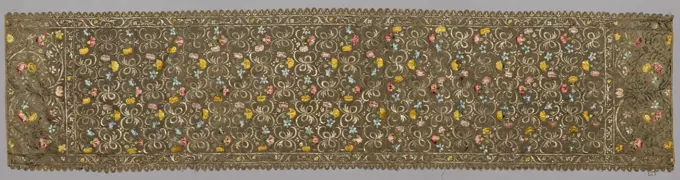
Textile Fragments

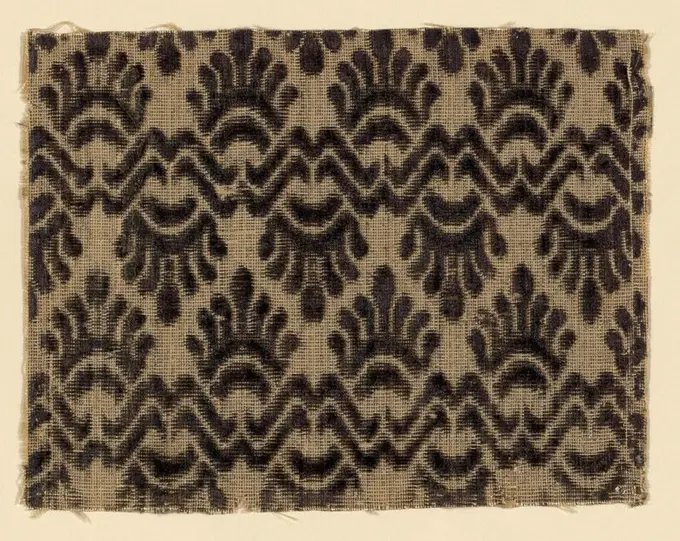
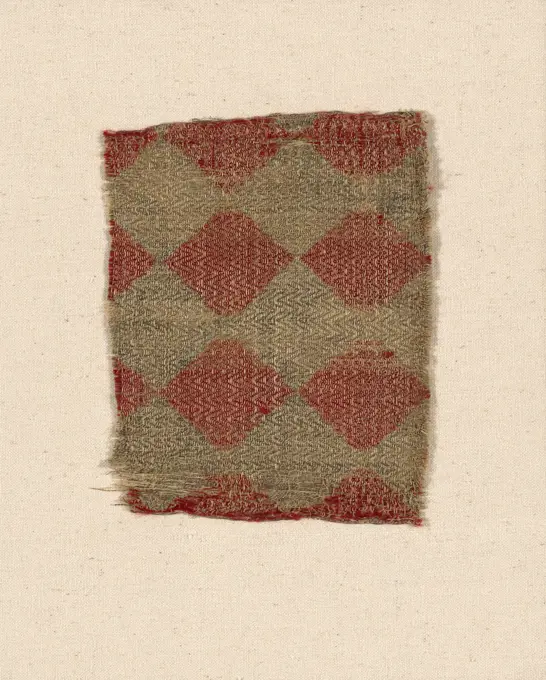
Historical textile pieces showcasing intricate patterns and colors, used in various garments or homewares, reflecting craftsmanship from different periods.

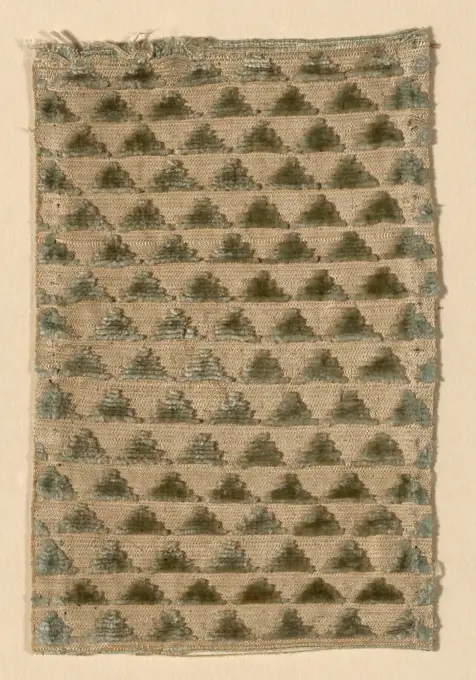
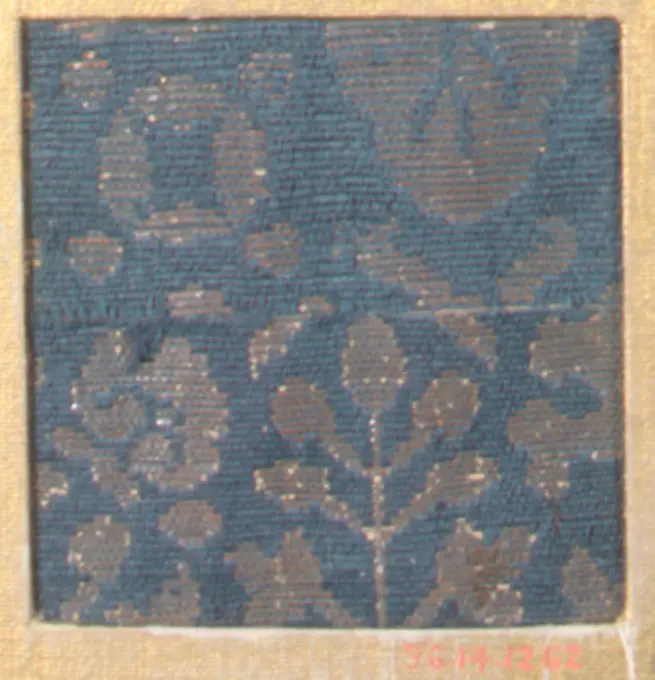
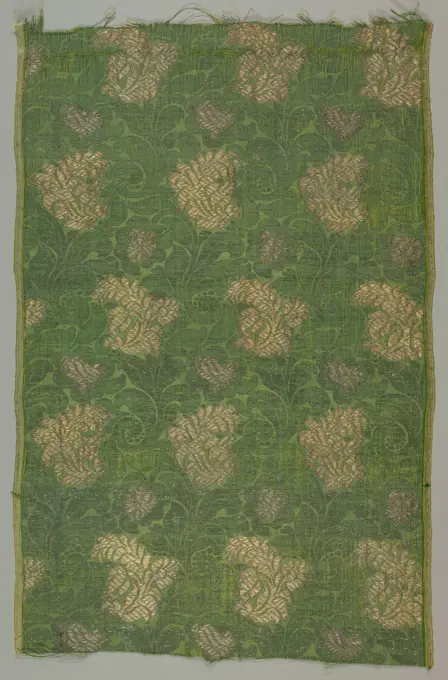
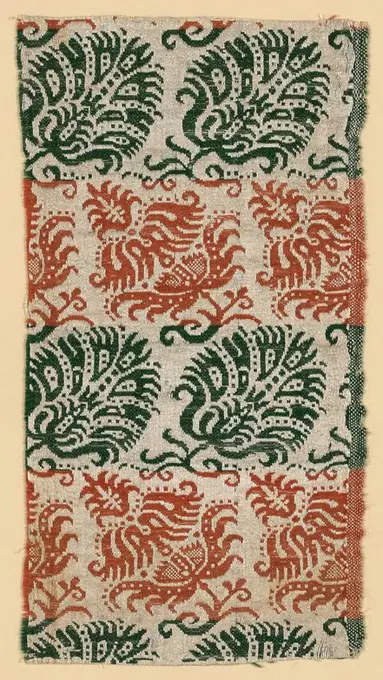
Fragment, Medium: silk Technique: velvet, cut raised pile in a 4&1 satin foundation, Large pomegranite shapes in tan velvet. Striped of green warp in 4&1 satin weave at each selvedge., probably Spain, 16th century, woven textiles, Fragment
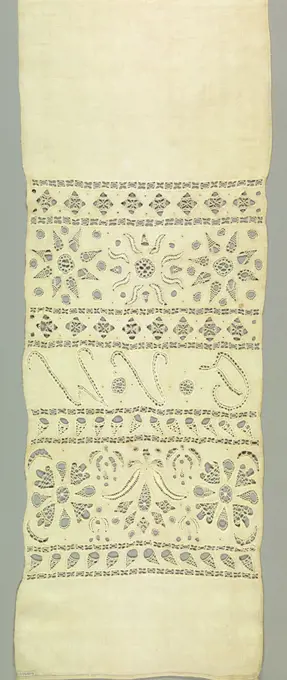
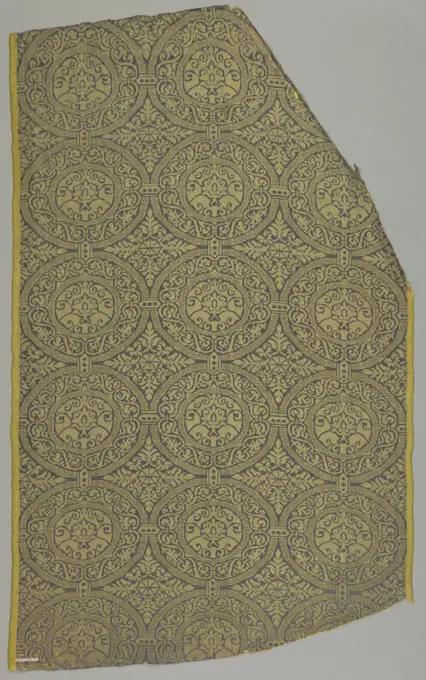
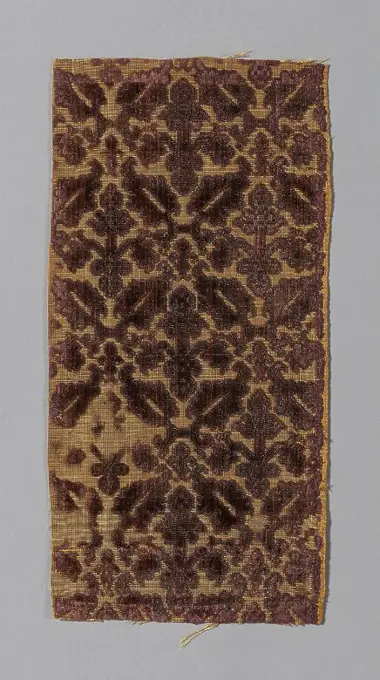
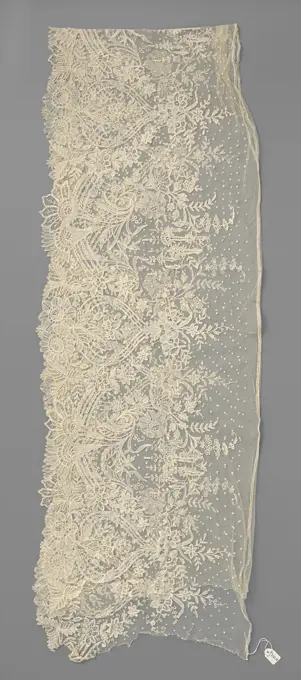
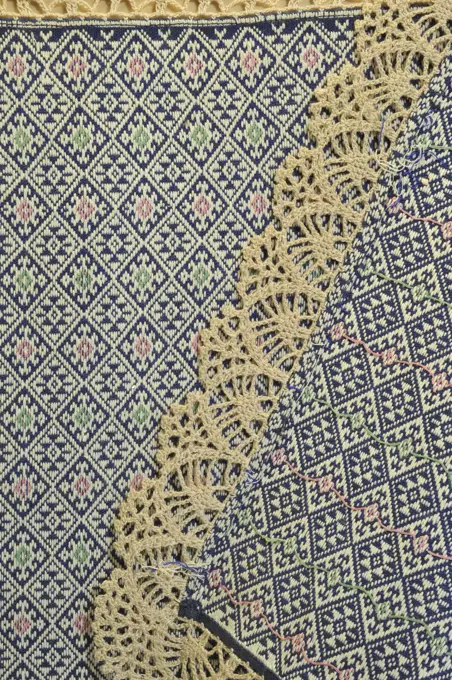
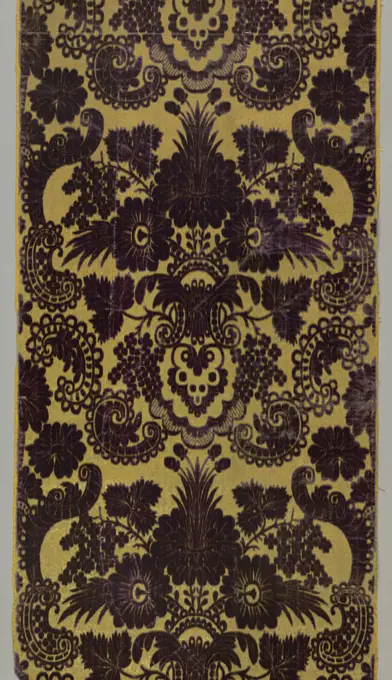
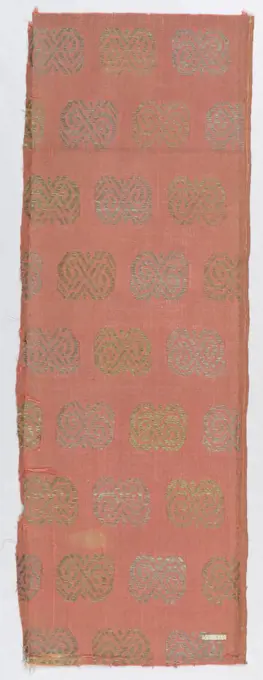
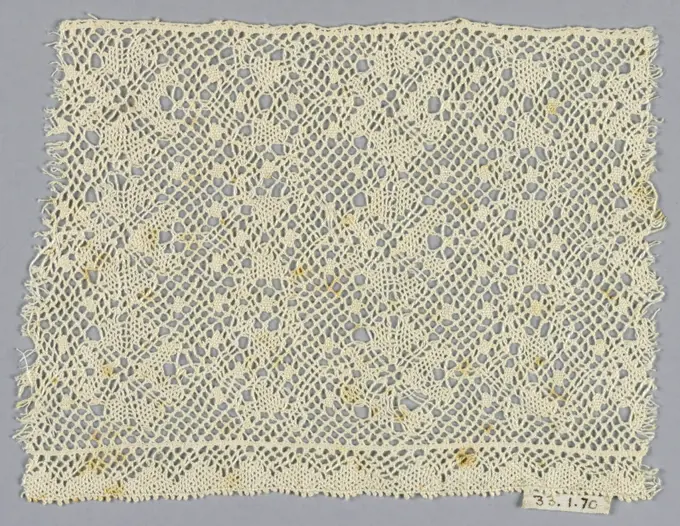
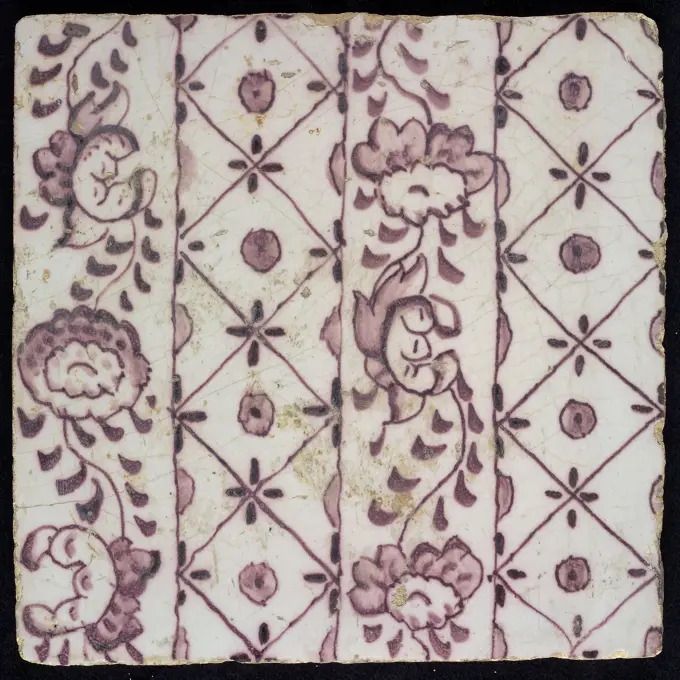
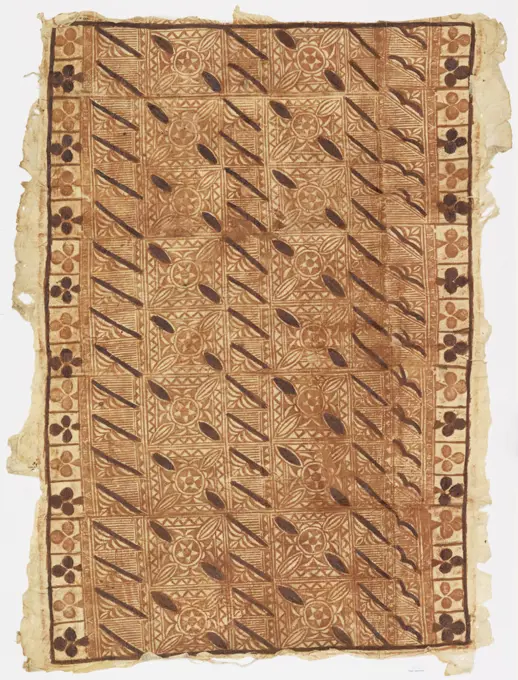
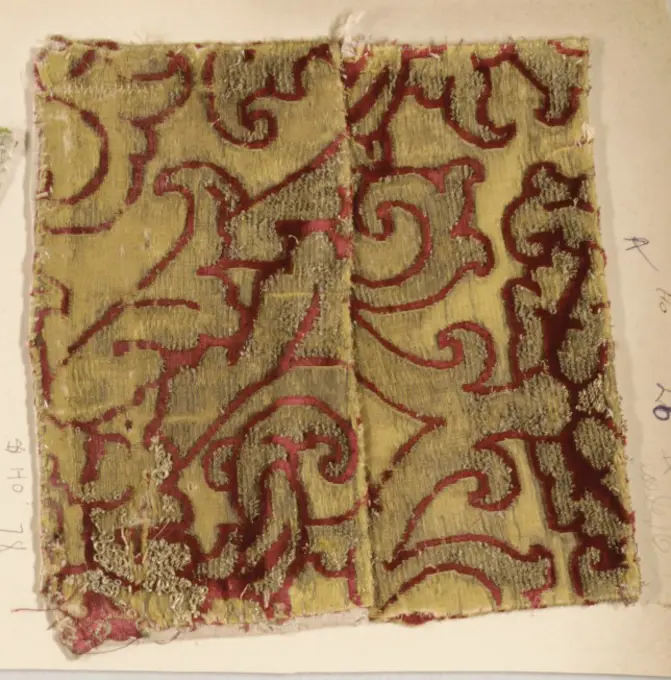
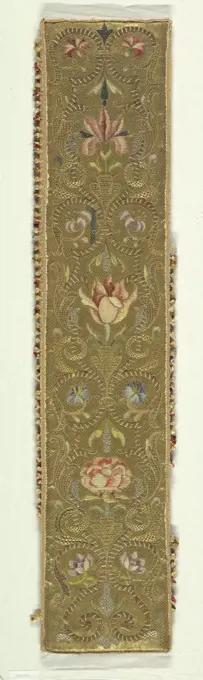
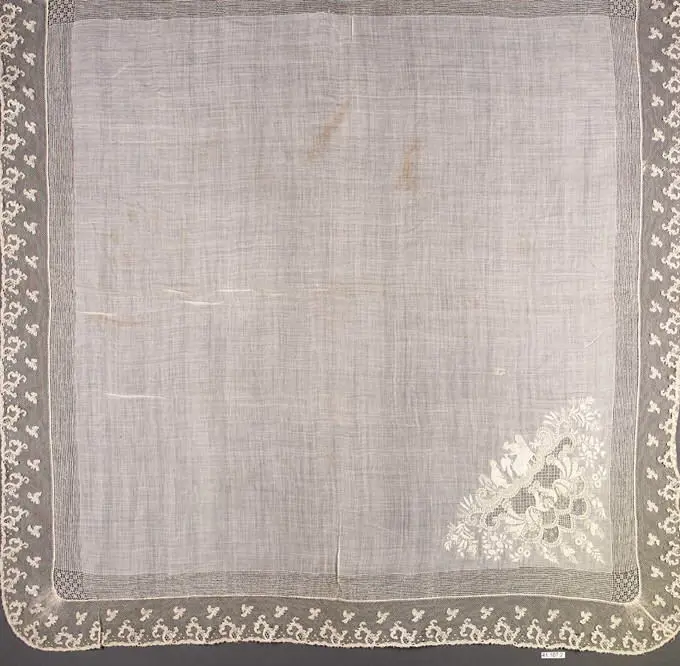
Fragment, Medium: silk Technique: velvet, cut raised pile in a 4&1 satin foundation, Large pomegranite shapes in tan velvet. Striped of green warp in 4&1 satin weave at each selvedge., probably Spain, 16th century, woven textiles, FragmentFragment Made 1601-1650 Italy. Silk, warp-float faced satin weave with supplementary pile warps forming cut, uncut, and voided velvet .Piece 18th-19th century Japan. Piece 66153Fragment (Italy); silkFragment Made 1750-1800 France. Silk and linen, cut, voided velvet against twin weave foundation .Brocade 17th century. Brocade 445262Piece 18th-19th century Japan. Piece 67339Piece 18th-19th century Japan. Piece 66296Fragment 16th-17th century Italian. Fragment 230462Canopy unknownPiece 18th-19th century Japan. Piece. Japan. 18th-19th century. Silk. Textiles-WovenFragments, Medium: silk Technique: combination of two structures; 7&1 satin plus plain weave with complementary wefts, Fragments with a design of scrolling yellow acanthus leaves with large flowers on a deep red ground., Spain, 17th century, woven textiles, FragmentsPiece 17th century Japan. Piece 71751Fragment; cotton; Bequest of Richard Cranch Greenleaf in memory of his mother, Adeline Emma Greenleaf; 1962-52-8Textile 19th century Japan. Textile 68029Piece 18th-19th century Japan. Piece. Japan. 18th-19th century. Silk. Textiles-WovenTextile 19th century Japan. Textile 67997Piece 18th-19th century Japan. Piece. Japan. 18th-19th century. Silk. Textiles-WovenPiece 18th-19th century China (). Piece 66980Excerpt red relief lewel ,, 1750 Fragment red relief lewel. The pressed pattern has oval cartouches in which a flower branch. Utrecht wool. velvet (fabric weave) Fragment red relief lewel. The pressed pattern has oval cartouches in which a flower branch. Utrecht wool. velvet (fabric weave)Piece 18th-19th century Japan. Piece 67691Textile Fragment 17th century. Textile Fragment 454481Piece 18th-19th century Japan. Piece 67016Towel, Medium: linen Technique: cutwork and embroidery, Long linen towel with broad decorated central area made up of wide and narrow cutwork and embroidery bands with floral or geometrical designs and one broad band with initials 'M.A.D.' Single row of three floral rosettes in same technique at bottom., Denmark, 19th century, embroidery & stitching, TowelFragment. Egypt. Date: 1367-1500. Dimensions: 22.9 × 25.7 cm (9 × 10 1/8 in.)Weft repeat: 11.8 cm (4 5/8 in.). Silk, warp-float faced 3:1 twill weave with supplementary patterning wefts tied by secondary binding warps in plain interlacings. Origin: Egypt. Museum: The Chicago Art Institute, Chicago, USA. Author: Islamic.Piece 18th-19th century Japan. Piece 67837Fragment 16th century Italian. Fragment 230676Medieval ornamentTextile, Medium: silk Technique: 4&1 satin damask, Pattern of circles in blue and yellow., 16th century, woven textiles, TextileFragments, Medium: silk, cotton. metallic Technique: woven, Diagonal lines of floering plants in rose and gold., 19th century, woven textiles, FragmentsFragment; silkPiece second quarter 18th century French. Piece 217268Fragment. Italy. Date: 1601-1650. Dimensions: 14.7 x 19.3 cm (5 3/4 x 7 5/8 in.). Silk and gold gilt strips; plain weave with supplementary patterning wefts and supplementary pile warps forming cut, uncut, and voided velvet. Origin: Italy. Museum: The Chicago Art Institute, Chicago, USA.Fragment Made 1301-1400 Italy. Silk and gilt-animal-substrate-wrapped linen, warp-float face of weft chevron twill weave of two color complementary wefts and inner warps .Piece 17th century Japan. Piece 71466Kain Panjang (long Sarong) (Indonesia); cottonFragment; silk; Bequest of Richard Cranch Greenleaf in memory of his mother, Adeline Emma Greenleaf; 1962-56-119Fragment Made 1675-1700 Italy. Silk and gilt- and silvered-metal-strip-wrapped silk (filÈ and frisÈ), warp-float faced satin weave self-patterned by areas of plain weave with supplementary brocading wefts .Fragment. Spain or Italy. Date: 1625-1650. Dimensions: 25.6 x 12.7 cm (10 1/13 x 5 in.). Yellow rep ground; floral pattern of cut velvet outlined with uncut velvet, faded violet. Origin: Spain. Museum: The Chicago Art Institute, Chicago, USA.Piece 18th-19th century Japan. Piece 66317Fragment Made 1801-1900 Europe. Silk, plain compound cloth .Textile (possibly Italy); silk; Warp x Weft: 88.5 x 57 cm (34 13/16 x 22 7/16 in.) Repeat H x W: 35.5 x 18.5 cm (14 in. x 7 5/16 in.)Fragment Made 1501-1550 Italy. Silk and gilt-metal-strip-wrapped silk, warp-float faced 4 1 satin weave with supplementary brocading wefts forming weft loops in areas and with supplementary pile warps forming cut voided velvet .Piece 18th-19th century Japan. Piece. Japan. 18th-19th century. Silk. Textiles-WovenPiece 18th-19th century Japan. Piece 65830Fragment, Medium: silk Technique: satin damask, Light blue damask fragment with an incomplete design of a large-scale foliate ogive pattern with stylized floral and pomegranate forms., France, 18th-19th century, woven textiles, FragmentSleeve of applicationant with the pear-shaped medallions. Wood of natural colored application edge, dick edge and needle side applied to machine tulle. Against a background, which is widowed with mates, closed worked slopes are filled with a pear-shaped medallion with violets and a circle arc with a flower branch. The pear shape is surrounded by a flower wreath with a flower branch in the top. The branch above the circle arc is c-shaped and has two large dependent sodes, a dune rose and an anemone (both of needle lace) and hanging bells.Piece 19th century Japan. Piece 72069Piece 18th-19th century Japan. Piece 66418Thailand, Close up of home-made embroidered clothPiece 19th century Japan. Piece 72229Fragment; silk, linenVestment, Medium: silk, cotton, metal Technique: cut supplementary warp pile (velvet) in a plain weave foundation with addition of one supplementary weft (metal) for facing, Vestment with purple cut velvet pattern of large symmetrical floral motif with leaves, incorporating large single flowers and branches of flowers on a yellow background faced with gilded metal strips., Russia, 19th century, woven textiles, VestmentTextile, Medium: silk, cotton Technique: 7&1 satin (green silk warp, cotton weft) with continuous supplementary weft in various bindings (yellow silk) and discontinuous supplementary wefts (2 metals)., Maltese cross-shapes in two types of metal within circles of leaves (yellow silk) on a yellow-green background., Russia, 19th century, woven textiles, TextileSampler, Medium: cotton and wool embroidery, cotton foundation Technique: cross and double running stitches on plain weave, Detached patterns of conventionalized flowers., Spain, 19th century, embroidery & stitching, SamplerRussian sash Ko Surrounding, Iwan, manufactory of KO Surrounding I.Piece 19th century Japan. Piece 71679Fragment, medium; silk, metallic Technique: plain weave with supplementary wefts, Coral fabric with geometric motifs alternately gold and silver., Italy, 17th century, woven textiles, FragmentTable Napkin Commemorating the Marriage of Louis XIV (1638-1715) and Marie-Therese (1638-1683) in 1660 Made 1650-1670 France. Linen, satin weave self-patterned by reversing of faces initials embroidered in cotton floss .Fragment, Medium: linen Technique: bobbin lace made in Lille style with twisted ground and NO heavy outlining thread, This has a torchon ground which is two pairs passing through each other and followed by twisting., Northern Italy, 19th century, lace, FragmentPiece 17th century Japan. Piece 71118Fragment, Medium: linen Technique: block printed pigment on plain weave, Fine natural-colored linen ground with design block printed in black. Small teardrop forms arranged in staggered horizontal rows, enclosing alternately paired confronted birds or pseudo- Arabic inscription., Germany, 13th century, printed, dyed & painted textiles, FragmentPart of a Valance. Probably Italy or Spain. Date: 1650-1700. Dimensions: 92.1 x 16.7 cm (36 1/4 x 6 5/8 in.). Linen, plain weave; cut and drawn thread work in overcast stitches. Origin: Italy. Museum: The Chicago Art Institute, Chicago, USA.Border; 1974-52-48Piece 18th-19th century Japan. Piece 67177Futon Cover Japan. .Fragment (Italy); silk; Warp x Weft: 33 x 43 cm (13 x 16 15/16 in.); 1949-114-20Piece 18th century Japan. Piece 71290Ornament tile, vertical decor with floral scrolls, wall tile tile sculpture ceramic earthenware glaze, baked 2x glazed painted Purple on white.Tapa cloth, Medium: bark Technique: beaten, Oblong panel of tapa cloth with a geometric design painted in two shades of brown. Two long borders have squares enclosing trefoils., Fiji, 19th century, non-woven textiles, Tapa clothTextile LengthFragment; silk; Warp x Weft: 41.5 x 22 cm (16 5/16 x 8 11/16 in.); 1953-162-33Piece 18th-19th century Japan. Piece 66276Fragment, Medium: silk Technique: cut pile velvet in plain weave foundation., Diagonal floral sprays in staggered rows in deep violet., 17th century, woven textiles, FragmentIngrain carpet piece ca. 1870 American. Ingrain carpet piece 20167Fragment brochaged and launched silk tissue, c. 1760 - c. 1765 Fragment broched and launched silk tissue in chain satin binding. Dessin: upset, wavy tires with edge design wounded by five flower vines with smells with flowers in écru, green, red and pink (launch) and yellow (brochure) and blue (ground tissue). The silk tissue consists of twelve fragments of different sizes. Painted piece of paper (ca. 1978-1998) with the letter W. State: fairly bad. France silk Fragment broched and launched silk tissue in chain satin binding. Dessin: upset, wavy tires with edge design wounded by five flower vines with smells with flowers in écru, green, red and pink (launch) and yellow (brochure) and blue (ground tissue). The silk tissue consists of twelve fragments of different sizes. Painted piece of paper (ca. 1978-1998) with the letter W. State: fairly bad. France silkPiece 18th century China. Piece 71333Fragment, Medium' silk, metallic Technique: brocaded satin, Diagonal braches and leaves in gold and silver on brown/mauve ground., 17th century, woven textiles, FragmentStrip of needle side with irises and peonies, anonymous, c. 1650 - c. 1674 Strip of natural -colored needle side: flat Venetian side. Pattern of exotic flowers and curling leaves on wide wavy and curling tendrils. The motifs are made with feston stitches and most (flower) leaves are made in whole or in part with decorative stitches. A slight relief has been applied to emphasize the contours. The motives are connected by an irregular open bar with picots. The top of the strip is finished with a tie. The straight underside of the strip is finished with a simple bow edge. Italy linen (material) flat Venetian (needle point) Strip of natural -colored needle side: flat Venetian side. Pattern of exotic flowers and curling leaves on wide wavy and curling tendrils. The motifs are made with feston stitches and most (flower) leaves are made in whole or in part with decorative stitches. A slight relief has been applied to emphasize the contours. The motives are connected by an irregular open bar wFragment Made 1650-1700 Europe. Silk and cotton, plain weave with supplementary patterning wefts .Fragment Made 1450-1500 Italy. Silk, warp-float faced 3 1 twill weave with weft-float faced 1 3 twill interlacings of secondary binding warps and gilt-metal-strip-wrapped silk supplementary facing wefts and supplementary brocading wefts forming weft loops in areas and with supplementary pile warps forming pile-on-pile cut voided velvet .Bed Curtain, 1700s. Greece, Cyclades Islands, Naxos, 18th century. Embroidery: silk on linen tabby ground; overall: 227.3 x 118.2 cm (89 1/2 x 46 9/16 in.).Fragment (Near East); silk, metallicPiece 18th century Japan. Piece 71353Fragment of velvet early 16th century Italian or Spanish. Fragment of velvet 230147Panel, Medium: silk, artificial pearls, silver and gold metallic thread on linen Technique: embroidered on plain weave, A vertical panel with a design of scrolling bands and stems with flowers and leaves worked in shades of pink, blue, lavender, green and black with gold and silver thread and and pearls on a ground on couched gold. Trimmed with ball fringe., Italy, 19th century, embroidery & stitching, PanelBedcover; linen foundation, flax embroidery thread; Warp x Weft: 268 x 247.5 cm (8 ft. 9 1/2 in. x 8 ft. 1 7/16 in.)Handkerchief French 19th centuryVelvet Fragment, 1600s. Italy, Genoa, 17th century. Velvet; overall: 29.7 x 55.5 cm (11 11/16 x 21 7/8 in.).Fragment. Europe. Date: 1601-1700. Dimensions: 36.4 × 19.7 cm (14 3/8 × 7 3/4 in.). Linen and wool, plain weave; tied and free double cloth. Origin: Europe. Museum: The Chicago Art Institute, Chicago, USA.Piece 18th-19th century Japan. Piece 66749Textile (France); Produced by Laurens et Cie a Villefrance; cotton; Warp: 82 cm (32 1/4 in.). Weft: 67.5 cm (26 1/2 in.) Left selvedge present.; Bequest of Elinor Merrell; 1995-50-225Band, Medium: Warp; S-spun linen. Technique: slit tapestry with supplementary weft wrapping, Central portion plain, a vegetable serpentine vine at each side., Egypt, 3rd-4th century, woven textiles, BandPiece 18th-19th century Japan. Piece 67166Cravat early 18th century Italian, Milan. Cravat 218142Carpet fragment, Medium: wool Technique: triple cloth, Small carpet fragment showing part of a large medallion repeat framing a rosette with geometrically decorated interspace, a debased derivation from Turkish rug. In red, yellow-green, orange, dark brown, dark blue, and pink., USA or England, mid-19th century, woven textiles, Carpet fragmentPiece 18th-19th century Japan. Piece 67734Piece 18th-19th century Japan. Piece 66456Oriental carpet ,, 1850 - 1900 Oriental carpet in carpet format, of which midfield is decorated with a grid pattern. Rosettes are stuck in the hairs of the windows. The edge is decorated with stiff floral ornaments. Middle Persia wool Oriental carpet in carpet format, of which midfield is decorated with a grid pattern. Rosettes are stuck in the hairs of the windows. The edge is decorated with stiff floral ornaments. Middle Persia woolPanel, Probably from a Christening Mantle, late 1500s. Italy, late 16th century. Silk, gold thread; embroidery: couching, stem, long, and short stitches; overall: 50 x 204.6 cm (19 11/16 x 80 9/16 in.); mounted: 62.2 x 216.5 cm (24 1/2 x 85 1/4 in.). This panel is likely from a christening mantle, a decorative shawl or cape worn during the procession at a christening. This example features radiant gold thread enhanced with eight vibrant colors of shiny silk thread that create a delicate pattern of blossoms issuing from ornate stems. The decoration forms the main field and two end sections bordered by foliate motifs.