Textile Fragments

Historical textile pieces showcasing intricate patterns and colors, used in various garments or homewares, reflecting craftsmanship from different periods.

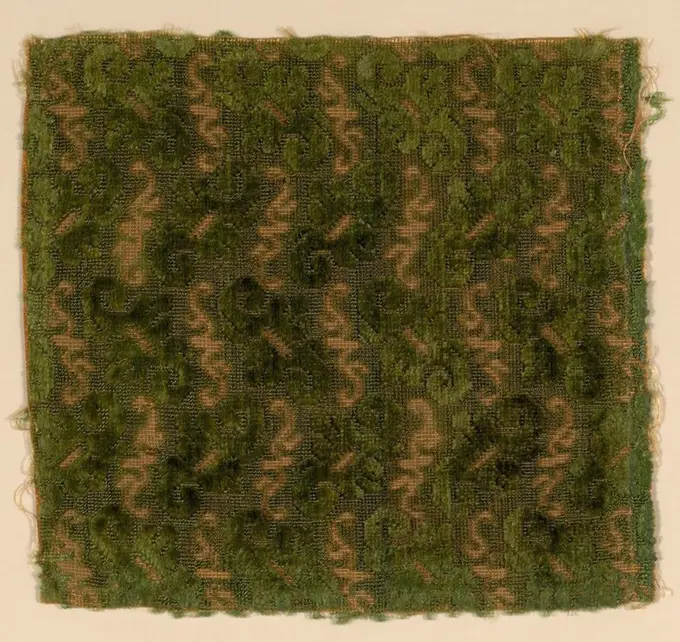
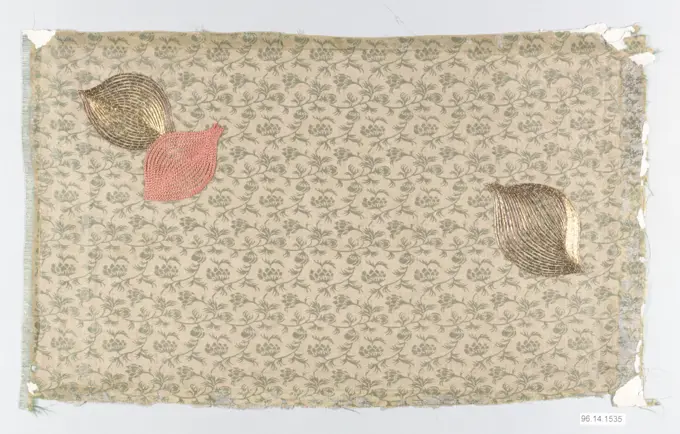
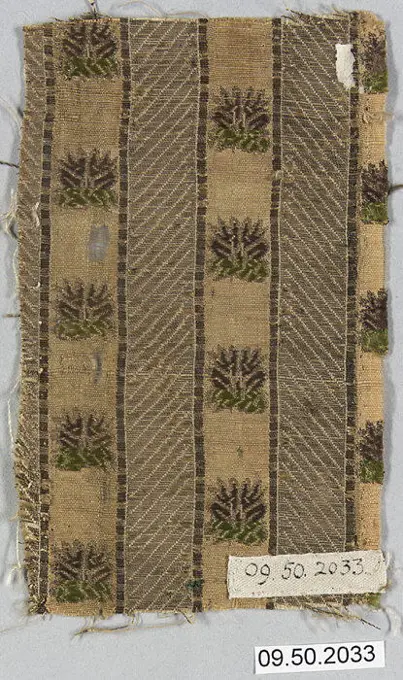
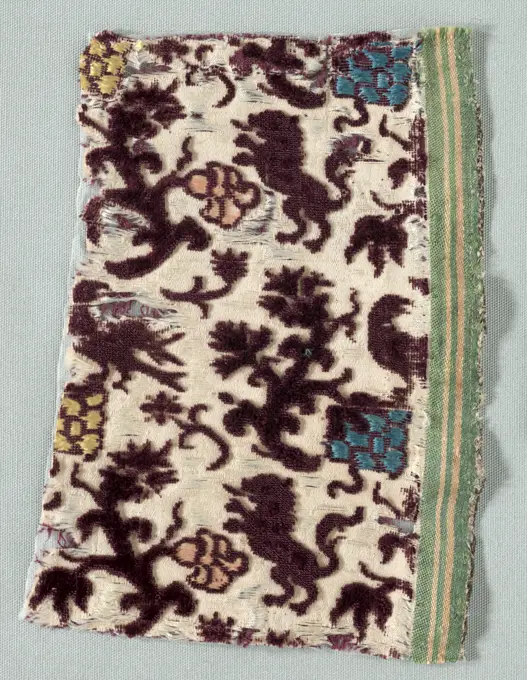
Fragment, Medium: silk Technique: velvet, cut raised pile in a 4&1 satin foundation, Large pomegranite shapes in tan velvet. Striped of green warp in 4&1 satin weave at each selvedge., probably Spain, 16th century, woven textiles, Fragment
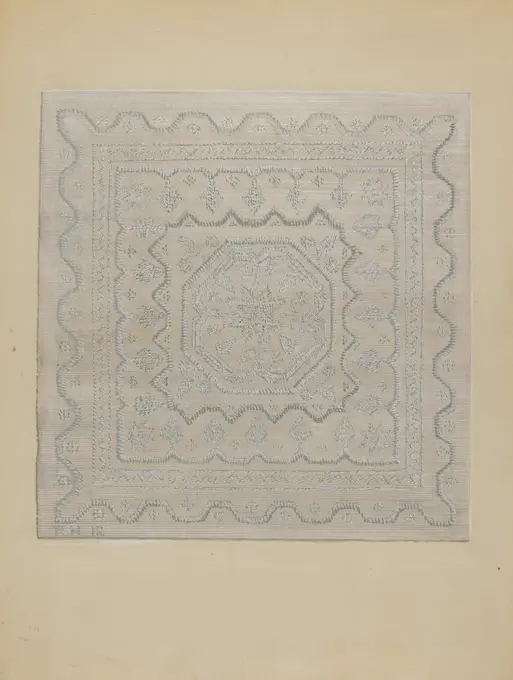
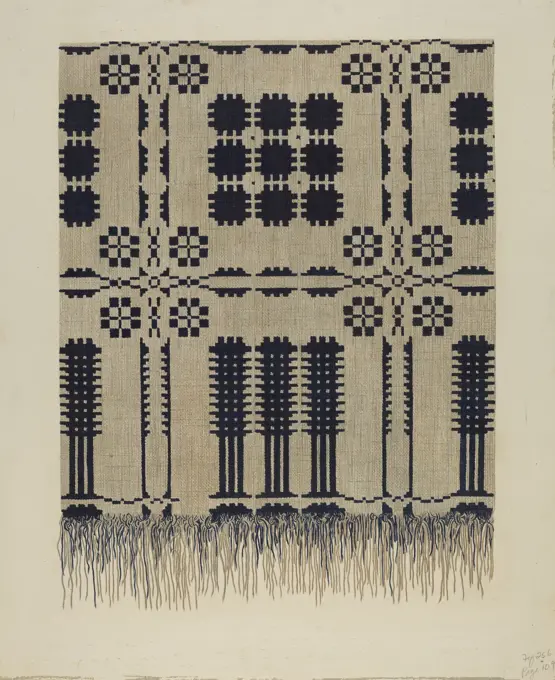
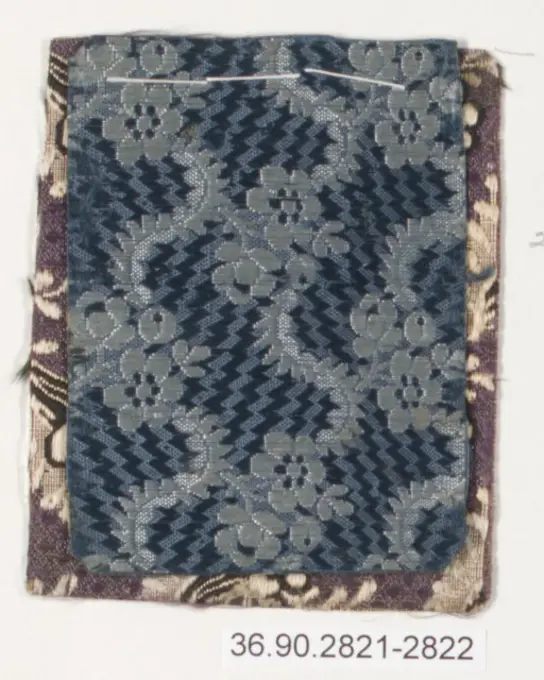
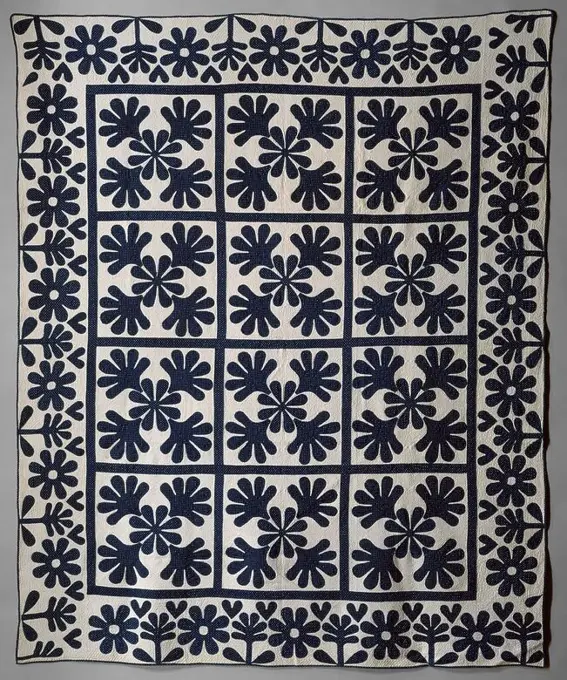
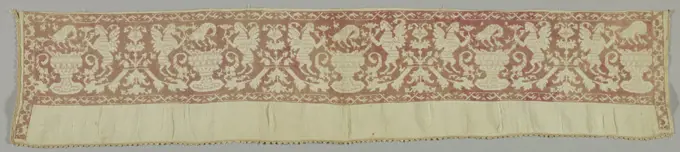
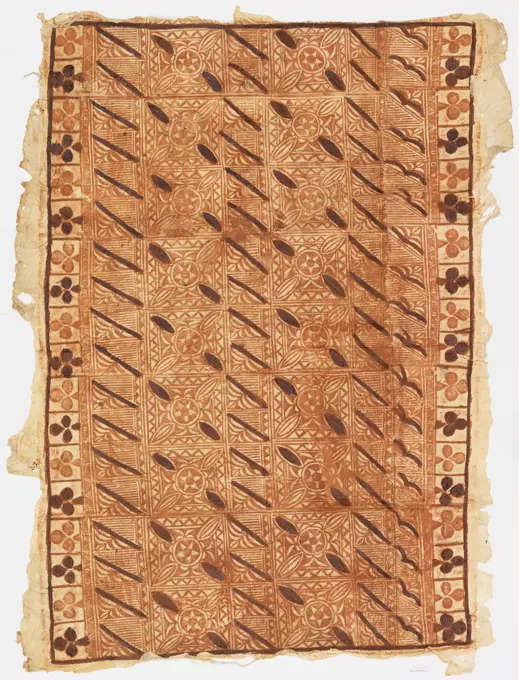
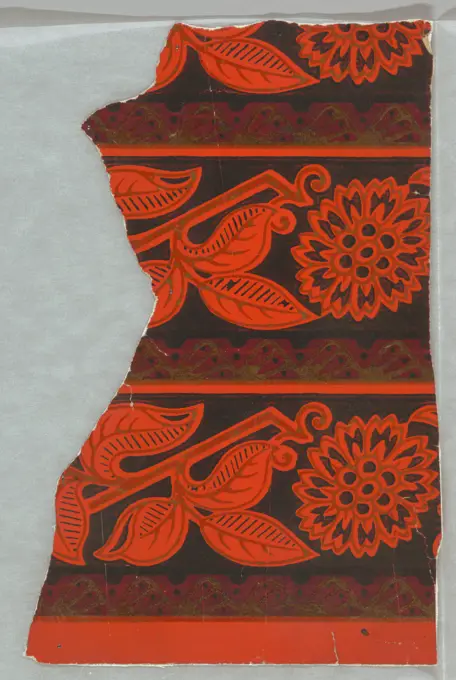
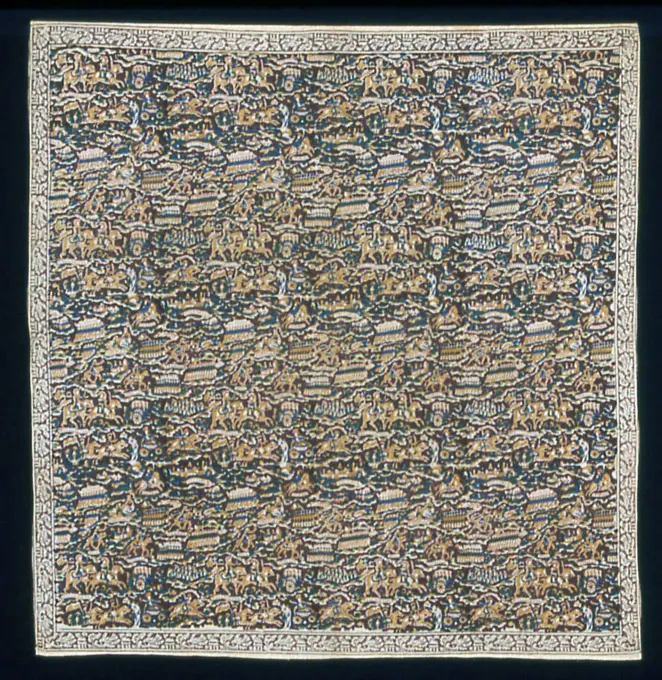
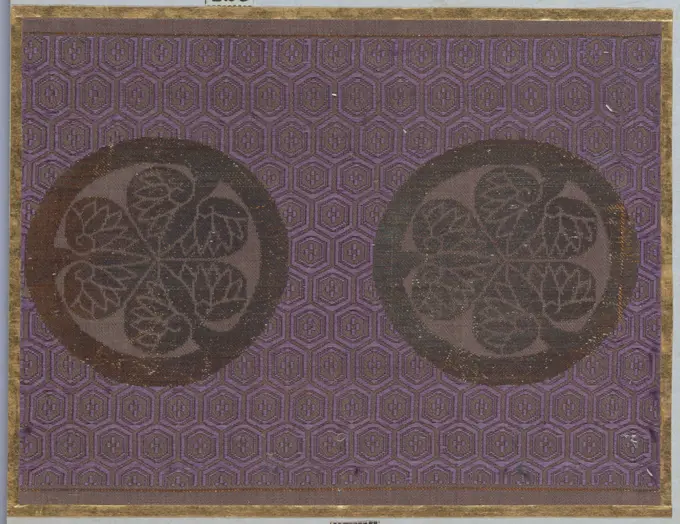
Fragment Made 1775-1825 Japan. Plain compound twill, silk & gilt paper; 1 1/2 strips to m.m. .Ribbon French 19th centuryPiece 18th century Japan. Piece 71909Textile Sample from Sample Book 19th century Japan. Textile Sample from Sample Book 68136Piece Japan 18th centuryPiece 18th-19th century Japan. Piece 66806Piece 18th-19th century Japan. Piece 66513Fragment (Japan)Rex F Bush, Coverlet, c 1936 CoverletPiece 18th century Japan. Piece 72002Jules Lefevere, Candlewick Coverlet (Woven), 1935 1942 Candlewick Coverlet (Woven)Fred Hassebrock, Handwoven Coverlet, c 1940 Handwoven CoverletPiece 19th century Japan. Piece 72151Piece 18th-19th century Japan. Piece 67820Piece 17th century Japan. Piece 72241Piece 18th century Japan. Piece 71623Piece 19th century Japan. Piece 72233Piece French 19th centuryENCUADERNACION. Location: PRIVATE COLLECTION. MADRID. SPANIEN.Quilt, Oak Leaf pattern. Culture: American. Dimensions: 93 1/2 x 76 1/2 in. (237.5 x 194.3 cm). Date: ca. 1860.The plain white cotton fabric top of this quilt is appliquéd with a dark blue cotton printed with a small white figure. The twelve oak leaf blocks are separated by sashing cut from the same blue fabric, and the wide border is decorated with hearts and flowers. The blue fabric is also used for the edge binding. The back is of plain white woven cotton. The piece is finely quilted along the edges of the appliqued oak leaves and border figures and in parallel lines following the outlines of the figures in the white areas. Museum: Metropolitan Museum of Art, New York, USA.Machine Lace Pillow Slip, early 19th century (after 1810). France, early 19th century (Empire Period, 1804-1815). Cotton embroidery on cotton hexagonal mesh; average: 75 x 81.3 cm (29 1/2 x 32 in.).Chinese ornamentTextile (Russia); silk, metal-wrapped silk; Warp x Weft: 171 x 63 cm (5 ft. 7 5/16 in. x 24 13/16 in.)Hood from a Cope, 1500s. Italy, 16th century. Brocade; silk and metal; overall: 40 x 41.9 cm (15 3/4 x 16 1/2 in.).Fragment of embroidery unknownFragment (Japan)Lincrusta (England or United States); lincrusta; 66.5 x 45.5 cm (26 3/16 x 17 15/16 in.); 1982-73-2-a,bFragment (from temple mat) Made 1700-1825 Japan. Square (small) Nishiki-kinran .Fragment; silkFragment; linenChalice Cover (Italy); silk and silver thread on silkMedieval ornamentFragment. Italy. Date: 1601-1650. Dimensions: 12.7 x 13.75 cm (5 x 5 1/2 in.). Silk, plain weave with supplementary pile warps forming cut and uncut voided velvet. Origin: Italy. Museum: The Chicago Art Institute, Chicago, USA.Piece 17th century Japan. Piece 71757Piece 18th century Japan. Piece 72027Piece French 19th centuryEdith Magnette, Woven Coverlet, c 1941 Woven CoverletChinese ornamentTextile Fragment 18th century. Textile Fragment. 18th century. Silk and metallic thread; brocaded. Made in India. Textiles-BrocadesFragment 18th century Italian. Fragment 230392Sidewall, Leather, stamped, silvered, painted, Diapered field, varnished silver. Rococo vine, in green, with flowers in red and blue., Holland, ca. 1750, Wallcoverings, SidewallKontusz sash/belt. unknown, authorBack doubleur. Daudet, Alphonse (1840-1897). bindings (gathered matter components), Book covers. 1883. Spencer Collection. BookbindingGreek Ornament and Etruscan OrnamentCap crown, Medium: linen Technique: needle lace with bobbin lace ground, Cap crown with a design of a central floral arrangement surrounded by garland and floral sprays at either side., Belgium, 18th century, lace, Cap crownFragment, Medium: linen Technique: bobbin lace, discontinuous tape, a technique called leaded, Border of large, elaborate pendants and interspersed by small, decorative openings., Italy, early 17th century, lace, FragmentFragment of the lace;  The end of the 16th century (1591-00-00-1600-00-00);Geometric ornaments, rosette (ornament)Textile Sample from Sample Book 19th century Japan. Textile Sample from Sample Book. Japan. 19th century. Silk. Textiles-WovenBand, Medium: silk embroidery on linen foundation Technique: embroidered in cross stitch on plain weave foundation, Band of embroidery in red silk on a white linen foundation; the background is embroidered with the figures reserved in plain cloth. Design of pelicans on urns with human-headed beasts on either side., Italy, 17th century, embroidery & stitching, BandKokerdoek, anonymous, before 1999 Tube cloth with geometric motifs. Sarawak cotton (textile) Tube cloth with geometric motifs. Sarawak cotton (textile)Fragment, Medium: silk, metallic Technique: supplementary warp forming raised pile (velvet), Sprigs with acorns and curved branches in green on gold., 17th century, woven textiles, FragmentTapa Cloth (Fiji); barkEmbroidered band sampler. Culture: British. Dimensions: L. 34 1/2 x W. 8 1/4 inches (87.6 x 21 cm). Maker: Mary Pots. Date: 1648.Band samplers comprise neatly worked rows of patterns suitable for repeating motifs or figural motifs on the long narrow strip of linen canvas. This is the most common type of extant seventeenth-century sampler, and its standard format was established by about 1630. The foundation was generally cut from one complete width of plain-weave linen, so that the selvages are present at what becomes the top and bottom of the finished work, and the sides are hemmed. Polychrome band samplers are typical, although some band samplers combined rows of whitework, cutwork, and needle lace with the polychrome patterns (see MMA 57.122.368). A band sampler such as this would have most likely been a task completed by a schoolgirl under the supervision of an embroidery instructor of some kind. In fact, a band sampler was usually the first piece worked by a budding embroiderer bCover. Hungary. Date: 1834. Dimensions: 139.7 x 139.7 cm (55 x 55 in.). Linen, embroidery. Origin: Hungary. Museum: The Chicago Art Institute, Chicago, USA.Cover, Medium: linen Technique: needle lace (reticella) Label: linen needle lace (reticella), Reticella squares joined by a band of sheer linen with reticella insertions finished with a three-inch pointed reticella edge. The designs are circles, half circles and star shapes within circles and squares., Italy, 17th century, lace, CoverPiece 19th century Japan. Piece. Japan. 19th century. Silk / Compound weave. Textiles-WovenPoncho Made 1800-1850 Peru. Wool and cotton, plain weave with warp stripes and stripes of two color complementary warp weave; fringe .Textile (possibly Scotland); linen, silk; Warp x Weft (weft runs from top to bottom of pattern): 87.9 x 74.9 cm (34 5/8 x 29 1/2 in.)Two textile fragments. Textile fragments, two embroidery on silk.Piece 17th century Japan. Piece 71328Piece French 19th centuryTextile fragment. Textile fragment, embroidery and pressure on red brown background.Border (USA); machine-printed paper; 21.5 x 14 cm (8 7/16 x 5 1/2 in.)Fragment Made 1750-1775 France .Piece 18th century Japan. Piece 71603The Battle of Vittoria (Handkerchief) Made 1805-1825 England. Cotton, plain weave; block printed .Banknote motifs: two bands of lathe work ornament ca. 1824-42 Associated with Cyrus Durand American. Banknote motifs: two bands of lathe work ornament 393957Fragment (Japan)Fragment. Italy. Date: 1625-1675. Dimensions: 24.1 x 17.2 cm (9 1/2 x 6 3/4 in.). Silk, plain weave with self-patterning ground wefts. Origin: Italy. Museum: The Chicago Art Institute, Chicago, USA.Piece 18th-19th century Japan. Piece 66055Bedcover, A.S.M. Da Isabel 2a La Espana Industrial 1860; Spain; cotton; 1993-91-1Eleanor Gausser, Patches from Quilt, c 1937 Patches from QuiltShawl Made 1825-1835 India. Wool, pieced double interlocking 2 2 twill tapestry weave; cut main warp fringe; two selvages present .Panel (Dress Fabric) Made 1875-1900 China. embroidered on gauze . Han-ChineseFragment, Medium: wool, linen Technique: tapestry weave, Tapestry woven fragment showing purple guilloche border on undyed linen ground, and stylized birds between thick purple bands., Egypt, 300-500, woven textiles, FragmentPiece 18th-19th century Japan. Piece 66074Long Shawl Made 1815-1820 Scotland. Center of silk and cotton, warp-float faced 3 1 'S' twill weave; patterned areas of cotton, weft-float faced 1 3 'S' twill weave with supplementary patterning wefts bound in weft-float faced 1 3 'S' twill interlacings; main warp fringe; attached side borders of cotton and wool, weft-float faced 2 2 'Z' twill weave with supplementary patterning wefts bound in weft-float faced 1 3 'Z' twill interlacings; added fringe; woven on loom with Jacquard attachment .Irene Schaefer, Bedspread, c 1936 BedspreadPiece 18th-19th century Japan. Piece 67248Trimming; cottonPiece 17th century Japan. Piece 71655Patchwork cover, Medium: cotton, paper Technique: pieced and sewn patchwork of plain and printed fabrics, Six-sided table cover made up of small hexagons in the 'Garden Path' pattern. Beautifully executed with close attention paid to the placement of printed motifs within the cut pieces. Lined with yellow and white seersucker (a later addition). Some paper patterns intact on the inside., England, 1800-1850, embroidery & stitching, Patchwork coverTextile Swatches Onondaga Silk Company, Inc. (1925-1981). Textile Swatches, 1948-1959. 34 Rayon; 34 Nylon; 32 silk, (a) - (e): 8 1/2 x 4 1/2 in. (21.6 x 11.4 cm).    1948-1959Fragment relief flust ,, 1600 Fragment silk relief flust. Netherlands silk. velvet (fabric weave) Fragment silk relief flust. Netherlands silk. velvet (fabric weave)Dorothy Posten, Applique Quilt, c 1936 Applique QuiltPiece French 19th century View more. Piece. French. 19th century. Textiles-WovenFragment, Medium: silk Technique: compound satin Label: silk compound satin, Fragment of woven silk with broad blue satin stripes alternating with broad beige stripes with supplementary warp forming elaborate interlacing scrolls in dark brown. Flanked by narrow guard stripes of ivory mini-checkerboard formed by supplementary warps., Fragment very irregular in shape as it is remant from upholstery of a sofa and two chairs., France, 1840s, woven textiles, FragmentTextile Fragment 19th century. Textile Fragment. 19th century. Silk and metal wrapped thread; twill weave, brocaded (kincob). Attributed to India. Textiles-WovenPiece 18th-19th century Japan. Piece. Japan. 18th-19th century. Silk. Textiles-WovenKhiva, Xorazm Region, Uzbekistan, Central Asia. Rugs for sale.Velvet Fragment, 1600s. Italy, 17th century. Velvet; overall: 17 x 12 cm (6 11/16 x 4 3/4 in.).Piece 18th-19th century Japan. Piece 67271Frontplat of a book with an ornamental frame with flowers, Anonymous, After Reinier Willem Petrus de Vries (1874-1953), 1884 - 1952 binding   linen (material). cardboard printing block flowers ~ ornamentMedieval ornamentSiapo (tapa cloth) textilesTile 14th century. Tile. 14th century. Stonepaste; molded and glazed. Attributed to Iran. Ceramics-TilesTrimming (France); silkPlaying Card; Manufactured by Ferdinand Piatnik and SonsOrange brown paste paper book cover with border 18th century Anonymous. Orange brown paste paper book cover with border. Anonymous , Italian, 18th century. 18th century. Relief print (wood or metal). Prints