Textile Fragments

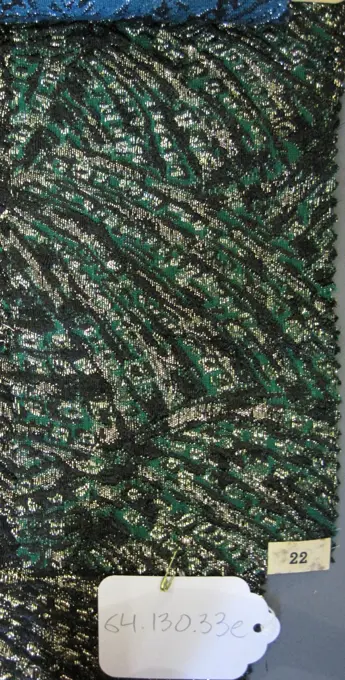
A collection of fabric samples showcasing intricate patterns and weaving techniques from various historical periods and cultures.
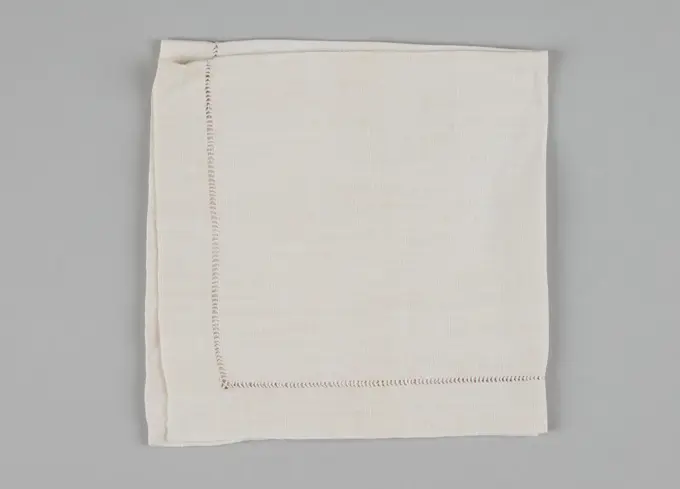
Anonymous, towel of the personal service of Adolf Hitler, Kehlsteinhaus (Berchtesgaden) (attributed title), 1937. Damassed and embroidered linen. General Leclerc Museum of the Liberation of Paris - Jean Moulin Museum.
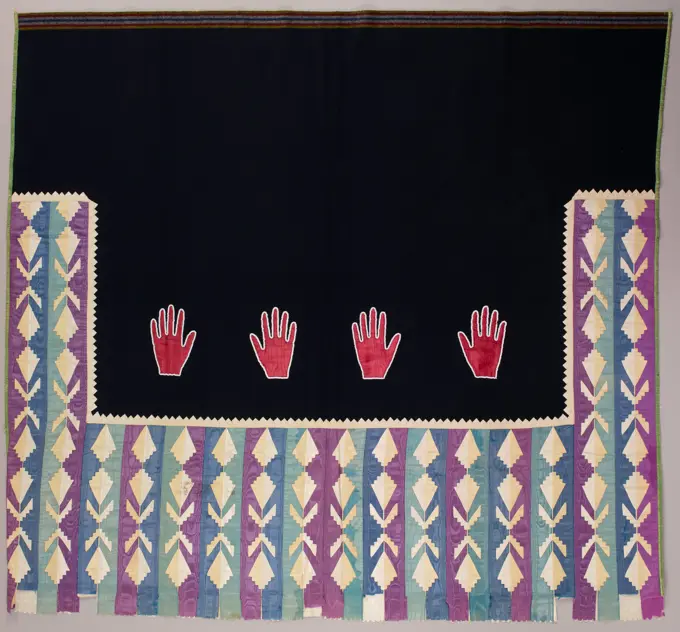
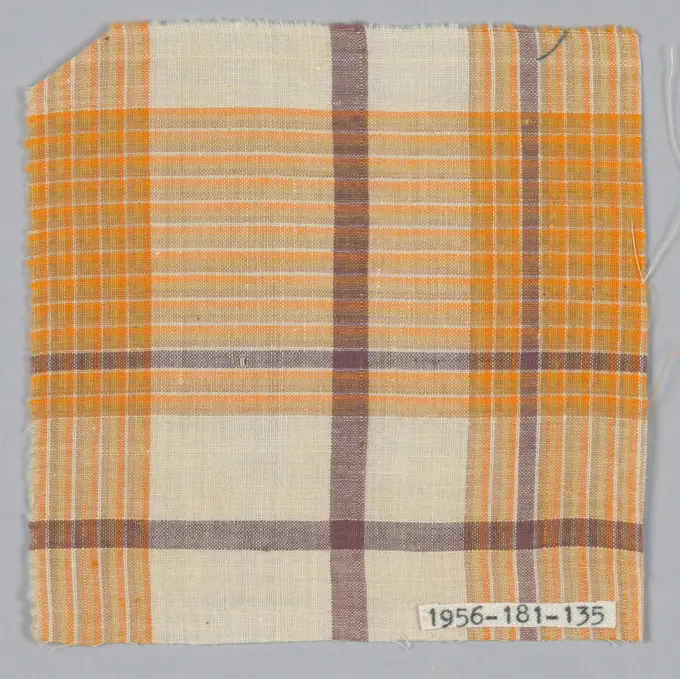
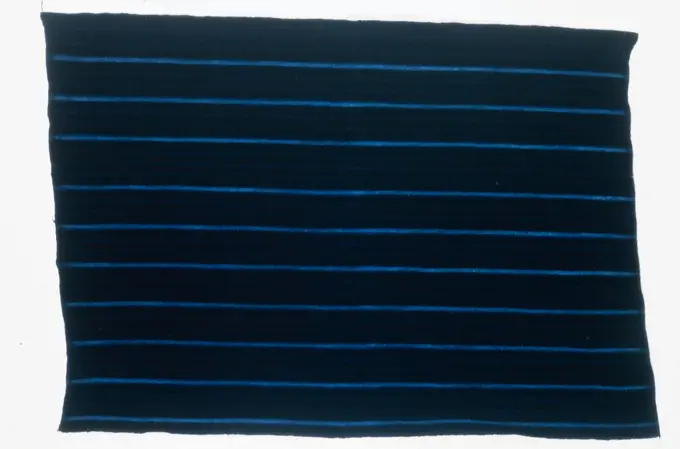
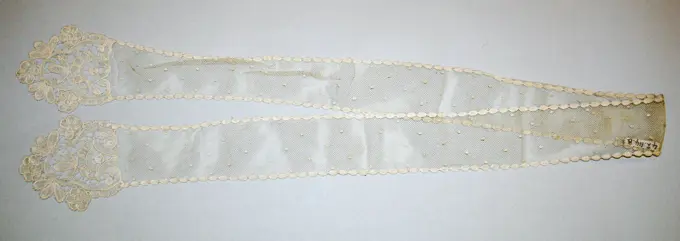
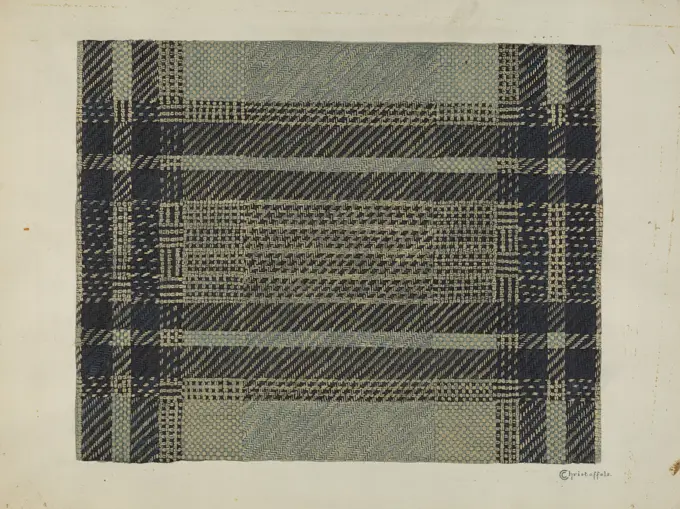
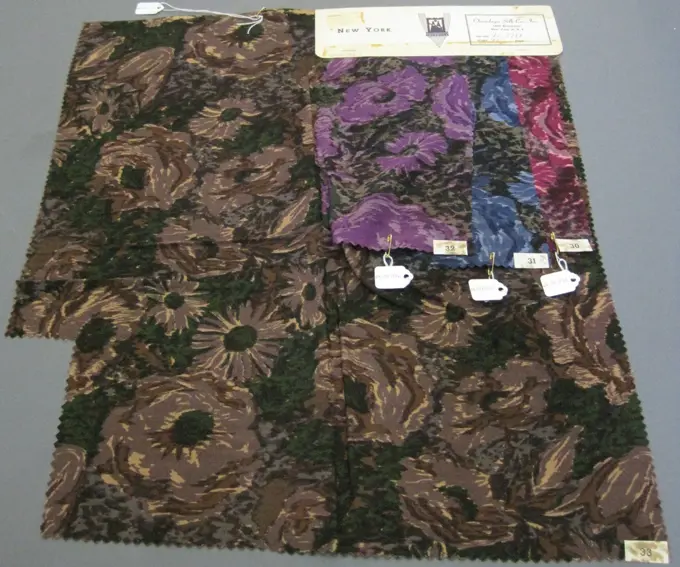
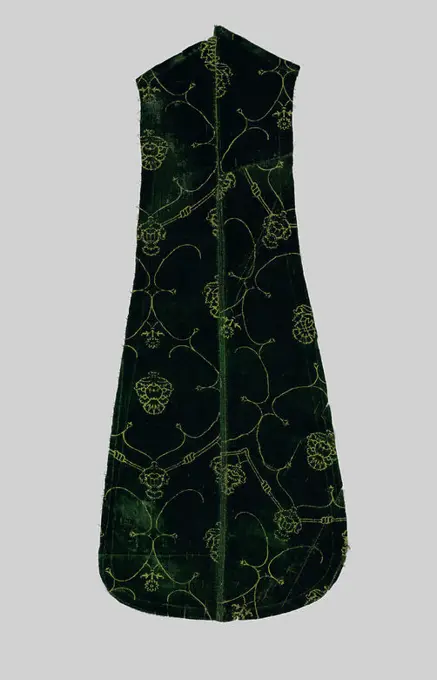
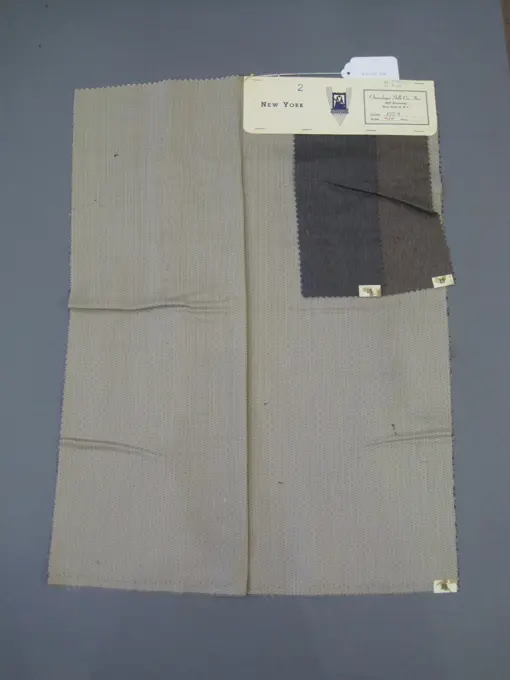
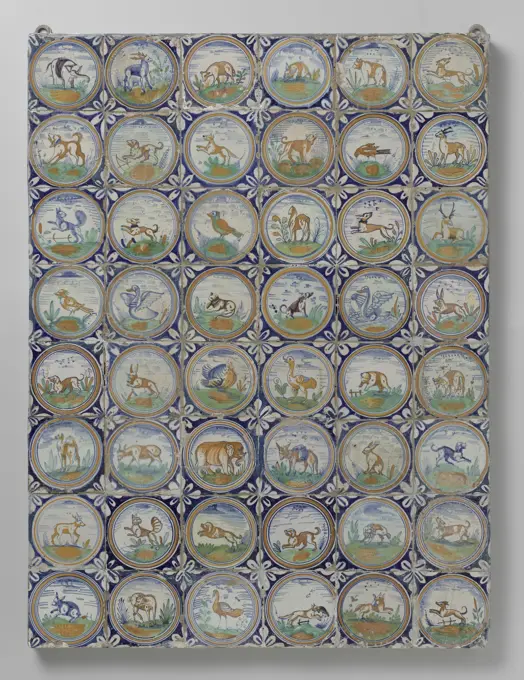
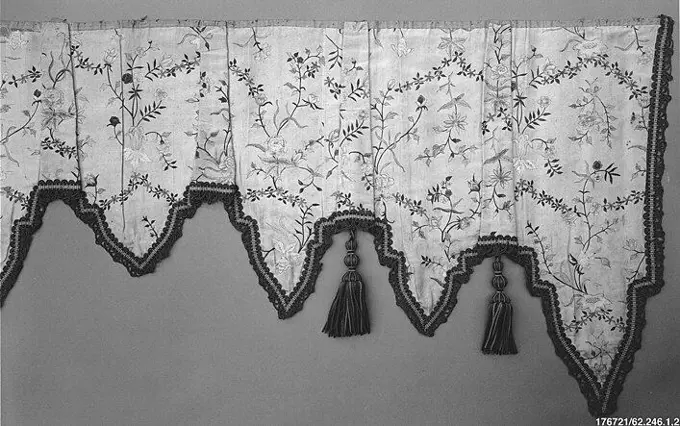
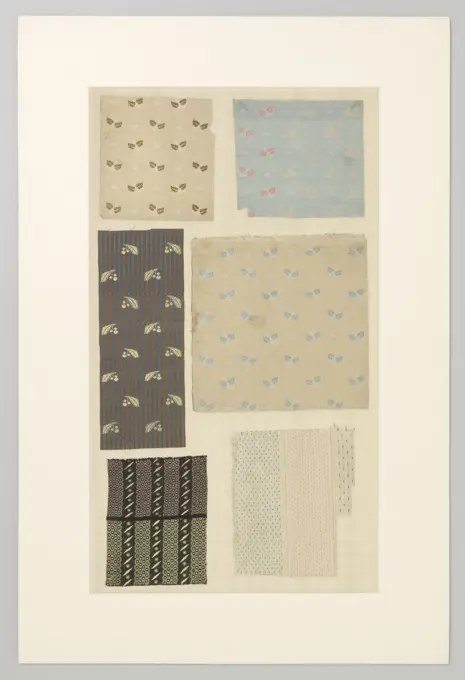
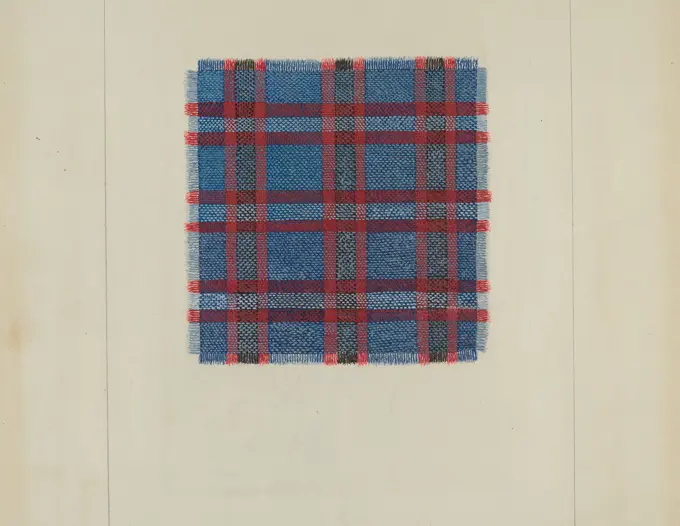
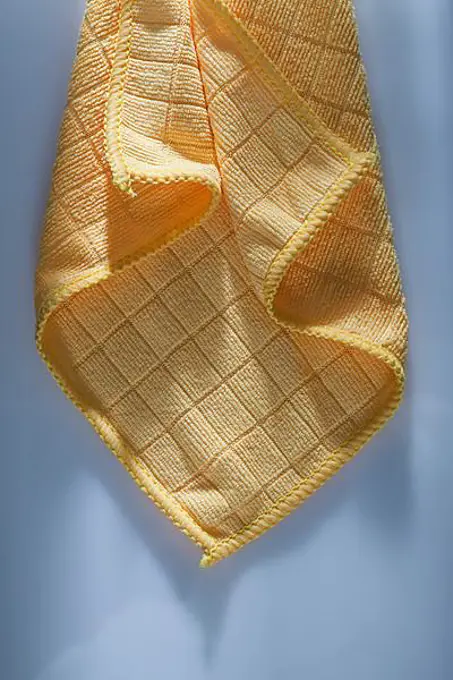
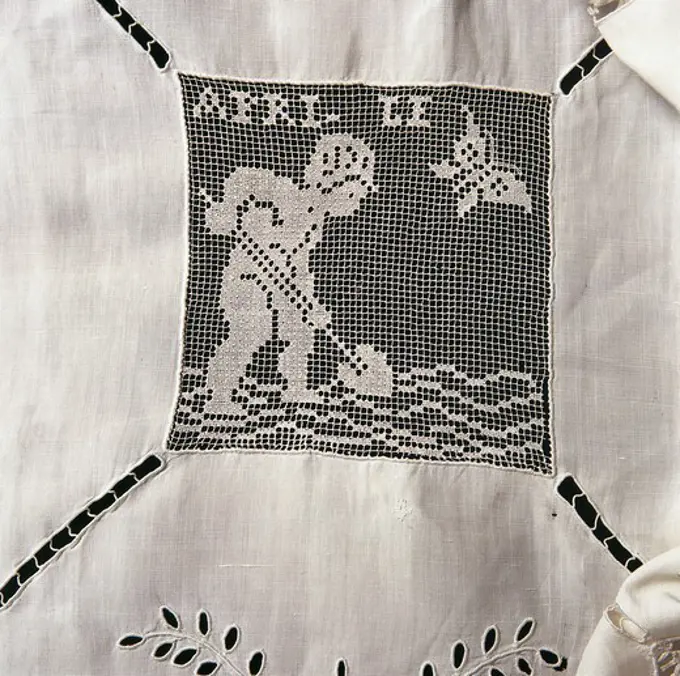
BeddingPiece 18th-19th century Japan. Piece. Japan. 18th-19th century. Silk. Textiles-WovenSample early 19th century French. Sample. French. early 19th century. Silk. Textiles-WovenFriendship Blanket, c. 1900, 62 5/8 x 68 in. (159.07 x 172.72 cm), Wool, beads, silk ribbon, United States, 19th-20th century, Plains Indians have a long tradition of embellishing blankets with a variety of appliqués. Before the introduction of cloth, they wore decorated buffalo hides over their shoulders and hips. In an effort to have the newest styles, many Plains Indian tribes traded for garments that were created by other groups. When Euro-American traders brought Stroudcloth-wool made in the town of Stroud in Gloucestershire County, England-it quickly became the preferred material for fashioning garments and blankets. First silk, then satin was used to decorate Stroudcloth blankets with geometric patterns using a reverse appliqué technique of sewing cutout ribbon patterns onto a background of a contrasting color ribbon. The more complex the design, the more desirable and valued the object was to own and wear.Colore  winter wool scarf with pattern isolated on whiteTextile Swatches Onondaga Silk Company, Inc. (1925-1981). , 1948-1959. 72 silk, 28 metal, a: 47 1/4 x 18 1/4 in. (120 x 46.4 cm).    1948-1959Walnine of Olga BoznańskaPocket 1800-1810 American. Pocket 170226Fragment (USA)Fragments (India); cottonWoman's wrapper (àdìrẹ ẹlé̩kọ) Yorùbá , unknown maker's mark. Woman's wrapper (àdìrẹ ẹlé̩kọ), 20th century. Commercial cotton cloth, synthetic indigo dye, 68 5/8 × 78 × 1/16 in. (174.3 × 198.1 × 0.1 cm).  Àdìrẹ is a Yorùbá textile whose patterns are made through resist dyeing. The àdìrẹ technique used to make this wrapper is àdìrẹ ẹlé̩kọ, wherein female artists paint cassava flour paste on fabric, preventing certain areas from soaking in blue indigo dye. This cloths name is Olókun, identifiable in part by the motif of a circular “stool” surrounded by “leaves.” As goddess of the sea, Olókuns domain is the source of wealth, lending the cloth the associated meaning “life is sweet.” Other àdìrẹ employ tie-and-dye techniques (àdìrẹ oníko), where raffia ties hold small stones or seeds in place to cover areas of the fabric during dyeing, resulting in àdìrẹ eléso patterns. One such àdìrẹ oníko was incorporated underneath a panel in the featured egúngún (see photograph). Arts of Africa 20th cCoverlet Made 1820-1839 United States. Wool, plain weave with supplementary patterning wefts (overshot) and main warp fringe .Pillow unknownWoman's Veil (Mourning)Sari 18th-19th century. Sari 446802Sampler (Mexico); cotton, glass beadsOld hand made carpet and rugs of traditional typesMiao Baby Blanket, 20th century, 37 1/4 x 34 3/4in. (94.6 x 88.3cm), Cotton, China, 20th centuryFragment (France); silk, metallicsChinese ornamentAlbum; Published by François Chéreau, the younger (French, 1717 - 1755)Woman's Skirt Length, 20th century, 60.5 x 41 in. (153.7 x 104.1 cm), Cotton, narrowband, handwoven, idigo dyed., Mali, 20th centurywhite sofaBrocaded Taffeta with Lily of the Valley Design, c. 1870. France, late 19th century. Patterned tabby weave; silk; overall: 65.6 x 35.1 cm (25 13/16 x 13 13/16 in.).Barbe 1870-92 American. Barbe 117591empty note empty note over sackcloth background ,model released, Symbolfoto Copyright: xZoonar.com/RuslanxNassyrovx 2057468 ,model released, Symbolfoto ,property releasedSamples, Orinoka Mills, (Philadelphia, Pennsylvania, USA), a. rust color ground with 2 shades of gold color, b. rust color ground with off-white and lighter rust/orange, USA, ca. 1910, woven textiles, Samples. Elongated batted scarf with an unforced gold-yellow middle part within a green border, along which a narrow row of contiguous brown-defined blue circles and a white dotting edge. A star motif filled with spiral circles, against blue fond in the two pointed ends in the two pointed ends.Stockings 19th century French. Stockings 121548Coverlet fragment, Medium: linen warp, wool and cotton weft Technique: plain weave with supplementary weft patterning (overshot), Fragment of traditional woven coverlet with an overall grid of varied supplementary weft patterns in red, grey and dark blue., USA, probably Pennsylvania, 19th century, woven textiles, Coverlet fragmentNapkin of linen with pellet pattern ,, 1737 White linen napkin with peel pattern, called "Oostindische Caracters". Brand Kroon WG 36 1737. Northern Netherlands (Possible) linen (material) White linen napkin with peel pattern, called "Oostindische Caracters". Brand Kroon WG 36 1737. Northern Netherlands (Possible) linen (material)Cornelius Christoffels, Coverlet, c 1940 CoverletFabric swatch Red fabric swatch cut with pinking shears zig zag scissors Copyright: xZoonar.com/ClaudioxDiviziax 6561984Stole. unknown, authorClose_up of woven Khmer scarves for sale in Cambodia, Indochina, Southeast Asia, AsiaVintage looking Blank stamp Vintage looking Blank rear side of a mail stamp Copyright: xZoonar.com/ClaudioxDiviziax 9962278Square, Medium: cotton Technique: plain weave, Unhemmed square of orange and white gingham., USA, late 19th century, woven textiles, SquarePiece 17th century Japan. Piece. Japan. 17th century. Silk / Compound weave. Textiles-WovenTextile (possibly Netherlands); cotton; L x W: 148 x 61.2 cm (58 1/4 x 24 1/8 in.); 1958-128-3Kit. Closed. 1911.Fragment 18th century Italian. Fragment 230307Stockings 1894 British. Stockings 122613Cashmere shawl. unknown, authorCombPlaque Fragment. UnknownDamask napkin with Dessin Bokken, 1900 - 1935 Damboasts napkin with design goats, equipped with monogram 'vd' from the linen weaving mill of Dissel and in white embroidered monogram 'GW', owner's brand of the Gogh-Wibaut couple. Eindhoven linen (material) damask Damboasts napkin with design goats, equipped with monogram 'vd' from the linen weaving mill of Dissel and in white embroidered monogram 'GW', owner's brand of the Gogh-Wibaut couple. Eindhoven linen (material) damaskSample (France); silk; Anonymous bequest in memory of Albert and Rebecca Elsberg; 1938-82-189-eLappet Made 1730-1739 Brussels. Linen, bobbin part lace of a type known as Brussels with a twisted bar ground  .Carved Wood Panel, c. 1875. India. Wood; overall: 66.7 x 27.4 cm (26 1/4 x 10 13/16 in.).Textile Swatches Onondaga Silk Company, Inc. (1925-1981). , 1948-1959. Silk, a: 42 1/4 x 31 1/2 in. (107.3 x 80 cm).    1948-1959Ribbon, Medium: silk, Yellow ribbon with narrow green and white stripes and scalloped picot edge., USA, mid-19th century, woven textiles, RibbonRibbon French 19th century View more. Ribbon. French. 19th century. Textiles-TrimmingsTray with Design of Butterfly 19th century Ikeda Taishin Japanese. Tray with Design of Butterfly. Ikeda Taishin (Japanese, 1825-1903). Japan. 19th century. Silver, gold takamaki-e, hiramaki-e, kirikane, black lacquer. Meiji period (1868-1912). LacquerElizabeth Valentine, Coverlet, c 1940 CoverletBlank stamp Blank rear side of a mail stamp Copyright: xZoonar.com/ClaudioxDiviziax 8141112Shawl 1869 French. Shawl. French. 1869. cottonSampler (England); linen embroidery on linen foundationCoverlet. United States, Indiana. Date: 1848. Dimensions: 220.1 x 173 cm (90 5/8 x 68 in.)Centerfield repeat: 3.0 x 2.6 cm (1 1/8 x 1 in.). Cotton and wool, plain weave double cloth with main warp and extended ground weft fringe; two loom widths joined. Origin: Indiana. Museum: The Chicago Art Institute, Chicago, USA.Sample card, American Print Works, founded 1835, Medium: cotton on paper Technique: roller printed on plain weave, Twenty-two examples of printed cotton pasted onto a long folding piece of heavy paper. The paper folds twelve times to create a horizontal rectangle. Although there are twenty-two samples, there are only four different patterns for the patterns have been printed in different colors., USA, ca. 1835, printed, dyed & painted textiles, Sample cardAlbum - notebook. unknown, authorTextile Swatches Onondaga Silk Company, Inc. (1925-1981). , 1948-1959. cotton; wool, largest component (a): 21 1/2 x 18 in. (54.6 x 45.7 cm).    1948-1959Square (USA); cottonFragment of a Chasuble (back). Culture: Italian. Dimensions: 48 3/4 x 20 1/2 in. (123.8 x 52 cm). Date: mid-15th century. Museum: Metropolitan Museum of Art, New York, USA.Textile Swatches Onondaga Silk Company, Inc. (1925-1981). , 1948-1959. 83 wool, 17 silk, 23 1/4 x 16 1/4 in. (59.1 x 41.3 cm).    1948-1959Piece Russian 19th century View more. Piece. Russian. 19th century. Silk and metal thread. Textiles-WovenField of forty -eight tiles with animals, anonymous, c. 1580 - c. 1625 Field of forty -eight tiles (8 x 6) each with a multicolored (blue, orange, green, yellow and purple) painted animal within a circle frame. In the corners, a quarter rosette in filling technology. Netherlands earthenware. tin glaze majolica Field of forty -eight tiles (8 x 6) each with a multicolored (blue, orange, green, yellow and purple) painted animal within a circle frame. In the corners, a quarter rosette in filling technology. Netherlands earthenware. tin glaze majolicaGloves late 18th century Italian. Gloves 96176Valance 18th century Chinese, for French market. Valance 228866Fragment silk tissue., Silk weave Heshuyzen, 1750 - 1800 Fragment silk tissue. A cream -colored soil has a pattern of rows of double, brown leaves on a white handle, between which a small white branch. Haarlem silk Fragment silk tissue. A cream -colored soil has a pattern of rows of double, brown leaves on a white handle, between which a small white branch. Haarlem silkRevers of Blue Laeken with seven applications of silver plaque, c. 1800 - c. 1825 Refers of Blue Laeken with seven applications of Silverborderel. Netherlands cloth. silver thread sewing / embroidering Refers of Blue Laeken with seven applications of Silverborderel. Netherlands cloth. silver thread sewing / embroideringFrank J Mace, Plaid Homespun, c 1937 Plaid HomespunClose-up of a sockLong Shawl, c. 1825. Europe (England, Scotland or France), 19th century. 2/2 twill (S) weave ground with supplementary weft pattern in 3/1 (S) weave twill; silk; attached vertical border; overall: 261.6 x 127 cm (103 x 50 in.).Textile Swatches Onondaga Silk Company, Inc. (1925-1981). Textile Swatches, 1948-1959. 42 polyamide; 31 Rayon; 19 acetate; 8 metal, (a) - (e): 9 x 5 in. (22.9 x 12.7 cm).    1948-1959New household dishcloth on white backgroundflat lay monochromatic assortment textilesTextileMirror with turtle frame, anonymous, 1600 - 1699 Mirror with a turtle frame on dark green stock with a profiled Robbel edge of Ebony. Southern NetherlandsBelgium wood (plant material). ebony (wood). spruce (wood). looking glasses. amalgam Mirror with a turtle frame on dark green stock with a profiled Robbel edge of Ebony. Southern NetherlandsBelgium wood (plant material). ebony (wood). spruce (wood). looking glasses. amalgamOverhead view of closed wicker picnic basket on plaid tableclothEnd;  beginning of the 18th century (1701-00-00-1710-00-00);Candle stand on linen background - Candleholder on linen background candlestick on a linen background - Candleholder on linen background copyright: xzoonar.com/lantapixx 6161857Textile Swatches Onondaga Silk Company, Inc. (1925-1981). , 1948-1959. Silk, 46 1/2 x 17 1/4 in. (118.1 x 43.8 cm).    1948-1959Mitts fourth quarter 19th century probably German. Mitts 156843Border, Block-printed on joined sheets of handmade paper, Design is divided equally into two bands. On the top band, a highlighted leaf repeats continuously against a polka-dot background with edgings of dentils and tiny crescents. The lower band is simpler: a row of rosettes runs down the center against a background of vertical stripes; printed in blues and white over a pastel blue ground., France, 1800-1820, Wallcoverings, BorderAnonymous, small British flag (attributed title), 1938. Cotton, Métral, Bois. Museum of the Liberation of Paris - General Leclerc Museum - Jean Moulin Museum.Madras cloth from a local marketSampler, Medium: silk and linen embroidery on linen foundation Technique: embroidered in long armed cross, satin, overcasting variation, and withdrawn elements with needlemade fillings (reticella) on plain weave foundation, Part of an unfinished white work sampler. Bands of pattern: open work followed by solid all white. At bottom alphabet in red and green., England, late 17th century, embroidery & stitching, SamplerWoven Textile, 18th century. Italy, Sardinia, 18th century. Cotton; overall: 172.9 x 28.3 cm (68 1/16 x 11 1/8 in.).Shards of signs from V.O.C. ship De 'Witte Leeuw', Anonymous, Before 1613 plate (dishes) Shards of signs from V.O.C. ship De 'Witte Leeuw', bag with shards of squatishlein. Jingdezhen bone china (material)   Sint-HelenaFabric Swatch Fab-Tex Inc.. , 1963-1966. Cotton, sheet: 8 1/4 x 9 1/2 in. (21 x 24.1 cm).    1963-1966Laces, 20th century. Linen curtain, embroidered in English stitch lace, full stitch and cordonnet lace, with filet inserts, depicting the months, a great entredeux and little needle panels with birds, puttos and little animals. Detail: insert with the allegory of the month of April.Avro -Vlag, 1929 - 1930 flag Rectangular flag. In the middle the red weapon of the AVRO on which a standing lion. Five blue circles around it. Netherlands textile materials   NetherlandsVintage elements for frame or book cover, card